 Ask ChatGPT
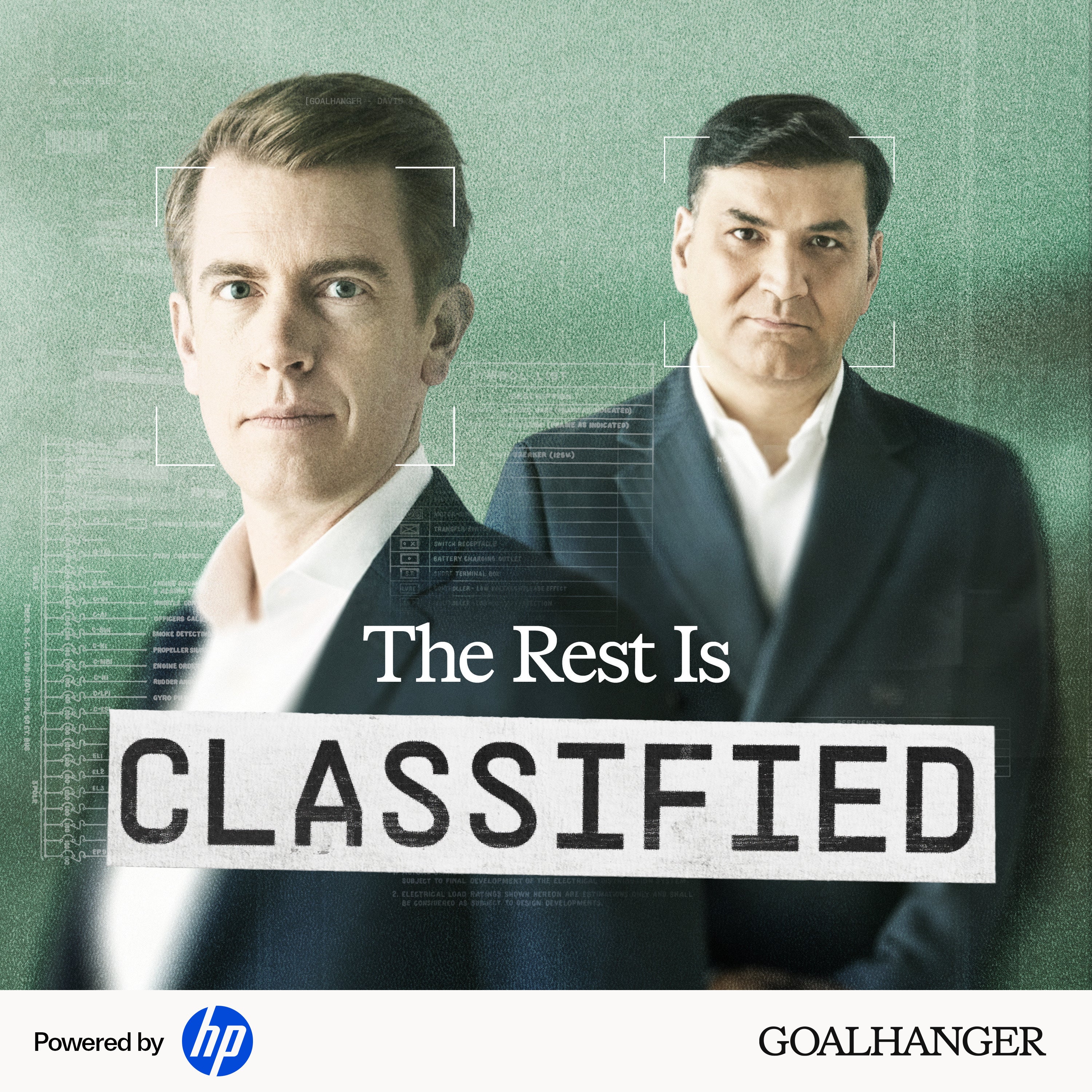

The final chapter of Kim Philby’s life after his 1963 flight from Beirut to Moscow—his relationships, KGB treatment, later usefulness, international travel, and death—plus the lingering mystery of who he “really” worked for.
David McCloskey and Gordon Carrera.
Not applicable; they are the episode’s hosts and narrators.
Written by AI. May contain mistakes.
Exploration of Kim Philby's arrival in Moscow and his perception of coming home.
“But now Kim Philby is ensconced in Moscow.”
Discussion on Philby's interactions with friends Burgess and McLean after arriving in Moscow.
“Now, he does have a few friends who arrived in the Russian capital many years before him.”
Analysis of Philby's struggles with his identity and the KGB's suspicions of him.
“I mean, this is the final episode of the series to kind of truly understand why he did what he did.”
Explore the ambiguity surrounding Kim Philby's role during the Cold War and the narratives that have emerged about him.
“Could he have been either working for the British all along or be changed.”
Explore Kim Philby's life in Moscow and his reflections on being surrounded by comrades.
“And Lubimov, who's there, says there was a terrible silence because everyone is thinking like, you know, what's he saying?”
Delve into Philby's travels and notable encounters during his time in Moscow.
“Philby's in Moscow, but he does manage to start traveling a bit, doesn't he?”
Investigate the intriguing relationship between Kim Philby and Graham Greene.
“So clearly, Philby has told this to the Stasi privately, though, that MI6 are contacting him and trying to get him back, which I think is fascinating.”
Examine the circumstances around Philby's death and the differing reactions of those who knew him.
“I think I'd be more Le Carré in this moment of this guy turned Philby, turned the service inside out, killed our agents.”
Explores the varied reactions to Kim Philby's death and how he is perceived by friends and intelligence peers.
“He also told people that he was a KGB general, right?”
Discusses Philby's core motivations as a communist zealot and the complexities of his identity.
“He seems like a truly ideological agent.”
Examines why Philby's story continues to captivate audiences and its impact on British culture and intelligence.
“What do you think explains the continued fascination with him?”

Get the gist, explore an idea or ask about something said.
 Claude
On The Rest Is Classified, what are the key points of this episode?
Searching your listeningAutomatic transcript. May contain errors.
0:03Gordon: For exclusive interviews, bonus episodes, ad-free listening, early access to series, first look at live show tickets, a weekly newsletter, and discounted books, join the Declassified Club at therestisclassified.com.
0:24Gordon: Kim Philby is perhaps the greatest spy of the 20th century, but who was he really working for all along? This is the dramatic conclusion of the Kim Philby story. Well, welcome to The Rest is Classified. I'm David McCloskey. And I'm Gordon Carrera. And Gordon, last time we left off with Kim having made this dramatic, really a dramatic showdown with his friend Nicholas Elliott of MI6 in Beirut, this dramatic flight from Beirut, we, I think, teased a bit where he might have gone. Listeners may have been able to guess. But now Kim Philby is ensconced in Moscow. He is not particularly old, so he'll have much of his life in the Russian capital.
1:14Gordon: And Philby will say later that he has come home in journeying to the Soviet Union. He'll wind up spending a third of his life there. And he's come to Moscow thinking that he'll be treated as a top Soviet intelligence officer, because of course he sees himself as a Soviet intelligence officer. But what is life really like for Kim in Moscow. But first, a word from our sponsors, HP.
2:04David: mismatch tools, and the worry their security isn't as tight as they think it is.
2:09Gordon: Which is why HP approaches technology not as a collection of gadgets, but as an integrated system.
2:15David: And crucially, that protection is built in at hardware level. It runs quietly in the background, blocking threats without requiring constant specialist oversight.
2:25Gordon: With a team of business advisors, HP helps businesses of all sizes find technology that fits their needs and budget.
2:32David: To see how HP helps businesses work securely and productively, visit hp.com forward slash classified. Trick listeners also benefit from 10 % off HP business technology with the code TRICK10. This episode is brought to you by Wise. It's only when you start moving money between currencies that you really think about the exchange rate, the fee and what might be hidden away in the small print. Whether you're living abroad, paying someone overseas, or just trying to manage your money across borders, you want a fair exchange rate, an easy transfer, and no surprises along the way. WISE keeps things simple.
3:14David: WISE is a smart way to move the currencies you need around the globe. It works in more than 160 countries and with over 40 currencies. Most transfers arrive instantly. wise uses the mid-market exchange rate like the one you see on google with no markups or hidden fees so when money needs to move you can see the rate know the fee and get on with it join millions saving billions on hidden fees by downloading the wise app today be smart get wise t's and c's apply are you looking for support in your weight management journey zep bound terzepatide may be able to help. ZepBound is a prescription medicine used with a reduced calorie diet and increased physical activity to help adults with obesity or some adults with overweight who also have weight-related medical problems to lose excess body weight and keep the weight off.
4:05David: ZepBound is approved as a 2.5, 5, 7.5, 10, 12.5, or 15 milligram injection. ZepBound contains terzepatide and should not be used with other terzepatide-containing products or any GLP-1 receptor agonist medicines. It is not known if ZepBound is safe and effective for use in children. Don't share needles or pens or reuse needles. Don't take if allergic to it. Or if you or someone in your family had medullary thyroid cancer, or if you've had multiple endocrine neoplasia syndrome type 2. Tell your doctor if you get a lump or swelling in your neck. Stop ZepBound and call your doctor if you have severe stomach pain or a serious allergic reaction.
4:43David: Severe side effects may include inflamed pancreas or gallbladder problems. Tell your doctor if you experience vision changes before scheduled procedures with anesthesia, if you're nursing, pregnant, plan-to-be, or taking birth control pills. Taking ZepBound with a sulfonylurea or insulin may cause low blood sugar. Side effects include nausea, diarrhea, and vomiting, which can cause dehydration and worsen kidney problems. Talk to your doctor. Call 1-800-545-5979 or visit zepbounds.lily.com.
5:17Gordon: So, Kim's in Moscow. Now, he does have a few friends who arrived in the Russian capital many years before him. Does he reach out to Guy Burgess and Donald McLean?
5:29David: I mean, you know, first thing you do when you arrive in a new town, you look up your old friends. They'd gone there in 1951. Kim Philby arrives in 1963. It's fascinating, though, because it's going to be very different with the two individuals, Burgess and McLean, because Philby will never see Burgess again after their dinner at that Chinese restaurant as Burgess is about to flee back to London to warn MacLean in 1951. This was a Chinese restaurant in Washington, D.C. By the time Philby arrives in 1963, Burgess has been there 12 years. And doing really well, right? And in a Burgess-like way has drunk himself into oblivion and is gravely ill.
6:10David: I mean, you can imagine for Guy Burgess, this guy who inhabits kind of club land of London, he loves parties, he likes men, he likes going to the fancy gentleman's clubs of London, as we know, and he likes causing a scene. These are not things which go down very well, I think, in Cold War. It's frowned upon in the Soviet Union. Frowned upon in the Soviet Union. So for a while, he's like banished some industrial city by the Volga, hundreds of miles from Moscow to keep a low profile. He's got no interest in learning Russian. He has problems finding boyfriends until they eventually give him one. At one point, he goes to a cocktail party at the Chinese embassy and urinates over the fireplace, a kind of marble fireplace which had been sculpted in China, which, again, classic Guy Burgess behavior.
6:58David: Is that why they sent him out to an industrial city on the forecast? I think that might mean even after he came back. But what's so interesting is Kim Philby arrives early 1963 off the freighter which has brought him from Beirut. And at that point, Burgess is already in a very bad way, mentally and physically. And they do not meet. Now, there is a little bit of a mystery about why that could be the case. I mean, it could be that the KGB don't want Philby to see Burgess in this shocking way.
7:30Gordon: Because it's not a great preview of where Kim himself could be headed.
7:34David: But supposedly Burgess asks for Kim to come and see him. And the other reason maybe that Philby himself does not want to see Burgess. This is interesting because it goes back to 1951. Those last words, you know, just after the Chinese restaurant meeting where he goes, don't you go too. And Philby may well blame Burgess for running with McLean. And of course, as we remember, that's what pointed the finger at Philby. And it effectively leads to the end of his rise to the top of MI6 as he saw it. So that's the other theory is that Philby is resentful about it. Although, you know, the truth is Burgess himself may not have wanted to go back to the Soviet Union.
8:15David: It might have been that the KGB forced him. But if you're Philby, you can't really blame the KGB. Blame Burgess. And so Guy Burgess dies August 1963. you know there were some rumors that maybe they've been a deathbed meeting but it doesn't seem like they met i guess they didn't have much time to meet no in the end couple of months yeah now donald mcclain very different philby hadn't known him as well as burgess they'd kept their distance we talked about eleanor who kim philby had met in beirut and then she divorced samber become kim philby's next wife uh along the list she comes out to moscow late 1963 which is interesting I think loyal to Kim um and she she and Kim Philby start to hang out with Donald McLean and McLean's wife Melinda who'd also joined McLean in Moscow it's kind of interesting um McLean speaks Russian works at a think tank he's more communist than the others the four of them play bridge and scrabble kind of interesting Eleanor at first feels sorry for Melinda McLean she can see the men joking about how when the revolution comes you know they're going to go visit paris and that revolution never that revolution never came never quite came eleanor tries to fit in but her and philby's relationship is a little bit tricky they're worried because i think they suspect rightly she's had some contact with cia and mi6 that maybe she's out there to to spy on him one day she goes for a walk with with philby and she says to him eleanor what is more important in your life me and the children or the communist party and he answers without hesitation.
9:54David: The party, of course. She goes back to the US briefly to renew a passport. By the time she gets back to Moscow, what's happened? Philby is having an affair with Melinda McLean, Donald McLean's wife.
10:08Gordon: It's almost entirely predictable at this point.
10:10David: Yeah, it's weird and predictable given his past behavior. I mean, again, Kim Philby's psychology, you could spend days trying to work out what's going on behind that. So Eleanor returns, the KGB are suspicious of her they kind of question her about bottles of whiskey she's bought thinking maybe this is like a CIA MI6 plot to poison Philby with some of the whiskey but she realizes that you know Philby's having an affair and uh she says you know I'm done basically and she goes back back to America he gives her his most treasured possession which it turns out is his Westminster school scarf. It's bizarre.
10:49David: And she, strangely enough, I mean, when you read her memoir, she won't condemn him. You know, she says, Kim had the guts or the weakness to stand by a decision made 30 years ago, whatever the cost to those who loved him most. I mean, slightly weird. And then she dies of cancer, you know, a few years later, 1968. I mean, the women around Philby, most of them does not end well.
11:14Gordon: It is just, it's really hard, I think, even now. I mean, this is the final episode of the series to kind of truly understand why he did what he did. Yeah. It's just, it's so, in some ways, it's just so inhuman almost. Yeah. And like a machine. Yeah. To constantly value this relatively kind of abstract ideology. Over people. Over the actual people who are around him. Yeah. Children, wives. I mean, it's remarkable.
11:49David: It is. It is. But here's the problem for him. He's sacrificed all his relationships to the party, sees himself as a Soviet intelligence officer who has, in his words, come home. And of course, it is the classic problem of the defector, which is, you know, the KGB have first of all kind of rung him dry about every detail he knows about MI6. CIA and everything else, down to pension and pay and whatever else. But then, you know, he's done. I mean, this is the classic defector problem, isn't it?
12:21Gordon: And he starts to feel like he's not useful, which then, you know, as anyone would, if they don't actually have something to do, you feel, you get idle, you get bored, you know, you turn more to drinking. And I mean, it's a classic, a very classic defector profile. The other kind of, I guess, question hanging over even just his early days in moscow is i think seen from the kgb standpoint is he a flight risk yeah it is it might he actually because he's maybe not doing well because his relationships there aren't going aren't going very well because he's not from russia yeah maybe he decides well i'm gonna go back i mean read re-defections are are a thing in the Cold War.
13:10Gordon: I mean, it's happened before. So the KGB has got to be wondering about this.
13:15David: Yeah, and I think there's an intrinsic wariness of him on the KGB side. I mean, he doesn't fit into their idea of a kind of working class hero because he's either a Cambridge man. He's got the Westminster scarf. He's got the Westminster stuff. And he might talk about being a communist, but you can see them kind of puzzling almost over Philby and trying to work out, what is he really up to? They also wonder, well, did the Brits encourage him to go? You know, the kind of Nicholas Elliott confrontation in Beirut, they're sitting there going, that was a bit strange. Maybe the Brits doubled him back.
13:53David: Maybe the Brits doubled him back. Everyone is kind of so confused by the Nicholas Elliott confrontation in Beirut that there's this view, could he be a plant? Could he have been either working for the British all along or be changed. I mean, remember, during the war, there'd been people who thought, the Second World War, when he's providing great intelligence to Moscow, who think he's a plum, you know, they don't kind of believe him. So there's always been this slight strain about maybe, maybe there's something suspicious about it. Maybe he's a double agent. And, you know, one analyst notes this on his file and the head of a security team for the KGB says, you know maybe we need to be careful about him and so there is this layer of like people thinking is this a brilliant mi6 operation there will be for many years i think people who wonder that and i mean there are people in london who kind of hint or propagate this story and perhaps even if he wasn't a conscious double agent that mi6 had somehow worked out he was a soviet spy earlier and were feeding false information through him through the late 40s and into the 50s back to the Soviets.
14:59David: I mean, we now know it's absurd. Prime Minister Winston Churchill's private secretary in 1952, who tells one biographer of the chief of MI6, you know, there is one secret left in the Filby case, and that I may not discuss. And, you know, people then start to speculate, well, maybe that secret is, you know, it was all a cunning wheeze by MI6.
15:20Gordon: I mean, I guess it's obviously a tremendous disaster for M6, but a way to maybe reframe that disaster as a massive success is to hint that all along it has been a cunning plan.
15:34David: And the result of all of that is that the KGB is wary of him and they bug his flat. Sure. They read his letters, you know, they listen to his phone calls. And I think you're right, though. The real risk is not that he's a double agent all along, but that he might go back. And, you know, there are, I mean, there are these also stories that there might have been security risks to him. I mean, one former CIA officer cited by a British author says that there had been feasibility studies by the CIA from the 50s through the 70s of going after Burgess, McLean and Philby in Moscow and killing them. I find that a bit implausible.
16:12Gordon: I mean, given what we know about how difficult it was for the CIA to operate in Moscow in that period and how few assets the agency had, the idea of, A, actually trying to, I mean, certainly the CIA was doing a lot of roguish stuff in this period. But the idea that you would have a hit team in Moscow to kill Brits.
16:36David: Yeah. I don't buy it either. I don't buy it. Philby is trying to make himself useful. 1968 he publishes this memoir My Silent War Great title It's a good title It's a good title Not the most reliable book but a very good title and it's score settling there's big gaps in it Interestingly enough Graham Greene his former MI6 colleague and the author writes the introduction compares his old friend to a Catholic who had helped Spain during the wars of religion who was kind of loyal to his faith rather than his country which is very Graham Greene which causes outrage at the time. And people are furious with Graham Greene and thinking, I can't believe you're defending Philby because it's still in that era.
17:20David: But Greene is interested in the game of intelligence. He's interested in the kind of human side of it. And so I think Greene can still separate the morality from the man to some extent.
17:33Gordon: We talk about this a bit more in the bonus episode we did for club members with Tim Shipman, where we talk about Philby's impact on spy fiction. And in particular, the rendering in Graham Greene's The Human Factor, the really human rendering of the traitor in that novel, I think gives you some insight into how Graham Greene, I think Greene perhaps stops only slightly short of essentially, I guess permitting morally what Philby did but he gets, he empathizes you can tell he empathizes with the position
18:09David: and I think writing the introduction to Philby's memoir in 1968 is also a kind of public message basically going I'm still your friend which I think is interesting so Philby's in a bad way and of course he does what Philby does when he's in a bad way he just starts drinking because he's not being used there's even stories he might have tried to cut his wrists at one point I mean, it's pretty bad. But then another traitor provides him with an escape raft. So George Blake had been another MI6 officer who had been arrested for spying for the Soviets, and he'd escaped prison, which is another wild story, which we'll do when we do the George Blake story, because he escapes Wormwood Scrubs prison, and then in the back of a kind of VW camper van gets driven across Europe, and eventually the Soviet Union.
18:56David: I've met the guy who drove him anyway that's another story but Blake has somehow popped up in Moscow and the two become friends and in 1970 uh Blake has got a wife there and a colleague of Blake's wife uh called Rufina is introduced to Philby and she's 38 kind of feisty strong-willed redhead they double date going to a I mean this is kind of bizarre an American ice skating show two former mi6 traitors double dating and so philby pursues her he turns on the charm they go around to blake's dacha for the weekend you know you're a lucky bloke philby blake remarks to philby philby cooks uh for her and there's a kind of weird scene where he kind of goes into her bedroom at the dacha late at night he's clearly drunk and i think trying it on he comes into Rafina's bedroom.
19:52David: He comes into Rafina, this woman's bedroom, and sits at the end of the bed. And he says, I am an Englishman. And she says, yes, of course, you're a gentleman. I think kind of implying you're a gentleman, so maybe let's not do anything right now. It's like a kind of... And he then goes, I am an Englishman. And they have this weird drunken conversation, which she finds charming and romantic. And I think, I mean, each to their own. It doesn't sound particularly charming. No, I have to say it doesn't kind of.
20:22Gordon: Does that line work for other Englishmen? Or you just sit down on the end of someone's bed and just pronounce your nationality? I'm an Englishman.
20:29David: I don't suggest anyone listening tries it.
20:33Gordon: But if it has worked, please reach out to us.
20:36David: With your stories, that's a very different type of podcast. We're going down if we start doing those stories. She finds it endearing. They push the relationship on. And she's actually, she reads dissident literature. She's not a KGB person in any way. but fascinatingly this becomes the most enduring relationship kim philby has and arguably the most successful stabilizes him he's still drinking but he's worried about losing her so he you know he tones it down enough that uh that he stabilizes and you know they do appear devoted to each other even though yeah i mean there is still a fair bit of drinking they live in a flat near pushkin square There are walls lined with books, I think 12 ,000 books, including Guy Burgess's library, which he donated on his death.
21:27David: Lots of Len Dayton, John le Carré, and Graham Greene.
21:31Gordon: Do we have any sense of how Philby reacted, for example, to Tinker Tailor Soldier Spy, which is quite obviously about him? In one way, you could see him being exceptionally proud. that he is the main character in what's going to become one of the best, one of the top espionage novels written in the 20th century
21:57David: is essentially about him. Do we know? No, we don't know. But he does read the Le Carre. He doesn't have a relationship with John Le Carre, but he certainly reads all these books. And it's part of, I think as well, his continued link back home. so he can't quite let go i mean you know his flat sounds bizarre i mean on the wall there's a large photo of his father in arab dress so there's a bit of that plus two pics of che Guevara you know kind of the communist thing um he sits there listening to the bbc good man uh the world service on the radio yet another bin laden comparison
22:38Gordon: bin laden listened to the bbc world service and an arsenal supporter so
22:43David: So another Kim Philby and Bin Laden. His kids visit and come back and forth, and he asked them to bring things like Oxford coarse-cut marmalade. Never had that. What is that? It's like it's marmalade, but I guess coarse-cut, because you've got big bits of the peel in it, rather than it being smooth. It's good.
22:59Gordon: Is that jam?
23:01David: Yeah. Sort of jam. Orange jam. It's orange jam. Yeah, but we call it marmalade. Okay. He's living this kind of slightly drifting life. But what's interesting is having tried to get the KGB to use him for many years, eventually in the mid-70s, only in the mid-70s, do they start to use him. So he's been there for over a decade. He's been there over a decade. There are a couple of KGB officers who almost take him under their wing, who are like, who is this guy? This guy called Oleg Kalugin, who does that, but also a guy who we've met before in some of our podcast, Mikhail Lubimov, Smiley Mike, from our Gordievsky series.
23:41David: And Smiley Mike is a specialist on the English, and he'd served in Britain as a KGB officer in the 60s. He's written his KGB dissertation on British people and how to spy on them. And Lubimov, who I've met many times, actually, and talked to him about Philby many times. I mean, he loves Philby. You know, he has a kind of absolute kind of love for Philby. And I think it's partly because he takes him under his wing and he realises Philby could have some use to us. And I think, you know, he says Philby can advise us on how to rebuild operations in Britain, which have been knocked back after some expulsions in 1971.
24:22David: And they're struggling, the KGB in Britain. I think in reality, it's actually less about Philby actually providing a lot of hard help and more about just making this guy feel like he's wanted in some way. I mean, it's almost sad.
24:35Gordon: Smiley Mike's KGB thesis was titled Special Traits of the British National Character and Their Use in Operational Work.
24:42David: Yeah. I once asked him for a copy and he said it's classified. But I think it was basically how to talk to people in the pub in Britain.
24:49Gordon: That's basically all it is. It's a glorified conversational manual.
24:52David: Yeah, I think that's what it is, which is actually what Philby ends up doing. So there's this thing where people say his most useful role from the mid 70s onwards, which he did for a decade, was running these seminars in a safe flat for young KGB officers who are being posted to Britain. And I met one of them actually in Moscow many years ago, and he kind of talked about it very fondly. But basically, you would role play being an English civil servant who you're trying to recruit, or an MI5 officer who's questioning you about what you're up to. And then you'd have to role play whether you could get away with it or whether you could recruit the person.
25:34David: It actually would be quite useful. Yeah, it would be because, I mean, I don't know. I mean, you've got here someone who's a member of the British establishment. He probably understands it pretty well. Maybe he's a bit dated. So, yeah, the students would sit around in the class. That seems to be one of his main contributions.
25:50Gordon: There's a line from, I think, someone who sat in the class who said that essentially Philby would sit on armchairs in the sofa around the coffee table with a simple spread for afternoon tea, a bottle of cognac. He would smoke cheap unfiltered Soviet cigarettes or galwazas when a delivery arrived. He would be a British counterintelligence agent. And, you know, it does seem like he offered some value to them that he could then role play. And then to these officer superiors kind of grade the students. Before you're posted to Western Europe or to the UK. I mean, that's that's that's valuable stuff.
26:32David: but when it comes to his the way he's seen by the KGB and I think the mismatch between how he saw himself which was a kind of ranking officer in the Soviet intelligence service and the reality that he faces in Moscow the best example of that is the fact it takes 14 years 14 years for him to be let in to the headquarters of the KGB after arriving. So he arrives in 1963. It is only 1977 that he's invited in to KGB headquarters to give a lecture. I mean, yeah, I mean, it's kind of, that says a lot, I think.
27:12Gordon: The KGB does not see him as an intelligence officer. They see him, rightly, as an asset. As a defector. Yeah, as a defector.
27:21David: He's a British traitor. Yeah. And this lecture is fascinating that he gives to the KGB because he steps up to the podium and he tries a joke. It has taken me a long time to get here. My journey started in a London park more than 43 years ago. I have had occasion to drop in on quite a few other intelligence headquarters. I've held official passes to seven major intelligence headquarters, four British, SIS, MI6, SOE from the war, MI5 and GC and CS, which is the code and sci-fi school, GCHQ, and three American, CIA, FBI, and NSA. So I claim this is the eighth major intelligence organization which I've succeeded in penetrating.
28:05David: And Lubimov, who's there, says there was a terrible silence because everyone is thinking like, you know, what's he saying? He's like, he was a penetration agent of these places. Is he saying, you know, he's a penetration here? Sure, you know, surely, you know, he's not suggesting. And then Philby kind of adds a line of like, then I was surrounded by wolves, but this time it's comrades, you know, which is I think the punchline to the joke.
28:32Gordon: So there with Philby kind of accepted in Moscow. Let's take a break. When we come back, we will look at the final chapter of Philby's life and the last great mystery. Who was he working for all along?
28:47David: Want to be the one who's always in the know about the game, the scores, the plays? Here's a tip, the Apple Sports app. Just pick your favorite teams and get automatic live updates without even knowing their schedules. And when your team scores, it shows up right on your iPhone lock screen, making it easy to check in anytime. So rule the group chat and download Apple Sports for free on the App Store or find it on your new iPhone. This episode is brought to you by Petivity. Cat parents are basically mealtime detectives. Who actually ate? Did they finish? Was that less than yesterday? The new Petivity Smart Feeder for Cats turns everyday meals into meaningful health insights, helping you identify changes in your cat's habits and be more proactive about their health.
29:30David: Plus, you can feed them from anywhere. Take the mystery out of mealtime. Visit Petivity.com. P-E-T-I-V-I-T-Y dot com slash cat feeder to learn more.
29:42Gordon: Ulcerative colitis and Crohn's disease symptoms don't pause for the moments that matter. That's why understanding your treatment options matters. Discover what's possible with Trimphia. Gucelcomap. Trimphia is a prescription medicine used to treat adults with moderately to severely active Crohn's disease and adults with moderately to severely active ulcerative colitis. serious allergic reactions increased risk of infections or lower ability to fight them and liver problems may occur before treatment get checked for infections and tuberculosis tell your doctor if you have an infection flu-like symptoms or need a vaccine talk to your doctor and explore what's possible or call 1-800-526-7736 to learn more about Trimphia and visit Trimphia radio.com
30:31Gordon: Welcome back. Philby's in Moscow, but he does manage to start traveling a bit, doesn't he?
30:38David: Yeah, he becomes a bit of a kind of communist tourist and gets taken to Czechoslovakia, Bulgaria, even to Cuba. Out to Cuba, goes by freighter as they think it's too risky to fly him over Western airspace. And when he takes this freighter, he goes through the Straits of Dover, the English Channel. and on the deck he looks for his old prep school at Eastbourne where he was a child. But he and Rafina can't make it out. I mean, what a weird moment. I think most of his time in Cuba is spent on tours of factories and listening to stories of the victory of socialism.
31:17Gordon: Riveting stuff.
31:18David: My dream holiday. There's one particularly interesting trip though, which is 1981. He goes to East Germany and he meets there marcus wolf who is the head of the east german foreign intelligence service so little known of him at the time in the west that he's known as the man without a face and it's there that he gets up on stage in front of the stasi introduced by marcus wolf to talk to the stasi in a similar way as he talked to the kgb staff in 77 and that's a tape which i i discovered in the stasi archives about 10 years ago. And it is amazing because it is Philby talking about his career, the breadth of his career, about incidents from being recruited right through to that Beirut confrontation, which leads to him to Moscow.
32:05Gordon: Of course, we'll have that tape in a special exclusive bonus episode for club members who can listen more to Philby actually talking about his life, talking about the confrontation with Nicholas Elliott in Beirut. It's absolutely fascinating. It's interesting, though, is in that tape, he gives the Stasi recruits essentially a message, which is if you are interrogated, never confess, never confess to anything, which I find to be so interesting because he sort of followed that advice. But you remember in that conversation with Nicholas Elliott, he kind of confesses. He does.
32:46David: Yeah.
32:46Gordon: He doesn't take his own advice. I don't think he told the Stasi recruits about his confession, though, did he?
32:51David: No, I think in his account of it, I held out, I bluffed, I did everything else. But the reality is we know he did kind of half confess. So yeah, I agree. It's very interesting. Marcus Wolff, in his memoir, says he admired Philby as a man who supported the Soviet Union as a vehicle for anti-fascist ideas. Marcus Wolff writes this after the kind of end of the Cold War. And he says, you know, Philby's view of the Soviet Union had become more sober over time. And says he wasn't miserable in Moscow. but you know maybe he was more clear-eyed about russia but you know he would complain about the miserable economy and the gap between the rulers and the people but there is one i found tantalizing detail in marcus wolf's memoir about philby because philby tells marcus wolf when they're in east germany during this 1981 visit that mi6 in moscow had found ways of making several offers to Philby to return to Britain.
33:49David: So clearly, Philby has told this to the Stasi privately, though, that MI6 are contacting him and trying to get him back, which I think is fascinating. If that's true, do you think it would suggest that when Nicholas Elliott confronts him in Beirut,
34:11Gordon: that they don't actually want him to flee? Because we talked about this last time, of this ongoing debate, I mean, still relevant today, of whether the plan A or maybe the plan B coming out of that confrontation was for Philby to go get him out of here because we don't want him in Britain. Does it change your view of that or is it just that enough time has gone by that it would be maybe less embarrassing for MI6 if he actually does return? It's sort of an open wound.
34:40David: It's almost now a propaganda coup to go, he's come back. He's come back. back i guess that's one possibility and there is one other very interesting thread about this secret contacts which might have taken place between him and mi6 during these years and that goes back to graham green the writer graham green you know worked with philby during the war as we talked about wrote the introduction to philby's memoir which may have been a message graham green eventually comes out to moscow to visit philby comes out 1986 they hadn't seen each other in you know decades so there's lots of mystery around this you know we talked before about you know had green suspected him of being the the a spy and written the third man about him green had sent out a draft of the novel you talked about the human factor about you know which is kind of based on philby for philby to comment on and philby had said the only bit i don't like is the the suggestion that life in moscow is drab which we know is you know is true the same year that that book comes out Green is asked, what would he have done if he'd have known of Philby's treason in the 40s during the war when they worked together?
35:47David: And he said, I think perhaps if in a drunken moment he had let slip a hint, I would have given him 24 hours to get clear and then reported it. Which, of course, is the rumor of what Elliot may have done in Beirut. So it's fascinating. Green goes out to meet him. Others don't. I mean, John le Carre is offered the chance when le Carre visits Moscow in the 80s to meet Kim Philby. And there's a message sent to le Carre when he's on a kind of research visit. Philby is a great admirer of your works. Would you like to meet him? And le Carre says it was a horrific suggestion. I couldn't possibly have shook his hand.
36:26David: It was drenched in blood. It would have been repulsive. So there's a really interesting, I think, difference there between le Carre and Green about how they feel about Philby. would you have been le carré or green oh i'd have been green i think i would have i think curiosity would have got the better of me the journalist in me would be like come on the
36:45Gordon: writer in you would you not i mean you know i i'm i'm thinking of the i you know i actually don't think these are comparable but a rough analog would be snowden today yeah for example i think
36:59David: Eddie calls you up and says, hi, David, you're in town?
37:03Gordon: No. No. I wouldn't want to see him. I think I'd be more Le Carré in this moment of this guy turned Philby, turned the service inside out, killed our agents. Yeah, people died. And I think Green seems to have this kind of respect for the game. Yeah. I don't think I'd be able to do it. Interesting. I don't think I'd be able to do it. I think I'm more Le Carré. Although I understand Greene as well.
37:32David: Yeah. So Greene, you know, greets to do it, 86, goes up to the apartment, they hug each other, there's vodka, talk about the war, that's what old men do, who've served in the war together. Afterwards, Philby will say, and he'll tell Rafina, his wife, that he realized that there was this bond between them. And the bond is they're both burdened by doubt. and with and i think this is really interesting because green was a catholic who'd committed to his faith partly because of a relationship but then had lived a let's say complicated life and i think clearly had had you know doubts and questions and struggled with his faith and i think philby you know as a young man had committed to communism and i think what he's saying there is you know we both had to live having made a commitment to an idea and then having to live
38:26Gordon: with our own internal questioning of what it meant green is roundly criticized in the british press for having met with philby though isn't he it's his visit is described as being morally on par with having a holiday with dr goebbels while the country was at war with nazi germany yeah that's the Daily Mail writing that. But then Green kind of doesn't care. I mean, he goes back three more times. He goes back multiple times.
38:52David: And there's a very good book by Robert Vecake, the writer and the traitor, which looks at their relationship in a kind of double biography. But I think there is this question, which is, is it friendship or curiosity, which is driving Green to go to Philby? Or is it something else? Because this other tantalizing question, which is was green actually doing something on the bidding of mi6 because only later does it emerge that graham green has kept in touch with mi6 long after leaving mi6 during the war he does the occasional job for them he's on a kind of unofficial payroll until he dies he's passing on all the letters and postcards he receives from kim philby to morris oldfield morris oldfield is like the counterintelligence officer who briefs Philby on his way out to Washington, where we started this series in 1949, and later is chief of MI6.
39:49David: And so the question is, is Green a back channel for MI6 to contact and keep contact? Why wouldn't he be? Why wouldn't he be? Yeah. Yeah. I find it entirely plausible that, you know, it's a way of keeping tabs on Philby, but also passing messages and having a channel to say, if you want to get out, it's the Marcus Wolf point, MI6 has found a way to get hold of Philby in Moscow. I mean, this is a bit later, but you could imagine one of the ways is through people going back and forth. And you can absolutely believe that Graham Greene was this channel or one of the channels of contacting Philby just in case he wants to go back.
40:32Gordon: And I suppose it would be, to an earlier point, you could see how by the 80s, when Philby's been out for two decades, he's been in Moscow for two decades, why it would be a kind of PR coup for the Brits to get him back.
40:50David: Yeah, because now you go, I recant all my allegiance. I made a mistake. I'm sorry. Even if you don't say that, just the mere act of coming back. Would be a psychological blow for the Soviets. Absolutely. But by the time you get to Green's visits, you know, Philby is already, you know, his health is failing badly. You know, he's approaching the end. And 11th of May, 1988, Philby dies. For two hours, mourners pass by the open casket, the special KGB hall. Flowers, medals around the casket. George Blake is there. Some of his friends from the UK, I mean, actually some of his children come over for it.
41:30David: Then they hammer the coffin shut and he's buried in a cemetery in Moscow, which is normally reserved for KGB generals. And I visited there, stood outside, stood and paid my respects to Kim at his gravestone, kind of black gravestone with very little writing, just basically saying Kim Philby and a picture of him in his old age. But yeah, it's quite a place to be laid to rest, the place he thinks of as home.
42:01Gordon: He also told people that he was a KGB general, right? I mean, he's buried there, but it's not true, is it? No, he wasn't. But that's the line. The Philby lore is that he was a KGB general, but no.
42:13David: And the reactions, I think, to his death are fascinating. So his old school friend, Tim Milne, who'd been at MI6 with him, been at school with him, is asked by his daughter, you know, I suppose you have mixed feelings. And Milne replies, no, for me, he died many years ago. I think that's, you know, for some people, it's like, I don't even want to think about him. Now, Miles Copeland, friend from the CIA, is a little bit different from Milne.
42:43Gordon: He says, I differ from my British colleagues who hated him. How could I hate him for being a double agent when we were doing the same thing to the other side? Very Graham Greene-esque in that sense. I am truly sorry the old bastard is dead. He was one of the best intelligence officers this century. The way he kept one step ahead of the hounds was masterful. I wish we had some like him operating for us.
43:03David: That's an interesting one. That is the intelligence professional response rather than the friends going, he was good. He was good. He was as good as you get at playing the game. What about Nicholas Elliott? So Nicholas Elliott, I love this, he suggests that they write an obituary for Philby, which mysteriously indicates that he should be thanked for his service, which many may not have fully appreciated. in other words like elliot is like maybe we should make out he was a triple agent all along by like dropping these hints in an official obituary and i think you know it's a last attempt by nicholas elliot to kind of play with the heads of the kgb and maybe cover the fact that actually he was the one who got played by philby i think there's an element of that he's still thinking about the game
43:51Gordon: but also i think of his own betrayal i mean but the kgb even to the end i i guess there there's a faction inside of it or a theory or a rumor that maybe philby had fooled them all along yeah maybe
44:07David: he really had been a triple agent yeah because his former kgb controller yuri modin who was the guy who helps organize the burgess and mclean escape 51 says he was never quite sure about philby he says you know in his memoir i was reading it my cambridge friends and he says In the end, I suspect that Philby made a mockery of everyone, particularly ourselves, he says of the KGB. I mean, that is bizarre.
44:35Gordon: Do you understand that line? Because I actually don't think it's true. I mean, Philby made a mockery of MI6, turned MI6 inside out, stole secrets from the Americans and passed them to the Russians, Americans compromised dozens of operations and agents for the Russians, for the Soviets. So how can they not?
44:59David: How do they think they've been fooled?
45:02Gordon: Although it is interesting that it is, and maybe sort of reflective of that exceptionally paranoid mentality that runs deep in Russian intelligence, that it was really, I mean, this kind of this lore of kim philby and and philby lionized as a kind of soviet hero or russian hero doesn't really happen during his lifetime yeah it happens much later where now the modern day svr the current day you know foreign intelligence wing of the of what had been the kgb now make him out as this big hero where they have stamps and kim philby statues and websites and books and i mean this is fascinating is that there's an exhibition in 2017 at the svr about philby rufina yeah his last wife is still there along with the head of the svr
45:56David: and she only passes away in 2021 and it's interesting because even in that exhibition they suddenly kind of shift the philby story as well to portray him as primarily an anti-fascist because of course you know this is the narrative in modern day russia is it's not about communism it's about anti-fascism and so they they the emphasis slightly shifts on who philby was as being which is you know has some truth as being primarily an anti-fascist which i guess gets us as we close out this series you know to to what we make of philby this bizarre character and what drove him and how we see him. What was the core motivation for him?
46:39Gordon: He seems like a truly ideological agent. I tend to just take him at his word. He talks constantly about his political ideals, motivating everything. The mentality, the mental model that he had of himself as a Soviet intelligence officer, not as a British trader. Although I understand that his relationship with his home country is complex, right? But I tend to just take him at his word, that he's obviously, he didn't do this for money. I'm sure there's ego and all these other psychological aspects that are wrapped up into it, but it seems like the nub, the core of it, was that he was a zealot. He was a communist zealot and political ideologue.
47:34David: One of his KGB students, Michael Bogdanov, says the word to understand him is integrity. Now, that sounds quite challenging. But what he means, we think of him as the master of deception, but he says integrity in the sense of he remained the same as he always was, which was an Englishman. So he remains an Englishman, eating his marmalade, doing the cricket stores at the end, but not a member of the establishment he'd grown up with, but also a communist, which he'd been since he was a student at Cambridge. And he basically remains true to those things, being an Englishman and a communist, to the end of his days.
48:14David: His core path is consistent. He had his path and he stuck to it. So what was his favorite song in his later years. I love this fact. It was My Way by Frank Sinatra. Regrets I've had a few, but then again, too few to mention. I did what I had to do and saw it through without exemption. I mean...
48:36Gordon: Also, the first song played at Donald Trump's first inauguration.
48:43David: Trump and Philby. Trump and Philby. They might get on. So I think, you know, because that's the I think that's the positive view from Bogdanov, which is like this was a guy who who basically stayed caught, you know, stay true to his core principles all the way through. The other view of him is he was someone who loved deceit and and treachery and betraying people, of which I think there is also an element, isn't there?
49:10Gordon: Yeah, those are not mutually exclusive positions. positions. I think I'm always, I'm a little, I'm a little suspect of people who, and it may be Green does this a little bit too, where there's this kind of admiration for someone who just sticks to their ideals and has them. Because if you carry that all the way through, you'd say, well, you know, Adolf Hitler did a lot of bad stuff, but man, he really, you know, he had an ideology and he's stuck to it. It's just, to me, you can't just evaluate. And again, it's coming at it from perhaps a moral or ethical judgment. You have to evaluate the ideology as well that the person has dedicated themselves to.
49:59Gordon: And in this case, you have to confront the fact that Philby, and in particular Philby post-Second World War, has decided to throw his lot in with an ideology that has resulted in - That's murderous. That is murderous, that has resulted in millions of people being killed. Yeah. You know, he is, he's an ideologue. I think he is also, you know, as we've said, psychologically, he has this weird fascination with deceit and deception and does seem to kind of have an addiction to it. But to me, you can't separate him from the ideology that he has decided to throw his
50:39David: lot in with. No, I think that's absolutely right. And I think in a way, one of the almost tragedies of Philby's life is that he doesn't last a couple more years and see the fall of the Berlin Wall and the end of the Soviet Union, you know, 89 to 91, that period where it all comes crashing down because you'd almost want for him to have seen the failure of the thing he had dedicated his life to and then see his reaction to that and he never quite gets to you know he doesn't he doesn't make it there so i i agree i think it isn't this thing of like well are you a traitor i you know was he loyal to his ideas you have to have a moral judgment about what those ideas were as well and you know i think he has some doubts at some point yeah sure i think he must do you spoke to smiley mike though about Philby, right?
51:27David: Yeah, and I found it interesting because Smiley Mike Lubimov, friend of Philby, you know, always said to me, like, Gordievsky's a traitor, whereas Philby's a hero. And, you know, I was like, well, what do you mean? He was like, well, Gordievsky changed sides, whereas Philby was always, it's that point about consistency. He was always a Soviet penetration agent. He didn't betray MI6 because he never really worked for them. My favourite Philby quote is actually one that he gives when he's confronted in Moscow by a journalist who says, you know, didn't you betray your country? And Philby says, to betray you must first belong.
52:04David: I never belonged. I have followed exactly the same line the whole of my adult life. To me, I think that unlocks a lot of Philby. Because what he's saying is, it again goes to the kind of upbringing, personality, his father, the establishment, the early life. It looks like he was part of the British establishment, but he never felt he was part of it. And he was never therefore loyal to it. So in his own mind, he never betrayed it because he never belonged to it. I mean, we think of him as emblematic of that, but he never did. In the first series we did on Philby, I did express some sympathy for him, which I'm going to qualify now.
52:48David: because I think you can understand in the 30s being an anti-fascist and being drawn to this. But by the time I think you're right, you get to the Stalin period, the later period, the failure to adapt to that and change it, I don't think works for me, I'm afraid. Any sympathy I have disappears, not least the way he treated the women around him, the way he treated his friends. And I mean, intelligence can be a hard game, but there were a lot of people who died as a result of what Philby did.
53:22Gordon: What do you think explains the continued fascination with him? I mean, I think there's fascination with him in the Soviet Union, Russia. There's fascination with him in the States. In particular, though, there's fascination with him in the UK. The Philby story is history at this point. I mean, we're talking about things that happened more than half a century ago in some cases. But why is it so fascinating to us today?
53:51David: Yeah, I mean, I kind of ponder that. Why do we keep coming back to Philby? Philip Knightley, who's this brilliant journalist who meets him in Moscow in the late 80s, just before he dies, says that Philby for Britain forced us to examine ourselves and kind of attitudes towards patriotism, treachery, class, politics, conviction. So I think there is an element in which he opens up kind of conversations about so many other things because of the trajectory of his life. But then in turn, I think he fuels a kind of slightly masochistic British obsession with traitors, which is fueled by fiction, and John le Carré and that world.
54:37David: I think many individuals exert a fascination over the public, but I think rarely has one individual held a fascination for so many years for a country that they betrayed. You know what I mean? It's a very British thing, I think, to kind of become obsessed with your own traitors. You get the spies you deserve as a country, and maybe you also get the traitors you deserve. And I think Philby is maybe the traitor we deserve because he tells us so much about ourselves in Britain and holds up a mirror to us.
55:09Gordon: Well, that fascination has even made its way into MI6 and the way MI6 trains new recruits.
55:17David: Yeah, I was told that new recruits for MI6, this is quite a few years ago, were shown the film of Philby in his mother's flat in 1955, denying that he was the third man. And they would sit in a room and they would be shown this video of their greatest traitor lying. now whether it was to teach them what a liar looked like or whether it was to teach them about the history and what happens when a traitor tears your service apart as he did that's what they were shown and someone told me that when that film runs to the end
55:57Gordon: there's just silence in the room well i think that's the spot to leave it uh we are finally We're at the end of our six-part series on Kim Philby. We hope that listeners have enjoyed this incredible journey of, regardless of what you think about the man, an incredibly interesting and continually interesting character even decades after his death. Just a reminder, of course, if you have listened to this entire series and not yet joined the club, shame on you, first of all. But second of all, we have an incredible compilation of bonus content that is attached to the series. A couple deep dives into the sort of impact and legacy of Philby in the UK and in the US, conversations about Philby's literary impact, a conversation with a real life CIA mole hunter.
56:53Gordon: So a lot of great stuff for club members. So do, if you have not, do go and join the club at the rest is classified dot com. We should also say that we have a really fascinating and wild series that we are launching next on Watergate. And it may be the case that many people don't know that Watergate is an exceptional spy story with some incredibly colorful characters at the center of it and some good old fashioned breaking and entering.
57:22David: we're going to reveal whether the cia was actually the deep state was behind watergate because that is something which you know it still echoes today i mean recently jd vance the current vice president united states was talking about watergate says if it happened today it'd be a 12-hour news story but he was comparing the deep state taking down nixon to what's happened to donald trump so that's another thing we're going to be examining in that series for watergate so it's going to be a great listen uh do join us for that do join the club but otherwise we'll see you next time We'll see you next time.
58:18David: We assess, Prime Minister, Except... with high confidence it was... Russian.
58:25Gordon: Holding the Russians accountable is World War III.
58:27David: They took down a British passenger jet containing 350 people. The man in the Kremlin is playing, Alex. You've got to ask yourself, do you want to play or not? You're the Prime Minister. You've done... nothing!
58:43David: We would need to understand the policy context. All the relevant context will be structured as a framework today. and disseminated into an operation order, or Frago. A Frago that says to kill the president of Russia. Yes. New from Goalhanger. Who is going to be able to pull this off?
59:05Gordon: You're my soldier, are you? Sergeant Topham Duff. Duffy.
59:10David: An audio drama journey like no other.
59:12Gordon: Men like Duffy, they are our most valuable weapons.
59:15David: Devised as a technically rigorous geopolitical action thriller. Where Britain plays its strongest hand against its strongest foe. Don't do it, Duffie! Bear Hunt. Available now wherever you get your podcasts.
Kim Philby was perhaps the greatest spy of the twentieth century, but who was he really working for all along? This is the moment the Philby story reaches its dramatic conclusion…
Listen as David and Gordon wrap up their exploration of Kim Philby.
-------------------
Sign-up for our free newsletter where producer Becki takes you behind the scenes of the show: therestisclassified.com/newsletter
-------------------
Join the Declassified Club to go deeper into the world of espionage with exclusive Q&As, interviews with top intelligence insiders, regular livestreams, ad-free listening, early access to episodes and live show tickets, and weekly deep dives into original spy stories. Members also get curated reading lists, special book discounts, prize draws, and access to our private chat community.
Just go to therestisclassified.com or join on Apple Podcasts.
-------------------
Get a 10% discount on business PCs, printers and accessories using the code TRIC10. Visit https://HP.com/CLASSIFIED for more information. T&C's apply.
-------------------
Email: [email protected]
Instagram: @restisclassified
Video Editor: Joe Pettit
Social Producer: Emma Jackson
Assistant Producer: Alfie Rowe
Producer: Becki Hills
Head of History: Dom Johnson
Exec Producer: Tony Pastor
Learn more about your ad choices. Visit podcastchoices.com/adchoices