 Ask ChatGPT


The episode covers how the CIA became entangled in the Watergate break-in aftermath—especially Nixon’s efforts to get the CIA to pressure the FBI to stop investigating CIA-linked money trails and Cuban assets—plus the CIA’s internal fallout, including Helms’s document/tape destruction and the later “Family Jewels” disclosures.
No guests are named in the transcript; the hosts are Gordon Carrera and David McClarsky.
CIA Director Richard Helms tried to distance the agency from Watergate, but Nixon and Haldeman pressured CIA leadership to tell the FBI to halt further inquiry into Mexico-related money channels. CIA deputy director complied with the request to limit the investigation. The White House sought CIA help to pay Watergate defendants using “unvouchered” CIA funds; the deputy and Helms refused. Howard Hunt used leverage to extract hush-money routed through the Nixon campaign.
sequential $100 bills leading to Miami/Mexico and Nixon fundraiser checks; CIA equipment used in Hunt’s Watergate-linked burglary of Dr. Fielding’s office; James McCord letters warning investigators were trying to implicate the CIA; Helms ordering destruction of stored tapes/transcripts; Schlesinger triggering “Family Jewels” after discovering undisclosed McCord letters.
Written by AI. May contain mistakes.
Discussion of the Watergate break-in and the CIA's potential involvement.
“And we've already seen how President Nixon, obsessed with leaks, has asked a team known as the Plumbers to deal with them, find the leakers and conduct a series of break-ins led by a former FBI man G.”
Analyzing the CIA's reaction and actions following the Watergate break-in.
“So the break-in took place over a weekend.”
Discussion on the emerging cover-up strategies within Nixon's administration.
“So Helms, in an unrelated meeting, goes down to the Senate Foreign Relations Committee for discussions.”
Exploration of Nixon's direct involvement and the implications of his actions.
“As this is happening, a very bold idea emerges inside Nixon world.”
Explore how Nixon used the Bay of Pigs as leverage over the CIA to manage the Watergate fallout.
“Because Bay of Pigs, of course, was a CIA scheme which goes disastrously wrong to overthrow Castro using Cuban exiles in the United States.”
Details of Nixon and Haldeman's meeting with CIA Director Helms concerning Watergate.
“Particularly Nixon had been vice president, you know, in that period in which Bay of Pigs is being planned, even though it's executed under Kennedy.”
Helms feels pressured by Haldeman's demands regarding the FBI investigation into Watergate.
“And begins to take a more threatening tone with the agency guys, saying that if the FBI doesn't stop, it will lead to an unraveling of the Bay of Pigs.”
The CIA's decision against funding the Watergate burglars highlights the agency's moral stance amidst political chaos.
“Which is a bit of a message, which is like, yeah, don't spread your investigation too wide.”
Explore the struggles between the CIA and the White House during the Watergate scandal, focusing on Howard Hunt's predicament.
“been asking more about the agency's relationships with the Cubans, with Hunt and with McCord.”
Delve into the CIA's efforts to distance itself from the Watergate scandal and the implications of its interactions with Howard Hunt.
“The White House has got serious problems.”
Learn about the destruction of tapes related to Watergate and the rise of conspiracy theories surrounding it.
“And remember when we did the series on MKUltra, Helms had also worked with a friend of the show, Sid Gottlieb, to destroy all of the records associated with MKUltra.”
Explore James McCord's letters and the implications of CIA involvement in the Watergate scandal.
“Because as soon as you have tapes destroyed, it feeds a conspiracy theory.”
Understand how the Family Jewels document emerged from Watergate and its significance for the CIA.
“He had like a very legendary anger management problem and he just loses his mind.”
Learn about the fates of Howard Hunt, Gordon Liddy, and other key figures after Watergate.
“I mean, Howard Hunt, we should say for club members, we've got a whole two-part miniseries on the life and times of Howard Hunt because it is such a wild story.”
Analyze the conspiracy theories surrounding Watergate and their modern parallels.
“And then he reinvents himself in, I think, a totally predictable way as a right-wing radio host and lecturer and commentator.”
Exploring the role of Deep Throat and the leaks that led to Nixon's downfall.
“They do have a source who is helping them follow the money, follow the trail and bring down Nixon.”
Discussing how a modern Watergate scandal might unfold today and its implications.
“Because it's not the deep state that has made some decision to take Nixon down.”
Analyzing how public perception and political accountability have shifted since Watergate.
“Gavin Newsom or the Democrat National Committee or some Democrat candidate.”
Wrapping up the Watergate series while highlighting its relevance today.
“The political environment is different today.”

Get the gist, explore an idea or ask about something said.
 Claude
On The Rest Is Classified, what are the key points of this episode?
Searching your listeningAutomatic transcript. May contain errors.
0:03Gordon: For exclusive interviews, bonus episodes, ad-free listening, early access to series, first look at live show tickets, a weekly newsletter, and discounted books, join the Declassified Club at therestisclassified.com.
0:24David: The Watergate break-in has gone drastically wrong, and the CIA is being asked to help with the cover-up. So what does all of this tell us about what happens when politics and spying mix? Well, welcome to The Rest is Classified. I'm Gordon Carrera. And I'm David McClarsky. And this is the final of our four-episode series looking at the Watergate break-in. And we've already seen how President Nixon, obsessed with leaks, has asked a team known as the Plumbers to deal with them, find the leakers and conduct a series of break-ins led by a former FBI man G. Gordon Liddy and a former CIA man Howard Hunt.
1:03David: They've unfortunately got caught during the break-in at the Watergate building and the trail is leading back to the CIA. So what is the CIA going to do about it? This episode is brought to you by HP.
1:20Gordon: In intelligence you quickly learn that you are only as strong as the network around you. It's rarely a single major event that undermines an operation. It's the gaps between systems. That's where information leaks.
1:32David: It's the same in business. Leaders face a constant battle against strict timelines, mismatched tools, and the worry their security isn't as tight as they think it is.
1:43Gordon: Which is why HP approaches technology not as a collection of gadgets, but as an integrated system.
1:49David: And crucially, that protection is built in at hardware level. It runs quietly in the background, blocking threats without requiring constant specialist oversight.
1:59Gordon: With a team of business advisors, HP helps businesses of all sizes find technology that fits their needs and budget.
2:07David: To see how HP helps businesses work securely and productively, visit hp.com forward slash classified. Trick listeners also benefit from 10 % off HP Business Technology with the code TRICK10. Hi, this is Gary Lineker from Goalhangers. The rest is football. This episode is brought to you by Wise. It's only when you start moving money between currencies that you really think about the exchange rate, the fee, and what might be hidden away in the small print. Whether you're living abroad, paying someone overseas, or just trying to manage your money across borders, you want a fair exchange rate, an easy transfer and no surprises along the way.
2:48David: Wise keeps things simple. Wise is a smart way to move the currencies you need around the globe. It works in more than 160 countries and with over 40 currencies. Most transfers arrive instantly. Wise uses the mid-market exchange rate, like the one you see on Google, with no markups or hidden fees. So when money needs to move, you can see the rate, know the fee and get on with it. Join millions saving billions on hidden fees by downloading the Wise app today. Be smart. Get wise. T's and C's apply.
3:21Gordon: This episode is brought to you by Universal Pictures. You've probably got a full wish list this holiday season. Well, it must have been good this year because on December 4th, David Harbour returns as Santa Claus in Violent Night 2. Expect over-the-top action and big laughs. Plus, Kristen Bell joins the mayhem as Mrs. Claus, ready to slay alongside Santa. You better watch out. You better not shout.
3:46David: And you better watch Violent Night 2, only in theaters December 4th. So the break-in took place over a weekend. It's gone drastically wrong. David, it's Monday morning, and things are not looking good.
3:59Gordon: No, the CIA director's staff meeting on Monday morning is a bit of a somber affair. Richard Helms, it's the 19th of June. It's Monday. and he sets the line for how the CIA will respond. He says, anyone implicated in this break-in with CIA connections, which at this point he understands is James McCord and Howard Hunt, they are to be described as a former employee. So he's very clear on this. The CIA's own history on this, which is available publicly, quotes Helms, adding that the agency should have no responsibility with respect to the investigation beyond answering the FBI's requests for name traces.
4:40Gordon: So they're distancing themselves as much as they can.
4:43David: As much as they can.
4:44Gordon: And they're also figuring out, I mean, there's the Hunt and McCord connections, but there's also, of course, the fact that - The Cubans. The Cubans, former agency assets, in one case, a current agency asset.
4:55David: The technical help they'll give them with the alias documents, all these things. So the message is, push this away from us as far as you can. do the minimum needed to help with an FBI inquiry. Exactly.
5:07Gordon: I think on Monday morning, Helms is not yet aware of whether the alias documentation that he provided to Hunt or the technical equipment, I don't think he understands all of the CIA connections yet.
5:23David: So they think they can keep this away from the CIA. Unfortunately, that's going to be quite hard.
5:28Gordon: It's going to be challenging. Hunt is a 21-year veteran of the Central Intelligence Agency. His name is in the Burglar's Address books. His address is listed as W House. Hunt has been meeting with the Deputy Director for Plans of the CIA. So he's kind of the now would be the head of the directorate of operations. So very senior official. Hunt's been meeting with this guy in retirement. Hunt has made numerous requests for agency support, as we've talked about. Hunt is working for a firm, Mullin and Company, a PR firm that the CIA uses for cover for its officers under non-official cover. They're NOCs.
6:04Gordon: So there's a lot of connections between the burglars and the CIA.
6:10David: And that's Hunt. And then you've got McCord, of course, who is also, what, 19-year veteran of the CIA, head of the CIA's Office of Security, and now the security chief for the committee to re-elect the president, Creep.
6:25Gordon: McCord, and again, I don't think Helms knows this on the Monday morning, but McCord, remember, had gone to an old CIA contact, a firm the CIA uses and contracts with for technical equipment. McCord had gone to this firm for the equipment, the wiretapping equipment used in the break-in and had given the distinct impression that he was on official CIA business when he did so. One of the Cubans, as we've said, is on a$100 a month CIA retainer. Others have been involved in the Bay of Pigs, their former assets, these Cumans. It's bad. It's very bad. So Helms, in an unrelated meeting, goes down to the Senate Foreign Relations Committee for discussions.
7:08Gordon: And he's asked, almost in passing, about whether he'd like to volunteer any information about the former CIA employees arrested at the Watergate. And Helms says, again, towing the line, former employee, you know, McCord, nothing to do with me. And he cannot conceive of what the break-in was all about. There's also some more document destruction in the days after the arrests. So the team is, of course, in jail. McCord is in jail. In that first week, a longtime friend of the McCord family, who also happens to be on the CIA's payroll, goes to the McCord home and helps Mrs. McCord burn some of her husband's papers and personal effects at the house.
7:52Gordon: Now, this guy will end up testifying later that he had visited the home just as a friend and that he'd sort of been roped into the document destruction along the way. But that is exactly what he ends up doing.
8:06David: And the documents possibly are his CIA retirement records, the details of his employment there and when he left.
8:14Gordon: Yeah, I think this is a bit of a ham-fisted effort to cover up the fact that he had worked at the CIA. Because, again, he's in jail on an alias documentation, and he's not, McCord is not saying he's a CIA guy. The word got to CIA because McCord was recognized as a member of CREEP, the committee to reelect the president. And then the police had called the Secret Service, who knew of McCord's affiliation, and then called the CIA. So this is not public right now. So I think the burning of documents linking him to the CIA is trying to remove the trail.
8:54David: Exactly. Yeah, trying to get rid of that trail between him and the agency. Meanwhile, the FBI, they're investigating the money side of this.
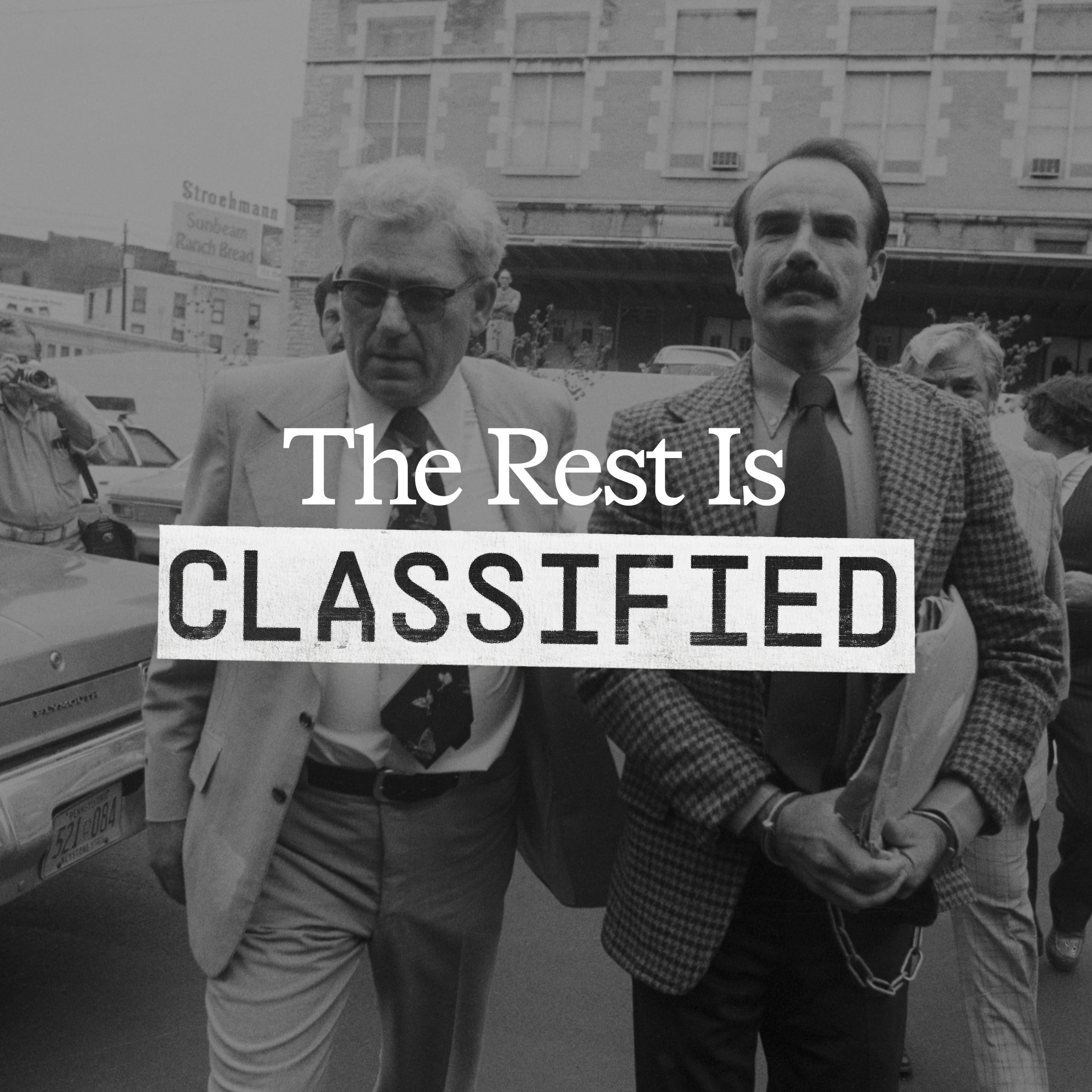
9:02Gordon: Because remember, Macho, when he is arrested, had a wad of sequentially numbered$100 bills that had been given to him by Liddy for use as bail money or for bribes. For example, if they'd run into the security guard in the water, they might have given him a few hundreds. If you trace those bills, you get to a bank account in Miami. If you trace that account, you find campaign money that had been laundered through Mexico, including four checks that had been handled by a Mexican lawyer and a$25 ,000 cashier's check from a Nixon fundraiser in Minnesota. Uh-oh. The fundraisers, journalists, of course, all over this, they go and see the fundraiser and he's like, how did my money end up in a Miami bank account?
9:57David: And of course, this is the famous line, isn't it? Follow the money. Follow the money. If you follow the money from the burglars, you get back to the committee to reelect the president and Richard Nixon.
10:07Gordon: That's right. As this is happening, a very bold idea emerges inside Nixon world. The agency's history credits this idea to the former attorney general who'd been running Nixon's re-election campaign and who'd been involved in a lot of the, quote unquote, political intelligence work, Operation Gemstone, all of those sort of litty and hunt dirty tricks. He had been notionally overseeing this. Because as the FBI has been investigating, they're seeing these CIA connections. And FBI special agents are beginning to speculate in the early days that this is actually a CIA operation that's happening at the Watergate.
10:51Gordon: And the idea from Nixon world is, well, if the FBI already half suspects the agency, maybe we should have the agency quietly confirm that. And then try and keep them away. And keep them away. The newly appointed deputy director of the agency is a Nixon man, political loyalist. What if he tells the FBI, stop pulling on this money trail, because that's going to touch on CIA activities or equities in Mexico? So on the morning of the 23rd of June, the former attorney general's recommendation reaches Haldeman, the president's chief of staff. Now, there's really no thought, it seems, given to the idea of how you might completely tarnish the principal foreign intelligence agency of the United States by doing this.
11:39Gordon: he's desperate he likes the idea and thinks it's going to fit rather well because the fbi agents who are working the case at this point feel that's what it is this is cia now haldeman it's a wonderful kind of historical counterfactual to think about what if haldeman had just handled this himself and gone to the cia deputy director and said make this happen but he doesn't do that Haldeman goes to Nixon.
12:08David: And this is crucial, isn't it? Because it's involving Nixon directly in the cover-up of Watergate. Because there is obviously this question about how much do Nixon know about the actual burglary in advance. He doesn't necessarily have to know anything about it. But it's his involvement in the cover-up which is going to destroy him. The Oval Office is wired for audio.
12:29Gordon: Which Nixon has done, yeah. Which Nixon has done. Now, past presidents had audio recording capabilities in the Oval Office. But what made Nixon so unique was that it was voice activated. So anytime someone would start speaking, that system would start recording. In the past, and I actually think audio recording capabilities had been there going back to like FDR.
12:51David: The president or someone would have to manually turn it on. And so you can decide, I want this meeting recorded or not recorded. Whereas with Nixon, it's automatic. By the way, there was also a secret recording system in the British cabinet room in the 60s and early 70s installed by MI5 for which the tapes have disappeared. But back to Nixon. So Nixon is being taped as this question of how to cover up Watergate comes to him.
13:15Gordon: This is probably one of the most important conversations of the Nixon presidency. And this is a conversation that totally changes Nixon's political future. It's the 23rd of June, 1972. Haldeman has come to his office and basically pitched this idea of, let's tell the CIA to tell the FBI to stop. And Nixon is on board with the idea immediately and kind of starts coaching Haldeman on how he should set this up. the instruction that Nixon gives, which is, again, recorded, is, you know, when you get these people in, say that the problem is that this will open up the whole Bay of Pigs thing.
13:58David: Now, it's a really interesting line, isn't it? Because Bay of Pigs, of course, was a CIA scheme which goes disastrously wrong to overthrow Castro using Cuban exiles in the United States. And some of those exiles, as we've said, are now being used in this. So it seems to be like a threat to the CIA or a kind of a line to the CIA, which is, you better help us cover this up, or else the fact that there are Bay of Pigs veterans used in this, it's going to blow back on you and raise questions for you?
14:27Gordon: There's a lot of ambiguity about what Nixon was actually saying. Because the odd thing is that at this point in 1972, the quote unquote whole Bay of Pigs thing is very much out in the open. This was a CIA failure. I mean, this is not some massive secret. It's possible, I think, that Nixon was referring kind of broadly and in sort of a weird way to the Castro assassination plots, which kind of swirl around this and which were not, there were little rumors, but they were not in the kind of public domain at this point.
15:01David: Public domain in 1972. So in other words, yeah, saying to the CIA, cover this up or else it's going to come out. The exposure of this would be terrible for the CIA. The Bay of Pigs veterans have been involved, you know, in the CIA wider plots to kill Castro.
15:15Gordon: The other weird thing, though, is that Haldeman, who, like almost everybody in the story, wrote a memoir called The Ends of Power. He has argued that the Bay of Pigs was Nixon's code word for the Kennedy assassination. It's very strange. But in any case, Nixon is essentially saying is, you know, we kind of have some leverage here over the CIA.
15:37David: Over Helms, especially. And over Helms in particular. Because Helms, CIA director, had been involved in Bay of Pigs and planning it. And all of these operations in the 60s. That's right.
15:44Gordon: So Nixon says, you know, don't lie to them to the extent of saying there's no involvement. Just say it's a comedy of errors. It's bizarre without getting into it. They, meaning the CIA, should call the FBI in and say that for the good of the country, don't go any further into this case, and then that'll destroy the case. So Nixon and Haldeman have this meeting in the morning of the 23rd of June 1972. They meet again later that day. And Nixon comes back to the idea. And again, it's all recorded. Nixon says, well, look, this fellow Hunt, you know, it'd be really bad to kind of have knowledge of his involvement in this.
16:18Gordon: Get out there. He knows too damn much. And he was involved. We happen to know that. If it gets out, it's all involved in the Cuban thing. The Cuban thing. The CIA looks bad. That hunt looks bad and it's likely. And again, he says to blow the whole Bay of Pigs thing, which would be very unfortunate for CIA and for the country. And then Nixon says, we protected Helms from one hell of a lot of things.
16:40David: We talked about this actually at the start, this relationship between Helms and Nixon, where to some extent they both almost have dirt on each other, on the bad stuff that's happened. Particularly Nixon had been vice president, you know, in that period in which Bay of Pigs is being planned, even though it's executed under Kennedy. So they kind of know stuff on each other. Nixon is like, let's use this leverage on Helms to get him to help us cover up Watergate.
17:03Gordon: So they finish these meetings, Haldeman and Nixon, and then Haldeman summons CIA Director Helms and his deputy, again, who's a Nixon man, over the White House that very afternoon for a meeting. And Helms writes in his memoir that he knew something was up because he's not usually asked to bring his deputy with him. In any case, they go. They drive over, come up through a basement entrance into an elevator that Helms says is the size of a telephone booth, escorted to what is kind of this ante room, but it's actually where Ehrlichman, who's one of the president's chief domestic policy aides, I think you had referred to him as the Stephen Miller of the Nixon White House.
17:43Gordon: Domestic policy chief. And Haldeman's also there. And it's very clear that Haldeman, the chief of staff, is running the meeting. Haldeman opens up with some general remarks about the very serious allegations that touch on important people in the campaign. And then he turns to Helms and says, what connection does CIA have to Watergate? And Helms, again, holding the line that his office of security director had said, we don't have anything to do with this. Haldeman kind of ignores this because I think that's not quite what he wanted to hear. And he moves on to the essence of the conversation, which is that as the FBI is digging into this money trail that goes to Miami and then to Mexico, maybe this investigation could jeopardize agency operations in Mexico.
18:32Gordon: And, quote, it has been decided, love the passive tense, that CIA should go to the FBI and say further investigation into Mexico is going to create the possibility of exposing agency assets and money channels.
18:48David: Which is obviously not true. Not true. It's going to expose the fact that the money trail leads back to the president's re-election committee rather than to CIA activities.
18:56Gordon: Correct. Now, Helms pushes back on this, but at first it's kind of mild. Because after all, he's told the FBI that the CIA wasn't involved. He's already told the FBI this. And that none of the suspects had worked for the agency in over two years. Yeah. Because McCord and Hunt are retiring. So he can sit back. He can sit back and wait. But Haldeman doesn't let it go. No. And I mean, Helms writes, he's like, I think it's pretty unlikely that Haldeman, the White House chief of staff, knew about CIA money channels that I didn't. But again, and we set this up a bit in the first episode, this is an era where, and Helms is very accustomed to this, there are occasionally going to be times where the White House tells you to do sensitive things, including some things that violate the charter of the agency.
19:41Gordon: And in the past, there's a precedent for agency directors, including Helms, to say sure. Yeah. But everyone's got to keep quiet about it. So he's not outraged by this. He seems almost more baffled and confused by these kind of weird requests he's getting from the White House. Helms refers to it as a, quote, increasingly baffling session. So the confusion is spot on. Haldeman keeps insisting that the deputy director of CIA should be the one to carry the message. Again, who's more of a political appointee. Exactly. And begins to take a more threatening tone with the agency guys, saying that if the FBI doesn't stop, it will lead to an unraveling of the Bay of Pigs.
20:25Gordon: Again, this mysterious Bay of Pigs thing. And Helms is, I think, now getting angry and confused. And his response is, the Bay of Pigs hasn't got a damn thing to do with this. There's nothing about it not already in the public domain. So kind of like, what are you talking about? Yeah, what is this Bay of Pigs?
20:45David: What is this? Haldeman claims Helms is shouting at this point, although I think Helms denies it. And I mean, Helms, in his account, I think, says he's just confused. And the only explanation he can think of was that the president knew something that he didn't. Spot on. Which is true. That'll turn out to be correct.
21:04Gordon: Yeah. So leaves the meeting confused. The next part of the story, I think, is often replayed as a kind of a heroic CIA stand against a lawless presidency. But it's really not so clean because later that afternoon, the CIA's deputy director does exactly what he was asked to do. He goes to see the acting director of the FBI. The deputy director's own memorandum for the record has him saying that if the investigation were pushed, quote, south of the border. Into Mexico. Into Mexico. It could trespass on covert projects and that since five guys were already under arrest, it would be best to let the matter lie there.
21:48Gordon: So that is basically what the White House wants. It's basically what the White House wants. So Helms isn't doing it, but his deputy is. Now, his deputy will later write that it simply didn't occur to him that Haldeman, the chief of staff, might be asking him to do something that was illegal or wrong. Shocking. And that if you questioned every order from the White House, you couldn't conduct the business of government. But again, it gives you a window into the way the interaction between the CIA and the White House worked in this era, which was when the White House asked you to do something, you just do something.
22:21David: Although here, it is interesting, isn't it? Because, I mean, the deputy does go back to Langley and he asked the agency to check whether there are any CIA operations in Mexico that this FBI investigation might endanger. First to the FBI.
22:33Gordon: And he's like, if you keep going with this, it might imperil some of our operations in Mexico. And then he goes back to the agents and he's like, do we have operations in Mexico?
22:41David: And they're like, don't think so. Nothing that can get endangered. Is he not talking to Helms? That's what I find a bit strange. It's like, Helms is like, I don't want to get involved in this. But his deputy is basically like, maybe I'll do what I'm told.
22:53Gordon: When I was at the agency and looking at the Syrian intelligence services, it was a very classic kind of political control mechanism to have... a chief, and then to have someone under the chief who was actually loyal to the Assad family or whomever, who could then spy on the organization from inside. And I think it's a very similar model here. Helms has been running the CIA since 1966. He is a Johnson appointee. And Nixon doesn't trust him, but Helms was seen as a competent professional spymaster, so they keep him on, but they've installed a deputy who can keep tabs on things. So it's a very similar model.
23:38Gordon: That model is, well, maybe up until recently, hasn't been used much since, but this was very much, I think, the case at the time.
23:46David: Yes, there are potentially interesting parallels, I think, today, where you see often you have someone running an agency and then a level one level below, you have the real political guys. That's right.
23:54Gordon: In any case, now that the deputy director has gone back and actually had the agency take a look and say, do we have equities in Mexico that could be adversely affected by an FBI investigation? The agency has come back and said, no, not really. And so without a doubt at this point, both Helms and his deputy know with absolute certainty that the White House's premise is totally false. And in late June, after these key meetings, Helms will write up a memo asking if the FBI confine itself to the personalities already arrested or directly under suspicion and desist from expanding the investigation into other areas which might eventually run afoul of agency operations.
24:38David: Which is a bit of a message, which is like, yeah, don't spread your investigation too wide. So they're basically doing a bit of the White House's bidding, but a bit.
24:47Gordon: But here's the key part, which is that Helms tells the FBI, reiterating again, there was no CIA involvement in this, which again is sort of not quite true. And critically, the CIA had no interest whatsoever in the strange money trail that links the burglars to the Nixon fundraising money. That's the heart of it, which is you guys can look into this and it's not going to impact the agency.
25:13David: It's not us. Keep going with that. but still the white house wants to get the cia involved in the cover-up to some extent because then in late june there's another meeting in which the white house council so nixon's lawyer asked to meet the cia's deputy director and over three days works around to asking him could the agency pay the burglars bail i mean hang on i mean not just the bail not just the bail
25:43Gordon: Cover payments for them while they're in prison. So don't just bail them out, but actually pay them on the sly while they're incarcerated.
25:52David: I mean, which is nuts. I guess what the White House is trying to do is that they've got to pay off the burglars. Absolutely. That becomes one of the key things that's going on with Watergate, is that the burglars, who of course have got all the dirt on the White House and what's going on there, want to be looked after. And they've got leverage, if you like, on the White House. And the White House is like, maybe we can get the CIA to do this for us. Maybe we can get them to look after the burglars.
26:20Gordon: Because the White House has just had a funding channel for its dirty trick slash political intelligence work essentially wrapped up by the FBI. Exposed and being looked into. So they're thinking, how do we pay these guys off? How do we get some money that won't have a paper trail? associated with it. Hey, I know what. Let's get the CIA to do it. Let's get the CIA to tap into those unvouchered funds.
26:45David: That we all know they have. That we all know they have. The gold bars hidden around places. But fortunately, in this case, the CIA actually, the deputy, refuses, perhaps wisely at this point, I think.
26:54Gordon: You know, we should say, this is a deputy who's appointed by Nixon, who says, look, and rightly so, the scandal is going to be 10 times greater if we do this than if we don't. Because you can only tap these unvouchered funds at the director level. And then that is going to mean that the entire agency and the White House will be implicated in this. And Helms backs him and makes the further argument that basically he doesn't want to be involved in this, I think, A. But B, those unvouchered funds, now this is an era where there isn't a lot of budget oversight of the CIA. But there is a precedent for Holmes having to tell senior members of Congress about how those unvouchered funds are used.
27:41Gordon: And he doesn't want to be called in front of any congressional appropriations committees and have to explain that this is bail money for the Watergate burglary
27:52David: team. So the CIA are kind of wisely staying clear of paying bail and hush money effectively to the burglars.
27:59Gordon: In early July, the agency sends a memo to the FBI, because obviously the FBI has been asking more about the agency's relationships with the Cubans, with Hunt and with McCord. And the memo says there is no basis for the FBI to cease investigating Hunt, McCord and the Cubans on the grounds that it would compromise the national security interests of the US. This is the first time to say I really started to push back and go,
28:26David: you can keep going with this to the FBI, yeah? I think it's the second time.
28:30Gordon: Yeah. We're seeing a bit of a dance here.
28:34David: Because basically, if you're the CIA, you can start to see this could go really, really, really badly wrong. And you're like, we do not want to be near this, and we do not want to be near the cover-up. But speaking of cover-ups and hush money,
28:46Gordon: the White House has a massive problem because the CIA has refused to bail out the burglars with those unvouchered funds. and they still have five burglars in jail who could talk. Enter Howard Hunt. Who else? What has Hunt been up to? After his call from Bob Woodward. After his call from Bob Woodward. I woke him up groggy. Oh my God. Hunt has sort of gone on the run. He's gone to Chicago, which is near his wife's family, to basically lie low. But he's hauled into a federal courthouse on the 13th of July. He and his whole family are served with grand jury summonses. He is questioned on the 18th.
29:25Gordon: He pleads the Fifth. Fifth Amendment, you don't have to incriminate yourself in an investigation. He basically says, I'm not going to talk. Then Hunt's lawyer receives a$25 ,000 retainer from an undisclosed source in early July. This is a man who calls himself Mr. Rivers and who has contacted Hunt's wife first through the lawyer and then directly. And he was insisting on only dealing with a woman he refers to as the writer's wife, Dorothy Hunt. And he does this on the assumption that Hunt's phone is being tapped by the FBI. And this Mr. Rivers asks again through the channel of Hunt's wife for estimates of each of the arrested guy's monthly living expenses and legal fees.
30:15Gordon: And then basically says whatever that estimate is for one person. Let's multiply it by five so that we can deliver all this money basically to one place. They actually set up a drop site for this cash. It's a locker. They kind of tape a locker key under a payphone at National Airport in DC. And then that key unlocks a locker that has a blue bag in it that's filled with cash. Hunt's wife will be the sort of the mule for this cash. She'll bring it home and then distribute it. The first delivery covers three months, not the promised five. This will also be a theme of the money is it's always less than what they're asking for.
31:01Gordon: And Liddy is funded through a separate channel.
31:04David: So where does this money come from? Because it's not come from the CIA. No. CIA has said no. And so where do you find the money? And the answer is the campaign? The Nixon campaign.
31:15Gordon: The Nixon campaign. And it's routed through, as you have to when you're laundering money, it's routed through a very crazy and complicated chain to avoid directly implicating principles in the White House. But the payments are discussed and organized by Haldeman, Ehrlichman, Nixon, Stephen Miller, the White House counsel, and even Nixon himself. Nixon is told that this is going to cost a million dollars over two years. Yeah. On the money, Hunt, he's kind of, you know, his demands move through various phases over the course of the ensuing winter. At first, he's asking for money for expenses to cover living costs and legal fees.
31:56Gordon: Then he ups it to a kind of a lump sum that he feels is owed to him personally. And finally, he kind of threatens to blackmail the principals in the White House if he's not paid. He's also, I mean, quite tragically, this is a terrible winter for Howard Hunt because not only is he facing prison time, but his wife, while carrying some of this cash, dies in a plane crash in the winter of 1972. So Hunt is...
32:31David: He's all over the place.
32:32Gordon: Yeah, Hunt is falling apart. And he's using his leverage to get as much money as he can. An example of this is just prior to his sentencing. in 1973. He's insisting on two years of family support plus the legal fees. And when the lawyer is like, I don't even want to talk about this, Hunt loses his mind. He goes nuts, shouts that I need this money. He says it's about$120 ,000. And he says, I'm owed this cash for my services rendered. And Hunt also very ominously says he could bring John Ehrlichman, the Nixon aide, to his knees if he had revealed the seamy things that he'd done. Hunt is paid, but he's not paid the full sum.
33:15Gordon: He only gets about$75 ,000 of it, and he will wind up spending 33 months in prison.
33:21David: So there with Howard Hunt in prison, let's take a break, and when we come back, we'll see how this mess still isn't over for the CIA.
33:37Gordon: club makes the perfect gift. Gordon, I know we mentioned the club in every episode, but could you give everyone a flavor of what club membership actually looks like?
33:46David: The lucky recipient of this gift will get to catch up on all the brilliant bonus content from this year, things like our series on Kim Philby 9-11, our interview with the former head of MI5, all of that ad-free. And of course, declassified club members get exclusive early access to all future releases as well.
34:04Gordon: But being a member isn't just about our exclusive content. It also means being part of our community. We hosted our first ever members event at Bletchley Park this summer, a fantastic chance for members to meet each other and to contribute to live episode recordings.
34:19David: And don't forget our weekly newsletter written by producer Becky. Plus, every annual gift comes with a special edition t-shirt merch. We hope this has made you even more excited about the club, whether you're
34:32Gordon: treating yourself this Christmas or you know someone who would love to join.
34:36David: And it is the easiest gift to give. You just head to therestisclassified.com forward slash gifts and you can schedule a gift to land in someone's inbox on Christmas Day.
34:47Gordon: Ulcerative colitis and Crohn's disease symptoms don't pause for the moments that matter. That's why understanding your treatment options matters. Discover what's possible with Trimphaya. Gusalkamab. Trimphia is a prescription medicine used to treat adults with moderately to severely active Crohn's disease and adults with moderately to severely active ulcerative colitis. Serious allergic reactions, increased risk of infections, or lower ability to fight them and liver problems may occur. Before treatment, get checked for infections and tuberculosis. Tell your doctor if you have an infection, flu-like symptoms, or need a vaccine.
35:20Gordon: Talk to your doctor and explore what's possible or call 1-800-526-7736 to learn more about Trimphia and visit TrimphiaRadio.com.
35:32David: This episode is brought to you by Petivity. Cat parents are basically mealtime detectives. Who actually ate? Did they finish? Was that less than yesterday? The new Petivity Smart Feeder for Cats turns everyday meals into meaningful health insights, helping you identify changes in your cat's habits and be more proactive about their health. Plus, you can feed them from anywhere. Take the mystery out of mealtime. Visit Petivity.com, P-E-T-I-V-I-T-Y.com slash catfeeder to learn more.
36:06David: Welcome back. Howard Hunt is in jail. The White House has got serious problems. The CIA has done its best to distance itself from Watergate. But David, the mess isn't over for the agency, is it?
36:18Gordon: It is not, because the agency gets a terrible gift in that in July, a letter arrives at Langley from James McCord. Who's in prison. The tech guru who is responsible for not charging the batteries on walkie-talkies and improperly taping the door at the Watergate. So he's in prison. Over the following months, he'll send more letters. And again, he's sending these two helms at CIA. In these letters, McCourt explains that investigators are trying to make the Watergate defendants implicate the agency. These letters are locked up in a safe at the Office of Security. They are not handed over to the FBI.
37:00David: Do you think, is this him just trying to exercise leverage on the agency? I mean, the FBI might be trying to investigate the agency, thanks, I guess. But it's also maybe him going, get me out of here. Yeah, I think it's a little bit of everything.
37:13Gordon: I think it is McCord trying to, I think, maybe throw a Hail Mary to see if the agency can pull some strings to help him. And, oh, by the way, we're in this together because the FBI is trying to squeeze me to implicate you. I also think, quite honestly, I think part of it is he's concerned that the agency might be implicated in it and wants to let Helms know.
37:38David: Which it is, because of course you've got these alias materials and things like that, which do lead back to the agency.
37:44Gordon: In the months after the break-in, the CIA is starting to get a sense of how the technical equipment and some of the support it gave to Hunt and to McCord and to Liddy was actually used for these burglaries that the plumbers had undertaken. So there are, for example, Xerox copies of the pictures that Hunt had taken inside Dr. Fielding's office. Remember the psychiatrist for Daniel Ellsberg. They turn up. Also, the alias identification that had been issued to Hunt, all of this stuff ends up in Helms's office in 1972. So he's getting a sense of, oh, wait a minute, that stuff that Hunt came asking us for has been used in domestic break-ins.
38:33David: It's worth saying, isn't it, that the Watergate as a kind of political story is actually quite a slow burn. It is. It takes many months, you know, for it to emerge, the links back to the White House. And in the meantime, in November 1972, Nixon, of course, wins re-election, you know, because so far it's not become clear yet just how close the connections are between his re-election campaign and the burglary and everything else. And then he decides to clean house, doesn't he? It's very interesting. He decides, I need to get rid of some people.
39:02Gordon: And one of them will be Helms at CIA. So Helms is summoned up to Camp David, the presidential retreat up in Maryland, takes a 30-minute helicopter ride up there, shown in. And for this meeting, I think Helms actually goes with plans to talk about the next year's budget. He doesn't think he's going to be dismissed. But Nixon basically says, it's time for some new blood. But Helms kind of plays a little card. He says, maybe I'll go, but not yet. Maybe a good moment for my retirement, Helms says, would be the following March when I turn 60 and reach the agency's mandatory retirement age. And Nixon, you know, again, it's this kind of dance between the two of them where Nixon doesn't want Helms to leave on bad terms.
39:50Gordon: Because he knows where the bodies are back. Right. And I think Helms knows this. And Nixon is kind of taken aback by this. And Jefferson Morley in his book Scorpion's Dance, which really focuses on the relationship between Helms and Nixon, describes Helms kind of sensing that Nixon is shifting gears, like seeing that these two guys are going to make a deal. And Nixon, rather abruptly, says, well, maybe you'd want to be an ambassador. How about Moscow? And Helms says, well, the Russians might not appreciate having a former CIA man in their capital. How about Iran?
40:27David: Which in those days is a good posting. We should say these days, there's no embassy. This is under the Shah when it was a nice place to go. So he ends up ambassador to Iran.
40:35Gordon: He ends up ambassador to Iran.
40:36David: He serves as ambassador to Iran until 1976. So it's interesting, isn't it? Because he's being moved. I'm sure he doesn't want to be moved. Is he being moved for not helping out with the Watergate cover-up? I mean, he's kind of helped out a little bit, but maybe not as much as the White House wanted.
40:54Gordon: I don't think Watergate had much to do with it, to be honest. The timing certainly suggests it, Because we have these really fateful meetings in June and July where slowly, but it becomes clear to the Nixon White House that Helms isn't going to help them cover it up, really. So you could kind of make the case that, okay, well, Watergate contributed to Nixon kicking Helms out the door. But when you go and look at, for example, Haldeman, the chief of staff who kept a record in his diary of these meetings, he describes it basically as a kind of friendly meeting. With Helms being kind of surprised and a little bit disappointed that he was being asked to leave, I think Nixon probably planned the change after the election regardless.
41:42Gordon: Because remember, Helms is not a Nixon guy. And it would make sense for his second term that now that he's gotten his bearings, to shove out Helms and put someone in that he wants.
41:53David: But meanwhile, the FBI is still looking at these connections, isn't it, between Hunt and the CIA. The agency is asked to retain records, bearing on, you know, the break-in and everything else. But a week after a letter from the FBI arrives, Helms' secretary is asked what should be done with the tapes and transcripts in storage, which are from a recording system that Helms had in his office as well, a bit like Nixon, and which clearly may reflect on Watergate. and what the build up of it. And what does Helms say? Well, they destroy them, Gordon. Destroy the tapes.
42:30Gordon: They destroy the tapes. And remember when we did the series on MKUltra, Helms had also worked with a friend of the show, Sid Gottlieb, to destroy all of the records associated with MKUltra.
42:42David: So destroying records is something you did back then, basically. Something you did. So all these recordings and notes from Helms's office, which could have related to Watergate, They're all destroyed because he's leaving office. He's like, well, I'm leaving office. No need for these anymore.
42:56Gordon: Yeah, just clean house. I mean, Helms, in his defense, Helms says, well, I kind of saw these tapes and transcripts as kind of personal notes. It's a routine part of vacating the office to destroy them. The agency, he claimed, had produced all of the Watergate material it had and that nothing that was destroyed had anything to do with the Watergate scandal.
43:16David: If you were conspiratorial. As we know that you are not. As we know I'm not. just to thank you David for establishing that. If you were conspiratorial and you thought this whole thing was a deep state project, this is the kind of thing you'd look to. The whole of Watergate is a CIA plan to destroy Nixon. And the answer lay in the tapes. Now, I don't think that's true, but it is interesting, isn't it? How it feeds into that. Because as soon as you have tapes destroyed, it feeds a conspiracy theory. Because what was on the tapes? Maybe that's where the truth was, but I don't buy that. I buy that there might've been something a bit suggesting maybe some of his conversations about support for Hunt and these other things.
43:54David: Sure. Those would have been on the tape, and he does not want those out, so he's going to destroy that. But that's not the same as a big deep state project. He's covering his tracks, but in the way you probably would in those days.
44:06Gordon: Helms will write later that he realized how bad the timing looked. Yeah. And there's an investigation into the CIA. I'm going to destroy my tapes. And that he was simply, I think he referred to it as tidying up on his way out. out of the building. But one of the fascinating, I think, aspects of the CIA's involvement in Watergate, the questions around it, it has so many kind of indirect impacts. It's kind of this like pinball effect that even reverberates up to today. So, for example, in March of 1973, so a little less than a year after the break-in, during what was supposed to be James McCord's sentencing, because remember, he's been in prison this whole time.
44:48Gordon: A letter that he wrote to the judge is read aloud. And Garrett Graff in his History of Watergate lists off its revelations where McCord basically says, look, political pressure has been applied on the defendants to plead guilty. Perjury had occurred at the trial. Other people involved in the burglary have not yet been identified. He says Watergate, even though he'd been pushed to say this, Watergate was not a CIA operation. the cubans involved may have been misled into thinking it was but he knew for a fact it was not and i bring this up because i think to my mind this is actually a pretty strong indication that the cia didn't run watergate as an op or even have advanced notice of the break-in because the letters that mccord wrote to helms secretly before this say exactly the same thing yeah and And I think what has happened is McCord has become totally disgruntled by the pressure being applied on him to stay silent.
45:56Gordon: And he's had enough. And he wants to say all this to the judge. The new CIA director, a guy named James Schlesinger, is just weeks in the job because remember Helms is gone. He's gone on to party with the Shah. He learns that the CIA had helped Hunt and Liddy with equipment that was used in the break-in in California, the psychiatrist's office. for Daniel Ellsberg.
46:18David: And his reaction is to say, uh-oh, what else has been hidden? How far does this go?
46:24Gordon: He gets his answer in a few days, which is that the letters that McCord had written and which had been in a safe in the Office of Security are produced. He sees that these letters, which are addressed directly to Richard Helms, hadn't been disclosed to anybody, including to the FBI. And Schlesinger apparently goes nuts. He had like a very legendary anger management problem and he just loses his mind. Schlesinger is then thinking, well, I'm kind of sitting on top of this seamy scandalous place. What else is there? And so he directs every CIA employee to report any current or past activity that might have fallen outside the agency's charter.
47:09Gordon: and officers begin to come forward.
47:13David: And this becomes something enormously important, which historically, which is called the family jewels, because these are basically the deepest secrets of the CIA and the things which it has done, which are basically the murkiest things. I mean, we're talking about kind of assassination plots, you know, bribery, things which are kind of beyond the charter or in some cases beyond the law.
47:37Gordon: Mail opening, surveillance on the anti-war movement domestically, LSD mind control.
47:43David: I mean, it is clear that CIA officers think, maybe I better come forward now because it's almost like an amnesty. It's almost like, you know, the director has said, so this is our chance to kind of clear house and admit everything. And it becomes this fascinating document called The Family Jewels, which is held initially secretly within the CIA, outlining all the stuff it's gone up to over the years. It's, you know, the plots against Lumumba, against Castro. There's so much. There's so much. We'll do the family duel some other times. But this is a kind of becomes a very famous document because inevitably one day it's going to come out.
48:18Gordon: Just a few months after Schlesinger had asked for all of this information to come forward, the inspector general at the CIA has done a summary that runs to more than 20 pages. The full collection of documents will run closer to 700. and they don't come out fully until 2007. And I remember I was an intern at the CIA that summer and I remember seeing this come out and having absolutely no idea what it was.
48:50David: I remember as a journalist going, wow, this is good stuff. You know, as a writer, it was really amazing. And that is all a result basically of Watergate. It's all a result of Watergate.
48:59Gordon: So this is a pivot point in the history of the CIA, where, again, all because of Watergate, all of this dirty laundry will come out. Again, it threads all the way back to Schlesinger getting angry about information that had been covered up or withheld related to the Watergate scandal. So there's kind of this almost direct line to the modern day system of congressional oversight that the CIA has. The way the CIA is sort of institutionally controlled today, it all goes back to Watergate.
49:34David: I mean, you know, looking at the fallout, we're not going to get into the politics of it because there's then this very interesting, complicated period in which Nixon comes under pressure over what he knew, when he knew it, about the existence of tapes. All of that happens. But the result is that, you know, Nixon himself is going to be heading for impeachment and resigns August 1974. More than two years after the break-in. And what about the other characters? I mean, Howard Hunt, we should say for club members, we've got a whole two-part miniseries on the life and times of Howard Hunt because it is such a wild story.
50:10David: So do join up at therestisclassified.com if you want to hear about that. But for him, he's going to spend time in prison and then come out a kind of ruined man, I guess.
50:19Gordon: Yeah, I mean, he's pretty wrecked. I mean, remember, his wife tragically dies in a plane crash as she's ferrying money back and forth.
50:26David: What about the pulp thrillers? He was writing those books. Yeah, so he...
50:30Gordon: There's always a career in that, David. He goes to Florida and rebuilds a kind of quiet life. He remarries, starts writing again, and spends his last decade as kind of a semi-professional Watergate witness and conspiracy-adjacent figure. He writes his memoir, American Spy, as he's dying. It's published in 2007, the year that he actually dies. And I think it's, you know, this sort of this crazy Hunt's irony, which is he'd always wanted to be a novelist. He became a spy, wrote novels about being a spy, and then he ends up novelizing his own life. And so I think, you know, he's kind of almost the unreliable narrator to the to the very end.
51:12Gordon: Now, Gordon Liddy took the exact opposite path. He never cooperates with any of the investigations. He never testifies. He stays silent during the hearings and trials. He'll serve the longest sentence of any Watergate figure, more than four years, before President Carter will commute his sentence in 1977. And he kind of turns defiance into his brand. When he leaves prison, he writes a best-selling memoir called Will. I guess he's sort of Nazi adjacent. Is it an ode to triumph of the will? I don't know. And then he reinvents himself in, I think, a totally predictable way as a right-wing radio host and lecturer and commentator.
51:58David: Today he would have a podcast. There's a BBC documentary in which he's interviewed about Watergate. This is from many years ago. And which he just thought, you're right, he's totally unrepentant. He starts brandishing a gun, you know, during the documentary and saying, yeah, I'm shooting out the lights like this.
52:11Gordon: That's when he brought the air pistol outside of when they were casing McGovern's offices and they shot out the lights. Wild character. What about McCord? McCord serves a relatively short sentence, lives pretty quietly afterward. And as we discussed, he publishes his own memoir in 1974 called A Piece of Tape.
52:28David: And the Cubans serve some time, although shorter sentences than these. Return to the Miami and exile community, they keep quite quiet.
52:36Gordon: Yeah. Most of them. There's, I think, an ongoing debate about what did Hunt and Lydia actually tell the Cubans they were doing? Yeah.
52:45David: Were they just doing a job? So, how do we look back on this? I mean, it is a mad escapade. It really is. Did the CIA do Watergate? That was one of the questions. I mean, the answer is not entirely a negative. They didn't do the break-in, let's be honest.
53:03Gordon: Maybe the way to refine the question is, was the Watergate break-in a CIA operation? No. Again, I'm surprised, Gordon, because over the course of this podcast, you've sort of drifted G. Gordon Liddy-esque into more conspiratorial waters, right? The counterpoint is all the tapes got destroyed. Yeah. I mean, look, which has fed this, you know, all these conspiracy theories for decades.
53:29David: Did they do the break-in? No. The plumbers did the break-in who were, you know, organized by the committee to reelect the president. Did the CIA help them? Yes. Did the CIA knowingly help them to do the Watergate and the political burglaries? How much do they know? Less sure about that.
53:47Gordon: You've teased the conspiracy theory a few times that it was all a CIA plot to wreck Nixon. Yeah. How do you construct this argument?
53:56David: I'm not saying that I buy that conspiracy, but that is the conspiracy theory. Yeah. And maybe here we should get to the modern day parallels about that, because this was brought up this year, 2026, by none other than the vice president of the United States. So what? J.D. Vance. And he is talking. It's a wonderful video in which he talks, a little clip of it you can find, at the Nixon Foundation, at the Nixon Library. There's another point he comes to in a minute, which is about what happened today. But his argument there is the deep state took on Nixon a bit like, obviously, he's saying the deep state took on Donald Trump and tried to bring him down.
54:38David: And so it's so interesting. You've got the vice president of the United States currently pushing what you have called a conspiracy theory, David, which is that the deep state took down Nixon. Because that, to explain the theory, is that Nixon was this poor innocent guy, tricky dick, you know, unfounded reputation. And those dastardly people at the CIA decided, for what reason, I don't know, they wanted to get rid of him. And so the CIA planned the whole Watergate thing to pin it on the president and get rid of him. I mean, you have to kind of go quite a long way, I think, down in conspiracy land to get there, don't you?
55:16Gordon: Yeah. Well, it also we have the tapes of Nixon talking to Haldeman about how it would be great to cover this up using the CIA. Yeah. Pressuring the CIA. And squeezing the CIA in the weeks afterward to help kill the FBI investigation. I guess it doesn't completely rebut the theory, but it seems implausible that Nixon, if he were being sabotaged, I suppose the theory is that he's being unknowingly sabotaged by the CIA. But the thing that kills him isn't the actual break-in. It's the cover-up. The idea that the CIA does this break in to frame him, it doesn't make any sense. It relies on a whole series of very contingent things that happen in the aftermath that were totally unpredictable and unplanned and unknowable.
56:06David: I mean, the one bit where you do get interesting things is, of course, you know, we talked about Woodward, Bob Woodward of the Washington Post and Woodward and Bernstein famously investigate Watergate. They do have a source who is helping them follow the money, follow the trail and bring down Nixon. And that source, we only many, many, many years later realize, is a very senior FBI official who, of course, is the famous Deep Throat, as the source is known, named after a dodgy film in the 70s. But, you know, redolent of the idea of the deep state was an FBI guy helping the journalists bring down the president.
56:42David: So, you know, there's something interesting in there, which also goes back to not trying to defend Nixon here. But, you know, Nixon's paranoia about leaks and people within the state leaking was kind of true. You know, there were people in the state leaking. So you can see that the notion of a deep state out to get Nixon, this is not the same as saying the CIA did Watergate. And I'm sounding like a Nixon apologist here. You are. Or a Trump apologist here. Which I'm not. But you can create a worldview in which you go, Pentagon Papers, Daniel Aylesberg, people leaking from the state to bring down the president.
57:19David: I mean, admittedly, I would see them more as whistleblowers, revealing the truth about the lies over Vietnam.
57:24Gordon: The crazy thing about the Pentagon Papers, though, is it didn't have anything to do with the Nixon presidency. No, it didn't. It was all about decisions made under Kennedy and Johnson.
57:31David: FBI people guiding reporters to take down the president. But again, because the president is covering up a break-in, which he himself did. So I think the problem is the false lie with Nixon, totally. You know, I don't think any of this does what some people want to do, which is kind of exonerate Nixon as some kind of an innocent.
57:52Gordon: I think the vice president's take on this is historically ignorant of the facts around what actually happened in the story that we've just told. Because it's not the deep state that has made some decision to take Nixon down. No. It is... Nixon's actions. It's Nixon's actions. And it's a quote-unquote deep state. In reality, a CIA director, and I think this is another important part of the story. That even though there's some, obviously, document destruction and lack of, you know, sort of forthcomingness on the part of the CIA with the FBI, you have a CIA director who, when the agency is asked to do something that would have been very against its charter, to kill an FBI investigation into a criminal act, they say no.
58:47Gordon: Now, Helms eventually holds the line and says, we're not going to do this for you. It's a very important moment in the history of the CIA.
58:59David: We are not just an arm of the White House. There are limits to how far we will go. And there are points, there are red lines where we will say no. Now, the other bit of J.D. Vance's comments, which I think was so interesting as well, because I think this gets to this question, which is, could it happen today? Yeah. Which is, he does say that if it happened today, Watergate, it would be a 12 hour news story. And I mean, it's a dark thought, but it's so interesting, I think, as a kind of question. Although in a way, I think he's half right. I'm not sure he's entirely right. Well, the spirit of the comment is that it really should be a 12-hour news story.
59:36David: It's not a big deal. Because it's not a big deal. Whereas I think the problem is rather it would be a 12-hour news story because we've become so normalized to some of the bad things that can happen in Washington that now we'd be like, oh, it's another thing. And then another thing would happen after 12 hours or 24 hours. And we'd move on to that. Yeah. So it's not that… There'd be some truth social post that comes out two days later and just takes all of the oxygen out of the story. It's not a big deal, but it's been normalized, which I don't think is what the vice president is saying. But it's a kind of interesting question, isn't it?
1:00:07David: Is that if there were a break in today, I mean, could it happen today? Could the CIA get involved? I mean, that's the question, I guess.
1:00:14Gordon: The equivalent today would be a couple former NSA or CIA techies who end up involved in a murky political lobbying group or oppo research group who conduct a set of cyber attacks or malware implants on a network. that happens to be run and operated by... A Democrat.
1:00:48David: Gavin Newsom or the Democrat National Committee or some Democrat candidate.
1:00:51Gordon: Yeah. And somehow the trail gets back to them.
1:00:55David: Being paid for by someone else who in turn, the money went back to the Trump re-election campaign, hypothetically. That would be the parallel.
1:01:03Gordon: And maybe they'd left the agency with some tech or know-how or whatever, there's a connection back in some contractory type way. You could imagine a modern day analog of this. And I think that one of the differences today, and why I think it's very plausible that something like that could happen, and why I agree with J.D. Vance that it would only be a 12-hour news story, if anything at all, is that the information environment is so fragmented and politicized and busted up today that there would be a significant swath of Americans who would look at that story and say, this is made up. This is bogus and I don't believe it.
1:01:45Gordon: Even if it was sort of factually covered and reported in whatever media outlet.
1:01:52David: There'd be enough people out there trying to muddy the waters and go, this is fake news, this is not true. It wouldn't kind of grasp the public and political consciousness in the way today.
1:02:01Gordon: Or, you know, one of the things that I think made Watergate Watergate is that it was seen as a kind of aberration. Like, this was a vast overreach of an illegal overreach of presidential power and authority. And it had to be corrected. Whereas I think, to your point on political corruption being normalized today, you'd kind of look at it and say, even if you you looked at the story that broke in my notional example, and you said, oh, I believe it, there would also be a subset of the population that would just say, that's just how it works.
1:02:40David: Yeah.
1:02:40Gordon: This is what happens. This is what happens.
1:02:41David: This is politics. Everyone's dirty. Everyone hacks into everyone else's stuff. Everyone steals it. It is different, isn't it? Because I think there's something so physical and visceral about a burglary in which you have the burglars getting caught compared to a kind of a cyber breaking, which I agree is what it would be today. I mean, also, you're right. The information environment is different today. The political environment is different today. Back then, Congress and other people were willing to take on and act as a check on the presidency.
1:03:10Gordon: Well, that is what sinks Nixon, is that senior Republican lawmakers, once the tapes come out -
1:03:17David: Are like, we're done.
1:03:17Gordon: Are done. We're done. Yeah.
1:03:18David: Yeah. So I think there are lots of interesting reasons why, if there was this hypothetical scenario, yeah, of some ex-intelligence agency hackers getting caught hacking into a Democrat campaign and there being a money trail back to someone linked to the presidency election campaign. I think it would be a big story, but I don't think it would bring down a president.
1:03:41Gordon: No, it wouldn't. And would a CIA director, if asked today, to help cover it up? would they? We've covered this in some of other episodes, the sort of creeping politicization inside the intelligence community.
1:03:58David: Well, particularly a DNI director. The way the current system works, it would be the director of national intelligence. And those figures, Donald Trump has put in place people who are very politically loyal to him.
1:04:10Gordon: Would the FBI investigate this in the same way it did?
1:04:13David: Under Kash Patel?
1:04:14Gordon: The national security system that we have in the States, I think, is becoming more of a political creature. And so there's even a question of whether a story like this would come out or whether there would be any kind of investigation. I actually think J.D. Vance might be wrong that it would even be a 12-hour news story. It might never come out in the first place.
1:04:35David: Wow. There is a thought. And that maybe is a good place to end this series on Watergate, which is, you know, in some ways it's a history series. but it feels very contemporary. It's got kind of wild elements of the CIA in the 70s, but yeah, the contemporary links are fascinating. And of course, a reminder that if you are a declassified club member, you can hear the bonus episodes, which are going to go along with this series, in which we deep dive into the wild, wacky life of Howard Hunt, which is a pretty crazy journey. But we've also got some other special guests. We've got the Mooch, Anthony Scaramucci, a man who's worked in the White House, although I don't think he commissioned any burglaries.
1:05:16David: I'm sure he didn't. We'll ask him. We'll ask him. He's going to be talking about Watergate, what it meant then and what it means for politics in the US today. So do join up at the Declassified Club at the rest is classified.com if you want to hear those. But otherwise, we'll see you next time. We'll see you next time.
1:05:42Gordon: Bowlin Branch Luxury Organic Cotton Sheets.
1:05:45David: Only 1 % of the world's cotton meets their standards of softness. Treat the people you love to the comfort of Bowlin Branch signature sheets, pillows, and more. Feel the magic in every moment. Save 25 % site-wide at bowlinbranch.com with code CHEERS. Exclusions apply. See site for details.
1:06:12David: 80 % less money spent. You can go wrong. Check out the sun. Five stills galore.
1:06:17Gordon: Black Friday scores. Your most is too.
1:06:19David: More than a few. Grab a big bed.
1:06:21Gordon: Two layer head mattresses. Two sheets that are new. Save that Wayfair. Save on these chairs. Find just your style.
1:06:27David: It makes you smile. Here's a quick plug. Area roast. Free shipping while Wayfair is how. Win the season. Win the season. Wayfair, Wayfair, Wayfair, Wayfair, Wayfair.
1:06:37Gordon: Does checking your bank statements feel like digging through a dusty attic full of forgotten gotten subscriptions and old free trials.
1:06:47David: Experian can help take the pain out of canceling by handling it for you. Think of it as Operation Get Your Sanity Back. Over 200 subscriptions are cancelable. So get started in the Experian app and see how much you could save. Results will vary. Not all subscriptions eligible. Savings not guaranteed. Paid membership with connected payment account required. See Experian.com for details.
When the White House asks CIA for help in the cover-up, what did the Director say? And what is the final verdict on the CIA’s involvement in Watergate?
Listen as David and Gordon reach the dramatic conclusion of their series on the CIA involvement in Watergate.
-------------------
Sign-up for our free newsletter where producer Becki takes you behind the scenes of the show: therestisclassified.com/newsletter
-------------------
Give The Declassified Club this Christmas. Treat yourself or a fellow fan to a membership: bonus episodes, ad-free listening, early access to series, newsletter, and more. Annual gifts come with a special edition T-shirt.
-------------------
Get a 10% discount on business PCs, printers and accessories using the code TRIC10. Visit https://HP.com/CLASSIFIED for more information. T&C's apply.
-------------------
Email: [email protected]
Instagram: @restisclassified
Video Editor: Joe Pettit
Social Producer: Emma Jackson
Assistant Producer: Alfie Rowe
Producer: Becki Hills
Head of History: Dom Johnson
Exec Producer: Tony Pastor
Learn more about your ad choices. Visit podcastchoices.com/adchoices