 Ask ChatGPT


How Howard Hunt and G. Gordon Liddy (the “plumbers”) used CIA resources and Cuban ex-CIA assets to target Daniel Ellsberg and then pivot to Nixon’s 1972 re-election campaign, culminating in “Operation Gemstone” planning for political break-ins (including Watergate/DNC).
No guests are named in the provided transcript; it’s hosted by Gordon Carrera and David McCloskey.
The CIA’s technical services supported Hunt’s reconnaissance and disguise preparations, and CIA leadership imposed controls only after Hunt brought Liddy into the technical-services circle. CIA psychiatrist staff were pressured to produce a no-signature, signature-free profile of Ellsberg for smear purposes, approved by CIA Director Richard Helms with secrecy instructions. Headquarters later told Miami station to “cool it” about Hunt’s White House affiliation.
Hunt and Liddy casing Dr. Fielding’s LA office; a Spanish-speaking cleaner letting them in; CIA-developed casing film. Cubans recruited via Hunt’s “Eduardo” cover (including Bernard Barker “Macho”). The DOJ pitch meeting where Liddy presented “Gemstone” (Nacht und Nebel, Einsatzgruppe language) and was told to cut costs and burn charts; later scaled-down “political intelligence” funding and recruitment of James W. McCord (CIA Office of Security retiree) for surveillance gear.
Written by AI. May contain mistakes.
Discussion on Nixon's concerns about leaks leading to the formation of the Plumbers.
“Not the official name, but that's how they became known.”
Exploration of the plan by Hunt and Liddy to break into Ellsberg's psychiatrist office.
“So David, we have this desire to go after Daniel Ellsberg, the leaker of the Pentagon Papers, and they want to get his psychiatrist files in order to basically smear him, don't they?”
Learn about the formation of Hunt's team and their operations with Cuban contacts.
“But I guess the key point is he is trying to build a team by doing that because he's been told, don't do the break-in yourself.”
Explore the conspiracy theories surrounding the CIA's involvement in Watergate.
“So he's another one of these kind of veterans who's been involved in these operations, but he is still on the CIA payroll.”
Understand the CIA's unethical profiling of Ellsberg and its implications.
“And it's actually where a lot of the ideas of the deep state come from, is from that idea.”
Examine the shift of operations to the Committee for the Re-Election of the President.
“Now, what's interesting is we are heading towards a presidential election in 1972, in which Richard Nixon is running for re-election.”
Explore G. Gordon Liddy's bizarre proposals for the 1972 campaign.
“How can it gather information or steal information that will be useful in the campaign?”
Learn how Liddy and Hunt interpreted ambiguous guidance from Nixon officials to proceed with their plans.
“Gordon Liddy, Howard Hunt have been given a kind of ambiguous answer, haven't they, David, from the top Nixon officials.”
Explore the recruitment tactics of Liddy and Hunt as they prepare for covert operations.
“So a lot of the recruiting they're doing is for that because Hunt's Cubans will supply a lot of the manpower for the black bag jobs.”
Discover Liddy's shocking dinner trick to impress a potential recruit, which backfires dramatically.
“had killed 22 people, including hanging two of them from a garage beam.”
Understand the differing recollections of a crucial meeting about the gemstone proposal.
“They have a scaled down version of the gemstone proposal that Liddy had made that's on the meeting agenda, but it's kind of near the bottom and it's a long list.”
Analyze how approval for illicit actions was communicated and executed within the campaign.
“and then the next day approves$250 ,000 for a wiretapping and burglary fund and reports up to the White House that the campaign now has a sophisticated political intelligence gathering system at its disposal.”
Learn about James McCord's background and his significant role in the unfolding Watergate events.
“Watergate's again on the list, but not quite at the top.”
Explore the unexpected consequences of J. Edgar Hoover's death on the White House and the Watergate plot.
“Now, I don't know what credentials, it was sort of not clear on what credentials.”
Examine the counter-protest preparations by Liddy and Hunt during Hoover's funeral.
“And Hunt calls up several of his Cubans, who are obviously tough guys, Bay of Pigs veterans in some cases.”
Explore the details of the covert operation targeting McGovern's campaign headquarters.
“Now, remember Ruby 2, that Utah college student that Hunt had recruited?”

Get the gist, explore an idea or ask about something said.
 Claude
On The Rest Is Classified, what are the key points of this episode?
Searching your listeningAutomatic transcript. May contain errors.
0:03Gordon: For exclusive interviews, bonus episodes, ad-free listening, early access to series, first look at live show tickets, a weekly newsletter, and discounted books, join the Declassified Club at therestisclassified.com.
0:24How did a former CIA officer lead a break-in into the offices of a Los Angeles psychiatrist? And what did the CIA know about it? Well, welcome to The Rest is Classified. I'm Gordon Carrera. And I'm David McCloskey. And this is the second of our series on the CIA and Watergate. Last time, we looked at the paranoia of President Nixon in the White House, his anger over all the leaks that were coming out of the administration, his desire to do something about it, and how a team of his White House aides had created a group called the Plumbers to deal with those leaks. Not the official name, though.
1:07Not the official name, but that's how they became known. And so these plumbers have in their sights Daniel Ellsberg, who's leaked the Pentagon papers, details about the history of the US involvement in Vietnam, and they want to get in to his psychiatrist's office, which happens to be in LA. And this is the start of what will eventually become Watergate. First, though, a quick message from our sponsors, HP.
1:36Gordon: This episode is brought to you by HP. In intelligence, you quickly learn that you are only as strong as the network around you. It's rarely a single major event that undermines an operation. It's the gaps between systems. That's where information leaks. It's the same in business. Leaders face a constant battle against strict timelines, mismatched tools, and the worry their security isn't as tight as they think it is. Which is why HP approaches technology not as a collection of gadgets, but as an integrated system. And crucially, that protection is built in at hardware level. It runs quietly in the background, blocking threats without requiring constant specialist oversight.
2:17Gordon: With a team of business advisors, HP helps businesses of all sizes find technology that fits their needs and budget. To see how HP helps businesses work securely and productively, visit hp.com forward slash classified. Trick listeners also benefit from 10 % off HP business technology with the code TRICK10. Hi, this is Gary Lineker from Goalhangers. The rest is football. This episode is brought to you by Wise. It's only when you start moving money between currencies that you really think about the exchange rate, the fee, and what might be hidden away in the small print. Whether you're living abroad, paying someone overseas, or just trying to manage your money across borders, you want a fair exchange rate, an easy transfer, and no surprises along the way.
3:06WISE keeps things simple. WISE is a smart way to move the currencies you need around the globe. It works in more than 160 countries and with over 40 currencies. Most transfers arrive instantly. Wise uses the mid-market exchange rate, like the one you see on Google, with no markups or hidden fees. So when money needs to move, you can see the rate, know the fee, and get on with it. Join millions saving billions on hidden fees by downloading the Wise app today. Be smart, get wise, T's and C's apply.
3:42Gordon: This episode is brought to you by Solana Breakpoint. In intelligence work, your most valuable asset is timing, knowing what's coming before anyone else does. The biggest mistake isn't taking a calculated risk, it's operating on outdated information. AI and capital markets are dominating our headlines and rewriting the rules of business as we speak. That's why Solana Breakpoint is bringing together investors, builders, and policy makers in one room. Think of it like an unfiltered briefing, mapping out the exciting opportunities as well as the potential risks. From November 15th to 17th in Olympia, London, you have the chance to hear from global experts at the Centre of Finance, Tech and AI.
4:25That includes key speakers from the London Stock Exchange, Revolut, JP Morgan and X. Plus, I'll be there asking the hard questions and moderating the sessions.
4:34Gordon: To sign up, go to solana.com slash Breakpoint. Use code BP26-Goalhanger for 25 % off. So David, we have this desire to go after Daniel Ellsberg, the leaker of the Pentagon Papers, and they want to get his psychiatrist files in order to basically smear him, don't they? You love a leaker though, don't you, Gordon? I do not. Gordon loves a leaker. A noble whistleblower revealing the truth and the idea the CIA would go after such a man. Shocking. Well, it's not the CIA. Okay. It's a former CIA guy. With a little bit of help from the agency, as we learned with some wigs and documents from the agency.
5:19Gordon: We should say, and I think this will be a recurring theme of our Watergate series, which is how much did the CIA know about what Hunt was up to? What did they know and when did they know it? It doesn't seem at this point that they know that the target is Ellsberg's office for his equipment. But we'll come back to that. So, as you said, they look at Ellsberg and say, look, if we can get into the psychiatrist's office, we can get a bunch of derogatory information, we can smear him in public. Hunt and Liddy, the dangerous duo, put together a proposal inside the special investigations unit, the plumbers, that they will break in and take the records themselves.
6:01Gordon: It is approved with a slight amendment to their proposal, which is that Hunt and Liddy should stay away from the premises themselves. So they should find people to do the job. So it's not don't do this illegal thing. It's look, you guys find some people to do it for you. But given what we know about Hunt, the former CIA officer involved in coups and black bag jobs, and G. Gordon Liddy, the former Feeb guy who also kind of likes the Nazis, will they listen to the instructions to keep their distance from the break-in? Ish, I would say. Yeah, ish, ish. But they need to prepare for it, right? So Hunt is continuing to use the CIA, the technical services division, the spy gadget people, essentially as a quartermaster.
6:43Gordon: So he goes, he obtains a recorder and a typewriter case. He gets business cards and an alias name. He gets a commercial camera. He also gets a wig. Remember, he got his own wig and disguise kit. He gets one for Liddy. He gets an alias, alias documents for Liddy. They put together pocket litter, including a social security card, a lifetime NRA, National Rifle Association membership, a gate altering device that they slip into their shoe. So you walk a different way. Walk differently. Yeah. And a 35 millimeter to seen a camera that is concealed inside a pipe tobacco pouch. Kind of like they want to play spies, isn't it?
7:21Gordon: Well, they are. They are kind of spies. Hunt is a spy. Yeah, this is what they do. They have essentially decided, look, we won't do the break in ourselves, but we will do the reconnaissance work up front. So in late August, Hunt and Liddy fly out to LA on a government travel voucher and check into the Beverly Hills Hilton Hotel. This is just blocks away from Ellsberg psychiatrist, Dr. Fielding, from his office. So they're out there in disguise, posing as tourists. Wig. Wig, the glasses, you know, hunts in his gait-altering device like Kevin Spacey and the usual suspects, Kaiser Soce, you know, walking with a limp.
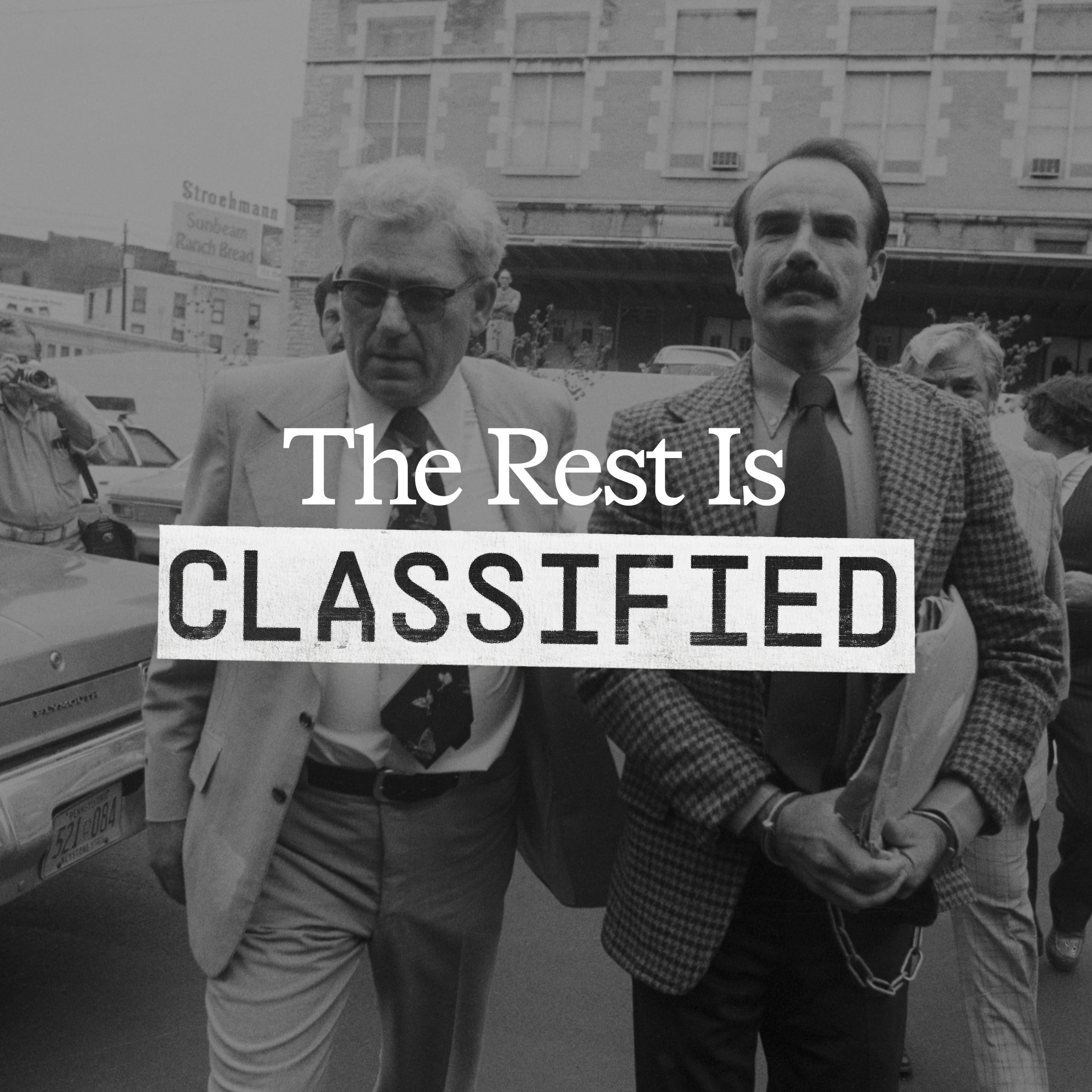
8:00Gordon: They photograph the building. They photograph Dr. Fielding's Volvo in his reserved space. They look at the entryway. They plot escape routes. They case Dr. Fielding's apartment. They return to the offices at the hour that they think they will break in. And they see cleaning equipment in the lobby and they just walk straight into the building. Now, Hunt, remember, he's worked extensively with humans, so he speaks very passable Spanish. And Hunt tells the cleaner in Spanish that they're just doctors leaving a note for a colleague. So she unlocks Fielding's office, lets them in, and Hunt kind of keeps her talking while Liddy pretends to write a note, but he's really casing the room.
8:42Gordon: and he figures that the lock that she just let them through, the cleaner just let them through, won't be any issue. He's an ex-feeb, and as we'll see, the people they're going to hire to do this are going to have some experience in lockpicking, so not going to be an issue. They then sit outside and they check the police patrols because, again, they want to get a sense of what the pattern of life is around this office. They feel good after a few days of casing. The reconnaissance is done. They take a red-eye home, and then they meet a CIA officer who they know as Steve, at Dulles Airport, and they hand him the film that they have used to case the psychiatrist's office and have that film developed by Steve at the CIA.
9:24Suggests the level of CIA involvement in this, which is how knowledgeable - Just troubling. Troubling, yes.
9:30Gordon: As we'll see, though, Hunt throughout really mid to late 1971 makes a number of these requests for CIA assistance. I don't think that, and we'll see, he runs into an issue here, but up to this point, I don't think that Helms certainly really knows what he's doing. Because again, he's leveraging an old agency network and he's leveraging the deputy director who heard from the White House help him out, that kind of, you know, give him carte blanche. He's leveraging all of that to then get essentially technical support. We should say for club members, we've got a whole two-part miniseries on the life and times of Howard Hunt because it is such a wild story.
10:18So do join up at therestisclassified.com if you want to hear about that.
10:22Gordon: But when the surveillance hall is given back to him by the technician, CIA techs know because they've now been involved with him and Lydia on multiple occasions that there's another guy involved. There's this ex-FBI special agent, G. Gordon Liddy, who is basically pasted to Hunt at the hip. And that makes the techs anxious. And they do route this up the chain to say there's another guy who's involved here. And Deputy Director Cushman's executive assistant writes up a memo. And he basically says, look, Hunt has brought a stranger in who now is privy to all kinds of notionally secret things inside the technical services division.
11:05Gordon: the White House really should have cleared that with us because we don't really know who this guy is. The use of all this unique clandestine surveillance equipment, the disguises, the alias documents, if that gets out, that's trouble for us. And the executive assistant says, look, we should instruct technical services to clear all of these requests up through the deputy director's office, implying up to this point they haven't been. And that Ehrlichman, chief domestic policy advisor and who's the principal for a lot of the reports that plumbers are writing up. We should make sure that he proves all this, that he knows about it.
11:40Gordon: Deputy Director Cushman agrees with this. He calls Ehrlichman at the White House and explains, look, we can't meet anymore of Hunt's request. This has gotten a bit out of control and we're worried about blowback if it gets revealed. Hunt's kind of a pain in the neck. And it's all actually written up in a memo drafted on the 27th of August by Cushman, the deputy director. It goes up to Helms, the director. Helms writes one word on the memo, good, and initials it RH. But what does he mean by good? Good that the hunt is a pain in the neck or good that they're now putting on more controls? Good that there are controls and that he's being, as we'll see, he's not actually cut off, but that now these requests will have to get through a formal chain.
12:27But of course, it implies Helms knows what's happened so far, because he's read the memo, and that from there onwards, CIA is going to be signing off somewhere.
12:36Gordon: I don't think that Helms had any foreknowledge of the fielding break-in, for example. I think it's very unlikely that the developed film would have made its way up to the CIA leadership, that they would know in advance. I think they probably don't want to know, to be honest. But at this point, you do have to kind of wonder why someone hasn't taken stock of this and said, maybe it needs to stop entirely. But again, the White House, it's Ehrlichman. He's Nixon's guy. He's saying, help these guys out. That's what you do. So, I mean, as we'll see, Hunt is like sort of cut off. For example, just a few days later after this memo, Hunt makes another request.
13:22Gordon: He wants backstopped credit cards. Request is refused. He also wants the support of a particular CIA secretary that he had used in Paris. Agency says no. But he does keep contacting people inside the building. He meets with the deputy director for plans, again, who's the chief of the operational directorate. He contacts an agency officer inquiring about someone to help with a, quote, weekend entry operation. He asked for help running name traces. And he also pings what was then called the External Employment Assistance Branch. So once people leave the agency, they help place agency officers in the private sector.
14:00Gordon: And he says, look, do you have a retired lockpicker? That you can refer me to. It's like a LinkedIn. It's like lockpicker. Lockpicker. Yeah. Burglar, basically. But I guess the key point is he is trying to build a team by doing that because he's been told, don't do the break-in yourself. Don't get too involved. They've placed the joint, but for the break-in itself, they're going to look elsewhere. But again, it's going to be with some links to the agency. Agency adjacent. Hunt worked there for 20 years. So everybody he knows is kind of agency adjacent. It does seem like his request to the CIA's external employment assistance branch was not particularly helpful because he ends up going to his old Cuban friends.
14:47Gordon: Ah, the Cubans. He had started to build a team of Cubans even prior to the focus on Ellsberg. So I think as part of his work with the plumbers, he was understanding that these Cubans would be useful. It's worth talking a little bit about them because they'll play an important role in the story. One of the recruits is known as Macho. Real name, Bernard Barker, but he's Macho. He's got a cryptonym, agency cryptonym, AM Clatter One. Clatter One is not the name I'd want for a burglar. Just saying. He's a very interesting guy. So he's a Cuban-American, but in his case, he's not a Cuban exile who happens to be in the States.
15:26Gordon: He's an American who was born in pre-Castro Cuba. He was a longtime CIA asset. He's actually a World War II veteran. His B-17 was shot down on a bombing raid. He'd spent a year in a German POW camp. But after the war, he had joined former Cuban dictator Bautista's police force, probably as part of his work for CIA. And he left Cuba after the revolution. He winds up being Hunt's deputy on the Bay of Pigs. So those two are very close. By 1971, he's a Miami real estate guy. He's got agency ties. He was formally terminated as an asset by the agency in 1966. But he's one of Hunt's guys. Yeah. And so it feels like Hunt is tapping up his old contacts that he knew from Bay of Pigs.
16:14And those are the people he's going for. Yeah, makes sense. It does.
16:16Gordon: It makes sense. And Hunt, he's gone to Miami for all of the memorials. And he uses Hunt when he's with the Cubans. We'll refer to Hunt throughout the story as Hunt. But to the Cubans, he's Eduardo. That is his CIA work name. He meets with Macho. They have lunch at a Cuban restaurant. And Hunt says, look, I'm working with the White House on a very interesting project, and we are building a team to operate where the CIA and the FBI cannot. And what we are doing is we're looking at a traitor, Daniel Ellsberg, who has given papers to the Russian embassy. He's playing off of the fact that the entirety of the Pentagon Papers had made their way to some foreign embassies.
17:00Gordon: But he's doing something slightly subtle here in making it seem like Ellberg's a communist. He's given the papers to the Russians. He's an enemy of the state, right? Yeah. So he's framing it as a national security mission, implying that this is probably a kind of authorized thing, perhaps. I think so. To the Cubans. Yeah. At least giving the impression this is. Yeah. I think the Cubans, it's a very interesting question, and it's actually a bit unresolved, is exactly what the Cubans... Who do they think they're working for? Who do they think they're working for? And I think at this point, at least, they very much think that this is the agency.
17:39Gordon: Or this is the White House, but it's official, right? It's a very official, in their minds, maybe even legal thing. Because at least one of the Cubans, this guy, Eugenio Martinez, was on a CIA retainer still. So he's another one of these kind of veterans who's been involved in these operations, but he is still on the CIA payroll. I mean,$100 a month, not that much, but he's been involved in CIA operations into Cuba. So the fact someone on the CIA payroll is being asked to be involved in this operation, again, gives that kind of the looseness of the exact role of the CIA is there, isn't it? And it's also, I mean, Martinez's affiliation in particular has become fodder for the belief that, okay, maybe the CIA had advanced knowledge of all the different horrible things that we're going to describe about that are to come.
18:26Which we should say is part of the conspiracy.
18:28Gordon: It is part of it. And you love, Gordon is, you've become over the course of our program, slightly more conspiracy adjacent, I think, than when you began. I just like the truth, David. The truth is out there. I just like the truth. That's all I'm saying. We haven't really set up the conspiracy idea about this. Maybe we'll come to it later. Yeah. The conspiracy idea is that the CIA was behind all of this. Right. This was all a setup. But the Martinez angle is interesting because he's meeting with a case officer regularly. And in a meeting with his case officer in Miami, this is after, you know, Hunt has gone down there for this lunch and he started tapping these contacts and said, I have something important for you to be involved in.
19:08Gordon: Martinez tells his case officer, oh, I saw Howard Hunt. Hunt had been in Miami. He said he was doing work for the White House. And the case officer says, that seems odd. Case officer, I think, doesn't particularly like Hunt. And he says, you know, I'll check it out. And he checks it out and then goes and tells Martinez, I don't have any record of Hunt working for the White House. Now, the White House isn't exactly advertising Hunt's employment or the existence of the plumbers. But the CIA case officer tells Martinez that Hunt probably isn't working for the White House. And the Cuban Martinez, I think he then presumes that Hunt is using that as cover for some kind of secret operation that the CIA is conducting that his handler in Miami doesn't know about.
19:55Gordon: It's a deeper secret. It's a deeper secret. But the Miami station guys are now deeply perturbed. And it's a classic kind of turf battle where they're thinking, well, what in the hell is Hunt up to in Miami on my turf with my assets? Yeah, so cables are going to go back and forth about this. And so the COS Miami, Chief of Station Miami, cables Langley. And he says, look, Hunt comes down here and he seems like he's promoting business deals of some sort, but he's also said he's told by Asset that he's on a White House retainer as a consultant. And he asks that Langley check on Hunt's White House affiliation because he wants to know if he's actually their unofficial business.
20:37Gordon: the reply from headquarters which will end up being quoted by one of the commissions that looked into the baker commission looked into cia involvement in watergate is basically hunt yes he is working for the white house it's of no interest to us and in effect they say cool it just don't don't worry about it don't look into it and i think that the sort of sum total of the provisioning that Hunt's getting from the technical services division. His relationships with higher-ups at the CIA, including the deputy director for plans, this weird interaction in Miami with the CIA, Langley basically saying, don't look into it, has created a very fertile ground for, I would argue, conspiracy theorists to claim that the CIA, and there's kind of two variations of this.
21:33Gordon: The CIA did Watergate. The CIA is behind it. It's actually a CIA operation. The maybe slightly more defensible version, but I also think incorrect, is that the CIA had four knowledge of it. The CIA knows what Hunt is up to and helps him and does not stop it. Yeah, because the real conspiracy theory is this idea of the silent coup in which the deep state, the CIA, is actually taking out Richard Nixon by doing Watergate and then leaking it and then making sure Nixon takes the blame. That's the real conspiracy theory. And it's actually where a lot of the ideas of the deep state come from, is from that idea.
22:14But you're right. There's a next thing on, which is maybe they had knowledge of it, which I think is more plausible if you look at this. I mean, two ways of reading these interactions. One is to go, the CIA are just like, ah, this guy Hunt, he's getting on with stuff. Just keep your distance and we'll give him the minimum support. There's another bit, which is like, we're giving him what he needs to do it. Now, that's not quite the same - Because we've been asked by the White House.
22:38Gordon: Because we've been asked by the White House. Yeah. I think that it's impossible to overstate the importance of that call between Ehrlichman at the White House and the deputy director where he says - Carre Blanche. Give him what he needs. Give him what he needs. And again, it just comes back to the point we raised in the first episode around the nature of the CIA at this time, its role as kind of the president's, literally sometimes, black bag outfit, where when you were asked, even, again, as we saw with Helms in the Johnson years, even when you're asked to do things that violate the agency's charter - If the president asks, you do it.
23:16Gordon: It's not to excuse it, but it's to say that that is the brand and the culture in this time period. So we've got these Cubans recruited by Hunt. They're going to go out to LA and they're going to do the break-in. They do the break-in. They do it very loudly. They're trying to make it look like it's a drug-related burglary, but they do the break-in. They don't find anything. All that. There's no profile in there on Ellsberg, on Daniel Ellsberg. So it's all for nothing. And interestingly, after the break-in, because again, they've done this to advertise that there's a break-in, the LAPD pick up another guy who's already wanted on several unrelated charges.
23:57Gordon: And they squeeze him and basically in exchange for those charges being dropped, he pleads guilty to breaking into Dr. Fielding's office. So the case ends up being closed, even though this guy had no involvement in it. He's been fitted up. He's been fitted up. Give me the usual suspects. The plumbers, as we can see, are striking out on their mission here to tar Ellsberg. So in late October, Hunt and Liddy, they go out to the CIA psychiatrist staff. Because remember, the whole point of the break-in had been to give the CIA psychiatrist more information about Ellsberg so they could use it in their profile.
24:36Gordon: So basically with no more information, they go out and do the classic policymaker thing, but let's just squeeze them again and see what comes out. So they go out, they meet the CIA psychiatrist, and they say, okay. Okay. And actually, the agency has written this up in its own internal history of the Watergate investigation. Say, you need to produce a study within a week. The paper should have no signature on it, no watermark. It shouldn't even have Ellsberg's name on it. They want to know more information about Ellsberg's sexual proclivities. And it's very clear in this conversation, again, to the psychiatrist, that they are trying to get material they can use to manipulate or defame Ellsberg.
25:15Gordon: The doctors, they do it. A few weeks later, they produce the profile. They send it up with a note saying, we think that this, they don't say this explicitly, but they basically say, we think this violates the agency's charter. Now, we didn't want to have anything to do with this. We think the director should have a chance to comment before it goes out the door. Helms reads it, approves delivery, and he writes that the agency is glad to be of assistance, but that he wishes to underline that its involvement in this matter should not be revealed in any context, formal or informal. Helms writes later in his memoir, which is called A Look Over My Shoulder, a great title for a memoir, that he is not proud of this moment.
25:54I don't find it very impressive because it's basically going to read it, approve the delivery, and say, I want no trace of this whatsoever. We're going to cooperate in doing something we know is wrong. We know it's wrong.
26:05Gordon: We know it's wrong, but just don't talk about it. That psychiatrist study is going to be handed over to the White House, to Hunt and Lydia at the White House. This is November now, 1971. Now, what's interesting is we are heading towards a presidential election in 1972, in which Richard Nixon is running for re-election. And I guess that's the context for the next stage in this, which is going to take us towards the Watergate break in itself. Because that December 1971, Lydia and Hunt, our ex-Feeb and ex-agency man, are going to move across to this fantastic organization called the Committee for the Re-Election of the President, whose acronyms are CREEP.
26:51I mean, what was he thinking? I mean, you've got to think of your acronyms when you come up with an organization. If you're Nixon's people to call your committee for your re-election CREEP, I mean -
27:02Gordon: They don't call it CREEP though. That's just how it's been slandered. I believe they abbreviated it's CRP, but it has been forever called creep. Yeah, they should have spotted that one. And in particular, given what creep is going to get up to, I think it suits. Yeah, because they've got the taste for it now. They've got the taste for what you can do with break-ins and getting dirt on people. And so now you've moved the people who do that from White House plumbing leaks to politics, to a re-election campaign. That's right. Interestingly, Liddy goes over to Creep as chief counsel. So keeping the law first and foremost.
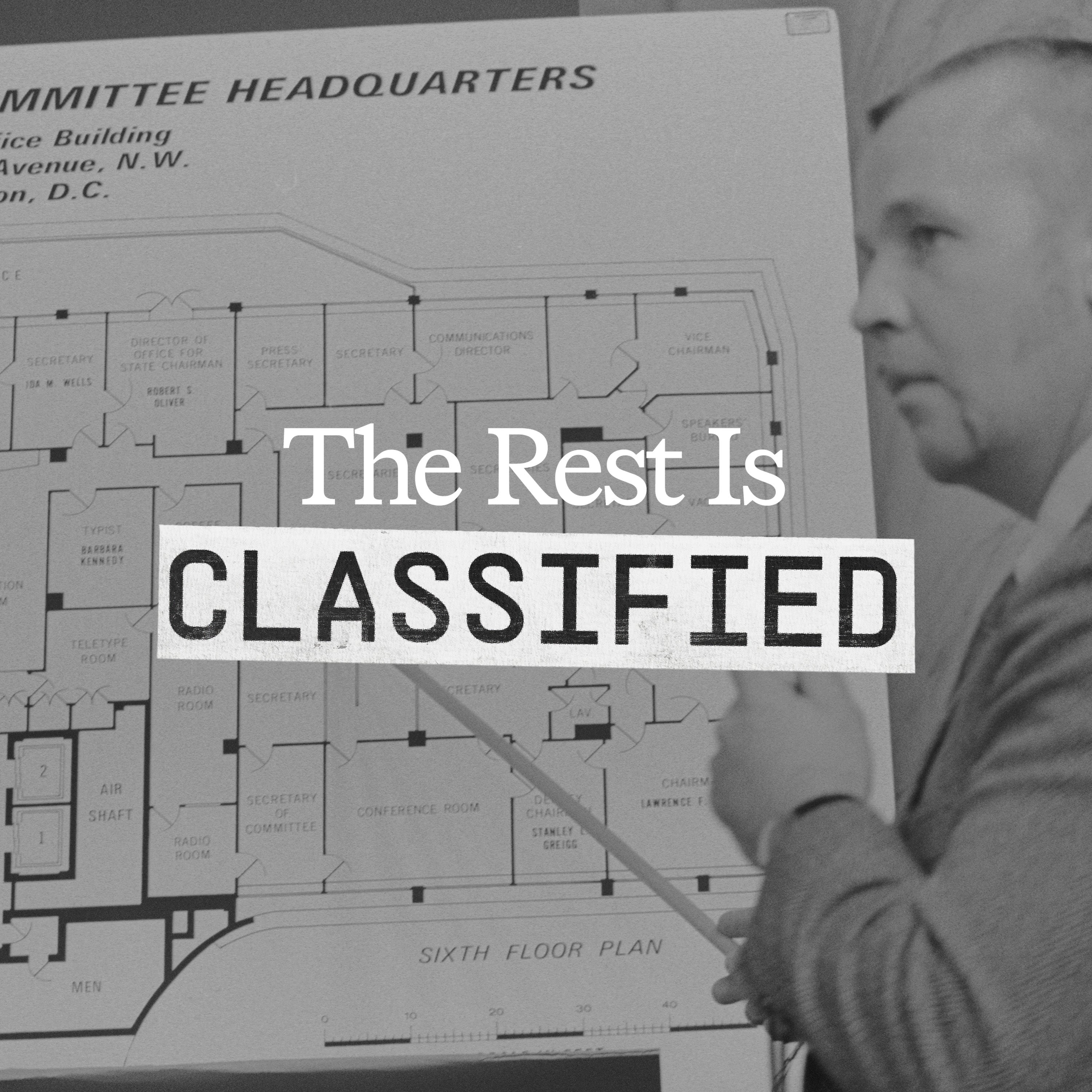
27:46Gordon: Hunt is never actually formally part of it. He stays on his retainer, but he is effectively embedded in Creep's operation. And it is, I mean, to your point exactly, Gordon, shifting into more kind of a political intelligence focus. How can it gather information or steal information that will be useful in the campaign? So by December of 71, Liddy is at Creep, and they are essentially reporting up through the same structure. There's Coulson, there's Ehrlichman at the White House. and the idea I think of this in-house intelligence operation has really been swirling around and like you know it's very fitting I think with Liddy's personality he comes up with a very wild scheme to weaponize it and like all good schemes or elaborate plans they need elaborate charts to demonstrate their plans so they're putting together these proposals which we'll talk about in a minute And they ask the CIA's in-house graphics shop to print and produce them.
29:00Gordon: The charts. The charts. The CIA does have a good graphics shop, I have to say. Does it? This is, again, a kind of bizarre abuse of agency resources. Now, remember, of course, Hunt thinks, well, I've got carte blanche to ask the CIA for stuff. So a graphics shop? Sure, why not? The CIA's graphics shop produces them. Liddy collects them from a CIA technician on a street corner. They're wrapped up and they do the handoff. The big pitch meeting is January 27th of 1972 and it's at the Department of Justice. Fittingly. Fittingly. For a pitch meeting about break-ins. Liddy is presenting. In the room are the Attorney General of the United States, John Mitchell, the deputy of CREEP, along with Nixon's White House counsel.
29:54Hunt is not there. Liddy puts the charts up on easels, calls it Operation Gemstone.
30:01Gordon: Each operation underneath the overall scheme has a code word, and that code word is unsurprisingly a gemstone. Diamond is the centerpiece of this. And the idea here is to kidnap anti-war protesters, drug them, detain them in Mexico until the convention is over. The Democratic convention. Correct. Liddy, as we've said, fascinated by the Nazis, labels it, I'll try my best German here, Nacht und Nebel. Night and fog, which were German detention raids. Right. He also described the team, and I think this is quite unsettling, as an Einsatzgruppe. The SS kill squads. Which are SS kill squads that shot people across Eastern Europe.
30:47Gordon: Yeah. Murder squads. Yeah. So let's just, the Attorney General of the United States is sitting in this meeting? He's smoking his pipe. Smoking a pipe. And listening to this. In this meeting in the Department of Justice, in which they're talking about Einsatzgruppe and Nacht and Nebel rates. And what? He takes the pipe out of his mouth and asks where Liddy could find men like that. So it's not an objection to the plan. He's like, where are you going to get guys who are going to do this? I know some guys. And Liddy says, organized crime. And the attorney general says, well, how much is this going to cost?
31:21Gordon: This kind of seems expensive. That's the obvious question. Yeah. And Liddy said, look, these guys are pros. They're not cheap. I think Liddy is probably referring to the Cubans here. Yeah. not actual kind of - U.S. mafia. U.S. mafia. The attorney general puts the pipe back in his mouth and says, now it might be unwise to contribute, you know, to the coffers of organized crime. So, you know, you kind of point in the meeting where Liddy's like, oh, maybe that didn't land as well as I wanted it to. Let's move on. And then he's got this wild list of the different gemstones, which are the different operations.
31:55Let's run through them quickly. Ruby, planting spies in the Democrat campaigns. Coal, laundering money to Democrat campaigns to sow division. Emerald, a chase plane to eavesdrop on the Democratic nominee's aircraft. I mean, Sapphire, prostitutes to seduce Democratic power brokers aboard a houseboat wired for sound at the Miami Convention. I mean, that's... Sapphire is the best one so far. Sapphire sounds actually quite plausible to me. Opal, four black bag break-ins on the model they've already done at the psychiatrist against Democratic candidates and their headquarters. Turquoise hunts Cuban operatives sabotaging the convention hall's air conditioning to bake the nominee and make him sweat live on television.
32:47I mean, it's a bit like famously Nixon himself sweated to the 1960 debate with Kennedy. It's like my revenge on the Democrats is I'm going to make them sweat at their convention. I mean, they range from the kind of comet to the nut. I mean, it's nuts. These are nuts.
33:03Gordon: The attorney general, apparently, at the mention of the destruction of the air conditioning, smiles, presumably puts his pipe back in his mouth. And Garrett Graff, in his new history of Watergate, wrote, this is when, quote, misguided national security impulses morph into democratic politicians essentially being treated as enemies of the state. Yeah. There is, and it might be a subtle distinction for our listeners, but I think an important one, which is Ellsberg, in the minds of many of the people involved in the story, is an actual enemy of the state because he has leaked classified information that hostile powers now have access to.
33:46Gordon: It's not excusing what they did. But it's an easier, logical kind of train to get to than, well, essentially using the exact same tactics on just political opponents. Political opponents. But it's that leap, isn't it, to say political opponents are enemies of the state or in bed with enemies of the state, which is made. I mean, we have heard - Luckily, we don't deal with this problem anymore. Well, I was going to say, David, we have little hints of that, haven't we? like Antifa and the left and some of those Democrats in the US, and their links to left-wing terrorism, you can see elements of that.
34:25I think that is the really interesting parallel, and the argument that that can then justify the use of certain powers to go after them. I think that's the really interesting parallel. But here, I mean, they're barely hiding the fact that this is, let's just go after our political opponents. Well, they have charts. They've got charts.
34:40Gordon: They've got charts. They're up on an easel. And the Attorney General's reaction to all of this? he says how much is this going to cost it's the obvious question there's a lot of charts this sounds expensive a chase plane yeah following the democratic nominees playing around all the time that's going to be super expensive and as i was reading this while preparing for the episode this was a point where i laughed out loud because liddy's response is one million dollars it is Dr. Evil for Boston Powers,$1 million. Except in the early 70s,$1 million is actually a lot of money. And the attorney general pauses, refills his pipe, relights it.
35:23Gordon: And then he says, a million dollars is a hell of a lot of money, much more than we had in mind. Go back and come up with something more realistic. And Liddy is crestfallen. He's standing in front of his charts. This hasn't worked. And then the AG, the attorney general tells him, he says, and Gordon, burn those charts. Do it personally. I don't like having these giant charts around showing us renting a houseboat in Miami and seducing Democratic power brokers with prostitutes. Get rid of them. So a week later, Lydia's back. He's back. He's back because he's worked on his pitch. You know, he's been slightly pushed back the first time around.
36:01So it's a more streamlined pitch this time. No charts. No charts. No charts. I think he's learned. It's very sad.
36:06Gordon: I tried to figure out if there were pictures anywhere of the charts or if someone had ever reproduced them. And I think Liddy did follow his word and got rid of them. Yeah. It'd be great if you still had the charts. It'd be great if you had the charts. So this time, no charts. And sadly, some of the most ambitious plans are gone. The houseboat filled with prostitutes, gone. Nixed. Budget cuts. The spy plane, gone. Gone. So what's left? Black bag jobs. Breaking and entering. Breaking and entering. and the DNC, the Democratic National Committee offices at the Watergate are now, it seems, on the list.
36:42Gordon: There's a bit of debate about when the Watergate is added. At this point, it's not the top of the list, certainly, but it's floating around now in this kind of gemstone ether as a potential target for a black bag. And we should say the Watergate is where the Democratic National Committee, the kind of Democrat parties, offices are based. That's right. Which is one of their targets. Now, the attorney general, I think this is a very interesting way to deal with Liddy because it gets at some of the ambiguity that has, I think, really characterizes so much of this story. Because he doesn't say no. He says, I'll think about it.
37:20Gordon: Kind of classic, you know, kick the can down the road. The White House counsel, who had arrived late, apparently is horrified by this, but not so much horrified by the job itself or the idea of doing illegal things to collect political intelligence. But he's really horrified that this conversation is happening in this room in kind of an open way. So it's like an operational security concern that he has. Meeting kind of breaks up awkwardly. And I think Liddy probably leaves the meeting thinking, did I? What was the answer? What do you want me to do? The White House Council apparently goes to Haldeman, Nixon's chief of staff, and says, look, I don't know if this should be happening.
38:00Gordon: Haldeman says, oh, yeah, I agree with you, but then doesn't do anything to stop Liddy and the plumbers. Nobody says no. No one's really said yes. you can tell that i think g gordon liddy with the nazi fascination and and howard hunt these kind of guys are they're a bit spooky and people don't want to be super close to them right yeah so there's there's a bit of distance that's created but again they're not they're not formally told hey cut it out none of what they're proposing is out of step with the nixon mindset and it's not out a step at all with some of the proposals that Nixon had tried to approve earlier in his presidency.
38:40Gordon: Yeah, with Hoover and people. Yeah. So it's the same set of tactics. It just happens to be focused on democratic enemies of Richard Nixon. So there with neither a no nor a yes for the breaking and entering into the Watergate and the Democratic National Committee, let's take a break. And when we come back, we'll see if they take that as an opportunity to just stop and sit back or whether instead they prepare for action. See you after the break.
39:29Plus, you can feed them from anywhere. Take the mystery out of mealtime. Visit Petivity.com, P-E-T-I-V-I-T-Y.com slash catfeeder to learn more.
39:40Gordon: Ulcerative colitis and Crohn's disease symptoms don't pause for the moments that matter. That's why understanding your treatment options matters. Discover what's possible with Trimphaya. Gucelcomab. Trimphaya is a prescription medicine used to treat adults with moderately to severely active Crohn's disease and adults with moderately to severely active ulcerative colitis. Serious allergic reactions, increased risk of infections, or lower ability to fight them and liver problems may occur. Before treatment, get checked for infections and tuberculosis. Tell your doctor if you have an infection, flu-like symptoms, or need a vaccine.
40:13Gordon: Talk to your doctor and explore what's possible. Or call 1-800-526-7736 to learn more about Trimphia and visit TrimphiaRadio.com. are you looking for support in your weight management journey zep bound terzepatide may be able to help zep bound is a prescription medicine used with a reduced calorie diet and increased physical activity to help adults with obesity or some adults with overweight who also have weight related medical problems to lose excess body weight and keep the weight off ZepBound is approved as a 2.5, 5, 7.5, 10, 12.5, or 15 milligram injection. ZepBound contains terzepatide and should not be used with other terzepatide-containing products or any GLP-1 receptor agonist medicines.
41:01It is not known if ZepBound is safe and effective for use in children. Don't share needles or pens or reuse needles. Don't take if allergic to it. Or if you or someone in your family had medullary thyroid cancer or if you've had multiple endocrine neoplasia syndrome type 2. Tell your doctor if you get a lump or swelling in your neck. Stop ZEPBound and call your doctor if you have severe stomach pain or a serious allergic reaction. Severe side effects may include inflamed pancreas or gallbladder problems. Tell your doctor if you experience vision changes before scheduled procedures with anesthesia.
41:32If you're nursing, pregnant, plan to be, or taking birth control pills. Taking ZEPBound with a sulfonylurea or insulin may cause low blood sugar. Side effects include nausea, diarrhea, and vomiting, which can cause dehydration and worsen kidney problems. Talk to your doctor. Call 1-800-545-5979 or visit zepbounce.lily.com.
41:59Welcome back. G. Gordon Liddy, Howard Hunt have been given a kind of ambiguous answer, haven't they, David, from the top Nixon officials. but they're not going to take that as a no. They're going to get ready to push ahead.
42:14Gordon: That's right. I mean, I think any ambitious underling should take a lesson from this, which is when ambiguous guidance comes down from on high. Treat it as a yes. Get ready for yes. Yeah, treat it as a yes. Get ready for yes. So while they wait for a decision from the Attorney General of the United States on whether breaking and entering should be permitted under their gemstone plan, They get the infrastructure in place. So February and March, Hunt and Liddy basically run a cross-country recruiting trip. Traveling first class. They travel first class. Stay in good hotels. Stay in good hotels. The whole idea behind the expenditure here is they want to make their recruits think that this is an important and well-funded and official exercise on the part of the White House.
43:04Gordon: And remember, a big part of this up front is this Ruby plan, one of the gemstones, which is let's plant spies in various Democrat campaigns. So a lot of the recruiting they're doing is for that because Hunt's Cubans will supply a lot of the manpower for the black bag jobs. one of the best scenes though litty takes a woman to dinner in california he wants her to be one of these spies inside a campaign and his idea in this dinner is i want to show this woman how tough and how loyal i am how i can stick things out and he tells her to hold out a lighter and then he places his palm over the flame and holds his eyes like locks eyes with this woman as the flesh on his palm starts to smoke and char and blacken and then finally once he's burned and he's kind of like it's like the indiana jones yeah he's like holding he takes his hand away thinking that this woman is going to be impressed he's going to be impressed what woman wouldn't be impressed by that she's totally freaked out it's just no i don't want any involvement in this I mentioned Hunt's Cubans, and in particular Macho, who had been his deputy at the Bay of Pigs.
44:24Gordon: What Hunt wants, at least to start, is a squad of counter-demonstrators and technical specialists. And he does another run down to Miami, and he ends up interviewing about a dozen guys. Hunt, who likes to boast, tells Liddy that between them, the Cubans he was going to hire had killed 22 people, including hanging two of them from a garage beam. Liddy likes that. Liddy loves this. This is catnip to Liddy. He's like, these are the guys. We want these guys involved. He gets his locksmith. He gets his locksmith. Yet another guy like Macho who had been part of Bautista's secret police in Cuba. Locksmith didn't have a connection to CIA.
45:09Gordon: He didn't get him through the external employment branch of CIA. They do get some breakthroughs on the recruitment of spies into Democrat campaigns. One of them, who Hunt recruits, is a Utah college student who they codename Ruby 2. Ruby 2 will come back and be an important role in some of the early black bag jobs. He'll return to him. Eventually, as the attorney general has been thinking, there's a key meeting down in Key Biscayne, Florida on the 30th of March. It's always Florida. It's always Florida. The attorney general has by then he's left DOJ to run the campaign. So he is no longer officially in government.
45:49Gordon: Also present for this are the deputy of CREEP, the committee to reelect the president, and he's a superior to Liddy and another campaign staffer. They have a scaled down version of the gemstone proposal that Liddy had made that's on the meeting agenda, but it's kind of near the bottom and it's a long list. The three guys involved in this meeting had totally different recollections of what happened. Of course they do. Recollections made different. Shockingly. And it's also complicated by the fact that the former attorney general's wife, Martha, is eavesdropping on part of it. Yeah. And will later testify about this.
46:22Gordon: Mitchell, the former attorney general, says he had rejected the plan outright. Of course he did. And to his grave, he denied ever approving. Cool. Gemstone. One of the staffers remembers him, the attorney general, instead of being noncommittal. This isn't something we have to decide now, which feels very on brand. The creep deputy, though, says that the attorney general, former attorney general, okayed it outright. And he says so in his memoir and under oath. the former attorney general's wife martha says the discussion focused not on whether the dirty tricks were a good idea only and again this is also on brand how much money to spend on people and on wiretapping and on and on i think it's very likely that after discussion the attorney general puts off the decision yet again and the creep deputy who again he's he's being hounded by I think for approval, says, just go ahead and do it.
47:21Yeah. Because that's what it feels like is that he's probably thinking, I want them to do
47:25Gordon: it because I know the president wants it, but I don't want to have said that I'm giving it formal approval, but I'd quite like you to just get on with it. Just get on. So kind of like, that's what it feels like it's going on. And so the momentum is building, isn't it? For this to happen, even though you've not quite had that kind of formal sign off. You don't need that. But as we'll see, maybe the formal sign off doesn't really matter. Because the guys who are going to do it get the sense that something has been approved. Yeah. Well, because the creep deputy walks out of the meeting, goes and plays tennis, and then the next day approves$250 ,000 for a wiretapping and burglary fund and reports up to the White House that the campaign now has a sophisticated political intelligence gathering system at its disposal.
48:12Gordon: And that is a euphemism for the scaled down one gemstone plan. I love the fact all the way through, it's described as political intelligence. That's the phrase that's used in the Nixon White House for what they're after, political intelligence. So if you ever hear someone saying, I'm after some political intelligence, it means bugging and burgling. It's not so much, it is political intelligence. It's just how do you get the political intelligence? Yeah, the emphasis is more on the intelligence, but anyway. There are different accounts of the prioritization of targets, in particular for these black bag jobs that comes out of this meeting.
48:43Gordon: Some of the accounts, the creep deputy say Watergate was prioritized right away. I think it's unlikely because the planning doesn't seem to really begin for another four or so weeks. But what is clear is that after this approval, after they get the money, Liddy begins planning break-ins, and it's part of that opal gemstone category against George McGovern's headquarters. Now McGovern will end up being the Democratic nominee for president in 1972. They also plan break-ins against the Miami Convention Center where the - Where the Democrats are going to meet. Convention will be held. Watergate's again on the list, but not quite at the top.
49:22Gordon: Now, I think it is interesting, all this conversation about money and the budget, the break-ins I think are attractive because they are a direct way to gather this political intelligence. And also, they're not particularly expensive. Liddy thinks that each one is going to cost about$10 ,000, and that's going to be payments to the Cubans, airfare, travel, hotels. Yeah, it's not that much. Embedded in that, though, is a bonus of one month's salary each for the two supervisors who are going to be taking the professional risk. That's Hunt and another CIA man who has just joined the creep team in the spring of 1970.
50:04Gordon: Oh, another CIA man. There's another one. Oh. Yes. Surprise. And the CIA has nothing to do with this, of course. But here comes another person linked to the CIA. This is James W. McCord. He'll play a big, big role in this story and its unraveling. And he's been in the Office of Security for the CIA for 19 years, retired 1970, which I guess, as we were saying previously, the Office of Security is the bit that does the kind of dealing with the mafia, you know, the kind of - He's done some odd things over the years. Yeah, Office of Security, it's not just kind of building security and vetting, is it?
50:36Right. It's a little bit more murky business. Robust than that.
50:40Gordon: Robust. He is a career security and surveillance professional. He's not really a case officer. So McCord's job is physical and technical surveillance. He does also seem to have Cuba connections. He'd been involved in planning some operations there prior to Bay of Pigs. He may have even handled some Cuban assets out of the Office of Security. When he retires, he sets up McCord Associates, which is a private security consultancy. The CIA actually refers retiring personnel to him for possible employment. And then by 1972, he has become the head of security for both the Republican National Committee and the creep, which is where he meets up with Liddy and Hunt.
51:23Gordon: So he's kind of McCord for this story is the tech and electronics guy. Yeah. If you're imagining your team in any good spy thriller movie, where you always have the tech guy who knows how to do the kind of pure assembling of the group, he's the tech and surveillance guy. Because again, to get this political intelligence, you're going to need one of these guys. You're going to need someone who's got eavesdropping gear, who's got bugs, walkie talkies, tape recorders, things like that. And he's the guy who can get it basically. He's the guy who can get it. Now, in keeping with the theme for this story, where does where does McCord who's left the CIA go to get this gear he of course knows that there's a Chicago-based CIA contractor who supplies a lot of the technical equipment to the CIA so McCord goes to him and says you know he goes with his wish list essentially and this Chicago-based contractor says are you on official agency business and McCord apparently shows him agency credentials to get the stuff.
52:24Gordon: Now, I don't know what credentials, it was sort of not clear on what credentials. Your CIA pass. He showed. But the contractor leaves this meeting with a distinct impression that McCord is still on CIA business. And Hunt and McCord, they don't really, they don't actually get on that well. Even though they're both ex-CIA guys, they should be friends. You know, both work Cuba, but Hunt thinks McCord's a bit of a thug. McCord, I think, is also not anxious to work with Hunt Because they've had a run in over all things of essentially a disagreement over whether Hunt could publish a memoir about Bay of Pigs.
53:03Gordon: And Hunt had not cleared it with the agency, had written this whole thing, and then seems to, under a pen name, have tried to get it published. And now I will say for those of you who are getting our newsletter, and I should say everyone here should go and sign up for that newsletter at therestisclassified.com. I'll be writing a little bit more for this week on how the agency's pre-publication review process works. But because you feel how it hunts pain, don't you? You're in quite similar positions. I feel a little bit of Hunt's pain, but at the same time, he basically just didn't clear it. And then McCord ends up involved in the investigation.
53:44Gordon: Hence a bit of tension. Hence a bit of tension. Big thing happens on the 2nd of May. J. Edgar Hoover dies. He dies. The chief Feeb. Yeah, the chief Feeb, the man who'd run the FBI for decades and been involved in so many things. It's a big moment, isn't it, for the White House? And bizarrely, it plays a role in getting this team together. I mean, Hoover's just kind of looming over this story, never directly involved. But even here, he plays a role. He plays a role because there is an anti-war protest that is scheduled outside the Capitol while Hoover's body lays in state. And that protest is going to be led by Daniel Ellsberg and Jane Fonda, actress and great anti-war activist in Vietnam.
54:29Oh, yeah. They don't like that. These are lefty radicals. These are hippie radicals. In modern parlance, they would definitely be on the woke side of things, wouldn't they? Those two. More than that, they'd be Antifa. This is an Antifa gathering at the Capitol. And the White House says, we got to protect the casket.
54:48Gordon: What if these anti-war hippies get to Hoover's body? What if they start pulling Hoover's limbs off inside the Capitol rotunda? So they send Creep. And Hunt calls up several of his Cubans, who are obviously tough guys, Bay of Pigs veterans in some cases. And they have a meeting with Liddy at the offices of the Mullen Company, the PR firm. And Liddy shows them photos of the anti-war leaders and starts a briefing on how to work the crowd and heckle these anti-war demonstrators. If there's any Viet Cong flags that they're flying, you should take them. If there's any rush at the casket, you need to physically block it.
55:28Gordon: So they go out there prepared for action. And it really comes to nothing, except I think one of them does trade punches with a protester. There's no bum rush on the casket. But now - They're all in town. We have a burglary team in town. And so, you know, these guys are probably sitting around after, you know, after participating in the demonstration or the counter demonstration. What should we do now? We might as well get to work on some of these other gemstone plans. So that same night, Liddy, Hunt, and some of Macho's Cubans, Case McGovern's headquarters on Capitol Hill. The Democrat candidate.
56:03Gordon: The Democrat candidate. Now, remember Ruby 2, that Utah college student that Hunt had recruited? Well, he's been placed inside the McGovern campaign, and he's been reporting from inside the campaign since April. So he's going to be, he's an insider. They've got an inside man. Liddy and Hunt have also been casing the building from Liddy's green Jeep. There's going to be two break-in attempts on McGovern HQ. And the first one, Ruby 2, this inside guy, smuggles McCord inside with him posing as a visiting uncle. And McCord walks around the offices of campaign leaders, scoping out where to place the wiretaps, where to place the bugs.
56:47Gordon: But how are they going to get a full team in? The plan is for Ruby 2 to hide in the building's furnace room until dark and then let McCord in. and he does hide in there but then someone in the campaign sees him why are you in the furnace room and the attempt has to be abandoned they try again using the rear door but now Ruby 2 again he's a college student who's been recruited by Hunt is terrified he's a bundle of nerves Hunt says Hunt in his memoir he's like he's a bundle of nerves so Liddy he uses an air pistol to shoot out the street floodlights near the back door to darken the approach but they still they still can't get in right i should also say that i think it's around this point in his memoir where hunt has a great line about litty where he says that litty should be a candidate for decaffeinated coffee with using with the air pills this guy is just psycho right he's absolutely nuts ruby 2 though it's a sad ending for ruby 2 he basically says this is getting too deep for me.
57:53Gordon: The failed break-ins, you know, the being caught in the furnace room, he's out. And what that means is that the break-in at McGovern headquarters is deprioritized. And the Democratic National Committee headquarters at the Watergate Hotel bumps up on the list. And it's a place that they've also been doing some casing. And in fact, Liddy, driving his green Jeep during one of his casing runs, he's been doing this with Macho. He points over at the Watergate complex and he says, that's our next job, Macho. And how's that going to turn out? Well, the DNC headquarters at the Watergate Hotel have been chosen as the target for the break-in for this slightly crazy team.
58:40Let's stop there. Next time we'll come back and we'll see how the break-in doesn't go entirely to plan and how the ensuing scandal brings down a president.
58:51Gordon: But of course, if you want to hear that episode and this entire series now, go and join the Declassified Club at therestisclassified.com. Get early access to all of our series, all of the bonus content that goes along with them. We'll see you next time. See you next time.
59:13The holidays are busy enough. Getting your home ready shouldn't be. From the perfect tree and twinkling lights to festive decor for inside and out, Wayfair has everything you need to get your home holiday ready. Find furniture, hosting essentials, festive serveware, and more all in one place. So you can spend less time getting ready and more time enjoying the season with the people who make it special. Shop wayfair.com today to make holiday magic at home. Day fair, every style, every home. Carhartt's holiday gift guides were built in collaboration with the greatest gift giver of all time, Santa Claus himself.
59:50Old St. Nick counts on Carhartt's durable gear to have his back through rain, sleet, and snow on the biggest night of the year. Because when everyone's counting on you to do your job, what else would you wear to work? Tap the banner to grab a gift for every hardworking person on your holiday shopping list. Or head to carhartt.com.
1:00:11Starting a business can seem like a daunting task, unless you have a partner like Shopify. They have the tools you need to start and grow your business. From designing a website, to marketing, to selling and beyond, Shopify can help with everything you need. There's a reason millions of companies like Mattel, Heinz, and Allbirds continue to trust and use them. With Shopify on your side, turn your big business idea into... Sign up for your$1 per month trial at shopify.com slash special offer.
How did a former CIA officer and his Cuban assets break into the offices of a Los Angeles psychiatrist? And what did the CIA know about it?
Listen as David and Gordon delve into the break-ins the led up to the infamous burglary of the Watergate building.
-------------------
Sign-up for our free newsletter where producer Becki takes you behind the scenes of the show: therestisclassified.com/newsletter
-------------------
Give The Declassified Club this Christmas. Treat yourself or a fellow fan to a membership: bonus episodes, ad-free listening, early access to series, newsletter, and more. Annual gifts come with a special edition T-shirt.
-------------------
Get a 10% discount on business PCs, printers and accessories using the code TRIC10. Visit https://HP.com/CLASSIFIED for more information. T&C's apply.
-------------------
Email: [email protected]
Instagram: @restisclassified
Video Editor: Joe Pettit
Social Producer: Emma Jackson
Assistant Producer: Alfie Rowe
Producer: Becki Hills
Head of History: Dom Johnson
Exec Producer: Tony Pastor
Learn more about your ad choices. Visit podcastchoices.com/adchoices