Ask ChatGPT

 The Rest Is Classified
30 Oct 2026 · 37m · 20 chapters
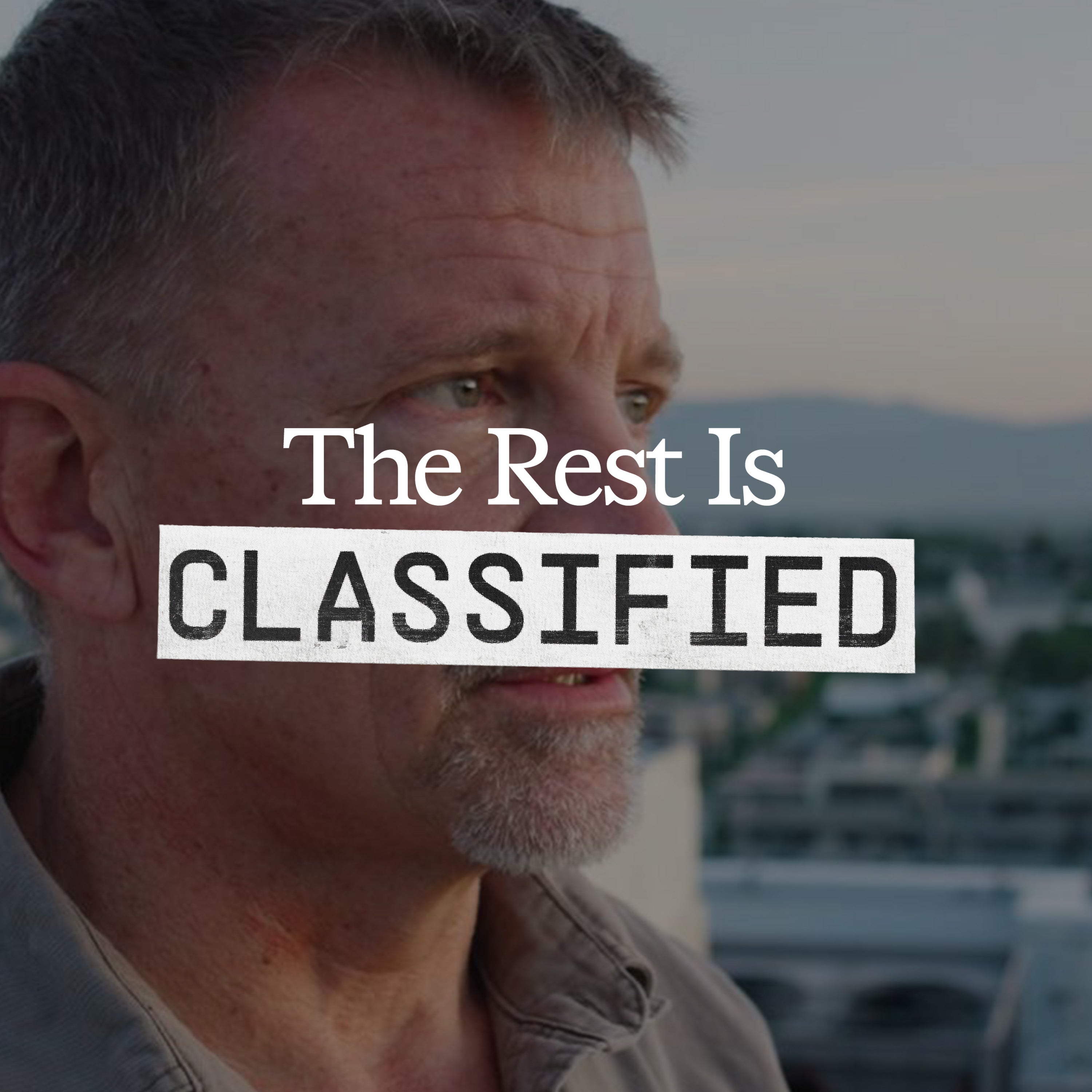
Nick Payton Walsh (CNN) reports on Haiti’s gang war and the Haitian government’s decision to hire U.S. private security contractor Eric Prince’s firm, Vectus Global, to help the police and a UN-backed “gang suppression force.” The episode describes how Port-au-Prince has largely lost infrastructure and control, with gangs holding much of the city while Vectus uses drones and ex-special forces to conduct raids.
Nick Payton Walsh, CNN chief international security correspondent; 30 years reporting, including coverage tied to Osama bin Laden’s hunt, Syria’s civil war, and being reportedly wanted by Russians for his reporting.
Vectus has carried out about 2,000 drone strikes; gang expansion has reportedly stopped/reversed in some areas (UN cited ~85 drone-attributed deaths). Prince’s operation is framed as stopping “rot,” but holding territory remains difficult and gangs often return.
downtown Port-au-Prince resembling an “apocalypse” with vegetation reclaiming buildings; a village (Goday) where police said gangs use children as spotters/armed shooters; an early incident where a drone strike killed eight children at a gang leader’s birthday party.
Written by AI. May contain mistakes.
An overview of Haiti's situation and the role of private security tycoon Eric Prince.
Nick discusses his experiences reporting in conflict zones and his focus on Haiti.
“Nick, you've reported from some really quite dangerous places over the course of 30 years.”
Exploration of Haiti's current state, government issues, and the role of gangs.
“And so I wanted to just ask you, I mean, where did this story come from?”
Description of the devastation in downtown Port-au-Prince and its implications for locals.
“I mean, can you help us understand how it's come to this point for the Haitian government or even just what is the Haitian government at this point?”
Nick shares the perilous experiences of people navigating gang-controlled areas.
“and there are very few people, but the gang are still hiding out to exercise control.”
Detailed overview of the gangs operating in Haiti and their impact on society.
“It's a very perilous journey in daylight and, forget about it, in the dusk.”
Discussion on Eric Prince's background and his role in the private security industry.
“Nick, at the heart of your report is Eric Prince.”
Nick shares insights from his interviews with Eric Prince and his motivations.
“Why do you think he wanted to talk to you or was willing to talk to you?”
Learn about the controversial figure behind Vectus Global and his intentions in Haiti.
“Plus the fact that it shows he's not really shying away from a proper interview or scrutiny if he goes with us.”
Discover how Vectus Global is engaging with gangs and the Haitian government.
“So let's talk a little bit about, I guess, maybe more specifics about what exactly his firm, Vectus Global, is doing in Haiti.”
Explore the impact of drone strikes on gang activity in Haiti.
“They've got ex-special forces contractors.”
Understand the consequences of drone warfare, including civilian casualties.
“One gang leader, junior dude, sort of like called Julio, said Eric Prince is the biggest threat.”
Hear firsthand accounts of children's involvement in gang violence.
“but it's fair to say that there have been changes noticed since the project started and certainly the gangs have noticed.”
Delve into the difficulties of maintaining territory in gang-controlled areas.
“We didn't get a massive, a larger picture as perhaps I'd expect.”
Examine the long-term trauma and societal issues stemming from violence.
“kill, kidnap, in large numbers, the locals in an act of vengeance for whatever they see as their betrayal earlier.”
Gain insights into U.S. foreign policy regarding Haiti and private military contractors.
“Yeah, I wanted to ask you about the really very disturbing piece of this around the use of children in combat here.”
Explore the origins and implications of bringing private military contractors to Haiti.
“But I think they view this as another potential way of trying to fix this.”
Discuss the resurgence of private military companies and their historical significance.
“security problems, where the UN fails again and again and again.”
Analyze how drone technology is reshaping modern warfare and private security.
“mean that we now have companies like Vectus and people like Prince who seemingly have a lot of revenue generating opportunities around the globe?”
Examine the dire situation in Haiti and the public's outlook amidst the violence.
“And combining that with the new era of drone warfare is, I mean, is something that's just startling.”

Get the gist, explore an idea or ask about something said.
 Claude
On The Rest Is Classified, what are the key points of this episode?
Searching your listeningAutomatic transcript. May contain errors.
0:03For exclusive interviews, bonus episodes, ad-free listening, early access to series, first look at live show tickets, a weekly newsletter, and discounted books, join the Declassified Club at therestisclassified.com.
0:24years of political turmoil corruption and the ascendance of a deadly gang coalition are suffocating haiti's capital city the u.s and the international community have repeatedly tried and failed to help bring order now the remnants of haiti's government have rolled the dice with a very different option, a U.S. private security tycoon. These are the words of Nick Payton Walsh, CNN's chief international security correspondent, who has just released a groundbreaking and exceptionally gripping report that goes inside the secretive operation that is now taking on gangs in Haiti. And today we are very lucky to be joined by Nick to dig into his reporting about this murky world of private military companies and security contractors, what's going on in Haiti, and really how this kind of security dynamic and the privatization of this security dynamic is playing out there.
1:23But first, a word from our sponsors, HP.
1:40systems. That's where information leaks. It's the same in business. Leaders face a constant battle against strict timelines, mismatched tools, and the worry their security isn't as tight as they think it is. Which is why HP approaches technology not as a collection of gadgets, but as an integrated system. And crucially, that protection is built in at hardware level. It runs quietly in the background blocking threats without requiring constant specialist oversight. With a team of business advisors, HP helps businesses of all sizes find technology that fits their needs and budget. To see how HP helps businesses work securely and productively, visit hp.com forward slash classified.
2:25Trick listeners also benefit from 10 % off HP business technology with the code Trick 10. Hi, this is Gary Lineker from Goalhangers. The rest is football. This episode is brought to you by WISE. It's only when you start moving money between currencies that you really think about the exchange rate, the fee, and what might be hidden away in the small print. Whether you're living abroad, paying someone overseas, or just trying to manage your money across borders, you want a fair exchange rate, an easy transfer, and no surprises along the way. WISE keeps things simple. Wise is a smart way to move the currencies you need around the globe.
3:04It works in more than 160 countries and with over 40 currencies. Most transfers arrive instantly. Wise uses the mid-market exchange rate, like the one you see on Google, with no markups or hidden fees. So when money needs to move, you can see the rate, know the fee and get on with it. Join millions saving billions on hidden fees by downloading the Wise app today. Be smart, get wise, T's and C's apply.
4:02Nick, you've reported from some really quite dangerous places over the course of 30 years. I mean, you've hunted the killing of Osama bin Laden in Pakistan. You were inside Syria, a place close to my heart during the civil war there. You're currently wanted by the Russians for your reporting. And so I want to ask you about Haiti. I mean, I think many Americans have absolutely no idea what's actually going on in Haiti. And so I wanted to just ask you, I mean, where did this story come from? Why pick Haiti? You're right. For many Americans, Haiti is a place where they're going to send people back to, right?
4:36The 300 ,000 people whose temporary protected status has expired or is being fought over in court backles at the moment. But Haiti itself is in this utterly extraordinary moment of decline or post-collapse. I mean, I've never seen anything like it in 25 years of conflict reporting. And the role of private security contractors, namely here Eric Prince, who many of you remember better back from the Iraq days, from his former company Blackwater, is I think a stretch by the Haitian government to try and see if something that's not been tried before can do what's not been done before. And so my major passion here was to make sure we told everyone about what's happening in Haiti and the extraordinary state of ordinary life there.
5:23I mean, like 10 % of the capital city is now not getting controlled. And we were lucky enough, I think, to be able to do that through showing people, too, the mechanism brought to that fight by Eric Prince. Yeah, one of the very striking things from the videos of your report, many of which I assume are taken by drone, is you can see that much of downtown Porto de France has essentially turned into like an urban forest where it's so depopulated or sort of destroyed by this violence that it literally looks like, I mean, there are trees that have sprouted up in the buildings and they're just abandoned.
6:00I mean, can you help us understand how it's come to this point for the Haitian government or even just what is the Haitian government at this point? Yeah, I mean, the Haitian government at this point is an interim prime minister who's not been through any elections, who's just indefinitely delayed the elections, who's kind of hanging on by a thread ultimately, his predecessor, you know, assassinated. So this is a very messy governmental structure that has made a big reach looking for US private security. The scene you're describing that, David, I mean, that is the thing that still sticks to me, because when we were driving through downtown Port-au-Prince, right, this is like the flashy area of the downtown and centre of the city where it used to be bustling shops and restaurants lifelike at its fullest.
6:40This is not only deserted, but the streets are open sewers where the trash has parred up so high that the vegetation started to grow roots through it and grow out of it. And then the buildings, it's, I don't know if you recall scenes from The Last of Us or Planet of the Apes, the kind of after the apocalypse, this is what happens to a big city and the vegetation takes it back. That was really life right there. And so you're driving down these extraordinary places where the vegetation is the building and there are very few people, but the gang are still hiding out to exercise control. The ground is trash.
7:16I remember driving past one like canal in Port-au-Prince and it was just literally like the water had become plastic bottles. All you could see were plastic bottles running up the length of it. And it's a staggering scene simply because that's what happens without the ordinary infrastructure that we often take for granted in life. And it's not there, it hasn't been there. And so it's like nature has had enough. and decided it wants to take it back. And to some degree it's been successful because there's so much less life there. But the thing that kind of really blew us all away was there are still people who have to use this as their route to work.
7:51And so they emerge from areas controlled by the gangs or in this area themselves. And they walk through this extraordinary landscape in single file, en masse, huge numbers of them, hundreds, at dawn when we first saw it and then at dusk when we saw it again, just to get to the rest of the world, basically, to get food and to get to work. And it's utterly jaw-dropping because some of them are bare feet. They're risking gang shots at the gang suppression force who we were traveling with. It's a very perilous journey in daylight and, forget about it, in the dusk. Who are the gangs? Can you give us a picture of what the government is up against?
8:31I mean, there are many of them, right? Over a dozen. And the dozen are kind of delineated by the fact that their leaders, Barbecue, Vitellon, Meccano, various people who may have FBI, Most Wanted, sums against their name. And that breaks the gang patchwork down into specific groups like, you know, Didi's group or Iso or Barbecue's group. And they all form this patchwork who may have begun potentially in traditional organised crimes like enforcement guys for big business or may have simply been drug dealing facilities that have kind of morphed into something larger. But they fight with each other a lot, and that's where a lot of the dead and injured comes from, is inter-gang clashes.
9:13One rises, one falls. They briefly got together and tried to suggest that they could be a kind of political alliance that would enter into government and calm this all down. That didn't last very long. But they're also a reflection, I think, too, of what happens in society when something like an earthquake damages things so much that there's a gulf into which something has to step. And that something is the collapse of law and order. And that's what we're seeing. And it's just it is staggering how they've managed to take so much of the capital. Nick, at the heart of your report is Eric Prince.
9:48Of course, this famous slash infamous, you know, former CEO of Blackwater. Before we get into what he's doing in Haiti, could you just set him up a bit? Who is Eric Prince? Yeah, I mean, look, he is a man from a wealthy US family involved in manufacturing and then found himself part of the private security industry growing in the 90s in the United States, but most known for his role in Afghanistan and Iraq, where in the early parts of the US insertion into Afghanistan, there were urgent needs for CIA employees, etc. to be protected. Prince's firm Blackwater stepped in there and his own books about that, or books that he's authorised, he talks about how they were able to deploy in a scale and skill and capacity with ex-special forces guys in a way that the US government State Department simply couldn't do.
10:40Now you can tell me David whether you agree with that or not, but that's where he began. And then when Iraq happened, the US military obviously found itself with an insurgency in a world that it simply had not legislated for and two State Department turns to private security most notably Blackwater to fill that hole that's where they emerged but the notoriety as critics would say comes from some key incidents around Fallujah where they lost a lot of their own guys but notably Nissel Square where civilians were shot dead some assessments being that that was unprovoked four of Blackwater's employees were subsequently convicted in federal courts and then later pardoned by President Trump.
11:20So a lot of criticism levied at Blackwater for the deaths of civilians in Iraq and for how that began to, in the minds of critics, embody the idea of US private security contracts. It's very much a new thing in the global war on terror and the invasions of Iraq and Afghanistan that came with that, that how they were acting on huge budgets that were paid for by the taxpayer. And with that did not come the kind of scrutiny and legal oversight that everyone else functioned by. But essentially they had immunity from prosecution and could do what they liked. And that's a lot of where the sort of Eric Prince's history comes from, which he very much rejects and says, I'm a patriot.
12:01I stepped in when nowhere else could. There's no doubt he and a lot of his companies made an awful lot of money out of this too. Whether that was spent in overheads, you know, history will know. But that's where the man got his kind of notoriety from much of it, which I think he still feels deeply undeserved, but certainly for many Iraqis and many who viewed the US presence in both those countries, Blackwater became to embody the kind of extremely expensive things that the United States did to protect their people and care less perhaps than they should have about civilian lives in the areas where they were functioning.
12:36Why do you think he wanted to talk to you or was willing to talk to you? Yeah, I still don't know the answer to that. I will say he comes across in your report. He comes across, I should say, for people who have some cartoonish view of him as some kind of like maniacal, bloodthirsty villain. He doesn't really come across that way as you speak to him. I don't know what he's like in person. I'd be very curious for your take on him, but he comes across, I think, as a kind of no nonsense, but somewhat thoughtful guy who is pretty articulate about what he's doing. I'm curious what your read was on him after spending some time with him.
13:13Yeah, I mean, look, this is not an easy guy to get access to. You know, he's not like, just give me a call. I'll be there on Thursday. This took some time. And even there, it took some, you know, wrestling to find the moments. And this is a man too, where you point a camera at him, his instinct is to turn his head away. And at some points we're like, Eric, we're here to film you. Could you just... But so, no, I mean, look, affable, smart, aware of why he needs to show a network like CNN, what it is indeed he is doing, what is happening in Haiti for presumably his own reasons. As I said, you know, hard to get hold of, wary of mainstream media in the past.
13:52He's made no secret about that. And so, yeah, obviously, you know, part of me is still scratching my head. Why choose CNN to be the platform? But I think part of the attraction may have been the audience we reach globally. Plus the fact that it shows he's not really shying away from a proper interview or scrutiny if he goes with us. So it was a very interesting time we had to get there, first of all. Multiple messages. I mean, I first got in contact with somebody around this a year ago. And I got this random phone call from a French phone number from somebody who said they'd met me in Kabul airport like 15 years ago.
14:28And like, great to talk to you again. By the way, I'm doing Eric's media. I was like, okay, fine. And that sort of continued for many more months until we found ourselves finally together through like a meeting in Mayfair. But no, I mean, this is somebody who's obviously very suspicious of the mainstream media more broadly, I think, in general, sees the value of explaining to people what indeed he's been doing and he's going to continue doing in Haiti. In person is very direct, not quite the sort of, you know, I think a lot of his critics portray him as some sort of monster. But this is a very personal individual who can be quite funny at times, too.
15:03So I think somebody, too, ultimately, who may be looking in this new chapter to try and re-explain himself, like Blackwater still hangs over him as the thing that, even though he didn't pull the trigger in these instances, still hangs over his public image. And so I think this new project, not only in Haiti, there's other countries, too, where he sort of services in presence, was talking to us was perhaps a way of trying to fashion a new sign of what he's up to and what he might want to be about in the future. Yeah. So let's talk a little bit about, I guess, maybe more specifics about what exactly his firm, Vectus Global, is doing in Haiti.
15:44What's the contract and what are they up to day to day as they support the Haitian government? I mean, in the simplest terms, he's being paid money to use drones to kill gang members and to use ex-special forces to lead some of the more tricky operations for the police and then let them in. And there's a whole separate part of that where if there's success, he'll get 10 % over a decade of any increased revenue from them shoring up the illegal border crossings and improving customs generation for the Haitian government. But more ultimately, there's a flat fee, which he's absolutely not going to tell me what it is for these services.
16:25Do you have a guess, like range of what that might be? I mean, there's been reports suggesting north of 40 million. You know, I'm told that a lot of that is overheads. So he's not like sort of taking home a big suitcase of cash or anything. It certainly would be in the tens of millions. He describes it as being a sixth of the cost of running the camp of the previous UN presence. You do some basic maths. You're talking tens of millions, 30 million, 40 million, probably. But there's something about the fact that he's not just saying, yeah, it's 15 million. Cheers. You know, there's something there's something around that, which clearly means there's a desire for part of the parties in that for them to be a public number.
17:00They're embedded with the police. They've got ex-special forces contractors. This drone capability is exceptionally interesting. And it seems, I think it's from your report, there have been thousands of kamikaze drone strikes that Vectus Global has carried out in Haiti. Is it working? And how are those going? It's not not working, right? I mean, this is the difficult thing about judging a negative, right? Are we able to see how bad it would have got in Haiti had this not happened? No. Was it exceptionally bad before they intervened? Yes. 90 % at least of the capital controlled by gangs. So the rot has definitely stopped.
17:40And even the UN, right, who he doesn't call himself in competition with, but ultimately he's saying the UN can't fix your problems. I can. Give me less money. Even the UN in their most recent report said there'd been signs of progress, that gang expansion had stopped and even been reversed in some key areas of the capital. So that 10 % number is probably slightly bigger now where ordinary life can exist in the capital. Is that him? Is that the gang suppression force that's UN backed? Is that the police who've got a whole new load of stuff in from foreign donors? No one can tell. But there were 2000 drone strikes, they say that they did.
18:13And they're part of this thing called the task force, which is dozens of guys I would say probably about 40 50 if I had to put a guess on it uh foreign ex-special forces antipodean I'd guess Americans possibly and they're the kind of you know the ones on the ground doing the shooting and the house clearing and the front end of it there's drone operators there's logistic guys too but they're able to bring something that Haiti's not had and many countries don't have which is an armed drone capability against the gangs which the gangs, when we spoke to them, are like, this is having an impact. We can't function in our neighbourhood.
18:47We're getting pushed out. One gang leader, junior dude, sort of like called Julio, said Eric Prince is the biggest threat. I mean, we're pretty sure he wasn't a placement, you know. He literally sort of said, the big problem is Eric Prince and we want him to leave so we can make a deal with the cops. So there's clearly an impact being felt. The gangs are taking notice. can it be sustained at some point we've seen everywhere right you've seen this you know eventually the other side learns and so they learn how to make that threat less threatening or how to do it themselves they've got their own seem surveillance drone so it's not a huge step between that and strapping explosive to it and then my god you're into a whole world of awfulness but it's fair to say that there have been changes noticed since the project started and certainly the gangs have noticed.
19:38And then there's the element of civilian casualties too, which is the people who should not have been hit by these. The UN, if we go through their reports, we can find about 85 deaths that they attribute to the drones, which is a horrific number for the families, but a small, relatively small proportion of the 6 ,000 people killed or injured since the end of the last year, according to the United Nations. So there's clearly an impact on the ground. Does it win the war, turn the tide? Clearly, he wants more time. Yeah, I wanted to ask what Prince, I presume you put this question to him about the civilian casualties.
20:17What's, I mean, what's his response when confronted with that number? His response is prepared. And I think he was like, look, we do a lot of flights to survey an area before we do a patrol or raid anything. thing, we do everything we possibly can to avoid this. Accidents are not impossible," was what he said. And look, I think most people functioning in conflict zones don't accept that civilian casualties are part of it because that's not how you should behave. But ultimately, I think most military people you run into will at some point acknowledge that this is something that is going to happen when you're chucking high explosive around, however much you made try avoid it so i'm not making excuses for that but i think it's one of the other interesting things we found when talking to the families of those who died uh was that about over half blamed the gangs for bringing the drones upon them rather than blamed prince and his contractors directly there was a particularly notable incident quite early on in this campaign where eight children were killed seems to have been a gang leader's birthday party in september last year where the drone seems to have landed on in the wrong place and killed over a dozen at least including some kids so horrific early instant like that and there've been others since but i would say i had expected a wider preponderance of data around this sort of thing given the amount of explosives being fired into populated areas and it may be because it's very hard to work in those areas it may be because the people impacted are reticent to come forwards Or maybe because drones are more accurate than flinging artillery shells around.
21:56We didn't get a massive, a larger picture as perhaps I'd expect. One of the things that strikes me about the strategy is the drones plus the special forces, this task force, when you combine it with the gang suppression force and the new armor coming in from foreign donors, you would expect that all of that would give the Haitian government and the national police a greater ability to sort of take back turf, but are they able to hold it? Do you have a sense that these offensive weapons are creating space for the Haitian government to step in and keep the gangs from coming back? Or is it too early to tell?
22:37Yeah, look, you hit the nail on the head there. It's the hold part of this that is the problem, as it's always been for the US and Iraq Afghanistan, wherever you've worked, it's keeping that territory when the shooting is over. And we've seen it on multiple occasions since Vectors or the task force, as they're called when they work with the police, go into an area with the police, they kick people out and then the hard fighting is done, they pull back and the gangs just wander back in. And in several cases, kill, kidnap, in large numbers, the locals in an act of vengeance for whatever they see as their betrayal earlier.
23:11That's the big problem. And that's technically what the gang suppression force in the minds of many is for. That's supposed to be over 5 ,000 Chadians, Sri Lankans, Mongolians, a variety of nations contributing to a more sort of teethy UN force that's supposed to be able to take on the gangs, but also forcibly hold an area. But look, Haiti's big, and 5 ,000 of them isn't even going to cut it. And so the job, if it happens, is going to fall down probably to police who are more immune to corruption, to bits of the gang suppression force, probably to angry locals. And that's also too, I think, where the question of how many gang members do you need to kill to change the equation comes in.
23:53Because I think we've both known like insurgencies, which is ultimately more the gangs are turning into all kind of, ah, rebuild. They're never short of recruits. This lot are utterly unashamed about using people under the age of 12 the spotters or combatants if needs be. It's a very tough situation. And so you're ultimately down the line looking for some kind of tipping point where the damage being done militarily makes everyone have a rethink about their decisions. And that's a hard thing to be waiting or relying for. Yeah, I wanted to ask you about the really very disturbing piece of this around the use of children in combat here.
24:30When you were on the ground, how did you experience that? What did people tell you? I mean, there was a crazy moment where we go into a place called Goday, which is outside of Kenskoff, where a lot of the fighting and dying and kidnapping and murdering by gangs have been going on over the last month. There's a tiny village called Goday. The gangs have barricaded it, dug trenches around it. And all the locals are on the road. We're like, who are these people hanging out here during the middle of a gunfight? And it's locals who are desperate to get back into their village and see what's happened.
24:57So they rush down and the locals set fire to the barricades. The gangs are put up so the gangs can't use it again. And then there's this very odd moment where the police say, write everyone out. And we're like, what's going on? Well, because we can't have them stay here because the gangs might come back and kill them all. And then one police officer turns around to us and says, listen, what the gangs do is they leave the kids behind with handguns. And the old is run off with military or the proper, you know, military weapons, the rifles, etc. And they leave the kids behind to kind of take pot shots at the police.
25:29and the frequency of which kids pop up there's some estimations about half gang members of minors we spoke to two who I mean it was just jaw dropping to I mean we didn't know the real ages obviously their identities were hidden but clearly one in single digits another one preteen girl and boy and one the boy described how his job was to kill kidnappees for the gangs and the girl described how she would have to murder of people too for them. If she didn't, she'd get killed herself. And then she would often observe the gangs chopping the people up and eating their hearts. So the role that these kids play, I think, is a reflection of just how ingrained and horrific, deep-seated the trauma is in Haiti and how many years it's going to take to try and clean that up, even if you manage to stop the immediate hemorrhaging of the violence now.
26:21What does this look like as seen from Washington? I mean, taking it, I guess, from just the muck that we were just describing and the absolute horror on the ground. I mean, if you kind of zoom out, and you look at this from the standpoint of the US ambassador or even more broadly, I mean, what's the sense of Haiti now as seen from the US and maybe in particular, what's the perspective on Prince and Vectis and their presence there? Yeah, I mean, the US-UN ambassador, Mike Walsh, has been to Haiti a couple of times, vocally supporting the gang suppression force. And it's clear too that the Vectors operation is not functioning there without some American government support.
27:06They're not paying for it, it's paid for by the Haitian government, but money moves around. And so I think the US is seeing this as a problem which needs to be fixed, not least because logistically landing, potentially 300 ,000 people who've no longer got temporary protected status in the United States, the Haitians there, back in a country with zero law and order is exceptionally hard to do. They can't use the main airport in Port-au-Prince for deportations at the moment, weekly flights that can deliver dozens, maybe hundreds back. They get dropped off at Cap-Hatia in the north and then have to make their way home somehow.
27:41So if you want to begin deportations on a mass scale, you've got to sort Haiti out. I think that's a slightly down-the-line ambitious concept. But you certainly, if you're the US government, want to stop the things that cause people continuing to try to flee. It's also a cocaine route said to be, massive source of insecurity, pretty close to the US maritime borders. But I think they view this as another potential way of trying to fix this. However much, I often struggle to look for cogency in the Trump administration's behaviour. Is this all joined up or is this Marco Rubio thinking something's a good idea and the White House not even knowing about it.
28:16It's so hard to tell a lot of the time. But if there is a strategy here, then it seems, I think, to be to allow the Haitian government to get on with this with an American well-known to the US government to try and make sure enough money gets to the gang suppression force to be sure that they can hold the ground and try something else, particularly, as I said, at this key time when they want to begin deportations probably on a larger scale than they're currently doing. Do you have a sense from talking with most of the major players and being on the ground there of where the idea to bring in Vectis Global came from?
28:50Was it a pitch from Prince? Was it someone in the Trump administration who mentioned it to the Haitians? Were the Haitians just looking around and saying, we need private military contractors? Where did the idea generate? I have to be straight with you and say, I do not know what the progeny of this was. but I cannot imagine a situation where this was not Eric Prince suggesting the idea because I can't see the Haitian government sitting down in its very compromised, damaged form, struggling for cash, sitting there going, right, I tell you what, who do we need? And then settling on Eric Prince of all the potential solutions.
29:28This is clearly for Eric Prince an idea that he's had for a while, that can I take my new interest and the world's new interest in this new technology of drones the guys that I already know, the sort of ex-special forces guys, and all that capability, and bring the private sector in to increase revenue generation, to take on really complex security problems, where the UN fails again and again and again. You know, I mean, it's pretty clear the UN, someone said it's their 15th international mission now that's in Haiti, is not going to fix this anytime immediately soon. I'm sure I'll be proven wrong within seconds of having said that.
30:04You know, and he's looking to see where else in the world potentially might be interested in this. Kind of broadening this out, I mean, one of the, obviously this dynamic of a private, you know, military company. It's very interesting. I was reading a few months ago, a book called Death is Our Business by a guy named John Lechner. And it's about the Wagner group specifically, but he makes this broader point, which I think is quite interesting. And it made me, you know, sort of, I was reminded of it as I was watching it reporting, which is that we've gone through this sort of 400-year period where private military companies have been sort of out of vogue as the state has gotten stronger and stronger and increasingly had kind of a monopoly on force.
30:49And we now seem to be going back to a form of warfare that is actually quite common in human history, which is private mercenaries brought in individuals who may not have themselves a vested political interest in what happens, but are paid financially to participate in the war. We saw it with Wagner. I think you make the point that Prince and Vectis are also active, I believe, in the DRC. There's UAE-funded Colombian mercenaries in Sudan, I believe. We're kind of returning to an era where this is increasingly common. I mean, how do you see this? A, do you agree with that take? And then I guess, I mean, B, what does it mean that we now have companies like Vectus and people like Prince who seemingly have a lot of revenue generating opportunities around the globe?
31:46I mean, you're right. I think the gap was probably the sort of the war on terror, I think, meant that the US military did a lot of those jobs too. But still, there was an opening for Blackwater there as well, right? And the sort it's that sort of Arab spring 2011 to sort of 2021-2 when Wagner popped back up again that you see things slow down as it begins to sort of percolate into that against ISIS phase of the war on terror. What does it mean that we're seeing more of them? I think it's a reflection of not the ubiquity of warfare now but just how many multiple tiny conflicts there are, brutal and horrific, around the world simultaneously.
32:27And I'm not sure if that's like a sea change in how humanity is functioning. It may just be because they all feel so much closer and more omnipresent because of these awful things in our hands every single day. I'm holding my phone there for those listening. But I think it's something likely to be a reflection of how governments want to be able to do things that they're not immediately answerable for. I think it's a sign, certainly in some of the places where Wagner and to a certain degree, beginning prints operate of the lack of potency of some of those governments in failing or failed states saying we need outside help and having the money to pay for it from whatever means but not having the time the infrastructure or the ability to build their own forces of their own and certainly with Wagner you know they're stepping into countries in the Sahel facing jihadist threats and I mean staccually failing them to protect them in a wider way but making their own money and protecting the key, most important people in those countries.
33:30So I think, yeah, we are in a world where that is growing, where we've got a lot more veterans potentially out there able to sell their expertise, you know, and I think that is something to come. And combining that with the new era of drone warfare is, I mean, is something that's just startling. The implications of what the drone has now done to the battlefield are only just being felt across NATO after Ukraine. What they're going to be able to do for private security companies who can harness that and take it against poorly armed insurgents or criminal groups is going to be startling. Yeah, you're right.
34:15You made the point earlier that there'll be a reaction to this, obviously from the gang. So you wonder how long it will be before they, at a smaller scale, are hitting back with their own armed drone capabilities. I mean, just to bring it back to Haiti for a second and the people that you encountered, do you feel that there is a glimmer of hope? Were individual humans there hopeful about the future, cautiously optimistic? What was your sense of how they see the future unspooling for them and their country? No, I didn't get really much of a glimmer of optimism, frankly, from anyone. They see deterioration.
34:55But I think that's a mindset that is so imbued with just loss and awfulness for a decade plus that, you know, the tiny little things where the UN says, things aren't quite as bad in the Delman neighbourhood of Port-au-Prince as they were three years ago. That doesn't cut it if you're living in a really squalid IDP camp in the centre of Port-au-Prince and your family were just murdered in Kenskoff right in front of you a month earlier. What people are experiencing in the main city is all having to cram into the Pétionville hillside area so they can get away from the gang influence. And that's like a refugee crisis in a city, squeezing everyone together, food problems, the heat's horrific, basic sanitation.
35:41That's what is forefront of people's minds. And as soon as you start changing that, like it's a press release saying, oh, you know, certain parts of Port-au-Prince are slightly less contested and they won't be, I'm going to cut it. People are certainly aware of the Prince operation. And I was surprised speaking to one of the main human rights lawyers in Haiti. She was like, well, they haven't killed any of the gang leaders yet. And I was like, you're a human rights lawyer. Is that really what you should be? Really should be forefront of your mind. But that's the nature of what it is. There's a lot of anger and there's very little sympathy for the gangs at all or those who live under them.
36:18And people simply want change. And that's where the window for the techniques of Vectus and the task force certainly has opened. Well, Nick, tremendous to talk to you. I would encourage everyone who is listening or watching this, if they haven't already, to go watch your report on the gangs, Haiti's dread warfare, and Vectis Global. It really is an incredibly eye-opening, gripping, and really, I mean, quite tragic and sad, but important piece of reporting. So Nick, thank you so much for being with me today. Yeah, thank you for giving time to Haiti and for our reporting. Really appreciate it.
37:00Are you looking for support in your weight management journey? ZepBound Terzepatide may be able to help. ZepBound is a prescription medicine used with a reduced calorie diet and increased physical activity to help adults with obesity or some adults with overweight who also have weight-related medical problems to lose excess body weight and keep the weight off. ZepBound is approved as a 2.5, 5, 7.5, 10, 12.5, or 15 milligram injection. ZepBound contains terzepatide and should not be used with other terzepatide-containing products or any GLP-1 receptor agonist medicines. It is not known if ZepBound is safe and effective for use in children.
37:39Don't share needles or pens or reuse needles. Don't take if allergic to it. Or if you or someone in your family had medullary thyroid cancer, or if you've had multiple endocrine neoplasia syndrome type 2. Tell your doctor if you get a lump or swelling in your neck. Stop ZEPBound and call your doctor if you have severe stomach pain or a serious allergic reaction. Severe side effects may include inflamed pancreas or gallbladder problems. Tell your doctor if you experience vision changes before scheduled procedures with anesthesia, if you're nursing, pregnant, plan to be, or taking birth control pills.
38:11Taking ZEPBound with a sulfonylurea or insulin may cause low blood sugar. Side effects include nausea, diarrhea, and vomiting, which can cause dehydration and worsen kidney problems. Talk to your doctor. Call 1-800-545-5979 or visit zepbounce.lily.com. When you spend enough time around great companies, you notice that the best ones treat trust as a growth strategy, not a box to check. Vanta helps companies build and prove trust from day one. Its agentic trust platform connects compliance, risk, and trust at enterprise scale. Vanta delivers a 526 % return on investment over three years and pays for itself in just three months.
38:55Learn why over 16 ,000 of the fastest growing companies use Vanta at Vanta.com.
“Years of political turmoil, corruption and the ascendance of a deadly gang coalition are suffocating Haiti’s capital city. The US and international community have repeatedly tried and failed to help bring order. Now, the remnants of Haiti’s government have rolled the dice with a very different option: a US private security tycoon.”
These are the words of Nick Paton Walsh, CNN’s Chief International Security Correspondent, who has just released a groundbreaking report going inside the secretive operation taking on Haiti’s gangs.
Today David McCloskey is joined by Nick to dig into his reporting about how the murky world of private security has become a new lifeline for failing states who can’t help themselves.
-------------------
Watch Nick's report from Haiti: https://www.youtube.com/watch?v=OZpa3UWjQu4
-------------------
Sign-up for our free newsletter where producer Becki takes you behind the scenes of the show: therestisclassified.com/newsletter
-------------------
Join the Declassified Club to go deeper into the world of espionage with exclusive Q&As, interviews with top intelligence insiders, regular livestreams, ad-free listening, early access to episodes and live show tickets, and weekly deep dives into original spy stories. Members also get curated reading lists, special book discounts, prize draws, and access to our private chat community.
Just go to therestisclassified.com or join on Apple Podcasts.
-------------------
Get a 10% discount on business PCs, printers and accessories using the code TRIC10. Visit https://HP.com/CLASSIFIED for more information. T&C's apply.
-------------------
Email: [email protected]
Instagram: @restisclassified
Video Editor: Joe Pettit
Social Producer: Emma Jackson
Assistant Producer: Alfie Rowe
Producer: Becki Hills
Head of History: Dom Johnson
Exec Producer: Tony Pastor
Learn more about your ad choices. Visit podcastchoices.com/adchoices