Ask ChatGPT

 The Rest Is History
21 Oct 2026 · 1h 6m · 15 chapters
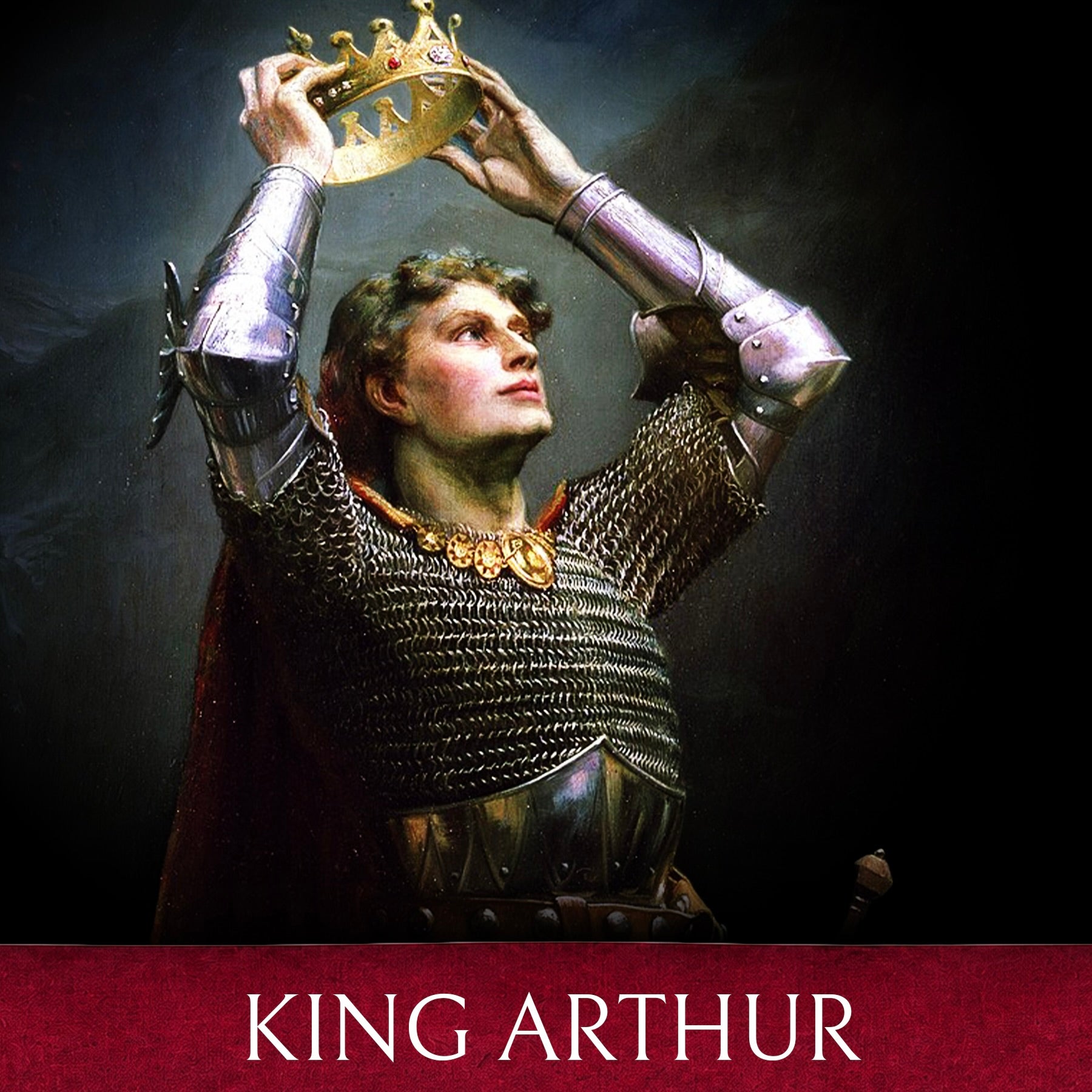
How King Arthur’s legend may (or may not) preserve a historical core, focusing on the earliest sources and the “12 battles” in Nennius’s Historia Brittonum, plus later theories linking Arthur to Roman Britain.
No guests are named in the transcript; the episode is presented as a discussion between Tom and Dominic.
Written by AI. May contain mistakes.
Exploring the historical figure of King Arthur and his impact.
“a great captain gathered the forces of Roman Britain and fought the barbarian invaders to the death.”
Discussing the growing skepticism of Arthur's existence through history.
“was starting to become very difficult to keep at bay.”
Analyzing Nennius's writings and their significance in Arthurian lore.
“not it's an interpolation or it's late or whatever and so we can't be sure it's Nennius but we will call him Nennius.”
Explore the historical context and military role of Arthur in battles.
“So the commander of the northern reaches of the province of Britannia in late antiquity, so the final decades before the withdrawal of the Romans from Britain, he was called the Dux Britanniarum.”
Delve into the twelve battles attributed to Arthur and their significance.
“Geoffrey of Monmouth identifies it with Edinburgh for what it's worth.”
Discuss the transition of Arthur from historical figure to folklore.
“Well, it could just be the phrase, Dux Ballorum.”
Analyze early references to Arthur in Welsh literature and their implications.
“that Arthur is already a figure of folklore by the early 9th century.”
The discussion delves into early historical references to King Arthur and the complexities of these sources.
“dated to the early 7th century and it tells how a war band of 300 britons left edinburgh on a kind kind of doomed expedition to the south into what is now Yorkshire.”
A shift in scholarly attitudes towards King Arthur and the influences of Victorian culture.
“They said the stories of King Arthur, they're not just made up, they're embarrassing.”
Learn about the connection between King Arthur and Celtic mythology, including the transformation of Arthur's identity over time.
“mythology, the mythology of Wales and Cornwall and whatever.”
Discover various scholarly perspectives on whether King Arthur was a historical figure and the implications of these theories.
“It's not, if he's the Dux, whatever it is, Dux Ballorum, but it's not obviously a Latin name, is it?”
Examine debates surrounding Arthur's potential Roman origins and the archaeological evidence that supports these claims.
“And this was an Iron Age hillfort, which at least since the Tudor period had been identified with Camelot.”
Explore the origins of the Arthurian legends and their historical credibility.
“And again, I will quote Nicholas Hyam in his tremendous recent book on King Arthur.”
A discussion on the historical evidence supporting the existence of King Arthur.
“To say that art is a total miss, you've got to side with saying that all the sources are late.”
Information about the next episode and details about joining the club for bonus content.
“must he be banished from the history books as an outright fabrication and so I am going to sign off this series by echoing Mallory and saying, I will not say that it shall be so.”

Get the gist, explore an idea or ask about something said.
 Claude
On The Rest Is History, what are the key points of this episode?
Searching your listeningAutomatic transcript. May contain errors.
0:02Dominic Sandbrook: This episode is brought to you by TikTok. We obviously love history here. It's always a treat to make a new discovery, especially in unexpected ways. Which is exactly what happens on TikTok.
0:15Tom Holland: Like, you know coffee, you make it, add milk, drink it, nothing more, except...
0:23Dominic Sandbrook: Except when you hop on TikTok, you don't just learn how to make an authentic cappuccino. You can also discover videos about how in the 1700s, people would pour their coffee into saucers to let it cool before drinking it.
0:38Tom Holland: And suddenly, you're imagining how people lived, drank, socialised. Makes you wonder what will baffle historians about us. And that's the joy of TikTok.
0:49Dominic Sandbrook: You look for one thing and find yourself somewhere completely different. Your next discovery is waiting on TikTok. Visit tiktok.com forward slash discover more.
1:05Dominic Sandbrook: This episode is brought to you by Zip Recruiter. Tom, as you know, I spent all my time working. And in a dream world, I would clone a sort of Tom Holland who would do all the work for me. But sadly, technology has not advanced to that point. If it did, I wish there was a recruiting company that I could use to hire that clone for me.
1:26Tom Holland: Well, Dominic, you are in luck because if you are hiring, then ZipRecruiter is the great time saver. You can try it free at ziprecruiter.com slash history. It shows you qualified candidates almost instantly. So save time with ZipRecruiter. Four out of five employers who post on ZipRecruiter get a quality candidate within the first day.
1:54Dominic Sandbrook: Try it for free at ZipRecruiter.com slash history. That's ZipRecruiter.com slash history. Meet your match on ZipRecruiter.
2:08Tom Holland: This episode is brought to you by Revolut. Standing still leaves no legacy.
2:15Dominic Sandbrook: History is written by progress, by revolution. Fighting for independence, dismantling those broken systems, defying injustice. Every revolution begins with the refusal to accept the norm, a demand for more.
2:32Tom Holland: And Revolut is founded on the same principle. Originally established to push back the frontiers of traditional banking, it puts the power back into your hands.
2:43Dominic Sandbrook: You can manage all of your money in one app. Plus, you can earn while you spend with the RevPoints reward system.
2:52Tom Holland: As a fully authorised UK bank, your money is FSCS protected.
2:58Dominic Sandbrook: Sign up to Revolut today at Revolut.com forward slash T-R-I-H. That's all lowercase. And you'll get£20 after the first time that you spend. 18 plus. End date and promotion, T's and C's apply. and RevPoint's T's and C's apply.
3:26Dominic Sandbrook: Somewhere in the island, a great captain gathered the forces of Roman Britain and fought the barbarian invaders to the death. Around him, around his name and his deeds, shine all that romance and poetry can bestow. Twelve battles, all located in scenes untraceable, with foes unknown, except that they were heathen, are punctiliously set forth in the Latin of Nennius. The latest and best informed writers are ready to believe that there was a great British warrior who kept the light of civilization burning against all the storms that beat, and that behind his sword there sheltered a faithful following, of which the memory did not fail.
4:17Dominic Sandbrook: It is all true, or it ought to be, and more and better besides. so that was sir winston churchill and he was writing in the birth of britain which was the first volume of his mighty history of the english-speaking peoples and he wrote those words in the summer of 1938 so just before the appeasement episode at munich and i hate to say it but i'm going to say it the storm clouds of war were gathering over europe and so this idea of a great captain who fought the barbarian invaders to the death who gathered around him a faithful following and kept the light of civilization burning against all the storms that beat and made sure that the memory of a land of freedom and honor did not fail you can absolutely see why that would have appealed to Churchill as he sat there at his desk in the wilderness waiting for his country to call him back to the front.
5:35Dominic Sandbrook: So the author that we get in Churchill's history is effectively Winston Churchill. He is a man of great courage and indomitable spirit who is rallying the british people to war against an invading horde of germans he is defending freedom law and honor against barbarism tyranny and massacre but of course churchill wasn't the first british figure was he tom to associate himself with king arthur and we'll be meeting a couple more in today's episode we certainly will and And just to say that phrase, it is all true, or it ought to be.
6:19Tom Holland: I mean, people have been feeling that about Arthur for a thousand years, possibly more. And we've met some of them over the course of this series. So they were the Cornishmen in 1113, who ran into some French clerics who'd come over to raise money for their church building projects. and the Frenchman poo-pooed the idea that Arthur was real and would come again and they got into a massive punch-up and then the all the knights of medieval Europe who lived and loved and fought in emulation of the knights of the round table and then William Caxton who published The Mort d 'Arthur in 1485 with the stated aim of refuting those who claim that and I quote him all such books as be made of him be but feigned and fables.
7:12Tom Holland: But one of the reasons why Caxton feels the need to say that in the end of the 15th century is that by that point, skepticism about Arthur was starting to become very difficult to keep at bay. And this is a development which upset a lot of people. So to take someone from the same period as an exemplar, Henry Tudor, a welshman absolutely obsessed by king arthur and when he defeated richard iii in 1485 and seized the english throne we mentioned this in our last episode he claimed to be doing this in fulfillment of a prophecy of merlin and that prophecy dominic was um the one that uh featured in jeffrey of monmouth's account of fortigan and the the red dragon and the white dragon and the prophecy in that is that in due course um the red dragon would triumph over the white dragon and henry's banner at bosworth was a red dragon and it became a part of his coat of arms and was very very important to to kind of tudor myth and like you um henry named his eldest son Arthur and so had he not died there might well have been a new Arthurian age there might well yeah but the tragedy for Henry who dreamed obviously that the Tudors were restoring the age of Arthur was that the chill winds of skepticism were blowing ever ever harder and they were blowing from Italy.
8:51Tom Holland: So when Henry Tudor, Henry VII, employed a top Italian historian by the name of Polidore Virgil to write a history of England, in the expectation that Polidore would big Arthur up for him, there was an absolute disaster because Polidore had been trained in all these kind of historical methods that were being honed by the Renaissance back in his homeland. And he thought King Arthur was absolute rubbish, absolute tosh. And he dismissed all the stories told about Arthur in very withering terms as good only for the common people who always more regard
9:25Dominic Sandbrook: novelties than truth. Yeah, but what did he know? He was Italian. I mean, actually, a lot, because the Italians, of course, at this point were sort of... They were leagues ahead. Yeah, exactly. They were world leaders in humanism. So, you know, if you were a patriotic Englishman or indeed a Welshman in the 16th century, you know, you might want to cling on to your legends of King Arthur. but over time scholarly opinion i mean this is certainly the case if you stand back and you look at the last 500 years scholarly opinion was to become more and more skeptical about the existence of a historical author wasn't it and probably never more skeptical than today you know the tide has really been running in one direction i'm sorry to say actually no i think it was probably more
10:10Tom Holland: skeptical in the 17th and 18th centuries really yeah it completely melts away and actually kind of an interest in the arthurian stories melts away as well it definitely fades but not completely and i think that there is a kind of camelot shaped hole left and there still is because as you say even you know today as well there is this kind of skepticism towards the existence of arthur and that camelot shaped hole reflects the fact that despite all this people still want arthur to be true, I think. I think there is a kind of yearning to believe that some of the stories might, you know, have foundations.
10:48Tom Holland: And so people in the hope that there might be a kernel of truth have gone back and have looked through all the very earlier sources. And essentially, to the degree that there is a kernel, it's very identifiable what that kernel is. And we mentioned it in our previous episode. It's this tiny acorn from which the great oak has sprouted. And it is this obscure and little regarded text, the Historia Brittonum, the History of the Britons, which was written in 829 in Gwynedd in North Wales, purportedly by this Welsh monk called Nennius. And I say purportedly because we are dependent for his name on a preface that many scholars claim is dodgy.
11:30Tom Holland: and I'm afraid to say that this is going to be a feature of today's episode that every time you think you've pinned a detail down very learned scholars will pop up and say actually no probably not it's an interpolation or it's late or whatever and so we can't be sure it's Nennius but we will
11:49Dominic Sandbrook: call him Nennius. Let's call him Nennius. So this I mean we discussed this last time this is unquestionably the oldest surviving document that names Arthur it is not unlike Geoffrey of Monmouth's History of the Kings of Britain this is not a sort of a fantasy blockbuster Nenius is writing this as a chronicle I guess as a history and it's treating this Arthur as a figure of history he is a military leader who fights and wins battles and this is the foundation stone so if you look at all the later stuff that was then added on your merlin excalibur the lady of the lake mordred whatever lancelot guinevere morgan lefay all of this would have been impossible without this text from nennius this is the very beginning of the whole thing the great building
12:39Tom Holland: block for the whole massive edifice and so that being so um let's take a very close look at what nennius has to say because really everything depends on this paragraph so it's just it's it's just a single paragraph mentioned in the last episode it's just 14 short sentences long and arthur's appearance in the text um it's placed by nennius against um a very ominous backdrop so nennius writes a period arthur appears a period when the saxons were increasing in numbers and growing in britain then in those days arthur fought against them alongside the kings of the Britons, but Arthur himself was the dux bellorum, the leader of wars.
13:21Tom Holland: And this is one of the most debated sentences ever written about Arthur. And so let's try and parse it. So there are a number of ambivalences in this very short sentence. Is Arthur supposed to be subordinate to the kings of Britain or their superior? It's unclear. Who are the kings that Nenius is mentioning? Is this a stable coalition? Is it a floating array of allies? Again, it's just not clear. And what is the significance of this Latin phrase dux ballorum? So there are two schools of thought on this, basically. Does it deliberately echo a Roman title? So the commander of the northern reaches of the province of Britannia in late antiquity, so the final decades before the withdrawal of the Romans from Britain, he was called the Dux Britanniarum.
14:14Tom Holland: Is Arthur being cast as a Roman style commander, someone reminiscent of that figure? Or does the phrase carry no kind of, you know, technical freight at all? Is it simply a descriptive that Nennius has coined to describe the fact that Arthur is in charge of fighting the war?
14:35Dominic Sandbrook: Yeah. Is he the supreme commander, the chief warrior the you know what is he well the key question i guess is is he one of the kings and that the high king as it were is that what this means or is he actually underneath the kings
14:46Tom Holland: simply as their commander-in-chief of their armies yes we don't know so ambivalences and then i think there is a slight ambivalence around the question of who after is fighting so we assume the saxons because these are the people who've been mentioned in the previous sentence but again nennius isn't specifying it um so the precise word he uses is those people illos um and so it could be the saxons or it could be a kind of much messier array of enemies again there are ambiguities there and then there is this phrase in those days which has a deliberate biblical echo i think and wherever there are biblical echoes you kind of potentially have to worry about the the authenticity.
15:30Dominic Sandbrook: Is that not the nature of all of these texts there, that are biblical echoes in all of them, a literary formula in all of them? So that's not unique to this passage, right? This is the nature of any source from this period.
15:41Tom Holland: Certainly in this period. I just flag it up as an issue to bear in mind. So a lot of questions there. That's basically the first sentence that mentions Arthur. And then we plunge into an enigmatic list of 12 battles that Arthur, as the dux ballorum is supposed to have fought and won. Seven of these are fought beside rivers, and four of them, I think rather improbably, beside a single river, and to quote Nenius, which is called Dubglass and is in the region of Linuis. And Linuis is thought by most scholars to be somewhere in northern Lincolnshire. But if that's the case, then the Dubglass is a complete mystery because there is no such river in north Lincolnshire.
16:24Tom Holland: And so other scholars have suggested that Linus might actually be in Scotland and the Douglases, a river called the Douglas or something like that.
16:32Dominic Sandbrook: I mean, to be fair, if Nennius is Welsh, he's a long way away from all this. So he, you know, he might get meddled.
16:37Tom Holland: He might indeed, or he might have alternative sources, as we'll see. The notion that a lot of these battles are fought in the region of Hadrian's Wall, perhaps further north, is very strong. It's a very kind of popular scholarly theory. And definitely the seventh battle is fought in Scotland because it's described as the wood of Caledonia. So Caledonia, the Roman word for Scotland. The eighth battle, again, there's a possibility that it's fought in the region of Hadrian's Wall. It's fought in a fort called Guineon. And Hadrian's Wall is the area of Britain with the largest concentration of forts.
17:10Tom Holland: So that's a possibility. There's a bit of a descriptor here. We get more detail about this battle than any other. and Nenius says that at this eighth battle at Gwineon this was a battle in which Arthur carried the image of Mary the perpetual virgin on his shoulders and on that day the pagans were put to flight and a great slaughter was upon them through the power of our Lord Jesus Christ and of Mary his holy virgin mother so what's going on here there is a very popular theory that it is a mistranslation of the Welsh word for shield which I gather is very similar to the Welsh for shoulders so it's i think the i think welsh welsh listeners tell me if i'm getting this hopelessly wrong i believe that the welsh word for shield is usgwid and the welsh for um for shoulders is usgwith and there's an extra d on the end of the word so that's one theory you know our welsh listeners as we're getting detailed analysis of um old welsh or is it a dominant you'll know as a great admirer of byzantine practice um in late antiquity that um the romans were very keen on carrying icons of the virgin into battle so yeah maybe is is is that a possibility but they weren't doing that at the period when ninius is writing they're doing that in an earlier period kind of sixth 7th century so maybe is that a clue that this might be a reference from an earlier source i mean don't know slightly clutching at straws there but let's clutch at straws because we don't really have much else to clutch at then we have the ninth battle this was fought in the city of the legion so it could be caerleon uh it could be chester it could be york um anywhere where there was a legionary base and then the 11th battle occurred on the the mountain which is called agned i mean And God knows where that is.
19:05Tom Holland: Geoffrey of Monmouth identifies it with Edinburgh for what it's worth.
19:08Dominic Sandbrook: We've established that Geoffrey of Monmouth just makes mad stuff up.
19:11Tom Holland: So I know. But, you know, if you're keyed on the kind of idea that Arthur is fighting in the border region or in southern Scotland, there's something else there for you. So it's that Arthur's seat basically in Edinburgh. Yes. But Arthur's seat doesn't get to be called Arthur's seat until the 15th century. So there's no continuity there. Then the 12th battle that Arthur fights, this is the big one. To quote Nennius, the 12th battle was on the mountain of Baden. And this is, you know, this is a resonant phrase because of all the 12 battles that Nennius lists, this is the only one to have featured in another much earlier source.
19:48Tom Holland: And we touched on it in our last episode. it's the one that's mentioned by gildas the highly educated daily mail style columnist who was born some three centuries before nennius almost certainly in southern britain and in the same year as the battle of baden hill or the siege of baden hill and gildas although he wasn't a first-hand witness to baden hill he is as close to being a witness as we get it's a battle but it's also a siege he tells us so maybe you know is it fought at the hill fort or something like that we don't know and also um gildas specified that it ranked as not the least victory won by the britons over the saxons baden is often portrayed as a victory so great that it stems the anglo-saxon advance that it wins the britons a breathing space this is um a theme of many the novels that are written about a supposed historical author that baden is the battle that wins it That's not actually what Gildas said.
20:46Tom Holland: I mean, he literally says it's not the least victory, which is slightly damning with faint praise, I think. And I think it's clear that Gildas actually only mentions Baden-Hill because it's the year in which he was born. But, you know, to repeat, it is resonant. It appears in Gildas and now it's appearing in Nennius. So what does all this mean for the historicity or otherwise of Arthur? I mean, let's give two perspectives, both of which are drawn from the work of very distinguished scholars. You could argue that it offers us a clear, substantiated evidence for the existence of someone called Arthur.
21:20Tom Holland: This is an Arthur with a military background that seems to have kind of very strong Roman vibes. He's got this title, Dux Ballorum, which has echoes of late antique command structures in the Roman army. You've got a range of military activities extending from north of Hadrian's Wall, maybe to Lincolnshire, maybe to the south of Britain. The south of Britain is where Gildas strongly implies that Baden Hill was to be found. You have regional kings who seem prepared to accept Arthur's pan-British authority, if you're looking at it a certain way. And Arthur is described as being victorious in a battle which we know to be historically authentic.
22:04Tom Holland: So that's the evidence for Arthur as existing. Or you could argue that the entire paragraph is a literary fiction and a very palpable literary fiction. So on the question of whether Arthur has a late antique military command, the obvious question is how would a monk in 9th century North Wales have had even the remotest knowledge of what Roman officers in late antiquity were called? There's a counter argument to that, though. How would he have known to make it up? Well, it could just be the phrase, Dux Ballorum. I mean, it could just be he's the guy who's in charge of fighting battles. I suppose.
22:46Dominic Sandbrook: But I think if you're pointing fingers at people and saying, well, how on earth can such a person know about things that happened hundreds of years before he was born? The presenters of a history podcast are probably not a brilliant place to do that, right?
22:57Tom Holland: I mean. Well, except we are because we have ready access to enormous amounts of information, which Nennius probably didn't. It's unlikely that he had an extensive library. He must have had something in order to write this at all. Surely. I mean, he's read books. He must indeed, and we will be coming to this. But just to continue the sceptical perspective on it, you can also, I think, and I think this is clearly the case, that the list of Arthur's victories has basically been scavenged from a range of sources. One of these is Gildas. You know, these places, a lot of them rhyme in the Latin. Yeah.
23:30Tom Holland: And that implies, I think, that they come from poetry. Yeah. And they may come from various poems and poems in the early medieval Welsh literature don't tend to be absolutely focused on strict historical fact. I think it's fair to say. Yeah, that's a fair point. The other kind of key thing to bear in mind is that Arthur is actually just one of a multitude of British heroes mentioned by Nennius in the Historia Britonum. And these other ones are patently fictional. so the first one is a guy called brito who's a grandson of aeneas and he supposedly gives britain its name and this is the guy who in jeffrey of monmouth will become brutus the guy who fights the giants and stuff like that there's also a guy called dollabella who supposedly fights caesar and dollabella where's he come from he's cicero's son-in-law i've no idea how nemias came up with this?
24:26Tom Holland: Dolabella clearly didn't exist. Brito didn't exist. Does this imply that Arthur didn't exist? And then on top of that, going back to the kind of the biblical echoes, there is something possibly suspicious if you're in a very skeptical frame of mind about there being 12 battles. I mean, 12, you know, it's kind of maybe an echo of the disciples or whatever. I think basically the degree of support that Arthur provides for a historical Arthur in that paragraph is a matter of perspective. And it always reminds me of that thing where you either see a duck or a rabbit, and it's very hard to see them both at the same time.
25:02Tom Holland: Well, basically impossible. And so I think this passage doesn't really give a decisive answer in and of its own terms. So that being the case, are there other sources that might help to clarify matters? And there are. There are a few other pre-11th century texts that do mention Arthur, say before the year 1000. But the emphasis is, I'm afraid, very much on the few. So firstly, the Historia Britannum, the passage that we've just read, that paragraph, is not the only mention in the manuscript of the Historia Britannum that has Arthur. So attached to it like a kind of appendix, there's a group of what are called the Mirabilia Britanniae, the marvels of Britain.
25:48Tom Holland: And these marvels include two mentions of Arthur. So one of them is a stone imprinted with the paw print of a dog called Cabal. And Cabal was the dog of Arthur the warrior, we're told in the Historia Bretonium. And then there is a grave of a guy called Amr, who was the son of the warrior Arthur. And Arthur killed him there and buried him. And the thing that's miraculous about this grave is that its length varies every time it's measured. so that it's impossible to get an accurate reading. So that's very miraculous. Yeah, that is miraculous. Now, what's the significance of these two marvels, both of which are obviously mythological.
26:31Tom Holland: I mean, they're clearly not historical. If the authorship of these marvels can be dated to the same time as the Historia Bretonum, the mass of the material, 829, we know that that's the date very precisely because we get the date of the king who's ruling at the time when it's written, then that does suggest something intriguing because it suggests that Arthur by 829 was already so celebrated a warrior that he's well on the way to becoming a figure of folklore. And you become a figure of folklore, you know, after several generations have kind of bigged you up. However, there is inevitably a problem because most, though by no means all scholars, date the Mirabilia to the 10th century.
27:20Tom Holland: As much later and added together with the other manuscripts. To repeat, there are scholars who think that it is coterminous with the mass of the Historia Bretonum. So in other words, it might be evidence for the fact that Arthur is already a figure of folklore by the early 9th century. But again, the problem is there is something there for the believers and there is something there for the skeptics. It's hard to be certain which way to go. The same is also true of another possibly very much earlier piece of evidence which is a couple of lines in a welsh batonic poem but it's written in the north so at a time when the the welsh-speaking kings are that they're occupying edinburgh they're occupying alt clut by the by the clyde and this poem is called o godothin it's dated to the early 7th century and it tells how a war band of 300 britons left edinburgh on a kind kind of doomed expedition to the south into what is now Yorkshire.
28:16Tom Holland: And one of the fallen warriors on this expedition, a guy called Gwothir, is mourned thus. He fed black ravens on the rampart of a fortress, though he was no Arthur. So in other words, he is killing lots of people. He's feeding the ravens, but he's still not as good as Arthur is. and if this is genuinely from around 600 then this is the earliest mention of arthur that we have and it implies again that he's already a household name but dominic it will not surprise you it will not surprise the listeners to know that there is a complicating problem here so um a godothin survived in a 13th century manuscript that's the earliest written version of it that we have and it is clearly written by at least two scribal hands and one of these seems to have written the core poem and the other one to have added additional later material and i'm simplifying things massively here so if you're a professor of old welsh please don't don't get cross with me for this right do we have such people listen to the show surely not who knows we'll find out and those two lines which feature arthur disappointingly seem to have been written by the later scribal hand however it's not conclusive there are definitely scholars who do think the author lines are early but i think to come to an informed opinion on this you basically need to be a scholar of middle welsh which i'm not there's only about 10 such people shortly in the country
29:43Dominic Sandbrook: again you you know you pay your money you take the choice on this so unclear from the the the the marvels unclear from the a good othin poem and then there's a couple of entries in one more source so this is the source that you mentioned right back in the first episode of this series called the annales cambriae the annals of wales and that was compiled in the middle of the 10th
30:08Tom Holland: century so what does that source tell us okay so one of these entries and this is for the year 516 again describes the battle of baden and it says that this was a battle in which arthur carried the cross of our Lord Jesus Christ for three days and three nights on his shoulders and the Britons were victors and I think that this clearly derives from and garbles the Historia Britonum the thing about the shoulders and the shield yeah and he was carrying the Virgin Mary and the earlier one and now he's carrying Jesus um but the second entry from the year 537 this doesn't draw on the Historia Britonum so it clearly comes from another source and I think you know it is much more tantalizing so this again we have we've read this out in in the first episode but i'll give it again the battle of camlin in which arthur and medroth fell and there was a great dying in britain and ireland and in episode one we talked about how medroth would become mordred and camlin is the last battle that ends up featuring in the mord arthur but where does the annales cambridge i get this from we don't know but there is an intriguing detail and that is that this detail about the great dying what does that mean it has been kind of discovered by volcanologists i guess climatologists that there was in the year 535 a massive volcanic eruption which was so immense that it seems to have precipitated famine across much of the world so there are records of this famine in uh in roman sources in chinese sources um and it's possible therefore that this is describing a famine that afflicted Britain and Ireland in that year.
31:48Tom Holland: So a suggestion perhaps that this entry might be kind of authentic-ish. But again, I mean, it's not a kind of game changer, I think. It doesn't kind of seal the deal. And so that is it. Those are the sources from the first millennium that mention Arthur, and there are no others.
32:08Dominic Sandbrook: To be fair, I think that last source is pretty good. It mentions Arthur and Mordred in the same entry and it's written from what 537 well it's written in the in the mid-10th century yes it is actually it's looking back to 537 so maybe the myths of Arthur
32:25Tom Holland: and Mordred are already current but it's that detail about the you know the the great dying because if it's the terrible famine then that's a detail that has only recently been shown to be
32:35Dominic Sandbrook: true so the bloke writing this would have drawn on sources that no longer exist to find out about
32:41Tom Holland: the great dying otherwise how would you know yeah exactly that's the one that is the most convincing of all the pieces of evidence that we've been discussing just before we come to the break two authors who don't mention arthur but are very significant and so therefore the fact they don't mention him might be considered to be significant in its own right first of these is bead um or you the first great English historian, Northumbrian monk, writing around 730. And Gildas, who we've already mentioned, and he is writing a couple of centuries before Bede, so maybe around 520, 530. And it's not surprising, we said this in the last episode, that Bede would omit Arthur, because Arthur is a great British hero.
33:26Tom Holland: Bede is very contemptuous of the Britons because he blames them for not having converted the English to Christianity, and thinks that this is why God is punishing them by depriving them of Britain. So you could see why Bede might not wish to mention Arthur, but Gildas is a different matter. Remember, this is the guy who's born in the same year as the great victory at Baden Hill. And Gildas, not only does he not mention Arthur, but he seems to attribute that victory at Baden Hill to Ambrosius Aurelianus. And Ambrosius Aurelianus is described by Gildas as a Roman whose parents had worn the purple and that under him the Britons had rallied and taken the fight to the Saxons.
34:06Tom Holland: So it's possibly Ambrosius Aurelianus is a kind of shadowy Arthur figure. Possibly.
34:14Dominic Sandbrook: I mean, you're not the first person to suggest that, are you? There's lots of historians who flirted with that thesis. Yes.
34:20Tom Holland: But I suppose as regards Arthur, the question is, in this case, is absence of evidence maybe evidence of absence? Or maybe not.
34:32Tom Holland: So after the break, we will be sifting this rather paltry evidence and looking at the various theories as to where and when and how the stories told of Arthur might first have emerged. And Dominic, you and I together will be giving our solutions to the whole mystery.
34:55Dominic Sandbrook: Finally, the solution awaits. I mean, if you've been listening this far, I bet you are absolutely beside yourself with excitement as we are about to solve the mystery of King Arthur. Come back after the break for this earth shattering moment.
35:13Tom Holland: This episode is brought to you by AutoTrader. Now, if car shopping feels like a massive faff, buying your car online at AutoTrader makes it way easier.
35:24Dominic Sandbrook: Really? So you can shop loads and loads of cars online. You can compare prices. You can check the financing and trade-in options. And of course, you can do it from wherever you are. You start online, go to the dealer for your test drive and finish wherever works for you. Your information, your data stays with you. So there is no starting over. Plus, you are working with local dealers and there are real people there to help.
35:51Tom Holland: So buy your car online on AutoTrader. really
35:58Tom Holland: this episode is supported by Anthropic the team behind Claude now history's biggest leaps started as hard questions
36:08Dominic Sandbrook: that people didn't want asked yeah there's a classic example of that at the end of the 15th century and the hard question in particular was what is out there beyond the Atlantic Ocean to the west and as you will know the man who found the answer to that question was the explorer Christopher Columbus and he realises is, or rather everybody else realises, that there is a vast continent out there, and it is, of course, the Americas. So, you know, Anthropic knows the importance of questions, and it's why Anthropic is founded on one hard question above all. How can we ensure that the AI revolution really goes well for ordinary people?
36:41Tom Holland: So they asked over 100 ,000 people, and what came back wasn't just fear, there was hope as well. People wanted to know, will cancer ever be cured? Can kids have a better future. It turns out that there is hope in hard questions.
36:55Dominic Sandbrook: Ask yours at claude.ai slash rest is history and keep thinking.
37:03Dominic Sandbrook: This episode is brought to you by the Gates Foundation. We have touched on the fall of the Roman Empire a few times on this show, haven't we? But what our listeners may not know is that among the causes that historians talk about, it's not just barbarian invasions. There's also talk of a disease which people call Roman fever, which I believe we know now as malaria.
37:25Tom Holland: For thousands of years, humanity was defenceless against it. But thankfully, we live in a time of incredible ingenuity. And American scientists and partners around the world are fighting back with support from the Gates Foundation.
37:40Dominic Sandbrook: Yes, so they're creating a new generation of bed nets that kill up to 90 % of mosquitoes. That leads to a 50 % drop in malaria, saving lives and protecting vulnerable communities. The Gates Foundation, partners of human potential. Search gatesfoundation.org slash mosquito to learn more.
38:07Dominic Sandbrook: Welcome back to The Rest is History. he who can accept of legends for good story may quickly swell a volume with trash so that rather disobliging verdict was from john milton in 1648 and milton's view was that king arthur was not a serious subject for study so yeah disappointing from from milton and as you were saying before the break in the first half for two centuries or so almost everybody every serious scholar every vaguely reputable writer who investigated what we would call the Dark Ages agreed with Milton. They said the stories of King Arthur, they're not just made up, they're embarrassing.
38:50Dominic Sandbrook: They're so clearly fabricated. But historians then began to change, didn't they? And I suppose you can date that to what, the middle of the 19th century, when Victorian writers and artists become infatuated
39:07Tom Holland: with Arthurian legends yeah so you've got Tennyson um the lady of Shalott the Idols of the King all that kind of thing you've got the pre-Raphaelites who who kind of love a moody looking damsel or a solemn faced knight errant um lots and lots of uh of paintings by them drawn from Arthurian myth and there's the whole kind of Victorian obsession with chivalry the cult of the gentleman becomes a kind of great global marker of Englishness. In the episode we did on the samurai, we talked about how the kind of chivalric ideal derives from the British idea of the gentleman. So all of this kind of fuels enthusiasm for Arthurian legend.
39:56Tom Holland: But I think it also reflects something else, which is in the late 19th century, a kind know escalating obsession with mythology and for identifying legendary heroes with sun gods or nature gods or fertility gods or whatever so in the 19th century arthur comes to be cast as a personification of the sun excalibur is seen as being you know the rays of the sun the knights of the round table the seasons or the signs of the zodiac or the planets or whatever and then in the 1920s it's all about vegetation gods who die and rise again so drawing on the golden bower by frazier and the most celebrated explication of this is um jesse weston who wrote a book called from ritual to romance which cast the the quest for the holy grail as um a story that encodes deeply buried memories of ancient fertility cults and t.s elliott loved it yeah he loved this so the wasteland is it's all about this the fisher king and things like that but i think today that these kinds of universalizing theories don't have much traction i think essentially scholars today would see them as kind of intellectual period pieces and there isn't really anyone today who thinks that arthur was a sun god or a fertility god or whatever and there are two principal reasons for this the first is essentially what we've been talking about in in our first two episodes the degree to which the stories and themes in Arthurian romance so the sword and the stone the round table the holy grail whatever clearly originated in medieval times in response to medieval obsessions medieval cultural needs whatever so you think of the you know the figure of Lancelot the cult of chivalry all that kind of stuff this is clearly not an embodiment of some solar cult, you know, some kind of global solar cult.
41:53Tom Holland: It's bred of the cultural specifics of the 12th and 13th centuries. Now, that said, there clearly are mythological trace elements in the stories told of Arthur, but these are deriving from one specific mythology, and that's the Celtic mythology, the mythology of Wales and Cornwall and whatever. And we've mentioned some of them already in this series. So the plot which structures Chrétien's Lancelot, he goes on this quest to rescue Guinevere from this knight who's abducted her to a strange, eerie kingdom. And you can see how that story is drawing on Welsh tales about figures from mythology who ruled strange lands, lands of supernatural, lands of fairy, whatever.
42:42Tom Holland: And also in, I think, that what derives from Welsh mythology is the hero who passes from our world into a condition of, if not death, then a kind of suspended life. And I think this is clearly one of the most venerable themes in Arthurian legend. And those Cornishmen in 1113 who were getting upset because the French were laughing at them, you know, that is testimony to how far back that story goes. But the notion that Arthur himself was a god at one point and slowly got adapted into a historical figure, it seems to me really implausible. So if you look at the Historia Bretonum, you've got an Arthur whose dog is leaving his pawprint on a stone and who's killed a son whose grave can't adequately be measured.
43:36Tom Holland: And then you've got an Arthur who's a Dux Bretonum and fighting at the city of the Legion or whatever. It seems improbable to me that the first one would have evolved to become the second one.
43:46Dominic Sandbrook: Totally. Could work the other way around. You could have a real Arthur who is a great warrior or commander of whom fabulous stories are later told. it's very unlikely that you have a deity who then over time becomes a figure of history. Yeah, it's a sort of left-hand colonel in somebody's army. I mean, that just seems highly unlikely.
44:05Tom Holland: Yeah, I mean, there's no question that Arthur does come to be associated with a huge number of kind of weird prehistoric monuments or hills or whatever. You mentioned Arthur's seat. But this is an ongoing process. I mean, it lasts throughout the Middle Ages. It continues into the early modern period. And you can think of parallels in more recent history. So all the inns where Elizabeth I is supposed to have stayed, or the oak trees where Charles II is supposed to have hidden. I think that if those stories about the paw print of Arthur's dog in a rock are being written down at the same time as the stuff about Arthur as the dux bretonum, that suggests that Arthur is already a figure of myth when Ninius is writing his book, and that it reflects the fact that this is a mythologisation of a historical figure, and therefore Arthur must have lived several centuries before Ninius.
44:53Dominic Sandbrook: Yeah, but I mean, as you say, you can absolutely, I mean, history is littered with figures about whom tall stories are later told, you know, indeed, sometimes supernatural stories. So that's perfectly possible. Drake's drum. Right, exactly. Let's get to actually a key thing, which we haven't really talked about at all. The word Arthur. So Arthur's name. It's not, if he's the Dux, whatever it is, Dux Ballorum, but it's not obviously a Latin name, is it?
45:21Tom Holland: so what does the name tell us about him it's thought to be a platonic word so the celtic name derived from the word for bear arth but i gather from specialists in the field philologists and such like that the consensus now is that it derives from a roman name namely artorius and obviously if that's the case then there's a real problem in assuming that arthur might originally have been a celtic god i mean it's basically blows it out of the water because as Nicholas Hyam in his recent book, King Arthur, the Making of the Legend, whittily puts it, Celtic gods uniformly bore Celtic names. In other words, not Roman names.
46:01Tom Holland: There are no Celtic gods that have Roman names.
46:04Dominic Sandbrook: So let's assume that it is a Roman name. It's Arturias. And he is, of course, the Dox Ballorum. So is he therefore, I mean, this is a very standard view now, isn't it? That Arthur is some kind of Roman, Romano-British military officer. The sun is setting on the Roman Empire, but like Churchill in that opening reading, he draws his sword and rallies the last Romans to him to keep the flame of freedom flying against the invaders.
46:37Tom Holland: And I think it is no coincidence that this take on the origins of the Arthurian legend should first have emerged in the 1930s, just as Britain is kind of bracing herself for a war and possible invasion by Germans. I mean, I think you can absolutely see what's going on there. And the scholar who blazed the trail for this theory was, he was a philosopher as well as an archaeologist and a historian, so a very interesting man called R.G. Collingwood. And he wrote The Oxford History of Roman Britain. It was published in 1936. And in it, it's almost kind of throwaway lines, but it has a massive impact.
47:20Tom Holland: Collingwood suggested how, through the mist of legend, as he puts it, the contours might be glimpsed of a kind of sub-Roman campaign led by a commander of rare genius and collingwood suggests that this commander had stood at the head of a mobile field army so heavily armored cavalry catafracts um that were typical of roman armies in the late antique period and that this commander um was heir to the roman province of the count of the provinces of Britain. And he had ranged from beyond Hadrian's Wall, down to Dorset, down to Kent, and that this is reflected in the geographical spread of the 12 victories that you get in the Historia Brittonum.
48:07Tom Holland: And this commander was, of course, Arthur, and he's described by Collingwood as the last of the Romans, the last to understand Roman ideas and use them for the good of the British people. And this is the theory that Churchill picks up in that passage that you read the latest and best informed writers he's thinking of collingwood when he writes as you say it's beautiful it's a it's a theory that you kind of instinctively feels right you want to believe it and it's a huge inspiration to the general public to novelists um and to serious scholars for several decades after the second war that's the sort of bernard cornwell
48:48Dominic Sandbrook: the winter king rosemary suckliffe's great book sword at sunset yeah so many exactly the rosemary suckliffe all so many sort of 1950s 60s onwards fictional versions of arthur have arthur as a sort of roman commander amid the ruin the crumbling ruins of roman britain any archaeological evidence for this because we haven't talked about archaeology at all right so in the 1960s this theory
49:13Tom Holland: helps encourage a dig a very famous dig which is conducted by an archaeologist called Leslie Alcock and this goes on for four consecutive summers and it's covered in considerable detail by the BBC so it has unusual fame for an archaeological dig and it was held at Cadbury Castle in Somerset which we mentioned in episode one as being one of the possible sites for the Battle of Camelon. And this was an Iron Age hillfort, which at least since the Tudor period had been identified with Camelot. And in fact, there was a Welsh historian who was so offended by Polydor Virgil that he said, look at Cadbury Castle.
49:55Tom Holland: Everyone there says that this was Camelot. So that proves that Arthur existed. So it goes back at least as far as that. and alcock's excavations revealed that the hill fort had been reoccupied in the wake of the roman withdrawal from britain and he distinguished really very solid fortifications built of timber and dry stone and earth and there was a great hall which had clearly been occupied by a very considerable warlord and there were luxury goods pottery imported from the mediterranean the like very similar also to what you find in Tintagel intriguingly so it's not surprising then that when Alcock um in I think 1973 published an overview of his excavation he gave it a title which left no one in any doubt as to whom he thought had been occupying that great hall and enjoying the luxury goods that had been brought there from the Mediterranean in because he calls his book Arthur's Britain.
50:57Dominic Sandbrook: Well, to be fair, if not Arthur, then who? I mean, he's one of the few characters from this period who is named. And, you know, he was obviously important enough to leave a kind of mythological legacy.
51:09Tom Holland: So why not Arthur? And Alcock gives a kind of brilliant description of Arthur as he strides around Cadbury Castle in his Roman military uniform. So he's going in very hard. And this in turn encouraged some scholars, some kind of not so scholarly over the course of the 70s to to go back to Geoffrey of Monmouth and say oh well you know if Geoffrey of Monmouth got this kind of link between Arthur and the world of the Roman Empire right what else might he have got right and so we could look at a couple of these theories one of them is that Arthur had ruled as and I quote the last Roman emperor in Britain heir to the island emperors who had been enthroned there since the withdrawal of the legions and this was proposed by a scholar called john morris who was a historian at ucl he wrote an entire book called the age of arthur which i adored yeah brilliant book and it was full of diagrams with you know maps and um kind of arrows showing arthur's campaigns and things like that and he then wrote um a posthumously published history of roman london and that's where that description of Arthur as the last Roman emperor in Britain appeared.
52:20Tom Holland: It has to be said there is no evidence for this claim whatsoever.
52:25Dominic Sandbrook: Yeah, everyone now thinks that this play Morris made all this up, doesn't it?
52:28Tom Holland: Well, he was maybe overenthusiastic in his interpretation of the source material. Another theory was developed by Geoffrey Ash, who was the guy who wrote a number of books about King Arthur, inspired by Alcock. He kind of wrote the the book of the dig his theory was that um that when jeffrey said that arthur had led an army across the channel to attack the romans in gaul that um that maybe this reflected uh distorted memories of um an army of britons crossing the channel to attack the goths led by a british king and this theory derived from the undoubted fact that there was a king called rio thomas who had led an army of britons against the goths around 470 but there are considerable problems with this theory as well firstly it ignores the fact that rio thomas rather than triumphing gloriously as arthur was said to have done in jeffrey of monmouth had actually been defeated it also required reothemus to be not a proper name but a title and a word for a king which it definitely wasn't and it also required the britons to have crossed the channel and all the evidence points to these britons actually having come from brittany rather than from britain so basically i
53:49Dominic Sandbrook: think that's dead in the water that theory there are other roman theories right so what about this one there was a roman officer i mean with a very very uh telling name is it what is it lucius
54:01Tom Holland: artorius castus is he the real author well the evidence for this is it's um a kind of funerary inscription um found in what today is croatia and it includes not just artorius's name but the fact that he had served in britain so this might you know this is might seem a kind of clinching detail except for the fact that the date of this funerary inscription is the second century AD. Oh no, that's far too early. 300 years before the collapse of Roman Britain.
54:35Dominic Sandbrook: Now, what about another idea? I'm going to throw another idea at you. So there's a film, I think, with Clive Owen in it. Isn't he Arthur? Yeah, and Keira Knightley. So in this film, if I remember right, Arthur has the cavalry, has this heavy cavalry, and these are Salmatian warriors from what is now the Hungarian plain. So is there any truth in this?
55:00Tom Holland: Well, yes. So this theory derives from the undoubted fact that in 175, the Roman emperor Marcus Aurelius did send Salmatian warriors, specifically Iazigans, from the plains beyond the Roman frontier to Britain. And the theory is that it's the descendants of these Iazigan warriors, the Sarmatians who led the fight against the invading Saxons and also that they adapted stories that they had brought from Sarmatia to Britain and that these would go on to provide the basis for many of the stories that were told of Arthur and the Knights of the Round Table.
55:36Dominic Sandbrook: So the Sarmatians, I mean, are they still going to be Sarmatians hundreds of years later? I mean, that just seems absolutely ludicrous. The Knights of the Round Table, I mean, you have demonstrated surely beyond any possible doubt that the knights of the round table are inventions are knights yeah of the middle ages they're not they're not cataphracts they're not some ancient heavy cavalry i'm just mad to think that they're reflecting the age of chivalry i mean they are inventions of the age of chivalry they are not folk memories of these kind of barbarian
56:06Tom Holland: warriors or whatever you know the other thing is that it's not even evident that the these guys were heavy cavalry because there are all kinds of some nations who weren't heavy we have no way of knowing for sure. So I think that that's improbable. And again, I will quote Nicholas Hyam in his tremendous recent book on King Arthur. We can be as certain as the nature of the evidence permits that elements of the Arthurian stories were not carried to the West by Iazigan warriors posted to Britain by Marcus Aurelius in 175, which is a scholar's way of saying that it is absolute tosh.
56:41Dominic Sandbrook: But he goes further, doesn't he? In his book, King Arthur, the maker of the legend, He basically says, the whole thing is made up. There is no historical author at all. I mean, that's disappointing. So why does he come to such a sweeping and definitive verdict?
56:57Tom Holland: Essentially, he's dumping on the whole idea, which I think is very popular, that you can't have smoke without fire. And he says this is simply not true. So to quote him, when all is said and done, all we have are swirling shapes in a fantastical cloud. there is neither flame nor fire beneath half imagined wraiths forming in hill mist are no foundation for our history and his thesis is that nennius literally made it up that he's responsible for the whole farrago that he invented arthur from scratch to serve the propaganda needs of gwyneth the welch kingdom in the north that was being menaced at the time by um mercy and expansionism and he points out that the themes not just of the paragraph about arthur but the whole historia britannum in which that paragraph appears are kind of twofold so firstly the britons aka the welsh are the original and rightful people of britain they should own it it's theirs they're the the indigenous people but over the course of their history there have been repeated invasions there have been repeated waves of immigrants and conquerors so the romans the picts the irish and arthur is just one of a long line of british war leaders that nennius has invented from scratch to demonstrate that in the long run the britons are always bound to emerge triumphant that just as the romans were seen off the picts were seen off the irish were seen off so in the long run the saxons are going to be seen off and so um haim he's basically saying that nennius is as bad as jeffrey of monmouth he writes let us face facts the historia britannum is in large part a work of historical fiction nennius too is dan brown so we could end the
58:55Dominic Sandbrook: episode right there but we're not going to because i believe am i am i right that you don't quite agree with uh nicholas hymes further that actually having read his book you've got your doubts it's a
59:09Tom Holland: wonderful book it covers every theory that you could want to have covered and does it i mean hyme is a brilliant scholar you know he and a really good writer as you could tell from you know that wonderful stuff about race um and when i began it i i thought that arthur was complete myth but weirdly by the time i finished it i was starting to have second thoughts about that there's no question what hyam's book does with completely devastating clarity is to spell out how insubstantial our evidence for historical arthur is but what it also does is demonstrate how contested it is so contested in fact that i think it is actually really difficult to be certain one way or the other haim you know he says i'm not not at home to agnosticism he definitely didn't exist i think his book is a very convincing demonstration of why agnosticism ultimately is the only response to the kind of the insubstantial nature of the evidence because the sources such as they exist, such as we have been describing them, it's almost like they've been designed to preclude certainty either way.
1:00:17Tom Holland: To say that art is a total miss, you've got to side with saying that all the sources are late. If you're saying that they're all early, then perhaps you can say that they're authentic. And great scholars on either side are arguing both those things. So it's really, really difficult if you're not a specialist, I think, to arrive at certainty either way so just to reiterate to argue that nennius invented arthur requires all that stuff about the arthur's dog and the stone and stuff to date from the 10th century but if they're written you know in the early 9th century then and lots of scholars argue that then i think that that suggests that arthur has a kind of much earlier origin and that would imply that nennius couldn't have invented arthur from absolutely nothing because arthur's already famous enough as a great warrior by 829 to have given his name to all these kind of various features in the landscape
1:01:09Dominic Sandbrook: then you've got that line in all got thawed in he fed black ravens on the ramparts of a fortress though he was no arthur i mean he was no arthur suggests that there is a universally accepted standard that is associated with somebody called arthur that everybody thinks existed right as in he was no Muhammad Ali he was no she's no Margaret Thatcher he was no Winston Churchill I mean you just know you don't say that unless everyone knows that person means something and existed
1:01:41Tom Holland: right but you that's the problem it might be late which lots of scholars think but equally it might be early and lots of great scholars think that too so what do you do and what if and Hayam this is Hayam's argument that the Arthur is another Arthur it's not the King Arthur it's some Arthur other Arthur. But I think that this is just kicking the problem down the road because Nennius definitely wasn't making the name Arthur up for a brief while. It does actually seem to have been very popular among British and indeed Irish princes and kind of royal families. And here's the thing, the popularity of Arthur as a name in early medieval Britain is confined to a very precise period of time.
1:02:22Tom Holland: And it's basically the sixth and seventh centuries. So that's much earlier than Nennius. And there's another recent book that's come out by Ken Dark. Ken Dark, who's writing about the Dark Ages? He would say he's writing about early medieval Britain, Dominic. Ken, early medieval Britain. And he's published Kings and Tyrants, it's called. It came out just actually just a couple of months ago. And he points out that before the 6th century, there's no mention of Arturius from Britain. I mean, there's the guy in Croatia or whatever. But from Britain, you've got thousands of inscriptions there's no mention of anyone called artorius on them and then um to to quote dark after at latest the late 7th century there are no more authors in britain prior to the early 9th century when historia britonium was written so in other words this short period covering the darkest of what you might want to call the dark ages this is when the the name arthur suddenly starts appearing and this prompts the obvious question what or who could possibly have prompted its emergence as a popular name among the royal families of britain in the early sixth
1:03:31Dominic Sandbrook: century that's tantalizing surely the most definitive piece of evidence i mean this i've been thinking about this ever since we mentioned in the episode and i wondered if we'd come back to it and finally we have this is that entry in the sort of the welsh annals the annales cambriae so the battle of camelan in which arthur and medroth fell and there was a great dying in britain and ireland now this is not fiction or fantasy you know scholars don't think this is made
1:04:02Tom Holland: up yeah and there's this thing about the volcano and the famine if we're to assume that that's the great dying um and the other thing is that you know we have arthur there so artorius he's got a roman name but we also have medrout um and dart points out that this too seems to have derived from another latin name uh moderatus and the use of latin names like that is fading out by
1:04:31Dominic Sandbrook: the kind of eighth century to me that is that arthur and mordred basically in the same source with an attested historical fact the the famine that comes up from the eruption we don't know
1:04:45Tom Holland: who they are we you know we said in the first episode we don't know from this whether they're on the same side whether they're fighting one another you know who wins the battle whatever we don't know that but we do know is that these are two figures whose name derive from roman names so if we're talking about an arturius and a moderatus that implies that these might well belong in the sixth century to a date which there is kind of external evidence might indeed have been in 536 or 537. I think that is the degree of evidence we have. It's a pretty tiny flickering candle to set against the icy winds of skepticism, but I think it is a candle all the same.
1:05:29Tom Holland: um and we began this series with um the mystery alluded to by Mallory did Arthur die of his wounds or did he was he taken to another place and is he destined to come again and win the holy cross um and we end it I think with something very similar that question of did Arthur exist or must he be banished from the history books as an outright fabrication and so I am going to sign off this series by echoing Mallory and saying, I will not say that it shall be so.
1:06:03Dominic Sandbrook: Oh, that's very nicely done. So, I think he did exist, by the way. Just going to pin my colours to the mask. And I want him to have existed because I want him to have existed. Simple as that, really.
1:06:17Tom Holland: I think that's entirely, you know, you're not a professor of early Welsh, so I think you're entirely entitled to your opinion.
1:06:23Dominic Sandbrook: no and i never will be i'm happy to say you can believe what you like surely everybody all our welshers listen to this definitely want him to have existed everyone wants arthur to have existed basically of course they do of course they don't unless you're utterly joyless right tom what have
1:06:38Tom Holland: we got coming up next week we've got you haven't we talking about a much more recent period of history um the great events of 1956 so that's the uh suez crisis uh which britain doesn't show herself to best advantage and the soviet repression of the hungarian uprising yes indeed those episodes
1:06:56Dominic Sandbrook: will be out on monday uh the 1956 series sue is first then hungary for our club members if you want to get all of the episodes on monday as the club members will then you know what to do you need to sign up to the club at the rest is history.com you'll get all sorts of supplementary benefits which let me just put this on the record they absolutely do exist the existence of these benefits is there is absolutely no scholarly doubts about this whatsoever and that's the definitive from michelle tom thank you very much for that that was absolutely masterful and we will see you next week in 1956 bye bye bye Bye.
1:07:41Dominic Sandbrook: Hello, Goalhanger History listeners. This is Marina Hyde and Richard Osman from The Rest is Entertainment. Hello, everybody. Every Thursday and Friday, we are reacting to the pop culture phenomenon that is the celebrity traitors. We'll be on YouTube and wherever you get your podcasts. And Marina and I are digging into all the castles, twists and turns, giving our expert opinion on what should happen next. Now, which historical figure do we think would be the greatest traitor? It's tempting to think of an actual traitor. Yeah. A Guy Fawkes or a Kim Philby. But then all of those are traitors who got caught.
1:08:12Dominic Sandbrook: Philby had a great run, though. He did have a great run. I think he could probably see off, you know, Joanne. Yes, maybe. And probably sort of where he ended up in Moscow is probably roughly like where the contestants have to spend every night as well. So maybe there's some sort of equivalence. So if you're watching Celebrity Traitors, don't forget to tune into our reaction episodes every Thursday and Friday night at 10pm. Find us on YouTube or wherever you get your podcasts.
1:08:56Tom Holland: is a prescription medicine used to treat adults with moderately to severely active Crohn's disease and adults with moderately to severely active ulcerative colitis. Serious allergic reactions, increased risk of infections, or lower ability to fight them and liver problems may occur. Before treatment, get checked for infections and tuberculosis. Tell your doctor if you have an infection, flu-like symptoms, or need a vaccine. Talk to your doctor and explore what's possible, or call 1-800-526-7736 to learn more about Trimphia and visit trimphiaradio.com. Are you looking for support in your weight management journey?
1:09:33Tom Holland: ZepBound Terzepatide may be able to help. ZepBound is a prescription medicine used with a reduced calorie diet and increased physical activity to help adults with obesity or some adults with overweight who also have weight-related medical problems to lose excess body weight and keep the weight off. ZepBound is approved as a 2.5, 5, 7.5, 10, 12.5, or 15 milligram injection. ZepBound contains terzepatide and should not be used with other terzepatide-containing products or any GLP-1 receptor agonist medicines. It is not known if ZepBound is safe and effective for use in children. Don't share needles or pens or reuse needles.
1:10:12Tom Holland: Don't take if allergic to it. Or if you or someone in your family had medullary thyroid cancer or if you've had multiple endocrine neoplasia syndrome type 2. Tell your doctor if you get a lump or swelling in your neck. Stop ZepBound and call your doctor if you have severe stomach pain or a serious allergic reaction. Severe side effects may include inflamed pancreas or gallbladder problems. Tell your doctor if you experience vision changes before scheduled procedures with anesthesia. If you're nursing, pregnant, plan to be, or taking birth control pills. Taking ZepBound with a sulfonylurea or insulin may cause low blood sugar.
1:10:45Tom Holland: Side effects include nausea, diarrhea, and vomiting, which can cause dehydration and worsen kidney problems. Talk to your doctor. Call 1-800-545-5979 or visit zepbounce.lily.com.
Did King Arthur really exist or is he just a legend that has developed over the centuries? Could he have been a Roman general who fought against the Saxons? Or is he a Celtic warlord? What is the truth?
Join Tom and Dominic as they solve one of the greatest mysteries in British history and reveal who the real King Arthur was.
Join The Rest Is History Club: Unlock the full experience of the show – with exclusive bonus episodes, ad-free listening, early access to every series and live show tickets, a members-only newsletter, discounted books from the show, and access to our private Discord chatroom. Sign up directly at therestishistory.com.
To read our new newsletter, sign up at: therestishistory.com/newsletters
_______
Sign up to Revolut at revolut.com/trih and get £20 when you spend. 18+, end date 30/06/2027 and promotion T&C's apply. Revpoints T&C's apply._______
Check out Ask the Archives at ask-the-archives.com and get started with Claude at Claude.ai/restishistory
_______
Advertise with us: [email protected]
_______
Twitter:
@TheRestHistory
@holland_tom
@dcsandbrook
Video Editors: Jack Meek, Harry Swan + Adam Thornton
Social Producer: Harry Balden
Producers: Tabby Syrett & Aaliyah Akude
Senior Producer: Callum Hill
Executive Producer: Dom Johnson
Learn more about your ad choices. Visit podcastchoices.com/adchoices