
 The Rest Is History
23 Nov 2026 · 1h 26m

 Add vo to ChatGPT or Claude to ask about everything you hear
vo listened to this episode to put together the overview and transcript, so there may be the odd mistake.
The episode focuses on Captain James Cook’s death on 14 February 1779 at Kealakekua Bay, Hawaii, and sets up how his legacy is debated: celebrated as a humane explorer, yet increasingly criticized as emblematic of European violence. It also provides background on Cook’s first two voyages, showing patterns of conflict, discipline, and imperial aims.
No named guests appear in the transcript. The hosts are Tom (the “genuine he has”) and Dominic.
Not applicable (no guests).
Cook was a scientific navigator who mapped the Pacific and enabled better global understanding; his death became a major British media sensation (poems, plays, reenactments). The episode argues Cook was not a conqueror like Cortés/Pizarro and had Admiralty orders to avoid attacking. It also claims Cook’s men often behaved badly, especially toward local women, and that Cook sometimes used coercive tactics (e.g., kidnapping in Tahiti).
Cook’s killing by Hawaiians after being struck and stabbed; Cook’s 1768–71 voyage (Tahiti thefts leading to threats to burn canoes; kidnapping Tahiti chiefs); New Zealand incidents (armed kidnapping of a canoe; shooting Maori); and the 1773 “Duck Cove” encounter where Cook rubs noses with a terrified Maori man and later men barter for axes/nails while Cook criticizes his sailors’ sexual behavior.
0:00This episode is brought to you by Revolut. Standing still leaves no legacy. History is written by progress by revolution.
0:12Dominic Sandbrook: Fighting for independence, dismantling those broken systems, defying injustice. Every revolution begins with a refusal to accept the norm. A demand for more. And Revolut is founded on the same principle. Originally established to push back the frontiers of traditional banking, it puts the power back into your hands. You can manage all of your money in one app. Plus, you can earn while you spend with the RevPoints reward system. As a fully authorised UK bank, your money is FSCS protected. Sign up to Revolut today at Revolut.com forward slash T-R-I-H. That's all lowercase. And you'll get£20 after the first time that you spend.
1:02Dominic Sandbrook: 18 plus. End date and promotion T's and C's apply and RevPoint's T's and C's apply. This episode is brought to you by Anthropic, the team behind Claude. Has there ever been an occasion where you've watched something, an episode perhaps, and you just wish that you could know more about it? Tom, the genuine he has. As you know, it was recently half-term, and nothing says a half-term holiday than a trip to the Baltic States. I went with Sandbrook Jr. to Vilnius and Riga, and I became completely obsessed with the Grand Duchy of Lithuania. And I was really interested to read more about it because I know nothing about the history of this exotic and glamorous part of the world.
1:40Dominic Sandbrook: And so I went and I asked Claude, tell me everything that I need to know about the Grand Duchy of Lithuania. And it did. It was brilliant. Incredible. So if you want to know more about Lithuania or if you want to know about anything at all, go to Claude. It's a thinking partner and you can discover more about Claude at claude.ai slash restishistory.
2:04Dominic Sandbrook: This episode is brought to you by TikTok. We obviously love history here. It's always a treat to make a new discovery, especially in unexpected ways. Which is exactly what happens on TikTok. like you know coffee you make it add milk drink it nothing more except except when you hop on tiktok you don't just learn how to make an authentic cappuccino you can also discover videos about how in the 1700s people would pour their coffee into saucers to let it cool before drinking it. And suddenly you're imagining how people lived, drank, socialised. Makes you wonder what will baffle historians about us.
2:49And that's the joy of TikTok. You look for one thing and find yourself somewhere completely different. Your next discovery is waiting on TikTok. Visit www.tiktok.com forward slash discover more
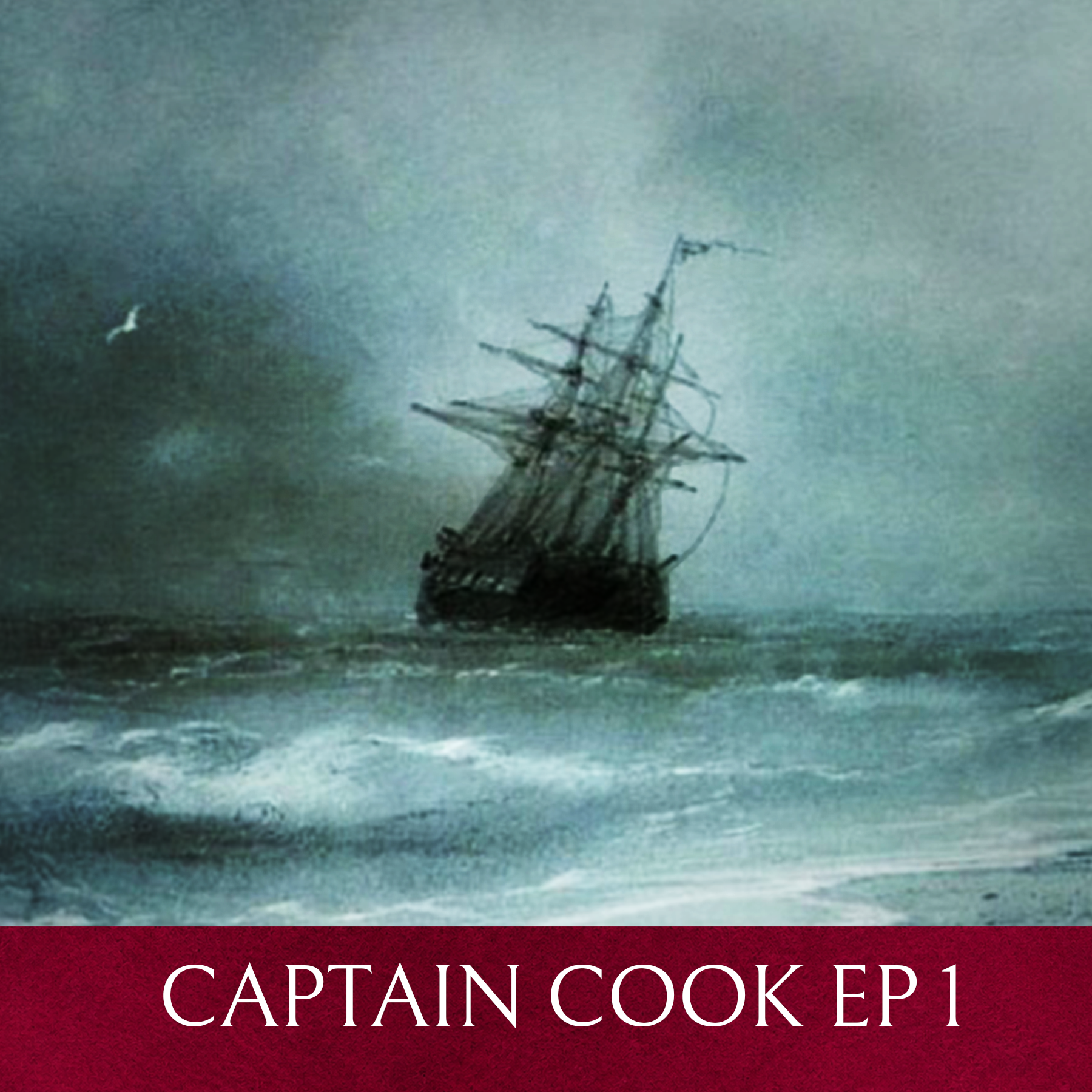
3:14Captain Cook was advanced a few paces before the Marines when they fired. The stones flew as thick as hail, which had knocked the lieutenant down, and as he was rising, a fellow struck him in the back with a spear. However, he recovered himself, shot the Indian dead, and escaped into the water. Captain Cook was now the only man on the rock. He was seen walking down towards the pinnace, holding his left hand against the back of his head to guard it from stones and carrying his musket under the other arm. An Indian came running behind him, stopping once or twice as he advanced, as if he were afraid that he should turn around, and then, taking him unaware, he sprung at him, knocked him on the back of the head with a large club, and instantly fled with the greatest precipitation.
4:21The blow made Captain Cook stagger two or three paces. He then fell on his hand and one knee and dropped his musket. As he was rising, another Indian came running to him, and before he could recover himself from the fall, drew out an iron dagger he concealed under his feathered cloak and stuck it with all his force into the back of his neck, which made Captain Cook tumble into the water. So that was, as you could tell from my magnificent rendering of a Welsh accent, a top nautical Welshman, David Samwell, surgeon of the resolution, and he was describing one of the most dramatic scenes in the history of naval exploration.
5:18And it was the moment on the 14th of February, 1779, when Captain James Cook, the greatest sailor of the 18th century and very plausibly the greatest sailor of all time, was killed by a crowd of enraged Hawaiians in the shallows of a bay in Hawaii. And in Britain, his death is one of the media sensations of the late 18th century, isn't it, Dominic? Hold on, what was the bay again, Tom? You didn't mention what the bay was. It was Keala Ke Kikua Bay.
5:52Dominic Sandbrook: Oh, brilliant. Great to have that Keala Ke Kikua on the show. But I thought that if I omitted it, then you wouldn't have to struggle with it, because I know that your Hawaiian isn't quite as good as your Balkan languages. Yeah. Anyway, so it's a massive, massive story, isn't it? Because Captain Cook is the kind of great star of the age. His deeds, his discoveries are emblazoned on newspapers and journals. not just in britain but across across europe totally yeah completely and when he died there were poems and plays and paintings there were theatrical reenactments of his death on stage in britain and france so this is france you know 10 years before the revolution people are going to see the death of captain cook on stage george the third was so upset when he heard the news that he burst into tears so he he shed more tears for the death of captain cook than he ever did for the loss of the American colonists.
6:45Dominic Sandbrook: Oh, so you can tell which he viewed as the graver loss. Yeah, well, that shows a commendable sense of perspective. And at the time, people held Cook up as the great British martyr of the age, the most moderate, humane, and gentle of all the great explorers, people said, a victim of his own humanity. And we'll get onto this question about whether he really is a victim of his own humanity or not. And I don't know whether you agree with this, Tom, but to me, what makes his death such a sensation is precisely the scale of his achievements up to that point. So I don't think it is an exaggeration to see him as the greatest sailor of the age, do you?
7:20Or perhaps of all time. In lots of ways, it's what he doesn't discover that is key. He doesn't discover vast new continents or anything like that. But what he does by kind of zigzagging across the Pacific Ocean is that he paints the map of the Pacific ocean um and people understand the world thanks to cook in a way that they simply hadn't done before him um and it's really you know we mentioned this in the in the first series we did it's not for nothing that he inspired james kirk in star trek you know james kirk on the starship enterprise james cook on the endeavor the the parallels there are absolutely deliberate he is like someone going you know it's equivalent of an adventure going into space yeah and to give
8:03Dominic Sandbrook: people a sense of the achievement so he sailed for hundreds of thousands of miles he circumnavigated the world twice it's cook who mapped the coastline of newfoundland of alaska of easter island he's the first european captain to visit the east coast of australia he's the first european captain to see to see hawaii to know that it exists see hawaii and die yeah right the the first to sail into the antarctic circle the first to set foot on new zealand which he also circumnavigated and also charted and for centuries after his death he was seen as the sort of the acceptable the most acceptable the most presentable the most humane face of british um colonialism so there were statues in london and sydney and christ church if you go to melbourne cook's cottage is there and they kind of the big park they've got in the center of the city but of course in recent years It's these things that become the focus for protests, haven't they?
8:59Dominic Sandbrook: So in 2019, I think we quoted this last time we talked about Cook, a columnist for Guardian Australia said he was emblematic of violence and oppression. And that's, you know, a lot of people almost instinctively now see Cook as a sort of poster boy for European violence, which I think is harsh for a couple of reasons which we'll go into in this series. Not least, Cook does not really sail as a conqueror. Yes, he is obviously part of a wider British imperial project, but he sees himself very much as an explorer. So he is not Hernán Cortés or Pizarro. He's not there to make money. He's not there to accumulate personal glory, particularly.
9:38Dominic Sandbrook: He's doing a scientific job as he sees it. Yeah, and he's been mandated very strictly by the Admiralty not to go around attacking people. I mean, those are strict orders and the Admiralty are very conscious of the example set by Cortez and Pizarro and are actively trying to avoid it. I mean, whether they do or not is a different matter. But the prescriptions are very, very different to those that were governing Spanish colonialism in the 16th century. Agree completely. All right. Well, we'll get into some of these complexities in the next two episodes. So some listeners may remember that we actually already discussed Cook's landmark first voyage.
10:15Dominic Sandbrook: so that was his first visit to australians new zealand so we did that back in 2023 and tom i know you love to memorize the numbers of the episodes don't you do you know those episodes yeah i do um but i'm relying on you this time oh really you don't you haven't made a note well i have i'm just testing you so i think you should tell the listeners uh what what their episodes 380 and 381 of the rest is history uh so i did know that obviously i had made a note but so um if you really want to do a deep dive into early cook you can go back to those episodes but if you don't want to don't worry because we will uh we will pray see it for you we're going to rehash it well i wouldn't say rehash it we can take a quick tour d 'horizon of um so people know who we're talking about because really this week we're focusing on the end of cook's life you know this dramatic scene that became the um focus of so many paintings and poems and stuff but to give you the background so the greatest sea explorer in history james cook he's born in north yorkshire on the 27th of october 1728 and his father also james a scottish farm laborer married a local girl grace james cook our protagonist went to the village school then he became a sort of grocer's apprentice and then when he was not yet 16 in 1745 he decided to seek his fortune at sea and he kind of learns the ropes literally uh on a ship that carries coal from whitby to london and he goes across the north sea and he goes into the baltic and stuff and then after 10 years of that so the summer of 1755 the seven years war with france is looming and james cook decides that he's going to join the royal navy you know he doesn't want to wait to be press ganged he wants to join it voluntarily and rise through the ranks and he becomes an able seaman on a ship of the line called HMS Eagle.
12:07Dominic Sandbrook: And up to this point, we know very little about Cook's inner life, really, because of course he's so obscure that he doesn't really leave many records and people don't write about him or anything. I mean, I think there's also a sense that he doesn't have a massive inner life as well. No, I think that's right. He's not the most thrilling of men. He's absolutely dedicated. He's a dedicated to his job kind of bloke, isn't he? He's all about charts. Give him a chart he couldn't be happier but anything more than that probably not he's a man who loves a nautical survey yeah he's also got a massive nose and a very small head yeah he's tall he's kind of as you say he's kind of craggy looking he's very serious he's very self-confident um we know that people who grew up with him said that he was a man who went his own way and that's very much his his vibe later on he in terms of his personal life he married an innkeeper's daughter called elizabeth bats they had six children tragically all six children died before cook's wife elizabeth so she had you know a pretty sort of melancholy life really and she burned their private letters their personal papers so that's partly why we don't have much of a sense of cook the inner man because his wife basically destroyed all the records anyway back to the story seven years war did of course break out in 1756 uh cook was involved in it but his skills don't really lie in fighting so when he was on the eagle as a young man the captain taught him navigation and map making and he rose quite quickly he was promoted to master after two years and then he was sent to north america on the pembroke and this was part of the great campaign to win canada from france which of course is a tremendous story and one we'll be doing on the rest is history i I hope, in the next year or so.
13:51Dominic Sandbrook: And Cook played a key part in surveying the St. Lawrence River before the great battle at Quebec. And so he's not fighting, is he? But it is incredibly dangerous because there are kind of war boats of natives and French and it's perishingly cold. So, I mean, it's not like he's ducking out by not doing the fighting. It's an important part of the war effort. So he surveys the river. he creates these incredibly accurate charts of things like Halifax Harbour and Newfoundland and Southern Labrador and this is a massive undertaking it lasts for years and by the late 1760s Cook has become known as one of the most meticulous one of the most forward-thinking one of the most kind of scientifically minded sailors in the Royal Navy and then in May 1768 there's the great turning point in his life so because he's got this reputation the Royal Society appoints him to command the expedition that they're planning to record the transit of venus over the sun now some people listen to this may say why on earth does anyone care about this the reason is because when venus kind of goes across the sun this is my scientific aptitude now yeah come on yeah when venus goes across the sun you can you can use that tom to make very detailed and complicated measurements that will enable you to calculate distances within the solar system and if you can measure these distances in the solar system yeah that will give britain a massive advantage in navigating at sea because as you may know when you navigate at sea you're looking at the stars and and you know plotting distances between them and whatnot and if you can do this wow you're going to beat the french and it's going to be brilliant britain will be top nation and also the other thing is that it's not going to happen again until 1874 so it's basically now or never it's now or never alia has written a chat like hannah fry is on the show it really is i don't know why they bother with the science podcast when they've got us frank um we've got more science next week yeah loads of science we've got isotopes i think next week yeah you've got top genetics right top geneticist tom hannan joins us on the show so you need to measure this transit of venus from all over the earth you can't just measure it from greenwich or something so cook has to go to the Pacific to get these measurements.
16:06Dominic Sandbrook: Now, at this point, the Pacific is largely unknown to European sailors. Some people have been there, most famously Abel Tasman. Yeah, and Francis Drake. Yeah, Francis Drake, of course, has been there. I mean, there isn't a kind of Drake here, whereas there is a Tasmania. That's true. Tasman had gone along the north coast of Australia, and he'd seen the west coast of New Zealand. But when Tasman came back, it's all a bit of a blur. It's not clear how these things relate to each other. And the general sense among kind of mapmakers is that somewhere in this area, there is this massive southern continent called Terra Australis Incognita.
16:43Dominic Sandbrook: There's not Australia and there is not New Zealand. It is something else and it's vast and it sort of counterbalances Europe in some way. So it goes back to classical geography, ultimately. Exactly. There must be some symmetry. And people are obviously very interested in the late 18th century and finding this great southern continent. so in 1766 the royal navy had sent a cornishman called samuel wallace on hms dolphin to circumnavigate the globe and look for this terror australis and wallace didn't find it he did find tahiti and he landed on tahiti and he was the first european to do so and he probably met cook before cook went went off so cook knows the stuff out there and there's kind of he's aware of Polynesia but where it all fits in he doesn't know and also um this this guy gives uh Captain Cook a goat yes doesn't he and that he'd taken a goat with him around the world uh to provide him with milk so it's a female goat and Captain Cook is going to take this goat again and it will be the only goat in history to have gone around the world twice so we mustn't forget the goat yeah so we've answered many a question on stage haven't we about Captain Cook's goat who would win a fight between what's the question jacko mccacco and captain cook goat i always feel jacko mccacco is the upper hand there because he is a hardened fighter yeah because jacko mccacco rips heads off people yeah he does it does if you don't know who jacko mccacco is you should listen forthwith to our episode about history's greatest monkeys history's greatest goats of course will be coming in due course right august 1768 cook sets off on this first great voyage and he's on the endeavor which is a former coal cargo ship there's about 100 people and the best known of these 100 people is a man who you love called joseph banks yeah he's the kind of person you hate and i love exactly you've hit the nail right on the head there so banks is from the lincolnshire gentry isn't he he's a botanist he's a man of tremendous curiosity but he's also an absolute he's just a total arse isn't he is that is that harsh well he's a cad yeah he's a cad he's not an arse cook really gets on with him which is impressive considering that they're sharing a cabin together he's popular on the boat and he's the first european to um mention surfing which he sees in tahiti and i think that these are all positives and also he um he uh he he takes a couple of dogs with him so a greyhound and a little dog called lady oh yeah of course i've got that i think these are all positives so off they go now cook's orders are not just to watch see this transit of venus he is also told in a secret annex which he has to unseal in his orders that he must discover whether a continent or land of great extent may be found to the southward of the tract lately made by Captain Wallace in other words we want you to look for this terra australis if you can find it we want you to map it and to take samples of the flora and fauna and a sort of vaguely worded addendum with the consent of the natives take control of convenient situations so what that basically means is i think we would like naval bases or trading stations there and plant the british flag so the french don't get there first but not kill people today no absolutely not and we'll come on later to the specifics of the the orders of how cook was to deal with the people that he met so off they go they sell south to madeira they go across the atlantic to rio they go down to tierra del fuego there's some amusing interactions with the locals who've smeared themselves in kind of whale oil or something and in january 1769 they enter the pacific and by april they have reached tahiti and actually we'll stop this first voyage there when they reach tahiti because this is almost exactly 10 years before the scene we began with cook's death in hawaii and it foreshadows what happens in hawaii in so many ways that i think it's worth dwelling on it a little bit.
20:32Dominic Sandbrook: So imagine the scene. The ship arrives at Tahiti. Even before they land, Cook is anxious about his men's behavior. So he knows it's very hard once they make landfall to enforce discipline. Basically, they're going to set up a laboratory on land, but when they do that, the men are going to start roaming around and it's very hard to control them. He also knows from Captain Wallace, who'd been to Tahiti before, that the local women are, and I quote, free with their favours. And whenever they land, there are always issues with people stealing stuff from the ships or kind of misunderstandings between his men and the locals.
21:08Dominic Sandbrook: And this is going to kind of give rise to the assumption in Europe that Tahiti is a home of free love and people like Voltaire and Russo love all that. Exactly. So Cook, to his credit, he orders his men when they arrive at Tahiti, he tells them by every fair means to cultivate a friendship with the natives and to treat them with all imaginable humanity. That said, right from the beginning, there are tensions. So his surgeon and another of the botanists complain that people are stealing their stuff. They say they've been pickpocketed ashore. People have stolen opera glass and a stuff box. A man from Tahiti steals a musket from the ship.
21:44Dominic Sandbrook: And in the confusion, Cook's marines fire on the Tahitians and they kill this man and they injure several of the others. And just as Cook had feared, his men do behave very badly with the local women. So after a few weeks, 24 of his seamen and nine out of his 11 marines have contracted the skin infection yours, which is endemic across the Pacific. And that's a venereal disease, is it? Well, I think there's some doubt whether it's a venereal disease or not, but basically it's come from skin to skin contact. And Cook is obsessed by stopping the spread of venereal disease from Europeans to Polynesians, isn't he?
22:21Dominic Sandbrook: He is. And And actually, I think this reflects well on Cook. You see, he's not he obviously is worried about his men picking up infections, but he's also worried that he doesn't want his men to give infections to the locals. I mean, he is a man of humanity in that regard. Yeah. And also, I mean, he's very, very stern with his men if they if there's any sense that they are kind of molesting the local women. So there's a ship butcher who threatens a Tahitian woman with rape and Cook has him flogged for it. And this is the kind of standards of discipline that he is upholding completely. But the most significant episode in this first landing on Tahiti is this.
23:02Dominic Sandbrook: They've measured the transit of Venus as they plan to do. But there's an epidemic of thefts. So people, this always happened, that when you landed, the islanders would be very excited by all the stuff that had appeared. And they'd try to take things, especially metal things. They're always trying to take nails. so in this case people have taken a musket some pistols a rake water barrels stuff like this cook is outraged cook is a man with a temper and cook orders his men to confiscate the locals canoes and he threatens to burn their canoes unless he gets all these things back now of course this really matters because those canoes to the islanders are enormously valuable they're a way for them to kind of make their livelihood and they're the most important thing they own some of cook's men want him to take a harder line cook says no they want him to shoot the some of the islanders but he says no i would not suffer them to be fired upon and it's important to stress and this may surprise some listeners who perhaps have a jaundiced view of captain cook by the standards of the 18th century and the 18th century royal navy cook is very much on the kind of woke wing the main criticism of him within the navy is he's consistently too soft and he's too indulgent so that's one important foreshadowing the other is that just before they leave tahiti cook finds two men have deserted and taken local wives and he is absolutely furious at this and he wants these men back and to get them back he kidnaps the local queen who's called obadia and three of her chiefs and he says this is basically the way to browbeat the locals into returning the deserters and this is textbook european kind of explorer or colonialist behavior it's cortez and montezuma it's cortez and montezuma it's pizarro and atahualpa it's what you know european captains do when they are trying to assert themselves on pacific islands and this is exactly what cook will do 10 years later in hawaii or what he will try to do in the events that lead up to his death But the comparison with Cortez and Pizarro may make people say, well, gosh, there's a whole spectre.
25:10Dominic Sandbrook: This is a great continuity here of European violence. But you made this point already. Cork is not a violent man. So he wasn't a particularly violent man in the Seven Years' War when he was just mapping stuff. And his orders from the Admiralty specifically tell him to avoid violence. So to quote, you are to endeavour by all proper means to cultivate a friendship with the natives and to show them every kind of civility and regard. The Royal Society, who had co-sponsored the exhibition, so the Royal Society of the Great Scientific Society, tell him to exercise the utmost patience and forbearance with respect to the natives.
25:46Dominic Sandbrook: And then this line, I think very telling, they are the natural and in the strictest sense of the word, the legal possessors of the several regions they inhabit. So the idea that the Europeans or the British have arrived purely as kind of rapacious oppressors, determined to snatch the land from these people. is just not right. People sitting around in London have said, these lands belong to the locals, we should behave well when we arrive. Clearly, we have our imperial project and we regard ourselves in competition with the French or the Spanish or the Dutch or whoever, but we have to behave well.
26:22Dominic Sandbrook: And we are enlightened 18th century people. We don't just steal other people's islands. We don't just shoot people out of hand. We should be the best of humanity and so on and so forth. so even when violence breaks out the natives when brought under should be treated with distinguished humanity and made sensible that the crew still considers them as lords of the country again i think that's it's very revealing and that's not just window dressing i mean this isn't this isn't designed as a pr exercise this is these are orders being given from london to ship's captains anyway october 1769 they've left tahiti landmark moment a surgeon's boy called nicholas young cites the north island of new zealand and cook and a landing party go ashore they have altercations with the maori who are armed with spears cook and banks try to conciliate the maori they've got a translator from tahiti who's trying to sort of talk to them they're trying to give them gifts of nails and beads and this is not successful at all in fact it's completely nuttily ham-fisted so at one point to try to and i quote cultivate a friendship with the natives they try to kidnap a canoe of maori nothing says friendship like good kidnap like an armed kidnapping and the maori fight back and they shoot for the maori and actually banks himself said it was the most disagreeable day my life has yet seen that reflects so well on banks yeah well cook's biographer richard hoff says i kind of describes it as a catastrophic visit discreditable to all which is true i mean cook sometimes lets himself down no question about that you know he's human in fact on this first voyage he and his men shot about 11 maori in separate incidents and on the 250th anniversary the british high commissioner in new zealand expressed regret for these incidents um so you know it's a i think cook and his men at the time thought were ashamed of what had happened and this is a good sign of how actually almost all the criticisms of Cook that are made today, Cook and his men anticipated them themselves.
28:34Dominic Sandbrook: Yeah, they wrote about them in their journals. Yes, of course, because the people making these apologies are the heirs of those Enlightenment traditions that Cook is embodying. And also just to say, I mean, Cook has a very nuanced attitude towards the Maori. I mean, he's impressed by them. He admires them. He even manages to find excuses for their cannibalism. And one of the key things, you said that they have a translator. I mean, this is the key thing. Cook realizes that the Maori and the Tahitans are basically the same people, which must mean that they have been sailing across the vastness of the ocean, which means that they are great oceanic travelers like Cook himself.
29:16These are people who have done incredible things, and Cook absolutely recognises that.
29:21Dominic Sandbrook: He does indeed. So the next thing Cook does after this is an amazing achievement. He circumnavigates and maps both the North and South Islands of New Zealand, often in this kind of hurricane weather. And probably of all the sailors alive in the late 18th century, only Cook could have done this. So he's done that. And then another landmark moment, April 1770, a man called Zachary Hicks becomes the first European to glimpse the coast of New South Wales. and so this is on the kind of eastern side of Australia. And nine days after that, Cook and Co sail into what's later called Botany Bay. And again, the relationship with the locals is, you know, it's not all sweetness and light.
30:00Dominic Sandbrook: So at first, unlike the Maori, the Aboriginal people ignore them completely. Yeah, Cook's bewildered by that, isn't it? This massive great ship turning up, and they paid no attention to it at all. well i mean we didn't we talk about this last time how strange it is and it's maybe because it is like something that is so outside the aboriginal people's kind of outside their ken that there is no possible reaction to it that would kind of make sense to them i guess anyway later there's a bit of throwing of rocks and spears and there's cook and co firing gunshots just kind of scare them off he raises the union flag he claims it as new south wales in the name of george iii he cuts the name of the ship and the date the 6th of may into a tree he sails on to sydney to the site of sydney yeah and he sees a kangaroo that's the most important thing the first kangaroo of course i forgot your kangaroo and it's a measure of the impact of that all this has back in britain is that within three years samuel johnson in an inn in inverness will be impersonating the movements of a kangaroo for the entertainment of boswell and a crowd of enthusiastic scotsmen well you know what i mean your comparison with um the landing of a spaceship is the right one because it is as though you know and dr johnson's reaction tells you how people at home kind of as it were consume this it is as though somebody had gone to mars or something and explored Mars and found local people, imagine the reaction back home in Britain.
31:35Dominic Sandbrook: You know, people would be so excited by all this. Especially all this weird fauna and stuff. I mean, you know, Australia gives you so much to enlightened philosophers back home in England. So this part of the world, unfortunately, also gives you hideous diseases. So they go on to the Dutch East Indies. There they get dysentery and they get malaria. Their Tahitian interpreters are both killed. Also, 34 of Cook's crew die of disease. Now, if you think there are about 100 of them on this first voyage, I mean, that's a pretty terrifying proportion. The survivors get back to, they sail down to Cape Town, they go up the west coast of Africa.
32:11Dominic Sandbrook: In 1771, 10th of July, the same bloke, Nicholas Young, who had spotted New Zealand, he spots Land's End. They are home. They've been away for 1 ,074 days and nights. An incredible achievement. you know one of the great voyages in history but cook is home he comes back to um london to mile end road uh he's reunited with his wife elizabeth and his sons james and nathaniel who are seven and six it must have been quite a bittersweet reunion because while he's been away two of his other children have died joseph and elizabeth but the amazing thing is that you know he's been away on this i mean an odyssey frankly but within a month of coming back he's already thinking about a second voyage so the second voyage like the first this is driven by overlapping motives so the biggest issue is this question about a southern continent terra australis it's pretty clear well it's definitely clear actually that new zealand is not part of it because cook has gone all the way around the two islands of New Zealand.
33:17Dominic Sandbrook: So New Zealand is not part of it. Australia almost certainly isn't part of it because the geography doesn't quite work. So a lot of geographers are saying, well, Australia and New Zealand are irrelevant. There must still be another southern continent to balance out the northern ones. And the Royal Society want this settled once and for all for reasons of intellectual prestige and curiosity. George III wants it to be settled. The Admiralty also want it to be settled for more kind of hard-nosed reasons. Keeping out the French. Yeah, the French are sending ships to the South Pacific. So if the French are involved, we have to get there first.
33:56Dominic Sandbrook: I mean, if this is the new South America, we would be insane to leave it to our great rivals. And the other person who's very keen is your favorite, Joseph Banks, the botanist. So he does believe in it. Unlike Cook, he is convinced there is a terror Australis. and he thinks it's south of New Zealand or maybe to the east of New Zealand. And if he can be on the expedition that finds it, Banks believes that he will be the great enlightenment intellectual hero of the day, which of course he would. I mean, no question. If he discovers stuff that's madder than kangaroos, then imagine how famous he will be.
34:35Dominic Sandbrook: Cook is not sure about this. Cook says, I don't think there is this other continent. However, he says, we can settle the question in one voyage and it should be done without too much trouble or danger. So let's do it. And he also says to the Admiralty, well, if we do this second voyage, we could establish a British base in New Zealand, in Queen Charlotte Sound. There's a bay in Tahiti that would be really good where there's loads of wood and loads of fresh water. and to have permanent British outposts in these places would be a great way of seeing off the French. So in the next year or so, they make their preparations for this second voyage.
35:17Dominic Sandbrook: And this turns into an absolute shambles. Now, Tom, I know you won't like this, but Richard Hough, Cook's biographer, blames the shambles on, and I quote, the malvolio of the endeavour, the big headed botanist Joseph Banks. What does he know? Do you think this is unfair? yeah i do i think it's completely unfair i mean just to say i mean malvolio has great trouble getting the ladies banks doesn't um and in fact i mean spoiler alert he's he's not going to go on this voyage but when was it is it the azores or the canaries or something there's there's a very feminine looking bloke waiting for them who who's waiting for banks and claims claims to be his servant who is clearly a woman who banks was planning to take with him on the voyage i mean that's very shakespearean comedy to be fair but not malvolio no the reason that banks doesn't go is because banks uh demands he's become very big-headed and he demands that the new ship they're going to take hms resolution has special modifications for him so he wants a new additional upper deck and a raised poop deck which will house his own laboratory and he's got 16 cronies that he wants to take with him, the scientists, artists, a troop of musicians to entertain him, all of this kind of thing.
36:32I don't see anything wrong with that. I mean, it's the kind of thing that Napoleon will do when he invades Egypt. Why not? Take some savile.
36:37Dominic Sandbrook: Anyway, it takes them months to build this extra deck. They take the ship out for a test voyage. The pilot comes back and he says, this is absolutely insane. It is, and I quote, an exceeding dangerous and unsafe ship because it's now so top heavy. And the Navy board ordered all the Banks' special edition scrapped and the new deck demolished and how does banks take this well i'll tell you what midshipman john elliott said when he saw when banks came down to the dock and saw what had happened to the ship he swore and stamped upon the wharf like a madman and instantly ordered his servants and all of his things out of the ship and banks then writes this very long and very arrogant letter to the first lord of the admiralty lord sandwich so the man who invented the sandwich and banks said i want a new ship this isn't good enough and sandwich said no and so banks said well i'm not going and he went to iceland instead which you know iceland's gain and the pacific's loss tom well banks is a great great bottomless well the midshipman john elliott who had seen him stamping and shouting on the deck said it was the most fortunate circumstance that Mr.
37:47Dominic Sandbrook: Banks did not go, for a more proud, haughty man could not well be. And all his plans seemed directed to show his own greatness, which would have accorded ill with the discipline of a man of war. Yeah, but what Mitchum and Elliot is forgetting about, it's not just about him and the crew. It's about the greater glory of botany. Anyway, Cook has to get a new botanist for the second voyage, who is called Johann Reinhold Forster, who is a German. And he's also a terrible man. Yes, he is. space everybody says he's extremely vain and rude and pedantic and just a terrible person in every way and he has a son with him yes exactly georg forster who's incredibly young i think he's about kind of 18 or something and he he's amazing he's actually he's brilliant and he becomes a member of the royal society when he gets back can i just give a shout out to my friend andrea wolf's book the traveler about him because he goes on to have a very interesting career oh we've had her on the show andrea wolf yeah we have germans behaving badly was the title of her episode and i think that these two behave quite badly as well on this trip yeah they do so anyway uh cook's going to go off in this ship the resolution and there's also a second ship this time called adventure and the captain of that is captain tobias ferno and there are two fun new additions to the resolution to the cast one is a man and that is a young man called george vancouver he's 15 years old and it's a midshipman and vancouver is the person after whom vancouver and vancouver island are named because he will end up mapping the pacific northwest god there's so much canadian history today too much i think some would say and the other thing i know we love a we love a chronometer or a naval some sort of nautical watch yeah so this is john harrison's isn't it it's it's the thing that um del boy finds in only fools and horses and becomes a millionaire is that what it is yeah but i've never really understood how it works dominic so perhaps you could explain for the listeners well this is the k1 sea watch tom and uh it was based on the design of harrison's pioneering h4 sea watch which i think you probably we all know about and um this k1 actually here's a fun fact for you it was made in charlbury in oxfordshire so not a million miles from where i'm sitting now i mean what does it actually do how does it work well it's specially calibrated so it will still work uh despite the kind of the tide and the the fact that it's uneven the ship and it's just an amazing piece of kit and we're going to be talking about that aren't we in a future bonus episode i don't want to pin us down to a particular date for that bonus episode i mean isn't it the case that with it that with this chronometer and stuff which i've never really understood how it works but it basically kind of settles the issue of longitude determining longitude and cook's voyages in part are a kind of a test run for this they've been charged by the admiralty to you know does it actually work and it does work it's accurate to a tenth of a second and it gives us a kind of head start over the french does it's brilliant as alia says it's like hannah fry's back on the show so that's great right so they set off with this watch with vancouver with these germans on the 13th of july 1772 on this is voyage number two madeira again down to cape town then they go south into the antarctic circle to a place called bouvet island so this is an uninhabited volcanic island covered with glaciers and they are now halfway between antarctica and south africa and they are delayed for a long time by fog and ice and then the ships get separated but on the 23rd of march 1773 cook arrives in dusky bay in the south island of new zealand he's planning to to rest in new zealand for six weeks and they rendezvous again with the adventure there don't they they kind of meet up again exactly so far the voyage has been awful it's been really cold and miserable um and they've picked up on route another naturalist who's a swede called anders sparrman and he said new zealand was brilliant the chirpings and pleasant songs of the birds in the nearby dells what a heavenly contrast to the storm's ice and the occasional scream of a penguin in a boundless antarctic sea so if you've read some of the there's um one of the um aubrey matter in master and commander books they sort of have a similar voyage where they get stuck in the ice and fog and stuff and it's unbelievably grueling and it I can't remember which one it is in the series, but it captures really nicely just how grueling and grim these voyages can be.
42:17Dominic Sandbrook: And this is what influences Rime of the Ancient Mariner and all of that. Exactly. Anyway, Cook remembers, you know, in 1773, but he remembers back in 1769 when he came before the slightly turbulent interactions with the Maori. And he says to his men, look, we have to be really careful. We don't want more violence. And for the first few days, there are no signs of the Maori. when cook goes ashore he leaves medals and axes and beads sort of metal things by a canoe on the beach that he finds to show his goodwill we come in peace but there's no contact no sign of them all the time though he can smell their campfires deep in the woods so he knows they're there then one morning 6th of april 1773 cook heads off with a small group including Forster the botanist and an artist to survey an inlet that they call Duck Cove because there's loads of ducks that they can shoot.
43:14Dominic Sandbrook: That's nice. And as they're rowing back to the ship, they suddenly see, standing motionless on a rock, holding spears and just staring silently at them, three people, a Maori man and two women. And Cook says to the rowers, head for the rock. And they head towards the rock and he stands up at the head of the boat and he calls out to the man and he throws him some handkerchiefs and there's no reply from this man and the boat approaches the rock and cook gets off and he gets onto the rock the man is standing there and he is trembling with some great emotion with a look of absolute terror on his face and cook digs into his pockets and he takes out some sheets of blank white paper and he walks towards to the man and he holds out these papers to the man.
44:02Dominic Sandbrook: And what happens? Well, I'm not going to tell you. You'll have to wait until after the break to find out. Goodness me. Okay, well, let's go to the break and rush back.
44:14This episode is brought to you by Anthropic, the team behind Claude. Has there ever been an occasion where you've watched something, an episode perhaps, and you just wish that you could know more about it?
44:24Dominic Sandbrook: Tom, the genuine he has. As you know, it was recently half-term, and nothing says a half-term holiday than a trip to the Baltic states. I went with Sambrak Jr. to Vilnius and Riga, and I became completely obsessed with the Grand Duchy of Lithuania. The Grand Duchy of Lithuania, for people who don't know, it covered what's now Lithuania, Belarus, Western Ukraine. And I was really interested to read more about it, because I know nothing about the history of this exotic and glamorous part of the world. And so I went and I asked Claude, tell me everything that I need to know about the Grand Duchy of Lithuania.
44:56Dominic Sandbrook: And it did. It was brilliant. Incredible. So if you want to know more about Lithuania or if you want to know about anything at all, go to Claude. It's a thinking partner. You know, it has the cumulative wisdom of the whole of humanity. Like a podcast host. Exactly like a podcast. Like you and me, Dominic. And you can discover more about Claude at claude.ai slash restishistory. This episode is brought to you by Attio, the agentic CRM. William here from Empire, briefly crossing the goal hanger network borders. We often discuss what decides the fate of an empire, and we're prone to measuring victories by the emperors who ruled them.
45:36Yet their lofty ambitions and militant decrees are merely a small glimpse of reality. Often the difference between expansion and collapse was in the hands of their inner circle. Atio offers that same support to modern businesses. It is the agentic CRM that consistently runs in the background, chasing potential customers, updating pipelines and catching renewals. It meets you where you are in your browser or your inbox and connects all your tools so you can focus on the bolder strategy. Businesses are already building their legacy with Atio. Now it's your turn. Try Atio for free at attio.com slash gullhanger.
46:18That's attio.com slash gullhanger.
46:42Dominic Sandbrook: walks you through each step, showing you actual rates from top-rated carriers. And if you're still unsure, you can keep asking Lou questions about your options until you're confident. Searching for car insurance just got clearer. Compare auto quotes at louver.com. Chat. Compare. Covered.
47:05Hello, everyone, and welcome back to The Rest is History. We left you on a note of high drama. and just to remind you where we are it is um the 6th of april 1773 we are on a rock at duck cove so named because uh after all the duck that uh cook and his men have been shooting we're on um the south island of what is now new zealand and captain james cook the hero of uh series is handing out some paper to a maori and you said there was a pause and then what happens well
47:38Dominic Sandbrook: I'll quote this German, Johann Forster. The difficult one. Yeah. The man now trembled very visibly, and having exhibited strong marks of fear in his countenance, he took the paper, upon which Captain Cook, coming up to him, took hold of his hand and embraced him, touching the man's nose with his own, which is their mode of salutation. So everyone's like, oh, thank God. You know, Cook's rubbing noses with this bloke. the bloke's obviously very nervous but he hasn't run away he hasn't attacked captain cook with his spear some of the other men get out of the boat and they sort of go towards the marry forster said be spent about half an hour in chit chat which was little understood on either side in which the younger of the two women bore by far the greatest share so it becomes clear to them that this is a sort of husband and wife and daughter effectively the men are very interested in this younger woman i'm sorry to say but forster still thinks that the chat was as edifying as a great many which are usual in the politer circles of civilized nations so somehow they managed to communicate by sign language or whatever when cook and co leave the rock they give the maori some of the duck and some of the fish that they caught earlier that day and the next day cook and co go back to visit them in their in their lovely home so they live in these huts on a nearby hill and cook has brought them a present of a red boat cloak and the father gives cook some cloths and in the next few days they they meet these people again and again at one point the maori family visit the ship and cook's men barter with them they trade some maori clothes for axes and nails the main interest among cook's crew is to try to sleep with the younger woman but there's no joy she's not interested that however is symptomatic of a theme that runs through this story and actually will run through this whole mini-series and that is the relationship between cook's crew and the women on the islands cook himself is clearly troubled by it so in his journal he he does not um blame the women he blames the maori men he says in return for a few nails they will oblige their wives and daughters to prostitute themselves whether they will or no and that not with the privacy that decency seems to require so there's kind of very open public interaction should we say between cooks sailors and some of the local women and there's a definite sense that the women are sort of being put up to it by their husbands or fathers or whatever because they're desperate to get their hands on these flipping nails.
50:17Dominic Sandbrook: Cook blames the Maori men, but the people he blames more than anybody else are his own men. So this is, I think, the great irony when people are slacking Cook off and they're saying, well, he is the sort of the ugly side of European colonialism. Nobody is tougher on his men than Cook is himself. He anticipates all the arguments that are leveled against them today. Yeah, he often kind of relativizes what he's seeing. So for instance, the way that Voltaire and Diderot, him, the idea that Tahitian women, for instance, are very kind of free with their favours, which is an enduring fantasy that runs throughout the 19th century.
50:55And Cook has none of this. So he kind of said, on the whole, a stranger who visits England might with equal justice draw the characters of the women there from those which he might meet with on board the ships in one of the naval ports or in the purlieus of Covent Garden and Drury Lane. So in other words, he's saying what may seem to be strange and aberrant behavior in these peoples that we're visiting on the opposite side of the world. Actually, you know, someone from there coming to England could, with entire justice, say exactly the same about us. And I think that's, you know, that's a commendable attitude.
51:27Dominic Sandbrook: Exactly right. Actually, he goes beyond that in some ways. And he says, we are worse. We debauch their morals already too prone to vice, and we introduce among them wants and perhaps diseases which they never before knew and which serves only to disturb that happy tranquility they and their forefathers have enjoyed. Now, if you were being very harsh, you could say of Cook, that stuff about the happy tranquility is a little bit noble savage. You know, they've had a perfect life and we've arrived, ruined it. I mean, their lives were not perfect at all. But you'd rather have that than, oh, these are all natural slaves and let's kill them all, make them, you know, steal all their stuff.
52:04Dominic Sandbrook: Completely you would. And he goes on to say, if anyone denies the truth of this assertion, let him tell me what the natives of the whole extent of America have gained by the commerce they have had with Europeans. You know, I'm reading this. I just think, you know, all the schools in San Francisco should be named after James Cook as the progenitor of the, I mean, this is the wokest of arguments from Cook. You know, America, the American natives have gained nothing from their interaction with the europeans i mean you could argue you know looking at what's happening in america in the late 18th century is he so wrong i don't necessarily think that he is anyway summer 1773 he sets off up the west side of the south island then he goes north into the great expanse of the pacific towards tahiti arrives in tahiti the 17th of august stays there for a month again some very familiar themes the first day when they arrive the resolution is invaded by a great mass of islanders people who um they swarm through the ship they're stealing instruments and books and stuff and they're throwing them over the side into their canoes which are down below cook not happy with this at all cook goes ashore to see the local chiefs and get some fresh water he makes a camp ashore there is a an amusingly unusual incident with the marine commander in this camp who's called lieutenant edgecombe and he has an interaction with the wife of chief maritata and edgecombe himself said afterwards to make excuses for himself this lady wanted neither youth nor beauty nor was she wanting and using those charms which nature had given her to the most advantage she bestowed her caresses on me with the utmost profusion and this line which i think is brilliant before i could get clear of her i was obliged to satisfy all her demands after which both she and her husband went away and i was never troubled with either the one or the other afterwards so it's only the end of that sentence that you realize that the husband has been there throughout kind of watching urging his wife on while poor lieutenant edgecombe desperate to get clear of this situation forced to satisfy her demands fast exactly what's going on there anyway they've been away now for more than a year and there's a sort of sense which you always get i think on these voyages that the longer they go on the more the discipline begins to fray and the worse that everybody's behavior becomes so there's there are constant thefts by the islanders and on the other hand there are multiple incidents of sailors getting drunk and fighting and i quote making too free with the women and cook has to apologize at one point to the local chiefs for his men's behavior, which suggests to me that some of his men have probably started behaving extremely badly.
54:57Dominic Sandbrook: Anyway, they move on towards Tonga in September. And here they are shocked because they find evidence of cannibalism. But again, it's striking how non-judgmental Cook is. As with the Maori. Yeah. This custom of eating their enemies slain in battle, for I firmly believe they eat the flesh of no others, has undoubtedly been handed down to them from the earliest times and we know that it is not an easy matter to break a nation of its ancient customs let them be ever so inhuman and savage especially if that nation is void of all religious principles as i believe the new zealanders in general are now again you can quibble with some of the language but actually the sentiment the moral relativism as it were is is really very striking i think after this after tonga the two ships are separated again the adventure under Captain Furnow decide to go home.
55:47Dominic Sandbrook: But en route back home, there is surely the most dramatic incident of the whole of the second voyage. So on the 17th of December, the adventure is anchored in Queen Charlotte Sound at the upper tip of the South Island. So this is the place that Cook had identified as a potential base. And 10 men land ashore to gather supplies, and they never come back. And the next day, Furnow sends armed Marines to go ashore to find them. I mean, this is very Odyssey, isn't it? Oh, this is so Odyssey. Yeah, Christopher Nolan. I mean, he should do a film about Captain Cook. On the beach, they find a load of baskets full of what looks to them like roasted dog's flesh.
56:26Dominic Sandbrook: And they investigate this roasted dog's flesh. And they find that it is actually the flesh of their friends. So they can see some of their friend's shoes and a hand tattooed ominously for you, Tom, with the initials TH. Oh, dear. Yeah, that is alarming. which are the initials of quote Thomas Hill one of our folks or men and they row to another beach and there they find a massive crowd of Maori and they fire some shots in the air and the Maori flee and they leave behind and I quote a shocking scene of carnage and barbarity as can never be mentioned or thought of but with horror for the heads hearts and lungs of several of our people were seen lying on the beach and at a little distance the dogs gnawing their entrails Now, for Furnow and his crew, this is incredibly sort of shocking, traumatic.
57:17Dominic Sandbrook: Some of his men say, come on, we should take reprisals against these people. We should bombard their villages. We should kind of put them to the torch, destroy their canoes. And again, interestingly, and perhaps surprisingly for some listeners, Furnow says, no, what's the point? We're not going to bring our men back from the dead. We'd gain nothing from doing that. You know, it'd be just pointless revenge. We'll just go home. And so they just go home. I think it reflects very well on the admiralty that they have appointed two such measured and presumably humane men to command these incredibly important expeditions.
57:50Dominic Sandbrook: Yeah, I think so too. And also, well, maybe it says something about the climate of the Enlightenment in the 1770s, 1780s that experienced naval commanders. I mean, people would not have thought like this, I think, in the 16th century, do you? In the days of Cortes and Pizarro? Absolutely. Absolutely not. I mean, they would have proceeded with great vengefulness, I think. Whereas 200 years on, more than 200 years on, Cook and Ferno were saying, what is the point? We can't judge them by our own standards. This is their land, not ours, all of that kind of thing. Let's just go home and cut our losses, which is what Ferno does.
58:31Dominic Sandbrook: So Ferno, he comes back. This is quite complicated. He goes back west to east across the Pacific. So he almost goes the sort of the unexpected way, the wrong way. He goes down round the bottom of South America and then back up towards England, which where he returns in 1774. And Furnow is almost completely unknown today, but he's a remarkable man. So he was the first European to set foot on Tahiti. Furnow had circumnavigated the world twice, one way with Captain Wallace and the other way himself. So he went two different ways around the world. So he's up there with the goat. He's up there with the goats and the only legacy that he has is that somebody named a venomous scorpion fish after him.
59:13But that's a form of immortality, isn't it? I mean, I've looked at the scorpion fish and it's a handsome scorpion fish. Is it? Very brightly coloured, kind of red and orange and yellow. Very handsome. Okay.
59:23Dominic Sandbrook: More of this kind of natural history and science on the show too much. Well. Although next week, next week, even more to come. So that's furnow. Now what about Cook? Cook has gone south to hunt for this imaginary continent. And this is an incredible undertaking. massive testament to his leadership and seamanship so his men have rested in new zealand they've got loads of supplies they've got loads of fish and vegetables and stuff they go off into the antarctic circle hoff says his biographer says at this point by january 1774 they've traveled further south than any man before or since for that matter at sea and in this part of the antarctic which is incredible.
1:00:04Cook says the same. I mean, he's incredibly proud of this, that his ambition had led him not only further than any other man has been before me, but as far as I think it is possible for man to go. And just to say that basically what he is doing is that there are these blank spaces on the chart and he's worked out a kind of path that will crisscross them so that he's essentially ticking off chunks of empty sea so that they know there
1:00:28Dominic Sandbrook: is nothing there they go south and he sees this massive expanse of ice eventually and he says you know i think this ice basically goes to the pole or as far as it's possible to go there are virtually no birds at all and he says the fact there are no birds suggests to me very strongly there is no land can i just say dominic the thing that i find most amazing about this and about it's it's the single most amazing thing about all of cook's three voyages is that the sailors apparently did not wear gloves so that they are hauling on ropes and tying knots in antarctic temperatures with their bare fingers i mean i just don't know how they do that yeah because there's sort of ice on the rigging and stuff isn't there oh god it must have been cold yeah anyway they eventually turn back so much ice they turn back they um they end up back in new zealand in this place called ship cove again the relations with the maori are not actually they're not bad cook in his journal says of the maori he says their big issue is want of a union meaning they don't have kind of national unity but apart from that he says notwithstanding they are cannibals they are naturally of a good disposition and have not a little share of humanity which i think again very woke very captain woke um there's your there's your daily express headline so at last it's time to go home they go again east across the pacific to chile uh that takes five weeks but he's still not finished he goes down around the bottom of cape horn then he discovers the south sandwich islands which are named after lord sandwich and i am thrilled to announce he discovers the island of south georgia rejoice at that news rejoice and congratulate captain cook and the marines so south georgia just to explain for overseas this is who may think we've gone mad uh south georgia is of course the site of one of the great battles of the 20th century when it was recovered by the royal marines for britain in the falklands war of 1982 so a great moment for margaret thatcher her famous moment when she came out and she said rejoice to the tv cameras so that's great from captain cook brilliant set the scene for a tremendous victory oh dominic can i just one one other thing which in some ways is even more exciting than south georgia is it going back into the pacific they'd stopped off at easter island that's right yeah and the forsters are massively into the heads the giant heads and uh johan forster is the first to sketch one and georg foster his son in what manner as they contrived these statues is incomprehensible to me for we saw no tools and this causes a sensation again back in britain so there are two incredible achievements of this voyage of cooks and one is obviously that he has essentially charted out the blanks we know now that there isn't a huge southern continent but the other thing is to open people's eyes to the incredible wealth and sophistication and cultural richness of polynesian culture and easter island is a kind of classic example of that yeah i think that's i think that's dead right actually so he comes back and on the way back actually february 1775 he makes this kind of landmark entry in his journal where he buries forever the idea of a terror australis he says there's no there's no southern continent that's all rubbish however i firmly believe there's a tract of land near the pole so within the polar circle that's almost completely cut off by unknown and icy seas thick fog snowstorms intense cold and every other thing that can make navigation dangerous.
1:04:09Dominic Sandbrook: And this is the first time anybody has described the existence of a polar continent, which we know as Antarctica. It didn't get that name until the very end of the 19th century. But Cook, I mean, Cook has a lovely description of it. A country doomed by nature never wants to feel the warmth of the sun's rays, but to lie forever buried under everlasting snow and ice. And that's not as exciting to people back home as the idea of a southern continent with kind of, you know even more extravagant kangaroos or something yeah but we said that that it's it's what he doesn't find that is actually more important what he does find on this voyage yeah so he comes back summer of 1775 there's no southern continent however he thinks there's something in antarctica you know people are a tiny bit deflated but he's still you know done something quite extraordinary he's elected to the royal society he writes lots of papers about his findings in kind of you know sailors health and how to fight scurvy and stuff and there was a fun footnote to the second voyage which i i know will appeal to you so ferno has brought back a bloke called omai from raiatea which is the second biggest of what are called the society islands so the biggest society island is tahiti and raiatea is the second one and your mate joseph banks who's back from his trip to iceland he's massively missed out by the way he really should had gone on that second voyage anyway banks is thrilled by this guy oh my and he takes him to the royal society and oh my is taken to the house of lords he's painted very famously by sir joshua reynolds he's taken to queue to meet george iii and he very famously makes this sort of very strange bow to george iii and then shakes his hand and says how do king tosh george thinks it's great doesn't he to give him credit yeah he loves all this but tom would you like to i mean since you are the johnson and boswell aficionado would you like to tell everybody about johnson and boswell and what they're making all this yeah so boswell right as this is about johnson he had been in company with omai a native of one of the south sea islands he was struck by the elegance of his behavior and accounted for it thus sir he had passed his time only in the best company so that all he had acquired of our manners was genteel as a proof of this sir lord mulgrave and he dined one day it's threatened they sat with their backs to the light fronting me so that i could not see distinctly and there was so little of the savage and oh my that i was afraid to speak to either lest i should mistake one for the other but they also had a chat have a big chat don't they johnson and boswell about captain cook yeah so boswell sit next to cook at dinner and he obviously reports it back to Johnson of course he does and Johnson is very impressed by Cook he praises the conscientious accuracy of that celebrated circumnavigator and Boswell I told him that while I was with the captain I catched the enthusiasm of curiosity and adventure and felt a strong inclination to go with him in his next voyage which is classic Boswell and Johnson replied why sir a man does feel so till he considers how very little he can learn from such voyages.
1:07:22Boswell. But one is carried away with the general grand and indistinct notion of a voyage around the world. But he never goes on it, obviously.
1:07:32Dominic Sandbrook: Imagine if he had. I mean, wouldn't that be amazing? Boswell would have been terrible on it. Oh, he'd have absolutely shamed himself with the locals, would he not? I mean, he would have single-handedly killed thousands of people with his... He wouldn't kill them. No, but this quotient of... He'd have turned up with so much venereal disease, surely. The venereal disease is the issue so the admiralty are now talking about another voyage so this is the winter of 1775 1776 and they are keen now to locate the northwest passage so to explain for listeners canadians will be all over this so the northwest passage would lead over the top of canada across the sort of north of it and it would enable british ships to go across to canada over the top and go down into the Pacific and reach the wealth of the East without having to go around either the Cape of Good Hope at the bottom of South Africa or Cape Horn at the bottom of South America.
1:08:30Dominic Sandbrook: And the plan is that they will find the Northwest Passage not from the right-hand side, from the kind of the Atlantic, but from the left-hand side of the map, from the Pacific. Now, everybody agrees the one person who they're not going to ask to do this again is Captain Cook. he has been at sea for six out of the last seven years and everybody knows that you know when you're doing these big voyages your captain needs to be well rested you know he needs to be able to make cool measured decisions he needs to be in a prime of life you know pumped and ready and that cook is clearly knackered because he's been away for so long he will stay at home as a consultant and they'll appoint somebody else to command the expedition.
1:09:19Dominic Sandbrook: On the 9th of January 1776, he and three naval bigwigs are having dinner at the Admiralty to discuss the candidates. And they agree that the leading choice is a guy called Charles Clark, who's 33 years old. He'd been a master's mate on Cook's first voyage. He'd been the second lieutenant on the resolution in the second voyage. He's very popular. He's dutiful. He's good-humoured. they're talking through clark's sort of qualities but as they talk about him a few downsides kind of suggest themselves first of all clark is very popular with the men but that's partly because he likes a drink and he's got an eye for the ladies so you know he perhaps he's a little bit too much one of the boys also clark at this moment is actually locked up in a debtor's prison it's not his own fault though he issued a guarantee for his brother his brother got into debt and so clark has basically imprisoned in in his brother's stead and actually in prison no one knows this in prison he has just caught the tuberculosis that is going to kill him so they're talking about clark and then cook suddenly says bangs the table with his fist or something and says I will myself undertake the direction of this enterprise if I am so commanded.
1:10:38Dominic Sandbrook: And everybody shouts, huzzah!
1:10:43Dominic Sandbrook: Your health, sir! Bumpers! Yeah, exactly. Bumpers all round. Corn for the toasted cheese. More pork there, killick. Or whatever. Anyway, Cook is going to command this third voyage. The fatal decision, the decision that will cost him his life. so they make their preparations cook will take resolution and 112 men clark once he's out of prison will take the second ship discovery with 70 men one person worth noting actually on the resolution is the ship's master he is a 21 year old man a brilliant surveyor called william bligh the mutiny on the bounty and indeed to fight at the battle of capenhagen with nelson indeed so So they're not going to tell the world about the Northwest Passage.
1:11:32Dominic Sandbrook: That's top secret. They will hide behind the pretext that their mission is to return Omai to his homeland on Riotair. Now, last time when they prepared for the second voyage, there was the issue of banks and all of his stuff. This time, no banks. The problem is Omai. Omai wants to take home an absolutely bonkers amount of luggage. he plans to take home furniture for a new european house on riot air that include a bed table and chairs crockery kitchenware bottles of port a hand organ and a jack-in-the-box jack-in-the-box a jack-in-the-box that's essential well he thinks he's seen a jack-in-the-box he says this is absolutely incredible people on riot air will never receive i mean they haven't even seen nails so i mean jack-in-the-box is really acing it they're gonna be blown away when he's um when he's drinking port playing on the hand organ and showing them his jack-in-the-box god so much hilarity will ensue this will make him a very big name on campus indeed he also wants to take a massive bible for late night reading because he's been introduced to the bible and he wants to take a huge globe so he can show his relatives and neighbors where he's been on on the earth the downside is omai knows that a lot of his neighbors uh on riot will be jealous of him because of his globe and his jack-in-the-box and his furniture so to defend himself he also wants to bring him muskets musket balls and gunpowder and he intends to dress in a coat of chain mail and a full set of medieval armor all of which has to be loaded onto the boat I mean, the image of this bloke standing presumably absolutely drenched with sweat in his suit of medieval.
1:13:25Dominic Sandbrook: In his chainmail and his Jack in the Box. Jack in the Box. Drinking port. Winding up his Jack in the Box and pointing to the globe to show people where he's been. Why has a film not been made about this? Maybe it has. I know. So that's a problem. Loading all this stuff on forks. to make matters worse george iii has had some some fun thoughts george iii has seen some drawings of polynesian islands and george iii who is of course a great enthusiast for farming was horrified to see that there were no tilled fields no hedgerows on polynesian islands there was no sign of farming equipment or livestock and he says this is absolutely no good you know the decent thing is we should teach these people farming so he says to cook i'm going to donate to you a load of stuff from my own farms these include sheep rabbits a mare a stallion some sows and hogs two cows and a bull all of which have to be loaded onto the resolution and to make matters worse george the third's friend lord bespera hears about this and he says oh well i'll donate you some stuff as well and he gives them a peacock and a peahen so they're all loaded on that makes for a quiet night doesn't it imagine i mean they're basically traveling with the zoo a petting zoo the jack-in-the-box coming out the peacock there's a bloke like clanking around in armor with his with his hand organ what does cook make of this no nonsense the auction man jack-in-the-box cook's not a man for a jack-in-the-box so the voyage will be really cramped not because just because of all this but all the animals need food and water they need fodder and hay and whatever they've got to load all that on and the other key thing to bear in mind cook is now 47 almost 47 years old and everybody said you know when you saw cook the last voyagers had taken their toll he's visibly tired he has been around the world twice he's been at sea for six years he's covered 100 thousand miles his health is not great he's got issues with his gore bladder and he is clearly you know a man fraying he is more hot-tempered than he was he's more impatient he's just generally more he was never a great laugh but he's a lot pricklier than he used to be and right from the start there are issues with this third voyage they have delays getting supplies it takes them a long time longer than they expected to get Clark out of this debtor's prison and so they don't leave until the 12th of July which is much later in the year than they had planned so it's 1776 when they're leaving now the reason that's a problem is they wanted to be at the Barents Strait which is the kind of northwest of of Canada ready to look for the northwest passage they wanted to be there in the summer of 1777 it's going to take them about a year to get there but the fact they're leaving in July 1776 means they're up against the clock from the very start and if things go wrong they will fall behind and they will miss their window and things do start to go wrong straight away the resolution is not in good shape it's a it's a very leaky ship especially in rough weather and you know when they run into storms a lot of the ship gets completely soaked so they have to stop in Tenerife to get new food for the animals and to make some repairs they go down to the cape of good hope they spend christmas on desolation island which is in the sort of southern reaches of the indian ocean it's pretty miserable already so they don't get roast beef on christmas day the men don't like that they have a double ration of roast penguin which which they don't regard as an acceptable substitute all the trimming they then head on from there to Tasmania.
1:17:16Dominic Sandbrook: Cook has never been to Tasmania. Furno had stopped there on the second voyage and got on all right with the locals. He said the locals were smaller and darker than their equivalents in Australia. I mean, this is not going to end well for the Tasmanians. No, it is not at all. The resurgent of the resolution, William Anderson, said of the Tasmanians, the men play with their penis as a child would with any bauble or a man twirl around the key of his watch while conversing with you and then so the tasmanians will chat to them while playing with themselves and then completely randomly the tasmanians will just abruptly sit down then lie down and fall asleep in the sand in the glare of the sun which cook and his men find disconcerting and also they don't eat fish they're not eating fish no they had a weird taboo nobody knows why wow isn't that interesting i wonder why not nobody knows anyway cook and his men set up an observatory on Tasmania and they um Cook sends out some parties to get food for the animals but then suddenly Cook changes his mind he says actually I've changed my mind I don't want to stay in Tasmania at all I want to head on to New Zealand and this is the first sign that it's like something has I don't know whether it's flipped or broken I don't know exactly what it is in Cook's head somebody who is always so considered measured and cautious and thoughtful has become impulsive.
1:18:39Dominic Sandbrook: Somebody who changes his mind, who's indecisive, and who's grumpy and cross generally. So he wants to head on to New Zealand. They head on to New Zealand. When they get there, Cook is again very impatient. They're well behind schedule. It's clear now they're not going to get to the Arctic Circle in the summer of 1777, as they'd hoped. They're going to have to wait for another year. Now that probably explains why Cook is so impatient and so frustrated. So there's a sense all through 1777 of the mood kind of fraying food goes missing cook can't find out who's taking the food he gets very angry he cuts the meat ration for everybody by half they're then running short of water so he says right we'll head back to tonga we'll get some water in tonga they go to tonga and here they are plagued with thefts of shoes of jackets of daggers by the islanders and cook now says well i want more severe punishments than ever to deter the islanders from stealing our stuff now in the naval rules they prescribed that you would have a limit of 12 lashes cook says you know sod that we'll lash them far more one man that he has flogged 72 times and that is easily enough to kill you and there's this kind of hideous mutilation there's one guy who um a thief who has um he gets cut with crosses through to his bone that's right yeah to kind of you know serve as a salutary warning i mean it's pretty brutal stuff yeah and it's telling you know again these things which cook is later criticized by 21st century writers but it's telling that even at the time some of cook's own men are horrified by this so young midshipman george gilbert we'll quote him a few times he records cook has been acting in a way unbecoming of a European, viz by cutting off their ears, firing at them with small shot or ball as they were swimming or paddling to the shore, and suffering the people as he rode after them to beat them with the oars and to stick the boat hook into them.
1:20:41And the thing that's striking about this is it's atypical of everything that he had been on the previous two voyages. Completely. It's like something snapped.
1:20:48Dominic Sandbrook: It's cruel, is what it is. There's a cruelty and a vengefulness to it. I think there's almost a Mr. Kurtz feel to Cook at this point. So he will veer wildly. One day, he will be ordering people to be flogged or people to be mutilated in some way. And the next day, he will get up and he'll say to the Marine band, we're going to put on a concert for them. Put on your regimental uniform and play them a tune. So basically, nobody knows where they stand with Cook. And in his biography, Richard Hoff says, Cook has basically got to wait for a year now because he's missed his window. And the cook of the first or second voyages would have taken this opportunity to go off surveying some coastline or looking at islands or whatever.
1:21:32Dominic Sandbrook: But this time, cook seems to have lost interest. His curiosity, you know, that had propelled him in earlier voyages seems to have vanished. They're just hanging around increasingly sort of bitter and impatient. Anyway, by the late summer of 1777, they get back to the Society Islands. They drop Omai off. Omai is a massive swank at this point. Well, not just a swank. He's clattering around, isn't he? And he's firing his jack-in-the-box at everyone. In his suit of armor. Yeah. Yeah, Cook's men actually start working on Omai's house. They build this house for him. What happens to him afterwards is unclear.
1:22:15Dominic Sandbrook: I mean, it would be an amazing film or something. What probably seems to have happened is that he got drawn into feuds with his neighbours and then died three years or so later. I think subsequent visitors inquired after him and were told that he had died. But we don't really know why, how, what happened. Anyway, Cook is now behaving even more erratically. So on the island of Aimeo, two of the goats are stolen while they're grazing ashore. And Cook goes absolutely ballistic. Hoff calls it a rage, the like of which none of his officers had witnessed before. And he tells his men to launch reprisals against a local village, to burn 18 canoes and more than 100 paddles, and to burn 20 houses in revenge.
1:23:00Dominic Sandbrook: That's really brutal stuff. I mean, yeah, to burn the houses and the canoes, that is destroying people's lives. Yeah, and he knows that. Yeah. And it's so contrary to the way that he'd behaved previously. Well, exactly. So George Gilbert, the midshipman, I quoted him earlier. He says, we carried out his orders with the greatest reluctance. I cannot well account for Captain Cook's proceedings on this occasion as they were so very different from his conduct in like cases on his former voyages. I mean, this, I think, goes back to that point about it was just a mad mistake to send him for a third time.
1:23:35Dominic Sandbrook: You know, he had two voyages in him, but not a third. Anyway, the weeks go by. There are more thefts. there are more squabbles and reprisals cook's offices are getting quite worried now because you know why are we not moving on we should have moved on they were meant to have left the society islands in february they don't actually leave until december 1777 and as they you know they're heading north gilbert writes um he says we were we left with great regret because we knew that ahead lay nothing but excess of cold hunger every kind of hardship and distress they spend christmas on christmas island which is just south of indonesia they are now they're thousands of miles away from their destination they're well off track and they're in danger if they're not careful of missing another summer window to get to the arctic i mean they can't afford to miss it again alas cook gives the order to sail east the mood is very downbeat they're short of water their rations have been slashed however they make reasonably good time heading into the sort of the void of the pacific and then completely unexpectedly on the 18th of january 1778 at dawn they spot land to the northeast now these are islands that have never been marked on any map they have never been visited by europeans until this point nobody in europe nobody on captain Cook's voyage suspected that these islands existed.
1:25:08Dominic Sandbrook: These are the islands of Hawaii, and it is here that Captain Cook's last voyage will reach its fatal climax. Goodness me. So, in our next episode, as Dominic says, the climax of this story, Captain Cook and his men, they meet the Hawaiians, and it does not end well. And if you just cannot wait to hear that, but you're not a member of the rest is history club you can of course go to the rest is history dot com just to mention um captain cook spent his christmas on christmas island but you could spend it listening to the rest is history and know that you are going to be able to listen to the rest history whenever you want all next year and enjoy a massive host of supplementary benefits and what is more you could present this as a splendid gift to all your loved ones um and all you have to do is go to the rest of history.com and look for gift and sign up there and it honestly couldn't be easier and you know what tom what is more people will get an exclusive t-shirt and there's nothing that i know that you love more than an exclusive t-shirt what is going to be on that t-shirt i cannot yet reveal but it is going to be mind-blowing and if you the only way to get this t-shirt i think is to go to gifts and do all that business with the rest is history club so that is really something for people to bear in mind but dominic thanks so much for that um thrilling stuff and we will be heading back to the pacific ocean in our next episode until then bye-bye bye-bye
1:26:51are you looking for support in your weight management journey zep bound terzepatide may be able to help. ZepBound is a prescription medicine used with a reduced calorie diet and increased physical activity to help adults with obesity or some adults with overweight who also have weight-related medical problems to lose excess body weight and keep the weight off. ZepBound is approved as a 2.5, 5, 7.5, 10, 12.5, or 15 milligram injection. ZepBound contains terzepatide and should not be used with other terzepatide-containing products or any GLP-1 receptor agonist medicines. It is not known if ZepBound is safe and effective for use in children.
1:27:31Don't share needles or pens or reuse needles. Don't take if allergic to it. Or if you or someone in your family had medullary thyroid cancer, or if you've had multiple endocrine neoplasia syndrome type 2, tell your doctor if you get a lump or swelling in your neck. Stop ZepBound and call your doctor if you have severe stomach pain or a serious allergic reaction. Severe side effects may include inflamed pancreas or gallbladder problems. Tell your doctor if you experienced vision changes before scheduled procedures with anesthesia. If you're nursing, pregnant, plan to be, or taking birth control pills, taking ZepBound with a sulfonylurea or insulin may cause low blood sugar.
1:28:07Side effects include nausea, diarrhea, and vomiting, which can cause dehydration and worsen kidney problems. Talk to your doctor. Call 1-800-545-5979 or visit zepbounds.lily.com. Ulcerative colitis and Crohn's disease symptoms don't pause for the moments that matter. That's why understanding your treatment options matters. Discover what's possible with Trimphia. Guselcomab. Trimphia is a prescription medicine used to treat adults with moderately to severely active Crohn's disease and adults with moderately to severely active ulcerative colitis. Serious allergic reactions, increased risk of infections, or lower ability to fight them and liver problems may occur.
1:28:48Before treatment, get checked for infections and tuberculosis. Tell your doctor if you have an infection, flu-like symptoms, or need a vaccine. Talk to your doctor and explore what's possible or call 1-800-526-7736 to learn more about Trimphia and visit trimphiaradio.com. I wrote a little song to remind you, Choice Hotels gets you more of the experiences you value. The Cambria Hotel's got it all. A rooftop bar, have a ball. Bring a date, your squad, or even your mom. Book direct at choicehotales.com.
Why is Captain Cook’s reputation so contentious today? What happened during his second voyage, when attempting to discover the mythical southern continent, Terra Australis? And, would his final voyage drive him mad?
Join Dominic and Tom as they discuss Captain Cook’s final adventures, his totemic discoveries along the way, and his descent into insanity before the end…
Give The Rest Is History Club this Christmas + free T-shirt! Treat yourself or a fellow fan to a membership: bonus episodes, ad-free listening, early access to series, newsletters, and more.
To read our new newsletter, sign up at: therestishistory.com/newsletters_______
Advertise with us: Partnerships@goalhanger.com
_______
Sign up to Revolut at revolut.com/trih and get £20 when you spend. 18+, end date 30/06/2027 and promotion T&C's apply. Revpoints T&C's apply.
_______
This episode is sponsored by Anthropic, the team behind Claude. Try Claude for free today at http://Claude.ai/restishistory.
_______
Twitter:
@TheRestHistory
@holland_tom
@dcsandbrook
Video Editors: Jack Meek, Harry Swan + Adam Thornton
Social Producer: Harry Balden
Producers: Tabby Syrett & Aaliyah Akude
Senior Producer: Callum Hill
Executive Producer: Dom Johnson
Learn more about your ad choices. Visit podcastchoices.com/adchoices

Scan the code with your iPhone camera
Listen in the app.