 The Rest Is History
9 Nov 2026 · 1h 10m

 Add vo to ChatGPT or Claude to ask about everything you hear
vo listened to this episode to put together the overview and transcript, so there may be the odd mistake.
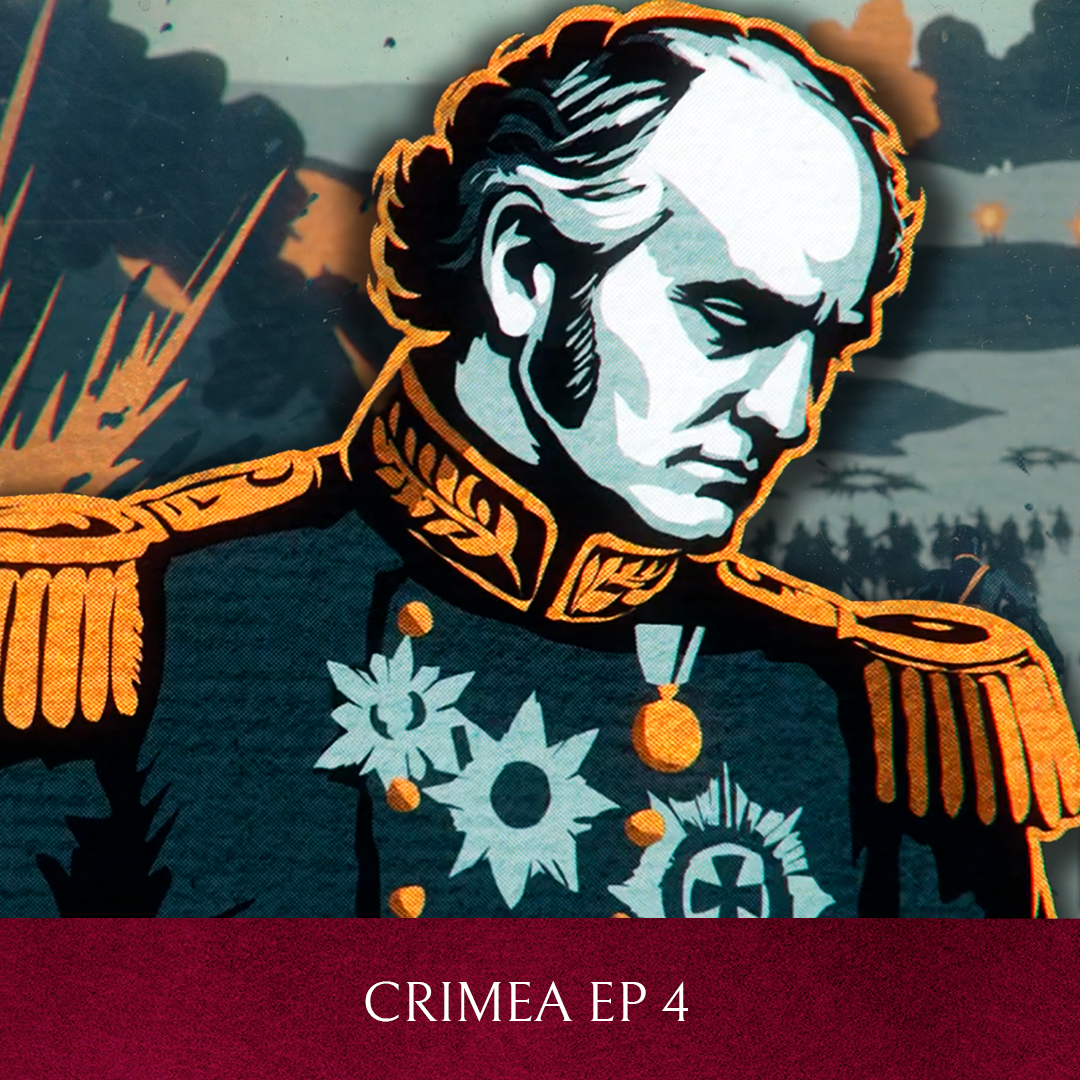
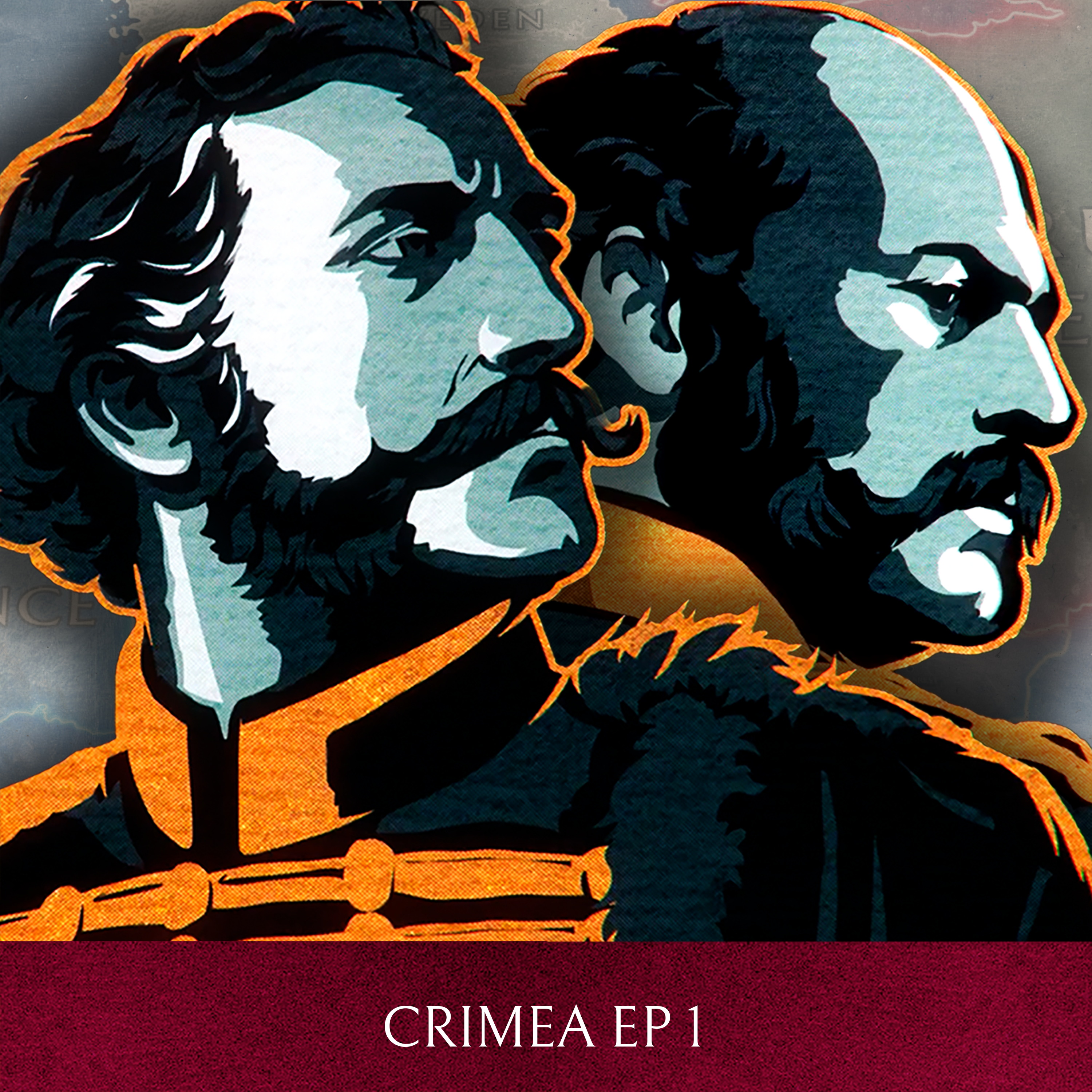
Origins of the Crimean War leading to the Charge of the Light Brigade. The episode sets up why Britain and France fight Russia, how Napoleonic memories shape European decision-making, and how a seemingly minor dispute over Christian holy sites escalates into major-power conflict. It also previews the key aristocratic figures whose rivalries and incompetence culminate in the 25 Oct 1854 disaster at Balaclava.
None mentioned in the transcript (hosts Tom Holland and Dominic Sandbrook discuss the story themselves). No guest interview segments appear.
The Charge was launched into a “valley of death” at 11:10, with about 700 riders (not 600) and only 195 returning. Victorian audiences fixated on “heroic failure” (heroism plus incompetence). The Crimean War is framed as a “sleepwalking” modern war, triggered by the Bethlehem key dispute.
Balaclava’s guns and grape shot; Tennyson writing within scansion constraints; Lord Cardigan’s “black bottle” scandal and dueling/shooting; Nicholas I’s Orthodox mission; Napoleon III’s ambassador Marquis de Lavalette pressuring the Ottoman court over the key.
0:00Tom Holland: This episode is brought to you by Revolut.
0:04Dominic Sandbrook: Standing still leaves no legacy. History is written by progress by revolution. Fighting for independence, dismantling those broken systems, defying injustice. Every revolution begins with the refusal to accept the norm. A demand for more.
0:24Tom Holland: And Revolut is founded on the same principle.
0:27Dominic Sandbrook: Originally established to push back the frontiers of traditional banking, it puts the power back into your hands. You can manage all of your money in one app. Plus, you can earn while you spend with the RevPoints reward system. As a fully authorised UK bank, your money is FSCS protected. Sign up to Revolut today at Revolut.com forward slash T-R-I-H. That's all lowercase. And you'll get£20 after the first time that you spend. 18 plus. End date and promotion T's and C's apply and RevPoint's T's and C's apply. This episode is brought to you by Mint Mobile. Right now, all of Mint's plans are$15 per month, even unlimited.
1:20Dominic Sandbrook: So go to mintmobile.com slash history. Upfront payment of$45 for three months,$90 for six months, or$180 for 12 months. Plan required. $15 per month equivalent. Taxes and fees extra. Initial plan term only. Greater than 50 gigabytes may slow when network is busy. Includes up to 20 gigabytes of hotspot. Capable device required. availability speed and coverage varies see mintmobile.com
1:50Tom Holland: this episode is supported by anthropic the team behind claude now history's biggest leaps started
1:58Dominic Sandbrook: as hard questions that people didn't want asked yeah there's a classic example of that at the end of the 15th century and the hard question in particular was what is out there beyond the Atlantic Ocean to the West. And as you will know, the man who found the answer to that question was the explorer Christopher Columbus. And he realises, or rather everybody else realises, that there is a vast continent out there. And it is, of course, the Americas. So, you know, Anthropic knows the importance of questions. And it's why Anthropic is founded on one hard question above all. How can we ensure that the AI revolution really goes well for ordinary people?
2:33Dominic Sandbrook: So they asked over 100 ,000 people and what came back wasn't just fear.
2:37Tom Holland: There was hope as well. People wanted to know, will cancer ever be cured? Can kids have a better future? It turns out that there is hope in hard questions.
2:47Dominic Sandbrook: Ask yours at claude.ai slash rest is history and keep thinking.
3:02Dominic Sandbrook: half a league half a league half a league onward all in the valley of death rowed the 600 forward the light brigade charge for the guns he said into the valley of death rowed the 600 Forward the Light Brigade! Was there a man dismayed? Not though the soldier knew someone had blundered Theirs not to make reply Theirs not to reason why Theirs but to do and die Into the valley of death Rode the 600 So that was the Charge of the Light Brigade by Britain's Poet Laureate Alfred Lord Tennyson Great poem Very memorable poem one of the most famous in all Victorian literature, often recited by small boys.
3:52Dominic Sandbrook: Sandbrook Jr. included in his prize-winning appearance a few years ago at his old school. So Tennyson wrote this on the 2nd of December, 1854, and he wrote it less than six weeks, five and a half weeks to be precise, after one of the most celebrated moments in the long history of British warfare. So a moment that perhaps it's not one of the great victories in British history. It was glorious. It was catastrophic. It was heroic. It was blackly comical. It was an absolutely tremendous occasion, the kind of thing that we love on The Rest is History. Now, Tom, you know, there was only one way to start this story with Tennyson's poem.
4:44Dominic Sandbrook: And Tennyson's poem actually captures, certainly in those lines that we've read, there'll be more of the poem in future episodes. In those lines that we've read, it captures quite a lot of the detail, actually, of this story, doesn't it?
4:56Tom Holland: Yeah, the sheer mad drama of it. And Dominic, I've got to compliment you. That was a fantastic reading. And I can see where Sam Brook Jr. gets it from.
5:04Dominic Sandbrook: Do you know, I actually watched his performance to inspire me. Oh, and you copied it? God, he was so good. He was so good. There was like 300 kids or something doing these readings. He went first. And I thought, Christ, they made him go first. And you could have heard a pin drop. It was brilliant. And also all the others did like woke poems. So he did something really punchy. And I could see loads of the other parents look at me and going, come on, you must be so proud.
5:31Tom Holland: I mean, it's not un-woke because it's about the common man galloping into this kind of disastrous furnace of gunfire led by aristocrats, as that's basically the story. So we'll see where that goes.
5:45Dominic Sandbrook: Yeah. Lions led by donkeys.
5:46Tom Holland: I think this is the kind of the primal origin of that trope. And as you say, Tennyson's poem, which is an absolute kind of A-class banger, it does give you quite a lot of detail. The valley of death, such a memorable phrase. Where is that? It lies to the north of a place called Balaclava, which is a port on the coast of Crimea in the Black Sea, which had been occupied by the British army on the 26th of September 1854. and it is 100 % a death trap. So it's a mile and a half long. It's a mile wide. There is cannon to the right. There is cannon to the left. There is cannon in front. And in total, there are about 50 heavy guns loaded with grape shot and shells.
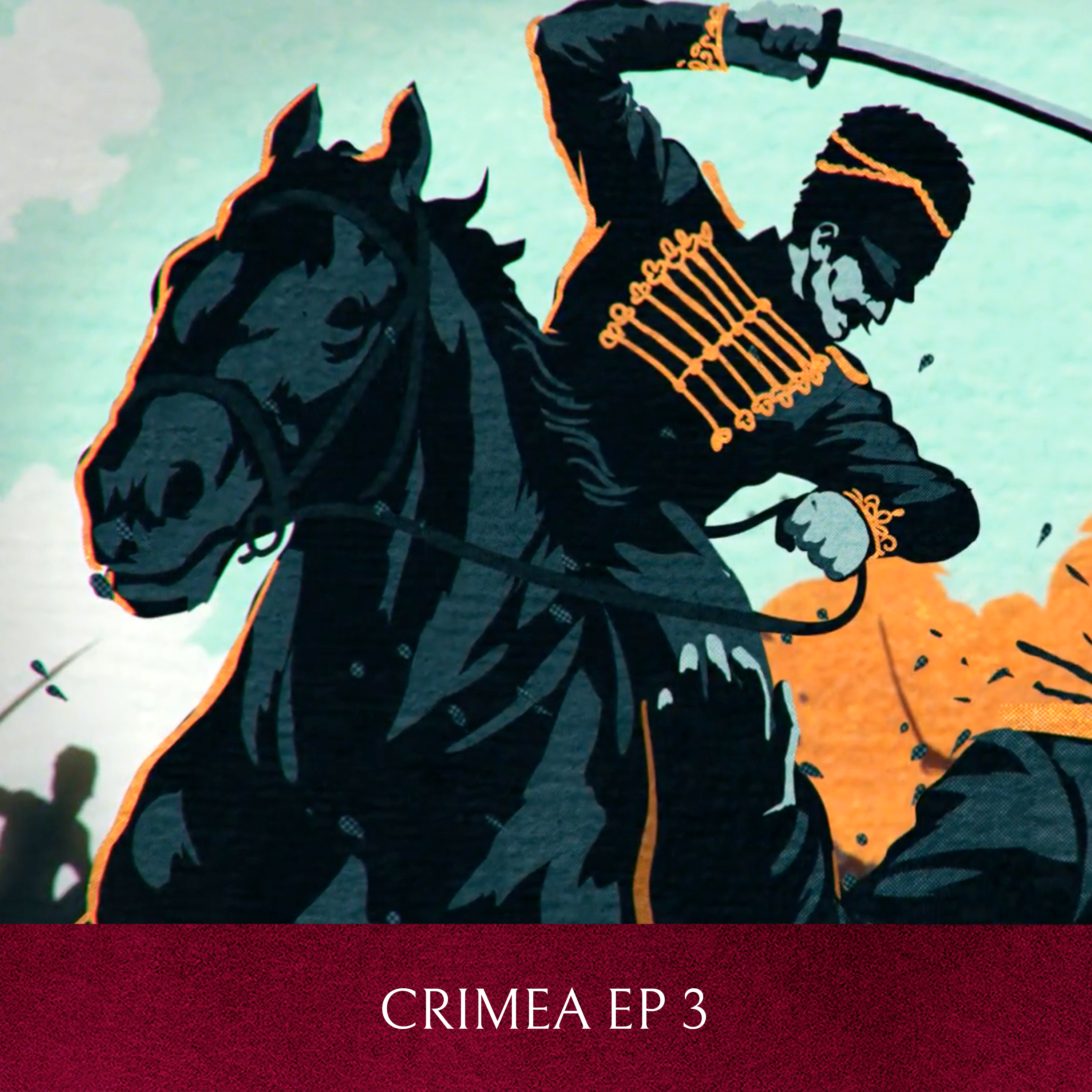
6:34Tom Holland: And it's a very bad place to be a cavalryman. The Light Brigade are separated from the guns at the bottom of the valley by about a mile and a quarter. And so only a complete lunatic would ever lead a charge down this valley. But that is exactly what the Light Brigade ended up doing at 11.10 on the morning of 25th October 1854. And unsurprisingly, this charge resulted in utter carnage. and Tennyson when he came to write the poem was relying for his details on an initial report in the times which had actually got its numbers wrong the light brigade's total was closer to 700 than 600 and when Tennyson was told this he said well I can't change it because it would ruin the scansion so it in Tennyson's poem it's the 600 but historically it was 700 and of the 700, a mere 195 managed to make their way back up the valley.
7:36Tom Holland: And behind them, they left the mangled remains of their fallen comrades, many hundreds of horses as well, dead or dying amid the dust of the Crimea. So it was an absolutely stupefying display of courage, but also in military terms a complete screw-up and that is how the victorian public like their their kind of military feats they like it to be a mixture of of utter heroism and total incompetence and the
8:06Dominic Sandbrook: charge of the light brigade is the archetype of that there's an interesting book about this by stephanie barczewski called heroic failure and the british and she argues that basically the victorian public became fixated on stories of ludicrous disasters because it enabled them to cope with the moral ambiguities of empire it's certainly a perspective yeah i think people just love stories of like ludicrous incompetence and people love disasters no also i think there's something hardwired the sort of the island nation with its backs to the wall but you know even though the odds are against us we don't lose our stiff upper lip i think people love that it's part
8:44Tom Holland: of the self-image i think also in the context of the light brigade it's because there is an incredible degree of flamboyance about it as we will see they're kind of amazing uniforms right good whiskers tremendous whiskers and of course tennyson is right someone had blundered so a really spectacular military blunder especially if it's coming from a gormless aristocrat i think people love that as well that's so too so the question is i guess why is the charge launched and who if anyone had blundered and so that's what we're going to be exploring over the course of this series and it's a series that is going to feature not just one blunder but numerous blunders and i would say that the rule of thumb in this series is that if something can be screwed up it is
9:30Dominic Sandbrook: screwed up okay so let's pull the camera back for a second um and ask a question that's bothering me it's bothering our listeners and it definitely bothered a friend of the show the emperor ter Wadros II of Abyssinia. So you may remember if you listen to the Abyssinian expedition, Teodros was obsessed with the Crimean War. And he couldn't get his head around the fact that Britain and France, Christian countries, had teamed up with the preeminent Muslim power, the Ottoman Empire, to have a crack at the Russians, who were, of course, Orthodox Christians. And what clearly would have baffled Teodros even more was, why on earth would you attack in the Crimea?
10:12Dominic Sandbrook: I mean, why don't you attack over land? Why don't you do what Napoleon did or whatever? So what are the British doing there?
10:18Tom Holland: Just to say upfront, the question of why the British and French have gone to war with Russia is, I mean, it's not surprising that Teodros was puzzled because lots of people in Britain end up being puzzled as well. And the truth is that the reasons for it are never entirely nailed down. And you could say that this is kind of the ultimate blunder. There's no particular reason why they needed to go to Crimea, as we shall see. And the war itself, one of the reasons why Teodros is obsessed by it, why so many people are, is that it's the first war that is fought by the great powers of Europe against one another since Waterloo.
10:54Tom Holland: And even in 1854, so that is almost 40 years since the end of the Napoleonic Wars, the shadow of Napoleon's campaigns, the struggle to bring Napoleon down. The shadow of that struggle still lies over the entire continent. So if we look at the three major competence in the Crimean War, you can see how memories of the Napoleonic Wars shape all three. So Russia first, a bit like with the defeat of the Nazis, so with the defeat of Napoleon, the Russians feel incredible pride at the role that they've played. So in 1812, Napoleon had invaded Russia. The Russians had burnt Moscow and withdrawn. Napoleon had been forced to retreat and it effectively kind of destroys his invasion force.
11:42Tom Holland: And it enables the Russians in 1814 to enter Paris as the self-appointed saviors of Europe. And in 1815, they are at this great congress in Vienna with the British, with the Austrians, with the Prussians, and they agree a post-war settlement and the Russians are one of the guarantors of this settlement. Now, obviously, for the French, the Congress of Vienna, the Treaty of Vienna, this is very bad news. And Waterloo and this treaty are still being experienced decades on as great humiliations. and by this point the nephew of napoleon so louis napoleon had staged a coup in 1851 and the following year had proclaimed himself emperor as his uncle had been and is now ruling france as napoleon ii and as a napoleon and as a frenchman he is very keen to reclaim france's traditional role as the leading military power in Europe.
12:40Tom Holland: But with the caveat that he wants to get this status, but he doesn't want to risk war with Britain in the process of obtaining it. Because the one lesson that he's picked up from the Napoleonic Wars is never go to war with Britain. And so this is why the French are very open to an alliance with Britain. Now, Britain has immense self-confidence. and I think this is another reason why they can enjoy tales of catastrophe is that the kind of the gut sense that they are the top nation and it doesn't really matter what happens I think is hardwired there's enormous complacency they're rich they're prosperous they've got an enormous empire they've in 1851 they just staged the great exhibition to show off how advanced they were with all their steam engines and dinosaurs and things like that but there does remain from the age of the Napoleonic Wars, a kind of enduring dread of France, a suspicion that they're always waiting to seize power in Europe again.
13:42Tom Holland: But it's combined with a growing anxiety about Russia. They're looking eastwards and thinking, well, actually, I don't know, maybe Russia's a bigger threat than France. And on top of that, the other way in which the Napoleonic Wars has an enduring legacy in Britain is the legacy of the Duke of Wellington, the man who had defeated Napoleon at Waterloo and who had died in 1852. And Tennyson, again, in his role as poet laureate, he's always popping up, he'd written a tremendous elegy on Wellington and he framed it as though with Wellington's passing, Britain's own age of military glory was gone. So he wrote, Mourn to us he seems the last, remembering all his greatness in the past.
14:23Tom Holland: And the army, which had always looked to Wellington, in the wake of his death, there's a feeling that to be true to his legacy, they have to kind of constantly ask themselves, well, what would Wellington have done? And that means, I think, that to a degree, the army has become a bit fossilised. I mean, not entirely. There have been kind of developments, as we will see, innovations. Now, always asking what would Wellington have done ignores the fact that Wellington had fought his last battle 40 years before. So you can see in all of those that the Napoleonic Wars are a completely kind of living thing for people in all three of those countries.
14:58Dominic Sandbrook: Well, we'll come back to the causes of the Crimean War, because, of course, there are lots of ways in which you could argue this is the first modern war you know newspaper reports and photography and you know the new technology of killing and so on but i think you're dead right that there is something napoleonic about this idea of the cavalry charge towards the guns i mean it feels like you know a scene from waterloo doesn't it yes completely
15:19Tom Holland: so for the british the fate there's this famous cavalry charge the union brigade so it's kind of made up of um an english a scottish and an irish cavalry regiments so hence the union brigade and they launched this heroic attack at french infantry and people keep going on and on about it the cavalry absolutely love it it's their kind of battle of britain i guess um and then the uniforms so in the um the series we did on the abyssinian expedition you mentioned that the the british have begun wearing khaki but there's absolutely none of that nonsense in the crimea it's kind of blood red uniforms or actually i mean even more spectacular uniforms because the light brigade, as we will see, are probably the most handsomely dressed unit, not just in the British army, but in the world.
16:04Tom Holland: I mean, the blaze of color that they bring to their charge is a crucial aspect of its glamour. And then you have the commanding officers, and some of them, as we will see, had actually fought in the Napoleonic Wars. And even those who were too young to have done so kind of dreamed, you know, wished that they had done. And I think that that sense of yearning that sense of identity with the glory of the past is strongest in the cavalry and particularly among the the guys who are commanding the cavalry and on the guys who are commanding
16:35Dominic Sandbrook: the cavalry so the people who will really be the main characters in these four episodes these are people from the absolute the highest echelon of the british social system aren't they there is no there's no pretense whatsoever of this being a meritocratic army um as we will see this lies behind some of the blunders. I mean, this was true of Waterloo or the Napoleon was as well.
16:56Tom Holland: The cavalry particularly. So the commander of the cavalry at Waterloo is Lord Uxbridge. He famously loses his leg to a cannonball and cries out, by God, sir, I've lost my leg. And the Duke of Wellington says, by God, sir, so you have. And I was just surely the greatest exchange in the history of the British Army.
17:14Dominic Sandbrook: Undoubtedly, undoubtedly.
17:15Tom Holland: And then the commander of the Union Brigade was a guy called Major General Sir William Ponsonby. Or is that Ponsby? I don't know. I mean, it's a kind of posh pronunciation.
17:24Dominic Sandbrook: Yeah, exactly. Pombie. Yeah.
17:26Tom Holland: He's the son of a baron. So the commanders of the cavalry, they're kind of completely blue-blooded, absolutely from the top echelons of the aristocracy. And at the Battle of Balaclava II, where the Charge of the Light Brigade happens, both of the leading cavalry commanders are peers. So the overall commander of the cavalry is a guy called Lord Lucan, and he is the great great grandfather of the lord lucan who in 1974 vanished into thin air after attacking his wife and almost certainly bludgeoning his children's nanny to death so that's lord lucan and then the commander of the light brigade is a guy called lord cardigan and he is the man who gives his name to jimmy carter's favorite item of knitwear the cardigan
18:17Dominic Sandbrook: So hold on. Let me just dig into this for a second. Did Lord Cardigan invent the cardigan?
18:22Tom Holland: No, he didn't. But he becomes so famous in the wake of the Light Brigade. And the cardigan is being worn by people in the Crimea because it's getting very, very cold that it comes to be associated with him.
18:35Dominic Sandbrook: Wow. Okay, good fact.
18:37Tom Holland: As we will see, Lord Cardigan's sense of fashion doesn't really lend itself to cardigans. That's the irony of it.
18:43Dominic Sandbrook: Yeah. He's the last person who would have worn a cardigan i think so yes and now important point about these two characters lord lucan and lord cardigan they are not just um you know fellow members of the british peerage they are brothers-in-law aren't they and brothers-in-law with a lovely twist
19:02Tom Holland: they absolutely detest each other and so the question of whether this mutual hostility between them which is of an almost comical dimension the degree to which this plays into the disastrous sequence of events which culminates in the charge of the light brigade it's a very interesting question we will be exploring it over the course of the series but i think one thing is absolutely not in question and that is the fact that the characters of these two men are a crucial part of the story and so i think we should in this episode we should look at both of them and we should begin by looking at the guy who is undoubtedly the star of the whole story um this is the man who will end up leading the charge of the light brigade into the valley of death and this is james thomas brudenell the seventh earl of cardigan and dominic you're a big fan of flashman aren't you the flashman novels yeah so you will know that you will know from reading the flashman novels that cardigan ranks as one of the kind of the great comedy grotesques of the victorian
20:08Dominic Sandbrook: period well he of course wouldn't say ranks would he wanks yes he would say hello freshman uh so we will come on to his extraordinary way of speaking um so he has like lots of aristocrats going back to the 17th century he has bought his command hasn't he he's not a man who has worked his way through the ranks of the army he has bought his place and just to say why that
20:35Tom Holland: happens it's not just because the the aristocracy want to monopolize everything although that's definitely a factor it's because it's seen as an expression of english liberty that there will never again be something like cromwell's army where you have professional soldiers um in a position to take over the country that if you have a peer in charge of the cavalry then you can rely on them to do the decent thing that's the thinking so i'm just sticking up for the victorian an aristocracy there.
21:00Dominic Sandbrook: So let's go to the spring of 1853, let's say. So a year before the outbreak of the Crimean War. Imagine that I bumped into Lord Cardigan at a Rest is History, you know, club members get together. Well, he's not the kind of person who would go to such a thing, I suppose. But what would I make of him? So what's he like to meet?
21:17Tom Holland: Well, Tilly, one thing you couldn't do is ask him about his campaigns because he hasn't been on any.
21:21Dominic Sandbrook: He sounds like a brilliant man to be commanding the Labour Brigade.
21:23Tom Holland: He's 56 years old and he has never seen active service. So that's one thing to bear in mind. I think even you, Dominic, would find it a little bit intimidating. You are of a middle class background. Yes, no question about that. And Lord Cardigan, as we will see, does not like the middle classes. He's very haughty. He's very snobbish. He's very petulant. He's very vain. He's a massive bully, basically. And so liberals and literary types and doubtless prune juice drinkers, Dominic. Oh, no, bien pensant. They all detest him. but he does have a certain kind of social cachet among the kind of people who love a lord yeah yeah i mean he's he's the kind of the archetype of a haughty lord and i think the reason that people love him is because he's the embodiment of what the victorians call a swell and specifically he's a plunger which is a very aristocratic kind of cavalryman they have their own as we will see their own language their own style their own swagger and cardigan is the absolute archetype i mean he's the guy who sets the fashion for the plunger across britain so just to give him a physical description as i said he's 56 in um in 1853 but he's still very very handsome he's tall he's as slender as a young man he's got golden hair he's got pale blue eyes and he has luxuriant moustaches and whiskers which tabby weirdly doesn't seem to like but um the ladies back in the mid-19th century they loved a resplendent set of whiskers and lord cardigan has them to a magnificent degree and he's a man who loves a loves to ride isn't isn't he of course he is he's one of the best riders in the country he is famously fearless um and he's a veteran of numerous celebrated hunts.
23:14Tom Holland: That's one of the markers of the way that Britain has changed. Back in the mid-Victorian period, if you were someone who'd stormed your way through a celebrated hunt, fox hunt, then you became an absolute sports star.
23:28Dominic Sandbrook: And there's one particular hunt, isn't there, in which he distinguished himself.
23:31Tom Holland: It was a run of the quorn, the quorn hunt. So 200 riders had set off over the fields and only 10 had managed to keep up the pace. And Cardigan is the person who goes the fastest and gets the fox. And the key to his success, it was observed by a kind of fox hunting sports correspondent. It was observed that he leaves his horses very much to their own sagacity, never pulling them about. So in other words, he relies on the horse. His man and horse are perfectly integrated. He is also, of course, a superb swordsman. And he's a first class shot. or a probably more properly a crack shot he's a crack shot yeah i mean to be fair you're doing a
24:12Dominic Sandbrook: good job of selling him he has a glamour he has a camera and he looks incredible and his regiment who are the 11th thesars they look incredible too which is no coincidence because cardigan has basically kitted them out himself hasn't he yeah so he spends 10 000 pounds a year on their uniforms
24:27Tom Holland: i mean that is millions in today's money uh they are by miles the best dressed soldiers in the british army which means probably they're the best dressed soldiers in the world and the the uniforms are run up by a top bond street tailor so they wear bright cherry pants which are unfeasibly tight and they have yellow stripes if you're a trooper gold stripes if you're an officer down the sides and so the 11th hussars are nicknamed cherry pickers or cherry bums they also They wear a nine inch Busby and they have a matching cherry bag. And what's the bag exactly? Piece of fabric which placed over the top of the Busby and it drapes down the side and you complement it with a white plume.
25:11Tom Holland: And then you have magnificent jackets. They're royal blue. They've got yellow frogging if you're a trooper. Gold again if you're an officer. And they're worn with fur trimmed pelises on the shoulder. So kind of little jackets. And again they're laced with gold frogging. And this is the kind of police that Jimi Hendrix, a century on, would wear when he came to London.
25:35Dominic Sandbrook: I would saw Kitchener's valet.
25:36Tom Holland: Yeah.
25:36Dominic Sandbrook: So still looking stylish in the 60s. But what Jimi Hendrix doesn't do, although personally I think he should have done, is to emulate the way that Lord Cardigan and co. speak. Because they have a very particular style of speech. The Flashman book actually captures this perfectly. The cavalry drawl. Right. I hadn't realised that it was so affected, that it's consciously affected rather than organic. So give us your very best cardigan-style cavalry draw, please, Tom.
26:02Tom Holland: So it's a style that is affected by all the quack cavalry wedgermans. Right. And it is cardigan who basically sets the fashion. And so it involves very elongated vowels, kind of agonizingly slow speech patterns, a lot of yawning if anyone says anything even faintly middle class right yeah or if you're
26:32Dominic Sandbrook: excessively enthusiastic or or sort of earnest about something then yeah so the other thing
26:41Tom Holland: that you do is you drop the g off uh participles and the legacy of that still with us so hunt and shoot and fish in the brilliant example was um edward the seventh seeing lord harris at ascot wearing a brown bowler and he said go in ratten so there's a legacy there of the cavalry draw and as we said the the r's are pronounced as w so it's hoid and um sorry and very a bit like
27:04Dominic Sandbrook: antin eden flashman's wife her father was a guasco weaver and so the question is why why
27:10Tom Holland: why does he adopt this ludicrous pattern of speech and the answer is basically because he to put the middle classes in their place he he despises self-made men the kind of the kind of person who buys his own furniture despises them and in the military context his particular target are officers who he refers to as indian officers and so these are men who had secured commissions by serving overseas stereotypically in india and proving themselves in combat rather than
27:40Dominic Sandbrook: purchasing them and so cardigan despises this no have common vulgar very vulgar basically snubbing
27:48Tom Holland: these kind of people is his whole vibe that's that's that that is what he's about um and and and this tendency in turn and his general utter arrogance over the course of his career has resulted in a succession of scandals with the result that by 1853 so the year before the charge of the light brigade he's not just one of the most famous men in britain he's one of the most notorious he he is an absolute staple of the newspapers almost invariably uh portrayed in a negative manner so i'll just list just a few of these scandals some of the greatest hits so the first had kicked off back in 1823 when um cardigan was he was only 26 and he was just plain humble lord brudenell because brudenell is his family name lord brudenell yeah lord brudenell and he had seduced a woman called elizabeth johnston and elizabeth johnston inevitably was the wife of an old family friend captain johnson and johnson had sued brudenell as he was then and brudenell had had to pay a thousand pounds in damages and then having done that he'd eloped with elizabeth and there'd been a very messy and expensive divorce and divorces were very difficult to get in the mid-19th century and brudenell and elizabeth had then got married and the marriage was a disaster.
29:07Tom Holland: And the reason for this may be suggested by Captain Johnson's comment on his wife. Brutnell wrote and apologized for having eloped with his wife. And he replied, I don't care. She's the most damned, bed-tempered and extravagant bitch in the kingdom. Oh my God, that's great. No hard feelings there. Yeah, no, clearly. And I'm just going to give a shout out to a book I read when I was a child. The reason why by, it's either Cecil or Cicel Woodham Smith and she's a woman not a man oh but this is an absolutely brilliant book and I loved it so much I must have read it four or five times and I returned to it to do the research for the series and it's just as good as I remembered it so this is her comment on on the marriage and what and why it was a disaster that it was a bad marriage so she wrote it is too much to say that married to a different woman he might have been a different man but perhaps married to a different woman his faults might not have been so public a nuisance however they they do go on to be become a public nuisance because by this point he's um purchased his command and in 1833 there's a massive bust up about tailoring and specifically jackets with an officer called augustus wathen who is a captain and that's not rathan that's wathen it's literally with a w um who's a captain in brudenell's regiment who had fought at waterloo and wathen complains that the jackets that brudenell is buying for the regiment are too expensive um and that there's too much bling on the jackets yeah and brudenell has absolutely explodes at this is irate i mean you can't get more middle class and complaining about there being too much bling on a jacket um and he has wathen arrested and put on court-martial and at the court-martial the case against him completely falls to pieces because it's a ludicrous one i mean arguing over jackets that's mad so waffen gets acquitted and brudenel is not only officially rebuked but actually dismissed from service by the king william the fourth himself so it's a massive humiliation and i think that anyone else would have kind of crawled away and licked his wounds and just led a life of um obscurity of silent obscurity but that is not how cardigan rolls so he is utterly shameless and he pulls on every string he can he draws on every aristocratic connection that he possesses and he ends up winning himself an official exoneration in parliament so parliamentary time is used up to say that that brudenell had been mistreated and it's unfair and and so he gets he gets another commission and he he buys himself the the command of the 11th hussars and then shortly after that he his father dies and so he inherits his title and he becomes the earl of
31:51Dominic Sandbrook: But this is just the prelude to the best of these scandals. My favorite bust up. This is over. I mean, everyone knows we love a joke about the wrong shoes, but this is a joke about the wrong bottle. Am I wrong? Yeah, and specifically a black bottle.
32:11Tom Holland: And shockingly, there's at the regimental mess hall on the mess table, there appears a black bottle.
32:22Dominic Sandbrook: Oh, my God. Oh, no.
32:23Tom Holland: How common? this is this is a horror show because cardigan has specified that only champagne should be served at the mess table i mean obviously and so he he sees this black bottle and he assumes that it's a bottle of porter you know porter's a beer that kind of beer there's a beer in the regimental mess table uh and he explodes uh and again there's this kind of massive bust up now in fact the black bottle is a bottle of a moselle and it had been ordered by um the guest of an officer called captain john wenolds this doesn't really change things because reynolds is an indian officer cardigan is inherently prejudiced against him and the fact that it wasn't a bottle porter doesn't really make things better and so reynolds tries to explain this cardigan isn't having it the mess should be conducted like a gentleman's table not a pothouse he says and so again as he had done with waffen so now with reynolds he has him arrested for bringing bringing the wrong bottle to the mess table and this time i'm delighted to report the military authorities back him yeah but
33:32Dominic Sandbrook: we would be like this if it was the rest is history christmas lunch if people brought the wrong bottle to the table that would be unforgivable absolutely unforgivable i'm admitting to some
33:40Tom Holland: sympathy with cardigan here so um cardigan he becomes an object of absolute uh public hatred because it gets leaked to the press and the press think this is hilarious and they can't leave it alone and they go on and on about it and whenever cardigan appears now in public everyone starts shouting black bottle at him wherever he goes and then booing him and hissing him and he starts precipitating riots so he goes to a show at drury lane where we have performed ourselves dominic love this story the reaction is is so extraordinary that gets reported in the times so here's the times the first audible indication of his presence was a cry of the black bottle followed by a general hiss a crowd gathered under his box shaking their fists and shouting turn him out shame but cardigan i mean he's nothing abashed uh he treats the display with with open contempt so the times again his lordship advancing very deliberately to the front of the box put on his great coat and making a bow retired amid one universal shout of disapprobation and i think this is his reaction to every criticism one of utter contempt it just never crosses his mind that he might ever be in the wrong yeah so because he has that utter sense of of uh conviction of self-confidence it enables him to ride out escapades that would utterly have destroyed someone less kind of less obtuse so just a couple of examples of this before we come to the break so in 1841 a former officer criticizes him in the press this is kind of the follow-up from the black bottle affair the cardigan promptly challenges him to a duel and it's held on wimbledon common and cardigan shoots this officer in the lower ribs this is a capital offense you can't go around shooting people and he's arrested and he ends up being tried by his peers in the house of lords for attempted murder even if you don't get sentenced to death for this you might get kind of years of hard labor and that the the times who's clearly taken against cardigan is gloating about this let his head be cropped let him be put on an oatmeal diet let him labor on the treadmill they really think that cardigan is going to be convicted but of course he isn't because he's lord cardigan he's a peer peers aren't going to convict him and so he gets off on a ludicrous technicality and again there's outrage and again cardigan doesn't care and then just a year later an amusing bit of sexual misconduct yes he's the victim of a sting so he is um having an affair with the uh the wife of a chap called lord william paget and paget suspects what's going on and so he employs a private detective to hide under a sofa and the detective hides under this sofa and lord cardigan and lady paget come in and they lie down on the sofa and um the detective reports that Cardigan is wearing his full SARS uniform.
36:36Dominic Sandbrook: Brilliant, with his tight cherry pants or whatever they're called.
36:38Tom Holland: Very tight cherry pants. And he also reports that the breathing of the couple was hard, like that of persons distressed for breath after running. Right. But again, when Cardigan is brought to court and this detective is produced as a witness, Cardigan's able to get off on a technicality because the detective is brought to confess that he hadn't actually seen the adulterous couple on the sofa because Cardigan had been wearing spurs And so the detective was so nervous of being hit in the face by Lord Cardigan's spurs that he hadn't wanted to show his face. So Cardigan gets off. And so this is the guy who in 1853 is, I would say, by some measure, the best known officer in the British Army.
37:21Tom Holland: He is famous in breakfast rooms across Britain for his pride, for his arrogance, for his stubbornness, for his ability to attract trouble, his refusal ever to back down. And yet, as we said, despite his fame, he has never actually experienced military combat.
37:40Dominic Sandbrook: Well, that would seem to be the one thing missing on his CV as a potential leader of men into battle is that he's never actually been anywhere near a battle, right?
37:48Tom Holland: No, he hasn't. And by 1853, it seems like he never will. He's 56 after all. Europe's been at peace for almost four decades. No prospect of a war, surely. But then, Dominic, that winter, news reaches Britain of dramatic developments in the Black Sea. And suddenly, people realise that the storm clouds of war have not only gathered, but might be ready to break.
38:15Dominic Sandbrook: Oh my word, we're on that thrilling note. Let's take a break and we'll return with the Crimean War.
38:23Dominic Sandbrook: This episode is brought to you by Anthropic, the team behind Claude.
38:27Tom Holland: Yeah, Dominic, we have been doing the rest of history now for six years. We've done over 700 episodes. And I think one of the interesting things about that is that over the time we've developed our own verbal tics, our own vocabulary, which kind of turns up again and again in episode after episode.
38:46Dominic Sandbrook: And what's lovely about it is it's so authentic and organic, isn't it? There's something intrived or artificial about it. So Ask the Archive, built with Claude, lets you search through the episode transcripts. transcripts and you can find where a person a phrase or a completely organic authentic catch phrase has cropped up across the show so to just take the kind of things that i know we say a lot in our ordinary lives tom which phrase do you think has appeared in more episodes sacral or poor form oh poor form do you think so yeah this is so i don't actually say sacral that much which phrase appears more often what do you think i think probably poor form sadly okay you guys you got a massive you've got a massive shortcoming you can have to rethink your some of your life choices sacral has been mentioned 130 times but poor form doesn't even remotely uh i think poor form might have come up in england versus italy first of all so sacral has appeared
39:46Tom Holland: 130 times in poor form in 33 only okay well i'm astounded and that is amazing tribute isn't it to the power of anthropic that they can uncover these incredible facts ask the archive is built
40:00Dominic Sandbrook: with claude from anthropic you can find it at ask hyphen the hyphen archives.com and ask it something you've always wondered about and it will find the episodes where we've talked about it
40:16Dominic Sandbrook: welcome back to the rest is history it is the 12th of december 1853 and bombshell news has just reached britain literally so a fortnight earlier the 30th of november a russian fleet had attacked the fleet of the ottoman empire at synape which is a port midway along the black sea coast of anatolia people in russia remember this but nobody else remembers this today but i'm told tom by you that trevor royal no less thinks the result was to be a turning point in the history of naval warfare why does he think that he absolutely does so um author of the the best
40:59Tom Holland: military account of the crimean war um so he is entirely to be trusted and the reason why he thinks this is because the uh the attack at sinope um spectacularly demonstrates how vulnerable wooden ships so ships of the kind that had won the battle of trafalgar have become to kind of recent developments in munition technology so instead of cannon shot the russians use um explosive shells to attack the ottoman fleet and the result is complete carnage the entire ottoman fleet is sent to the sea thousands of turkish sailors are killed and the whole port is set on fire and there's a british observer from the navy who's watching this and is completely stunned by what he sees so he wrote the shore of the bay was lined with wrecks and screwed with corpses havoc had done her worst not a mast was standing not a timber was left whole and obviously if you are a British naval officer, this is a very alarming sight because you've got to ask yourself, what does this mean for the viability of the Royal Navy if suddenly, you know, these kind of shells can inflict this on timber?
42:02Tom Holland: So it's unsettling for that reason. But I think what happens at the massacre of Sinope, as the British press immediately call it, it's unsettling to Britain and also to France for a more immediate reason as well. And this is because the Russian attack on the Ottoman fleet strikes the British and the French as basically being an attack on them as well, because less than a week before it was launched, both Britain and France had signed a defensive treaty with the sublime port, as it's called. It's a metonym. Yeah, which is the, that's the gate, isn't it?
42:37Dominic Sandbrook: Through which ambassadors come to visit the Sultan's court or something like that?
42:43Tom Holland: So it's like using the White House to refer to the American government. So the sublime port, that's the Ottoman government.
42:50Dominic Sandbrook: So not merely had they signed a defensive alliance, but they had sent a fleet, hadn't they? A Franco-British fleet to protect the Bosporus. Because basically Britain and France, the storm clouds of war have been gathering and Britain and France had tried to deter the Russians by sending this fleet. Now, if the Emperor Theodros II of Abyssinia was listening to this podcast, he'd have loved all the stuff about Lord Cardigan. But at this point, he would be frowning with displeasure he would say hold on these are two christian powers teaming up with the leading muslim power um against another christian power what on earth is going on here so tom now now is your chance to explain the entire origins of the crimean war yeah okay well i think the key
43:34Tom Holland: to understanding it is to remember that just as the crimean war happens 40 years after napoleonic wars it also happened 60 years before the outbreak of the first world war yeah you said you know you you could see this as being the first modern war and you know who else thinks that is orlando phyges the great historian of russia um so he's written the definitive history really recent history of the primaire he'd agree with you dominic it was the earliest example of a truly modern war fought with new industrial technologies modern rifles steamships and railways novel forms of logistics and communications like the telegraph important innovations in military medicine and war reporters and photographers directly on the scene in all those ways it's like the first world war but i think that even more striking is the way that the great powers in late 1853 and early 1854 as in 1914 kind of find themselves sleepwalking into conflict and the context is the same as in the July crisis of 1914.
44:36Tom Holland: So it's the decline of the Ottoman Empire and the sense of chaos that this is breeding in the Balkans. The question of what might replace Ottoman power. As we said, the settings are the same, the Balkans, and the misjudgments are the same. So you get military moves that are intended to intimidate your opponents that instead serve as provocations. you have alliances you have ultimatums that are designed to ward off conflict that instead help lead to it and you have disastrous misreadings in all the major capitals of how the crisis is being seen by their rivals and if the first world war was triggered by an assassination in sarajevo the crimean war is triggered by an argument over a key in bethlehem i mean this is the brilliant
45:25Dominic Sandbrook: thing about this story that never has there been a war except possibly for the war of jenkins's ear where the the the immediate cause the kind of trigger appears to be so extraordinarily inconsequential so talk us through the key in bethlehem and why that matters i mean i think
45:43Tom Holland: to public opinion in britain it does seem inconsequential but there are people in france and in definitely russia for whom this argument is something very very serious indeed and ultimately goes back to the age of the Crusades because the churches in the Holy Land did not look to Rome. And then you have the Catholic powers turning up the Crusades and everything. And so it introduces the Catholic Church there. And so you have these endless rows between the Orthodox Church and the Catholic Church over who has primacy. And because the Holy Land has been subject to the Ottoman Empire for about 300 years in the 1850s, it's ultimately up to the Sultan who gets to hold the key to the church of the nativity so it's the church of the nativity that's the absolute that's
46:25Dominic Sandbrook: the center of this a massive tourist attraction for pilgrims and stuff i suppose yeah of course
46:30Tom Holland: i mean you know it's the place of christ's birth and and the question of who has which key who has the precedence who's allowed to put up what star where i mean it's just been going on and on and on um and it suddenly really starts kicking off in the 1850s and the reason for this is basically it's the machinations of French politics and specifically the coup in 1851 that had brought Louis Napoleon to power so he becomes Napoleon III and in May 1851 Napoleon sends a very close ally of his a guy called the Marquis de Lavalette to be his ambassador to the sublime port in Constantinople and this guy is a very very fervent Catholic and when he gets to Constantinople he immediately starts throwing his weight around um endlessly pestering the sultan's court about this key issue in bethlehem and essentially threatening war and if the catholics don't get uh the top key um you know he's always muttering about gunboats and things like that right he's like a would-be lord palmerston yeah kind of but i don't think lord palmerston would care about keys in bethlehem whereas de lavalette he's all over it and the question is does napole what does napoleon think of this because Napoleon himself is has no real interest in religion at all he doesn't really care about keys in in Bethlehem but I think he probably has given de lavalette the the green light and probably for two reasons and the first is that he needs Catholic backing there are lots of people in France who are very against him Catholics are naturally his allies so he's throwing them some red meat I guess but also he is looking to sow mischief between the two most powerful victors in the napoleonic wars and these are the countries that for almost four decades have been serving as the guarantors of the post waterloo settlement in europe and these of course are russia and britain and napoleon is able to recognize an opportunity to make mischief between russia and britain because he he's familiar with both of them um he knows their workings so let's go with uh
48:37Dominic Sandbrook: Russia first. So you already said this, you already made this point, that the issue of the key, which I dismissed as inconsequential, were I a Russian in the 1840s or 1850s? Were you a Tsar, Dominic? Yeah. This issue of the key is of tremendous spiritual and therefore political importance, because the spiritual and the political are interwoven in 19th century Russia in a way, perhaps that they're not in western europe is that fair yeah and russia sees herself as the
49:09Tom Holland: new byzantium as the divinely appointed protector of the many millions of orthodox christians who live as subjects of the muslim sultan and more than that i think they see the the growth of the russian empire as a kind of an orthodox crusade the expression of a mission to liberate the orthodox from muslim rule and ultimately restore constantinople to her ancient status as you know a great christian capital and the first step of this crusade had come in 1783 under catherine the great and this was the annexation of crimea and this was the first ever territory to be lost by the ottomans to a christian power so it seems to both the russians and the ottomans a real straw in the wind and of course we've talked about this a lot on the rest is history in the past but Crimea is holy to the Russians because it's it's the site of Chersenisos where Vladimir had been baptized in 988 so that the prince of Kiev the kind of the founder of Russian orthodoxy as the Russians see him and so this site becomes a place of pilgrims for Russians and they excavated in 1827 and they build a church on the site of the supposed site of the of the baptism and i guess it kind of turbo charges a sense of mission in the kremlin and in russian more generally thinking well if we've taken crimea why not more what about all those orthodox christians in the balkans yeah
50:43Dominic Sandbrook: rumour what's now romania bulgaria and so on and so forth and the czar nicholas the first
50:49Tom Holland: he believes in this mission absolutely i mean very very fervently very devoutly and in 1853 he is 59 he's been on the russian throne since 1825 he's a very uptight man he's a man of rigid principle very tall has a notoriously terrifying stare if he fixes his eye on you you kind of shrivel up he'd been trained as a military engineer so he he was a younger son who ends up inheriting. So this is why he has this engineering background. And he's all about military discipline. He gets up very early. He works till late. He sleeps on a narrow camp bed with a mattress made of straw, and he takes it with him wherever he goes.
51:31Tom Holland: And judged by his own standards, and I guess by the standards probably of the royal classes in Europe in the 19th century, he is a man of honour. And he expects the rulers of other countries to behave according to similar standards of honor. The people he does not trust at all to do this are the French, because they are Republican and revolutionary, and they're always throwing up shysters like Napoleon III. He doesn't trust them at all. He thinks they have no sense of honor whatsoever. And he's familiar with Paris because he had ridden into it in 1814 with the Cossacks. So he feels that this gives him an ability to take the temperature of the French state.
52:11Tom Holland: The British, however, he thinks they are tremendous. He loves them. And actually, in 1844, he'd kind of done a Peter the Great who'd come incognito to London. And Nicholas does the same. He arrives incognito in London on a steamer. And he'd met with Queen Victoria, got on very well with her. And he'd enjoyed what he had assumed at the time were very fruitful discussions with assorted British ministers. And when he left London, he assumed that he had a gentleman's agreement that the British would not object to his liberation of the Balkans and that together the Russians and the British could carve up the Ottoman Empire.
52:49Tom Holland: And he thinks that, you know, in his discussions in Downing Street and in Buckingham Palace and at Windsor, this has all basically been agreed. But it's a fateful miscalculation because Britain doesn't work like that. there are too many different centers of power and the Tsar thinks that if you've talked about it with the Queen if you've talked about it with the Prime Minister and the Foreign Secretary then that's all that matters he doesn't appreciate that the operation of politics in Britain by the mid-19th century is becoming very very complicated indeed so that's the Tsar Nicholas
53:21Dominic Sandbrook: the first but Napoleon has been in London as an exile hasn't he he'd returned from London to France to become um you know president and then emperor and Napoleon understands the British much better and he knows how much British policy is driven by distrust of rivals so that could be France it could of course be be Russia as well yeah I mean definitely France so when Napoleon
53:46Tom Holland: comes to power and makes himself emperor there's a massive war panic in Britain um and they start rushing around kind of trying to beef up their defenses and we'll actually be meeting in our next episode the general who was put in charge of that policy but Napoleon knows that in Britain the hostility to Russia is even greater than the hostility to France not necessarily in the government itself which is quite broadly split but more generally in the country and he knows that by 1853 the mood in parliament in the press among the mass of people in Britain is really quite violently Russophobic and this is for a number of reasons and some of these reasons may sound familiar to people who you know are reading the newspapers today so there's a kind of a dread of russia as um a despotism as an autocracy where the rule of law doesn't apply um and the tsar himself is seen as a menacing and sinister figure so he's his nickname among liberals in europe is the gendarme of europe and the particular focus of russophobia in britain is the treatment of the poles by the Russians so the poles have had an absolutely terrible time they've been kind of carved up and occupied and chopped around and after the political wars they've ended up under under Russian rule and in 1831 the poles had risen in rebellion and Nicholas had crushed it incredibly brutally and the British I think see the poles as embodying ideals that they like to think of as their own so to quote orlando um a love of liberty and the commitment to defend
55:24Dominic Sandbrook: the little man against bullies but also there's there's some very melodramatic sort of tabloid worthy stories aren't there so there's one about some nuns manacled lashed and polish nuns so what's going on with them they've been told to they've been told to submit to to an orthodox
55:40Tom Holland: uh bishop and they're catholic and so they refuse and they have their heads shaved and they're shackled and whipped and led deported and put to hard labor um and it becomes a cause celebrity because it gets written up by um a woman who's not very well known she's a nurse so she has quite a few contacts but she's she's not by any means a household name and the name of this woman is Florence Nightingale nobody's heard of her but um she she manages to get the story published by Charles Dickens in his journal Household Words and so that has a massive readership And so it's all part of the propaganda war against Russian despotism.
56:14Dominic Sandbrook: But there is a sort of quite a serious point about the balance of power here, isn't there? Because the great anxiety in mid-century Britain is about India. And it's about the enormously rapid expansion of Russian power across Asia. And Russian power is beginning to penetrate kind of Central Asia. So this is the heyday of the great game. and you know successive kind of british governments and legions of british policymakers and uh you know diplomats and spies and so on are drawn into this great drama for control of central asia because they see it as the key to india and if we lose to russia here if we give ground to the russians if we don't contain them then they will expand and expand and they will supplant us in India and then we will be nothing.
57:03Dominic Sandbrook: I mean, that's the anxiety that underpins all this, isn't it?
57:05Tom Holland: Yeah, it's something that the British have worked themselves into an absolute lather about and will continue to do, you know, right the way up to the outbreak of the First World War. This will be their great strategic anxiety. At this point, it's a ludicrous thing to be worrying about. The Russians have no, you know, they're in no position to invade India. It's simply not on the horizon. But the British have worked themselves up into a lather of paranoia about it. That means that in the councils of power in Whitehall, you know, they're endlessly pouring over maps of Central Asia and panicking about it.
57:33Tom Holland: In the Kremlin, it's just not an issue. And the Tsar, Nicholas, I mean, he's completely oblivious to this as a factor in his relationships with Britain. And so even in early 1853, he's still assuming that he has this gentleman's agreement with Britain to go ahead and carve up the Ottoman Empire. And he summons the British ambassador in moscow for talks and he makes this absolutely explicit and he adopts a very celebrated metaphor the tsar says to the british ambassador we have a sick man on our hands a man gravely ill it will be a great misfortune if he slips through our hands especially before the necessary arrangements are made and nicholas over the course of 1853 thinks that it is time to make the arrangements to finish off this sick man, the Ottoman Empire.
58:28Tom Holland: This is where the phrase, the sick man of Europe, originates it. And Nicholas feels that Russia cannot squander a God-given opportunity to dispatch the invalid and take over all his possessions. God has appointed him the defender of the Orthodox Christians, and he is summoned to liberate them from the evils of Muslim tyranny. and so over the course of 1853 he duly pushes his advantage never suspecting that the british will object to this so he sends a diplomatic mission to browbeat the sultan into accepting his status as protector of the christians in the ottoman empire there's loads of stuff about keys in bethlehem and all of that and the ottomans hold firm they refuse to give in to this browbeating and so the next step that Nicholas takes is an armed invasion and he sends a Russian army across the border into the two most northerly provinces that the Ottomans rule in the Balkans and he's in Moldova and Wallachia so they're a pair of principalities both of which lie north of the Danube so the Danube kind of you know is a key divider between these two provinces and the rest of Ottoman Europe.
59:44Tom Holland: Basically, it's Romania, the country of Romania today. And then there is a declaration of war by the Ottomans on Russia after this invasion, understandably. And so on the 30th of November, as we've heard, the Russians send the Black Sea fleet from Sebastopol in the Crimea to attack the Ottoman fleet in Sinope and wipes it out. And it is now with the destruction of the Turkish fleet that preparations start to be made back in London for war. And it's now that you get high-ranking officers in the British Army, men who have known nothing all their careers save for a kind of dreary peace. These men are starting, for the first time, to dream of glory.
1:00:31Dominic Sandbrook: So one of these people, obviously, is the Earl of Cardigan, who's been the great protagonist of today's episode he's now 57 and you know the storm clouds of war have gathered have broken in the early weeks of 1854 he's drawing all his contacts isn't he trying to wangle a post but he has well there was another officer who you know has connections to cardigan and he is a much more obvious candidate to send east because this is an officer who already has experience in the Balkans. He's an old hand and he is George Charles Bingham, the third Earl of Lucan. And Tom, how come he's been to the Balkans?
1:01:12Tom Holland: So he'd gone there in 1828 and he was age 28 and he went there kind of as an observer, a military observer, and served on the staff of a Russian prince who was campaigning against the Turk in Bulgaria. And Lucan had been a great success. He was Lord Bingham at that point. He hadn't yet inherited the title, but we'll call him Lucan. The Russians thought he was, they were impressed by him. And Lucan does have numerous qualities. So he's very brave. He's completely indifferent to hardship. And he is madly hardworking. I mean, he just cannot stop working. and so when he when he leaves russia he's been noted by the czar by nicholas himself and praised by him and he's awarded the order of saint anna second class which i think is a great honor i mean you know you'd accept that but when he comes back to britain his career it's a bit of a disappointment he never really makes the name for himself that his record in the balkans suggested that he should have done and maybe this is because like cardigan he's bought his commission and so there is that kind of snobbery towards men with actual experience um like cardigan yeah he lavishes insane amounts of money on his regiments um his men wear uniforms designed by london's most fashionable tailor and they're nicknamed bingham's dandies um so there's probably a kind of sartorial rivalry between the two brothers-in-law as well as everything else going on but we'll come to the rivalry in due course.
1:02:39Dominic Sandbrook: Massive temperamental difference, right? The cardigan is a swell. What did we say? A plunger. A plunger. Whereas this bloke, Lucan, is a much more prickly and difficult and is not a charmer. Cardigan is a charmer for all his ludicrous eccentricities, whereas this bloke is not a charmer at all.
1:02:57Tom Holland: No. And there's an additional reason which we'll come to in a minute, but first just on Lucan's character. So he does have these qualities, But as you said, he is very prickly. And I think he lacks any hint of charm or charisma. He has none of it. People basically don't really like him. So to quote Sir Woodham Smith, he was totally unable to distinguish between what was important and what was not. He was perpetually entangled in trifles, forever struggling in a web of trivialities. His temper was irritable and his severity grew. And so no one in his regiment likes him. And nor, as we've been saying, does his brother-in-law, the Earl of Cardigan.
1:03:32Tom Holland: and nor does Lucan's wife, Cardigan's younger sister, Anne. And that's sad because initially it had been a love match. Anne was very famously beautiful, one of the great beauties of the kingdom. And Lucan is a young man, he's kind of handsome in a dark, ironic manner. But they fall out very rapidly and Anne ends up detesting her husband and she hates everything about him. She hates the way that he's very harsh, very controlling. He's unbelievably stingy. And he is a member of the Irish aristocracy. So he has ancestral lands in Mayo. And these have been carved out by an ancestor back in the age of Elizabeth.
1:04:19Tom Holland: And Anne finds her husband's lands in Mayo kind of very poverty stricken, very backward. And worst of all, frightfully boring. can't stand it wet dripping dull no one to talk to and so this generates this great feud between lucan and cardigan who um absolutely adores ann as he adores all his sisters because he is he's the only um brother uh with seven sisters um and so they have spoiled him rotten as a child you know helps to explain his psychology perhaps right yeah anyway by the 1840s Anne has given up on living in Mayo she's returned to to England Lucan is mostly in Mayo which is unusual most of the the Irish aristocrats you know they're absentee Lucan is typically he feels an immense responsibility towards his holdings and he wants to make them pay and he wants to do this by modernizing his agricultural holdings.
1:05:20Tom Holland: And people may wonder, well, what does this mean in practice? And what it means in practice is mass evictions and mass clearances. And Lucan being Lucan, he carries on doing this even as the potato famine hits Ireland, because he feels it's the obvious rational thing to do. And he's not going to be swayed by sentimental concern for people starving to death that's that's his kind of his approach to things and in fact right in the teeth of the potato famine he intensifies his modernization program so he evicts over 2 000 people he demolishes over 300 homes and he even i mean he closes down the local workhouse which is the only place that starving have to go and even at the time he gets a lot of criticism
1:06:11Dominic Sandbrook: for it doesn't he gets criticism in the house of lords for example yeah so he's accused in the
1:06:16Tom Holland: house of lords um of having turned out his tenants when there was no food in the country and no money to buy it and in mayo itself he's called the exterminator to reiterate he's not doing it as he would see it out of cruelty he's doing it as he sees it because these are backward lands and they need to be modernized but it's just he has no you know he lacks the heart he lacks the soul to see what this means in practical terms he's not a man of great sensitivity put it that way. I think he has no theory of mind. He's unable to think himself into the shoes of other people. And of course, the people that he's evicting may not even have shoes.
1:06:51Tom Holland: So it's definitely a character flaw. But I mean, the truth is that the feeling that he's prepared to do whatever it takes to get something done is noted by the war office. And so in the early weeks of 1854, this combines with the fact that he does have experience of service with the russians in the balkans to uh you know it kind of it makes people at the war office think well this may be someone who we can use and so in early february 1854 lucan writes to lord harding he's the commander-in-chief of the british army he's become commander-in-chief in the wake of the death of the duke of wellington and lucan puts in his application to harding and he requests command of a cavalry regiment in the war against Russia should it come to that should war be declared against Russia and the essence of his of his CV is you know I've commanded this regiment I have familiarity with uh the Balkans and I know how the Russian military mind works his job application is incredibly successful and on the 21st of February Lucan is awarded a really splendid command not of a single cavalry regiment but of the entire cavalry division and one month later on the 28th of march britain and france declare war on russia and this means that lord lucan is heading eastwards again he is going to resume his familiarity with the balkans he is going to war so ahead lie the peninsula of
1:08:20Dominic Sandbrook: Crimea, the Valley of Death, and the charge of the Light Brigade. Of course, Lucan is heading eastwards, but what about Lord Cardigan? Is he heading there too? If they do end up going to war together, how are they going to get on? And does this bode well or ill for the performance of the British cavalry as they come up against the Russian guns? Well, there's only one way to find out. So if you are a member of the Restless History Club, you can find out right now. You can Stop listening to me doing this hard sell and you can plunge straight back in. You know, what's not to like. If you're not a member of the Rest is History Club and you would, you know, you'd want to rethink your life choices.
1:08:58Dominic Sandbrook: What you want to do, you want to join our own crack brigade of swells and plungers and head to the rest is history dot com. Sign up. You get a whole range of supplementary benefits. It's not quite a uniform. I wouldn't say you get a nice uniform, but you get a kind of mental uniform, which is nice. And a key point, and this is really worth people just stopping for a second and having a long think, Christmas is coming. And Rest is History Club membership would make an absolutely brilliant gift for your nearest and dearest. It's not for me to tell you what to do with your money, but I think you'll regret it if you don't get club membership for some of your friends and family.
1:09:39Dominic Sandbrook: Our producer Callum thinks that you're incapable of buying gifts without him holding your hand. so Callum really wants me to say that to buy those gifts you have to select the word gifts at the rest is history.com that's not me telling you this this is Callum who thinks you're an idiot so on that festive bombshell we will see you next time for more of the Charge of the Light Brigade goodbye bye-bye
1:10:14Dominic Sandbrook: Ulcerative colitis and Crohn's disease symptoms don't pause for the moments that matter. That's why understanding your treatment options matters. Discover what's possible with Trimphia. Gusalcomap.
1:10:24Tom Holland: Trimphia is a prescription medicine used to treat adults with moderately to severely active Crohn's disease and adults with moderately to severely active ulcerative colitis. Serious allergic reactions, increased risk of infections, or lower ability to fight them and liver problems may occur. Before treatment, get checked for infections and tuberculosis. Tell your doctor if you have an infection, flu-like symptoms, or need a vaccine.
1:10:46Dominic Sandbrook: Talk to your doctor and explore what's possible. Or call 1-800-526-7736 to learn more about Trimphia and visit TrimphiaRadio.com.
What caused the outbreak of the Crimean War in spring 1854? Who were the glamorous cavalry commanders responsible for ordering and leading the Charge of the Light Brigade? And, why was this great calamity so gloriously enshrined in the minds of the Victorian public?
Join Tom and Dominic as they launch into the Crimean War; one of the most extraordinary conflicts in all world history. An innovatively modern war, still fought by sabre-waving men on horseback clad in sumptuous uniforms. A story rife with colourful characters and shocking mishaps, climaxing in the Charge of the Light Brigade.
Give The Rest Is History Club this Christmas + free T-shirt! Treat yourself or a fellow fan to a membership: bonus episodes, ad-free listening, early access to series, newsletters, and more.
To read our new newsletter, sign up at: therestishistory.com/newsletters_______
Advertise with us: Partnerships@goalhanger.com
_______
Sign up to Revolut at revolut.com/trih and get £20 when you spend. 18+, end date 30/06/2027 and promotion T&C's apply. Revpoints T&C's apply.
_______
This episode is sponsored by Anthropic, the team behind Claude. Try Claude for free today at http://claude.ai/restishistory.
_______
Twitter:
@TheRestHistory
@holland_tom
@dcsandbrook
Video Editors: Jack Meek, Harry Swan + Adam Thornton
Social Producer: Harry Balden
Producers: Tabby Syrett & Aaliyah Akude
Senior Producer: Callum Hill
Executive Producer: Dom Johnson
Learn more about your ad choices. Visit podcastchoices.com/adchoices
Scan the code with your iPhone camera
Listen in the app.