Ask ChatGPT

 The Rest Is Politics
13 Oct 2026 · 1h · 18 chapters

The hosts discuss a week of escalating Trump actions and rhetoric (including a planned public execution), the implications for US power over Europe via sanctions and cloud/tech leverage, and the midterm election outlook. They also cover their interview with UK Labour leader Andy Burnham about alleged Russian interference in the Brexit referendum and Brexit’s political consequences. The episode then shifts to Middle East conflict: Houthi rocket attacks on Saudi airports, the fragile situation around the Strait of Hormuz, and the Iran nuclear negotiations. Finally, they discuss India’s protests and crackdown after an election commission “special intensive revision” removed 130 million people from voter rolls.
Andy Burnham (interview guest; Labour leader, discussed Russia’s information manipulation and called the live execution abhorrent). No other named guests appear as interviewees in the provided transcript.
US coercion is increasing (e.g., ICC sanctions affecting Google/Microsoft access; threats to Ukraine). Rubio’s Parthenon speech signals a civilizational/imperial worldview. Burnham’s viral Commons moment ties to evidence of Russia-linked Brexit meddling. Houthis aim to pressure Saudi to stop backing Yemen’s internationally recognized government. India’s electoral roll purge disenfranchised 130 million, triggering mass suppression.
Pete Hegseth public execution plan; Marco Rubio’s Parthenon speech; ICC sanctions causing account access disruptions; Trump lifting diesel restrictions for Putin; Houthi attacks on Riyadh airport during Saudi investor events; Strait of Hormuz “quiet” tit-for-tat; India’s “cockroach janta” protests after voter-roll revision.
Written by AI. May contain mistakes.
Discussion on recent controversial actions and statements by Donald Trump.
“I think, with Iran and Afghanistan that still wants to do public executions.”
Analysis of Trump's impact on international relations and sanctions.
“There's so much goes on in Trump land that sort of turns our heads.”
Reflections on the interview with Andy Burnham focusing on Brexit and media manipulation.
“I sometimes, I actually said at this event I was at this morning, I look at, I mean, J.D.”
Explore the reaction of Shoshana to a recent interview and the viral claim linking Russia to Brexit.
“It was a really, I mean, I'd love people to listen.”
Discuss the implications of Russia's involvement in Brexit and how Trump's tactics align with these actions.
“They've got hospitals they need to service.”
Analyze Andy Burnham's views on public executions and the broader implications of such acts in modern society.
“So I think what he's doing, I think what Mark Carney is doing is both showing and telling that there is a totally different world and we're going to have to deal with it.”
Review the current polling data for the upcoming midterm elections and discuss potential outcomes.
“because I think Steve Rotherham said so many interesting things that we're now seeing play out.”
Examine the potential successors to Trump and their varying approaches to leadership and policy.
“Just on Nate Silver, the guy who everybody talks about as being the sort of, you know, the one who's kind of, I don't know whether his record bears up the sort of sense of this being the sort of the guru.”
Discuss the troubling shift in American political ideology as reflected in recent speeches and policies.
“Clinton, in his inaugural, is all about shared global goods.”
Analyzing the shifts in the Republican Party and implications for future politics.
“I wonder, look, what happens post-Trump is fascinating, but I can't work out the extent to which Vance and Rubio, who, as you say, are right up there as sort of leading potential successors as the Republican nominee.”
Discussing the implications of recent Houthi attacks on Saudi Arabia and international responses.
“We're going to talk about these extraordinary protests in India.”
Shifting focus back to political analysis and events in the Middle East.
“And the Houthis have chosen this moment to fire rockets.”
Explore the resilience of the Taliban and tensions in the Strait of Hormuz.
“You know, it's a bit like you'll remember this from Afghanistan when people asked how strong or weak were the Taliban.”
Discussion on Modi's government, electoral issues, and emerging protests in India.
“I've been feeling guilty about, which is your friend Ed Miliband.”
Analysis of Michael Gove's comments and their implications in political discourse.
“If you were given an essay question, is Modi a dictator?”
Exploration of audience reactions to political discussions and the nature of political debate.
“And Alistair, one of the things I've often noticed which is your unusual courage and perspicacity has allowed you to.”
Learn about a pivotal moment when Michael Gove sought Rory's involvement in Boris Johnson's campaign.
“And in that brief moment when Michael Gove had decided to campaign for Boris Johnson when Johnson was running for leadership.”
Discover the themes of resilience and overcoming challenges in life through the new series on Percivalence.
“Something a bit different tomorrow on Question Time.”

Get the gist, explore an idea or ask about something said.
 Claude
On The Rest Is Politics, what are the key points of this episode?
Searching your listeningAutomatic transcript. May contain errors.
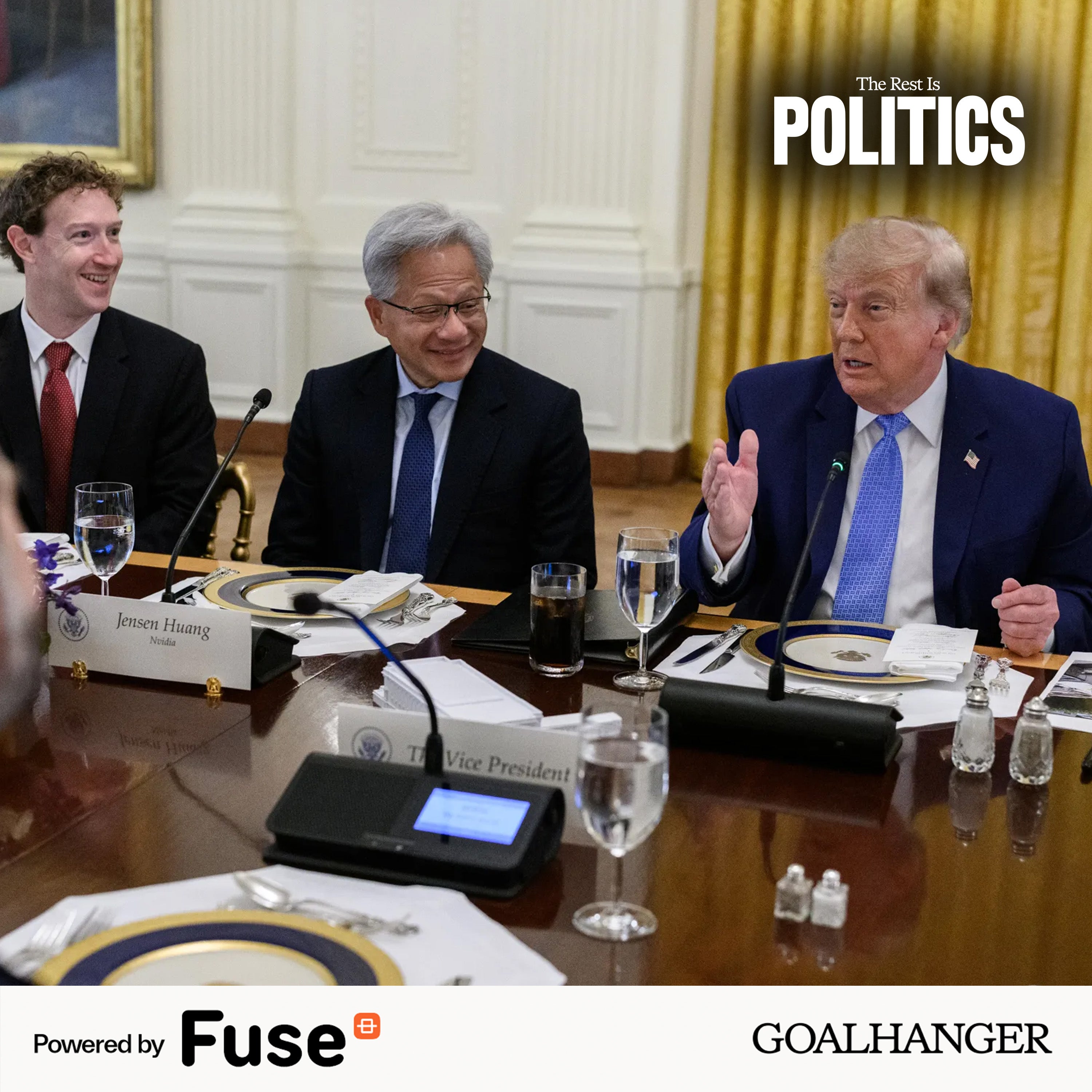
0:07Rory Stewart: Welcome to The Restless Politics with me Rory Stewart and with me Alastair Campbell. And Rory, we're going to talk lots about America, lots about Saudi and Yemen and India and we will also have a discussion about our interview with Andy Burnham and the political consequences thereof which appeared to have dominated life in the House of Commons yesterday. day. But let's kick off with your friend Donald Trump. Well, it's been quite a week, hasn't it? This is the week in which Donald Trump failed to win the Nobel Peace Prize and told Norway that there would be consequences. This is the week in which his sexual war, Pete Hegseth, has announced that he intends to hold a public execution, making the United States one of very few countries along, I think, with Iran and Afghanistan that still wants to do public executions.
0:54Rory Stewart: This is the week in which Marco Rubio stood out in front of the Parthenon on the Pnyx at the Acropolis and made a great claim for the superiority of Western civilization, inviting Europe to join America in its civilizational project. And I think it's also the week in which we've seen, again, the extraordinary move of Trump to announce that diesel restrictions will be lifted on Putin after I think a 90-minute call with Putin, massively helping the Russian economy, making probably a much smaller contribution to the American economy ahead of the midterms, seriously weakening Ukraine and when Zelensky complained, saying, well, they should get rid of Zelensky and get another president in.
1:39Rory Stewart: So I'm interested in this because this is just a seven-day period. And I think we're moving now from what might be called Trump derangement syndrome to Trump reality syndrome, and really getting people to sit with what this is. Because one of the things that you and I often encounter when we talk to business people, particularly American business people, is that there is still a remarkable number of people out there wanting to be contrarian and saying, he's not as bad as everyone makes out and it's all going to be fine and there's no reason to react in any radical way to this. And I just would like us to sit with the last six days as a way of reminding people just how serious this is.
2:15Rory Stewart: Over to you. This episode is powered by Fuse Energy. Most energy companies are counting on you doing absolutely nothing, not questioning what you're paying, not switching, just letting your tariff roll on, which is costing you hundreds of pounds every year. But the apathy goes deeper than our bills. We've almost given up on energy itself. We seem to all be accepting energy is expensive, the system's outdated, but that complacency is costing us. Fuse Energy does not accept that because the energy transition is not something that just happens somewhere else. Fuse is building an energy company which is designed to bring down the cost of energy and right now its tariffs are up to£100 below the off-gem price cap.
2:58So switching isn't just about paying less, it's about expecting more from your energy company and it only takes you three minutes.
3:05Rory Stewart: Switch to Fuse at fuseenergy.com slash politics, use the code politics and you'll get a free Trip Plus subscription allowing you to hear all the extraordinary members content that Alistair and I are now producing for you. Visit FuseEnergy.com for full terms and conditions.
3:25This episode is brought to you by NordVPN. And I must thank NordVPN because on my grand European tour with Fiona, I was away from the Hawthorns for West Bromwich against Burnley, but I managed to watch it.
3:39Rory Stewart: There you go. I actually had a NordVPN thank you. I was in the new Starbucks here in Kreef. And of course, the thing flashed up saying this is an unsecured public network. And I was able to go to my VPN. And it was a little reminder of something we often forget when we're in all those cafes and things, which is actually genuinely people can do all kinds of weird cyber attacks and spying if you don't have a virtual private network when you're sitting in that Starbucks. Well, I think you're not really sort of proud of me that I managed to do this, or should I say Fiona managed to do this? I'm incredibly proud of you.
4:11Rory Stewart: That's a tech transformation. So to get the best discount off your NordVPN plan, go to nordvpn.com slash restlesspolitics. That's nordvpn.com slash restlesspolitics. And the link is in the episode description. There's so much goes on in Trump land that sort of turns our heads. The other thing was fresh sanctions on the International Criminal Court. He was obviously very, very upset, not only that he didn't win the Nobel Peace Prize, but it was given to a woman of colour from South Africa. Whereas, you know, if you're Donald Trump or Elon Musk, the only people to be concerned about there are the poor, persecuted white South Africans.
4:52And this is a woman who has fought for justice, the rule of law, and all of the things that he doesn't believe in. and then the other thing is this extraordinary story about members of his family who've been involved in this attempted interference of the elections in bosnia so there's so much stuff going on oh and then the other one that i forgot was of course um him coming out in favor of these young men as part of a university frat club who are being some of whom are being pursued for rape charges because a woman that he now calls a dog is involved in the prosecution case against them So I agree with you.
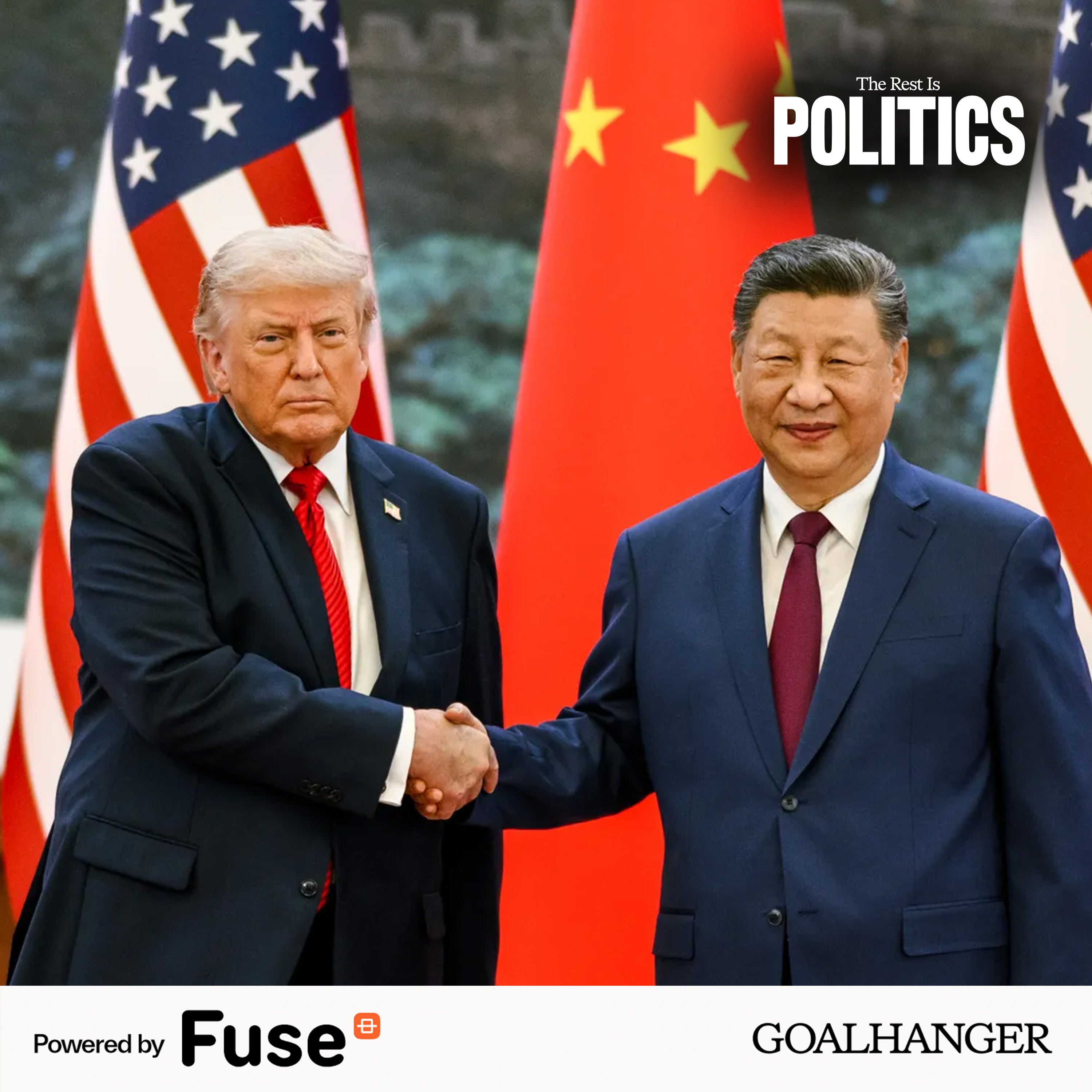
5:29I mean, I'm up in Scotland and I've just been talking to an event where there were Americans there as well as Europeans. And I think I find it impossible now to talk about Trump without really getting offended that we even have to talk about him so much because he's so poisonous, so damaging to so many of the things that I think most British people care about. and yet there he is we're coming up to the midterms the the thing with the diesel i mean if he'd have done a deal with canada he could have got more diesel cheaper but of course canada is an enemy because it doesn't want to play his silly 51st state game the amount of diesel that he's actually getting out of putin is i think it will last about 14 hours in the american economy it's not that big a deal so you've sold out you've upset the indians because don't forget it's not that long ago, Trump was sort of talking about sanctions on India, because they were taking Russian diesel and helping keep the Russian economy afloat.
6:30So this is all this mad, crazy stuff.
6:33Rory Stewart: Just quickly, I mean, just while you're on a roll, and maybe you're about to say this, we were with Kellyanne Conway last week, who people will remember was Trump's campaign manager in 2016. And like many of his closest allies, a frequent appear on Fox News, in which she got really angry with both of us and i think particularly with you for suggesting that uh trump was not fully supportive of ukraine and zelensky and told this extraordinary story saying you know he told putin where to get off and he'd been uh you know he'd been very supportive and said he keeps saying nice things about him so just sort of develop that for a bit and what you felt listening to kellyann conway and that whole account from the trump administration of them being pro-ukraine well at one point she accused me of being trump derangement syndrome level five and i proudly said no i'm much worse than that i'm at least level six or seven it was a pretty i find it like almost like a sort of out-of-body experience because i thought we were talking about parallel universes you know she just to give you one example she was basically talking about the midterms and she was saying that if the republicans don't do very well and by the way trump's always been underestimated um if they don't do very well it's because they haven't used Trump enough.
7:45And they know that if they use Trump properly, it helps them. Okay. Get this, Rory. 1 % of Republican campaign materials in this election mentioned Trump. 20 % of Democrat materials mentioned Trump. They know that he has become a problem. And yet you listen to her and everything that he says is right. Everything he does is good. And for her to sit there when we remember the way that zelensky was treated by vance and by by trump and the fact that he's met putin so many times and zelensky the the she got very upset when i talked about kushner and whitkoff being these clowns who go and do their own deals rather than make progress on iran and ukraine but she talked she talks of trump like he's some kind of god and of course there are people who think of him in those terms but i don't think you and i were amongst them you were very polite though rory you were you and at one point you were you were having to calm me down a little bit you kept you kept whispering on the platform talk about france
8:46Rory Stewart: talk about france oh dear me listen um let's maybe the the thing that sat with me most amongst all these things um was that speech uh in front of the acropolis in front of the parthenon given by Marco Rubio. And it's weird saying that given what's happening, because just to develop a couple of points you made, you reminded us about the International Criminal Court. What's interesting about the International Criminal Court is that Trump has made it clear that this is purely because they went after Netanyahu. In fact, he says this in a press conference where Rubio was trying to say it's about a broader international principle.
9:26Rory Stewart: And Trump interrupts the Secretary of State and says, no, no, no, he's being a bit fancy here. This is about one thing and one thing only. It's about the fact that they're going after Netanyahu. He began his sanctions against the International Criminal Court some months ago. And what happened is people lost access to their Google accounts and their Microsoft accounts. And then one of the judges lost access to their bank accounts. And this was a really interesting moment because what happened is the US president said, signaled that he thought these were unfriendly people, and the companies fell over themselves to disable the access.
10:06Rory Stewart: And one of those companies had just made a statement reassuring Europeans that if they bought their products, they had full sovereign control, and there was no way the United States could disable. And this is important, right? Because we're building our entire economies on cloud computing, on Google, on Microsoft. And what we found with the International Criminal Court is that first moment where America is weaponizing our dependency on cloud computing and basic software against European allies, and in this case, a big international institution, right? This is not how this started. This started back in the day.
10:44Rory Stewart: And I did this, in fact, for people who've been listening to the miniseries. I did a long bit with Ed Fisherman, which I thought was fascinating on the beginning of the story of America weaponizing this stuff, which begins with 9-11 and Iran and how do you chase down terrorists and unfriendly states. But it's the moment at which it turns against us. So I thought that was really interesting. And I'm sorry, I didn't talk about it enough. And it goes to everything that we are going to go on and talk about in terms of middle powers and how Andy Burnham as a new prime minister gets any kind of sovereign independence for Britain, if in the end, the US president is saying that almost everything we've built on American platforms can be switched off at will.
11:23Rory Stewart: And of course, you've made the same point with Ukraine, because he's threatening to turn off the satellites again, threatening to suspend the ability of Europe to even purchase weapons for Ukraine. I mean, remember, again, this is what Kellyanne Conway didn't want to take on board, which is America has stopped paying, stopped$50 billion of payments. So it's European money paying for all this stuff, but America is still somehow managing to dominate a lot of the command and control from places like Germany, where American generals are overseeing a huge amount of the targeting and things. with Europe paying for it all.
11:55Rory Stewart: But it's the Athens speech that worried me most. Did you see the Athens speech? Yes, I did. Yes, I did. I did. And I agree with your assessment of it. I sometimes, I actually said at this event I was at this morning, I look at, I mean, J.D. Vance, I think we've always kind of known what he is. I look at Marco Rubio and I just, I sort of wonder where his soul has gone. I thought, and that speech fitted very much into the frame of European civilizational erasure. He was essentially saying, look, here I am in Europe. You guys used to be really good at stuff. You had the Greeks and you had the Romans, and Europe was pretty cool for a while, but let's get with the program.
12:32It's all about us now, and you're not really very smart anymore. That was kind of, you know, if I drill down into the rhetoric. And just on this diesel situation, so he criticizes Zelensky for hitting Russian oil, installations, much more than he ever does Putin for dropping the bombs left, right and center on civilian infrastructure and on kids and on hospitals. There was one on kindergarten the other day. I mean, maybe let's come back to America and talk about the midterms. But maybe this is the place to talk about the interview with Andy Burnham, because I found this, you know, he clearly, I don't know what your impression was of the interview overall, but my sense was that we didn't sort of press him on this Russia thing.
13:17It wasn't as if I was saying, as I might have done, come on, Andy, for God's sake, call it out for what it is. This was the bloody Russians getting involved. They were manipulating the media left, right and centre. Farage and Aaron Banks, they were right at the heart of all this, et cetera, et cetera. He, I think, as part of what is clearly, I think, a plan to get the country re-litigating or re-debating Britain's relationship with Europe, he put this out there. And the way that, I mean, for Johnson, for Boris Johnson and Nigel Farage, both to be bleating about Brexit and lies in the same sentence is quite a thing, given that, you know, they told more than anybody.
13:57Rory Stewart: Yeah, just to bring listeners in, this was our interview with Andy Burnham, went out on Leading. It was a really, I mean, I'd love people to listen. Shoshana felt that he came across very, very well. I mean, she just began by saying what a relief it was to hear someone who sounded like a human. She thought maybe some of the answers around AI and things were a bit duller. They hadn't quite got that. But basically, she had a very, very warm sense of him. But the reason it's gone really viral, I mean, this is the biggest thing we've done in some time, right? Since Al-Shara. We managed to appear in the House of Commons where both Kemi Badenowicz and Andy Bonham were quoting the rest of his politics and blah, blah, blah, blah, blah, is partly because of this big, big claim that uh there is evidence that russia was involved in in the brexit referendum which is something that your friend carol kudwala has been saying for some time that's one of her campaigns too absolutely yeah and and look and they they squeal like hell when you even sort of mention it and and what's even funnier is that they they use a combination of the kremlin line this is all a lie we don't interfere and the Trump line which is it's the Russia hoax so Nigel Farage comes brings them together and says Andy Burnham's a liar this is the Russia hoax why do when Andy Burnham stands up at the United Nations General Assembly and says that Russia spends over a billion dollars a year on manipulation of information in democratic countries Why do they do that?
15:31They've got hospitals they need to service. They've got roads they need to build. They've got an economy they need to run. They've got a wall they need to pay for. They do it because it fits their strategic purpose, which is trying to divide Europe, break Europe apart. And the tragedy throughout the period we're living through is that Trump's playing the same game. But I thought it was very deliberate. And it's interesting, you mentioned Shoshana. Fiona said that, she said, her reaction was, it's just great to hear somebody being a bit bold about this stuff, not being on the back foot the whole time.
16:00And I'm just so relieved that we're no longer pretending that there's any attempt to, quote, make Brexit work. You can live with it, and we have to live with it for now, but you can't make it work in the way that the liars who gave it to us said that they would.
16:15Rory Stewart: It's interesting also that we got a lot of coverage on the fact that in the interview, he said that he thought that the live execution was abhorrent. And I was thinking about that because Iran and Afghanistan have live executions, but the Taliban live executions feel more as though it's an attempt to reimagine an early medieval world. I mean, that's people literally gathering a crowd in the way that you would have done in medieval England around an execution. When Pete Hegseth does it, it's the cruelty of the modern social media. I I mean, he's implying that this is going to be live streamed and something that could be seen.
16:56Rory Stewart: A man in a wheelchair being shot by 11 or 12 men, presumably in a firing squad, live streamed and presumably seen by hundreds of millions of people. And this is a snuff movie. So I'm interested in that also because in trying to pin down what the problem is in being too reliant on the United States, which is an argument we keep having. And it was something that we were pushing into with Andy Burnham. And he was slightly, I think, still avoiding. He's not prepared to quite be as clear as Carney is about the fact that it's broken and we have a problem and we really need an intentional project to get away from this.
17:33Rory Stewart: But one of the things that we have to keep using these examples to illustrate is it's not just about America doing really big, damaging things. It's more a style often of humiliation, bullying, cruelty. So there's the big stuff, right? We're going to try to take Greenland from you, or we're going to cut off the satellite access for Ukraine, or we're going to lift Russian diesel. But there's just the continual abuse, humiliation. For example, the video that Trump made, the AI video of him beating up Carney on an ice hockey pitch with Carney begging for mercy, and now this live streaming of a public execution.
18:12Rory Stewart: And so in working out why we need to now separate ourselves more from the united states it's partly about that we have to begin to separate ourselves from a country that can do that i mean that's so far beyond our disagreement with the united states being that we didn't have the death penalty and they did this is this is getting into a different world of indignity yeah it took i said that we sort of push him on Brexit he came up with the the the Russian stuff but actually on the Trump and the Hexoth execution that was a little bit sort of kind of second third time of trying he said you know I find it abhorrent if you think about the other things that he said I think that even the things that he said on on Europe I think would not necessarily have been fed back to Washington with sort of, you know, roses and whistles and bells.
19:06So I think what he's doing, I think what Mark Carney is doing is both showing and telling that there is a totally different world and we're going to have to deal with it. I think what Andy Burnham is at the stage at the moment is showing and not so much telling. But there is, I think, quite a lot of show. We should just say, Rory, we started and ended the interview with a mention of Steve Rotherham and the series we did on Becoming Burnham, the miniseries. I really think that is both the book they wrote together, but also that series with Steve Rotherham. I think they will be useful resources about Andy Burnham as we go through his premiership, because I think Steve Rotherham said so many interesting things that we're now seeing play out.
19:46So all you have to do is become a member at therestispolitics.com. Just on the midterms, Rory, I've been looking at the betting markets and the polls. So, back in July, you and I said that we agreed that the Democrats' room is certainly going to win the House and that to win the Senate was going to be a very tough fight because they're going to have to win five of these seven states. Alaska, Texas, Michigan, Ohio, North Carolina, Maine, and Iowa.
20:15Rory Stewart: That was the conventional wisdom three months ago, wasn't it? Yeah, absolutely. Yeah. And as things stand, on the current polling, the Democrats are leading in all seven. And in the betting markets, the betting markets, they're doing not quite as well as in the polls. I don't know what that reveals. but in the betting markets they're clear favorites like clear 70 65 that sort of thing in six out of seven and the only one where they're behind is iowa where they're slight underdogs on the betting but they are ahead in the polls so just a north carolina the polls 95 the betting markets 95 in texas the polls 70 the betting markets 60 and texas texas I mean, Texas, the state, the obvious is huge.
21:04Rory Stewart: I mean, that's, you know, real deep, deep Republican territory. Well, Trump had a lead in Texas in 2024 of 14 points. He had 13 in Alaska. He had 13 in Iowa. He had 11 in Ohio. And the other thing that's happening, I mean, Trump went to some very strange places on his little tour. He went to some of the most Republican states in America. Now, was that because the candidates in the marginal states were saying, please don't come here, please make sure he goes to, you know, somewhere where we're never, ever going to lose. But people are now talking about Kansas and Nebraska as being kind of within range, as it were, which would be.
21:43Now, I don't think we should get too excited because, as you may recall, Rory, there were people who were absolutely nailed on convinced that Trump was not going to win.
21:51Rory Stewart: If there's a big, big lesson for me in any of this, it's that trusting the polls or even the betting markets is pretty dangerous in the modern world going up to any election because it changes very quickly. But it's worth mentioning that I'm going to be going with the team to cover the midterms of the states. So I'll be in Clinton, Ohio, and in a lot of the more rural areas. So in order to compensate for my over-focus on the cities, I'm going to be back in the rural Midwest of America trying to cover some of these marginal seats. So I'll be there from next week. That's good. I would, of course, be with you, but I'm sticking to my not going to America during the four years of the second term.
22:33Just on Nate Silver, the guy who everybody talks about as being the sort of, you know, the one who's kind of, I don't know whether his record bears up the sort of sense of this being the sort of the guru.
22:42Rory Stewart: Wasn't so clear on the last one. I didn't think he gave us the very, it was not very helpful towards those of us that were not sure whether Trump was going to win. Yeah, yeah. But on this one, he has got Democratic control of the House, 92.9%. That's up from 85 at the start of August. And the Senate, 73.8, which he had at 50-50 on September the 6th. And Trump's ratings, Rory, they're just, they're in the tank. I mean, Kellyanne Conway, talking about him as though he's this amazingly popular and we're all underestimating him and blah, blah, blah. But, you know, we have to assume that these polls, when they say to people, do you approve or disapprove?
23:20And people tend historically, even if they didn't vote for president, they tend to lean towards giving them the benefit of the doubt. He has got the lowest ratings now since ratings began. And right across the issues, economy, immigration, trade, Iran. So he's in trouble. Yeah. Rejoice. He's in trouble.
23:40Rory Stewart: Which brings me back to Rubio, because the temptation will be to say, as people said after the first Trump, that the guy's finished, he's going, he's not standing again, thank goodness, and we can all go back to normal with the United States. So I think it's worth looking at J.D. Vance and Rubio, who are two of the leading contenders to replace Trump as president to show what United States could be like after Trump. And it's worth looking at that Parthenon speech a little bit, because it's a speech which will have fooled and charmed some listeners, because it's quite complementary towards Europe.
24:18Rory Stewart: As you say, the undercurrent of it is actually slightly strange. The undercurrent of it is essentially to say, Greek civilization is about greatness. Greek civilization is about heroism. Greek civilization is about excellence. Greek civilization is against mediocrity. And it's about knowing that when we're great, we deserve it. And the general sense is America, in his vision, is really, really kind of great in that sense, big, kind of muscular, successful, and we deserve our place in the world. And the implication was that if Europe pulls its socks up and becomes kind of grand and great and competitive and more like Trump's America, then they might be allowed to join the club and come along.
25:03Rory Stewart: And this is the kind of offer that Rubio is making. It is the most astonishing speech. I mean, because it is so much more radical in terms of its vision of the world than I think people understand. It's very, very, very familiar, unfortunately, to people like me, because it's essentially the sort of speech that a Victorian headmaster made to English public school boys going out to govern the empire. It's a speech, And I think it's lifted from that stuff because the genealogy goes from Victorian empire to people like Theodore Roosevelt writing in the late 1890s. And it's absolutely, we are the heirs of Achilles, we're the heirs of the ancient Greeks, we are the great muscular Christians going out to rule the world.
25:46Rory Stewart: And he, you know, he cites Cortes, the conquistador in Spain as, you know, one of these great figures, Christopher Columbus, these kind of people. And the story that the British told themselves in the 19th century, which is the story Rubio is repeating, is that Britain had a right to rule the world because we were kind of excellent and advanced and civilized. And other people should sort of accept that we deserve our greatness and put up with our control. Now, this was not the American Republican tradition, which is why this is so sinister, because it sounds much more like empires of the 19th century, sounds much more like justifications of slavery, sounds much more like some of the language of the 30s and 40s.
26:28Rory Stewart: The American Republican tradition was completely different. I mean, Kennedy famously in his inaugural doesn't say, you know, there are great civilizations and by implication barbarians, right? He says, you remember, he says, we all breathe the same air. We all have children. We're all mortal, right? He's trying to make this universal. Clinton, in his inaugural, is all about shared global goods. Eisenhower is all about warning people about the dangers of American power. John Quincy Adams would have said, and this is right back in the 1820s, would have said to someone like Rubio, you know, the danger is America could become the most powerful mistress of the world, but lose control of itself, right?
27:09Rory Stewart: Right. I mean, it's the corruption of power. And it's really troubling, really, really troubling, because it keeps coming back to the central theme, which I think a lot of the episode today is about, which is that we are increasingly in an abusive, coercive relationship with somebody or a culture expressed through the Republican Party that appears to want to say, their way or the highway, They're the civilization, the other people are barbarians, and have actually lost all history. I mean, their description, the whole description that Rubio gives is not really a description of an ancient Greek.
27:47Rory Stewart: Aristotle would be horrified by this stuff. It's actually a description of an ancient Iranian, an ancient Persian, right? They were the people who were all about, you know, riding horses, shooting bows, speaking truth, warrior people. Anyway, over to you. I wonder, look, what happens post-Trump is fascinating, but I can't work out the extent to which Vance and Rubio, who, as you say, are right up there as sort of leading potential successors as the Republican nominee. I can't work out whether they're trying to stay close to Trump or in certain ways depart from him. So it's very interesting that Vance, and whether this is his Catholicism or his worries about the Catholic vote or whatever, but he didn't sound very keen about this public execution.
28:40He said he would not be watching it. He sort of gave an indication that he thought that Peter Hexler was shooting from the hip and he should have kept his mouth shut. Rubio's speech, I felt in front of the Parthenon, I felt was much closer to something that he would think, even though it was a bit too airy-fairy for Trump, that actually if Trump was watching now on TV, and we've talked to people in the administration before who've said, you've just got to understand these guys operate on the assumption that Trump might see them on television, okay? And he would have thought this is much more in kind of Trump territory.
29:13I can't help thinking there must be a natural law of political gravity that says that who actually eventually emerges won't be from the Trump orbit.
29:24Rory Stewart: I think the problem though, for the rest of us, is that it's not clear that there is a big constituency anymore for the old American vision of rules and alliances in the Democratic Party or the Republican Party, really. I'm beginning to think that that whole world from the Second World War through to 2016 will begin to seem like a strange exception in which Republicans and Democrats together assumed that there were Western alliances, that Canada was a friend, Russia was an enemy, that their job was to try to underpin NATO or United Nations institutions, keep open the sea lanes, and that they needed to accept restraints on their power and talk about universal values and say that they're not just there for American power, they're there for helping other people.
30:14Rory Stewart: Because I think there's the Republican version that we're seeing. And it's not just Vance and Rubio. I mean, Elbridge Colby, you know, has said about the middle powers, it's a complete waste of time. They're never going to be able to do it. And they don't have the resources to do it, which is essentially, I keep coming back to this, it's the abusive spouse saying, I can humiliate you and abuse you, but what are you going to do about it? You know, you're not going to be able to, what are you going to do? Get your own house, get your own job. I mean, it's this very contemptuous attitude. But from the left, it will be different.
30:41Rory Stewart: From the left, it might be isolationism driven by guilt, driven by a sense that America just makes everything worse, given by a sense that they have priorities at home. But none of this adds up to providing a reliable alliance structure for the future, which is why getting with the Kani program and trying to work out how you talk about that, how you design for that, how you get to that, and how difficult that is, because you're doing it in the face of, I mean, if I continue with my abusive spouse analogy, in the face of an abusive House that's going to make it as difficult as possible for you to leave that house.
31:16Your point about whether the Republican Party is absolutely locked into this worldview and whether the Democratic Party might be closer to it than we might think. The only thing I'd say about the latter is that it is interesting to me how some of the real leading lights, the better campaigners, really are focused on the nature of the governance, on the corruption, on the values. I think there is sort of, there's definitely a spark still there for that kind of thing and also particularly in relation to ukraine i think the the internationalism but also on the republican side i think you're absolutely right i've got a friend in the states who regularly says me extracts from ronald reagan's speeches now ronald reagan who was you know thatcher's best buddy and in our world very much seen on the right of the political scale across the world and the This friend of mine said this week was this one.
32:11I don't know where the speech was made. Oh, it was in 1979 before he became, in one of the campaigns. And he said this, the key to our future security lies in Canada and Mexico becoming much stronger than they are today. It's time to stop treating our nearest neighbors as foreigners. So there's a right wing Republican presidential candidate who becomes president saying essentially Canada, Mexico, friends. Trump is doing the exact opposite. And if you talk to people like Kellyanne Conway, people who are really in the kind of MAGA Trump world, they do now speak of traditional friends as though they were enemies and traditional enemies as though they were friends.
32:55It's a very, very, very strange world. To be fair, she's quite strong in Ukraine. To be fair to her, she's quite a strong Ukraine.
33:01Rory Stewart: You can't build alliances around that because even if you were right that the Democrats might come in and be more progressive and embrace progressive governments in Europe, the Republicans could still come in four years later and switch and start embracing the AFDs, the world and the Farajas as well. So once you've seen it, you can't unsee it. I mean, the point about the post-war order was that the values were remarkably stable. I mean, America restrained itself in relation to Europe and Canada, particularly from 1945 onwards, and essentially said, we're not going to interfere in their internal politics.
33:36Rory Stewart: We're going to be generous to them. We're going to treat these people as though they're part of our alliance. Now, that doesn't mean the United States wasn't frequently very, very brutal and intrusive in places like Latin America, which again, is a weird thing going on with Rubio, who, of course, is of Cuban ancestry. I mean, it's very strange for somebody whose family comes from Latin America to be celebrating this kind of vision of American civilization in which the Latin Americans were usually the barbarians or celebrating Cortes and the conquistador. Because who's on the other end of that is the indigenous people.
34:09Rory Stewart: So, there's something very, very strange. It's as though Rubio has got so excited by his vision of what he calls atrophy and servitude, which is what he's predicting for Europe in Latin America. And now he's in the other position. Now he's, you know, he's become the master. So let's take a break. And then when we come back, we're going to talk about Saudis and the Houthis. We're going to talk about these extraordinary protests in India. and we're also going to have a little chat you and i about your stand-in replacement last week the right honorable michael gove and what you and i and our listeners and viewers thought of it
35:03The Great Game. Strategic struggle between Britain and Russia. We assess our Prime Minister with high confidence. it was Russian. Holding the Russians accountable is World War III. They took down a British passenger jet containing 350 people. Man in the Kremlin is playing, Alex. You've got to ask yourself, do you want to play or not? You're the Prime Minister. You've done nothing!
35:36Rory Stewart: We would need to understand the policy context. All the relevant context will be structured as a framework today. and disseminated into an operation order, or FRAGO. A FRAGO that says to kill the president of Russia. Yes. New from Goalhanger. Who is going to be able to pull this off? You're my soldier, are you? Sergeant Tom McDuff, Duffy. An audio drama journey like no other. Men like Duffy, they are our most valuable weapons. Devised as a technically rigorous geopolitical action thriller. Where Britain plays its strongest hand against its strongest foe. Don't do it, Duffie! Bear Hunt. Available now wherever you get your podcasts.
36:34Rory Stewart: Hello, I'm Marina Hyde, host of The Rest is Entertainment. And let's face it, if you have heard me on the show, you will know that I am always on. Now, I have tried switching off and not listening to all the news or not watching all the videos on the internet, but unfortunately, I just can't. So why not join me for my new show titled Always On? It is home to my writing and also my new YouTube show. And each week, I'm going to be sublimating all of my thoughts on culture, entertainment, politics, sports, media, into comment across YouTube, Substack, marinahyde.com and socials. So wherever it feels best to talk about something or to have a laugh about it, most importantly, I will be there.
37:14Rory Stewart: Imagine the bat signal going up. I don't know that we need this new superhero, but we've got to. You can subscribe now by searching Always On with Marina Hyde on Google. Always on YouTube. Always on marinahyde.com. Always on with me, Marina Hyde. Never off, never off. Welcome back to The Rest is Polities with me, Alistair Campbell. And with me, Rory Stewart. So Rory, you want to talk about Saudi Arabia and the latest attack on the main airport in Riyadh. And it's pretty obvious why the Houthis are hitting an airport, because they've had their own airport hit. And I think they're kind of deciding to show that, in a way, an attack by them on their airport is going to do a lot more damage to the Saudis than an attack on their airport has done in the past.
38:00Rory Stewart: I mean, firstly, these have been very, very dramatic attacks. They're attacks that have killed civilians. And you can see footage of Muslim pilgrims fleeing from the site of this attack. This is on a civilian airport terminal, attacked Biado, attacked Dhamman. And it's come right at the worst moment for Saudi because they were hosting World Petroleum Council and the chief executives of Total and Shell cancelled their arrival. And they're just going into their big International Investor Conference, the FII, which is where they're trying to convince the world to come in and Saudi to diversify and build data centers and everything.
38:39Rory Stewart: And the Houthis have chosen this moment to fire rockets. And the Houthis must be calculating. So to remind people, the Houthis, of course, are this group in Yemen who have been funded in the past by the Iranians. They probably at the moment, or many of the people I was talking to in the last few days think, are overstepping what the Iranians want them to do, that the Iranians are trying to get the Houthis to hold back at the moment because they think they're going too far. But anyway, the Houthis are this originally religiously inspired group of Zadis from northern Yemen, and they're firing these rockets.
39:08Rory Stewart: And they can also, it seems, have the capability of hitting Israel, hitting UAE. So why are they doing it? Well, they're doing it because they must be gambling that this will convince Saudi to stop its current support for the other faction in Yemen, the recognized international government, which is trying to retake the Bab al-Manda, retake that control of the Red Sea corridor, because at the moment, Saudi is crushed. Iran has made real problems getting stuff out of the Strait of Hormuz, and its other major route out to Asia has to go through the Red Sea. And that's effectively closed if the Houthi control the Red Sea.
39:47Rory Stewart: So, Saudi was flying 50 air sorties to try to get rid of the Houthi. And this is the Houthi response. And they will also be calculating, perhaps rightly, perhaps wrongly, that Donald Trump won't want to get involved in another war before the midterms, so that he's not going to provide the support to Saudi Saudi wants. Now, anybody who thinks they can predict what Donald Trump will do is for the birds, because I've got friends from Saudi saying that they've got private assurances from the US that Americans are going to come in on the Saudi side. And I've got other people saying no, Trump isn't interested at all.
40:17Rory Stewart: And a lot of disagreement about whether Saudi is going to go ballistic and say, this is unbelievable, and we're going to wipe you out, or try to wipe you out, or whether they're going to say, well, in the middle of our conference with midterms coming and with all these problems in the strait, we're going to try to get to a deal. Was this one of the wars, one of the eight wars that Trump claims to have stopped? And that was why he deserved the Nobel Peace Prize. It was just last year, wasn't it? When the Americans were intervening against the Houthis and declaring, I think they did, they declared a victory and an end to this war.
40:51And at the time, they were spending about over a billion dollars a month on the weaponry and munitions that they were using. And yet now, it does look like he's basically said to the Saudis, look, you know, we've got our own problems at the moment, we can't really help you out much here. And that does, you dropped in something very interesting there, you basically suggested that the Saudis would be tempted to obliterate the Houthis. Now that's the language of Trump and Iran. Is that realistic?
41:23Rory Stewart: It's of course, it's not very realistic, which also people will be pointing out to the Saudis because of course, Saudi and UAE fought a long war against the Houthis in Yemen unsuccessfully. And this was one of the early moves by Mohammed bin Salman wasn't successful and they withdrew. And they have been telling the Trump administration and others that they're on the verge of victory against the Houthis for some time, which is why the US did that bombing. It didn't work. So the Houthi may be fragile in some bits. They seem to be being pushed back a bit along the coast, but they're making advances elsewhere.
41:51Rory Stewart: And again, getting realistic information from the ground is so difficult because everybody who's talking to you has the dog in the fight. You know, it's a bit like you'll remember this from Afghanistan when people asked how strong or weak were the Taliban. You know, you would have generals who would say, oh, the Taliban are, you know, nobody likes them, they're corrupt, and they're miserable, and they're on the verge of collapse, and one more heave, and we'll get rid of them. And other people saying, no, no, these people are very embedded in rural areas, and they'll actually outlast us. And how do you answer that question?
42:21Rory Stewart: I mean, there's not opinion polling you can do, you can try to assess how many fighters the U.S. have got. But all you can say is that they've been much more resilient to much more successful than anyone predicted. So the idea that one more heave is going to wipe them out doesn't make sense. Yes. Another thing I think we need to update our listeners on is what's happening in the Strait of Hormuz. Because one of the weird things I think that happens with reporting in newspapers is, I don't know if I did a, maybe this is a mean thing to do, but if you're listening to this, ask yourself, what do you think has been happening in the Strait of Hormuz over the last two months?
42:55Rory Stewart: Do you think that there have been continual American strikes against Iran? Have there been Israeli strikes against Iran? Have the Iranians been striking many US bases in the region? The answer is no. Oddly, of course, what happens is you don't report what isn't happening. The last two months has been a sort of fragile, almost ceasefire in which there's been some tit for tat because the Iranians have attacked vessels, but the Americans don't release that. So there was a vessel a long way from Strait of Hormuz on the edge of the Gulf that was attacked successfully by the Iranians that the Americans haven't even commented on.
43:31Rory Stewart: But there haven't been that many strikes against US bases, and there haven't been strikes against Iran, and there haven't been Israeli strikes going on against Iran, instead of which what we have is a few vessels getting crude oil out around the Omani coast. The Americans claiming they're back to the full numbers. That isn't true. That's total spin from Trump with some of these states flattering him by pretending it's true. And we still have a negotiation going on where, again, we're on the nuclear stuff. And it looks like there is some common ground emerging around what a nuclear file could look like.
44:06Rory Stewart: But there isn't really the American negotiating machine there used to be. There isn't a full State Department. I mean, you go and see the State Department. I mean, you'll remember the days where the American government was this formidable machine. You know, we interviewed Rob Malley, and he was talking about, you know, 25-person teams right in the middle of the Middle East peace process, all of them with doctorates, all of them speaking local languages fluently, all of them intensely involved in the technocratic thing. Now, basically, it's Jared Kushner, Steve Wyckoff, occasionally J.D. Vance flying around with four or five staffers.
44:39Rory Stewart: And so, how do you get an Iran deal on that basis? The other thing to say about the Strait of Hormuz, there are 20 ,000 people there that are just trapped. They're stranded and they're trapped. And, you know, can you imagine what it's like living on one of these ships at the moment? I mean, for a start, there is, as you say, it's reasonably quiet. But, you know, there are mines around the place. There are drones flying around. It is very, very unpredictable. But can you imagine the levels of stress and anxiety as you're stuck there, away from your families, away from your own country, and you're stuck?
45:18Rory Stewart: Or even worse, if you're one of those very few, very brave captains and crews that are trying to run the gauntlet, because there's no insurance available. But the UAE seems to be pushing through vessels saying that they'll cover the risks. so you're taking a you're trying to sail a vessel at night with its radar off sometimes with an american vessel in front of you hugging the omani coast by the way we got told off i was at an event recently there were some people from the from the insurance industry who said that we'd been saying that they were becoming uninsurable they said that we'll always find ways of insuring this situation so there you go um listen should we should we should we before we go should we talk about um about india yeah can i do a transition to india just quickly though because there was one thing I've been feeling guilty about, which is your friend Ed Miliband.
46:05Rory Stewart: I've been hearing a lot of positive things about from the UN General Assembly. People who were at the UN firstly commented on the complete absence of the United States. I mean, it was extraordinary. You went to UN General Assembly meetings chaired by other P5 members, and the American seats were literally empty. It was just nobody sitting in these meetings. But Ed Miliband was the, I heard from some people, they felt was the only foreign minister that anyone wanted to talk to. He gave the impression that he had genuine authority, genuine lassitude, was a genuinely original thinker, was genuinely engaged on Sudan, genuinely engaged on the Gulf, genuinely engaged on Israel-Palestine.
46:49Rory Stewart: So apart from the small wrinkle that we haven't covered, which I am deeply distressed about, which is that Israel basically bullied Britain into closing or halving the size of our consulate in Jerusalem, which is extraordinary. I mean, that was really humiliating because that is territory that we don't recognise as being part of Israel. It's meant to be occupied Palestinian territory. We've had a consulate there forever. Other people have consulates there and we've taken the sign off the building. We've halved enough of our diplomatic staff and there was no tit for tat. We haven't responded. That, I think, was not impressive but that wrinkle aside i think edmund is really making a really impressive uh appearance and and and that's worth watching anyway good well um no so i was fascinated by i was going on india last week we probably don't talk enough about modi and and india but so just to fill people in the cockroach the the there was a judge who called referred to these young people as cockroaches and they decided to turn that into starting this cockroach janta party which is to sort of it's a sort of play on words of the cockroach but also the bjp which is modi's party and this guy is really interesting how leaders emerge in this way so this guy abhijit dipke who spends a lot of time overseas doesn't not always in india gets on a plane he flies back in he's going to do this big protest.
48:11The police, they arrest him and two of his associates. They're taken away. They're locked up for a bit. And meanwhile, there is a security operation around New Delhi that is absolutely extraordinary. Layer upon layer of security. Streets are empty. And they're just making sure these protests will not happen. And the reason for the protest is the fact that this new elections commissioner, a guy called Gyanesh Kumar, has overseen this thing called the special intensive revision. And the special intensive revision is a bit like Trump saying he needs to sort of clean up the voter rolls. As a result of which, 130 million people were removed from the electoral rolls.
48:55Now, I know India is a big country, but that is a lot of people who are suddenly falling off the directorial.
49:01Rory Stewart: 130 million. It's sort of the population of Britain and France combined, but actually much more because it's only the voting population. It's not including the children in Britain and France. Yeah, exactly. So there's no kids in there. And so this has led to, well, it led to the attempt to mount a huge protest, not just by the cockroach guys, but also by other organisations. But the level of put down, of cracking down on it, meant that this has been suppressed. But it's pretty amazing. I mean, they were arresting the former chief ministers of West Bengal and Delhi. They had, I think, 25 ,000 police and militia in Delhi, barricades, thousands of people being arrested.
49:43Rory Stewart: The Indian Supreme Court stood up for itself in an encouraging way, given how much Modi has been eroding institutions in India, but did say the government must release these protesters, must open the Internet again, must let the metro go and support a Freedom Association. But it's got to be trouble for Modi, this. I mean, Modi has been so Teflon and has been so successful in, over the last 12 years, consolidating his power. But this allied with the thing that we covered earlier, which was the education results. You never trust the government when it redoes electoral rolls anywhere in the world.
50:23Rory Stewart: I mean, remember, you weren't particularly trusting when the Conservatives decided to up the ID card requirements on voting. But this is a different scale. And presumably Modi is in trouble now. Well, we'll see. And we thought he was in trouble with education. He got rid of his education minister and it calmed down again. So whether he might do the same on this, I don't know. But this does seem like it's got to sort of, it's kind of, the protests will have to come back at some point or they'll have to find a way. It is really interesting how this guy's emerged as a leader because he doesn't look like a leader, doesn't sound like a leader, but he really has become the sort of the symbol of this thing.
50:54Do you think, would you say, Rory, if you were back at your, you mentioned being back at school, being given lectures about, you know, ancient Rome and ancient Greece. If you were given an essay question, is Modi a dictator? What would you say?
51:06Rory Stewart: No, he's a, he's a, he's a real, he's your full populist. He's your full, I think, I don't know what you think. I think he's your full Latin American style populist. Is he an electoral autocrat? Yeah, he's an electoral autocrat. India is a proper mass democracy. It still has institutions. I mean, he's done huge damage to the media and civil society. He's screwed around with the voting rule. There's a lot of, you know, it's very problematic what he's done on citizenship and the way that he's treated Muslims and their access to society. And Hindu nationalism is absolutely to the fore. but yeah it's a populist autocratic democracy i mean it's it's it's reminiscent of orban and i think like orban he could be booted out okay listen finally before you go uh what did you think of your stand in last week while you were away mr gove well i've heard about it from all over the world i was literally i was literally i was called by a friend from qatar i called Saudi.
52:06Rory Stewart: Where are you going? Where are you going? Well, I thought it was slightly terrifying, because I think what I saw is the rather odd way in which very fluent, sort of polite sounding language can defend the indefensible. I mean, he managed to suggest, for example, at one point, in that for people who listened all the way through, that Israel had done nothing worse in Gaza than British and American troops had done in Iraq. Yeah, and it was based on a report which turned out not to be what it said. He said basically implied British American troops killed 25 ,000 civilian children. I mean, themselves bombed and killed 25 ,000 children.
52:52Rory Stewart: How can Michael Gove possibly think that's true? What is he thinking about? I mean, look, there are a lot of things to be said for the way in which the British Americans behaved in Iraq, and there were a lot of civilian casualties. But the idea that the Black Watch or the US Marines killed 25 ,000 children is insane. And actually, if you want to keep developing this, the population of Iraq is far larger than the population, because from percentage terms, it would be like killing 400 ,000 Iraqi children. I mean, the fact that he can't see that, and he also nominated, am I right, he nominated the IDF for the Nobel Peace Prize?
53:30Yes, he did. Yes, he did. Yes, yes, yes, yes, he did.
53:34Rory Stewart: And why did he nominate the IDF for the Nobel Peace Prize? I mean, of all the people, I mean, along with Donald Trump, why would the IDF be the best candidates for the Nobel Peace Prize at the moment? What's he doing there? Well, I guess his argument is that Israel, he makes the point that Israel is in this very, very special place. It's the only democracy. He said, here's the thing where, you know, if he loses his election, Netanyahu could be sort of end up in court, go to jail. That shows what an amazing democracy it is. and the idea of his part of keeping the peace i don't know but you know what i found really confusing because um i'd i'd been giving these figures where you know there is i i was desperate you know not desperate i wanted to know why he cannot bring himself to say a word of criticism he criticizes his own government he criticizes the tory record he criticizes our you know the labor government at times but he cannot bring himself to utter a word of criticism so i give him these figures where the israelis themselves are saying there's an 83 percent civilian death rate in gaza okay and then he comes back with this report and he talked about this house of laws report that had been gone to the appg and i'm thinking i'm not as fast as you at the old sort of chat tpt trying to find so anyway it took us ages to find this report you're also not as massively paranoid and cynical i mean almost anything michael says to me i will just challenge for the sake of challenge i just assume it's wrong but i couldn't find this damn thing and it turned out this report was not about civilian deaths in gaza it was about the the death toll following the october the 7th it's a report about october the 7th so i don't know it was interesting though i got what sort of reaction did you get when you said you were slightly terrified by i wonder whether you thought it was so good that you know would we decide actually Michael Gove should permanently replace Rory Stewart.
55:18Rory Stewart: Absolutely. I think it'd be a top, top winner. I think I'm stepping aside. I'm going to dedicate myself to monastic life. And it would be unusual cruelty, though. You would have to spend every week, you and Michael Gove. Being told you're absolutely right, Alistair, but you're absolutely right. You're absolutely right, Alistair. Absolutely. You're absolutely right, Alistair. That's a very good observation. And Alistair, one of the things I've often noticed which is your unusual courage and perspicacity has allowed you to. Percivalence, percivalence. Percivalence, yes. You're demonstrating your perseverance again, Alistair, there.
55:53Rory Stewart: And of course, you and your very distinguished career of public service, Sunder. There was a great moment when we were in Parliament together. And in that brief moment when Michael Gove had decided to campaign for Boris Johnson when Johnson was running for leadership. And he called me. He called me outside the library on my phone. And he said, Rory, we really need you on Boris's team because I think you haven't been properly recognised by the Cameron government. And I think leaving you off the field is like leaving the Duke of Wellington off the field at the Battle of Waterloo.
56:30He is. Listen, we got a very, look, expectedly, we got a very mixed response. We've got some people who loved it. We've got a lot of people who hated it. He is clever, though. He is clever. It's just that the extent to which it's so hard to pin him down.
56:45Rory Stewart: I also think you're much nicer than me. I never understood this. You're much nicer than me. I mean, you accuse me of being grumpy with these people. Do you think I was too soft? Was I too soft? Well, it's very interesting. So you quite rightly, you know, have a go at me because you think I get cross with Bridget Phillipson or I get cross about the wealth tax or I get cross with Michael Gove. I get cross with these people. but you your interview style given that you're such a reputation as a bruiser is much more gentle you're not really getting as wound up and cross as i do i get that look i will i get i got very wound up about brexit i got very well i've been wound up about brexit for 10 years and i'm glad that we seem to be moving back in the right direction i get very wound up about i got genuinely wound up about his views about israel but i was more interested in just trying to push him to say just the slightest scintilla of criticism would have been interesting just on final final thing roy your your mini series on uh existential threats which has been absolutely superb but this week for our members we're going to be slightly more positive uh with this with the start of our series about perseverance the word the world needs now and you have interviewed me and that will be out for everyone on friday and then we've got a series following that for members which if people want to get the whole thing they just go to the rest is apologies.com but thank Thank you in your busy, busy life for taking that time out to talk to me about my new book, which is out next week.
58:12Something a bit different tomorrow on Question Time. We're going to be talking to Alan Milburn, who is in charge of the review ordered by the government into NEETS. That's the one million young people who are not in education, employment or training. We asked you for your questions. They've come in in their hundreds. We'll be putting some of those questions to Alan Milburn tomorrow. So stand by for that.
58:34Rory Stewart: Very good. And just before you go, here's a brief glimpse of the forthcoming Percivalence series with Alistair. Hi there, it's Alistair here. And this is a mini series about my new word, Percivalence. No, not perseverance, not resilience, Percivalence. It's how do you take everything that happens to you and turn it into an opportunity to move in the opposite direction, to move forward, not backwards. It's a bit pompous, that, isn't it? Is it? How do people overcome extraordinary challenges in life? Ten years ago, nine years ago, I was sat in a psychiatric hospital on the edge of life and now I am here.
59:10Rory Stewart: Ellie was diagnosed with the same form of blood cancer when she was nine years old. And knowing that someone you love was murdered. Jo Cox, MP for Batley and Spenborough, has died as a result of her injury. Jo was killed because of who she was. People said, why weren't you bitter? I said, you can't send bitterness like an email. All it does is corrode and erode you. It destroys you from inside. I'm becoming conscious of losing control of my own mind. And what does that feel like? I know this is an insane thought, but I thought I was going to be killed. How can you heal and grow from unimaginable trauma?
59:41Rory Stewart: What we see when these horrific things happen is the true strength of human resilience, and it is outstanding. How can we build more perseverance, both personally and in our politics? I used to walk up that lane and breathe fresh air and think, I'm still alive. Greek mythology, Pandora's box, and all the terrible things fire. Hope is hard and hope is what's left at the bottom of the box. So to kick things off, Rory will be interviewing me about my own story. You're both a kind of tough guy and you're somebody who takes things unbelievably hard. I don't know how we got through it, to be honest.
1:00:13So I don't care how I'm defined anymore. Yeah. As you know, I think young people get a very bad rep. I think the world is a pretty messy place and a complicated, difficult place. That's why I think it's the word the world needs now. Very good. If you want to hear more about Perth civilians from people who I believe really have it, head to therestlesspolities.com and become a member today.
How does Marco Rubio’s Parthenon speech fit the Trump administration’s ideas on European “civilisational erasure” – and how does it depart from traditional Republican rhetoric? With Pete Hegseth’s announcement of America’s first public execution since 1936 sparking outrage, are Trump’s likely successors, Vance and Rubio, staying loyal to their boss or quietly breaking from him? As Iran-backed Houthi attacks hit Saudi Arabia, can anyone predict Trump’s next move in the Middle East?
Join Rory and Alastair as they answer all these questions and more.
__________
Enjoy Rory and Alastair’s interview with Andy Burnham by searching ‘Leading’ on Spotify, Apple, or YouTube.
Go deeper into the world of The Rest Is Politics by signing up for our free newsletter HERE, featuring exclusive interviews, analysis and weekend reads from Alastair and Rory.
Join The Rest Is Politics Plus. Start your free trial at therestispolitics.com to unlock exclusive bonus content – including Rory and Alastair’s miniseries – plus ad-free listening, early access to episodes and live show tickets, exclusive newsletters, discounted book prices, and a private chatroom on Discord.
The Rest Is Politics is powered by Fuse Energy. Stop overpaying for energy. Switch at fuseenergy.com/politics and get a free TRIP+ subscription.
Sponsored by Lloyds. Move faster with daily global market analysis, the download on tokenisation and how to manage your company's energy transition all from Lloyds Corporate & Institutional Banking. Search Lloyds Corporate.
__________
Instagram: @restispolitics
Twitter: @restispolitics
Email: [email protected]
__________
Social Producer: Emma Jackson
Video Editor: Caroline Kaye, Adam Thornton
Assistant Producer: Daisy Alston-Horne, Evie Townend
Producer: Evan Green
Exec Producer: Bella Soames
Learn more about your ad choices. Visit podcastchoices.com/adchoices