 The Rest Is Politics
17 Nov 2026 · 1h 14m

 Add vo to ChatGPT or Claude to ask about everything you hear
vo listened to this episode to put together the overview and transcript, so there may be the odd mistake.
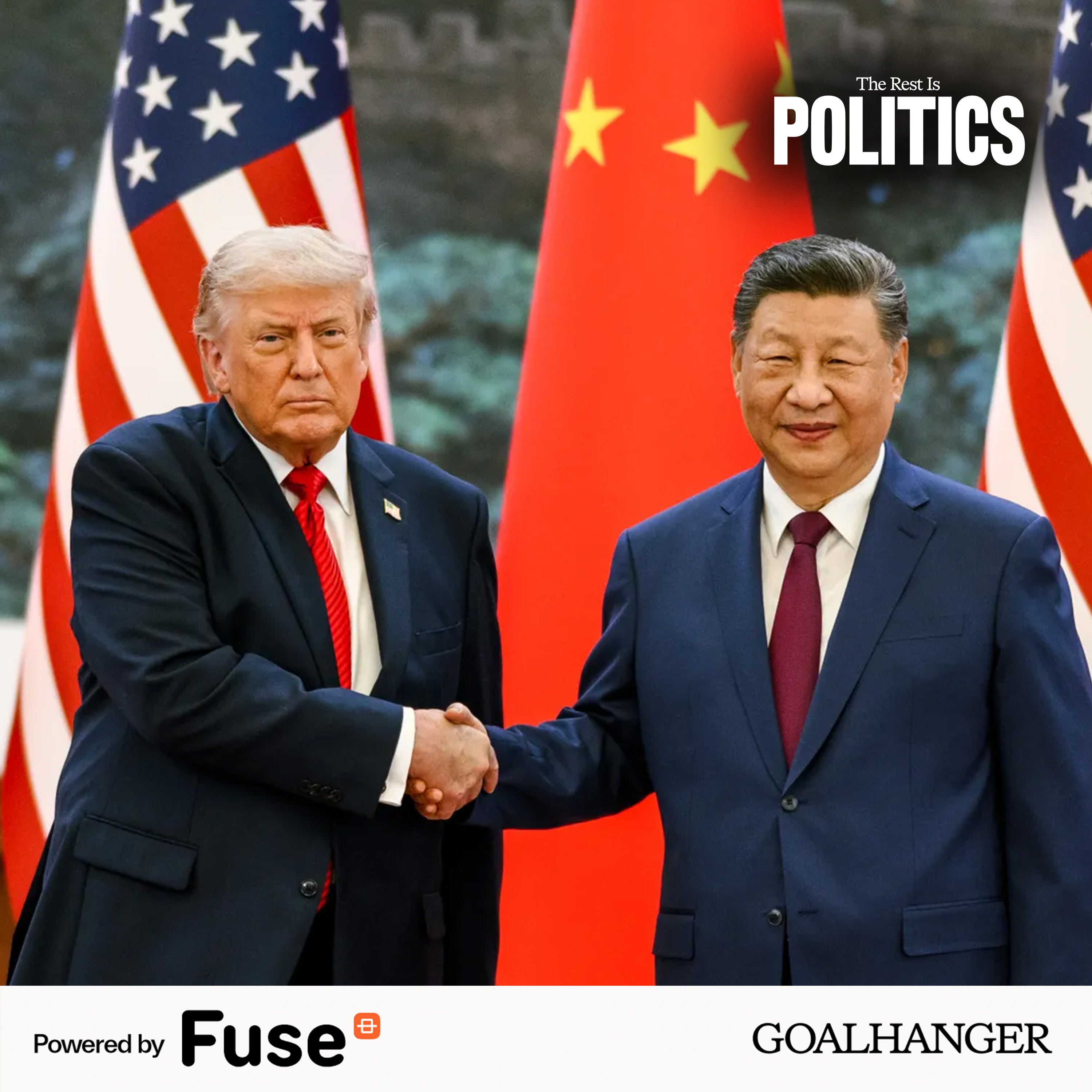
The episode discusses the upcoming Trump-Xi-Putin summit at APEC in Shenzhen and what it signals about US foreign policy, alliances, and the risk to Europe/UK trust in America. It also covers US-China policy shifts (tariffs, chips, rare earths), implications for Ukraine/NATO, and how Europe should respond.
Jake Sullivan is Joe Biden’s National Security Advisor and a senior US foreign-policy figure known for detailed diplomacy with China. Rory Stewart is the host (UK former politician/diplomat).
Trump privileges personalized “leader-to-leader” diplomacy (moving from “G2” to “G3”), devalues democratic solidarity, and treats allies as liabilities. Putin wants a “big boys table” message to Ukraine. US chip-control enforcement is tightening after alleged large-scale smuggling/evasion tied to Jensen Huang and an intermediary (Megaspeed/Alice Wong), potentially breaking a US-China truce. Vance reportedly views Russia less as a core threat than ideological “woke” politics in Europe.
APEC/AIPAC timing; Biden met Xi only 3 times vs Trump’s planned 5 in 14 months; Biden met Putin once (Geneva 2021). Article 5/Baltics concerns; Zelensky-NATO territory claim; US chip remote access via cloud/data centers; rare earth leverage.
0:00Rory Stewart: I have spent so much time worrying about what happened to our relationship with the United States and thinking about how we separate ourselves from the US in the age of Trump. But what I've never had a chance to do is really sit down with a sympathetic American who's been at the heart of US foreign policy and get them to try to reassure me and defend us about what that relationship should be. And Alistair's away. And so my co-presenter this week is Jake Sullivan, Joe Biden's national security advisor, one of the most revered, intelligent, thoughtful communicators for American foreign policy in the world.
0:35Rory Stewart: The question is, will he convince me and you that it's worth sticking with the United States?
0:52Jake Sullivan: Fuse offers some of the lowest tariffs on the market, and that feels even more important given the energy price gap is set to rise by 29 % in January.
1:00Rory Stewart: This is when energy policy stops being an abstract debate and starts showing up on your bills. Yet many of us seem to be a bit too accepting of very expensive energy bills because switching providers can feel like an unnecessary hassle. Fuse wants you to expect more from your energy provider, and it only takes three minutes to switch. And with day and night customer support, you can get your questions answered whenever you need. You don't have to choose between cheap energy and great service. There's an extra incentive for our listeners to switch to the number one energy supplier on Trustpilot at FuseEnergy.com slash politics and use the code politics for a free TripPlus subscription.
1:39Rory Stewart: Visit FuseEnergy.com for full terms and conditions.
1:54Rory Stewart: Welcome to The Rest of This Politics with me, Rory Stewart. And me, Jake Sullivan. And listen, this is a great treat for all listeners. Because we have with us the former National Security Advisor of the United States, Jake Sullivan, somebody who I am an enormous admirer of, standing in for the first time for Alistair, who after four and a half years, I think never missing a show, has decided to take a week off and go to Australia. So this is a very, very distinguished stand-in. This is a little bit like a Burnley football club suddenly getting Messi coming in as a replacement player. Anyway, Jake, thank you and welcome to the show.
2:32Jake Sullivan: Well, I'm definitely no Messi, but I'm a huge fan of your podcast, Rory, and really excited to be here to do this with you.
2:38Rory Stewart: Thank you. So, Jake, so many things to get into, but I think a wonderful way to start the week is to focus on what is about to happen in Shenzhen in China. So Southern China, they're between Guangzhou and Hong Kong. The AIPAC conference, so little explainer for people not paying total attention to this. This is an organization set up in 1989, which brings together all the Asia-Pacific economies. Most importantly, for the sake of our conversation, including the United States, China, and Russia, and the story that in the margins of this conference, there is potentially going to be a meeting between President Trump, Xi Jinping, and President Putin on Thursday, just after this goes out.
3:23Rory Stewart: So let me sort of start with that. And I wanted to start maybe, Jake, with you kind of helping us understand one of the things that seems so difficult to follow, which is the kind of lives of senior US officials. It feels as though what we're about to see is President Trump going through Manila, having meetings with the Quad, then he turns up in this APEC conference. And then coming down the line, at the end of the year, I guess there is COP, there's the G20, there will be things like Davos, there'll be the Munich Security Conference. Before we get into the specifics of this particular one, is there a sort of sense that there are certain times of year where US officials suddenly have a whole calendar full of these international events?
4:08Jake Sullivan: Absolutely. If you look out over the course of a given year, there are these moments where it's kind of the equivalent to the playoffs for leader level diplomacy for big summits. And the fall, November, December is really the time period where Asia comes fully into view because you have this big meeting called the East Asia Summit that's happening in the Philippines. You have AIPAC every year. This year, it's happening in China. And then typically around this time, you also have the G20, which frequently is hosted in Asia, though it can be hosted everywhere around the world. In fact, the UK is the host next year.
4:43Jake Sullivan: So this period is a period of back-to-back-to-back summits over the course of a few weeks. Then, of course, you have September, which is when the UN General Assembly happens. And for American listeners, this is kind of the Super Bowl of leaders all coming to New York for a few days, the third week of September. And what's really interesting about all of this is because of the way these summits have lined up, Donald Trump and Xi Jinping will meet five times in 14 months, starting last year in Busan, Korea, at one of these big Asian summits. And the fifth meeting will be at the G20 in the United States in December.
5:20Jake Sullivan: And so that intense pattern of diplomacy between the leaders of the two biggest superpowers in the world is quite remarkable and very unusual. Yeah.
5:30Rory Stewart: And just to give us a sense of that, Jake, how many times would President Biden have met with Xi Jinping during his four years in office, to put it in comparison?
5:38Jake Sullivan: Well, first, for starters, they did not meet for almost the first two years because of COVID, because Xi Jinping was just really not traveling outside of China. So their very first meeting happened in November of 2022, almost two years into the Biden administration. And they ended up meeting three times, three times in three years. So once a year in Bali, Indonesia, in the United States, and then in Lima, Peru at one of these APEC meetings. By contrast, Trump will now have seen, this is his fourth of five and the fifth is coming just a month from now. And it goes to show you something I think really important, which is both Xi Jinping and Donald Trump really privilege the personalized diplomacy.
6:18Jake Sullivan: They do so for different reasons, But they believe it is essential to have this leader to leader channel really driving the relationship.
6:25Rory Stewart: And the other strange thing we're having here is the potential possibility that President Putin will also be joining the meeting. And put that in context also with where President Biden was with meeting Vladimir Putin. President Biden met President Putin only once.
6:41Jake Sullivan: It was in Geneva in the summer of 2021. And a few months later, the war in Ukraine broke out and they never sat down face to face again. Indeed, after the war began, they never spoke again. And it certainly was not within contemplation that President Biden would do a three way meeting with Vladimir Putin and Xi Jinping. this is um something i think unique to trump that he sees these two men as two big guys just like him that the three of them can sit together as the you know the heavy hitters in the world and can send a message to everyone else frankly they they just don't matter as much the big boys sit down and decide things the small countries just kind of wait and get told what to do i think that's the message Trump is sending here.
7:29Jake Sullivan: I also think Putin is really playing this up. He wants this to feel like that, like Russia has a seat at the big boys table, like this is the 2.0 version of the Yalta conference, where the world's major powers are shaping the future for everyone else. And he especially wants Ukraine to read it that way. They are really playing up this meeting as the US, Russia, and China being the countries that will dictate and determine the future, and everyone else will essentially be takers of that future. So just to step back from that, then, we're in a very odd situation going into this
8:08Rory Stewart: summit, because it feels as though Putin's got a huge amount to gain, as you suggest, definitely the smallest economy there, in many ways, the weakest player around the table. as we keep pointing out the british economy is larger than the russian economy right you know present president obama famously in uh sort of i think 2014 in an atlantic interview laid out a case for russia really being on a declining path economically demographically so pretty astonishing that 12 years later russia is able to kind of put itself back into the position that tucker Carlson believes it should occupy in the world as a kind of big, major, significant power.
8:49Rory Stewart: For China, maybe more risk, because brokering this kind of thing might put China into a slightly more uncomfortable position, give it more responsibility than Xi Jinping necessarily wants to have. And for the US, it seems the most risk of all. I mean, a real risk of actually diminishing the US position and the alliances it's created. I mean, I suppose I'm struggling to articulate this, but my sense would be that the normal approach of a US president almost since the Second World War would be to try to present the US as leading a coalition of democracies, or at least kind of Western allies, and that that was the major structure it was proposing, and that China and Russia wouldn't be part of a kind of governing G2 or G3.
9:37Rory Stewart: In fact, the G7 was set up explicitly to exclude them.
9:41Jake Sullivan: You have it exactly right. You know, it's interesting you mentioned the g2 and the g3 when president trump flew to china last year he put out on truth social a statement that basically said welcome to the g2 he was saying the quiet part out loud which is his view basically that the big powerful countries of the world be they democracies autocracies or communists are the only ones that count and they're going to run the show. And now he's gone from G2 to G3. And in a way, this is for him, the logical endpoint of a philosophy about international affairs that completely devalues the idea of democratic solidarity, that rejects the idea that allies are assets and sees them instead as liabilities, and that personalizes things so that to him, the most important players in the world are the kinds of leaders he admires big strong men who frankly he wants to be like and that he wants those guys to like him and that's putin and chi and he's been fascinated with the two of them for a long time i think he in a way envies their capacity to dominate uh their political systems and this meeting in a way is the summation of many years of trump going down these various strands and the result for the rest of the world and in particular for america's democratic allies is to see the united states turn away from an approach and a strategy rooted in solidarity with those countries and rooted in the positive sum notion that working together with fellow democracies, we can help meet common challenges more effectively.
11:27Jake Sullivan: So it's very troubling. Even if the substance isn't there, the symbolism here is overwhelmingly powerful. And Putin just simply loves that. Just one more point. I know I'm going on for a while, but you're so right about Xi Jinping. The Chinese actually tried to have this meeting not happen. They kind of got jammed into it. Then when it was going to happen, they just wanted statements. They wanted the three leaders each to read a statement and have no interchange, no actual real meeting. They've kind of gotten jammed now into an actual meeting, but they are going to be deeply uncomfortable throughout this because this does not fit their narrative of a country that believes in multi-alignment, the United Nations, everyone around the table.
12:09Jake Sullivan: So they are going to be very cautious about how this is projected to the world and do their best to downplay it, even as both Trump and Putin, I think, are going to do their best to play it up.
12:21Rory Stewart: It's very weird that, isn't it? That paradoxically, China has often made statements or intellectuals around the Communist Party saying they don't really want a G2 structure, that what they would rather have is a kind of international order. And they keep talking about global governance and global security and global development and global civilization with the brackets at the back of it, which is they would like it run on Chinese rules, Chinese standards with very significant Chinese influence. But am I right that they seem to prefer an idea that there is some sort of international order which China can shape as opposed to an idea that there are two hegemons who are running the world between them?
13:02Jake Sullivan: I think they kind of want to run split screens on this. On the one hand, you're absolutely right. Xi Jinping has spent the last 10 years enunciating these various elements of global governance that are universal. He has emphasized the United Nations as the critical body, in part to make a big play for the global South, to say, we China would like a forum where everybody can sit together as equals, and that that is central to their kind of philosophy for how to undermine the US-led international order. But I say split screen because they have another audience in mind, And that is America's allies.
13:41Jake Sullivan: And to them, having this G2 concept or having an American president talk about a G2 is quite advantageous because it sends a message to American allies in East Asia and Europe and elsewhere. You guys don't matter as much. The US and China are going to kind of figure things out. So, you know, just sit down and wait. And I think China likes that, too. Now, when you turn it from the G2 to the G3, it becomes much more awkward and complicated for them. So I think Xi would be perfectly happy to have this combination of out of one side of the Chinese system, a message, we want universalism. And the other side, we're happy to engage in the G2.
14:26Jake Sullivan: But the Russia component, I think, really makes things complicated.
14:30Rory Stewart: 10 ,000 directions to go. But one thing I really wanted to make sure that we got to is your personal experience of negotiating with the Chinese. I mean, unlike almost anyone else in the world, you spend a huge amount of time sitting with Wang Yi, that foreign policy lead, carefully negotiating. And it would be lovely to get a sense of what that's like and how is it very different culturally to, I don't know, negotiating with the European Union or Britain or even Russia? I mean, is it staffed in a different way? Are the meetings more formal? What we kept getting whenever you were going to those meetings is sort of breathless reports of you spending hours where I kind of imagined drinking cups of rather kind of weak Chinese tea, but maybe that wasn't what was happening.
15:14Rory Stewart: Tell us what it's like in these rooms.
15:16Jake Sullivan: Actually, Rory, after a couple of these meetings, Wang Yi brought Mao Tai, this this chinese rice liquor we didn't drink it during the meetings but uh at the end of the session we would we would have a drink and it was my introduction to mao tai which i can't say i love uh but wang yi was very was very proud of it so uh as you said wang yi was the politburo official responsible for foreign affairs in the chinese system xi jinping valued values him a lot he's still there he also occupies the role of foreign minister so in a way he's kind of like china's Marco Rubio, straddling both the equivalent of national security advisor and secretary of state.
15:55Jake Sullivan: He and I met multiple times in third countries around the world, in Europe, in Southeast Asia, as well as meeting in both Washington and Beijing. And we would typically meet over two days with a dinner on the night in between the two days of sessions. And we would go deep on strategic issues, including especially technology issues and how the United States and China were approaching the technology competition, cross-strait relations, and how to maintain peace and stability across the Taiwan Strait, China's support for Russia's war in Ukraine, and what limits China would impose upon that, including not sending directly weapons to Russia for its war machine.
16:39Jake Sullivan: So we would go through these things in great detail. And in the first set of sessions, it'd be pretty formal, both sides kind of exchanging their points. But as we got more comfortable with one another, and as we got deeper into this dialogue, it became much more open conversation. Each of us really trying to explain why our countries were doing what they were doing, what we were choosing not to do, how we were restraining ourselves, what our concerns were with the other side, and then how we could find common ground, or at least if not common ground, a set of understandings that would keep the relationship from going off the rails.
17:17Jake Sullivan: And I will tell you, you know, the diplomacy doesn't result in these big grand agreements or pronouncements. But I think what it did effectively do is create a floor of stability and predictability in the relationship that allowed us to compete vigorously on the one hand, but not get into danger of that competition tipping over into conflict. And I regard that as how you successfully steward a deeply competitive, structurally competitive relationship between two great powers.
17:48Rory Stewart: Okay. So now let's get into the question of the policy. So one of the things that I think has surprised the world a lot looking at US-China policy is we had a feeling that the US was encouraging us all to engage very strongly with China through the 90s and 2000s, joining the World Trade Organization, all this kind of stuff. And my experience as boards were all saying, why aren't you doing more in China? And then suddenly, two, three years later, they were saying, why are you doing so much in China? Why are you in China? Yeah, yeah, we've got to de-risk, de-leverage. And sometimes, rather interestingly, it was some of the same China analysts would sort of flip from a position of strong engagement, that being kind of conventional wisdom, to the conventional wisdom being much more hawkish towards China.
18:32Rory Stewart: So much so that by the time we got to President Biden's election, or indeed President Trump's in 2024, you got a very strong sense of a bipartisan consensus around China. People would sort of sonorously, particularly in Europe, they would say, well, the one thing these guys, you know, they're very polarized in the United States, they all disagree about abortion or guns or this, that and the other. But the one thing they all agree on is China. Right. And there was a sense of these kind of congressional committees against the Chinese Communist Party and people in your administration. You were close with people like Campbell, and you've got these extraordinary books coming out, laying out China's grand strategic position.
19:14Rory Stewart: And weirdly, it was quite difficult to put a cigarette paper between the people in your, or it seemed from outside anyway, people in your administration producing quite a hawkish view of China and driving us towards more de -risking, more de-leveraging, and figures coming into the Trump administration like Elbridge Colby. I mean, there might be subtle differences, which you can explain to us about exactly how Albridge Colby viewed China and what we should do on Taiwan compared to Kirk Campbell. But broadly speaking, the story seemed to be from Obama through to about the middle of Trump too, that the US was tilting towards Asia Pacific, this was becoming the great geostrategic competitor, and you were working out different ways of saying, we want to slow them down, preserve our own security, preserve our own influence in the world.
20:13Rory Stewart: And then suddenly, Trump appears to have broken with the consensus and become more dovish again. Is that unfair?
20:21Jake Sullivan: Or is that a - It's not unfair. I think that you've summed it up well, both in terms of the trajectory and in terms of where Trump is, who came in in his second term and essentially has gone dovish on China.
20:35Rory Stewart: He is a sort of political entrepreneur. Has he kind of sensed something amongst his business buddies or amongst the American public? I mean, there are polls come out suggesting the American public is less hostile towards China than they would have been. Is it possible that he's also found allies on the left of the Democratic Party or even governors of California who may be less hawkish on China? I mean, is something happening?
21:04Jake Sullivan: There definitely is a renewed debate inside the Democratic Party. But I don't think what's driving Trump on China is his changed perception of the politics in the United States. I think it's rather he has always viewed China basically as an economic challenge and has always viewed successful China strategy is, let me do a deal with Xi Jinping on economics. And if you start talking to me about strategic competition or geopolitics, I'm going to tell you to get out of the room because I don't know what you're talking about. So he's kind of always thought that even going back to the first term. And of course, what did he seek over the course of the first term?
21:44Jake Sullivan: A trade deal, which he achieved. And then of course, COVID kind of disrupted everything. but fundamentally he was driving at a trade agreement with Xi and a belief that between he and Xi, these two great men, they could kind of work things out. So I think he came into this term and thought again, I'm going to put the hammer down, impose 145 % tariffs on China, and then China's going to come to the table and cut a deal with me. And then Xi and I can work everything else out. He does that in the early months of the administration. Xi fires back with the bazooka of rare earth export controls. Trump ultimately has to back down.
22:24Jake Sullivan: And then he kind of recognizes, all right, you know, I took my shot. I used my leverage. China's got a lot of leverage, too. They reached this trade truce at Busan. And basically, from that point forward, Trump's view of the situation is this is a personal relationship between me and a leader I admire deeply, between one big country and another. And he and I can just kind of work things out. So I don't believe that that's a recalculation of Trump's politics. I think it's just the kind of logical follow through of his conception of what China is and what his personal relationship with Xi Jinping is.
23:00Rory Stewart: Jake, one of the most extraordinary things that's just happened in the lead up to this conversation is the disappearance of somebody we both know, Jensen Huang, who last time I was sitting down with him four weeks ago was in full ebullient form in his leather jacket holding forth on the world and has now just lost his position in NVIDIA and maybe trying to get back in. And this then ties in massively to your whole conversation around President Trump, China, the Democratic Party, chips, sanctions, access. I mean, it's a sort of it's a parable about men. It's a parable about power. It's a parable about tech.
23:38Rory Stewart: But it's also got a lot to do with China. So any thoughts on whether this is shifting things in terms of the way that politics operates in the States in relation to China?
23:47Jake Sullivan: Well, first, I think that the Jensen Wang saga is going to cast a very long shadow over the meeting between President Trump and President Xi. There's, of course, this lurid story of spycraft at the heart of it. It's hard to know exactly what Alice Wong's relationship was with Chinese intelligence. but US intel agencies think she was recruited by the MSS, which is China's combination of the CIA and FBI or MI6 and MI5, basically to collect intelligence and to secure advanced chips. Whatever the story is on the spying part, this is definitely a story of industrial scale evasion of US chip controls.
24:25Jake Sullivan: Hundreds of thousands of chips for Chinese entities that legally should not have had access to them were arranged through Alice Wong's company, Megaspeed. And what it's caused is a kind of dramatic move in the United States just in the last few days, where after a year and a half of imposing really no new controls on chips, the US has now put out a rule to crack down on smuggling and evasion from Southeast Asia and elsewhere and to stop Chinese technology companies from accessing US chips remotely through the cloud from data centers outside China. That is all a direct result of the Jensen revelations.
25:05Jake Sullivan: And here's where things get interesting. There has been a truce in place for more than a year between the US and China, where Trump reduced the tariffs, China pulled back on their rare earth export controls. And implicitly, the US kind of indicated it wasn't going to do any new controls on chips. And now they have. So how does China respond to that? I think this is going to be kind of the big question out of the summit is does China push back on these new US chip rules in a way that actually creates more instability or fragility in the relationship? Or do they kind of grin and bear it? I think this week will tell us a lot about the answer to that question.
25:45Rory Stewart: And what's your instinct on that? I mean, I guess they could, again, use the leverage around critical minerals and rare earths, which we see the Trump administration already grumbling about?
25:53Jake Sullivan: Yeah, I think they're going to have to. I don't think they can entirely take this lying down. A huge portion of the compute that Chinese AI companies are accessing is either smuggled or remotely accessed. So if this new rule is actually enforced well, it will have a big impact on China's AI ecosystem. And I think they can't just accept that and move on. So I would expect you will get a response from them. And that response probably will come in the critical minerals area and rare earths or something related. And that's going to put us onto a different path than a path of, well, we'll just keep extending the truce indefinitely and keep everything nice, calm, and stable.
26:34Jake Sullivan: I'm not sure that it means things will kind of entirely go off the rails. They may find a way through this, but I think it definitely is a hugely complicating thing for the relationship between the US and China emanating out of essentially this kind of wild story about this major American CEO, his relationship with this individual connected to Chinese intelligence and his relationship to the White House over the last two years.
27:00Rory Stewart: I think the way that it plays in Europe is very interesting because this plays into defense spending, Russia, and everything we were doing. So when President Trump came in, we were all going around saying, and you will have heard it, our bad, we screwed up. President Biden was saying this, President Trump saying this, we're not spending enough on defense, we need to carry more of the burden. And the narrative we were given was, seemed to be anyway, that the US administration still sees Russia as an enemy, is still very angry about what happened in Ukraine and still absolutely believes in defense Ukraine.
27:39Rory Stewart: Unfortunately, it can't pay for that bit anymore, because it needs to focus on China. I've got the same question around J.D. Vance, the vice president. It's not clear to me whether he thinks that Putin is a real threat, whether he thinks that if Putin gets Ukraine, that is a problem for the world, whether he thinks that will encourage him to have a go at Baltic and whether he thinks that if Putin had got Baltic, that's a problem. Pete Hexeth, his defense secretary, when directly asked whether he would honor Article 5 guarantees around the Baltic, evaded the question. I mean, it seemed a pretty sort of simple question, right?
28:22Rory Stewart: Certainly, if you were Estonian or Polish or anybody on those borders with Russia, you are really thrown off balance about what the hell is going on here. And we don't know what's involved in trying to keep America involved. I thought one of the really revealing moments was when Peter Mandelson, who was our ambassador from Washington, said in an interview with the Times that he thought we should give Greenland to the United States because we needed to give Greenland to the United States in order to keep the US engaged in Ukraine. And I thought that was very revealing because it suggested that he couldn't have believed that the US administration actually cared about Russia or Ukraine if it was necessary to give them Greenland.
29:04Rory Stewart: to keep them engaged. It could only have been they had a completely different strategic understanding.
29:10Jake Sullivan: Well, Rory, if you recall that totally shameful scene in the Oval Office when President Zelensky came in early in Trump's second term and the American president dressed him down, basically saying, you hold no cards, you're the obstacle to peace, get with the program. The guy who initiated that whole exchange was J.D. Vance. It was J.D. sitting there next to the president who basically goaded the president into making those statements. And I think it's because at the end of the day, Vance does not perceive Russia as or Putin's Russia certainly as some major threat to the United States. I think he views the entire theater of Europe and Russia through the lens of an extension of domestic politics and ideological debates.
30:01Jake Sullivan: And if you remember his speech at Munich, fundamentally what he was saying was the real threat is the threat to Western civilization. And that threat emanates not from Russia, if anything, from Vance's perspective, Putin is a champion and upholder of Western civilization. It emanates from basically woke politics in Europe. And Vance went on to say, and then the national security strategy of the United States actually officially said, we want these patriotic parties, i.e. right-wing parties to do well, because that is in America's interest. So they're effectively equating views on things like immigration or climate or identity as being more central to the conception of America's interests and America's national security than Putin's territorial ambitions, either in Ukraine or in NATO, which I just don't think they place on nearly the same plane in terms of their ranking of risks and threats in the world.
31:02Jake Sullivan: It's a pretty astonishing thing.
31:04Rory Stewart: Final staggering thing, which may happen when this Trump see and Putin meeting happens, if it happens, is this claim by Zelensky that President Trump has told him that he can join NATO provided he cedes territory in eastern Ukraine, which, I mean, again, couldn't be less your policy when you were the National Security Advisor. You were cautious about Ukraine joining NATO, and you certainly were not in favor of them ceding territory in eastern Ukraine. What do you make of this? I mean, is it plausible? Would it happen? Would it be a good thing? I mean, what's your take on this? Well, can I ask you, Rory?
31:38Jake Sullivan: I'll give you my answer, But I've been very curious. Do you think this would, would you advise Zelensky to take that deal if it actually were on the table? I have my doubts that Russia would tolerate that.
31:49Rory Stewart: Well, it seems extraordinary that Russia would tolerate that. I mean, given that Russia's whole shtick is we don't want NATO coming anywhere close to our borders and that so many of the counter demands seem to be no exercises near our borders. Right, pushing NATO back. So I find it very difficult to believe. I do think, though, that most of us in Europe are more willing to take risk on these things than perhaps you were and perhaps the US has been. And there is a question of how the US deals with that, given that we're now paying for so much of this. I mean, I think one of the problems that I've observed is that Trump has essentially stopped paying, but he's still continuing to behave as though he's paying for everything.
32:33Rory Stewart: So, the negotiations between over Ukraine have been very US-Russia while saying Europe's got to pay all the money, Europe's got to step up and do all this stuff. It's only very recently that there's been an attempt to get Europe in the room.
32:45Jake Sullivan: Just to clarify our position on the NATO question, it's true. President Biden was very cautious about bringing Ukraine into NATO while the war was going on because it would bring us then into direct conflict with Russia. But he enunciated a position at the G7 in Italy in 2024, which was basically Ukraine will and should come into NATO at some point. We need a bridge between now and then, which were these bilateral security guarantees that we did and the UK did and others did, but that ultimately, for the long-term security of Ukraine and Europe, Ukraine should join NATO. And that was the position that we enunciated in 24.
33:26Rory Stewart: We'd like to add to that also a European Union piece. I mean, one of the real potentials now is to think about European architecture. Might not be full membership, could be single market membership, but is there a play where the UK, Norway, Ukraine, who knows, Western Balkans, Turkey, become part of a formal outer ring of Europe? And in the case of Ukraine, maybe Moldova and others as part of a rapid path in. I mean, yeah. Maybe Canada too. And Canada too. Canada too. That's what we want. Canada too, Jake. You got it. Something else that is interesting there coming out of the national security strategy.
34:07Rory Stewart: I was talking to a senior American military figure about this odd idea that the administration seems to be saying they both want far-right populist parties to take over in places like Germany, and they also want them to rearm heavily. And I was saying, you know, what could possibly go wrong? And the answer was, oh, you don't understand that for people like Stephen Miller, they think peace is an illusion. It's a kind of unnatural state of affairs that actually heavily armed nationalist governments is the natural order of the world, that it sort of feeds into the kind of fantasy novels they read as children, that they think real men, real nations are at a state of perpetual kind of suspended war or conflict.
34:53Rory Stewart: And that the whole European experience after 1945 was the sort of illusion where we were sort of kidding ourselves that we could have peace dividends, be at peace, and that's just not the real world. So, this military figure was suggesting that in a sense, the national security strategy is logical. It's trying to bring into being this particular vision of the world, a vision of a much more violent militarized world.
35:19Jake Sullivan: That's interesting. I hadn't heard that before. It's a little inconsistent with another through line of Trump, which is that I think he generally prefers there not to be wars going on, even though he's a guy who just started one. I think he thought this Iran adventure or excursion or whatever word he uses to define it, he goes out of his way not to call it a war, would last a few weeks and then he'd be done. So it's not clear to me that he's looking for a state of upheaval and conflict in the world. I think to a larger extent, there's a little bit of an incoherence where on the one hand, he doesn't want the United States to pay for anyone else's security.
36:05Jake Sullivan: And that means asking other countries to rearm. And on the other hand, kind of wanting everybody to just get along, which I think is also kind of part of his theory. And, you know, coming back to the conversation we were having about China, I think the reason he's a dove on China is that from his perspective, you know, why should we fight China? What should we go to war over? We got some economic problems we can work out. But otherwise, as far as he's concerned, Taiwan is this little island very far away. What's that really got to do with us? I had to be able to work things out with Xi Jinping is what's in his mind.
36:42Jake Sullivan: So I'm not sure that he has this view of a Hobbesian kind of dog-eat-dog world. I think he actually, in a way, has almost a more quiescent view that if the big powers just sit down and talk to one another, there can be basically peace. Things can get worked out. Stephen Miller may be a different story on that.
37:05Rory Stewart: Part of President Trump's worldview seems to be a worldview of spheres of influence. So the United States basically gets to tell Canada and Latin America what to do. And Russia basically gets to have Ukraine because it sort of naturally belongs to Ukraine. The logical extension of that would seem to be that China kind of gets to do what it wants on Taiwan. And he has come out and said, this is many thousands of miles away from the United States, and it's only whatever, 70 miles away from China. How is his position on Russia, Ukraine, not logically implying that somehow he doesn't have a really big problem with China taking Taiwan?
37:47Rory Stewart: I think, as you mentioned, he has sent those signals, right?
37:50Jake Sullivan: Now, it's mixed signals because you have Trump the individual and then you have Trump the leader of a presidential administration that still is deploying forces in the Pacific and still is continuing to invest in deterrence, although they have held up this arm sale, this$14 billion arm sale to Taiwan. So it's a little unclear to me what message Trump is sending to Xi Jinping behind closed doors, But the totality of his statements and actions and the logical conclusion of those statements and actions, if you're sitting in Beijing, is we have an American president right now who is not invested in the defense of Taiwan or in deterrence of China.
38:31Jake Sullivan: And that has to make China recalculate exactly what the risk is of taking some action against Taiwan. Now, I happen to believe that Xi Jinping right now thinks his current strategy is working, that he doesn't have to resort to military action because he thinks a campaign of pressure across many fronts will eventually inevitably bring Taiwan into Beijing's orbit. But I think he definitely believes the strategic situation, should he need to resort to military force, has improved because the American president has reduced the overall level of his personal commitment to defending Taiwan.
39:08Rory Stewart: And you don't think he would think that he has a window of opportunity in the last two years of the Trump administration that if you were Xi Jinping and you actually thought your legacy was reincorporating Taiwan and maybe you even think that the economic problems in China are not necessarily a reason only to focus domestically. Maybe it's a reason to distract your population with a nationalistic adventure that makes them not focus too much on what's happening in the property market or what's happening in employment. You might think this is a closing two-year window where you have a better chance of pulling off some form of annexation of Taiwan than you might do if you wait till after the next presidential election.
39:48Jake Sullivan: Well, I do believe 2028 is a big year, Because at the beginning of 2028, you have the Taiwan elections. And if the KMT, the opposition party, which is more friendly to Beijing, wins that election, I think it will be confirmation to Xi that he should keep going down this current track of pressure and coercion, as opposed to a bolt out of the blue to go try to seize the island. If, however, the ruling party, which Xi Jinping views as basically inveterate, unreconstructed separatists, wins a fourth term, he may think, look, we're never going to change the politics on Taiwan. I got to act. and then from that until november when the american presidential elections happen and january when a new president comes into office could be a window and and i think that will be a period of heightened risk i happen to think though that xi jinping is not in a rush on this even though he may see a window with president trump in part because he has invested heavily in, as I mentioned, political, economic, propaganda, cyber, and other tools to try to essentially squeeze and envelop Taiwan and pull it into closer and closer to Beijing.
41:11Jake Sullivan: And he thinks there's something inevitable about that, and he thinks he has time. But secondly, the other aspect is one thing that Xi Jinping knows about Donald Trump is he's very unpredictable. So even if he believes Trump wouldn't do much to defend Taiwan, he can't know for certain that him beginning initiating a military action against Taiwan wouldn't lead President Trump to decide he'd been shown up, that he'd been embarrassed somehow, and that he reacts to that in a very hawkish way. I think Xi is probably calculating that to a certain extent. And then the final point is just the state of the People's Liberation Army.
41:50Jake Sullivan: When I went to Beijing in August of 2024, I had the opportunity to meet for the first time in many years for a senior American official, the top uniformed military official in China, Zhang Yuxia. Since that time, Xi Jinping has purged him and he has purged basically every top military official in China and even people down through the ranks. He has evinced a lack of satisfaction with the capacity of the People's Liberation Army to do what he needs them to do, I think including with respect to Taiwan. And so it may be a readiness issue that he needs more time to build the military in the image of what he wants it to be, and that that also pushes this timeline to the right.
42:35Jake Sullivan: But I will not sleep soundly in 2028, because I do think, even though I don't think it's likely, I think it is a period of heightened risk.
42:42Rory Stewart: So just before we go to the break, Jake, and with apologies, a traditional plug from me. First is, listeners, if you've not heard our new miniseries on existential risk, this week, I've got an interview with somebody who I admire greatly, and I think Jake admires too, who's Anand Gopal, who is this extraordinary journalist who wrote probably the best book on Afghanistan in the last 20 years, and then wrote an extraordinary book about Syria, where he was based in Membitch up on the Syria-Iraq border about the experience of living through ISIS. Sounds quite grim, but actually it's intriguing. It's about human personalities, it's about states, it's about terrorism, it's about evil, it's about courage, and it's about ordinary people, people living through incredible disruption.
43:27Rory Stewart: So please do take the time. And if you want to find that, just go to therestorspolitics.com and become a member. Also, little plug for Empire, our sister series, Anita Anand, Willie Darren Paul, and me sit down to discuss the legacy of Lawrence of Arabia. If you wanted to go to Empire Podcasts, where Willie seems to slightly disturbingly, from my point of view, be trying to blame Lawrence of Arabia for what's happening in Gaza today. And I try to make the opposite case. Anyway, a bit of history, a bit of politics, and a bit of one of my heroes. And let's go to the break. And after the break, Jake, I'm going to come back and we're going to get into some agreeable disagreement because I'm going to really, I mean, it's been wonderful listening to you.
44:13Rory Stewart: And I can't imagine anyone better at explaining China and the US and President Trump. But I now want to push you on the question of what we do about it, particularly what we in the UK and Europe do about it, how on earth we work with the United States in the future, whether we should all be going with Carney's middle power strategy, or whether we should be rebuilding a special relationship and what it might look or feel like. So look forward to talking to you again after the break.
44:37Jake Sullivan: This episode is brought to you by Barclays Premier.
44:40Rory Stewart: Now, you might look at your pension as some sort of end goal, but there could be a lot of future left to plan for. A lot could change from personal circumstances to new rules around how you save or how you invest and pass on your wealth. So we're aware of things like policy changes well in advance, but you cannot predict everything. And that's where planning and advice exclusively for Barclays Premier customers comes in. A dedicated wealth planner builds you a personalised plan around your goals, while your wealth manager helps it evolve as life and the world change. They're here to help you navigate your next steps because it pays to be a step ahead.
45:14Rory Stewart: Search Barclays Planning and Advice today to learn more.
45:44Rory Stewart: The great game. Strategic struggle between Britain and Russia. We assess, uh, Prime Minister.
45:55Jake Sullivan: With high confidence, it was Russian. Holding the Russians accountable is World War III.
46:01Rory Stewart: They took down a British passenger jet containing 350 people. The man in the Kremlin is playing, Alex. You've got to ask yourself, do you want to play or not?
46:09Jake Sullivan: You're the Prime Minister. You've done nothing! We would need to understand the policy context.
46:19Rory Stewart: All the relevant context will be structured as a framework today. And disseminated into an operation order, or Frago. A Frago that says to kill the President of Russia.
46:32Jake Sullivan: Yes.
46:34Rory Stewart: New from Goalhanger. Who is going to be able to pull this off?
46:38Jake Sullivan: You're my soldier, are you? Sergeant Tom McDuff! Duffy!
46:43Rory Stewart: An audio drama journey like no other. Men like Duffy, they are our most valuable weapons.
46:48Jake Sullivan: Devised as a technically rigorous geopolitical action thriller. Where Britain plays its strongest hand against its strongest foe. Don't do it, Duffy!
47:01Rory Stewart: Bear Hunt. Available now, wherever you get your podcasts.
47:19Rory Stewart: Welcome back to The Restless Politics with me, Rory Stewart. And me, Jake Sullivan. So, Jake, as promised, here's me going to go more controversial. I think that the US may be underestimating just how much is broken. I was just rereading a foreign affairs article that you wrote, where you say, this is May, June, 2026, Chinese leaders are seeking to make the rest of the world depend on China while making China independent from everyone else. And of course, most of us in Europe now reading that think US leaders are seeking to make the rest of the world dependent on the US while making the US independent from everyone else, right?
48:04Rory Stewart: And then you go on to say, if the global digital economy ran on a US tech stack, cloud chip safety tech standards, democratic values would be baked in. Well, like hell they would be. So, why the hell, I suppose, I'm going to develop this for a bit. I think there's a problem. Look, I am a huge, and I maybe don't say this enough, I'm a huge admirer of the United States. I'm married to an American. I have two American children. Throughout my professional career, I've been so moved and impressed by the professionalism and the knowledge and the intelligence experience of Americans. And I felt in Afghanistan and Iraq and Washington, just how good the US was.
48:42Rory Stewart: And I also feel that what the US created after 1945 was pretty close to a miracle. And the US was remarkably, particularly with its European and Western allies, remarkably generous and remarkably restrained in the way it created this order. But once we've been through two experiences of President Trump, It's very, very difficult for anyone, certainly in Europe, to feel that it's sensible to allow that order to continue, to allow an order in which we are entirely, as you say, baked into a US tech stack, or that it's tolerable to accept a world in which the US wants to make everybody dependent on the US and the US to be independent of everybody else.
49:22Rory Stewart: The problem, of course, that we face is that we have ceded so much to the US because you have been running somewhere between a very, very charming relationship and a long con on us, where you've been so stable and predictable since 1945. successive governments around the world have thought it sensible, with the prospect of the French who kept grumbling about it, to allow the US to take this unbelievable position. I mean, NATO is essentially just a kind of American setup. It's amazing. You watch the Supreme Allied Commander giving instructions. The operations in Afghanistan, very, very American top heavy.
50:02Rory Stewart: We depend on the US for our satellites, for our strategic airlift, for our nuclear. And now we're building our entire economies of national security on the top of US AI foundation models. And we should have seen the signs before Trump. The first signs were when you began imposing secondary sanctions and weaponizing your financial system to compel Europeans and others to follow American sanctions policies in relation to third countries. And that all sounded fine after 9-11, because we've sort of thought, well, maybe, you know, this is the global war on terror, you know, we need solidarity, we're going to go along with it.
50:38Rory Stewart: Even if we don't really agree, we're going to be kind of compelled into this. But by the time Trump is putting pressure on Google and Microsoft to disable the accounts of British and Canadian judges on the International Criminal Court, by the time the latest anthropic models are being withheld from us, because they're only going to be used by US national security. When he's talking openly about taking Greenland, when he is joking about turning off software on F-35s, it would be insane for us to accept that model. And I think what's so interesting, and this is my challenge to you, you are the most kind of fluent, intelligent, charming, appealing example of the American foreign policy establishment.
51:23Rory Stewart: And yet, even you wrote an article which still, I don't think, fully takes on board that we don't share your assumption that it's obvious that China dominating the world is a bad thing and that the US dominating the world is a good thing.
51:39Jake Sullivan: Well, let me start by saying that you have one of my assumptions right. China dominating the world is a bad thing. I think you're overcharacterizing the other assumption that the US dominating the world is a good thing. I'm not asserting that the US should dominate the world. In fact, I have said many times that we've reached the end of the post-Cold War era, and a new era is coming into view. The final shape of that era is highly contested. It's fluid, it's unwritten, and it will certainly look different than what came before. And it will not be a story of just unbounded American hegemony. And that's no bad thing.
52:19Jake Sullivan: I still believe the United States has a central role to play, first and foremost, to advance the interests of our own people, but also to advance the common interests of fellow democracies, of our allies, and to try to solve global problems that afflict every person in the world. So I start there. The second kind of set of assumptions I have is that it absolutely makes sense for every nation, including our closest allies, including the United Kingdom, including Mark Carney's Canada, including Japan, Korea, you name it, to think in terms of reducing their dependencies, diversifying their partnerships, increasing their resilience.
52:58Jake Sullivan: That is sound strategy. But where I would inject caution is on two things. One, that there's been some kind of truly permanent rupture, to borrow a Carney term, in the essential partnerships of democracies, the US, its European allies, the US and the UK, the US and Canada, etc. And two, that you should equate the United States and China over the long term. I don't think that's right to do. Now, on the question of the rupture in the essential partnership, Trump getting reelected, I fully acknowledge, sent a clear message around the world. This was not just an aberration, not just a one off. Something deeper is going on here.
53:38Jake Sullivan: Now, I think there's kind of a spectrum of interpretation for Trumpism. At one end of the spectrum is this is really all about Trump. He's a singular figure with kind of bizarre views on a bunch of foreign policy issues that are particularly harmful to allies. and really any future US president, including a Republican president, won't be quite as extreme as him. At the other end is he's merely a symptom of something deeper going on in the US, and we're going to be living with this. The world's going to be living with this indefinitely. And the truth really is somewhere in between. And most Americans believe deeply in NATO, believe deeply in standing up to Russia and supporting Ukraine, believe deeply in a basically positive some view that That we should have friends and work with them and make some compromises and concessions to them for that purpose.
54:27Jake Sullivan: And I think that will win out over the end. And then when it comes to China, I do think that it is deeply structural that China's solution to their weakening economy at home is to export their way out of it, to flood the world with manufactured goods. And unchecked, this is going to cause the hollowing out of industrial bases everywhere else. something Europe is actually waking up to, France and Germany and others are waking up to. And you don't have to think there's anything nefarious in Beijing's approach to be deeply concerned. It's just deeply structural. And for me, the right vision for the United States is not to make everyone else dependent on us and us dependent on no one.
55:09Jake Sullivan: Heck no. It's to have a vibrant ecosystem, technology, industrial ecosystem with allies and partners at scale.
55:18Rory Stewart: So, Jake, I mean, obviously, I'm not trying to make this into an argument. I'm just trying to think of what the solutions are that we could come up with for this. I mean, one radical solution would be for the US to actually cede power or control. I mean, the most powerful way of countering the Chinese narrative isn't, I'm afraid, your May-June proposal, which is a global digital economy running entirely on a US tech stack from one end to the other. It would be saying the alternative to a Chinese dominated policy is a very, very open tech stack. Yes, shaped by the United States, but where the United States is prepared to cede to partners, genuine control over bits of this technology.
56:02Rory Stewart: For example, if you said to Europeans, we absolutely guarantee that if you buy anthropic and open AI products and you have the data centers and the weights and the parameters, and that's a big if, right, you're going to build the data centers and have the chips, we can't switch them off. There will be no presidential power to switch them off. There'll be no influence to switch them off. In fact, we will encourage these companies to set up fully autonomous European headquarters controlled by European law so that you have full control over these things. This is not a weaponized interdependence. In a sense, I think that's the, I don't know, I'm seeking the metaphor.
56:40Rory Stewart: I don't think we want to say it's mutual hostages, but maybe it's that we each have one key, that if you really trusted your allies, you would be saying, the proof that you can trust is the proof that this is not a conspiracy to screw you over, that we're not building a company town, which we're going to ask you to live in and then start charging you exorbitant rent and stealing bits of your territory in order to, for the privilege remaining in it, is if you started actually ceding control. And that would be much, much bolder than just saying, trust us and we're nicer than the Chinese.
57:16Jake Sullivan: And this may surprise you, Rory, but I am more than comfortable with that. I do think it's intolerable having watched the trump administration impose an export control on anthropics fable model the most advanced anthropic model saying basically no foreigner including no close friend of the united states can get access to this they did it in a minute uh immediate no real basis for it i think that's intolerable if you live in the uk or in europe or japan you need to have reliable access to advanced AI for your economy, for your security, for your society. So the US reaching understandings with allies and partners to basically say, we will forbear and not cutting you off.
57:58Jake Sullivan: And that's not just a promise. We're actually going to create some technical mechanism to ensure that that's the case. I think that that would engender a degree of trust and integration that makes great sense. And I do think, to be fair, you're a bit overinterpreting my piece from last summer, because when I describe a U.S. tech stack, I talk about it in the context of allies all being part of that tech stack and having a role in it, not just being takers. And in fact, if you think about how chips are produced, you've got the Dutch and the Japanese and the Germans and the Koreans. When you think about how AI applications will end up playing out, all of our allies have a role to play in this technology ecosystem.
58:47Jake Sullivan: It should not merely be everybody dependent on the United States. That vision to me is one where ceding a degree of control, as you just said, I like it. How exactly that would work, I'm not sure. But philosophically, I think it's a very, very powerful idea.
59:05Rory Stewart: I mean, let's just sort of develop this one more stage. Because I think one of the things that we've discovered is that although, of course, we do have things, right? The Dutch are very pleased with their lithography equipment. The Germans have their size glass. The Taiwanese make chips. the British like to go around saying, oh, the US won't do anything to us because of our five eyes intelligence relationship. Goodness knows, if you were Qatar, you were probably saying, well, you know, 20 % of the world's LNG comes out of us and this is leverage. The US is going to pay attention to us, right? And of course, what we discovered is it's not really leverage.
59:46Rory Stewart: I mean, there is literally nothing that makes the US administration really pay attention to us because the truth of the matter is that for every bit of leverage we have, the US has 100 things in return. So it isn't really leverage, because all that needs to happen is for the US president to face this down to say, fine, you switch that off. I'll switch off your cloud computing. I'll switch off the dollar. I'll switch off your payment systems. I'll switch off your nuclear weapons, etc. And Iran has been very interesting on this. I mean, I was just in West Virginia, East Kentucky and Southern Ohio for 10 days in the run-up to the midterms.
1:00:22Rory Stewart: What was so striking is how little American voters really were aware of how much damage has been done to relationships with Europe and allies. If they talked about Iran, it was in terms of impact on American diesel prices. If I said, listen, the British economy is in real trouble, our deficit is in real trouble because of what you're doing in Iran. The Japanese economy is in trouble. The South Korean economy is in trouble. The economies of Qatar and UAE are in catastrophic trouble for this thing you've done without consulting us, without telling us. And we have spent the last few months begging you and getting no response.
1:01:01Rory Stewart: It turns out we didn't have any leverage over something that was absolutely existential to us. And I think two conclusions to that. One is my sense that the American voter is actually much more isolationist than people acknowledge, and therefore it will be very difficult, even for a democratic candidate, to make an argument for rebuilding old rules-based orders or alliances. And secondly, that really that we live in a world of mutual leverage and dependency doesn't really seem to be the case, particularly now that you've gone largely energy independent.
1:01:32Jake Sullivan: Well, first, I think it's not quite right to say we've gone energy independent. It's true the US is the world's largest producer of energy at this point. And it's true that we are not as affected as Europe and others by this misbegotten war in Iran and what it's done to energy prices. But there still is a big effect here because oil and diesel are global markets. And the impact of those price increases definitely had a big impact on the midterm. So I don't think it's quite right to say we're entirely energy independent. But I think your broader view, that probably will be the natural order of things because so much trust has been broken.
1:02:08Jake Sullivan: And Trump's return to the White House has convinced so many of our allies that they can't place long-term faith in the United States. And so without really robust work to try to get to something that is more positive sum, more consistent, more predictable over a period of years is going to take affirmative work. It's going to take things like what you propose with respect to access to advanced AI models. But I guess my basic view is that in the end, the logic that the United States and democratic market economies work together on a common techno-industrial ecosystem, support investments in each other's industrial bases, support investments in secure and resilient supply chains, where we're dependent on one another.
1:03:02Jake Sullivan: but collectively not able to be coerced by competitors or rivals. And that fundamentally have promises to one another of open access and a reduction or removal of the kinds of leverage that were at play with respect to trade wars and the anthropic export control. That is the kind of world I'm describing. And I think that world is achievable. And to your point about where the American public is, I think it's completely saleable to the American public who have still, I think, a deeply positive view about engagement with allies and partners and a common sense perspective that alone the United States trying to compete with Chinese scale is challenging.
1:03:50Jake Sullivan: but the U.S. competing with Chinese scale, working together with a wide variety of allies, that can work for all of us and work in a way where all allies benefit. And I don't think we should give up on that. You know, it's interesting. Alliances at the end of the day are based on two things. They're based on sentimentality. We like each other and logic. We need each other. I will admit the sentimentality has faded quite a bit. Maybe that's an understatement, but the logic doesn't just remain. Indeed, in today's world, I think the logic is even more powerful that we find a way to work together on these things.
1:04:26Rory Stewart: Let me add a third thing that they depend on, which I think is trust. And building mutual trust requires the sense that people are playing by the same rules and share the same values. And so, I think the other thing that would be interesting is whether the US could ever give us the sense that it is ever prepared to compromise. That the story is not always America first, that the story is not always the US gets to do what it wants. I mean, I felt this with Afghanistan. I mean, the Afghanistan withdrawal was a classic example, right? It seemed inconceivable to President Biden that, I mean, so 20 years, you know,$2 trillion, 50 coalition countries or whatever it was going in.
1:05:19Rory Stewart: And for better or worse, you know, we had convinced ourselves that this thing, keeping the Taliban out of control of Afghanistan was worthwhile and we'd spent 20 years investing in it. And we sort of had an idea that what we were doing was sensible. And in fact, we actually, some of us convinced ourselves that what we were doing by the end was pretty close to the light footprint that President Biden had proposed when he was the vice president. It seemed to resemble quite a lot what he'd been saying to President Obama. And then it was sort of another one of these examples where the US decides it wants to get out.
1:05:48Rory Stewart: And, you know, okay, it tells us, but there was absolutely no sense at all that the US was prepared to compromise or facilitate some solution where US would keep a lot of support and money, but we would take the lead or we would keep going. The idea seems to be if the US decides that Afghanistan doesn't matter, well, Afghanistan doesn't matter. It doesn't really matter that you've engaged us all in a costly 20-year campaign, convinced us all to sell it to our publics, speak to it. So I think my challenge for a new democratic president taking over would be how does the US ever demonstrate that to rebuild trust that it isn't just my way or the highway, America first and will be nice to allies if it sort of reinforces American objectives.
1:06:36Rory Stewart: But as soon as there's a disagreement, we just have to do what we're told.
1:06:40Jake Sullivan: Look, I think the right way to think about this is that it's implausible that the US should always defer to allies. And it's implausible that the US should never defer to allies. So in the Afghanistan case, President Biden felt that he had, in effect, really run on the idea that he was going to end this war. He had a deep conviction on it. He sent Secretary Blinken to engage deeply in Europe and hear back exactly what you just said from our NATO allies, including the UK. He himself engaged the leaders of the key partners in Afghanistan and talked this through with them. And he took that into account.
1:07:26Jake Sullivan: I mean, we had extensive debates in the Oval Office that Tony was present for, I was present for, about the pitch from allies. Hey, let's stay. And President Biden really did weigh that. It weighed on him. It was not just, oh, a check the box exercise. But he ultimately made a judgment that he couldn't keep sending American men and women into Afghanistan for a war that was going to restart to further loss of life when he just didn't see a way out of it after 20 years. So on that one, I think he reached that judgment. And there will be times when the United States will say, look, we will take our allies' views into account, but we may not agree with them and we may choose to act according to what we think our interests are.
1:08:07Jake Sullivan: But then there are other cases where President Biden said, let me consult with allies, hear their concerns, and then try to respond to them. And I think an example of that, a kind of messy, rough example was the Inflation Reduction Act, which passed with kind of a Rory Stewart-like heavy-handed American-ness to it. You know, it's all Buy American and, you know, we're going to suck investment from Europe and other places. He heard the objections from both our Asian and European allies, and he made adjustments, basically made changes in the regulations implementing the law to take those into account because he said at the end of the day, we have to have room for compromise on this.
1:08:50Jake Sullivan: And I think if President Biden were still in office or if a new Democrat comes in on this question of AI and access to models and access to chips and all the rest of it, they will be very open to a circumstance of trying to rebuild trust through not just promises, but through tangible mechanisms of ensuring that control lies with our allies and not just with ourselves. And I think you've elighted on something that I think lies at the core of an effective American policy going forward, which is basically that we need to lash ourselves to the mast with our allies. We need to remove some of our agency and give more agency to our allies in the expectation that that will ultimately advantage all of us.
1:09:39Jake Sullivan: How exactly that plays out in different domains in different contexts is a hard question, but fundamentally, that is what I believe will be effective policy for the United States in the post-Trump era. And I think the American people, I honestly genuinely think the American people will sign
1:09:56Rory Stewart: up for that. Very final one for me, Jake, because you've been very patient and it's been such a privilege to have you on. And it's an obvious thing to finish with. In a world in which Jake Sullivan became president or became a central part of a presidential administration or was advising a future democratic president, how would the world be different? What would you hope to present to the world in 2028? What would you hope an American president, whether it's you or someone else, would present to the world in 2028?
1:10:23Jake Sullivan: I think the most basic answer to that question goes back to what Alexis de Tocqueville said makes America American. It's this idea of what he called self-interest rightly understood, enlightened self-interest, that we move beyond zero sum, that we recognize that we all do better when we all do better. It goes back through the entire through line of this conversation, that the United States of America succeeds most when it is invested in positive sum productive relationships with its allies and partners. And that it takes care, particularly after the past 12 years, to say to its allies and partners, we get it.
1:11:05Jake Sullivan: We understand that we've lost that sentimentality, that we've lost that trust, but we've got to rebuild it because the logic is so powerful. And then across a range of issues, security, economics, technology, values, the US basically comes to the table in a humbler, practical way and says, how do we build a compact for the future together that makes sense for all of us? I think that fundamentally at its core is the dividing line between Trumpism and MAGA and the way they've approached things and how I believe that effective American strategy should operate going forward. And the only thing that I would ask of allies and partners around the world and their populations is be open to that.
1:11:54Jake Sullivan: You can be skeptical. You have every right to be pissed off, but be open to it because among other things, this election result that we just saw in the US, the size and scale of the repudiation of Trump does indicate something underlying in the American a character that is still there and can be reflected, in my view, in an enlightened US foreign policy on a going forward basis. And that's what I would hope for.
1:12:21Rory Stewart: Jake, thank you very much. It's been a great privilege. Anytime you wish to co-present, we'd love to do it. Now, let me just, before you go, say that you have your own podcast, which is called The Long Game. You do it with John Feiner, your colleague from Deputy National security advisor. And I think a great opportunity for all our listeners to follow Jake's views on the world and John's views on the world as they go on. And for those of you lucky enough to want to study in the United States, he is also currently a professor teaching at Harvard, where you can also get a lot of his stuff along with many of his other apprentices around the world.
1:12:58Rory Stewart: So thank you, Jake, very much for joining us and look forward to continuing the conversation. Bye-bye. Thank you, Rory. What a privilege. Thank you.
With Trump, Xi and Putin set to meet this week, what is it really like sitting across the negotiating table from world leaders, and what makes dealing with China so different?
With the Jensen Huang and Nvidia controversy casting a shadow over US-China relations, what impact will it have on Trump's relationship with Xi?
Has the US underestimated how much trust has been lost with its allies, and can the middle powers make a go of it on their own?
Rory is joined by Joe Biden’s former National Security Advisor, Jake Sullivan, to answer all these questions and more.
__________
Enjoy Rory and Alastair’s interview with Mariana Mazzucato by searching ‘Leading’ on Spotify, Apple, or YouTube.
Join The Rest Is Politics Plus. Start your free trial at therestispolitics.com to unlock exclusive bonus content – including Rory and Alastair’s miniseries – plus ad-free listening, early access to episodes and live show tickets, exclusive newsletters, discounted book prices, and a private chatroom on Discord.
Go deeper into the world of The Rest Is Politics by signing up for our free newsletter HERE, featuring exclusive interviews, analysis and weekend reads from Alastair and Rory.
The Rest Is Politics is powered by Fuse Energy. Stop overpaying for energy. Switch at fuseenergy.com/politics and get a free TRIP+ subscription.
🌏 Upgrade your online protection with an all-in-one security app! Get an exclusive NordVPN deal + 4 months extra here ➼ nordvpn.com/restispolitics It’s risk free with NordVPN’s 30-day money-back guarantee!
__________
Instagram: @restispolitics
Twitter: @restispolitics
Email: therestispolitics@goalhanger.com
__________
Social Producer: Celine Charles
Video Editor: Caroline Kaye, Lorcan Moullier, Oli Ortega
Assistant Producer: Jake Preston
Producer: Evan Green
Exec Producer: Bella Soames
Learn more about your ad choices. Visit podcastchoices.com/adchoices
Scan the code with your iPhone camera
Listen in the app.