 The Rest Is Politics
11 Nov 2026 · 58m

 Add vo to ChatGPT or Claude to ask about everything you hear
vo listened to this episode to put together the overview and transcript, so there may be the odd mistake.
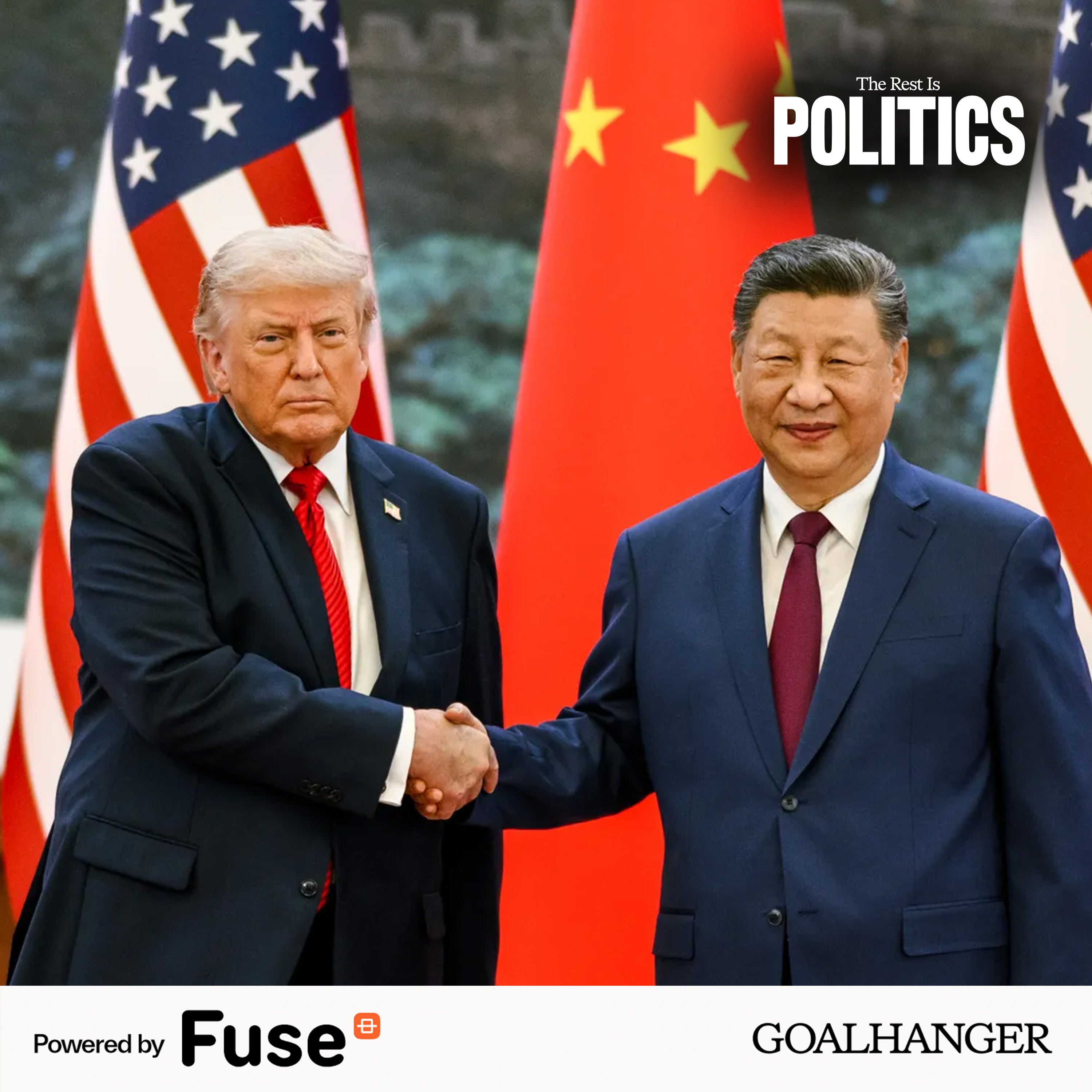
The Rest is Politics episode 587 asks whether a weakened Donald Trump after the US midterms will make the world safer or more dangerous. Hosts Alistair Campbell and Rory Stewart argue Trump’s Republicans lost, but Trump is not accepting the political reality; they cite Stephen Miller’s appointment as chief of staff and Miller’s radical, war-and-violence worldview.
foreign policy may become more volatile because Trump will have less domestic power and a Congress now able to investigate corruption; Americans remain largely isolationist (“America first”), and foreign issues barely register compared with cost-of-living.
Trump’s 60 Minutes interview (described as defensive and lacking energy); Trump’s talk about Greenland and Taiwan; and the idea to watch Cuba, Greenland, and Taiwan more closely. They also discuss J.D. Vance linking the election loss to Iran/Israel/cost of living and Trump’s announced plan to stop US financial assistance to Israel (uncertain whether it will be carried out).
none mentioned; the episode is hosted by Campbell and Stewart only.
0:00Rory Stewart: In the U.S. midterms, we've seen one of the most dramatic reversals in American politics since the 1970s. And with the defeat of Trump's Republicans, many people are beginning to hope that we've gone back to the pre-Trump world, maybe visions of liberal democracy, of free trade, of a rules-based international order. But the question we're going to be asking today is how much has really changed? Who are these new Democrats? Is it true, as I suspect, that they may be far more isolationist than American politicians of the past? What difference will this really make to the world? And above all, what's Trump going to do next?
0:37Rory Stewart: Is it possible that rather than becoming safer, he's going to become more dangerous? What will that mean for Cuba, Iran, Taiwan and the rest of us? This episode is powered by Fuse Energy. Most energy companies are counting on you doing absolutely nothing. Not questioning what you're paying, not switching, just letting your tariff roll on, which is costing you hundreds of pounds every year. But the apathy goes deeper than our bills. We've almost given up on energy itself. We seem to all be accepting energy is expensive, the system is outdated, but that complacency is costing us. Fuse Energy does not accept that because the energy transition is not something that just happens somewhere else.
1:18Rory Stewart: Fuse is building an energy company which is designed to bring down the cost of energy. And right now, its tariffs are up to£100 below the off-gem price cap. So switching isn't just about paying less, it's about expecting more from your energy company. And it only takes you three minutes. Switch to Fuse at FuseEnergy.com slash politics. Use the code POLITICS and you'll get a free TripPlus subscription allowing you to hear all the extraordinary members content that Alistair and I are now producing for you. Visit FuseEnergy.com for full terms and conditions. Hi, this is Gary Lineker from Goalhangers.
1:54Rory Stewart: The rest is football. This episode is brought to you by WISE. It's only when you start moving money between currencies that you really think about the exchange rate, the fee and what might be hidden away in the small print. Whether you're living abroad, paying someone overseas or just trying to manage your money across borders, you want a fair exchange rate, an easy transfer and no surprises along the way. WISE keeps things simple. Wise is a smart way to move the currencies you need around the globe. It works in more than 160 countries and with over 40 currencies. Most transfers arrive instantly.
2:29Rory Stewart: Wise uses the mid-market exchange rate, like the one you see on Google, with no markups or hidden fees. So when money needs to move, you can see the rate, know the fee and get on with it. Join millions saving billions on hidden fees by downloading the Wise app today. Be smart, get wise, T's and C's apply. Are you looking for support in your weight management journey? ZepBound Terzepatide may be able to help. ZepBound is a prescription medicine used with a reduced calorie diet and increased physical activity to help adults with obesity or some adults with overweight who also have weight-related medical problems to lose excess body weight and keep the weight off.
3:09Rory Stewart: ZepBound is approved as a 2.5, 5, 7.5, 10, 12.5, or 15 milligram injection. ZepBound contains terzepatide and should not be used with other terzepatide-containing products or any GLP-1 receptor agonist medicines. It is not known if ZepBound is safe and effective for use in children. Don't share needles or pens or reuse needles. Don't take if allergic to it. Or if you or someone in your family had medullary thyroid cancer, or if you've had multiple endocrine neoplasia syndrome type 2. Tell your doctor if you get a lump or swelling in your neck. Stop ZEPBound and call your doctor if you have severe stomach pain or a serious allergic reaction.
3:47Rory Stewart: Severe side effects may include inflamed pancreas or gallbladder problems. Tell your doctor if you experience vision changes before scheduled procedures with anesthesia, if you're nursing, pregnant, plant-a-be, or taking birth control pills. Taking ZEPBound with a sulfonylurea or insulin may cause low blood sugar. Side effects include nausea, diarrhea, and vomiting, which can cause dehydration and worsen kidney problems. Talk to your doctor. Call 1-800-545-5979 or visit zepbounce.lily.com.
4:28Welcome to The Restless Policies. With me, Alistair Campbell. And with me, Rory Stewart. So we're going to talk about America and the midterms, your final impressions of your very interesting visit and the fallout from those results, which were pretty catastrophic for Trump, that you wouldn't know from the ways he's behaving. And then we're going to talk about, in the second half, about New Zealand and Israel, two very important elections under very different proportional representation systems, neither of which have managed to give us a clear outcome. And we may touch in the first part too on Mr.
5:01Jensen Wang and his private life.
5:04Rory Stewart: Let's start with America though. So we've had a sort of week for things to settle down a little bit since we last did our podcast. Day to day, what's changed in your sense of the shape of it immediately after when we recorded on the morning compared to where you are now? I think day one, a sense that Trump was going to be a little bit more accommodating and a little bit more serious and grown up. And by day two, that had all gone. Adamson Cooper makes a joke that he's going through the stages of anger and grief in reverse. You know, most people sort of finish with acceptance. He started with acceptance and it's now going the other way.
5:38That is a very, very good way of putting it. I mean, I think appointing Stephen Miller as chief of staff was a sign that he is not accepting any of the criticism.
5:50Rory Stewart: Quick explainer on this, just again for British listeners not concentrating minute by minute. Stephen Miller was the deputy chief of staff. Susie Wiles, this rather kind of reassuring in some ways, quite quiet woman, was the chief of staff. Miller has really been a radical, very right-wing activist since he was very young, kind of young student activist. got in trouble years ago with getting very, very close to white nationalist publications and some pretty extraordinary emails backing Calvin Coolidge's immigration policy, which was eugenicist, drove ice. And he's the guy that gave the interviews that we talked about about a year ago now on the back of Greenland, where his wife was saying Greenland's part of the US.
6:37Rory Stewart: And then he He was saying, we live in a world of power, we live in a world of violence. And really interesting as the chief of staff choice, because I think as we've said before, one of the interesting things about people like Miller and Hegseth and bits of Vance and Trump, and certainly Musk, is they believe the natural state of the world is war and violence. And as they make the world more violent and dangerous, they think that's how it should be, and that peace is an illusion. Stephen Miller's fantasy seems to be an idea of a kind of country as a Sparta in a natural state of war. He clearly seems to see, I think, Netanyahu's Israel maybe as an example of a state that is absolutely set up for war, fighting on seven fronts.
7:21Rory Stewart: and it is that sense that he is almost encouraging the creation of these armed nationalist groups you know rearming europe handing over germany to the fd etc because this is all part of the general narrative of the natural state of war and yet one of the reasons i'd say the big reason why the elections went so badly for trump and the republican party is iran and the domestic impact of an international adventure and the effect on oil prices. And yet, once he'd done the accommodation and then flipped, I don't know if you saw, Trump was doing some sort of talking thing somewhere and Stephen Miller was there.
8:00And he said to him, and I'd like Stephen Miller to come up and say a few words. And you've really got to see it because it just underlines the madness of the whole thing. So they've just had this election where they've been pretty well routed, okay, and Trump has been fundamentally weakened. And Miller spoke almost as though it was a win. And he said things like, without this man, without President Donald Trump, there would be no United States of America. This man has saved the United States of America. And we are stronger than we have ever been. And he said the Republican Party's strong. And you just think this is a kind of level of denialism that actually it reminded me of the election denialism.
8:41Now, this time, Trump did, we said on the podcast we did out the morning of the results, he did surprisingly accept the outcome. But in terms of accepting the politics of the outcome and what the outcome ought to mean in a normal democracy, I don't think he's accepting it at all. No.
8:58Rory Stewart: And just on that, to develop it, I've been attacked by a lot of friends who are more right-leaning for our coverage of this from the states. And it was quite interesting what they want to read this election as being, because they want to say, and this was sort of something that I heard from certain sort of instinctively conservative voters on the American trip. So they want to say, look, we don't like everything Trump's done. We don't approve of the excesses of ice. We think the Iran war maybe was a mistake. But, and then they say, we needed to be saved from the far left of the Democratic Party.
9:43Rory Stewart: That these people were, I was trying to get some of the quotes right. They were trying to start class and racial war. They were upending our constitution. They were presenting our history as racist and capitalist. And so they keep talking about centrism. And when they talk about centrism, what they're really talking about is trying to return to a kind of moderate Republicanism allied to your Stephen Miller saving America thing. And I guess one of the fights with the Republican Party as they go into the election may be exactly around that. How much are they going to keep leaning into the Democratic parties too woke?
10:24Rory Stewart: There are these dangerous Democratic socialists. And how little certainly that faction, this kind of more right wing faction, is taking on cost of living. They really still want to make a culture war. I mean, the problem is that both of the parties, I keep saying the main parties, the only parties, effectively, both of the parties have these really quite fundamental, it's more than factions in a way. They're almost like parties within the party. so if you look at the way that the the various reactions across the republican family there are some who are and miller would be an absolute example of this and i don't think he's just doing it because it's his new job i think he's doing it because he really believes it who is absolutely out there as far as you want to go i would argue christian nationalist verging on white supremacist there was a wonderful joke somebody said that the reason he's bald is he used to have black hair and he doesn't like having anything black near him so he's like he's So he's right out there.
11:19Then you have the kind of the Steve Bannons and the Tucker Carlson's who's kind of linked to that, who think that Trump is basically sold out. Trump is not truly MAGA because he's not gone far enough, which to you and me sounds ridiculous. But to them, you know, the war alone, given they won on no forever wars, given they haven't delivered on the cost of living and they think haven't pushed hard enough on immigration enforcement.
11:42Rory Stewart: So that's a more extreme America first. I mean, fundamentally for Tucker Carlson and Steve Bannon, they're big, big isolationists. So I think for them, they like the culture war stuff. They like the anti-immigration stuff. I mean, Tucker Carlson's become a sort of strange sort of meme for, not meme, but a kind of somebody who appears on - You're the only mean man. Exactly. Progressive people liking him because he's critical of Trump and he's critical of Israel. But if you saw that interview with Jacob Rees-Mogg in which he attempted to say, why did Britain fight Hitler? You get a pretty good clue on what kind of world Tucker Carlson's got.
12:26Rory Stewart: I mean, that's a very dark world. You need Jacob Rees-Mogg to explain to you why Hitler's a bad thing. When Jacob Rees-Mogg in any debate is coming over as the reasonable, well-informed intelligent, historically conscious person, then you've got to worry about Tucker Carlson. And I tell you, so number one, that one, Hitler. Number two, you know, Russia's got a much bigger economy. I mean, it's a really weird world that he comes from. So yes, back to you, sorry. Then you've got the kind of Mitt Romney, Mike Pence, who again, back in the Trump first term, the fact that Mike Pence supported all that Trump did, you and I would probably have thought this guy's off the scale.
13:00And yet he now comes over as being reasonable, moderate, wants the Republican Party to go back to something closer to what it was. And they are going to have to have a big argument. And I think what's so interesting about where it goes is that although Trump's name, whether we like it or not, is defined in history forever because he's such a consequential political figure. But I do think, this is why it's called lame duck, as he moves towards the end, I think we'll see more and more of him railing to be powerful, railing to be important. But actually, the Republican Party is inevitably going to have to look beyond.
13:34And that leaves, I think that leaves Vance. I said this straight away, I think Vance is toast. I'm not convinced Rubio really has a root back. But then you look around, you think, well, who else? Who is actually going to emerge to take over?
13:48Rory Stewart: So this is my question for you, because my guess is, forget about Romney. I think he's now seen as far too left wing for anyone to be interested. The idea that Romney's left wing is just... And I think Pence, I don't think probably has much appeal. I mean, there will be some people out there, you know, Richard Fontaine, my friend, who's, you know, trying to say we need to get back to being friendly to Canada, reasserting NATO. But he's a guy who was one of John McCain's foreign affairs advice. I think that strand of the Republican Party, my sense is, is marginalized. I think what you might have is people like your friend Mike Pompeo, who retain a very, very nasty.
14:25Rory Stewart: my friend mike bombeo but a very nasty edge to him doesn't he i mean he's got you know that yeah you know you're being oversensitive pretty brutal about europe brutal about allies a ted cruz maybe vivek ramaswamy is presumably finished having failed to come in as governor of i would hope so i mean he his campaign was one of the worst wasn't it so look it's going to be fascinating to see how this pans out but i'll tell you the other thing that you know i think whether it was day two or day three, the interview that Trump did with 60 Minutes, whether that was anger or grief. It was a sort of weird mix of all of them.
14:58Very good, wasn't it? Ross Doothat. Yeah, good-ish. I mean, I still think the American media treats Trump with such kid gloves. I thought he pushed him reasonably hard on the corruption stuff, and Trump just lied. There's a very long thread explaining why Trump's answer. He basically said, I've got wealthier because I've got stocks. And this guy's done a sort of analysis of where the money's come from. And it's not stocks. It's blatant out and out corruption. But the other thing I thought was interesting about the interview, for somebody, as you know, the one thing I will always give Trump is a sense of energy and dynamism.
15:33And he just didn't have it. I thought he was really lacking in energy. I thought his eyes looked weird. I thought he, and he was back in that mode of very defensive, very I'm right, not liking the questioning too much. But so I don't know how he's going to play out because the one thing he, look, let's go back to what Michael Wolff said. His ambitions will always be to the most powerful person in the world, the most famous person in the world, and the richest person in the world. Well, his power is diminishing. And that's a difficult thing. His wealth he probably will carry on, but he's now got, this is the other big change from the election results.
16:08You now have a Congress that can go after that stuff. And they are going to do that. I've been surprised how many of these senior Democrats are saying that's what they're going to do. And the implication of that is that he won't get more
16:20Rory Stewart: money. Because if you were somebody from the Gulf who thought it was a nice idea to give Trump a lot of money because it might help you, you're now going to think, whoa, whoa, whoa, whoa, if I do that, I'm going to find myself testifying in Congress. So many, many people who in the past would have funneled money into his family companies thinking they'd get favors now are thinking, I don't really want to do that because I don't want to be dragged, have my name dragged through Congress. So I think he'll find a lot of the investments in his funds begin to fall away. And I guess your point about Trump's psychology brings us back to something that you and I have been discussing in live events recently, which is what's he going to do now?
16:58Rory Stewart: What's he going to do now in foreign policy particularly, right? What's he going to do on Iran? What's he going to do on China, Taiwan? What's he going to do in Cuba? And what's he going to do with Greenland? And what's he going to do with the rest of the world? And comes back to that, I was with a prime minister from a Gulf state three days ago, who knows him very, very, very well. And he said to me, when I asked the question, we don't know. Nobody knows. And that's such an important bit of wisdom because it's so tempting to think, we talk to the Mooch or we talk to Michael Wolff, people who do know him well, and they will say, oh, the thing to know about Trump is X, Y, or Z.
17:39Rory Stewart: And on the basis of that, you can predict, we really don't know, do we? And is it going to be the taco Trump? Is it going to be the bomb them back to the Stone Age Trump? Is it going to be the make money Trump? Is it going to be the sphere of influence Trump? Is it going to be the America first isolationist Trump? And something you've pointed out, which is often after midterms, when presidents lose control of Congress, they're much more driven to do foreign affairs stuff. So actually the world may end up in a more dangerous stage, which is why watch Cuba, watch Greenland, watch Taiwan more over the next two years than we have for the last two.
18:16If you do an analysis of all the travel of presidents through the years, they do tend to travel more in the second half of the second term, partly for sort of farewell lab. But I don't think he thinks in those terms in the way that other presidents might have done, where they tour the world to say goodbye. but I think it's because he'll be he won't enjoy the domestic politics because he doesn't have the power that he had uh there will be congress people going after him on the corruption front and some of the policy failures as well so I agree with you I think he'll be much much more dangerous and other world leaders are going to have to do whatever they can to keep tabs on everything he says and does because he's going to be very very unpredictable listen what did you you you were there for quite a while you and Bella our producer between you wrote a really interesting newsletter about what you'd seen there.
18:59And it was like, it is so interesting how sometimes just being somewhere, you can get a much, much better feel. And that sounds obvious, but it's, you know, given that we talk about different parts of the world that we've not been to for years, but we talk about them as though we know what we're talking about, but it's always better when you're there. If I were to say what one or two reflections do you now have having been there for the elections that you may be, maybe I didn't have by staying here?
19:24Rory Stewart: I think you would have guessed a lot of it because I think a lot of it is things that if I said to you, you'd say that makes sense. I mean, one of them is foreign policy barely mattered. I mean, Iran mattered only insofar as it affected people's gas bills. Ukraine? Ukraine barely mattered. And in fact, the polling now suggests that foreign policy mattered for 4 % of people compared to, I think, 39 % focused on the economy. So I guess that wouldn't have surprised you because that probably would be true in a British election. The only problem is if you're looking at the largest, most powerful country in the world that is literally screwing up everybody else's security economy, it's terrifying.
20:08There's no sense of people caring that that's their image around the world now, that they have a country that's screwing up other countries big time.
20:16Rory Stewart: They're barely aware of it. I mean, there was a lovely moment with this farmer, rest is history listener, 28 years old, very nice guy in Ohio. I went out with his dad on a combine, a thousand acre farm, intelligent, thoughtful young man. And when I said, listen, Greenland, NATO, Canada, he was like, oh, I didn't really know about that. I'm so sorry to hear that. So the general sense across middle America is it doesn't really matter. And Americans still basically feel, and he said this actually, that we were bailing out everybody else, that we were paying for everyone else. I think it's a very isolationist country.
21:00Rory Stewart: I think America first, that would be my first conclusion, America first will stay even if the Democrats come in. Very few of the Democrats were really talking about the rules-based international order or any of this kind of stuff. That's the first thing I think that was surprising. Second thing I think that did surprise me, given how many of my friends thought that the last election was fought on work. You remember you often talk about this ad, she's for they, them, I'm for you. That featured surprisingly little. Now, after the election, again, you've got a lot of people from the right saying, these bloody Democrats are too obsessed with trans, with climate, of Palestine.
21:42Rory Stewart: I wasn't hearing that. It was very much, these buggers were supposed to sort out prices and they didn't. And my healthcare is too expensive, my housing is too expensive, and I'm living paycheck to paycheck. And he failed to deliver. So it was very transactional. I mean, it's interesting your view on this because it was the most extreme example of it's the economy stupid that I've ever seen in my life. And presumably your experience in elections around the world is, it's never quite as simple as that, right? That's because what I was struck by, by what you were saying and writing about the whole thing, was the kind of reactions that we have, regardless of our politics, just the sort of visceral reactions that we have to things that he says and does, don't seem to register in the same way.
22:26They do with people who are kind of committed activist Democrats. Yeah, yeah. But with most people, including the kind of independence in the middle, it's almost like a given. So on the 60 Minutes interview, he said this thing, Zelensky doesn't show enough respect to Russia. Now, as the words came from his lips, I thought, what are you talking about? This is a guy whose country has been invaded. And you are now helping the invader. And I just, I was trying to think if a European politician said that, a European leader. Now, some European politicians do say that, Le Pen, Vidal. but it's a very hard right position.
23:02So that presumably doesn't even trouble the scorers, to use a cricket analogy.
23:07Rory Stewart: No. Look, I talked to one of the religious leaders in the United States. I won't go into which state I was in because he was talking to me off the record. But what struck me is that he said he's an idiot. He wasn't prepared to say that he was immoral. I didn't fully get far enough in this. This sense of an election, which was almost entirely, it seemed about costs of living and the economy. What's your experience looking at British elections and other elections? I think your experience is they rarely are just about the economy. If someone said to you in Britain, it's just the economy is stupid, that's all that matters, what would you ask to make people think about other things?
23:44Well, I'd maybe go back to the 2005 election where Charles Kennedy led the Lib Dems to a you know, a really strong performance for them. I mean, we won the election, and that was Tony Blair's third term, but with a significantly reduced majority. And I think that was largely because they'd campaigned very, very heavily on Iraq during the campaign. So yes, they did other things, but Iraq was a big, big part of that campaign. Look at how Europe, now you can say, I would like to think Europe was part of our domestic policy agenda, but for a lot of people, that is foreign policy. And Europe has played a big part in a lot of elections down the years.
24:18I think that one of the problems, I think, with living in this sort of heavy polling culture, America's even more polling than we are, is this sense that people are always trying to find a definitive, a single definitive reason that has shifted things. You'll never find one. You'll find a whole group of different issues that push people in different directions. But I think what strategy does is get you as close as you can. And the reason why it's the economy stupid was so powerful because it got people as close as you could to that single definitive issue. And for that campaign back in Clinton's day, it was.
24:54But no, I think it's always much more complicated. What I've heard from what you've been saying, though, about being there is that anything outside America has very little impact upon the way they're thinking about the campaign. Whereas I think here, we still have a little bit more, a sense of there's a world out there and we've got to be part of it.
25:13Rory Stewart: Here's another thing, though. I think that it's very difficult to find a path back in America because although Trump is a very extreme figure, something's changed fundamentally in the assumptions about what democratic values are, what economic structure you have, what kind of international order you have. and I don't sense that we've got that anymore. I mean, if this election had happened obviously 20 years ago, everybody would take it for granted that it was about liberal democracy, it was about free trade, it was about America helping to keep peace around the world. All that's been blown up.
26:01Rory Stewart: I think that people can't decide whether they want tariffs or not. A lot of people are blaming tariffs for rising prices, but that's very fundamental because that means that the Democrats don't really know whether their story is our number one problem is China, China shock to keep the tariffs up, re-industrialize, or whether their number one story is let's keep prices down for consumers, open up free trade. On the international rules-based order, I think the Democrats don't really know, are they America first, we don't want to pay for everything? Are they, we're going to prioritize China? Are they, we're going to resurrect the NATO Western alliance?
26:42Rory Stewart: So I think Trump has revealed something really fundamental, which lasts long after he goes, which is America doesn't know what its political, economic and international philosophy is anymore. And I guess the Democrats presumably are honest enough to say, notwithstanding, they have some extraordinary powerful candidates in some of these big races and fair play, they really went out and got good candidates, but they won largely because of Trump and because of rejection of the Republicans. You know that the Democrats are now two to five on to get the White House after the next election? Is this in the polls?
27:14Rory Stewart: In betting. Betting's interesting. I don't know if you follow this much more than me, but the New York Times claimed that actually the polls were more accurate than the betting this time. Interesting. Because the betting were underplaying. Yeah. And even the polls underplayed by about three points consistently across the board. What the betting often reflects, as well as predictive markers, is where the money's going. who do you think is favorite to be president, next president? That's seven to two. Your friend Ossoff? It's Mr. Ossoff. Second is Vance, six to one. Oh, goodness. That's just conventional wisdom, I think.
27:46Right. I mean, he might end up as...
27:48Rory Stewart: So the idea is that he's most likely to be the Republican candidate, so you might as well put him second if the Republicans win. AOC is 13 to two. I would have thought AOC seems very weird. That seems like an unlikely presidential run, isn't it? You don't think he should do it? I think that would be very dangerous to run AOC as your candidate. I mean, that's - What about as a running mate, somebody more mainstream, Ossoff, AOC? Possibly. I mean, you know, maybe that I've become brainwashed by spending too much time in middle America, but I would have thought Ossoff - Well, I was worried about that when you started to talk about what a mesmerizing, wonderful public speaker Trump was.
28:20I didn't worry about that.
28:21Rory Stewart: The sort of thoughts that we explored as we were running into Kamala Harris is Go for a governor in one of these main states. Go for, you know, the governor of Kentucky, Andy Beshear. Go for the governor of Illinois, maybe Princeton. Beshear's 33 to 1. Rubio's 7 to 1. Newsom's 7 to 1. Rhonda Sanders, who you mentioned, 12 to 1. Shapiro's 16. Tallarico, 18 to 1. Shapiro's another one of the governors of these big states. Yeah. Harris, 22 to 1. Now, I think Kamala Harris just, I just think that's absurd. That's mad. And Gavin Newsom has said that if she runs, he won't, which I think is equally mad.
28:58Buttigieg, 22 to 1. Carlson, 30 to 1. Beshear, 33. Scott Besant, 40 to 1. I think he'd be a truly appalling candidate for the Republican Party to go forward. So bring it on, Scott. So, but what that all says to me is that both the parties, we're in this extraordinary position where none of us know who's going to be the candidate in such a significant election in under two years' time.
29:21Rory Stewart: My final one, we did a slightly geeky analysis months ago now of some of these little congressional districts. And one of the ones we looked at was New York 17, the Hudson Valley, which is sort of wealthy commuter belt, moderate Republicans. I think if you're coming for a British analogy, it's maybe David Gawke's seat in Hertfordshire. It's kind of suburbs around. They lost it. Kate Connolly, who's the Democrat candidate, won against the Republican there. Again, Fort Bragg, North Carolina 9, I was really interested in. That's a kind of veteran town. Again, the Democrats took that. We talked about San Antonio because we're great reporting from Izzy about the Hispanic vote, which was interesting.
30:00Rory Stewart: But my final one was Alabama 2, Montgomery and Alabama, where there was incredible Republicans' attempts at gerrymandering, and where the African-American vote came through for the Democrats. So those were three things, or maybe four, Hispanics, African-Americans, veterans, moderate Republicans in the Hudson Valley vote, including a very large Jewish community voting Democrat, despite all the narratives that some people are selling, AIPAC and others, that Jewish Americans won't vote Democrat. That doesn't seem to be the truth in a lot of these electoral results. In fact, I think in Michigan, the suggestion is that Abdul Saeed still got the majority of the Jewish votes in Michigan.
30:38And also, a lot was made of Vance in his statement about the results, talking about the Iran war. But he also, I thought really interestingly, mentioned Israel and America's relationship with Israel.
30:51Rory Stewart: Remind us the Vance comments, because there was an amazing tweet straight after the election, where he basically said, we've got the message. The message is... Iran. Iran, Israel, cost a living, right? Yeah, yeah. Do you think that was the message? I think he probably was right about the message, was he, or not? But that goes against what you said about they don't really care about abroad. Israel, they definitely weren't talking about. I heard very, very little on Israel. So why is J.D. Vance, knowing how close, well, maybe Trump has distanced himself from Netanyahu. We're going to talk in a bit about what's happened in Israel.
31:20But I thought it was fascinating that J.D. Vance, of all the things to alight upon, he comes out and says, our relationship with Israel was one of the reasons we lost.
31:28Rory Stewart: And this incredible announcement by Trump, which is that the U.S. will stop all financial assistance for Israel. Now, I mean, any time in the last 60 years, it would have been the biggest headline of four months, right? That American 4.2 billion a year. Many people in the Middle East have seen this as the key leverage for the entire Middle East peace process. People have said if America stopped its financial support for Israel, the two-state solution would be possible, et cetera. Trump suddenly announces he's going to stop it. But of course, it wouldn't happen for another two years. And the question is, was he just saying it before the election because he thought it might swing Michigan in his favor.
32:05Rory Stewart: And is he going to hold to it? And what do Israelis think about this? I mean, do they believe that the US is going to stop financial assistance to Israel? And how much difference would it make? I mean, symbolic financial... Let's do Israel and the Israeli election and the New Zealand elections after a break. Before we do that, a couple of things where you, let's go to your beloved AI. There was this sort of little blip, was it a blip or was it a mini crash? There was a kind of crash in the stocks the day after because the issue of AI and data centers did seem to play quite a big part. And a lot of Democrat winners had been very strongly arguing against the AI bubble and the AI explosion.
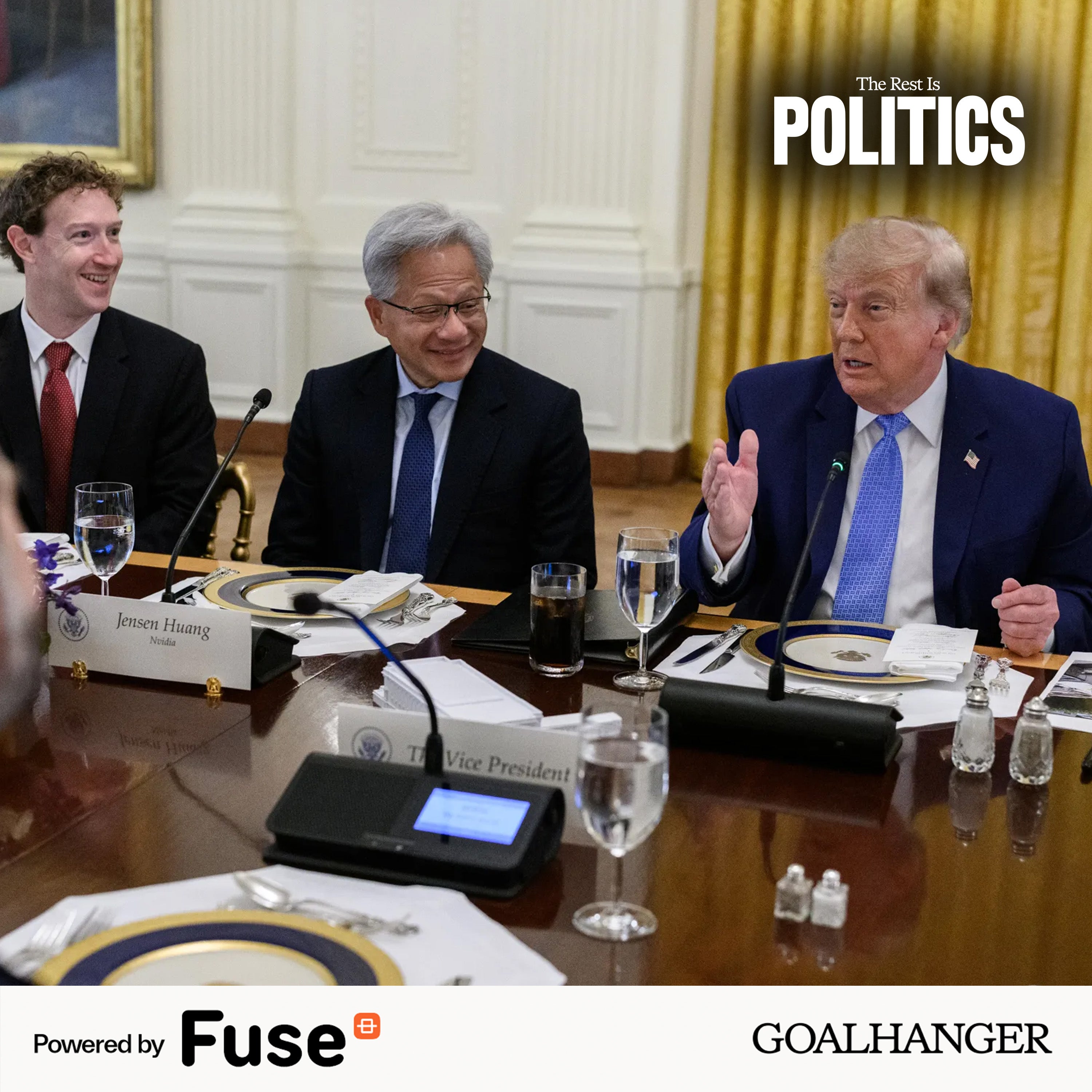
32:44Now, it settled a bit, but do you think, first question, do you think that does portend a different approach or do they just go all guns blazing as per? And the second thing is This extraordinary story about Jensen Huang, the boss of NVIDIA, being caught up in what looks like a Chinese espionage honey trap.
33:08Rory Stewart: Amazing. So Jensen, of course,$4 trillion company, largest company in the world, NVIDIA, the manufacturer of the chips. 90 % of the AI chips are coming out of NVIDIA. Leather jacket wearing. He was at Dumfries' house with me. Oh, your thing with the king? Yeah, yeah. Yeah, yeah. I find this very embarrassing for His Majesty the King. His philanderer should be there and don't freeze out. And yes, seems to have been having an affair with a Chinese national who runs a big Chinese company who the CIA says has direct links to the Ministry of State Security, so Chinese intelligence. And apparently the White House was briefed on this eight, nine months ago.
33:49Rory Stewart: So now there's an NVIDIA investigation going on. I'm not very surprised the Chinese are doing this. I'm slightly surprised that Jensen Huang would get himself trapped in such an obvious position. Do you know anything about the chronology? One person told me that he had the relationship and then the Chinese recruited the woman. And that as part of that pattern, Jensen Huang, now maybe he would have done this anyway, but he had been lobbying the White House very, very strongly about the stepping up relations with China on the whole AI development and getting stuff from them and getting stuff to them.
34:28And somebody else told me that actually she'd always been an intelligence operator and had targeted them.
34:35Rory Stewart: This is the big question on the Chinese. My father's one insight into this is that he said it was much, much better being a spy in China than in Russia. Because in Russia, they took KGB officers and train them to be your cook. Whereas in China, they took your cook and recruited them to be an intelligence agent later and you got much better food when you were in China. So on that model, she would have been his girlfriend first before we recruited her. Well, it's great to have your father on the podcast. By the way, our friends and colleagues, David McCluskey and Gordon Carrera have done a big thing for the rest of his classified on this very subject.
35:09So maybe they will answer the question that I'm struggling to answer. Well, it's definitely true that if you
35:14Rory Stewart: can do it, it's much more efficient to recruit people after they've got the access rather than recruiting endless people hoping they can get the access. And also it means that let's assume, I don't know, you do know Jensen Wang, I don't, but let's assume that, and of course his family is very important in the company, aren't he? His kids are on the board. His son, his daughter have direct positions. Yeah. He earns 3.6 % of it. Yeah. And you're right. There's an interesting question because if you are Dario Amode from Anthropic, he was very against selling advanced chips to China. Jensen Huang ended up in a situation where he agreed with Trump that the most advanced chips are not going to China, but the second most advanced are.
35:54Rory Stewart: So, yeah, that's been very controversial because a lot of the American AI companies would have liked much tighter restrictions on chips to China than Jensen Huang was offering. So Jensen Wang is discovering, as many have before, that as the Beatles are always right, money can't buy you love, can it? Money can't buy you love. Richest man in the world, but he's off doing what he does. Money can't buy you love. And he's now in real, I think this is going to, will it define him or does he get through this? Trump came straight out and said, I'm sure he's got a good reason. He said, I'm sure he's got a good reason.
36:23I'm sure he's got a good explanation. And he's a good guy and he's done great for America.
36:27Rory Stewart: No, I think these, I'm afraid, look, we've had almost every major tech boss come through extramarital affairs. I mean, clearly the money and the power seems to drive them to cheat on their wives. Of course, there have been divorces at Microsoft, et cetera. And let's finish with that one, because that reminded me, because you were talking about data centers and I was saying that watching Fox News, both sides would be attacking each other on data centers. So Sherrod Brown, who won in Ohio, ran a big ad against Huxed, who was the Republican senator, saying that he'd been closest to Epstein because he'd taken $100 ,000 from Wexner.
37:07Rory Stewart: Then it turned out that Sherrod Brown himself, the Democratic candidate, had taken money from Wexner's wife. One of the defining features of all these ads is they're largely accusing each other of the same thing. And that must contribute to the sense that Americans think they're all the same. That's why the Democrats have got to change politics, get money out of politics, as Abdul keeps saying. Right, well, let's take a break and then talk about Israel and New Zealand. Very good. Looking forward to it. Ulcerative colitis and Crohn's disease symptoms don't pause for the moments that matter. That's why understanding your treatment options matters.
37:39Rory Stewart: Discover what's possible with Trimfaya. Guselcomab. Trimfaya is a prescription medicine used to treat adults with moderately to severely active Crohn's disease and adults with moderately to severely active ulcerative colitis. Serious allergic reactions, increased risk of infections, or lower ability to fight them and liver problems may occur. Before treatment, get checked for infections and tuberculosis. Tell your doctor if you have an infection, flu-like symptoms, or need a vaccine. Talk to your doctor and explore what's possible. Or call 1-800-526-7736 to learn more about Trimphia. And visit Trimphiaradio.com.
38:17Rory Stewart: Shag here. What's it like to buy a car from Carvana 100 % online and get it delivered to your door? Let me tell you. Your car is here, Mr. Shaq. Thank you, Mr. Carvana guy. Can't wait to take it for a spin. Only the best for you, Mr. Shaq. Hey, have you always been so big, tall, and handsome? Not always. I was 6 '10 once. Seven days to love it or return it, Mr. Shaq. Not that I would. You never do. No, I never do. So buy your car today on Carvana. Delivery fees may apply. See our seven-day return policy at Carvana.com. Have you ever wondered how movements start? I'm Ashley C. Ford, host of Into the Mix, a Ben & Jerry's podcast about joy and justice.
38:54Rory Stewart: This season, we're talking to unexpected progressive heroes who found purpose in unexpected places. People like Marley Dias, making sure every kid sees themselves in books. Kyle Mesteth, a native skateboarder building a movement for kids nationwide. Joy Aladakun, whose music moves from protests to daily commute. Find out how they started something bigger than themselves and listen wherever you get your podcast.
39:23Rory Stewart: Welcome back to The Rest is Politics. I'm me, Rory Stewart. And me, Ernest Campbell. So now we're going to get into the subject of two of the most interesting recent elections. We're going to talk about Israel and we're going to talk about New Zealand. A little controversy, we're going to begin with New Zealand before going to Israel. But I think what we'll find is that there are very, very similar themes of the way in which electoral systems are now delivering increasingly uncertain results. So let's start with New Zealand. So electoral systems, Rory, they're bloody complicated and it's going to take weeks to sort out.
39:55Chris Hipkins, the former prime minister, leader of the Labour Party of New Zealand, who we had on leading a while back, he said that thing, you know, the people of New Zealand have spoken, we've just got to work out what they've said. And it's going to take some time, I think.
40:07Rory Stewart: It isn't a decisive rejection of the incumbent. So what in British terms would be the Conservative Party, have come out of this almost neck and neck, it seems, with their equivalent to the Labour Party. And they were the incumbent government. That's unusual in New Zealand politics. Usually people do two terms, may not be able to pull off two terms. There's a little bit of a sense of some of the stuff we talked about in Britain, of a two-party system. In New Zealand, it's more complicated than that from the beginning, but increasingly small parties rising and doing better and better. Centrist parties, a couple of right-wing parties, a left-wing party as well.
40:47Rory Stewart: A lot of stories, again, about cost of living. And, you know, maybe if I was going to produce a big grand theme for us around the world. We love those. Yeah, big grand theme. Yeah. Which is that really every election we've covered almost everywhere, and we could tell the story about South Africa, we could tell the story about the whole of Europe, really since COVID have been cost of living elections, which raises the question, What the hell is going on across the entire global economy? All these advanced economies from the US to New Zealand, from France to wherever, you're looking at people saying my housing costs are too high, my groceries are too high.
41:27Rory Stewart: And what does this mean? This means COVID, Ukraine, now Iran, but it also means pretty anemic growth and people having no confidence really that their government's going to sort it out. And usually, I suppose that means anti-incumbent, usually means you kick Trump or you kick Rishi Sunak or whoever happens to be in power when the election comes along. But in New Zealand, it's led to a bit of a muddle. It's not a decisive rejection of an incumbent at all. It's just kind of disappointment and underwhelming. No, it is a model. And they do have a voting system very different to us, mixed member proportional MMP system.
42:07You have two votes. You can vote for your constituency MP, and you can vote for a party. Now, you'd think, would you not, that people would vote for the constituency MP, and then they would vote for the party who's represented by the MP, the candidate they voted for. But a lot of them do not do that.
42:24Rory Stewart: Well, I'd agree with that because you don't think in Britain, certainly as MPs, we flatter ourselves that maybe we have local support which is independent from our party. They do this in part tactically to, it's quite complicated this, but you get elected as an MP and then you have a list system that fills the parliament and you can end up, and this election will end up, with having more seats than were originally planned. so for example the main Maori party they instructed people they said to people vote for us in constituencies but vote for one of the more left Labour or the Greens or one of the left parties when you get to the party because that will then help us to get into that block and maybe have a better chance of being part of a government and the idea and one reason we often talk up the New Zealand system is it keeps a constituency link as well as having a bit of proportionality bit of PR which we kind of think could be a good system for Britain, right?
43:19Rory Stewart: And one of the nice things about it is that it, at least in the way that it was explained to us by New Zealand politicians, is that it meant that instead of the Tory party having to try to hold its far right or Labour having to hold its far left, they were able to get more natural blocks emerging. Yeah. You've also got this, the other thing that's complicated in this system, you have different ways of voting. You have advanced voting, okay? So you can vote weeks, two weeks ahead of the election. Okay. You then have the election day. Yeah. And then you have these, what's called special votes and special votes are votes cast by people who are not in their own area at the time.
43:56So people living abroad, people living in different parts of the country, mainly in Australia and the UK. Okay. So a lot of, so this election, my hunch is that even though they're behind at the moment is that the labor guy may end up because generally these special votes of people living outside New Zealand tend to go left rather than right. Yeah. Okay? And this is the argument, I guess, against... You're getting a bit sceptical. This is our preferred electoral system.
44:25Rory Stewart: We like this one. We're trying to sell it to Andy Burnham. I'm just saying the argument against is the lack of clarity. So there's a very strong argument against Labour getting a massive three-figure landslide in the UK on a third of the votes. So an obvious argument against that. But likewise on this one, to have such a model out of a system. Are you happy with it? I think it's pretty good. Yeah, I think it's pretty good. Look, I think if we're going to, we're going to move on to the Israeli system, which I think is too far over on the PR extremes. I mean, famously, they had three years of crisis where they could barely form a government.
44:57Rory Stewart: We may be about to enter that again. Now, this is more interesting. There's been no new parties emerging in New Zealand since 1996. And they've got a new party here. Suddenly, for the first time in 30 years. Opportunity. Exactly. Exactly. Which is really interesting with 5.9 % of the vote and absolutely, you know, for centrist dads, Opportunity is a pretty appealing party. It's a Fijian, I think an Asian Fijian New Zealander who's coming. Quley Wong. So I think that's a good system because it's one where you can get new parties come in, but it doesn't happen very often. And where you get this nice balance between some constituency route, some PR.
45:36Rory Stewart: And if the genuine reality is in New Zealand that the country now consists of people with five or six different views, then why not have a parliament that reflects that? And it doesn't do it in the Israeli way where literally every, I mean, the madness, as you must have discovered when you try to chart changes in Israeli elections is that the parties and alliances are changing so much. It's not a continuous line at all. But this in New Zealand reminds me a little bit of the Nick Clegg coalition election. where you have the results and, okay, the Tories get the most seats, Labour is second, Nick Clegg's then in the sort of kingmaker position and he decides to go with the Tories.
46:13In this one, you have Opportunity, who will have a, you know, could be the balance of power. You have the leader, the Prime Minister, Christopher Luxon, who insists on calling himself Christopher, by the way, not Chris, because the Labour guys call Chris. And so Christopher Luxon has ruled out working with Opportunity, because they have some quite radical tax plans that you wouldn't like, by the way. Okay. Okay. You wouldn't like their tax plans. So here's a question for you. If you've gone through an election in this system, ruling out something, and this will apply when we get onto Israel, is it permissible then actually to do a deal with the party that you said you rule out having anything to do with them?
46:52This is why I think Labour might be in a stronger position.
46:54Rory Stewart: I think it's something you must have seen a lot in places like Germany. I mean, And it's countries with more PR systems which are more inclined towards coalition governments, they must have this problem all the time. They go into elections ruling out stuff. And then the electoral mathematics forces them to contemplate a deal. But does that mean that the public doesn't really trust them when they rule things out in advance? You presumably can't do it two or three times in a row. Well, but I'm always amazed when we're out doing, you know, my beloved show of hands with big audiences. I'm always amazed when you say to people, if the Labour government broke the manifesto promise on not putting up income tax, would you think worse of them?
47:39And hardly anybody says yes. Because I think it's part of this thing about, they think, well, parties break promises all the time. I also think we think - Which they try not to.
47:46Rory Stewart: I also, I mean, given that in order to prevent Andy Burnham going mad and introducing a wealth tax, I think he'd be better putting up income tax if he's going to be putting up taxes. I think the defense would be the world changed a lot. Trump changed the world a lot. Putin changed the world a lot. And he's the second prime minister in. So, yeah, I think you can change. And I think maybe the test, let me try this one on you, maybe the test for New Zealand and Israel is, do the public get the impression you tried really, really hard to make it work on the terms in which you went into the election and that you've only finally made that compromise when every other option has run out?
48:31I think, you see, I don't quite buy you, Orion, that this wasn't quite a comprehensive defeat for the National Party. I think it was a bit of a rejection. Now, it wasn't overwhelming for Labour either. Because Labour didn't get more votes. No, exactly. So they, I mean, I think on the share of the vote, Labour were 0.2 % ahead as things stand. So I think they will go ahead, further ahead when these special votes, 400 ,000 votes are counted. But they're all going to have to do deals. And the deal making becomes, I think the deal making, I think it's interesting, exciting for people like us who really follow this stuff.
49:06But I think for a lot of people, the deal making is what puts them off politics. Well, let's move on to Israel, where the deal making is actually essential. And by the way, can I apologise to any New Zealander if I didn't explain the overhang? Because it's bloody complicated in a country that doesn't have it. And maybe we should get Darren Hughes. You better go to Australia. Are you going to New Zealand?
49:24Rory Stewart: Why are you not going to New Zealand? I'm getting so many complaints from Perth and New Zealand. Yeah. I can see why. I should go. Yeah, I know. I know. But it's just, Rory, I've not planned it well. I've not planned it well. I promise I will go to New Zealand. Not this time. Very good. And I will go to Perth. Because we've got a lot of listeners in New Zealand. We do. And so, you know, the guy who runs the Electoral Reform Society here in the UK is a New Zealander, Darren Hughes. And I hope he's back in New Zealand system because I've always been very pro-New Zealand. And also, Christopher Luxon needs to come on the podcast because I am, you know, really sad about this.
49:59Rory Stewart: I was in touch with his office. We've got a lot of listeners in New Zealand. Maybe that 0.2 % of centrist people that he's fallen behind in the election, Hipkins, could have come over to him if he'd come on the podcast as I'd invited him to. So if you're listening to this... Or maybe he's been rejected because people don't like listening to him. Well, and actually, Alistair, people reading the newsletter this week will see that we are writing about electoral systems. When you say we, do you mean you? Do you mean me? Do you mean somebody else? No, no, actually somebody else. Our newsletter team is bringing together some amazing experts on electoral systems, which is going to feed into where we are now.
50:33Rory Stewart: Sign up for that. And the many other wonderful things that we have in our newsletter on the rest is politics.com forward slash newsletter. So, Israel. So, to remind people on Israel. PR system from hell. PR system for hell and key two big figures that people will have been focusing on. Of course, Netanyahu himself, the great survivor, prime minister repeatedly since the 1990s, incumbent prime minister, and against him, Gadi Eisenkot, who was the head of the military, whose son was killed fighting in Gaza, and who is leading the anti-Nesanyahu faction. Neither of them managed, obviously, to get a clear majority.
51:14Rory Stewart: And the swing essentially rests with whether you're prepared to work with the Arab parties or whether you've got about 19 seats or the ultra-Orthodox who have about 13 seats. Remind people about the ultra-Orthodox. Ultra-Orthodox parties in Israel are increasingly growing because ultra-Orthodox families who frequently dress in very, very traditional, I think, sort of 18th century Central European dress, famously do not serve in the military, which is very controversial because that means a lot of young men are serving the military and are feeling it's unfair that ultra-Orthodox young men are not doing it.
51:54And the question for the Eisencott group is Avigore Lieberman in particular,
52:02Rory Stewart: who leads a pretty secular, often Soviet Union origin group of Israelis. As a secular man, not really prepared to work with the ultra-Orthodox, but as somebody who's very pro-settler, because many of his voters are settlers, and of course Bennett is also a settler, anti-Arab. Okay, over to you. I mean, the president, Herzog, has decided, and I'm sure would have come under a lot of pressure not to have decided this from the Netanyahu camp, decided to ask Eisencott to have the first go at forming a government. And I guess the question is, do you try to get some kind of arrangement with the Arab parties when part of your coalition has been adamant, it's a little bit like Bluxan with the Opportunity Party in saying having nothing to do with them.
52:54And you now have this situation where I think Netanyahu will be hoping that somehow they get forced into a place where the only option is a sort of national unity government of which he remains a part. And so you think that there's Eisencott, who entire campaign, I mean, left the government because he believed that Netanyahu was doing fundamental damage to Israel. And yet Netanyahu will be thinking that one of his pathways back is actually to do some kind of deal with him.
53:22Rory Stewart: Just, again, it's difficult, I think, for many listeners to understand why doing a deal with the Arab parties is considered so impossible. Netanyahu's described it as national suicide to do a deal with the Arab parties. These are Muslim, Christian, Arabs in Israel, Israeli citizens who turned out in very large numbers. in the case of one of the Arab parties, they've been in government before. They were in government actually with Naftali Bennett, and they were not particularly radical on Palestinian issues when they were in. They were largely focusing on improving conditions for Palestinians in Israel around crime and other issues like that.
54:08Rory Stewart: But it relates to this very weird sense that the gap between the way in which Europeans want to view Israel as a country which is genuinely open to accommodation with Palestinians towards the two-state solution and the reality which is, I think now, well over 80 % of Israelis are now openly against or non-supportive of a two-state solution, maybe only 20 % in favor, and where Netanyahu is running elections with posters saying, vote for the right or get Palestine as though Palestine is the worst possible thing in the world suggests kind of what a deep problem Israeli politics is going to be. And for those who, like us, think that long-term peace means some kind of reconciliation with Palestinians and Arabs, because if you think it's national suicide, what is this national suicide to work with a large chunk of your own population just because they don't happen to be Jewish Israelis.
55:15But also it's saying we're a country, we have an election, everybody has a vote, but a substantial section of the population, in my view, this is Netanyahu, your vote does not count. And you cannot be allowed into government. And there's no way that you can be allowed into government. But it's a little bit like Trump did with Abdul El-Sayed in Michigan. He's a jihadist. He's a terrorist. It's like the way that a lot of Israelis, particularly on the hard right, see Gaza. I mean, who's the guy? One of the guys who's now, I think, part of the new parliament, a guy, I can't remember his name, but he, during the campaign, was saying, there is no such thing as an innocent Gazan.
56:01They are all our enemy, children included. Oh, Avogor Lieberman has been saying that kind of stuff. Yeah. So where does that go with this system? Where does it go with this system? If you disenfranchise so many people, there's a price to pay for that down the track. So I don't know where this is going to end. I know Herzog a little bit because when he was leader of the Labour Party, I went out there and was advising him for a bit. And I never thought he was going to win. It doesn't surprise me he's ended up as president because he has got the sorts of political skills you need for that. But I think this one's going to be, I don't know how this plays out.
56:37And thrown into the mix, the point you made in the earlier discussion about the United States, the fact that there does appear to be a changing of the kind of cross-party consensus that an absolute fundamental pillar of American foreign policy is total support for Israel. What's the impact within Israel if that changes? These are two elections we've talked about here where the lack of clarity is, what does it tell us? It tells us that there are fundamental divisions in there that are not being repaired.
57:12Rory Stewart: Meanwhile, Israel's foreign policy position is no peace in Gaza. It turns out that what was achieved in Gaza wasn't a peace deal. More than 1 ,000 people have been killed since. It was a hostage exchange deal. Israeli troops continue to occupy most of Gaza. Nobody's talking about Lebanon. where effectively Israel now occupies South Lebanon. They haven't followed through on their agreement to allow the Lebanese army back into South Lebanon. They continue to hold a chunk of Syria and the West Bank we've talked about a great deal. So this is a country which over the last three years has launched conflicts with a very large number of people.
57:52Rory Stewart: I mean, if you add to those setting up bases in Iraq to conduct strikes against Iran, if you add strikes against Qatar, If you're trying to think about peace in the region and regional security architecture, the real challenge, and maybe this is something to talk about when we get on to question time and talk about a new UN Secretary General, is how do you think about peace in the Middle East? How do you think about Israel, Iran, Gulf? What is the structure that over 10 or 20 years means less conflict, not more? Well, right now, it doesn't appear to be there. Well, as you said, in Question Time, we will talk about the race to become the next General Secretary of the United Nations.
58:34We're also going to talk about all this cyber stuff, fridges being hacked across Europe and Andy Burnham warning us to go out and get some more cash and buy some wind-up torches and all this stuff. So we'll talk about that. And also, you mentioned earlier, we'll talk about the elections in South Africa. All that and more. Looking forward to it. Thank you. Bye-bye.
59:24Transcription by CastingWords will vary. Not all subscriptions eligible. Savings not guaranteed. Paid membership with connected payment account required. See Experian.com for details. Experian. T 'was many nights before Christmas and one woman knew she needed a tree so to Wayfair she flew. She found more decor and added to cart. Merry Christmas to all. Get your Wayfair head start. For holiday decor you can count on, Wayfair delivers.
59:48Rory Stewart: Shipping, billing, admin, payroll, marketing. You're managing all the things. So why waste time sending important documents the old-fashioned way. Mail and ship when you want, how you want, with Stamps.com. Print postage on demand 24-7 and schedule pickups from your office or home. Save up to 90 % with automated rate shopping. That's why over 1 million small businesses trust Stamps.com. Go to Stamps.com and use code PODCAST to try Stamps.com risk-free for 60 days.
Following the disastrous midterm results for the Republicans, where will Trump turn his attention for the last two years of his presidency, and what will the MAGA movement look like without him? With Nvidia CEO Jensen Huang admitting an affair with a suspected Chinese spy, what does the fallout mean for the future of the company – and its enormous influence over the future of AI and the entire American economy? What do the recent elections in Israel and New Zealand reveal about the challenges of proportional representation?
Join Rory and Alastair as they answer all these questions and more.
__________
Enjoy Rory and Alastair’s interview with Paul van Zyl by searching ‘Leading’ on Spotify, Apple, or YouTube.
Join The Rest Is Politics Plus. Start your free trial at therestispolitics.com to unlock exclusive bonus content – including Rory and Alastair’s miniseries – plus ad-free listening, early access to episodes and live show tickets, exclusive newsletters, discounted book prices, and a private chatroom on Discord.
Go deeper into the world of The Rest Is Politics by signing up for our free newsletter HERE, featuring exclusive interviews, analysis and weekend reads from Alastair and Rory.
Give The Rest Is Politics Plus this Christmas. Treat yourself or a fellow fan to a membership: bonus episodes, ad-free listening, early access, a members’ newsletter, and more. Annual gifts come with a special edition T-shirt.
The Rest Is Politics is powered by Fuse Energy. Stop overpaying for energy. Switch at fuseenergy.com/politics and get a free TRIP+ subscription.
🌏 Upgrade your online protection with an all-in-one security app! Get an exclusive NordVPN deal + 4 months extra here ➼ nordvpn.com/restispolitics It’s risk free with NordVPN’s 30-day money-back guarantee!
__________
Instagram: @restispolitics
Twitter: @restispolitics
Email: therestispolitics@goalhanger.com
__________
Social Producer: Celine Charles
Video Editor: Bruno Di Castri, Oliver Ortega-Smith
Assistant Producer: Jake Preston, Daisy Alston-Horne
Producer: Evan Green
Exec Producer: Bella Soames
Learn more about your ad choices. Visit podcastchoices.com/adchoices
Scan the code with your iPhone camera
Listen in the app.