Ask ChatGPT

 The Rest Is Politics
4 Nov 2026 · 1h 13m · 22 chapters
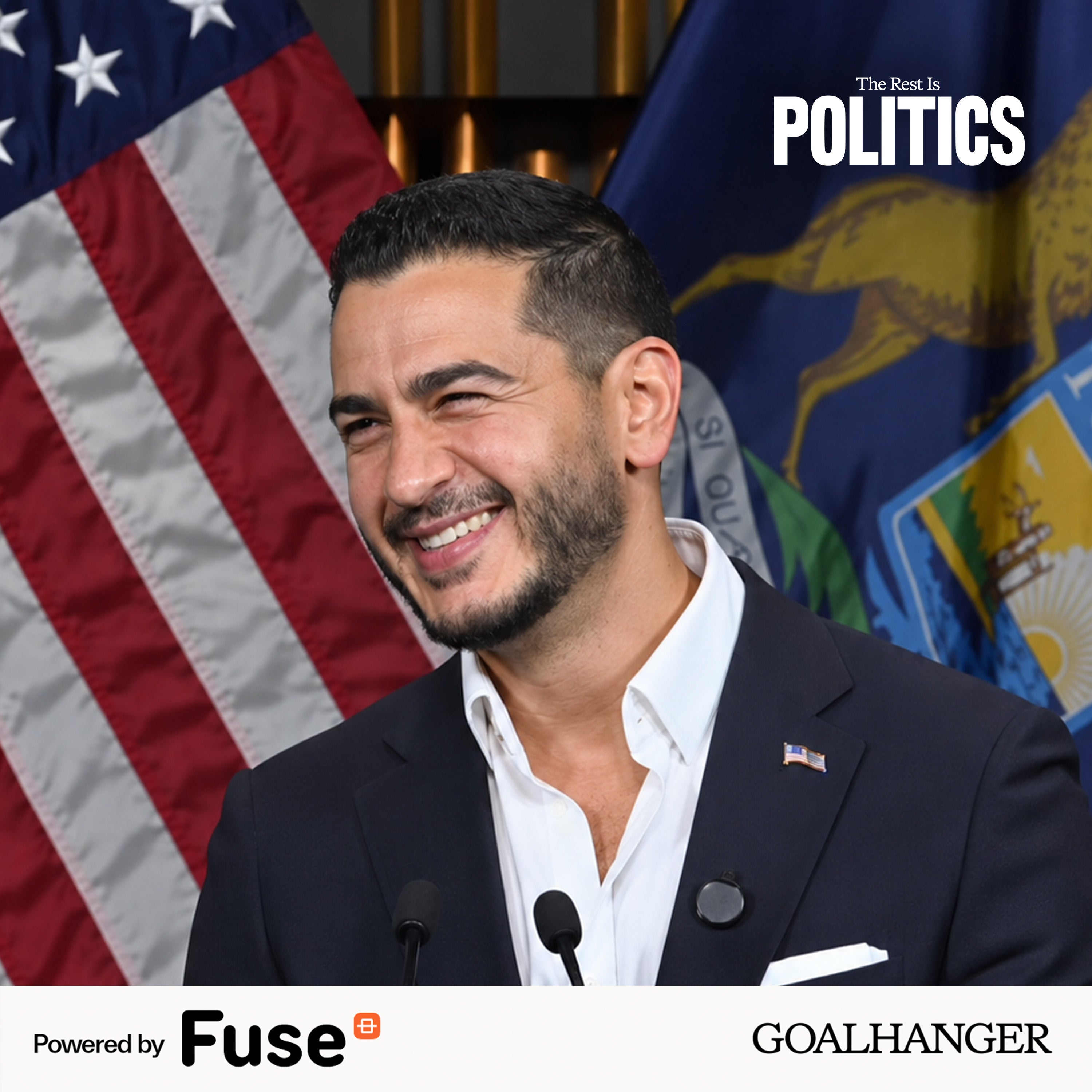
The podcast analyzes the US midterm elections as a “blue wave” that leaves Democrats controlling both houses, what that means for Trump as a lame-duck president, how Democrats should respond strategically, and whether Trump’s clipped domestic power will push erratic foreign policy abroad.
No guests are interviewed in the transcript. The hosts are Alistair Campbell and Rory Stewart (both political commentators/journalists).
Written by AI. May contain mistakes.
Discussion on the aftermath of the midterms and Trump's responses.
“Welcome to The Restless Politics with me, Alistair Campbell.”
Discussion on corruption in U.S. politics and presidential pardons.
“I mean, some of the most kind of staggering stories imaginable, which we occasionally touch on.”
Examination of the unprecedented spending in the upcoming midterms.
“There is literally no democracy I can think of, certainly in Europe, where it is remotely possible for a head of state to do that kind of stuff.”
Analysis of acceptance speeches and their implications for future elections.
“It's peanuts compared to the money that the Republicans have spent against Tallarico and against Abdul Al-Sayed in particular.”
A look at various candidates' campaign strategies and their authenticity.
“And there's Tallarico reminding people it's not even in the Bible.”
Discussion on voter sentiments regarding economic issues and their impact on elections.
“And then tying it all together was a sense of the Republic being strong enough to withstand something even as awful as Donald Trump and what he's doing right now.”
Exploration of the various factions within the Democratic Party and their strategies.
“are three big factions in the Democratic Party.”
Exploring the implications of Abdullah al-Sayed's victory and its impact on Jewish communities and the Democratic Party.
“You know, my phone was, again, being hit quite hard by Jewish friends who wanted to turn this whole thing into a sense of real shock, horror, and mourning at the fact that Abdullah al-Sayed won.”
Analyzing how Trump's diminished domestic power might affect his foreign policy actions.
“Welcome back to The Rest is Politics with me, Alistair Campbell.”
Discusses the lack of focus on foreign policy during elections and its implications.
“The thing that I was so shocked about in this election is how little it was about foreign policy.”
Explores voter indifference to foreign issues and the political betrayal by candidates.
“And there's this extraordinary, quite long, like a few minutes, Abdul Al-Sayed with his hands on James Matthew's shoulders, basically saying to him, why would I waste my time talking to you?”
Analyzes potential future actions of Trump regarding Cuba, Taiwan, and international relations.
“And he sort of puts his arms on his now sort of move them down onto his biceps.”
Discusses how global leaders may react to Trump's diminished power and unpredictability.
“There's part of Trump's worldview which seems to say you have a sphere of influence.”
Exploring how recent events may illustrate Trump's waning influence and impact on his legacy.
“But I think that'll be very, very interesting.”
Discussion on strategies for Republican candidates J.D. Vance and Marco Rubio leading up to the 2028 elections.
“uncomfortable position of trying to advise a Republican run for the presidency in 2028.”
Analyzing the political appeal of J.D. Vance compared to Marco Rubio and what separates them from Trump.
“advising the specific two candidates who are most talked about, Rubio and Vance.”
Debating the need for fresh leadership in the Republican Party to move beyond Trumpism.
“What is it specifically about Vance that makes you think the guy hasn't got it and maybe Rubio's got more of it?”
Examining election results and unexpected wins for Democrats in traditionally Republican areas.
“And I think the AI point is interesting because AI, you're probably right, but think about how AI is seen within the American political context at the moment.”
Learn about the historic milestones achieved in the latest elections.
“point is just to go through some of the sort of historics, the firsts.”
Discussing how Trump impacted the recent election outcomes despite not being on the ballot.
“And it's going to be so interesting now to see how both parties react.”
Acknowledging the team behind the midterms coverage and their contributions.
“Been a great pleasure doing this midterms coverage with you.”
Recognizing the hard work of the production team and their efforts during the tour.
“She'll be getting you backing Liz Trust next.”

Get the gist, explore an idea or ask about something said.
 Claude
On The Rest Is Politics, what are the key points of this episode?
Searching your listeningAutomatic transcript. May contain errors.
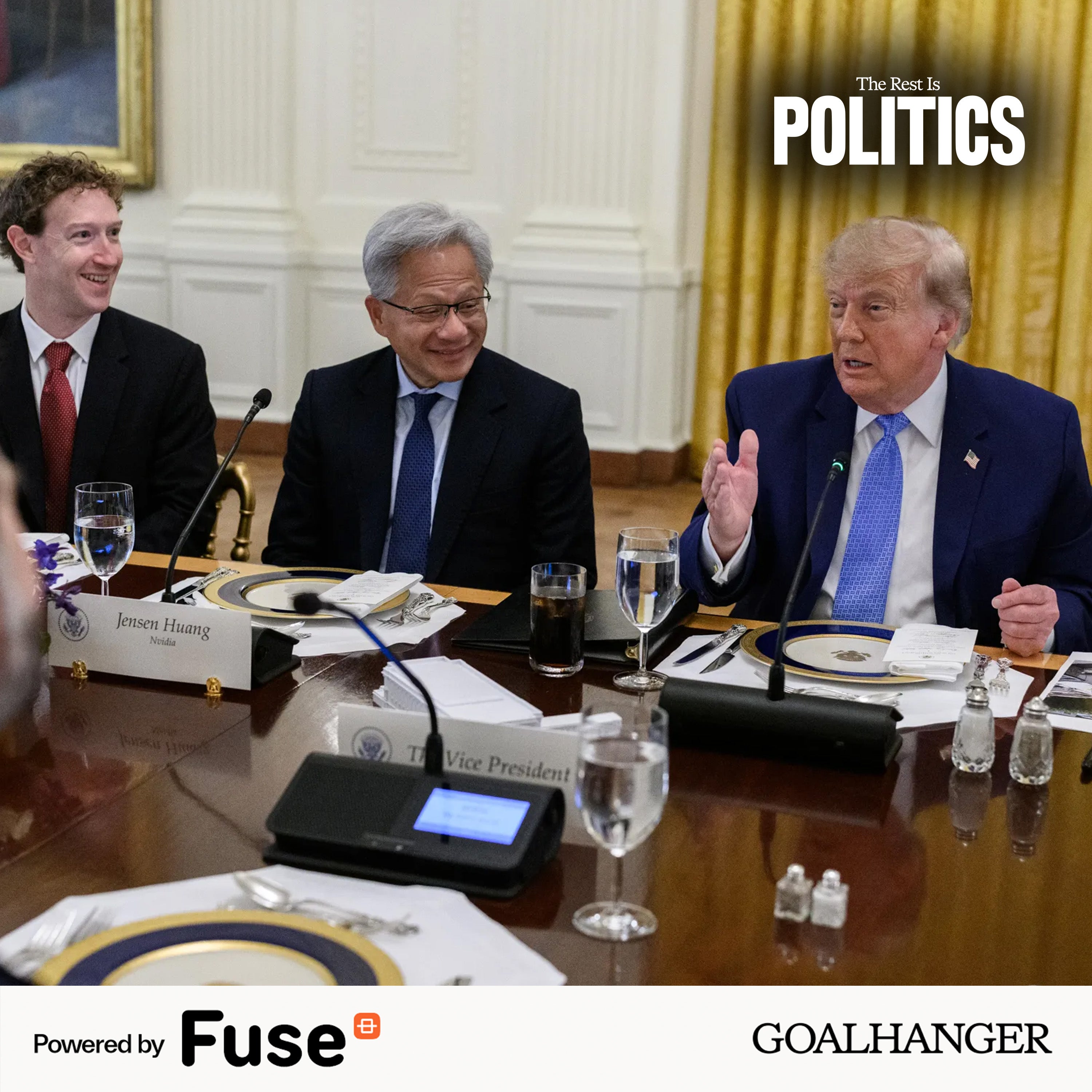
0:00The Democrats' win was so big, so overwhelming, that even Donald Trump felt compelled to concede defeat as his Republican Party lost control of both houses of Congress. The last time we saw a blue Democrat wave as big as this was probably in 1974 in the wake of the Watergate scandal which brought down Richard Nixon. America is now doing what it did then, sending new blood to Washington to clean the place up. Trump says the Republicans lost because his name was not on the ballot, but his name was on the ballot. His corruption, his lies, his nastiness, his wars sending gas prices sky high, his love of dictators, his contempt for democracy.
0:43Well, it looks like democracy has hit back. But now there are some very big questions for both parties. How does Trump react as a lame duck president? How do the contenders to replace him as presidential candidate for 2028 respond, notably J.D. Vance and Marco Rubio, when they are so much part of this now damaged brand? And if this was primarily a vote against Trump and the cost of living crisis, what approach do the Democrats now adopt? Do they put revenge on all things Trump ahead of sorting out their own strategy? Or should they focus more on choosing the right leader to take them into that presidential election in two years' time?
1:23So many remarkable results to discuss. Lots of questions for the future to analyze in this special midterms episode of The Rest is Politics. This episode is powered by Fuse Energy. Most energy companies are counting on you doing absolutely nothing. Not questioning what you're paying, not switching, just letting your tariff roll on, which is costing you hundreds of pounds every year.
1:47Rory Stewart: But the apathy goes deeper than our bills. We've almost given up on energy itself. We seem to all be accepting energy is expensive, the system is outdated. But that complacency is costing us. Fuse Energy does not accept that because the energy transition is not something that just happens somewhere else. Fuse is building an energy company which is designed to bring down the cost of energy. And right now, its tariffs are up to£100 below the off-gem price cap. So switching isn't just about paying less, it's about expecting more from your energy company. And it only takes you three minutes. Switch to Fuse at FuseEnergy.com slash politics.
2:25Rory Stewart: Use the code POLITICS and you'll get a free TripPlus subscription allowing you to hear all the extraordinary members content that Alistair and I are now producing for you. Visit FuseEnergy.com for full terms and conditions.
2:42Rory Stewart: This episode is brought to you by NordVPN. We work out ways to protect ourselves from unwanted things every day. OK, Rory, how do you protect yourself from small talk? I say, very good to see you, I've got to get on to get my kids from school. Yeah, you also have another one that you use quite a lot, so I must go, I'm on Jordan time. I'm on Jordan time, that's good, I'm on Jordan time, I like that. OK, how do you protect yourself from arguing with your co-host? I just watch you argue with other people. No, I have this tactic, when I think I'm losing my temper, I just rub my thumb and my index finger together, that's what I do, and I just calm down.
3:17Rory Stewart: Yeah, that's cool. And how do you protect yourself from online scams? Well, the answer is I find NordVPN useful for that. It's not just a VPN app. They've built in next-gen antivirus block scams, phishing attacks before they reach you, so you can carry on knowing you're secure. To get the best discount on your NordVPN plan, go to nordvpn.com slash restispolitics. You'll get four extra months free on the two-year plan, plus a 30-day money-back guarantee. The link is in the episode description. Hi, this is Gary Lineker from Goalhangers. The rest is football. This episode is brought to you by WISE.
3:49Rory Stewart: It's only when you start moving money between currencies that you really think about the exchange rate, the fee and what might be hidden away in the small print. Whether you're living abroad, paying someone overseas or just trying to manage your money across borders, you want a fair exchange rate, an easy transfer and no surprises along the way. WISE keeps things simple. Wise is a smart way to move the currencies you need around the globe. It works in more than 160 countries and with over 40 currencies. Most transfers arrive instantly. Wise uses the mid-market exchange rate, like the one you see on Google, with no markups or hidden fees.
4:28Rory Stewart: So when money needs to move, you can see the rate, know the fee and get on with it. Join millions saving billions on hidden fees by downloading the Wise app today. Be smart, get wise, T's and C's apply.
4:49Welcome to The Restless Politics with me, Alistair Campbell. And with me, Rory Stewart. And so, Rory, the midterms have happened. And we both thought, I think, that the Democrats were going to do well. But I think we've both been moderately surprised by just how well they've done. or maybe we should say just how badly Trump's Republican Party have done.
5:09Rory Stewart: The results are absolutely stunning. I mean, but by the end, you didn't need to be a mystic Meg to predict a Democrat victory because the polls were pretty consistent. But it was still possible to argue, and some commentators were doing, that if the polls had been wrong three to four points in the same direction, you would have ended up with a pretty tight night. It wasn't like that. if anything, the polls this time may have overweighted the Republican vote and underestimated the Democrat vote. So people who are really paying attention, I've just literally left the United States yesterday. So you get a slightly jet lagged version.
5:46Rory Stewart: But if we go back over these great Senate races that we were talking about, with the exception of Alaska, every single one of those Senate races that we described has been won by the Democrats. Alaska's not yet declared. It's a tight race. And we'd add to the list we gave South Carolina, which is another astonishing upset. I'd love at some point later on just to go through race by race, because it's an incredible portrait of America and the modern Democratic Party. But you're completely right. This is a real blue wave. And the Democrats will be very happy. Over to you. Yeah, and the Republicans will be very unhappy.
6:24And I just don't know what they do. I said in the introduction, it'd be really interesting to see what they do. So Trump, who, as we know, only ever thinks about himself, he was straight out. First of all, the one big surprise to me was how quickly he conceded defeat. When you think back to the Biden election that Biden won, and Trump came straight out with the claims that led to the January the 6th riots, this time he basically came straight out and said, yeah, we've lost. But what he never, ever, ever does is accept any of the responsibility.
6:56Rory Stewart: Sit with that for a second though, because I think that that's worth acknowledging. The number of predictions made by American journalists over the last few years that he would stitch up the midterms, refuse to accept, use ICE to man the polling stations, cancel the midterms, that doesn't seem to have happened. And I think it's just worth taking a second on that, because that is a different story in terms of Trump's authoritarianism and fascism. I think he remains this unbelievably unpleasant, anti-democratic, poisonous force, but he's not, as people suggested, somebody who's actually cancelled elections, sent indisations to stop people voting, or refused to accept the result of the midterms.
7:44Rory Stewart: I think that's worth remembering. And that's interesting because, again, given how much narrative was going into this might be the last election in the United States, which I was hearing from people even a month or two ago, that's a significant change. Yeah, but maybe there's another narrative that he's developing. And the narrative in this, because the results are so overwhelming, it would be impossible for him to try the same trick. But he's got a new narrative, which is it's got nothing to do with me. and it makes me wonder whether there is a part of him that wants the republicans to do badly once he's gone and that is a form of narcissism it is a form of saying that after me there is nothing and so it's so interesting that as all this was going on and the results were coming he was doing that whole thing of phoning up journalists and all on the record so then you suddenly start seeing you know the new york times put out a piece politico put out a piece fox news put out a piece Donald Trump basically says, well, the problem was my name was not on the ballot.
8:48And then you have them all playing clips of him during the campaign saying, my name is on the ballot. Imagine you're voting for me. But of course, he's now moving the narrative.
8:58Rory Stewart: That's right. He's clearly on that track. But it's also, he may shift on this, but what was striking for me during the campaign is just how hard he worked. He hadn't decided before the midterms that he was going to distance himself from the Republican Party. He really, as a man, you know, aged 80 or whatever he is, he really put in the hours. I mean, it was unbelievable watching that small rally in Chillicothe, Ohio, to see him there for an hour and a quarter, then back on the plane late into the night. And just hitting state after state after state. I mean, it was one of the most energetic and relentless campaigns, far more than Biden did in the midterms.
9:40Rory Stewart: I mean, it was, you know, he was really trying hard. He was, and he did put in the hours, and he does have extraordinary stamina. And yet, his eve of poll speech at the reflecting pool was one of the most bizarre campaign events I have ever watched. It was extraordinary. He's standing there with some guy handing him photographs, hoping at photographs, talking about algae, talking about people drowning in water that is, I think, at no point more than three feet deep. And all this sort of – it was utterly bizarre. It was dementing. And so I think what's going to happen now, and I said in the introduction, this really throws up questions for the people who will be thinking about taking over for him.
10:24Because as you've just said, he's accepted he's lost this election. now there is this talk steve bannon keeps saying he'll he'll fight a third term i think that's now gone let's just assume that's gone so that means the jd vances and the marco rubios and any of the others who may think they have a chance of standing as nominee they've got some really really difficult thinking to do because he still has a hold trump still has a hold over vast swathes of people particularly people who are in the Republican Party machine. What do they do now? What does J.D. Vance do? Does he try and distance himself from this?
11:00Does he try to lean in to some of the arguments that are coming back from the Democrats? I watched a lot of the acceptance speeches last night, through the night. All of them, John Ossoff, James Tallarico, Abdul El-Sayed, lots of them, were making this point about you threw everything at us. You threw the lies. You threw Musk's multi-multi-million campaigns. And I think it was Abdullah al-Said had this great, you know, the many can beat the money. I thought that was a really nice line. But they all spoke to this. They weren't overdoing the thing about this is about Trump, but they all spoke to this is about a change of politics.
11:41Now, can they harness that between now and the presidential elections? Can they now show that because they've really pinned themselves to changing politics, it's a bit like Andy Burnham here, they've pinned themselves to saying we're going to get the money out of politics. What does that mean in America? Because the Democrats are, you know, pretty up to the neck in money. Nancy Pelosi and the trade stocks and all that stuff. So I think if these guys really think this through, it will be a combination. And my worry is they just decide to go after Trump and go after the family. That's going to be part of it.
12:17But the bigger thing has to be about the agenda for the Democrats now, because this wasn't really an election about the Democrats. It was an election about Trump and Trump's Republican Party.
12:26Rory Stewart: A couple of things that strike me as you're talking. One of them is that there may be different forms of, I don't know, democratic backsliding democratic decline going on here. And maybe what we've seen with the United States, as with Hungary, Viktor Orban, and Vucic in Serbia, is that these are states where aggressive populist anti-democratic leaders accept election results in the end, because that same prediction that Trump would not accept the midterms was made about Orban and was made about Vucic. There was a narrative that they're all like Erdogan in Turkey or Putin in Russia, they're not.
13:12Rory Stewart: There's still something going on in the United States where January 6th notwithstanding, this guy did ultimately accept the midterms and didn't cancel the elections or use excuses to do that. On the money point, I mean, there's two types of money. There's the corruption thing, which is, you know, we've got to get into and think about a lot. And I think that's, are the Democrats prepared to really think about all the ways in which corruption operates in the United States, how deep it is, not just in the Republican Party, but in the Democratic Party? You talked about Nancy Pelosi and her husband with their congressional stock trades.
13:52Rory Stewart: You could also talk about the incredible scandals involving Democratic as well as Republican administrations at a state level and a mayor level up and down the United States, decade after decade. I mean, some of the most kind of staggering stories imaginable, which we occasionally touch on. I love to talk about Buddy Sianci in Rhode Island, but there was some staggering stories in Ohio as well when I was going around there. Some of the candidates that I had dinner with in West Virginia, You meet somebody who thinks quite jolly over dinner, and then you go to the local newspaper and you read the guys being indicted on astonishing claims.
14:32Rory Stewart: So that's the corruption point. And why are the Democrats, or why I can think why, but will they ever be prepared to address things like abuse of presidential pardons, this mad American system, which allows Biden to pardon his own family members? allows Trump to issue pardons for people who are effectively donors to his crypto, and I suspect will lead Trump to try to pardon all the criminal members of his own administration before he steps down from the presidency. Just for American listeners, you may think that's normal. That is not normal. There is literally no democracy I can think of, certainly in Europe, where it is remotely possible for a head of state to do that kind of stuff.
15:21Rory Stewart: In Britain, yes, the king can pardon, but what he will do is he will pardon someone like Alan Turing, who's dead and is a great natural figure for the fact that he was imprisoned for homosexuality in the 1950s. He's not trying to pardon his own family members. So will the Democrats be perpetuated? And then the other thing that you raised, which I think is a sort of separate thing, which is the staggering money. I mean, we've had a lovely bit of research by Joe on our team, who's pointed out that US midterms are set to be the most expensive in American history, Spendingshire, at$12 billion. That's $12 ,000 million.
16:04Rory Stewart: And for context, spending in the midterms 10 years ago was only 2, I say only, only 2.85 billion. In other words, it's six times larger. They've spent more on political advertising than they did even in the 2024 presidential election cycle. And that's not just the Republicans. And we'll get on to Musk and his hands. Actually, the Democrats are outspending the Republicans in a lot of these states. Well, in a way, they feel they have to. It's like a kind of nuclear arms race. You know, they've got the money. But I'll tell you the other thing that will happen in this. And there is a bearing here for the reason why in the UK, I think reform on the slide is because I think British people are preempting a reaction against this sort of modification of our politics.
16:52You know, I don't like a lot of the money issues in our politics, never mind America. But when you have Nigel Farage saying 5 million quid, no strings attached, 72 million coming in from two formerly overseas-based crypto guys. That is peanuts to Elon Musk. It's peanuts compared to the money that the Republicans have spent against Tallarico and against Abdul Al-Sayed in particular. But it's a lot of money in our politics. And I think that, you know, you were talking when we did one of our episodes, when you were out there, you were talking about being in a sports bar and Fox Sports is on, and then the adverts come, okay?
17:30And you say, nobody's watching. Now, they're spending a fortune on these TV ads, an absolute fortune, hundreds of thousands of dollars in every single state that may be close. They've got to come a point where they think, actually, maybe this message, we're for the many, they're for the money, actually is beginning to cut through in a way that all of them need to start rethinking how they do politics. Now, that may sound a bit naive, but I think that what I've found so interesting, People want to say that the Democrats are all very different. There's this left-right battle going on, and to some extent there is.
18:03But it was interesting to me to see the similarities in the themes that were coming through in these acceptance speeches. And by the way, I've got to say, of all of them, if I had to say which of those is already thinking about the presidential election, it's John Ossoff. He was absolutely, that was more than a I've won a Georgia speech. uh but i think all three of them all three of those guys made really powerful speeches
18:27Rory Stewart: ossoff i suppose from traditional american politics you've said that he's maybe not as tall as he should be but he certainly seems to be more of the kind of central castings square jawed he's got the jaw got the jaw yeah concise americans whereas the others are an amazing group of people. I mean, just before we get back into the big themes, just to remind people a little bit about who these candidates are and how remarkable this victory has been. So you mentioned John Ossoff in Georgia. That was one where Ossoff was so far ahead that people almost stopped talking about it. But he is this crisp, square-jawed prosecutorial figure.
19:15Rory Stewart: You The Tallarico Paxton run in Texton was essentially Paxton, who basically looked very, very old and tired towards the end of the race. One of his eyes wasn't quite working, and he really felt himself going down. He is a battered guy, humiliated by Trump, under lots and lots of corruption investigations, going up against James Tallarico, who I really hope we can get on leading soon. He is the most lovely, but quite intellectual, quite geeky, quite unusual looking, earnest, I like to say earnest young pastor. I mean, I don't know whether, maybe I'm repeating myself because I've got jet lag, but I just loved his attack on the religious right, where he said, these people keep talking about abortion and gay marriage.
20:08Rory Stewart: and neither of those things are in the Bible. Jesus didn't mention abortion or gay marriage. Matthew 25 is about looking after the poor, helping the sick. And I was so struck by that because there I was in these Pentecostal churches where ultimately the pastor was saying to me, I'm voting Republican because in the end, the only thing that matters is abortion and gay marriage. And there's Tallarico reminding people it's not even in the Bible. You know, his, I mean, as you know, I don't do God. And I've always had a bit of a queasy feeling about politicians who do God and are very, very open about it.
20:47But I'll tell you, his speech today, the best part of it for me was he told the story of David and Goliath. But he told the context of the campaign and then turned to the crowd and said, you were my slingshot. And it was brilliant. And so I think they've got the, you know, Fiona was watching it with me and she was saying, you know, God, I wish we had more politicians who spoke like this. And so that sense of the power of the, I mean, these are very different figures. You said this on the podcast, on the episode the other day, you know, you've got a, you've got a Paralympian in a wheelchair. You've got a, the first Muslim Senator in Abdul Al-Sayed.
21:25You've got this guy who looks and speaks like he's a pastor rather than a politician. You've got Ossoff, as you say, looks like a kind of, you know, absolute standard, I'm going to go for it, presidential candidate. They're all very, very different. And then you see, you know, some of these governors that are coming. I think I've heard you're going to have four black governors for the first time in American history. So there's a real sense of that change. But my God, some of them can, they can deliver a speech. I couldn't work out with all of them whether they were using an autocue. I think they probably were because there was something quite packaged about it.
22:03But they were all addressing similar themes in very, very different ways. Now, the challenge of the Democrats now is how they bring all that together.
22:13Rory Stewart: So, Anastasia, you've mentioned this before, but just more clearly, what was the central message you were getting out of the acceptance speeches? democracy, corruption, the people, understanding they have agency, the building of movements, the taking of money out of politics, and the nature of the debate, the nature of what politics and democracy are about. It was a lot about, they didn't, none of them overdid it with Trump, Trump, but it was just a given the nastiness, the smears, the corruption. Elon Musk and his role. Now, Elon Musk spending whatever it is, half a billion, that's like you and me, you know, making a charitable donation of a few grand.
22:59Okay. It may not seem that much to him, but if you're somebody who's so driven by money as he is, he'll be thinking, hell, was that worth it? And the one thing about all of these people, Trump, Musk, they don't want to be seen as losers. today and for some time to come they're seen as losers and how again how the democrats tap into that and the other thing that was coming through was maybe a bit more understated but the other thing that was coming through was this sense of politics being about about service politics being about about people they were all and of course tallarico does that in such as you say such a beautiful way because it's sort of the reason i don't mind seeing him talk about god so much is because it's so clearly fundamental to everything about him.
23:46So he's incredibly authentic. So I think they were the big themes. And then tying it all together was a sense of the Republic being strong enough to withstand something even as awful as Donald Trump and what he's doing right now.
24:01Rory Stewart: One of the things I think that will be interesting is, as you say, whether those acceptance speeches gives us a clue to how the Democratic Party wants to run in the presidential elections. I was very struck in the places I was in, which was Ohio, Kentucky, West Virginia, and Virginia, how this didn't feel on the ground as though it was an election about democracy. It felt like an election about the cost of living, primarily. Now, I noticed you've just said that they didn't talk much about Trump. And that was a very important theme. It was very difficult to get anybody actually to share the kind of moral abhorrence that I have for Trump in many of those either Republican-leaning or pretty safe Republican states.
24:56Rory Stewart: Now, that doesn't mean that they would accept the MAGA rally. They were not great sort of Trump right or wrong enthusiasts. They were people who decided to take the position that they were disappointed that they'd thought he was this amazing businessman. He turned out to be just an ordinary politician. So this whataboutery, if you said Trump was corrupt, they'd be like, well, yeah, but they're corrupt. Or one of the pastors I spoke to went as far as saying, yeah, he's an idiot, but they're all idiots, rather than what I was really looking for, which is from a pastor a bit more moral condemnation.
25:34Rory Stewart: But in the end, I think all the focus groups seem to suggest, and definitely this is what I got on the ground, and I think it's what your son Rory Campbell got on the ground too, that this felt much more like a cost of living election. It felt much more as though Trump had got elected primarily because they felt that prices had gone up under Biden, they're living paycheck to paycheck, they couldn't afford their groceries, couldn't afford their gas, and Trump had completely failed to turn that around in two years. And therefore, They were punishing him for economic failure. Now, the reason that's relevant is I think there are three big factions in the Democratic Party.
26:13Rory Stewart: There is the, this is about democracy and Trump and saving the republic, which is what you were hearing slightly in your speech, maybe less the Trump stuff, but definitely democracy, saving the republic, which some people sometimes call Heather Cox Richardson Democrats. And those are people who are kind of passionately idealistic. They're on the No Kings marches. I think many of my friends in New Haven, Connecticut, many of my family members would fall into that category. Then you've got the, I don't know quite whether you'd call them Bernie Sanders Democrats, but they're definitely Democrats who are much more about focusing on radical ways of tackling inequality.
26:54Rory Stewart: You know, whole new taxation structures, whole new ways of thinking about health care, trying to make, I suppose, they're what Trump would call communists, but essentially they're trying to make America a little bit like a more normal European country when it comes to welfare spending in that state. and then you've got the abundance democrats which are the ezra klein you know let's follow a little bit you know again this is maybe a bad analogy but a little bit more new labor they're quite sort of technocratic they're quite middle of the road they think they've got some very smart policy solutions they would argue that there's a lot of capital involved in the united states and if they could build the right kind of infrastructure in the right way they could raise people's standards of living.
27:42Rory Stewart: And then finally, sorry, I've said there are three. And then the final one, which is where Abdul El-Sayed comes in, one of the big issues for many, many Americans is this whole question around Abdul El-Sayed and his position on Palestine, his position on Israel, his position as a Muslim. You know, my phone was, again, being hit quite hard by Jewish friends who wanted to turn this whole thing into a sense of real shock, horror, and mourning at the fact that Abdullah al-Sayed won. And they feel, I think wrongly, but they feel that this is a really bad moment for Jews in the world. I don't think that's the way to read Abdullah al-Sayed, but they will read it like that.
28:29While I was channel hopping, I can't remember which channel it was, but one of them was a guy from Michigan giving the stats on Jews and their vote in Michigan saying, I think it was 60 % had voted for Abdul El-Sayed. I think I've got that right. But I think all of those things will have to sort of come together in one big strategic mix. So the Bernie Sanders, AOC, I'm not sure AOC is in exactly the same place as Bernie Sanders, but the sort of, you know, the progressive left of the party. I guess they'll be assuming that Abdul Asaid will want to come in and just be part of that argument. I wonder if he's going to be more subtle than that.
29:08I took out of his speech, I didn't get that feeling. I got a slightly different feeling about what he was trying to do. But they're now going to have to resolve his question because, you know, we've seen in this election just how important it is, the personalities, the people, the names. I mean, it is extraordinary if you think about it, that there will be people all over the world today who know who Abdul al-Sayed is. People in every part of the world will be following this race in Alaska or even in Mississippi now. At the time that we're recording this, there's 28 votes between the Republican and the Democrat in the battle for the Senate in Mississippi.
29:52That is that. And that's a state that the Democrat Party from the official top level would probably put zero resources into. So somehow the wave is such that even Mississippi, it's a problem. And all around the world, people are talking about that. One, because it's consequential. American elections are. But secondly, because this is what Trump has done and this is what Trump's politics are all about. It's about who can command the attention economy space. Now, as a result of that, this is how backlashes work. As a result of that, these guys now have the attention economy. People are way, way more interested in Abdul El-Sayed and James Tallarico because Donald Trump and Elon Musk have spent fortunes trying to destroy them.
30:35And they've stood up against it. And now they're already, as they go to Washington, established big figures. So they're going to have a really important role to play in what decision the Democrat Party takes. I'll take the other thing I was surprised by. We should throw in a little British element by telling our listeners and viewers that Mr. Steve Hilton was not elected in California. David Cameron's former right-hand man, the man who wore no shoes when Barack Obama came into Downing Street. He's lost.
31:03Rory Stewart: This guy who was seen as very much part of my type of conservatism, which is pretty left-wing, centrist conservatism, became a full-on Trumper. He went from being somebody who I would have thought was sympathetic to the Democrats in the way that many of us were to being a full-on Trump Republican. and astonishing, I mean, really pretty astonishing ascent that somebody who was basically a geeky Brit could within a few years, very few years, I mean, he literally was in, I was seeing him in Downing Street not many years ago, right? Flip it around. I mean, it's extraordinary. It would be like you suddenly popping up in the United States as the governor candidate in Michigan in five years time.
31:43Rory Stewart: I mean, it's pretty weird. I'm doing it. No, he's lost. He's lost. But the point I was making is that Gavin Newsom has been very quiet through this campaign. Actually, AOC has been quite quiet through this campaign. Now, I know they're not on the ballot, but nor was Trump on the ballot. And I just wonder whether they were waiting to see what transpired in these elections before making a decision. Gavin Newsom, he said this when we interviewed him on the podcast, he said this thing, you know, in the end, it's up to my wife and my kids whether I do it or not, which, you know, I think we both took with a pretty large dose of salt.
32:20But it is interesting that he's still saying that and he's still not committed. The truth is, we do not know who is going to be the candidate, either of the Republican Party or the Democrat Party. And that choice will be the consequence of a debate, which the Republicans have not had because they're completely enthralled to Trump. Trump's now damaged that they've got to have that debate. and the Democrats have not had because to my mind they've never wanted to confront the strategic errors and choices that they made that led to them losing against somebody as terrible as Donald Trump last time around those two debates have to happen and from those debates and how they go about them the next presidential election I think will be decided and I do have a worry and although this was slightly assuaged by the nature of these speeches that I've been describing to you, I do have a worry that there'll be such a desire, rightly, to punish Trump for the incompetence, for the corruption, for the standard of living hits and the rest of it, that they'll so go after him within the congressional processes that they now can open up because they have a majority in both houses, that the people of America will start to think this is all they care about, all they care about.
33:33So they said it was about us, but in fact, it's about them. They've got to somehow do that without making it all about Trump. And I think that is about restoring democratic values, not just about the presidency, but about Congress as well, and about the Supreme Court. Actually, I know they love their constitution, but they could do with a big overhaul of their constitution. You mentioned the pardons thing, that's just got to go. You cannot have a president who, we know this president is going to have the longest ever pardon list before he goes.
34:01Rory Stewart: Which effectively means that a president in office is almost exempt from accountability or prosecution. I mean, it's an encouragement to illegal activity in office and encouraging your own people to be engaged. I spoke to Beth Macy, who sadly didn't get elected. I mean, she was running in a very red state in Roanoke in Virginia. And maybe a sign that maybe she was beginning to suspect she wouldn't get elected is that she very kindly sat down for me for an interview the day before the midterms. And wonderful though the rest of politics is that may not have been the way of getting everything over the edge.
34:40Rory Stewart: But she is a very smart, thoughtful writer from Roanoke, as well as being a congressional candidate. And her view is that the kind of people we should be looking at, and I think this reflects the sense that I got in the Midwest, was Andy Boucher, who's the governor from Kentucky, Democrat governor from Kentucky, or maybe Pritzker up in Illinois. In other words, as she said to me, I hate to say this, but I think we probably need a white man. And she was basically gesturing at figures who were in the Democratic Party. I mean, Bashir is the grandson of a Baptist preacher. He's the son, I think his father was the governor of Kansas before him, but he's a Democrat governor in Red Kansas.
35:32Rory Stewart: and he's somebody that we saw together, you and I, when we were at the Democratic Convention in Chicago two years ago. He represents a different type of vision of the Democratic Party. What is he known for in the bits of East Kansas I was in? He was known for being really good at getting out during the floods, being with people when the flooding was coming. the democrats also give him real credit for running a very difficult campaign to try to stop kansas from abolishing all abortion and doing it door to door but he's doing it as the grandson of a baptist preacher and very much uh i suspect on things like guns very much on the republican side rather than being being over the democratic side But so, I don't know.
36:21Rory Stewart: I mean, just before we go to the break, I just think that this issue of what this election was about is both obviously something that could be answered by focus groups and polls, but it's also something that's going to be very subjectively answered by which side of the party you happen to be from, I guess. everybody's now going to be spinning their own narratives and there'll be a newsom narrative there'll be an ossoff narrative there'll be an andy bushire narrative and then there'll be narratives from the progressive left about what they think they've really learned learned from this election okay listen let's take a break and then when we come back should we talk a little about what this might mean for foreign policy i said a couple of weeks ago that i'm i'm quite worried that the more Trump's wings are clipped at home, that he'll start to think his best place to be active and operating is abroad.
37:18So let's take a break, then come back on that.
37:20Rory Stewart: Shaq here. What's it like to buy a car from Carvana 100 % online and get it delivered to your door? Let me tell you. Your car is here, Mr. Shaq. Thank you, Mr. Carvana guy. Can't wait to take it for a spin. Only the best for you, Mr. Shaq. Hey, have you always been so big, tall and handsome? Not always. I was 6 '10 once. Seven days delivered or returned, Mr. Shaq. Not that I would. You never do. No, I never do. So buy your car today on Carvana. Delivery fees may apply. See our seven-day return policy at Carvana.com.
37:55Rory Stewart: Welcome back to The Rest is Politics with me, Alistair Campbell. And with me, Rory Stewart. Now, Alistair, you wanted to start us on foreign policy, which seems like a good challenge. So maybe I'm going to frame the question to you like this. Trump is back. He's lost control of the Senate and Congress. As you said before the break, his wings are clipped at home. What do you think this means for what he might do abroad? Well, look, you were right to say earlier that a lot of the things that were projected might happen and a lot of American commentators and politicians were sure were going to happen.
38:32such as sending ICE to the ballot boxes to stop Latinos and others from going out to vote, the sort of trying to get everything wrapped up in a legal morass. These things that were predicted haven't happened. One of the most alarming predictions, and I don't like giving this guy too much airtime at all, but he gets so much of it, might as well add to it. Tucker Carlson, former commentator, sometimes talked about as somebody who fancies himself as the presidential contender himself. But he was sort of, well, he almost seemed to be saying that he knew that if the elections went badly, Trump was planning to fire off a nuke in relation to Iran, Israel-Iran.
39:17And of course, at a time when, in another election that's just happened recently, the Israeli election with a very unclear outcome, but Netanyahu sort of clinging on for now, you could see why you could see why that sort of accelerated talk might be beginning so whether it's that or whether it's him deciding that he can get more actively engaged and I don't mean necessarily in a good way but actually start to tell himself well maybe I can sort out Ukraine or start to think that some of the foreign policy stuff that he's already been engaging in such as China, Taiwan. I just have that sense that he won't want to play normal politics.
40:01He hasn't played normal politics the last two years. He's done everything on a whim, surrounded himself completely with sycophants, executive orders the rule of the day, corruption up to the guinels. And with both houses of Congress now able to re-find their voice, I just think that becomes something he wants to avoid. People talked about how they'll now have greater ability to stop his legislative agenda. It strikes me he doesn't have a legislative agenda. He's got two years where he can just be angry. And whether it was when we were talking to Mary Trump, or whether it was when we did the series with Michael Wolff, all the people who, and the mooch says this as well, Trump is just so full of anger.
40:47And he's going to be, for all the sort of bon on me with his little phone calls to his journalistic friends overnight saying this isn't about me the reason he's doing that is because he knows it is about him and the anger is going to be deeper so i just worry that we he'll lash out in all sorts of different directions well we had had
41:05Rory Stewart: this discussion when we had the not very pleasant experience of uh debating with kellyanne conway trump's former campaign manager and i said listen you know i was hearing from people who claim to be close to Trump's White House, that the midterms wouldn't make much difference to him. He didn't really have a legislative agenda. So losing control of the Senate and Congress wouldn't make much difference to him, particularly because the Democrats in this has turned out to be the case. And we're never going to get to the position of the two thirds majority required to impeach him. And she got very, very prickly about that.
41:40Rory Stewart: She didn't like the suggestion that Trump didn't have a legislative agenda, and she banged on about the big, beautiful bill. But when I saw her afterwards, it turned out that her real concern was that he was going to be caught up in endless committee investigations of all his staff. Now, I think she went through this, I know that she went through this herself, so maybe it's her own personal trauma. But there was certainly a sense that she and many other Republicans are very, very afraid of what's about to happen to lots of them as they get dragged in front of endless committees and asked to account for their corruption and misdemeanors and the way in which that will be, in her words, a distraction from the administration.
42:20Rory Stewart: Which brings us to foreign policy. The thing that I was so shocked about in this election is how little it was about foreign policy. Yeah. How little voters cared. Now, that really matters because we're talking here about the world's superpower. We're talking about a Trump administration, which has made the world more dangerous and poorer in two years than almost any American president has achieved in world history. We're talking about a guy who has basically wrecked European Gulf and Asian and African economies through his actions in Iran, who is an existential threat to the security of Europe through his support for Putin and his undermining of Ukraine, who is cozying up to dictators, humiliating allies, undermining the fundamental underpinnings of NATO.
43:19Rory Stewart: And nobody really talked about this at all. If Iran was mentioned, it was mentioned as a misstep that have contributed to people's diesel prices going up. And when I tried to remind voters on either side just how much damage America is doing in the world, people were a little bit surprised and then sort of apologetic. They were like, oh, I didn't know that. Oh, I'm really sorry. I'd just like to apologize for what we're doing. But my goodness, that wasn't my sense, that that was why anybody was voting. So what does that mean? Well, that means I suspect that he may well pursue these erratic, horrifying foreign adventures, that American public opinion is not as opposed to those as you might think, if they don't affect their gas prices, and that America in general, including the Democratic Party, is becoming increasingly isolationist.
44:23Rory Stewart: their own version of America first, and that you shouldn't conclude from this that the old America's back, that the old American rules-based order has returned, that we don't need to worry about middle powers anymore, that we can all take a sigh of relief, and that somehow this is the moment where suddenly the United Nations is going to be reformed in a positive way, that American military and diplomatic strength will be restored around the world, that European countries and Canada can breathe a sigh of relief and think, it's fine, we can go back to our old dependency on the United States. I think this is an electorate that doesn't care, a Trump who, as you say, is now, in a sense, has almost nothing to lose, and a Democratic Party that's going to be incentivized to focus on domestic American cost of living issues.
45:18Just on the point about the indifference to the outside world, maybe being a little bit with both parties, there was a very, I hesitate to say, it wasn't funny, but it was interesting where James Matthews, who's the Sky News Washington guy, Scottish, pretty tough, very good old-fashioned, gets his foot in the door. And there's this extraordinary, quite long, like a few minutes, Abdul Al-Sayed with his hands on James Matthew's shoulders, basically saying to him, why would I waste my time talking to you? Where are you from? Where are you from? And he says, I'm British. I'm from Sky News. Nobody watches Sky News here.
46:02He said, well, we're an international channel. Some people do watch this. Why would I want to talk to five people who watch Sky News in America? It was a really kind of that. You know, Hayley Stevens, the Democrat who switched the Republicans the night before.
46:15Rory Stewart: Just a little explainer for people who didn't follow the ins and outs of this. Hayley Stevens was the mainstream candidate of the Democratic Party against Abdel al-Sayed. So many Democrats who thought Abdel al-Sayed was too radical, too anti-Israeli, too pro-Palestinian, had backed this woman called Hayley Stevens, who sort of thought that she was going to be crowned and become the Democratic candidate. She was beaten. And her response was ultimately, on the eve of the polls, to flip, appear in church with Rogers, the Republican candidate, and then endorse Trump's Republican Party two days before the election.
46:56Rory Stewart: I mean, it's an unbelievable betrayal. I think it helped Abdul in the end, And although it's worth pointing out that the Democrat candidate for governor in Michigan got a better share of the vote than he did. So I don't know whether that's relevant or not. But so but James Matthews, fair play to him, just kept saying, I'm from Sky News. My job is to ask you questions. Are you saying that your election is irrelevant to the rest of the world? And he sort of puts his arms on his now sort of move them down onto his biceps. And he's saying, I'm just I'm just saying I'm fighting for Michigan. I'm fighting for Michigan.
47:30The point is, I mean, I used to say back in 1997, I did have this thing, NVTV, no votes TV. Okay. So when we had all these hundreds of bits coming in from all over the world, can we speak to Tony Blair? And I would just write on the top, NVTV, no votes TV. In other words, a nice polite no. But there comes a point where, and this is something, by the way, that I think the point I made earlier, these are now global figures. And I think they should be leaning into that bit. Because the other thing I kept thinking is, if he doesn't matter talking to Sky News, why is he taking so long to tell him that he doesn't matter?
48:06You know, get on with campaigning. So I do think there's some bipartisan, I mean, look, the Democrats will be more interested in Europe, are more likely to support Ukraine rather than Putin. But I don't think we should ever, we should think that we're going back to some sort of status quo ante. I don't think we are. But I think we're agreeing on this. I just have a worry because he's still the president. He's still going to be able to kind attention. He's still going to be able to say, I am traveling to X and I am going to do this and the world will follow. And he'll still have a say in who probably have a say in who follows him in terms of the Republican nominee.
48:46So his voice is still going to matter. He's never going to go away. and I just worry he's going to start lashing out in places that he understands even less than he understands the wars he's already started.
48:57Rory Stewart: Well let's remember he has full executive power he is still the commander-in-chief the US military does what he says he runs the department of justice the DOJ will go out and do what he says he appoints all the ambassadors he determines all American foreign policy and he's revealed quite clearly that he's prepared to launch these wars and strikes without consulting Congress. He didn't consult Congress on what he did in Iran, and I can't imagine he's going to consult Congress again. So then we get into the most difficult thing in the world, which is this question of trying to predict Trump. And as I've pointed out, some of the, and I'm not going to name them, but some of the great analysts of populism were pretty confident that they knew Trump well enough to predict comfortably that he wasn't going to accept the results of midterms, and he has.
49:48Rory Stewart: So what do we know about him? Well, the answer is, here are the different theories. One of them is all he cares about is money. So there could be a narrative that what he's going to be doing is going around hoovering up bribes from as many countries as possible and using, remember, his tariff powers, which again, he tries often to exercise around Congress without Congress to extort money from people. Second thing is, and that may be connected to wars or it may not be connected to wars, What's the second thing we think we know about him? Well, we think we believe that he's a guy who believes in spheres of influence.
50:21Rory Stewart: So this Don Roe doctrine. So Cuba, I would be watching Cuba very, very carefully. I'd imagine that he would want to make Cuba essentially into, I don't know, the DR, right? It would be a half American state without a vote by the end of his presidency. And he will find a lot of people in Cuba who are so, I mean, Cuba is now suffering economically so much, the poverty is so extreme. And there will be many Cubans who don't like Donald Trump, but are just like, okay, enough already. I give in. We'll have Trump. Anything's better than this. We're going to fold in. What does that mean for China, Taiwan?
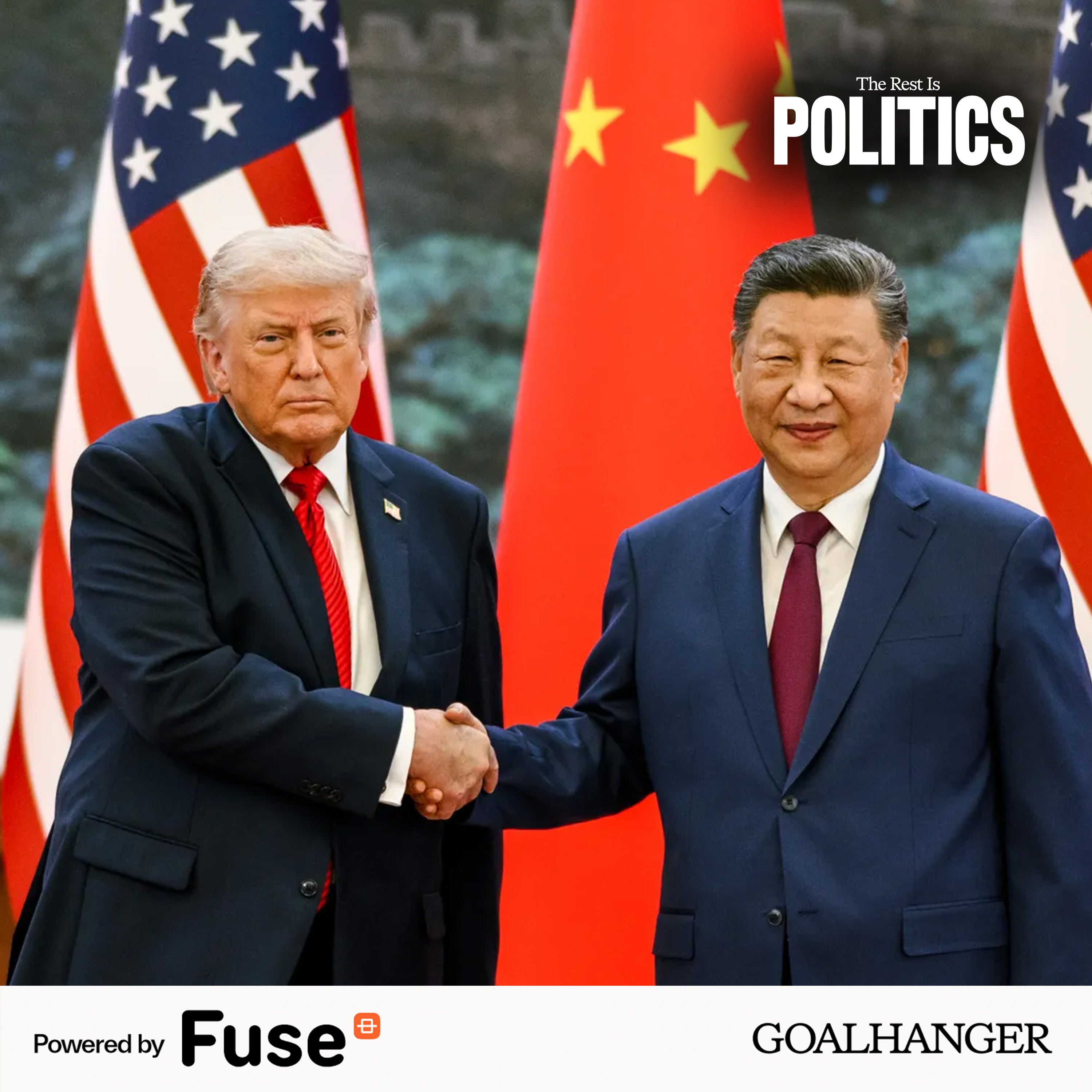
51:02Rory Stewart: And let's return to that again. How does Xi Jinping read this? There's part of Trump's worldview which seems to say you have a sphere of influence. And the sphere of influence logic is Putin gets to dominate Ukraine, the US gets to dominate Latin America, and Taiwan is thousands of miles away from the United States and 70 miles away from China. So the implication of that would presumably be if he doesn't really care about democracy and international borders, which clearly is his position with Putin and Ukraine, that Xi Jinping could help himself to Taiwan. Now, we've just interviewed Kevin Rudd, the former Australian prime minister, and he'd be like, absolutely not.
51:42Rory Stewart: Taiwan is completely different. The United States is a Pacific power, not an Atlantic power. It would be giving up on its whole role in the Pacific if it allowed that to happen. Maybe. But Trump famously has done a lot of things, right the way back to recognizing the president of Syria, the former head of Al-Qaeda Syria, Ahmed al-Shahra as president, which had been right against the advice of the State Department and the DoD and pulled it off successfully. And how does Xi Jinping play this? Does Xi Jinping think, okay, I've got two years, is this my best moment to move against Taiwan? Do I want to risk waiting for a new democratic president to come in?
52:20Rory Stewart: Or do I think this is the time to achieve my legacy? Xi Jinping's not getting any younger. He said again and again that Taiwan should be part of China. Does he move against it now? And that's before we get on to your questions around Iran, which are very pressing, because again and again in the midterms, and I saw this in the speech that he gave us in Chillicotte, amongst that hour and a quarter of rambling was a lot of, I can't allow Iran to have a nuclear weapon. I didn't start this war. This war was started 42 years ago. Once I'm through the midterms, you can expect some action. Yeah, I think I just want to reiterate, because if you listen to the end of the interview that's on leading at the moment with Kevin Rudd, you'll have one of those really marvellous spiky moments where Rory sort of allows somebody to get under his skin.
53:09But before you get to that, you do have a real brain on China and a real brain on Xi Jinping. In the context of what Rory's just been saying, it really is worth a listen. I also want to, final plug of the day, but is the rest is politics series we're doing on Percivillians, because David Blunkett was the interview last week, Clark Carlyle, who actually I'm with this evening because he's going to be unveiled or announced and introduced as he's the new chair of Mind, one of the biggest mental health charities in the country. And he's a guy who honestly shouldn't really be here, given how many times he tried to end his own life.
53:47And thankfully, mainly because he was so physically fit as a professional athlete, he failed. There's so much to unpick in what you've just been saying about the foreign policy stuff. And I wonder if the other thing that's just worth reflecting on is how this changes how other leaders deal with him. Because the one thing that we know about political leaders is that they sense their own strengths and weaknesses, but they also sense the strengths and weaknesses of their opponents. Now, whoever is the president of the United States is always going to be a powerful figure. But Donald Trump today is a lot less powerful than he was yesterday.
54:25And I wonder if you talk a lot and we both support this idea that the middle powers have to be much better and more strategic at using their power in a kind of combined and collective way. And I wonder if that actually helps this process too. People are going to just be a little bit, we're going to be worried about his unpredictability.
54:50Rory Stewart: Alison, does it weaken it? I mean, my anxiety, given that I'm very much on Team Carney, and that that was actually part of this debate, which you'll hear in this leading interview that we just did with the former Australian Prime Minister, that people may be tempted, you know, many, many people in Whitehall in Britain, for example, or indeed in Germany, who don't want to really take the risks and do the tough, expensive work that involves building an independent third leg. So we're not completely dependent on China or the US, but we really have significant strategic autonomy. It's very tough, it's very expensive, and it's going to take a lot of time.
55:29Rory Stewart: And so some people may be tempted to just read these midterms and think, oh, phew, sigh of relief. You know, we don't need to worry again about the United States, we can return to a position of total dependency on the United States. I think that would be a big mistake. I think this is an opportunity. I think this is an opportunity for countries that maybe have just been avoiding having to think about how you deal with Trump and America. There is now a post-Trump America that people can start to think of and be involved in the debate about what it might be. But I think that'll be very, very interesting.
56:03It'll be interesting to see his next big foreign trip, where he chooses to go, how he chooses to project himself. Today's an interesting example of absolute classic Trumpism. You know, he gets a big whack. He comes out basically saying, oh, well, nothing to do with me. And it's not very convincing. It's not very compelling. And the truth is, there's something in him. He will know that today, Mark Carney will be thinking Donald Trump is less powerful than he was. European leaders will be thinking he's less powerful than he was. Now, he may be more dangerous because of that, because he still does have the capacity to do extraordinary things.
56:41But I also think the fact that this debate will now have to be unleashed inside the Republican Party means that that will weaken him further. I mean, there's a reason why it's called lame duck. It's a very, very fitting expression because you can quack as loudly as ever, but you don't really have the weight. And that's just the way that the democratic process in the United States works. And then when people start to talk about his world, he'll start to focus on legacy. I'm afraid, whether he likes it or not, November the 3rd, 2026 is a big part of his legacy because this was the last opportunity the American people had to give a verdict on him.
57:23They're not going to get it next time.
57:25Rory Stewart: Let's cast forward then and put you into the very uncomfortable position of trying to advise a Republican run for the presidency in 2028. What's the best hope if you are J.D. Vance's campaign or Marco Rubio's campaign? So you're thinking, I want to do a presidential run in 2028, or maybe even Pete Hex's, God knows. And you're looking at what's just happened. What's your best path to victory? And here are three things I'm interested in. One is, how do you work with Trump? Do you try to distance yourself from Trump and use the next two years to do that? And in which case, how do you deal with the fact that Trump is going to thump you very, very hard?
58:10Rory Stewart: That was famously the problem for the Democratic candidate trying to succeed LBJ. How do you separate from it? And that was the way in which I think Kamala Harris probably got it wrong with Biden. She was unable to say how she was different from Biden. Secondly, what sort of economic conditions are you looking for between now and the election to have a hope of winning? Is it all about cost of living? And thirdly, again, without being too mystic Meg about this, I think the next election is going to be very much an AI election. Within the next two years, AI will define so much in our economies. either it will have pulled off incredible productivity benefits creating these enormous trillion dollar companies more powerful than ever and putting us in an incredibly dominating position all these tech stocks could go into full free fall and they will be blamed for a full financial recession going into the next economy so uh just any of the thoughts on those three things how do you deal with trump economy and ai well you morphed quickly from advising the republican party to advising the specific two candidates who are most talked about, Rubio and Vance.
59:18And I think you'd have a different take on those. If I were the Republican Party, and I know the Republican Party has been pretty much wholly owned, wholly consumed by Trump, but I think those who are honest enough to recognize that he has become such a big problem, sufficient to give them these disastrous results, they have to start thinking post-Trump. And that means, I think, for J.D. Vance and Marco Rubio, if they don't have some sort of separation from the agenda, then I think they're finished. Vance probably, I'm beginning to wonder whether Vance will even stand. I just don't, I don't think he's got it.
59:59I think Rubio could just about get there. But if the Republican Party only stands, they'd be casting far and wide. They'd be thinking, how do we get beyond this? Now, the problem they have with that is Trump, it's money, and it's the old politics. So if they're going to, a lot depends on who the Democrats pick, but if the Republicans think that the sort of campaigning that has now been shown to have failed in this context, they've got to start thinking about something different. So Vance, if it is Vance, he has to have a reinvention. The Vance that we see day after day after day after day is one of the most high-profile political figures in the world.
1:00:43He's not going to win. He's not going to win. And the Republicans are going to know that.
1:00:46Rory Stewart: What is it that makes you feel he hasn't got it? What is it specifically about Vance that makes you think the guy hasn't got it and maybe Rubio's got more of it? I think Rubio's been cleverer at not getting too drawn in as Rubio, I think, has still got some capacity to project himself as an independent voice. Now, as it happens, I think he's sold his soul. And I think that's always a dangerous thing for a politician to do. And I also feel with Vance, I feel he's, you went to that rally with Trump, okay, in Ohio. And I thought it was really interesting. You said that, you know, and I said, but don't you get bored of him just rambling?
1:01:22He said, no, it was mesmerizing. You said it was mesmerizing. You weren't bored. It was really, really interesting. Two things. Donald Trump said, and I think he's right if i shot somebody in fifth avenue uh my base wouldn't care less i think that's probably true if jd vance shot somebody in fifth avenue he'd go to jail if jd vance stood up and did 90 minute rambles without a script just going from left right and center people would leave the room he doesn't have the thing that trump has that engages people even you in that sort of audience. He's a more bog-standard politician, I would say. And he's not very nice, and he's not very charismatic, and he's intelligent.
1:02:08So for example, I say in my book Percivilliance, when I'm analyzing your friend King Charles' speech, Vance, it seemed to me, was the only Republican in that Congress who worked out what was going on. This was a speech really poking the things that he believed in. So he's very, very intelligent, but I don't think he's got the political appeal. Now, the question then is, are there others in the Republican large family that could come up? And don't forget, the thing that people say again and again and again, said at the last election, including Republicans and Democrats, is this the best offer we can give to the people?
1:02:41That these are the two candidates, whether it was Biden and Trump or Trump and Harris, is this the best we can do? I cannot believe that there aren't people. I'm sure somebody good is going to emerge out of this Democrat race. I'm pretty confident about that because I think there are some, you know, we've talked about some of them today. There's a fair smattering of really effective political potential leaders. There have to be people on the Republican side. Otherwise, I think the Democrats' celebration today will be followed by another one in two years. And I think the AI point is interesting because AI, you're probably right, but think about how AI is seen within the American political context at the moment.
1:03:20We talked before a few weeks ago about how data centers have become this massive issue in some of these swing states. Now, we don't know whether it switched votes, but it may well have played a part. And AI at the moment, when Trump was banging on about the economy's never been better, we're making so much money, the people who voted against the Republicans are saying, yeah, but who is making that money? So the issue, AI is going to further drive the issue of inequality. And inequality is the thing which the Democrats, particularly if they can clean up politics and can actually say, we are different to the Republicans when it comes to money and corruption.
1:03:56That inequality agenda, I think, is going to be really, really big for both the progressives and for the more mainstream conservative Democrats. So I think in all of them, I wouldn't go for Vance and I wouldn't go for Rubio. If somebody came out and said, you guys, you're part of the problem. Somebody news got to emerge in the Republican Party. Otherwise, I think they're really damaged. And I also go back to the point you made earlier. I think Trump wants that.
1:04:22Rory Stewart: Let's just maybe finish by just giving people a little bit of a detailed view on what's actually happened in these races. And maybe I'll just lead on from the point you just made about Republican candidates. One of the things that struck me most is that this has been a night in which some very, very strong Republican candidates who in a normal year would hope to hold those seats have lost them. Perhaps the most dramatic is Susan Collins in Maine, who is one of the most extraordinary survivors. You know, she is incredibly impressive, independent-minded, new Maine in and out, has been there for a very, very long time.
1:05:05Rory Stewart: And she's just lost to Troy Jackson, who is a fifth-generation logger, kind of old very lived in face has just just taken her out there right can i just jump in on on troy jackson i watched his speech as well and it was so different to the others again your point that you made the other day they're all so different his speech was like folksy he kept being sort of giving friendly heckles and he couldn't resist sort of engaging with them all the time so it all became a bit rambling very very different character but you know he won by 53 to 47 uh You know, that's a big swing from where she's been there 30 years.
1:05:40She's got incumbency. She's popular with her base, et cetera. So, yeah, sorry, I jumped in. But Troy Jackson's speech worth looking at as well.
1:05:47Rory Stewart: No, I think Maine is an amazing thing to look at. I mean, look at the other Republican seats that were lost. Ashley Hinson in Iowa, local news anchor, very, very much embedded in that way. a Kansas, Doc Roger Marshall. He's an obstetrician who has literally delivered thousands of his constituents' babies. Army reservist, maybe less than Ohio, people like John Husted, who's like a football star. But there was a range of pretty solid, plausible Republican candidates. And now let's go through the people that won, just as a reminder for people who've not been following it bit by bit. So, incredible upsets, Iowa and Kansas.
1:06:33Rory Stewart: These are deep, deep red states. Iowa, as you said, Turek, who is in a wheelchair, Paralympian basketball star. Kansas, a guy who hasn't got much national and international coverage, but Pastor Adam Hamilton, who is an elderly head of the Methodist church there. And a really interesting vision of even more than Tallarico, somebody who really can talk God in a very measured, calm way. Tallarico, we talked about, he's the geeky pastor and I think mesmerizing politician, the man that I'm most excited by in Texas. Georgia, John Ossoff, well, we began with him. Troy Jackson, we've just spoken about, Abdul Saeed, we've spoken about.
1:07:16Rory Stewart: Sherrod Brown in Ohio. Sherrod Brown is the rumpled, I mean, he is actually a Yale graduate, but you wouldn't think it. He's like 50 years in the Senate, this guy. He just lost last time and has come back in again. Very much the rumpled trade union voice. Cooper in North Carolina. And then finally, somebody we didn't talk about, which is Annie Andrews in South Carolina. Now, she was running against Darlene Graham, Darlene Graham, Lindsey Graham's sister. This was Lindsey Graham's seat. People remember Lindsey Graham. He was actually a big Trump supporter, a big veteran of the Senate, but somebody who was very much associated with trying to defend Ukraine against Russia, and who in a sense, Trump double-crossed having got this Graham bill through.
1:08:05Rory Stewart: He then lifted the sanctions on Putin, defeated by Annie Andrews, who's a pretty bubbly pediatrician. Anyway, I just thought it was to come through on that, an amazing list. And oddly, the one that hasn't yet been declared and won't be declared for some time is Alaska. That is really close. And that's Mary Patola, who is the UPIC candidate running on Fish Family Freedom. that is the race that Fox News was on about all the time. And they tried to make the big scandal of the election. That's the race in which the Republican candidate, Dan Sullivan, the Marine Colonel found himself against another Dan Sullivan, who's literally vanished and who somebody, presumably in the Democratic camp thought would be a good idea to put up to split Sullivan's vote.
1:09:01Rory Stewart: and it is true the guy has got i mean not an enormous number of votes but he's got a thousand a significant number of votes in a very very close race and you can completely see why the republicans are completely disgusted and bewildered that people would try to play that kind of trick because that's that's not a normal thing to do i mean that literally can only be done for one reason which is to try to sap the republican vote and it may be that mary patola is punished for that and sullivan comes through that one is going to take a long time to unpick um and there are a couple of others where whether there'll be full recounts don't know but that that is close and it's like a couple of thousand votes for dan sullivan too and it's kind of it that's one where the leaders changed overnight in a different point so that's good and that's going to take a long time to unpick but that was what was so interesting about the fact that trump conceded so quickly he could have said well we've got to wait till the very end of this let's just see what happens in Alaska.
1:09:56Let's see if we need a recount here, etc. He didn't do any of that. Listen, my final point is just to go through some of the sort of historics, the firsts. And some of these guys we've already talked about. Abdul El-Sayed, first Muslim senator in the United States Senate. Chris Pappas, New Hampshire Senate, first openly gay man elected to the Senate. James Tallarico, your new hero. I think he's taking over from Alan Milburn. First Texas Democrat to win since 1994. That is a long time ago. That was the year that Grace was born, my daughter. And by the way, there are nine tickets left at the Palladium on Saturday.
1:10:36Nine, just nine. And we've got to get it sold out. Adam Hamilton in Kansas, first Democratic Senator in Kansas since, elected since 1932, right? That's before you and I were born. Annie Andrews, first woman elected to South Carolina to the Senate. Amy Acton, first woman elected governor of Ohio. And Keisha, this is a great name, Keisha Lance Bottoms is the first black woman elected governor of any state of the four governors that are now elected. So this really does feel like a big change moment. And it's going to be so interesting now to see how both parties react. But Donald Trump can say all he wants that he wasn't on the ballot.
1:11:17He was the big driver. He's the reason why people are talking about this election all over the world. The backlash has begun. Vladimir, Elon, Donald, Nigel, your boys took a hell of a beating tonight. And that's why I'm in a better mood, despite my rather croaky voice.
1:11:36Rory Stewart: Thank you, Alistair, very much. Been a great pleasure doing this midterms coverage with you. And also, huge shout out to the Goalhanger production team, who were incredible. People will have heard the last two things from Izzy, who was traveling around Texas and most recently Louisiana and of course please do go to the rest of politics.com to sign up the newsletter you can read more of Izzy's reporting there and I'm going to be producing a Sunday read on my tour around the United States but a particular thanks from me for the work of Celine who was there doing some incredible filming Daisy who was doing a lot of and production research and general cheeriness as we travel around the country and bella who led us and drove us uh as you imagine long long american roads hour after hour as well as leading the team staying up all night getting the b-roll together we've got more b-roll than anyone on earth sticking funny cameras out of windows so thank you so much to the goal hanger team for all the hard work no it's been it's been great and uh and you know special shout out to celine for getting you in a MAGA hat.
1:12:45She'll be getting you backing Liz Trust next. You watch. Anyway, there we are. All the best. Speak to you soon. Speak to you soon. Bye-bye, Alistair. Bye-bye.
1:12:54Rory Stewart: Bye.
1:13:14Rory Stewart: The great game. The strategic struggle between Britain and Russia. We assess, uh, Prime Minister. With high confidence, it was Russian. Holding the Russians accountable is World War III. They took down a British passenger jet containing 350 people. The man in the Kremlin is playing, Alex. You've got to ask yourself, do you want to play or not? You're the Prime Minister. You've done nothing! We would need to understand the policy context. All the relevant context will be structured as a framework today. And disseminated into an operation order. Or frago. Or a frago that says to kill the president of Russia.
1:14:02Yes. New from Gaulheimer. Who is going to be able to pull this off? You're my soldier, are you? Sergeant Tom McDuff, Duffy. An audio drama journey like no other. Men like Duffy, they are our most valuable weapons. Devised as a technically rigorous geopolitical action thriller. We have two times friendly key. Where Britain plays its strongest hand. He's the best. Against its strongest foe. Don't do it, Duffy! Bear Hunt. Available now, wherever you get your podcasts.
1:14:41Thank you.
Why did Trump concede defeat so quickly and pledge to work with Democrats, and what does this mean for the final two years of his presidency, including his influence on the world stage? Was this a cost of living election defeat for Trump more than an outpouring of love for the Democrats, and will MAGA’s ‘America First’ worldview persist anyway? After the most highly funded election in American history, could there finally be bipartisan support for tackling the influence of extreme wealth and corruption in US politics?
Join Rory and Alastair as they answer all these questions and more.
__________
Enjoy Rory and Alastair’s interview with Kevin Rudd by searching ‘Leading’ on Spotify, Apple, or YouTube.
Join The Rest Is Politics Plus. Start your free trial at therestispolitics.com to unlock exclusive bonus content – including Rory and Alastair’s miniseries – plus ad-free listening, early access to episodes and live show tickets, exclusive newsletters, discounted book prices, and a private chatroom on Discord.
Go deeper into the world of The Rest Is Politics by signing up for our free newsletter HERE, featuring exclusive interviews, analysis and weekend reads from Alastair and Rory.
The Rest Is Politics is powered by Fuse Energy. Stop overpaying for energy. Switch at fuseenergy.com/politics and get a free TRIP+ subscription.
🌏 Upgrade your online protection with an all-in-one security app! Get an exclusive NordVPN deal + 4 months extra here ➼ nordvpn.com/restispolitics It’s risk free with NordVPN’s 30-day money-back guarantee!
__________
Instagram: @restispolitics
Twitter: @restispolitics
Email: [email protected]
__________
Social Producer: Bex Tyrrell
Video Editor: Caroline Kaye, Oli Ortega, Lorcan Moullier
Assistant Producer: Daisy Alston-Horne, Jake Preston
Producer: Evan Green
Exec Producer: Bella Soames
Learn more about your ad choices. Visit podcastchoices.com/adchoices