 The Rest Is Politics
28 Oct 2026 · 1h

 Add vo to ChatGPT or Claude to ask about everything you hear
vo listened to this episode to put together the overview and transcript, so there may be the odd mistake.
UK Budget analysis (Andy Burnham/John Healey) plus election updates in Brazil, Serbia, and Israel-related context.
Rory Stewart (host; in US during recording) and Alistair Campbell (co-host; in UK watching the Budget). No other guests named.
The Budget frames the economy as “resilient” and offers targeted energy and cost-of-living relief while keeping taxes/spending orthodox. Defence spending is committed at 3% of GDP by decade’s end (3.5% thereafter), with funding unclear. Messaging discipline is better than prior Labour budgets, but pre-briefing/leaks still blur confidence. Globally, Middle East conflict (Strait of Hormuz, Iran) is a major driver of energy and macro pressure.
UK measures include removing gas standing charges, £100 off energy bills for A–D council tax homes, electricity VAT cut funded by a one-off bank tax, and a gambling-company tax. Brazil: Lula wins despite polls; “intergenerational” WhatsApp/volunteer mobilization; Bolsonaro gaffes (nine fingers; Ana Clara incident). Serbia: Vucic loses to the student-led “Student List” coalition; Serbian TV apologized for not holding the government to account.
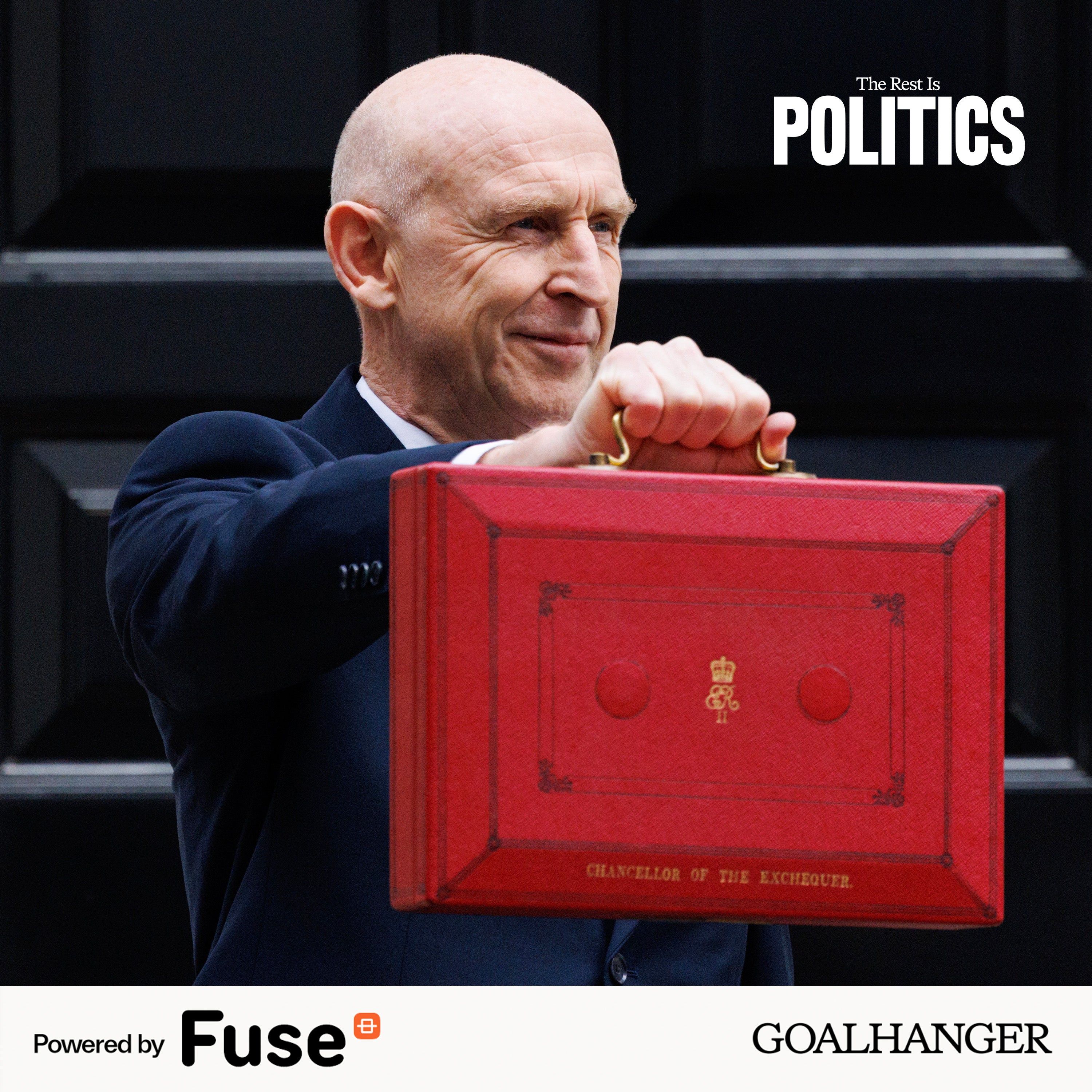
0:00A budget is one of the big moments in any parliamentary calendar and you would think that would be especially the case when you have a new Prime Minister and a new Chancellor. Prime Minister Andy Burnham, Chancellor John Healy and John Healy stood up and gave an interesting assessment about the state of the economy, said he was very, very resilient. He talked about giving some breathing space for now, fresh hope for the future delivered to the British people by this Labour government. There were certainly plenty of announcements. Many of them have been trailed. And there was a big commitment on defence, which is why he and Andy Burnham had a phone call with President Zelensky this morning.
0:39Interesting thing on Budget Day is that the Chancellor is immediately followed by the leader of the opposition, Kemi Badenok, who basically got up and said, is that it? Well, how a budget gets felt by the country in the end is a better judgment than how it goes down on day one. day one. Weirdly, I think both sides were quite happy with the performance of their leaders, what the country thinks. We'll be talking about that for some months to come. This episode is powered by Fuse Energy. Most energy companies are counting on you doing absolutely nothing, not questioning what you're paying, not switching, just letting your tariff roll on, which is costing you hundreds of pounds every year.
1:21Rory Stewart: But the apathy goes deeper than our bills, we've almost given up on energy itself. We seem to all be accepting energy is expensive, the system's outdated, but that complacency is costing us. Fuse Energy does not accept that because the energy transition is not something that just happens somewhere else. Fuse is building an energy company which is designed to bring down the cost of energy. And right now, its tariffs are up to£100 below the off-gem price cap. So switching isn't just about paying less, it's about expecting more from your energy company and it only takes you three minutes. Switch to Fuse at FuseEnergy.com slash politics.
1:59Rory Stewart: Use the code politics and you'll get a free TripPlus subscription allowing you to hear all the extraordinary members content that Alistair and I are now producing for you. Visit FuseEnergy.com for full terms and conditions. Hi, this is Gary Lineker from Goalhangers. The rest is football. This episode is brought to you by Wise. It's only when you start moving money between currencies that you really think about the exchange rate, the fee and what might be hidden away in the small print. Whether you're living abroad, paying someone overseas or just trying to manage your money across borders, you want a fair exchange rate and easy transfer and no surprises along the way.
2:36Rory Stewart: WISE keeps things simple. WISE is a smart way to move the currencies you need around the globe. It works in more than 160 countries and with over 40 currencies. Most transfers arrive instantly. Wise uses the mid-market exchange rate, like the one you see on Google, with no markups or hidden fees. So when money needs to move, you can see the rate, know the fee, and get on with it. Join millions saving billions on hidden fees by downloading the Wise app today. Be smart, get wise, T's and C's apply.
3:13Rory Stewart: this episode is brought to you by nord vpn we work out ways to protect ourselves from unwanted things every day okay rory how do you protect yourself from small talk i say very good to you i've got to get on to get my kids from school yeah you also have another one that you use quite a lot say i must go i've i'm on jordan time i'm on jordan time that's good i'm jordan time i like Okay, how do you protect yourself from arguing with your co-host? I just watch you argue with other people. No, I have this tactic when I think I'm losing my temper, I just rub my thumb and my index finger together. That's what I do, and I just calm down.
3:49Yeah, that's cool.
3:50Rory Stewart: And how do you protect yourself from online scams? Well, the answer is I find NordVPN useful for that. It's not just a VPN app. They've built in next-gen antivirus block scams, phishing attacks before they reach you, so you can carry on knowing you're secure. To get the best discount on your NordVPN plan, go to nordvpn.com slash rest is politics you'll get four extra months free on the two-year plan plus a 30-day money-back guarantee the link is in the episode description
4:22welcome to the rest is politics with me rory stewart and me alistair campbell and rory is in the united states i am in the united kingdom where i've just been watching the budget john Healy's first budget and Kemi Badenowicz's response. And we're also going to be talking today about three extraordinary elections in Brazil, in Serbia, and of course, in Israel. But Rory, shall I kick off by sort of trying to tell you what happened in the budget? Give us the classic explainer of what the main points of the budget were. Well, it was long. It was about, John Healy's speech was about an hour long. And, you know, I don't think it's going to get down in history as one of the sort of, you know, epoch-making budgets of our time.
5:05But there was a lot in it in terms of announcements and argument. The narrative they were trying to frame was breathing space now, growth in every postcode, fresh hope for the future.
5:19Rory Stewart: And I guess the reason why listeners will be excited and want us doing the budget rather than just snoring is this is the first budget of the new government, right? It's the way in which Andy Burnham is going to define what the difference is with Keir Starmer and John Healy, what the difference is with Rachel Reeves. And is this the budget that's going to define the strategy of Burnham and help him win the next election? Is that right? Is that the kind of background on why we should be caring about this budget? Yeah, you definitely would. That was how normally I would want to see a budget. But it was interesting how much they were pointing to things still to come.
5:52the 10-year plan, the spending review, the Milburn report, the Tim's report. There were these things that they were indicating that they would be coming down the track. So essentially what they were doing was framing this sense of the economy being more resilient than maybe we think. And they were pointed to figures from the Office of Budget Responsibility, from the International Monetary Fund, and so forth. But I think it was very interesting to watch John healy do the budget getting a very very very warm response from the labour back benches but then kemi badenok the troy leader sort of came straight in and it reminded me a little bit of the title of bob geldoff's autobiography which i think was called is that it and and she was she was at her usual pretty snarky best and essentially saying there just wasn't enough in this and also the the tories are obsessed with this line that labour are addicted to welfare and there was nothing on how they're going to get the welfare bills down and so forth.
6:50For me, in terms of the things I think you would find particularly interesting, I think it's the first time that I've heard him on the record in Parliament commit in the way that he did to 3 % of GDP on defence by the end of the decade and 3.5 % beyond that. Unclear exactly how that's going to be paid for. I think there was a little bit of, again, that's something that we're going to be announcing in due course. And also quite a lot about AI, your obsession, and this new idea of a data center covenant, that people can build data centers, provided that there is a sort of local commitment to understanding the role of jobs and the environment.
7:31And tell me if this is a new idea, that if they couldn't get connection into the grid straight away, that the data centers would be able to generate their own power, subject to those concerns. And then the rest of it was really just, I would say, helping particularly people who are really, really struggling with energy bills, both businesses, small firms and medium sized firms, and also family. So getting rid of gas standing charges, this new idea, which I don't think I'd sort of trailed anywhere. If you're an A to D council tax home, you're going to get 100 quid off your energy bills. The VAT cut on electricity bills is going to be taken forward, paid for by a one-off tax on the banks.
8:18And then other measures that are going to be paid for by a tax on gambling companies. And then the other thing that was interesting was there was quite a lot, I felt, of pointing to issues related to women. fresh commitment on the gender cap, talking about an entrepreneur's fund, particularly for women who are starting up businesses. I thought that was quite interesting. And then also paternity leave for self-employed men. So it was a kind of, you know, on the big picture on the economy, he was basically trying to paint the picture that this is resilient economy, which is going better than people maybe feel.
8:55But he was acknowledging that people's living standards feel very, very challenged, energy prices in particular. So a few things on that. And then, you know, big picture stuff on housing, defense and AI. So that's how I would summarize it, having literally just left my sofa where I watched it.
9:11Rory Stewart: Very good. So I guess I'm coming in from Dayton, Ohio, where I am now, and maybe that's a kind of horrible 10 ,000 foot view listening to you and having just caught the end of Healy's speech. I suppose if I was going to be challenging, let's imagine I was like an American journalist covering this. I might say this sounds pretty boring. It doesn't sound like anything really big is happening here. It sounds like a budget which is giving some relatively small giveaways to people who are feeding the financial pinch, but it's in the region of a few hundred pounds. It's reassuring, I suppose, for people who were worried that there were going to be big changes.
9:52Rory Stewart: There's not been any big changes on tax. Although I'd like to come back to that because one of the things that has kept going wrong with labor budgets is this tendency to pre-brief in advance that there are going to be raises in wealth taxes and are going to be raises in capital gains tax, or maybe not pre-brief, but leaking from unhelpful members of the Labour Coalition and from think tanks and funds who are really keen on these things, which actually terrify business and which the chancellors never do. To be fair to Rachel Reeves and John Healy, what actually happens is that they're staying with relatively orthodox economics.
10:32Rory Stewart: They're not going for wealth taxes or racking up capital gains tax. But there's this horrible thing that for months before these budgets, all the left of the Labour Party and the think tanks talk this stuff up, which I think has a freezing effect on confidence and investment, makes the government seem much more left-wing than it actually is, puts off international business. And then when the budget actually comes, it turns out that broadly speaking, Reeves and Healy are pretty conventional, trying to keep taxes down, trying to keep public spending under control, trying to reduce borrowing, trying to reduce the deficit, not doing any of the stuff that the left of the Labour Party would like them to do.
11:10Rory Stewart: But this muddled messaging, I think, is a problem. And I don't know how they allow this to happen in the run up to the budget, rather than stamping on the journalists in a way that I imagine you would have done. If the message is, we are sticking to the fiscal rules, there are not going to be wealth taxes, nothing's changing you can invest in this country you can expect the next three years to be a pretty predictable situation where we're going to keep taxes under control borrowing under control spending under control then hammer it home and come down like a ton of bricks on these people who for the last two years keep trying to feed these stories saying that they're going to go left on wealth taxes yeah well that is a lot easier said than done i think one of the difficulties the kia starmer government got into was that was such a big gap between the election of the first budget.
11:55That is not a mistake that they've made this time. I actually think the discipline on this budget has been better than previous budgets. It's very, very hard though, with a budget, because you say come down like a ton of bricks. The minute you start defiantly, adamantly denying one particular story and one particular outlet, the next one that pops up, you're expected to have the same reaction. You've got to take a judgment. I actually think the discipline on this has been pretty good considering i do think we've got into a habit in recent years of just briefing out too much of budgets in advance there's been a little bit of that on this one whether that's been sanctioned leaks or it's just been chatter i don't know but i i think it'd be very difficult to to do what you're suggesting without then getting drawn into endless running commentary because the truth is budgets and they're like reshovels they just get people just love to write about them in advance.
12:50One thing you'll guarantee is that no journalist will today draw attention to stories that they've written where they predicted something that hasn't happened, okay? Or what they'll do, they'll do what you just said to say, this was down to think tanks briefing it out, or a cabinet minister saying, I like it if they did this. So I think the point about whether it's, your word, a bit boring, I actually found it quite interesting to watch as a spectacle because I could see him balancing all sorts of different challenges. He's got the BEMPs behind him that he wants to kind of make think there's a plan and make think that get them going back into the constituencies with something to sell.
13:31He wants to discomfort the opposition, which he did in a couple of ways, although Kerry came back pretty hard. But he also has got this problem with the markets where the truth is, whether we like it or not, the reaction of the markets will be an important judgment on the budget. Now, the immediate reaction seems to be pretty stable. We're recording this literally immediately after Kemi Badenow's response. So somebody can tell us if I get that wrong very, very quickly. But I think that, so I think what he was trying to do was actually what you're saying. Steady as she goes, the fundamentals are pretty strong.
14:06He mentioned, I lost count after a while, but at least five or six times he mentioned the conflict in the Middle East. He basically, he wasn't doing it in a sort of big way, I blame Trump. But he was basically five or six times, he said, and because of what's happening in the Middle East, because of the Strait of Hormuz, because of the difficulties caused by the war in Iran, he mentioned that several times. And that was, I think, the sort of backdrop they were trying to paint.
14:33Rory Stewart: That's something, again, which here in the US barely features, but is one of the really biggest themes in the whole global economy. So what's happening in the British budget will be repeated in the French budget, the German budget, the Japanese, the South Korean, and my goodness, any of the Gulf budgets. that the single biggest thing when people say, you know, is it China shock too, or the US that's really disrupting the global order, you can make a pretty good argument that, yes, China is subsidizing businesses and tech and has got a very weak currency, and that's undermining over the medium term European industry.
15:11Rory Stewart: But the short term impact of these US-Israeli fight with Iran is unbelievable because it's almost boring to keep coming back to it, but the scale of it is so enormous. I mean, this is 20 % of the world's oil, an astonishing amount of the liquid national gas, fertilizers, but also a lot of specialist products used for things like plastics. And all of this means that America is not feeling it as much directly because they are a net oil exporter, they're energy independent. And the pressure put through particularly energy prices on all its main allies from Britain right the way through to Japan is absolutely unbelievable.
15:51Rory Stewart: One more quick thing, I think, just on the macro picture. It's worth pointing out what's happening under the surface. So, as you say, Andy Burnham's budget feels like a relatively stable budget, which probably won't frighten the market, and with any luck could actually reassure investors, which is what we desperately need to keep growth going in Britain. And that's why I sort of actually wish that there'd been clearer messaging for two and a half years from Labour saying that's the kind of government they wanted to be. I think Gordon Brown would have given us that. I think that would have been a new Labour message that this is an investment friendly pro-business government and really leaning into the idea that their promises on taxes and borrowing are real and they're not just an accident that happened to beat the Tories.
16:35Rory Stewart: The problem is that so often, those fiscal promises which Starmer and Reeves made were presented as being a sort of necessary bit of political calculation in order to defeat the Tories in the election. But they were never really owned by Labour as being the central part of their economic and growth strategy. And that's what they need to do. Instead of turning it into, we made an error in the election, and we're regretting it ever since, lean into it and say, boast about it and say, that one great thread that's going to run through all our governments is this is going to be a government that's going to try to keep tax under control, spending under control, borrowing under control, bring the borrowing down, not put up the main taxes, and face down the Labour left.
17:19Rory Stewart: You know, make an ideological fight about it. This is a government that's not going to do wealth taxes, not going to put up your taxes. This is a pro-business friendly government rather than sort of apologising for that stuff. Yeah, he wasn't apologetic about that. And just your point about the fiscal rules, I mean, it'd be very interesting when we, because it was, you know, this is the first time I think I've heard him set out this, such a firm commitment on defence. But then when it came to explaining the funding, I think we're going to have to look at that pretty closely. I think it sounded quite complicated.
17:53Maybe there are ways of sort of tweaking the fiscal rules when it comes to looking specifically at what he's announced on defence. But the other part that I think you'd have found very interesting, there was a big step on fiscal devolution. There was essentially talking about the rates and taxes that were raised in local areas being kept in those areas. And again, how that works in practice, we shall have to see. But it was, in a sense, it was of a piece with some of the broader messaging that Andy Burnham has been talking about rewiring the state, getting more economic activity within localities.
18:30There was another part of the speech where he was announcing relatively small sums of money, $3 million here,$10 million there,$15 million there. I know it sounds like a lot, but that in government terms is very, very small, but in specific places for specific projects. So listen, it was an interesting – he delivered it pretty well. He's not the most naturally charismatic sort of politician, but it was delivered with a certain authority. I didn't get the feeling that the response by Labour was, as it were, staged at the end. You know, I love these little rhetorical bits where there's a rhetorical style, which you then know what's going, coming.
19:14So I took it, I noted it down. My message to Banks, I celebrate and I'm grateful for the role that you play. You just know that is proceeding. and therefore I'm going to put 3 % on the bank's surcharge. But he did have a very good line there. As you know, I've often felt that the populism is caused by the global financial crisis, socialism for the banks, austerity for the people. And he did say in terms, the British people helped you out 20 years ago, almost 20 years ago in the crash, and now you can help the British people out through this difficult time on their energy bills kind of thing. So, you know, I think putting it all together, I'll be very interested to see because budgets normally, you know what happens, the FT does a sort of 24-page pullout, the news does sort of, you know, hours and hours of discussion.
20:06There's a lot to discuss. What there isn't is a sort of, you know, a big strategic shift. And I think actually that is part of his messaging. He even started, the only time where I felt the Tories were really laughing at him was when he did a big tribute to Rachel Reeves. Because they're all sitting there thinking, well, if she was that good, why have you got rid of her? Final thing for me is just to look at the big macro economic picture of Britain and how very much the British economy has changed over the last 20, 30 years.
20:38Rory Stewart: Not just since you were in office. I mean, the changes there have been unbelievable. The amount of tax as a percentage of GDP has exploded. When you were in office, actually tax as a percentage of GDP in Britain was quite low. We weren't a very heavily taxed country. We're now a very heavily taxed country. Debt interest has also gone through the roofs. But that's also true even since I was last in government in 2019. And if you look at the figures there, in 2019, tax as a percentage of GDP was still only about 33 % of GDP. It's now at 36.3 % heading to 38.5%, which is the highest level basically that it's been since the war.
21:20Rory Stewart: public spending gone from 38 % up to 44%. Total expenditure from about 880 million when I was in to about 1.3 trillion now. And the percentage of the money spent on debt, again, when I was in in 2019, 3.7 % of the budget was spent on debt interest. It's now at 6 % heading to 7%. And at the same time, health spending, when you were in with Tony Blair, was about 26 % of what the government was spent on health, it's now 43%, gone from about a quarter of the amount of money we spent was on the NHS to nearly half. So that goes along with also£118 billion in tax rises, of which nearly£50 billion came from the Tories, and between£65 and£70 billion of tax rises came from Rachel Reeves.
22:12Rory Stewart: And the oddity of it is that the public don't feel this. So massive increase in taxes, both in real terms and as a potential GDP. But it's not really feeding through into improvements in public services, because so much of this is just paying for past commitments, for COVID spending, for debt interest. Which brings us to the final point, I guess, which is the great cliche, which Rachel Rees began with, which is growth. And where is the growth strategy? Because if you're just trapped in a world where all you imagine you're doing is redistributing the pie, you know, cutting spending here, increasing taxes there, borrowing a bit more there.
22:48Rory Stewart: The only way out of that trilemma is growth. And that's where I'd like to see them saying, you know, we're going to learn from France, which is able to build roads for a fraction of the cost, has much cheaper energy bills, can get its nuclear power stations built much more cheaply does. Much better riots. Better riots, yeah. But we can learn from Sweden, which has more billion dollar startups than anywhere outside Silicon Valley. So I'd like to see a sense of, you know, what are we doing on planning? What are we doing on attracting entrepreneurs? Are we ever going to be able to unlock this story that we keep hearing that the UK pension funds have a huge amount of money, but they're not being used in the way the Canadian and Australian funds are used to really finance business growth and buy shares?
23:33Rory Stewart: And then finally, I think you'd probably add the European Union. Yeah. He was definitely trying to tap into the kind of keeping entrepreneurs here and supporting young entrepreneurs, supporting women entrepreneurs, etc. Europe actually, we'll maybe move on from this now, but that was the big clash of Prime Minister's questions which preceded it, where Kimmy Baden-Ock was trying to get Andy Burnham to say that he wanted a referendum on freedom of movement. He kind of didn't go anywhere, but I think it's interesting how Andy Burnham is definitely sticking to his guns and saying we have to have a debate about our relationship with Europe.
24:04Just a quick thing before we move to these extraordinary elections, We got some very interesting briefing from Luke Trill, who's one of our leading pollsters, and some really interesting stuff in what he was saying. And your point about tax, there's been a sense, most of the time I've been around, where when you ask the public, do they prefer more public spending on health and education or tax cuts, generally, the bigger numbers will go for the public service investment. That appears to not be the case at the moment. And the other point he was making is that energy bills are now the number one kind of cost of living issue for people.
24:46And the feeling, and this is where Labour have got to still be worried about reform in a way, is the feeling in what Ed Miliband used to call the squeezed middle, is that the people who are very, very poor get a lot of support from the government. And the people who are very, very wealthy get away with whatever they want. and the people in the middle are the ones that are really, really struggling. So I think that's why a lot of the messaging was aimed at them. Anyway, the analysis of the budget will go on at least until next week when you'll be back in the country and we can maybe revisit some of the reactions then.
25:22But that's my take on the budget. Which of these three extraordinary elections would you like to start with? You've got Brazil, you've got Serbia, you've got Israel. If you want a low turnout election, we also have the Bulgarian presidential election with a 22 % turnout. So we could...
25:40Rory Stewart: 22 %? Wow. Yeah. That makes local council elections in Britain look very respectable, doesn't it? Yeah, not good. Not good. Okay, let's take a quick break and let's come back to Brazil. This episode is brought to you by Lloyds. Now, the political landscape, as we talk about in the podcast all the time, is changed out of all recognition. Brexit, Trump, Ukraine, there's so much stuff going on that maybe we couldn't have predicted a while back. No, it's absolutely unbelievable. If you look at just what's been happening in the last few days in Ukraine, it's something that we could never have dreamt of.
26:11Rory Stewart: What's happening in the Strait of Hormuz, what's happening in Yemen? Basically, the whole world order is being reorganized around us at a startling rate. And that all leaves people with a challenge, not just about thinking about politics, but how on earth do you make sensible financial decisions when some of the most fundamental assumptions that we've had about international markets being turned on their head. Which is where Lloyd's comes in. Their ready-made investments are designed by people who want to build towards their future but don't know where to start. You can choose your investing style, cautious, balanced or adventurous from as little as£50 a month, all with the backing of Lloyd's experts.
26:44Rory Stewart: Click on the Lloyd's app or visit lloydsbank.com forward slash investing to find out more about Lloyd's ready-made investments. Capital at risk with investments, values can fall as well as rise minimum investment amount subject to change. Starting a business can seem like a daunting task, unless you have a partner like Shopify. They have the tools you need to start and grow your business. From designing a website, to marketing, to selling and beyond, Shopify can help with everything you need. There's a reason millions of companies like Mattel, Heinz, and Allbirds continue to trust and use them.
27:18Rory Stewart: With Shopify on your side, turn your big business idea into... Sign up for your$1 per month trial at shopify.com slash special offer. Does checking your bank statements feel like digging through a dusty attic full of forgotten subscriptions and old free trials? Experian can help take the pain out of canceling by handling it for you. Think of it as Operation Get Your Sanity Back. Over 200 subscriptions are cancelable. So get started in the Experian app and see how much you could save. Results will vary. Not all subscriptions eligible. Savings not guaranteed. Paid membership with connected payment account required.
27:56See Experian.com for details.
28:02Rory Stewart: Welcome back to The Rest is Politics with me, Ernest Campbell. And with me, Rory Stewart. And as we promised, we're coming back to this incredible Brazilian election. I think we want to start with this because it's part of a general theme that we keep coming back to, which is what a different world we live in and what a nightmare it must be being in the polling and prediction business. Because basically, universally, every single poll, newspaper and analyst in the world believed that President Lula, the incumbent president in Brazil, was not going to win the second round of the Brazilian election.
28:38Rory Stewart: And you could have made a very strong argument. Nobody even bothered to consider the possibility, basically, that he might, because Flavio Bolsonaro, Bolsonaro's son, had beat him in the first round. And in Brazilian history, nobody who'd lost in the first round had ever gone on to win in the second round. And in fact, even more than that, it was clear that there were a lot of other right-wing candidates whose votes were expected to go to Flavio Bolsonaro. Add to that the fact that incumbents are very unpopular, the Brazilian economy is not going very well. And it looked as though Bolsonaro had an attractive offer, particularly for working class people and small businesses.
29:18Rory Stewart: And it looked like Lula's defeat was absolutely guaranteed, instead of which 10 million new voters came out of nowhere, either flipping from right wing candidates or who hadn't turned out before. And for the first time Brazilian electoral history, the turnout in the second round was higher than the first round. And this incredible political survivor who's right up there with Netanyahu and Trump and one of the great comebacks of all time. President Lula, one again. Over to you. There is a word for what he did, Rory. The word begins with P. Somebody wrote a book about it. Is it Percivilience? Is it Percivilience?
29:53He is very, very Percivilient. The other thing that, and the thing was, it was about old-fashioned mobilization, because he had Meta. He was involved in this long-running legal battle because Meta was being accused of sort of, you know, putting the brakes on any promotion of Lula. Bolsonaro was getting a kind of free hit on the social media networks. He had, Bolsonaro had, you know, a lot more money, a lot more support in the traditional electoral way. They had a rally in Rio. A million people turned out. And the other thing, I was talking to somebody involved in the campaign the other day, they said, you would not believe how many, what they called intergenerational campaigning, where they were getting young people to take old people and old people to take young people.
30:43And they had this guy who started a new WhatsApp channel for Lula. And by the end of it, they had 11 million people on this. And they weren't just using it to sort of, you know, say Lula's great, Bolsonaro's terrible. They were saying, we need volunteers now here. Here's a video of Bolsonaro that you should all share now with all your kind of moderates. So it was extraordinary. Of course, Bolsonaro, he was a terrible campaigner. I'm afraid he admitted himself he didn't have his dad's kind of charisma or political skills. He made a couple of terrible mistakes. The first is in the last debate, he referred to the fact that Lula's only got nine fingers.
31:26Well, the reason Lula's only got nine fingers is because he lost a finger in an industrial accident as a young man. and it allowed Lula just to remind people he's a kind of come from a tough working class background against this sort of silver spoon posh boy. And then the other thing he did during the campaign, he took time off to defend a police officer who had killed a young girl. And the girl was called Ana Clara. Okay. And she's dead. The mother of Ana Clara turned up at one of the debates where Bolsonaro was speaking, and she spoke about this. And Bolsonaro tried to do a kind of nice, empathetic, Andy Burnham-style, warm, friendly communication, but he called her Ana Clara, the dead daughter's name.
32:12And the woman just shouted out, screamed at him, she's dead. And this was like, and of course, he had to apologize and all that, but these are terrible mistakes. So he made two terrible gaffes in the last couple of days. And meanwhile, Lula, who's in his 80s just had a kind of, I don't know, because the first round, Lula was lacking in energy and suddenly he found this energy. Maybe Donald Trump shipped him some of his energy drugs. I don't know, but he looked pretty impressive. Listen, it's now going to be tough, though, because he's got a right-wing Congress, a lot of right-wing mayors, a lot of right-wing regional government.
32:46But it is going to be studied in the per-civilian comebacks of all time. There's no doubt about that.
32:52Rory Stewart: So over the last 18 months, there have been seven straight wins by right-wing leaders in Latin America, and we've covered all of them. It's been an incredible sequence from Argentina through to Colombia and Peru. And it looked like this was going to be the eighth. And Trump was all lined up for that. And of course, predictably, Donald Trump's now come out saying that it looks like another rigged election. So that's, I think, interesting also, the way in which we think about narratives that had he lost, which it looked almost certain as though he was going to lose, we would have had a very, very strong narrative, as it were, of kind of Trump, right wing, people taking over Latin America, which has suddenly been weirdly interrupted.
33:35Rory Stewart: And we'll get onto that, maybe whether the same things happened in Serbia. Yeah, and it's the fourth biggest democracy in the world. The other thing that you often talk about is gerontocracy, right? These guys are unbelievably old, right? I mean, it's staggering how old people like Trump are, Lula are. You know, Lula was in as president from 2003 to 2010, right? I mean, he was right at the height of, he was like a kind of New Labour pinup guy. Obama called him the most popular politician on earth. He was all about poverty, climate change, hunger. And then he got caught up. And this is the other thing that is so difficult.
34:16Rory Stewart: People talk about Latin American politics as corrupt. And a lot of the Brazilian election was fought around the subject of corruption. And corruption and crime are right at the heart of all these Latin American elections. But in Brazil, you see it in a way that you don't see it elsewhere. I mean, And you'll remember the Petrobras-Odebrecht scandal in Brazil, which implicated, get this, 271 out of 594 members of Congress were directly implicated in the scandal. 271 out of 594. Lula himself, who obviously, for people like you and me, is a kind of progressive hero, was sent to jail, right? And there are transcripts of him saying on phones, why can't we intimidate the prosecutors more?
35:04Rory Stewart: He had wine cellars full of wine given to him. He was paid millions of dollars for speeches by construction companies. He had beachfront residences done up. And there was this particular thing, which, you know, right at the heart of it, which was a senator called Delcidio de Amaral, who just sat there and in his plea bargain just revealed every unbelievable deal, the colossal bribes, the hush money, the cover ups, the paying money to vote buying businessmen,$3 billion of bribes. And Dilma Rousseff, who was Lula's successor, tried to protect Lula by making him, the ex-president, her chief of staff, so that he could get immunity from prosecution.
35:53Rory Stewart: So it's important to understand that this guy who's portrayed kind of as a good guy, you can see why Brazilians are just horrified. And indeed, actually, I'm afraid this is true in a lot of Latin American politics. I mean, often when people say it's corrupt, I'm looking for examples. And I hope I've given a little bit of an example of what we mean by saying this politics is corrupt. The final thing is, it's not just the historic corruption, it's what's going on right now. So listeners who are paying attention on Brazil will have followed the reporting around this Supreme Court Justice, Alexandre de Moraes.
36:29Rory Stewart: He was the guy who put Bolsonaro in jail. He was the guy who shut down social media sites, jailed rioters. He then faced sanctions from Trump and was attacked directly by Trump. And he's now been sucked into corruption scandals because texts have now been released in which a disgraced banker, Daniel Vaccaro, has been sending texts pointing out that he gave tens of millions of dollars to the Supreme Court Justice's wife's law firm. As usual, we've got Brazilian corruption right up to the date, taking out both the heroes of the progressive left and the heroes of the right. And often it's the same people who are being linked by journalists to payment and influence on both sides.
37:14Well, don't forget as well, Bolsonaro, senior, sentenced to a long prison sentence, although he's now serving his own home. And Bolsonaro Jr. has, it seems, fled the country um not least because he was worried about a possible investigation into money laundering um so yeah we're talking about fairly unsaintly politics just just on mill a by the way you mentioned argentina i don't know if you saw this rory he did a absolute he's losing the plot he's going full kind of trumpian he did a speech the other day during which he named he called out five journalists and he named them and said they should be burnt at the stake um which you know when you think about some of the kind of horrible stuff that happens to politicians at the moment, it just sort of seemed a really, really weird thing to do.
38:02Before we go into Serbia, joking aside about Percivillians, and by the way, thank you for your excellent interview. I'm sure it's one of the reasons why the book has gone straight into the top 10, Sunday Times, very pleased about that. But I do want to draw attention to the next interview in our series, because we talk a lot about politicians like we've just been talking about who are a bit this and a bit that and a bit the other and this is an interview with David Blunkett and I just think it's really interesting I think it's the team who were in the room which has recorded it said it's one of the most inspiring uplifting episodes that they think we've done and so this is David who's been blind all his life became one of the most impressive and important figures in our in our government and he's just so interesting talking about how you live with blindness when you're doing a job as difficult as the jobs that he has done.
38:53And also a wonderful bit where he talks about his relationship with his different dogs, the dogs that have been his guide dogs down the years. And also some pretty compelling assessments of why politics and politicians are maybe not what they used to be. So if you want to listen to that and all the other episodes in the series, just go to the The rest is politics.com forward slash club. Now, Rory, your very close friend, Alexander Vucic, who you got very close to when I introduced you to him in Belgrade. That's a joke, listeners. You should listen to the episode.
39:27Rory Stewart: What do you think of Serbia? Well, amazing. Absolutely amazing. So there again, again, as a sort of brief explainer, Alexander Vucic was one of these figures who seemed like the most incredible political survivor. He was somebody from the right who had made the most disgusting statements as Milosevic's propaganda chief. And the guy that was almost working as your opposite number during the Kosovo campaign, who was on record saying that he thought that I think it was that 100 Bosnians should die for every Serb, which he later said was just a figure of speech, whose government, although he kept a little distance, but not much distance from it, essentially took back Ratko Mladic, the war criminal who was responsible for the Srebrenica genocide, to something pretty close to a state funeral when he returned a few weeks ago.
40:19Rory Stewart: A man who dominated the media so that when we were in Serbia doing that election, someone from the British embassy had basically got themselves caught up in a horrible situation in a provincial town. and the control that Vucic's team seemed to be able to have over the media and the way that they were able to replay the bits of our interview that seemed positive to him right across the national media were unbelievable. And he then took this gamble, sort of Macron-esque gamble that he'd hold an election earlier than he needed to. And so that he could remain in power because he'd finished his presidential term, he would run as prime minister.
40:59Rory Stewart: And people were arguing that this again, was a classic example of the way in which democracy is subverted and the way in which people rewrite the rules. And it seemed very difficult to imagine how somebody who'd stitched up so much the media and stitched the rules in his direction was going to lose. But boy, he lost. And he lost to nobody. I mean, that's the amazing trick. He lost to a party with literally no leader and nobody that anyone could identify. He lost to a group of anonymous people. Over to you. Well, they're not anonymous in that they were teachers and economists and doctors and just people taken from civil society, really.
41:43But just a point on the media side of things. Because remember he said in our interview, oh, the media give me a really tough time and you don't understand. I'm on the back foot, I'm the victim, et cetera. The main Serb TV station read an apology to the nation the other night after the election. One of their star news readers said, you know, we owe you an apology. We did not hold them to account. We did not tell the truth about this government. You know, absolutely straight out there. And some of them resigned and sort of whether in shame or they were hounded out, I don't know. But this is, I think, one of the most interesting elections that's been for a long time anywhere.
42:25because you say they're nobody in that they're not recognized politicians so we've talked many times about this novi sad this collapse of a of a canopy in a railway station 16 people killed lots of then demands for the contracts to be exposed the contracts were revealed lots of corruption was was exposed and this they call themselves the student list but you know one of the cleverest things they did they said that none of us are going to stand none of the students who started this because they were saying we don't want the power we want to change the system they then had this kind of like a mass citizens assembly type getting the different candidates to stand and they've got they've now got a majority you know they've got 100 more than 140 out of 250 seats they got over 50 of the vote um and they're now going to have to form the government and it's interesting, we should put in the newsletter of a guy I know very well, he worked for me for a while, a guy called Kevin Keith, who now campaigns on the role of civil society in different parts of the world.
43:32And he wrote a really interesting piece on LinkedIn. I'll just give you a couple of lines. For years, power in Serbia had one face. The movement that has defeated it has thousands. For more than a decade, Aleksandar Vucic dominated politics. On Sunday, he conceded defeat to a student-led movement that refused to organize around a single leader. And he says this, we hear a lot about the loss of trust in institutions. I long believed it's not lost, it is displaced. It leaves those who will not answer and looks for those who will. And if you'd have said, even when we were in Belgrade a few months ago, Rory, if we'd have said, aren't you worried that a bunch of students might actually carry on with this protest that's been going on for months and months and months, and they'll try and field a slate of candidates from civil society that worried him.
44:21Rory Stewart: He would have laughed at us. Absolutely. Which is why he held the election, because he can't have thought this was a significant threat, or he wouldn't have triggered an earlier election. And I think a couple of things that strike me. One of them is that it's something that almost feels like a throwback, 15 years to the Arab Spring, which again was a very, very anonymous, almost social media, a civil society organized movement without obvious leaders that toppled someone. And of course, raises the question, what next? Because this is a very odd coalition. We want to believe, because they took down Vucic, that they're necessarily going to be pro-European, sympathetic to Kosovo, nothing of the sort.
45:02Rory Stewart: There's a lot of ethno-nationalist Serbians in this group. There are people who want to lift sanctions on Russia. There are people who are very supportive, actually, quite a lot of the nationalist rhetoric. They just want to get rid of what they saw as a corrupt, useless government. And of course, that's a bit reminiscent of what happened in Hungary, because again, Peter Moglia is again, not a left-wing politician at all. He's very much from the Fidesz-Orban tradition. He is, in a sense, sort of right-wing nationalist populist who represents people who just were so fed up with the corruption and uselessness.
45:35Rory Stewart: So there's a sort of sense in which governance issues have become separated from ideological issues. However, as we said with Hungary, it may begin to unlock things. There is an opportunity here. Vucic, although he was very good at charming people, was a big problem. He was a big problem for security in the Western Balkans because he was perpetually threatening Kosovar Albanians, threatening to back Republika Srpska against Bosnia. He was very, very much flirting with Trump. He had a very strange relationship with the United Arab Emirates, which hasn't been covered much in depth and is something we can get onto in the future, which is the way that particular Gulf stakes create these kinds of alliances.
46:18Rory Stewart: It was an alliance which was with the UAE and not with Saudi or Qatar, and something very interesting going on there. And I'd hope that this might be an opportunity to give a little bit more energy into at least ideas around single market. The other thing that's coming down the line, which I'm going to talk about, but you may not wish to join me on because he's a friend of yours. But Eddie Rama is facing real trouble. So Eddie Rama, the president of Albania, another enormously tall figure is in real trouble because he got, again, too bloody close to Trump. and Trump's property deals and Trump's family and the Board of Peace and all this sort of stuff, which a lot of these Balkan politicians get dragged into.
47:06Rory Stewart: And maybe they feel that their countries are too weak, too marginal to be able to stand up with the European Union against the United States. But he is in real trouble. And he who, like Vucic, has been a great survivor, may well be coming to the end of his tenure too, which again could unlock new possibilities in the Balkans. Yeah, just this point about Trump. So I'm just reading this book at the moment, it's French, Marion Femme Extrême. It's a profile of Maloney, Le Pen and Alice Weidel. But there's a really interesting passage in there about how there was a time when all three of them wanted to identify themselves very closely with Trump.
47:47And it's just interesting to see how she analyzes how they've all just slowly sort of, you know, we want to forget the things that we said about Trump. Trump will never see himself as a negative, as a liability, but I think he probably did damage Bolsonaro ultimately. Lula was able to present himself in that way. And likewise, Vucic liked to project himself as being friendly with Russia and friendly with America. Just before we go to Israel, Rory, Steve Rosenberg, the BBC guy in Moscow, who we interviewed a leading not that long ago. He does this very interesting review of the Russian media where he translates bits and then he puts his post-its with very, he's got very nice handwriting, unlike me.
48:31But it's fascinating. These aren't editorial lines, these are like news stories. Here's one. The Serbs, this is in Russia, the Serbs are absolutely dependent on our gas, which they receive cut price via TurkStream, which meets 90 % of their requirements. It's easy to guess what would happen to a weakened economy if these supplies were to stop. Next one, possible sanctions on Russia would hit Serbia's energy sector. Big letters, it isn't worth it. For Russia, relations with the Balkan country will now become more difficult. The visa-free regime and direct flights are in doubt. I mean, you talk about bullying and intimidation but that's why the student list who in they didn't really have a manifesto they had a kind of document that sort of made a few points but it included them describing uh kosovo as an inalienable and integral part of serbia and a component of our national identity so we're kidding ourselves if we think we've got a nice kind of you know scandy to style western liberal democrat movement but we've got a big big change that's the point right less clear israel less
49:43Rory Stewart: clear israel and again you know maybe this this theme repeats which is you know that there is a lot of change happening in israel um but the question is what does it really add up to ideologically so uh first thing is my normal boring point about how uh anyone who thinks they can predict elections in advance is either lucky or fooling themselves we both said this would be closed, Rory. We were right. We both said it would be closed. But the Israel thing is really interesting because this weird 3.5 % threshold that they have, you know, a party like Ram, which is the Arab party, could either pop up with five seats or pop up with zero seats, depending on whether it gets 3.4 % or just over 3.5 % threshold.
50:27Rory Stewart: Compared to the analysis that was out last week, Netanyahu has performed slightly better. People thought maybe he'd get 23 seats. Looks like he's on course for probably 27. Yashar maybe performed a little bit worse, maybe got one seat worse. But the real change has been this astonishing Arab turnout. And people who might have been predicting Arabs getting 10 seats, they could be getting close to 18 seats. In Nazareth, they went from a 48 % turnout in the last election to 72%. another Arab constituency from 35 % up to 76%. And so the story that we told that the Arabs are the kingmakers remains, but my fear that we were going to be back to 2018-2022, which was this Israeli election crisis where basically Likud had the most seats but was never able to form a stable coalition looks more and more likely.
51:24Rory Stewart: Final thing from me, I want to pay tribute to two extraordinary analysts of Israel, Gil Hoffman and Dalia Scheindlin. So Gil Hoffman is the man who's emphasized that this is an election which was defined by animosity, animosity towards Netanyahu, animosity towards Arabs, and animosity towards the ultra-Orthodox. Dalia Scheindlin emphasise what this election was not about. This was not an election about democracy, about human rights, about universal values. It was not an election about peace or concessions or statehood, or even Palestinian wellbeing. And therefore, almost whoever gets in, if you're a neighbour, you're likely to have an Israeli government that is still absolutely committed to crippling Iran, to occupying Lebanon and Syria, and to using military force rather than diplomacy to resolve things.
52:19This was defined by a lot of people as a referendum on Netanyahu. If you take it as a referendum on Netanyahu, he lost. But he's a great survivor, as we've said many, many times. He's claiming that he's winning because his party got the most seats. But the most depressing thing about the election is the opposition bloc led by Gaddy Eisencott, they were basically ruling out any sort of deal with the Arab parties. One of the Arab parties, Ram has been in government before as part of a previous coalition. But in a sense, it underlines a kind of a sort of apartheid style approach. They're basically saying that those votes don't count.
52:58The Arab parties don't count. And the most interesting thing I've seen today out of all of this was a piece or a statement by Yaya Golan, who leads the Democrat Party, which is one of the Eisencock block. And he said this, we must no longer accept Netanyahu's racist division between Jewish votes and Arab votes. The voice of an Israeli citizen voting in Taipei is worth exactly as much as the voice of an Israeli citizen voting in Givat Shmel. No less, not approximately, exactly. He made this point as well, Ryo, which I think is really, really important, that essentially what both sides have done has said, who's got the most Zionist votes?
53:41okay and he has pointed out Golan has pointed out that in Netanyahu's block you have 16 Knesset members who are from the non-Zionist Haredi parties okay who promote mass draft evasion as he puts it while our children are fighting and dying so if he's insisting if Netanyahu is insisting and saying you can only count it as if it's a Zionist majority he loses 16 on that basis So I hate the way that both of them, both the Netanyahu bloc and the Eisenhower bloc, are basically saying the Arabs don't have a place in this. Well, as you say, technically, the Arab parties are now the kingmaker. And if they're not going to be allowed to have a role in working out what happens now, they've got no option probably but to have another bloody election.
54:27Rory Stewart: What else are they going to do? I pity, I guess, the kind of political scientist who's trying to weave all this stuff together, trying to make a story out of Brazil, Serbia, and Israel. What are the themes? I guess one is the theme about great political survivors. So Lulu and Netanyahu, these aging men who seem to be able to come back again and again, and who were leading their countries before you even came in the case of Netanyahu, came in in 97, or in Lulu's case, overlapped with your government and are still sitting around in the same way that figures like Putin are still sitting around. Maybe the second thing is anti-incumbency, but that doesn't really work with Lula either.
55:08Rory Stewart: You know, anybody who said the whole story is that if you're an incumbent, given how rubbish the economy is, you can never survive. It doesn't really seem to be about Lula. Social media, maybe. I mean, part of your Lula story that you were sharing with us was how Lula, who hadn't done much social media, somehow between the first and second round, you told that lovely WhatsApp story. No, he didn't even have a phone. Yeah, he didn't have a phone, exactly. He got a smartphone between the two elections and how that may suddenly have made that difference to that critical 10 million votes that brought him through.
55:40Rory Stewart: And Trump may be a theme. Isn't the theme that autocrats eventually get found out? The Bolsonaro brand is now in deep trouble. Trump's influence on these elections, even though he's claiming credit for Netanyahu having what he called an amazing comeback, Trump's influence was not that great. as I said earlier in relation to Europe most European right-wing leaders now don't want Trump anywhere near them Vucic you know defined as an autocrat defeated by this ragbag as it were so I think it's that isn't it isn't that where we get hope well I think you yeah I think you're being too optimistic yeah too optimistic because I think unfortunately it's not a decisive repudiation of Netanyahu in Israel he didn't actually do that badly in fact he's done slightly better than the polls predicted but i said that's because i think they made a mistake they fell into his trap the minute they did that i thought that is a big mistake when they announced they would have nothing to do with the arab parties in in advance of the election then one they made it virtually impossible for themselves to form a government because they were never going to you know their voting system doesn't allow them to get think they're going to get a majority on their own but secondly it allowed the debate to take place on netanyahu's terms on the terms of the hard right which is basically all talk of a palestinian state all talk of a two-state solution is for the birds i just think that's a terrible mistake and so where was the voice and i understand the impact of october 7th of course i understand that but i just think it meant that you were having once you say it's a referendum on the existent incumbent leader unless the others are offering a real alternative what was the alternative they were offering they'll basically say we're not as bad as bad as netanyahu but they weren't saying anything that different they were still saying he was pretty supportive of what was happening in the west bank a little bit a little bit pissed off with some of the atrocities but not much i think the arab parties will have been motivated to vote in the numbers that they did because there was a talk at one point should we just sit this out because it's pointless.
57:45I think they were motivated by the horrible nature of the campaign. You know, we're basically being told you lot don't count. So let's show that we do.
57:55Rory Stewart: Well, my final theme, which maybe is part of this, is that we're in a period of unbelievable instability, which is presumably why Macron got it wrong, calling an election didn't work for him. Why Vucic got it wrong, calling an early election that blew up in his face and led to him losing. why Bolsonaro and all the pundits on Brazil got it wrong between the first and second round in the Brazilian election. I mean, there is something really interesting about modern politics if you look at the fact that we're breaking records all the time in what's happening. I mean, what happened in Serbia, nobody's seen it before.
58:31Rory Stewart: That's a very, very weird thing. I can't think of a single example in any European democracy where a party that barely existed with no identifiable leader manages to win an overwhelming victory. Brazil is literally record-breaking. There's been no example in history of the person who lost the first round, turning around and winning the second round, particularly with all the other factors that were in Bolsonaro's favour. And also the inability to follow trends. I mean, you might have thought after seven straight victories for pro-Trump right-wing parties in Latin America, you could imagine the eighth, you can't.
59:06Rory Stewart: So I think we're in a world, and I don't know whether this is social media, I don't know whether this is voter anger, I don't know whether it's just political culture, where even really seasoned operatives like Vucic or even Lula are going into completely unprecedented elections. And it's very, very difficult for anyone to quite know what's going to happen in advance. So Rory, we've had a bit of a different to usual week because we waited for the budget to record the main episode today. We've had these elections to talk about. We're going to record a question time this week, which will go on Friday.
59:43And we're going to exploit the fact that you're in the United States. Izzy from the newsletters in the United States. And we've been asking Americans, as well as people in different parts of the world for their questions about the midterms. I'll be looking forward to your take. My Rory, my son Rory's out there as well, sort of traveling all over the place, getting a sense of what's going on as he goes about his business. I'm not going to make bold predictions, the sort of which you made at the presidential election, but we'll have a very good discussion about it on Friday. See you then. Looking forward to it very much.
1:00:25Rory Stewart: It's the feeling that your home stopped being safe. SimpliSafe keeps danger away from your family with three layers of protection. One, smart AI cameras and live U.S.-based agents help stop intruders before they break in. Two, we sound the alarm at points of entry. Three, our agents request emergency response. Plans starting around a dollar a day. Right now, get 60 % off your new system with professional monitoring at simplisafe.com slash Spotify. Outdoor deterrence plans start at$49.99 a month. Visit simplisafe.com slash licenses for alarm license information. Observe. The North American Dad.
1:00:55Rory Stewart: 50s. Great polo collection. He enters his vehicle information on Carvana. An offer appears in minutes. Remarkable. He squints, reads it again, smiles and says, dang, that's a good offer. The highest form of approval. No haggling. No hassle. No one called him boss. He's still on the couch. Astonishing. Sell your car today on Carvana.com. Pickup fees may apply. Does checking your bank statements feel like digging through a dusty attic full of forgotten subscriptions and old free trials? Experian can help take the pain out of canceling by handling it for you. Think of it as Operation Get Your Sanity Back.
1:01:40Rory Stewart: Over 200 subscriptions are cancelable. So get started in the Experian app and see how much you could save. Results will vary. Not all subscriptions eligible. Savings not guaranteed. Paid membership with connected payment account required. See Experian.com for details.
With the UK’s new Chancellor, John Healey, announcing his first budget and Kemi Badenoch asking him, “is that it?”, how will the public judge his plans? With Lula making an historic return to Brazil’s presidency, was it the strength of his campaign or Bolsonaro Jr’s electoral gaffes in the leadership race that proved decisive? How did Aleksandar Vučić’s gamble on an early election backfire so spectacularly, and what does his shock defeat to a leaderless student movement tell us about just how unpredictable modern politics has become?
Join Rory and Alastair as they answer all these questions and more.
__________
Enjoy Rory and Alastair’s interview with Michael Lewis by searching ‘Leading’ on Spotify, Apple, or YouTube.
Join The Rest Is Politics Plus. Start your free trial at therestispolitics.com to unlock exclusive bonus content – including Rory and Alastair’s miniseries – plus ad-free listening, early access to episodes and live show tickets, exclusive newsletters, discounted book prices, and a private chatroom on Discord.
Go deeper into the world of The Rest Is Politics by signing up for our free newsletter HERE, featuring exclusive interviews, analysis and weekend reads from Alastair and Rory.
The Rest Is Politics is powered by Fuse Energy. Stop overpaying for energy. Switch at fuseenergy.com/politics and get a free TRIP+ subscription.
🌏 Upgrade your online protection with an all-in-one security app! Get an exclusive NordVPN deal + 4 months extra here ➼ nordvpn.com/restispolitics It’s risk free with NordVPN’s 30-day money-back guarantee!
Sponsored by Lloyds. Lloyds Ready Made Investments. Choose your investing style-cautious, balanced or adventurous, and we'll do the rest. Search Lloyds Ready Made Investments. Investing involves risk. Value can fall as well as rise.
__________
Instagram: @restispolitics
Twitter: @restispolitics
Email: therestispolitics@goalhanger.com
__________
Social Producer: Celine Charles, Bex Tyrrell
Video Editor: James Clayden, Caroline Kaye, Charlie Rodwell
Assistant Producer: Jake Preston, Daisy Alston-Horne
Producer: Evan Green
Exec Producer: Bella Soames, Nicole Maslen
Learn more about your ad choices. Visit podcastchoices.com/adchoices
Scan the code with your iPhone camera
Listen in the app.