Ask ChatGPT

 The Rest Is Politics
31 Oct 2026 · 25m · 7 chapters
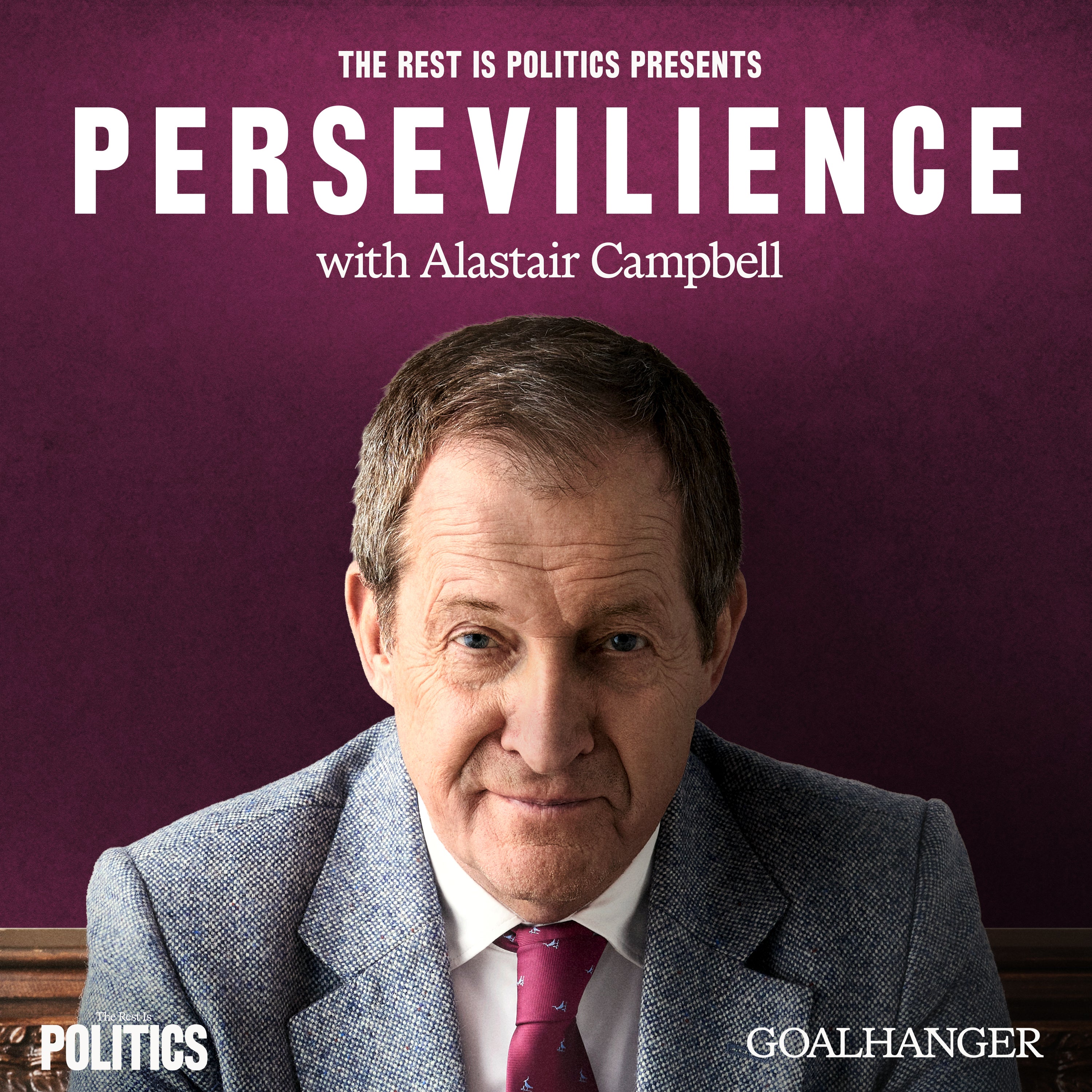
David Blunkett discusses “percivilience” (turning setbacks into positive opportunity), how he copes with lifelong blindness, and why modern politics lacks perseverance/empathy—especially in a social-media era.
David Blunkett is a politician born blind. He lost his father at 12 in a workplace gas-industry accident (scalding, death after a month in hospital). He became the UK’s youngest councillor, led Sheffield Council at 33, became an MP for Sheffield, and served as Home Secretary in the Labour government. He relies on multiple guide dogs (he’s had seven).
Politicians give up too easily; politics needs a “reset” in how people treat each other. Small gestures of humanity matter. Disability should be framed as capability, not pity.
his father’s death and boarding-school upbringing; resigning as Home Secretary while fighting for contact/responsibility for his son; a platform-train slip where his guide dog “hop up” helped; avoiding pity and rejecting disability campaigning as “spokesperson” work.
Written by AI. May contain mistakes.
Discussion on the meaning of perseverance and its implications in politics.
“And I think the combination is very clever.”
David Blunkett shares his experiences growing up blind and the impact of his father's death.
“And then your dad had this just truly horrific accident which killed him.”
Conversation about challenges in modern politics and the need for empathy and perseverance.
“What do you see in our politics more generally?”
Exploration of the importance of guide dogs in David's life and how they enhance his independence.
“This one is a cross between a German Shepherd and a Gola and Treva, although he's black and all the puppies were black.”
David shares a personal story about a serious accident and its emotional aftermath.
“And actually, obviously, it was the damage it did that was the main thing and the 25 weeks of going to outpatients.”
A discussion on perseverance and overcoming adversity, highlighting personal experiences.
“So thank you to the audience for sticking with us.”
A deep dive into human resilience and how people overcome challenges.
“Hi there, it's Alistair here and this is a mini-series about my new word, perseverance.”

Get the gist, explore an idea or ask about something said.
 Claude
On The Rest Is Politics, what are the key points of this episode?
Searching your listeningAutomatic transcript. May contain errors.
0:00Hi there, it's Alastair here and welcome back to The Rest is Percivilience, the new trip series on My New Word. Not perseverance, not resilience, percivilience. It's the word the world needs now. And today, an interview with a man who sums it up for me as well as anybody that I know. That is David Blunkett. David was born blind, as most of you I'm sure already know. Lost his dad when he was 12 in a horrific workplace accident, but he went on to become the country's youngest councillor, then leader of Sheffield Council at 33, then became an MP in Sheffield and went on to become one of the best and most influential ministers in the new Labour government.
0:42You will hear how differently he experiences politics, not least in Westminster, but also just how he copes on a day-to-day basis doing some of the most difficult jobs known to man or woman, and yet he does them brilliantly, not least thanks to his wonderful succession of guide dogs. Here's my conversation with David Blunkett, with his dog sitting at our feet. so david my dictionary definition of perseverance the ability of an individual group or organization to turn any situation setback or meaningful experience into a positive opportunity to grow to advance and secure their core interests and beliefs it's a bit pompous that isn't it is it yeah i mean i like the word it's a dictionary come on then what's pompous about it well it's a bit sort of, well, not pompous, pretentious would be a better word.
1:34Why is it pretentious? Well, it's a bit expecting too much. I mean, I like the word. Right. And I think the combination is very clever. Yeah. And I think it displays something more than just the sum of the two parts. That's exactly what it deserves to be a bit pompous. Yeah, it's clever. Thank you. Yeah. Well, thank you for that. It's a fabulous way to start the interview, you bastard. the the point is the reason why i wanted to talk to you for this series is because when i think about politics you have that the ability of an individual to turn any situation set back or meaningful experience into positive opportunity etc you've devoted your whole life to the pursuit of your core values and beliefs and you've done it with this incredible setback from life from the from the day you were born do you do you because you've always been blind do you feel maybe that's overstating it that that bit i don't think about other things that have happened on the way on the journey you obviously do you reflect on could i have done something different was did i contribute to it how did how the hell did i get out of that um and and your word comes in very handy with not being able to see from birth you kind of took it for granted i mean it took a bit before growing up and learning to speak and walk you realized that other people could see and do you so do you think if somebody is born with vision able to see and then becomes blind do you think that's harder much harder because you're overcoming the emotional trauma you have the advantage of being able to reflect the picture in your mind of what you have seen so if you are in the countryside you'd have a better idea of the woodland in the distance if you'd walk that path or you know where the stream wasn't but you could bring it back as you would do if you were flicking through a television but but it doesn't compensate i think for the fact that you've had to get over the loss of all that so sometimes it's the loss isn't it like bereavement you've got a chapter in your book haven't you on bereavement sometimes it's the loss sometimes it's a missed opportunity sometimes it's just life and you're just glad that you get through it in addition to being born blind you also were born into a family that had a lot of struggles and, you know, quite a poor background, a very poor background.
4:12And then your dad had this just truly horrific accident which killed him. So talk us through that. Yeah, this is obviously really serious because when you're 12, and I've been wretchedly at a boarding school from the age of four because that's how they managed disability, loss of sight in my case, in those days. You didn't have, parents didn't have the choice. So you went to boarding school. It was a school for the blind. For the blind, yeah. But, you know, I loved my dad to bits. And when I was home, he worked incredible shifts, morning, afternoons and nights. And so when he was off, we used to walk and talk.
5:01and he'd left school at some un-earthly age. I mean, we're talking now way back. So he left school at 13. But he'd learnt geography and he'd learnt current affairs just by reading and listening. And he used to test me on capitals of the world. Of course, they've all changed their names now. But in those days, I loved it. I loved being with him and learning from him. So when he was killed in the works accident, It was absolutely devastating. And what happened? He worked, he was over the age of retirement and he'd stayed on to train others. He was a foreman, as they used to call it in those days.
5:41They call it supervisor today. And he was working for the gas industry. It was nationalized while he was an employee there, but the attitudes didn't change that much. It was a lesson to me about centrally run nationalized industries. And the health and safety was chronic. And he fell into a vat and was badly scalded and died after a month in hospital. And that does rest with me. What was that month like for you? The abiding memory, I don't want to upset the listeners, but my abiding memory was of the smell of of you know he'd been so badly burnt and they tried to do early plastic surgery but it was it was hopeless um and his mind wandering understandably um and the terrible terrible trauma for my mother because she'd been very unwell and this is a sad story.
6:52I know people would like us to get back onto a bit of lighter stuff, but she'd had real problems. She'd had breast cancer when it was usually fatal and managed to live 27 years and other things. And she'd been looking after my grandfather because the other siblings wouldn't do it. So it had been a rough, rough time for her. What do you see in our politics more generally? What do I see? I see ephemeralism. I see people give up very easily. I see that we are in a social media era. I'm useless at it. You're brilliant at it. I'm really not. You are. No, I'm not. Oh, come on. You do the blasted podcast and all that goes with it.
7:41This is old-fashioned. This is like going back to the future. Well, it's social media. This is old-fashioned. It's just two old men sitting in a nice studio blabbering. You speak for yourself, mate. But no, you're good at social media. I'm not. So if I came into politics now as a young person who couldn't see, I don't know, would I find that a challenge or would I just automatically fit? Would I find it? I think you would find somebody very, very good to do it for you. Yeah, so long as they did it with me. So long as they didn't, and this is happening, by the way, people working for folks who put things out thinking they're doing a clever thing, rather than always, always.
8:24My special advisors were great because they always knew that they were speaking, acting on my behalf. Yeah, well, as long as you've got that, but I think you'd be fine with social media. And also, I think you've got a sort of humanity that a lot of politicians don't have. Yeah, what I wouldn't do is the Great North Run. You know, Andy Burnham, as we speak, has just done the Great North Run. And I think, oh, God, help me. I'd rather be whipped than run half a marathon. I've done it 12 times. I know, but you're clever. You've got perseverance. Yeah, yeah. But you've got barrels of perseverance. What do you think we can do to make modern politics and modern politicians more perseverance?
9:11Do you agree with me that there's something lacking? Well, it's a two-way street, isn't it? I mean, the way we treat each other and the way we are treated makes a difference to whether people can stick it out. We don't want picking up your perseverance as a future word in the Oxford English Dictionary. It has to happen, David. It has to happen. Will you be the first to use it in Parliament? That would be a good thing. Well, I shall make a note of it. Excellent. Yeah, absolutely. I think that in politics, we've got to have a reset. I know that people use the word. them. We've got to say to each other, we treat each other better.
9:53We set examples. But we also say to the world outside, if you want politicians who are insensitive, uncommunitive, who will just everything bounces off them, then carry on the way we are at the moment. But if you want people who do have that empathy and emotion, but they're also perseverance in the sense that all the knocks and all the mistakes and all the sometimes tragedies, they'll keep going because they have values and they want to do something and they want to carry on doing it. We can do that together. Which were the worst setbacks in your political career that made you feel you had to dig deep into yourself?
10:43Well, obviously, the time I resigned as Home Secretary, because I was, I mean, without going into the detail, I was fighting, as you know, I was fighting for contact and responsibility for my very small son, who is just coming up to 24 now, and who, thank God, has come through it all. and that was horrendous because I was losing someone who I thought I loved I was losing my son or at least there was a potential to do so and I was losing what I really valued most which was being in the cabinet and being able to really make a difference so that was a moment in time and you know what happened my now wife Margaret I went into the the surgery she wasn't my doctor better make that clear because the gmc don't like these things but i went into the surgery and she was the one on duty and for the first and only time in my life she took one look at me and said i'll make you a cup of tea um now if every doctor had the time to make a patient a cup of tea wouldn't that be a wonderful health service and that was a stepping stone by the way to pulling around because small gestures of humanity as well as my close family and wonderful friends they they saw me through so percivillians doesn't just depend on what's inside you although that is pretty crucial whether you've got that tenacity but it actually also depends on other people around you yeah for sure tell me about the role of how many dogs have you had now i've had I thought we'd get done to dogs.
12:26I've had seven. This one is a cross between a German Shepherd and a Gola and Treva, although he's black and all the puppies were black. So the Shepherd, the mum, must have been pretty overwhelming. And he's 10 and he's a fantastic dog. Absolutely superb. Have you got memories and a sense of all of them? Yeah, all very different. Everyone different. And what's it like building the relationship with a dog? It takes time, some months before the dog's in tune and can almost anticipate what is expected of you. You've got to know where you're going because sometimes they anticipate you're going into a shop that you're not going into.
13:13I mean, all dogs love butchers, for instance. They just do. The dog will drag you into a butcher? Well, not exactly. It's apocryphal. Guide you. Guide you, okay. Yeah. Guide me, not drag me. I don't need dragging into a butcher's, by the way, because I'm not vegetarian. So that's fine. Right. Back to the sensible question that you asked me. This is a sensible question. I want to talk about your dogs because I think that, I think it must be, you can't function without the dog. Well, you can function, but you can't function as well. No, other people do. Some people with a white cane are fantastic.
13:52And I have nothing but admiration for those who manage the underground in London because it's a nightmare. I mean, whether you've got a dog or not, it is a nightmare. And I had this tremendous accident a couple of years ago where I slipped between the platform and the train. And actually, obviously, it was the damage it did that was the main thing and the 25 weeks of going to outpatients. But actually, on that moment, I felt humiliation as well as pain because I thought, God help me. You know, I don't ever want to be in a position where people think, oh, poor sod, you know. People presumably were incredibly helpful.
14:33Yeah. I mean, they picked me up off the floor and dusted me down. I mean, at that moment, I didn't know quite how much damage I had done because you don't. so I carried on going to I was going to a football match I was going to Brentford versus Sheffield Wednesday in the League Cup Brentford were and still are in the Premier League and when I got there the chairman of Brentford got their team doctor to come and see me so that was great yeah and was your thought for yourself or were you thinking for the dog I thought immediately is the dog alright he'd done what he was supposed to do I dropped the handle of the harness and so I just had the lead and I told him there's a command which is hop up which means gotta get jump the gap get only on the underground which he did and then I didn't quite make it behind him yeah and of course the dog was desperate.
15:37I mean, he thought, I think in his dog head that he'd done something wrong. So he laid on the floor afraid in case he'd done something terribly wrong. Of course, it wasn't the dog's fault at all. So, you know, and you have to be sensitive to that. So when you said that you've had a horror of people surrounding and feeling pity for you, was that stuck with you because that was a rare feeling, the sense that other people felt pity for you well sometimes it's it's just funny when i was young with my mum people would say to her does he take literally does he take sugar there was a program yeah years and years ago does he take sugar yeah more more presciently i've had when i was a youngster i did hear this is more cruelty than than and than than anything else where i heard a mother say we'll cross the road because there's a blind boy coming and that that's bound to hurt isn't it?
16:41I mean that's bound to get you. That's not pity though that's nasty. No that's a misunderstanding about blindness yeah. Pity I've been so robust and so belligerent and pig headed it's been quite hard to pity me hasn't it? Really? Yeah. Over the years. Yeah. Well I think you're amazing one of the reasons you're such an extraordinary character is that i mean i don't your blindness isn't the first thing i think of when i think of you well i'm glad about that because i think for a lot of people it probably is i i never wanted the blindness to be uppermost you know people in the disability sphere campaigners sometimes not very often used to say why aren't you campaigning on disability issues.
17:30I said, I am. I'm delivering an example of how someone with a defined disability can do a job at the highest level. That's my contribution to youngsters growing up, to their parents, to employers. That's what I can do best. And if I became the spokesperson firstly i i why would i why should i and secondly actually it lifts it off other people's shoulders i used to say to the team when i had responsibility for disability issues in the first four years of the blair government i used to say to everybody it's your job not mine you know we're all it we're all involved in this yeah and we all have some sort of thing in our lives that require change and improvement and understanding, don't we?
18:20Yeah, we do. We do. I know this is like asking your favorite kid, but have you got a favorite dog at the seven? Well, they're all different. Very, very different. You loved Sadie, though, didn't you? Yeah, but she was a kind of magisterial dog. It's sort of, you know, nose in the air a bit. Who's the most Persevilliant dog you've had? This one, because he's an all-rounder. The daftest dog I had was called Ruby. She was my first dog. She was a pedigree Labrador. labradors are food crazy i found her upside down in the outside bin one day took two days to get the gas out of her i mean why i had a second dog i do not know they've all since then been brilliantly trained i ought to add and this one in particular um but they are different my previous one who sadly died of liver cancer uh cosby was he had this sort of way about him where we'd go out in the morning and he'd say I don't really want to do this and I'd say to him you're going to do it Cosby he'd say well alright then but I'm going to do a bit slowly today you know sort of and he weighed 46 kilos so he was a massive dog he could pick things up off the kitchen off the kitchen side without actually having to put his paws up you know well listen as ever lovely to talk to you lovely to have barley, barley's now asleep Yeah, and it's a great shame to have to wake him up, but every good thing comes to an end.
19:48Including this interview. When I've waffled on a bit, sleep is a great thing for him. Yeah. So cute, though. So thank you to the audience for sticking with us. That's Percivillians. Thank you, David. You've so got the word. Even if it is pompous and pretentious, you... Eh? Five foot eleven. Go well. Thank you. Thank you.
20:41loss are some of the brightest, most positive and inspiring people I know. All that and more at therestouspolitics.com. Hi there, it's Alistair here and this is a mini-series about my new word, perseverance. No, not perseverance, not resilience, perseverance. It's how do you take everything that happens to you and turn it into an opportunity to move in the opposite direction, to move forward, not backwards. It's a bit pompous that isn't it? Is it? How do people overcome extraordinary challenges in life? Ten years ago, nine years ago, I was sat in a psychiatric hospital on the edge of life and now I am here.
21:20Ellie was diagnosed with the same form of blood cancer when she was nine years old. And knowing that someone you love was murdered. Joe Cox, MP for Batley and Spenborough, has died as a result of her injury. Joe was killed because of who she was. People say, why weren't you bitter? I said, you can't send bitterness like an email. All it does is corrode and erode you. It destroys you from inside. I'm becoming conscious of losing control of my own mind. And what does that feel like? I know this is an insane thought, but I thought I was going to be killed. How can you heal and grow from unimaginable trauma?
21:51What we see when these horrific things happen is the true strength of human resilience, and it is outstanding. How can we build more perseverance, both personally and in our politics? I used to walk up that lane and breathe fresh air and think, I'm still alive. Greek mythology, Pandora's box, and all the terrible things fire. Hope is hard and hope is what's left at the bottom of the box. So to kick things off, Rory will be interviewing me about my own story. You're both a kind of tough guy and you're somebody who takes things unbelievably hard. I don't know how we got through it to be honest, so I don't care how I'm defined anymore.
22:25Yeah. As you know, I think young people get a very bad rep. I think the world is a pretty messy place and a complicated, difficult place. That's why I think it's the word the world needs now. Very good. If you want to hear more about Percivalians from people who I believe really have it, head to therestispolitics.com and become a member today.
To hear the full episode, and the whole seires, sign up at therestispolitics.com
This week, Alastair sits down with someone who – in his opinion – is the most persevilient person in politics, Sir David Blunkett. Blind since birth, he lost his father at the age of 12 and grew up in a very poor household.
Despite this, he went on to become leader of Sheffield Council at 33, then MP for Sheffield Brightside and Hillsborough, and a key architect of New Labour.
You’ll hear how differently he experiences the world, not least in Westminster, why he thinks politics has before too ephemeral and why he never wants to be pitied.
Instagram: @restispolitics
Twitter: @restispolitics
Email: [email protected]
__________
Social Producer: Celine Charles
Video Editor: Gabriela Gibbs
Producer: India Dunkley
Executive Producer: Bella Soames
Learn more about your ad choices. Visit podcastchoices.com/adchoices