Ask ChatGPT

 The Rich Roll Podcast
12 Oct 2026 · 2h 51m · 63 chapters
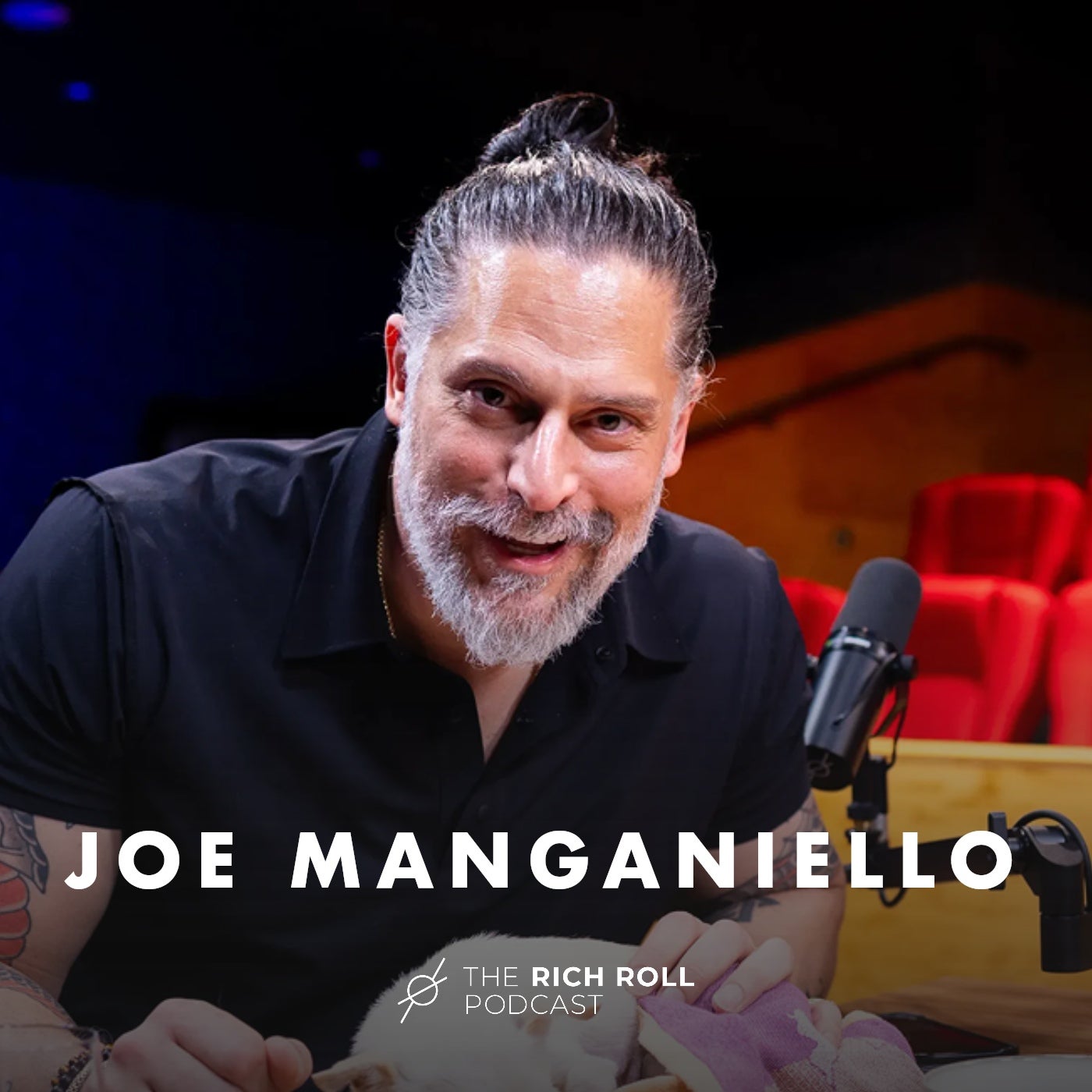
Joe Manganiello discusses his path to sobriety and a later, mysterious autoimmune illness that nearly killed him, using the memoir Bloodlines as an “Odyssey” for mind-body-spirit healing. He argues that addiction and illness can be spiritual crises, and that healing may require looking backward into inherited/epigenetic trauma, not just moving forward.
Joe Manganiello is a longtime sober actor, filmmaker, and action star known for Spider-Man, True Blood, Magic Mike, and Justice League. He also has a memoir, Bloodlines, released alongside his recovery story. The host is Rich Roll (longtime interviewer).
Written by AI. May contain mistakes.
Joe shares his journey of sobriety and the challenges he faced.
“All right, you guys, I got to tell you about Freaks of Nature.”
Joe shares his journey of sobriety and the challenges he faced.
“I try to do some version or rendition of what it was like, what happened and what it's like now.”
A discussion on spirituality and the transformative power of sobriety.
“But looking back, I can see that even into sobriety, there were things that weren't quite lining up.”
Exploration of how generational trauma impacts personal experiences.
“because I think, you know, in that initial period of my life prior to getting sober, I was given, you know, I was given certain answers.”
Joe discusses scientific studies related to trauma and its effects.
“towards me would force me into a life or death situation where i had to find something something to believe, or I was at least shown what to believe.”
Joe shares his interest in epigenetics and the work of Colossal Biosciences.
“But there's sort of a implicit discouragement of trying to understand like why you became an alcoholic in the first place because it's a program of like action and moving forward.”
Learn about how generational trauma can affect behavior and instinct through a discussion on epigenetics and its implications.
“unconditioned females that were not driven to be afraid of the smell of cherry blossoms through electric shocks, unconditioned.”
Discover Joe's battle with an autoimmune disease that blindsided him during a peak in his career.
“But let me just say, for the sake of the audience who's listening or watching, what are we talking about?”
Uncover Joe’s journey from theater actor to Hollywood star, including early auditions and challenges.
“So walk us up to the point where you get this diagnosis, what was going on and what happened.”
Experience Joe's wild journey through fame, including his struggles with substance abuse during his rise in the film industry.
“And they would always sabotage me in those great moments.”
Joe recounts his chaotic teenage years filled with alcohol and promotional gigs.
“She's like, well, there's a huge problem.”
Joe shares the challenges he faced during sobriety and how he rebuilt his career.
“And I never thought I was going to get that back at that point.”
Joe shares his harrowing experience dealing with a mysterious illness and the challenges that come with it.
“Like the fear of like not even being able to put your hands around like what exactly is happening so that you can get it treated properly.”
Joe discusses his dependency on liquid dilaudid and the internal conflict it caused regarding his sobriety.
“13 and a half years sober, and I'm completely dependent upon liquid dilaudid.”
The shocking moment when Joe learns about the severity of his condition and the emergency surgery required.
“There's a part of me that still has to care for everybody else who has to, I have to go through it, but they have to watch me go through it and they're powerless.”
Joe reflects on the aftermath of losing his large intestine and the impact on his self-identity.
“And so I wake up in that bed and she had to inform me that they had to split you open and your large intestine's gone and you have an ostomy bag.”
Joe describes his recovery journey and the challenges of relearning basic functions after his illness.
“in addition to the extreme nature of the acute condition, uh, you being this, you know, handsome leading man marries this beautiful woman.”
Joe shares his challenging recovery journey after leaving the hospital.
“I, I, I, because my, my muscles in my eyes couldn't hold my eyes in place.”
Joe discusses receiving a life-changing role while battling his health issues.
“and here's the biggest job of your life can you work one day next month and then six months next year.”
Joe highlights the importance of setting audacious goals for recovery and motivation.
Joe reflects on the impact of his acting role on his recovery and mental state.
Joe Manganiello discusses his feelings of luck and unluckiness in his acting career and the emotional impact of losing roles.
“You're going to be the Suicide Squad 2 with this director.”
Joe Manganiello shares his struggles with sobriety, denial, and the emotional fallout from personal challenges.
“There were all these other people involved in this.”
Joe discusses the pivotal moments that challenged his understanding of faith and surrender in life.
“Certainly everybody else in my life thought I had no business attempting to try to make Batman work, but I don't, there's no way I was gonna say no.”
Explore the deep emotional struggle of surrendering one's identity during recovery.
“And that started the process of like, it started pulling my fingers off.”
Discuss the internal conflicts and familial pressures faced during the recovery process.
“And that's where it brings us back to like Odysseus, you know, like this is like, you know, archetypal storytelling shit.”
Examine how illness and public perception affect personal identity and self-worth.
“And so other people started coming and kind of trusted people.”
Insights on maintaining healthy relationships while navigating sobriety challenges.
Learn about the importance of emotional sobriety and its complexities in recovery.
“Like, well, and also - Now we're talking my language.”
The evolution of support systems during challenging times and their influence on recovery.
“And that was certainly true with my marriage.”
Delve into the complexities of sobriety while managing medical treatments and medications.
“and the identity that you craft around like being kind of someone who can like talk the talk and all of that.”
Learn about the challenges faced in sobriety and finding support through various groups.
“And I want to be very, very clear about that.”
Discover how trauma influences recovery and the importance of finding solution-oriented peers.
“And then I started going to support groups for people that had raging autoimmune issues.”
Understand the pressure of identity and the journey towards acceptance and letting go.
“And then that therapist was just laying into me about letting go.”
Hear about the connection between ancestral beliefs and personal healing through Santeria.
Explore the intersection of desperation, spirituality, and healing methods when facing illness.
Learn how the concept of the hero's journey can empower personal storytelling and agency.
“When the Jungian therapist is like, why do you care about superheroes?”
Discover the deep spiritual journey linked to ancestral heritage.
“And that to me is really mind-blowing to think about, that it wasn't random.”
Learn about the historical trauma faced by ancestors and its impact.
“tell, which is your connection, your relationship with your ancestry, and the impact of that on your present circumstances.”
Understand the quest for identity and knowledge of family history.
“And life on earth as a human being and being born in a certain place at a certain time, certain parents, a certain means during certain world events.”
Discuss the lack of education on Armenian genocide and its implications.
“when you're a kid, nobody's going to tell you what it means to be Armenian.”
Explore the shocking revelations of family history and identity.
“You kids can't get made because of your mom.”
Learn about the process of understanding one's identity through ancestry.
Discussion on the impact of ancestral trauma and personal identity on health.
Sharing personal stories of illness and the path to healing and self-acceptance.
Insight into the complexities of autoimmune disorders and personal experiences.
“healthy children that don't have to think about this or don't have to deal with any of this anymore.”
Exploring the concept of spontaneous remission and the role of emotional intelligence.
“And then from there, days started stringing together.”
Discussion on the duality of sensitivity as both a challenge and a superpower.
“and found the light switch and i i i got on my phone and i looked up his instagram page and followed and then DMed.”
Exploring how sensitivity can be both a strength and a source of frustration.
“shamed for being sensitive, which, you know, an alcohol is, alcoholics, you are too sensitive.”
Joe discusses how his severe illness shattered his public persona and led to a personal reckoning.
“and I see that they're doing it and I hate it and I can see it in real time.”
A pivotal moment of pain leads Joe to reclaim his agency and choices about life and health.
“And I chose that, that I, regardless of what was going to happen to me, I, I, I, I, I wasn't going to go back.”
Joe recounts his hardships with severe pain management and the journey to detox.
“i wound up being put on fentanyl patches i was on opioids with acetaminophen to accelerate it I was on a nerve medication for my neck that I took at night.”
Joe discusses the importance of living authentically after his health struggles.
“I go, if I die, I will make sure that I leave it in my will, that there will be someone whose life goal, and I will leave them everything that I own to try to take you down in court for killing me.”
Exploration of the emotional journey through recovery and the impact of unresolved trauma.
“Because people ask me, my mother asked me, what happened?”
Joe reflects on how storytelling and self-exploration help in understanding his journey.
“And that's, you know, going back to like sobriety.”
Joe Manganiello reflects on the various influences and experiences that contributed to his healing journey.
“I mean, it was like, oh my God, I wish Joseph Campbell was around because I just want to take him out to lunch and give him a hug.”
Discussing the importance of honesty in storytelling and the impact of personal narratives on others.
“I don't know who speaks to me after or who I'm passing the baton to or, you know, I, I, I met so many people dealing with so many, I mean, people are coming to me now and being like, you know, can I see Peter?”
Manganiello shares insights about his family legacy and the significance of perseverance through adversity.
“And so I didn't want to leave anything on the floor when it came to this book.”
A concluding discussion on the necessity of embracing life's challenges and the lessons learned from them.
Joe discusses his journey through difficult times and embracing life's challenges.
“And now it's time to really start living my life with purpose.”
Joe shares his current life, career achievements, and newfound passions.
“And so try to play those cards the best that you can.”
Joe talks about the healing relationship with his dog and the joy it brings.
“Like we went the whole, we've gone like three hours without even really addressing the fact that we've got bubbles.”
A powerful closing conversation expressing appreciation and reflections on the journey.
“Well, it's been an absolute honor, dude.”

Get the gist, explore an idea or ask about something said.
 Claude
On The Rich Roll Podcast, what are the key points of this episode?
Searching your listeningAutomatic transcript. May contain errors.
0:00All right, you guys, I got to tell you about Freaks of Nature. Have you heard of this? This is the sexiest sunscreen on the market. It's also the first natural one that I found that actually works, and it's the best for just so many reasons. Not the least of which is because it gives you 80 minutes of water resistance, all without any white streaks or greasy hands. These products have no chemical fillers, no microplastics. Just like the Sunstick, this mineral spray right here, it just disappears into your skin. It doesn't turn your face and your skin white. It hydrates you with just the good stuff, aloe, green tea, jojoba, supporting the skin barrier instead of stripping it.
0:40I'm in love with this product line. I've been using the Freaks of Nature products all summer. And so I can personally attest to you that they work. So thank you, Kelly Slater, you beautiful legend of a man. You actually did it. You finally cracked the code and created a series of environmentally conscious, chemical-free skincare products that live up to your insanely high standards without any trade-offs. The SunStix sold out last summer and their mineral spray is selling really fast right now. Everything is in stock right now, so make sure you get it before it sells out. Go to freaksofnature.com and use code RICHROLL to save 20 % when you order now.
1:21I thought, you're not going to make it one more day. Like, look at all this blood. Like, you don't have more. Like, I knew I was going to die. For the last 14 years, I've hosted over a thousand conversations of this podcast. Today's stands out. It's very special, perhaps among my all-time favorites, because it's a beautiful, powerful, and emotional illustration of the central themes of this show. The power and potential of the human spirit to face and overcome obstacles. What happens when you embark upon a mind, body, and spirit journey of personal transformation. And the transcendent healing that transpires when you make peace with your past.
2:04My partner in this exploration is Joe Manganiello, a longtime sober artist, actor, filmmaker, and action star, best known for his roles in Spider-Man, True Blood, Magic Mike, Justice League, and for sporting perhaps the best physique in Hollywood. What you likely don't know is that just as his career was about to go stratospheric, Joe began to secretly suffer from a mysterious, seemingly undiagnosable autoimmune disorder that on more than one occasion very nearly took his life. What he survived is truly superhuman. I'm bleeding all night long in the bathroom in massive amounts of pain. They brought me into an emergency surgery.
2:49Whatever you thought your life was, it's over. Even more impressive is how he survived it. how he turned a healing journey I wouldn't wish on anyone into this powerful new why that has birthed a more meaningful relationship with living. All of which he illustrates with tremendous vulnerability in Bloodlines, his rather gripping newly released memoir now available everywhere. This one hits, I can't stop thinking about it and the life lessons he generously shares and I have a sneaking suspicion you will feel the same.
3:32So Joe, typically when I have a sober person on the show, I try to do some version or rendition of what it was like, what happened and what it's like now. In your case, I want to do that, but there's a ripple to your version of this story that is sort of turbocharged in the what it's like now, like third act part that is almost something like who came before me how did that influence me and my life what did I do with that and what it's like in the now after the what it's like now you know what I mean yes yeah and sobriety is a huge part of my life obviously but um the process of getting sober turned me into version 2.0 but it was somewhat a warm-up for the fight that i then had heading into version 3.0 which i wasn't sure if i was going to make it yeah it's almost as if like i did all this work i've arrived in this place i've rebuilt my life I've created this amazing, abundant life, and now this.
4:52Like, I didn't bank on this. I didn't have this on my whiteboard. Haven't I suffered enough? And here comes this freight train in your direction asking you to deepen your surrender and undergo truly this odyssey of pain and suffering, self-discovery, and ultimately spiritual transformation. Yeah. But looking back, I can see that even into sobriety, there were things that weren't quite lining up. In the book, I start a chapter with this phrase that an old manager of mine used to say to me, and she used to say, Joe, for a lucky guy, you're pretty fucking unlucky. There was something that just wasn't quite lining up all the time.
5:48And I think what she was commenting on was the fact, or from her vantage point, that somebody who had been given seemingly endless amounts of advantages in life, things were still out of focus for me. And then, of course, the symptoms start rearing their heads and that freight train, I can see the lights of the freight train and I understand shit, I'm on the tracks and how do I get off these tracks? Why am I on these tracks? Have I always been on these tracks? And then that spurred, yes, like you said, the Odyssey, which was basically 10 years at sea, trying to find my way back home or trying to understand if I was going to survive this thing at all or what the hell was happening to me.
6:38and where there were no answers. And so it started this journey through, journey across the globe for answers that also took me backwards in time. And what I realized was that there was a series of knots that were tied, just a series of knots. And sobriety was a part of it. And thank God I was sober. I think that really was a warm up and a practice because the act of getting sober and staying sober, the act of healing spiritually, of growing spiritually, then provided for me a framework or a foundation or an openness to other answers. because I think, you know, in that initial period of my life prior to getting sober, I was given, you know, I was given certain answers.
7:40You know, you grow up in a certain time, a certain place, the people you're around believe a certain thing. You're taught right from wrong or not. I mean, in my case, I was taught right from wrong with a certain system in place. and um and at some point you let go of that or realize maybe that isn't for me or i don't believe all of this or um you know i'm talking about like you know kind of a spiritual you know foundation and and then um you know when you sink into addiction i think there's a there's a godlessness that happens because you're up to things that you're hoping if there is a god they're not watching you do.
8:21And, um, and so I, I think you then start thinking, you know, if God is everything or God is nothing, then God has to be nothing. And so there's this, um, kind of atheism, I think that starts to happen. And then, uh, the process of getting sober, I think a lot of people trip up over the God thing, but if you go to any AA meeting, it's just like a bunch of people who look like maniacs or like, you know, like people who are not at church, You know, that there's a reason why, you know, AA, they're, they're, they're, they're in the basement, they're in the basement of the church, you know? So it's a lot of people that, that aren't your typical church going fair, searching for some sort of spirituality or some sort of healing.
9:01And I, and I, and, and so they ask you to, you know, kind of 12 steps ask you to famously just choose a God of your understanding. There's something bigger than you. and um and that started all that questioning that then helped me because i um i really do feel like this version 3.0 or or battling the battle that would come that freight train that was heading towards me would force me into a life or death situation where i had to find something something to believe, or I was at least shown what to believe. I'm of the opinion that many an addict, if not all addicts become addicts on some level because they're seeking something.
9:47They're seeking some kind of connection. They're doing it in an errant way that like derails their lives. But fundamentally it's a, it's a search for answers down, you know, dark alleys and in wrong directions. And then when you're in the throes of it, yeah, it's a spiritual bleakness. Well, spirits, right? Yeah, spirits. Yeah, you are possessed, basically. Yeah. Or like Trent Reznor used to talk about a lot of that in a lot of the early Nine-Nehive Snail stuff, like trying to get closer to God or find things that would get you there, get you there. Get you to feel something beyond like the three-dimensional realm.
10:25And then sobriety, of course, is a sort of spiritual rebirth and an opportunity to reestablish or reframe your relationship with the ineffable. And that's fundamentally the solution. But one thing about AA that's interesting is that as capacious as the steps are for a spiritual transformation, they are as deep as you want to go. I think they are the source code for just ultimate change. And, you know, we've all borne witness to many a miracle with like, you know, our friends and our colleagues, et cetera. Yeah. You know, I'm thoroughly convinced that, you know, this is just a divinely inspired program and just it changed my life.
11:06I know it changed yours. But within the framework of that program of recovery, there's not a lot of emphasis on you make your amends for your past wrongs, et cetera. But there's sort of a implicit discouragement of trying to understand like why you became an alcoholic in the first place because it's a program of like action and moving forward. Yeah, it's not alcoholics analysis. So it's not about that. It's like, who cares why you are? You just are, right? And here's how to fix it and move forward. Take these steps and your life will change. And indeed it will. But what took you from Joe 2.0 to Joe 3.0 is tackling that very problem.
11:48you know, like looking in the rear view mirror and trying to understand like everything that led up to making, making these decisions that, that, that you've made, uh, was informed by the people that came before you and the experiences that they had. And, you know, there's a, there's a kind of, you know, spirituality and mysticism in that as well with the epigenetics of it and the inherited cycle of generational trauma. And, and fundamentally, I think that's a, that's a source of to use the word again like turbocharged healing like if you fundamentally want to heal this thing you are going to have to venture backwards we have to dig the roots up i mean i was uh for me and i'm not saying for everybody but um you know for me you know i wasn't randomly selected for all of this i think there's a there's a there's an initial there was an initial phase of why me why me why is this happening to me or what the hell is going on or um and and then you really do start doing some digging and um and you realize that this stuff goes deep um i think i have a an understanding um of what happened to me but i think that especially when i would try to talk to western doctors about it i was looked upon as being pseudoscientific for the things that I was thinking.
13:18But I know that there also is scientific precedence for generational trauma. And I talk in the book about the 2013 Emory University study where rats were introduced to a chemical that gives off the scent of cherry blossoms. And as they were being given the scent of cherry blossoms, their feet would be electrically shocked. And over time and this repeated conditioning, they then took those rats and mated them with unconditioned females that were not driven to be afraid of the smell of cherry blossoms through electric shocks, unconditioned. So you have conditioned males meeting with unconditioned females and the result were offspring that when given the scent of cherry blossoms were terrified and would run the other way.
14:20So they had understood that if they can traumatize the males, they will pass this genetic information onto their offspring, even if the females weren't. Another study, I'm on the board of a company called Colossal Biosciences, which brought back the dire wolf. Oh, that same company. Yeah, yeah. Willie Mice and all of this. That seems like something you would sink your teeth into. It kind of randomly came my way, but little did they know. They were like, oh yeah, you were like that werewolf guy and dire wolves are in Dungeons and Dragons. And I'm like, no, no, no, no, you don't understand. Like I'm obsessed with all of this.
14:57And I have a vested interest in epigenetics. and i need to ask you some questions about where we're at right now because i'm trying to unlock this thing within my life and i want to understand you know um you know if there are other spiritual belief systems that could or you know i wanted to know what science said about what i was going through and um there's a tasmanian tiger which was made extinct by human hunters like little under a century ago about 90 years ago and they were all wiped out it's this marsupial wolf with tiger stripes super cool uh the thylacine is the you know the name um so they're bringing back the thylacine and uh prior to them reintroducing them to their old hunting grounds in tasmania they went and made perfect full color cutouts of the animal and stuck them in their old hunting grounds and the animals the the descendants of the animals that were hunted by the tasmanian tiger would see the cutouts and run away they had a fear of just the sight of the cutouts and they've been extinct for almost a century so um that then spurred a conversation about well where's where do they think generational trauma or that type of trauma where is that stored in the body said no no mitochondria i said okay it's well why did you say no no no i said well the new theory is that the mitochondria is actually a separate organism that we're carrying around or i'm i was carrying around a dark passenger and which would explain why when western medicine was pumping me full of all of these rheumatoid arthritis drugs or anti-cancer pills and combination and massive doses that were having really serious side effects on me um they were they were shutting my body down without targeting where the trauma was actually kept it was like another organism so they're shutting my body down but this thing is still still riding unscathed which blew my mind and also opened up you know my mind of the positive to the understanding of why maybe that wasn't working um but there is scientific precedence for this it's not pseudoscience but i can get into the metaphysics of it all day you know kind of the jungian red bookie side of it where uh which is definitely where my story took me.
17:44I went to some, you know, if it's an, we're using the Odyssey metaphor. You did quite a, yeah. I went to some weird islands, man. And I saw some weird things on those islands. You had your own Scylla and Charybdis and, you know, like the whole thing, you know what I mean? All the way to Odysseus, Matt Damon, lying down on the raft and just saying, God, take me, you know, either I'm going to die or I'm going to make it home, you know, and home being in your case, like this, this spiritual transformation. But let me just say, for the sake of the audience who's listening or watching, what are we talking about?
18:15Joe, I mean, essentially, I don't know if it was the peak of your career, but your career is going really well. You're doing Justice League reshoots, and there's the whole Batman thing that's kind of percolating. There's a lot of opportunity swirling around you, and you get blindsided by this autoimmune disease disease that is mystifying the Western medicine doctors that you're visiting with and leads you into this, to the depths of despair, to just horrific near-death experiences and just this ongoing battle with this condition. Nobody could really figure out what to do about or what it is. And this is the essence of Blood Lunger book.
19:01It's a memoir, but it's really this Odyssey-like experience of navigating this disease and trying to find a way to heal yourself, not just in body, but in mind and spirit. Yes. Yeah. Trying to understand what happened, why. So walk us up to the point where you get this diagnosis, what was going on and what happened. Yeah. So I'm, for better or for worse, I'm a theater actor who becomes known for his physicality. Carnegie Mellon. Yes. You did a ton of theater. Yes. Yeah. Like mostly theater. Yeah. You've got all these big credits, Magic Mike and True Blood, blah, blah, blah, all this sort of stuff.
19:56but like thespian artist, you know, in this like, you know, alpha male, high performing athletic body. Right. Yes. Yeah. You know, I, you know, went to this great drama school, started off in theater. I have that career. I kind of get skyrocketed. I get rocketed at the beginning. I get the first thing I auditioned for. Within like three days of signing with an agent right after college, you get this Spider-Man audition. And they went for Peter Parker initially, right? Like, this is like happening overnight, literally. Yes. Yeah. And I know that I'm wrong for Peter Parker. So I wear a different outfit underneath and memorize the other sides that I am correct for.
20:42So when they say you're not right for Peter Parker, you might be right for this other part. I say, right, take the shirt off, take the glasses off and go straight into the other audition. without needing the script. And the cast director said, okay, I want you to meet Sam Raimi. How long are you in town? I was visiting from college. I hadn't even graduated yet. You hadn't graduated yet. I mean, there's a lot of life lessons just in that story right there about how to be prepared for moments. Be prepared. Hey, I'll go to the sides. I don't need them. What do you mean I don't need them? I'm already off book.
21:10You're off book on the other part? Yeah, I was hoping that you were gonna say, I was right for this, so I'm ready. Because all I've got is a resume full of theater credits and I have to compete with people who have been doing it a long time and I have to get them to trust me so okay I'm ready so I audition she goes okay how long are you in town I go I'll stay as long as you need me she goes stay in town stay by her phone I'm gonna call you she called Sam Raimi they were getting ready to screen test all the Spider-Man candidates the following week and um she got me a gig for 500 bucks to play the Flash Thompson the part I eventually got cast in against all of the Spider-Man candidates in screen tests so each one would come in and i'd keep doing the scene with them and keep bullying them and you know whatever and i got to meet sam ramey and sam liked me and then sam called me back in for a for a specific screen test for me only and um you know said here's our executive producer grant curtis bully him bully him and i was like get on your knees you know he got his knee i started slapping him i made him pluck like a chicken they thought it was hilarious and they were like here's uh the casting director francie pretend she's your girlfriend pretend she's mary jane i'm like oh you know i'm like hitting on the cast and doing doing all this funny stuff and uh sam looked at my resume afterwards and he said uh okay but you did go to carnegie mellon like please can i trust you and you're all of what like 21 23 i was 23 and um but then of course you know going back to that for a lucky guy you're you're you're pretty unlucky comment um you know two weeks after sam ramey sends his congratulations that i was cast my roommate comes home and says i think my friend auditioned for your part today i was like that's impossible but it was true the head of the studio didn't think i was all american enough looking took it away unbeknownst to me and started auditioning other people and that went on for like two months and um so like christmas eve my agent called me back and was like hey you know they didn't find anybody else you excited you're getting it by default cool so you know it was like you're lucky because you're gonna be in like the biggest movie ever attempted and it's spider-man but you're unlucky because you had to go through all this in order to get it so uh anyway that was like i'm kind of my welcome to hollywood deal and then shortly after that you know by the time spider-man was premiering in theaters i was like completely bottoming out so drugs and alcohol yeah um it was that summer of 2002 that spider-man came out in theaters in may that whole summer i was like just skidding as i was like i'd get 28 days and go back out get 29 days get 30 to go out and then it took me until august 26 where of 2002 where that was day one where when did that start um the the the bottoming or no the the just the the drinking and the drugs and you know just the using yeah i think um you know i i always felt growing up like i was born empathetic and i don't mean that in like a fucking you know sissy way i mean that when i played cards as a little kid i could tell what the adults had in their hands i could know how they were playing and i would beat the adults i'd know don't put that card down because they're going to take it because they need that's the one they need the way they're playing i could sense all that you know i i could tell what you know adults were feeling um and uh and i think that was all a little too much for me and i always looked at i looked at the other kids i looked at beer commercials i went how come everybody else has it so easy and i feel so complicated um i had so much like so many storms inside me that were rumbling that I just couldn't get out.
25:25And they would always sabotage me in those great moments. Like the girl who's cheerleader, who I really liked, and her parents are out of town and she's having a party and let's go to my room and talk. And I just want to talk about how depressed I am. like in those moments where you're like dude just shut up and you know it's all right there for you i couldn't ever get there you know and um until you know a friend of mine i was 16 years old and uh i'd gotten contact lenses and it started working out and my mom was a model so i i i said or could you introduce me to somebody at the local talent agency and she said oh okay and so she did and i got hired for this job it was for versace at the ross park mall where it was me and the department store on a motorcycle with like a model hanging over me and they paid me you know what i mean it was like this is great like how do i do this and uh and then that led to one night when i was 16 a friend of mine she'd be my my agent you know uh called and said um i said hey somebody canceled on us last minute could you fill in i don't i don't know who asked the call i said sure sure she said well you know um how'd you like to make 30 bucks an hour oh yeah great she went we'll just uh come down to the office if anybody asks just say you're 21.
26:59okay great so i had my mom drop me off i didn't have my license yet you know and i I walk into this room and there's all these adults and I walk into the room and they all turn like unison and they say you're the guy and I went yep and they went how old are you 21 great put this on and they hand me this pirate suit and it's like the ruffles the jacket the wig the eye patch the hat the booties that go over your shoes and make them look like pirate boots and a plastic sword i've got a little pistola and i'm going to be captain morgan at a bunch of bars so and they're like these are your wenches and they were like these two hot college girls and like skimpy pirate girl outfits load us into a minivan drive us to a bar i get out pull my cape you know got caught in the door whatever get out and they go oh you put on your backpack they put this big tank backpack on me fill it with rum has a tap on it they're like go get everybody drunk and give them t-shirts so we go into the bar the two pirate girls pull me into the corner and they're like let's let's drink this let's go come on so we're all you know i mean i like by the third bar i get that cheruby warm feeling in my cheeks and we get out of the minivan at the third bar and they remember they had the the cowboy doors those saloon doors 16 years old i walk up something overtakes me boot the doors in the whole bar looks at me and i go there again the whole bar goes again it was on i had people laying on the bar i'm squirting on their mouths all these people lined up singing marilyn manson covers with the band there were like girls flashing for t-shirts and i'm taking pictures on seagram's camera they gave me i mean it was like mayhem i sell the knife i sell the gun people offer me money i'm selling i'm putting the cash in my you know my sock i sold the eye patch you know i mean and they're like where's your stuff and i'm like somebody stole it you know i got this sock full of cash the promotion ends they drop me off on my mom's lawn 2 30 in the morning i trundle in hammered next morning i wake up and that agent calls and says how'd it go i went what it went great i thought we i thought we did some some great work i thought we reached a lot of people.
29:34She's like, well, there's a huge problem. Shit, we're all going to jail. He goes, I don't know what you did, but Seagram's doesn't want to do this promotion unless you're Captain Morgan. So we got to figure out a way to get you a fake ID. So this is the inception point for not only your alcoholism, but also your acting career. You're like, not only did you sell all that stuff, like, and you, you, you sold the brand and you sold Captain Morgan, like you inhabited Captain Morgan, you became him and it was well received. Yeah. And then, you know, but also on the way home from the promotion, they were like, Hey, where do you live?
30:13We'll drop you off. Cause I was telling the girls like, yeah, I go to, I go to Pitt. I go to the university of Pittsburgh. I'm in high school, you know, like a sophomore. And then they're like, all right, well, we'll, we'll drop you off first. We're going to head past Oakland. I go, no, no, no, drop me off last because I don't want him to see me get dropped off at my mom's house in suburbia. So it was like this whole complex web of stories and then Captain Morgan. And then I wound up getting, there was a guy at the agency who was 10 years older than me who looked like me. And he gave me his ID and I was Captain Morgan from 16 through 21 in Pittsburgh.
30:46And then I got a job working for Finlandia Vodka. But instead of the pirate suit, I'm wearing a tuxedo and the girls were wearing evening gowns and we traveled the world on U2's old tour bus full of vodka, drunk, smoking Marlboro Reds. I get a lung infection from the Marlboro Reds and drinking all day. So I have to leave the tour early, get rid of the lung infection, get a job working for Camel, passing out cigarettes at all the bars, which made all of Pittsburgh a giant open bar. I just figured out how to monetize my favorite things to do. Yeah. The Pittsburgh pitch man for everything addictive and not good for you and you're what you must have been like a man child though were you like huge when you were 16 how are you passing for 20 i mean i'm heavier now but i was 6 5 when i was 16 years old so i was always taller than the other kids but i topped off at 16 so yeah i mean i looked i looked the part i could pass nobody questioned me and um and you're a three sport athlete yeah at the time yes football basketball volleyball you're doing it all that's like that's like an ego thing too like oh i can go do all this other stuff and be this athlete well i had this and an honor student yeah not for nothing yeah well and then i made my own movies right so that were that started happening but um but um yeah no i i uh i i was living a secret life away from high school you know which made high school really boring because on the weekends captain morgan with college girls and now I have to come back and go to my, you know, stupid classes.
32:20But I started making my own movies and that became interesting and AP physics became less interesting. And, um, and then I just started figuring out like, okay, like through the movies, through the, you know, assorted promotional jobs and things like, I just was like, I can do this. I know that I could be an actor. I know my friends who I'm shooting movies with, they keep pushing me that way. And so I finally start taking theater classes my senior year and right away the the theater teacher was like will you please try out for the musical like do i have to sing and dance she's like yes you do but you're gonna be fine i was like okay and so i did and then um tried out for carnegie mellon right out of out of high school with all the other theater kids who had been doing it their whole lives and i didn't get in but i didn't know what i was doing and so um i spent a year i didn't apply anywhere else and I late applied to the University of Pittsburgh, went there, spent a year just busting my ass.
33:21And then a year later to the date, walked across the street on a snowy morning and tried out again. And that time I was one of 16 actors that got in. So the part that broke my heart was all of that fight, all of that threading the needle at 100 yards that it took for me to jump those tracks, give up everything that sports and academics were going to provide for me, that straight and narrow path. I made it. Somehow I jumped and grabbed the other side. And then alcoholism just neutralized all that. And heading into three years of sobriety, I'm working on the back of a construction truck. I have no agent, no manager, no one will return in my phone calls.
34:09I have nothing. And I'm shoveling sand and gravel from seven to four every day with a bunch of guys that don't speak English and hauling cement bags and in the LA sun wondering, like, am I going back to school or what am I doing? Like, it took away all my dreams. And I never thought I was going to get that back at that point. And I thought I'm just going to be Joe and I'm going to be sober and I'm going to figure this out. And I thought maybe this was punishment for my ego being involved with being an actor, whatever all that was. But there were enough people who were fans of my work and knew what I was capable of that kept calling.
34:43And then I started getting traction and jobs started happening. And then I got off the construction truck and never went back. So by the time we hit True Blood, I'm in a position where I've now gotten the break. Like True Blood was a break. True Blood was a pocket ace's hand job. It was the hottest show in the world it was a star making type of show that the industry watched like all the directors everybody watched true blood when you know those first few seasons and i was going to be the hot big new character on the show and i knew it and so um that really took away all the pain of sobriety all the things that i thought i was going to that i thought would never come back to me, came back.
35:31It's like all of a sudden I'm getting calls to be in movies. I'm getting calls, you know, Superman, Hercules. I'm getting all, you know, all the big parts. I can't do them all because I'm shooting True Blood, but I have gainful employment. It's still great artistically. And I can start figuring out what I want to do once I get off. And as I'm in that process of wrapping up true blood um i become engaged start dating become engaged to and and get married to i think one year there was like i was the hottest guy on tv she was the hottest girl on tv so it was like oh this makes total sense and um you know everything was on the up and up there was to be a Magic Mike sequel.
36:18They were centering more of the plot around me. I was getting calls for action movies, like all of these things, like huge showrunners were calling me, telling me they were going to develop shows for me, like award worthy material. And all of this is happening. And then all of a sudden I start not feeling right. My skin, there's something going on. I have like multiple rashes. I just chalk it up to maybe not doing my laundry quick enough or, or, you know, taking my workout gear off when I get out of the, I don't know what's going on. And then all of a sudden the blood starts. And once the blood starts, something's wrong, but I'm also like two months away from getting married.
37:06So are we calling this off? No, no, no, no, no, no, no. We're not calling. No, no, no. Keep moving. Keep moving. Keep moving forward. And by the time we got back from the honeymoon, I didn't feel great. And by the time we got back, I had to go in and have a procedure done and I was misdiagnosed and it was the wrong procedure. And then after that, I didn't heal from it. And I laid on my side for about a month and a half. And during that time, Harvey Weinstein pitched me a TV series at my wedding to star in the show. And he said he was going to run Miami campaign for me and you're the next thing and this and that.
37:47And before his incarceration at Rikers Island for sexual assault and rape, having Harvey Weinstein in your corner, that's it. You're made man. and uh i go off to shoot that show and um my body starts being overtaken by bulbous weeping hives like something's wrong like the makeup team had to start like spray painting over these open weeping sort like all over me i'm waking up in pools of sweat i'm bleeding all night long in the bathroom i'm getting up like every 20 minutes bleeding in in massive amounts of pain and uh and finally one day on set i couldn't do it anymore and i i i laid down in the fetal position in the dirt and i i locked up and i couldn't move and um i couldn't come like i got back to my trailer and i kept saying you know shoot the other scene shoot the other scene and they started shooting.
38:53They said, we're done with the other scene hours later. And I couldn't move. And they finally, they called an ambulance and, uh, and then that kicked off, uh, you know, an eight week, eight week hospital stay in which, um, all of it just exploded. This podcast is brought to you by Squarespace. We are in the stretch of the year where people take inventory. And if you're anything like the folks who write to me consistently, there's a thing that you've been carrying around, stuffed in your back pocket. Maybe it's a coaching practice or a newsletter or a project you keep describing to your friends, but you never end up building.
39:34Listen, another year of describing it isn't the same thing as starting it. And that's where Squarespace comes in because it's genuinely the shortest distance between that idea and something reel. It's the all-in-one platform for building a professional website, claiming your domain, and running the whole thing in one place. You start with Blueprint, which is their AI design partner, or one of their award-winning templates, and then you shape it yourself. It's all drag and drop. There's no code. You don't need any technical experience, and it doesn't look improvised. It looks like you actually thought about it and meant it.
40:11Then, once it's live, their built-in analytics show you what's actually working, where people come from, what they engage with, where the growth is happening. And all of this really matters because I have a thing on the internet becomes I have a thing that works only when you can see the difference. Head to squarespace.com slash Rich Roll for a free trial. And when you're ready to launch, use offer code Rich Roll to save 10 % off your first purchase of a website or domain.
40:39This episode is brought to you by Whoop. the, not a, the wearable health and fitness coach that gives you personalized and very helpful insights into your sleep recovery, strain, and how your daily choices are actually landing in your body. We know how some choices land. If we stay up too late, if we're overly stressed, we know it will degrade how we feel the next day. But we also make many other choices where blindly unaware impact our bodies negatively. And for me, it was actually an epiphany to see in a graph how eating late before bed raises my stress levels and resting heart rate while I sleep, which negatively impacts sleep quality and HRV in quite surprising ways.
41:23For me, this is huge and hugely empowering because it takes the argument out of my head and puts the data in front of my eyes, how I'm actually recovering, what the accumulated strain has cost me, whether my body is absorbing the work or just tolerating it. Also, it's not only for people interested in physical training. Anybody juggling work, travel, family, stress, trying not to feel wrecked by Thursday. All of you, all of us, we get the same thing. Your body's been telling you something. And here is your opportunity to hear it a little bit better with Whoop. Go to join.whoop.com slash roll for one month free of Whoop.
42:07That's so intense, man. And not knowing what it is. No. Like the fear of like not even being able to put your hands around like what exactly is happening so that you can get it treated properly. And I was in - And masking it. Like there's so much to lose. Like I got to get through this shoot or like nobody can know, you know, if they find out I'm going to lose this job or the show is going to fall apart. Yeah. And my tendency is just, you just, you know, you just fight through it. Warrior mode. Yeah. I mean, I've worked with the flu before. You know, I've worked with 104 degree temperature. Like you just, you power through it.
42:43And yeah, those first two weeks in the hospital in North Carolina, I mean, there was a parade of like doctors and interns and like they were bringing into the room because I was, I was like John Merrick. I'm like the elephant man to them. Like, we can't figure out nothing showing up in any of the scans. Look at them, you know? and like, pull your pants down, show up. Like, I mean, it was like that where you're just like, you feel like you're some kind of lab experiment with this parade of people. And finally it was like, get out of my room, like leave me alone, you know? And, and it was at that point that I, um, we had to airlift that I had to, you know, airlift back to, to Cedars in LA because I knew I'm not getting out of here anytime soon.
43:30And paparazzi were swarming. It had broken that, that i'd shut down the production uh they had to recast the role uh they were trying to figure out where i was there were people sitting vigil outside of our house in la waiting to try to get pictures of me and then you know like had to say something to get these people off of me and so um we said that my appendix ruptured or i had to have my appendix out which technically wound up not being completely untrue. Right. They took everything else out. Yeah. I mean, it's down there. It's infected. It's got to go. Yeah. Just say, hey, my appendix exploded until we could figure out what was going on.
44:12Just get them off your back. It's the tour canceled due to dehydration or exhaustion. Yeah. Exhaustion. Yeah. To go into some facility for exhaustion. Right. Just like, you know, kind of coded language. Yes. Yeah. And so came back to LA. And then that's when the tests really ramped up because they couldn't figure out what was going on. At this point also, too, 13 and a half years sober, and I'm completely dependent upon liquid dilaudid. Which, for anybody out there who hasn't done liquid dilaudid, if you ever want to put on VR goggles and pretend that you're in a Simpsons episode, this is for you.
44:58This is the drug for you. Yeah. I mean, you know, hence ensues this relationship with this disease and all the pharmaceuticals that are being thrown at you that, you know, you've got to figure out how to take or not take and the threat that that poses to your sobriety and the fear that you have about it activating your inner addict and, and, you know, all of the kind of internal conflict and turmoil that goes on with that like what does this mean for my sobriety it's gonna wake the beast up and i'm not gonna get it back and it's gonna i know that destroyed my life and it was so difficult to get it in the cage and now this thing's gonna come out again and and immediately your brain starts wrestling with not wrestling but you start having those thoughts of like you know kind of developing a tolerance to this and you start trying to negotiate with the nurses you're like you know what's your what's your pain level joe today i'm sure you yeah i'm sure you this was prescribed for an 80 year old 80 pound woman i'm sure it was but i am giant i need more can you give me you know you start doing that talk and that's the thing it's the thing trying to get out trying to get more trying to get what's it allotted like they gave me morphine at one point and I couldn't even feel it.
46:18It was like nothing. It was like, you give me an aspirin. It didn't matter. Yeah, Dilaud is a good shit. Crazy. And I had to, in my spine surgery, I was on that for a minute. It's also completely brutal staring at the clock because the clock becomes that thing where you know how long until. They won't give it to you for four hours. Yeah. So right around hour three, you're like, okay, I gotta just keep doing this. okay and then it's like right at the four hour mark or you or then you go no it usually takes 15 minutes to get in here so all right i'm gonna hit it at 3 45 and then and then you know soon enough it's like an hour in and you're like staring at the clock for the next three hours and uh that went on for another six weeks uh in the hospital in la as they ran me through every gamut of tests and you know there's there's a moment where like i know it's over like i can't do it another night like i know it like my my stomach i would feel it swell up and i know it was filling with blood like i would just feel my abdomen swell and i would get my stand and try to get into the bathroom in time and sometimes successfully sometimes not and it was usually in the middle of the night and it would just just an explode i mean imagine just explosion of blood in your stool yeah just just blood whole nothing nothing but blood it's just blood and um and you're in there trying to be quiet because your wife that you just got married to you're supposed to be on a you know in the honeymoon phase with is out there trying to get some sleep on a cot and so you're in there you know silently like you want to scream at the top of your lungs but you have to get down and start scrubbing this blood up so that she doesn't walk in there and see a murder scene and lose her mind and so there's a part of you that you're the one this is happening to but you have to leave well a large part of yourself to try to manage somebody else's potential trauma while it's happening to you.
48:38There's a part of me that still has to care for everybody else who has to, I have to go through it, but they have to watch me go through it and they're powerless. And so, you know, there was a night where I was in there that happened and I was in there cleaning the blood up out of the tile grout, you know? And, um, I stood up, had to hold onto the sink to stand up. So I was starting to drop weight at this point. And my skin looked like it was paper, like it was see-through. It was like the veins, like it was like a gray blue. My lips were blue and it was like I was see-through. And, you know, I just, I looked in the mirror and I looked like, you know, I was so amazed.
49:26You had to look like a zombie. And I thought, you're not going to make it one more day. Like, look at all this blood. Like, you don't have more. Like, I knew I was going to die. Like, this is it. It's over. I don't know what's going on. They can't figure it out. I don't remember the next series of events, but, you know, I went back out to bed and tried to lay down. And the next thing I remember is waking up
49:52and Sophia was at the foot of the bed and she had to tell me that, they brought me into an emergency surgery that morning like my my my you know my vitals were just crazy and so they they went in and they they had to split me open and uh they found that my large intestine was pus the whole it was a bag of pus it was ready to explode and that's what i was feeling and that's what swelling up it was like the first stages of of you know i mean it was it was like i would have gone septic and then that's it and um they had to call her while i was out and present her with the choices of what she thought i would want and as my you know next of kin she had to decide and um and the choice was between what and what leave it in there um I don't know what the second choice was, but the third choice was to remove the large intestine entirely and leave me with potentially a permanent ostomy bag, which I then lived with after that.
51:06And so I wake up in that bed and she had to inform me that they had to split you open and your large intestine's gone and you have an ostomy bag. And I mean, I was so drugged out. I'm waking up and I had to, you know, I remember putting my hand down and feeling this plastic ring in this bag. And it was like, whatever you thought your life was, it's over. Like, it's over, man. Like, thank God they found out what was wrong. But God knows what this all means now because they also didn't figure out what was wrong because there was still ulceration all the way down. My skin had another autoimmune condition, like a really serious one that was causing all those open weeping sores.
51:56My lungs and my eyes were starting to go through it. And then my thyroid had stopped working properly. So it was like - Yeah, they didn't discover what was wrong. They basically dealt with the acute downstream impact of this mysterious thing that was happening to you they bought me time they just they they bought time like when the germans are moving into russia and russia is dismantling the the factories that make weapons and ammunition because the germans are taking them over and they're putting them on the trains and they just keep moving them east as the german front keeps moving and now they're assembling these weapons in snowstorms because they don't have roofs over their heads and then the germans keep moving and they keep moving it to just try to buy time that's what happened it was the the removing of the of the the intestine didn't stop the germans it didn't stop the war it didn't stop the moving forward it just kept it's like we had to give it up in order to buy time to hopefully maybe figure this out i didn't know that you could live without a large intestine Me neither.
53:08Yeah. And just for, for context, like the extreme nature of this, uh, situation, in addition to the extreme nature of the acute condition, uh, you being this, you know, handsome leading man marries this beautiful woman. You're beginning your marriage. Right. And we're trying to have a family. Yeah. Like you're trying to, I mean, we're, we're working on having kids before we were even engaged. Like that was why we got married. It was like we're gonna have kids, we're gonna have a family. That was the whole talk from the beginning. And now it's like, I don't know if I'm gonna be alive the next week.
53:40And the ultimate expression of like male virility and strength and health and vitality, right? Like this sort of public perception of you, like best physique in Hollywood, like all of that at the same time, like the juxtaposition of the reality that you were facing versus like, you know, how kind of the public knew of you. Yeah. I mean, regardless of, you know, whatever marginalization I felt about being looked upon by, you know, he's the dumb hunky guy or whatever it is. Yeah. Annoying, but like, I'll take that over what I'm dealing with right now. Yeah. Well, I mean, in that moment, it all comes rushing in that Arnold Schwarzenegger used to say, your abs are fantastic.
54:28They're better than mine everywhere. And you have incredible abs. And look at this guy. And he pulled my shirt up. Look at this. It's over. It's done. There's a 50 cent size piece hole in your abdomen and your small intestine is pointing out of it now. And you have a giant scar up the front with Frankenstein staples. That's over, man. and there is a fear about that when you know that's that's how you made a living so your brain is now trying to go into trying to process the new information and find this new center of gravity or or you know but it's like you just want a future trip so um i mean i don't want to say i don't want to say thank god for dilaudid but i mean there was there was a bit of it where it was just like i was so drugged out of my mind that i couldn't even really fully grasp what was happening to me um and that bought you time to adapt emotionally well but i didn't really adapt emotionally until until the reconnection attempt which is you know we're kind of skipping a chunk of the story where you know the first chapter of the book the first chapter of the book starts out with me in Monaco.
55:45I wind up after all of these surgeries and all these catheters and, and, um, you know, a tube snaked up my nose down to pump shit in a bucket next to the bed, because my body would stop producing, processing food. And I, I, I lost the ability to walk. I went cross-eyed. I, I, I, because my, my muscles in my eyes couldn't hold my eyes in place. I was that weak. I had bed sores. I was sticking it. I was having seizures. I mean, it was just mayhem chaos. And, um, but I get out of the hospital, I get two good days together after eight, eight weeks and they let me out. And, um, I start trying to gain the weight back.
56:26I start trying to learn how to like tell my brain to stand up and sit down. Cause it won't, there's something blocking the mind connection. And I have to start really working hard on walking and sitting up and standing there and um i get a call that ben affleck wants to meet me stars the villain in batman yeah and i'm like why is this happening now why couldn't this have been the call you've been waiting for your whole life it's like james bond batman batman villain and they're never going to let an american be bond so it's like you're the batman or a batman villain or something to me batman villain is almost more interesting and it's like this is this is the role of my life and i'm on liquid i'm undilotted well at the time i'm at home now i'm on pill dilotted i'm on dilotted i can hardly stand up and sit down i'm trying to gain weight back and here's the biggest job of your life can you work one day next month and then six months next year.
57:33Okay. Because what do I do? I say, yes, show up. So I put on long sleeves. I spend six days detoxing from the Dilaudid pills, which was six days of sleeplessness, suicidal ideation, crying out of nowhere, sweating uncontrollably. But I knew the deal. I knew what that was going to be like so that i could drive a car under my own power and go meet ben and um week later email from my agents late at night like london time you got the part they want you for this villain role and you need to get to heathrow to london next week
58:22So I fly by myself to Heathrow, to London. And on the way, I had a bag leak on the plane in the dark, which I describe in the book. And then I land and I have to go into a costume fitting that I know about. What's your pain level at this time? It's not, I'm not in pain so much at this point because they've diverted my entire system.
58:56Like, you know, I have a bag on my, on the front of my abdomen. So it's like they're diverting through that, that that's part of the system that was severely ulcerated. I'm very uncomfortable. I have multiple skin issues going on at once. You must have lost a ton of weight at this point. Well, I gained 40 pounds of it back in the first month I was home. How do you do that without a large intestine? Because I'm a maniac. Yeah. No, I mean, I know how to be uncomfortable from being an addict. And you know how to try to get one over on other people. I know how to - Which is kind of what you got to do with Ben.
59:43And Ben doesn't strike me as somebody who suffers fools lightly. like he's a he's a very smart guy like so when you're sitting across from him well how are you convincing him that you're up to the job well uh i'm also very disciplined you know um my father was a very disciplined guy and i got all of that and um and so i knew how to get home you're not going to ask why me you're going to hire a chef and you're going to tell this guy to feed you every 60 to 90 minutes 30 to 40 grams of protein the way you know how your body can process that much you're not going to miss one input you're going to put your head down you're going to eat boxes full of gluten-free donuts because i didn't know gluten was going to hurt me so i'm just crushing these boxes shakes everything that i could get in which meant that the bag is outputting like 24 hours a day which is a lot of work and a pain because you gotta keep getting up and getting up and getting up and getting up as because your body's just processing but what and then i would practice um when i had to take my pain pills i would take my pain pills and and work out so that i could try to shock my muscles into putting weight on to to just grow some kind of weight back just sheer force of self-will and after like make this happen after a month i gained back 40 of the 60 pounds and then i had another so when i went to go meet ben i wore a long sleeve shirt to hide that i lost weight and uh to hide the other 20 pounds which okay we're kind of ballpark and um and then in the next month or so a month and a half i put on the other 20 to get back up to somewhat normal but i would keep battling that for for years it would just i mean i would i would i i was i was getting strong just for the next attack that would just drill me to the ground and then would have to get back up and get strong again enough to go back down again and um but you know i i i land in heath row and and i go to my hotel outside of london near the studio and uh and i know i have a costume fitting tomorrow so i have to stop eating or else the bag is going to output because i know they're going to put the super suit on me which is skin tight and multiple layers and if i eat anything going in the suit it's going to pop can't so i stop eating 18 hours before
1:02:32it's planned out like this is gonna go well yeah all right you know it's like i'm planning i'm planning a heist uh-huh okay you're gonna stop being okay great all right so we get in there and uh you know they hand me the first spandex layer and i kind of they all they're all standing there as i'm holding this layer and i just went like hey y 'all gonna stand there kind of i'm playing demure you know a naked werewolf is you know big dick richie from magic mike i'm i'm i'm shy about getting undressed you know like but what are you gonna do you know what i mean i was like kind of basing this on what i thought people pushing people into a position that you know they left me alone oh sorry sorry sorry so they all left put the base layer on okay everybody come on in okay good now that first layer's on bags kind of hidden underneath there now we'll put the armor on now we'll get the layer next layer on we'll start putting the pieces on great get the costume fitting done okay good okay great now you need to go over because we're going to do a full body 3d scan to make the mannequin so we can work on your armor while you're gone so you need to go and you're gonna get shot in the round by 256 cameras what yeah and uh it's in your underwear we noticed you're wearing black underwear and uh the cameras don't like black so why don't you put these on and they have me these tiny little like banana hammock blue baby blue briefs that like look like they wouldn't have fit a child let alone me and they're not gonna cover the bag i mean it's the whole it was like but this is your penalty for wearing the wrong underwear now you have to where are weird you know and i start panicking but i had had i'd gone to the crossfit games like i'm somewhere during that summer i'd you know made somebody else drive and went to the crossfit games with the bag on painkillers to to be a spectator and i had a leak while i was there but i had brought an extra pair of shorts so i was in the habit of bringing extra shorts with me and i had an extra pair in my bag and i was like these are gray can i wear these these are mine and they said yeah gray is fine
1:04:54so put the gray ones on i go i have to get up on this platform in the middle of 256 cameras There's a guy up in the booth and he's like, your underwear line is a little high. Can you pull it down?
1:05:12You're just not going to get out of this. So I do the old pull them up super high and then put them right back to the same spot. And he's, you know, there's a grown man who's not going to argue with me about how high I like to hold my underwear line. so he's like okay fine like lets it go okay take all the pictures great okay great there's a car outside it's going to take you to your physical yeah just the volume like the burner is just getting turned up on you you know physical the heat right the physical we haven't had the physical Well, yeah, to get bonded, of course. I mean, what made you think that ultimately, if even you got away with all these things, that this wasn't gonna come out and explode in your face at some point anyway?
1:06:03But it's just like, what are you gonna do? You gotta go for it, right? In my mind, I thought if I work one day next month, all I have to do is get to the one day, and then I'll figure out what's gonna happen next. I'm gonna get reconnected. This thing's gonna leave me. I'm gonna be okay. This wouldn't have come my way. if it wasn't meant to be or it wasn't a sign that fate was knocking and saying, this is the next step. I mean, mind you, my wife is like livid that I said yes and took this thing, you know, but I needed it. Not because I need to be a movie star. You know what I mean? Or all of that career stuff i need it i need something to force me into fighting with everything that i have you know i have a friend of mine who um ryan shades here he played for the steelers and uh you know he got he got paralyzed in a in a football game against the bangles and um we used to talk after every game and he was a friend of mine you know and i watched this happen to him and coming out of that he would say things like i'm gonna play again and the doctor are like you're not going to walk again he's like no i'm going to play you watch i'm going to play there's a period of time when after he has you know after after a serious you know you probably know about you know serious spinal injury where you know for him where it was the severity of it that there was a crucial period of development for him right from the time of the impact or past past surgery to where if he was ever going to walk again, then he was going to have to work during this period.
1:07:50So setting a goal beyond what you think or what everybody else is telling you you're capable of is necessary for people like me, people like him that are going through some sort of traumatic occurrence like that. You have to put the finish line way further beyond what you think you're capable of or what everybody else around you is telling you you're capable of. And he had to say to himself, I'm not only gonna walk again, I'm gonna play football again. Which we were all like, don't. Like, just, you know, the point is I went to his wedding and watched him walk down the island dance all night. Wow.
1:08:30And he can play with his kids. He didn't ever play again. Of course. Yeah. But that outrageous, it's part denial, but it's self-preservation, like hanging your hat on like some audacious goal to anchor you and get you out of bed every morning and give you direction and purpose and something to work towards. My job isn't questioning this or why it's come my way. My job is just to grab onto it and go. Grab the train and go. This train is coming. It's not going to come again. Go. Because it's going to take you, it might not take you where you hope it's going to take you. but that's not your job to think about that your job is just to put every ounce that you have into your rehabilitation process gaining that weight back getting strong enough lowering your inflammation enough so that when they attempt to reconnect it's the best situation possible because those things all don't always work but i'm not thinking about all that i'm just thinking about what i need to do to get as healthy as possible to shoot this giant six-month action movie in a year from now and i needed that everybody knows what happened batman got canceled and i never i mean i got to play the character again for like two minutes in the reshoots and for the next six years there were just project after project and call from my agent after call from my agent about oh yeah they're going to use your character in this you're going to be in this You're going to be the villain in Aquaman 2.
1:10:01You're going to be the Suicide Squad 2 with this director. No, now this director. No, now you versus Will Smith. Oh, it's going to be a standalone. Oh, it's going to be. It was there. Again, am I lucky or unlucky? I'm lucky that I got that part. But at the time, I felt like I was unlucky because I got this thing that then got canceled and went away. So I'm like, how unlucky am I? I feel like I'm cursed. I get this thing. it gives me hope and now it's gone and then all these other projects are now gone but looking back i was lucky that that thing came my way that thing like if it wasn't for that that role i don't i don't know that the reconnection works i don't know that i'm healthy enough i don't know that i gained that weight back i don't know that i can walk i don't know that i can function the way that i do now i don't know that mentally i'm in as good of a place as I am now that role I have the helmet in my office and it's it's the greatest accomplishment of my life this bank heist that I'm describing and and and what I had to do to try to shoot that one day in Monaco which I did and mind you the morning of the shoot in Monaco I mean I'm covered in hives covered like I was when I was shooting that Harvey Weinstein show and everything but my face and it's the only thing you need to see in the shot and i go and i and i do my don't eat for 18 hours because you're going to put the suit back on and i go and i shoot in like 90 degree weather with this you know four layers on and and as soon as i get back to my hotel my whole face is covered and i started having to wear like a wide brim hat after that for months because of, it's like my body was holding off this allergic reaction to this drug, this, you know, biologic drug just long enough.
1:12:03It held it off long enough for me to shoot the scene and then took over. This episode is brought to you by Airbnb. Travel is my favorite thing. I've been doing a lot of it lately. Las Vegas, Bodega Bay and NorCal, South Florida, Austin, New Mexico. And my favorite thing about my favorite thing is ditching the map and the GPS and just discovering cool, off-the-beaten-pass spots on my morning runs, coffee bars, independent book and record stores, vintage shops. And as always, I stayed and will stay in someone's home because my non-negotiables travel with me. A real kitchen for my nutrition, proximity to a legitimate gym, and a place with some actual personality.
1:12:43And every time I stay in somebody's place, the same thought lands. While I'm here, my home is sitting there empty, doing nothing. When the reality is, you can list your space on Airbnb when you're away. And the details you already love about your own home, the things that make it unmistakably yours, are exactly what some traveler is hoping to find. It's especially worth considering when big events come to your town and travelers are looking for the comfort of a real home. Your home might be worth more than you think find out how much at airbnb.com slash host this episode is brought to you by momentous creatine it really might be the least dramatic part of my day you just scoop it in water you drink it down you're done and that's the thing about a daily habit quality compounds so whatever you're putting in your body every single day for years the standard behind it actually matters and And when it comes to creatine, they're not all the same.
1:13:41A lot of it comes from low quality manufacturers. They're full of fillers. They're never third party tested. And I keep saying it, but I'm going to say it again. This is why Momentus is my brand. They already had one of the best creatines on the market. They didn't have to refine it any further, but they did. And their answer is what they call signature spec creatine. It's made in a pharmaceutical facility. It's purified with reverse osmosis water. And then, then it's run through six stages of testing, including expanded screening for heavy metals, PFOS, and microplastics. So there's 10 times fewer impurities than other premium creatines.
1:14:19And it's also micronized, which means it's super fine, that it actually mixes clean without any grit. So if creatine is part of your daily brain and body health routine, it should meet the highest standard. Go to livemomentous.com and use code RICHROLL for up to 35 % off your first order.
1:15:01trust with everybody in the industry, they would have had to recast you in the middle. There were all these other people involved in this. On some level, it's a very selfish indignity. You're going to put yourself in this situation where you're creating risk. There's a lot of dollars on the line and jobs and all that kind of stuff. You were spared that situation. You were given this new lease on life, this sense of agency, purpose, direction. And then you had that year to like build upon that and, and, and try to figure out what's wrong with you and set yourself up for this reconnection. Yes. And, and the point I was kind of getting to, uh, which I'm glad you, you know, you kind of wrote the back end was, um, you know, I, I really started dealing with the emotional fallout after the reconnection.
1:15:45Because up until the reconnection, I had Batman. I had, I had something to look forward to, something to fight for. and I had enough going for me in my life or enough hope that I could live in this veil of denial. I had enough denial. And once I got reconnected, it was like all of a sudden it hit me what happened to me. Like all of a sudden all of the trash in the back of the station wagon that I'd been throwing, I'd just been doggedly fighting. Now it's like you hit the brakes and it's wham! slams into the windshield it was all of a sudden i started having like real emotional issues because i started realizing this is happening this is happening to you this happened to you this didn't happen to somebody else and then when batman got canceled it's over like it's over it's done and now you just have you and you don't even have that to look forward to and you have to start taking down the scaffolding for that building you were building where you were going to go off and be the Batman villain.
1:16:51And even though you're going through all of this, you were going to have your thing to hang your hat on and your life is going to move forward. Now it's like, it's over and you got nothing except to sit here and think about what's next. And none of the drugs were working. I mean, it was like, that was brutal. That was a brutal, brutal period. It's a limited series with a lot of episodes. Yeah. First episode, second. Yeah, for sure. I mean, it just keeps going. I mean, that's, And that's the first, we're now hitting the end of the first chapter of the book. Yeah. That's, that's all of that is encapsulated.
1:17:25But this is the catalyst and the setup for like this exploration. Like the, this is where the odyssey really begins. Yeah. In terms of like, you're on this search to figure out what's wrong with you, how to fix it. And it takes you to some pretty crazy places. You know, it's, um, it's like a fucking, like a coming out party. Yeah. Putting the book out. because i lived for for 10 years afraid to talk about all that stuff that went on you know um you know i i uh you know once i i tried to make death stroke happen i'm i'm in a very shaky moral high ground or i wouldn't even call it high ground i mean i'm in shaky moral territory because i'm i'm trying to show up for work again i don't know if i'm tricking myself into thinking that I could do all of those things that I tried to do.
1:18:15Certainly everybody else in my life thought I had no business attempting to try to make Batman work, but I don't, there's no way I was gonna say no. There's no way. Yeah, it's an interesting conundrum because in sobriety, it's all about bursting the veil of denial. It's all about like, how do you transcend denial? and in your situation and in moments of crisis, like we have this denial mechanism for a reason. There's a survival aspect to it. Oh yeah. And so in your case, like denial served a very important purpose in keeping you directional, keeping you alive, giving you a reason to get out of bed.
1:18:59So it's not as binary or as simple. And in the context of you being a sober person, we get sober, we work the steps, we go to meetings we're of service to you know the newcomer all of it right and it's all about transcending fear it's about uh having a healthy relationship with your past so you're not haunted by it you're not like you know a victim of of guilt and shame and all of these things that take us back to drinking and using uh it's about unveiling like like taking the mask off right and And here you are in a situation where in order to survive, you're adopted, you're stepping back into a double life.
1:19:47You have to put this mask on and you have to be duplicitous in some regard, which is antithetical to the principles of sobriety, you know, and you're trying to stay sober. Like, are you bringing this to your guy? Like, are you sharing about this in meetings? Are you keeping locked up about this? Is this even something you don't even feel comfortable talking about with your people? Yeah, no. And like, what's going on with your marriage? Like, you know, this is threatening your sobriety and just your whole way of life. Yes. But you're needing to do it because this is the only way that you can see a way forward for yourself.
1:20:23And so that has to, you know, like that burden, like on some level, even if somewhat unconscious has to be like weighing on you at the same time, all of this is going on. No, that's like, yeah, you nailed it. Like all of it. Like, I mean, you're supposed to be rigorously honest. There's a limit. Well - Yeah. If you're being tested, you know, in such a profound way. But in a way, when I got sober and was about three or so years sober, I remember going to fill out an apartment application. And there was a question, have you ever been evicted? And I knew that if I wrote, yes, I'm never going to get it.
1:21:09And furthermore, I'm never going to get anything. And I'm just going to be in a situation where I have to be like the third roommate. You know, in some apartment where there's a bong on the coffee table. I know because I had been looking endlessly for months, you know, and trying to find the right place. And I remember talking to a buddy of mine in AA. I was like, dude, am I mining? Yes. Can I get a pass on this one? And he said, you're not that person anymore. And I wrote no. And I got it. And that landlord made a smart decision letting me rent that apartment because I was the perfect tenant.
1:21:45and I've always been the perfect tenant since then. So there's a point where
1:21:53is there a different way to look at it? And, and, and there's also, you know, I've also spent eight months in a hospital or eight, sorry, eight weeks in a hospital. I spent eight weeks, not two months, eight weeks in a hospital. Like I was dead. like i mean as close to death as you can get and now i'm back on this side of the line and you know i remember my mother saying to me you know when i was in the hospital with with the tube snake down my throat to pump the shit into the bucket and i couldn't walk and she said you know pray to god to get you out of this god god god will help you out of this and i said you know with this tube you know the same god that gave this to me and i stopped praying i didn't i didn't want to hear answers i i wasn't meditating i wasn't doing any of it i wasn't journaling i wasn't writing i didn't want it like it was like old testament god yeah i was gonna say this is biblical oh yeah yeah i mean i'm getting hit by a plague you know like and so i'm not saying that that's an excuse for what i was i just was in my own mind
1:23:14why would this come my way if i couldn't do it yeah and an adage in the rooms is like god doesn't give you anything you can't handle one day i need to shoot one day next month let's go let's go um like like having the faith that it'll all it's all gonna work out and well it's one day at a time like i just have to do this one thing today yes whatever happens tomorrow i'll deal with that tomorrow and i'll be prepared the trick was in my direction once you know once once once i had the reconnection surgery and then batman got canceled it was like no no no no no oh no this isn't going anywhere like it was when that hit me that i went through all that for nothing but it wasn't for nothing it just i couldn't see i couldn't see it at the time i was too close to it i was still in the middle of it all i just it was that process it's that was really when the press well when the process really kicked up to to another notch of of um what was it going to take to get me to surrender everything everything i'd worked for my entire life up to that point and uh so i just you know anything i touched started turning to dust into my hands that that's when it got hard because that's when And I had been trying to ignore God or ignore the greater reasoning of why this was happening.
1:24:54And that started the process of like, it started pulling my fingers off. Let go. Let go. The job isn't going to, you're not going to get this job and spring back. There's something else going, there's something deeper. You aren't there yet. You haven't seen it for what it is yet. I was just trying to hang on to my old life. this this sort of in the biblical analogy like wailing at god like haven't i surrendered enough like sobriety is about surrender and it's this process of realizing like there's layers to surrender like you think you have but you're still holding on to this identity or yeah you know and and it's that buddhist idea of like you know whatever you have an attachment to is going to create suffering and you know if you want to make god laugh like tell him your plans and like you despite all of the surrender that had preceded that with, you know, your sobriety journey and all these, you know, like reckoning with this disease, realizing like you're still holding onto something and you're being asked to let go of fucking everything.
1:25:56I'm still holding on to a lot. And that's where it brings us back to like Odysseus, you know, like this is like, you know, archetypal storytelling shit. Well, and that's the thing. It's like, okay, so Batman gets canceled. There's, there's, there's a, there's a. And it's literally about wearing masks. Totally. Well, that's the other thing. Yeah. I mean, I am wearing a mask, but - And protective armor. Yes. But I am living a compound lie. I'm not sharing about it fully. I mean, there's an AA meeting at my house on Saturdays where I invite my sponsees because I couldn't leave the house. And so other people started coming and kind of trusted people.
1:26:37And I start trying to share as honestly as I can in those meetings, but I still, I'm so confused about what's going on. I'm not talking about it in the press. Are you seeing a therapist or anybody that you're opening up to? Are you being honest with your wife? Well, she knew, but her stance was to play a character. Like she didn't tell all these people in her family. so we go on family vacation which i was trying to do i was trying to keep up like appearances yeah but i'm getting skinnier and people are starting to make comment on that like in nasty ways and um the jobs falling through my fingers the entertainment industry starts referring to me as her husband not by my name so like things again like chipping away at the ego, letting go of the identity of like, you're not, you're not your own person anymore.
1:27:36You're just this sick patient. I mean, in my mind, sick patient, but we're going on vacation. I'd go out in the sun for 30 minutes and because of the drugs I'm on, my skin fries off and then I can't go out for the rest of the vacation. You know, it was like - You're just being fully dismantled. Well, and then family members are like, you know, trying to give me tips on tanning. You know what I mean? Like, i'm like i'm like a 40 year old man like i know and i'm sicilian sicilian yeah i know how to tan we invented tanning man you know what i mean like what are you talking about invented tanning yeah yeah you know and so it's like but they don't know the full story in and and like because when i was in the hospital everything was on lockdown everybody was instructed do not say a thing do not say a word people weren't coming to visit me it was like only a handful of people came to visit me you know arnold wanted to come visit me in the hospital once and i said no because i was like if he comes in they're gonna know i'm here and they're gonna know where i am and you had done this movie with him and he had become a friend kind of a mentor to you yeah yeah he was he was a good friend and um and so you know i'm in this situation where family friends don't know the press doesn't know i don't know who to trust i'm worried about shutting down another production i'm trying to get clear this thing or get enough i'm trying to get well so that i can say all that all that dissonance is contributing to you know making the problem the disease worse right yeah it's brutal because now i'm repressing how i feel i'm not truly talking and and at the time so yes you know am i talking to my guy talking to my guy but my my guide doesn't have the capacity to understand and have a conversation with me where i think sobriety for me was like a bachelor's degree and i think going to alan on and like quantum physics relationship seminars afterwards were kind of master's degree like you're sober now how do you get emotionally sober how do you how can you be in a relationship with somebody else and i didn't a great model of like what a healthy relationship looks like which put me into a difficult position where I always did well in that department I knew how to get her but I didn't know how to be in a healthy relate I didn't have a model for a healthy relationship my parents never got along from the time I was little I never saw them hug kiss say I love you but then you think oh because i'm i can go out to a club or a bar and i know how to talk or you know i know what i'm doing and it's like you don't know what you're doing you can bait the hook and land the fish but then you know then what do you do then what do you do yeah yeah and and that was a hard thing to admit i think as a man because so much of your self-worth is wrapped up in your prowess in that department so it was like hey but i was so terrified that they would find out that i wasn't who they thought that i was and and so you went shoving people away before they find out or you know what i mean it was that game that shove away that neon sign saying leave me alone or you know come here leave come here go away come here go away um So, you know, this illness - This is called an avoidant attachment disorder.
1:31:08Right. Yeah. Like, well, and also - Now we're talking my language. Well, now you know you can honeymoon for the rest of your life, but you don't want that. You don't need that. You can keep it on a low boil, but you can't go all in. Well, and I would go all in every time. I mean, I was just like, right to the edge of the cliff. What happened last time? Let's see if we can fix it now. and it's like you're in the same spot but there's a difference between the fix it mentality and like true intimacy like allowing yourself to be vulnerable to the core with the with your life partner yeah or with your sober brethren well just learning how to stay no matter what until you can't anymore and um learning how to detach with love and if you can't detach with love then you detach with a fucking machete but you get out of there before you say something that's going to rattle around in somebody's head forever.
1:31:59You know, you just stop, don't do more damage, get out of the room for everybody's sake before a fight starts. Like if you feel that, just don't, don't go there. You have to learn how to like cohabitate. You have to learn how to, how to put other people's needs ahead of yours. You know, I would, I've, once I got sober, I was never in a relationship with somebody where I tried to get them to do something that I wanted to do. If it's like, here's the offer, you are free to say no to any of that. And then you can slide it back across the table and, you know, but it was like, you know, I always knew I wanted kids and, um, I want a family because I wanted to write the things that I didn't get growing up.
1:32:47and I want to be a great dad.
1:32:52And so if I was ever with somebody, even casually, who I knew wanted a relationship and I didn't, then I would have that talk with them and go the other way or at least give them the option of not having to be with me. And that was certainly true with my marriage. I mean, all the conversations in the beginning were about having children, having a family. and if she wasn't okay with that or she she was done she had an older kid if she was done and didn't you know been there done that then that's cool we can hang out but like at least i know what it is and i know that this isn't ultimately going to be for me because there's somebody else out there who wants children and wants to be the mother to my children and wants to do that and and travel with me and and be a unit with me and do this thing with me i think i wanted that experience.
1:33:41And she was completely down with it. But I put that on the table right out of the gate. If you're not cool with this, then that's okay. There was a level of
1:33:55emotional sobriety that I got to because of the sponsor that I had. That guy was instrumental in me learning how to be that guy. But when I got sick, he didn't know what to say. It was like, snap out of it you're ready to get out of it let's go all right buddy it's great day out there it's like I'm going to blow my brains out and I need you to stop telling me to shake it off like I need to have a conference and so then that also led to me feeling like even more alone because now I'm in this paradigm shift where the guy who's been my guy for a long time isn't the guy for me moving forward. And it wasn't until I found a sober old timer who'd been through cancer four times.
1:34:41And we started talking and I just broke down and was like, I don't know what to do. And I don't feel like I should say I'm sober. I'm on all these drugs. I'm in so much pain. You know, what am I doing? And he was like, don't let anybody tell you you don't belong or that you can't show up. You've brought drunk people to AA meetings, right? I go, yeah. What happened after that? They stayed sober. They actually got sober. Anytime I brought a drunk or high person to an AA meeting, they want to get in, you know, get in the stuff. He's like, you tell me, you tell God, you don't need to tell anybody else.
1:35:16So that - There is a sort of ego component to being somebody in the rooms who has time and the identity that you craft around like being kind of someone who can like talk the talk and all of that. And in your case or in an analogous case where it's very binary, you're using or you're not, and this is how much time you have and blah, blah, blah. And it doesn't account for a situation like that. It creates all this confusion about your standing and what it means to be sober and how that's going to be interpreted by your sober community that isn't conducive to being open. You start to close down because you don't want to lose like your status or how you're perceived within the community or, or, or have to reckon with the idea of not being sober or like resetting the clock and all of that.
1:36:10Like all of that is like kind of coming into play a little bit. I mean, I don't want to project on you, but like I went through a version of that. That is going on. And then also there was a point where it got bad enough that I had, I had, I just had a full-on meltdown and as because also we're now by this time we're now entering into COVID so we're doing zoom meetings so there was a moment where I had like a full-on breakdown like a breakdown I was losing my mind and um I don't know hurricane in your consciousness and a hurricane in your body yeah and I uh you know I had this meltdown and it's almost like I could feel those people in aaa who you know came to my meeting because they thought i was going to produce their screenplay recoiling and going oh not who i thought he was and i was totally fine with it it was like shaking the tree it was like everybody out i don't care to be the president of aaa um i mean even we're sitting here right now and i'm breaking the tradition of anonymity at the level of press radio film i mean i'm i broke that in my book and i was a conscious i had never said aa in an interview prior to the book and and now here um and i have to tell the it's the story's too raw and too vulnerable for me to not speak about aa but the last thing i would ever want is to get you know pulled over drunk on the pch and then aa gets blamed because i said i was a member of AA, which is what happens.
1:37:47And then the person who needs to get sober and go to a meeting doesn't go because they're like, see, it doesn't work. AA does work. It works. Like I was at a point where I had no other choice. Like I had no other choice. And I want to be very, very clear about that. And I thank that friend of mine, a friend of mine, Ken, for talking me off the ledge and keeping me going to meetings. I mean, there were times when I was nodding out in meetings because of all the drugs I was on. And, um, and it just kept me anchored to the place that I could come back to when I was done with the drugs and I'm, I've completely gotten off everything.
1:38:34So all the, all the painkillers, all the spinal nerve medication, all of that stuff. I just, i weaned off of all of it and um you know and a full 100 like you know whatever you would consider sober but i understand that that's um it's controversial and i don't want somebody else out there who thinks well you know i'm gonna go to aa and i'll just quit drinking and smoke some pot and be california sober man it's like that's not what i did at all at all uh sober sober yeah you're you're old school working steps hard liner but it's like it's there when you need it and it needs to be there for the people that need it and for me at the time everything in my life is falling apart so I'm looking for that place where I can be the leader and be okay and and it's like in that moment it was like you know you're gonna save your ass you're gonna save your face and I had a meltdown in the in the meeting but also realized a is not the place for me to be melting down about my health this is and having the same share every time about the pain i'm in and all this stuff and um and i need to figure this out and i need to start surrendering to that and i need to find people that can help me recenter and that's when a guy in aaa was talking about his therapist who was a very woo-woo, red bookie, Jungian, you know, type of therapist.
1:40:09And then I started going to support groups for people that had raging autoimmune issues. And those were really interesting. Because as a member of AA, it's almost like I was coming out of, especially the meetings that I went to, I went to all men's stags with guys that were like serious about sobriety. They didn't cheat on their wives. They were great fathers, great businessmen. Like you'd think everybody drove a Mercedes in AA. They were just like had their stuff together and never moved from that seat in those meetings. Super reliable. You needed a ride to the airport 4 a.m. They're there. You need help moving?
1:40:46No problem. Like anything, most generous, great people I've ever met were those guys in AA. Now, the worst people I've ever met in my life were some of the people at AA who weren't working the program. but the point of it is it's like i came from and i was molded by those men and i could and i understood the magic of i understood the alchemy of the magic of alcoholics anonymous and how how it could save your life and how it could change your life and how it could turn a san francisco shooting gallery heroin addict into the nicest sweetest old man you're in your life i've seen it and i took that into support groups for autoimmune And what was happening there was infighting people, trying to cancel the leaders of the meeting for various reasons.
1:41:42Everyone was on drugs. So all the shares were just about all the drugs that people were taking. um but i want to say uh it was incredibly helpful to me in a way that that even with all that going on i i i started letting go and and accepting maybe this is as good as it gets for you and maybe this is what it's going to be you know and i could see how the trauma was affecting other people and wasn't processing. Like I could kind of see the issues. You're seeing the patterns of like how trauma is related to, there's a strain of that. That's like running through all of these people who are struggling in a similar way to you.
1:42:26And so what I did was what I know how to do, which is kind of leave the big group meetings, pull a couple of the guys out who seemed like they were solution oriented and started meeting with one of the guys we would meet in my backyard or his backyard every week, sometimes twice a week. And we just have a one-on-one meeting. Cause I know that there's a magic that can happen between two people when they start talking about their similar struggles. And, uh, and then we added a few more guys and then we started trying to, I started trying to like, we need to meet, even if we don't feel like it, we got to stay strong.
1:43:06We got to get the reps in. We got to do this one at least once a week you're laying an aa template over like a different situation but like yeah like bringing these guys you know educating these kind of i'm taking what i learned in the seal teams to you know to like uh you know to to my calisthenics class or you know my yoga class you know and um and that was incredibly helpful for me um as i was i started trying to accept what was happening to me. And then that therapist was just laying into me about letting go. Yeah. Like transcending this avatar of being this certain person. Why do you care about working out so much?
1:43:49And letting it go. Yeah. Why do you care about superheroes? These superhero movies are horrible. Why do you care? You know, like that was her thing. And I needed to hear it. Why do you care so much? Why? because I think it's going to fix me. I think it's going to be that thing that's going to make me feel okay again or whole. You're smarter than that. What do you care what these people think? Why aren't you writing? I want to know how you feel about all this, how you process it. You just rattled off five pages of Jungian philosophy. Why aren't you writing about this stuff? Why aren't you thinking?
1:44:25She was forcing me also back into God. or or some sort of thoughts about maybe this is all just part of the process and um and so that mythological part of my brain started clicking on and i started calling her the lady of the lake because i'm like every time i throw that fucking sword back into the water your hand comes up and hands it back to me and i don't want it i don't want the sword you have i don't care i just want people leave me alone and uh she's like no no no no she's like you're meant for something yeah the Jungian idea that this obstacle that's been put in your path is actually an opportunity for growth and evolution if you can shift your perspective and perceive it as such so tough and I had more things that I had to let go of I just had to keep letting go um and that opened me up to all sorts of strange adventures like enter santeria okay yeah i mean come on you got to tell this story so you know when i was recording my audiobook uh one one during this week i was recording my um producer got on remotely and said hey i want to say something to you um i was out at a dinner party and i mentioned that i was recording your audio book and someone at the dinner party said oh he's really big into santeria
1:46:06stories get like you know my producer like wide-eyed was like he's really not i know trust me he's um with that said like god bless santeria and santeria also holds i won't say i'm into it like not a practicing but santeria holds a very interesting place for me specifically that i think a lot of people wouldn't connect the dots to that at the time I was experiencing these things and early into my illness I wound up in Ecuador and I wound up in Cuba with a Santeria Babalao because I think I'm cursed and I'm married to a Latin woman and that's a thing not in Roman Catholic elementary school in Mount Lebanon Pennsylvania but in countries where the transatlantic slave trade was very very active you have western africans who brought their gods with them on these boats to the new world but then were forced baptized by the spanish masters
1:47:30and forced to believe in catholic saints and these the africans found a workaround which was santeria worship of the saints which was basically for every catholic icon there is an avatar it's an avatar for one of their their african gods so when you pray to santa barbara you're praying to chango the the axe wielding leopard wearing you know warrior god you know um and um so i wind up there and uh i am uh it's a lot of animal sacrifice uh i'm saying this out of context right now uh so i feel like i need to say that uh all of the animals were consumed they were all eaten um so pita i know you got mad at me for killing a snake with a tomahawk in my driveway before a children's barbecue in my backyard i know that that was a call that came into my managers at one point that they were disappointed that i i killed a snake with an axe when i had children coming over in my yard okay fine i'll give you that but um this was a whole different situation but um but yeah there were um ancient african rituals that were performed on me in case i was cursed uh this babalao became mounted by an african spirit on multiple occasions around me and uh things came out of his mouth that he could never have known so there is there's something to it there was something to all of this I had a flu a horrible flu when I flew to Ecuador first to meet him and after the first ritual I woke up and it was gone I had a you know vivid vivid hallucinatory dream in which I was walking around in my former life and there were all these things that were waiting for me in my yard, packages that were unopened that were addressed to me that I couldn't get.
1:49:45They were being mailed to the wrong place. And then I found a box of cigars on my table, which I was informed, which is how the gods are trying to communicate with you. And they're trying to get you what's waiting for you. And I had an office full of like movie memorabilia for all these projects I hadn't been in, but it was all being suspended by the fact that through this illness, this curse. And after two days in Ecuador, I wound up in Cuba for a week, about six months later. And I was there for like a week-long ritual, a protection ritual, and where I became the physical embodiment of my god, Chango.
1:50:28We can go into more detail about, I certainly do, in the book. That's one of the wilder chapters. There's a lot, like in your defense, there's a lot of context here. And like, I see this as, you know, like a desperation and a curiosity born out of frustration with the Western medical system that was just incapacitated when it comes to like diagnosing and dealing with this illness. So you're forced to look elsewhere. And in that state of desperation, like I'll do anything. Like Santeria, okay. Like, what else? Like Jungian therapy, okay. Like - What are we doing? What are we doing? Let's go. Which then enter Joseph Campbell, because now what happened is, and this is kind of jumping ahead.
1:51:14Which is kind of superhero-y also. When the Jungian therapist is like, why do you care about superheroes? Like, that's the whole bag with, it's all about like the hero's journey and the, you know, how are you the protagonist in this? But I think what she was saying was you can have more agency over your artistry as a writer, as a storyteller. Right, right, right, right. Where you're not so reliant on these people calling you to go do it. Whether they decide or not that you get to be this person. You can do it. And so jumping ahead a little bit, just momentarily, but at the time I don't realize it, but I'm being initiated into a religion of my ancestors on my father's side, which I don't know yet at the time.
1:52:04And that to me is really mind-blowing to think about, that it wasn't random. I wasn't in some other culture I'm not connected to. I find out that I have a long lineage of African slaves taken from Western Africa. like i have like it's it's on it's there it's not only there genetically it's their paper trail like i know who these people are my ancestors on that side and these were their gods that they were forced into not believing in or at least subverting their their belief in and this starts kind of without you know without me knowing it at the time it's starting to kick start the real spiritual journey starts getting into full gear because now i'm i'm being put in front of i'm being introduced to to to forms of spirituality that my ancestors who went through very very difficult times put their beliefs in the things that they were praying to so my mother said why don't you pray to god the one that gave it to me well i'm starting to meet the gods that my ancestors were praying to when they went through some of the most difficult trying moments in human history.
1:53:12And I find out that that's in my family tree. Everything that we've talked about up to now is prelude to this, which is really the heart of the book and the story that you want to tell, which is your connection, your relationship with your ancestry, and the impact of that on your present circumstances. And the impact that is weathered by all of us, by our predecessors, I mean, you were somebody who was always interested in your lineage to one degree or another. Didn't you like always want to get on that Henry Louis Gates show where they like, you know, like this was sort of percolating in the back of your mind all the time.
1:53:55Like, where do I come from? Because of being Armenian. Yeah. On the Armenian side, like which is - Armenian and German. I knew that I was descended from a German soldier or officer in World War I who was stationed in Ottoman Turkey. my great-grandmother is an Armenian genocide survivor who lost nine of her children. Eight of them were killed in front of her. It's the most horrific thing. It's horrible, yeah. Like what she survived. It's horrible. Managed. Yeah, and so she suffered and then wound up at some point in a relocation camp for survivors of the genocide pregnant by a German officer whose house she was working in.
1:54:35And he went back to Germany and we never knew who he was. and my grandmother that half german half armenian grew up not knowing the identity of her father and she was never allowed to know who that was i was always interested i mean if you go poking around your your german unknown german family tree you better get ready for something um but that guy's son was an ss officer i think right yeah so my as it turns out my great-grandfather who served under the Kaiser in World War I in the Ottoman Empire. He has a son who grows up to become an SS officer carrying out the Jewish Holocaust, not knowing that he has a half-sister who was born in a relocation camp in the wake of the Armenian genocide, that first big genocide of the 20th century.
1:55:31So I talk about it in the book. The idea of the swastika, which is a symbol like a symbol for for for uh good luck prosperity was then flipped to the other direction and co-opted by the nazi german and austrian and then stood for hate but the idea that you have this ss officer whose half sister is is if you see old armenian rugs they have the swastika flipped the other way so it's so wild to think that there is this this kind of looking glass between the two of them they don't know each one exists and they both stand for the swastika pointed each direction right mirror images in and that's all in one side of my bloodline this is on the maternal my mom's side of your family which now you're getting into to.
1:56:28And life on earth as a human being and being born in a certain place at a certain time, certain parents, a certain means during certain world events. And it's like, you come out of the chute, go, here you go. um so there's that side we open the conversation talking about epigenetics and the inheritance of just unimaginable trauma from your forebears yeah and then there's your paternal side how did you come into this awareness that you weren't actually a Manganiello? So in trying to get accepted onto Finding Your Roots, once they had the access to these various genetic pools and databases, they accepted me.
1:57:25It was about like 10 years of trying and they finally got me on. And what do you think was underneath that desire to get on that show? i don't know i think it was for my mother and her sister i think they'd always wondered who the german was they knew there was a photo of the german and it was in my armenian great grandmother's carpet bag after the war and my grandmother went into her carpet bag at one point and found the photo and my great-grandmother snatched it back and wouldn't tell her who and then my aunt had the photo and then somehow it got lost and i was like oh man if there's one photo it's like what there's one watch it's like the pulp fiction watch it's like the one picture you know but it got lost i don't know i guess there's there's also there's a curiosity that was sparked by by the by knowing that i was armenian and not understanding what that fully meant until i was an adult because when you're a kid, nobody's going to tell you what it means to be Armenian.
1:58:27This is not taught in schools. No, it's not. The United States didn't call it officially a genocide until 2019. And even then, there were attempts to try to walk that back. And it's not taught in school. And MGM was going to make a movie called The 40 Days of Musadag based on this German Jewish reporter's account of his wandering through the land that belonged to the armenians after the genocide and the atrocity and mgm was going to make a movie of it and the turkish government uh threatened to boycott american products if mgm put that film out and so they were squashed and there wasn't another one again until i think like like ararat or something you know which was like 90s like it just you know and and even then it's been completely underrepresented um i have a lot of you know jewish friends who had no idea that there was a holocaust before you know a genocide before the jewish holocaust and uh so it's not taught and um you know and and certainly when you're a little kid and the adults get together and start talking you're picking up on little things but it's not until you're older that you start asking those questions and you know i know i have a long crazy you know italian last name but um my mother i think is more culturally armenian than anything she's half croatian but she's armenian because her mother was the one making the food for her and her grandmother was the one coming over to take care of her and and visit and so there was a lot of armenian culture and like culturally i grew up with with a mother who was more, it was Armenian.
2:00:14And so once you start asking all of those questions, then you start doing the research. Then you find Peter Balakian's books, The Burning Tigress, which is like a textbook. And then you find The Black Dog of Fate, which is a memoir about his memories of his grandmother that survived the genocide. And that was a big influence on me. That's probably my favorite memoir is black dog of fate and um it always stuck with me after i read it and um and he was instrumental in in me writing that chapter about the genocide that appears in the book and he would um you know proofread it give me notes and things like that and making sure that i was historically accurate because at the time there were only those two books now since like eric bogosian who's another you know hero of mine wrote uh took seven years to write operation nemesis which was about the attempts by the armenians after the war to kill all of the turkish government officials who were responsible for the genocide who were freed because of the oil contracts and military interests in turkey they were all freed and so this wealthy armenian it was like the armenian munich and so he wrote this book operation nemesis which so once you start reading those and getting into those you start asking questions then you go who's this german guy and i kept trying to get on the show to see if i could figure it out and um in getting those answers the show said the show called to say we can't go any forward with the filming of the episode until we talk to you and when we got on the phone they said your father his father wasn't his father so your your paternal grandfather emilio john manganello it's not your father's father it's somebody else it's like wait so okay wait did you find the german okay forget about that you know if you do the show we'll tell you you thought you understood the paternal side of your ancestry and this gets upended you yeah my dad is uh full-blooded italian man fbi you know And we'd watch Goodfellas and he'd say, see, oh, Henry Hill, he can't get made because he's half Irish.
2:02:32You kids can't get made because of your mom. I'm full-blooded Italian. You know, that was a source of pride. And also, you know, these are very, you know, territorial days in Boston. So you have neighborhoods and anywhere, you know, in big city, you have neighborhoods sectioned off by ethnicity. Everybody fights because they used to fight in the old world. and you better not bring home some guy from another neighborhood to meet your dad because we've been fighting for centuries and how dare you and you know it's just different you know like all that colloquialism and and kind of like nationalism sort of like you know once you start getting into the mixing part you have to start rethinking all of that especially when like you're not an ocean away you're two blocks away you know and but that's how boston was at the time so you were what your ethnicity was your last name that's who you were my dad is full-blooded italian so to find out that that half of him wasn't what we thought um and in fact half of them were basically like the other two neighborhoods you grew up fighting against um and uh made sense to me how'd he take it not great but i think at 72 years old to i mean identity is such a such a strange thing i mean to a certain degree i mean um and a fragile thing i think um but um yeah i know i can't speak for him and i don't want to speak for him but uh but i i i can't imagine going through 72 years of life and then having someone say you know i i just i just i hope that it made sense the way that it did for me because it it felt for me like like my eyes were out of focus when i looked in the mirror my whole life i didn't know what i was looking at like what am i like you can't put me on the sopranos because i don't look like those i don't fully look like those guys you can tell i'm mixed with something i'm like part viking i don't have any body hair so that's i don't know where that came from you know people in europe think i'm german when i'm there and they don't know me who i am that they you know and uh so it's like oh yeah this makes total sense like oh my gosh like okay i know why now it's focused for me um but also um you know i i think that um i think that when you if you know if you're sick and you start asking why and then you start looking at you know what went on with your parents you start looking at what went on with your parents parents and you really start walking this stuff back you you can see what what slides downhill for me the the meaning and the impact of all of this lands with this idea that you have this latent impulse to investigate your ancestry yeah that that was kind of incepted into you by whatever was going on.
2:05:38It doesn't even matter. This is like this thing inside of you and you're driven towards a greater understanding of where you came from without consciously understanding at the time that this is actually the skeleton key that is gonna unlock everything that you're searching for in terms of healing yourself, understanding who you are, like confronting all of these conflicting identities and the confusion that that's causing you like all of it is on the other side of this kind of journey of discovery into the past yeah and and even then after all that work finding out the identity of the german and then i have this realization when i'm in armenia that it just doesn't matter it doesn't matter who the father was it has no bearing on anything these are stories yeah it will attach meaning to the meaning of that this story was in the understanding of my illness and where it came from and the roots of it um my great-grandmother survived what she had to survive so that she could wind up pregnant by this german and give birth to this baby alone that she believed god sent to her i mean it's the story of the immaculate conception in a way a woman with a child without a father who's the father she believed god was the father god sent her the baby to help her survive and that baby my grandmother you know dies at age 40 young and uh was sick for half her life doesn't get to see my mother grow up like lupus yeah lupus and her hands were closing up the way that mine were just covered in a skin rash skin rashes the point where she had to wear gloves in public hats the way that i was and um and all of that happened to her heading into age 40 just like it did for me and then in my darkest hour i adopt this this little dog that's been sleeping on my lap the whole time who is like an angel sent to me to make sure that i don't do something drastic or that i have a reason or i can shift from the role of patient sick sick patient to caregiver which is what you learned in AA to get out of yourself to go take care of somebody else be of service and you'll get out of your own head you'll get out of your own illness and um the dog came to me the way that my grandmother was sent to my great-grandmother but then you have my mother who's the third one in the line and my mother suffers from these you know panic disorders from the time she was young and um i think it was her way of holding off that you know the shadow whatever whatever that that the disease the thing coming for her it was like if i don't feel it fully then it can't get me but then that there's aspects of that that play out in the rest of your life as well and that translates into not being able to make herself available to meet your emotional needs when you're young yeah like not a lot of hugging not a lot of nurturing it was yeah out of self preservation yeah and and you know and uh and then he gets me and um and and i've i've you know i gave this speech at the uh i'm a board member at the children of armenia fund and i got involved they asked me to they they offered to give me a humanitarian award at their 20th anniversary gala because of speaking up about the genocide on finding your roots that became this like really important tv episode for for armenians and i kept getting stopped everywhere like in airports people were crying and i mean it was like led to all these conversations and uh but i'd also hear from people um so you're only an eighth armenian you know like i'm not i'm not or um i think it's so great how how you're like born again armenian you're like discovering all of this and you're getting so involved and it's like i my mother's more culturally armenian than anything so i grew up with like i excuse me you know like hi you know uh but what hit me was the point is is that i am armenian and what happened happened for me to be here and i carry a link to that ancient bloodline because of what they all went through and in the final chapter of the book it's called the monarch because um you know my current aa sponsor uh he was proofreading chapters for me as i was writing and he gets it he gets the whole thing and um and he said something incredibly wise that stuck to me he said you know monarch butterflies take four generations to migrate and uh
2:11:17the first three fly as far as they can and then it's the fourth one that gets there and i feel like you know this this book is me getting there and hopefully
2:11:32breaking that pattern i i know where it came from i know what i carry with me i know that it wasn't random and I've grown to a place where I don't complain about it um why not me if I could do it now if I die and I find out that I chose all of this for myself I'm gonna be pissed off and I'm never doing this again but But having been through what I went through, I'm glad I did. And I'm okay with it. And I hope that one day I have tangible proof that I have broken the chain because I have healthy children that don't have to think about this or don't have to deal with any of this anymore. And I hope that the book provides the shove off for thousands and thousands of boats with people with nothing better to do than try to figure out where their own mystery illnesses started and came from and try to find those answers the way that I did.
2:13:04You talk about warrior mode. to me there is no greater like battle to engage with as a warrior than to confront generations of trauma that you've inherited and to overcome them to heal them to make peace with them and to arrest that cycle and spare your children and the next generation from suffering what you had to like that's the greatest gift that you could give your children and i think this relationship like this understanding that you did inherit like some of this and we all do like like Like in our epigenetics, like in a way that we can't quite make sense of in our mitochondria or whatever science can or can't tell us about the veracity of that.
2:14:05There is this somatic experience of truth that, yes, they live inside of us and for better or worse. And in your case, like the the the the trauma of your ancestors is so severe, so severe. Yeah. and to the extent that maybe you just are inhabiting like a fraction of that it's still enough like what is the relationship of that to your alcoholism to this autoimmune disease and how do you and and to like grapple with that like that is you know that is a heroic act like this is the crux of the hero's journey um and to come out the other side i mean you still haven't really elaborated on the relationship with you confronting this and, and reckoning with it and how that translated into like healing.
2:15:03Like you, you have overcome this illness that you described in such horrific fashion. So help me understand that part of it. Cause there's all these mystical things and, and synchronicities with prayer cards. And like, it's like God is talking to you throughout this whole thing oh yeah i mean it's yeah it's it's wild man yes it is um and and um so you know there was a day i woke up and i felt better and i had no idea why it was like uh first of all did you ever get a proper diagnosis i mean it was all dumping ground stuff it was all like you know i mean you know i was grappling with what am i calling this colitis am i calling it crohn's like what are those because i've met a hundred people and all of them have different symptoms or different levels of severity and it's it's just it's a it's a dumpster that they're throwing things into that they don't know how to explain they don't know where they come from they don't know how to treat them um show grunts syndrome or you know sweet syndrome um you know and and then they're going to send you off to a host a handful of doctors that all aren't going to communicate with each other other than you're in the the results are in the central database and every time you go in they're going to ask you are you still allergic to this are you still taking this are you still no no taking that god i've done this every time i go into the damn new office um they're compartmentalizing all of your issues and nobody was looking at it holistically there's there's something in the control room inside of my body that's flipping switches what is it and where's the off switch and how do we tell it to stop and um and so to me it just didn't matter like i didn't i didn't think of it in any of those terms or or ways it's how do i tell my body to stop attacking itself how do i stop this how do i stop the civil war and um you know there was there was a day that that i woke up and i felt better and and i i i had this funny feeling like i i just felt different every time for for seven years i knew it was in there i knew there was fighting going on i knew that if i exerted myself at all i was going to get sick because it was taking soldiers from the autoimmune battlefield away to like build muscle in the gym you know or whatever and and and if they took troops away then i would get sick i would collapse and um so i knew not to push just you know um and i woke up one day and felt like i felt hungry i hadn't been hungry in a long time because i know if i eat it's going to cause pain and it's going to cause blood so it's like why would you want to eat because you have to it's like okay you know and the dog would make me eat she'd come over and make sure i was eating because she wanted like snacks off the table but still you know she would make sure i was eating you have to eat you have to eat now you have to eat no i didn't want to I woke up one day I wanted to eat.
2:18:20What the hell? It started with that. And then from there, days started stringing together. Weeks started stringing together. I felt like, okay, you're going to start working out again. You're going to work out now. You're going to have to eat more. So far, so good. Okay, now let's work out and increase the intensity, see what happens. So far, so good. Months like that started happening. I knew something's going on i'm better like i i don't i don't know how to explain it it's gone like it's gone i'm telling you it's it's gone and um i was working out at home and i had youtube on and uh you know one video ended and another one started up and it was you talking to gabor mate and i stopped because it was like everything i'm hearing is like for me oh and they're talking you're talking about you know autoimmune disorder you know and and talking about uh spontaneous remission spontaneous remission is what i heard and he starts describing what happened to me like i couldn't explain why i felt better and then i did that that that that so i fumbled around in the dark and found the light switch and i i i got on my phone and i looked up his instagram page and followed and then DMed.
2:19:41His daughter answered and said, I know who you are and my dad will talk to you this afternoon. So I got on a call and talked to Gabor that day and we talked about repression, growing up and repressing those feelings of being emotionally intelligent or being, you know, shamed for being sensitive, which, you know, an alcohol is, alcoholics, you are too sensitive. You probably should be less sensitive, but sensitivity is also the superpower. It's why there's so many great artists who are alcoholics because they see things and feel things and do micro calculations in ways that most people can't that are annoying to other people.
2:20:23People are annoyed when I know, I know the second their mood shifts. What happened right there? What'd you do? Get out of my head. Stop. Leave me alone. You know, like I'm the worst in relationships because I know when someone's mood shifts, you know, my fiance is like, will you stop it please? She has to get used to me. I know something's going on like three steps before she even knows something's happening. That empathy that you described at the beginning. But you push that down because it's like, you know, you got to be masculine or, you know, whatever that scene is where if, you know, emotional intelligence is yin, aggression is masculine and they're just polar opposites and nothing's wrong or right or toxic or not.
2:21:04i'm not you know but the idea that um that when fame happened to me i was like oh great i don't ever have to be accused of being all these things that have been rattling around in my head ever again i can just be that and i'm going to build this avatar and i'm going to be that guy but then people are going to assume that i'm stupid because i've created this avatar and they're going to talk to me in a way that isn't commensurate with the respect that i feel like i should deserve and I see that they're doing it and I hate it and I can see it in real time. And now I hate the whole thing. And I think less of them for believing in the avatar because it was all fake anyway.
2:21:41Didn't you know that? And you architected the whole thing. I know. And then I hate it. So it's like, now I have no one to blame but me. And the illness tore the whole thing down, took my body away, took the whole thing down, all of it the body the career the relationship the public image all of it all of it was gone you're nothing you're nothing but a spirit housed in this shell and that's it what are you going to be if you're alive next week which us sitting around this conference table up in the sky we're not sure if you're going to be around next week so what do you got pal you're going to surrender you're gonna let go and let us run the show or you want to keep running it what do you want to do and so talking to gabor it's like oh yeah i architected the whole thing i i i repressed all of these parts of myself compartmentalized pushed things down never spoke about how it felt um and i was angry i was angry at god i was angry at the universe was angry about about why this was happening to me i was not in acceptance um i wanted my old life back i wanted the next job i wanted that thing that was going to get me out of it um but what he said was that it all got kicked off the healing got kicked off because of at one point the pain was so bad and i was in a hotel room trying to finish this movie i was shooting in new jersey called the kill room and i had been in chronic pain for months and i was sweating and hemorrhaging blood again and i thought i was going to have to leave this movie and uh go to the emergency room and i had the dog in the hotel with me and you know my marriage was for the most part over at that point you know she wasn't available to even come and get the dog out of the hotel room so that i could in case i needed to go to the hospital i was alone like alone with this dog in the room with the blood this i mean it was like what am i doing and i called my doctors and they said we need you to come back to la and what we're going to do is we're going to cut you open we're to divert you back to the ostomy bag to give your system a break so you stop bleeding and like a career criminal who's hearing that we're going to come and take you back to prison no you're not they're like what i'm like not doing it well you have to no i don't i don't have to do anything and i don't want to live that way i'm not going to do it again
2:24:36they begged me i said no and i hung up and gabor said that that was the moment that i took back my own agency that all the only agency i had left was over whether i could live or die like i was given this gift of life which mind you i didn't do anything drastic you know there was a moment where i had to give my gun away right before i got the dog i gave the gun away because i kept thinking about it and just stuck it out. And I chose that, that I, regardless of what was going to happen to me, I, I, I, I, I wasn't going to go back. And if I was going to be dead, come and take me. Cause I'm done with all this.
2:25:20Like I just had had it. and that was really the final surrender where i let go of it all and um i somehow finished that movie went back home to la crawled into a spare bedroom for three months just heavily medicated i wound up being put on fentanyl patches i was on opioids with acetaminophen to accelerate it I was on a nerve medication for my neck that I took at night. I was getting THC tinctures, like nothing was breaking through. And it got to the point where I then had to take in like large doses of marijuana during the day because I thought I was, I just thought I'm going to die. I can't get comfortable.
2:26:07It's 24 hours a day. I'm awake all night trying to take these pain pills. I'm like out of my mind. I mean, I was going crazy. Fentanyl pack. I mean, I'm like, the whole thing was just it's like what am i doing like this is the biggest waste i can't do another movie because look at what just happened like so that's done you're done as an actor you're done leaving the house like you're you're done finding five seconds where you're not in pain and i told the doctors no i'm ready to die like hurry up and um after three months of being medicated trying to get out of pain i i think there was something in the marijuana that broke through and um i think it bumped the record that was skipping that pain record it bumped it to the next song the marijuana and that's i started feeling better incrementally and then i woke up that day and felt like I want to eat.
2:27:10And then I knew I was done with the marijuana. So I had to get off of the marijuana, which I did. Then I had to start stretching out the fentanyl or the pain pills, started stretching those out, got off of those, stretched out the fentanyl patches, got off of those, then stretched out the nerve medication, got off of that, like just detox piece by piece by piece to get back to my baseline. And then, of course, my insurance company called and said, oh, now that you're feeling better, you're going to have to choose between the two drugs that you're taking that may have been responsible for you feeling better.
2:27:48Now, I knew that that wasn't the drugs that made me feel better, but I definitely let them know what I thought about what they were saying. You know, oh, so finally after seven years of brutal, agonizing, excruciating pain, and I feel better now, finally. And now you're going to make me do go Sophie's choice of which drug I think may have been responsible and you're going to make me get off of one. I go, shame on you. I go, if I die, I will make sure that I leave it in my will, that there will be someone whose life goal, and I will leave them everything that I own to try to take you down in court for killing me.
2:28:22I said, so I hope this is recorded. It's conversation recorded. I heard that at the beginning of the conversation. I said, there's blood on your hands. So watch me. I'm going to quit one of these drugs. Take me off of the pills. fine i'll only do the other one but i knew that wasn't the reason why but i wanted to put these people through because they're just you know they're not how can you care and i told all of this to gabor and he said um it sounds like you're living an authentic life finally and as long as you continue to live authentically i think you're going to be okay and then i met the shaman from Australia, Peter.
2:29:04Which is a whole other adventure. And our breath work and all kinds of other... Kins of wild stuff. Yeah. Healing modality. But your show was that light bulb that came on for me that made me perk up and realize why. Because people ask me, my mother asked me, what happened? How did you get better? And at the time, I didn't know. But after talking to Gabor, I know now. Like, I know he's right. And so it's fitting that, you know, to kick off the book press tour that I'm here with you because, you know, I mentioned that conversation in the book. It's amazing to hear that. And moving for me. I mean, it's helpful as a reminder as to like why I do this, you know?
2:30:02You never know where the boomerang flies out to. It's kind of a, you know, a weirdly abstract job, you know? I'm putting this transmission out there, but I'm sort of detached from how it's being received or how it's impacting people. So it's like emotional for me to hear that. And it's reminding me of the first time that I met Gabor because that episode was actually the second one. on the first one, I sought him out in, it must've been, I'd have to look, but I think it was probably 2014, maybe 2015. And he had come on my radar and I was like, I have to meet this guy. And I flew to Vancouver. Like I was still kind of a traveling salesman with microphones, begging, borrowing and stealing, trying to convince people to come on the show.
2:30:50And the only way I was gonna get him to do it it was to like go to him. And I went to him and he did what I wanted him to do, which is to flip the equation around and basically like deconstruct me. And it was a version of like, listen, I'm sure your parents are loving people and they did their best, but like the truth of the matter is, is like you have all of these needs that went unmet. You can't say that that is unrelated to the struggles that you've gone through in your life. And you need to look at this and heal this and make peace with this. Otherwise, it's going to continue to show up and drive aberrant behavior in your life.
2:31:34And that has proven to be true. I wasn't ready to really... It was the first time that I was being confronted with these ideas. And I don't think I was quite ready to really fully take that on. um but every day since then i've thought about that and i've been on this journey to like really reckon with my past and and heal this stuff because it shows up in my marriage and parent and like you know you know how it just metastasizes in it like there's a there's a like a yucky layer that covers everything until you really kind of like look at this stuff and deal with it. Yeah. And that's, you know, going back to like sobriety.
2:32:17And it's nothing, let me just say, sorry to interrupt you, but it's nothing like what you have had. You know, it's like a very minor version of like what you, your pain is your pain. Well, but I, but I hear you saying is that there's a series of knots in a rope and I can't get these things untied. Like I don't understand it. And it's not one knot, you know, when I started writing the book or started meeting with
2:32:44publishers, sometimes people would say things to me like, what are your four steps to getting over your autoimmune issues for other people out there? And I'm like, are you testing me to see if I'm going to put the number four on a book cover in terms of, and like, hey, and my answer was, I don't know. Like, I don't know what they are because I was at the beginning of writing the book. The book process for me was sorting through all of it and understanding what had to do with what. And then also like what's interesting and not interesting because people would say also to me like, you know, was writing the book therapeutic?
2:33:26And it's like, no, no. He's sitting there and writing about dead children in Armenia. It's an exorcism. No, I don't want to do that. You know, or like it didn't, I had sorted through all the parental stuff when I went into sobriety. Like I, you know, I did all of that. And this was connecting dots. This was also using a lifetime as a storyteller to adapt my own life, which is a strange process. And, but also coming to the realization that it did fall into the Campbellian circle, weirdly. everything was like oh oh oh up down up down i meet chewbacca and then i go and find merlin and here's the lady of the lake and i mean it was like oh i find out my last name isn't my last name oh my god i'm king arthur oh wait i found the i found the grail the second time wait i'm parzival oh my god you know it was like he just yeah it just goes it's like there's historical precedent for everything that i went through from the conversation i have about western dragons versus eastern dragons as it relates to my disease, the understanding that I'm being introduced to the African Yoruba gods of my ancestors and becoming the physical embodiment of one of them.
2:34:41I mean, it was like, oh my God, I wish Joseph Campbell was around because I just want to take him out to lunch and give him a hug. But it's what part of what was responsible? well I don't know what part of what was responsible for me being sick I think a lot of it and I think that I had to confront each piece I think Santoria was responsible for a piece of it I think the side quests I was sent on by the Greek Orthodox Mother Superior was a piece of it I think Jung is a piece. I think Campbell's a piece. I think reading the Tibetan Book of the Dead to my friend in a coma and having him pass away and that whole experience was a piece.
2:35:34I think Hindu ideas about choosing your parents or what goes on before... I think the band Tool is a huge part of it. I think the song Parabola that I quote in the book, it's like, wait, how do they understand? Wait a minute. And the numbers of the universe and symbols that get repeated and symbology and numerology and all the things that they're in. I mean, I think that's a piece. I think there's so many there's so much information that that there was such a complex series of knots over time that it was like i needed seven years to go back and untie every single one of them and on that one august morning after seven years of pain and suffering i knew i had somehow i untied the last knot well i shouldn't say that i still had a knot left that that peter helped me untie there was a real um i don't know there's a conversation to be had about spirits and um i know i've talked we talked about the physical scientific proof for for generational trauma but for my feeble human brain to think of it as there are ghosts in your family tree in your ancestry that are screaming and they want to they want to be heard and they want to be understood and until i went through some modicum of the suffering that they went through in some cases maybe even worse in in one case or two or you know but um until i understood that how am i supposed to tell the story or how am i supposed to fully understand this and then and then now i'm in a position where it's like well okay why'd this happen to me well i think that's where i'm at now i'm starting to find i'm gonna find out you did that podcast you went and flew to gabor's to talk to him and then years later here i am and you helped me figure out my issues without even knowing that that was your path and now I'm here and I don't know what happens after.
2:37:53I don't know who speaks to me after or who I'm passing the baton to or, you know, I, I, I met so many people dealing with so many, I mean, people are coming to me now and being like, you know, can I see Peter? Can I call them? I'm like, just Peter's a recluse. You're not going to talk to Peter, but it's okay. Like you can talk to me. And, um, um, it's just about the human experience. It's like, what the hell is going on here? Yeah. I think to your point about the publisher saying, what are the four ways you're going to cure your auto... Wanting this really reductive, solution-based how-to advice spin on this whole thing, what you're doing, rightly, is what we learn in the rooms of recovery, which is that we're not here to give advice.
2:38:42We're here to share our experience, strength, and hope. And like, this is my story. And take from it what you need to take from it and interpret it as you will through the filter or lens of your unique set of life experiences and draw your conclusions as you will. And it's for the reader to decide what it means. Yeah. Because you're just like, this is the story. and and if if i have to be rigorously honest about this like i am so brutally honest in that book and raw because i don't know what part of that is going to be the key for somebody else so you know there were also lots of notes and red lines through a lot of the body horror as i was writing you know from my editor like do you need to keep talking about something popping in the mirror or whatever it all was.
2:39:39But it's your willingness to go there. And it's a demonstration of the degree to which you're willing to be honest and open and vulnerable. And we were talking about this earlier, that's what's gonna really engender trust in the reader and create that connection to your story. And the more specific you are about the uniqueness of your story, the more ironically relatable it is for somebody else. It's that same thing. You go into a room, one of these rooms, and you see somebody get up to the podium and you're like, I have nothing in common with this person. And they share their story. The facts of their experience couldn't be more different than your own.
2:40:20And you can't believe how much you're relating to the emotional experience of what they endured. Yeah. And I think selfishly or whatever, I lived a closeted experience for 10 years. you know i i um i was closeted by the illness in a lot of ways i i uh there weren't a lot of people who knew what was going on with me definitely not the extent of what was going on with me um people that were close to me um and i i was scared to talk about it and i was um i didn't want to be labeled as a sick guy um you know also before i got you know four years of health behind me and lots of you know healthy great productions back under my belt you know i was afraid that um that i shouldn't act anymore in good conscience or good faith because um i was doing something i was trying to get away with something that maybe i shouldn't be getting away with and um you know it was all fine while i was fighting through something i mean certainly people act when they're sick people act when they're injured i mean okay but um i think when the writing was on the wall i realized yeah you probably you're probably never going to do this again so that all led to me um and i think also like some of the things that people were saying online and people things people were saying in my face a lot um led me to to to not really want to be a you know i i every conversation i had with small talk for like 10 years and it sucked and so i think part of the book also and the brutal honesty of the book too is like i want people to know who i am you know i think uh i'm lucky enough that that as an artist as a writer as an actor i i get paid to explore myself and therefore explore the human condition and And the silver lining of all of this was I was given the most fucking insane story I've ever heard, and it's mine.
2:42:28And so I didn't want to leave anything on the floor when it came to this book. Is it cathartic for you to share all of this today, to get it down on paper, one thing, and then to just kind of verbalize it? Yeah, I feel like... Um, yeah, I had like maybe the first real public conversation that I've ever had. Um, I certainly, you know, after the workout, you, you saw one of my scars and, uh, the camera's rolling and i showed you mine you showed me yours and uh that's certainly something that i never imagined happening so um it's just who i am and uh for better or worse and um
2:43:36i i i wanted to i think i wanted to avoid the human experience for a long time I wanted to somehow like transcend the human experience and find some kind of golden ticket that meant that I wouldn't feel the way that I felt my whole life before I found alcohol and the way that I felt after I had to quit and then the way that I felt when I was sick and and and I think at its core it I'm supposed to have a human experience I'm just supposed to be a human being.
2:44:11And as an artist, that's your job. Your job isn't to... Your job's not to be a superhero. Your job's to be a human being. And I'm okay with that. It's an unreal story. It's beautifully told in the book. It's incredibly powerful. And I appreciate the trust that you've shown me in helping you tell it. I think it's going to help a lot of people.
2:44:48You're entering a new phase of your life where you have the opportunity to be of service to so many people, to take everything you've learned in recovery and apply that to people that don't struggle with substance abuse issues but are reckoning with some version of what you've endured. And so as we kind of wrap this up and close, what is the message that you want to put out there to the person who's listening to this or watching and is in the midst of some version of your struggle, confused, grappling with despair and hopelessness, getting gaslit by the medical system, the whole thing? well sometimes the best thing you can do is just do nothing meaning don't do something drastic I just never gave up and every time I got knocked down I kept standing back up I look at the sacrifice of my great grandmother who survived the genocide watched eight of her children murder in front of her was shot and left for dead while the ninth baby was supposed to be supposed to starve in the crib and uh and then drowned in her escape across the euphrates river and uh you know and then winds up pregnant in a camp for survivors and uh and then comes to america and is married off to an abusive man and uh and then watch that 10th baby my grandmother die in her arms it's like you know why would you want to go on with this whole experiment and what i'm going to realize is that if everything happens all at once and you do believe that the time is this perception then i'm simultaneously playing my part while she's playing hers and this is just you know the cross of our family and um my job was to make sure that her story didn't go unheard and that it wasn't for nothing and to fully understand what it meant for her sacrifice in order for me to be here and there were moments believe me where it was dark there was no light whatsoever
2:47:22and i didn't see a reason to go on but because of what she went through i realized i can't check out i'm not allowed if she didn't check out who the hell am i i think i can't and you know i i sit here on the other side of all of this and i certainly didn't feel this way while i was going through it but now that i'm on the other side would i do it again no was it worth it yes yes um and um yeah you're right you know i i i can i i i prayed that if i got through this then i would somehow be transformed into something more useful something stronger something wiser and um you know i thought that turning 40 might have been the halfway mark but maybe 50 is the halfway mark maybe i'm gonna go 100 yeah you never know i mean i look better than wilford brimley at 50 no offense but yeah you know that bar's low but uh yeah go ahead you know so um i might have i might have a lot more to go here and it was a seven-year cycle it was it was just a bad dream was one of the cycles and I'm through it.
2:48:39And now it's time to really start living my life with purpose. And so I would say to people out there, I know it's hard to say like, give into it or whatever, but like you got to go through what you have to go through. You have to deal, you have to play those cards out that you got dealt. You don't have any other cards. And so try to play those cards the best that you can. For me, it would have been a relief to be able to check out and die. but I didn't that wasn't for me um but um you know here I am on the other side of it and life's pretty damn good I got to move back home living in Pittsburgh in Pittsburgh again you know the entertainment industry kind of moved a bit yeah like you know great fiance who loves me you got all these projects yeah work came back one piece and yeah I mean I found out I I love game show hosting and writing more.
2:49:35And I'm a chief creative officer at Dungeons and Dragons, which is the job that I wanted as a kid. And I get to do that and develop product with them. And then I have, you know. We got bubbles here. Like we went the whole, we've gone like three hours without even really addressing the fact that we've got bubbles. You know, outside of your lap. Who's behaved herself beautifully the whole time. Yeah, you did great. Unreal, this symbiotic, she's like healing relationship that you, that the two of you have with each other. Got to save a little dog. I would tell people go get a dog if you're suffering, you know, that's another thing that got to be of service to this little, little monster.
2:50:20There she is. What are you doing? Well, it's been an absolute honor, dude. Just unbelievable story. So powerful. Again, I appreciate you. I mean, dude, we we like hung out like an entire day yeah like i just what a gift a lot in common me and uh and and that you're giving to other people the book is incredible stuff bloodlines available everywhere and i dude i can't wait to see where you're going to take this and and where this is going to lead you it's really a remarkable journey thanks man thanks for having me yeah thank you peace
2:51:01Thank you.
Joe Manganiello is an actor (True Blood, Magic Mike, One Piece) and author of Bloodlines.
This conversation explores his odyssey of pain and suffering, self-discovery, and ultimately spiritual transformation – from a near-fatal illness to a family history that upended what he thought he knew.
Learning that this podcast helped him make sense of his healing was a reminder of why I do this.
Joe's journey is unreal. And he tells it beautifully. Enjoy!
Show notes + MORE
Watch on YouTube
Newsletter Sign-Up
Today’s Sponsors:
Squarespace: Use code RichRoll to save 50% off your first order of a website or domain👉🏼https://www.squarespace.com/RichRoll
WHOOP: Join now and get one month free👉🏼https://www.join.whoop.com/Roll
Airbnb: Your home might be worth more than you think. Find out how much👉🏼https://www.airbnb.com/host
Momentous: Get up to 35% off your first order👉🏼https://www.livemomentous.com/richroll
Check out all of the amazing discounts from our Sponsors👉🏼https://www.richroll.com/sponsors
Find out more about Voicing Change Media at https://www.voicingchange.media and follow us @voicingchange
Learn more about your ad choices. Visit podcastchoices.com/adchoices