
In short
Podcast Summary: The Run-Through with Vogue - Episode featuring Will Welch
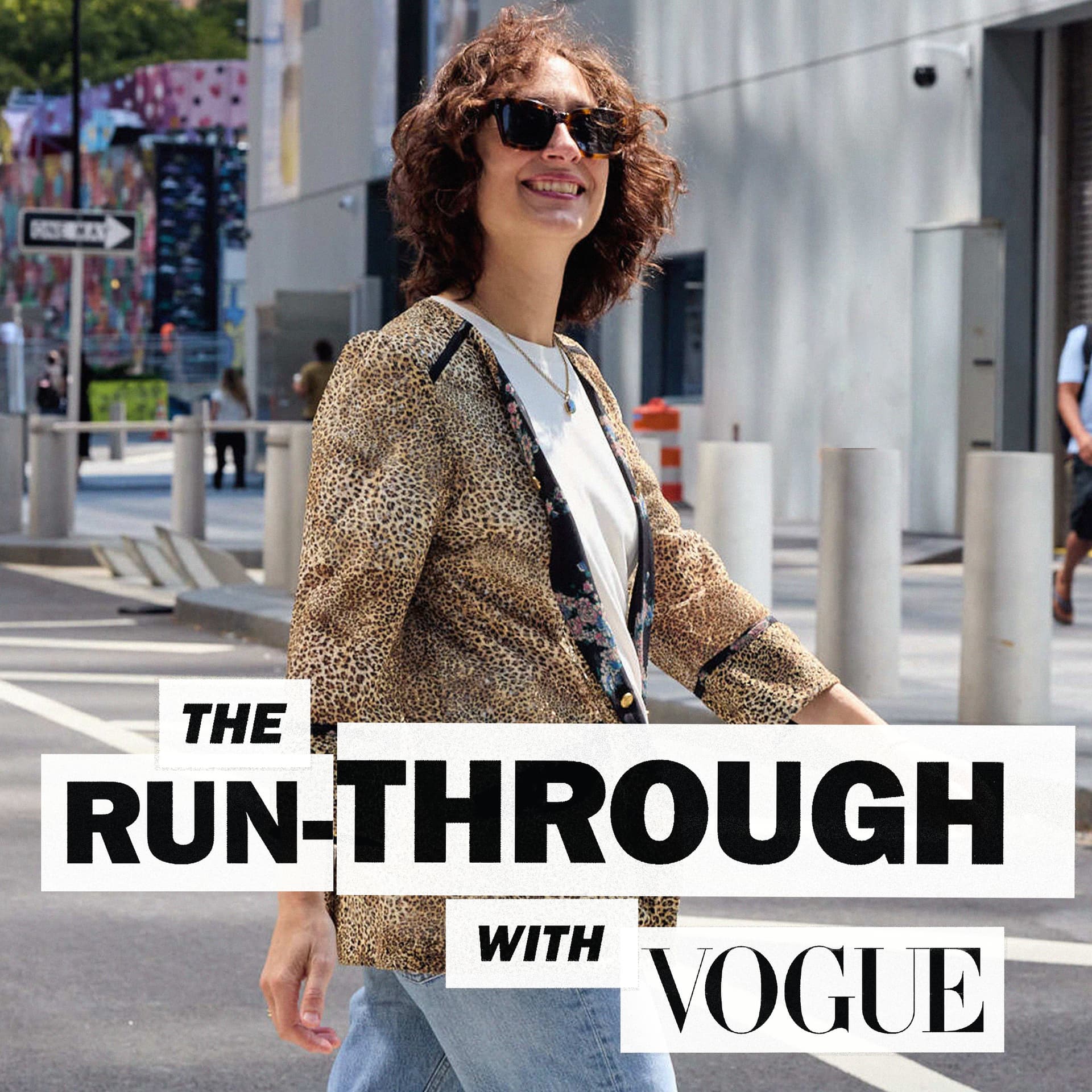
Podcast Overview Title: The Run-Through with Vogue Hosts: Chloe Malle, Chioma Nnadi, and Nicole Phelps Description: The podcast provides insights into the world of Vogue through conversations with editors, creatives, and cover stars. Weekly episodes highlight the latest trends, designer discussions, and fashion news.
Episode Details Episode Title: GQ’s Will Welch on the Spring 2026 Menswear Shows Guest: Will Welch, Global Editorial Director of GQ Air Date: [Insert Air Date] Description: Will Welch joins Nicole Phelps to discuss the upcoming Spring 2026 menswear shows in Milan and Paris, focusing on key debuts, trends, and notable designers.
Key Themes and Discussions
Anticipation for the Spring 2026 Menswear Shows
- Impactful Season: Welch emphasizes the significance of the season, particularly highlighting notable debuts.
- Jonathan Anderson at Dior: His debut signifies a strategic shift for LVMH, combining men’s and women’s creative direction under one designer for the first time since Christian Dior.
- Michael Rider at Celine: Previously successful under Phoebe Philo; expectations for his vision.
- Julian Klausner at Dries Van Noten: The challenge of stepping into a role after a beloved predecessor.
Discussion of Designers and Their Approaches
- Jonathan Anderson:
- Known for minimalism and conceptual presentations; curiosity about how his style will adapt to Dior.
- Pharrell Williams at Louis Vuitton:
- His shows are characterized by high-energy productions and celebrity participation, revitalizing the menswear scene.
- Julian Klausner's Women's Wear Debut:
- Uncertainty on how his past association with Dries Van Noten will influence his vision.
- Michael Rider's Couture Debut:
- Anticipation regarding how he will present both men’s and women’s collections.
Trends in Menswear
- Return to Dressing Up: Post-pandemic, there’s a resurgence in men wanting to dress for occasion, departing from pandemic-era casualness.
- Shorter Shorts Trend: Observations on men’s fashion that reflect broader cultural movements.
Fashion Week Dynamics
- Destination Shows vs. Fashion Week:
- Discussion on the significance of traditional fashion week compared to off-calendar destination shows.
- Examples of successful destination presentations (e.g., Gucci by Alessandro Michele).
- Emotional Connection to Shows:
- The importance of live presentation in creating momentum and excitement in fashion.
Personal Anecdotes & Collaborations
- Brad Pitt and Saint Laurent Boots:
- Reflecting on celebrity collaborations and fashion statements.
- Creative Partnership with Andre 3000:
- Welch’s personal experience dressing for the Met Gala, showcasing a revival of Benjamin Bixby.
Final Thoughts & Predictions
- Need for Creative Juice:
- Calls for a groundbreaking designer to emerge and energize the fashion landscape, particularly amidst the current creative slump in the industry.
Key Takeaways
- Strategic Shifts in Fashion Houses: The integration of creative direction across men’s and women’s collections is a noteworthy change in the industry.
- Celebrity Influence: Celebrities play a significant role in shaping trends and revitalizing the fashion conversation.
- Fashion’s Evolution Post-Pandemic: There is a clear movement towards more structured and formal dressing among men.
- Community Building: Effective parties and events within the fashion industry rely on creating a sense of community among attendees.
Conclusion This episode of The Run-Through with Vogue presents a rich discussion on the evolving landscape of menswear, the anticipation surrounding upcoming shows, and the creative forces at play in the fashion industry. Will Welch offers an insider's perspective on how these elements intersect, ultimately painting a hopeful picture for the future of fashion.
Written by AI. May contain mistakes. Listen to the episode to check what was said.
Transcript
Automatic transcript. May contain errors.0:05This is The Run Through. I'm Nicole Phelps. Today, I have GQ's global editorial director, Will Welch, with me in the studio. We're heading into the men's spring 2026 shows in Milan and Paris, and I asked Will to talk about the trends he's anticipating, the shows he's most excited about, and of course, the big debuts of the season. Here's my conversation with Will Welch. Welcome, Will. Thank you, Nicole. I'm very happy to be here. Thank you for being here. We are going to talk about the men's shows this season. It is time. Yes. Is there anything in particular that you are looking forward to? Oh, my gosh.
0:45Well, in general, I've been going to the shows for a long time, but I'm always excited to go back. Like, always, always, always without fail. And, yeah, every season always has some unique things going on, but this one feels particularly big. I think Jonathan Anderson's Dior menswear debut is a huge one. And then there's always, like, big shows. like, yeah, Jonathan Anderson Dior, Pharrell, Louis Vuitton, but also just the little appointments and all the smaller stuff that we really love being a part of as well. Well, I count on GQ for keeping me up to date about menswear. I hope it's not just you.
1:23We have a joke that Evan Kinori owes his career to GQ. Evan Kinori owes his career to being really good at what he does. And we have just helped tell some people about it. Yes. Well, you've done a good job. I certainly learned a lot about him via your coverage. So let's start with Jonathan Anderson. It is a huge moment. He was announced first off as the men's designer at Dior and more recently the women's too. So I think he has something like 18 collections a year combined with his own brand, JW Anderson. When you're talking to the team at GQ, what do you expect from him? Well, I think it's really interesting because it also shows a strategic departure for LVMH.
2:11So I think LVMH has always kept for the two biggest houses, Dior and Louis Vuitton, the men's and women's separate. separate. And so you don't have just like one creative vision driving the whole house forward. And that has also allowed them to do really interesting things with like all of the many elements that come just from the house. So if you think about Louis Vuitton, right, there's Nicola and there's Pharrell, but then there's all this other stuff that just comes from Louis Vuitton. And Dior has historically been set up that way as well, post Christian Dior. So now for the first time since Christian Dior himself, there is one designer over it all.
2:52So I think it's interesting to think about that strategic shift for LVMH. And then there's the creative pressure that Jonathan is under to deliver in this new way. But for me, it's exciting. And I also think about this in tandem with Dimna at Gucci, where somebody who has really like blown us all away with their creativity has to find like a totally new gear and a totally new expression. And one of the things that I always found so inspiring about J.W. Anderson shows, which lucky for the menswear universe, they happen in Milan during menswear. So intimately familiar with what he does on the runway at J.W.
3:35And then also at Lueve, there's this like stark simplicity. Jonathan would often show like, I don't know, 60, 70, 80 looks. but there would be so few pieces on each look. So rather than these like layered up looks with a ton going on, it's like strip it down, strip it down, strip it down. I think his creative partner in both is Benjamin Bruno, right? So I just thought the styling, the minimalism and starkness of the styling of J.W. Anderson and Lueve shows was incredible. But I wonder like, do you have to do it totally differently at Dior Or is that the way he says what he has to say? And I think Jonathan's a very conceptual designer and he was able to get some really like specific honed concepts across through the way that he presented on the runway.
4:24So I'm just so excited and fascinated to see how that is or maybe is not going to change when he's working at Dior, which is just a different – a whole different enterprise. Such a different enterprise. Exactly. He was able to take Loewe from a very unknown brand into— Spanish bag maker. Right. And one of the fashion's hottest labels. And Dior obviously has a lot more global cachet, I guess, than Loewe did when he started there. And so a new challenge for him and exciting. Yeah. And really cool because he is like an intellectual designer and a conceptual designer. and he alongside Pharrell, who is more of this like, you know, whipping the cultural winds of energy, very much a creative director versus a fashion designer.
5:16So I think there's an interesting like point counterpoint between the two of them that we'll see in Paris as well. Let's talk about Pharrell. I have never been to one of his shows, but have watched from a distance and they are massive productions, often with music accompaniment. Even he sang. Did he sing at one of his at his debut show? Yeah. Yeah. There was the choir and then he and Jay-Z did like a whole set. Yeah. So. With Rihanna and LeBron and. What's what's the vibe at his shows? The vibe is big. It's like fashion under the big top. It's like the big circus of fashion. And yeah, they are packed with celebrities, packed with some of the biggest athletes in the world.
5:56And then, yeah, there's always new original Pharrell produced music that's debuted. And it's just like it just shows how fashion has become so much more than like a presentation of clothes on the runway. And I have to say it's been really exciting. And it feels like a continuation of when Virgil became the menswear designer at Louis Vuitton. It just brought this whole other energy and all these new people like physically to Paris for Men's Fashion Week. And I remember talking to you and the other Vogue editors at the time about – they were like all the energy is in June and menswear. And tons of celebrities started coming, all the professional athletes, NBA players, NFL players, the occasional other sport as well, started showing up at all the shows.
6:48And the GQ party that I throw got like really crazy and out of control in the best possible way. and yeah when Virgil passed away it was um it felt sort of like existential it's like is is the June Paris show is still going to be the like Coachella Art Basel like south by southwest of fashion and with Pharrell um at the helm at Louis Vuitton the answer has definitely been like it's just continued maybe even gotten bigger we have Robin Gavon coming on the podcast in a couple weeks, and she, of course, has written a book about Virgil, which I'm very excited to discuss with her. Yeah. Virgil's estate has some really exciting things happening later in the year that GQ is going to be a part of.
7:31So, very excited to share more about that over time. All right. Well, we will be paying close attention. Let's talk about Julian Klausner. He had his debut for women's wear at Dries Van Noten. He worked alongside Dries before Dries retired. Are you expecting anything in particular from Julian? Did you look at the women's? What did you think of it? Yeah, I looked at the women's and liked it and I'm very excited. I mean, I love going into a show just with an as open of a mind as possible. And I think it's always interesting when somebody has sort of come out of the atelier and is now taking over as the designer because You never know, like, to what extent were they really successful at, like, serving the vision of the existing designer and then what is their own voice and how close to the name designer to Dries, in this case, is Julian's vision or how different is it?
8:28And you're often, like, totally surprised by the way the Venn diagram ends up being mapped. And I don't know. Honestly, I started working at GQ under Jim Nelson, my predecessor's editor-in-chief, and I was serving his vision and then got the chance to express my own vision, which was related but also different. It's really fun to see that. I'm excited to see what Julian is going to present on the men's side. Then there's also the Michael Ryder at Selene who worked for Phoebe Philo at Selene and then worked at Ralph Lauren here in New York. And we know that Michael was very successful at Phoebe's Celine and Ralph's Ralph.
9:09But what will his vision be? Right, right. Yeah, let's go back to Julian for one second because I think the job that he has to do is really hard. People love Dree so much. There's a real cult. There's a real cult. People wear it on a daily basis and felt a real affinity to him. And it's different than taking a job at one of these other heritage brands where a Chanel, for example, or a Dior, where the originator, the founder, has been dead for decades. Yeah, distant past. We have a deep personal connection with Dries. And so I think— Dries is still here. Yes. He has a unique challenge, Julian. Walking through his garden.
9:48We are definitely rooting for him. And Michael Ryder, too. Did you get to know him at Polo, Ralph Lauren? Um, only after his, uh, appointment at Saline was announced, we met and we've gotten together a few times for coffee and just to talk and I've really enjoyed the conversation, but I have no idea what is going to come out on the runway. Me neither. I'm very eager, but he is not showing during men's though. So he's attached his debut to the couture calendar, which I suppose means he'll be showing both men's and women to give us the full picture. So somebody else who is sort of an on-again, off-again presence at the men's shows is Anthony Vaccarello because he had for a while been doing these off-the-beaten-path shows.
10:37Did you get to see any of those menswear shows? Did you see the one that was in Morocco in the desert? Sam Hine from GQ was there. I think Miles Pope from GQ was there. I was not there myself, but I followed the like desert orb, desert fire orb. Yes, and then the one in Malibu too, right? On the beach. Malibu, I was there. Yeah, that was fun. Yeah, it was kind of like a gloaming day over the Pacific Ocean. Yeah, that was good. But I'm always happy. Destination shows can be exciting and fun and obviously like allow a designer to express a very different vision. But there's something about the momentum created by Fashion Week.
11:16And I think sometimes people assume that like, oh, if you just like one show slotted into an hour during a day of shows, maybe you get lost. I actually think what happens is Fashion Week creates this incredible momentum and this like bigger conversation. And it's actually really hard to successfully pull off a destination show. Like everything has to go right. Whereas during Fashion Week, you can sort of plug into that momentum and the energy. so I actually think the destination thing got like over they became too popular of a trend and led to some pretty uh I was gonna say significant failures but maybe that's that's too vicious it just led to some like shows that I think left a little to be desired because you create so much pressure when you try to like take this whole industry of people like off calendar to someplace.
12:12And I'm not talking about Antony in particular on that. I just mean in general, that big trend. And it's cooled off a little bit. And more people are like sort of filtering back into showing during the weeks. Yeah. We talk about it at Vogue Runway, like the glow or the aura of fashion week. People know it's happening. And so Vogue Runway, for one, is a destination. And that, you know, it helps brands be in the consciousness, the public consciousness a little You can like whip the winds and create that from zero, but it is extremely difficult. One of the most successful ones ever, and it was just executed at such a high level, was Alessandro on Hollywood Boulevard.
12:50Ah, yes. When he shut down Hollywood Boulevard and like the choreography. For the Gucci show. For Gucci, yes. The choreography of that was so spectacular. and then there were, of course, this incredible casting of models, but all these notable people and celebrities mixed into the show, and that one really worked. I was like, that's when it's done at the highest level. Yeah. Well, speaking about Alessandro, what do you think of his Valentino? I think it has been exciting. It definitely took – there was a lot of controversy and talk about how there were similarities between his vision at Gucci and his vision at Valentino, But now that it's like we're accustomed to the world that he's expressing, I think all the differences between what he was doing at Gucci and what he's now doing at Valentino are like coming into relief.
13:40And just from a like GQ photoshoot perspective, we've been shooting a lot of it. And it has been looking great in the pages. It looks great on the red carpet too. Also – Coleman Domingo. Yeah, exactly. A lot of red carpet. So it seems like it's finding its footing. Back to Saint Laurent. What did you make of Alexander Skarsgård in those incredible over-the-knee boots at Cannes? You know. Do you see other men wearing those? Could they ever become a trend? The Brad Pitt on our current cover wearing them. Well, I want to congratulate you on that cover. I'm like, who's Alexander Skarsgård? Let's talk about Brad Pitt wearing them.
14:19You know, there's definitely something very editorial about the boots, and I have no doubt that I'll be seeing them in Paris. in about two weeks on the street, which will be really fun. But yeah, it's like, this is what's so great about fashion is you find these, sometimes there's just like this one idea that cuts through. And sure, it's like celebrities trying to get you and I talking on the red carpet or GQ trying to get other people talking with Brad Pitt wearing them. Yeah, I want to know, did Brad resist that? George Cortina styled that. did George give you any juicy stories I mean does Brad does he take convincing to put on something like that or is he really goes for it?
15:01Brad is an incredible collaborator when it comes to the fashion and we've worked with him a bunch over the years and a lot of those shoots have been with George Cortina so GQ, George and Brad like have a thing going and he's just really open but he's also he won't do anything and everything he's like not there to be you know a pinup doll. And when he doesn't want to do something, he just laughs and says, nah, like, forget it. When he's up for it, he's like, yeah, let's try it. Have you seen his new movie yet? I'm going to the premiere on Monday. Ooh, I can't wait to hear about it. Yeah.
15:37More with Will Welch after the break.
15:49You come to the New Yorker Radio Hour for conversations that go deeper with people you really want to hear from, whether it's Bruce Springsteen or Questlove or Olivia Rodrigo, Liz Cheney, or the godfather of artificial intelligence, Jeffrey Hinton, or some of my extraordinarily well-informed colleagues at The New Yorker. So join us every week on The New Yorker Radio Hour wherever you listen to podcasts.
16:23So Rick Owens, one of my favorite designers, he's also an upcoming star on the podcast in a couple of weeks. He has a retrospective at the Pele Galliera, and he gave us a little preview and said that the runway models will spill out onto the street outside of the Pele de Tokyo and head over to the Pele Galliera. Talk about Rick's impact on menswear. He's another person who makes crazy boots. He does make some crazy boots. Rick is one of one, has pulled off the most incredible trick, which he has such a vicious and severe vision as a designer, but he has found a way to translate it a million different ways that ultimately can be understandable.
17:10So to me, a crazy pair of Rick Owens boots or one of these coats that is really more of a sculpture than it is a piece of clothing is like contains all the essential Rickness, like the Rick Owens vision. But so does a Rick Owens t-shirt or a pair of shorts or a pair of sneakers. Like his sneaker business is just a phenomenon unto itself. And it is so rare for a designer who has that radical of an aesthetic to find ways to make it accessible to so many people. I mean, it is like, I always think of that like usual suspects line, like the greatest trick the devil ever pulled was like, I don't know, Rick Owens making t-shirts that, you know, my dad could wear.
17:56And it has just allowed the cult of Rick Owens to touch, to reach so far and to touch so many people. I also think he is a designer whose vision is as, it's as radical and as clear for men as it is for women. And it's as experimental for men as it is for women. Often, I think menswear is really based in utility. Like everything, all of the hallmarks of menswear, and ultimately I think what works on the runway and what doesn't comes down to like, is it somehow rooted in utility? When you think about the men's suit or just men's fashion in general, it goes back to like the Royal Air Force, the military, to workwear, to it's just utility, utility, utility, Whereas women's wear has always had this long history.
18:44It's about expressiveness and like reshaping the body and the art of fashion. Rick is the rare designer who on the men's side has been able to like break that. Like he is able to do things that aren't ultimately rooted in utility. They're rooted in his own imagination. And that is incredibly hard. It's like phenomenally hard. And what a showman too. I bow to Rick. Right? Yeah. He puts on a really great show. I can't wait for the episode of the podcast because he's also just absolutely hilarious to talk to. And also there is this like gulf between what people imagine Rick Owens to be. And he totally is those things of like, you know, whatever the dark lord of fashion or whatever people call him.
19:23But he's also just this like Cali boy. And when you interview him that or when you talk to him, that really comes through. I'm very excited to see the exhibition. He is only the third designer at that museum in Paris, a living designer who is getting an exhibition. And the previous ones were Azzavine and Laya before he passed away and Martin Margiela. So he's in very illustrious company. What he makes is art, is wearable art, again, whether it's sculptural or a pair of shorts. Another American in Paris is Willy Chavarria. Yes. I have to say we're very sad in New York for him not to be on the schedule here anymore and to be on the men's schedule in Paris.
20:04But think back to last season. What did it feel like to be there and see him? Do you think he can compete with the level of designers in Paris? Yeah, I absolutely think he can. And, yeah, you know, it's been interesting. Like when I started going to the fashion shows like as a youngster working at GQ, all of the energy and power was in Milan. This was like the menswear era and everything was about suits and all the money and power of men's fashion was rooted in Milan. And over time, that really changed and the energy moved to Paris. And I think there's been a generation of American designers who felt that they had always aspired to show in Paris and they needed to show in Paris almost to be taken seriously.
20:51and I think as we've seen with Tom Brown and many others, Emily Bodie, often it's like you go, you show in Paris, you prove that you can play at that level and then you can make your own decisions. Like do you continue to show in Paris? Do you go back to New York? Do you do what Tom and Emily do, which is a mix and kind of move between the two? So we'll see what it's like for Willie, or Mike Amiri is another one who like, he was like, I want to show that I can compete. And yeah, I think already Willie is holding his own. And I think there's also a appreciation for American fashion. And it's not like all of the international editors and buyers and press and so on don't care about the Americans showing in Paris.
21:38I think American fashion is a strong enough movement right now that Willie can go there and stake his claim. And then I also think, you know, showing on the runway is something that you, like, develop and you get better at. And we've seen that with Willie. His show's in New York, the show last season in Paris. So watching somebody's vision expand and them sort of, like, figuring out. It's such a complicated feat to pull off in terms of production and casting. There's so many components to it. And so watching a designer like him develop that expression, which is a whole other thing than just creating the collection, right?
22:15Like creating a collection is one thing. Figuring out how to show that collection is another. But, yeah, I absolutely think he can hold his own. And I bet we haven't seen the last of him in New York either, which would be great. I hope so. Well, you mentioned Milan. So what are some of your favorites in Milan? I think that Giorgio Armani is on the eve of his 50th anniversary in business, which is hard to believe. Yeah, you know, a little bit like going to a Ralph Lauren show, like every show with Mr. Armani is incredibly precious, you know. I think Ralph and Mr. Armani, they basically created menswear as we know it, mens fashion as we know it.
22:56so to have had all these years of getting to go see armani shows where mr armani comes out and bows at the end it just like every time i think i've i've filmed his bow at like you know 42 shows now that i've been to uh every time i'm like i have to capture it because i can't can't believe i get to be here um and it still has that feeling and he usually shows both emporio and Giorgio Armani. Dolce & Gabbana showing Prada, always a huge dynamic moment, always like celebrity packed, so much energy in Milan around what Raph and Mrs. Prada are doing. A recent addition that has been really exciting for us at GQ is Simon Holloway at Dunhill, who was just showing this like incredibly refined vision of English tailoring.
23:46And so that is a show that myself and my colleagues have come to really look forward to on the calendar in Milan. And then there's all the things that we do in between the shows. So I always go see Massimo Alba, who is – I just love – it's like – The colors, right? The colors, the fabrics, clothes for wearing, as I sometimes say. And he is also just like an incredible sort of soulful philosopher designer. And I just really value my personal time with him catching up. And then another GQ favorite, Umit Benin. Umit, it's like he has not been the most consistent when it comes to showing collections or having presentations or appointments, but he is always making clothes and we are often shooting them on people.
24:34And he's also just so stylish himself. Yes, the attitude of those clothes is so good, right? Yeah, and the attitude of the man himself. So very excited that Umit is doing appointments in Milan. And, you know, also just being in Milan and seeing all my friends there and eating and drinking. And, well, I don't drink alcohol, but, you know, drinking Diet Coke and eating pasta and pizza. Yes, yes, you're making me hungry. My stomach is growling.
25:05We'll be back with Will Welch in a moment.
25:30in Hollywood. There's a hundred wrestlers in the room, but only one can be Oscar nominated. Whether you're a movie lover or an industry buff, Little Gold Men from Vanity Fair has everything you need to know about this year's Oscar race. Follow and listen to Little Gold Men wherever you get your podcasts.
25:54So I want to talk about trends. We, as women's wear focused, as we are at Vogue Runway, we do talk about men's trends. And lately, one thing we've noticed is men's shorts getting even shorter. But, you know, we don't necessarily have to talk about that. Is there anything that you guys are observing at GQ that feels like it's sort of transcending our little world of fashion and it's, you know, dispersing into the wider world of dudes? Yeah, I think one that I'm just like personally excited about and that we have been trying to lead is just like men getting dressed again. You know, I think the pandemic feels a little bit distant at this point, thank God.
26:39But yeah, post-pandemic, it was like sort of hard, I think, in general, globally for men to get excited to get dressed again. And there was this like ease and casualness. And I think people got tired of that. And so there's this idea of like really getting dressed. I started wearing a tie again early on and people were like, you're out of your mind. And now those same people are like wearing ties again, just as an example. They've become really big in women's wear too. Yeah, I know. All the tailoring and ties. Yeah, I think that's been really cool to see. But, yeah, just in general, like wanting to get dressed in a sense of occasion and a sense of formality feels exciting.
27:22I mean, I think we talked about Anthony Baccarello and Saint Laurent and what he's been doing both for men and women with this like really elegant men's tailoring. Even men's tailoring for women has been incredible and inspiring. It's a good segue. We should talk about Superfine, the exhibition at the Costume Institute. What was your reaction? I mean, I was blown away by the exhibition. Yeah, it was fashion, but it was also history and American history. And I think it was just also cool. I thought there was an incredible range of Black designers and Black tailors that were shown, including some like young upstarts and some of the OGs like Dapper Dan and some of the dearly departed like Virgil.
Read the full transcript
28:09but the way that it was divided and you were sort of like carried through the narrative because that can be very hard you know and you don't want to just like submit to the cudgel of chronology and so I thought the the way that the show is divided up if you're into menswear and listening to this and you haven't seen it it's also just for us at GQ a very inspiring moment for the exhibition to have a menswear theme right it's the first time in like 20 years or right because there's only one other show at the costume institute the men in skirts show exactly so yeah it was just incredibly exciting and it felt felt like a great moment for gq we we felt like we felt like we were invited to the party in a different way this season tell us tell us a little bit about your look and your collaborator.
28:59Sure, yeah. When the theme was announced, I was just thinking about Black Dandyism and Black Dandies and the history. And obviously, when you're thinking about how you are going to dress yourself, you got to figure out what is my personal way into this. And I'm lucky to have a longstanding collaborative relationship with Andre 3000, who I just think is like the embodiment of dandyism over the last three decades. The key to dandyism isn't like, well, what Andre once called like pink polka dots and plaids. That is a part of it, but it's really about just this like personal fearlessness. And he is just such a fearless artist.
29:49I mean, can you imagine being considered one of the greatest rappers of all time and being like, here's my flute album and just like ready for whatever arrows get, get thrown your way as a result. Like he does what, like whatever is going to come out of him is what is going to come out of him. And he follows that. And that to me is just like so personally inspiring. And I also grew up in Atlanta, Georgia, listening to OutKast. So he's a hero of mine. And so anyway, I called him and I said, you know, he had this line. He was actually a Best New Menswear Designer in GQ. And like, I think it was 2008 when we had this Best New Menswear Designers program at the time for his line, Benjamin Bixby.
30:28And I don't know how many people do and don't know about Benjamin Bixby. I don't know much about it. Yeah, he did two seasons. It was like exclusive with Barneys. It was like this, like bringing in some of the like signifiers of English dandyism, but making this very American. And it was like, it was dressed up. There were ties and cardigans and beautiful high-waisted trousers and so on. But he was like funding it himself and it kind of like it went away and he focused on other things. So I said – I called him and I said, you know, could we bring back Benjamin Bixby for one night? Like will you dress me in some sort of revival of Benjamin Bixby for the Met Gala?
31:08And he said, I'm actually in Amsterdam right now working on Benji Bixby, which he's still figuring out exactly what shape it's going to take and when it will debut but he's working on a new expression of Benjamin Bixby called Benji Bixby and he was literally working on it when I called him so he just sort of said what if what if we do that and yeah it's just like wow such a um I don't know to say dream come true implies that it was like a dream I had already had but it was like a dream I didn't even know to dream that came true and yeah we just had so much fun. And like very early on, he was like, I'm going to wear a piano.
31:46And I was like, what does that mean? And then he kind of walked me through it and we ended up being just involved in like a secondary production way at kind of like helping make the piano happen. Who didn't see it in person, and there's a lot of listeners who didn't see it in person. How heavy was this piano that he wore? Piano was incredibly heavy. And there was this question about whether or not it was too heavy for him to make it to the top of the stairs. But for logistical reasons, he had to make it to the top of the stairs. And like two nights before, I was like, you can't – there's no taking it off halfway up.
32:26It's either don't wear it or make it to the top of the stairs. And he just looked at me and said, I think adrenaline is going to carry me through. And it did. As you saw, he was chilling, like walking back and forth, taking his time, photographers going crazy. So, yeah, what a night and what a – I mean that's just the most Andre 3000 thing in the world. Like he has the creative spirit of a child. He's like, what if I wore a piano? And then you're like, ha, ha, ha. And he's like, no, really. What if I wore a piano? And then he makes it happen. So forever my personal icon and goat. Yeah, I want to talk about that a little bit.
33:04You, as the leader of GQ, get to meet a lot of your icons. What would your young self growing up in Georgia, did that young person ever imagine meeting Andre 3000? So I went and waited in line. The night that Equim and I came out, I was actually telling Andre about this the other night. The night that Equim and I came out, the year was 1998. So I was 17 years old and they were doing a signing at Tower Records, which started at midnight. and I waited in line for an hour and I got up to the table. It was finally my turn to him and Big Boy who were sitting at the table together. And of course, what do you do for the hour that you're waiting?
33:47You're thinking about like, what am I going to say to my two heroes? So I was like trying to find something to say. I didn't have anything very cool to say. And then I got up and it was my turn to have my CD signed by the two of them. And they were just like deep in conversation. And they signed it without looking at me and just handed it to me. and I just took it and looked at both of them and like shrugged and walked off. So I did kind of meet them. But no, the idea that I would be like collaborating with Andre, I don't even know. I think it would be totally overwhelming. But I think it's really important for any of us to somehow like stay in touch with like our inner, you know.
34:27My equivalent. The little child inside us all. Yeah, what's your equivalent? My equivalent is John Taylor of Duran Duran, who I was in love with as a middle schooler and went on to not just hear play in Duran Duran at many different fashion show parties, but also meet and get a photograph with. You know, I could barely believe it. I think sometimes it's like, what can you say to someone? Like, they've heard it all before. Like, you were so important to me. They're like, cool. Yeah, I know. So you do throw a lot of parties at GQ and a lot of celebrities do show up. What is your secret to getting them to keep come back?
35:08Why do they have such a good time at GQ parties? Okay, it's very like refined secret that I'm willing to unveil exclusively here on the run through. The party has to actually be fun. That's all that matters. That's the trick. The music needs to be good. I don't know. So I think you just like – you just open up a space and let it happen. You can't try to control everything. You can't try to make it this happen and then I want that to happen and then this is going to blow everybody's mind. And then the other thing I think we've done as a GQ that serves – that makes the parties good is we've just like built a community of people who feel like they are a part of GQ.
35:50So that is our many, many, many – as you know, making a magazine is the most collaborative medium. It's like rivals film in terms of just like how many different people you need involved. There's the staff, but there's the producers and stylists and photographers and the talent that we shoot. And I always just try to give those people when they work with us an experience of like you're part of what we do now. And then those people come to the parties and they know each other and they're there to have a good time. And from there, it's just like, yeah, drinks and music. And yeah. Well, I have to say I'm jealous.
36:24I'm not going to be at men's. I love watching from a distance because it's a beautiful time of year to be in Milan and Paris. I know, June and Paris, France, you can't beat it. And you guys all look like you're having a good time. Is there anything that you're predicting? What I'm really hoping for is I think, you know, there's a bit of a slump going on in fashion. And I think the thing that – the only thing that can break through a slump is a jolt of creativity from somebody. Somebody with a vision, somebody who's going to like throw down a gauntlet that changes the way that we think about things and the way that we see things, you know, that like rearranges the I.
37:09And I can't engineer that as an editor. A CEO can't engineer that. a, there's nobody like, you know, on the corporate side of the fashion houses that can like move the numbers around to make that happen. We need one of these incredible designers to just like throw down in a way that creates change. And it always happens. It doesn't mean it's going to happen this season during men's in Milan or Paris. It could be in September or it could be next year or who knows. But I think fashion has a very good track record when things get a little bit like muddy as they are right now. Somebody like kind of breaking through.
37:50So I eagerly awaited. We will be watching for the vibe shift. Yeah, we need the vibe shift. Thank you, Will, for coming on the run through. Such a fun every time, Nicole. Thanks for having me. See you in the holes.
38:05That's it for the run through. See you Thursday.
38:17The Run-Through is produced by Chelsea Daniel, Alex DePalma, and Joanna Solitaroff. It's engineered by Jake Loomis and James Yost. It is mixed by Mike Kutchman. Stephanie Karaoke is our executive producer, and Chris Bannon is Conde Nast's head of global audio.
38:44From PRX.
From the publisher
The spring 2026 menswear shows are just getting started. Ahead of what is sure to be an impactful season, Will Welch, GQ’s Global Editorial Director joined Nicole Phelps on The Run-Through to discuss the current state of menswear. “This [season] feels particularly big,” says Welch, referring to the debuts that will take place in the coming weeks, chief among them Jonathan Anderson’s introduction as the newly-appointed creative director at Dior, but also the American designer Michael Rider’s first show for Celine and Julian Klausner’s inaugural Dries Van Noten menswear show following his womenswear debut last March.
Tune in to the conversation to learn about Welch’s favorite under-the-radar designers, what it takes to get Brad Pitt into thigh-high Saint Laurent boots, and how Andre 3000 ended up designing Welch’s suit for this year’s Met Gala celebrating “Superfine: Tailoring Black Style.”
The Run-Through with Vogue is your go-to podcast where fashion meets culture. Hosted by Chloe Malle, Head of Editorial Content, Vogue U.S.; Chioma Nnadi, Head of British Vogue; and Nicole Phelps, Director of Vogue Runway, each episode features the latest fashion news and exclusive designer and celebrity interviews.
Learn about your ad choices: dovetail.prx.org/ad-choices