
In short
Podcast Summary: The Dirtiest Race in History - How It All Played Out
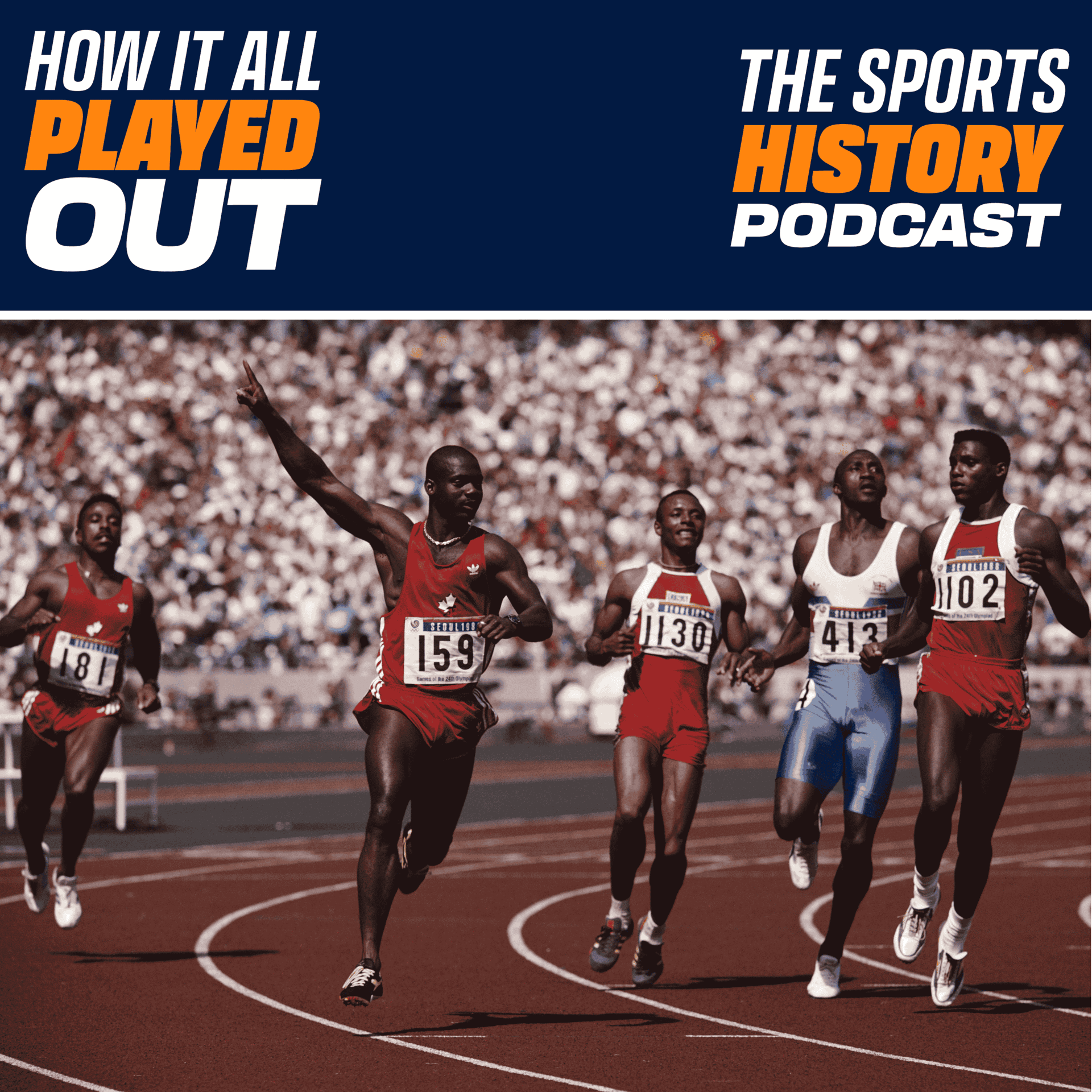
Episode Overview In this episode of *The Sports Agents*, hosts Gabby Logan and Mark Chapman delve into the infamous 1988 Olympic Games men’s 100m final in Seoul, highlighting the rivalry between sprinters Carl Lewis and Ben Johnson. This race is remembered not only for its historic athletic achievement but also for its significant controversies regarding doping, which had a lasting impact on athletics.
---
Key Themes and Insights
Historical Context
- The 1988 Olympics: Set against the backdrop of the Cold War, the competition between the U.S. and Canada added a political layer to the race, showcasing national pride and the sportsmanship ethos.
- Doping in Athletics: The conversation touches on the history of drug use in sports, with a focus on how the 1980s marked a turning point with industrialized doping practices, particularly from Eastern Bloc countries.
Rivalry Between Carl Lewis and Ben Johnson
- Profiles of the Athletes:
- Carl Lewis: Defending champion, charismatic but controversial due to his perceived arrogance and tensions with the media.
- Ben Johnson: The quiet, powerful Canadian who became a world record holder, embarking on a path of doping that would ultimately define his career.
Doping Culture
- Systematic Doping: The episode discusses the normalization of performance-enhancing drugs in athletics, emphasizing that many athletes resorted to doping to remain competitive, especially given the lack of stringent drug testing protocols at the time.
- Doping Tests: The inadequacies of drug testing during the 1980s are highlighted, including claims that positive tests were often suppressed.
The Race Itself
- Race Dynamics: The final race is depicted as a psychological battle between the two sprinters, with Johnson’s explosive start overshadowing Lewis’s performance.
- Johnson’s Victory: He breaks the world record with a time of 9.79 seconds but is later found to have tested positive for steroids, leading to a massive scandal.
Aftermath and Impact
- Immediate Repercussions: Johnson’s positive test results in the stripping of his Olympic gold medal, while Lewis is controversially allowed to compete despite having failed his own doping tests.
- Legacy of the 1988 Race: This race is often seen as a turning point for athletics, dismantling the once-held belief in the purity of sport and leading to increased scrutiny on doping in the years that followed.
- Continued Doping Issues: The episode concludes by underscoring the ongoing issues with drug use in athletics and the importance of ethical practices moving forward.
---
Key Takeaways
- Cultural and Political Significance: The race serves as a microcosm of broader societal issues, including race, nationalism, and the ethics of competition.
- Doping as a Systemic Issue: The podcast illustrates how doping became a prominent feature of athletic competition, leading to widespread distrust in the integrity of sports.
- The Need for Reform: The events surrounding the 1988 Olympic final underscore the crucial need for strict protocols and transparency in drug testing to restore faith in athletics.
---
Conclusion The episode provides a compelling narrative around the infamous 1988 men’s 100m final, exploring its intricate details and the implications it had for the world of sports. By examining the multifaceted aspects of this historic race, the hosts encourage listeners to reflect on the evolution of athletics and the ongoing battle against doping.
---
Additional Resources
- Follow *The Sports Agents* on social media platforms and subscribe to the podcast for more insights into sports controversies and stories.
- Visit the [YouTube channel](https://www.youtube.com/@SportsAgentsPod) for full episodes and exclusive content.
Written by AI. May contain mistakes. Listen to the episode to check what was said.
Transcript
Automatic transcript. May contain errors.0:02Ben Johnson:This is a Global Player original podcast.
0:10Mark Pou:It's lunchtime on Saturday the 24th of September 1988, Seoul, South Korea. The sun is beating down fiercely on a glistening rubber red running track. The stage is set for the men's 100 metres Olympic final. The world is watching who will shortly become the fastest man on the planet.
0:34Carl Lewis:Carl Lewis is the defending champion the slightly brash, charismatic American genius who won four gold medals at Los Angeles four years earlier
0:47Carl Lewis:Ben Johnson is the world champion, the world record holder, the understated sometimes sullen Canadian rocket who came to Toronto as a child from Jamaica
0:58Mark Pou:This is a rivalry for the ages. Muhammad Ali against Joe Frazier, Bjorn Borg and John McEnroe. And there's real antipathy between the sprinters. And Lewis is convinced Johnson is doping and that the authorities aren't doing enough about it.
1:17Carl Lewis:Two champions, six other sprinters with their own dreams. The men's Olympic final of 1988 isn't just the greatest race in history, it's also, on so many levels, the most controversial.
1:30Mark Pou:How did it become the dirtiest race in history? This is how it all played out.
1:44Mark Pou:The first thing to say, Paul, is we both read a book, The Dirtiest Race in History, Richard Moore, brilliant journalist. I didn't know Richard, did you? He's sadly no longer with us.
1:52Carl Lewis:I did know Richard, yeah, he was an exemplary journalist, mainly a cycling specialist, but he turned his hand to track and field to write this definitive account of this scandalous race, this scandalous moment in Olympic history.
2:05Mark Pou:And of course, we're talking about 1988. We're going to talk about what happened in the 80s, but nobody's naive enough to think that drugs weren't around before then. I mean, there was suggestion of drugs in the 50s and 60s in steroids, but it's really the rise of the Soviets and in particular the East Germans in track and field and in swimming where steroids suddenly come on the scene and inevitably, particularly American coaches, are saying to their Iron Curtain contemporaries, what are you doing? That's what they're saying, aren't they, these meetings? What are you up to? I'm going to emphasize several times in this story, there is no out-of-competition testing.
2:42Mark Pou:There's pretty rudimentary testing in the 70s at Olympics, but in terms of out-of-competition testing, do what you want.
2:50Carl Lewis:Drugs in sport go all the way back to antiquity, but in the modern era, the experimental phase of the 1950s turns by the 1970s and 80s into industrialized use. And particularly it turns to state doping programs because the Eastern Bloc countries in particular understand that they can buy prestige and success and glamour in a laboratory and not just on the training track. So what you see is Russian or Soviet and East German state-sponsored doping programs sweeping up huge amounts of gold medals at the elite level of sport. This doesn't stop in the 70s and 80s, by the way. We could talk later about the Sochi state doping program of Putin's Russia.
3:34Carl Lewis:But anyway, in the 70s and 80s, you see this eruption of anabolic steroid use. and we should say because there will be people listening to this from those countries maybe who will say look we did it at a state doping level but the americans and other countries were just as good at it but they did it in the private sector and they were much better at concealing
3:54Mark Pou:the results yeah absolutely and there's some really interesting books written i mean sharon davis's book about her career and you know the fact that she got silver medals and not gold medals and more to the point there are people who came forth who should have been on the podium and beaten by cheats. Really interesting. So I would recommend that. So let's go to the LA Games of 1984. There's a man called Dr. Don Catlin. He's going to be big in our story as well. He was in charge of doing the drug test. So they did test people at the Games itself. And in the last few days, there were a lot of positive drug tests and they never saw the light of day.
4:27Mark Pou:They lost the paperwork, Paul. Were they shredded? Who were returning the positive tests? What happened to them? Why did the paper trail go cold? Did the LA games not want them to come to light? Who was it who tested positive that no one heard about? Anyway, that's what happened. So you have a situation at the end of LA. Nobody has tested positive. And Carl Lewis has won four gold medals. I'm not linking those two sentences. I'm not linking those two sentences. He's won four gold medals. First man since Jesse Owens to do that. And it's absolutely incredible what he's done. He's not particularly popular, though, is he, Carl Lewis?
5:02Mark Pou:Not very popular with the broadcast and the written media in particular.
5:06Carl Lewis:This is a very curious aspect of the story, because in my memory, I thought that Carl Lewis was the sort of poster child of world track and field. Richard Moore's book and other sources tell you that's not the case. And I started to wonder why that was. So Carl Lewis came from a middle class and very socially mobile family. By 1984, he was breaking records and being compared with Jesse Owens. He was highly articulate. He was renowned for the beauty of his running. David Miller wrote in the Times of the magnetism of this beautiful athlete. But when you dig a bit deeper as to why Carl Lewis wasn't fully embraced by corporate America in the way that you would have expected, you come back to some pretty dark themes.
5:47Carl Lewis:You come down to some dark themes. In particular, his sexuality was questioned in a very homophobic way at a time when, you know, not many athletes were out. And corporate America made a decision about Carl Lewis that he wasn't really suitable for the front of house profile.
6:03Mark Pou:They call him the flying faggot.
6:05Carl Lewis:Yeah.
6:05Mark Pou:I mean, how offensively homophobic. They called him some people in the American press the flying faggot.
6:11Carl Lewis:I know it's astonishing to see that phrase in print and to think that that was ever used, ever acceptable. I had to read that two or three times. Me too, me too. And I mean, it kind of heaps shame, really, on the whole culture of the time. So Carl Lewis, far from being the golden boy with all the privileges that Ben Johnson liked to portray him as, was actually having a personal struggle of his own to get the recognition that he deserved.
6:35Mark Pou:Gary Smith in Sports Illustrated, which is the huge sports magazine, wrote a huge profile just for LA called Lewis. Self-conscious, vain, shallow, self-absorbed. He was quite brash. He had gaudy clothes. When the American team came in at LA, and obviously they're the hosts, he hung back, didn't he? He hung back and came in with Michael Jordan. Michael Jordan didn't get stick, but Carl Lewis got stick for that. Who do you think you are? Who do you think you are doing that? You come in with your team.
7:01Carl Lewis:Somebody said about in America, everything comes back to race in the end. There was a racist undertone. There was a racist undertone. The idea being at that time that black superstars should know their place. Stay in your lane. Stay in your lane, exactly. Literally, yeah. Yeah, and you could see that all around the Carl Lewis story.
7:17Mark Pou:Alan Wells, who'd won in 1980 for Great Britain, the great Scottish runner, said of Lewis's demeanour, his attitude, he was a selfish individual. He treated his countrymen like muck. And his great long jump rival, another American, Larry Myrick, said, trying to get to know Carl Lewis is trying to get to know Michael Jackson. You can't. He lives in a different world. He's brought all the rumours on himself. So we're building a picture of a brilliant athlete, slightly different, quite sure of himself nothing wrong with that you need the arrogance but not very popular in the American press we can't say in American society but not portrayed in a very popular and positive light by the American media so that's where Carl Lewis is he wins gold in the 100 meters and Ben Johnson comes third and Paul his coach Charlie Francis who'd run himself for Canada in the 72 games is watching and goes okay you can only go so far with natural talent up against other people who I think Charlie Francis says are using drugs so the great line Charlie Francis comes out with is you can take drugs and try to win or are you content to lose forever by staying away from them so this is this is the fork in the road isn't it Ben Johnson's come third he's got lots of talent he's got an amazing start but this is the moment you have a choice now here Ben Johnson you can only get better by taking drugs well the mantra which runs all the way through
8:37Carl Lewis:this story is a saying from the time if you don't take it you won't make it so what you get is this idea that you're not cheating you're only trying to compete on a level playing field if everybody else is doing it you have to do it and why shouldn't you do it if everybody else is doing it just a word about the rivalry that these two are building up i mean so both of them went from earning four hundred dollars of an appearance to demand being able to demand a hundred thousand dollars so they are both of them are going up this very sharp trajectory towards you know extreme wealth from track and field but the difference between them is that Lewis is naturally gifted and Johnson is not an also run exactly he's a podium runner podium sprinter but he's never going to be the champion without drugs he's never going to get anywhere near Carl Lewis in the really defining events unless he gets on this train of taking anabolic steroids it's extraordinary
9:31Mark Pou:they always say that you can tell if someone's taking drugs just by looking at them we'll get to that a bit later watery eyes much bigger and joe douglas who is um carl lewis's sort of manager effectively says it's impossible to have bigger muscles and be faster you can't have both no which there's a logic to that isn't it if you're bigger then surely you know you're weighing more you're going to be slowed down a bit that's not what it is but anyway there's some discrepancy between Charlie Francis, the coach, and Ben Johnson about whether Ben Johnson had to think about it or Charlie Francis makes him do it.
10:05Mark Pou:I mean, it doesn't really matter. He does it. Comes third in 84. Then in 85, they go to the Weltklasse, which is in Zurich, which is like the most famous meeting outside of the World Championships or outside of the Olympic Games. And for the first time ever, Johnson beats Lewis. And for the first time ever now, Johnson is getting under Lewis's skin and we're getting the start of the Ali-Fraser rivalry there, aren't we, really? Because Johnson thinks, I've got his number. And Lewis, of course, is thinking, how come he's suddenly beating me? Oh, I know what's going on. So we've got, you know, this is where the story starts to get murky.
10:41Mark Pou:Lewis is suspecting Johnson. Johnson is beating Lewis.
10:44Carl Lewis:There's a very interesting sideline to all this. This is turning into a USA versus Canada story as well. Now, I think we're in the midst of a USA versus Canada phase.
10:53Mark Pou:So interesting.
10:54Carl Lewis:And the politics of this are really interesting because on the one hand, you've got a country that pretends to be pristine, pretends to be the guardian of the spirit of sport and the most prolific nation in Olympic history, the United States of America. And you've got an outlier country, Canada, the underdog country that's fighting to get onto the podium. And with that comes a lot of political infighting.
11:19Mark Pou:So before we get to Seoul, this is a really interesting sideline. 1983, the first ever world championships. Primo Nebbiolo, the Italian from the IAAF, the International Athletic Federation, goes, this is nuts. We're the biggest sport at the Olympics. We don't have our world championships. The second one, he's Italian, is in Rome. And that's in 1987. So the year before Seoul. So this is massive now because Lewis can hear Johnson coming, can't he? I mean, literally and figuratively. and I think it's fair to say that the Lewis camp paranoia about Johnson being on drugs hits peak here in Rome and Joe Douglas says I looked at him and I knew he was on drugs his eyes were watery and they were swollen and you can't put weight on and run faster and one of the athletes says that he heard Charlie Francis saying I'm not worried about Ben Johnson failing a drugs test remember they will only be tested at the event they won't be tested out of competition so you can take drugs and so long as you have basically let's call it 28 days you'll flush it out of your system charlie francis has heard saying i'm not worried if he fails a drugs test for something called probenicide it's a masking agent but you take it if you have gout or gonorrhea so if he gets done i'll just say he's got the clap and no one was going to say anything and he'd be taking drugs and it's a masking agent and that's what it is well then
12:38Carl Lewis:one of the misconceptions about drug use at these major events people think that if someone's clean at the the event that means they're they're clean full stop and the drug programs the uh ped programs are tailored and tapered to allow somebody to use performance enhancing drugs but not test positive during the event they stop taking them and it's very scientifically controlled so the athlete turns up technically clean even though they may have been cheating for the previous six months there's a lot of skill involved in i mean you can imagine you can imagine in a trading room
13:09Mark Pou:one of those huge great calendars can't you with every day on it and you can sort of go stop taking it on the 15th and you'll be fine by the 14th of of the next month well the following year after
13:20Carl Lewis:soul mark ben johnson admitted to using steroids between 1981 and 1988 so this is the entire period that you're talking about where where he starts to get an edge on john carl lewis and and the tables turn johnson becomes the pre-eminent sprinter by his own admission this is the product of seven years of anabolic steroid use.
13:40Mark Pou:Yeah, well, so Johnson wins the world championship in a world record time of 9.83, and Lewis snaps. I mean, he snaps. Just listen to this, and then listen to what the bit that was edited out of a television interview because the duty lawyer, you and I both know about duty lawyers, this is what he said. This bit did go in. I think it was an ITV interview. It was an ITV interview. A lot of people have come out of nowhere and are running unbelievably, and I just don't think they're doing it without drugs. Now, the bit that was edited out by the duty lawyer, because if he hadn't, I might not have a job now because ITV might have been sued.
14:15Mark Pou:If I were taking drugs, I could do 9.8 right away just like him. Well, you had to take that out, didn't you? I mean, that's libelous. Without proof, that is libelous. That is where we are. Lewis thinks slash knows Johnson's on drugs. You've just said Johnson was on drugs. We know he was on drugs. Lewis has snapped and now Johnson's getting all the big deals. He got 2.3 million from Deodora after that. It's a lot of money in 1988.
14:45Carl Lewis:So the 1988 US Olympic trials, three months before the Seoul Games, have got down in infamy, really. So at the time, Carl Lewis fails three doping tests. Now, it's important to say that they are dope tests for stimulants rather than steroids and he registers a threshold which interestingly now would not be considered uh illegal but at the time should have disqualified him from running in soul against three illegal stimulants three illegal stimulants three individual failed tests so this was part of a of a much bigger story and it took 15 years to come out. It wasn't until a whistleblower produced all the files about 15 years later that the United States Olympic Committee were forced to admit that around 114 positive tests between 1988 and 2000 were covered up.
15:40Carl Lewis:Even Carl Lewis admitted there were hundreds of people getting off. Everyone was treated the same way. So what you had in US track and field was a mass cover-up of positive results because they couldn't face the consequences of admitting that so many of their athletes were using performance-enhancing drugs. And this is one of the things in later years that Ben Johnson seizes upon to say, look, they picked on me, I got singled out, I'm the Canadian guy, I'm disposable. But south of the Canadian border, there is this organised mendacity.
Read the full transcript
16:09Mark Pou:So the last injections, Astafan gives Johnson an injection on the 24th of August and more on the 28th. so they're now 26 days to go before the olympic final plus a flushing treatment to get rid of the drugs so team johnson the three of them astophane francis johnson are probably thinking we've got plenty of time for this to get out the system it's no problem at all next stop seoul so here we are we're in seoul well let's get to the 100 meter final carl lewis says ben johnson is dirty he said it in as many words he hasn't quite libeled him he thinks it he doesn't think anyone's trying to catch him he's absolutely certain that he's on drugs he's absolutely certain the only reason johnson beating him is on drugs but lewis has failed a drugs test himself as paul's outline and is damn lucky to be at seoul and lewis's father had died the year before and he had put his gold medal in his father's hands in his coffin his mom said well you know that's amazing but you know it's yours and he said don't worry mom i'll get another one in seoul so coming up the dirtiest race in history
17:26Mark Pou:sprinters are brilliant at psychology aren't they lewis was very good at shaking hands with everybody on the blocks and they're thinking oh right he's he's a serious i like what johnson did did you read this that he was practicing he was brilliant starter brilliant out the blocks and he was practicing his starts flat out in the warm-up area. And Tom Tellez, who was Lewis's trainer, is watching him going, is there something about sprinting that he, Johnson, knows that I don't? I thought that was quite a clever psychological ploy because Lewis knew that he had been working hard on his own starts because Johnson was so explosive out the blocks.
18:04Carl Lewis:Yeah, I mean, it's worth seeing, looking at them again on that start line because if you look in sporting history for head-to-heads moments where it's a face-off, it's the biggest face-off in the world, it's the defining moment where these two egos, these two talents, these two explosive sprinters in what used to be the most important title in sport along with heavyweight champion. Yes, absolutely. And it comes down to a kind of war of nerves and a mind game on that start line. And, of course, it was dramatic enough at that point, But, you know, little did we know that, you know, a couple of days after the race, it was going to get an awful lot more dramatic.
18:42Mark Pou:Lewis is wearing an all white warm up suit. And later he said in the old Westerns, they had the guy in the white hat and the black hat. I felt like the clean guy, even though he'd failed a drug test at the trials. I felt like the clean guy going out and trying to win. I was the guy in the white hat. So he set himself up, hasn't he? I mean, it is a Western. I'm the goody. He's the baddie.
19:06Carl Lewis:Someone once explained to me about boxing promotion. They said you need a white hat fighter and you need a black hat fighter.
19:11Mark Pou:Oh, that's a boxing thing. I hadn't heard that yet. And it works as an image. Oh, yeah, yeah. Lewis is in lane three. Johnson's in lane six. When I say this, try it, because I did it immediately when I was reading this. Johnson's start is magnificent. To be fair, Lewis almost matches him. And Johnson's left hand, his lead hand, drives forward and upwards. I'm doing it now. Forwards and upwards. and his right foot pushes back with such tremendous force that he had in the past ripped the blocks out of the track. I'm hoping we just build up an image there of that's the word, isn't it? What enormous force with which he starts the race.
19:49Carl Lewis:And there's another physical detail which gives the whole game away and it's the thing that I remember most about this whole episode and it's something that was noticed by the IAAF doping control officer days before the race. it's Ben Johnson's yellow eyes. He has yellow eyes, which is the clearest possible indicator of heavy steroid abuse you could possibly see.
20:12Mark Pou:So have a look back at the old YouTubes and you'll see it. He had a saying, Johnson, when the gun goes off, the race be over. Well, he was right.
20:20Ben Johnson:And it's a fair start. And it is Raymond Durer with a start. It is Ben Johnson with a start. Can Carl catch him? No, it's Ben Johnson. Ben Johnson does it again. Unbelievable. nine, seven, nine
20:35Mark Pou:it's extraordinary he's got that gold I never quite know why sprinters run with massive chains around their neck it must be really off-put it's bouncing around violently across his chest isn't it and his chin
20:46Carl Lewis:that must have cost him a hundredth of a second the weight of the heavy chain around his neck of course we call it a race actually it wasn't a race it was over after 50 metres Johnson takes four hundredths off his own world record he runs with this heavy chain around his neck and he starts he starts showboating really 10 metres before the line. Showboating in the sense that he puts his arm in the air in a straight salute. Now, that costs him time. Yeah.
21:09Mark Pou:He runs... With his right index finger pointing to the sky, like I'm number one.
21:14Carl Lewis:Exactly. So he runs 9.79, breaking his own world record of 983.
21:21Mark Pou:983, yeah.
21:22Carl Lewis:And he takes four hundredths of his own world record. Now, do you know what? Even after he was disgraced, years and years later, Ben Johnson would always sign his name when he was asked to autograph a book or a table mat or something. Ben Johnson, 9.79, 100 metres. And his phone number, his mobile phone number, he always made sure it had 979 in it.
21:45Mark Pou:Oh, I quite like that. I was saying how much he'd got inside Lewis's head. And this is how much. So the race is, you know, give or take 10 seconds. Carl Lewis looks at Ben Johnson three times in 10 seconds. Not once, not twice, three times. And he says, yes, I was distracted. I mean, if he looked at him once, he'd have been distracted. And his coach says, what the hell are you doing? Run your race. Stay in the lane. He was in lane three. Johnson was in lane three. Three times he looks at him. And Lewis thinks, I've let my dad down. I said I win. I haven't. Johnson is quickest. So divide the 100 metres into 10 metre sections.
22:26Mark Pou:Johnson is quickest over seven of those. Lewis and Johnson's top speed, do this in your car safely next time, is give or take 27 miles an hour. 27 miles an hour. They both had pretty much the top speed. We're not far off racehorse speed there, are we?
22:44Carl Lewis:No, we're not. I'd love to know whether Carl Lewis looking across at him was political or whether he was just absolutely bamboozled by the speed of the guy. even after the race Lewis tries to photo bomb him he tries he tries to steal the uh the moment steal the limelight and Johnson so Lewis comes over ingratiating and trying to congratulate him a good loser yeah and Johnson says to Lewis uh get away from me this is my time not yours
23:08Mark Pou:wow and I think in the end Lewis grabs John because he tries to shake his hand Johnson doesn't want to do it so he grabs his arm doesn't he and makes him shake his hand absolutely makes Simon Barnes, who you know very well, who wrote for the Times for many years, he said, well, you know, as you well know, Paul, I've got to find words for this. I've got to find words for this. But apparently he said his first reaction was, fuck me when he saw that. Because four of them, first time ever, four men broke 10 seconds. So Lewis still records his personal best, despite looking at him three times, 9.92.
23:43Mark Pou:Linford Christie, British runner, champion in four years' time in Barcelona, 9.97 Calvin Smith who would be the world record holder not that far before 9.99 ergo the greatest race of all time the first four were all tested now interestingly there was a suggestion that after winning the Worlds the previous year that Ben Johnson wasn't tested because Primo Nebbiolo wanted to show him off so much because the IAAF wanted to say oh the world championships are as good as the Olympics so there's a suggestion he and Nebbiolo whisked Johnson away and fated him and wined him and dined him all night but this time no chance of that goes to the doping Not surprisingly, I said it's at lunchtime.
24:19Mark Pou:Of course, it's at lunchtime for American audiences. It's incredibly hot. He can't wee. So he has eight beers. Eight beers. So he's pissed when he turns up to the presser. But one of the beers, he says at one stage, to somebody who should not have been in there, who is a sprinter called Andre Jackson, not of his level, but had been part of the Carl Lewis running club at Santa Monica, had somehow got himself in there, effectively using one of Lewis's accreditations. At one stage, he says to Andre Jackson, oh, pass me a beer. He vaguely knew who he was. Jackson passes him a beer.
24:53Carl Lewis:Yeah, well, that's one of many conspiracy theories. His drink was spiked. The samples were tampered with. Yeah, the mystery man, the American friend of Carl Lewis. The Dubin Inquiry debunked all of those theories. And, of course, it was fun at the time for Canadians, in particular Canadian journalists, to speculate that this whole thing was a conspiracy directed by Carl Lewis and the Americans, but actually Ben Johnson was banged to rights.
25:22Mark Pou:Yeah. So there's a massive party that night. Ben Johnson, I mean, so prophetic when he's asked by a TV reporter, what means more to you? The world record or the gold medal? He says the gold medal, because they can't take that away from you. So he's got on the lash that night. Now, the first four are automatically tested. So on the Sunday, so we're now Sunday, the September the 25th, dr john c park is testing all these now he will know that the first four of the olympics are in these 100 samples he's testing all testing all and he goes wow that one's got a lot of metabolites of sanolzolol in it so immediately retested 80 nanograms i mean i barely got a science o level that's a lot apparently so he tells the authorities the head of the ioc medical commissions a man called prince alexander de maraud who had lost four years earlier the paperwork all the paperwork under his umbrella authority had gone missing or been shredded or whatever.
26:13Mark Pou:This one doesn't. Now, of course, the test tube with the we in it will just say ABC123. We don't know who it is. So he goes, ABC, Dr. Park says, ABC123 is tested positive for Stanozolol. You need to look up who it is. And so Prince Moreau is obviously going through his, well, it's 1988, probably going through his Rolodex, isn't he? And he goes, oh, shit, it's Ben Johnson. you can imagine he'd go oh shit a brick it's ben johnson yeah so he dictates a letter to the canadian olympic association and that's delivered in the early hours of monday the 26th and carol ann lutheran who's the chef de mission chef de mission's head of the team goes oh hell this is all we need and so they've got to go and tell charlie francis and charlie francis is perplexed this is about 7 a.m now on the monday morning because charlie francis is perplexed for two reasons now one he stopped taking the drug a month ago it should have been cleared from the system and two my athletes don't take senosolol they take estrogel yeah so how's he tested positive for something so he's clean not obviously he's clean because he hasn't taken this one but johnson's not surprised is he goes finally they got me johnson's waiting for to be god let's
27:23Carl Lewis:fly the flag for journalism as well here mark because it's um tuesday the 27th of september It's 2am. And the phone rings in the room of Charlie Whelan, a journalist with Agence France Press, one of the world's biggest news agencies. On the phone was Patrick Min. This is all from Richard Moore's book. Chief of the AFP's sole bureau.
27:43Mark Pou:We should say AFP is like Reuters and PAs. Exactly. Yeah.
27:47Carl Lewis:And Whelan said, I remember Patrick opening my door and saying, there's been a big drugs bust. We think it could be Ben Johnson. You are joking, Whelan replies. he wasn't and that's the start of a very impressive little sequence of investigative phone calls and questions and pressure from the afp side uh which unearths the story and of course it wings its way back to london yes where you must be able to identify oh yeah with this with your broadcasting experience uh and it and a piece of paper is placed in the hand of deslinum the you know the consummate pro uh and he says i've just been handed a piece of paper here that if it's right
28:27Ben Johnson:it'll be the most dramatic story out of these olympics or perhaps any others it says ben johnson of canada has been caught taking drugs and is expected to be stripped of his 100 meters gold medal according to international i mean i can picture where do you remember where
28:39Mark Pou:you were yeah absolutely picture i was just gone back to my house in the university the start of the second year sitting there and i was like oh shit i break can you imagine we've all had calls
28:50Carl Lewis:i can remember the i remember the the pipe bomb at the atlanta olympics in 96 that was a big one but But the call, imagine every journalist getting roused from their bed to be told Ben Johnson's tested positive.
29:01Mark Pou:I mean, the suggestion is that having lost to Lewis at the Weltklasse, even in Zurich a month earlier, even though he wasn't fully fit, that Astofan panicked and got his dates wrong and got his sums wrong. It still doesn't quite explain the stenozolol, estrogol, steroid differential. How come a different drug was in his system? But maybe Astafhan gave him that as well, which he hadn't before, whatever.
29:27Carl Lewis:Well, this is all manner for Ben Johnson, of course, who can who can present himself as the victim of an American conspiracy. Completely. And there's a really interesting pattern where he calls, you know, the suppression of the US positive test at the Olympic trials in 88. He calls that corruption. He says America always wants to be the best. he says that the authorities pick and choose who they want to nail for for drug use he says that Canada was willing to abandon him so that they could say he's the only one we cleaned the stables Johnson's gone everything can carry on as normal so he's full of this idea that that he's the victim in all this and he says in the Canadian breakfast show interview that I think we both watch he says we are the slaves of track and field we are the guys that make them lots of money what he doesn't mention is at the height of his power he was driving a ferrari testa rossa so the
30:24Mark Pou:suits weren't the only ones getting rich absolutely and jamie astephan his doctor did him in the dub and inquire the canadian government to be completely transparent basically launched this inquiry and subpoenaed everybody so they all have subpoena means you have to turn up and they said to jamie asked a fan you know did you do it and did you do it in in connivance with ben johnson he said yes he said how do you know he went because i taped it because i taped our phone calls and he said well why did you take them in case the shit hit the fan yeah so he completely nailed him yeah nailed him and ben johnson having denied everything deny deny deny sounds like somebody else deny deny deny jamie astephan comes out with this adubbin inquiry and he goes i'm banged to rights so interesting how the canadian population turned on because you know brian malroney had that the prime minister had congratulated him in the stadium after winning the 100 meters.
31:13He goes from Canadian sprinter to Jamaican-born Canadian sprinter.
31:18Mark Pou:And of course, there's a racist undertone to all this as well with what happens. This whole Andre Jackson line is just worth exploring for a couple of minutes because he goes and meets Andre Jackson much later in life. And he goes, you know, basically, did you nubble me? I don't eat beers. I asked you to pass me a beer. Did you nubble me? And Johnson has said, maybe I did, maybe I didn't. But Joe Douglas, just remember he's Carl Lewis's agent, does admit that they, the Lewis camp, put or got or facilitated Jackson's entry into the doping control room because you should not have been able to get in there.
31:55Mark Pou:And so someone said, well, why did you do that? Because we thought Johnson was using a masking agent. So we wanted to make sure that he wasn't or that we could prove he was so that's why andre jackson exactly there's a huge difference between andre
32:11Carl Lewis:jackson monitoring what was happening in the doping control room to see whether johnson was up to anything to conceal uh the fact that he was cheating and actually handing him a bottle of beer with with with stenozolol which which i would say almost certainly didn't happen but it made sense for the lewis camp to try and get somebody in there to see what was going on it came out in
32:31Mark Pou:the inquiry that stenozolol, the drug we all heard about then, is a veterinary drug and that Jamie Astephan was ordering so much of it that that's what they thought he was. The company who sold it thought, well, he must be a vet because this is a drug you basically inject horses sort of to boost them just before they're slaughtered. I'm going to mix a metaphor. He was a horse to slaughter in many ways, wasn't he? Ben Johnson at the hands of his drug doctor.
33:12Mark Pou:So the sort of postscript to this and to finish is, there are lots of reasons it's called the dirtiest race in history. Ben Johnson testing positive, Carl Lewis testing positive in the US trials, dirty because in a way they fought dirty with each other, but also because of the eight men who lined up on the start line, only two never failed a drug test. Robson de Silva, a Brazilian in lane one, clean. Lane two, Ray Stewart. He never tested positive per se, but he was embroiled in a drug scandal in 2010. He was accused, wasn't he, in terms of selling. Lane three, Carl Lewis. Lane four, Linford Christie, British champion 1992, who talked about abiding by the walls and hard work, suspended in 1999 for two years for testing positive for nandrolone lane five calvin smith the only other one never to fail a test former world record holder promoted to bronze after johnson's disqualification ben johnson lane six another canadian lane seven desi williams lifetime ban in 2010 for sexual harassment policy while a coach and in lane eight dennis mitchell 1998 two-year ban for too much testosterone which he put down to five bottles of beer and sex with my wife four times on her birthday because the lady deserved a treat i remember that one i remember that being the most fanciful explanation of i'm such a stud of all time yeah that's why i failed
34:42Carl Lewis:and he actually thought that would work um yeah yeah so we've established that six of the eight runners in that 88 final subsequently tested positive in some way or another again this is not the end of the story in terms of dirty races in london 2012 the women's 1500 meters became infamous when five of the 12 finishers in that final uh were disqualified for retroactive doping offenses so that's that 1500 meter women's final in this runs the sole race pretty close in
35:16Mark Pou:some ways just without such big names i suppose yeah household names what we think of as the
35:21Carl Lewis:greatest olympics of all time mainly because they were staged in this country and they were fantastic let's face it 149 athletes subsequently tested positive because there was retroactive testing most of them were from russia a third were from russia and the majority of those 149 95 of them were competing in athletics okay so that tells you that soul was by no means the end of doping in track and field let me read out some names of top sprinters um of the last 20 years many of them household names tyson gay banned johan blake banned asafa powell banned justin gatlin banned twice christian coleman banned i could go on justin gatlin olympic champion 2004 correct absolutely i could go on and on so the feeling is still i think that well that it's not feeling it's a fact that performance enhancing drugs are still endemic in track and field but you know when you think about the how flagrant they are sometimes the eye always comes back to this race in soul and ben johnson's yellow eyes steaming down that track with an absolutely abnormal amount of muscle and power built into his body from seven years of anabolic steroid abuse and then you have carl lewis alongside him who failed three drug tests in the u.s olympic trials but was still allowed to take his place in seoul the fascination of that race is that it was a it was an incredible exhibition of sprinting brilliance and power but only because it came from a bottle you came from a bottle 88 made it impossible to pretend any longer it removed the pretense that this was a this was a sort of legitimate spectacle and i think it broke the spell it broke the spell of what was the one of the greatest titles in world sport one of the as I said earlier.
37:13Carl Lewis:So it's never been the same since.
37:15Mark Pou:Well, the 88 championship got a drugs ban. The 92 championship, Linford Christie, seven years after, got a drugs ban. The 2004 champion, Justin Gatling, got two drugs bans. I mean, that's why inevitably, and I've mentioned it already, Usain Bolt winning three in a row, A, the saviour, please, please no.
37:33Carl Lewis:Yeah. Well, yeah.
37:34Mark Pou:And in a way, you know, that's why people say Usain Bolt saved track and field up to a point.
37:39Carl Lewis:Yeah, I suppose in conclusion, and we should say that if anyone listening to this wants to go back and watch that 8 ,800 metre men's final, the only sensible advice is don't try this at home.
37:48Mark Pou:Well, I thought that was fascinating and we very much hope you did too. So please remember to subscribe to the podcast on Global Player or wherever you get your podcasts from. Tell your friends about us too. We're always discussing stories to cover, but we'd love to hear your input. So please let us know. Please have a look at this story A, or you really enjoy B, or that's really fascinating for C, particularly in the context of today, which we're always really keen about as well. The email is howitallplayedout at global.com. And we'll see you next time.
38:24Mark Pou:How It All Played Out is presented by me, Mark Pugach, and Paul Hayward. It's a global original production in association with Apex Content Ventures.
38:36Ben Johnson:This has been a Global Player original production.
From the publisher
"This race was an incredible exhibition of sprinting brilliance and power, but only because it came from a drugs bottle."
In the scorching heat of Seoul during the 1988 Olympic Games, the world watched as two titans of track and field prepared to battle for gold in the men’s 100m final. Carl Lewis, the outspoken American, faced off against Ben Johnson, the quiet Canadian powerhouse and world record holder. What followed wasn’t just the fastest race ever run at the time - it was the most controversial in Olympic history.
We revisit this episode of How It All Played Out, where hosts Mark Pougatch and Paul Hayward unpack the dramatic story behind the dirtiest race in history, which changed the face of athletics forever.
Remember to follow or subscribe, and give us a 5 star review too!
We'd love to hear from you! Email us: howitallplayedout@global.com
Get in touch on socials @playedoutpod
Executive Producer: Adem Waterman & Adonis Pratsides
Producer: Sophie Penney
Head of Podcasts: Factual: Al Riddell
Director of Podcasts: Vicky Etchells