
 Ask ChatGPT

- Podcasts
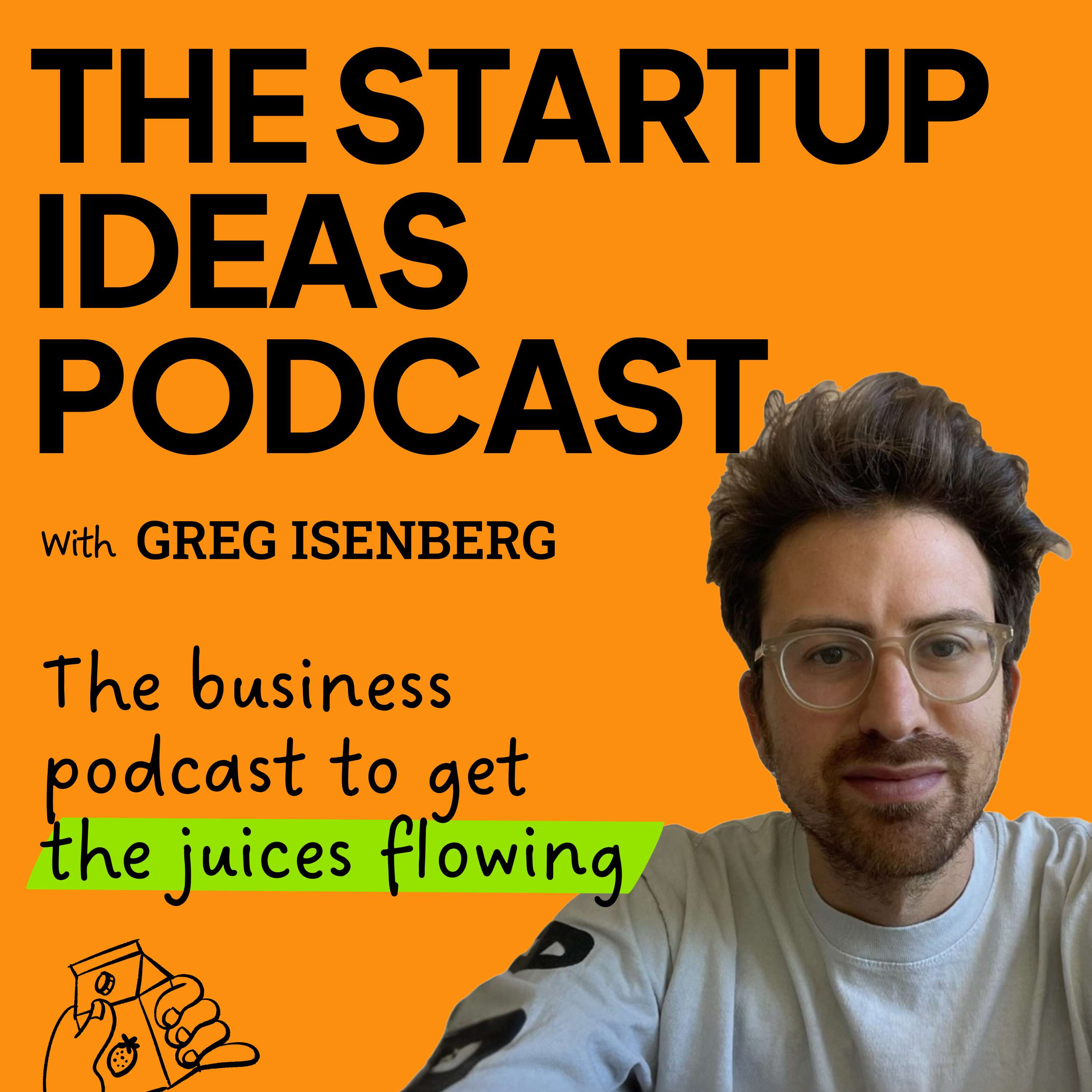
- The Startup Ideas Podcast
- How to get 10x more out of Lovable, Bolt, Cursor
The Startup Ideas Podcast9 Jun 2025 · 35m · 11 chapters
How to get 10x more out of Lovable, Bolt, Cursor
In short
How to get “10x better” UI outputs from Lovable, Bolt, and V0 by using a design-taste prompt builder and context-rich prompting (typography, layout vocabulary, colors, hierarchy, framing, states, and animation), plus quick post-editing and code-aware editing to avoid generic templates.
Guests
Meng (founder of Aura; previously built a Mac app then pivoted to a web platform). Aura includes a prompt builder, live preview during generation, design-to-code editing, and tools for updating text/fonts, selecting Unsplash images by tags, and code-mode desktop/iPhone previews. He claims 500 users/day signups and ~$3k MRR early on, with no ads. Colin David Kennedy (won $5,000 in a contest; building “Sunday Reset,” an AI-powered weekly reset tool that emails users and learns habits).
Key claims
Generic AI UI hurts trust and conversion; better design lets builders charge 2–5x more. Templates like ShadCN are intentionally “standard,” so you must remix and add nuance.
Notable examples
ShadCN-like generic cards vs more “flavorful” pricing layouts with specific fonts, framing, and animation (e.g., Apple-style sequential/letter-by-letter). Aura edits text/font in seconds; image-to-HTML via screenshot; remixing designs into front pages/pricing pages.
Written by AI. May contain mistakes.
Chapters
0:15
Colin's Background and 5K Win
Colin shares his experience of winning $5,000 and his project.
“And this might be an episode that for people who watch, they're going to be able to charge more.”
1:05
Improvements in AI Design
Discussion on how to prompt AI for superior design results.
“And did you think you're going to win the 5 ,000?”
1:53
Designing with Taste
Understand how to create unique designs and layout concepts.
“So I think there's such a problem right now with AI creating generic content and creating a generic designs.”
8:10
Effective Prompting Techniques
Learn how to prompt AI effectively for better design outputs.
“And then, yeah, you know, this is your entire prompt.”
10:10
The Importance of Unique Design
Explore why personalized design leads to better user engagement.
“is because the UI and the designs are not resonating with people.”
12:00
Enhancing Design Tools with AI
Discuss innovations in design tools that integrate AI for efficiency.
“So you have something that looks like this, right?”
14:00
Designing with Tools for Efficiency
Learn how to leverage design tools to enhance output quality quickly.
“use Unsplash which I highly recommend when you're starting out you don't want to have to scour the internet for like the best images so you want to you know have the best tags again I put the best tags here.”
19:20
The Importance of Unique Design
Understand the value of unique design in distinguishing your product.
“What advice do you have for the people who listen to the show?”
24:54
Pivoting and Learning from Projects
Discover the journey of project iterations and the importance of adaptability.
“So I have a little confession I need to make.”
28:00
Building a User-Centric Platform
Discover how the speaker developed a platform in just three weeks, emphasizing user feedback and rapid iteration.
“And I thought it was so good, so powerful that people had, you know, to use it.”
Show all 11 chapters
32:16
Key Takeaways and Final Advice
Insights on using prompts effectively in design and encouraging adaptation.
“I'm also going to include Meng's social on his different platform, so you can follow him there.”

Ask about this episode
Get the gist, explore an idea or ask about something said.
 Claude
On The Startup Ideas Podcast, what are the key points of this episode?
Searching your listeningTranscript
Automatic transcript. May contain errors.
0:00I found a hack to prompt Lovable Bolt V0 10x better. And it's this tool that no one is talking about. I brought the founder of that tool to show you how to prompt for UI. And this might be an episode that for people who watch, they're going to be able to charge more. They're going to get more trust with the products and their vibe coding products are just going to get absolutely stunning looking gorgeous designs. and this is going to be an unfair advantage for you. All right, Colin. Colin David Kennedy, the guy who just won 5K. Dude. Hey, what's up? You won$5 ,000. That's sweet. That's awesome.
0:46What are you going to do with it? I'm going to probably actually pay for Bolt.no to get started. Yeah. I use it for free and then I kind of go into my credit score and then I re-wait for the day. and so that's the first thing i'm gonna do all right and what are you what are you building uh the sunday reset so it's essentially uh an ai powered uh like reset tool we ask you a bunch of questions from the week ask you what your goals are send you emails at least for now we'll send you emails to kind of keep you up to date with everything and then you fill it out and over time to kind of learn your patterns and your habits and help you achieve more and stay on your goals throughout the week is my goal for it.
1:32Cool. And did you think you're going to win the 5 ,000? Like how stoked are you? No, I didn't. I just threw it out there. I happened to click on the video. I watch a bunch of them all the time and I was like, I know it. I'll just go for it. All right, man. Well, appreciate you. Meng, by the end of this episode, what are people going to learn? Sure. So I think there's such a problem right now with AI creating generic content and creating a generic designs. And I think what you need to learn is how to do it with taste, because ultimately that's what makes us a human and unique from AI. So you're going to be learning how to prompt the right way, how to find the right resources to prompt, how to find the right context to give to AI the right design resources, the right taste, such as typography, colors, visual hierarchy, all of these things that bring your design to the next level and not just something that is generic.
2:34All right, let's get into it. The way that I see it is that right now, everyone knows VZero, everyone knows Lovable. and while I think it's great because we're all unifying around a platform where you can build any product that you want at the same time you know it's very developer centric and most of the like what they don't show you here is 99 of the results are very very generic you know design visual design. You know, I can pick anything random, but it's not the most design oriented result that you're going to find. And, you know, I think what I'm trying to bring with my videos, but also my platform, which is called Aura, is to make something a little bit more design oriented.
3:32So something that someone who's really good with Figma would be able to go and, you know, prompt something using a prompt builder. So you're going to be able to kind of adapt from existing templates. So we're like having thousands. Of course, yes, V0 and all those, they have templates. But as you can see, they have a very different flavor. And most of them are very basic and very generic. the same with v0 which to me v0 is kind of like more for developers and lovable is more for designers as you can see it's not the most attractive you're not going to convince designers who's been you know 10 like not 10 but five years into figma and then move into this and and try to convince stakeholders um to to have a seat at the table but it does give you the power to have a startup, to found your company and to make something in a weekend.
4:30So what I would like to bring is, you know, as someone who is Vibe coding a bunch of products such as Aura, but also a Dreamcut, both of them have over 150 ,000 lines of code. So these are months and months of work. And I think I have a unique perspective. so you know you need to give a lot of context to ai and you need to give to to sort of train with taste so what are the designs that you can be using so you know what are the kinds of layout that you want to be building and how do you expand your vocabulary in term of you know what layout do you want to bring like is it a document site or is it an updates page Is it a portfolio?
5:22You know, are you building a pricing table? And also within that, you have many flavors of layouts, such as is it a list? Is it a grid? Is it a sidebar? Or is it a bento layout, which is quite new? And Apple has been using that a lot and everyone's following suit. but you can see there's so many terms that you need to be getting familiar with and how you're setting the separation of the layout such as one third, one fourth and then you have to fill the grid layout. And then you have also the framing which helps so much in terms of marketing because marketing, if you think about it is all about design, it's all about user experience it's all about what people feel when they see your design, right?
6:10It shouldn't feel generic. It should feel unique, even though you could be spending two hours on it, you could be spending weeks on it or months. But they don't need to know that. They just need to know that you're building something and that you have that special sauce that allows you to make it feel unique. So that's why framing is also another important aspect. That's why a lot of people on Instagram and Twitter, they will show not just the design in the full screen mode, but also the design in the frame. So they have a browser or they have a card and they have a lot of bleeding around the card.
6:48Sometimes they have like a clay. And so, yeah, get familiar with all of these. And this prompt builder allows you to set those things visually. And then you have the styling, you know, is it a flat layout? Is it an outline layout? Is it iOS or material design? You know, is it light mode, dark mode? and then you get into the primary colors. And of course I can go on forever and wherever, but you have typography, which is extremely important. 80 % of all designs are text. So you want to know what are the most important fonts, at least to know enough to be dangerous. So what are people using the most right now?
7:30Well, Inter and then Geist and then Manrobe. And then what is a serif font? and then we also finish with the animation so you want to know uh what kind of animation that you you can bring into uh your design so you know also what is very common is sequence animation so apple does that a lot so it doesn't just all fade in it's just one by one element by element and sometimes word by word or letter by letter. So all of these things, you know, you bring it out together and then you add it to a prompt. So let me just select one of the designs here and then you add it to a prompt. And then, yeah, you know, this is your entire prompt.
8:19It has a ton of context. And if you do this properly, yes, you can write it. As you get more experience, you can write it. But if you do it properly, you should have some really amazing results compared to just doing from scratch. And there are so many little nuances, little references. You should definitely name the websites that you love the most. And, you know, and again, it's something that you build over time. It's something that you get better. and the more vocabulary that you have, the better you can direct the AI to do the right things for you. And so you can see, instead of having something that is extremely generic as this, for example, you have something that is a lot more flavorful, but also unique because you brought a lot more nuances to the table.
9:15And this is definitely not something that you're going to see. and you know like it's a very specific font it's a very specific layout for the pricing for example you know and then yeah you get into the details you get into the animation as you can see it just happened and I didn't have to put weeks and months of efforts into this I just needed to set it up in a prompt builder and there we go we have the result right in front of us yeah so this is why I wanted to have you on because what's happening is a lot of people are listening to this show. Thousands of people are prompting the VZeros of the world and they're getting the typical ShadCN templates and they're posting it on Instagram and Twitter and stuff like that.
10:05And people, their conversion rates are very low. And one of the reasons I believe that the conversion rates are low is because the UI and the designs are not resonating with people. And what's so cool about this is it's almost like training wheels. It's training wheels for design in a lot of ways. It's saying, okay, I'm not ready enough to go into V0 as a product manager or someone who doesn't know the terminology. I need a little bit of help acknowledging that. I need a little bit of help and some guardrails around basically what to prompt it so that I could prompt it in the best possible way.
10:53Exactly. And funny that you mentioned Shazian because it's one of the most common templates that you're going to be looking at most of the time when you're going to prompt V0. It's very much embedded into the platform. and in lovable, you're going to see something a little bit more like shadows, but it doesn't mean better. I think it's just one, everything looks the same. The other one is more like, maybe there's too much shadows and maybe there's too many gradients, right? Like you look at something, uh, you know, like this one, someone who's not trained would look at this. It's not too bad, but someone who's more trained looks at this, you know, in the first second that it's not made by someone who knows UI and that's someone who cares.
11:40And that's the key word, right? You want someone who cares about the product. And how do you prompt in such a way that you can communicate the thoughtfulness of the stuff that you're trying to design? And in the, as little amount of time possible. So you have something that looks like this, right? And again, I'm not putting more prompt effort into something like this versus something like this. Yet, I can build something that feels much more, you know, like it elicits the emotions that I want people to feel and the carefulness that I want people to feel when they use the product. And so, you know, like understanding all of these states, all of these nuances, the subtleties of the outlines and the drop shadows and getting the right drop shadows versus the wrong drop shadows means so much.
12:50So, you know, if you look at all the things that, you know, I'm putting out there, we have more than a thousand of them, like this one, you're not going to find something like this on V0 or not saying that it's impossible, but definitely it's a lot less common. And that's what I try to bring to the table. And then you also want a post tool, like a post design tool that allows you to make the right correction and the least amount of time possible. So right now we have Figma, of course, but with Figma, first of all, they're still super new into the AI world. So you're not going to see people. In fact, Figma make just launch, right?
13:43But it's an amazing design tool. So what I tried to bring is, for example, you can just quickly just change the text like this and you can quickly change the font and I just put like the best font that people can use like this so and then I also bring something like image so if people want to use Unsplash which I highly recommend when you're starting out you don't want to have to scour the internet for like the best images so you want to you know have the best tags again I put the best tags here. You want to use like render. And then depending on your design, let's say you have a bluish design, you're going to go to the blue color.
14:23And then based on relevance, you're going to select something as beautiful as this. Again, adding the uniqueness to the design that you're creating. And again, we're not spending hours doing this. We're just spending seconds and minutes to edit these things and increasing the quality of the output and setting, making it, you know, adaptive. So we have also the code mode. So you have, you know, the desktop and you can see it in iPhone. It works just amazingly well. And also a feature that there's no one else does it is something that I want to add. This is all what Vibe coded, by the way. So we are on the same page year.
15:07You know, if you're a vibe coder, you make websites, we're doing the same thing right now. Yet I'm able to do these things that are amazing and no one, no one else is doing it. So for example, I click on the text, boom, it gives me the text and now I can just edit from here. So yes, it helps to know code, but the fact that you can just have a tool that is so friendly that you can just edit directly the stuff. And within the context of code, because we're all using code, I think that's so incredibly powerful. The last thing you want is to make things unforgiving, right? Code in the traditional sense is very unforgiving.
15:51You make one mistake, it's going to give you an error. In fact, in the early stages of VZero and Lovable, I don't know if you remember your first project, half of the time you would spend like with an error, right? Like you have to, you know, put that and prompt that and then sending back and forth. Now it's getting a lot better, but you do still get these errors. And when you do get these errors, you know, a lot of people actually give up, which is really sad. And, you know, I think we've come such a long way in having a tool that makes it so easy to both design and code without necessarily the years of experience of both design and code, I think that can be really powerful for a lot of people.
16:34Yeah, and the other thing I want to just say about the powerfulness of it is it also allows you to charge more when you have better design. Because when you see something like this, like what we have on screen, it just invokes more confidence. Like I look at this and I'm like, you know what, I trust Sarah Martinez, as the product manager, you know, like she, she seems like, you know, this feels like a VC, you know, an A16Z backed company, you know? And, and that's amazing. Like sometimes you can charge two, three, four, five times more when you have better design. Absolutely. And also without the technologies that, you know, all of these competitors have way better than you.
17:20So for example, if I'm competing with VZero, well, obviously they have millions and they have, you know, it's a company that is worth, you know, hundreds of millions and also Lovable and also Figma, but I don't have the infrastructure. It's just me. So how do I set myself apart? The last thing you want to do is to follow exactly what they're doing. That's the last thing you want to do because you're not going to set yourself apart. So the tools that you have in front of you. Of course, there's marketing. If you have like a huge channel on social media, regardless of how bad your product is, as long as you have the functionality, people will buy it.
17:58But the people who don't know you, those are the hardest customers. And those people, they look at the good design and they want to trust it. That's why we go on a website like Apple and we're like, take my money, right? Like we're just opening the wallet right away. And that's because we have a design that is so trustworthy. It feels like the people who makes it, they care about pushing the envelope and they care about, you know, putting something that looks and feels great. So how do you set yourself apart in this world where you're competing with all of these companies that soon, if they don't make themselves better with AI, will become dinosaurs, which gives you an opportunity to set yourself apart.
18:51So you have marketing, you have design, you have the functionalities, of course. And all of these things that you juggle with, you need to spend as little time as possible without necessarily communicating that you don't care about it. I think that's the biggest thing. You can spend as little time as possible, but you can still care as much as you can. And I think that's really, really powerful. Maybe we can leave it at this. What advice do you have for the people who listen to the show? It's called the Startup Ideas Podcast. These are people who are building products, often multiple products.
19:29What advice do you have for them in order to increase their likelihood of success? Right. So I think going back to design, when you see a good design, but not just a good design, because you can have a good design, but that is generic. So, right. And this is not saying that Shadzian is bad. Yeah. But anything that is a template is bad. Right. And that's and you can absolutely make Shadzian something unique. But the problem is, if you don't push the envelope, they're all going to look like this. Yeah. And it is by design, by the way. This is not something that is not intentional. This is all intentional.
20:17It's a template. It's a standard. But with any rule and with any template, you need to figure out a way to make it yours. Right. And that's why everyone copies Apple. That's why everyone buys Apple without a second thought. So my first thing is try to learn the vocabulary. Try to use as many apps as you can. Try to follow as many people that cares about these things as much as you can. try to find the best designs out there, either from Instagram, from Dribbble, from Twitter, and, you know, follow these people, collect these resources, collect your favorite design. Let me try to refresh this. But you have so many platforms where you can find, you know, all of these resources that can help you.
21:12And now in terms of prompting, you should absolutely find resources such as 21st Dev, where you can bring the code and bring that into your project. Because, you know, AI is very limited in the amount of context. It's very trained in a certain way by Claude, by OpenAI, but it's not trained to be unique. The only way it can be unique is if you tell it and if you handhold it and if you give it the resource and then reference to your favorite website and the best resources to be unique. So it's not impossible. It's just that you have to take that little extra effort. So a lot of people, you can see something as, I wouldn't say dumb, but something as small as just a shining background with a little bit of a gradient moving can add that little oomph to your product.
22:15Or, you know, very small details. When you use OpenAI, they have this text gradient as it loads. Again, small details, but you care about it. And then you find a code for it. And then you copy the code. You copy all the code. You bring that, you paste that into your project. And then you prompt from there. And again, we have more resources such as CodePen. And these are not new resources, right? These are all the open source community that has been around for decades. And so you're following someone as awesome as Jay, for example, who has a lot of amazing JavaScript experiment that he shares online.
22:57And then you can look at the CodePen, understanding the different technologies that gets there, such as, is it HTML, CSS? Is it React? Is it iOS? is it SwiftUI and all that stuff. So you can absolutely copy the code. You can find libraries of components and buttons and loaders and background animation. And then, you know, again, depending on your level of comfort, this is one of my favorite called React Bits. So you can have like particles, you can have like fonts and text animations and blur effects, all of these things that you can bring with just the power of a single prompt attaching the library code or whatever component that you may have.
23:51So absolutely, it's not something that you're going to learn overnight. It's something that also, it's not even something that you absolutely need right now to know all of these resources. In fact, if you just know one of them, that is enough to get you started on one project. And then the next project, you move on to the next component that you always wanted to build or next animation you wanted to build. And then you bring that special sauce and then the next one. So again, don't feel scared that there's so many things happening at once. Just feel like find one thing that really drives you and bring that and make it really good and really unique.
24:35and take your design to the next level. And I think if you do that, half of the battle will be done, right? Because marketing is a lot about design. And if you do good design, the product is going to market by itself. Yeah, absolutely. So I have a little confession I need to make. So last night I got a DM from a co-founder of a$15 or$20 billion company. And he was commenting on a new project I launched called ideabrowser.com. And if you go to it, it's ideabrowser.com. Yep. He was like, I really like the design and the subtle details. You're going to probably hate the design because you're a designer.
25:26But my confession is there was no designer on this project. I believe you. This was used with 21st Dev, which is a resource you talked about. The little details do matter. For example, the logo is kind of moving a little bit. And if you hover over the number one software to spot trends, like uh right there like yeah there's like a little you know things move and this is the thing that that moves the needles so that you end up getting these dms of people you look up to yeah and and they're like the design is sick and like i wanted to tell them like there was no designer on this i i absolutely agree and you know believe it or not aura took me probably like a week to build.
26:26And that's insane because we're competing against like V0 and Figma and all that stuff. So you see a lot of features there. But obviously I started with a Mac app and that didn't take off, right? That was my first Mac app. I vibe coded this thing to death and this took me three weeks actually. but then I moved this to a web platform because nobody could install the app and I had I had some trouble with mac performance and stuff like that so I experimented with it I also built a really big you know intro to prompting and this is actually where my product took off at the beginning nobody cared about the mac app that i did because you know i started this project as a voice to chat even you can you can even see it from the design i remember yes voice to text and prompt that was the first idea and right away i just pivoted right like you know you have to uh you have to anticipate this kind of stuff like you will start with one project you will give it to try and it might not work out, but it doesn't stop you.
27:47Just don't give up, keep using it and be the first customer, solve your own problems. Eventually this became, you know, as I created this app, it became an HTML generator, right? And I thought it was so good, so powerful that people had, you know, to use it. And I use it myself. In fact, I created like 400 designs from, from, from this, you can see on my profile, I have so many designs that I created. Um, and you know, it requires someone who has so much curiosity. So when I, when I build this, it took me three weeks, the Mac app. And then eventually I was like, okay, I still need a website. That's where people are going to buy this thing.
28:36I still need a pricing page and all that stuff, a download page. And then I need a learn page. And I also need to let people share their creations. So I built all of this stuff while I was building the Mac app. And eventually I took one week, one single week, and I brought all the features that I built from the Mac app into the web app. And here we are, This is what we have. Sure. In the two weeks later, this is where I came up with the first week I had already the prompt builder. I already had the generation stuff, you know, to be able to generate. And also I already had like the live preview as you generate.
29:23So nobody else has that, by the way. When you're generating, it's going to live preview everything you're doing. You don't have to wait like five minutes for something to show up. but I didn't have like design. I didn't have code yet. So this was the second week and this was like third-ish week. But I was building it and I was adding a lot of features to it. And now in a matter of three weeks, right, we have something that is extremely functional. In fact, we're doing 500 users a day right now. 500 users are signing up to this platform every single day and we're you know we just started obviously uh but we're making something like 3 000 mr at the moment and we're we're growing um a lot as you can see like you know just just by the number of users and i have i have done zero promotion.
30:22I have done like zero ads or AdWords. Yes, I do have a social channel. Yes. You know, one of the big things, as I mentioned before, is that I'm someone who teaches for a living and I have design code, which is a platform that teaches design and code, but it wasn't design code that brought the users, it was this, this type of reprompting or tips of prompting. And this video that I created on YouTube, which got like 9.5, 9.2 thousand likes on Twitter and already 50 ,000 views on YouTube. But most importantly, it's not just the views, it's how many people respond to it, it's how many people give you feedback.
31:10And that's how you build a product, right? you will fail at first. You will pivot within a week. You will add new things on top. You will be the first customer of it. You will solve your own problems. And eventually you have something that might seem something that is worth spending 40 hours a week on. 100%. This is a great place to end. I mean, I'm not affiliated with this at all. The reason I wanted to bring you on was because I like to give unfair advantages to people who listen to the show. And to me, great design is an unfair advantage. And Aura is like a hack, right? It's basically a hack to get beautiful design for people who are not designers.
32:00So you're about to get way more than 500 users a day because a lot of people are going to listen to this. I encourage people to sign up, check it out. I'll include the links in the link in the show notes for people to click. I'm also going to include Meng's social on his different platform, so you can follow him there. Meng, is there anything else before we head off? You want to say? Yeah, so again, thank you so much, Greg, for having me. It's great. For those who don't know, Greg and I goes way back Like 15 years ago, I was doing freelancing and I met Greg in Montreal. We both moved out of Montreal.
32:44So now I'm in Singapore. Greg is in Miami, I believe. That's right. And next thing you know, we're both creating startups. So that's amazing. And it's quite a coincidence. But back to design itself. Like I said, please try to don't give up on the first prompt. Try to use the prompt builder. It doesn't matter if it's from VZero or not. You can even use the Prom Builder from my site and just learn about all of this and then go to your favorite platform, Lovable. I don't really care if you're using Aura or not, but I do want to give you the advice that you should not just depend on creating a beautiful card.
33:25Of course, it's all going to look the same or a beautiful site, right? What you want to do is use a Prom Builder, learn about the prompting tips, do the remix super super important there's so many ways to do a remix so for example you can click on a design that you like you remix it and then you adapt it so you adapt to like a front page you adapt it to a pricing page and then you also want to you know to attach an image so image to html is very very powerful in fact i do use o3 which is one of the best models for taking the image, a screenshot of your favorite website or your own design in Figma and then turn that to HTML and then bring that to Lovable, to V0 or to Aura, whichever you want.
34:17So there's so many ways to prompt, not just typing. You can import from Figma, you can attach an image, you can attach an HTML file, you can remix an existing project. And all of these designs that you see here, they're free. You can go here and you can download for free. So you can copy the code, save the HTML file and bring that to your favorite platform. So that's just, you know, FYI, I think is going to be really useful to a lot of people. And, you know, if you have a chance to try Aura, that would be my pleasure. And if you have any questions, please let me know. And again, thanks so much to Greg for inviting me and I hope to see you soon.
34:55Thank you for the sauce. I appreciate it. Now everyone knows how to prompt for UI. So So thank you, Meng, and hope to see you around soon. All right. Thanks so much.
From the publisher
Join me as I chat with Meng To, Founder of Aura, to discuss how to elevate AI-generated designs beyond generic templates by using proper prompting techniques. He demonstrates how providing AI with specific context about layouts, typography, colors, and animations results in more professional and unique designs. The conversation highlights how thoughtful design creates user trust and can be a competitive advantage for startups.
Timestamps:
00:00 - Intro
00:32 - Giveaway Winner 1 Announcement
02:37 - Problem with generic AI-generated designs
03:22 - Developer-focused vs designer-focused AI tools
05:03 - Explanation of design framing and styling elements
08:06 - Demonstration of prompt builder and results
19:17 - Advice for product builders
26:18 - Meng's journey building Aura
Key Points:
• Current AI tools like V0 and Lovable create generic designs that lack uniqueness and taste
• Using prompt builders with specific design vocabulary helps create more professional, unique designs
• Understanding design elements (typography, layout, colors, animations) is crucial for effective AI prompting
• Better design increases user trust and allows creators to charge more for their products
LCA helps Fortune 500s and fast-growing startups build their future - from Warner Music to Fortnite to Dropbox. We turn 'what if' into reality with AI, apps, and next-gen products https://latecheckout.agency/
BoringMarketing — Vibe Marketing for Sale: http://boringmarketing.com/
Startup Empire - a membership for builders who want to build cash-flowing businesses https://www.skool.com/startupempire/about
FIND ME ON SOCIAL
X/Twitter: https://twitter.com/gregisenberg
Instagram: https://instagram.com/gregisenberg/
LinkedIn: https://www.linkedin.com/in/gisenberg/
FIND MENG ON SOCIAL
Aura: https://aura.build
X/Twitter: https://x.com/MengTo
More from The Startup Ideas Podcast
All episodesWe use cookies.They keep VO running smoothly and help us improve it. Privacy policy