
 Ask ChatGPT

- Podcasts
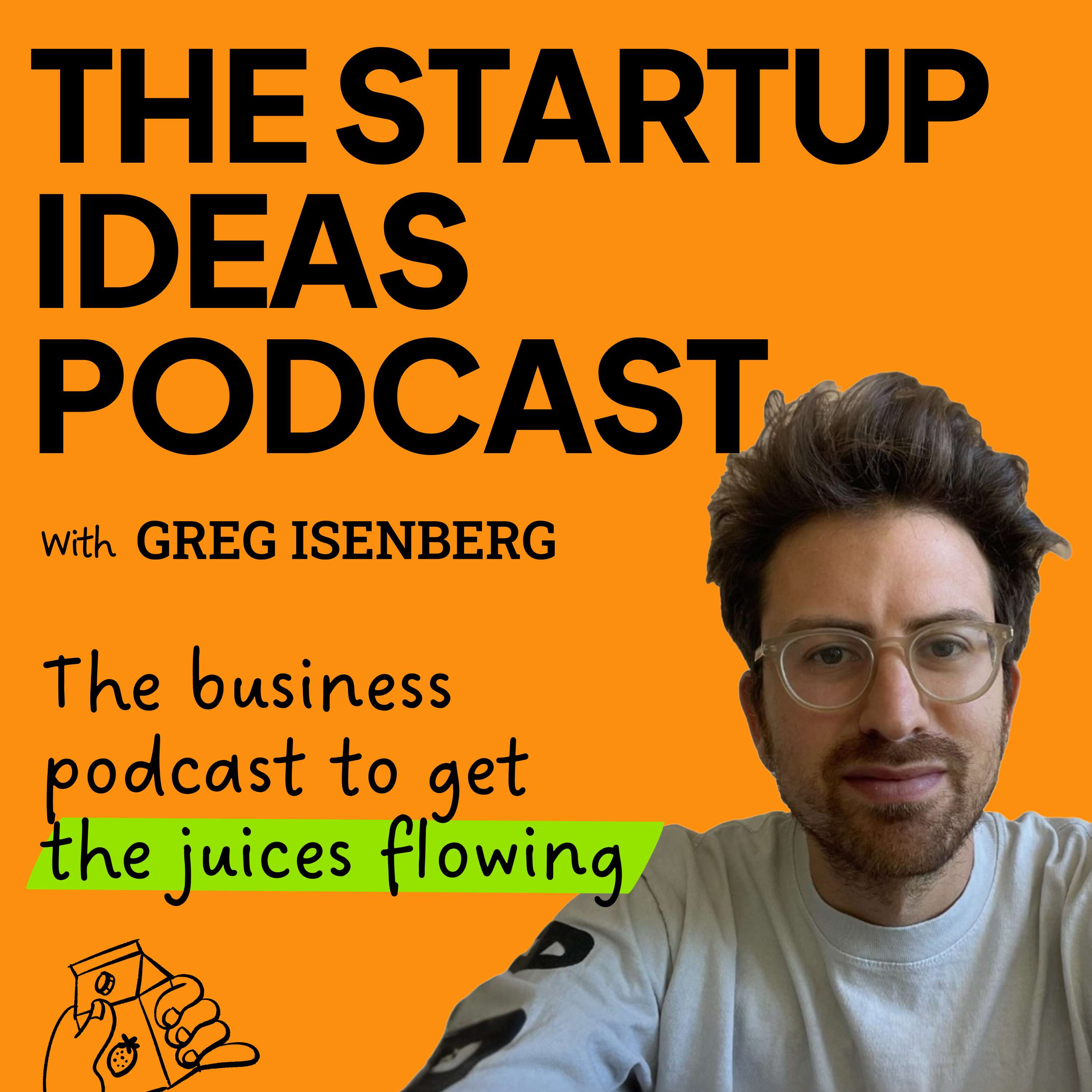
- The Startup Ideas Podcast
- The $1M+ Solo Grok Bot Business (Full Course)
The Startup Ideas Podcast2 Nov 2026 · 50m · 25 chapters
The $1M+ Solo Grok Bot Business (Full Course)
In short
How to build and sell a customized “GrokBot” (personal agent platform) for a specific business niche, using a ready-made stack and fast build process. The episode claims you can create an industry-specific agent system in ~36 hours, then sell it to SMBs for $25,000 upfront plus ~$3,000/month for maintenance, or sell higher-margin “one-to-many” versions to an industry.
Guests
Nick (co-founder of Orgo; builds “computers” for GrokBot-style agents; previously built “Bops”/business-ops agent platform). Greg Eisenberg (host; discusses agent/app monetization and “apps are dead” vs evolving SaaS).
Key claims
Niche “GrokBot for X” beats generic platforms because businesses don’t want setup complexity; pricing power increases with niche; software trends toward zero while agent/human intelligence is premium; offer should emphasize “you own it” and include value guarantees.
Notable examples
“Bops” demo with bots that have their own phone/email and control a multi-screen “computer”; insurance-industry “Bops” being custom-branded; dental clinic website/lead-magnet automation; LinkedIn outreach agent workflow. Stack mentioned: Orgo computers, Agent Mail, Agent Phone, Composio connectors, Paper for design, T3 for coding, Opus 5.5, plus hosting options (Orgo/Fly/Vercel).
Written by AI. May contain mistakes.
Chapters
1:25
Building Custom Grok Bots
Discussion on how to create and sell custom Grok Bots for businesses.
“Nick, by the end of this episode, what are people going to learn?”
3:08
Real-World Applications of AI Agents
Exploration of existing AI projects and their potential.
“And it just breaks my brain that I was able to do this in a weekend.”
5:06
Evolving Software Landscape
Discussion on the future of software and the rise of custom solutions.
“So Greg, have you heard about people who say apps are dead, software is dead?”
6:23
Niche Opportunities in AI
Identifying niche markets for implementing Grok Bots in various industries.
“And like in my perspective, it's like the era of generic apps is what to me feels like is dying.”
7:40
Building Better Personal Agents
Insights on creating superior personal agents for business use.
“And the other piece is the owners of these businesses, they don't know how to set it up.”
9:09
Leveraging AI for Business Efficiency
Using AI agents to automate tasks and improve business operations.
“So I built bops because actually I wanted to solve.”
14:01
Building Agents for Different Platforms
Learn how to create agents for various platforms to automate tasks.
“And each agent owns this platform and is like logged in and is able to automate tasks and routines relevant to that platform for me.”
15:07
Building a Bot in a Weekend
Discover the quick process of building a bot in a short time frame.
“walk through how the hell did I build this in a weekend?”
15:33
Researching and Designing Your Bot
Understand the importance of research and design in bot development.
“You don't need to think too much about prompt engineering these days.”
18:00
Choosing the Right Tools for Building
Explore the tools needed to build an effective bot system.
“The only thing I'm affiliated with all these tools, I'll tell you, is Orgo.”
Show all 25 chapters
21:07
Utilizing Screenshots for Development
Learn how to use screenshots as a tool for bot development.
“And if you already have a Claude subscription, you could just use it inside of T3.”
25:10
The Bot Life and Final Considerations
Get insights on the practicalities of running bots and tips for success.
“You should really have a swipe file for everything.”
27:21
Monetizing Your Bot Business
Discover strategies for monetizing your bot and creating value.
“Let's, let's dive into the, how we're going to make money from this and what's the offer and what's the stack.”
28:00
Understanding Value Creation for Dental Clinics
Discussing how Grok Bots can replace traditional staff roles and create value for businesses.
“I mean, I, you know, I'll play devil's advocate as if I'm the customer.”
29:00
Irresistible Offers for Businesses
Exploring pricing strategies and bundling services to enhance business offers.
“look, I'm going to say, look, there's that one person right here.”
30:53
Enhancing Customer Engagement with AI
Discussing how to use AI to improve customer interaction and engagement.
“I think like, and then you show, and you have it done for them.”
33:04
Scaling the Grok Bot Business Model
Strategies for selling Grok Bots to specific industries and creating scalable solutions.
“There's so many, there's so many freaking like value ads that you can give today with AI.”
34:58
The Importance of Personal Connection in Business
Highlighting the human element in business relationships and customer loyalty.
“And so like in here, I could even tell, you know, these bots to like build a website for a dental clinic.”
36:56
Identifying Niches and Pain Points
Advice on finding the right niche and understanding customer pain points for business success.
“And just like recapping on the point here of like when you solve the entire gap for a business, it commands this pricing power, you know.”
40:00
Navigating the Niche Selection Process
Discussing the challenges of niche selection and effective strategies for narrowing down options.
“We talked about that with giving the agent its own email, its own computer, phone number.”
42:00
Finding the Right Niche
Learn how to approach niche selection by leveraging personal networks.
“And then after a week, they'll realize they don't care about that niche at all.”
44:00
The Importance of Warm Connections in Sales
Discover how to utilize warm introductions to enhance sales effectiveness.
“And then once you're building for them, like just genuinely sit down, don't try and scale right away.”
45:58
Changing Perspectives on Selling
Understand why selling doesn't have to feel uncomfortable when done correctly.
“You know, I want to meet you through a friend.”
47:03
The Exciting Potential of New Business Models
Explore the various opportunities available for building innovative businesses today.
“It's one that, you know, could could create value, you know, right away.”
48:27
Open Source and Community Collaboration
Learn about the benefits of open-source projects for entrepreneurial growth.
“Yeah, and this is the Startup Ideas podcast.”

Ask about this episode
Get the gist, explore an idea or ask about something said.
 Claude
On The Startup Ideas Podcast, what are the key points of this episode?
Searching your listeningTranscript
Automatic transcript. May contain errors.
0:00If you wanted to make money selling AI agents, how could you do it? What is the clearest path to building wealth, selling AI agents? And what is the stack that you need, all the tools, all the skills, all the apps to put it all together? Well, today I brought on Nick from Orgo and he basically breaks down one of the opportunities I think is the most slept on. In fact, I haven't seen anyone talk about how you can take a personal agent platform like GrokBot, niche it down and sell it to people on a monthly basis. So today's episode is a full masterclass. It's under an hour. And the people that stick around are going to understand all the techniques, the strategies, how to price it, how to think about this startup idea.
0:42It's literally a sauce factory. So I'm excited for you to get into it. and by the end of the episode, you're just going to really understand all the different parts, all the different tools and I think that even if you don't want to go and build this startup idea, you're going to be way more AI native just by listening to this. Now, if this episode gets more than 5 ,000 likes, comments and subscribes, I'm going to include a link in the pinned comment and that's going to have more ideas and more niches for this concept. So go, pause, go and do that and then hit play again and I'll see you at the end of the episode.
1:25Nick, by the end of this episode, what are people going to learn? People today are going to learn how to build their own custom grok bot for a business and sell it for$25 ,000 up front, retain them on the back end with a down sell for like $3 ,000 a month. All in this video, we'll walk through how to build everything. How do you select the offer? How do you select the stack? How do you actually build the thing? We go through everything in this video and I can't wait for people to build this startup idea out. So stay tuned. So the commitment I need from you is there's a full stack of different tools, agents, open source technology.
2:06I need to understand everything about how I can go and start my GrokBot for XYZ because I really do believe that selling AI employees, GrokBok for XYZ is one of the biggest opportunities right now. So I just need your commitment that if people stick around for this episode, which will probably be under an hour, they will have the tactics, the techniques, the strategies to actually implement this today. Yes, and you'll see it. You see it right here. I have these agents here, so you'll have examples examples and ideas of the types of agents you could build for businesses. You'll have examples and ideas of the types of apps you can build for them.
2:50And you have a beautiful app already built for you that you could just fork and use for free and go sell it to a business ready for you all in this video. I walk through every step of the way. Yeah, there's nothing left out on this on this one. All right, let's get into it. Let's do it. So I'm sharing my screen here. I want to show you. this is a video of me i'm going to mute it i made earlier this month and you still see this right yep i'm literally showing a video on twitter of this tool called bops that i built i called it bops because i'm like it's business ops and i wanted to you know build agents that solve business operation problems and you see here i'm like talking on the phone to the bots each bot has its own computer with four screens and i literally built this entire essentially grok bot clone in a weekend.
3:43I posted on Twitter, got 75K views. And it just breaks my brain that I was able to do this in a weekend. And then so we have existing businesses and customers at Orgo where we build them agents. And I think that this is such a cool startup idea because it's an evolution of like so many different ideas, which is like with AI, there's a few ways that I personally have made money. And you can see my screen here, right? Yep. So I've made money with AI by building apps. So the first when Cursor came out, funny enough, fun story. I watched the Greg Eisenberg podcast. You had Mickey on. He was teaching Cursor.
4:29I think this was like summer of 24, I think, something like that. Super early. Of course, you're always early to everything. And I built my first money-making business online, building an app using AI. Then the second biggest way that I've made money from AI was with agents, selling agents to businesses, like selling a Hermes agent to a business for 5k a month. Now, the interesting opportunity that we're at today is building agents and apps together and solving like the entire gap in a business with agents and apps. And so why am I talking about apps? So Greg, have you heard about people who say apps are dead, software is dead?
5:12Most people on X are saying that. What are your thoughts? My thoughts, I actually just recorded like a solo episode about this. I think the people are saying that because they don't want other people to go and build things. So yes, do I think that software is evolving? 100%. But I think that what's happening is the era of dumb tools, dumb SaaS, where it's like you have a human going and pressing buttons and uploading to a CRM, that is ending. I think we're moving more towards the price for software is trending towards zero and you're going to give away the software and you're going to upsell agents and human intelligence to go as the premium experiences.
6:10That's my take on apps are dead, SaaS is dead. It's evolving and people don't want you to know that there's never been more opportunity in this space. Yeah, I full heartedly agree. And like in my perspective, it's like the era of generic apps is what to me feels like is dying. And the era of custom built, like building your own CRM for your business that is like purpose built for you, like your taste, that is more alive than ever. And it's only the beginning. and yes you know that concept of like building that purpose-built apps purpose-built agents for a business and for an industry oh my gosh like that's what i'm here talking about today when i'm like sell grok bot to businesses yes build it build your own grok bot for an industry like insurance or marketing agencies or dental clinics like customize it so that the agents come pre-built into that out of the box.
7:18Each of them having their own phone number, email, channel connector so you could talk to them on Slack. All of that, which I'm going to show you how to build in this episode. So what you're saying is basically hey, you have all these big platforms like GrokBot, Dots, whatever, and they're not in the business of these niche setting up these niche use cases for businesses. That's one piece. And the other piece is the owners of these businesses, they don't know how to set it up. They're too busy anyways, right? They're just operating their business. So you're saying, hey, there's an opportunity to actually spin up your own version custom.
8:00You've gone and validated that. You built it in a weekend. And if you add the right plugins, templates, it's going to be out of the box, like a 10x experience for them. Because if they go and download GrokBot, or if they go and download another one of these platforms, when they unbox it, so to speak, they're going to be so overwhelmed. They're not going to know how to use it. And also, they might not want to... The idea of calling an AI transformation agency might even be too much for them. Exactly. They just want their problem solved. And the AI transformation agency, they're going to walk them through all of these processes.
8:41It's going to take them this much time. They're going to have to learn all these things. But if they could just install this thing into the business that is actively already solving all their problems, it has an outreach agent and it has an agent that manages their community on school, like all these different things. And I can kind of walk through what I use mine for. I have that here if you can see this. So like if you just had that, that you could just install into the business, it's like they're willing to pay so much money for it. So I built bops because actually I wanted to solve. I didn't like all the other agent platforms worked and I kind of wanted to marry some things I liked and some things I didn't like.
9:18And so I built it for myself. And then I post that video and some of our customers saw it and they're like, oh, we want that. And so I can actually show you here like one of our insurance customers. Like right now we're in the process of building them their own insurance agency bops. And you can see here, it's like custom branded. So like the computer here has their branding and it's like, it's going to be specifically purpose built for insurance agencies. And so, yeah, I can kind of show you like some of the cool things I'm doing with mine. It's, it's really cool. Cause what people don't realize is you can like all the same tools that these big companies are using to build GrokBot or dots and whatever, they, they make it available so that you can build your own version too.
10:06They have their agents API and they have all the same, you know, the voice models and all that available to build on. And so you can actually have a better product in a lot of ways than what they're offering because you can glue together just everything that you love across the Internet of like, oh, I want to email from agent mail or I want a computer from Orgo or like this, whatever. And you can put it in your own combination of flavors and really build your own better version of it. So this is kind of cool. So I have my my Boppy is my chief of staff and I can email him. So if I click like his profile here, you can see he has an email.
10:46He has a phone number. I could text him. So if I text him like right now, actually, let me say I could say say hi to the podcast. and when I text him, like it shows up here and says, say hi to the podcast and he's going to reply and he's going to say hi. And then that's really cool. Yeah. And I could call him. So I'm going to call him on my phone. Like can Grokbot do this? I mean, so I call him on my phone. Hello. Can you hear me? Hey, Boppy. Yeah, I can hear you. Can you pull up? Can you pull up like a list of companies that I could sell to and pull up their websites as well. And then also pull up the S &P 500.
11:32Let's take a look at that. And I also want you to keep a look at Hacker News to see any relevant posts for me today.
11:43And so I tell them to do that. You hear that okay, Boppy? And you can see over here, you see on my screen? Yeah. So it says what I say, so I'm going to hang up. So I end the phone call. and now he's going to go ahead and he's going to do all that. And so I literally, that's a phone number. I called him on his phone number and now look, he has his own computer and he has like four screens on this computer that he can control. And each bot here has their own computer with four screens and he can multitask and he could do all these different things at once. And so it's like, to me, this is like a superior product and I was able to build it as one person.
12:21Now, obviously I have my own experience and collection of ideas i put together to get here but like genuinely i'll show you how to do this like opus 5.5 you can build anything like you're 323 prompts away from building your anything uh in my case it was it was bops in a week in a weekend um so yeah just a quick demo on that yeah i think like it's so obvious that if you were to install a grok bot for a business especially like an smb they would want a phone number attached to the bob the bops not the the bops the bots uh you know so that they're they're able just to quickly voice now call them text them it's so obvious right um and it just goes to show you how early we are in this whole personal agent era that it does feel in some ways like so hobbyist you do have to like figure you you have to like find out how other people are using it and and then like copy it you know what i mean so if you i mean the thing here is you have to understand the icp really well and and you have to understand their pain points and you have to understand their bottlenecks and you have to come with them with solutions.
13:41Exactly. Like you really need to exactly that. Like, and you can see here, I even have a managing my Twitter and everything. You need to understand the industry specific problems really well for you to even make agents that are useful. Like I have a bunch of agents here. I actually, a quick tip for people, like I personally build an agent for every platform. So I have a Twitter agent. I have an email agent. I have a school platform agent. And each agent owns this platform and is like logged in and is able to automate tasks and routines relevant to that platform for me. So for instance, my LinkedIn agent can outreach to prospects that are relevant for our industry and people that I might want to sell to and connect with them.
14:33And then once it connects with them, then send a message after the connection and then set the booking appointment, get the calendar booked appointment. Then I jump on the call. I have the brief already. That's how I use these things. I have a whole bunch of them here. And so, yeah, that's just a quick tidbit on how to kind of divvy up an agent for what use case. So that is kind of the, hopefully the value proposition can be explained by just seeing that. And now I want to kind of walk through how the hell did I build this in a weekend? How can you do it too? What is the kind of offer that I would take to a business owner to charge$25 ,000 up front?
15:19Maybe you collect half of that up front and then the other half at the end of the implementation of this. But let's go through the entire build out process, shall we? Let's do it. So first things first, I want to kind of walk through how I build in general because it's a principle thing. You don't need to think too much about prompt engineering these days. When you use something like Opus 5.5 on high mode, I mean, it just the model is just so smart and intuitive that it kind of just gets it. So So, but there are principles that allow me to build well and fast. And I would like to walk through those.
16:01So the first things first is, well, obviously you actually need first things first to decide, well, if I'm going to build something, like where am I going to build it in? So you can build inside of Claude code. You can build inside of T3. That's this Theo guy on Twitter. He has this T3 code. I actually built Bops inside of T3. And I'll show you here. this is the exact conversation that I had. You can see it was literally a single long running thread inside of T3. I'm not even kidding. I built this like an idiot. I literally just kept going in one single long thread. I didn't even connect it to GitHub or anything.
16:48I didn't push. I just did one long thread for 36 hours. I had loops running overnight. And that is how I built this entire thing. So you use something like T3, you open up a project, you select your model like Opus 5.5. And the process is I always start with research. So if you look at the very first message I sent inside of building this project of Bops, I literally was like, I want to build a version of GrokBot or Meta's Muse or OpenAI's Dots, very similar, research them so you understand first. And so what it does is it goes ahead, it researches all of them to conceptually understand. And so what I'm trying to do here is I'm trying to frame and prime the model to understand what am I even talking about?
17:39What is it, the thing that I'm even trying to build to begin with? And so it researches all of these, it has its sources here. So I know that the model knows what I'm talking about. And then the next thing I do is I design. So are you familiar with paper, Greg? Big fan. Not affiliated, but big fan of it. I'm also not affiliated. The only thing I'm affiliated with all these tools, I'll tell you, is Orgo. Obviously, I'm a co-founder of Orgo. So we build the computers so that you could build your own GrokBot. So if you want to build your on GrokBot. You could use our computers. But paper is like Figma for the AI era.
18:17And I designed everything inside of paper. You simply give your coding agent. So inside of T3, I have Opus 5.5, and I install the paper MCP. And what that looks like is this. And so I did that research step first. Now my agent knows what I'm trying to build. And then the second thing I did was I said, okay, let's design this before building anything. I want to design inside of paper, what this would look like. And so it comes up with these designs and I'm like, okay, okay. And I just kept going. I kept like back and forth, back and forth. I want it to look like this, plain English, plain, you know, natural language.
18:59I'm telling it what I want. And you can see the evolution of how this is all built out. This is before any building, just all design is this is this adding up it's crazy dude no it's crazy it's just it's insane because but also like the the branding is so good and i feel like paper paper actually low-key excels at branding i don't know what they did to do that but it's genuinely true like they i don't know what they added in the mcp or their app or whatever like anything with opus 5.5 and designing inside of paper comes out like an S tier product design. Like it's insane. Um, and so, yeah, you can see like this whole, like, it's a long process.
19:45I mean, I, I spent a lot of time thinking of like the simple design and you can see, I landed on this, like Apple ask, you know, like you're familiar in iMessage and FaceTime and all of this. Like I landed on that kind of design, very, you know inspired by grokbot as well um and that's before any building so that's the second step so first step we research second step we design quick question on research and design yeah um t3 code why did you use it versus say clodder or or something um and any tips there and then And my second question being paper. Obviously, we like paper. But what are some best practices in terms of using paper to get the most out of it?
20:38Yeah. So I chose T3 genuinely out of curiosity. I was like, I had seen this guy on Tio. So yeah, if you guys aren't making content yet for your product, do it. Because eventually people will see you enough when you make so much content that they'll try your thing. That's how I tried T3. And I actually, so my take on it is it's very good. It's very simple. And you can see it's a very simple design. So I recommend it. It's free. And if you already have a Claude subscription, you could just use it inside of T3. It's free. And I think it's open source. So yeah, I just, I like things that work and are simple and they don't get in my way, you know.
21:22So that's my take on T3. And then as far as paper to get the most out of it, this is a principle. It's a design thinking principle, which is diverge and then converge. And so what I mean by that is inside of paper, you'll see I many times will ask it to generate me like multiple variations. You can see here multiple variations of the same kind of feature idea that I have in mind. And I ask it to give me three, four variations. And then that's the diverge part. And then I converge and I say, okay, I like this part from choice one and this part from choice three. And then that's how you're able to really get the most out of something like paper or any just design process in general, diverge and then converge.
22:08There's a hack there. So going further along into the stack, after I research, after I design, you have to choose now what tools you're going to use to build the thing. So for bops, there's a few different components and it's worth kind of like thinking in this, like in this way of just like as an engineer, like, you know, engineer thinking of, okay, I have a phone. I have a computer. I have an email. Like where are all these different things coming from? And so you have to decide. For me, I wanted to keep it simple. I didn't want to build this infrastructure myself. So obviously, like I use Orgo.
22:52I'm a co-founder of Orgo. We build the computers so you don't have to build them yourself. You can use them to build your own bops. I used Agent Mail to give it an email. I used Agent Phone to give it a phone number. I used Composio to give it these connectors. So you can see here, when I go to logins and apps, I'm sorry, apps is the bots can actually make apps. When I go to logins here, I can add a connector and I have all these connectors out of the box from this tool called Composio. Literally just one API connection to Composio. I get all of these connectors for my application and then I can connect to them from here.
23:35So all my bots can have access to that. So deciding the stack that you're going to use after you design it is the next part. It's like, Okay. I always tell it to read the docs and read the API references. Those are the two things I do with every kind of feature. So I'm like, okay, if I'm going to build the Orgo computers instead of bops, read the API references for Orgo and read the docs. That's what I tell my agent to do. Next up, after it builds it out, I literally, do you use CleanShot? What do you, what's your, what's your screen? You use CleanShot? Of course. I've been on it for years. Also not affiliated, but love it.
24:16You strike me as a clean shot guy, Greg. I mean, it really, it's one of those upgrades on your Mac that once you use it, you cannot go back. It's just simple. It just works, right? Yep. So clean shot for those who don't know, it's a screenshot app. It's just better than the native screenshot inside of your apps and inside of your Mac. So I literally will screenshot the application as the agent is building it. If there's something I don't like or if there's a bug, I will screenshot it and I will send it to Opus 5.5 and T3 and I will say, fix this or I don't like this or can you make this more like that?
24:58And so screenshots are awesome. And many times I'll screenshot things from like GrokBot that I like, like, oh, I like this UI element of GrokBot. I'll screenshot that. I'll send it to my agent. it'll implement that inside of my app okay let's wrap the screenshot bit is like in general if you're building anything you want a swipe file a swipe file is a place where you have references screenshots on copy and design and then you'll feed those you know to to the llms or to paper to help get the most uh out of it yeah yeah and i i if yeah if you don't have a swipe file for like Like things that you, it's just a life hack.
25:40You should really have a swipe file for everything. Like I'm talking marketing. If there's like posts that you like, that you get inspiration from or apps that have cool UIs that you, you really get inspired from. It's good to get in the process of creating, like Greg said, like these swipe files of just inspiration, like your own Pinterest feeds, you know? Last let's, let's wrap up quickly on this. I don't want to spend too much time. The bot life. I talk about that, you know, give every agent. and its own email, phone number, computer, things to make these things actually useful. The cool thing when you build it yourself, like inside of GrokBot, you don't actually get a new computer for all of the bots.
26:22I don't know if people know this, but in GrokBot, it's actually each bot gets its own screen, but it doesn't get its own computer. And so when you build stuff yourself, it's like you can give each bot its own computer for privacy reasons and just multitasking reasons and all of that. So give it the things that'll make it useful. Power it up, boost it up, decide where you're going to host it. You can actually host it on Orgo. Orgo is like the computer, but it can act as the server. You can host it on Fly. You can host on Vercel. And finally, just ship fast. Once again, this took 36 hours. I made a video on it.
27:00I'm literally eating cereal in the video. So like this almost did as good as our YC launch video. And it took me two minutes to make. So you don't need VC funding. You don't need a lot of money. You need a weekend and enough inspiration to go build something really freaking cool and just show the world. And in this case with like, if you build your own GrokBot for an industry, you have two options. Let's, let's dive into the, how we're going to make money from this and what's the offer and what's the stack. There's one bucket, which is like, okay, we can either sell this one to many or we can sell this like one to few, which is like selling to the S and B's.
27:43Right now, Greg, if you were to sell this S and B's, like I mentioned, we could sell this for like 25 K up front and probably do like a three K a month retainer on the back end to maintain it. Would that be an offer that makes sense to you? Would you agree with that? I mean, I, you know, I'll play devil's advocate as if I'm the customer. I mean, let's say I own a dental clinic. Like my question to you would be like, how am I going to be able to make, you know,$36 ,000 plus 25K,$51 ,000 of value from, from this? Yeah, I would actually just say I would pull up the thing that I built you and I would look at one of the bots and I would be like, Greg, how much do you pay somebody like a sales rep to, I guess in your case, if you're a dental clinic, how much do you pay your front desk lady to do all the email and support, all the billing, all the calendar bookings and everything and appointments and all of that?
28:52How much do you pay her a year? And you're probably going to say, well, I pay, you know, 50 or 60 or$70 ,000 a year for just that one person. And I'm going to show you, I'm going to look, I'm going to say, look, there's that one person right here. And that's just one of the 15 people, 15 bots that I'm giving you here today, upfront, done, ready to work. And you own it and you own this system. And I think like, that's the key is when you try, in the past, like you can sell agents, right? For 5K a month is like a Hermes agent to a business. But there's a lot of frictions that a lot of people run into with that model.
29:34And what I've seen work really well for a lot of people is like, oh, they don't, business owners don't want to be, feel like they're held by the neck on a retainer for these AI employees. So when you sell them this system, you're like, I'm going to just build this system. I'm going to release it into your business. It's 25K. You own it. And then you downsell them after that, after a 30 day implementation. And you're like, okay, because they're going to want your help to maintain and things like that. And that's completely optional. That's where the 3K a month comes in. But when you sell them this concept of like they own it and they can have it forever, that seems worth it to a lot of businesses.
30:12My take is here's how you can turn that offer to make it completely irresistible. So a lot of these companies that we're talking about targeting, their websites aren't super optimized. And we've shown in this episode how you can create just gorgeous, gorgeous designs for apps, websites, and things like paper. Here's what I would sell. I would say it's going to cost you$25K up front and it's going to be$3 ,000 a month. but I'm going to include a fully redesigned website with that.
30:53So just completely free. I think like, and then you show, and you have it done for them. It's like, this is what it's going to look like and it looks beautiful. And so they're like, okay, we've been thinking about redoing our website. Would we pay 25K for our website? So you're basically getting that for free and then you're just paying$3 ,000 a month. And the$3 ,000 a month, I think what's so interesting about this whole model is they're considering it as a hire. So their mental model is$3 ,000 a month, well that's, I don't know,$12 an hour or something like that. So I think that's the other way to think about it in terms of pricing is to actually be 25k up front and to be like$12 an hour.
31:48Yeah, yeah, that's beautiful. Like essentially going back to that concept of, well, software is so easy to build and we can build it so fast. We could use it to strengthen our offer and use it as a weapon of like, let's just build all these assets and just bundle them in for free or as bonuses, you know? Yeah, exactly. The other thing you can do to make it irresistible is to say, you find out what their bottlenecks are, what their pain points are, and you could say, if you aren't able to get back to people quicker, if you aren't able to text people via this, you figure out those things and you say, if you aren't, I will give you back the$3K a month or whatever.
32:36or like so there's something that's like you know it's no brainer and you know you're going to be able to do those things because you're you're setting up the grok bot right um so you just you do those so it's like okay so you're basically getting a free website um and then you're getting this higher and then you're validating that you can actually do those things or they get their money back. I love it. I love it. Yeah. There's so many, there's so many freaking like value ads that you can give today with AI. Like so many, you could build them lead magnets for that. You could build them a dental, you know, build a calculator lead magnet into their website for their dental practice or their orthodontist practice to show their clients how much their braces would cost or whatever.
33:27Like these are like lead magnets, lead magnet tools. You could build them include those for free. Like there's so many opportunities to just add value today for such little cost and time that it's like selling shouldn't really be the hard part here. So, and, and so what about this, Greg? Like, what if I build, what if I don't want to sell to SMBs a custom Grokbot? What if I actually want to take a custom Grokbot and sell it to an industry like maybe i do want to build the grok bot for insurance agencies and have it sold you know as a one-to-many tool well grok bot they're charging 200 a month but if i'm solving this for an industry specifically how much pricing power do i have what do you think i'm gonna say it's 10 to 20x yeah in terms of like you know in general like the niching down there's a few reasons why you want to niche down in general one is you have more pricing power the other is you have less competition so I think you command a higher rate for sure got it, yeah I agree and you could charge, you could do seat based pricing and have a bunch of expansion revenue and I just keep going back to this point Like the crazy thing is this doesn't need, like you don't need funding for any of this.
34:57Like you can just like build this stuff like today, you know? And it's so cool. And so like in here, I could even tell, you know, these bots to like build a website for a dental clinic. Let me see what's going on here. Hold on. Let me reset this real quick. Let's give this a second. Yeah, there's a bug. So in here, I could say, build a website for a dental clinic and load it up, please. And imagine just having this already built into your GrokBot for that business. Out of the box, it's like it comes with a website spun up for them. All these bots, a bot that manages the website. I actually have one as well.
35:48that I have literally a bot that manages my personal website and updates it every week. Like if this is just out of the box ready for them, I mean, yeah, to me it's like it's a no-brainer for a lot of these business owners. And you can see just how fast this thing will build it. While this is cooking, go ahead. Yeah, it's just one of those things that I think that if someone actually wants to go and run this idea, like GrokBot for X, Y, Z, I think in-person sales, you kind of need to see it to believe it. You know what I mean? Once you see it, you're like, oh my God, yes. Why don't I have someone managing my personal website?
36:30Why don't I have someone managing customer growth? Why don't I have someone managing LinkedIn?
36:37You have to see it. Yeah, you need the inspiration. People don't realize how many things you can actually automate. Like they, they, they need the inspiration in and of itself. And like people like us, you know, we're, we're using these in our daily lives so much that we have all these ideas for ways that these agents can be useful. Um, so yeah. Um, well, while this continues to cook, so there's, there's those two options there of like, if you build your own grok bot, you sell it to businesses, you can sell it to few and sell for high ticket, or you could sell one to many still high ticket, uh, but just in a more productized approach way.
37:13So it's like super scalable. And just like recapping on the point here of like when you solve the entire gap for a business, it commands this pricing power, you know. And when you add like these guarantees and you just make it irresistible, that's how you're able to charge high prices. And if you don't charge this, like a lot of people might have this constraint or like self-limiting maybe doubt of like, well, if I was able to build this in a weekend, how valuable is that? You don't know how many people. Did you see that Andreessen Horowitz post of like 2 % of the US pays for AI tools? So if you're building with these things, you're taking it for granted how competent of a skill that is and how valuable that is.
38:00Yeah. Yeah. Yeah. The vast majority of people haven't heard of GrokBot. They don't know about computer agents. They don't know that you can do this. That 2 % is going to go to 4 % and 8 % and 12 % and 18 % and 20 % and 25%. I agree. I think there is a limiting belief that some people have around, well, if someone can create this in a weekend, there's no moat. And that's what they want you to think. They want you to think that they're, you know, you know what the mode is like creating value for customers. Yeah. You know what I mean? Like if you create value for for customers, like they're going to stick with you as long as you create value for customers are going to want to stick with you.
38:44And they want you like I think a lot of people undersell themselves. Like there's something specific and unique about everybody. And when a business decides to work with you, it's not always so much that they're making this decision entirely on the product or service that you're giving them. They're also making it a huge portion of that decision is on you because they like you as a person. They want to work with you long term. And so much of this is also just a relationship thing. You know, they want Greg Eisenberg to be the one to build them their their their personal company GrokBot because they like Greg Eisenberg.
39:25You know, I think people should keep that in mind, too. Like there's this human element of business that's never going to go away. Absolutely. So, yeah. So while that cooks, is there anything else? So we went through. OK, what is the startup idea, the opportunity? It's like sell GrokBots to businesses, build it customized to their industry. How do you build it? We walked through how to actually build. What's the actual strategy when you prompt these agents and what is the tool stack that you use? What are all the different components? We talked about that with giving the agent its own email, its own computer, phone number.
40:06And then finally, talking about the offer. How do we monetize this? What do we charge? Do we sell one to many, one to few? It depends on the founder type. And what's the value proposition? What are some other constraints, Greg? Am I missing anything that people might hold people back from going and building this opportunity for themselves in a weekend? There's only one thing, which is like, okay, Nick, I see the stack. I understand all these, you know, I see this. But it's like, how do I take this and actually bring this to Willow Dental? How am I supposed to know which bots I need to create? How do I figure out what the pain points are?
40:59What does that look like? What does that process look like? Yeah. So the biggest thing is deciding your niche is, I think, a very difficult problem for a lot of people. and when people get started in business, here's a common thing that happens. You'll get super amped up. You'll say, okay, you know what? I'm going to start. I'm going to make an agency or I'm going to start selling services or agents or grok bots to businesses. Okay. And then you go online and you watch videos on business education. And the first thing you're told is pick a niche. And it's like, okay, well then what's my niche?
41:36And for a lot of people, that might be obvious for some because they're like, oh, I spent this many years in dental or I spent this many years in insurance. But for a lot of other folks, they're like, I don't know where to start. I don't know what niche to build. So you know what the biggest problem that entrepreneurs make is they'll pick a niche. They'll start on that niche. They'll build a website. They'll build all this messaging and offer and positioning and they'll make all this content towards a dedicated niche. And then after a week, they'll realize they don't care about that niche at all.
42:04And then they have to start all over again with another niche. So my point here being the first step you should do is don't worry too much about picking an industry or niche like right away. What I would do is, and this is what I did. I'm speaking from personal experience. I would go through my phone and find the 50 people I know who either are directly like running a business or they're maybe they're friends with somebody who runs a business or they're just like high up out of business. And I would just call those 50 people. And I would tell them like, hey, here's the problem I'm solving. I'm building a whole team of agents that can help you run your business and a bunch of apps and like a website and everything all in one solution.
42:50I'm doing this for businesses. Is this something that you think you guys could be interested in? And then I would, you know, out of those 50 people, you're going to get a few people who are interested and one of them might be in this industry and one of them might be in that industry and then I would just do the first one for free just to get a case study of like okay asking them a bunch of questions seeing if we could actually solve these problems for them and then once you do that and you have that case study now you might be at a point where okay I like this industry it might be an industry you've never even heard of like for me one of my first one was like a promotional product industry.
43:28I didn't even know this industry existed where they make like swag merch for companies. I was like, wow, really interesting industry, big, untapped it seems. And like, I would have never found that if I didn't just be open-minded and just like reach out to the people who were receptive and just work with that. And so I guess my point being same way earlier, how I said diverge before you converge, same thing is true with like industries and niches, just try, test out a bunch of them, see what the market appetite is with people that you know and build for them. And then once you're building for them, like just genuinely sit down, don't try and scale right away.
44:09Sit down with that one first client, try really to solve their business, watch them, shadow them, ask them to like share their screen and go through a process of something that they do manually, like creating an invoice or creating products into a presentation and sending that to a customer. And you will see how many specific automations and problems can be solved. And it will be very intuitive, hopefully, for you to build those agents and applications out for them. Yeah, couldn't agree more. The one thing I'd add is if you are going to go and do a free case study for someone, say a dental clinic, One thing you can do is you can say, hey, I normally charge$50 ,000 a year for this service.
44:53I'm going to do this for you for free. All that I ask is, if this works, you can introduce me to three of colleagues in the dental clinic space in the local area or the next town over. and just give me an intro via text saying like, hey, Nick did this thing for me. It was successful. You should consider it. I love that. Yeah, and to make it even easier for them, you can say, and I'll give you a$5 ,000 credit. So it makes them look good or something like that. Yeah, I'll credit this towards your next month if they're on some retainer with you or something like that. And you know the beautiful part about this whole process that you just described too, Greg, is like at no point ever are you selling cold.
45:48Because you're always, if the first person you know is someone you know and you do it for free and then they refer you to someone they know, you're always warm. And that is the key, I think, with sales is like you never want to be on a call with somebody who doesn't know you and they don't know what you sell and it's just cold. It's like dating. You know, I want to meet you through a friend. or I want to meet you through some kind of warm mutual interest or connection. That's absolutely true for sales. And when you do it like you just described, you're always going to be selling warm to somebody who has some knowledge about you and what you do.
46:24I also think that for many people, including myself, selling is icky. You get kind of this weird feeling. But it doesn't need to be that if you're selling something that is so valuable at a price point that is essentially unheard of, that you're teaching them something that they're really interested in learning about. So there's so many reasons why selling could be this helpful thing that they want in so many ways. So I wouldn't, again, limiting belief, selling isn't icky if you're building something like this. And that's why I wanted to bring you on to talk about this, because to me, this opportunity is a really big one.
47:11It's one that, you know, could could create value, you know, right away. And I think it's one that when you show people the power of this, it really just like you can see there the dots connect in their brain. yeah yeah i think this is like the most exciting time to be building honestly like services or just like any kind of business whether you're building a product-led business or a service-led business an agency or selling agents like whatever kind of business you're building i'm like greg is rooting for you i'm rooting for you like it's the best time ever to be building uh and yeah super was super excited to share this startup idea with everyone it keeps me up at night um so i hope other people go out and build it too and and the beautiful part is greg this entire thing that i built if you don't want to take the 36 hours to you know build your own you could fork it it's on github it's you literally go to like uh the you can go to bops we'll include it in the show notes in the description so people can click it.
48:20Yeah, go to open source. Point your coding agent to this repo. Fork it. Customize it for yourself. Go sell it. Go make a lot of money. Good luck. Have fun. And let us know. Yeah, and let us know. Yeah. Yeah, and this is the Startup Ideas podcast. If you come up with a better twist on it, share that too. And yeah, I think this is just so fun. So thanks for having me on, Greg. Nick, thank you for being generous with your time, your sauce, your ideas, your tactics, your stack. I'm happy you open sourced this. I could speak to you for hours. I would love to have you back on. Comment below what you want Nick to come back on to talk about or just anything in general.
49:07Let us know. I'll include links for where to follow Nick on the internet. and yeah hope to see you soon my friend thank you so much Greg appreciate you always having me on and yeah love jamming with you in the audience so guys go out there build some cool things and we'll see you next time see you next time
From the publisher
I sit down with Nick, co-founder of Orgo, to break down how to build a custom Grok Bot for a business and sell it for $25,000 up front with a $3,000-a-month retainer. Nick demos Bops, the agent platform he built in a 36-hour weekend, where each bot has its own phone number, email, and computer with four screens. He walks me through his research, design, and build process, the stack behind each bot, and the offer he takes to business owners. We also cover how to pick a niche by calling 50 people you know and how to turn one free case study into warm referrals. If you want to sell AI employees to businesses, this episode gives you the stack, the offer, and an open source repo you can fork today.
Links Mentioned
Nick’s Bops: https://startup-ideas-pod.link/bops
Timestamps
00:00 – Intro
03:09 – Bops, Custom Grok Bot Team
05:07 – Dumb SaaS vs. Custom Apps
07:02 – Selling AI Agent Teams
09:49 – Demoing Bop
13:57 – One Agent per Platform
15:07 – Step 1: Research
17:49 – Step 2: Design
22:12 – Step 3: Picking The Stack
26:43 – Step 4 and 5: Hosting and Shipping Fast
27:21 – The Offer and Business Model
38:02 – Why start this now
40:21 – Finding your first client
47:27 – Closing Thoughts
Key Points
Busy owners want their problems solved, so a GrokBot built for their industry wins over a platform they have to set up.
Nick builds in three steps: research the category, design in Paper, then pick a stack and read the docs.
Each bot gets its own email, phone number, computer, and connectors through Agent Mail, Agent Phone, Orgo, and Composio.
The SMB offer is $25,000 up front for a system the owner keeps, plus an optional $3,000-a-month retainer.
A free website redesign, a money-back guarantee, and free lead magnets make the offer easy to accept.
Call 50 people you know, do the first build free, and trade the case study for warm intros.
The #1 tool to find startup ideas/trends - https://www.ideabrowser.com
LCA helps Fortune 500s and fast-growing startups build their future - from Warner Music to Fortnite to Dropbox. We turn 'what if' into reality with AI, apps, and next-gen products https://latecheckout.agency/
FIND ME ON SOCIAL
X/Twitter: https://twitter.com/gregisenberg
Instagram: https://instagram.com/gregisenberg/
LinkedIn: https://www.linkedin.com/in/gisenberg/
FIND NICK ON SOCIAL
Youtube: https://www.youtube.com/@nickvasiles
Instagram: https://www.instagram.com/nickvasilescu/
Personal Website: https://www.nickvasilescu.com/
More from The Startup Ideas Podcast
All episodesWe use cookies.They keep VO running smoothly and help us improve it. Privacy policy