Ask ChatGPT
 The State of It: USA
9 Apr 2026 · 22m · 9 chapters
The podcast episode covers (1) a fragile US-Iran ceasefire after Trump’s “end of civilisation” rhetoric and deadline brinkmanship, with doubts about Israel’s role and whether Iran will open the Strait of Hormuz; and (2) JD Vance’s Budapest trip to campaign for Hungary’s Viktor Orbán ahead of Sunday’s election.
Hosts Katie Balls (Washington editor/columnist, The Times/Sunday Times) and stand-in Fraser Nelson (journalist/commentator; Jerry Baker is away).
The ceasefire is delicate and may reflect a “middle” outcome after threats; US demands appear to have narrowed (less talk of regime change). Vance’s Hungary campaigning signals a MAGA ideological split (Vance “dovish” vs Rubio “hawkish”) and may be aimed at US primaries.
Vance endorsing Orbán; Trump calling Orbán a “fantastic man” and praising him for preventing an invasion; mention of NYT Situation Room excerpt where Vance is skeptical; Polymarket odds (66% for peace by month-end; 66% Orbán loss).
Written by AI. May contain mistakes.
Discover the challenges and topics surrounding drug pricing at the summit.
“Looking at the agenda for our Life Sciences Summit on May the 21st, there's so much turmoil right now over drug pricing.”
Examine the details of the recent ceasefire and the future of US-Iran relations.
“Vance, along with Steve Wyckoff and Jared Kushner, Donald Trump's son-in-law to head to Pakistan for further peace talks.”
Analyze the shifting power dynamics and negotiations between the US and Iran.
“that Trump has drawn a very dramatic deadline only to walk away.”
Understand the changes in US strategy and the implications for Iran's regime.
“concerns about whether the Strait of Hormuz is really being open in the way that Donald Trump expects.”
Explore J.D. Vance's visit to Hungary and its political implications.
“always had looser terms, not least because Donald Trump is their commander in chief and president.”
Discussing the implications of J.D. Vance's actions in Hungary and their political significance.
“He also, I saw social media made the point that, you know, someone's saying, oh, it's outrageous.”
Exploring the connections between political movements in the U.S. and Europe, especially in conservative circles.
“And in fact, they've actually gone on to demand the expulsion of American troops from German soil.”
Examining how international politics influence domestic elections and political ideologies.
“When we look at conservative movements around the world, what we have seen is Trump, the Trump administration isn't always helpful.”
Analyzing how betting markets reflect public sentiment on political events, particularly in Iran and Hungary.
“and people tend to judge their own politics by him.”

Get the gist, explore an idea or ask about something said.
 Claude
On The State of It: USA, what are the key points of this episode?
Searching your listeningAutomatic transcript. May contain errors.
0:00Will, come back! You're gonna get soaked! At least I won't get soaked by high furniture prices. This week at Darvin, save 45 to 65 % store-wide. With special financing for 36 months. Plus, get a free golf umbrella with qualifying purchase. Spend just$34.99 and get$200 in marketplace or outlet lamps, rugs, and accessories absolutely free. It's like getting soaked with savings! Through Monday at Darvin Furniture. Restrictions apply. See store for details. Looking at the agenda for our Life Sciences Summit on May the 21st, there's so much turmoil right now over drug pricing. It's a massive conflict between industry innovation and the reality of the NHS budgets.
0:39Yeah, it's a fascinating topic, and the NHS has done its job of getting extremely cheap drugs, and then President Trump has done his job of saying, but hang on, you're free-riding on all of our research money, and marrying that tension has been really hard. This is something that I think we'll be looking into on the day. Yeah, it's going to be really interesting to hear from our speakers like Patrick Vallance and Melanie Iverson. And I should warn everyone listening, it's already a heavily subscribed event. We've got over 200 of the best in the sector signed up to join us. I'm definitely looking forward to tackling those tough conversations, though, and having a real look at what's happening across the sector.
1:11Yeah, look, I mean, obviously, go to thetimes.com forward slash events to find out more.
1:22Welcome to the State of the USA, the podcast with the world's sanest take on US politics. I'm Katie Balls, Washington editor and columnist for The Times and Sunday Times, and my colleague Jerry Baker is away this week, so we are joined once again by Fraser Nelson as our stand-in. Fraser, thanks for joining. Reporting for you, JT. We have a packed episode today. Donald Trump kick-started the week talking about the end of civilisation in Iran, only to walk back from the brink and agree a last-minute ceasefire deal. This weekend, we're now expecting J.D. Vance, along with Steve Wyckoff and Jared Kushner, Donald Trump's son-in-law to head to Pakistan for further peace talks.
1:58All of this as questions are asked as to how strong the current ceasefire is and whether it will hold with already a few signs of tensions when it comes to Israel's role and when it comes to what the Iranians are meant to be doing on the Strait of Hormuz. Then later in that episode, we're going to turn to Hungary, where, back to J.D. Vance, the vice president has spent several days getting involved in one of this year's most consequential elections. The idea that President Trump would ever accept an Iranian wish list as a deal is completely absurd. The president will only make a deal that serves in the best interests of the United States of America.
2:34We had a target set locked and loaded of infrastructure, bridges, power plants. We're going to see what the Iranians are willing to give up. If they make a good faith effort to actually give us the things that we need to have a successful negotiation for the security of the American people. I think there's a lot on the other end. If they don't give us what we need, then I think it's going to be bad. The entire country can be taken out in one night.
3:02Getty, where do we stand then now? It's, by my count, the third time that Trump has drawn a very dramatic deadline only to walk away. And it seems now that the Iranians are the ones who are laying down terms, living sort of all sorts of conditions that they want Donald Trump to agree to if they're going to open the Strait of Hormuz. So we seem to have had a little bit of a power flip. To a degree. I mean, I think we have had lots of moments throughout the rather short war, Donald Trump had put it, when he laid it out last week, comparing it to previous conflicts the US had been entangled or involved in.
3:38And you now have a situation whereby he had set this deadline for a while. I think on Tuesday, it was 8 p.m. in Washington, D.C., where he said he would make a decision. And throughout the day, you could tell that world leaders and celebrities, you name them, were all taking to social media or they had a direct line, as many do to Donald Trump, were trying to say, step back, don't go through with your threats on true social. You had journalists calling his phone and effectively asking him what he was going to do. And he said, well, I can't tell you what I'm going to do. No one knows what I'm going to do.
4:15And, you know, suggestion being only he. But I think there was clearly behind the scenes a big effort to have some form of negotiation. So I think there are different ways of looking at it. But certainly the Iranians have obviously painted this as a capitulation, a win for Iran and a sense that they have more power than they had before. However, the Americans are quick to point out that it wasn't so long ago that the Iranians were saying there would be no ceasefire at all. And now you have perhaps a delicate ceasefire and one that, you know, even at the time of speaking, there are doubts about how long it might hold on happiness of what Israel is doing from the Iranian side.
4:54concerns about whether the Strait of Hormuz is really being open in the way that Donald Trump expects. But it is one where both sides have had to give a bit. I guess the question is, is this current situation enough of a win strategically for America compared to where they started? I think what's making some of Trump's base fairly happy with how things are, it's just that he didn't escalate further, which was their fear. And you now have Caroline Leavitt, the White House press secretary and also parts of his base saying, well, they always spoke about four to six weeks. And we have managed to get that here.
5:27Right. But we see certainly the markets like it, oil prices down quite dramatically. But I'm struck by what we're not hearing anymore. We're not hearing about any talk of deposing this kind of brutal theocratic regime, which was killing tens of thousands of his own people earlier on this year. We're now talking about negotiating with it, reaching a deal with it. We're not hearing about the people of Iran rising up, which you're going to blow hot and cold about, but that doesn't seem to be on the menu anymore. And the kind of idea that this was a war that would basically make Americans' children safer, reintegrate Iran in the world economy, deprive Russia of an ally, that seems to have dropped as well.
6:04So it seems to me anyway, as if America is certainly cutting down on what we were initially led to believe it wanted from this massive adventure. Yeah, I think the U.S. always had looser terms, not least because Donald Trump is their commander in chief and president. And we know that Donald Trump makes lots of demands, threats, and often doesn't go through on them. And people say this is taco, but I think you go the nickname for Trump always chickens out, which was born around the time of the terrorists with these deadlines that would come and go. But actually, I think more seriously, even, you know, you will speak to figures in the administration about Trump's approach and they see it rather differently than this kind of derogatory term.
6:50They'll say, well, Trump asks for a lot. And then because of that, he changes expectations. and then you end up with something in the middle, which perhaps before then would have seemed too unreasonable. I think on this specifically, you had a situation where it's been quite clear what the Israelis would want from the war early on, which is complete regime change. And I think in the beginning, it felt as though Donald Trump was broadly on their side and was seeing things similarly. It doesn't seem as if Israel knew that this truce was coming. So the two of them now don't seem to be on quite the same page.
7:23Yeah. And I think also if you look, one development this week is excerpt in the New York Times from a forecoming book by Maggie Heyman and Jonathan Swan, two prolific US journalists about Trump's second term. And the chapter they published was about the discussions in the situation room. And you quite rarely, when Trump was thinking about going into Iran, had a situation where you had a foreign leader, Netanyahu, sat in the situation room. And in this excerpt, they document, you know, the various responses. J.D. Vance, the vice president, comes out as the most skeptical. Marco Rubio also seems slightly unconvinced by some of the Israeli claims as to how easy this might all be.
8:06and there's also some you know things to think about in the intelligence um so i think you do get this feeling that trump initially is seen as being one of the most perhaps optimistic or supportive when it came to what the israelis were saying they thought could be done and how quickly the regime might fall and then i think as the weeks have gone on it feels as though he's been coming back down to earth but perhaps some some of the cabinet already were and and fraser i think to your point. I had it described to me once by a diplomat in DC as the issue is, you know, they can both agree early on that they want to, you know, set Iran back and Iran is the enemy, but they likened it to a shop and the Americans could go all the way, but they're also quite happy just taking some items they really want and getting out the shop.
8:51Whereas the Israelis want to change what it is to begin with. And I think that that seems to be the tension to me. I don't know what you think. As ever with Trump, it's difficult to tell what he thinks because he doesn't like explaining. I mean, call it strategic ambiguity or just simple impulse. I'm not quite sure, but I do. I've been watching the American opinion polls and they are horrific on this. I mean, only 33 % approved of this military action, down something like seven points since it started. But I was also seeing the fault line within MAGA. There's a poll of, I think, under 30 MAGA voters showing that the young are particularly alienated, that 63 % of them are against it.
9:28Now, I could have an uncharitable view of Donald Trump, but I've kind of figured that these sort of things matter to him a lot more than the prospect of democracy for Iran. With the midterms coming up and the idea of the Democrats doing a clean sweep, it seems that he's always had half an eye, perhaps even more than that, on the domestic opinion polls, on the fuel prices, and on how things playing domestically and may seem to be playing pretty bad. we didn't hear anything at all from J.D. Vance until, surprise, surprise, he turns up in Budapest. And we'll be back after the break talking about J.D.
10:06Vance's trip to Europe. I'm looking at the agenda for our Life Sciences Summit on May the 21st. There's so much turmoil right now over drug pricing. It's a massive conflict between industry innovation and the reality of the NHS budgets. Yeah, it's a fascinating topic. And the NHS has done its job of getting extremely cheap drugs and then President Trump has done his job of saying, but hang on, you're free riding on all of our research money and marrying that tension is it's been really hard. This is something that I think we'll be looking into on the day. Yeah, it's going to be really interesting to hear from our speakers like Patrick Vallance and Melanie Iverson.
10:39I should warn everyone listening, it's already a heavily subscribed event. We've got over 200 of the best in the sector signed up to join us. I'm definitely looking forward to tackling those tough conversations though and having a real look at what's happening across the sector. Yeah, look, I mean, obviously, go to thetimes.com forward slash events to find out more. So that's Talk About Hungary, which is holding crucial elections on Sunday. After 16 years in power, Prime Minister Viktor Orban faces the toughest political challenge of his career. He's well behind in most opinion polls to opposition leader Peter Mujar.
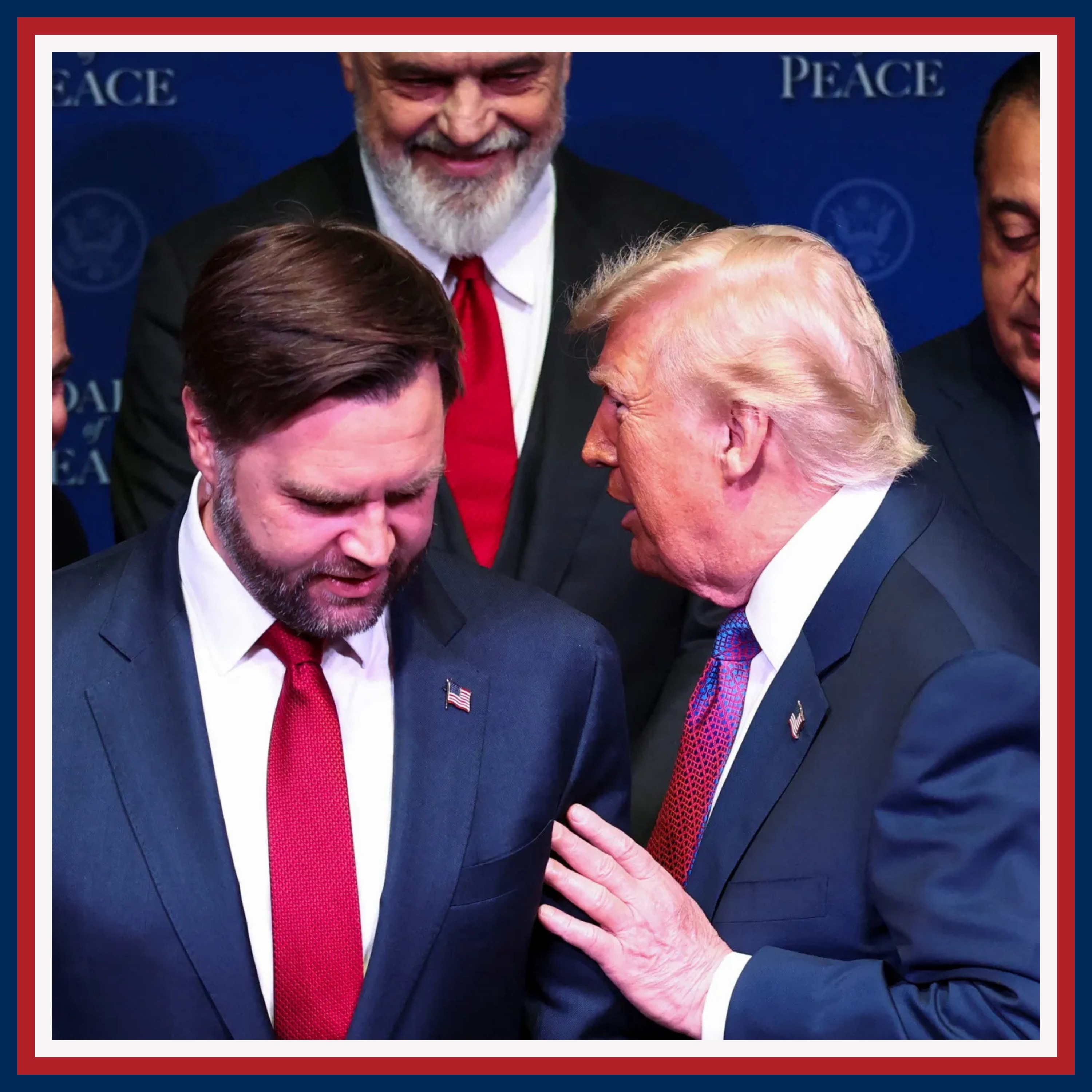
11:11And in the last-ditch bid to revive Orban's campaign, he's been looking to some old friends. This week, US Vice President J.D. Vance visited Budapest to endorse him, is the first top-level US visit to Hungary for 20 years, and he even got President Trump on the phone during a speech. Mr. President, you are on with about 5 ,000 Hungarian patriots, and I think they love you even more than they love Viktor Orban. Well, I can't believe that. I can't believe that, because I love Hungary and I love that Viktor. I'll tell you, he's a fantastic man. We've had a tremendous relationship, and he does the job.
11:49Remember this, he didn't allow people to storm your country and invade your country like other people have. Now, Fraser, of course, it's worth pointing out that the White House is very much stressed. J.D. Vance has been playing a key role in negotiations around the Iran war. But it's also the case that it's a source of intrigue in Washington, D.C., and that J.D. Vance has been notably less prolific in terms of his media appearances since the initial strikes on the Iran war. And we keep hearing that he was one of the figures who was the most sceptical of the action. Do you think he's happier talking to the crowd in Hungary about other issues?
12:28Well, this is historically pretty extraordinary. There's no doubt about that. I mean, let's remember how angry Donald Trump got when he found out that a few Labour special advisers had been flying over off their party books to help Joe Biden. and he pretty much was going to sue Britain before an interference. And now you've got the Vice President of the United States actively campaigning for what seems to be rather flagging Victor Orban, who's up for re-election. Now, the interesting thing about this is that Orban is the kind of godfather of what you might call liberal conservatism. You wouldn't really trace it to Farage, although Farage likes to think of himself as the person that Donald Trump took inspiration from.
13:10It was Orban who put all of these elements together. Him, he came up with the phrase, a liberal conservatism. He's been pioneering the notions of Christian nationalism, of the idea of Western civilization being under attack, Muslims being the malefactors, and all of these various things, judicial populism, law and order, all of these things have ended up becoming the kind of MAGA movement. And a movement which, in the latest national security strategy, which they published earlier on this year, there was really a formal declaration that they're going to, the America is going to basically destabilize the European incumbents and help their opponents.
13:51Now, as Jerry Baker said recently, this is exactly the sort of thing that would not really lead NATO allies to rally around the president during the Iranian campaign. In the spirit of quoting Jerry, he's not with us this week, but will be back next week. He also, I saw social media made the point that, you know, someone's saying, oh, it's outrageous. J.D. Vance has gone to Hungary. And he said, well, come on a minute. Barack Obama came to the UK ahead of the EU referendum. And he said the UK would be back at the queue. Surely that's more of an intervention. Yeah, of course. You can always point to these little visits.
14:27I mean, Tony Blair had a penchant for interfering in people's elections by a little strategic visit here and there. But this is J.D. Vance overtly campaigning. We just heard a clip of him there saying, you know, Orban has kept your country good. He's kept Hungarian people in your country. This is explicit. But mind you, it's not so different to Elon Musk giving support for AFD as to J.D. Vance. Although that didn't work very well. I mean, in the end, AFD didn't triumph in Germany. And in fact, they've actually gone on to demand the expulsion of American troops from German soil. But nonetheless, I had the feeling that this is less about the Hungarian elections and more about the next American elections.
15:08That this was J.D. Vance going out there to display his kind of personal creed, that he is kind of urbanist in orientation, that he believes in a Christian future. He's written a book about his religion and that these dividing lines that Japan articulated are the ones which Vance thinks applies to all of Europe and potentially to America as well. So this is a dove, if you like, flying all the way to Tucker Carlson, who's been very critical of Trump over Iran. He used the word evil to describe it recently. And so we can see a pretty significant split in the conservative movement here. You've got Rubio hawkish on one side, and now you've got Vance dovish on the other side.
15:48And Vance, I think, he's in Hungary, but I suspect he's thinking about the primaries. Now, remember, Marco Rubio said that he wouldn't challenge Vance if Vance were to stand. We also know that Trump recently... Not everyone believes him. Oh, yeah. Well, no, of course. I mean, the Miliband brothers said that about each other as well once. You can never take these promises. Although Trump has come to tease them both. I mean, hearing that, you know, in private dinners and others, he's been asking guests who they prefer. Would Marco be a good successor, etc.? And the idea is that Rubio has been on the way up and Vance has been on the way out.
16:25So perhaps Svans is making his own declaration of independence and reminding America, more than Hungary, of where his own political values are and which strand of the MAGA divide he is now on. Yeah. And I think, you know, you also did see him try and be warm towards Trump. So he put Trump on speakerphone when he was speaking at the conference. And I think some people look at this all and they say, hang on a minute. If Putin likes Viktor Orban and the Trump administration likes Viktor Orban, what does this say? But certainly the criticism of Europe, and by that we mean the European countries that J.D.
17:02Vance is suggesting is undemocratic. The countries of which many of the leaders in NATO are the ones that Donald Trump has recently said he's very unhappy with. They do take this very active interest in it. And I think that J.D. Vance particularly, but even there when we're talking about splits within MAGA, you know, Marco Rubio has been very critical of Europe too and particularly recently of NATO. I think even if the Iran war does actually have a more tidy end as a result of what's happened this week and the jury's out on it, we do keep hearing about these repercussions which are coming for the NATO countries.
17:38And you combine that with the national security strategy, which you mentioned, where they were saying how, you know, one of the things they want to do is be more interventionist in these countries. They want to get involved in their elections. Now, they will say, you've always been getting involved in every election. We've just been too shy about doing it. We should, you know, put our best foot forward. I guess what I wonder is, I'm not sure in any circumstances, regardless of the country, the government, the politics, foreigners coming in and telling people how they should vote ever tends to play that well.
18:09That's exactly what Peter Mijar has been saying. He's the man who the betting markets increasingly tipped to win this election. And wouldn't that be a paradox that Vance Rindon behind a liberal conservatism just when it's failing in its own country? And if you look at the problems that Orbán, and a lot of it is to do with these policies that he's been adopting, the so-called state capitalist model of having industrial strategies, protected industries, isn't working so well for Hungary, where the Baltic states and Polans are growing with tremendous speed, following a far more sort of classic liberal model.
18:46So here we actually could be seeing in Hungary's election the fading of the illiberal conservative model, but weirdly a lagging effect where it is making its way not so much through Poland, but certainly in Britain, where Nigel Farage is turning reform increasingly into a MAGA or urbanish kind of model as well. The reform started off as a pretty much a blank sheet. It was pretty much low tax, anti-lockdown, classical liberal. Now it's gone the other way. So it is an interesting juncture here. This is why I think this Hungarian election this weekend will matter quite a lot. Now, Vance obviously didn't mind that the underdog now is Viktor Orban.
19:29He didn't mind that the election has been looking to go further away from Orban as things go along. So it's interesting on a whole bunch of dimensions to see him fly out to give his campaign to an incumbent who probably won't be in office this time next month. When we look at conservative movements around the world, what we have seen is Trump, the Trump administration isn't always helpful. For example, in Canada, you saw the opposition leader there, you know, had a huge lead to begin with and then actually lost it. and a lot of that was they were not seen to be critical enough for Donald Trump.
20:08Do you think you're already seeing in the UK a situation where Nigel Farage is having to distance himself a bit of Trump, particularly on the Iran war, along with Kemi Baden-Ok? Yes, this is a big question. I mean, will Farage basically come to suffer some kind of Trump hangover effect? I mean, I have to say that even those who think that Trump is a bit of a sort of, you know, a fearsome avenger will be taken aback by the language he was using last week, but there's going to be an end of a civilization in Iran. If that were you, I didn't think he was ever going to do it, but if he did, again, to quote Jerry Baker, the civilization that would be ending would be ours, not theirs.
20:48To think, to see a Western leader using that kind of language really, I think, will lead quite a lasting impression. And it will, overall, it will hurt the kind of idea of MAGA stroke and Pierre Polivier in Canada stroke any number of European-style populists, presenting themselves as the kind of mavericks with the answers. When they get in power, those answers don't always seem to work. That's what Hungarians are concluding right now. Certainly in the European elections recently, we saw that the kind of populists who were in office, either running a government or a sharing coalition, tended to lose support in those elections.
21:27So it was a big question as to whether this will have a more international effect. Now, reform is down on, you know, the opinion polls are down significantly since the kind of pre-generate defection days. I'm not sure that's a MAGA hangover, though. But certainly, if I hadn't been for the Greenland escapade, then the Danish Social Democrats probably wouldn't have held on. I think they did, partly in reaction to Trump's behavior. So that's why I think when we look around the world, it is pretty difficult to separate what's happening in America with the politics in every other country in Europe.
21:58Trump, the universe bends towards him and people tend to judge their own politics by him. So in a way, it was fitting for J.D. Vance to go off to Hungary because this is a kind of a global question which we're all having to greater or lesser extent all over Europe. And America and Europe are weirdly, those politics are for once quite aligned. So Fraser, not that you're a betting man, but if you were thinking to list time next week, do you think the ceasefire will have held? We're already getting a sense of some strain and it has held at what price potentially? Well, I'm not a betting man, but I do love watching betting markets.
22:36And Polymarket has got$60 million placed on the question as to when the hostilities in Iran will end. Will it be all okay by the end of this month or will hostilities have resumed? There is a 66 % chance right now that there will be peace in Iran by then. And also exactly the same, a 66 % chance that Orban will lose the elections in Sunday. So, you know, missing markets are, of course, quite often wrong, especially in Hungary. There's no, you know, the system there is so rigged. It's difficult to tell anything with prediction. But if I had to, you know, I always give the same question, right? I've got no special knowledge.
23:14I'm not Mystic Meg. But I point to what the betting markets say. And that's, you know, usually decent consensus as to what people prepare to put their own money on the question think the answer is. Yeah, and I think the fact that so many people around Donald Trump would quite like this to be over does mean the threshold for what, you know, there is space for in these talks is a bit higher than there might be otherwise. So with that, thank you for joining Fraser this week. And I'll be back next week along with Jerry Baker, and we can see how correct Fraser was. I'm looking at the agenda for our Life Sciences Summit on May the 21st.
23:52There's so much turmoil right now over drug pricing. It's a massive conflict between industry innovation and the reality of the NHS budgets. Yeah, it's a fascinating topic. And the NHS has done its job of getting extremely cheap drugs. And then President Trump has done his job of saying, but hang on, you're free riding on all of our research money. And marrying that tension is It's been really hard. This is something that I think we'll be looking into on the day. Yeah, it's going to be really interesting to hear from our speakers like Patrick Vallance and Melanie Iverson. I should warn everyone listening, it's already a heavily subscribed event.
24:21We've got over 200 of the best in the sector signed up to join us. I'm definitely looking forward to tackling those tough conversations, though, and having a real look at what's happening across the sector. Yeah, look, I mean, obviously, go to thetimes.com forward slash events to find out more.
After threatening Iran with total civilisational collapse, Donald Trump steps back from the brink and agrees to a fragile ceasefire that both sides claim as a win. But how long can it really hold?
And as Hungary heads to the polls, JD Vance lands in Budapest to back Viktor Orbán—a leader often seen as aligned with Moscow. What does it mean when the White House throws its weight behind a pro-Russia candidate in one of Europe’s most consequential elections?
Katy Balls, Washington editor and columnist at The Times and The Sunday Times
Fraser Nelson, columnist at The Times
Producers: Euan Dawtrey, Harry Kitson
Executive producer: Molly Guinness
Picture: Getty Images.
Clips: Reuters
This podcast was brought to you thanks to the support of readers of The Times and The Sunday Times. Subscribe today
Hosted on Acast. See acast.com/privacy for more information.