 Ask ChatGPT
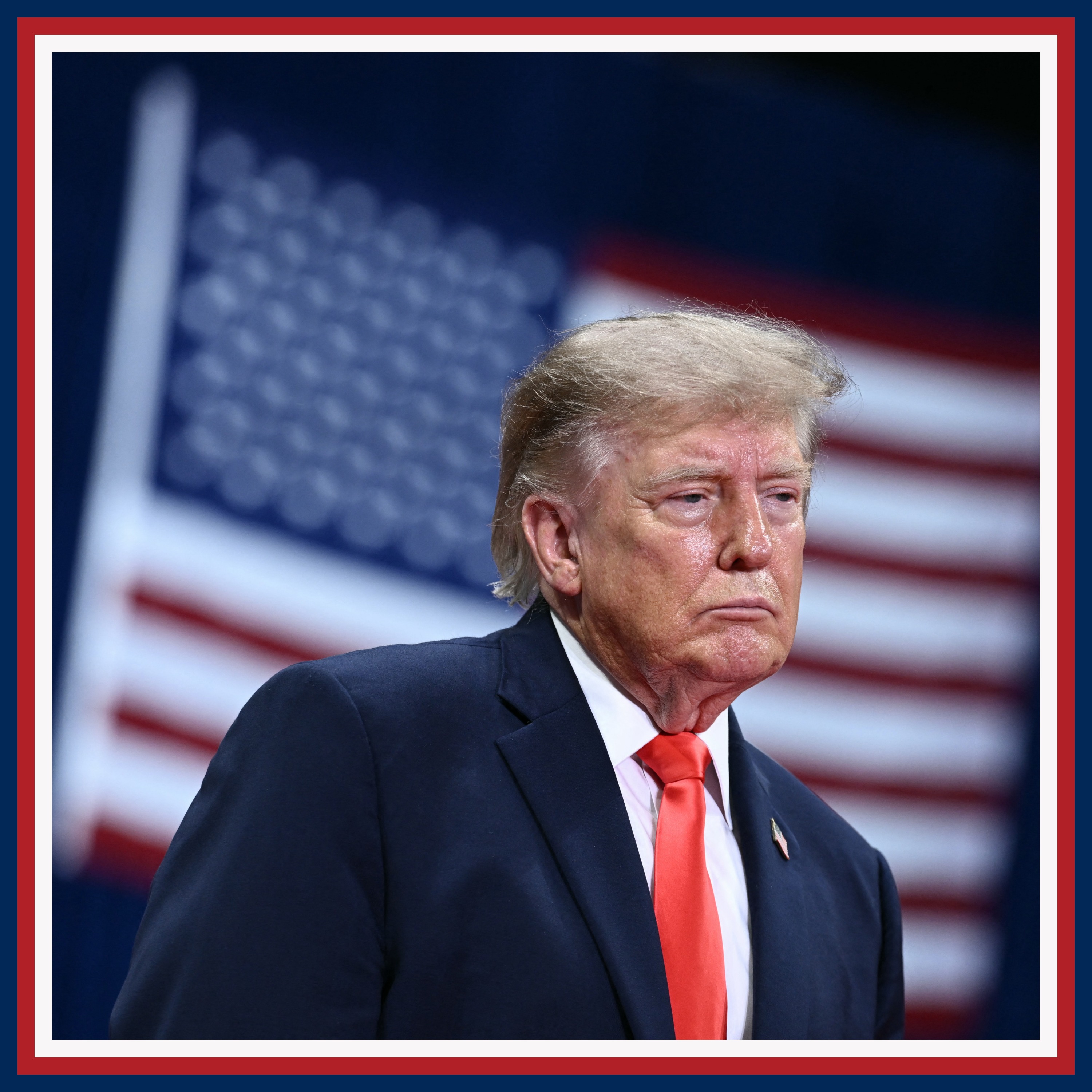


A special edition of State of It USA focused on a reported NVIDIA scandal and its fallout, linking alleged personal misconduct, U.S.-China chip export risks, and Trump-era cronyism; it also discusses the political and economic implications after recent U.S. midterm elections.
Gerry Baker, columnist for The Times and editor at large of The Wall Street Journal; Andrew Neal, host of the Andrew Neal Report and Baker’s colleague.
Jensen Huang’s reported resignation follows allegations of an affair with Singapore-based Alice Wang, described as a Chinese intelligence asset. The relationship is claimed to have enabled funneling/smuggling of advanced NVIDIA chips to China, potentially undermining U.S. export controls. Trump is said to have been warned and to have taken no action; Commerce Secretary Howard Lutnick is suggested as a possible “fall guy” for lobbying to continue the arrangement.
NVIDIA’s AI data-center chip dominance; Trump’s April Beijing trip where Huang allegedly lobbied to join; the Alaska Air Force One stop where Huang reportedly boarded; the midterm results (Democrats winning Mississippi, large House/Senate gains) as a backdrop for investigations.
Written by AI. May contain mistakes.
Overview of the Nvidia scandal and Jensen Wang's resignation.
“A-Cast powers the world's best podcasts.”
Discussion on the allegations surrounding Jensen Wang's affair and espionage.
“in the last week, which is the story about NVIDIA.”
Analysis of the potential repercussions of the scandal on AI and the economy.
“Well, my first reaction is that of a journalist.”
Comparison of American and Chinese AI technologies and implications.
“that companies that are built by a man, once that man leaves the scene for whatever reason, it's very hard for them to maintain that kind of momentum.”
Exploration of the political implications of the scandal in the context of recent elections.
“It'd be nice to think it's all a conspiracy theory and that the Chinese were behind it from the start, but I don't think that's the case.”
Insight into how the Nvidia scandal could reshape trust in government and business.
“I think most Americans are, A, stunned by the level of corruption, and B, stunned that no one could do anything about it, that he could just get away with it.”
Exploration of the intertwining relationships between Trump, NVIDIA, and political consequences.
“They involve not market forces, but who you know, when you know them, government, big government doing deals with big business for the advantage of that big business.”
Discussion on the implications of the recent midterm elections for both parties.
“In 2008, a promising young actor showed up on his first day on set ready to film the action-packed climax of his new movie.”
Discussion on the current economic cycle and implications of fiscal and monetary policy.
“and how important his wife is and how close his wife is to Pete Hegseth's family.”
Teaser for a podcast exploring personal stories related to pandemics.
“You know the story, you remember the headlines, but what if you could hear from the people who were actually there?”

Get the gist, explore an idea or ask about something said.
 Claude
On The State of It: USA, what are the key points of this episode?
Searching your listeningAutomatic transcript. May contain errors.
0:00How likely do you think another pandemic is? It's right at the top of the agenda. It will happen. It will happen. You know the story, you remember the headlines, but what if you could hear from the people who were actually there? I saw a man who'd been hit in the face with two bullets, put my camera to my eye and he looked at me with all the pain in the world in those eyes. He was trying to move his head to say no, and I didn't take that picture. I'm Cathy Newman and I'm going back inside the stories that changed everything with the people at the very heart of them. Search Backstory and follow wherever you get your podcasts.
0:30A-Cast powers the world's best podcasts. Here's a show we recommend.
1:00Acast helps creators launch, grow, and monetize their podcasts everywhere. Acast.com It's got sex. It's got not just high technology. It's got AI technology, the technology of our age. Cronyism, corruption, Democratic Committee investigations. Get the popcorn out. Pull up the seats. We've only just begun.
1:29Hello and welcome to the State of It USA with me, Gerry Baker, columnist for The Times and editor at large of The Wall Street Journal. And I'm joined in this special edition of the State of It USA today, I'm glad to say, by my friend and colleague, Andrew Neal, host of the Andrew Neal Report. Thanks very much indeed for joining us for this special conversation this week about the state of America. No, there's no news to talk about, Gerry, as you can see. Well, let's talk first about this extraordinary story that has absolutely kind of enveloped Washington, enveloped the U.S. in the last week, which is the story about NVIDIA.
2:06I should say, just to be recording this, Jensen Wang, the CEO of NVIDIA, has just resigned under pressure. Just a little bit of background for those who aren't familiar. NVIDIA is really the poster child of the AI boom in the U.S. economy. It's an extraordinary company, trillion-dollar-plus company that Jensen Huang co-founded, who built it from a company that used to make chips, semiconductors for computer graphics for video games. And he turned it into the biggest maker of chips that are used to power the data centers that create the AI that is transforming our world and the economy. And NVIDIA has just been this astonishing success story growing and growing and growing over the last 10 years as this AI boom has continued.
2:54Now, what's happened? Of course, we've learned in the last week or so, the New York Times reported that Jensen Wang had had an affair with a woman, also confusingly called Wang, Alice Wang in her case, Singapore-based Chinese National, who is a client of NVIDIA and had been buying a lot of the chips with NVIDIA. Well, it turns out he had a romantic – it's reported that he had a romantic relationship with her. What gives the story the real power is that Alice Wong, it is reported, again, it's challenged by others, but it's reported by U.S. media that the U.S. intelligence has determined that she is a spy for the Chinese government, that she works and reports to the Communist Party in Beijing.
3:40and that she has been using her relationship with Jensen Wang to funnel, to smuggle some of these very, very high-tech chips that the U.S. has in the past been very reluctant to sell to China for obvious reasons, to give China an advantage. Well, it turns out that this relationship has resulted perhaps in China getting access to very important technology. And then finally, Andrew, before I let you chime in, just also to give the further background, Jensen Wang, as it happens, is one of the closest allies and friends and donors to Donald Trump, President Donald Trump. Donald Trump and he have spent a lot of time together.
4:20He gave Jensen Wang gave twenty five million dollars to help finance Donald Trump's extraordinary East East Wing ballroom at the White House. Donald Trump in return has given all kinds of regulatory favors to to video. What's your take? Well, my first reaction is that of a journalist. in that it's a story that's got everything in it. It's got sex. It's got not just high technology. It's got AI technology, the technology of our age. And it's got power. And it's got politicians. And it's got Trump. And it's got the administration. And it's got big bucks, money by the billions, if not the trillions.
4:59So it ticks every box. What I would say is that it couldn't have come at a worse time for AI. AI is already on the defensive. People are wondering if these valuations are real. Will they ever be realized? The midterm showed a backlash against data farms. America has found its Luddite soul. Who would have thought the Americans would be Luddites? But there they are. They don't like data farms. They don't want them. And yet building these data farms is essential to the revenue models of NVIDIA. And the financing of AI, NVIDIA was at the heart of that, lending to AI companies. So these AI companies would then use that money to buy their chips.
5:41Is that now going to unravel? I see the stock is collapsing as we speak this morning. I mean, it's hard to know where to begin. And behind it all, you've got Donald Trump, who was warned and seems, Jerry, to have done nothing about it. Yeah. Look, you've touched on all the important points. So let's start with the point about the potential damage this could do to AI. It can't be overstated how important Jensen Huang himself and NVIDIA have been in this astonishing boom we've seen. As I said, a company that 15 years ago no one had ever heard of is probably now the single most important company in the AI boom.
6:20It makes these chips. Everybody wants them. And it was built by this one man. and he seems to have, as often you know very well, Andrew, as well as I do, that companies that are built by a man, once that man leaves the scene for whatever reason, it's very hard for them to maintain that kind of momentum. So that's, and as you say, the stock price had already been falling, some concerns. In the last two weeks, three weeks, we've seen a lot of concern about whether this AI boom is a bubble, whether it's overdone. I don't think anybody doubts whatsoever the transformative nature of the technology.
6:52Oh, exactly. No, the technology is wonderful. Yeah, exactly. But like every new technology, investors go overboard. And that, by the way, could have really bad implications for the US economy, which by some estimates, all of the growth in the US economy in the last five years has been driven by this astonishing AI investment. If that is now starting to unravel, that could really hurt the US economy. And of course, nobody out there needs me to say that if the US economy sneezes, the rest of the world gets the flu. So that's one of just that. That's just that. As you say, that's just the first implication of all this, isn't it?
7:28The potential damage to the US and the world economy, which, by the way, I should say there are people close to Jensen Wang. And I've been speaking to some people this week who think this whole thing is a plot by the Chinese who think the whole thing is made up. The Chinese the story of the of the Chinese honeypot, the other Miss Wang, the other one is all a kind of all made up to to to fundamentally undermine NVIDIA and to weaken in the US economy. So yeah, that's the first lesson, isn't it here? Well, I think that it's certainly played into China's hands. And of course, the only competition America really has when it comes to AI is China.
8:03China has tried a different model using a different model from America. What it does is not as good as the American AI, but it may be 80, 85 % as good. And it's about a 10th of the price. So for most people, China AI may be a more economic, a more attractive proposition. It'd be nice to think it's all a conspiracy theory and that the Chinese were behind it from the start, but I don't think that's the case. We learned last night that there was a second mistress on the scene, and indeed I was told not to hold my breath for too long. There could be a third one coming up too. That's the road you're going down.
8:42I believe the Kelsey prediction markets are already taking bets on that one. Exactly. Why not go for the hat trick of mistresses. I think it also shows how serious it would be because you rightly showed how this man was synonymous with the company. He wasn't just the chief executive, he was the founder of the company. There would be no NVIDIA if it wasn't for him. So I think the fact that the board still felt it had to get rid of him shows you just how serious the situation is and that there is a lot more to come out and none of it is good and it's all bad. Otherwise, they would have tried to cling on to him.
9:20They would have said, oh, we're investigating, take time to do it. I think he's been incredibly reckless. My understanding is that when he first started seeing this Chinese woman based in Singapore, that she wasn't a Chinese spy, but they started a relationship. and lo and behold, Chinese intelligence sees that he's now dating a Chinese national and she gets a knock on the door from Chinese security to say, hey, you could help us out here a bit, tell us what's going on. And as a Chinese national, when you get that knock on the door, you don't say no. You know, especially if you've got family back in China.
10:04So I think she was dragooned into it. But that makes it no less serious. American intelligence found out. Mr. Trump was apparently informed, but seemingly did nothing about it. And NVIDIA was allowed to go its own way. So I think a lot more of that detail has still to come out. And there's no question that China has benefited enormously, both in terms of technology, in terms of PR positioning, in terms of giving its own AI a boost. And also it got some of these chips. It got some of these chips through her company in Singapore. Let's talk about the politics because, as you said, I mean, this is potentially, I think, potentially very significant politically.
10:48It comes in this – exactly at this moment, in this environment, we had the midterm elections last week, when Americans are furious with what they see as – rightly, what they see as widespread corruption, the cronyism that seems to define, unfortunately, Andrew, a lot of modern American capitalism. If you have it's always been a little bit like this, but we seem to be on kind of supercharged in supercharged mode right now. If you have the money, if you're a big company, you have access to regulators and you have access to members of Congress and you spend a lot of money around Washington and you have access to the administration, you get favorable treatment.
11:25And, you know, the midterm elections last week where Democrats won the biggest majority they've had in it'll be 40 plus years. Polling on the day said that corruption, government corruption, was the number one issue that Americans are concerned about. And then literally within days of that, you get this extraordinary story where this man who is incredibly close with Donald Trump, who's given him all this money and has done all kinds of things. You know, again, been very successful. Let's not dispute that. But now is accused of having potentially done something incredibly reckless. It's going to really fuel populist, you know, this populist mood against this nexus between big business and powerful government and corrupt government that is, you know, that frankly is defining American politics right now.
12:12Could you imagine a better backdrop for the Democrats as they take over every single powerful congressional committee on Capitol Hill, every oversight committee, every investigative committee, every intelligence committee, as they take this over and begin their investigations into the Trump administration with this as the backdrop? I think most Americans are, A, stunned by the level of corruption, and B, stunned that no one could do anything about it, that he could just get away with it. This is unprecedented. Yes, there have been corrupt administrations. Ulysses S. Grant, his record as president, was tarnished by corruption way back after the Civil War.
12:56So yes, America has been great for scandals, but never on this scale. In a scale that really has turned this administration into a kleptocracy. A scale that has enriched the Trump family, has enriched Trump cronies, and has enriched the family of these cronies and the friends of cronies of friends of cronies. I mean, it's unbelievable the sums of money involved in this. And I think the mood is right in America at the moment for the Democrats to get stuck in with these committees. People will want to know more. more. And you can say, you know, we know that Donald Trump has never believed in the market economy.
13:37I'm not sure he even understands what the market economy is. He's not a Reaganite. He's not a Thatcherite. He's never read Adam Smith. He probably doesn't even know who Adam Smith is on that. He is a classic example. And it was true with NVIDIA as well. In fact, it was a perfect case study. You know, Jerry, you can call it one of two things. It's either crony capitalism or it's state socialism. And actually, they're both different sides of the same coin. They involve not market forces, but who you know, when you know them, government, big government doing deals with big business for the advantage of that big business.
14:19And we saw that with NVIDIA. Wasn't it the case that when Mr. Trump eventually said to NVIDIA, okay, you can sell these chips to China, but the government will take 10 or 15 percent of the revenues. Yeah, exactly. I mean, even Bernie Sanders would never thought of doing that. The political jeopardy here, there are multiple angles, but there are a couple of particular points of political jeopardy. Exactly as you said earlier, Andrew, one of the stories that's emerged is that Trump was warned about this by his own officials. And, you know, again, we don't know exactly what Trump said, but it's been reported both in my paper and in other papers.
14:57that he just did nothing. In fact, what's a really interesting story, Andrew, is that when Trump, as you remember back in April, flew to Beijing to see for a big summit with Xi Jinping, he took a bunch of tech leaders with him. Now, initially, interestingly, Jensen Wang was off that list. He wasn't on that initial list. But he lobbied hard to get on it. And Trump on the plane, on the Air Force One, between Washington and Alaska, it seems that Trump was briefed by Marco Rubio, the Secretary of State, about more details about this relationship between Wang and this woman. And again, with all the warnings that are associated with that.
15:32And then the plane landed in Alaska to refuel. And at Alaska, Jensen Wang joined the party. He got on the plane there, traveled on Air Force One with the others to Beijing and was in all the meetings, all the key meetings in Beijing. So there's a real question mark there about what Trump knew, when he knew it, the classic Watergate question, and why he didn't do anything about it if he did know. And then secondly is the role, I think, and there's a possible fall guy here, I think, maybe emerging, which is Howard Lutnick, the Commerce Secretary. Now, he's the one who's been very close also to Jensen Wang, and it's been reported again this week that even this week, as the U.S.
16:11was cracking down finally on this relationship between NVIDIA and this woman, and also on the exports of potentially very, very sensitive equipment to China. Howard Lutnick was still, as late as this week, was lobbying on behalf of NVIDIA to continue to do this. And there's a story in one of the news outlets this week that Scott Besson, the Treasury Secretary, and Howard Lutnick had kind of almost like a screaming match about this issue. So I think we can see the contours here of both potentially perhaps a full guy in the shape of Howard Lutnick, get him out there, make him walk the plank. But again, there are really serious questions, Andrew, about the role of Trump himself.
16:57Well, the landing in Alaska of Air Force One will make a great scene in the movie. It will, yeah. When a man in a leather jacket suddenly wanders out of the terminal to get onto the plane. I mean, that would be great. We must make sure we shoot that properly, Jerry, when we make this movie. It's an Oscar winner. Of course, Ludicrous Lutnik is a classic participant in crony capitalism because that's what he does. And his family has been enriched by his position in the Trump administration. But of course, Trump will, if it has to be done, Trump will drop him like a hot potato. There's no question about that.
17:39But that will only be symbolic because this goes deep into the whole way Trump does business. Even his connection with Lutnik, the guy is Secretary for Commerce because he was on the other side of a property deal in the 1980s and it was going on through the night and Trump decided to go and find a sandwich bar to get a sandwich and a coffee and Lutnik was there and Lutnik bought him the sandwich. Right. That's how cronyism goes. And that ham sandwich finally got on the job of Commerce Secretary. They say in US legal circles that you can indict a ham sandwich with a grand jury if you want. Well, we'll see if that's about to happen.
18:17Andrew, we're going to take a very short break and when we come back, we'll have a very brief discussion on the wider US political scene in the wake of the midterm election. So do stay with us.
18:27When something significant happens in British politics, stories are always unfolding behind closed doors. The State of It podcast from The Times and The Sunday Times takes you inside the room where it happens. I'm Stephen Swinford, the political editor of The Times, and with me are Patrick Maguire, Lara Spirit and Ben Riley Smith. We will bring you scoops and analysis about what is really going on in Westminster. Listen to The State of It twice a week wherever you get your podcasts.
18:57ACAST powers the world's best podcasts. Here's a show we recommend. In 2008, a promising young actor showed up on his first day on set ready to film the action-packed climax of his new movie. He'd been training. Cameras rolled and he tore his butt cheek. That actor was Robert Pattinson and the film was Twilight. Listen to our podcast, What Went Wrong, every other week as we unearth the chaos behind Hollywood's biggest movie flops and most shocking successes. Available wherever you get your podcasts. Acast helps creators launch, grow, and monetize their podcasts. Everywhere. Acast.com.
19:45Welcome back to the State of It USA. Let's turn now to the broader political conditions here in the United States. We're just a week over those extraordinary midterm elections. They're still counting, of course. They will be counting for weeks in California, but the latest numbers only continue to emphasize the scale of that Democratic win. It was declared yesterday that they took the state of Mississippi, the first Democrat to win that deep south state in more than 40 years. There's one more Senate seat outstanding, which is in Alaska. They could end up taking that too. That would be 56 seats, 56, a gain of nine seats, an extraordinary gain.
20:23And in the House, they almost finished counting, but they look likely to have about 258, 259 seats, a majority of more than 80 seats. Just a huge, huge majority. I've written about this a lot, Andrew, and I know you have too in the last week. We're still digesting the meaning of this election, what it means for Trump, what it means for the Republican Party, how the Democrats will manage this extraordinary win and whether they will behave prudently or interpret this as a mandate to do a lot of rather crazy things. Just briefly, let's start, if I may, Andrew, with you, because I'd love to get your views on what it means for Trump and the Republican Party.
21:03I mean, you know, people have been writing Trump's obituaries in the last week. I'm a little sceptical about that. He's got two more years to go. He can do a heck of a lot. But I do think there's no doubt that at least in terms of the electoral appeal of Donald Trump himself, I think that was pretty much buried last week. And the Republican Party is now in the throes of a really, really big and difficult debate about the way forward. What's your what's your view? Well, there's no doubt you're quite right that the scale of what happened was enormous and the drubbing that Republicans got was beyond their worst expectations.
21:37They knew they were going to lose the House. They probably thought they'd lose the Senate. It never crossed their mind they'd lose by so much. No one ever, when I was covering this election, mentioned Mississippi to me. You know, we were having fun with Kansas, but not Mississippi. But they did. Now, whether it's a watershed election, whether it's a transformative election, in olden times it probably would have been. But these days we think we see transformative watershed elections and they turn out not to be. For example, Boris Johnson's landslide victory in 2019. He put together a new coalition of Tory voters, the Red Wall in the north, traditional home county voters, Tory voters in the south.
22:19Massive majority got Brexit done. That looked like a new right of center coalition of voters that would be in power for 10 years. In fact, I think on election night for the BBC, I said this looks like a two term government to me with that majority. Well, he was gone by 2022. And again, if you look at what Donald Trump did in 2024, he put together an equivalent coalition of voters. The MAGA base, moderate Republicans, independents and Hispanics. And now only and that looked like the basis of an equivalent to what Johnson had done in Britain in 2019. And lo and behold, only two years later, he still got MAGA because MAGA will always have MAGA.
23:05He'll always have MAGA. But the Indies fled. The moderate Republicans fled and the Hispanics fled. Look at the break of the vote for Tallarico in Texas. And he won because he had a massive lead among Hispanic voters. So although we don't know for sure if it's a watershed, I think it has destroyed what Trump looked like creating in 2024. And it's been destroyed by the actions of the man himself, by having been elected by this coalition, having begun to think here is a new kind of Republican Party with a new base in the country, including its multi -ethnic. We got the Hispanic vote as well as the white, blue collar vote in Alabama.
23:50This is the beginning of something new. And then basically he turned around in so many ways, kicked them. The people who voted for him, he kicked them in the nuts. And they had their revenge in the midterms last week as a result of that. And I think, although, you know, I think, Jerry, if you always bet on the Democrats screwing things up, you could become a very rich man. Yeah. And so I wouldn't discount the Democrats who've got everything at the moment really screwing this up. But even if it's not a watershed, even if it's not the start of a new age for the left, I think it's going to be very difficult for the right to rebuild something sensible for the rest of this decade.
24:34I agree with that. I'd say two quick things. One on the Republicans. Look, I think there's a there's going to be a concerted effort here by Republicans, particularly those who might we might call old Republicans, sort of Reaganite Republicans who really have been eclipsed by Trump in the last 10 years. You know, their policies of tax cuts, of sort of so-called neoliberal economics, of neoconservatism overseas, invading countries and toppling governments. You know, all that stuff was supposed to have been, you know, basically overturned by Trump. They're going to try very strongly to interpret the results of last week's election as a repudiation of not just Trump himself, but of that whole turn in the Republican Party towards a more populist, you know, government getting involved in the economy, getting out, you know, American isolationism, all that stuff and say, no, we've got to go back to the Reagan era.
25:22I think that's that's I don't think that's going to work because of the popular support. But, you know, not for Trump himself, but for those policies is so great. It's going to be hard to do that. But there's going to be a battle royal, Andrew, between, you know, the likes of maybe it'll be Marco Rubio will represent that. I think it might be Ron DeSantis who is emerging quite strongly. The governor of Florida is about to step down who will run and do that. Maybe it'll be Ted Cruz, the Republican senator. There's all of those against J.D. Vance who will be trying to kind of fashion a populist, post-Trump populist message which rejects the old Republican orthodoxies but does it in a way that somehow seems more appealing than Trump does.
25:57And on the Democratic Party, I think you're absolutely right. Look, they have this – wasn't it said of the Palestinians that they never miss an opportunity to miss an opportunity? Exactly. You sort of suspect it's like watching a movie you've seen 25 times. Here they are, the triumphant heroes. They come to Washington. and they've got a huge majority. And they're even more unpopular than Donald Trump. They are. That's exactly right. That's exactly right, Andrew. This was not a mandate for, frankly, for democratic policies at all. Now, I think, again, I've spoken to a lot of Democrats in the last week.
26:27The good news, if you like, for them or for the sort of, if you want the Democrats to do well, is that the majority is so big in the House in particular, but also in the Senate, that this far left faction that did well in these elections, got a few more, you know, got a few more House seats, Abdul El-Said, the Michigan senator, But they're just tiny in the Democratic Party. The scale of that landslide in the House means that those far left, the Democratic Socialists and those others, have a tight, very, very limited leverage. Exactly. Because the majority is so large. A much smaller Democratic majority would have been in their favor.
27:00It would have given them leverage. The scale of the majorities you announced there, they have very little leverage now. As the right-wing populist, the Freedom Caucus, did for the last 10 years, to the Republicans. The Republicans only ever had a small majority in the House. They were able to cause havoc for the Republican leadership by doing this. The left of the Democratic Party won't be able to do that. I would say just three things, Jerry. One, I think we're in for a period in which Republicans and Democrats are going to be quite fractured because neither of them really knows what they stand for.
27:32We know what the Democrats don't like. We don't know what they stand for. We don't know what a Republican Party post-Trump would stand for or look like. And I they're going to squabble and fight among themselves. The second thing is I speak to you from Washington, D.C. I am struck by just how much of a shambles it is here. No, you speak to people. It's a waste of time. They have no idea what's going to happen. And so instead they'd rather gossip about Pete Hegseth or something else that's going on or Stephen Miller in the White House and how important his wife is and how close his wife is to Pete Hegseth's family.
28:06You know, we have to try and get a, you know, from looking from the outside in to get a steer of how should Europe position itself now as America. It's a waste of time. Nobody knows. I speak to you. I'm 300 yards from the White House. I'm pretty sure nobody in the White House knows either. They're just waiting to see something will come up, something will happen. But time waits for no man and economic policy waits for no man either. And as we talk, we talk about AI and NVIDIA and fractured Democrats, Republicans and so on. Something else is happening as we go on here, which will have its comeuppance and which they will be unable to stop.
28:43I think we can all agree we're in the late stages of this economic cycle now. You know, we don't know when it's going to end, but we're in the later stages of it. It's been around for a long while. And in the late stages of this economic cycle, monetary policy and fiscal policy are both running hot, hot, hot. Now, Keynes would never have said do that. That's not what Keynesianism was. You don't run hot on both at the end of an economic cycle. You run after we've hit a recession and then you run things hot. Broad money definition in America now rising by 7%. That's a hell of a lot. The deficit, at least 6.5, probably heading for 7 % of GDP.
29:32And a fractured, a divided government will make that only worse because you'll get horse trading in which the Trumpies will say, yeah, well, give us more for defense and you can have more for health. Give us more for the border wall. and you can have more for welfare. And they'll both get more as a result and the deficit will get even worse. And in some sense, I'll say, I don't know when calling the top is a fool's game, but either all the economics I've been taught all my life since university has been wrong and a waste of time or something big is coming, even regardless of AI, when you run monetary and fiscal policy this hot at this stage in the economic cycle, Gerry, I tell you, it will end in tears.
30:24Yeah. Look, I think monetary policy is tightening. Obviously, Bank of England has raised interest rates. The Fed's raised interest rates. It's going to raise interest rates again, I think, before the end of the year. But you're right still, you know, where... It should be raising by more, given how little fiscal policy is. Yeah, comparison where they should be. I mean, inflation is still way beyond the Fed's target. They're going to have to raise interest rates more. And again, if we do see... I mean, the nightmare scenario, obviously, is if we do see that downturn, may be driven by this AI boom deflating.
30:50If we do see that, the Fed will have only limited room to manoeuvre, not only because its interest rates will not already be that high, but also because inflation is still running high. We could have this terrible, terrible specter of stagflation. And as you say, the fiscal situation is already, frankly, completely out of control. So look, we've got to leave it there. But I think I can fairly summarize this to say for both of us, you know, if you thought last week's election were a kind of a, you know, a recessional, which we're going to kind of usher in a period of steady transition to the post-Trump world and convey Donald Trump peacefully to his retirement in a couple of years, you're going to be in for a bit of a shock.
31:29I would say fasten your seatbelts on the economic front, on the political front, on the geopolitical front. It's going to be wild. So Andrew Neill, as ever, thank you for joining us on this special edition of the State of it USA. Katie Balls and I will be back next week with a regular edition. In the meantime, thanks for joining us and goodbye.
32:12With Quicken, you can make sense of your options and decide what to do next. Quicken. Know what to do next. See how at Quicken.com. How likely do you think another pandemic is? It's right at the top of the agenda. It will happen. It will happen. You know the story, you remember the headlines, but what if you could hear from the people who were actually there? I saw a man who'd been hit in the face with two bullets, put my camera to my eye and he looked at me with all the pain in the world in those eyes. He was trying to move his head to say no, and I didn't take that picture. I'm Cathy Newman, and I'm going back inside the stories that changed everything with the people at the very heart of them.
32:47Search Backstory and follow wherever you get your podcasts.
Jensen Huang has resigned as chief executive of Nvidia after admitting to one extramarital affair and facing allegations of a second. One of the women involved, Alice Huang, has been accused of being a Chinese spy. Nvidia has been leading the AI boom and so the damage to this one company has huge implications for the US economy, and beyond: Jensen Huang is a close ally of President Trump. Andrew Neil joins Gerard Baker to discuss the economic, political, geopolitical and technological implications.
And the Republican losses in the midterms keep coming: Scott Colom has won his race, making him the first Democrat elected to the Senate from Mississippi since 1982. Where do the Republicans go from here, and what will the Democrats do next? Does either party really know what it stands for?
Gerard Baker, columnist at The Times and editor at large at The Wall Street Journal
Andrew Neil, presenter of The Andrew Neil Report
Producers: Euan Dawtrey, Harry Kitson
Executive producer: Molly Guinness
Picture: Getty Images
Audio: Reuters
This podcast was brought to you thanks to the support of readers of The Times and The Sunday Times. Subscribe today
Hosted on Acast. See acast.com/privacy for more information.