Ask ChatGPT


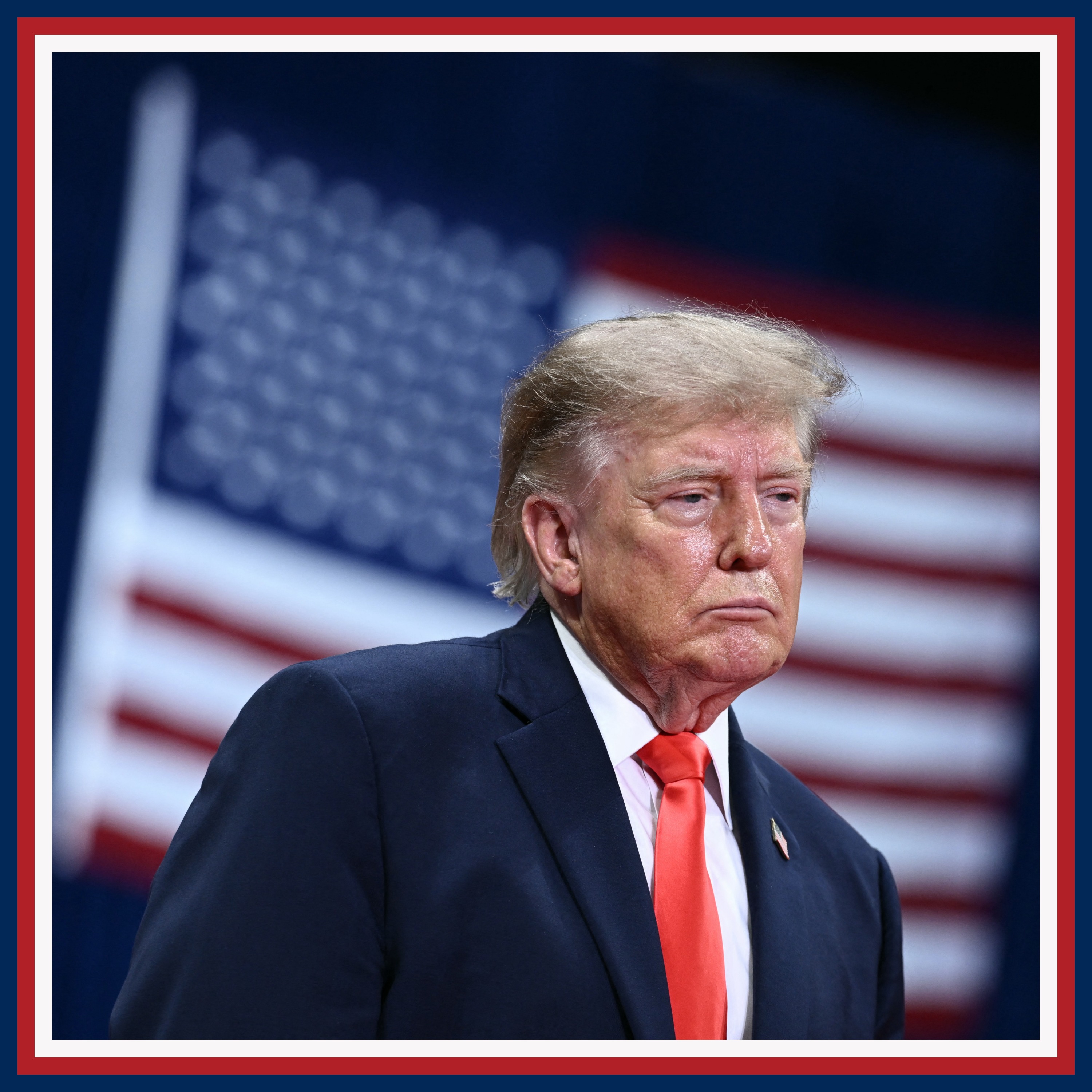
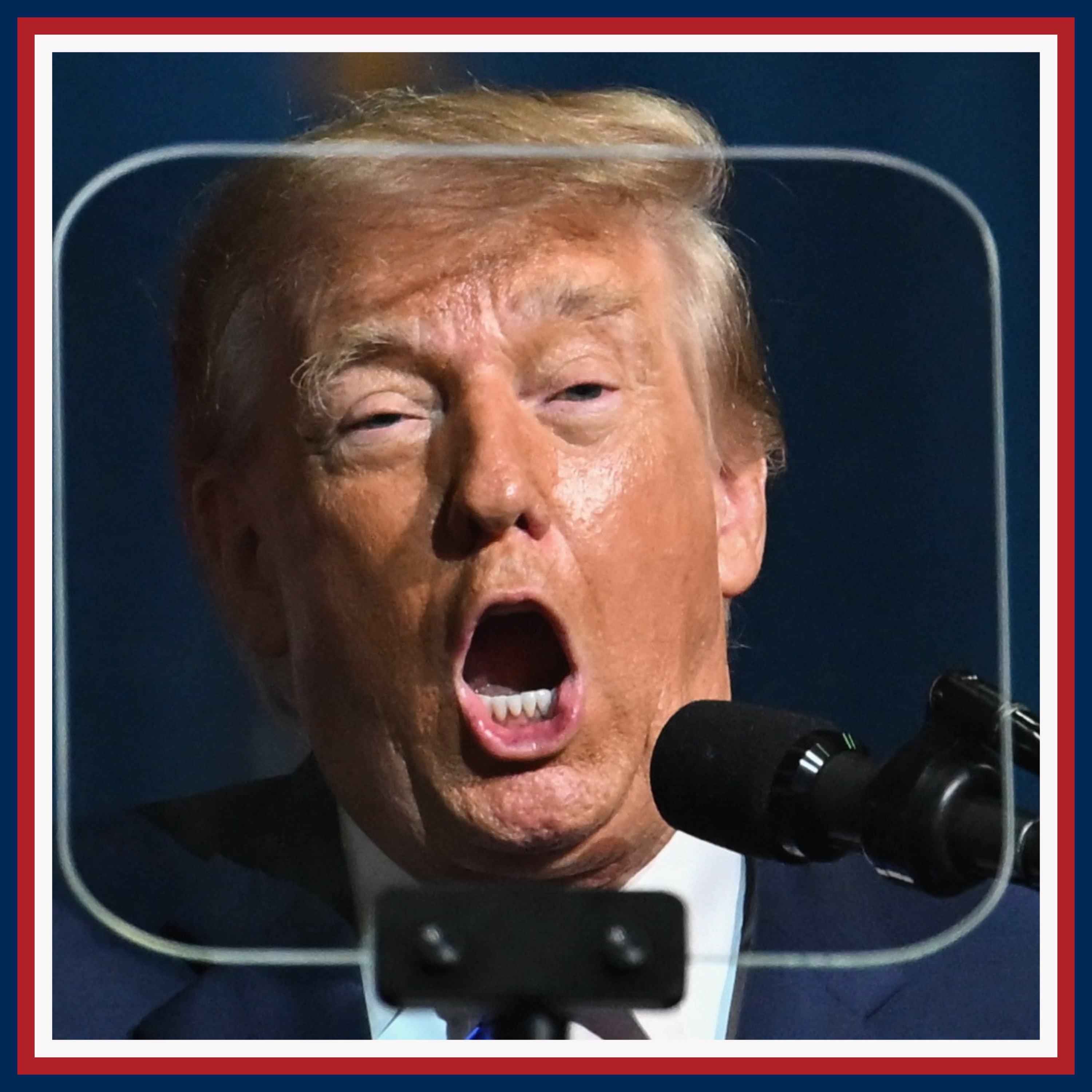
Katy Balls and Fraser Nelson unpack Donald Trump’s televised address to the nation about the Iran conflict, focusing on the stated objectives, timeline, and implications for regime change, NATO, and the Strait of Hormuz.
Katy Balls (Washington editor, The Times and Sunday Times) and Fraser Nelson (Times columnist). No other guests appear.
Trump framed the strikes as a nuclear/missile disarmament emergency with a 2–3 week window, while avoiding explicit “regime change” language. The hosts argue the speech rebrands regime change as “regime editing” (a more “reasonable” post-Ayatollah leadership) and tries to reassure voters ahead of midterms. They note conflicting intelligence messaging and uncertainty about an “off-ramp,” possible boots-on-the-ground, and alliance/NATO burden-sharing.
“Operation Midnight Hammer” claims; Rubio’s “point of no return” framing; Venezuela/Maduro analogy; references to NATO and Strait of Hormuz responsibilities; midterms polling and war-duration comparisons (WWI, WWII, Vietnam, Iraq).
Written by AI. May contain mistakes.
They discuss the key points of Trump's address regarding the conflict in Iran.
“Should have done it with us as we asked.”
The hosts explore Trump's narrative about U.S. objectives in the Iran conflict.
“which means that it's added to the sense of not necessarily being a coherent narrative about what the objectives are of the war, how specifically they want to sell it to the country.”
Discussion on the mixed signals from Trump regarding Iran's nuclear threat and U.S. intelligence.
“And I think that's significant because while Trump says this is never about regime change, in the early days, he was imploring the Iranian people to say, we'll do this bit, then you guys take the rest.”
The conversation shifts to the implications of Trump's stance on regime change in Iran.
“Has Iran been enhanced when it comes to the Strait of Hormuz?”
They analyze public sentiment about the war in Iran and its impact on Trump's midterm strategy.
“So he's claiming that they were on the cusp of the point of no return.”
Discussion on Trump's military strategy in Iran and the implications for NATO alliances.
“The Vietnam War lasted for 19 years, five months and 29 days.”
They conclude with the potential future scenarios and the implications of Trump's address.
“Well, Rubio did saying, unfortunately, we're going to have to reassess our alliance.”
Discussion on the implications of Trump's statements for European countries.
“So while Keir Starmer and others may say, you know, this is not their war and they're not going to get involved with it, it doesn't mean that they're not going to have to clean up a mess after.”
Exploration of the unpredictability surrounding Trump's timeline for ending the conflict.
“How much store do you think we can place by that?”

Get the gist, explore an idea or ask about something said.
 Claude
On The State of It: USA, what are the key points of this episode?
Searching your listeningAutomatic transcript. May contain errors.
0:05Hello and welcome to this bonus episode of the State of It USA. I'm Katy Balls, Washington editor of The Times and Sunday Times, and as it's 6am in Washington, D.C., we've let Jerry off. And I'm Fraser Nelson, columnist for The Times. So, Katy, we've got you up early to talk about Donald Trump's speech last night, his first one since the campaign in Iran started. Here are the clips. We are going to finish the job and we're going to finish it very fast. We're getting very close. There's no country like us anywhere in the world and we're in great shape for the future. I have a suggestion. Number one, buy oil from the United States of America.
0:43We have plenty. We have so much. And number two, build up some delayed courage. Should have done it before. Should have done it with us as we asked. Go to the straight and just take it. Protect it. Use it for yourselves. We're going to hit them extremely hard over the next two to three weeks. We're going to bring them back to the Stone Ages where they belong. Regime change was not our goal. We never said regime change, but regime change has occurred because of all of their original leaders' death. They were the bully of the Middle East, but they're the bully no longer. So Katie, what, if anything, did we learn?
1:24I think what was revealing about the address to the nation, well, there are a few things. First off, the fact that he did it was telling in its own way, because we haven't had that type of address to the nation. We've been going on for about four weeks now when it comes to this conflict. And normally, if you look at wars gone by, this type of action, you would have this framing quite early on. Instead, we've had lots of White House press briefings from Caroline Lever, and you've had the president giving lots of mini interviews. By mini interviews, I mean picking up his phone to multiple journalists, often for 30 seconds to two minutes at a time, which means that it's added to the sense of not necessarily being a coherent narrative about what the objectives are of the war, how specifically they want to sell it to the country.
2:13And the decision by the White House and the president to have this formal address to the nation was an attempt, I think, to set the narrative and to take the country with the president. Now, some will say, well, you could have done that at the very beginning. But certainly, when you're looking at the argument Donald Trump set out, he was being quite clear about why he went into this. He was also talking about how long he expected the US to be involved, talking about a two to three week window from here. That's a bit longer than the four to six window we were originally told by the White House, only by a week or so if he sticks to it.
2:50And so I think this was an attempt to try to reassure American voters when we look at the polls who are not particularly infused by the war on Iran, and to ask of patience effectively, as Donald Trump tries to wrap it up. So he basically is telling Americans what perhaps he should have told them at the start, which is why is this a thing? Why is he going to war in Iran, what does he hope to achieve? So to summarise, he's saying it's to basically disarm Iran, but nothing more. He talked about his time as president, his first time also, saying he'd never allow Iran to have a nuclear weapon, and said that the intel he had seen had been about Iran amassing missiles, and the fact that this was getting to the point where they could hurt Europe, it could get to America.
3:37And therefore, this was a national security emergency that he had to respond to in his decision to go after Iran. But that's quite interesting, isn't it? Because he told us last year after the so-called Operation Midnight Hammer that Iran's nuclear base had been obliterated. And now we're getting Marco Rubio coming back saying it was on the brink of the point of no return. So this seems to be something we haven't just heard since the war started. We didn't hear it in the run up to the war either. We've heard conflicting messages because at times there's been a suggestion that, you know, Iran was in days of getting close to these nuclear weapons.
4:14Trump did not in the speech to the nation get into the specifics of how close Iran was just saying they were very close. I think that's quite telling because we know behind the scenes there's been some unhappiness about, you know, how do you say last year you've had such great success in one operation. And then the president is saying that there's an intelligence change, which means that he had to act immediately. You had Joe Kemp, the counterterrorism intelligence figure, quitting his job, suggesting that there was no imminent threat. You had Tulsi Gabbard, a member of the cabinet who ultimately advises Trump on intelligence, not quite repeating the president's assessment on intelligence that he saw, but simply saying, you know, the commander in chief gets to decide.
4:56So he kept it a bit vaguer. But it was telling that he is talking about security, the American people and nuclear weapons. And the one thing he is not talking about or suggesting that it was not the motivation in doing this is regime change. And I think that's significant because while Trump says this is never about regime change, in the early days, he was imploring the Iranian people to say, we'll do this bit, then you guys take the rest. And there have been signs in recent days over the past week or so that he is cooling on the idea of regime change. And I think this speech really confirmed that this is not something which members of his cabinet have not been talking about it for weeks now.
5:33But Trump himself clearly sees this as something where America has its own objectives and that is not on the list, even if, for example, it is on Israel's list. Yeah, that was what really jumped out at me. I mean, I remember when, you know, in the 20th of February, when he started this, he was saying to them, when we are finished, take over your government, it will be yours to take, they'll probably be your last chance for generations. So the kind of feeling was that the Israelis in particular were taking out the various revolutionary guard posts and a signal would come to the Iranian people to rise up and see if they could make it into a democracy or bring back the Shah or something to get rid of the Islamic theocracy.
6:14Now, we seem to be going back to the kind of Venezuela model, not of regime change, but of regime editing. He's saying the new grip is less radical and significantly more reasonable. He seems to be going out of his way recently to be saying how rational and reasonable the new regime is, therefore paving the way to basically accept them as the legitimate government of Iran. Yeah, I think on that, there's obviously a potential problem there, which is there is a criticism that you hear in Washington, DC, which is that when you look at some of the problems that the administration is having on Iran, and Trump is saying in the speech, it's been a great success, the best success you've ever seen.
6:54The usual, you know, look at all the wins we've had. And militarily, you can look at lots of success they've had against Iran, which is lots of people saying strategically, where is the end game? Has Iran been enhanced when it comes to the Strait of Hormuz? And has potentially there been a bit of naivety in terms of the differences between Venezuela and Iran? And this is something you heard in advance of the strikes, which is this venezuelan model and trump was talking about again the great successes um overthrowing maduro and then now working with the venezuelan regime on oil and it does seem that he would like to have a similar model when it comes to the iranian regime i think the jury is out on whether that is possible um obviously the iranian regime and he acknowledges in the speech you know death to the West, it is not as easily bought or convinced that working together is a good thing.
7:47I think on what comes after the Ayatollah, well, we still don't know yet what this new regime is exactly like. And you have a US administration that's been working out who they can trust in terms of the negotiations. And I think that is still an exercise that is not fully completed. So when Donald Trump says, you know, the new regime is better, I think it's just a bit too early to to conclude. You will have lots of figures in intelligence saying, well, you cut off the head at stake. Actually, you left for more of the radicals thereafter. The administration is clearly taking the view that no, actually, the more easy, the more amiable.
8:23I think until you have a negotiation that's been successful, and it's smoke and mirrors at this point, you can't really conclude that. It's also, I guess, you also need to see this through the various factions of the American Republican Party. And I mean, I noticed that Rubio went far further. He was saying, we were on the verge of an Iran that had so many missiles and so many drones that nobody could do anything about the nuclear weapons program in the future. That was an intolerable risk. So he's claiming that they were on the cusp of the point of no return. Trump doesn't go as far as that. He positions himself in the middle.
8:57And meanwhile, you've got American public opinion, which is still very much against this conflict on a scale of two to one. Now, a president fighting midterms will need to be thinking of some off ramp pretty quickly. Yeah. And also you saw in the speech, Trump setting out the narrative and also in a way trying to tidy up some of the loose ends. So even on the regime change point, the White House clearly has a new way to talk about regime change, which is the regime has changed because the Ayatollah is no longer there. That is not, I think, Lots of people's definition of regime change when you had more of the neocons in the Republican Party saying, you know, we need to free Iran, we need to free the Iranian people.
9:37But clearly Trump doesn't want to go any further on that because it's going to get so lengthy. And we, you know, for example, there were reports last week that in a sign that America and Israel went into this war together, I think the end objectives are different. and there are reports that, for example, Netanyahu on a phone call was suggesting, you know, the president implored the Iranian people again and said, well, if we say that they should go out on the streets, they're potentially going to be killed and we can't do that. I think Trump wants to make sure this does not have a high death count, both, of course, when it comes to American soldiers, but also on the Iranian people.
10:15And you saw, too, when he was setting out how many days different wars had taken with US involvement, the First World War, the Second World War, Vietnam. American involvement in World War I lasted one year, seven months and five days. World War II lasted for three years, eight months and 25 days. The Korean War lasted for three years, one month and two days. The Vietnam War lasted for 19 years, five months and 29 days. Iraq went on for eight years, eight months and 28 days. And I think that does speak to the midterms point, which is there are lots of people around Donald Trump who, you know, he still has their support because he is as a political figure.
11:04I think lots of his supporters and his team, of course, will look to him. But there is a feeling of where is the way out on this? Because you look at the polling, as you mentioned, it's pretty brutal for the president. his personal polling as well as the polling towards the war. You'll have figures in the administration say, well, actually, everyone keeps saying there's these huge mega splits, but Republicans are still largely behind the president. But I think the elephant in the room in these conversations is no one thinks that people are enthusiastic about the war effort. They think that they're for now, you know, giving the president the benefit of the doubt, but that could turn at some point.
11:42And when the president talks about how two to three weeks, but they're going to hit Iran really hard. He still hasn't ruled out the idea there could be boots on the ground in those two to three weeks. And we know there is a build-up of military personnel in the region right now. Right, and we're also getting conflicting reports about those boots on the ground. I mean, the Wall Street Journal was saying earlier on that he was considering this kind of bizarre operation to go and literally take Iran's uranium back to America or to take it somewhere else for disposal. But then again, yesterday he was quoted by Reuters and saying that he doesn't care about the Iranian so far away.
12:19So we're not clear about that. And we're also not clear about what he's saying about NATO. He has some quite harsh words. Well, Rubio did saying, unfortunately, we're going to have to reassess our alliance. Trump didn't really talk about that in his speech last night. But he did say that now he thinks it's time for Britain and others to step up. And basically the police, the Strait of Hormuz, are itself. So is that an upshot now that America is basically signaling that it's going to get out of the business of keeping the police there? And if we want to do it, we'll have to do it ourselves. Yeah, Trump didn't say too much on NATO.
12:56He did repeat, actually, in a less angry way than some of his previous interventions, you know, that the allies should have helped sooner. Spoke about some of his disappointment. Praised the Middle East countries. There was not praise for Europe. But to be fair to the man, he had already been pretty critical of NATO in various phone call conversations and public comments earlier in the day, floating the idea of withdrawal from NATO, consequences for these countries. And I think that on the Strait of Hormuz, again, he's redefined regime change. And he's also now set out in a televised address. And to your point, there are lots of conflicting messages coming from the president, which is part by design, because he wants to keep people guessing as to what he might do next, including the Iranians.
13:41But I think that you take the address to the nation that in many ways is going to be the most consistent or reliable thing. It's not a random thought because you picked up a phone. This is a careful, considered address that his team will have fed into. And on that, he is reiterating the idea that he has decided it's not America's sole responsibility to reopen the Strait of Hormuz, even if it is a result of American action that the Strait is in the state that it currently is. and that is going to send a, not in a warning message, I think that will send some chills, of course, to European countries, the UK and others, which is they are potentially going to be left with quite a messy situation and have to find their own way out of it.
14:25So while Keir Starmer and others may say, you know, this is not their war and they're not going to get involved with it, it doesn't mean that they're not going to have to clean up a mess after. Right. So he's saying basically that the objective was to, number one, to take away Iran's nuclear missiles, and he's done that. Number two was to get a more amenable regime, which he's saying he's done that too. But he's also hinted at a new timeline, sort of three or four weeks. How much store do you think we can place by that? Will this be something which is over by May?
14:59Ultimately, it's hard to tell because Donald Trump himself has said this war will only end when he knows it and it will be a feeling in his bones, which does mean that it is a game to guess. And no one can really predict exactly what he's going to do. What we do know is he is under pressure at home and that he, I think, does want an off ramp. And he felt the need to speak to the American people to say this is nearly going to be over. So his intention is to end this in two to three weeks. You have to feed into that what the Iranians plan to do and also to a degree how the Israelis respond to the America potentially withdrawing.
15:36Do they continue in their own way? and I think speaking to figures in DC, dip the mats, some are close to the administration and so forth, I think there's just still some scepticism that this is going to be a simple case of case closed in two to three weeks and therefore while there might be the intention to get it completely, either it could be messier for other countries that have to get involved thereafter or Trump might find it's harder to exit than he thinks and of course what he does in the next two, three weeks when it comes to the escalation will really feed into that because if you start to see boots on the ground, I think that is when lots of figures in DC will conclude that that list of wars he came going longer than the Iranian conflict we're currently in, well, this could start to rival some of those.
16:24Well, let's see how it all looks next week when Joni Baker will be back in the seat and normal service will resume. Join us again next week.
President Trump has addressed the nation about the war in Iran for the first time. What did we learn?
This is a bonus episode. For this week's regular episode, click here
Katy Balls, Washington editor and columnist at The Times and The Sunday Times
Fraser Nelson, columnist at The Times
Producers: Euan Dawtrey, Harry Kitson
Executive producer: Molly Guinness
Picture: Getty Images.
Clips: Reuters
Email us: [email protected]
This podcast was brought to you thanks to the support of readers of The Times and The Sunday Times. Subscribe today
Hosted on Acast. See acast.com/privacy for more information.