 Ask ChatGPT



The episode argues that America could shift left within the Democratic Party, focusing on the Michigan Senate primary as a test of the “left insurgency.” Guests Katie Balls (Washington editor/columnist, The Times/Sunday Times) and Gerry Baker (columnist, The Wall Street Journal). Key claim: DSA-aligned politics—more public spending, “Medicare for all,” and strong anti-Israel-government positions—are gaining traction, but electability in “crunch states” remains uncertain. Notable example: Abdul El-Sayed (Oxford/Rhodes Scholar; not a DSA member but aligned) narrowly leads/appears to win over Haley Stevens, who received heavy AIPAC backing and about $30M. Another example: Francesca Hong (DSA member in Madison, Wisconsin) promotes community-building and free childcare while distancing from some headline positions. Guests also discuss Trump’s Iran “war/peace” oscillation and the Reflecting Pool controversy, where botched beautification work and dropped vandalism charges anger Trump.
Written by AI. May contain mistakes.
Discussion on the Michigan primary results and the implications for the Democratic Party's left wing.
“And finally, over to the reflecting pool in Washington, D.C.”
Exploration of the challenges faced by left-wing candidates in general elections and their impact on the Democratic Party.
“But when it comes to El Saeed, I know you've been doing a bit of digging about who he is.”
Analyzing the public perception of left-wing policies and the strategic implications for Democrats ahead of future elections.
“And it is also worth noting that his opponent, Hayley Stevens, was strongly backed, as I said before, by AIPAC, the pro-Israel political pressure group.”
Discussion about Steve Bannon's views on the future of the Democratic Party and socialism.
“They take back the House and the Senate, one or two or both, and they don't actually manage to do much because they have this faction and they're having internal fights and they're moving in certain positions.”
Hosts introduce the next topic about the Iran war.
“And when we're back, we'll be talking about the latest on the Iran war and the furore over the reflecting pool and how that drama has now moved into the White House.”
Analysis of the ongoing war in Iran and the implications of U.S. involvement.
“And depending on the day of the week, Donald Trump is saying that he is looking for a deal and speaking to the Iranians or actually completely fed up with them because they're saying there are no talks at all.”
Exploration of Trump's controversial decisions regarding the Reflecting Pool and ensuing vandalism.
“is down to kind of like very, very, very low numbers in its stocks left.”
Discussion of Trump's reaction to the dropped charges against the alleged vandal and implications of his actions.
“I think she's clearly decided that there is not enough evidence here.”

Get the gist, explore an idea or ask about something said.
 Claude
On The State of It: USA, what are the key points of this episode?
Searching your listeningAutomatic transcript. May contain errors.
0:00If you'd said to me 25 years ago, 10 years ago, that a man called Abdul El-Sayed could possibly win the Democratic nomination in one of the largest states in the country, I'd have said you're smoking something.
0:13Welcome to the State of It USA. I'm Katie Balls, Washington editor and columnist for The Times and Sunday Times. And I'm Gerry Baker, columnist for The Times and editor at large of The Wall Street Journal. And this week we're going to be looking at the rise of the left in the Democratic Party, starting with the crunch Michigan primary and the wider movement, which has seen various DSA-backed candidates oust incumbents. What's behind it and what does it mean for the future of the Democratic Party? We're also going to take a temperature check on the Iran war as the president goes back and forth.
0:46And finally, over to the reflecting pool in Washington, D.C. and how one of Donald Trump's vanity projects has left him falling out with a key member of his team. So, Jerry, this week we've had, I think, one of the primaries that I think most politicos have been very interested in because it tells us something. They think about the direction the Democratic Party is going in when it comes to potentially taking back the House and the Senate and also what might happen in 2028. This is the Michigan primary. Talk us through the two candidates and how at the time of counting it's on a knife edge, but the expectation is the candidate on the left will succeed.
1:25This has been the kind of one of the big, if not the big macro political trend story of the year and potentially, you know, of the next few years, which is the rise of the left. We could say the far left of the Democrat in the Democratic Party. We've seen, obviously, Zoran Mamdani elected mayor of New York last year. We've seen left wing candidates win primary elections for important Democratic seats in places like elsewhere in New York, but also in Maine, in New Jersey, in Colorado, across the country. And this general sense that the left, the Democratic Socialists of America, although they're not all members of the Democratic Socialists of America, but this left wing view, they want more public spending.
2:11They want essentially a kind of an NHS, Medicare for all. That's considered pretty left wing in American terms. They're fiercely, fiercely anti-Israel, or at least the current Israeli government. And as you say, Katie, on Tuesday of this week, we had one of the big tests for the strength of this left wing insurgency in the Democratic Party in the Michigan Senate primary. The Democratic primary was between two candidates, really two main candidates, Abdul Saeed, who is very much in the left wing mold, all those things that I said he supports. He's not actually a member of the Democratic Socialists, we should say, but he's definitely aligned with those views.
2:48He was running against Haley Stevens, a Democratic congresswoman, very much mainstream of the Democratic Party, very much a strong supporter of Israel. Very interestingly, she received we'll talk about this. She received a lot of money from AIPAC, the pro-Israel political pressure group. Now, Abdul El Saeed, as you said, we as we record this, the result is still in doubt. But it does look like he's pulled it out by maybe less than one percentage point. There are sort of two or three things to say. The most important thing is, if he's won, is that he's won. Right. I mean, I think there were some polls in the last week that showed him with a 10 point lead.
3:23And so the narrowness of the of the race is leading some people to say, well, you know, maybe the Democratic Socialists, maybe this left wing insurgency is not as strong as you thought. The more important thing, Katie, is that this is Michigan. This is not New York City. So the significance of this is that someone with his views, with his background, his fiercely, staunchly anti-Israel rhetoric, his broad political positioning is able to win a Democratic primary. He goes into the general election against Mike Rogers, who is a very sort of mainstream Republican, positions himself quite well. He gets Trump support, but he's not particularly Trumpy.
4:04He was a member of Congress for a long time. He ran last time for the Senate in Michigan and lost very, very narrowly to Alyssa Slotkin, the Democratic candidate. So we're going to probably have a race between a pretty far left Democrat and a kind of mainstream Republican. By the way, it could be crucial for the control of the Senate because the Senate, as we know, is on a knife edge. And it's going to be a really interesting test here of whether or not someone – we've seen how strong the left now is in the Democratic Party. Can they actually win a general election? Can they get enough votes to win the election?
4:40That's going to be – this is going to be one of the most, if not the single most interesting race coming up in November. Yeah, I think when you speak to Democrats, their argument this whole time has effectively been that if you go for these candidates, so candidates like El Saeed, I think in New York, people think that's not going to be a turnoff. But in some of these more crunch states, if you go for these candidates, they say that is going to reduce the chances of the Democrats having the night they want to have when it gets to the midterms in November, which is to take back the House and potentially take back the Senate.
5:15and in a dream world they take back both on one night. So that's point one. I think there's also probably a fear from some of these establishment Democrats that these candidates actually do win. And then their argument starts to become a bit weaker on how you always have to pick the middle-of-the-road candidate. And then if they do win, what does that mean for the House and the Senate and the Democrats returning to some form of power? Because if you have a group who I think would change the mood of these places, would change the power balance and would change the politics. And you can make the comparison too much, but just think about, you know, the squad of AOC, the congresswoman, after she managed to oust, you know, an incumbent and win a Democratic primary and get to the House.
5:59If you have a bigger group, and this is something I spoke recently about with a member of the DSA, one of the national co-chairs, Megan Romer. I spoke to her by phone and I said to her, you know, When it comes to this revolution, and as we said, El Saeed is not a member of the DSA but has gone to DSA events. She was saying we probably, if things go well, have about eight to ten DSA-aligned, proud-to-be-DSA-aligned figures and lawmakers after November. And then you have some friendlies. And I think you probably put El Saeed in the camp if he does make it, as we expect. and they would need to work together to push the party into certain directions and work out when to take a stand and when to leave it.
6:43I guess, Jerry, I suppose it's very easy to put them all in one box. But when it comes to El Saeed, I know you've been doing a bit of digging about who he is. Firstly, Abel Saeed, interesting character, as you say. I've been looking a little bit into his background. I share one thing in common, at least with Abel El Saeed, which is that he's an Oxford graduate. He was a Rhodes Scholar, went to Oriel College, Oxford, won a blue in lacrosse. Interestingly, not many, you don't find, you don't think many sort of democratic socialists probably have blues in lacrosse. But there you go. Probably not enough to start a team when they get there.
7:17So he's got that in his background. He's, I think, the other thing is worth saying is, you know, and again, someone who's lived in this country for a long time. Next month, we commemorate the 25th anniversary of 9-11, obviously. And I do think it's just an interesting little indicator of sort of generational change in this country. If you'd said to me, you know, 25 years ago, 10 years ago, maybe five years ago, that a man called Abdul El Saeed, fiercely pro-Palestinian, fiercely anti-Israel with the name Abdul El Saeed could possibly be elected, could possibly win the Democratic nomination in one of the largest states in the country, I'd have said you're smoking something.
7:59Just on your point about domestic politics, I think it's true, obviously. I think voters still really do obviously vote on domestic politics. But it is worth saying, I think, that he's made, along with all of these democratic socialists in name or in alignment, he has made Israel a really big, important part of his campaign. And I do think it's the in some ways the distinguishing factor. And maybe maybe if not the primary reasons, then one of the main reasons why these candidates are doing so well in the Democratic Party party right now. There just has been a sea change in views on Israel. It's worth saying, you know, that I mean, he refers to what Israel is doing, as they all do, in Gaza and Lebanon as a genocide.
8:45He calls for complete cessation of U.S. military aid to Israel. Again, these are positions that Democrats even a few years ago would have run a mile from. And now their mainstream democratic views, what used to be considered very left wing views. And it is also worth noting that his opponent, Hayley Stevens, was strongly backed, as I said before, by AIPAC, the pro-Israel political pressure group. And they outspent, they spent an estimated$30 million on this Senate primary campaign, which is more money, which is about half, I think, of Hayley Stevens' total funding. More money that she outspent on political advertising, El Saeed, by a margin of about 10 to 1.
9:31So the pro-Israel lobby, the pro-Israel groups worked really, really hard to defeat him. And just one final thing, you know, back to the general election. I think the challenge he faces, you know, is enormous because, you know, and I think in some ways this is the this is the Democratic Party's Achilles heel here. They are electing a lot of these left wing candidates. They are going to be. And even when they're not, they're pushing the party to the left. And as unpopular as Donald Trump is, and goodness, he is very unpopular. A lot of people are going to have a lot of difficulty voting for socialists and voting for this far left platform.
10:06So I think it's kind of a gift to it's a fascinating phenomenon, but it's kind of a gift to the Republican Party where it desperately needs gifts. But you actually, Katie, you've spent some time in the Midwest talking to and following one of these Democratic Socialist candidates, left wing candidates in Wisconsin. So Francesca Hong, unlike El Saeed, is a fee-paying member of the DSA. She is a member of her local chapter in Madison in Wisconsin and confirmed in a recent Fox interview that she pays her dues, but she doesn't agree with everything the DSA say. But spending a weekend following Francesca Hong around and her various past positions, You know, you could do the tick, tick, tick on, you know, she has said in the past, abolish ICE, abolish the Senate.
10:59She's tweeted that she said she doesn't remember tweeting it. She said defund the police. She said cancel Thanksgiving. Next thing, cancel Christmas. It worked for Oliver Cromwell, I suppose. Especially in Wisconsin. The idea being that, you know, you're celebrating death effectively. And obviously the settlers shouldn't be celebrating what happened to the Native Americans. And then also it's insensitive to some people who don't feel as though they're fully, you know, part of the celebrations and minority communities. And she was asked about this this week on CNN News. Thanksgiving is also a time that's incredibly painful for many people in our communities.
11:35And so I think there I wanted to make sure that people understood that there are multiple views, but views can evolve. She says she's a chef. I think being a chef is a pro-Thanksgiving plaudit. Not a turkey chef, though, obviously. No turkey on any of Hermione's. Yeah, but she slightly hedges it there. And I think that clip has been going very viral. Obviously, Republicans are publicly sharing it, but I've also had Democrats send it to me in slight despair, just being like, this is not the hill to die on. I followed Francesca Hong around in Wisconsin, and we went to an urban garden in Milwaukee.
12:14And this was her pitch for, you know, ultimately what the message should be of how she would win and beat Republicans and the need to do this against Trump. The Trump regime doesn't want us to imagine better. They don't want us to build community. So when we do that, it is a beautiful act of resistance. She also says her free childcare for all policy and there's also talk about, you know, public grocery stores. But I think what I found interesting was while the DSA makes all these headlines with these more eye-catching things, which would be, you know, the defund the police, Francesca Hong is pro-defund ICE.
12:51I think the reason she's no longer defunding the police is because the governor doesn't have the power to do that. So she's been very clear she can't, and she's not going to mess around with it. But they're trying to, I think, sound a bit more reasonable by going just for the kind of free things on a domestic level. And I spoke to Steve Bannon about this because one of the things I find quite interesting are the parallels between the DSA and what they want to do to the Democratic Party and what MAGA did to the Republican Party, which is can you be, you know, the DSA is not part of the Democratic Party.
13:24They can run independent candidates. They basically endorse candidates. But I think that, you know, speaking to members, they've come to the conclusion that the two-party system in America is so stubborn that their best bet is to just try and change the Democratic Party. And I think they think, you know, they're still far away from the full revolution. But, you know, by getting these candidates in, they think they're going to be a serious force in 2028. So I asked Steve Bannon what he thought about this. And I take the point that, you know, this could be a gift to the Republicans in terms of electability.
13:57I think the horror scenario of many Democrats is that they start to look ungovernable. They take back the House and the Senate, one or two or both, and they don't actually manage to do much because they have this faction and they're having internal fights and they're moving in certain positions. But Steve Bannon's view is the DSA's ground game is really good. He's seeing it out on the midterms. And he said when it comes to 2020-28, he thinks that either the candidate will be a candidate on the socialist wing of the party, so someone like AOC, but she may just go for the Senate instead. or he thinks that the socialist wing will play kingmaker and the candidate, whether it's John Ossoff or Gavin Newsom, will have to make an accommodation with the left on policy.
14:41And that was his prediction. Yeah, look, obviously that's an element of motivated reasoning there from Steve Bannon. I'm sure he would like nothing better than for the Democratic Party to become an all-out socialist party. It's a sort of kind of like Br 'er Rabbit and the Briar Patch, isn't it? You know, please, please, please don't throw me into the biopad. Please don't throw me into the biopad. But it's just like, please, please, please don't elect socialists because that would be such a disaster. But, you know, I think there are interesting parallels between the rise of the far left and call it the far left.
15:08What do you want to call it? Socialists. I mean, socialists in America is pretty far left. So we can call it far left. There is a parallel between that and MAGA. I think the problem they have and the difference is, look, Donald Trump, for all his many, many, many flaws. And, you know, frankly, his flaws are becoming more evident than his presidency is sinking deeper into the mire. And Trump was, in some ways, part of Trump's success was that he was quintessentially American. And to some extent, his success was due to a sort of a hunger among a significant number of Americans to get away from the kind of, you know, there is a globalist, internationalist, you know, this sort of whole sense that America wasn't really a special country.
15:52You know, Barack Obama very famously saying, you know, America is no more exceptional than any other country. And Trump was able to come up and say, I'm a proud American. We believe in America. It's a great country. And, you know, we've got to close our borders and do all this kind of stuff. The socialists and what social socialism isn't literally in American terms, an alien ideology, an alien phenomenon. Right. But I just have a sense that even though there's real anger in the country about the way the country is going and there's real issues with inequality and stuff like that and real concern, socialism is just a sort of a foreign virus that's being – which there will be very, very strong antibodies to in the American body politic.
16:34So I think that in the end is going to be the challenge. but it's going to be very interesting to see how they go. And I'm not at all surprised that people like Steve Bannon would love nothing more than for socialists to be the alternative to Donald Trump. And with that, we're going to take a break. And when we're back, we'll be talking about the latest on the Iran war and the furore over the reflecting pool and how that drama has now moved into the White House.
17:05And we're back. the Iran war is still ongoing. There is still not a deal. And depending on the day of the week, Donald Trump is saying that he is looking for a deal and speaking to the Iranians or actually completely fed up with them because they're saying there are no talks at all. Jerry, clear as mud? Well, you say the Iran war is kind of continuing. You're right, in a sense. But of course, the Groundhog Day phenomenon that we have of it's war, it's peace, it's war, it's peace. I mean, look, we don't still don't know where this is going. And, you know, Katie, you and I and our producers have this conversation every week.
17:40You know, what can we say about Iran as we stand? You know, there is talk of a deal possibly involving Iran and Amman having joint control over the Strait of Hormuz, which might even involve Iran being able to charge a toll for shipping through the Strait of Hormuz. I mean, candidly, this is a fiasco for the United States. It's a fiasco for Donald Trump. You know, this is a war that, you know, he started. Well, let me back up. I mean, there are those who argue that Iran started this war 47 years ago, and there's some truth to that. But this is a particular escalation that he started based on hubris, frankly, and miscalculation, flawed intelligence.
18:24You know, really thought this was going to be over quickly. He'd knock off the leadership of the regime and he'd get a friendly one and they'd agree to abandon or at least put off their nuclear program. None of that happened. We knocked off the head of the regime, but none of the rest happened. We probably got a harder line regime in place. They closed the Strait of Hormuz. Trump didn't seem to anticipate that. And on top of that, the U.S. were getting reports this week that the U.S. has more reports about how much the U.S. has gone through its missile and defense, missile defense capabilities.
18:55One report this week suggests that the key missile defense, the Patriots and the Tomahawk missiles, the U.S. is down to kind of like very, very, very low numbers in its stocks left. There's been a costly war in terms of resources, military resources. America's key critical defense systems that it needs and that it needs for what could be potentially much larger wars. Iran emerges potentially stronger, potentially with, you know, some sort of actual control over the Strait of Olmuz, which it didn't really have before. Yeah. And I think if you just think about the memorandum, which never explicitly said that Iran would not charge a toll.
19:36And that was very notable that, you know, the document that was meant to kind of fudge the tricky stuff began to the next stage of negotiations. And, you know, you had Trump talking at the time about how he, you know, didn't want to be the president who sparked a depression. And that document kept it vague. But the hope was there would not be a toll. The document suggested the Iranians would have control, but the ideas they wouldn't charge. I think any scenario now where the memorandum obviously has fallen apart, strikes have been exchanged, and you now end up in a situation where Oman and Iran are deciding.
20:08And if that involves Iran getting to charge people, that is a worse situation than clearly than before the war when it comes to trade. And I don't think Trump currently has enough to point out elsewhere to claim it's worth it. So it feels as though, you know, if it does end up with something like that, we're very much in damage limitation because there's not the appetite to escalate it, no matter how many tweets we're currently getting. But, Gerry, I suppose on that, an area where Trump seems more keen to fight does appear to be the reflecting pool. It looks like a very large swimming pool between the Washington Monument and the Lincoln Memorial on the National Mall.
20:43It was where Martin Luther King gave his speech on the steps of the Lincoln Memorial in front of the in front of the Reflecting Pool. It's a big, big, important thing. And actually, Jerry, on that note, we have on The Times website quite a cool interactive is probably the wrong word. But they've kind of done a visual piece looking at all the ways Trump has tried to give this multimillion makeover to D.C., which is definitely worth checking out and includes the Reflecting Pool. But in Donald Trump's quest to beautify DC, or beautify DC as he counts beauty to be, he decided the water in the reflecting pool needed to be a purer blue.
21:19Quite soon after the work was completed, algae started to appear in the pool. There were complaints that the water actually was not blue at all. It turned the wrong colour. And this then led to the quite predictable people trying to sabotage Donald Trump. There were vandals. Vandals were arrested. and there were charges brought against them. And over the past few days, those charges were dropped. They were dropped by one of Trump's recruits, Jeanine Pirro, citing ultimately a lack of evidence. But this is led to a furious response from Donald Trump. He claims that he did not know she was going to do this and is now suggesting she is weak and that she choked.
21:56I was disappointed with Jeanine Pirro, really disappointed with Jeanine Pirro. She folded like an umbrella and people get away with things. It's a disgrace. Janine Pirro is trained. I think she's clearly decided that there is not enough evidence here. And, you know, Trump just does not seem to be buying that. What do you make of it? This is a pretty awful story to be honest. I mean, you know, so we're well used by now to Trump using, you know, the Justice Department, the legal powers that the government has to go after his political enemies. Not completely new. Some of his defenders would say, no, you know, Joe Biden went after his political opponents and others have done it, too.
22:37There's either any question that Trump has done it more than anybody else. But he's certainly, for the most part, gone after political enemies like James Comey, the former head of the FBI, went after him. John Bolton, you know, who was once his national security advisor turned against him. There's a long list of names that Trump has gone after and, you know, pretty, pretty grubby stuff. This is on a different plane entirely. So as you say, you describe it, well, what happened, you know, Trump got inside of the reflecting pool needed a makeover, put it out to one of his kind of friends, a no bid contract, no bid tender, where sort of one of his, somebody in you got the contract, quite a lucrative contract to redo the lining, the floor of the reflecting pool to improve the quality of the water and to make it all look better.
23:25They obviously did a complete botched job of it. They screwed it up. The lining tore. The lining ripped. And all of you say, things went badly, kind of as you might expect when dodgy contract. We've all had dodgy contractors in our time. Dodgy contractor comes in, screws things up. Donald Trump, instead of saying, oh, dear, we screwed up and we need to get somebody else to come and fix this, decided this couldn't, you know, he couldn't possibly be seen to be responsible for this. So picked on these people, this one particular person who happened to be on video sort of doing something by the reflecting pool, but apparently not just not vandalizing it and blamed him entirely and told Janine Pirro, as you say, who is the U.S.
24:16attorney for Washington, D.C., former judge, former Fox News host, that they should look into it. And she looked into it. She looked into charges against this guy claiming vandalism. She wisely, because this case, obviously, if they were going to prosecute it, would have to go before a court and a federal judge, decided there was no evidence there. And more importantly, decided that it was actually Trump's own interior department, the ones who were responsible for the contract. It was their fault that they screwed it up. So she did all of this in a legal filing last week. infuriating Trump. So Trump, as you said, has now spoken to her and we're not sure about her future and all this kind of stuff.
24:57But the big takeaway for me here is that this is Trump, again, here to cover up his own ineptitude, if you can call it that, his own mistake. And again, you could call it worse than that, given that it was a slightly dodgy contract in the first place. You know, it's picked on sort of, frankly, a member of the public. This guy happens to be the other way to be an Olympic medalist, you know, the guy who was accused, picked on a sort of member of the public and put him up for, you know, for prosecution, you know, on as Jeanine Pirro, the prosecutor, has decided on absolutely no grounds whatsoever.
25:33It's a pretty, you know, again, we've seen some some pretty, pretty, pretty tawdry things from this administration. This is kind of this is sort of way down there in the gutter with some of the worst to pick on a member of the public to blame for your own administration's failure and to try to get them put into jail for it i mean you know give me a break and that's before we get to the ducks yes the yeah yeah yeah for those who are not aware there have been some duck deaths have also been linked to the um lincoln memorial pool donald trump duck killer that's the uh the headline with that that's all we have time for this week um but do join us again next week Thank you.
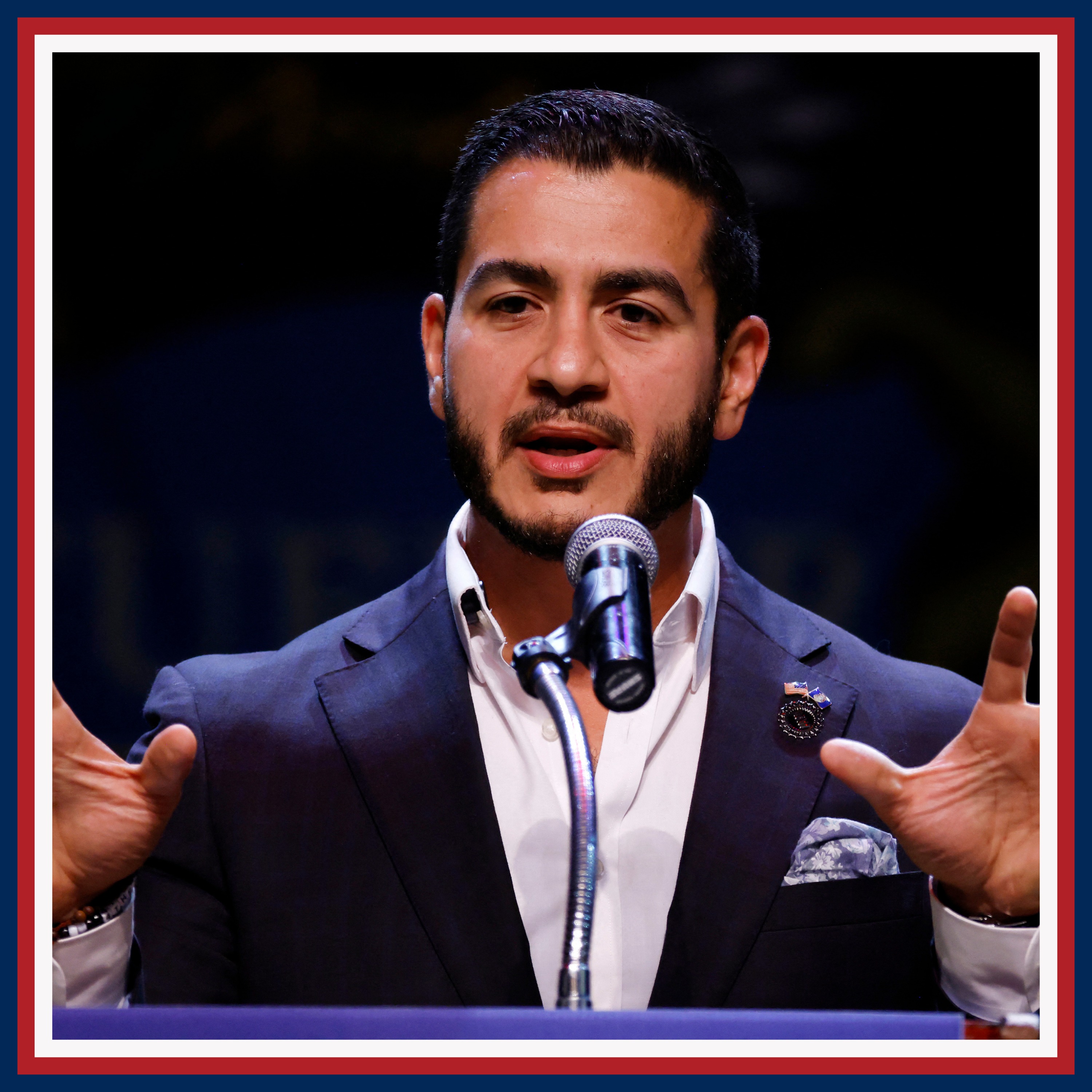
One of America's largest states is set to nominate left-wing candidate Abdul El-Sayed. His victory in the Democratic primary is the latest sign that the party is shifting decisively to the left. Meanwhile, in Wisconsin, Francesca Hong has defeated her opponent despite previously arguing that Thanksgiving should be cancelled. Is America on the verge of embracing democratic socialism after 250 years, or can MAGA prove it is still the true standard-bearer of the American spirit?
Plus, just how damaging has the war with Iran become for Donald Trump as US military stockpiles begin to run low? What does it mean for America's ability to project power abroad?
And why is Trump threatening a US attorney and an Olympic swimmer over a body of water?
Katy Balls, Washington editor and columnist at The Times and The Sunday Times
Gerard Baker, columnist at The Times and editor at large at The Wall Street Journal
Producers: Euan Dawtrey, Harry Kitson
Picture: Getty Images
Audio: Reuters, CNN
This podcast was brought to you thanks to the support of readers of The Times and The Sunday Times. Subscribe today
Hosted on Acast. See acast.com/privacy for more information.