Ask ChatGPT


U.S. foreign policy toward the Middle East war and NATO, framed as “foreign policy by tantrum,” plus a separate news segment on Kristi Noem’s husband and CPAC’s current mood.
Jerry Baker (editor at large, Wall Street Journal; columnist for The Times). Katie Balls (Washington editor, The Times and Sunday Times).
Trump’s messaging on when the Middle East war ends is contradictory (4–6 weeks possibly extending). Domestic political pressure (oil/gas prices, inflation, weakening labor market, record-low approval) may be driving timelines. Strategically, bombing may not achieve “regime change” or lasting control of the Strait of Hormuz; leaving Iran in place would be a “strategic defeat.” NATO withdrawal threats can’t happen easily due to treaty and a Congress law requiring a two-thirds vote; Trump could instead undermine Article 5, damaging alliance trust permanently.
threats to NATO as “paper tiger”; Italy/Spain denying U.S. airspace/bases; talk of an international coalition supervising Hormuz; CPAC in Dallas feeling less like prior years, with Reza Pahlavi and “Make Iran Great Again” chants; Kristi Noem husband alleged cross-dressing/fake breasts and paying online women, with blackmail implications.
Written by AI. May contain mistakes.
Discussion on the ongoing war in the Middle East and its impact on U.S. politics.
“president as to when the war should or might end.”
Exploration of the domestic political pressures facing Trump regarding the war in the Middle East.
“Trump this week saying that he may need another two to three weeks.”
Analysis of Trump's strategic considerations in relation to military engagement and potential outcomes.
“You know, they talk about the fog of war.”
Discussion on the economic realities of rising oil prices and their impact on consumers and the U.S. economy.
“about a possible sort of a condominium over control of the strait reformers.”
Examination of Trump's threats to NATO and the implications for U.S. foreign policy.
“Now, looking overseas, the president is now threatening to withdraw from NATO.”
Explore the potential future of NATO and U.S. commitments under Trump's influence.
“But, I mean, obviously he can, however, render NATO in effect a dead letter.”
Discuss the lasting impact of personal relationships on international alliances.
“And we'll and certainly if it's a Democrat, we'll be back to where we were.”
Examine how Trump's personality influences U.S. relations with European leaders.
“And I think that feels that looking at the first couple of weeks of the Iran war, it's just confirmed all those feelings.”
Analyze the implications of Kristi Noem's personal life on her political career.
“Obviously, our focus has been mostly on the war, but there have been other things going on.”
Reflect on the atmosphere at CPAC and its impact on conservative politics.
“Perhaps she wasn't on his accounts, but clearly this marriage hasn't been where it should have been for a while.”
Explore the implications of Trump's influence on CPAC and the Republican Party's future.
“I think she spoke on the stage at least three days she spoke.”
Discuss the uncertainties surrounding the Republican Party's evolution post-Trump.
“But it's obviously like all these things has been completely commandeered by Trump and his supporters.”

Get the gist, explore an idea or ask about something said.
 Claude
On The State of It: USA, what are the key points of this episode?
Searching your listeningAutomatic transcript. May contain errors.
0:03Katy Balls: Hello and welcome to the State of the USA, the podcast with the world's sanest take on American politics. Whether we can really maintain our sanity in a week like this one, which has included these rather interesting revelations about Kristi Noem's husband, is another question. We'll talk about her later. But of course, the other thing that is testing everybody's sanity, the most important thing is testing everybody's sanity right now, is the continuing war in the Middle East. I'm Jerry Baker. I'm the editor at large of The Wall Street Journal and a columnist for The Times. And I'm joined by my colleague.
0:39Gerard Baker: I'm Katie Balls, Washington editor of The Times and Sunday Times. And as ever this week, we've been having a variation of messages coming from the U.S. president as to when the war should or might end. The U.S. will be gone or done with the war.
0:53Katy Balls: I think we're two or three weeks. We'll leave.
0:56Gerard Baker: There's no reason for us to do this. And President Trump is telling the world that it's more or less job done.
1:02Katy Balls: We're negotiating with them right now. They've been, again, we have had regime change. Now, regime change was not one of the things I had as a goal. I had one goal. They will have no nuclear weapon. And that goal has been attained. They will not have nuclear weapons. So, Katie, what are you hearing in Washington? What's the latest thinking? What's the president's thinking is the administration's thinking about the way the war is going so i
1:26Gerard Baker: think once again the president is trying to keep his options open so you have in the space of a day various comments coming out that are often contradictory um or at least they don't need to be in the same ballpark so frustrating to take karg island talking about uranium looking at the energy supplies and then also saying you know we can get out of there at any point and it's been a wonderful success. And I was speaking last night to a figure in the administration, and they're saying, oh, well, the media keeps conflating all these things. And we have had some big successes, if you look at, you know, what we're taking out.
2:00Gerard Baker: And that should be looked at when we're saying, you know, Trump can leave and still say it's been a successful mission. Of course, the untidy bit is what is America leaving if, as Trump is suggesting, he decides to get out of there. And I think one of the quite significant things is the White House has spoken about four to six weeks and you're already starting to get a little bit of a sense of that being extended. And we've had Trump this week saying that he may need another two to three weeks. Now, that would take you slightly outside and beyond the six week mark when it comes to how long this has been going on.
2:34Gerard Baker: And you combine that with obviously the pileup of US military, the fact that you have more troops there, there are signs that this isn't going to be quite as quick in terms of getting out as Trump might say. Do you think there is much pressure on him, Gerry? What do you think are the main things going in his head when it comes to when to get out of there?
2:54Katy Balls: I mean, I think the domestic political pressure is real and serious. I think he's being told by Republicans in Congress and by his own advisers, this is not going over well, obviously. We've got oil around$100 a barrel, But much more important than that, we're in a kind of a very tight timeline here. Oil is currently priced at that level largely because there are supplies that have been on the high seas for the last month since the war started. And so those supplies have been largely getting through. We are seeing in the next, I'm told in the next two weeks, we're going to see actual physical shortages because the oil has not been shipped.
3:31Katy Balls: And if the expectation is in the markets that this goes on for much longer, then the oil price will go much higher. You know, we're talking about here in America, we're talking about gasoline prices. There are embedded inflation expectations are rising. There are signs the economy, the labor market is weakening. His approval ratings continue to crater, quite frankly. I have latest polls out this week. I've shown his approval rating lower than it's ever been in either of his two terms. So the political pressure is enormous here to get this done. You know, the question is, is he is he listening to that political pressure?
4:02Katy Balls: Is he you know, there's a view, I think, and not an unreasonable one that, you know, he's not running again. He's never been a Republican, particularly doesn't really care about very much about the Republican Party. He cares about himself, his world historical role. And so, yeah, so if he has to carry on fighting this war, even if it costs the Republicans the House and the Senate in this year's elections and maybe cost the Republicans the presidency in 2028. So what? I mean, he's sort of ready to go for it. The strategic question is, of course, how to end this war. And do you leave Iran in control?
4:34Katy Balls: I mean, his latest truth socials that he's been saying, you know, they've got to clear the Straits of Formos. He said to the Wall Street Journal on Sunday, I think it was Sunday or Monday, we could win and leave Iran in control of the Straits of Hormuz. You know, they talk about the fog of war. I mean, we deal with the fog of Trump. We don't know how much the political pressures on him, whether they weigh at all, whether he really does understand that he's got to leave this conflict with the world in a more stable place. And that was obviously the goal from the start. That doesn't look like it's going to be the case.
5:06And so we are, as ever, wading through this fog.
5:11Katy Balls: And, you know, all the normal rules that you think about in politics, in national security, in world affairs, as we know from Trump, none of them apply. And we're just, you know, it comes down to how he feels and whether or not he feels that he's won the war. And if not, what more he needs to do?
5:28Gerard Baker: One of the observations in D.C. this week is that even his own advisers aren't quite sure what he wants to do. and some are saying this is a purposeful device so he you know keeps even his opponents guessing but I guess we do go back to when he's outlined his approach to foreign policy just before the first term he said he didn't like how predictable things were he doesn't want people to know what he might do next but if you were to get to a situation where those troops who are currently deployed across the region are sent out whether it's Karg Island whether it's you know a different mission.
6:02Gerard Baker: That to me feels a point where the political pressure in the US could heat up significantly, whether it's his base or voters at large.
6:11Katy Balls: Yeah, I mean, you could still make the case that the operation so far has been limited, right? I mean, it's not for all the talk about the Iraq and Afghanistan precedents. It's not remotely like that. The US is not supplying huge numbers, is not deploying huge numbers of ground forces to try and take over the capital of a country and change the government of a country. It's not doing that. But yeah, as you say, if it is to go further and everybody I speak to in the kind of foreign policy specialist community thinks that the regime is not going to fall by bombing it like this and it is going to remain with its tight grip on the straighter for straighter for moves.
6:49Katy Balls: If that's going to be the case, a that would be a strategic defeat for the United States and be to change that outcome would require more than simply the aerial bombing campaign, which is what the US is doing. So once if you are talking about troops on the ground, then it becomes politically even more questionable. But as I said earlier, I'm not sure how much Trump is really concerned about the politics. And I think, you know, I think if he thinks that this would be a strategic defeat, if he thinks that Iran, the regime staying as it is, I mean, I know they keep saying the regime has changed. You know, we said it again, we've got a new president, supposedly, according to a truth social, he's just said, even though nobody knows what he's talking about, because there is no new president.
7:32Katy Balls: But if there is no real regime change, however much damage has been done to Iran's military infrastructure, that will represent a strategic defeat for the United States. And so he may say, he may be thinking to himself, I can't allow that to happen. I don't really care about the domestic politics. I'm already at the lowest point I could possibly be. I need a military victory. And we're going to go all in. So yeah, these are the calculations going on in his head. There's this talk obviously about a possible sort of a condominium over control of the strait reformers. And this is where we're going to get into a little discussion about NATO later.
8:07Katy Balls: But this is obviously where other countries have been involved. And there are efforts underway right now to maybe establish some kind of a settlement whereby the straits are supervised by some sort of international coalition, Trump says the other day, very memorably, go and get your own oil because we don't need it. Maybe that's one off ramp that will result rather than Trump having to go all in with a full scale war here. But that doesn't really leave the United States in a stronger position either. So, yeah, I think the political imperative of getting the heck out of there as soon as possible is clashing with Trump's personal imperative and arguably America's strategic imperative, which is to convincingly win this war.
8:51Gerard Baker: And we'll talk about allies in a moment, but when we're scoping out Trump's options, one of the things that we keep hearing is, you know, it's up to allies, former allies perhaps, to fix the straightforward moves. The US doesn't need it. When I was in Texas, I know you were too, Gerry, lots of people were talking about the price of gas. It's already something that is, you know, on people's radar and they're not happy about it. How realistic do you think it is that the US could actually just say the straight-up-hole moves doesn't count for us. This is a bigger problem for everyone else. We can use our own supplies.
9:25Gerard Baker: Is that a viable economic strategy?
9:27Katy Balls: No, it's not. I mean, look, it is obviously true that the United States, you were in Texas, I was in Texas and talked to a lot of oil people. You know, it's obviously true. They're in quite a happy position with oil at$100 a barrel. It means that more, by the way, domestic production and exploration can go on. The US will develop even more oil than it has right now, but it doesn't change the reality for people who have to fill their cars every week or every day. It doesn't change the reality for people who have to pay more for everything from plastics to food because of the cost of fertilizer.
10:01Katy Balls: So it's a kind of economic mirage to say, well, the United States doesn't need the oil, so who cares? Oil is a global commodity, which means the price is basically the same everywhere. The US can't sell oil at$50 a barrel when the global price is$100 a barrel. So people, consumers, are getting hit really hard. And then that cascades down into concerns about longer-term inflation, the extent to which inflation becomes embedded. That means interest rates probably have to be higher. The Federal Reserve here was expected to cut interest rates this year. Now the expectations are that it may actually have to increase interest rates to get on top of the inflationary pressure.
10:37Katy Balls: That, of course, could then help to sort of suppress demand and to produce basically a recession. So, yeah, the fact that it's that it's true that the U.S. is largely self-sufficient in oil and the fact that that is good news for oil companies and for investors in oil companies. And if you like, you know, if you've got your pension invested in oil companies and things like that, yeah, there has been there are benefits, but it doesn't change the fundamental consumer economic reality, which is that a dramatically higher oil price is incredibly painful.
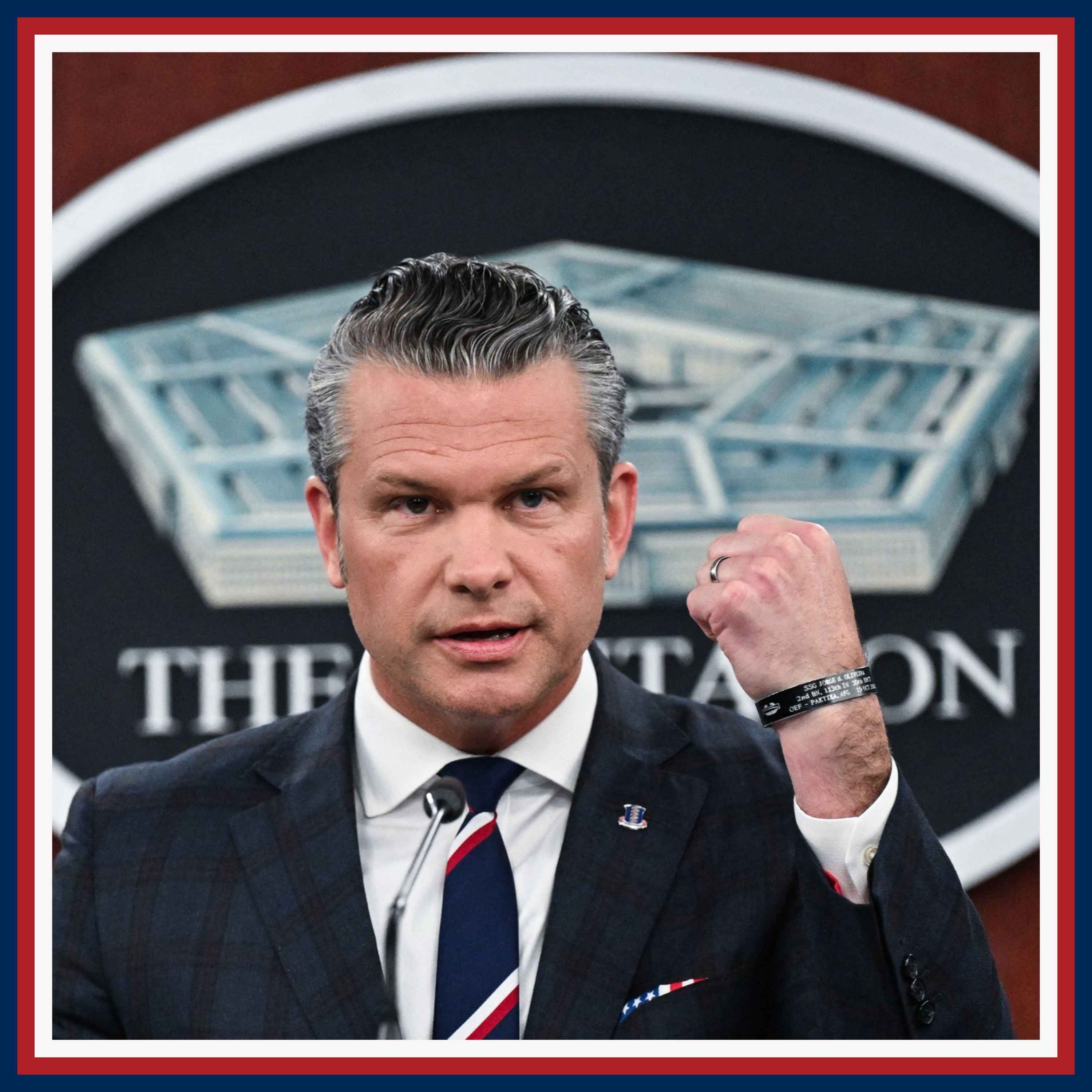
11:07Gerard Baker: Now, looking overseas, the president is now threatening to withdraw from NATO. He's called it a paper tiger, returning to an old tune from his first term. Marco Rubio has also been talking about how the relationship with NATO will change after the war. Trump's also thrown a few more insults at the UK, echoed by Pete Hegsif, his war secretary. Last time I checked, there was supposed to be a big, bad Royal Navy that could be prepared to do things like that as well.
11:31Katy Balls: You might want to start learning how to fight for yourself.
11:34Gerard Baker: While we're on Pete Hegshoff, we talked last week about his poetic side. He's at it again.
11:40Katy Balls: I witnessed lethality. I met a junior airman as the sun was going down and a chill was setting on the tarmac, who, when asked what they needed, she simply looked up at me with a sly smile on her face and said, more bombs, sir, and bigger bombs. We will happily oblige her.
12:04Gerard Baker: Okay, Jerry, how seriously do you think we should take the threats on NATO? I was actually most struck by the comments from Marco Rubio this week, who of course has been on what we might call a political journey in recent years. Once seen as a neocon, now seen as Trump's right-hand man and probably one of his most effective and able members of his cabinet. And he, of course, spoke at the Munich Security Conference a few weeks ago, feels like a long time ago now, where he delivered some hard truths to the hall, but he said it in a softer way than J.D. Vance, so at least initially had a warmer reception.
12:39Gerard Baker: Do you think that Europe is going to have to actually take Trump literally this time when it comes to a new NATO post-Iran?
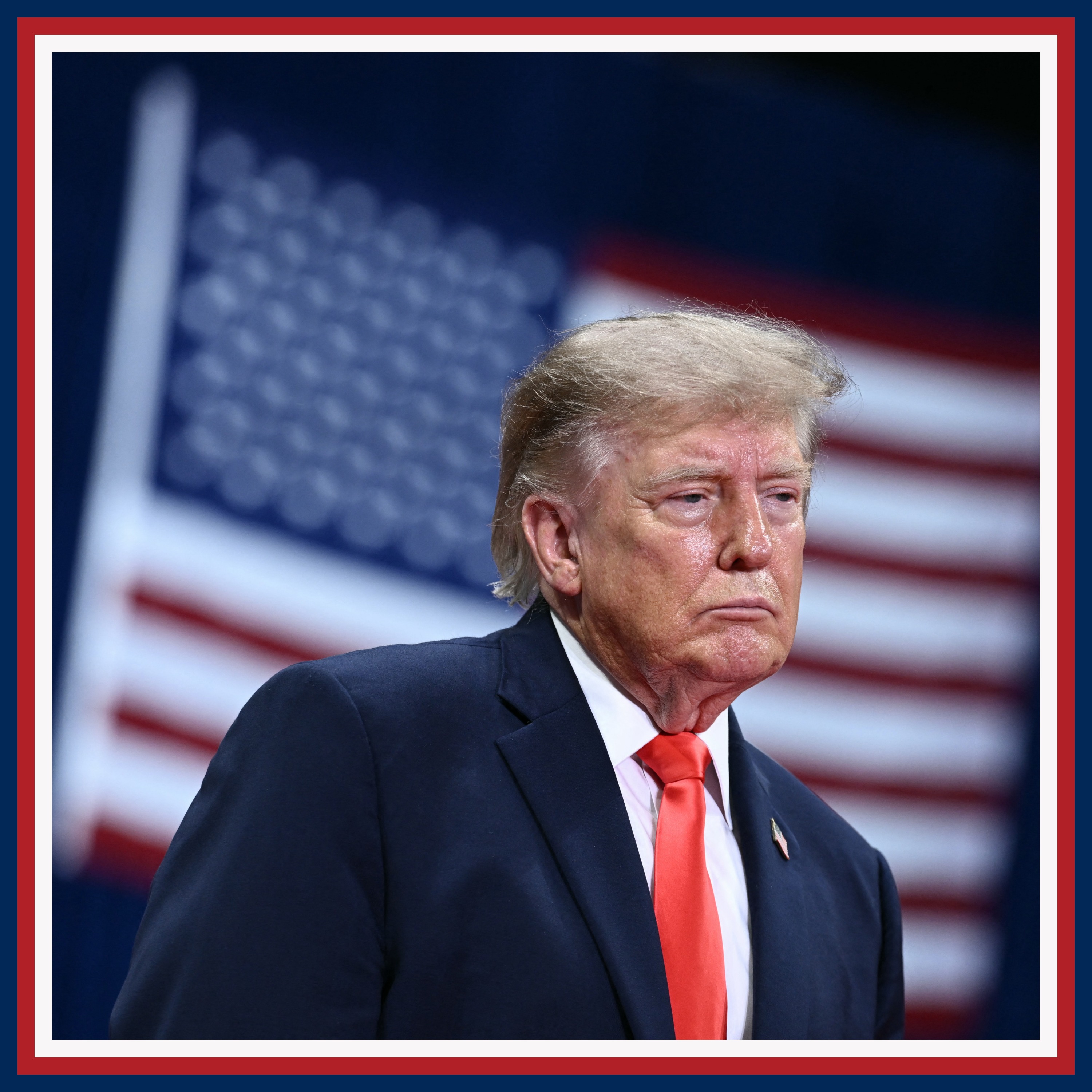
12:48Katy Balls: It's complicated as ever. Look, the first thing to say is this is sort of foreign policy by tantrum, Right. Trump throws these tantrums. We've seen it before, you know, very in the first term. He didn't like the way one NATO meeting was going. And according to John Bolton, his then national security adviser, he literally in a break in a NATO meeting said, I'm going to pull out a NATO. That's it. I've had it done. We're not going to do it anymore. This is another of these tantrums. He doesn't like the fact that NATO countries have not contributed significantly. And they haven't. It's true. It's not an unreasonable criticism.
13:17Katy Balls: I mean, he's upset about the fact that some NATO countries are now denying the US use of their airspace or their bases. Italy and Spain are now doing that. And he's also upset about the fact that NATO countries are not doing enough to protect their own oil supply by contributing to force in the Strait of Hormuz. But it's a tantrum. There are two obviously important things to say. One is he can't just pull America out of NATO. It's an international treaty which would require a treaty revision by the US Congress. But most importantly, just last year, Congress passed a law that there can be no withdrawal from NATO without a two-thirds majority in both houses of Congress.
13:58Katy Balls: And it's not going to happen. So we can't do that. But, I mean, obviously he can, however, render NATO in effect a dead letter. I mean, he doesn't actually have to formally pull out of it. He can just say, you know, we're not – I don't take Article 5 seriously. I don't take our commitments to the alliance any longer seriously. And will he do that? I mean, I think he might. And then again, when he realizes he needs NATO in some respects, he'll probably pull back. I do think the larger question, Katie, which I've been grappling with, is how much does this work in the long term? How much does this matter in the long term?
14:27Katy Balls: You know, if Trump goes, when Trump goes, I should say, you know, we're not going to necessarily revert to the status quo ante. But, you know, if it's Rubio or even if it's Vance, you know, they'll maybe they won't be quite as tantrum driven about NATO. And we'll and certainly if it's a Democrat, we'll be back to where we were. You know, it's hard to say, to be honest with you. So much of this is personal. So much of it is the rantings of, you know, of a kind of angry monarch that you don't know what's going to happen when it moves on. But I can't help but think that the damage that's been done to trust within the alliance is permanent.
15:02Katy Balls: Right. I mean, why? If you were in Europe, why would you even if, you know, even if Joe Biden were resurrected, as it were, and came back as president in 2029, or for that matter, you know, Bill Clinton or Barack Obama, you know, kind of staunch alliance supporters, why would you really think that was going to be permanent? So I think in some ways, you know, the world, the Europeans are just having to adjust to the fact that this is a fundamental change in the nature of America's relationship with the rest of the world. And whether or not Trump, you know, changes his mind or whether or not things change after Trump, there is a profound rupture in this alliance, which I think is I think is just is permanent.
15:45Yeah.
15:46Gerard Baker: And it's interesting because you've obviously had a situation in the first year of the Trump second term where I think there was a big effort by figures, even NATO, European leaders to, you know, learn lessons from Trump's first term and use it to get their message across. So Mark Rutter, for example, NATO chief at one point, the famous, you know, calling Trump daddy comment. But all these things were a way to appeal to Trump's personality. The fact he likes people who are deferential. The fact also he wanted people to pay more money. You had Keir Star Macham offensive. And it seemed to mean that things were on a better, you know, grand than previously.
16:27Gerard Baker: And yet I feel like what the Iran war has done has really broken that facade. And maybe it just was a facade. and we're back to the reality, which is you've had a US president who's long been skeptical of NATO, has long thought that America has to give more than it gets back when it comes to these allies. And I think that feels that looking at the first couple of weeks of the Iran war, it's just confirmed all those feelings. And therefore, I wonder in a way if the more immediate problem European leaders are going to have is on Ukraine. And if we think back to that first year when Trump gets a bit closer to Putin.
17:01Gerard Baker: And we know that he, you know, in terms of personality, seems to find it easier to get on with Vladimir Putin than to get on with Zelensky. You've had these big efforts by the Europeans to, you know, fly into DC to hold Zelensky's hand, to do the talking behind the scene, to get Trump and the White House back to where they want them to be, so they're not listening to everything that Russia is saying. It feels to me, whether it's in a couple of months time or next year, that is becoming much harder for the European side to do. It's not as though they're in a position to really change Trump's mind if he tries to force something through there.
17:37I mean, you know, the thing is, you have to disentangle the underlying strategic and kind
17:44Katy Balls: of structural factors in all this with just the simple, the simple personal sentiments that Trump has. As an example, in a few weeks time, Katie, we're going to have the visit of the king. And there'll be a state dinner at the White House. I guarantee you that will be Trump will behave as though the relationship between Britain and America has never been better. You know, he loves the king. He loves the royal family. He kind of loves the country. You know, he'll forget that Keir Starmer is Keir Starmer, at least for a night or two. And it will be kind of it will look lovely again. And to some extent, that will be real.
18:19Katy Balls: I mean, that won't be fake. It won't be a show. that will be Trump you know that we Trump on the 28th of April whatever it is and then Trump on the 3rd of May will be different so that is the challenge for god help diplomats right now I mean how you disentangle the kind of the kind of hormonal approach to foreign policy that we have from this president from the underlying interests of the country and the underlying strategic direction of the country I just don't know it's just a it's an enormous challenge.
18:52Gerard Baker: On that visit, we're not actually expecting Keir Starmer to attend, which we are told is convention. It is the foreign sacrodeck normally goes. But it does mean that, once again, it probably perhaps is easier for Keir Starmer to, it's a benefit of the system that he doesn't have to be there in person.
19:10Katy Balls: You walk in tired and hungry, one bad dinner away from losing it. You don't like to cook. You don't want more takeout. You just want something good. That's why there's Dish by Blue Apron. Pre-made meals with at least 20 grams of protein and no artificial flavors or colors. From fridge to fork in five minutes or less. Keep the flavor. Ditch the subscription. Get 20 % off your first two orders with code APRON20. Terms and conditions apply. Visit blueapron.com slash terms for more. Refresh your room, upgrade your comfort, and spring into savings at Darvin's two-day spring sale. Hi, I'm Will Harris for Darvin Furniture.
19:48Katy Balls: Friday and Saturday only save 45 % to 65 % store-wide. Plus, we'll make your refresh a breeze. With 0 % APR for 48 months on qualifying purchases. A whole new season, a whole new space. The two-day sale, Friday and Saturday only at Darwin. Restrictions apply. See store for details.
20:13Katy Balls: Well, it's been an interesting week, Katie. Obviously, our focus has been mostly on the war, but there have been other things going on. I want to hear about your trip to Texas in a little bit and what you learned down there at CPAC. But we did have another story that kind of, as it were, came at us from out of the blue, shall we say, which was this remarkable story about Kristi Noem's husband. Kristi Noem, you remember, was until quite recently Secretary of Homeland Security. She was almost a parody of a kind of hardcore MAGA, gun-toting, you know, anti-immigrant. We're going to kick them all out.
20:49Katy Balls: You know, drove a hard line on the illegal immigration stuff. Oversaw ICE when ICE was doing that stuff in Minneapolis, which horrified so many people. She was kicked out of that job by Trump, given a kind of a sinecure. But little did we know, Katie, that there were things going on at home for Christy Noam that may be even more eyebrow raising than what she was doing in her in her regular life. We've been treated, as it were, to the thanks to the mail's reporting to this story about her husband and should we say his sort of extracurricular activities. What was your reaction to that? And do you think it has any meaning beyond just sort of jaw dropping strangeness?
21:31Gerard Baker: yeah this was a pretty striking story when it broke now the mail online has a specialist subject when it comes to christy noem and it has reported a lot on christy noem and often her relationship to cory lewandowski now lewandowski is a long-time supporter of trump he was an advisor to noem and she was asked at a hearing just before she was sacked um if she was sleeping with her advisor and sat behind her was her husband. And I think the idea of having him sit behind her was almost to fend off these questions. Now, she suggested it was tabloid garbage to ask this. Now it turns out the man sitting behind her is the subject of tabloid stories too because images have emerged suggesting that he was cross-dressing and he was wearing fake breasts in these videos and speaking to various women online who he would often pay sums of money to speak to.
22:25Gerard Baker: Some did not feel they got paid on time or the payments are not going through.
22:28Katy Balls: Yeah, these are sort of sex worker fetishist, you know, believe me when I say I'm not deeply immersed in this stuff. This is not your specialist. This is a whole thing that people will pay people to get dressed up and whatever.
22:43Gerard Baker: Yeah, exactly. So you had disgruntled online sex workers and all of this, it goes beyond, I think, just gossip because, of course, up until the few weeks, and even now, Christine Nurem has a role in the administration. she's um working on some of the things around the western hemisphere now all of this clearly is a recipe on paper for blackmail if you have a situation where your husband has a secret um and there's also a political element which is christy noam's um views when it comes to her views in politics she's been very i think critical in the past of transvestites so and all this um but certainly i think the reason the story is going to have legs going forward is did it make
23:26Katy Balls: her legs legs and breasts possibly but yeah yeah we'll keep abreast of the situation we could christy christy noem's career be any more of a bust but anyway sorry yeah exactly did this make
23:38Gerard Baker: a moment about me now the comments in response to the story is suggestion that she needs privacy
23:42Katy Balls: at this time she didn't know about it do you believe she didn't know about it i think it's
23:46Gerard Baker: hard to know what's going on behind closed doors right and lots of people often will speculate i think what we can do is the picture of her personal life has been complicated for some time which does suggest it wasn't a happy home life. If you are facing all these allegations about your alleged relationship, and of course you've had people raising questions about the behaviour of Lewandowski in the department when he was there, suggesting he had too much control and she was allowing that. You heard talk about them using planes, him sacking someone over a blanket. Figures in the White House unhappy at his presence and questioning her judgement.
24:20Gerard Baker: None of this does suggest, even if her husband sat behind her at the hearing, that she had a happy home life. Did she know what her husband was up to? Perhaps she wasn't on his accounts, but clearly this marriage hasn't been where it should have been for a while.
24:34Katy Balls: I'm just slightly sceptical. Being a cynical, incredibly cynical old man, when I see things like this, I kind of just wondered if this isn't a very convenient way for her, A, to ditch the husband, and B, to garner some kind of sympathy, you know as the as it were kind of wronged woman this issue was dealing with this strange relationship at home I you know sorry that's probably just too cynical but I'm you know remember this is this is a woman who shot famously shot a puppy and boasted about it because the puppy wouldn't behave the best line I heard in the last 24 hours the puppy's name was Cricket and I somebody tweeted I think now I think maybe I'm starting to think that Cricket shot himself when he saw what was going on what his household was like there's probably another reason the
25:21Gerard Baker: White House will be relieved that Trump made that decision to axe her from, you know, a top cabinet role a few weeks ago. That is still embarrassing. But I think if this was now and she was still in that position, it would be even worse. And on all those kind of blackmail points that we're talking about.
25:37Katy Balls: A remarkable, remarkable story that has attracted a lot of attention and understandably, you know, a fair amount of derision, to be honest. So anyway, we should probably move on. Katie, you and I were both in Texas last week.
25:51Gerard Baker: Did you have a nice time?
25:53Katy Balls: I was there for less than 24 hours. It was good. I spoke on stage to a group of executives, really, sort of quite a big group of mostly oil, but some tech. I found it quite revealing. This is the heart of Texas, very much conservative Republican country, not very happy, not happy with the war, not generally happy with the way things are going. But you, much more importantly, were at the CPAC conference, which is the sort of grassroots conservative movement that has been so important in the last few years. How was it?
26:21Gerard Baker: It was interesting. I've never gone to CPAC before. I've gone to turning point events. And everyone said, oh, you must do CPAC is the big one. And I think the feeling in Dallas, Texas, where the summit was held, was effectively that CPAC is not what it used to be. Certainly, the year before, you had Donald Trump, Marco Rubio, J.D. Vance, and Elon Musk. Elon Musk was on stage carrying a big saw, talking about, you know, cutting waste. And I think there was a feeling of they're just one. They're a couple of months in and the sense of opportunity of all the things they could do. And this year's CPAC is not just unhappiness with this government.
26:59Gerard Baker: It's worth pointing out that CPAC itself as an organisation is facing various criticisms. There's been some scandals involving it. But I think certainly it just it didn't feel like what I've been told it has been like in previous years. And veteran attendees said, you know, it was pretty sparsely attended, even if you did have, you know, quite a few people there. The star attraction actually was, for many of the attendees, the son of the Shah. Reza Pahlavi, he was one of the speakers and they kept moving the day he spoke. And he had all these American Iranians who were there. He would walk around with these miga caps, so miga caps, basically saying, make Iran great again.
27:37Gerard Baker: And they kept chanting every day. But instead of seeing American flags, you see Iranian flags and this big effort to say regime change. And of course, that didn't fit what everyone there thought. I think at one point, Steve Bannon, the former advisor to Donald Trump, was saying, no, no, no, it's make America great again. So that was an element on it. You had Liz Truss wandering around, the former prime minister of the UK, of course. I think she spoke on the stage at least three days she spoke. And she was talking about bringing CPAC to Britain. We'll see how that goes next year. I think there's already NatCon and all these types of national, you know, Christian nationalism that have come over to the UK.
28:15Gerard Baker: So it's a bit of a crowded market. but on the Christy Noem point I did meet Gregory Bravino who was the Trump border figure he was involved in Minneapolis and then was you know taken off duty moved away after the deaths of two civilians and he was doing the rounds and I spoke to him a couple of times he was pretty undeterred saying actually you know the problem isn't that we didn't went too hard we need to keep going hard. He was talking about writing a book of all his lessons, but pretty unrepentant and saying that the hard line approach to immigration needs to stay. And I think there was a feeling with Kristi Noam going and with Bovino going and now figures in the White House being quite conscious of the pressure from industry in terms of workers and also the optics in terms of going too far, that there was a feeling that the border control agenda is being watered down and quite a few people in the centre, which was, of course, the grassroots weren't very happy about it.
29:15Katy Balls: Yeah, it'll be interesting to see, you know, this is the grassroots. I mean, we've talked many times about this, but the extent to which this is a Trump movement and Trump only movement. CPAC's been around about a long time, but it predates Trump. But it's obviously like all these things has been completely commandeered by Trump and his supporters. And I just think it's going to be interesting to see. And the fact that, as you said, I saw pictures of the turnout didn't seem to be anything like what it's been in previous years. I think the larger question is whether or not any of these organizations give us any clues to what sort of Republican Party is going to emerge after Trump.
29:46Katy Balls: And at the moment, I can't see it. It's really, really hard to figure out. I mean, we all know MAGA is Trump. So, you know, and Trump is MAGA. So Trump's gone. MAGA's gone. But what will become of this populist national conservative movement? How powerful will it be? Who will its leaders be? How much pushback will there be from sort of more traditional Republicans? Those, you know, we're going to find out. That's one of the many interesting things we're going to find out in the next year or two. Anyway, that's all from me this week. Everybody have a happy Easter, happy Passover, whatever you're celebrating.
30:15Katy Balls: Have a wonderful time, and we'll be back with you next week. So for now, goodbye.
30:22Katy Balls: Refresh your room, upgrade your comfort, and spring into savings at Darwin's two-day spring sale. Hi, I'm Will Harris for Darwin Furniture. Friday and Saturday only save 45 % to 65 % storewide. Plus, we'll make your refresh a breeze. with 0 % APR for 48 months on qualifying purchases. A whole new season, a whole new space. The two-day sale, Friday and Saturday only at Darvin. Restrictions apply to the store for details.
Forget the fog of war, this is the fog of Donald Trump. How much does he care about the political pressure created by the war in Iran? Is America entering the end game or ramping up operations?
Also, how are the grassroots feeling? Katy has been to the Conservative Political Action Conference to find out. And we look at the secret life (and enormous fake breasts) of Kristi Noem's husband, Byron Noem.
Katy Balls, Washington editor and columnist at The Times and The Sunday Times
Gerard Baker, columnist at The Times and editor at large at The Wall Street Journal
Producers: Euan Dawtrey, Harry Kitson
Executive producer: Molly Guinness
Picture: Getty Images.
Clips: Reuters
Email us: [email protected]
This podcast was brought to you thanks to the support of readers of The Times and The Sunday Times. Subscribe today
Hosted on Acast. See acast.com/privacy for more information.