Ask ChatGPT
 The State of It: USA
18 Mar 2026 · 30m · 11 chapters
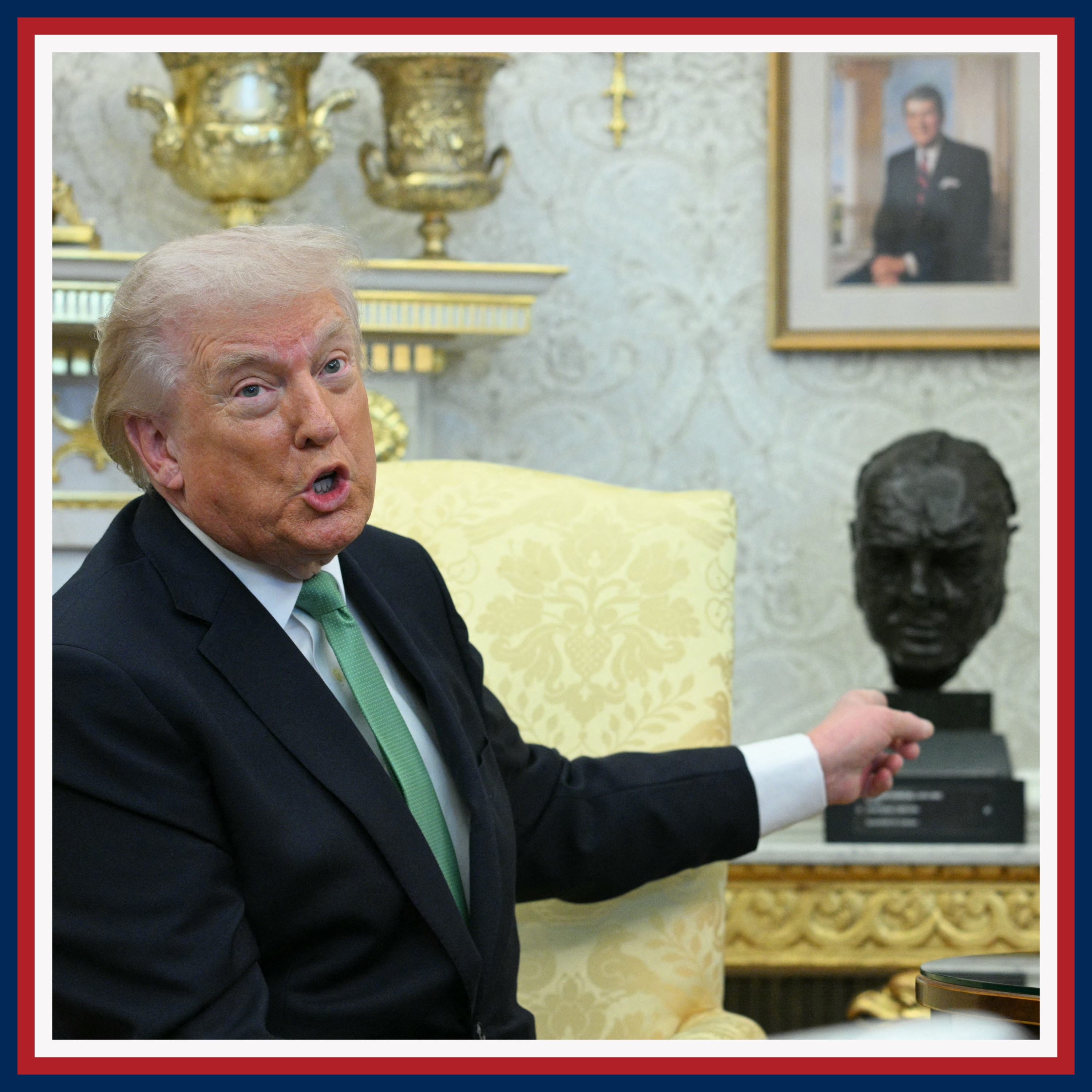
In this episode of The State of It: USA, hosts Katy Balls and Gerard Baker discuss various topics within US politics, focusing on the geopolitical dynamics surrounding the war in Iran and its implications for US allies, particularly the UK. They also touch upon recent political developments related to prominent figures like Donald Trump and Keir Starmer.
Written by AI. May contain mistakes.
Explore why Trump is targeting NATO and UK leaders, particularly Keir Starmer.
“But first, why is Donald Trump singling out NATO countries, and specifically the UK, when it comes to the Allies not showing up for him?”
Discuss the dynamics of Trump’s relationship with Starmer and the implications for the UK.
“Britain is so weak and Keir Starmer is so weak politically.”
Analyze the seriousness of Trump's threats towards NATO and its allies.
“But on that, Gerry, I wonder how seriously do you take Trump's threats on NATO?”
Review the implications of the war on Iran and the winners in the geopolitical struggle.
“I think if the war doesn't go well, I think some of the media coverage at the moment is ridiculously over the top.”
Explore the implications of the Iran conflict on global powers like Russia and China.
“It does look as though the war right now, again, whether or not the US and Israel are winning the war, other people can judge.”
Discuss the significance of Joe Kent’s resignation and its implications for the Republican Party.
“Availability and coverage vary by state and insurance plan.”
Explore the implications of low public support for ongoing military conflicts.
“But if this drags on, if it doesn't look good, if the polling is still bad, there will be, I've no doubt whatsoever, a how did we get into this?”
Learn about Laura Loomer's controversial influence in Washington and her views on loyalty within Trump's circle.
“And I think when you go back to that resignation, now the White House has been very quick to dismiss it.”
Discuss the eclectic mix of personalities within the MAGA movement and their impact on Trump.
“about various people not being loyal enough to Trump in the administration and often got them fired or removed.”
Examine the discussions surrounding Tucker Carlson's potential candidacy for president.
“By the way, I think, you know, he'll be speaking with Joe Kent, I think, on his podcast, which will doubtless get a lot of attention.”
Analyze the current leadership challenges in Western political systems and their implications.
“And honestly, I think all of this just speaks to, and I'm going to write about this at some point, just the paucity of leadership in the world.”

Get the gist, explore an idea or ask about something said.
 Claude
On The State of It: USA, what are the key points of this episode?
Searching your listeningAutomatic transcript. May contain errors.
0:00Gerard Baker: The hustle doesn't have to hurt. If performance pressure is making it hard to breathe, Grow Therapy helps you navigate stress, set boundaries, and actually feel like yourself again. Whether it's your first time in therapy or your 50th, Grow makes it easier to find a therapist who fits you, not the other way around. You can search by what matters, like insurance, specialty, identity, or availability, and get started in as little as two days. There are no subscriptions, no long-term commitments. You just pay per session. Grow helps you find therapy on your time. Whatever challenges you're facing, Grow Therapy is here to help.
0:36Gerard Baker: Grow accepts over 100 insurance plans, including Medicaid in some states. Sessions average about$21 with insurance, and some pay as little as$0, depending on their plan. Visit growththerapy.com slash start now to get started. That's growththerapy.com slash start now. growththerapy.com slash start now. Availability and coverage vary by state and insurance plan.
1:00Katy Balls: I am Ekinwoleh here from the Athletic FC podcast. Ever feel your workload is out of control, like you're wearing every hat and you're expected to be everywhere at once. Running a business means juggling books, payments, leads, payroll, basically everything. But with Intuit QuickBooks, your workload gets unloaded. QuickBooks gives you access to Intuit's powerful AI agents and trusted experts. They work together to handle the tedious stuff so you can get back to what actually grows your business. And because everything's streamlined on one platform, your customer management, accounting expenses and payroll all work seamlessly in just one place.
1:41Katy Balls: So go ahead, outdo it with Intuit QuickBooks and get 50 % off QuickBooks online for three months. Terms and conditions apply, feature availability may vary by product. Visit quickbooks.com for details.
2:03Katy Balls: Hello and welcome to the State of It USA, the podcast with the sanest take on US politics. I'm Gerry Baker, editor at large at The Wall Street Journal, columnist for The Times.
2:13Gerard Baker: I'm Katie Balls, Washington editor at The Times and Sunday Times. This week, we're going to be talking about the first resignation from the Trump administration over the war in Iran, the row that's followed, and what it tells us about the grand strategy, if there is one. And China and Russia. Are they enjoying this war? Are they having a good war? But first, why is Donald Trump singling out NATO countries, and specifically the UK, when it comes to the Allies not showing up for him? I was very surprised with the United Kingdom, because the United Kingdom, two weeks ago, I said, why don't you send some ships over?
2:50Gerard Baker: And he really didn't want to do it. I said, you don't want to do it. We've been with you. You're our oldest ally. And we spend a lot of money on, you know, NATO and all of these things to protect you.
3:02Katy Balls: I think it's terrible. Well, Katie, I think part of the answer as to why Trump is being so hard on NATO and in particular Starmer is because he can be. Trump is one of those people, you know, you might call him a bully. You might call him an exploiter of his strength and of his kind of the position that he holds to basically pick on people who don't have that power and people that he can pick on. I mean, I remember an administration official saying to me, when you can't kick somebody, you kick his dog. And I think, frankly, that's kind of the situation that Keir Starmer, frankly, finds himself in right now as a kind of a, I'm sorry to say, as a kickable pet of Donald Trump's.
3:45Katy Balls: And the reality is that, I mean, again, I hesitate to say this. It's just a sign of Britain's weakness. Britain is so weak and Keir Starmer is so weak politically. Britain is so weak militarily and strategically. that I think they just make a very nice target for Trump to be able to stomp on.
4:02Gerard Baker: Yes, I think when I speak to people on the Hill about it, they feel that it's a combination of two things. And one being what you just said, which is the UK has less to offer now than it had in the past when it comes to military capability. So it's less valuable ally. And then, of course, there's the political differences. And I think we saw yesterday in the Oval Office, I had one British official saying to me that it's quite something on St. Patrick's Day. when it's the Irish leader who's having to step up and be nice about the British. It was so negative about Keir Starmer that, as we just heard, you had, you know, Michael Martin at various points trying to say, oh, you know, Keir's not exactly the worst person in the world.
4:42Gerard Baker: He can be quite nice. Donald Trump saying...
4:45Katy Balls: Don't hurt him, Donald. Please don't hurt him.
4:49Gerard Baker: Exactly. And then obviously Donald Trump saying, you know, oh, Keir's a nice guy, but nothing at all that he said actually suggesting that he found him to be particularly nice. I think the message right now is he still cares about Britain. Maga take almost more interest in Britain than many in the British government would like. But they have effectively decided Keir Starmer is not for them.
5:08Katy Balls: Yeah, and I think at risk, Katie, is Starmer's becoming a bit of a punchline. You know, I mean, I realise he is to many people in the UK, but particularly over here, to Republicans over here. Let's listen to the always entertaining Senator John Kennedy speaking in the Senate this week about Stalin. He also is trying to give President Trump advice about how to conduct the war.
5:34Gerard Baker: That's a little bit like seeking the advice of a nun about sex.
5:40Katy Balls: It's probably also fair to say that, look, Trump is annoyed because the war isn't going exactly according to plan. And, you know, he's now seeking help. And again, it has to be said, you know, he's seeking help from the same people that he's been dissing for the last year, telling them what a terrible bunch of people they are. And now he needs their help supposedly to open up the Strait of Hormuz. I think as well as, you know, Starmer just kind of being a punchline and being an easy sort of target for Trump to hit all the time, it reflects a little bit of frustration with Trump about how about how the war's going.
6:13Katy Balls: And also that for once, you know, having told these people how useless they were, the NATO allies, what a bunch of losers they were. And now he turns around and says, I need your help. And quite a little bit unsurprisingly, one might say they say, sorry, we're not getting involved in this. So it's not just about Starmer. It's also about Trump's own, frankly, sort of strategic uncertainty, shall we say. Yeah.
6:34Gerard Baker: But on that, Gerry, I wonder how seriously do you take Trump's threats on NATO? Because, of course, first term, very sceptical. Second term, again, critical, but ultimately the administration have claimed a great success in nudging many NATO countries to pay more to defence. And lots of NATO allies also admit that they wouldn't do about Trump or they wouldn't have got perhaps as quickly as they have, though some would say they still took a while to do it. in the Oval Office yesterday, where it was real with the Irish lobby and also British journalist present so many questions on this. And he suggested he didn't take off the table, the idea of, you know, the US disassociating from NATO.
7:13Gerard Baker: Do you think this has legs? Because he also did this unfavorable comparison to allies not helping on Iran to him helping in Ukraine. And I wondered if it is likely to have ramifications on both NATO or how the US approaches Ukraine if Putin wants to make a deal and the Ukrainians don't like it?
7:31Katy Balls: I mean, we have to acknowledge that there are two sides to this. On the one hand, it is, frankly, I mean, chutzpah of the highest order to tell your NATO allies that you're all useless and you don't like them and that they didn't fight properly in Afghanistan. They stayed a little bit back, as he famously said, or to threaten to invade one of your NATO allies, which he spent most of last year doing with Greenland. And then again, as I say, to turn around and expect them to help you. But at the same time, we should balance that with, you know, it is true the European countries actually benefit from the Strait of Hormuz being open even more than the United States does.
8:08Katy Balls: And it is a bit rich that, you know, the UK, Germany, some of the other NATO countries just don't seem to be willing to put any kind of muscle behind this. And it's also, So, again, a reflection of how weak they are. Again, I'm old enough to remember back in the late 1980s, in the later stages of the war between Iran and Iraq, the Strait of Horn was closed and was threatened to be closed for a long time. And Ronald Reagan organized a multinational mission of warships and escorts and everything to keep it open. And then Britain was a serious participant. 30 years on, Britain, none of these NATO countries do have any military capability, any abilities to project power or to protect their own interests.
8:50Katy Balls: So, you know, it is it is both it's easy to be. I completely understand it to think that Trump is, you know, just behaving with characteristic kind of narcissistic anger towards people. But at the same time, it's another example of how unserious NATO has been. Now, whether this is going to last or whether it's something that passes, I don't know. We'll have to see how this goes. I think if the war doesn't go well, I think some of the media coverage at the moment is ridiculously over the top. It's not gone terribly. But if this ends badly in some way for the US, then I think the ramifications for NATO will be terrible because I think Trump will blame NATO.
9:29Katy Balls: It'll be bad for NATO. It'll be bad for Ukraine. And it'll be, frankly, good for NATO's enemies, in particular Russia. Anyway, Katie, we're recording this on Wednesday. Yesterday was St. Patrick's Day, March 17th. Erin Gabra, as you say, the usual crowd was in from both the Republic and Northern Ireland in Washington yesterday, doing all the things they have to do. President Trump was wearing a bright green tie. Everybody does over here in America. Americans, I have a phrase for this, professional Irish people, people who claim Irish heritage and who've never set foot in the Emerald Isle. But there are a lot of them over here.
10:01Katy Balls: And you, I think, were, as ever, socialising, hobnobbing with them yesterday at a St. Patrick's Day party. Tell us what you heard.
10:09Gerard Baker: Yeah, it was my first St. Patrick's Day in D.C. It actually began on Sunday where the Irish Embassy had their official St. Patrick's Day reception. Quite a lot of Americans questioning a party on a Sunday night, but I was all for it. It had a McDonald's sponsor and they were serving what a shamrock shakes, which were very bright green drinks that I didn't actually try. We moved from that to the White House event yesterday, though, as a member of the White House press corps, you get to basically watch everyone having a good time. But you yourself have sadly stood behind a rope. So I watched a bunch of the Irish delegation drink Guinness and then I did get to watch the president's speech.
10:47Gerard Baker: and the Taoiseach Michael Martin also spoke. And it was quite interesting in his speech because he was having to do the balance between obviously being nice to his host, Donald Trump, but also dealing with political reality, which is many of his voters who aren't particularly fond of the president. So he was very nice, but near the end, had a slight, not quite a love actually moment, just basically said, oh, we the Irish believe in the United Nations and also believe in negotiating towards solutions. And after that, Donald Trump didn't have to say anything publicly, so it seemed to avoid too much of a skirmish.
11:23Gerard Baker: And then I ended up at a MAGA hotspot briefly last night, Butterworths, which was having its own St. Patrick's Day event, which saw some members of the DEP turn up, while also they played kneecap on the speakers. Irish rapper is not the type of music you would expect the DEP to listen to, is all I would say.
11:45Katy Balls: Right. Extraordinary. I mean, it's very controversial, aren't they? They're sort of very controversial, aren't they, for a number of reasons.
11:51Gerard Baker: Controversial for quite a few reasons. And I think that it feeds to the sense that there are many in the MAGA movement who are anti-establishment in lots of ways. But, Gerry, on other issues, I don't think you did anything to say Patrick's Day, but you have been speaking to diplomats.
12:05Katy Balls: Yeah, I was amused. You know, Donald Trump spent St. Patrick's Day in the traditional way for an American president, which was firing missiles at a Middle Eastern country. Every war I've covered in the United States seems to happen around this time of year, and I'm struck by that seems to be a fairly standard thing. Although I'm actually half Irish ethnically, I didn't actually celebrate yesterday. My daughters did. They were out doing the usual New York City, St. Patrick's Day, various Guinness runs. But what I did instead was a little bit of reporting for my column that I'm writing this week on just the progress of the war and the long-term implications of what's going on with Iran.
12:42Katy Balls: I was speaking to some diplomats. And I think that, you know, again, we want to be careful not to declare the war is three weeks old. The media has this terrible tendency to, you know, decide that the war is won or lost in the first day or two and usually lost. The Western media does tend to enjoy the exercise and self-loathing that so much of this reporting seems to be. And it's madness to say the war is a disaster. has lost. The US and Israel have undoubtedly done enormous amounts of damage to Iran's offensive and defensive capabilities. Every day I wake up and some new Iranian senior figure is an ex-Iranian senior figure now buried under rubble somewhere.
13:21Katy Balls: So they're taking out the leadership. They are doing all the things that they aim to do. But of course, the big, big question mark is what's going on with the shipping and the Strait of Hormuz. And I think this is the big question for the US. I mean, I think Trump would like to, at some point soon, declare an end to the war. We've talked about this before, say mission accomplished, we've won, we've done all the damage we were aiming to do. But of course, he can't do that as long as Iran has this stranglehold over the Strait of Hormuz. And I think that the particular thing I was discussing with some diplomats was, again, where this leaves the US in the kind of wider strategic struggles that it has, particularly with China.
14:01Katy Balls: It does look as though the war right now, again, whether or not the US and Israel are winning the war, other people can judge. I think it's going better than some people say. Iran is holding on and it's only got to survive presumably to get some sort of succession of war. But the real winners in the war so far seem to me to be Russia and China. China's getting the oil it needs. Iran is letting that oil go. Again, Iran, China's ally, is holding out and And that will be good news for China if Iran holds out like that. Russia, meanwhile, one of the world's big suppliers of oil, is benefiting enormously from the increase in the oil price.
14:38Katy Balls: So somebody, again, one of these guys I was speaking to just yesterday, was saying that this war, whatever one thinks of its merits of going after Iran in particular, and there are many things to be said for that, the risk at the moment is that this could leave America's two sort of great strategic adversaries actually strengthened from this. And of course, you know, this all comes, Katie's, we're, you know, weeks away from Trump, well, the original day for Trump going to Beijing to meet Xi Jinping. It looks like it's put off now. But it looks like, again, it's not just a question of the specifics of what happens to the oil price, whether the war is popular here in the United States, which it still isn't, whether the U.S.
15:17Katy Balls: can achieve its objectives. But whether, you know, America's adversaries end up stronger from this than America itself. And that would be a true disaster, even if the war itself can be claimed to be some sort of a narrow victory.
15:29Gerard Baker: And as you say, Trump has obviously delayed that China trip, says it's still going ahead. He has spoken about how it's in China's interest to get the strait reopened and back to business. But do you think there's a naivety here from Donald Trump? Or do you think, you know, it does feel as though you think, for example, about when he's dealt with oil, he's eased pressure with Russia to a degree. and, you know, taking a temporary ban away. Do you think he sees these countries as threats?
15:57Katy Balls: Look, I think there's been a lot of reporting, which I think is frankly, some of it is ridiculous, saying that Trump didn't prepare for the possibility that the Strait Reformers would be closed. I mean, every single president, every single chairman of the Joint Chiefs, every CENTCOM commander who's ever been in place in the last 40 years, literally, has had to prepare the US for the probability that the Strait Reformers would be closed and all of that, you know, that choke point. for the world's oil and gas would be closed off, essentially, and deal with the implications of that. So it's silly, the idea that Trump didn't even know about it.
16:29Katy Balls: What I do think, and the Wall Street Journal reported this, I think, more accurately at the end of last week, was I think he did take the view that, look, we're going to win this war quickly. We're going to take out the leadership of Iran. They'll either collapse or they'll sue for peace quickly, and we won't have to worry about it. And instead, I think that was the naivety. And I think from everything that one hears from military experts and others, the only way the United States can really guarantee opening the Straits of Hormuz is probably with some sort of ground forces to go in and essentially take out the Iranian capabilities that are on the shore there of the Gulf and ensure that the shipping can go through.
17:07Katy Balls: And that's a high risk proposition.
17:10Gerard Baker: Yeah. And I think to your point about the coverage of the war, that for example, it was funny this week to see figures in the administration sharing an article by Al Jazeera, which doesn't tend to be the go-to publication of the White House, effectively saying the war is going better than lots of the media are letting on. And what it touched on was actually look how well the US are decimating Iranian military operation, look at the progress they've made at setting the Iranians back. And I think my impression at least is a few things can be true at once, which is when you speak to figures in the defense world, they say there's no doubt that the US has had some great successes militarily early on.
17:50Gerard Baker: What people are latching onto is the sense that Donald Trump has not said, I need to do X and Y, and this is why exactly I'm doing it. And once that done, I'm out. Because as we've spoken about previously, he's wanted some ambiguity. But I suppose the thing I'm wondering, Jerry, is when it comes to Xi and Putin, it's not clear that Trump sees these leaders as the enemy sometimes. He often says he likes Putin. There's less of this kind of moral stance against these leaders and their regimes than using with different presidents. So maybe when we're talking about who's going to benefit from it, a factor is that Trump doesn't see it as black and white like some of his predecessors did.
18:26Katy Balls: Yeah, possibly. True. I mean, you know, and again, particularly his relationship with Russia continues to baffle. I mean, Russia, as we know, is helping Iran target military assets. We've had A lot of reporting on that. China is basically keeping the Iranian economy functioning by continuing to take all that oil. So you're right, Katie. I mean, he doesn't have the sort of the traditional adversarial view of Russia and China that previous presidents have had or that most, frankly, that most Americans have. And it's a very strange situation that America is fighting a war against a country whose two principal allies and supporters Donald Trump seems to quite like and admire.
19:04Katy Balls: So, yeah, it is. It's a strange situation. But this is the Donald Trump presidency. Anyway, we're going to take a quick short break. Then when we come back, we're going to talk about the first high level resignation from the Trump administration over the Iran war and what the implications are for the Republican Party and indeed for politics in the U.S. generally. So stay with us.
19:34Katy Balls: expected to be everywhere at once. Running a business means juggling books, payments, leads, payroll, basically everything. But with Intuit QuickBooks, your workload gets unloaded. QuickBooks gives you access to Intuit's powerful AI agents and trusted human experts who work together to handle the tedious stuff so you can get back to what actually grows your business. And because everything streamlined on one platform, your customer management, accounting, expenses, and payroll all work seamlessly in one place. So go ahead, outdo it with Intuit QuickBooks. Get 50 % off QuickBooks online for three months.
20:16Katy Balls: Terms and conditions apply. Feature availability may vary by product. Visit quickbooks.com for details.
20:21Gerard Baker: The hustle doesn't have to hurt. If performance pressure is making it hard to breathe, Grow Therapy helps you navigate stress, set boundaries, and actually feel like yourself again. Whether it's your first time in therapy or your 50th, Grow makes it easier to find a therapist who fits you, not the other way around. You can search by what matters, like insurance, specialty, identity, or availability, and get started in as little as two days. There are no subscriptions, no long-term commitments. You just pay per session. Grow helps you find therapy on your time. Whatever challenges you're facing, Grow Therapy is here to help.
20:58Gerard Baker: Grow accepts over 100 insurance plans, including Medicaid in some states. Sessions average about$21 with insurance and some pay as little as$0 depending on their plan. Visit growtherapy.com slash start now to get started. That's growtherapy.com slash start now. growtherapy.com slash start now. Availability and coverage vary by state and insurance plan. Let's talk about Joe Kent, who has resigned this week as director of the National Counterterrorism Center. He said he couldn't support the war in Iran, suggested there wasn't sufficient justification for it. And as you may guess, Donald Trump was not particularly impressed by this, but also said it was not a big loss.
21:41Gerard Baker: I always thought he was a nice guy, but I always thought he was weak on security, very weak on security. I didn't know him well, but I thought he seemed like a pretty nice guy. But when I read his statement, I realized that it's a good thing that he's out because he said that Iran was not a threat. So, Jerry, I think one of the reasons Joe Kent's resignation has dominated the news almost for a day, and the news does change rather quickly in Trump world, is the fact that he touched on something that lots of people have had as their basic criticism of the war on Iran, which is there is not an immediate threat from Iran.
22:21Gerard Baker: There was not the justification for it.
22:22Katy Balls: The thing that if you read his statement, it's pretty obvious. And I think this seems to be the real reason for his dissatisfaction. He says basically that this is Israel's war and that the U.S. has been dragged into this by Benjamin Netanyahu, that Iran is no threat to America, but it is to Israel. And we have no business going and fighting wars on behalf of Israel. Now, that is a pretty, first of all, it's a pretty explosive thing to say. It's been a pretty widely held view among certain people, a lot of people here in the U.S., certainly some parts of the MAGA crowd. A lot of people on the left, you hear this from the left here a lot, that this is Israel's war, which America is fighting.
23:04Katy Balls: And secondly, this increasingly anti-Israel and let's be honest, in many respects, anti-Zionist, indeed anti-Semitic language that you get from people saying basically it's the Jews who are driving us into this war. Now, Ken didn't exactly say that, but I thought that the real giveaway in his statement yesterday was he said, you know, Israel has done this before. Israel, we went into Iraq in 2003 because of Israel. That is patently false. That is that has been, you know, we're now 20 years on. We have lots and lots and lots of evidence. It's not true that Israel wanted the Iraq war in 2003. In fact, and I remember this at the time, the joke was the Israelis would say you've got the wrong consonant.
23:49Katy Balls: That is, it's not Iraq with a Q you should be going after, but Iran with an N. And they were very, very focused, as they always have been then. And they thought many Israeli officials, including the most senior members of the government, thought the Iraq war was probably going to be a mistake. So for him to say that does get at this, as I say, frankly, you know, at minimum anti-Israel, anti-Zionist kind of wing of the of the Republican Party, which you've heard very much from like Tucker Carlson, who's been out there essentially saying Israel is the dangerous hegemon in the Middle East, reflecting views, to be honest with you, that are quite common in Europe.
24:23Katy Balls: And so this, and again, look, we shouldn't overstate this. We've seen before the polling continues to indicate that MAGA likes this war. MAGA is right behind Donald Trump. But this, it's the most sort of the biggest exposure we've had of this rising kind of anti-Israel sentiment on the MAGA right, which I think, you know, and again, all will depend on how the war goes. We've just talked about, you know, how if the war goes badly, Donald Trump will blame NATO, which to some extent he will. But if the war does not go well and goes badly, there will be a lot of people in the kind of in the orbit of J.D.
24:59Katy Balls: Vance on that wing of the party who will blame Israel, who will say, and by the way, there's no quite, I mean, I don't think Israel drove the U.S. into this war. But it's certainly the case, unlike in 2003, that Israel really wanted the U.S. to do this. So there'll be more of a case that can be made that the U.S. got dragged into this war by Israel. So I think that's going to be a that's going to be a big deal in the Republican Party. It isn't really there right now, I'd say, other than on the fringes and the likes of Tucker Carlson and people like that. But depending on how this goes, I think that will become quite a big politically explosive factor.
25:30Gerard Baker: And on your Tucker Carlson point, Gerry, that's now just listen to Ted Cruz's reaction, the Republican senator to the resignation. And let's remember, it was Joe Kent who resigned. You might not quite realize that listening to this clip.
25:42Katy Balls: There are people like Tucker Carlson, who has become the most rabidly anti-Israel commentator, ostensibly on the right. He also has become one of the leading defenders of Iran. He has been a vocal defender of Islamists. He has defended Hamas, said he didn't think they were a terrorist organization. Tucker Carlson has suggested we should apologize to the family of Osama bin Laden. I think those are extreme positions. That is not where Republicans are. That is not where conservatives are. Republicans are overwhelmingly standing with President Trump.
26:14Gerard Baker: One of the things I found quite interesting about the resignation was who he spoke to before he resigned. There are reports that Joe Kent met with Tulsi Gabbard. Now, that's pretty unsurprising. She is his boss, effectively, but also J.D. Vance to flag that he was planning to resign. I think the fact the vice president in that conversation further confirms that you think about the political views of Trump's cabinet. Publicly, of course, everyone is very on side. But Tulsi Gabbard, who, you know, lots of people having a lot of fun dredging up her old tweets saying, let's not go to war with Iran, an isolationist, very against interventionism.
26:53Gerard Baker: And then J.D. Vance. It does suggest if those, you know, if this is a group he goes to, that the conversations about the war and whether it's a good or bad idea, you know, there are still those divides and they haven't just gone away because there is a party line, even people are sticking to it publicly. Yeah.
27:10Katy Balls: I agree. Tulsi Gabbard, who, of course, is the director of national intelligence, very controversial figure in many ways, has been was a Democrat until a few years ago. Trump was eager to appoint her because she's been a kind of a provocateur and a kind of a radical. She was very sort of very strongly pro-Syria in the not so recent past pro, I should say pro-Bashar Assad Syria, as viewed by many as having sort of very, shall we say, unorthodox, eccentric views on foreign policy. She runs now the director of national intelligence, which is not a hugely important role in itself, but it's a high profile role.
27:41Katy Balls: Look, I think, again, this is all lining up to be a real fissure within the Republican Party, within the Trump administration. Again, depending on how it goes, if Trump is somehow able to declare victory relatively soon, the oil price comes down, the straight reformers somehow is unblocked, then this probably won't be too big a deal. But if this drags on, if it doesn't look good, if the polling is still bad, there will be, I've no doubt whatsoever, a how did we get into this? Why on earth did we MAGA, who've made part of our creed being let's not get into wars in the Middle East, you know, with no end in sight?
28:22Katy Balls: And I think that will become a really significant point of political tension. Even though, as you say now, you know, you had people like Ted Cruz, as we just heard, coming out and sort of, you know, lambasting Tucker Carlson. But that view, I'm sure, if things go badly, will be very loudly heard and it will resonate with a lot of Americans. And again, let's not forget, Katie, as we've said so many times, this war is not popular. The polling, you know, we're now three weeks into the war. The polling is absolutely stubborn. Most polls show 50 % plus of people say they don't support it. And that is that's really politically combustible, I think, for Trump and is likely to lead to all kinds of tensions within within the mega crowd.
29:07Yeah.
29:08Gerard Baker: And I think when you go back to that resignation, now the White House has been very quick to dismiss it. There was clearly an operation soon after it to get, you know, all their spokespeople, unofficial out to say, well, this guy was a leak. He was a problem. He wasn't doing much in his job. And everything bad that ever happened in terms of unhelpful information or false information coming out of the department, we're going to say it was basically Joe Kent. but you look at some of the people who were you know saying how awful he was you had for example Laura Loomer now Laura Loomer is an influential person in Washington DC she is I was going to say
29:45Katy Balls: nutcase but yeah but that influential person in Washington DC will do just as well yeah yeah I
29:50Gerard Baker: think lots of people say this woman is someone who talks about conspiracy theories she is far right but the reason we're talking about in this podcast is she is influential she has many times talked about various people not being loyal enough to Trump in the administration and often got them fired or removed. I remember one Republican saying to me, like, if they ever want to do anything at all vaguely interesting, they might just check with Laura Loomer in advance because they wouldn't want her to set the dogs on them. But she has been saying that Kent is elite. She is also very pro-Israel. She's very anti-Tucker Carlson.
30:22Gerard Baker: So you can see in the way it's playing out. And I think you've had the Republican Senator Mitch McConnell effectively saying Kent's letter was anti-Semitism falling into that pattern of becoming this Israel divide again.
30:34Katy Balls: Yeah, look, I should say, if Laura Loom was going to set the dogs on people, maybe they have to get Kristi Noam to come in and shoot the dogs. But that's, you know, she's now been sidelined, of course, in Washington. So the MAGA crowd is just such a fascinating menagerie of people. I am constantly amazed by these extraordinary characters and the influence they seem to have with President Trump. Anyway, I think we're pretty well out of time, Gettie. I suppose, you know, we talked a little bit about Tucker Carlson. By the way, I think, you know, he'll be speaking with Joe Kent, I think, on his podcast, which will doubtless get a lot of attention.
31:07Katy Balls: He's, you know, he's still this quite influential character. I mean, everybody looks in the mirror every morning, these people, and sees the next president of the United States. I wonder if Tucker Carlson's one of them.
31:16Gerard Baker: There have been stories about Tucker Carlson being a candidate for 2028. And there's also been narrowing odds on this. This is not an advert for Kalshi, by the way. but I haven't checked Cal sheet because one of the things that is really taken off in DC, America at large, but particularly amongst the politicos, at least prediction market betting, but is often a good indicator of which way the wind is blowing in terms of DC opinion. Now, Tucker Carlson, they're talking about as a potential president. I think many people will listen to this podcast and laugh at that idea. But he obviously does have a huge following.
31:49Gerard Baker: It's not clear he would want to go for it. We don't know that. And I think it depends a little bit, just even at the outset about who the candidate is for 2028, because J.D. Vance is currently the favourite. When Donald Trump was considering whether or not to make J.D. Vance vice president, and he had also Marco Rubio under consideration, lots of the more establishment Republican voices were saying, don't do J.D. Vance, thinking he wasn't tested enough and wasn't aligned enough with their views. And Tucker Carlson was one of the voices saying J.D. Vance should be vice president. So he's very much in that camp.
32:20Gerard Baker: To the question of whether Tucker Carson will be president. At the moment, I think we can say unlikely. But of course, for those laughing, people did laugh at the idea Donald Trump was president and he is now in his second term.
32:33Katy Balls: Yeah. And honestly, I think all of this just speaks to, and I'm going to write about this at some point, just the paucity of leadership in the world. I mean, it's striking if you look at Keir Starmer in Britain, approval rating 20 % or whatever or lower. Emmanuel Macron in France, approval rating below 20%. I was looking at the polls just in Germany this week. Friedrich Metz, the chancellor there, his approval rating below 20%. Donald Trump's hitting the lowest point. This is a chronic problem, I think, in the West that we have right now. Biden was extremely unpopular. Trump is becoming extremely unpopular again.
33:04Katy Balls: And I think the constant search for someone to break out from this kind of regiment of mediocrity that we seem to have in political leadership is leading to interesting and unexpected things. And I've known Tucker Carlson for years. I don't think he's remotely capable of being president of the United States. But, you know, why not? He couldn't probably do a worse job than any of the more recent occupants of the job. Anyway, look, we better go from me, Joe Baker, this week. Thank you very much. And Katie, have a great week.
There are some reasons for the US to be optimistic about the war in Iran, but have the main beneficiaries so far been America's enemies?
The resignation of a counterterrorism official has ignited a debate about antisemitism in US politics.
Could Tucker Carlson really be the next president?
And what on earth is a shamrock shake?
Katy Balls, Washington editor and columnist at The Times and The Sunday Times
Gerard Baker, columnist at The Times and editor at large at The Wall Street Journal
Producers: Euan Dawtrey, Harry Kitson
Executive producer: Molly Guinness
Picture: Getty Images.
Clip: CBS News
Email us: [email protected]
This podcast was brought to you thanks to the support of readers of The Times and The Sunday Times. Subscribe today
Hosted on Acast. See acast.com/privacy for more information.