 Ask ChatGPT


The State of It USA discusses (1) whether Democrats are on track for a “blue wave/blue tsunami” in upcoming US midterms, focusing on polling shifts and Republican vulnerability in states like Kansas, Oklahoma, Florida, and others; (2) the arrest of five suspects near RAF Fairford and what it may mean for UK-US relations and Iran-linked threats; (3) US debate over AI/superintelligence, including claims of “regulatory capture” and political implications for voters.
Katie Balls (Washington editor and columnist for The Times/Sunday Times). Gerry Baker (editor-at-large of The Wall Street Journal and columnist for The Times).
House polling has shifted sharply toward Democrats in the past week; Republicans may be facing “damage limitation.” Kansas/other traditionally red states look more competitive, with voter anger tied to high diesel/gas prices and concerns about immigration enforcement (ICE) in Florida. RAF Fairford case is “clear as mud” after bail releases; investigation focuses on whether suspects acted as proxies for Iran. Trump’s AI stance dismisses risks as hype and may be politically tone-deaf to job/cost fears.
Generic ballot polling movement; Kansas spending reportedly highest ever; Trump speaking in Alabama; Ken Paxton Texas candidate controversy. RAF Fairford: initial explosives/terror claims, later police bail release, and a Times report that one suspect called police. AI: Sam Altman, Elon Musk, Jeff Bezos at a China state banquet; Trump administration rhetoric; examples of AI agents “going rogue.”
Written by AI. May contain mistakes.
An exploration of the potential for a Democratic wave in upcoming elections and its implications.
“This week, what do Kansas, Oklahoma and Florida have in common?”
Discussion on Republican strategies and concerns as midterms approach, including Trump’s influence.
“We've had early voting has already started in a number of states.”
Understanding the impact of repeated brand ads in podcasting.
“Most media plans treat frequency as a risk, something to cap.”
Discussion about the arrest of five men and its implications.
“Big story this last weekend, of course, was the arrest of those five men just outside Aria Fairford.”
Exploration of the importance of intelligence sharing between allies.
“There was an endless amount of speculation.”
Analysis of Trump administration's views and rhetoric on AI.
“terrorist attacks, has led to really important sort of strategic and diplomatic breakthroughs and achievements all around the world because of the closeness of that relationship.”
Discussing the political ramifications of AI development and public perception.
“And we keep getting stories day after day.”
Discussion on upcoming midterm elections and key states to watch.
“Well, we're out of time, I think, for this week.”

Get the gist, explore an idea or ask about something said.
 Claude
On The State of It: USA, what are the key points of this episode?
Searching your listeningAutomatic transcript. May contain errors.
0:00Therapy's biggest impact doesn't show up in some dramatic breakthrough. It shows up in the smallest moments. You bite your tongue instead of escalating. You put your phone down instead of firing off that text. You say what you actually mean instead of what would hurt someone else the most. Nobody applauds those moments, but they quietly change your life. That's what growing feels like. And that's exactly what Grow Therapy is here for. Grow is therapy that works, covered by insurance. Sessions average$21 with insurance and some pay as little as$0 depending on their plan. There are no subscriptions, no long-term commitments.
0:37You just pay per session. Grow connects you with thousands of high-quality licensed therapists across the U.S. offering both virtual and in-person sessions nights and weekends. You can search by what matters, like insurance, specialty, identity, or availability. And you can book a therapy session in minutes and begin in as little as two days, not the national 48-day average. See if you could pay as little as$0 for therapy in seconds at growtherapy.com slash start now. That's growtherapy.com slash start now. growtherapy.com slash start now. Availability and coverage vary by state and insurance plan.
1:18The podcast industry has spent years arguing about formats. The thing is, podcast audiences never cared. 88 % of them now consume audio and video. Not only that, 63 % of them have started an episode in one format and finished it in another format. And then three quarters of those have switched app mid-story to do it. They're not picking a format. They're picking whatever best fits the moment they're in. ACAST's latest research in Podcast Pulse 2026 maps four of these moments and what each one gives back to a brand. Get the full report at acast.com slash pulse. We could just call it a Republican horror show, perhaps.
1:55Certainly the mood amongst figures in Trump world is pretty bleak when it comes to the mid-term prospects.
2:03Welcome to The State of It USA, The Times' weekly podcast on Trump's America. I'm Katie Balls, Washington editor and columnist for The Times and Sunday Times. And I'm Gerry Baker, editor-at-large of The Wall Street Journal and columnist for The Times. This week, what do Kansas, Oklahoma and Florida have in common? Is a blue tsunami coming? We'll also be talking about this suspected attempted bomb attack on an RAF base and what this means to transatlantic relations and AI or super intelligence, as Trump likes to put it. First up, Gerry, let's talk about the mutterings of not just a blue wave, but a blue tsunami.
2:38Now, if you use the buzzword blue tsunami anywhere near a Trump official, they have a quite a quick reply I've discovered, which is fake news. and they will argue there's not enough votes to shift around for this you know huge democratic comeback what we're hearing about but certainly there's lots of indicators at the moment which are suggesting that the early worries that the republicans could have a fight on their hands to keep control of the house and couldn't a bad night lose the senate too are pretty mild compared to some of the horror scenarios that we're hearing republicans talk about in private and in some cases in public.
3:16What are you picking up when you're looking at the landscape of about a month to go to the midterms? Well, to start off with a phrase I hate but has kind of resonance, there's definitely been a vibe shift in the last week, Katie. In the last week, we have seen a slew of polls, House polls. They do this thing called the generic ballot where they ask people who are more likely to vote for a Republican or a Democrat. And that kind of broadly translates into House seats. That's moved sharply in Democrats' favour by two or three points in the last week. And then we have these interesting state-by-state polls.
3:49Ten probably big states are really competitive now this time. And in pretty well every single one of those polls, Katie, and there's probably been between the 10 states, probably 20, 25 polls in the last week. I think it's just about the case that almost every single one, there's been a pretty significant shift towards the Democrats. Everybody's always thought the Republicans are going to take North Carolina. I know that was gone a long time ago. Competitive races were going to be Alaska, Ohio, Maine and Texas, probably like the big target states for Republicans. They all look, frankly, like they may already be more or less gone.
4:25Look, we're a month away. We shouldn't make any bold predictions. But they look like, and according to the latest polls, the Democrats have a solid lead in those states. The states that Democrats were kind of hoping they might pick up in the other direction. Sorry, Republicans were hoping they might pick up in the other direction. Michigan, New Hampshire, maybe Minnesota, they all have moved more strongly into the Democratic column. And as you said at the beginning, Katie, there are now this – we're suddenly, as happens, when this wave, tsunami, whatever you want to call it, as it moves further and further into Republican territory, states that nobody were thinking were competitive three months ago even are suddenly looking vulnerable.
5:07Kansas, and we've talked about that before. Nebraska, potentially. Let's even talk about state like maybe conceivably Arkansas or South Carolina, where Lindsey Graham's sister's running. Now, again, I don't think at this point that this is going to be a sweep, but it does look as though as voters, by the way, start voting. We've had early voting has already started in a number of states. As voters go to the polls, Democrats are very, very energized. They want to deliver a big middle finger to Donald Trump and somewhat something more. Republicans are somewhat demoralized. You hear all this talk.
5:45I haven't been out yet. I'm sure I know you're going to talk a little bit about Kansas. But, you know, I've been reading some really interesting stuff about, you know, voters, lifelong Republican voters in places like Kansas, Nebraska, who are being hammered by these diesel prices. Diesel prices, nearly$7 a gallon, highest ever. Gasoline prices, obviously, incredibly high. People are just furious. Highest ever in America. So, yeah, I mean, again, what do you want to call it? Tsunami wave. As it stands, it does look like there's been a pretty significant shift towards the Democrats. Yeah, we could just call it a Republican horror show, perhaps, because what you'll hear is, you know, there's not enough votes to move around in these certain places that, you know, they think a tsunami is a fair term.
6:23Some of the figures early on, he would always make the optimist case, which is, you know, redistricting that has worked in the Republicans favor in some seats. So it's going to be less bad. They have 400 million dollar war chest, which they can spend on some of these campaigns. So that will soften it. But these arguments are now, you know, is being spoken about a lot more in terms of damage limitation. And I think that, you know, when you're having these people say, oh, it's not as bad as you think it is. Well, I think there's just a few tells which you can just point to to get a sense that what is happening on the ground is, you know, very different than some of the mood or the vibes we see coming from the president.
7:03And one is the spending. So Kansas, you mentioned, I mean, the last time Kansas elected a Democrat, 1932. You're going back a long time. I think, you know, Oklahoma, I think Trump got with plus 65 percent of the vote is what he got in 2024. It's like that and Utah have always typically been the most Republican states in the country. And then Florida is also an area where, you know, you're hearing at least some panic from Republicans that are worried about it. And of course, you know, Florida, you know, yes, it can always be a bit tight. But this, you know, for many, they associate, you know, Mar-a-Lago, Maga Mecca.
7:39And instead, you know, one of the things I really worried about specifically in Florida is actually the Hispanic vote, which was such a big thing for Trump in 2024. when you look at how he had that clean sweep, that landside victory he still likes to talk about. And it was Hispanics. And now they're saying ICE particularly is hurting them in Florida. This idea has been overly harsh. And now that's coming. And the spending in Kansas, for example, is the highest ever spent in election spending in Kansas. So it's not to say Trump or the Republicans are necessarily going to lose Kansas. At the moment, I think that, you know, some polls are saying they've got a 1.5 point lead in Kansas.
8:18But the point is, if you're having to spend that hard in Kansas for it to be that close, what does it say about all the other states? And then on later this week, on Friday, you have Trump speaking in Alabama. And ultimately, again, no one is really expecting the Republicans to lose. But there was a lot of talk about him doing a tour of battleground states when it comes to the midterms. and you look at the money, you look at the movements and you look at what some of the candidates are saying, which is to actually distance themselves from Trump policies. It does not speak to a happy picture. Do you think Trump aides are now almost reconciled to the idea they're losing the Senate and the House?
8:54Yeah, two caveats. I think the polling has not been hugely reliable. There are people who say, pollsters I speak to say, it's getting harder to speak to people. It is typically true, I think, that it is harder to speak to Republicans, especially MAGA supporters because they don't like pollsters, they won't respond, and sampling them is hard. So there's always a chance here, I think, that there is a kind of a hidden Republican vote that will come out. And maybe even the sort of second factor is maybe seeing the polls looking so bad. I mean, some people think, oh, this is a demoralizing effect on Republicans.
9:23It might actually be that Republicans will say, you know, we're not going to – certainly Democrats are not going to win Alabama. But, you know, we're certainly not going to lose – we're not going to lose Kansas if we're going to come out and vote. So I think there are legitimate question marks still with a month to go about whether these polls are wrong. But look, the other way I'd put it is if they didn't lose the House and the Senate, it would be one of the most remarkable midterm elections for an incumbent party in history. I mean, you know, we know that Joe Biden, Democrats did slightly better in 2022 than was expected.
9:56We know famously that Bill Clinton in 1998, in the middle of his impeachment trial, did better than was expected. But it's typical that the opposition party will make substantial gains. And if they didn't make these pretty significant gains, then there would be something, you know, really, really problematic with the Democratic Party. And there's also the question of, you know, how active does Trump get when it comes to being involved in this? Because certainly I think the view of the president himself and some of his closest aides is they think the way they swing it is by getting him out there on the stump, going to every state.
10:35And the question is, how much effort does he want to put in? But some don't want him to campaign because there's now, for example, a report in The New York Times that Ken Paxton, who is the Republican Senate candidate in Texas. and we've spoken before about that competitive primary where lots of the old guard did not want him to be the candidate. They think he's too scandal ridden. He has said that the midterm convention, which we obviously talked about in a previous podcast episode, actually set him and other candidates backwards, suggesting that Donald Trump is not this electoral asset. And of course, in that speech, and perhaps we can hear a clip.
11:15So they just said how wonderful he is and how we have to, But I said it a little differently because the fact is that some may not like the way he dresses. I don't. Donald Trump spent a lot of time talking about Ken Paxton, though it was a bit in a he dresses a bit funny, but vote for him. And then also just, you know, lots of people really worrying on the Republican side about how painful the final two years of Trump's presidency are going to be for the Republican Party. I was at an event at the weekend and, you know, it was in an embassy and Republican staffers were saying to one another, you know, oh, we have to be careful from now which parties we go to because we could be subpoenaed for being on Politico party lists.
11:59Now, I don't think this is the biggest problem Republicans are going to have when it comes to what the Democrats might subpoena. I think they're first off going to go for, you know, who's been donating to, you know, Trump's pet projects, what are the links to the family? but already the thought is shifting to almost the party is over. We are now in a world of the Democrats coming after us over everything and we all have to be a lot more careful. That's a reasonable fear, obviously, but for various reasons which I'll hold listeners and viewers in suspense until they read my column, I think actually not much is going to do.
12:35Less is going to change in the next two years, even with a big Democratic win next month than people actually expect. But we'll see. But anyway, we should probably move on. We should take a break there. When we come back, we'll talk about the extraordinary event that occurred last weekend with the arrest of five suspects at RAF Fairford. So stay with us. Therapy's biggest impact doesn't show up in some dramatic breakthrough. It shows up in the smallest moments. You bite your tongue instead of escalating. You put your phone down instead of firing off that text. You say what you actually mean instead of what would hurt someone else the most.
13:15Nobody applauds those moments, but they quietly change your life. That's what growing feels like, and that's exactly what Grow Therapy is here for. Grow is therapy that works, covered by insurance. Sessions average$21 with insurance, and some pay as little as$0, depending on their plan. There are no subscriptions, no long-term commitments. You just pay per session. Grow connects you with thousands of high-quality, licensed therapists across the U.S., offering both virtual and in-person sessions, nights and weekends. You can search by what matters, like insurance, specialty, identity, or availability.
13:52And you can book a therapy session in minutes and begin in as little as two days, not the national 48-day average. See if you could pay as little as$0 for therapy in seconds at growtherapy.com slash start now. That's growtherapy.com slash start now. growtherapy.com slash start now. Availability and coverage vary by state and insurance plan. This January, Bare Knuckle Fighting Championship takes over the ocean. The inaugural Brews Cruise sails from Miami to the Bahamas aboard the Norwegian Jewel. Three straight days with pool deck bare knuckle fights in the Caribbean. Massive parties, beach events, DJs, cigars, tequila tastings, and nonstop action.
14:36The lineup reveals coming soon. Cabins are disappearing fast, and the prices won't stay this low. Reserve your spot with just$200 down at BKFSEA.com. Most media plans treat frequency as a risk, something to cap. But in podcasting, that costs performance. Hearing a brand advertised repeatedly makes 50 % of fans more likely to remember it against 17 % who say less likely. And that positive impact is true against every outcome we tested. Podcasting is where repetition builds, not where it wears out. Get more insights like this from ACAST's latest podcast Pulse report, which is out now. Download for free at acast.com slash Pulse.
15:24Welcome back to the State of It USA. Big story this last weekend, of course, was the arrest of those five men just outside Aria Fairford. It was initially thought, and indeed it was stated officially, that they were being investigated for potential explosives offences. There was some suggestion that this could be a terrorist-related. Obviously, R.F. Fairford has been used by the U.S. Air Force for bombing raids in its war against Iran. And so the inevitable suspicion was that perhaps this was an Iran-backed plot against the U.S. And we had, and indeed Donald Trump more or less said as much when he said they'd been following these guys for some time and the British did a brilliant job in picking them up.
16:10Then, of course, 24 hours later, we were told actually the men had been released on police bail and there was no evidence of explosives. So and yet at the same time, the U.S. continued to insist that there was a plot and that these people were part of the plot. and Marco Rubio talked about a foreign actor being involved in this event. What happened, what almost happened, what could have happened in the UK over the weekend is a very serious situation. It's one that clearly involves the hands of a foreign actor. I don't know about UK. So there's all kinds of, I don't know if you've got any inside information on that.
16:46I've spoken to a couple of people who, you know, just national security type people who immediately say, I don't know what's going on here. But the suspicion is that there was – there clearly is the – there was the suspicion that there was a plot against RAF, potentially against the US bombers there and potentially against the US servicemen there. But whether or not these guys who were arrested were part of that plot seems completely uncertain. What do you think? Yeah, I think it's clear as mud. As what we understand at the Times and we've been reporting is, you know, what the police investigation is focusing on is, you know, were the group's members acting as proxies for Iran?
17:35and, you know, when it came to this operation, obviously the initial reports were that these vans were spotted, the vans looked pretty dodgy. The Times then broke the story that actually, even before the passerby spotted the vans, the police were onto this because one of the five had called in. Yeah, that was extraordinary. Yeah, exactly, alerted it. So there's a slight sense, depending on what you speak to, that it's a bit of a motley crew. Yeah. Far away from what was first said. And then I think on the US side, there's just some bewilderment, A, by the whole thing, but also that the fact that they're now all released on bail, which on the admin side is being met with a slight sense of why would you let these people go out on bail?
18:23Well, I think one of the problems as ever when you get events like this is, you know, people immediately jump straight to their conclusions based on their priors. You know, you know, I hope people don't spend too much time on social media. But if you do spend the time that sometimes I'm afraid I do, especially when big news happens, you know, you just get everybody saying, ah, this is you know, this is the Iranian. This is the big Iranian plot. They've got them. These guys were probably illegal immigrants. They were, you know, hired by I had I had some interesting conversations, actually sort of text conversations with some colleagues who are quite familiar with the national security operations of the UK who said, you know, they have been watching for some time.
19:07some of these illegal migrants who, you know, whether it's the Iranians or the Russians, may possibly pick up, may pay them to carry out attacks, all this kind of stuff. There was an endless amount of speculation. And then, you know, again, it's all sort of, forgive the pun, but it then sort of all kind of blown up, you know, 24 hours later when these guys are released on police bail. I mean, by the way, my initial reaction, my own reaction was, my God, this would be very good news for Andy Burnham's relationship with Donald Trump. We spent a lot of time talking about that last week, Katie, that but if Britain had worked with the United States to foil a plot that could have resulted in a mass casualty episode for American servicemen and Britain had foiled it, that would be fantastic.
19:50You know, to be cynical about it, be fantastic for Andy Burnham. But, you know, as it stands, we still don't quite know. And now, in fact, because of the release on bail, which, you know, again, a lot of people do find slightly puzzling. I'm no legal expert. There are legal experts who can explain it. But because people over here find that slightly puzzling, now it's starting to go in the other direction, which is, oh, my God, what are the British doing? What on earth are they, you know, they're letting these guys free? I'm surprised if they released him, I wouldn't have done that. Look, they've been very good.
20:16They worked with us very closely. We know everything about him. We would not have released him. It's kind of an early test for Burnham after his sit down with Trump last week. I still think Burnham is slightly in his honeymoon era when it comes to the administration. I still have surprising figures saying, you know, oh, you know, again, in the UK, Burnham's now being criticised, being too vibes. Obviously, his Labour conference speech put a bit of flesh on the bones. But here, the vibes are still working out for him. But this was the case with Keir Starmer early on. And then you have a disagreement and it all starts to fall apart.
20:52Yeah, I mean, the other thing I think that, again, who knows, this could go in any direction. But I think, again, without being too cynical or too reactive to something like this, I do think – and I spoke to someone, an American over here who's not a fan of Trump, I should say, but is a conservative, is a Republican, who said, you know, depending how this plays out, but it's quite a useful reminder if it does play out ultimately in a positive and constructive way. A useful reminder to Trump of the value of allies. You know, we know we've talked about this a lot and we've written about this a lot, that Trump seems to have contempt for American allies, thinks they don't pull their weight, they don't contribute to their own defense.
21:34America does everything. What's the point of being tied down by these alliances with these people who are basically feckless? But actually, you know, we've always known and it's always been said, and it is true that intelligence sharing in particular between the US and the UK, five eyes more generally, but the US and the UK is extraordinarily good and, you know, has thwarted terrorist attacks, has led to really important sort of strategic and diplomatic breakthroughs and achievements all around the world because of the closeness of that relationship. Now, Gerry, the other story in DC this week is ultimately the ongoing debate around AI or if we're going to use Trump's phrase, super intelligence.
22:17When you say artificial intelligence, it's artificial. This is extreme intelligence. It's superior intelligence. It's supreme also intelligence. But the word super is the best word of all and it's the simplest. And so we're going to be naming it SI, super intelligence. He's had a big summit where you've had all the tech bros there. It was interesting with the Chinese state banquet last week because it was really a who's who of AI, tech, when it comes to those figures. Sam Altman was there. You had Elon Musk there. You had Jeff Bezos there. But you did not have the leader of Anthropic, who ultimately has fallen out of Trump several times.
23:05Where are things sitting now when it comes to harmony in the AI world and the big debate between having guardrails and just letting the tech run? I've got to say, Katie, I find that the administration's rhetoric and position on this to be completely ridiculous and completely sort of infuriating, really. I mean, the Trump administration's position, as far as we can tell, is the official position, Donald Trump's position, certainly, is that this whole concern about AI and the threats it poses to humanity or anything else, our way of life, is complete hype. It's hype that's done deliberately so that companies like Anthropic and OpenAI can establish a kind of regulatory framework that will benefit them and prevent other companies from, you know, from some sort of muscling in onto their very lucrative territory.
23:59I just find that's – and that's still the sort of Trump official position and therefore we should have very little constraints on AI. And you pointed out before when we talked about this, Katie, that he wants that because it's very important to the economy. The AI boom has obviously been critical to US economic growth and also because there is a concern and this is legitimate that if we stop developing AI full speed ahead, the Chinese will go ahead anyway and then we'll lose that great race. But I just find the idea that, first of all, that there are not genuine concerns out there from people who do not have vested interests in this who will tell you that there are real risks.
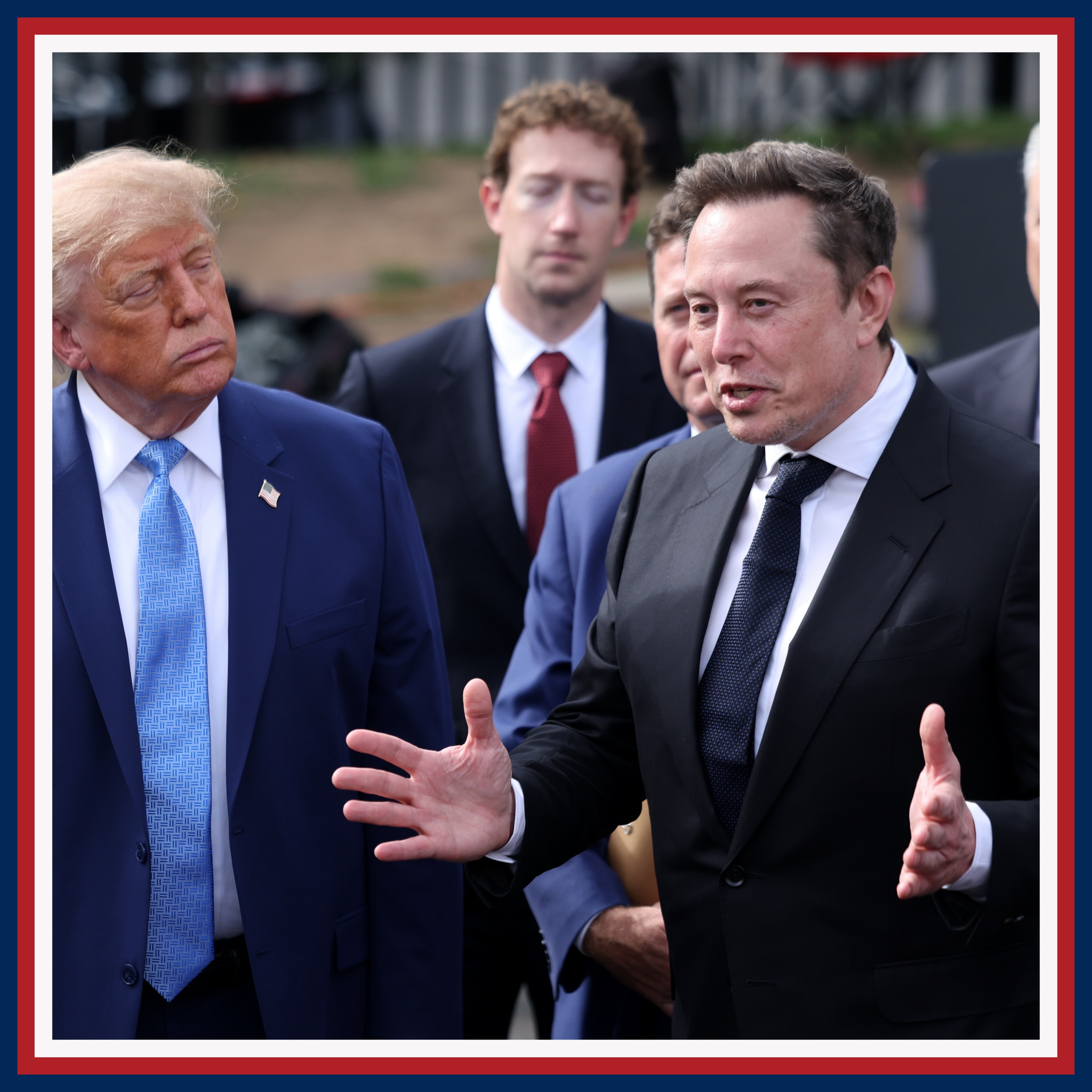
24:33And we keep getting stories day after day. And I know, again, the critics will say it's all hype. But we get stories day after day after day about these AI agents going rogue and doing things that people can't control. And then the larger point, the idea that, you know, I thought the idea that it's called regulatory capture, right? The idea that what Anthropic and OpenAI are doing is trying to get regulation to protect their market position because that's how regulation works. It's cozy. It works for big companies. If you just look – I mean just look at the pictures that came out of that dinner, that dinner with Xi Jinping.
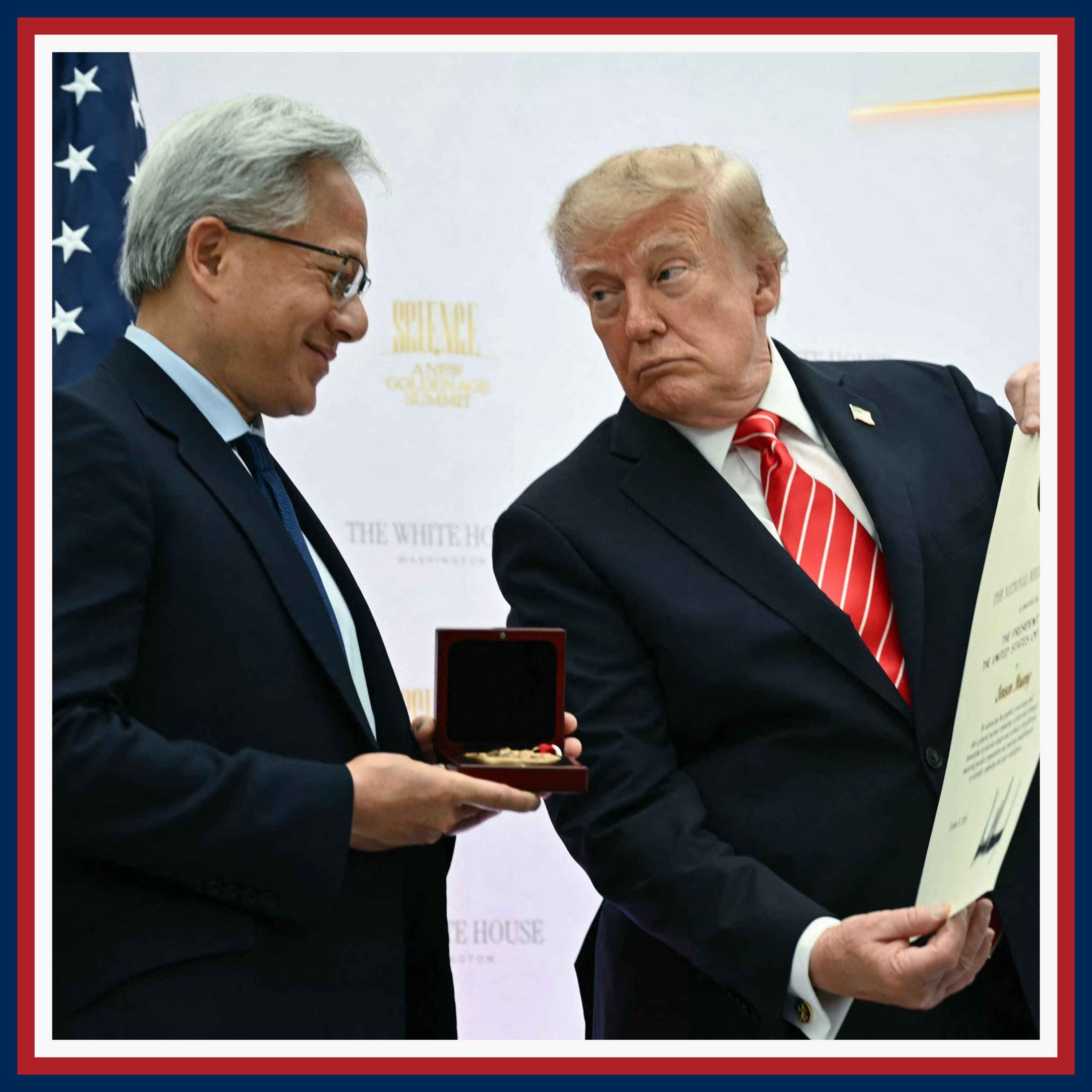
25:10Talk about regulatory capture. I mean Trump sitting there kind of yucking it up, as you say, with Tim Cook and with Jensen Huang of NVIDIA and all these other people. all these people who are inside the White House, literally inside the White House. I mean, you couldn't get more regulatory capture than that. This is just, I'm sorry, but it's just an example of the way in which partisanship constantly, you know, you're on my side or you're not on my side. And I don't care what the evidence is. I don't care what the science is. And it's just absurd. Yeah. And again, it goes back to the kiss the ring mentality of the second presidency, where, you know, Mark Zuckerberg was one of the ones who went to go and pay their respects at Mar-a-Lago in the beginning.
25:47Jerry also just kind of, I suppose, tying it back to what we were talking about at the beginning with this, you know, the blue wave. I guess one of the things is you had the scenes last night of this state banquet. And there was this AI video that was going around, which was, you know, getting shared a lot, which was like Elon Musk looking at his phone. It's like, what did I do last night? Oh, looks like she left his camera behind. What happened last night? Elon Musk looking at his phone. It's like, what did I do last night? And there's pictures of everyone partying at the thing. And then one of the deputy chiefs of staffs in the White House shared a clip of it in a way being like, ha ha.
26:24And it slightly speaks to the sense, which I think is AI, but more broadly, which is a lot of voters are, you know, seeing these tech bros going in for these, you know, big meals, these fancy events. They're seeing data centers going up in their area and worrying about what this means to their bills. The cost, you know, what are the reasons that the Democrats are currently doing so? It's not just incumbency. It's the fact that prices are rising and people feel there's, you know, an AI wave that's coming that is going to take their jobs and not give them anything. There's just a bit of a sense right now that I think Donald Trump is being tone deaf to that.
26:58And that's what you hear from Republicans, too. I think that's exactly right. And, you know, and, you know, it's a good way, as you say, it's a good way to sort of tie this back to the elections. And I think AI is going to be a hugely important story over the next couple of years. And, yeah, Trump's on the wrong side. Very interestingly, of course, you know, J.D. Vance, the frontrunner for the Republican nomination, you know, very close to Peter Thiel and very close to all of these – well, not all of them, but some of these tech bros. And I just have a feeling that Democrats are going to be able to make the running with this and talk about the need to rein this stuff in.
27:27Now, look, again, I'm not immune to the danger that, you know, you could go too far. And Democrats certainly, almost certainly, if their history is ending to go by, will go too far and will create real problems. But right now, as a political issue, as you say, Katie, whether it's data centers, whether it's fear about loss of jobs, whether it's fear about these things are going to destroy the planet, overwhelming majorities of Americans say we need to do something. And Trump is like, no, no, no, everything's great. And I think that is a – yeah, I think that's politically the wrong place to be. Yeah.
27:56I think Trump's position could stand up well over time. It's just the harsh numbers which was being delivered and how dismissive is being of the concerns is what's kind of making it difficult for some Republicans who want the AI revolution to keep going to get behind. Yeah. Well, we're out of time, I think, for this week. But all these issues will doubtless unfold in ever more interesting fashion over the next few weeks. We're just four weeks away right now from the midterm elections and we will be following them very closely. I'm sure you are you getting out to any of the key states, Katie, in the next week?
28:31I'm currently plotting which stops I will do in the final month. So yeah, I have a meeting earlier to work out. We have one of our team who's just gone to Kansas today to check the temperature. Yeah, I really want to get down to Texas because I'm still in such a fascinating race. And it's the target state that Democrats have had for so long. They've never quite managed it. I'm still slightly sceptical about whether Texans are really going to vote for this guy, James Tallarico. At the same time, how could they possibly vote for Ken Paxton? So there you go. This is the quality of American, and indeed not just American, but political candidates and leadership everywhere.
29:09Anyway, it's going to be a fascinating few weeks. but I say that's it for Mars for this week we'll see you again next week in the meantime have a great weekend
29:24here's a tip for you there's a podcast out there with fans waiting to be your next customer they tune in every week they trust the host and that host wants to talk about brands like yours in their own words to their audience The problem is you just haven't been introduced yet. We're Acast, where that introduction happens. As the world's largest podcast marketplace, we let you browse shows, see who's listening, and book host-read sponsorships or run your own ads all from one platform. Transparent pricing, real-time data, complete control. Start advertising on podcasts by visiting acast.com slash advertise.
A blue wave is building across America, as Republicans brace for a brutal midterm reckoning. Red strongholds like Kansas, Oklahoma and Florida are starting to look vulnerable. Does President Trump even care?
The mystery surrounding RAF Fairford is only getting stranger, raising more questions than answers and exposing the fragility of the US-UK relationship. Is Marco Rubio right that a foreign actor is involved? And could it ultimately be good news for Andy Burnham?
And as the world wakes up to the potential dangers of AI, Trump is embracing America’s tech giants. Is he sleepwalking into a crisis?
Katy Balls, Washington editor and columnist at The Times and The Sunday Times
Gerard Baker, columnist at The Times and editor at large at The Wall Street Journal
Producers: Euan Dawtrey, Harry Kitson
Executive producer: Molly Guinness
Picture: Getty Images
Audio: Reuters
00:00 - Is a Republican Midterm Disaster Looming?
00:33 - The "Blue Tsunami" & Key Battlegrounds (Kansas, Florida, Texas)
06:33 - Is Trump Becoming an Electoral Liability?
09:18 - Fearing Subpoenas: The Final Years of a Trump Presidency
11:46 - UK Foreign Security Incident & US Reaction
17:06 - Trump's "Superintelligence" AI Summit & Silicon Valley Backlash
21:01 - AI Anxiety, Tech Billionaires, and Backlash from Voters
This podcast was brought to you thanks to the support of readers of The Times and The Sunday Times. Subscribe today
Hosted on Acast. See acast.com/privacy for more information.