Ask ChatGPT


The episode of State of It USA focuses on whether “Trump magic” is fading, centered on negotiations to end the Iran war and broader political/economic signals.
Katie Balls (Washington editor/columnist for The Times and Sunday Times) and Gerry Baker (editor-at-large of The Wall Street Journal; columnist for The Times).
both sides want an off-ramp; Trump’s public “victory” claims may not match a deal that leaves Iran’s regime and nuclear/missile capability intact. They compare any new deal to Obama’s 2015 JCPOA, arguing it could be politically weaker if it resembles an “updated JCPOA” with even larger sanctions relief.
Strait of Hormuz opening then reversal; Trump’s rhetoric and approval polling (e.g., NBC Iran approval 32%); White House Correspondents Dinner history (2011 Obama mocking Trump over birth certificate; 2011 bin Laden mission timing). They also discuss King Charles III’s D.C. visit and the Correspondents Dinner’s likely controversy, including WSJ reporters winning an award for Epstein-related coverage.
Written by AI. May contain mistakes.
Discussion of ongoing global events and the upcoming White House Correspondents Dinner.
“Lots more going on around the world, but obviously here in the USA we've got the war, all the ceasefire continuing, these interesting negotiations unfolding.”
Analyzing Trump's statements on negotiations and potential outcomes regarding the war.
“And yeah, Hollywood for ugly people is how it's been called.”
Exploring the U.S. approach towards the war and Trump's political implications.
“But what I found quite interesting was towards the end of last week, speaking to figures in the administration, figures close to it, I think there was optimism building that they were on the edge of a deal.”
Understanding what constitutes a win for Trump in the negotiations with Iran.
“I wrote a column in my column in the journal last week saying if the regime stays in place and maintains any kind of a nuclear capability, that's not a win for the United States.”
Discussing Trump's declining approval ratings and public perception.
“because the Obama deal does keep being mentioned.”
Exploring the notion that Trump's appeal may be waning among voters.
“And I think there's a larger thing going on here.”
Speculating on potential scenarios for Trump's political future and the Iran situation.
“in terms of what Trump could do, what do you think, Gerry, the most rosy scenario for Donald Trump is at this point when it comes to the Iran war, because it's some kind of off-ramp.”
Discussing recent polling data on Americans' views of the American dream.
“are frankly some bogus allegations about an overspend.”
Discussion on American sentiments of uncertainty and division.
“But it's definitely got worse, especially with this digital uncertainty with everybody looking at AI and what that is going to do to their jobs.”
Insights into the details and implications of King Charles III's visit to Washington.
“Well, as you heard, King Charles III is shortly to be visiting these shores.”
Discussion of the history and significance of the White House Correspondents Dinner.
“Finally, before we get to the king's visit, we have one other festivity.”
Explore the recent legal challenges faced by Donald Trump, including his lawsuit against the Wall Street Journal.
“is alleged to have drawn and sent to Jeffrey Epstein for his birthday back many, many, many years ago.”

Get the gist, explore an idea or ask about something said.
 Claude
On The State of It: USA, what are the key points of this episode?
Searching your listeningAutomatic transcript. May contain errors.
0:00Gerard Baker: Open the door to spring with Pura. Explore vibrant scents inspired by place, designed to refresh your home and how it feels every day. Transport your senses to a terrace in Santorini or a French lavender field, bringing the essence of spring into the home you love. Get started with a free Pura 4 diffuser when you subscribe to Two Scents Monthly for six months. Shop now at Pura.com. Every idea starts with a problem. Warby Parker's was simple. Glasses are too expensive. So they set out to change that. By designing glasses in-house and selling directly to customers, they're able to offer prescription eyewear that's expertly crafted and unexpectedly affordable.
0:41Gerard Baker: Warby Parker glasses are made from premium materials like impact-resistant polycarbonate and custom acetate. And they start at just$95, including prescription lenses. Get glasses made from the good stuff. Stop by a Warby Parker store near you.
1:01Gerard Baker: Hello and welcome to the State of It USA. I'm Katie Balls, Washington editor and columnist for The Times and Sunday Times.
1:08Katy Balls: And I'm Gerry Baker, editor-at-large of The Wall Street Journal and also columnist for The Times. And welcome, Katie. Lots more going on around the world, but obviously here in the USA we've got the war, all the ceasefire continuing, these interesting negotiations unfolding. The king is visiting next week. We're going to talk a little bit about that, King Charles and that visit. And we're going to talk about one of those great annual rituals in Washington that you're about to enjoy, the White House Correspondents Dinner, which happens this year.
1:36Gerard Baker: where Donald Trump will also be making his debut my second year. You've been to him more than the two of us put together.
1:43Katy Balls: Been to hundreds of them almost. And yeah, Hollywood for ugly people is how it's been called. So we'll get a chance to dig into some of the great moments from White House dinners in the past. But let's start with the inevitable Trump and J.D. Vance and negotiations to find a permanent end to the war. Katie, I don't know what you're sort of hearing in Washington. And we've obviously seen over the last week Trump claiming all kinds of things have been achieved, claiming that the straits been closed and the Iranians saying no, they're not. And claiming that he's going to achieve the greatest deal in the history of negotiations.
2:18Katy Balls: My overall impression here is that the U.S. team is looking for a way out of this. Both sides are probably looking for a way out of this. And, you know, I think the politics of this are very much behind that because this is still not a popular war here in the United States.
2:31Gerard Baker: Yeah, I do keep hearing that, you know, the US side would like this to be over, but obviously they need to be over on certain terms. I'm sure we'll get into those. But what I found quite interesting was towards the end of last week, speaking to figures in the administration, figures close to it, I think there was optimism building that they were on the edge of a deal. I had one pretty well-sourced, reliable figure say to me, oh, the war is really nearly over this time. And I said, oh, but Donald Trump said it's nearly over for a while. But they said, no, no, things are taking shape. The next day, you had the announcement, not just from Donald Trump, but from the Iranians that the Strait of Hormuz was to be opened.
3:11Gerard Baker: And it really did feel so, you know, the clouds were lifted. It was getting to that place where negotiations were, you know, to a point where you could start to see Donald Trump getting on the stage and saying, look at my amazing deal, the best deal ever. And then, of course, it all started to crumble a bit, at least in terms of a public perspective, because you had Donald Trump saying that he wasn't going to stop his blockage yet. And then the Iranians said, well, if you're going to do that, we're actually not going to reopen the strait. And since then, it's been a war of words, as well as the actual war with the ceasefire still in place, Donald Trump lashing out.
3:46Gerard Baker: And I think that ahead of a negotiation, you're always going to get some kind of rhetoric from both sides. I guess one of the questions I keep being heard being asked now in Washington is, what does a deal have to look like for Donald Trump to be able to claim a win?
4:05Katy Balls: Look, I think exactly that. I think that's right. I wrote a column in my column in the journal last week saying if the regime stays in place and maintains any kind of a nuclear capability, that's not a win for the United States. And in a battle like this, in an asymmetric warfare like this, when the United States isn't winning, it's losing. I mean, I'm not suggesting the US has lost the war. But if the aim of this exercise was to significantly reduce the threat from a, everybody agrees, is a horrible regime which has killed Americans, killed people around the world, sponsor of terrorism, really destabilizing force.
4:43Katy Balls: If the aim is to really significantly to eliminate that threat or to reduce it to such a small level that we don't have to worry about it, and if the regime stays in place and they still have some nuclear capabilities and they still clearly have some missile capabilities, I don't see how you can see it as a win. So what they've got to do is they've got to achieve something in this negotiation that they haven't achieved or they've got to argue that, you know, that Iran has come to the negotiating table because of the damage we've done. And they've got to achieve something that looks like and isn't just Trump claiming this, but that really looks like an outcome that significantly limits the risk of Iran's ability to threaten the region.
5:20Katy Balls: And the real risk, Katie, and I think I know you've been having conversations about this, too, is that, you know, this deal that could be done, whatever it is, it's got to look a lot better than the deal that Barack Obama struck in 2015. The JCPOA is a joint coordinated plan of action, you know, by which Iran agreed not to enrich uranium above a certain level and got got sanctions lifted in return. And the Republicans went crazy about this and said, oh, my God, pallets of cash are being released to the Iranians. And they're just making some vague promise not to enrich uranium. Well, lo and behold, we may be about to have a deal signed by Donald Trump, which is exactly the same.
5:58Katy Balls: Only the only difference being that the amount of money that's being released is even larger than Barack Obama released with his JCPOA. So it's a real, you know, again, I don't want to be too negative. maybe, you know, the genius negotiators will come up with something stronger than that. But if it's a deal that just looks like a kind of an updated version of the JCPOA, I just, again, I don't think the politics of this look very good for Donald Trump.
6:21Gerard Baker: Yeah, and I think there is a sense that the president is at least sensitive to that because the Obama deal does keep being mentioned. I mean, Len had a truth social earlier this week in which he was saying, you know, how bad the Obama deal was, suggesting it wouldn't be anything like that, almost trying to get ahead of it.
6:37Katy Balls: It's the worst deal in the history of mankind in one of his truth social outbursts on it. I think he's literally described it as the worst deal ever negotiated.
6:46Gerard Baker: Exactly. So they're going to have to have a few things to separate it. And I think it also comes to that 15 year mark, which is for how long are they saying they're going to knock back or stop the Iranians from doing this? And, of course, coming up against this is the Iranians are not going to want to make it seem as though Donald Trump has a win. Their rhetoric is getting increasingly negative. And I think that they're looking at all these allies and taking the view that the US is looking a bit isolated and they can use that to their advantage. I suppose the audience say that most matters to Donald Trump is not the European countries.
7:21Gerard Baker: It is not the Iranians. It is the American people. And here, Jerry, do you think there is a sense that they are listening still? Of course, when we look at recent polling, it's not rosy for the president.
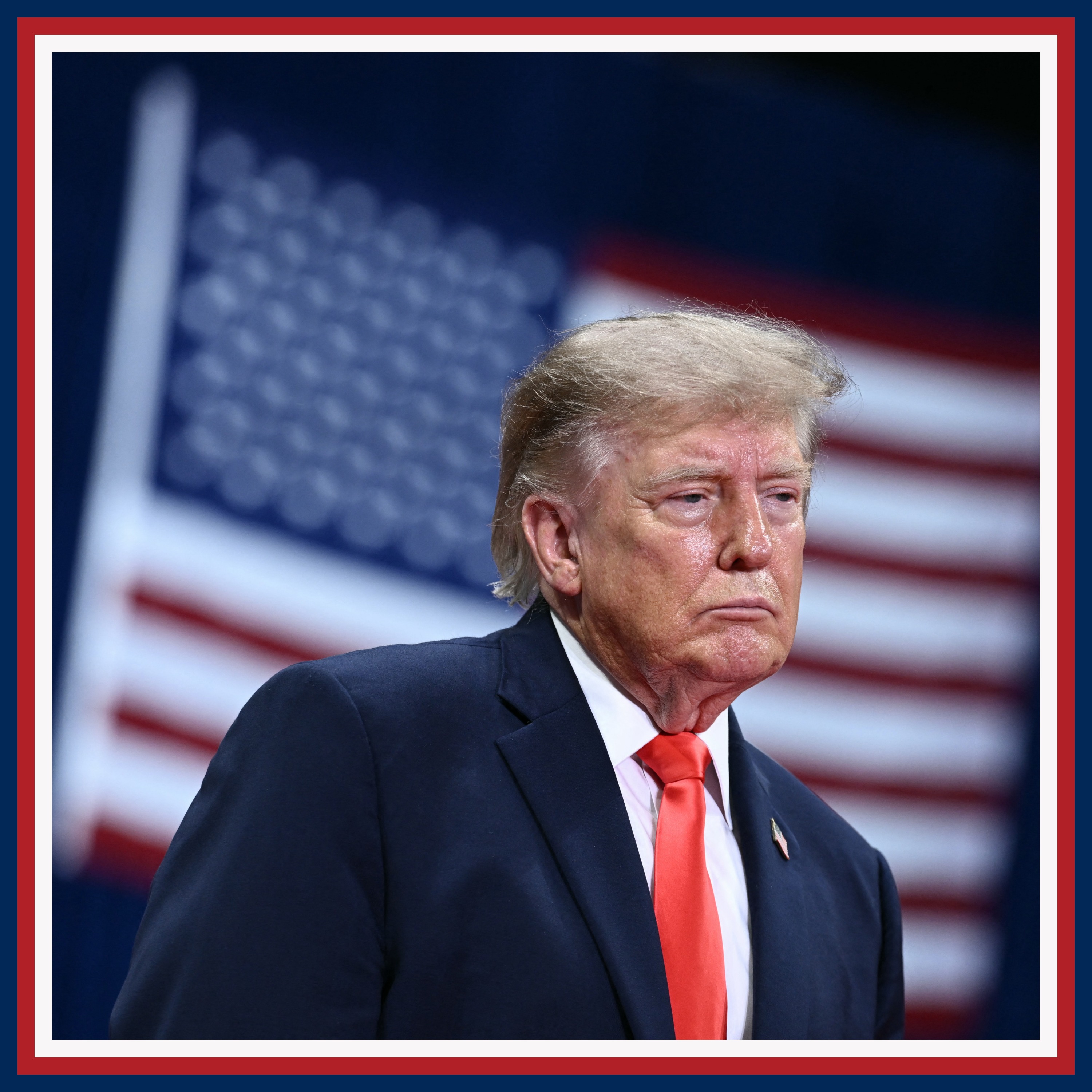
7:34Katy Balls: No, I think that's right, Kate. And I think there's a larger thing going on here. I could be wrong. You know, people have predicted the end of Trump before. But I do really detect here that people, you know, Trump's been through ups and downs before, including in his first term when, you know, especially during the sort of the disaster of COVID, when his approval ratings were terrible. But he's found a way to bounce back and he's still found a way to sort of connect with people. I think he's losing that ability. You know, as you said, his approval ratings keep going lower. There was a slew of polls this week that show his approval rating now.
8:07Katy Balls: Almost every polling organisation has him at his lowest point in his second term, many of them touching the low points from that COVID period in his first term. And some of them even closing in on that all time low that he hit after January the 6th. And I think this time around, though, people have just stopped listening. that approval for the Iran war is a really good example. Trump has spent the last week going around saying, this is a magnificent victory. We've done so much damage to the Iranians. They're never going to be a threat anymore. It's the greatest military success in the history of this country.
8:38Katy Balls: We've reopened the Straits of Hormuz. It's just all brilliant. And his approval ratings on Iran in particular, there was an NBC poll I think at the weekend that had him at 32 % of people approve of his handling of Iran. And again, I just don't think people are listening. So, look, yeah, they could come up with a deal out of these talks. Maybe the deal will be the greatest deal of the century and Iran will surrender and say, yes, we love Donald Trump and maybe there'll be regime change. I'm not being completely facetious. Maybe there is some outcome here that ends like that. I just short of that, I think people have kind of stopped buying the kind of BS that Trump so often sells them.
9:16Katy Balls: And, you know, obviously the MAGA crowd still love him. But those voters in the middle, many of whom voted for Trump, kind of reluctantly, you know, they voted in 2024. Joe Biden was, you know, one foot in the grave and been a disastrous four years on immigration and inflation and stuff like that. And then along came Kamala Harris, who was a terrible candidate. They voted for Trump thinking, well, look, you know, he's going to close the border. but he's going to sort out prices. I know he's kind of slightly crazy and I don't like some of the things he says, but he's basically, you know, he managed things all right in his first term and he's going to get things back on track.
9:46Katy Balls: He's going to keep us out of wars and all this kind of stuff. And those swing voters are just shaking their heads right now and saying, well, you know, what the heck is going on? I think a significant number of people have just stopped listening to Trump. And I think the magic's gone.
10:00Gerard Baker: So I suppose if we're trying to look at this in terms of what Trump could do, what do you think, Gerry, the most rosy scenario for Donald Trump is at this point when it comes to the Iran war, because it's some kind of off-ramp. And of course, there is space for the escalation route as the military piles up in the Middle East region. And that's one of the things the Iranians are worried about. This ceasefire is actually going to lead to escalation that's given the US time to organise. But there's certainly a political desire to wrap this up and then try and improve the economy. And on that, you're going to have some of the after effects for some time, even if the strait was fully reopened.
10:39Gerard Baker: We've also got the Fed chair nominee, Kevin Walsh, coming through, which I think Trump has staked a lot of hope is going to improve the economy. Having an expert from The Wall Street Journal, I'll defer to you on that one.
10:49Katy Balls: Well, I mean, we won't get into too much detail on the Fed chair, but of course you say that's coming up. But actually, as it stands, we're in this kind of rather remarkable standoff where the committee that will consider the nomination, you know, just a brief primer on the way these things work. The Federal Reserve chair is nominated by the president, has to be confirmed by the Senate. That process means initially as a Senate committee goes through a confirmation process. That committee has a very slim Republican majority on it, as you would expect, reflecting the Republican majority in the Senate.
11:19Katy Balls: A key senator on that committee has said he won't support the nomination of Kevin Walsh while Trump continues his prosecution, attempted the Justice Department's prosecution of the current chairman, Jay Powell, over what are frankly some bogus allegations about an overspend. But obviously everybody knows that Trump hates Jay Powell because he doesn't think he's cut interest rates enough. But by the way, even if Walsh gets through, and we're going to have to see how this standoff ends in the next few weeks, even if Walsh gets through, and Walsh has been very canny and sort of indicated to the president that, yes, he wants to cut interest rates.
11:53Katy Balls: If interest rates aren't going to come down, because, as I just said, inflation is going to go up significantly, probably in the next few months as a result of the after effects of the war. And Walsh, even though Walsh will be the chairman and is sort of committed to an easier monetary policy, there's that committee that votes is 17 members, essentially. And Walsh is only one of them, actually, 13, 12, I think, vote. But it's a good question, Katie. What's got to go right for him? Well, look, the regime could fall in Iran. Again, I don't rule that out. It's not impossible. It just seems really unlikely right now.
12:23Katy Balls: They seem to have a pretty tight grip on things. But if that happened and if we got a friendly regime in Tehran, that would be magnificent. And I think Trump would rightly claim a lot of credit for that. The economy could – it's still pretty in pretty good shape. Maybe it doesn't get hit too hard by these prices and maybe it's a short-term effect. But the mood in the country is just really sour right now. And I don't think Trump is – I don't see how Trump is really able right now to fix it. So look, the Democrats can always screw up. They always do. One thing you can always rely on is – like they used to say the Palestinians, they'll never miss an opportunity to miss an opportunity.
12:59Katy Balls: and beyond November when we get into the presidential campaign, God knows what the Democrats will do because I think they're heading off in a very dangerous way. But right now I think people have stopped listening. I think they've kind of turned off.
13:10Gerard Baker: I think the general sense I get from both Republicans and Democrats is I think the midterms is going the Democrats way pretty much whatever. Senate, perhaps a question mark over. But it's going to be a good night for the Democrats. Whereas I think when it comes to the 2028, everything's to play for because you just don't know who the candidates are, right? Though on your point about optimism or perhaps pessimism, the Times has a poll out this week, which is the American dream is dying, Times poll reveals. We have America not seen as a land of opportunity in the way it used to be, according to this.
13:42Katy Balls: Look, I mean, I think that can be overplayed a bit because, you know, growth is still pretty good here. Incomes are still on the whole much higher incomes than you have in most of the rest of the world. But there's no question, and poll after poll, including this latest Times poll, has demonstrated this, that the confidence that Americans have that their future, in particular their children's future, will be better than their own, has evaporated. That's been going on for a long time. But it's definitely got worse, especially with this digital uncertainty with everybody looking at AI and what that is going to do to their jobs.
14:13Katy Balls: And they worry about America and division internally. And they worry about rising China. And yeah, you know, this incredibly optimistic, positive country has been pretty gloomy now for quite a long time.
14:24Gerard Baker: Yeah. And just to give the details, it was 61 % of respondents said they believed in the concept of the American dream, but only 38 % thought it existed for everyone. Now, join us after the break when we're going to be talking about something Donald Trump and perhaps other Americans are looking forward to, which is the arrival of the king in D.C. in the coming days. business is booming but you know what really helped zero the accounting platform for small businesses i used to think spreadsheets were just part of it but real-time cash flow wow invoices that chase themselves even better books that automate that's a big one and i can keep track from my phone while i get the job done no spreadsheet in sight what a life do right by yourself and your business and search XERO for your free trial.
15:14Gerard Baker: Conditions apply. Open the door to spring with Pura. Explore vibrant scents inspired by place, designed to refresh your home and how it feels every day. Transport your senses to a terrace in Santorini or a French lavender field, bringing the essence of spring into the home you love. Get started with a free Pura 4 diffuser when you subscribe to 2 Scents Monthly for 6 months. Shop now at Pura.com.
15:43Katy Balls: Welcome back. Well, as you heard, King Charles III is shortly to be visiting these shores. State visit marked coincide, almost coincide with the 250th anniversary of the American Revolution when a previous king, a previous king something, the third, it ended rather badly for him. So we're all friends now and it's going to be a big visit because, of course, it comes against the backdrop of this deteriorating relationship between Trump and Starmer and between Britain and the US generally. Katie, you'll be there in Washington. You'll be following the king around. What can we expect? Well, a lot.
16:17Gerard Baker: I was actually, I was at an event recently and I was next to a member of the administration who said to me that they were recently in the British embassy and they were a bit confused as to why George III portraits were hanging on the wall and suggested there could be better artwork. but with the king's visit um he arrives on the monday and is welcomed by the president but it really kicks off on the tuesday but the way it goes is he has a private audience with donald trump and we are not expecting that to become an oval office about whether you know the pool's brought
16:51Katy Balls: in and he's not going to get he's not going to get the zelensky treatment there'll be a military
16:55Gerard Baker: welcome so military might is how one figure in the white house described it to me which is you know we can't beat you guys on pomp, but we can show the US military. So I would expect marching bands, military salutes as they get their official welcome. The private audience, and then I think Queen Camilla will also be meeting with Melania, so they will have their own little event.
17:16Katy Balls: Is Prince William coming? Because I know Trump loves him.
17:18Gerard Baker: Not on this visit. Because this visit happens, that then leaves the door open to Prince William coming over. And also we know Trump loves his wife, the Princess of Wales. perhaps around the World Cup. So that could happen later this year. So you could end up with double visits, basically. And anyway, the king then goes to Congress where he gives a joint speech, which will go to Congress and the Senate. And this is when he's going to be making his public comments. Now, there's a chance he speaks at other points during the trip, but this is the point which is, I think, the most anticipated. And I recently interviewed Ro Khanna, the Democrat congressman, who has been heavily involved in the Epstein files.
18:01Gerard Baker: He co-authored with the Epstein Transparency Act, which forced the hand of the DOJ and therefore the White House to release the latest files. And he's been saying the king should meet with Epstein victims. Now, the palace have given no indication they plan to do this, same as investigations in the UK. But one of the things the congressman said to me was, well, if he can't meet with them, could he use his speech, this address to at least mention, you know, transparency, the Epstein files.
18:29Katy Balls: Oh, brother.
18:30Gerard Baker: I think that's fairly unlikely, but that would be very interesting if he did were so bold. Is he going to say something about the special relationship, about the UK being good and strong, despite what's recently been said? I think that's where perhaps there's a chance for slightly political elements to this visit.
18:46Katy Balls: I mean, of course, he's not going to say, you know, we're not a useless country with toy ships, but he's got in a regal and subtle and diplomatic way to gently push back a little bit at the insults that Trump has been throwing at Britain. He's got it. He's got it. Presumably in that the setting would be that joint address to Congress.
19:05Gerard Baker: That's the obvious place to do it. And I think that if you think about the history of the royals and how they will often find, you know, it's a very light touch way of saying something. But if you know, you know, and people will be scrutinizing it for even a tweak of that. So I think when you talk about kind of the shared history, this moment, 250 years of American independence, there is a natural place for him to talk about the UK and also potentially to talk about, you know, the enduring relationship despite, you know, personalities. And then after that, there is a banquet. There's a state dinner at the White House.
19:41Gerard Baker: Yet to get my invite. And then there's also actually the British Embassy having a tea party for the king. I did get my invite to that. And the fashion invite for this is hats are not encouraged, which has confused quite a few Americans in DC, because when they think about royalty and Britain and all these things, they imagine very tall hats and that's not being encouraged.
20:03Katy Balls: What will be interesting is will be the kind of asymmetry of public reaction to this, because the Americans will love this. Americans will, they love the king, they love the royal family the media coverage will be reverential i can assure you it'll be you know all the networks will be out there with the all sort of looking prim and proper and smiling and saying wonderful things about the king and over in britain i'm guessing people will be thinking why is he visiting this dreadful man and what are we going to do and the media will be you know cynical and hostile and all that kind of thing but i tell you just just on this finally on this that i've been looking at some poll you know the polling is remarkable on this if you ask Ask Americans what they think of Britain.
20:46Katy Balls: 80 % of Americans think it's a great country. They love Britain. They think, you know, it's, you know, their closest ally and they love the king. And, you know, they probably don't love Keir Starmer. 99 % of them probably never heard of him. But, you know, they love that relationship. In Britain, I've been in the same polls are now incredibly, I mean, unsurprisingly, you know, incredibly hostile. And it is there's also just a strange disconnect that one of those polls we were talking about earlier, Katie, you know, about Trump's approval. ratings. One of those polls asked people, do they think the US should pull out of NATO?
21:18Katy Balls: And you know what the number was? 11%. 11 % of Americans think the US should pull out of NATO. So it's a weird stuff that's going on here. We have this president openly hostile to his closest allies. Well, the vast majority of the American people think, you know, no, these are our allies. We rather like them. So anyway, it will be a moment for a bit of, as they say, a bit of a reset. And I'm sure the king and the president will embrace it.
21:42Gerard Baker: And Finally, before we get to the king's visit, we have one other festivity. And it's one. So I was at the British Embassy the other day and they were having a reception for Rachel Reeves for the IMF week. And they have quite a big, lovely garden. But they had basically sealed off the garden because I've heard that they're worried, effectively, that they're going to have too many people standing on the garden, on the greens, on the grass. And when the king arrives for his tea party, it's not going to look good enough. But this is a problem because before you get to his visit later next week, we have White House Correspondents Dinner Weekend.
22:18Gerard Baker: But, Gerry, explain to listeners. I think most people have seen over the years comedians, presidents, but it's not as a dinner, but it's really a four day bonanza.
22:30Katy Balls: It is. It's become that. Yeah, I've been going to this thing on and off for 30 years. I think I probably went to like 20 in a row. It's yeah, it's a classic sort of Washington event. senior people at the major news organizations, newspapers, TV, news networks, now, of course, huge numbers of digital and social media people, they all go, they all invite guests. There used to be a massive competition for who might invite the most glamorous guests. So in its heyday, 10, 15 years ago, when I used to go regularly, you'd see, you know, people would get Hollywood stars to come along. And I remember standing next to Tom Cruise at the urinal in the in a break, the Washington Hilton one year.
23:07Katy Balls: So it's that. And of course, the president typically goes, although we're going to come on to this because it's going to be very interesting. But I've got into this sort of grumpy old man camp now where I regard this as sort of a bit icky because it's all these sort of, you know, all of the press who are supposed to be, you know, covering the White House, you know, in a sort of not confrontational but certainly in a kind of sceptical and critical way. And yet here they all are drinking and slapping each other on the back and enjoying the disgusting food that they serve at the Washington Hilton.
23:39Katy Balls: and sorry if you're expecting something better. But some organizations, news organizations, the New York Times refuses to go. I used to think that was just very pompous New York Times thing. I kind of respect that. When I was the editor of the Wall Street Journal, we had quite big internal debates about whether we should go and there were some very sort of po-faced people who thought, no, no, no, we shouldn't. In the end, we did go and I went. Actually, one year, probably the single most memorable year for the White House Correspondents Dinner was 2011. I was the deputy editor of the Journal at the time.
24:03Katy Balls: Obama was president. There's a little party with the president beforehand. We went backstage, got a picture with the president And this was the event to which Donald Trump had been invited by The Washington Post, 2011. And it was around the time, you'll remember, when Trump was questioning Obama's birth certificate and saying he wasn't American and that he'd been born in Africa and blah, blah, blah, and all this kind of stuff. And, you know, he didn't believe that Obama was born in Hawaii. And there was the whole thing about the Hawaii birth certificate. I went backstage, met the president, chatted with him.
24:30Katy Balls: And, you know, you try and think of something humorous and memorable to say to the president when you meet him. And I said, oh, you know, very nice to see you, Mr. President, again. And I know Donald Trump's here. And I just wanted to say he wanted to pass on a message to you. He said, aloha, which I thought was hilarious at the time. And Obama said to me, you're stealing all my best lines. So then Obama goes on stage, gives this speech in which he absolutely, you know, mocks Trump, makes him look a bit of an idiot, mocks him about the birth certificate and all this kind of stuff. And at one point, very famously says, you know, you know, something to the effect of, look, Donald, I know you don't you don't think much of me.
25:05Katy Balls: you know, trust me, I think I was born here. But look, at least I'm president and you will never be. And there's a lot of people who think that that was the room that planted that seed in Doldrall. I think the seed was already there. But that flowery that watered that seed in Trump's mind that he was going to be president. But one other very quick thing about that night, Katie, was 2011. And this is astonishing. We were all there in the Washington Hilton. Obama's on stage. Hillary was there. It was the very night that they launched the mission to kill Osama bin Laden. It was literally, I mean, the mission was underway at that on that Saturday night at nine o 'clock in the in the Washington Hilton.
25:41Katy Balls: And we all discovered the next day that the mission had actually been successful. But so everybody was there with this astonishing secret. And we're all kind of, you know, joshing and laughing. And it was turned out to be, say, one of the most memorable nights, both for Donald Trump and for Osama bin Laden. And it better for Donald Trump than it did for Osama bin Laden.
25:59Gerard Baker: Well, Saturday looks like it could be memorable because Donald Trump has decided to come to the White House Correspondents Dinner. And he has boycotted it throughout his entire presidency, partly for, I think, the story you just told. And I think just this general sense that MAGA and Trump has had, which is they hated the swamp. And I think actually it's reflective of Trump's second term. So I arrived about a year ago in D.C. and my first proper weekend was White House Correspondents Dinner weekend. and I did go to the dinner but there was no president and there was no comedian because the president refused to go and the comedian got cancelled because they had made a joke comparing I think Donald Trump to various murderous figures.
26:40Gerard Baker: It was deemed as too difficult so it became quite a long dinner then you got to the point where it all came to the awards on stage and probably the most interesting moment was one of the figures had won an award was a journalist who'd been writing the truth about the Biden cover-up and said, you know, we as the press corps need to do better. So it was always a press corps turning on one another. Trump at the moment is attending and he is attending with the First Lady. And one particular story, I think, is closest to your publication, Gerry, so I'll let you do the talking, but it is tradition that the president in the past gives out these awards, which are decided not by the president.
27:21Katy Balls: Yeah, as you say, the White House Correspondents Association, in addition to putting on this dinner every year, gives out awards, sort of a bit like kind of, you know, second tier Pulitzers or whatever. I don't mean to be rude. I mean, there's quite serious prizes and much sought after. And then by tradition, the president who's, you know, at the dinner hands out the prizes to the winning journalists. Well, this year, the principal prize for excellence in White House coverage has been awarded to staff of my colleagues at the Wall Street Journal, and it has been awarded for their coverage of Donald Trump's relationship with Jeffrey Epstein, and in particular, the infamous birthday drawing that Donald Trump is alleged to have drawn and sent to Jeffrey Epstein for his birthday back many, many, many years ago.
28:09Katy Balls: Now, this is the same story for which Donald Trump sued the Wall Street Journal, sought damages from the Wall Street Journal of$10 billion. It was a case, by the way, this last week was thrown out by a judge. But you are potentially in this extraordinary situation where Donald Trump will hand out the award to Wall Street Journal reporters that, you know, did this story and whom he's suing. I think we all kind of assume, and you probably got more detail on that, Katie, that he'll find a way not to actually perform that function. I'm sure it will be a fascinating, fascinating evening, Katie. Have fun.
28:47Katy Balls: And to all of our viewers and listeners, thank you very much indeed for listening this week. Tune in again next week when we'll have another episode of The State of It USA. But in the meantime, goodbye from me, Jerry Baker in New York.
28:56Gerard Baker: And farewell from me, Katie in Washington.
29:16Gerard Baker: That automate? That's a big one. And I can keep track from my phone while I get the job done. No spreadsheet in sight. What a life. Do right by yourself and your business and search X-E-R-O for your free trial. Conditions apply. Refresh the rooms you love for spring with Pura. Our collection of floral, citrus, and fresh scents brings a light, airy feel to every space. Like opening the windows on a first warm day of the season. From soft blooms to bright citrus, each scent is designed to capture the energy of spring and make your home feel renewed, effortless, and alive. Learn more at Pura.com.
President Trump has said he's extending the ceasefire with Iran, and it's still unclear when talks will resume. What could an eventual deal look like and can the US find a radically better one than the deal that President Obama signed in 2015 to so much Republican scorn?
Can the King paper over the cracks in the US-UK relationship?
And did a joke by President Obama sow a seed that led to Donald Trump standing for office?
Katy Balls, Washington editor and columnist at The Times and The Sunday Times
Gerard Baker, columnist at The Times and editor at large at The Wall Street Journal
Producers: Euan Dawtrey, Harry Kitson
Executive producer: Molly Guinness
Image: Getty Images.
This podcast was brought to you thanks to the support of readers of The Times and The Sunday Times. Subscribe today
Hosted on Acast. See acast.com/privacy for more information.