 Ask ChatGPT



The “State of USA” podcast episode discusses how American culture is understood through cultural products—books, films, TV, and music—especially in relation to Donald Trump and modern politics.
Gerry Beaker (editor at large, Wall Street Journal; columnist for The Times) and Katie Bowles (Washington editor; columnist for The Times and Sunday Times).
Washington, D.C. functions like a transactional “incestuous club” (lobbying, politics, journalism). Classic novels and films still explain Trump-era politics. American TV/music reflect shifting social mores and national identity.
Mark Leibovich’s “This Town” (DC networking funeral scene). Robert Penn Warren’s “All the King’s Men” (Willie Stark; Huey Long parallels). Tom Wolfe’s “The Bonfire of the Vanities” (1980s NYC money/politics; Trump cameo). Films: “High Noon,” “Do the Right Thing,” “Midnight Run,” “Miracle.” TV: “Modern Family,” “Little House on the Prairie,” “Mad Men,” “Yellowstone,” “Landman.” Song: Bob Dylan “Lily, Rosemary and the Jack of Hearts.”
Written by AI. May contain mistakes.
Understanding the emotional needs of children through their own words.
“The more you listen to your kids, the closer you'll be.”
Exploring books, films, and music that help understand American culture.
“And that's the cultural products, if you like, the influences that we've had, books that we've read, films that we've seen, music that we've listened to, that inform our view of America.”
Discussing influential books that provide insights into Washington, D.C.
“You're already immersed in American culture, but you've been immersing yourself more deeply.”
Analyzing the themes of Robert Penn Warren's novel in relation to American politics.
“The author's Mark Leibovitch, I think, right?”
Exploring Tom Wolfe's novel and its reflection of 1980s New York and politics.
“And so it does not capture, I think, that Trump in Washington, DC.”
Discussing films that encapsulate American values and experiences.
“I'm a huge Tom Wolfe fan, I think, really, truly one of the great writers in the English language in the last 50, 60 years, both his nonfiction, his journalism, his nonfiction, and, of course, his novels.”
Examining how the film High Noon relates to the challenges of the presidency.
“accident and everything sort of unravels for him from that.”
Analyzing Spike Lee's film and its portrayal of racial dynamics in America.
“But I picked one I think, and again, coming from me, maybe slightly odd, but I love this movie when I saw it.”
Exploring films like Miracle that highlight American patriotism through sports.
“funny, entertaining, wonderfully touching.”
Explore the connection between American sports and patriotism, discussing the film 'Miracle' and its context.
“My slightly more smolty one is Miracle, which is the film about the hockey and the ice hockey and the 1980 win.”
Jerry discusses the significance of the TV series 'Modern Family' in understanding American family dynamics.
“PwC refers to the PwC network and or one or more of its member firms, each of which is a separate legal entity.”
Jerry discusses the significance of the TV series 'Modern Family' in understanding American family dynamics.
“Jerry, what's your television series that you think will bring people great understanding but is also an excuse perhaps to just watch something fun?”
Dive into discussions about various TV shows like 'Little House on the Prairie' and 'Mad Men' and their cultural reflections.
“Yeah, I actually have not watched Modern Family, but you have inspired me in my upcoming holiday, Jerry, to give it a go.”
Discover the importance of songs like Bob Dylan's and Bruce Springsteen's in shaping American identity and dreams.
“but a better cultural product than Mad Men.”

Get the gist, explore an idea or ask about something said.
 Claude
On The State of It: USA, what are the key points of this episode?
Searching your listeningAutomatic transcript. May contain errors.
0:00Gerard Baker: At PwC, we optimize the systems that put your data to work so you can scale your AI from proof of concept to competitive edge and accelerate your tech evolution so you can redefine what's possible. From blueprint to breakthrough, we take you further with tech so you can outthink, outpace and outperform. PwC, so you can. PwC refers to the PwC network and or one or more of its member firms, each of which is a separate legal entity. The more you listen to your kids, the closer you'll be. So we asked kids, what do you want your parents to hear? I feel sometimes that I'm not listened to. I would just want you to listen to me more often and evaluate situations with me and lead me towards success.
0:46Gerard Baker: Listening is a form of love. Find resources to help you support your kids and their emotional well-being at SoundItOutTogether.org. That's SoundItOutTogether.org. Brought to you by the Ad Council and Pivotal.
1:02Katy Balls: Anybody looking to the sort of historical antecedents, real or fictional for Donald Trump, I think could do worse than read All the King's Men by Rob Pamborum.
1:14Katy Balls: Hello and welcome to the State of USA, the podcast that dissects Donald Trump's America. I'm Gerry Beaker, editor at large of the Wall Street Journal and columnist for the Times.
1:23Gerard Baker: And I'm Katie Bowles, Washington editor and columnist for the Times and Sunday Times.
1:27Katy Balls: This week, since we're in the dog days of summer, we thought we'd take a step back from the frenetic flow of news and talk about something that I think everybody studies America or thinks about America, tries to develop to understand the country better. And that's the cultural products, if you like, the influences that we've had, books that we've read, films that we've seen, music that we've listened to, that inform our view of America. I think everybody has some sort of record of having read books or seen movies that capture America. America is such a vastly important cultural influence in the world.
2:03Katy Balls: So, Katie, let's start with books. You've now been in the States for, what, about 18 months? Yes, coming up. You're already immersed in American culture, but you've been immersing yourself more deeply. But I think before you came here, there was a particular book that you read to understand that strange city that you call home, Washington.
2:22Gerard Baker: Yeah, this was around the time I had accepted the job to head to Washington for the Times and Sunday Times. And I remember meeting with someone who works in the embassy in Washington. And he said to me, well, you obviously just need to read this town and then you'll understand everything. The book is bestseller, satirical takedown, really, of Washington, D.C., has the idea that it's all one incestuous club, a revolving door, where, you know, lobbying, politics, journalism all mould into one. The author's Mark Leibovitch, I think, right?
2:56Katy Balls: He was really terrific to write for The New York Times and still writes sort of magazine articles. Yeah, I do. I remember reading that book, too. And having lived in Washington, as I did for almost 15 years, I thought it did capture extremely well. Just the sort of strutting self-importance of everybody.
3:13Gerard Baker: What I was most struck when I first read it ahead of going to D.C. was, for example, there's one great scene, which is a funeral of a very famous veteran journalist, which really becomes the networking event of the year. Everyone kind of going up in the aisles, try and speak to certain people and pitch themselves, which was I think probably a good introduction into how DC works which I found to be more brazenly transactional than say Westminster. I would say that Westminster is still transactional just people a little bit polite about it whereas in DC people just cut to the chase a lot more whether it is directly looking over your shoulder or just immediately within two minutes kind of asking what you can do for them.
3:55Katy Balls: I remember reading that book too and having lived in Washington as I did for almost 15 years I thought it did capture extremely well just the the sort of strutting self-importance of everybody who works in Washington that's one of the things I mean when I first went to Washington I just remember being struck by you know you it was the Clinton administration and I was a young relatively young reporter back then and you'd come up you know against the you'd call the the White House press office or whatever and you'd get some 20-year-old intern who would speak to you as though they were the president themselves and, you know, treat everybody accordingly.
4:30Katy Balls: And it's, yeah, he captures, I think it's a terrific, terrific book too. And it was written, what, about 10 years ago, I think?
4:37Gerard Baker: Yeah. And so it does not capture, I think, that Trump in Washington, DC. And I think a lot of what it captures actually is what drew some people to Trump. Not that I'm suggesting your average voter was reading Mark Leibovich fully ticked to it. But just this idea of almost this kind of uniparty, uniclub. And that's not to say that Donald Trump has succeeded in draining the swamp. I think you can still see many of the same attributes in the people now. But it was a little bit kind of before that time of obviously, I think he wrote a book later on, was trying to capture more the Trump effect, which is, you know, the thing about this, because it is witty and funny, even though at times what it's saying is quite serious whereas I think his Trump book vid more to things are very, very bad.
5:24Katy Balls: I picked a couple of novels as books that have really influenced my understanding of American politics and I think even though both of them are now quite old they both in a way continue to have remarkable resonance. The first, and they'll be very familiar to anybody who's familiar with any American literature, the first is All the King's Men, Robert Penn Warren which I think was written in 1946. It's 80 years old. It is a novel about this very, very, very sketchy, charismatic, dubious politician, populist governor, Willie Stark of a southern state. It's sort of heavily based on, it's thought, the life of Huey Long, the US senator and governor of Louisiana.
6:11Katy Balls: And it's just, again, I mean, in the way that your book captures the, you know, just the human relationships, the kind of the phoniness, the fakery, the just machinations, the ruthlessness, the cynical, amoral kind of politics of modern Washington. This captures it, I think, brilliantly. And by the way, anybody looking to the sort of historical antecedents, real or fictional for Donald Trump, I think could could do worse than than read All the King's Men by Robert Pembroke. The other book, which, by the way, I think also has really interesting modern resonances with Donald Trump in particular, and Donald Trump kind of plays a sort of fictional cameo in the book, is The Bonfire of the Vanities by Tom Wolfe.
6:57Katy Balls: I'm a huge Tom Wolfe fan, I think, really, truly one of the great writers in the English language in the last 50, 60 years, both his nonfiction, his journalism, his nonfiction, and, of course, his novels. Bonfair of Vanities was the first really big of his novels. It came out, I think, in the late 1980s, maybe 1988, 1989. It's, of course, a story about New York in that period. And again, as someone who... I love New York. I live in New York now. It captures incredibly well the energy of New York, the materialism, the obsession with money. Everybody and people will be familiar with it. I'm sure it's about a man who's, you know, as they call master of the universe, sort of a Wall Street, a Wall Street big shot who ends up getting into all kinds of trouble through his personal life and through literally a car accident and everything sort of unravels for him from that.
7:53Katy Balls: And again, this is the New York in which Donald Trump kind of emerged really in his previous incarnation as a real estate man in the 1980s. And I just think, again, 40 years on, we're kind of going through similar things today in New York. Still, you know, money is obviously, you know, heavily in fashion as ever. The politics are very, very dynamic again today with Zoran Mamdani. Back then you had this, in real life, you had this blackmail, David Dinkins, who was a bit of a radical, but in the end turned out to be a bit of a disaster. I think it's a superb novel. And, you know, if people haven't read it, they really should.
8:34Katy Balls: And they'll, again, they'll recognize so much of contemporary, the contemporary world, contemporary America in it.
8:40Gerard Baker: And Jerry, as you say, a superb book, but also an absolutely terrible film. Do you agree?
8:46Katy Balls: Hilariously so. So, yeah, absolutely hilarious. I got to know Tom Wolfe a bit and he was, of course, he was very cynical about it. He said, you know, they told me, you know, they paid me a certain amount of money and they went ahead and did whatever they wanted to do with it. I had nothing whatsoever to do with the film. Yeah, absolutely disastrous film.
9:04Gerard Baker: That does move us on nicely to films.
9:06Katy Balls: What are your favourite films that you think capture America?
9:09Gerard Baker: I would say we grew up watching more American films than British films, you know, in a way. But I suppose the ones that I think have changed how I thought about something or added a bit to what I tried to have as insight would be, I think, High Noon, a film which I think is the most watched film I read on Air Force One.
9:27Katy Balls: Is that right?
9:28Gerard Baker: It is the one the president's request the most. And Bill Clinton watched it several times. If you look at the plot, which is obviously a sheriff who's about to retire. He has just got married. And then these outlaws, well, this man who was meant to be sentenced to death, has been pardoned, turns up in the town with two of his fellow henchmen. And they're basically pacing around wanting to take revenge and kill the sheriff. And he has a chance to get away of his new wife, but turns back out of a sense of duty to protect the town and then soon find out that he's the only one interested in the town and protecting it from these people.
10:08Gerard Baker: And everyone slowly turns on him, whether it's because the only help if he gives them, you know, an endorsement for something or they want to hide inside or they just want to get on that train. And I think that there are lots of parallels, I think, at the time made with kind of the Red Scare and how it's like that. But I think I think for presidents, there's just a bit of a sense of, you know, being the only one left to make the hard decisions, which might be one of the reasons it's popular with them.
10:34Katy Balls: It's a brilliant film. And it is interesting that presidents find it find it particularly appealing. I didn't know that about Air Force One, but as I say, it does kind of very much identifies with them as the lone... Because I think what everybody says about the presidency is it is whatever else one may think about it. It's ultimately a very lonely job, and you are in some circumstances, you find yourself like the sheriff confronting impossible odds, and of course, prevailing in the end. A couple of movies I love, and again, there are so many movies that I I think probably capture so many aspects of American life.
11:08Katy Balls: That's a good one. Pine Noon, you've mentioned you could go through, you know, classic The Godfather, obviously just extraordinary movies and the greatest, generally widely regarded as some of the greatest movies of all time. Then there are the sort of classic, dare I say, sort of slightly schmaltzy saccharine movies that I also love, like It's a Wonderful Life, those Frank Capra movies. But I picked one I think, and again, coming from me, maybe slightly odd, but I love this movie when I saw it. Do the Right Thing by Spike Lee, which again, I think, again, it both dates and locates me. I think it's a great one.
11:42Katy Balls: Yeah. Well, thank you. It sort of dates and locates me in a rather obvious way in the way that Bonfire of the Vanities does too, because it's pretty well the same period, I think. And of course, it's set in New York. It's set mostly in Brooklyn, unlike Bonfire of the Vanities. But of course, Spike Lee's movie, Do the Right Thing, just captures so well. And I think that it's a story I'm sure people are probably familiar with it, but it captures the sort of simmering racial tensions. But the other thing I think it does. So it's you know, it is a story and it's very, very spikely. So it's a story about racism and about people, you know, trying and failing to sort of, you know, reach out across the racial divide.
12:22Katy Balls: And you can't you know, you can't consider America without the history of racial tension. And I think it just does it so brilliantly. And on top of all that, it's set in Brooklyn. In a hot summer and it atmospherically and having lived in New York now for a long time, it atmospherically captures that, you know, we we talked about this in our in our discussion last week, Katie, about summer, about the heat of summer and how the heat of summer somehow, you know, often boils over into, you know, violence or political, you know, protests or whatever. and I think Do the Right Thing captures that sort of heat and the sort of simmering tension.
13:02Katy Balls: Of course, it all boils up horribly. Very briefly, the other quick thing, completely, so this is, as Americans would say, completely out of left field, but a film that I just absolutely love and I've watched half a dozen, probably more like a dozen times, which is just a brilliant film, funny, entertaining, wonderfully touching. It touches all the American, all the sort of sentimentality and humour of America is a film called Midnight Run. starring Robert De Niro and Charles Grodin. Robert De Niro plays an ex-cop who is now one of these bail bondsmen, people who go and find people who've jumped bail and bring them back so that whoever's put up the bail money makes their bail.
13:40Katy Balls: And it's this story, literally a buddy movie between the two of them, cross-country road movie. They literally have to go from New York to L.A. And it's classic. They do it by plane and car and train and everything else. And it just it captures both the vastness of America in the sort of way that great road movies do. It's just a wonderful American film.
14:01Gerard Baker: Yeah. My slightly more smolty one is Miracle, which is the film about the hockey and the ice hockey and the 1980 win. But it's a Kurt Russell film all about the efforts to kind of get that U.S. team, which for the underdogs. And obviously it's at the time of the Cold War and they become a symbol for kind of the plucky, patriotic American attitude. And yeah, I watched it. And then recently when we had USA in the final in the Olympics, obviously against Canada, which is not quite the foe that was going against the Soviets, so to speak. but I remember watching the ice hockey final in a bar in New York this year and you know these chants at USA and it did kind of you know there's something about I think patriotism in sports particularly in the US now of course it happens in the UK at the time of the World Cup and Olympics I've just noticed it more being here whereas in the UK there's clearly a lot of sport but there's just something about sport and psyche here and patriotism there I think it just blends
15:11Katy Balls: Sport has been a big theme, obviously, in movies. That's a particularly memorable one.
15:18Gerard Baker: And with that, we'll take a break. And then when we come back, we'll be going through TV and song. At PwC, we optimize the systems that put your data to work so you can scale your AI from proof of concept to competitive edge and accelerate your tech evolution so you can redefine what's possible. From blueprint to breakthrough, we take you further with tech. So you can outthink, outpace, and outperform. PwC. So you can. PwC refers to the PwC network and or one or more of its member firms, each of which is a separate legal entity. The more you listen to your kids, the closer you'll be. So we asked kids, what do you want your parents to hear?
16:03Gerard Baker: I feel sometimes that I'm not listened to. I would just want you to listen to me more often and evaluate situations with me and lead me towards success. Listening is a form of love. Find resources to help you support your kids and their emotional well-being at SoundItOutTogether.org. That's SoundItOutTogether.org. Brought to you by the Ad Council and Pivotal.
16:31Gerard Baker: And we're back. Jerry, what's your television series that you think will bring people great understanding but is also an excuse perhaps to just watch something fun?
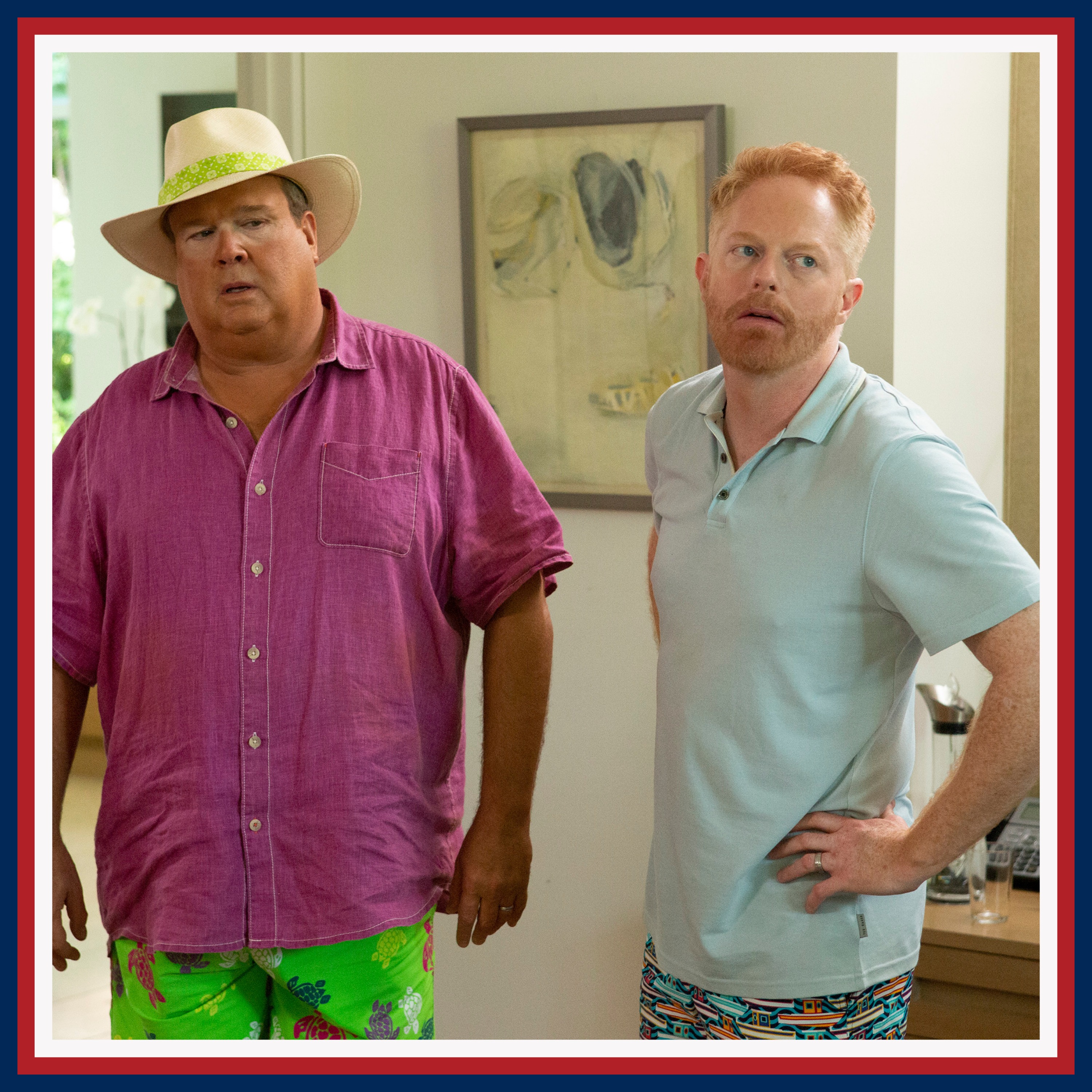
16:40Katy Balls: I thought about this a lot and there are literally dozens I could pick that I think, you know, sort of that are both enjoyable and that capture a lot about America. But the one I would particularly pick or recommend, especially people who haven't seen it, is the TV series Modern Family. It launched, I think, in about the late noughties, around 2007, 2008. It went on for about 12 seasons. It's a story about a quote-unquote modern family. The sort of pater familias is played by Ed O 'Neill, a great sort of comic American actor. He's sort of in his 60s. He's married. He's divorced and remarried a much younger woman.
17:20Katy Balls: It's called Modern Family for obvious reasons. A sort of blended family, divorced. There's a gay couple. There's a divorced person. There's stepchildren and all this kind of stuff. And it is just a superb, superbly written, as I said, sort of portrayal of just family dynamics. But I think what's particularly brilliant about it is that it manages to tackle all these issues without all these very, very much modern culture war issues of gender and sexuality and race to some extent and things like that. And it does so in a very kind of playful way without in any way being woke, but also without being in any way kind of preachy sort of on either side.
18:05Katy Balls: And it's just it's just very, very entertaining. Meaning I'm pretty certain it could not be made now because it is playful about race and gender and sexuality. And we were just talking before we recorded this, I was talking with you and the producer who made the very good point that if that were made today, if you started making Modern Family today, it would have to proceed from completely different ideologically approved views and scripts about all these issues of gender and race and sexuality and everything. I just think it's extremely funny, wonderfully acted, beautifully presented. It's yeah.
18:46Katy Balls: And again, I think captures a moment in American history before sort of wokery went crazy, but explains a little bit also about why so many people, I think, feel somewhat, somewhat, somewhat, somewhat alienated from so much of the modern culture.
19:02Gerard Baker: Yeah, I actually have not watched Modern Family, but you have inspired me in my upcoming holiday, Jerry, to give it a go. But I think when I think, I suppose, about shows, I mean, this is actually more of a book. But given Netflix, I've just brought out a series I feel I can get away with, which is Little House on the Prairie. And I would argue in a way, I think that if you want to know what a country thinks of itself or wants people to know, look at the stories it tells its children. and there's something I think in Little House on the Prairie and you know the frontier and the sense of kind of never being satisfied and going for new things and then I suppose also I think you know quintessential probably series to kind of forming A View of America, Mad Men.
19:46Gerard Baker: Oh yeah. Don Draper and that kind of the insight into kind of that whole industry and the advertising kind of industry back in the day the role of women in it and so forth. You know what happiness is? Happiness is the smell of a new car. And then I think more recently, I mean, I find Yellowstone and Landman to be kind of shows I can't get enough of, which show obviously a certain side of America. One being based in Texas and the oil industry, Billy Bob Thornton, and the other being ultimately kind of maybe the closest there is to a TV series version of a Western in the modern day.
20:28Katy Balls: Yeah, I agree. They're all really good. I mean, Mad Men is, and again, as you say, for capturing a period, capturing the sort of social and cultural mores of a period that is obviously long gone, I can't think of a better, frankly, not just TV show or film, but a better cultural product than Mad Men. I mean, again, to be fair, even I'm not that old. I didn't live through the 50s of the advertising industry. I don't think you need a disclaimer there. So maybe I'm sure it caricatured. I'm sure it did actually caricature, you know, the prevailing sort of social attitudes at the time. It is true. And I'm going to make the obvious point that, you know, that so much of TV and movie making in the last decade, 15 years, has been incredibly woke and just sort of tediously so.
21:19Katy Balls: and I think Sheridan's TV shows sort of push back against that a little bit and they do kind of capture, you know, obviously Yellowstone, you know, the guys, the characters are pretty sort of awful and grasping and materialist, but there is, they do capture something about the West.
21:35Gerard Baker: And then Jerry, to end, you're going to ask a song or two.
21:38Katy Balls: Yeah, one quick song. I'm going to just literally, I mean, I love so much American music. All kinds of music I love. My probably favorite artist of all time is Bob Dylan. And you could pick literally any of a hundred of Bob Dylan songs that are not only works of genius, but capture in their different ways. Everything about, you know, life, love, death, religion, faith, family, everything you could possibly have. But I'm going to pick a particularly, a slightly obscure one to those who aren't absolutely real Dylan Cognoscenti, which is a track from Blood on the Tracks, his mid-1970s album, which I think is his best album.
22:25Katy Balls: Lots of amazing songs on that track, Shelter from the Storm, Tangled Up in Blue. But the one I'm picking, because I think it does have a particular lovely American, it's just a wonderful sort of American ballad. It's called Lily, Rosemary and the Jack of Hearts. It's about eight and a half minutes long. And it is literally a ballad about sort of made up ballad about with these wonderful fictional characters in a sort of a in a Western setting. I won't sort of spoil it for people who want to go and listen to it. But it's just it's just it's a superb song, wonderful melody. It literally tells a story again about these characters.
23:05Gerard Baker: Big Jim was no one's fool He owned the town's only diamond mine He made his usual entrance Looking so dandy and so fine With his bodyguards and silver cane In every herring place He took whatever he wanted to And he laid it all to waste But his bodyguards and silver cane Were no match for the jack of hearts
23:35Katy Balls: I'll just conclude my contribution by saying it is like eight and a half minutes long. It reminds me of one of the great moments, great stories about Bob Dylan. Dylan was giving an interview once and Dylan was always incredibly difficult to interview, very sort of laconic and very, very obscure and enigmatic and hard to pin down. And this interview was going nowhere. And at one point he says to the interviewer, he says, but I can tell you, he says you know what I can tell you what some of my songs are about and the interviewer says oh wow really fantastic Bob what are your songs are about what are your songs about and Dylan says well some of them are about three minutes some of them are about four minutes and some of them believe it or not are about eight or nine minutes
24:18Gerard Baker: yeah I don't have to top that I suppose the one that I would think about would just be Bruce Springsteen Born to Run that kind of focus on the American dream and obviously that one's you know getting out of the turns but I also think one of the things I've noticed to conclude since I've moved to America which I knew a bit before but just and I had this slightly at a journalist awards recently when the speeches were quite long and I said this to someone they said Katie what you need to understand is everyone needs their chance to tell their American dream story
24:49Katy Balls: it's unquestionably a great song and like Dylan so many and like Dylan you know the spring scene has produced so much so much of the soundtrack of modern American life I think people would say
25:00Gerard Baker: And with that, we'll be back in September. So do join us then.
25:30Gerard Baker: So you can outthink, outpace, and outperform. PWC. So you can. PWC refers to the PWC network and or one or more of its member firms, each of which is a separate legal entity. The more you listen to your kids, the closer you'll be. So we asked kids, what do you want your parents to hear? I feel sometimes that I'm not listened to. I would just want you to listen to me more often and evaluate situations with me and lead me towards success. Listening is a form of love. Find resources to help you support your kids and their emotional well-being at SoundItOutTogether.org. That's SoundItOutTogether.org.
26:11Gerard Baker: Brought to you by the Ad Council and Pivotal.
What can culture tell us about the US that news can’t? Gerry and Katy pick books, films, TV and songs that have shaped the way they see America.
Is Modern Family an underappreciated bit of social realism? Why does Katy think a 2004 Disney movie strikes at an essential component of American patriotism? And what film is the most viewed on Air Force One?
Katy Balls, Washington editor and columnist at The Times and The Sunday Times
Gerard Baker, columnist at The Times and editor at large at The Wall Street Journal
Producers: Euan Dawtrey, Harry Kitson
Picture: Modern Family
Music credit: Lily, Rosemary and the Jack of Hearts, Bob Dylan from the album Blood on the Tracks (1975), Columbia
This podcast was brought to you thanks to the support of readers of The Times and The Sunday Times. Subscribe today
Hosted on Acast. See acast.com/privacy for more information.