Ask ChatGPT
 The State of It: USA
29 Apr 2026 · 25m · 12 chapters
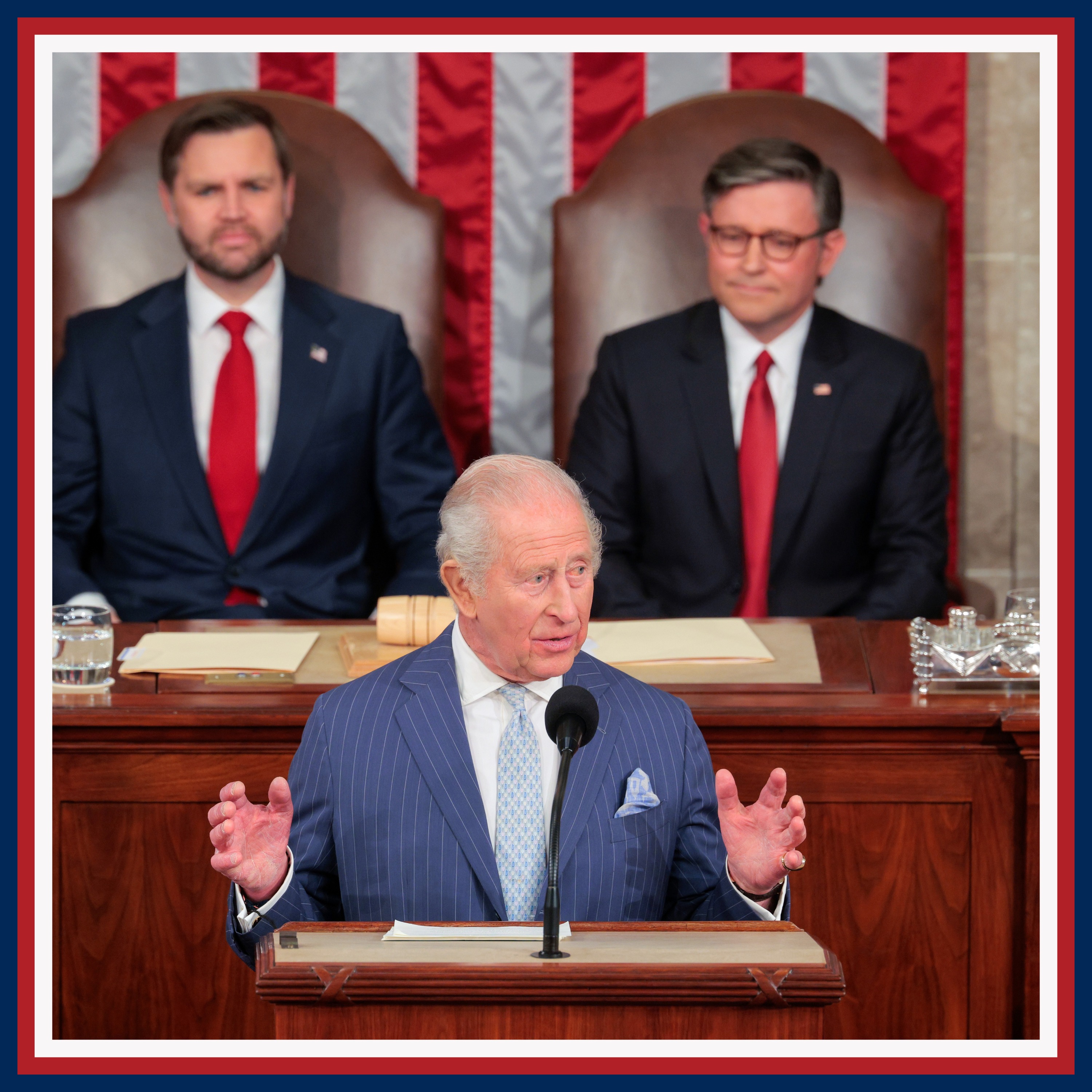
A Times/Sunday Times podcast episode on King Charles’s U.S. state visit to Washington during Trump’s presidency, and on the White House Correspondents’ Dinner shooting and the broader “age of political violence” in America.
Jerry Baker, Times columnist/editor-at-large at the Wall Street Journal; Katie Balls, Washington editor for The Times and The Sunday Times. (They also reference coverage by other Times/Sunday Times reporters/columnists and former footballers, but only these two speak.)
The King delivered “deft,” politically pointed but nonpartisan rebukes to Trump on NATO/Ukraine and checks on executive power via Magna Carta. The dinner shooting reignited debate about political violence rhetoric being blamed on the left. Violence comes from both sides; rhetoric can matter but doesn’t justify demonization.
King’s NATO/Ukraine references (Article 5 after 9/11), Magna Carta line; gift of an “HMS Trump” bell linked to AUKUS; at the dinner, “five shots,” Secret Service escorting cabinet members; “86-47” Instagram claim tied to James Comey; mention of Trump’s attorney general shakeup (Pam Bondi replaced; Todd Blanche acting AG).
Written by AI. May contain mistakes.
Discussion about recent historical events in Washington and Katie's experiences.
“Find the game wherever you get your podcasts.”
Overview of the king's visit to Washington and related events.
“As I say, you've been witnessing history, Katie.”
Analysis of speeches given during the royal visit and their implications.
“I made it into the group that get walked in to watch the speeches.”
Exploration of the king's subtle critiques of Trump's policies during the visit.
“There was the reference, of course, to NATO and to Ukraine and the importance of the alliance and the importance of defending freedom in Ukraine.”
Discussion about the memorable gift presented by the king and its significance.
“that the art of diplomacy is letting the other guy have your way.”
Insights into the monarchy's influence on American politics, especially with Trump.
“And then on Friday, tweet, you know, what a bunch of useless Sharia loving, you know, left wing Marxists the British are.”
Introduction to the next topic about the assassination attempt at the dinner.
“speeches by the king and overall the whole visit, you know, remarkably one of the most, I think one of the most remarkably successful royal visits there's been.”
Detailed account of the White House Correspondents' dinner and the unfolding events.
“I'm Tom Clark and on the Game Football Podcast we answer all of that plus provide detailed analysis of the tactical trends on the pitch and the financial situations off it.”
Hear a detailed recounting of a harrowing security incident at a high-profile dinner.
“I have to say then when I was when I was editor of the Wall Street Journal, we got the journal, obviously being the journal, gets these fantastic things.”
Discuss the connections between political rhetoric and violence in American society.
“And she planned to be off on maternity leave.”
Explore the implications of rhetoric and political violence in the current political climate.
“I mean, you know, the particular, you know, gripe that the Trump people had was that this is what happens if you go out and say Donald Trump is a fascist or, you know, is destroying American democracy.”
Delve into Trump's recent political maneuvers and his approach to enemies in power.
“Now, many have said this is due to mishandling of the Epstein files.”

Get the gist, explore an idea or ask about something said.
 Claude
On The State of It: USA, what are the key points of this episode?
Searching your listeningAutomatic transcript. May contain errors.
0:00Katy Balls: Who won, how did they play, what was wonderful, what was woeful and why? I'm Tom Clark and on the Game Football Podcast we answer all of that, plus provide detailed analysis of the tactical trends on the pitch and the financial situations off it. I'm joined by former footballers as well as reporters and columnists from the Times and Sunday Times. We're here twice a week and for this summer's World Cup we'll bring you daily shows with our team covering every inch of the tournament. Find the game wherever you get your podcasts.
0:36Katy Balls: hello and welcome to the state of it usa the podcast that brings you the finest insight from the times and the sunday times into trump's america i'm jerry baker times columnist and
0:47Gerard Baker: editor-at-large of the wall street journal i'm katie balls washington editor of the times and
0:51Katy Balls: sunday times thank you all for joining us well katie this has been your week really i think You've been in Washington, kind of like Forrest Gump or Zelig, at these momentous historical occasions, a shooting, an assassination attempt and a visit by the king. You've been there to see it all. As I say, you've been witnessing history, Katie.
1:12Gerard Baker: It's been a while for a few days because we've gone from the White House Correspondents' Dinner at the Washington Hilton, which was on Saturday night, which was meant to be Donald Trump's debut as president. We spoke about it last week. It ended up ending after starters because there was a shooter. Then there were questions about whether this would affect the royal visit. You then had on Sunday confirmation that the king was still planning to come to D.C. for his four-day trip. And from that, the White House sprung into action. And we've had two days of festivities here in Washington. It began with the king being welcomed at the White House.
1:49Gerard Baker: Then there was a garden party at the British Embassy with the king, which I attended, along with lots of members of the cabinet. And we went from that to Tuesday, which is really the official day where you had this welcome. I was at the White House for and this was the official welcome ceremony, a big show of military might, marching bands. Trump gave us a speech and then you had this move to Congress later in the day where the king gave his big address and that was a long speech. And then on Tuesday night, you had the state banquet, which I did not manage to make the cut to be one of the 120 people who got a seat at the state banquet.
2:27Gerard Baker: I made it into the group that get walked in to watch the speeches. So I stood at the back of the East Room and watched as Donald Trump first gave his speech and then it went to the king to give his. And I think, I mean, I don't want you to think about the speeches, Jo, but the king at least seemed to kind of pitch it pretty well in terms of keeping it warm and friendly, while also managing to use humour to take a few jabs at various US positions that the UK has rubbed up with them on?
2:59Katy Balls: Yeah, I mean, I thought they were among the most deft performances by not just by a monarch, but by any leading British figure in America that I can recall from the time I've been here. These were extraordinarily well-crafted, well-constructed, And, of course, you know, superbly delivered speeches. The king is no stranger to public speaking, shall we say, and does it very, very well. The speech to Congress was extraordinarily clever. And by the way, very tricky because the king, as we know, obviously, you know, is not a political figure. He's not supposed to be out there giving sort of political speeches or any substantive speeches whatsoever.
3:40Katy Balls: But these were really pointed. There were very pointed observations. There was the reference, of course, to NATO and to Ukraine and the importance of the alliance and the importance of defending freedom in Ukraine. In the immediate aftermath of 9-11, when NATO invoked Article 5 for the first time, and the United Nations Security Council was united in the face of terror, we answered the call together, as our people have done so for more than a century, shoulder to shoulder, through two world wars, the Cold War, Afghanistan, and moments that have defined our shared security. today mr speaker that same unyielding resolve is needed for the defense of ukraine and her most courageous people there was the you know lots of talk about the importance of the special relationship and britain's role i think it was a reference to the royal navy at one point the royal navy that donald trump himself derided just a few weeks ago as having toy ships the line
4:47Gerard Baker: that really stood out to me, because they're definitely the ones you mentioned and the other one was, which seemed to get very loud applause, particularly from Democrats, was talking about Magna Carta and executive power and saying executive power always needs checks and balances.
5:01Katy Balls: Magna Carta is cited in at least 160 Supreme Court cases since 1789, not least as the foundation of the principle that executive power is subject to checks and balances.
5:19Gerard Baker: That seemed to, it would be read a certain way, right?
5:23Katy Balls: Yeah, I know. I mean, these were gentle, very gentle and beautifully delivered reproofs, right, to Trump on NATO, on Ukraine, on the special relationship, on Britain. And absolutely, as you say, that line about Magna Carta and executive power. Somebody once said, didn't they, that the art of diplomacy is letting the other guy have your way. Trump is on the record as saying he adores the king and loves him and loves the royal family and all that. So the king is exploiting that political capital that he has or that personal capital that he has in order to deliver this, the mildest and again, most elegantly deliver of rebukes to Trump.
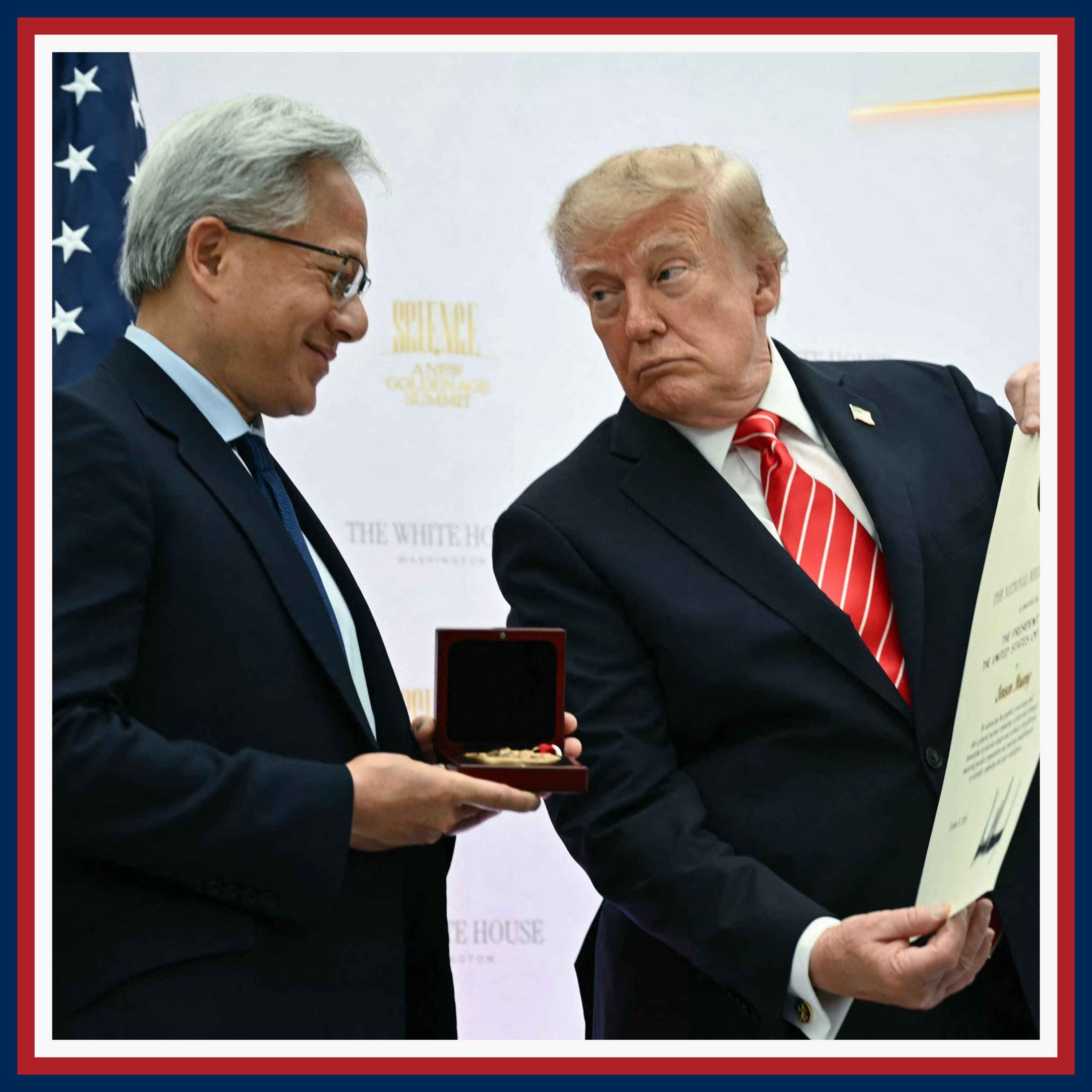
5:57Katy Balls: Now, whether or not any of this can have any long term significance, I don't really know. But it's certainly worked very well. And what I was going to say, Katie, you should tell us again how the speech, how the toast at the dinner went down. And then, you know, the dinner, again, a different setting, but again, beautifully delivered speech, that gift of the bell from – what an extraordinary thing. Have you ever heard of HMS Trump? Did you know there was an HMS Trump? I'd never heard of it. And then to make the gift of that bell, you know, and of course, by the way, not just to make the gift of the bell, but to link it to AUKUS, you know, the Australia, UK, US international security agreement.
6:35Katy Balls: And again, just to remind Trump how these alliances have served America extraordinarily well in the past. So tonight, Mr. President, I am delighted to present to you as a personal gift the original bell which hung on the conning tower of your valiant namesake may stand as a testimony to our nation's shared history and shining future. And should you ever need to get hold of us or just give us a ring? I think, again, I don't want to overstate this because Trump is Trump and, you know, he's exactly, he could literally wave goodbye to the king on today or whenever it is tomorrow. And then on Friday, tweet, you know, what a bunch of useless Sharia loving, you know, left wing Marxists the British are.
7:34Katy Balls: But I do think if anything can be achieved by a visit like this beyond the niceties and the pleasantries, I think the king will have achieved it.
7:43Gerard Baker: So being stood in the room, I mean, the thing that struck me most, there was only 120 because they don't have their ballroom yet. And there were a lot of members of the Trump family. And there were also a pick of the cabinet, not the entire cabinet. Scott Besson was there, for example. and to your point about I think my past three days of the royal blitz I think my takeaway from the past couple of days of being at these various events is just I am struck by how much of a pull the monarchy has on MAGA and the republicans on DC in general I think this also extends to democrats but particularly being at that garden party which is probably where I've been at every event but this was the one where you're actually mingling the most with the guests you had Stephen Miller and his wife, you had Scott Besson, you had Elbridge Colby, you know, a lot of figures that don't normally come to your average embassy party, they all showed up.
8:38Gerard Baker: And everyone is put in a pod. That's the name. Well, not everyone. If you're lucky, you're put in a pod. And the pod is how the palace and the embassy decide who the monarch, who the members of the royal family should speak to. And they're briefed well in advance, I think, so they have a nice, polite piece of conversation to say to each of them. And I was not in a pod we were told the journalists were not a priority for um time of the king on this visit or that was the suggestion but i managed to stand basically in um next to one of the pods which had had lutnik the trade secretarian and you could just see as they were going around there was such an appetite by everyone to kind of wait has he got why is he speaking to that group is he still going to come to this one and the king did a lot of handshaking on it i think my only question after what I think now there are still two days when recording of the trip but largely the DC part is done it's New York Virginia the king comes back to DC briefly and but I think we will say this has been a successful diplomacy I guess my question is the royal card clearly works generally and particularly it works with Donald Trump and but we now had a state visit last year we've had a state visit this year we still have over two years of the Trump presidency can they really roll it out again, Jerry?
9:54Katy Balls: Well, you know, it's funny, I was thinking that, and just one particular little thing in the King's toast last night, when he talked about the World Cup, and he made the point that he was the head of state of, I think, five countries that are going to be in the World Cup. I was trying to figure out who that was, obviously England, Scotland, Canada, Australia, and I couldn't, sorry, forgive me, I couldn't figure out the other one, but as a bit of a football fan, I was struck by that. But it did occur to me, of course, that the Prince of Wales, Prince Prince William is a big football fan, as we know.
10:23Katy Balls: I assume, I don't know if there's any details that have been announced, but I kind of see he typically goes to a lot of England games. If England go a long way in the World Cup, and of course we know that Trump absolutely loves Prince William, tall, handsome man that he keeps every time he sees him.
10:37Gerard Baker: And the Princess of Wales.
10:39Katy Balls: And the Princess of Wales, sort of slightly creepy vibe about that. But I assume that, again, especially if England, as we all pray, go deep into the competition, then the prince will presumably be over here and Trump won't, I'm sure, miss the opportunity. So there's another little bit of additional royal diplomacy that could all help to keep the show on the road, at least for the time being. But as I say, look, my overall takeaway was extraordinarily clever, elegant, important speeches by the king and overall the whole visit, you know, remarkably one of the most, I think one of the most remarkably successful royal visits there's been.
11:18Katy Balls: Casey, we should take a break. When we come back, we're going to talk about the other extraordinary experience that you've had this week, which is being at the scene of an assassination attempt. I should hasten to add for viewers and listeners that, of course, you weren't responsible for the assassination attempt, but you were there. And you're going to tell us all about the White House Correspondents Dinner and its implications when we come back. So stay with us.
11:42Katy Balls: Who won? How did they play? What was wonderful? what was woeful and why. I'm Tom Clark and on the Game Football Podcast we answer all of that plus provide detailed analysis of the tactical trends on the pitch and the financial situations off it. I'm joined by former footballers as well as reporters and columnists from the Times and Sunday Times. We're here twice a week and for this summer's World Cup we'll bring you daily shows with our team covering every inch of the tournament. Find the game wherever you get your podcasts.
12:14Katy Balls: so let's talk about the dinner obviously and the extraordinary uh events that unfolded there tell us what you saw and heard um and uh yeah give us the give us the give us the lowdown so this is
12:25Gerard Baker: my second time there i went last year and there was no president there was no comedian it was it was fine it was largely journalists having a fight about where they covered joe biden correctly this year it was much bigger in the sense of as much higher expectations you had a much bigger cabinet turnout even on arrival I did find that the security was not as severe as I expected it to be because I remember thinking oh we're running late and I'm probably going to be in a you know airport security style queue for 45 minutes now we meant we had to show an invite to get in but there wasn't a double checking of that with ID when I walked in.
13:04Then we got in and to walk around this quite big hotel,
13:07Gerard Baker: there wasn't much security to just be in the entrance area and we're on this floor and everyone's going back and forth into the room and I was at the Fox reception. On that corridor, you didn't really need much to get into it. In fact, so long as you had shown something at the door, you could get down there. And I remember thinking that was quite loose. Then you start going down into the dinner and that's when the security is tighter So you have to show all your information, you know, your bags being checked and so forth. So we get into the dinner. It is, you know, everyone's trying to mingle, walking around the tables.
13:40Gerard Baker: We were on the cheap seats because as same price as everyone else. But just in terms of the pecking order, the way it works is the White House correspondence.
13:49Katy Balls: There are 240 tables. And, you know, I got to say, I've been to that dinner many, many times. My early years, I used to go and I was like literally, I mean, you could not, you could barely see the president from the, you know, from where I was. I have to say then when I was when I was editor of the Wall Street Journal, we got the journal, obviously being the journal, gets these fantastic things. And we would like right up in front. But yeah, it is, you know, for listeners and viewers, it's a vast, vast ballroom where you are probably in the outer sort of in the outer orbit. You're probably 150 yards from from from the high table.
14:22Katy Balls: Yeah, exactly.
14:23Gerard Baker: And so therefore, they tell you to sit down immediately, but any enterprising journalist who's on a cheap seat refuses to do that. And instead, you walk around the main tables, acting as though you're sat on one of them as you bump into members of the cabinet. So I get back to my table, which is kind of on the upper level. We're having the starters, wine is being drunk. And then all of a sudden, we just heard these, what sounded like gunfire. And I think we heard about five shots. And at first, I thought it was some type of military salute or something. and then you looked around and you know everyone stopped smiling it's gone very quiet and then people start shouting get down and so we all kind of get to the floor and everyone's crawling under tables and where our table was actually very near to the entrance to it and so we felt quite close and that kind of worked both ways because I was speaking to someone um he was on a table members of the cabinet near the front and they said well and I said we were really near the door in the sense like that is perhaps more scary because if they did make it through you're nearer them but then they said but at least if you were near that door you could start to see which we did cabinet members being escorted out by the secret service by security whereas they said when you were down in the middle there was just a sense that you just you were so far away from what was happening you just didn't know if the gunmen were in they were out so I think there were about 10 minutes where it was very quiet and people were very worried because you'd heard the shots And if you're on the inside side, you don't know if, you know, you don't know if the shots are because they've caught the guy trying to get in or because the guy has stopped those people.
15:56Gerard Baker: But then once you started to see them slowly but surely taking out all the different cabinet members, so Pete Heggs if it's a rush past our table, for example, you are, you know, that does start to make it seem that there's not a live threat in the room. And then people slowly started to come up, some more quickly than others because they wanted to get back to eating their cheese or they needed a drink.
16:14Katy Balls: Did you grab a bottle of wine? And like there was there was one of the most hilarious and by the way, interesting kind of divergences between British and American journalism is there were various shot pictures or videos of as they were leaving journalists grabbing the bottles of wine off the table. I saw some commentary on X from Americans saying how disgraceful this was, how despicable these journalists. You don't hate them enough. They're stealing bottles of wine. I mean, every single British journalist that I've ever known would, of course, and everybody would expect everybody to grab whatever drink was available before they disappeared.
16:46Gerard Baker: Yeah, once they had calmed down slightly, I did grab my wine to drink and to sip under the table because I thought, you know, keep calm and carry on. I didn't grab a bottle on the way out. I did see people with the bottles because eventually they said, stay put, stay put, the dinner may go on. And you started to think the dinner is not going on. But I don't think they wanted a mass stampede on the way out. So when we were eventually going out, I did notice people carrying these bottles and I did say, oh, enterprising move. I should have done that. And they said, yeah, we're going to keep partying on the street.
17:16Gerard Baker: You don't want to overstate it. I think it was scary in the moment. And then I think most people just snapped back because they realized there wasn't an immediate thing. And then the president said he wanted the dinner to continue. Security advised against, so people end up going to the White House press briefing room. But at that point, D.C. was pretty locked down. But yeah, very much there was a close parallel between the people carrying the bottles of wine and the people going, which after party are we all going to now? And all the embassies had to make a decision and they decided to keep going with the after parties.
17:45Gerard Baker: So D.C. kept doing what D.C. does.
17:48Katy Balls: Did you go? Did you get to an after party?
17:51Gerard Baker: i i came back to my house and finished filing my article because i had to write it up and then i did make it to the swiss party afterwards and it was because i thought you know the show must go on but it was a slightly strange energy but the next day everyone was
18:05Katy Balls: back at the british embassy seeking neutral ground in the and to avoid any possible risk of any war or violence you obviously chose the swiss exactly i also thought because that one's
18:17Gerard Baker: closest to a rave it would probably go on the latest and it was quite late by the time I finished my work um but I think you know the president said he wants the dinner to continue and I was speaking to someone in the admin about this and they're saying they think it will be at the same hotel and because the hotel now wants to prove that it doesn't have a security problem and also that hotel can fit so many people but but I suppose Jerry on this um you know you've had in that White House press briefing room you had the president that night and then you had Caroline and leave it later in the week when I was there.
18:47Gerard Baker: And she planned to be off on maternity leave. She came back to one more briefing because of the events, saying that, you know, the rhetoric of political violence needs to stop trying to blame the left for this. And then, you know, so it has stroked up that debate again. We also have a situation with James Comey. Can you talk listeners through the developing situation there?
19:09Katy Balls: Well, so the politics are interesting. So, I mean, first of all, you know, that night, as you say, the president went back to the White House and gave, you know, by his standards, by any standards, actually, was a quite gracious briefing to journalists in the room, all there in their ballgowns and black tie, and said, unusually for him, you know, how much he admired the journalists and how, you know, great they were. And they all did a great job. And he was particularly glowing about the chair of the president of the White House Correspondents Association. I think she's from CBS and she's been who he's criticized in the past.
19:40Katy Balls: It was kind of all kind of a, you know, it was he struck the right note. And without any question, he said the right things. And then within hours, of course, we're off to the races with, oh, this is the hard left. They are completely. It's the rhetoric of democratic politicians and the media, you know, who demonize Donald Trump and inflame opinion and incite people to go out and commit assassinations. This is such a tiresome trope now every time we get an act of political violence in this country and every single time that like literally, you know, before the you know, before the bullets are cold, there will be people out there saying this is the fault of fault of politicians who, you know, demonize it.
20:22Katy Balls: It's right now the Vogue thing is it's all the left wing. All the violence is left wing and they're all inflamed by this political rhetoric. It's nonsense, of course. I mean, it's nonsense for two reasons. One, it's not all left wing by any means. There was the awful assassinations last year in Minnesota by a kind of an absolute lunatic who I think he was sort of a pro-life extremist who killed two state politicians in Minnesota. We've seen these terrible acts of violence, you know, again, as a racist acts of violence by white supremacists in Buffalo and in Texas and various else like this. I'm afraid it's, you know, it's both sides.
21:00Katy Balls: It comes from both sides. It's appalling. It's a reflection of just, you know, the kind of violence that I'm afraid is everywhere in American society. But also, you know, the idea that these people are, you know, motivated by or incentivized by, you know, rhetoric, political rhetoric. I mean, there may be some truth to that. But the idea that politicians should refrain from using typical and it is typical political rhetoric to attack their opponents is absurd. I mean, you know, the particular, you know, gripe that the Trump people had was that this is what happens if you go out and say Donald Trump is a fascist or, you know, is destroying American democracy.
21:41Katy Balls: Well, you know, and again, some of that language is extreme, but you can't you must be allowed to, you know, to to make that case. And by the way, there are lots of reasons to make the case that Donald Trump is an authoritarian and anti-democratic. So, yeah, this becomes this is what happens every single time. And it's so it's so macabre and gruesome, Katie, because it's, you know, it's like literally the glee with which both sides, I say, right now, particularly the Republicans, the conservatives, the MAGA crowd glom onto these horrible shootings as, you know, validation of their side and the indictment of their opponents is, well, it's a sign, I'm sorry, of the kind of deeper sickness.
22:22Katy Balls: You mentioned the Jim Comey thing, which is also part of this. I mean, this is just utterly absurd. Jim Comey, the former FBI chief, those who have been following in detail, he posted a picture last year on Instagram. I think it was of shells on a North Carolina beach in the shape of the numbers 86-47. And that 47, of course, is 47. Donald Trump's the 47th president of the United States. 86 is the operative term here. 86 is an old term that started out in restaurants, actually. In fact, there's a restaurant that's just opened in New York called the 86, which is where this term years ago in a previous manifestation of this restaurant, where this started.
23:05Katy Balls: 86 is a term in American, particularly in restaurants, and it's got broader application over the years, which means to get rid of something, it would start out literally, you know, if something wasn't any longer available. If you wanted the duck and it wasn't available, the restaurants would say, oh, the ducks, we've 86ed the duck.
23:22Gerard Baker: Sorry to forgive my ignorance, but why does it mean the 86?
23:25Katy Balls: I think it's because the restaurant where it started was literally number 86, whatever it was. And they started saying it. There are various arguments as ever with these things about the etymology. But I think that's where it came from. And it's a term that just has very, very wide usage in America. People say, you know, if they don't like a football player who's playing terribly, they say we need to 86 him. But in because Donald Trump is so obsessed with James Comey and so determined to try to bring him to justice for what he claims are his persecution of Donald Trump when he was the FBI chief.
23:58Katy Balls: You know, he brought a case against him, attempted to bring a case against him last year, which was thrown out. They've now brought this case, this 8647, claiming that the phrase 86 was a call for the assassination of or committing personal harm injury to the president. It's utterly, utterly absurd. Nobody, even I think some of the MAGA people that I've been hearing from and following on social media think this is bonkers and it will be thrown out, of course. But political violence is being weaponized in political terms here. to essentially try to kind of, you know, shut people up, to prevent people from making what are absolutely valid statements, even, you know, kind of hyperventilating ones.
24:43Katy Balls: So, yeah, it's again, and I say it's just a broader indication of the sort of sickness that we have that we're so polarized in this country that people are trying to shut each other up and using political violence to do that.
24:56Gerard Baker: And yet my final thought, and it's just before we have to wrap up, was just, I think it is something we're probably, when it comes to these indictments, potentially going to see a bit more of because the other context to point out is that, you know, Trump recently let go of his Attorney General, Pam Bondi. Now, many have said this is due to mishandling of the Epstein files. That was certainly the Democratic Congressman Roe Kahn's view, and I interviewed him, you know, the day that it happened. But another gripe you kept hearing is Trump has been frustrated that his attorney general, that the DOJ has not brought down enough of his enemies when it comes to his taste, his thirst for retribution.
25:38Gerard Baker: And therefore, Todd Blanche, he is currently the temporary attorney general. He's an acting AG. Other names have been floated. But when you speak to figures close to the administration, they're the view that, you know, Todd could get the permanent job, but he has a few months potentially to prove himself before they make a decision whether to move the acting part. And I think that going after some of Trump's, you know, most well-known enemies is probably going to do Todd Lynch no harm when it comes to auditioning and to make his current brief permanent.
26:10Katy Balls: Yeah, it's all part of the way, unfortunately, politics seems to work these days.
26:16Gerard Baker: And with that, do join us again next week. And if you like this podcast, do please subscribe and do rate us.
26:25Katy Balls: In 2004, Andrew Malkinson was sentenced to life in prison for a crime he didn't commit.
26:31Gerard Baker: Now another man has been convicted of the brutal rape in Greater Manchester and we can reveal the true story of what happened that night. I'm Emily Dugan from the Sunday Times and I've been investigating one of the biggest miscarriages of justice in modern British history.
26:46Katy Balls: Listen to the full podcast series with new episodes
26:49Gerard Baker: by searching for 17 years wherever you get your podcasts.
After an assassination attempt on President Trump threatened to derail the Royal Visit, King Charles has gone on the charm offensive -- with some mild and elegant rebukes.
Katy Balls describes the 'Keep Calm and Carry On' attitude inside the White House Correspondents' Dinner.
And as the former FBI director James Comey is charged with endangering the president's life, we discuss the weaponisation of political violence.
Katy Balls, Washington editor and columnist at The Times and The Sunday Times
Gerard Baker, columnist at The Times and editor at large at The Wall Street Journal
Producers: Euan Dawtrey, Harry Kitson
Executive producer: Molly Guinness
Image: Getty Images.
Clips: Reuters
This podcast was brought to you thanks to the support of readers of The Times and The Sunday Times. Subscribe today
Hosted on Acast. See acast.com/privacy for more information.