Ask ChatGPT

 The State of It: USA
24 Jun 2026 · 29m · 16 chapters

The episode of State of the Nation USA focuses on two main topics: (1) political reporting about Donald Trump’s second term via the New York Times book Regime Change by Maggie Haberman and Jonathan Swan, including claims that Trump ran again in 2024 to avoid jail; White House “Situation Room” discussions allegedly covered Iran-war deliberations and an Epstein-related plan involving Tucker Carlson interviewing Ghislaine Maxwell; and Trump’s self-comparison list of historical figures (Hitler, Mao, Stalin, etc.), said to be given by a “historian” but later revealed as a golf caddy. Key claims are that second-term governance is more tightly controlled, with more short phone access and fewer traditional leaks, and that internal tensions over Iran included JD Vance opposing the war and Marco Rubio calling parts “BS.” (2) UK politics and US attention: Keir Starmer’s departure and Andy Burnham’s expected rise, plus American perceptions of Britain’s economic troubles and potential Ed Miliband chancellorship. Notable examples include New York City Democratic primary results favoring far-left candidates (ICE abolition, tax-the-rich, anti-Israel genocide accusations) and discussion of businesses moving from California to Texas.
Gerry Baker (Wall Street Journal editor-at-large; columnist for The Times) and Katie Balls (Washington editor and columnist for The Times and Sunday Times). They also interview/feature authors Maggie Haberman and Jonathan Swan, but the episode’s on-air hosts are Baker and Balls.
Written by AI. May contain mistakes.
Hosts discuss political reactions to the latest UK and US leadership changes.
“It's designed to support you in reaching your goals.”
Hosts discuss political reactions to the latest UK and US leadership changes.
“Is there any reaction to the latest change of prime minister in the UK and in America?”
Exploration of the new book detailing Donald Trump's second term and key revelations.
“But Katie, you've actually been interviewing the authors, Swan and Haberman.”
Analyzing Trump's perception of his historical significance and comparison to dictators.
“But first, I thought we could just start with a clip of my discussion with Jonathan Swan and Maggie Hageman.”
Discussion on the reliability of Trump's public statements and their implications.
“Look, and there's no question that Donald Trump, well, there's actually no question that Donald Trump is an historic figure.”
Exploring the internal tensions and strategies within Trump's second term administration.
“I think what the book does very well is it's getting comprehensive readouts of meetings that have happened.”
Analyzing the fallout of the administration's decisions regarding the war with Iran.
“Second term presidents start to lose power.”
Explore how Trump's past decisions and actions are influencing his political strategy and legacy.
“Trump administration was, Trump 2.0, pure Trump, as Steve Bannon put it, in having all these executive orders ready.”
Explore how Trump's past decisions and actions are influencing his political strategy and legacy.
“If you felt stuck trying to lose weight, you're not alone.”
Discussion on the implications of the new prime minister and US perspectives on UK politics.
“Well, another prime minister departs in the UK.”
Examine how American political figures view the UK and its leadership transitions.
“seem to pre-announce Keir Starmer's resignation when he took to truth social to say Keir Starmer is going.”
Analyzing American concerns about the UK economy and leadership changes amidst global attention.
“But you've been talking to various finance figures this week about how the UK looks.”
A deep dive into the far-left shift in New York politics and its broader implications.
“as some senior US government officials, but also a couple of very well-known figures, should we say, in financial markets.”
Discusses the extreme polarization in American politics and the implications for the Democratic Party.
“wins, he's going to try and manage a party, a Democratic party in Congress.”
Explores the migration of businesses from California to Texas and the factors driving this trend.
“But before we go, Casey, I know you've got a piece, another piece coming in addition to your interview with the authors of the new book.”
Wraps up the discussion and thanks the listeners before heading to the outro.
“I must say though, Austin, if we're going to use a British analogy, Austin is kind of more like the Islington.”

Get the gist, explore an idea or ask about something said.
 Claude
On The State of It: USA, what are the key points of this episode?
Searching your listeningAutomatic transcript. May contain errors.
0:00Running a business means juggling a lot of moving parts. And when your communication tools can't keep up, things start to slip. Missed calls, slow replies, scattered conversations. They're not just frustrating, they're lost opportunities and revenue left on the table. That's where Quo comes in, spelled Q-U-O. Quo is the number one rated business phone system on G2, trusted by over 90 ,000 businesses. One shared business number for calls and texts, so every conversation stays visible, organized, and accountable. It works from an app or computer. You can keep your existing number, add teammates, and sync your CRM, letting you scale without adding complexity.
0:43And with built-in AI, Quo logs calls, summarizes conversations, and flags next steps, even after hours. Stop missing customers. Stop leaving revenue on the table. Try Quo free and get 20 % off your first six months at Quo.com slash tech. That's Q-U-O dot com slash tech. Quo. No missed calls. No missed customers. If you felt stuck trying to lose weight, you're not alone. Enter Weight Loss by HERS. It's designed to support you in reaching your goals. And HERS now offers access to an affordable range of FDA-approved GLP-1 medications, including the Wegovi pill and the Wegovi pen. Even better, with a range of affordable GLP-1 options, HERS makes it simple to find an approach that fits your needs and your budget.
1:32If eligible, you'll get a treatment plan personalized to you and unlimited dosage changes as needed. It's weight loss designed to work with your life. Ready to reach your goals? Visit ForHERS.com slash eligible to get personalized affordable care that gets you. That's F-O-R-H-E-R-S dot com slash eligible. ForHERS.com slash eligible. Weight loss by HERS is not available in all 50 states. WeGovi is the registered trademark of Novo Nordisk AS. To get started and learn more, including important safety information, WeGovi clinical study information, and restrictions, visit ForHERS.com. Donald Trump was given a note saying he was the most powerful man who's ever lived.
2:14Yes, and he ratted through the top 10. Hit the Stalin, Mav, Genghis Khan. And the president was thrilled.
2:23Hello and welcome to the State of It USA. I'm Gerry Baker, editor-at-large of The Wall Street Journal and a columnist for The Times. And I'm Katie Balls, Washington editor and columnist for The Times and Sunday Times. This week, another prime minister walks the plank. Is there any reaction to the latest change of prime minister in the UK and in America? We'll be talking about that, both about the political reaction to the prospect of Andy Burnham taking power in a few weeks' time. But first, this week, we have a new book out with remarkable details about Donald Trump's second term. It's a book called Regime Change by two reporters for the New York Times, Maggie Haberman and Jonathan Swan.
3:06It has really some extraordinary reporting, some inside reporting in the White House, the first 18 months of Donald Trump's second term. and it includes a number of extraordinary revelations, including perhaps most remarkable, the one that they claim, the reporters claim that Donald Trump says the only reason he ran for a second term in 2024 was to avoid going to jail. But Katie, you've actually been interviewing the authors, Swan and Haberman. Tell us what you heard. Yes, I spoke to them earlier this week and the full interview will be in the Sunday Times. But yeah, this is the book, as you can see, it's a very gold cover for those who are listening, not watching.
3:45And it's called Regime Change. And it was interesting to sit down with the two of them. Now, as you say, there are lots of political books. What makes this political book different is it has been, I think, sparking fear in the White House for several months. You've already, of course, had the US president come out to say what he doesn't like. But there is such a level of detail in this book. So a few chapters were serialized in advance. Two were based in the Situation Room with various conversations about deliberations over the Iran war. There had been little bits of information coming out about it, but in forensic detail, what J.D.
4:25Vance had said from the Situation Room. And then also another Situation Room leak, which was on Jeffrey Epstein. And this was even just extraordinary in the sense that when the White House were working out how to handle Jeffrey Epstein, and this was the story that Donald Trump said, you know, on the record, he wasn't bothered about. It was all a hoax. A small group of aides actually just went to that room, which is usually for, you know, national security, foreign policy discussions to talk about how to handle it. And in it, you had J.D. Vance suggesting that they could get Tucker Carlson to go and interview to say Maxwell's a way to handle the situation.
5:01Now that bit didn't happen. So to get into that level of high-level discussion and then to print it almost verbatim just shows the level of sourcing. And we can get into that bit. But first, I thought we could just start with a clip of my discussion with Jonathan Swan and Maggie Hageman. And this was from after using all their sourcing to get this book together. They then have a sit down near the end with the president. And when they have that sit down, Donald Trump presents the pair with a note about his place in history. He handed us this sheet of paper, two pages, and it was this amazing document, which he said was written by a historian, which says Donald Trump is the most powerful man who's ever existed on the planet by far.
5:48And then he says, and he goes through the top 10, and it's like Hitler, Mao, Stalin, Napoleon, Alexander the Great, the Caesars, Attila the Hun, Genghis Khan. Jerry, the twist to this story, too, is Donald Trump says that it is a historian who's given it to him. And it later turns out on Digging that it was a golf caddy. But let's not take that away from it. I think that the main thing that struck me was the fact that he was like the fact that on this list, he was seen as, you know, more impactful than, say, Stalin. But obviously, I think traditionally, some presidents would compare themselves more to, you know, previous presidents or previous prime ministers that came before, not necessarily dictators.
6:34But it tells us something about how he sees impact. Yeah, it does. Look, and there's no question that Donald Trump, well, there's actually no question that Donald Trump is an historic figure. Whatever you think of him, whether you like him or not, he probably is the most consequential American president of the last 50 years. My sort of larger issue with books like this, Katie, is that, well, particularly with Donald Trump. I mean, we know that Trump speaks to people all the time. I mean, he cannot shut up, which is a tremendous credit to him in many ways. I mean, for all the talk about, you know, how much he hates the press, he talks to the press constantly.
7:11We went through this extraordinary thing over the last few months during the war with Iran, where random reporters who had his cell phone number would call him and, you know, in the middle of the night and say what's going on and he talked to them for whoever they were for five minutes all kinds of people saying what's going on so so one of the you know so so when you get a book like this and i'm not in any way casting aspersions on the authors or what they do you sort of wonder as you hear this and you hear these extraordinary stories about comparing himself to mau and stalin or at least you know listening to a golf caddy comparing himself to start to mau to mau and stalin or you hear some of the things that he's about some of the epstein stuff as you talked about or you'll hear and we'll talk a little bit i think too about some of the revelations about the war You just wonder how reliable it all is.
7:57And again, I'm not in any way challenging that they're hearing this directly from the president. I mean, everybody hears directly from the president or directly from the people around the president. But it's just there's a sort of there's a kind of pie crust quality to kind of everything that Donald Trump says in that, you know, it kind of it looks interesting when you first see it. And then when you pick it up, it all falls apart. I just wonder how much real substantive political value they have, other than just once again giving us an insight into the remarkable mindset, the sort of, you know, the psychopathology of the president.
8:34I think what the book does very well is it's getting comprehensive readouts of meetings that have happened. And therefore, you know, most of it isn't coming from Donald Trump. and one of the things I spoke about with the two authors is you know what is the difference between first term and second term Trump and I think probably one of the key things to talk about is Trump and how he operates but they said the media environment is also different because in the first term there was so much turnover and so many people coming and going that you could literally just stand near the White House and someone sacked would end up starting to speak to journalists and Jonathan in the interview first is almost like it's like a slush just it was so easy to get things.
9:13Whereas second term, it's been a lot more tightly controlled in terms of the media. And therefore, there haven't been as many, if you think about it, kind of traditional scoops of readouts of meetings when we think about Trump's return. Instead, what we've had a lot of, and we spoke about this, and I think it's also something which lots of people in DC talk about, is we've had a lot of these very short phone interviews. And that's been a feature of the second term where every journalist in DC now basically has Donald Trump's number. If you call him enough times, you can get him on the phone for 30 seconds.
9:47And it doesn't necessarily illuminate. You're kind of in Trump's world on the talking point. So the harder thing is to kind of lift up and get the information they don't want you to have, which the White House is very good at suppressing. I think the value of what Donald Trump says is so small because, one, One, there's a lot of it. And whenever you have a big supply of anything, the value of that whatever's being supplied goes down. And two, Trump just sort of says things that are disconnected from reality. And I don't just mean he lies. Of course, he lies. He says things that I think just whatever appeals to him at a particular at a particular moment that, you know, gets him out of an awkward situation or sounds good or he thinks his audience wants to hear or he thinks will be controversial.
10:36And I just, again, I just wonder about the value of that. But where the value is, Cady, I think you're right here. In the first term, you know, we had just an extraordinary day after day after day of leaks of people who were not really Donald Trump's allies, who had senior positions in the administration. people like, you know, he had chiefs of staff and defense secretaries and secretaries of state who were not his people, but were sort of, you know, traditional, conventional Republicans. In the second term, we've got this much more tightly knit group of Trumpists, real hardcore Trumpists. And if they're now starting to talk, and it looks like, you know, with this book, maybe they are, that again suggests to me the attrition of Donald Trump's power.
11:21We've talked about this a little bit. He's well into his second term now. Second term presidents start to lose power. Trump is very unusual, in fact, genuinely unique in all kinds of ways. And maybe he can buck that trend. But one of the sure signs of a president kind of losing his grip on power is when people around him start to sort of talk to the press or talk to authors of books like this. And I think you've seen a little bit of this, Katie. You saw You talked about the Epstein stuff. And you've seen some of this with regard to the conversations that they report on the war with Iran. Obviously, you know, the book went to press, I'm guessing, what, sort of a month or two ago.
11:57So they don't have the most up-to-date debates. But it is pretty clear that one thing they do have from what I read of the book, they do have some of those internal discussions about going to war with Iran in the first place. And it seems, and you correct me if I'm wrong because you've read it in more detail than I have, that already we were seeing that J.D. Vance, we kind of knew J.D. Vance, was opposed to the war. It was very much against Vance's kind of conception of what US foreign policy should be, which is basically to stay out of most of the world unless it's really, really urgently necessary.
12:28Some of the others were supportive of the war, but maybe a little skeptical about some of the claims. There's reporting about Marco Rubio saying, this is BS, this idea that we're going to be able to remove the Iranian regime very easily. What did you pick up there about, you know, the internal tensions within the administration, especially now we're dealing with the fallout of what is, you know, except to a few hardcore Trump supporters, I think, really emerging as a kind of a pretty disastrous decision to do this war? Yeah. And I think first completely to your point, the fact that you've had this level of leaking is, you know, well, before the book was published, I heard, you know, administration figures saying to me, you know, what was worrying about them was what does that say?
13:11if your most senior figures, if you think there's about six people in that Epstein discussion in the situation room, if that is coming out of there in such detail, and maybe it's, you know, one degree separation, what does it say if such senior figures in the administration are almost trying to do a post-mortem, a blame game where Trump isn't coming out well, but some of the other characters are? And that does suggest that, you know, pressure is building and people are looking a bit beyond Trump. I think on Iran, it is the dynamics that we already broadly know, but a sense that J.D. Vance is a figure who has most regularly argued against it.
13:49Others have tried to say to Trump gently, you know, if you do X, Y might happen, but they haven't really been heard. But the one thing you get from reading the book, but also just from conversations we've been having, if you think about covering this term, is a sense that everyone was really struck in the first couple of weeks and months by how organized the Trump administration was, Trump 2.0, pure Trump, as Steve Bannon put it, in having all these executive orders ready. And I think Trump now sees this and many of his team do that it was almost a blessing in hindsight that he didn't win two consecutive terms.
14:29Because if you go straight into the second term, he would have been weakened from the points of bookmark. But I've also heard those around to make this point. And by having all that time out, not only did he come stronger politically because of various reasons, he also had time to actually work out who would enact his plans. But what we've seen in recent months is a sense that what was a really organized second term initially to the point that even critics were saying, you know, he knows what he at least tries to want to do this time. The wheels are starting to come off. And I think Iran is seen as a really big part of that because it goes into a lot of detail about this, you know, the first Iran strike.
15:08So if we think to last year when Trump struck Iran with Israel and it was actually a short mission. and in the book you have Tucker Carlson calling him and they're having a very terse conversation with Tucker Carlson saying you're going to be dragged into a war which is Israel's war and you're not going to be able to get out of it and he does get out of it because it's a very short exercise then you have Venezuela over the new year and that mission of Maduro again a fairly short exercise if you judge it in terms of military I think lots in the admin think that has been a success and all of this emboldens Trump to think that he can be doing more on foreign policy and also he's thinking about legacy.
15:45So he's doing all these things. And then you end up with this Iran war, which I think the general feeling is has not gone to plan and is something that Trump is just about getting out of and can he get out of unscathed? Well, the one thing we can say, this book, Doubtless, will do extraordinarily well. He may be losing his political grip a little bit. We're seeing more signs of that. But his ability to capture, to live inside, rent-free as they say, inside the heads of literally billions of people around the world is absolutely undiminished. We're going to take a break. And when we come back, we're going to be talking about the end of Keir Starmer, the arrival, we think, of Andy Burnham, and whether anyone in America is paying much attention.
16:26We'll also be looking at how the Trump administration might feel about Chancellor Ed Miliband hearing from Trump's own representative. If you felt stuck trying to lose weight, you're not alone. Enter Weight Loss by Hers. It's designed to support you in reaching your goals. And HERS now offers access to an affordable range of FDA-approved GLP-1 medications, including the WeGoV pill and the WeGoV pen. Even better, with a range of affordable GLP-1 options, HERS makes it simple to find an approach that fits your needs and your budget, if eligible. You'll get a treatment plan personalized to you and unlimited dosage changes as needed.
17:04It's weight loss designed to work with your life. Ready to reach your goals? Visit ForHERS.com slash eligible. to get personalized, affordable care that gets you. That's F-O-R-H-E-R-S dot com slash eligible. ForHERS dot com slash eligible. Weight loss by HERS is not available in all 50 states. WeGovi is the registered trademark of Novo Nordisk AS. To get started and learn more, including important safety information, WeGovi clinical study information, and restrictions, visit ForHERS dot com. Every morning throughout the World Cup, the game football podcast from the Times and Sunday Times will bring you your essential daily briefing.
17:42We'll hear from our reporters inside the England and Scotland camps bringing you the big news first. We've got reporters covering the best of the rest and following all the biggest stories. From FIFA banning water to Donald Trump coming on as a sub against Paraguay. OK, maybe not the last bit, but who knows. So join the game for the biggest show on earth. Find the game wherever you get your podcasts.
18:11Welcome back. Well, another prime minister departs in the UK. Another one gets ready to mount the carousel. Andy Burnham, of course, expected to become prime minister in a matter of weeks, barring something extraordinary. He will be, what, the seventh prime minister Britain's had in the last 10 years. I've been in the US this week talking to people, political figures, business figures and others about it, about the implications of yet another change of government, the implications of an Andy Burnham Labour government. Katie, you have too, you've been having some interesting discussions with prominent Americans on the topic.
18:49What have you been hearing? It's always funny. One of the things that's most struck me about moving to America, and I know, Gerry, this will not surprise you as someone who's been here for such a long time, But just how little they talk about us. Often you'll get these calls from the UK news desk. I remember around the time of Mandelson going, and it was clearly fever pitched in the UK. And I was saying, the pressure's building, is it leading all the bulletins in the US? And you're like, I haven't even seen it on one bulletin yet. But I think a change of prime minister is a time when you do get some questions about British politics.
19:24And therefore, I have a lot of people asking me who Andy Burnham is. Is this about Epstein still? There's some confusion about what's just happened. But certainly, you know, even Donald Trump, for example, on Sunday, you had the president seem to pre-announce Keir Starmer's resignation when he took to truth social to say Keir Starmer is going. He's a great guy. Well, he's a nice guy. But he let the country down on energy and he let the country down on immigration. and just last week I sat down with the US ambassador to the UK, Ambassador Warren Stevens, who's obviously Trump's representative. He's known Trump for many years.
20:04So I said to him, what do you think about Andy Burnham and potentially Ed Miliband because if something went wrong could Ed Miliband be chancellor, which is a big rumor? And this is what he said to me. My job is to work with whoever the British government is. And so, you know, I'll do my absolute best. I obviously have, I don't know Andy Burnham at all. I've never met him, but I obviously have policy differences with Ed Miliband, starting with energy. And so we've had one meeting about that, and it didn't really go all that well. And there wasn't a second? There hasn't been one. Yeah, Gerry, so certainly I think that Donald Trump had already clashed with Keir Starmer on various policy issues.
20:51I think if you did have Andy Burnham make Ed Miliband chance, that that is going to be an escalation because Ed Miliband is seen as the king of net zero to the point that even some Labour MPs don't like it. But you've been talking to various finance figures this week about how the UK looks. What have you been picking up? Well, I think to your point about Americans not paying much attention to what goes on in the UK, I'll just endorse that and sort of say two things, really. One, you can't overestimate the extent to which the UK does not impinge on the American public or political consciousness pretty much at all.
21:29I think it is literally true, for example, that the sort of the takeover of Boston by Scotland fans for the World Cup in the last week has received 10 times as much, maybe 100 times as much attention in the US media as, you know, in general public consciousness as Keir Starmer's tearful departure from number 10. And the second thing I'd say is you can't overestimate either the extent to which, and I'm sorry to say this as a proud Brit and an American, I'm a dual citizen, but the extent to which Britain is regarded as a bit of a laughingstock, quite frankly, these days in America. And now that's, you know, partly because of just the sheer sort of, you know, Monty Python-esque, you know, rotation of prime ministers.
22:22It's partly because of the, you know, frankly, the diminished significance that Britain has in sort of particularly in military affairs, military and sort of strategic affairs. So those two things I think are just, you know, we should keep front and centre of our minds. One, Britain does not figure politically in the American mind. And two, insofar as it does, it's regarded in a way in the 30 plus years I've been in America in a more negative and frankly, disdainful way than I think Britain has been viewed at any point probably in the last 75 years. And just to illustrate that, you talk about, yeah, I spoke to a couple of people this week as some senior US government officials, but also a couple of very well-known figures, should we say, in financial markets.
23:07And, you know, their focus is on policy and on the economy and just what an incredible mess the British economy is in. Productivity stagnation for the last 15 years, profound fiscal problems, really long term structural problems, massive welfare spending, high taxes. You know, and one of them said when I spoke to this week said, look, the British, whoever it doesn't, you know, who knows? This is someone who knows Britain very well, does not know Andy Burnham very well at all. had met him once when he was a minister a long time ago, would say, look, Britain's got to go for growth. It's got to do something about its chronic economic weakness.
23:45You look at Britain, you look at it from overseas, and you see this sort of diminishing economic power. You see a country that has opportunities. People don't dismiss that. AI is a big opportunity. Artificial intelligence is a big opportunity for the UK. But even there, this person said to me, if they don't get their energy policy right, if Britain continues to have this incredibly restrictive energy policy, and if it ends, we do end up with Ambassador Stevens there talking about Ed Miliband. If someone like Ed Miliband were to become chancellor, I think the reaction among American investors, among financial markets more generally, unless Britain starts demonstrating that it's really serious about developing a strategy that will regenerate growth, I think Britain will just continue to sort of, frankly, just sort of sink in the consciousness of Americans generally, and in particular of American policymakers and people who make the big decisions.
24:44Now, Gerry, to do a segue there, we're talking obviously about the business perception of the UK. But in your home city, New York, we've had some results overnight, which could also raise questions about where New York is going. We've already, of course, had Mandani elected as New York mayor. But in the primary results from New York overnight, we've ultimately had Mandani's preferred candidates sweep the board. You've got Brad Lander, who's accused Israel of genocide, beating Congressman Dan Goldman. Two other left-wing candidates who won their districts, Claire Balde and Daria Chevalier. All three have vowed to abolish ICE and tax the rich and have accused Israel of genocide.
25:27Jerry, given you are the resident New Yorker, what is your take on this? Alarm is the first reaction. This is a victory for the far left in the Democratic Party. And look, I think this is a very important and very significant result. We can discount it, first of all. It's fair to say New York is a solidly democratic state. New York City, a solidly democratic city. you know nothing is really going to change there but it's and and but what happens in New York does not necessarily you know it's not true uh parche franc sinatra that if you can make it there you can make it anywhere you back may make it in New York and fail in the rest of the country especially if you're extreme left wing as some of these people are but I it's really it is very significant for a number of reasons firstly there are some competitive races in the house in the US and in the US House of Representatives in the midterm elections in November, several of the key races will be in New York State.
26:24And the party there has moved very, very sharply to the left. Secondly, you have got even, as you said, these very interesting house races, particularly in New York City. You have three major house races in New York City, which were where the primaries took place on Tuesday night. Two of them were incumbent, sort of incumbent, relatively moderate Democrats, not really, you know, by no means kind of Bill Clinton type moderate Democrats. These were sort of mainstream, left of center, Obama and leftwards Democrats who were ousted by members of the Democratic Socialists of America. These people who literally describe themselves as socialists, which in American terms, as we know, is pretty unusual.
27:08And then the third one was a seat where a member of Congress is standing down and another democratic socialist was selected for that seat. And then the other thing to say about this is the power of Zoran Mamdani. Zoran Mamdani was elected as mayor of New York City, again, as a democratic socialist just last November. He was the one who basically endorsed these candidates, these challenges to these incumbent Democrats, who did it in kind of opposition to the democratic leadership of the House, which, as it happens, Hakeem Jeffries, who leads the Democrats in the House of Representatives, is a New York congressman.
27:42He's a congressman from Brooklyn. And he is trying to manage a party in the House of Representatives that, if it gets the majority in November, will have a slim majority, almost certainly. It's unlikely to win a big majority. But if they do win a majority, he's trying to, A, get people elected who will get elected across the country. And B, if he then wins, he's going to try and manage a party, a Democratic party in Congress. Well, now he's going to have, thanks to New York alone, he's going to have these hardcore, hard left, very fervently anti-Israel, very fervently in favor of higher taxes and higher spending, very, very left wing on a lot of the cultural issues, very, very much Zoran Mamdani creations to some extent, or part of the Zoran Mamdani camp.
28:26They could be critical in holding the balance of power for the Democrats in the Congress. So look, it's just another example, Katie, of the extreme polarization of American politics. When Trump has pushed the Republican Party in an aggressively populist right direction, the Democrats had a choice. They could say, you know what, we're going to sort of, we're going to try and campaign in the middle and bring America back. Or they could say, it worked for Trump. I mean, you know, everybody said some of these Trump people could never get elected, but he did. He got elected and he's managed it. Why can't we do it?
28:55And they're testing that proposition. And certainly in places like New York, proving that, you know, that you can be extreme and you can get elected. It's a real signal of what's happening to American politics. So you could have a new iteration of the squad, if you think to when we get those midterms, that obviously the most left wing caucus, which had AOC as a key figure in it. And then also, I suppose, Gerry, I mean, I've spoken to some more centrist Democrats, and I think they're actually just quite relieved that Mandani would not be eligible to run for president. Yeah, that's true, Katie. But Alexandria Ocasio-Cortez, who is the sort of de facto leader of the squad, as you talked about, these far left Democrats, she's going to see her numbers as a result of these races in New York dramatically increased after the midterms.
29:43She's pondering a run for president. She's thinking about it apparently quite seriously. She polls quite well. Still find it very hard to believe she could actually win even a Democratic primary, let alone the general election. But it's an indication of, yeah, where of the direction in which the Democratic Party is headed. Anyway, we're pretty well out of time. But before we go, Casey, I know you've got a piece, another piece coming in addition to your interview with the authors of the new book. You've got another piece coming up this weekend about businesses moving from California to Texas. Tell us about it.
30:11Yeah. And also some a little bit from New York, too. So it does slightly link back to two things we were talking about. But yeah, it's quite interesting. Now you have Texas has overtaken California as where the most Fortune 500 HQs are now based. And there's also just been this flood. It's been happening for several years now, but it's kind of reaching a bit of a peak of businesses, entrepreneurs, self-made billionaires, all kind of in Texas, really largely around Houston, Dallas and Austin. So I went there for a few days to kind of have a go at working out why this was happening. And I met a lot of Californians who have decided to leave California because of high cost of living, some because of the politics.
30:53They felt that they were being judged. The Texans call it the Texas miracle. People still have gripes there. But ultimately, it seems to be drawn a lot by the fact there's no income tax. Housing is pretty cheap comparatively to lots of places in the US due to low zoning. And then also, you know, people think there is a bit of culture to it. It has a bit of its own identity. Yeah, it's amazing what you can do, Kate, isn't it? With no taxes. Texas has no state income tax, at least it has other taxes, but keeping taxes incredibly low, promoting energy, promoting energy of all sorts. Texas, of course, is very rich in fossil fuels and energy and they're, you know, drill baby drill.
31:31And of course, a very kind of low regulatory environment. I wonder if there's any lessons there for other governments looking on around the world about the success of an economic model. Yeah, and just a final word on that. Well, we'll get back to Andy Burnham here because Andy Burnham made Austin, Texas, a sister city with Manchester while he was mayor of Greater Manchester. So he goes to Austin a lot and has spoken about kind of, because Austin, as well as the oils, renewables, tech, young people, and so you can learn from that. So maybe there'll be a Texan flavour to the UK soon. I must say though, Austin, if we're going to use a British analogy, Austin is kind of more like the Islington.
32:08and Camden of Texas. But nonetheless, I'm not surprised that Andy Burnham should see it as a natural partner. But anyway, we've got to call it a day there, Katie. Thanks again this week. Have a great weekend and we'll join you all next week.
32:28Every morning throughout the World Cup, the game football podcast from The Times and Sunday Times will bring you your essential daily briefing. We'll hear from our reporters inside the England and Scotland camps, bringing you the big news first. We've got reporters covering the best of the rest and following all the biggest stories. From FIFA banning water to Donald Trump coming on as a sub against Paraguay. OK, maybe not the last bit, but who knows? So join the game for the biggest show on earth. Find the game wherever you get your podcasts. ACAST powers the world's best podcasts. Here's a show that we recommend.
33:08I just want to say that I'm back with a new podcast. Feedback with Ira Madison III. Every Thursday, I'll dissect whatever's taking over my group chat. Like who Wes Wilson from Summer House is banging this week. Whether film criticism and black art can actually coexist. Why every man on a dating app is either illiterate or reading Middlemarch with no in-between. And whatever the hell is going on with heated rivalry fans on the internet. you know exactly who you are. I'll be joined by friends and other culture makers to dissect pop culture, politics, and the media, and all the ways the internet has rewired our brains permanently.
33:46New episodes of Feedback drop every Thursday starting June 18th. Subscribe now to Feedback with Ira Madison III wherever you get your podcasts. I should get that.
34:04Acast helps creators launch, grow, and monetize their podcasts everywhere. Acast.com.
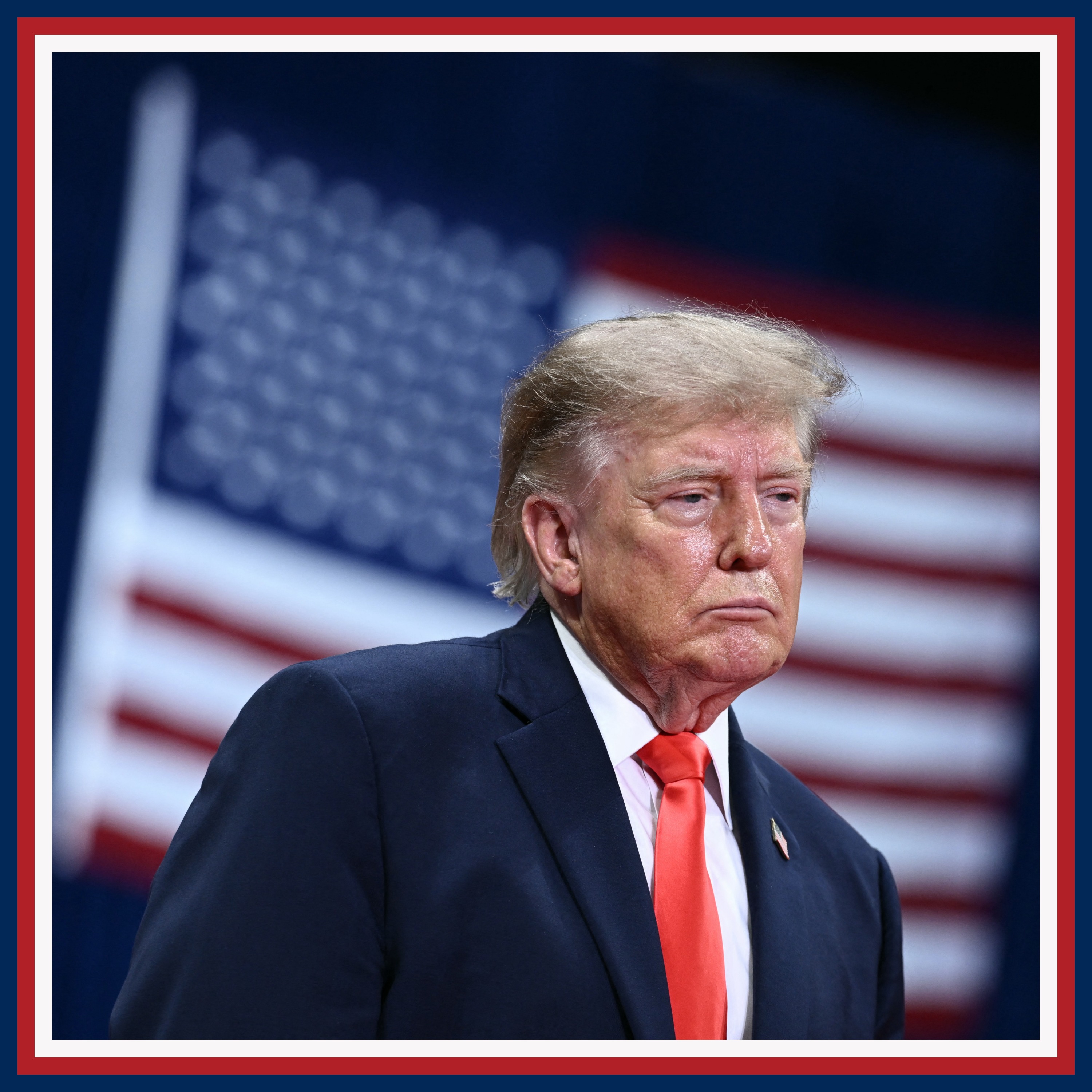
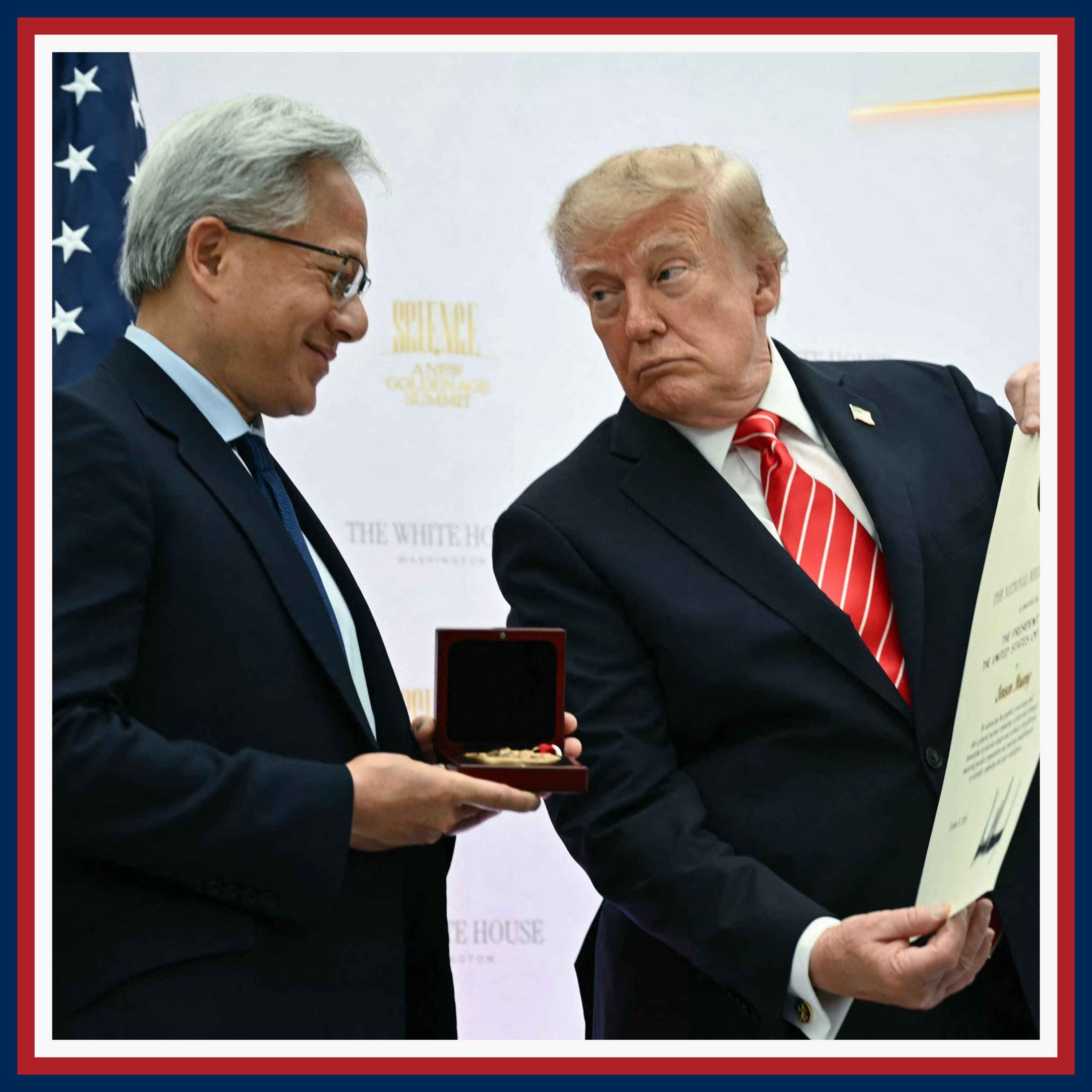
Find out why President Trump was thrilled to be on a list with Hitler, Mao and Stalin. It's one of many astonishing details in a new book, Regime Change, by Maggie Haberman and Jonathan Swan. We pick some highlights from the book, and Katy has been speaking to authors.
As Andy Burnham prepares to take over as British prime minister, how would a more left-wing government go down in Washington and in Wall Street? Katy has interviewed the US ambassador to London, who did not speak enthusiastically about Ed Miliband. And Gerry has been speaking to senior officials and financiers who were pretty scathing about Britain's prospects.
And in New York, candidates supported by the mayor, Zohran Mamdani, have swept the board in Democratic primaries. We look at the power of the far-left and anti-Israel vote and discuss what that means for the future of the Democratic Party.
Katy Balls, Washington editor and columnist at The Times and The Sunday Times
Gerard Baker, columnist at The Times and editor at large at The Wall Street Journal
Producers: Euan Dawtrey, Harry Kitson
Executive producer: Molly Guinness
Picture: Getty Images
00:00 - The "Most Powerful Man in History" Note
00:48 - Regime Change: The Explosive New Trump Book
02:03 - Situation Room Leaks: Jeffrey Epstein & JD Vance
03:18 - The Golf Caddy's Note
06:14 - Trump 1.0 vs Trump 2.0: Is He Losing Control?
09:30 - The Secret Internal Fallout of the Iran War
14:15 - Keir Starmer Quits: Is the UK a Laughing Stock in America?
16:03 - Trump’s Ambassador Clashes with the New UK Government
20:49 - Socialists Win Big: The Shocking New York Primary Results
25:39 - The Great Corporate Exodus: Why Billionaires are Swapping California for Texas
This podcast was brought to you thanks to the support of readers of The Times and The Sunday Times. Subscribe today
Hosted on Acast. See acast.com/privacy for more information.