Ask ChatGPT


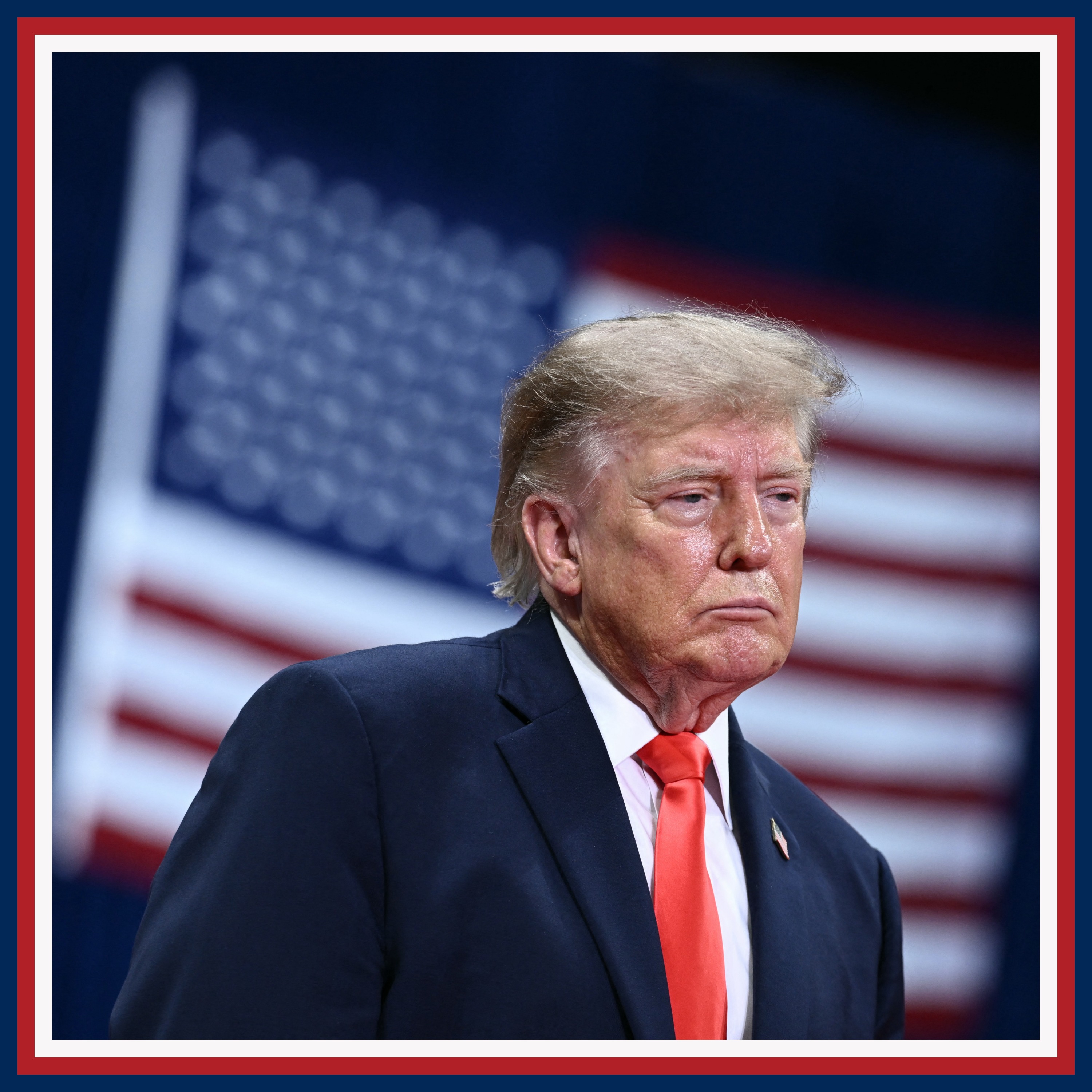
The episode of The State of It USA focuses on Trump’s China trip, framed as a shift from prior U.S. “engagement” to treating China as a strategic rival, now pivoting toward “opportunity and partnership.”
Trump admires Xi Jinping and sees strong powers as negotiating equals; the Iran crisis may drive cooperation, with fears of an “Iran for Taiwan” bargain.
China’s wish list includes Taiwan; U.S. policy is “strategic ambiguity,” and officials worry Trump could change it.
Katie Balls (Washington editor, Times and Sunday Times) and Gerry Baker (editor at large, Wall Street Journal; columnist for the Times). They also discuss tech titans Elon Musk (suing Sam Altman/OpenAI over the original nonprofit charter) and Sam Altman (OpenAI CEO, ChatGPT), plus Musk’s presence on Air Force One with Nvidia’s CEO.
Written by AI. May contain mistakes.
Discussing the significance of Trump's upcoming trip to China and its implications.
“But first, we're going to take a look at that really important trip that the president is making to China.”
Exploring the transformation in U.S.-China relations since Trump's presidency.
“And they thought the way to deal with that was to engage with China, strategic dialogue, various presidents talked about.”
Analyzing Trump's shift from seeing China as an opportunity to a rival.
“We don't like them and they're a big threat to us.”
Discussing China's growing power and how it influences U.S. strategy.
“Strong countries with, you know, the things that we rely on, like important imports, need to be treated with respect and need to be treated as not as allies, then at least as level negotiating partners.”
Examining the personal rapport between Trump and Xi Jinping and its implications.
“And that's going to be the theme of the meeting, this attempt to forge some new collaborative relationship between the two great geopolitical superpowers.”
Delving into concerns over Taiwan amidst Trump's dealings with China and Iran.
“The personal relationship is obviously always very important with Trump.”
Insights from experts on the potential outcomes of Trump's trip to China.
“And there's a particular nervousness that, back to the point I made earlier, that he needs this help over Iran, that Xi Jinping might sort of cleverly exploit that and sort of offer a kind of an Iran for Taiwan deal.”
Discussing Elon Musk's involvement and the dynamics of his relationship with Trump.
“And when we're thinking about some of those business figures that are traveling over, so you have CEOs of, you know, the big tech firms.”
Explore the contentious relationship between Musk and Altman and the implications for AI ethics.
“They seem to be very much back on with this China trip.”
Discuss Trump's focus on creating monuments and how it reflects his legacy.
“It's the Trump administration, thanks in part to the fact that it's people by a lot of tech investors and a lot of people who've done extreme tech entrepreneurs.”
Analyze the historical and cultural significance of naming monuments during a president's term.
“which is, you know, you go back to Jackie O, what the Rose Garden used to be.”

Get the gist, explore an idea or ask about something said.
 Claude
On The State of It: USA, what are the key points of this episode?
Searching your listeningAutomatic transcript. May contain errors.
0:00Gerard Baker: Business is booming, but you know what really helped? Zero. The accounting platform for small businesses. I used to think unpaid bills were just part of it. Ugh. But batch payments? Wow. Automated accounts payable? Even better. All in one place? That's a big one. And I can keep track from my phone while I get the job done. No bills in sight. What a life. Do right by yourself and your business and search XERO for your free trial. Conditions apply.
0:37Gerard Baker: Hello and welcome to The State of It USA, the podcast that brings the Times and Sunday Times insight to Trump's America. I'm Katie Balls, the Washington editor of the Times and Sunday Times.
0:47Katy Balls: I'm Gerry Baker, editor at large of the Wall Street Journal and columnist for the Times. And we're going to be talking about the fascinating showdown between two tech titans, Elon Musk and Sam Altman of OpenAI in a battle that's going on right now in a California courtroom. And we're going to look at Trump's taste for memorializing himself in great monuments around the United States. But we'll have all of that. But first, we're going to take a look at that really important trip that the president is making to China.
1:15Gerard Baker: Now, this is the first visit of a U.S. president since the last time Trump went in his first term. Jerry, it feels that there's lots changed in that time, particularly when it comes to Trump's own approach.
1:25Katy Balls: Yeah, it's a transformed relationship, I think, Katie. So essentially, until Donald Trump came along in 2017, American presidents had sought engagement with China. They saw China's emergence as a great global economic power, its liberalisation of its economy, as obviously one of the most important developments in global economic history and global geopolitical history. And they thought the way to deal with that was to engage with China, strategic dialogue, various presidents talked about. They all had different terms for it. But the approach was basically a cooperative one, partly in the hope to avoid conflict, but also in the hope that by bringing China into the global economy, it would further liberalise and it would become a kind of, you know, make China sort of safe for the world, as it were.
2:10Katy Balls: And the view was that China would become sort of more open and democratic itself. By the time Donald Trump came along in 2017, in terms of the strategic interests of the United States, it was far from clear that it had worked. It meant China had grown to be this enormous economic power. It hadn't changed. In fact, with the accession of Xi Jinping in 2013, it hadn't changed politically. It had gone in the other direction. It had become more repressive, more Marxist-Leninist, more Maoist, and was much more of a threat by 2017 than it had been 20 years earlier. So long came Donald Trump and said, that's this period of engagement, this period of regarding China as an opportunity and an ally and a great place for American companies to do business.
2:50Katy Balls: That's over. They cheat anyway. We don't like them and they're a big threat to us. So we're going to have a period of where now we view China as a major strategic rival. That was that that approach essentially survived with Joe Biden, too. That was Joe Biden largely followed that approach to taking the same view that China was a threat rather than a partner. Now, second term Trump, fascinatingly enough, along comes Trump in his second term. And things are quite different. Firstly, China's in an even stronger position in many ways. We can argue about the details, but it's in a much stronger position than it was probably eight years ago.
3:21Katy Balls: Its economy has continued to grow. America has continued to struggle in certain respects strategically, in particular with its role in the world. China is still in the grip of Xi Jinping's very, very authoritarian rule. Its military has got stronger. Its technological capabilities have got dramatically stronger. It's competing with the United States and things like artificial intelligence and others. So China's going to be, if anything, more of a threat. But Trump now sees it, and we're going to see this on this trip in the next couple of days, really talking about it as more of an opportunity and more of a partnership.
3:56Katy Balls: Now, I think this is for a couple of reasons. Firstly, I think it stems from Trump's worldview. Trump now sort of thinks of the world as strong people and weak people. Weak allies can be ignored and insulted. Strong countries with, you know, the things that we rely on, like important imports, need to be treated with respect and need to be treated as not as allies, then at least as level negotiating partners. So we're seeing that. And on top of that, Katie, we've got this very specific question that right now that Donald Trump wants China. China's a very important sponsor of Iran. He's trying to get himself out of this mess that he's got himself into Iran.
4:32Katy Balls: He's hoping that maybe China may present an opportunity there with its relationship with Iran to help him back out of this in a dignified and way that doesn't look too bad for the United States. So it's a very different situation. China, you know, remember Donald Trump famously said to Volodymyr Zelensky in that infamous overlover meeting, office meeting a year or so ago, you don't have any cards. China in this relationship has a lot of cards. It's not to say at all the United States is weak. It's not to say that China dominates the United States. It doesn't. The United States is still the most important economic and strategic power.
5:04Katy Balls: But that relationship now is much more one of equals. It's much more one in which the United States knows Donald Trump respects China's power, knows he needs some things from China. And that's going to be the theme of the meeting, this attempt to forge some new collaborative relationship between the two great geopolitical superpowers.
5:24Gerard Baker: And of course, initially, this trip was meant to take place a little while ago and it was put on pause because of the Iran war. Now, the Iran war is still ongoing, but they've decided to press ahead anyway. And there have been concerns. It means that Trump is in a weaker position when it comes to the various trades they could do. But just before, I suppose we look a bit more about the Iran angle and how that might link to Taiwan. Certainly, when it comes to their relationship, it's quite clear that Trump admires Xi in a way that European leaders don't often get. I think we can hear some of the clips or things he has said about him.
5:57Katy Balls: He's been a friend of mine. He's been somebody that we get along with. and I think you're going to see that good things are going to happen. This is going to be a very exciting trip.
6:07Gerard Baker: I was speaking to a few figures in D.C. and I said, you know, do they actually get on? Are they really friends? And one figure was saying he's got quite close links to the Chinese side, but also to the administration was saying, well, you know, they both don't drink much and they're both pretty nationalistic and they both like making money, which is a decent place to start. And I think the Chinese side would think when you get to this, the banquet that they're going to be having. And, you know, one thing is, you know, Trump has been studying for many years. You go back to the art of the deal. And he was talking about the fact that he knew China.
6:41Gerard Baker: He understood them. He's done deals with China. But the Chinese have also been studying Trump. And I think, you know, there's a plan to point out all the big buildings in Beijing to appeal to the real estate broker in Trump. and hope that slightly leads you into the world of real estate approach to deals, whereby the Chinese wish list, of course, is Taiwan. They would like Donald Trump to say something on Taiwan that moves them away from their continued position of neutrality. The US side have been pretty skeptical that's going to happen. But what you'll hear from intermediaries to the Chinese are saying, well, no one can predict what Trump will say at any moment in time.
7:17Gerard Baker: So if Xi and him get on at this banquet, they think it could unlock. unlock a bunch of goodies when it comes to around in other areas. What are you picking up there, Gerry?
7:27Katy Balls: Yeah, look, I think all that's true. The personal relationship is obviously always very important with Trump. I mean, you know, in a very different way, we obviously saw that with King Charles on his state visit a couple of weeks ago. This is another state visit, as it were, in the other direction with a very different country and a very different leader, Xi Jinping. But again, the emphasis is on forging that close relationship. And you just heard in that clip there that Donald Trump does speak sort of very warmly of Xi Jinping, speaks more warmly of Xi Jinping that he speaks of any European leader or anybody who was formally regarded as a kind of a traditional ally of the United States.
7:58Gerard Baker: Or who has to worry about the electorate.
8:00Katy Balls: Yeah, exactly, exactly. So, I mean, look, I do think it's also true that Trump was something of a, especially in his first term, something of a conundrum for the Chinese. They had been used to these American leaders coming along, wanting a warm relationship. Trump was very unpredictable, just as you just said. I think the key, something really important changed a year ago. You know, Trump came in that second term, Liberation Day, all those tariffs. China was very much the target of those tariffs. Tariffs were going to reduce that dependency of the United States on China. Well, then, you know, he tried to do that.
8:34Katy Balls: And then we discovered, say that, you know, his economists, economic specialists and business leaders went to him and said, we are totally dependent on China for these rare earth minerals, which power so much of our economic activity, especially in the AI field, but also with electric vehicles and all this kind of stuff. And they control this. If you really get into a trade fight with them and they cut that off, they can do enormous harm to the economy. So he backed down then, quite famously, and is now seeking this kind of relationship. It's interesting. He's taken pretty well all the top business leaders with him to China.
9:03Katy Balls: And once again, instead of talking about decoupling now, they're looking at the possibility of some sort of maybe, not significant, but some sort of a renewed economic engagement with China. So the Chinese are playing all this very carefully. I do think just very briefly on the Iran, on the geopolitical question, there's a lot of nervousness. You know this, Katie, there's a lot of nervousness among the foreign policy people I speak to, even Trump supporters, that Trump, it's been pretty obvious that Xi Jinping would love the United States to back away from its longstanding kind of alliance with Taiwan.
9:37Katy Balls: It has, the United States has this longstanding position of what's called strategic ambiguity, which is that when it doesn't support Taiwan as an independent country, it says China, you know, must not be allowed to retake Taiwan by force and has always left open the possibility that the US would move in with its own military to defend Taiwan if that happened. Xi Jinping would love Donald Trump to kind of give that away now and to say, you know what, you know, Taiwan is part of China and, you know, it's inevitable and you never know with Trump whether he might. So there's nervousness that he might say that and essentially sort of sell Taiwan down the river.
10:12Katy Balls: And there's a particular nervousness that, back to the point I made earlier, that he needs this help over Iran, that Xi Jinping might sort of cleverly exploit that and sort of offer a kind of an Iran for Taiwan deal. You know, he'll help him get out of, he'll put pressure on Iran to do all the things, to give up its nuclear program, to do all the things that Trump wants Iran to do so he can claim victory. If Trump will just shift the US position on Taiwan, there's nervousness about that. I think that will be, that will not happen. But, you know, you just said it, you never know with Trump, anything can happen.
10:42Katy Balls: He's pretty unpredictable. So there'll be a lot of people watching those conversations very carefully.
10:47Gerard Baker: Yeah, no, certainly from my conversations with China hawks in DC, you know, you go back to 2016, Trump's China, how he really kind of grabbed attention and linked China to US workers losing their jobs. But now they think he's actually more of a chief dove. And because he wants this deal, Therefore, everything is in the round. So, you know, Jimmy Lai could come up, Uyghur Muslims could come up, but not because Trump is trying to particularly make moral points. And I think there is a scepticism, for example, that this administration is going to bring up Muslims or put that high on the list when it comes to changing things.
11:24Gerard Baker: Instead, there's other areas where they're focused on, but everything will be seen in the round. And that makes them nervous about kind of does Trump get all these big headlines with a good deal? But in the process, you have figures such as Oren Kass warning that investment to the US from China is not going to be good for the US worker in the long run or for security. So I think there is a bit of nervousness looking in.
11:47Katy Balls: But of course, just be quickly said on that Jimmy Lai point, it would be extraordinary. And for those who don't know, Jimmy Lai is a former newspaper publisher in Hong Kong, Hong Kong base, when Hong Kong was free, was a sort of prominent figure. and his newspapers criticise Beijing and he's been imprisoned under the national security law. He's a very old man. He's sick. It's an outrageous thing that's happening. If Trump could get, and there's some talk here in the US, if Trump could, as a result of this trip, get Jimmy Lai released and let out to the US or Britain, where his family live, actually, that would be a great thing.
12:20Katy Balls: So, yeah, you're right. I don't think it's high up on Trump's list of priorities, but it is the kind of thing that would be a real tangible benefit from this trip, that's something to watch out for.
12:32Gerard Baker: Business is booming, but you know what really helped? Zero, the accounting platform for small businesses. I used to think spreadsheets were just part of it. Ugh, but real-time cash flow? Wow. Invoices that chase themselves? Even better. Books that automate? That's a big one. And I can keep track from my phone while I get the job done. No spreadsheet in sight. What a life. Do right by yourself and your business and search XERO for your free trial. Conditions apply. And when we're thinking about some of those business figures that are traveling over, so you have CEOs of, you know, the big tech firms.
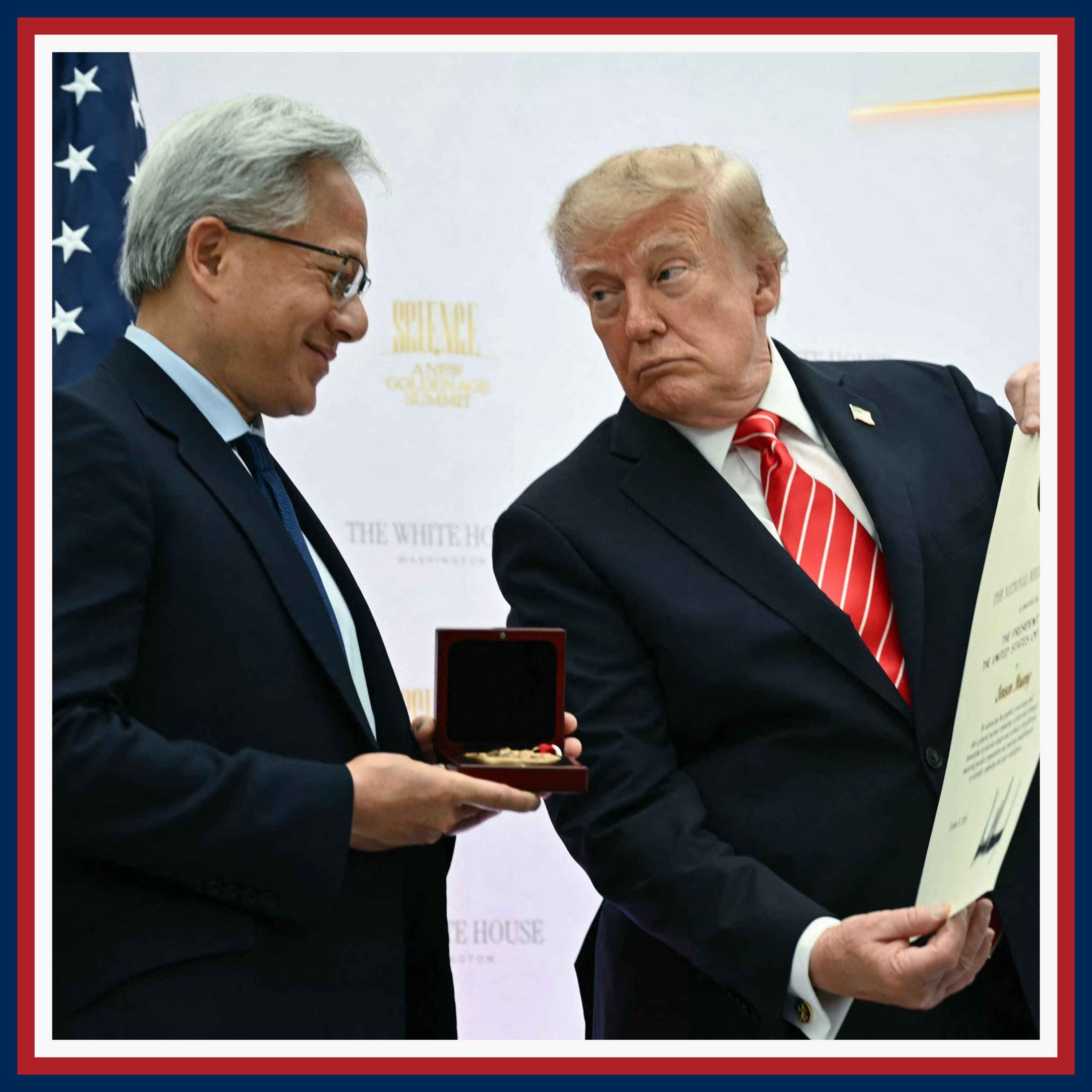
13:11Gerard Baker: Two of them have made it onto Air Force One, as Elon Musk is keen to tell us. He is on the plane, as is the NVIDIA CEO, which obviously relates back to the chips. But first off, it shows us that Elon Musk, if we think back to last year and that spectacular falling out where, you know, slowly, I mean, initially, Elon Musk was almost referred to as a real vice president because he was everywhere when it came to Doge, when it came to his plans, when it came to getting in on things, including conversations over China. And we know that Elon Musk has done a lot of business with China. They have a falling out.
13:41Gerard Baker: He is basically cast out. There's a war of words. And yet I think there's been a big effort behind the scenes. I think Stephen Miller, deputy chief of staff, his wife, Katie Miller, she has a close relationship and Musk has worked with him. And there has been an effort to bring the two back together. The fact is on the plane, clear indication of that. And it comes at a time to Jerry when obviously Musk is making headlines, not just for his role back in the fold of the Trump administration, but a court case involving OpenAI and Sam Altman.
14:11Katy Balls: Yeah, again, it is interesting, Katie, as you say, that back and forth relationship between Musk and Trump. They seem to be very much back on with this China trip. And the Musk, Sam Altman thing, Musk has been suing Altman. Musk was initially a big investor in OpenAI, which Sam Altman founded. And it was initially founded as a nonprofit business. It was intended to be a kind of an ethical approach to AI. Musk is one of these people who's, you know, although he's very eager to develop AI and to make money out of AI, as he's showing with his own various products, he's been one of those people who's been warning about the threat of AI for a very long time and the threat to humanity from, you know, machines out of control where we're all going to be killed by these crazy machines if we don't impose some limits on it.
14:53Katy Balls: So part of the idea of OpenAI, main idea of OpenAI, was to develop a kind of an ethical framework in which people could come together and to try and produce an AI sort of solutions to the potential problems of AI. And Sam Altman then kind of turned AI into instead a very profitable business of its own, launching various AI platforms, most famously ChatGPT, a big investment from Microsoft. Musk and Sam Altman fell out dramatically. Musk is now suing Sam Altman over this very thing, saying that he basically betrayed the charter, the original charter of the company, from turning it from this ethical institution into a profit-making enterprise.
15:33Katy Balls: And indeed, OpenAI is now churning out billions and billions and billions of dollars. So it is a pretty dramatic turnaround. And Musk does have a point there. It's a larger insight, obviously, into the battle that goes, you know, the egos of people at Silicon Valley. But it is also an interesting little insight into these questions that people are grappling with about how we deal with AI and how we can constrain AI from doing things that we humans won't be able to control. And to some extent, if Musk's court case is going on in California right now, it's not clear whether or not – if Musk wins this case, as he may well do, Altman may have to pay some damages or there's talk about him having to give money to any money that must get from it going to the OpenAI Foundation, which is a philanthropic sort of charitable thing.
16:22Katy Balls: And by the way, it's also an interesting example that lawsuits in America, rather than regulation, constraining some of the things that are going on in business. It's the Trump administration, thanks in part to the fact that it's people by a lot of tech investors and a lot of people who've done extreme tech entrepreneurs. It's taking a very hands off approach to tech regulation. So it'll be anyway, it has, you know, Musk, you know, is a bit of a demon, a bit of a villain in the eyes of much of the world. This is a slightly different story here, which is Musk sort of, you know, to some extent, at least looking out for the interests of humanity versus machines.
16:58Katy Balls: and we will see whether or not he's able to succeed.
17:02Gerard Baker: Yeah, there, of course, some are accusing him of having sour grapes for no longer having the role perhaps that he wants with open AI. And he, of course, is doing pretty well for personal wealth.
17:11Katy Balls: It's true, bad people can be motivated to do things which could end up having beneficial effects. It's very true.
17:18Gerard Baker: But I think to your point about some of the AI companies, it is interesting, not just the presence of some of these CEOs when it comes to the trip to China, But also, I was speaking to figures who work at some of the big AI companies, and they were saying now when it comes to world leaders, they're very much, you know, if their CEO is in town, they are saying to various leaders, this is the date they can do. Can your world leader work around it? And I don't think that applies. I think the White House is probably one of the exceptions to this. But it to me kind of is a sign that these AI companies do start to feel as almost they're getting so big that they're calling the shots now when it comes to lots of governments.
17:55Yeah.
17:56Katy Balls: I mean, Katie, speaking of powerful and successful businessmen with great egos, we've seen in the last week Trump, you know, expanding the kind of his legacy of monuments that I think seems to be right now one of the principal kind of features of this second term. We have triumphal arches. We had the magnificent gold statue of Trump unveiled down in Palm Beach last week. He's obviously developing. He's trying to get money now to supposedly improve the security of this massive new ballroom at the White House. He's building in the East Wing. He's been very focused on this reflecting pool, which is the huge body of water that stretches between the Washington Monument and the Lincoln Memorial on the Mall in Washington.
18:40Katy Balls: And I mean, this is somebody did say a few, a couple of weeks ago that, you know, there were comparisons between Trump and Julius Caesar and Napoleon. This is very kind of cesarean and Napoleonic, isn't it? What's what's going on?
18:53Gerard Baker: Yeah, he is branding D.C. and potentially other parts of America. I think, you know, we obviously know from Trump that he likes to name things with his name.
19:02Katy Balls: Am I right in saying that the Palm Beach airport has already been renamed Donald Trump? Yeah, that one is done.
19:08Gerard Baker: We obviously have the Trump Kennedy Center to the point that I was just walking around Georgetown the other week or near Georgetown. And even the buses, which now take, you know, the tourists around, they have on them Trump Kennedy Center. So they wasted no time in trying to get this going. That one is pretty easy to undo, I think. But what this all adds to is effectively Trump, when it comes to legacy, we know he's thinking about his legacy when you come to the second term before we get into 2028 and what could happen. And I think as many, as you say, there's something quite Napoleon, but as many landmarks as you can have.
19:47Gerard Baker: And also, I think just making his mark on the White House. Every time I go to the White House, it does seem to be more gold, whether it's gold branding in the Rose Garden. That's one area where, for example, already you have the ballroom and the big row about what he is doing, knocking down parts that people weren't expecting when it came to the East Wing. But you also have the Rose Garden was one of the first moves, which is, you know, you go back to Jackie O, what the Rose Garden used to be. It's now concreted over.
20:15Katy Balls: Yeah, Rose Garden used to have roses, as I recall. But I'm not sure roses thrive on a concrete terrace, do they?
20:25Gerard Baker: No, instead, we now have golden letters to tell us it is a rose garden. And so that's how you know that it's still a rose garden, but it's concreted over. And, you know, there's lots of theories of why he did this. He obviously has now his rose garden club where you get the little tables with the parasols and it looks a bit about something you might expect, you know, in Florida, Mar-a-Lago. but also speaking to figures there they're saying one of the motivations was the First Lady and lots of the White House staff very glamorous when it comes to White House staff compared to Westminster political staff but they wear, you know, stilettos and there are lots of complaints from the girls which is, you know, every night having to go to these events in your stilettos that are not working or having to deal with the grass and the concrete you over it was given to me as an example by someone close to the White House of the president being chivalrous and chivalry, not being dead.
21:18Gerard Baker: But, Gerry, when it comes, I suppose, we have the arc to Trump, which is meant to be there around the time of the 250th. We have the ballroom, which by the time it is up, will be something which, is the president really going to tear it down? So there is a world where Trump has, do you think, more monuments than other previous presidents?
21:39Katy Balls: Oh, I mean, not anymore. Yeah, absolutely. Not anymore, but it took them, I don't know, 50 years to build, more than that, and maybe was it longer than that, to build the Washington Monument, which is the long, rather phallic symbol, the obelisk in the middle of the mole after George Washington. It took them at least that, I think, the Lincoln Memorial, which is the grand sort of temple with, you know, Greek columns and Lincoln sitting in marble in his chair, in his sort of chair at the end of the mole. It took them 40, 50 years, I think, to build that after Abraham Lincoln. But Washington and Lincoln, who I think are still described by most Americans as pretty high up in the list of presidents, it took them decades to get their monuments.
22:23Katy Balls: Jefferson has a memorial on the mole, which, again, took many, many decades before he got that. So, yeah, Trump's kind of trying to get out of Washington even before the end of his second term with kind of more monuments. We haven't even talked about his face on one of the banknotes, one of the$50 bill or whatever it is, or his face on passports. His face, I know, adorns many federal buildings, as you know. It's very – look, Americans have – I remember when I first went to Washington a long, long time ago. being struck by the kind of, it was sort of almost pagan, I remember, for a very religious country.
23:01Katy Balls: There were all these monuments to these men, essentially, as they say, Jefferson, Lincoln, Washington. And it felt sort of like ancestor worship in a curious, curious kind of way. And so the Americans do like doing this and they name all their airports after presidents. There's George Bush Airport in Houston and there's John F. Kennedy Airport across the river from where I am here in New York. So they do like doing that. They do like honoring their men, but they do typically wait for them to die to do so. So, you know, Trump's an old man in a hurry, I suppose, and wants to get all the recognition in while he's still alive to enjoy it.
23:38Gerard Baker: Yet statues of the living can tend to have connotations. And with that, Gerry, that is all we have time for this week. So we'll be back next week. So do join us again there. And of course, if you do enjoy this podcast, do rate, review and subscribe.
24:14Gerard Baker: While I get the job done, no bills in sight. What a life. Do right by yourself and your business and search Xero for your free trial. Conditions apply.
As Donald Trump lands in China, could he change the US position on Taiwan in exchange for President Xi's help with Iran?
What's at stake in the battle between Elon Musk and Sam Altman?
And is it chivalry that prompted the decision to concrete over the rose garden at the White House?
Katy Balls, Washington editor and columnist at The Times and The Sunday Times
Gerard Baker, columnist at The Times and editor at large at The Wall Street Journal
Producers: Euan Dawtrey, Harry Kitson
Executive producer: Molly Guinness
Image: Getty Images.
Clips: Reuters
This podcast was brought to you thanks to the support of readers of The Times and The Sunday Times. Subscribe today
Hosted on Acast. See acast.com/privacy for more information.