 Ask ChatGPT


U.S.-Iran renewed conflict and “performance war” strategy; plus Democratic Party leftward shift and election-integrity rhetoric ahead of midterms.
Katie Balls (Washington editor/columnist, The Times/Sunday Times) and Gerry Baker (Times columnist; editor-at-large, Wall Street Journal).
Trump has formally notified Congress that hostilities with Iran have begun; strikes aim to open the Strait of Hormuz, but the memorandum framework is fragile and may be worse for the U.S. Trump’s approach is described as kinetic, theatrical, and politically constrained—limited to air/missile pressure rather than high-casualty operations needed to neutralize Iran’s small-boat/drone/mine tactics. Oil/markets haven’t collapsed, reducing pressure to de-escalate.
Trump’s Fox News comments about hitting energy targets, power plants, and bridges; discussion of a proposed/withdrawn Strait of Hormuz toll; Lindsey Graham’s death; Democratic Socialists momentum (Promise to America letter, Plattner’s exit, Maine special nominating convention, Troy Jackson “Johnny Cash of the Allagash”); debate over cutting Israel aid; Trump “showtime” speech on election integrity and fears of nullifying November results.
Written by AI. May contain mistakes.
Discussion of the current geopolitical situation regarding Iran and military actions.
“I just think we're stuck in this performance war now for the foreseeable future.”
The hosts discuss Trump's declaration of war against Iran and military actions taken.
“We'll see whether or not Donald Trump's decision to revert to more or less all-out war again with Iran will have any more success this time than it did the first time.”
Exploration of the strategic importance of the Straits of Hormuz and U.S. actions in the region.
“has been hitting military targets in Iran.”
Dialogue about the ongoing military conflict and the potential length and nature of U.S. involvement.
“Any prospect, do you think, from what you're hearing, that there's any more optimism, Katie, in Washington, that this stage of the war, this renewed war, will be any more effective than the last one?”
Discussion on Trump's political considerations and how they affect his approach toward Iran.
“And then the other thing I keep hearing is just a sense of speaking to some kind of former Trump advisors who are still in touch in that world, you know, a sense that they don't think the memorandum can hold as it is.”
Exploration of potential military strategies and risks associated with Iran.
“Yeah, look, somebody said to me, this is the kind of the Lindsey Graham Memorial War.”
Analysis of the U.S. administration's hope for Iran's regime change vs. lack of coherent strategy.
“is not addressing that problem by firing missiles at military bases on land in Iran.”
Examination of how military actions against Iran are affecting the U.S. economy and global oil prices.
“The strategic part, I think, is more political than military.”
Analyze the economic effects of conflict and Trump's strategy amid uncertainty.
“The world economy is going to grind to a hole.”
Explore the internal conflicts and rise of democratic socialism within the Democratic Party.
“Now, you might think Republican woes on Iran mean that it's all good news for the Democrats when it comes to their future.”
Discuss the implications of Trump's upcoming speech on election integrity and its political context.
“It is pushing pushing mainstream Democrats in a much more left wing, progressive, you know, kind of, dare I say, sort of British Labour Party kind of kind of direction.”
Explore the potential consequences of Trump's claims regarding election integrity and fraud.
“But when asked about it, they will say, well, you know, Joe Biden was was certified as the president.”

Get the gist, explore an idea or ask about something said.
 Claude
On The State of It: USA, what are the key points of this episode?
Searching your listeningAutomatic transcript. May contain errors.
0:00Hi, I'm Dan Snow, historian and host of Dan Snow's History Hit Podcast. I want to tell you about a brand new series I don't want you to miss about the real history behind The Odyssey. With a major new Hollywood adaptation arriving this month, we'll trace Odysseus' epic journey across the Mediterranean, uncover the world of Mycenaean Greece, and investigate the mysteries of Homer and what draws us back to this timeless masterpiece again and again. For everything you need to know about The Odyssey, check out Dan Snow's history hit wherever you get your podcasts. I hate to be so cynical about firing hundreds of missiles.
0:36I just think we're stuck in this performance war now for the foreseeable future.
0:44Hello and welcome to the State of It USA, the Times podcast that tries to make sense of Trump's America. I'm Katie Balls, Washington editor and columnist for the Times and Sunday Times. And I'm Gerry Baker, Times columnist and editor-at-large of the Wall Street Journal. This week, it seems like jaw-jaw is over in the Persian Gulf, and we are back to war-war. We'll see whether or not Donald Trump's decision to revert to more or less all-out war again with Iran will have any more success this time than it did the first time. Also, we'll be talking about the Democratic Party and its lurch to the left.
1:21So, Katie, let's start with Iran. Donald Trump has sort of more or less formally declared the U.S. is at war again with Iran, given another notification to Congress that hostilities have begun. The U.S. has been hitting military targets in Iran. The aim, of course, is to get the Straits of Hormuz open. It was, of course, one of those very uncertain things left open in that 14-point memorandum of understanding that was supposed to bring about a ceasefire. Who exactly controlled the Strait of Ormuz and what power Iran would have over it? Trump is now saying he needs – the strait needs to be open.
1:57And so the US is, again, bombing military targets, trying to prize Iran's hold off the strait. Any prospect, do you think, from what you're hearing, that there's any more optimism, Katie, in Washington, that this stage of the war, this renewed war, will be any more effective than the last one? Optimism might be an optimistic word, but I have been picking up a few things, even though it does feel a little bit like Groundhog Day. I suppose let's first give the word to the US president who has given an interview this week where he tried to sum up his latest position. You anticipate that the strikes were seen this week against Iran will expand?
2:35Are you considering hitting energy targets or other locations inside of Iran? I'll save the energy targets for last, but ultimately we'll hit energy targets. Yeah. But we're going to hit them very hard tonight. We're going to hit them very hard tomorrow night. We're going to hit them very hard the night after. And then next week it gets really bad for them because next week comes the power plants. Next week comes the bridges. So, Jerry, that was Donald Trump speaking to Fox News where he was saying, you know, we're going to keep hitting them hard. It's funny. I think what I'm picking up from the administration, some close to the White House, is a sense that, yes, they're going to keep hitting them hard.
3:17But also, Trump has still said that the two sides are speaking. And while you have a situation where, you know, diplomatic channels, negotiations are going, I think a lot of the more dovish figures, of which there are many within the Trump administration, are really clinging to that, to say this is not all-out war. I found it interesting that, you know, people keep referring to the fact that conversations between the two sides are happening. Donald Trump is not ruling out a deal. He is once again talking about going after Iran's energy supplies if things don't work out in the next couple of days.
3:50but he's also said those things many times again so I don't think it feels yet as though we're in a completely new stage of the war I think one of the concerns I'm hearing from defense figures from some around Trump is just is this now just a very long war obviously historically this war was not long compared to many American episodes but you have a situation where Trump originally has spoken to about this as a couple of weeks the White House were picking that up you don't hear that anymore. And therefore, are you in almost this quite contained war where there are strikes every night, but we don't have, you know, troops on the ground, but there's just no clear way out.
4:28And then the other thing I keep hearing is just a sense of speaking to some kind of former Trump advisors who are still in touch in that world, you know, a sense that they don't think the memorandum can hold as it is. So therefore, Trump has very, you know, limited options which tend to be getting worse by the day, which is, do you accept that the memorandum is ultimately worse for the US than Iran and the Strait of Hormuz that Iran now has more power over? Donald Trump seems to not want to accept that. Or do you end up in a situation where you have to force Iran into some kind of different scenario?
5:06And here, you still get back to the question of, does Donald Trump have the stomach to do that before the midterm elections? Now, There are some around Trump who, when you say this to them, will say, oh, he is not thinking about the midterm elections in the way that we would like him to. We almost have to force him to think about domestic issues in this term compared to the first term. But still, I was saying to some who think that really after November, if things are still as they are, that's when you could have the escalation that some of the hawks want. And I just add to that, the passing of Lindsey Graham, the senator, obviously a close Trump ally, but also an Iran hawk, means that in some of these conversations now, there's a lot of, you know, what would Lindsey Graham have said?
5:46What would he do? And could that be adding to a more hawkish element? and then finally the fact that you had Trump and I don't know what you thought about this Jerry announcing this toll early in the week saying that the US was now going to have a toll on the Strait of Hormuz only to reverse it 24 hours later well White House aides have been trying to stop Trump from announcing a toll for quite a long time so I think the fact he did so and then obviously had to walk back on it is just adding to the sense that it's Trump unleashed and it's Trump unpredictable and perhaps not listening to some of the people he was listening to more early on in the conflict?
6:20Yeah, look, somebody said to me, this is the kind of the Lindsey Graham Memorial War. Lindsey Graham was, as you say, a famous hawk. I spent a lot of time with Lindsey Graham. He was actually very engaging, very entertaining. And I think ultimately, although he kind of abased himself in rather embarrassing ways with Donald Trump over the last 10 years, having once said, you know, Donald Trump was taking the party in a batshit crazy direction and call him all kinds of other things, I think he really believed in the use of American force. And he believed that the way to get Donald Trump to use American force in good ways was to get on his right side.
6:57So he will be missed, actually, in terms of that voice there. But perhaps Donald Trump is, you know, is kind of paying tribute in the way only Donald Trump possibly can. But I think you're right, what you say about the we're in this strange position, because it is partly George Orr and partly war war, because Donald Trump claims to have achieved a degree of regime change in Iran, replaced, you know, the original Ayatollah and perhaps the current Ayatollah who seems to be in some state of serious debility. You know, he's replaced them with sort of apparently more reasonable, more people that they can negotiate with.
7:34But these are the people now he's now calling scum and is now attacking again. And yet, I don't think there is anything like the willingness on the part of Trump, the people around him, to really do what needs to be done if this is to be resolved in the way that really suits the United States. That would be, you know, a more or less an all out war against Iran to break its stranglehold on the Strait of Hormuz. That would require, you know, Trump has talked about seizing Hog Island, that big island in the Gulf with where a lot of Iran refines a lot of its oil. It's been sort of, you know, dropping hints about that again this week.
8:20But it would require not only something like that, it would require really significant amphibious forces. Again, as I understand it from military sources I speak to, this operation that Iran is really carrying out, this continuing operation is carried out by these small boats, to some extent by drones, to some extent by undersea mines that are very, The U.S. is not addressing that problem by firing missiles at military bases on land in Iran. To address that particular challenge, the U.S. would need to get special forces, Navy SEALs engaged more or less in hand-to-hand combat with the guys on these boats.
8:59It would need to be onshore taking out the military command centers of all of these boats, removing the small naval facilities all the way along the coast that do that. Now, everybody I speak to says, we can do that. They're Americans. They think they can do everything. But on this, I think they're probably right. But it would require a really significant escalation with the probability and the inevitability of significant U.S. casualties, high risk, not absolutely certain outcome. Although, as I say, there will be a high level of confidence in it. But it would be a real escalation. And there's just no evidence that Trump wants to do that.
9:36Two things, I think, are going on within the administration. One is there's a kind of continuing hope that if they can just keep up the pressure on Iran, if they can somehow make life absolutely intolerable, one of two things will happen. Either the regime will say, OK, you know what? OK, we'll do it. We'll we'll agree to open the strait. We'll do a deal, which seems unlikely or probably even less likely. The regime will fall, be replaced by people who will be just much more reasonable and able to negotiate with and agree to whatever the US wants to do. I think there's that. That's a hope rather than a strategy.
10:10Hope is never a substitute for strategy. But I think that's the hope. The strategic part, I think, is more political than military. Trump wants to be seen to be doing something. He knows the Memorandum of Understanding was seen as a disaster by so many of his own allies. It was seen as a kind of a U.S. surrender, frankly, to Iran. He cannot be seen to be surrendered. Just as he can't be seen to be losing significant numbers of troops or a ship, he can't be seen to be surrendering to Iran. So he's got to maintain – you know, to be honest, it's classic Trump. It's performance theatre, really. I hate to be so cynical about, you know, firing hundreds of missiles at military targets, but it's kind of performance theatre.
10:52It's, you know, let's keep doing this. We'll show the Iranians we're serious. We'll show the American people we're not giving in. And, you know, fingers crossed something will turn up. I just think we're stuck in this performance war now for the foreseeable future. No, it's interesting to the phrase you use phony war because I had someone in D.C. say that exactly to me this week. And just the sense that it's almost become obviously these strikes are happening, but quite performative and within its own parameters, rather than actually taking it to this more drastic level. And we know that the president is someone who compares himself to former presidents.
11:28We know that particularly in his second term, he is thinking about his place in history. He doesn't want to be the man who is blamed for depression. He's talked about Hoover. He doesn't want to have a hostage crisis at Carter. And I think that for all these reasons, I remember speaking to a former chief of staff to the president. Now, he had quite a couple in his first term, so it's not actually particularly narrowing it down. But they were saying when they had these discussions on Iran the last time around, you know, it was oil prices. It was the MAGA base that kind of stopped him from going there.
12:01But also just this prospect, which is if you're really going to have regime change, it is going to involve probably quite a lot of deaths. And we know that Trump is someone who doesn't want to be attached to that. And you do get the sense that when the president was thinking about him, he was high from what had happened in Venezuela. And almost this don't do regime change, do regime editing, whereby you get a slightly different leadership, a bit like the old one, but they are much more compliant. and here I think they're just finding that they don't have that and part of that is is not just Trump I've spoken to various Middle East diplomats in DC and they're saying it is becoming a bit of a nightmare because you think you have agreed one thing with part of the regime then all of a sudden um you know you have ships being shot down as you did last week and it feels like oh well that's that's the more hard line but the bit that we're not talking to and actually the more political elite aspect they can deal with, but they don't know who they're talking to at various points, which is making it just very hard to, you know, even different parties to bring this to a more stable situation.
13:06Yeah, look, and I think just briefly, I'll say one other thing, which is the economy and the markets are going to be crucial here. I suspect, I don't know this, but I suspect one of the reasons Trump has been, has gone back into this sort of kinetic, as they say in the military phase of this conflict is because the economy really, you know, sort of a little bit controversial here a little bit, the economy and sort of oil markets have been sort of the dog that didn't bark really in this. If you'd said a year ago the US is going to be engaged in a long running war slash, you know, ceasefire war, ceasefire with Iran, in which is going to strike, you know, hundreds, thousands of targets over a three month period.
13:52The Strait of Hormuz is going to be closed. Israel's going to be involved. If you'd said that a year ago, people would say, oh, my God, oil prices are going to go through the roof, right? It's going to go$150 a barrel. The world economy is going to grind to a hole. The stock market is going to crash. Hasn't happened. I mean, even in the height of the conflict and the height of the uncertainty of the conflict, oil prices went to about$115 a barrel, high, 70%, 80 % higher than they were before the conflict, but nothing like as bad as people feared. And so I think part of it, The stock market has continued to boom.
14:24The U.S. economy continues to perform pretty well. So I think to some extent Trump's thinking right now is, well, we can do this. We can do this sort of limited warfare without causing massive damage. Oil prices have gone up again in the last week, but again only to about$85 a barrel. That's only about 15%, 20 % higher than they were before the whole conflict started. The economy can certainly absorb – the U.S. economy can absorb that. So, you know, that is also an important factor in terms of the midterm elections. We've seen oil prices when they go down, as they did after the ceasefire. You know, the inflation rate came down.
15:03We had a much lower inflation number this week was published. So I think there's a kind of just a sort of slightly cynical political slash economic calculation, which is that I can continue this sort of, if you like, low-grade war, achieving the objectives that I mentioned before, both the political objectives and maybe arguably the strategic objectives, without causing real damage to the economy and without doing real risk, causing real risk to the Republicans' chances in the midterm elections. And I think as long as that remains the case, I think that, you know, the incentive for Trump to seek a kind of a lasting peace is probably not there.
15:41Now, we're going to take a break. But when we come back, we'll be talking about a group of Democrats who say they reject the politics of purity, contempt and cultural division. But they're not talking about the Republicans. They're talking about other Democrats. Hi, I'm Dan Snow, historian and host of Dan Snow's History at Podcast. I want to tell you about a brand new series I don't want you to miss about the real history behind The Odyssey. With a major new Hollywood adaptation arriving this month, we'll trace Odysseus' epic journey across the Mediterranean, uncover the world of Mycenaean Greece, and investigate the mysteries of Homer and what draws us back to this timeless masterpiece again and again.
16:19For everything you need to know about The Odyssey, check out Dan Snow's history hit wherever you get your podcasts.
16:32Now, you might think Republican woes on Iran mean that it's all good news for the Democrats when it comes to their future. However, they're having a fight at the road. We've talked before in this podcast about the Democrat Socialists of America, partly in the news since Graham Plattner's rise and fall. He dropped out last week. But this wing of the party is gaining momentum. And let's just refresh listeners' memories on what they stand for. I am thrilled to be joined here by our first ever director of New York City's newly created Office of LGBTQIA plus affairs. Democratic socialism means that we must reform a political system which is corrupt, that we must create an economy that works for all, not just the very wealthy.
17:26At the federal level. Free Palestine! That's the rich right there, but it's really about having a real conversation about fairness and equity in our system. We're talking about providing working families with childcare, healthcare, meeting the climate crisis at the scale that it deserves. Now, they've been doing well in some recent primaries, but more centrist Democrats are now taking a stand against them and warning that the party has to be careful about their next steps. They put together a letter called The Promise to America. We stand for capitalism, not socialism, safety, not lawlessness, fiscal discipline, patriotism and free speech.
18:08So, Gerry, they currently only have 15 signatures, so I think we could argue it's not quite matching the momentum on the other side. Now, one of the things you hear is this is a contained movement when it comes to these democratic socialists, and it's mainly New York, but we are seeing them pop up in other places. And even with Plattner, he may be out, but the fact he got as far as he did and we don't know who his successor is yet. So are there a force that could actually change the nature of the shape of the Democrats when it comes to 2028 and perhaps more imminently if they take back the House?
18:41We always have to be careful, especially those of us with a conservative disposition in overstating the extent to which the far left is advancing, right? I mean, it kind of, you know, be cynical for a moment. It kind of suits us to say, oh, my God, you know, look, the Reds are coming. It's terrible. You know, you better vote Republican or whatever. So I'm mindful of that. And, you know, we've also seen as much as we've seen these Democratic Socialists of America doing well, we're obviously we had Zoran Mamdani, who kind of, you know, the mayor of New York, a big victory for them. We've had other victories for them in primary races in New Jersey, in Colorado.
19:16As you say, we've got a lot of attention now on this main race now that Graham Plattner, the Nazi tattoo man, turned supposed sort of democratic socialist as now he's dropped out. But even so, they are still relatively limited in number. They're not by any means the majority of the Democratic Party. The party has not been overrun. But I do think even even so even so even acknowledging that this is not as yet a kind of anything approaching a sort of a landslide for the Democratic Socialists over the left. I do think the signs you're seeing are pretty clear that this is kind of – not only that these are the people, as you say, Katie, with all the energy and all the momentum in the party, but also, as you say, and that promise to America statement and the rather – the paucity of people willing to sign up for it.
20:06I think that is a reflection among mainstream Democrats in certainly in office, in members of Congress in particular, members of the Senate, members of the House, about how alarmed they are about this and how nervous they are about getting on the wrong side of the primary electorate here because the primary electorate is energized by this democratic, socialist, whatever you want to call it, this far left movement. I spoke yesterday to a very prominent, very senior Democrat who is in a race in his state, who is a very mainstream, very, very sort of almost kind of hardcore moderate, if you're such a thing.
20:45You can imagine a kind of a, you know, an extreme moderate. He's made enemies on the left over some of the cultural issues, in particular the transgender issue. But he's very much mindful that on economic issues, the far left is kind of making the argument right now. And, you know, the challenge of inequality, the demands that people have of Medicare for all, that's basically a kind of a national health style system, which a lot of Democrats are now arguing for. Anti-Israel, strongly anti-Israel, very critical of Netanyahu, very supportive of the Palestinian cause. more and more mainstream Democrats are being pushed in that direction by the party for fear of losing their seat or just of, you know, losing the end, especially in close races that they might have with Republicans.
21:36They need the they need the committed, the activists, the energy of those people to come out and support them. So there's no question, again, the Democratic Party is not becoming a socialist party, but that far left wing of the party is pushing the middle of the party, the mainstream of the party, especially on economic issues. It is pushing pushing mainstream Democrats in a much more left wing, progressive, you know, kind of, dare I say, sort of British Labour Party kind of kind of direction. It's a fascinating phenomenon. And, you know, a lot of Democrats are worried about it because they think if that does become the message, then what should be very favorable circumstances for this year in the midterm elections could become more difficult because Republicans will say, hey, you really want to elect a bunch of socialists to take over America.
22:26And I think that's a challenge for them. Yeah, it's interesting the number of times Donald Trump has now used the word communism in various speeches, trying to use it to latch on to this, to really attack the party as a whole. But also to your point about Israel, I think we're already seeing signs of all the flavours of debate, particularly if the Democrats, as currently projected, take back the House. You have Hakeem Jeffries, who's seen as the most likely candidate to be the Speaker of the House if the Democrats take back the House. Obviously, nothing is given. And then you have a bid this week to cut off Israel aid and lots of Democrats wanting to vote for that.
23:03It's been spurred by Thomas Massey, a very independent Republican who lost his own primary when Trump went against him. But Hakeem Jeffries has said that he's not going to join this bid. He was going to oppose it, putting it down to the wording. But yet you have lots of Democrats saying that they want to join this. and particularly when you start to get some of these new candidates in congress some of these democratic socialists i i think it's going to be bigger than the squad if you think back to that period and and perhaps just as you say just moving the party lots and lots of different positions and the only other thing i just add is just again slightly on the israel point i've definitely picking up in the past couple of weeks because you have the midterms but everyone's already talking about 2028.
23:48I heard various people say, oh, well, I can sleep easy if the 2028 choice is Marco Rubio or Josh Shapiro. Josh Shapiro, of course, was tipped to be Kamala Harris's VP candidate. She chose not to go with him. She chose Tim Walts instead. I think he's seen as speaking more to some of these Rust Belt working class voters. But Josh Shapiro is Jewish. And I I had, you know, recently I was speaking at an event and some of the centrist kind of figures there were saying they don't think this Democrat Party is going to pick a Jewish candidate by the time of the next election. They think that the current dynamics in the party would stop that from happening.
24:30Yeah, just very quickly on the main race, the Graham Platt, the Nazi tattoo slash socialist guy. That's going to be very interesting there. I'm really one to watch. Now they've got to replace him. He's pulled out. They can't have another primary. It's too late for that. So they've got this special nominating convention, which I think, Kate, is I'm right in saying I think happens next week. I think next week from Saturday. And, you know, that's going to be quite interesting who gets there because Maine is a it's crucial race. It's a real target seat for the Democrats. They've got every prospect of winning that seat currently held by a Republican.
25:03If they can win this race, it will be huge for them. And the come on to the candidates. I love one of the candidates, Troy Jackson, the Johnny Cash of the Allagash, as they called him. Very hard left candidate. He seems to be the favourite right now and has a real chance, I think, possibly of pulling that off. And I think we can hear from Troy Jackson now. I'm a logger from Allagash. In 98, we were getting squeezed by greedy billionaires trying to replace us. So we blocked the border. When they arrested us, they thought they'd won. But I was just getting started. So this is a third generation logger born when his mother was 16 and backed by the Democratic Socialists.
25:41He backed Bernie Sanders over Hillary Clinton. And his nickname, as you said, relates to the country singer, which talks more to his working class credentials than I think his vocal talents. But again, it just does speak to the fact that while Graham Plattner may be out of the race, I think the politics he represents, which is one of the reasons he's stuck in that race for so long, you had these advisers around him. Some of him also worked for Mandani, Morris Katz, for example, this, I think, Upper East Side New Yorker who has almost become a bogeyman for centrist Democrats because they see him as getting behind lots of these candidates.
26:20But, you know, he didn't want to step down because they wanted to preserve that wing of the party. and I think as we enter the countdown really to pick a successor for Plattner, there's every indication that the politics of Plattner and what made him kind of land as a candidate and get some of the backing have not gone away. Finally, before we leave you, let's just go back to Donald Trump briefly as the president is giving a speech later this week. He said it's going to be showtime, it's going to be a big moment. We know it's about elections, validity of elections, going back to 2020 and is also making some in Trump's orbit a little bit nervous.
27:00Bill Pulte is one of the figures who is helping with the speech. He is the acting intelligence chief after Tulsi Gabbard left and before there was a permanent replacement. I think it's fair to say that he is seen as a little bit of a wild card when it comes to some of Trump's other advisers, encouraging Trump to often take bolder positions. So, Jerry, we obviously can't say for sure what he's going to say. I don't think Trump even knows completely sure. But it does fit into a theme, which is ahead of the midterms. And there is a sense that they're trying to say the current system as it stands does not work.
27:36Yeah, look, this has been billed as a major speech about election integrity. We all know by now what Trump thinks about the 2020 election. He has been repeatedly advised by people to stop going on about it. It's very interesting, actually. And I must say this kind of rather disgraceful of the Republican Party that they've all basically had to toe the line on the idea that the 2020 election was stolen, that they won't come out and say it. But when asked about it, they will say, well, you know, Joe Biden was was certified as the president. And that's all I've got to say about it. So they won't explicitly endorse Trump's claim that the election was stolen, but neither will they repudiate it.
28:15But they do say, look, stop going on about it. Nobody cares. As most people think you're wrong, it's an obsession. And I think partly what this speech is about is kind of, first of all, we are promised new revelations about problems in the voting that may have occurred in 2020. And new evidence the FBI has been put on to investigate this over the last year, as we know, to investigate supposed malfeasance in that election and more broadly in other elections. And I think the attempt is to sort of instead of sort of focusing it entirely on, you know, I won, the election was stolen, to be about, you know, the integrity of the voting system this time around, particularly for the midterms coming up this year.
28:56And, of course, the presidential election in two years' time with claims, again, about vulnerabilities in the voting system, whether it relates to people being fraudulently on voter rolls, whether the machines can be somehow, you know, programmed in nefarious ways, all kinds of claims. I've never really been supported by any evidence, but we'll see again whether the president has any of that. And I think what will worry people about this is whether there's a lot of nervousness, understandable nervousness, that Trump is laying the groundwork for essentially, the most extreme version, rigging the next elections, the November elections, or if not rigging, then essentially nullifying them.
29:41But if we have the elections in November, the Democrats win, especially if they win both houses of Congress and they have a good night, the suggestion is pretty strong here that we keep hearing that there will be claims made by the president, by the attorney general, by the Justice Department, that there was massive fraud and the election should be nullified. And in certain states, members of Congress shouldn't be seated. And the House of Representatives can. It supposedly has the ability to decide whether or not certain members of Congress shouldn't be seated. So I think that's, you know, look, President Trump, maybe he'll have a perfectly good argument and say, you know, there are some concerns about vulnerabilities in the voting system and we need to we need to shore those up.
30:24We need to protect the electoral system to make sure it is, you know, immune or at least as immune as we can make it to fraud. But I think the suspicion is going to be this is all part of an attempt to gear up in what is now just a little over three months time for a pretty significant effort to nullify, to negate the election results. If if the Republicans lose in November, that would be a very serious, a very, very serious thing. Yeah, I had one Democrat in D.C. when talking about the prospects in the midterm say, well, we'll see you in court. They think there's not going to be any clear cut results and actually is going to.
31:02Well, they think there will be clear cut results to rephrase, but the Republicans and Trump won't accept this. And it's going to become a long tangled row that has legal implications. Fake news, all of it. But there you go. Anyway, Katie, I think that's it for this week. Goodbye. Have a great weekend. A great rest of the week, rather, and a great weekend. and we'll see you next week. And if you like this podcast, please do subscribe and leave a review.
31:35Hi, I'm Dan Snow, historian and host of Dan Snow's History at Podcast. I want to tell you about a brand new series I don't want you to miss, about the real history behind the Odyssey. With a major new Hollywood adaptation arriving this month, we'll trace Odysseus' epic journey across the Mediterranean, uncover the world of Mycenaean Greece, and investigate the mysteries of Homer and what draws us back to this timeless masterpiece again and again. For everything you need to know about the Odyssey, check out Dan Snow's history hit wherever you get your podcasts.
It's groundhog day in the White House, as Donald Trump reverts back to all out war with Iran, bombing essential targets and threatening escalation if Iran refuses to open the Strait of Hormuz. Is there any genuine optimism in Washington that the regime could fall—or is this 'hit em hard' attitude a cover for a foreign policy running out of options? If there is no appetite for real military action in US politics, are we left with an Iran War being used as a political statement rather than a coherent military strategy?
Also in this episode: the Democratic Socialists of America. Centrist Democrats are making a stand against a group of socialists that include Zohran Mamdani and Alexandria Ocasio-Cortez, promising 'capitalism not socialism', but are they being pulled leftwards on the economy? Troy Jackson, aka Johnny Cash of the Allagash, is a Democratic Socialist, and is currently favourite to replace the disgraced Graham Platner as the candidate for Maine.
Finally, Katy Balls and Gerard Baker look ahead to Trump's prime-time address on Thursday. White House aides are increasingly nervous; Trump is expected to use the broadcast to aggressively attack the integrity of US voting system. Is the President laying the ground to nullify the upcoming midterm elections in November?
Katy Balls, Washington editor and columnist at The Times and The Sunday Times
Gerard Baker, columnist at The Times and editor at large at The Wall Street Journal
Producers: Euan Dawtrey, Harry Kitson
Executive producer: Molly Guinness
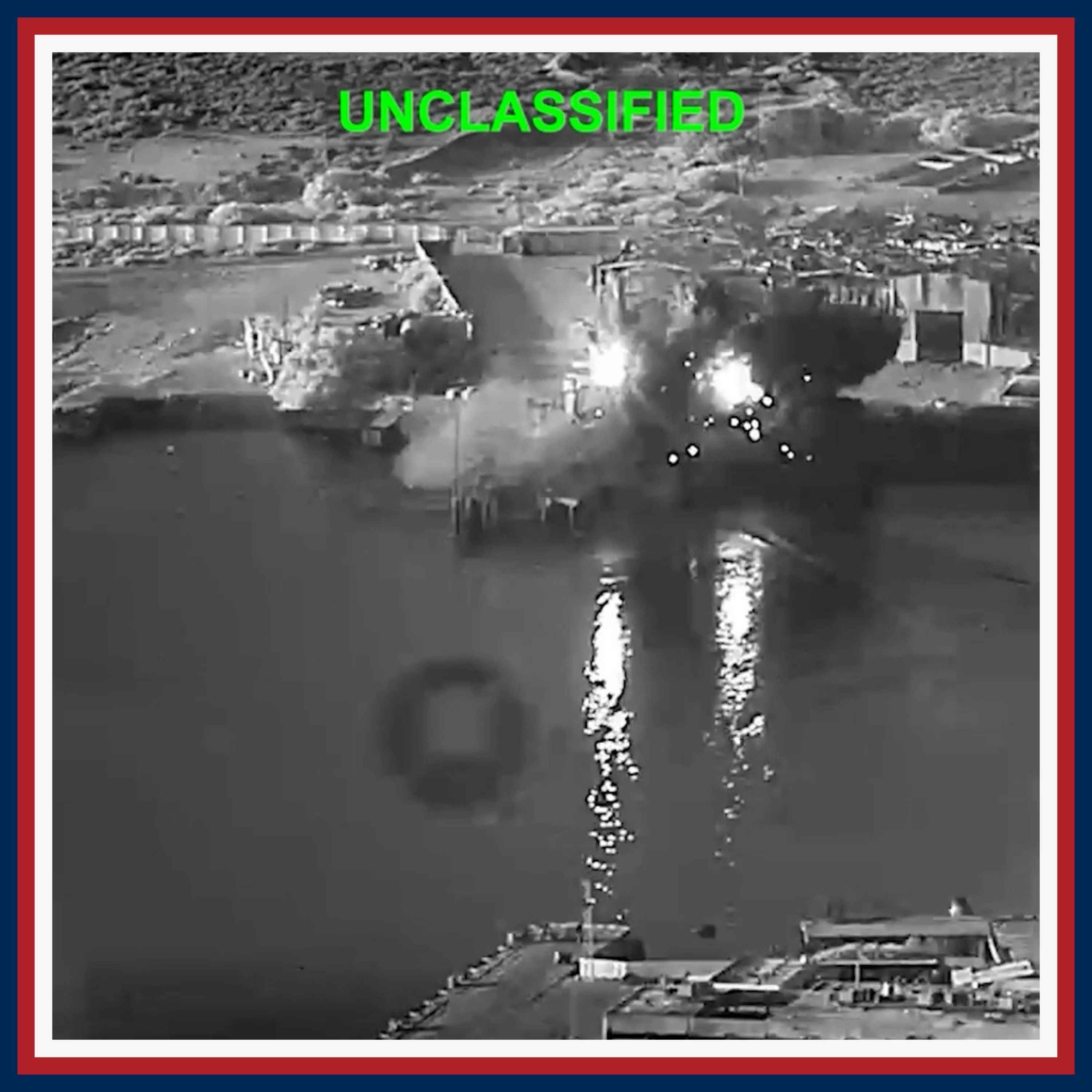
Picture: Handout photo by US Department of Defense via Getty Images (US sea drones strike a submarine and a ship maintenance facility on July 13, 2026 in an undisclosed area of Iran)
Audio: Fox News, AP, CBS, https://www.facebook.com/TroyJacksonmaine, Reuters
00:00 - Inside Trump's "Performance War"
01:43 - Bombing Iran: The Battle for the Strait of Hormuz
03:33 - A War with No Clear Way Out?
05:13 - Trump Unleashed & The Legacy of Lindsey Graham
06:36 - Military Strategy vs. Political Illusion in the Gulf
10:51 - Trump's History Obsession & The Shocking Oil Market Reality
15:25 - The Democratic Party's Sudden Lurch to the Left
17:07 - Can Centrist Democrats Survive the Socialist Momentum?
21:42 - The Fierce Battle Over Israel Aid & Speculation for 2028
23:57 - Meet Troy Jackson: The "Johnny Cash of the Allagash"
25:34 - Trump's "Wild Card" Speech on Election Integrity
28:07 - Laying the Groundwork to Nullify the Next Election?
29:44 - "See You In Court" — The Legal War Ahead
This podcast was brought to you thanks to the support of readers of The Times and The Sunday Times. Subscribe today
Hosted on Acast. See acast.com/privacy for more information.