 Ask ChatGPT


U.S. blockade of Iranian ports as an off-ramp; J.D. Vance’s role in Iran talks and his stance on Ukraine; Trump’s clash with the Pope after Trump posted an image of himself as Jesus; broader implications for Europe and Catholic politics.
Gerry Baker (Times columnist; editor-at-large at The Wall Street Journal). Katie Balls (Washington editor at The Times and Sunday Times). No other guests named; discussion references Patrick Vallance and Melanie Iverson only as future Life Sciences Summit speakers.
The blockade is “elegant” but unlikely to achieve strategic goals because Iran’s regime and nuclear capability persist; Vance is used as a serious token and is constrained by the need for a deal beyond what existed pre-Feb 28. Vance’s Ukraine remarks are “obscene,” reflecting a moral emptiness. Trump’s Pope dispute is exploitative and politically manageable; Catholics will rationalize support.
Negotiations in Islamabad after 19 hours; Trump telling a reporter to “stay in Islamabad”; Vance campaigning in Hungary; Vance clip praising stopping U.S. Ukraine funding; Trump’s “Jesus”/doctor post and Pope Leo comments on nuclear weapons and crime.
Written by AI. May contain mistakes.
Discussion on President Trump's blockade of Iranian ports and its implications.
“Hello and welcome to the State of the USA, Today, a podcast from The Times and The Sunday Times on the state of America and American politics.”
Analysis of the U.S.'s military actions against Iran and their long-term effectiveness.
“But as is now becoming tradition, we'll start with Iran.”
Discussion on the persistent presence of the Iranian regime and its nuclear capabilities.
“It still has some nuclear material, this highly enriched uranium and presumably elements of a nuclear program that can be reconstituted.”
Debate on the economic tactics being used against Iran and their potential effectiveness.
“to the world, but it remains the same regime and it continues to have these same capabilities, that means the US is going to have to continually go back and do what it's done for the last six weeks periodically.”
Discussion on the complexities of U.S.-Iran negotiations and the role of J.D. Vance.
“So I think, again, it's an elegant off-ramp because it enables probably the United States to pull out of this war without leaving Iran in complete control of the Strait of Hormuz, which would have been a real disaster.”
Insight into J.D. Vance's involvement in negotiations and his political positioning.
“And had, you know, lots of people pitching it as neutrality, but saying, but be a bit careful of the straight of her moves.”
Critical examination of J.D. Vance's comments regarding U.S. support for Ukraine.
“And they've come to us saying, OK, all right, OK, we do understand we need to do.”
Analysis of Trump's influence on U.S. relationships with European leaders.
“He was speaking at a Turning Point USA event this week, and I think we can hear a clip now.”
Learn about how Trump's actions are perceived by European leaders and its electoral implications.
“It now feels a little bit as though Trump has criticised nearly every EU leader and perhaps the one they like to Victor Orban.”
Explore the U.S. national security strategy regarding Europe and Trump's personal approach to diplomacy.
“I'm looking at the agenda for our Life Sciences Summit on May the 21st.”
Delve into Trump's controversial depiction of himself as Jesus and the backlash it caused.
“So in case you somehow missed this, let's catch you up on how the week started.”
Examine the complex relationship between Catholic voters and Trump's political stance.
“I mean, I have to qualify that because, of course, if Vladimir Putin would have criticized Donald Trump, he doesn't quite get the same treatment for whatever reason.”
Discuss the perceptions of Trump's religious beliefs and his appeal to evangelical voters.
“I talked about him before the break about what a sort of moral vacuum he is.”
Discussing how Trump's actions resonate with evangelical beliefs despite his imperfections.
“And yeah, maybe he's not really all that devout.”

Get the gist, explore an idea or ask about something said.
 Claude
On The State of It: USA, what are the key points of this episode?
Searching your listeningAutomatic transcript. May contain errors.
0:00Gerard Baker: I'm looking at the agenda for our Life Sciences Summit on May the 21st. There's so much turmoil right now over drug pricing. It's a massive conflict between industry innovation and the reality of the NHS budgets.
0:09Katy Balls: Yeah, it's a fascinating topic and the NHS has done its job of getting extremely cheap drugs and then President Trump has done his job of saying, but hang on, you're free riding on all of our research money and marrying that tension has been really hard. This is something that I think we'll be looking into on the day.
0:24Gerard Baker: Yeah, it's going to be really interesting to hear from our speakers like Patrick Vallance and Melanie Iverson. And I should warn everyone listening, it's already a heavily subscribed event. We've got over 200 of the best in the sector signed up to join us. I'm definitely looking forward to tackling those tough conversations, though, and having a real look at what's happening across the sector.
0:41Katy Balls: Yeah, look, I mean, obviously, go to thetimes.com forward slash events to find out more.
0:52Katy Balls: Hello and welcome to the State of the USA, Today, a podcast from The Times and The Sunday Times on the state of America and American politics. I'm Gerry Baker, Times columnist and editor-at-large of The Wall Street Journal.
1:04Gerard Baker: And I'm Katie Balls, Washington editor of The Times and Sunday Times. Much to talk about today, including what Republican voters make of President Trump's ride with the Pope. But as is now becoming tradition, we'll start with Iran. Jerry, the US started its blockade of Iranian ports on Monday after talks in Islamabad did not quite go to plan after 19 hours of negotiations led by J.D. Vance. What do you make as a counter-blockade strategy? Do you think it's probably fair that Trump had to do something after the emerge with not much in the way of white smoke?
1:34Katy Balls: I think the blockade idea is probably the most elegant way the Trump administration can come up with as a sort of as an off ramp for this conflict. Look, I think we've talked about this a lot. The U.S. has clearly done significant damage to Iran's military capability. It's eliminated a significant amount of the leadership. It's had a military success. I think it's increasingly clear that it has not had the long term strategic success that was hoped for it. The regime stays in place, despite Donald Trump constantly saying the regime is gone. That regime is still there. It still has some nuclear material, this highly enriched uranium and presumably elements of a nuclear program that can be reconstituted.
2:18Katy Balls: I mean, remember, this is the nuclear program that Donald Trump told us he'd obliterated last year, last June, which we've been told for the last six weeks of bombing has been reduced to dust. You know, buried inaccessibly underneath piles of rock. And it's the same nuclear program that J.D. Vance spent the weekend trying to negotiate away. So this nuclear program is clearly not going away. Iran, the regime remains in place. And as long as those two things remain the case, this war can't really be declared a clear victory for the United States because if the aim is to render Iran not a major threat to the region and ultimately even to the world, but it remains the same regime and it continues to have these same capabilities, that means the US is going to have to continually go back and do what it's done for the last six weeks periodically.
3:09Katy Balls: Well, there's no appetite for the United States to do that. So it's hard to see this as a success. So we get to this point where it's clear the regime isn't going to fall and it's clear that negotiations are not going to yield what we want them to yield at this point. So this blockade idea, I think, is an elegant move to produce an off ramp. The aim is to obviously not only to starve Iran of economic resources, to starve Iran of revenue from oil, which, by the way, it's been getting in very large amounts over the last six weeks because the oil price has gone up significantly and it's been exporting oil still, especially to China and to other countries.
3:44Katy Balls: So the aim is to obviously starve it of that revenue, make the economic conditions intolerable for Iran so that they will agree to open the strait and come to a deal, and also to make the conditions very uncomfortable, particularly for other countries, particularly China, so that China will bring pressure to bear on Iran. So I think, again, it's an elegant off-ramp because it enables probably the United States to pull out of this war without leaving Iran in complete control of the Strait of Hormuz, which would have been a real disaster. So not only would the US not have achieved its main objectives, it would have left Iran, this great enemy, with greater economic power over a world economic choke point than it had before.
4:22Gerard Baker: Now, we're told that talks could restart in a couple of days. Donald Trump told one reporter from the New York Post to just stay in Islamabad, praising the Pakistanis for their hosting skills. J.D. Vance has said that Donald Trump doesn't want a small deal.
4:36Katy Balls: I'd say in Pakistan, we made a ton of progress. But the reason why the deal is not yet done is because the president, he really wants a deal where Iran doesn't have a nuclear weapon. Iran is not state sponsoring terrorism, but also the people of Iran can thrive and prosper and join the world economy.
4:55Gerard Baker: So, Jerry, it feels as though there is still very much diplomatic channels open. And some of this has to be taken a pinch of salt when it comes to the rhetoric. So even, you know, J.D. Vance and his very, well, not even that early morning by the time the talks have wrapped up at the weekend conference where he said it was the final offer and it was still the Iranians to take. It does feel as though the U.S. could move slightly. to your point earlier I mean I wonder how much we think Donald Trump's terms or objectives if he had them in the first place have changed during the conflict because one of you know there've been various interesting accounts but one thing that emerged last week is there's going to be a new book coming out via the New York Times authors Jonathan Swung and Maggie Haberman and they released a chapter in advance about the situation room where it really went into all the different figures in the cabinet, also some of the military general's advice ahead of the war.
5:47Gerard Baker: And had, you know, lots of people pitching it as neutrality, but saying, but be a bit careful of the straight of her moves. It was J.D. Vance who was the most defiant, who put several arguments out against this. So one of the arguments being that it could create problems in the Middle East region, another being what it could do to the voter base. Do you think the very fact that J.D. Vance has gone from being accused of lurking in the distance, not doing much media, his usual amount of media because he's not happy with the war, to becoming a figure who is sent to the talks, is now having to talk a lot about them.
6:21Gerard Baker: Does that suggest Donald Trump is looking for an off-ramp more by sending his isolationist? Or are we reading too much into that?
6:27Katy Balls: I mean, it could be. I think, you know, you could interpret it as it was a very high level delegation. You know, most of these negotiations So far, I've been led by Jared Kushner and Steve Witkoff, who are whatever else they are. I mean, you know, Trump trusts them, but they're not high level representatives of the US government. So sending Vance is a token of your seriousness. I'm sure there was an element with Trump of, hey, J.D., you're the guy who's on the record as being a skeptic. So, OK, you know, now you've got a great opportunity to go out and end the war. I mean, I think that was always a big fan of J.D.
7:00Katy Balls: Vance. But to be fair to him, it was always a bit of a hospital pass, the idea that he was going to go there and negotiate a deal. Look, I mean, I think the other thing that's haunting the Trump administration right now as they do, as they reenter possibly negotiations is that they were in negotiations with Iran up until the United States started bombing on the 28th of February. And one thing they have to be very mindful of is that they don't want a deal that was on the table on the 28th of February before the United States started conducting this war. They don't want that because they want to make the argument and they're still trying to make the argument that this war is very it's been very effective.
7:37Katy Balls: At minimum, it's woken up the leadership to the idea that they will never be allowed to have a nuclear weapon. So here we are. So we now need a deal if we're going to get a deal at the end of this, which really rams home that point that we've we've given them an absolute beating. And they've come to us saying, OK, all right, OK, we do understand we need to do. Well, if the deal that they end up doing is basically the same deal that was on the table and Iran more or less accepted in the days before February the 28th, they can't really make that argument either. So they're in a – and I think, to be honest, I think that's what ultimately – from my understanding of people I've spoken to, that's kind of what derailed the talks in Pakistan at the weekend was that the United States basically was confronted with the same proposition that it was confronted with when it said, no, we're going to go and bomb you.
8:20Katy Balls: So they do have to get some sort of a deal, though. It might be about related to the timing by which Iran says it won't enrich its uranium beyond a certain point. Iran has offered, you know, what, two years, the United States wants 15 years or whatever. There are different, again, versions of that or 20 years. But again, that's part of the argument that Vance has got to make if he is involved in helping to resolve this war is that it was the war as well as the diplomacy that succeeded here. And that's why they need a deal which goes further than the deal that they seem to think that might have been available before the war started.
8:56Katy Balls: But we're all obviously amused at the fact that J.D. Vance was in Hungary ahead of the Hungarian election, campaigning staunchly for Viktor Orban, who then proceeded to get trounced. He went from there and then on to the talks in Pakistan where he failed to get a resolution to the war. Everything he touches seems to turn to dust.
9:14Gerard Baker: He was speaking at a Turning Point USA event this week, and I think we can hear a clip now.
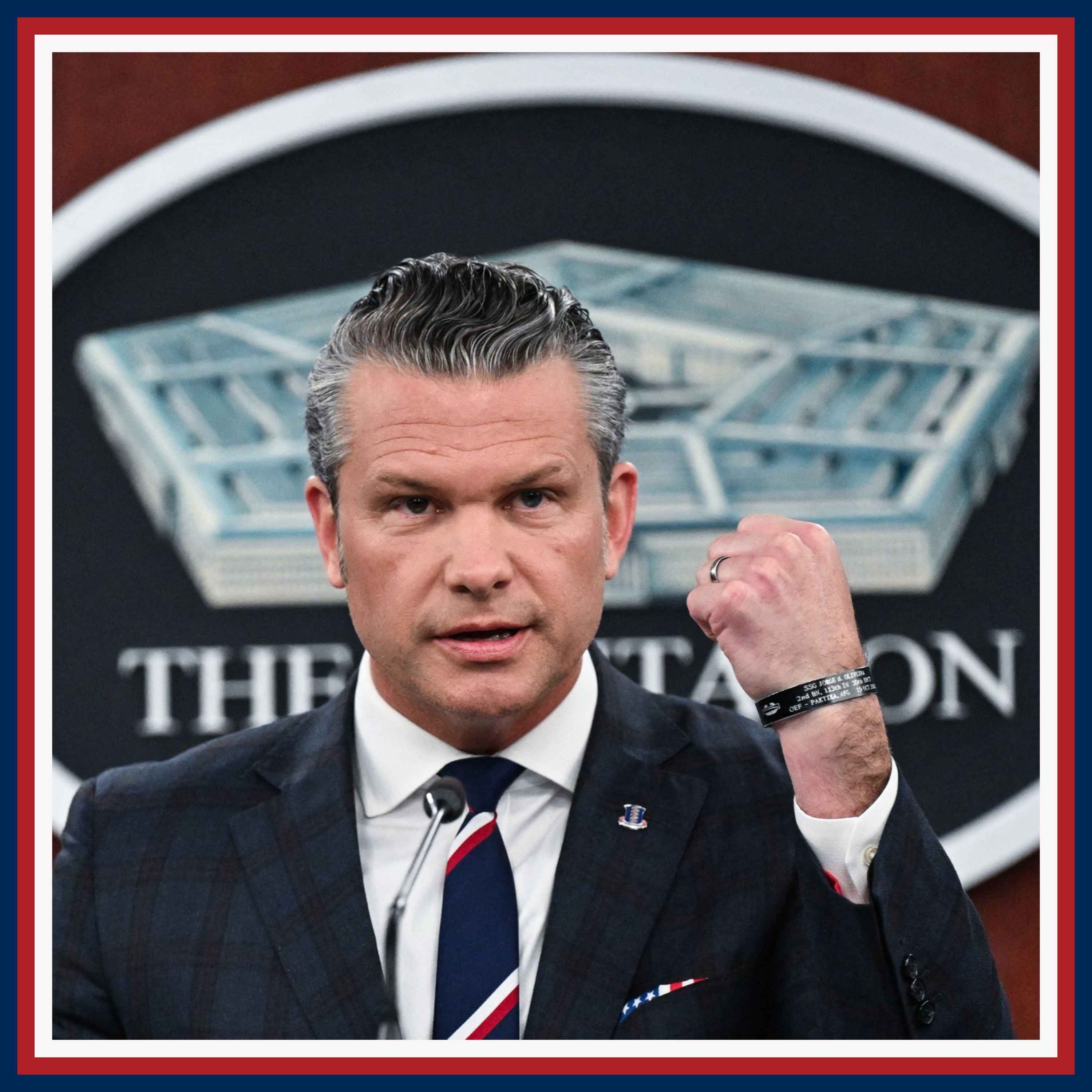
9:18Katy Balls: I was saying we should stop funding the Ukraine war. OK, and I still believe that, obviously. And it's one of the things I'm proudest that we've done in his administration is we've told Europe that if you want to buy weapons, you can. But the United States is not buying weapons and sending them to Ukraine anymore.
9:31Gerard Baker: Jerry, this clip of J.D. Vance talking about Ukraine interested me because I was having interesting conversations last week with some diplomats in D.C. and I think one of the consequences we know of the Iran war no matter how exactly it plays out in the coming weeks days or perhaps months is what it's done to relationships with old allies of the US and certainly there are figures in European embassies who are very concerned about what this means for Ukraine on the one hand you can say the Ukrainians have shown that some of their drone equipment and others is helpful and that makes them of more interest to the US But on the other, I think there is a feeling that in the past, Donald Trump has perhaps been naturally more aligned with what Putin has said on Ukraine.
10:19Gerard Baker: He tends to take to Vladimir Putin more warmly than Zelensky. and the European leaders have had to wade in to say, hang on a minute, this is what Zelensky really meant in the Oval Office, this is what you should do, to almost walk it back from Trump giving Zelensky an ultimatum to end the Ukraine war, which could mean ceding territory he doesn't want to cede. And from a few conversations, I think there's a real fear that they don't have those channels anymore. If you look at how Trump has lashed out at Keir Starmer yet again this week, but also now Maloney, Italy's leader he's unhappy with because she's criticised him.
10:56Gerard Baker: We're going to come on to that row about the Pope shortly. And there you have J.D. Vance talking with pride about the fact that you made it so Americans, you know, stopping to have to fund this. Do you think there could be more to come or what struck you about that clip?
11:10Katy Balls: I mean, the thing that most struck me about that clip was just what an obscene remark it was. I mean, it's one thing to say, you know, to make the case, look, Ukraine's not really our problem. I'm sorry, it's in your continent. We can't be the world's savior. We can't go everywhere and defend countries, however bad things may be. Europe, you haven't done enough. You've got to step up. It's all fine. You can argue about that, but it's reasonable to say those things. But to say I'm proud of the fact that we starved Ukraine of help to help it resist this extraordinary, you know illegal war of aggression by an expansionist power it's just it's just there's a really disturbing thing about jd there's a kind of everybody knows that he's you know changed everything from his name to you know his personal history to his politics to his religion there's a vacancy in the middle of jd vance's soul that i find really really dark and disturbing and you You know, again, so we know what he was doing, that, you know, it wasn't like he'd really thought this through and really examined his conscience and decided, yeah, this was the right thing to do.
12:21Katy Balls: He was simply appealing yet again to an audience to hear what he wanted to hear. But he does speak to something about the man. Because the other thing about Vance, there's just an inauthenticity problem with Vance, right, that he just doesn't say everything. He's the least authentic politician. Whatever you think about Donald Trump, and, you know, there's lots of things not to like about Donald Trump. There is an authenticity about Trump. He just kind of comes out, you know, as we're going to discuss with this bizarre stuff with the pope. He comes out and sort of says what he thinks with Vance.
12:47Katy Balls: Vance is, again, there's just a there's a sort of a dark emptiness where most people have some core or sense of belief. And it's by the way, one of the reasons it makes him, I think, such a poor politician is because you can't really do that. You can't really pull that off. You know what I mean? When you when you don't have any values or principles, but you are kind of literally, you know, tailoring whatever you say and supposedly believe for your audience. You can't do it convincingly. You know, you just can't. It's just you have to you have to speak from the heart to be to persuade people. And he doesn't persuade people.
13:25Gerard Baker: No, what's interesting, I find, is when I speak to figures in the UK government, figures close to the UK government, they almost find Vance one of their best to deal with. They will say, oh, behind the scenes, he comes across much more reasonable because he's not, they feel as though he's not playing perhaps to some of these points. As you say, that was a crowd that would have appreciated that message on Ukraine. And they think, you know, behind the scenes, oh, he's actually comes across as much more reasonable. But I suppose, Gerry, just before we go to the break and get to the Pope, When it comes to that kind of UK perspective, Europe, we have Trump again this week being quite critical.
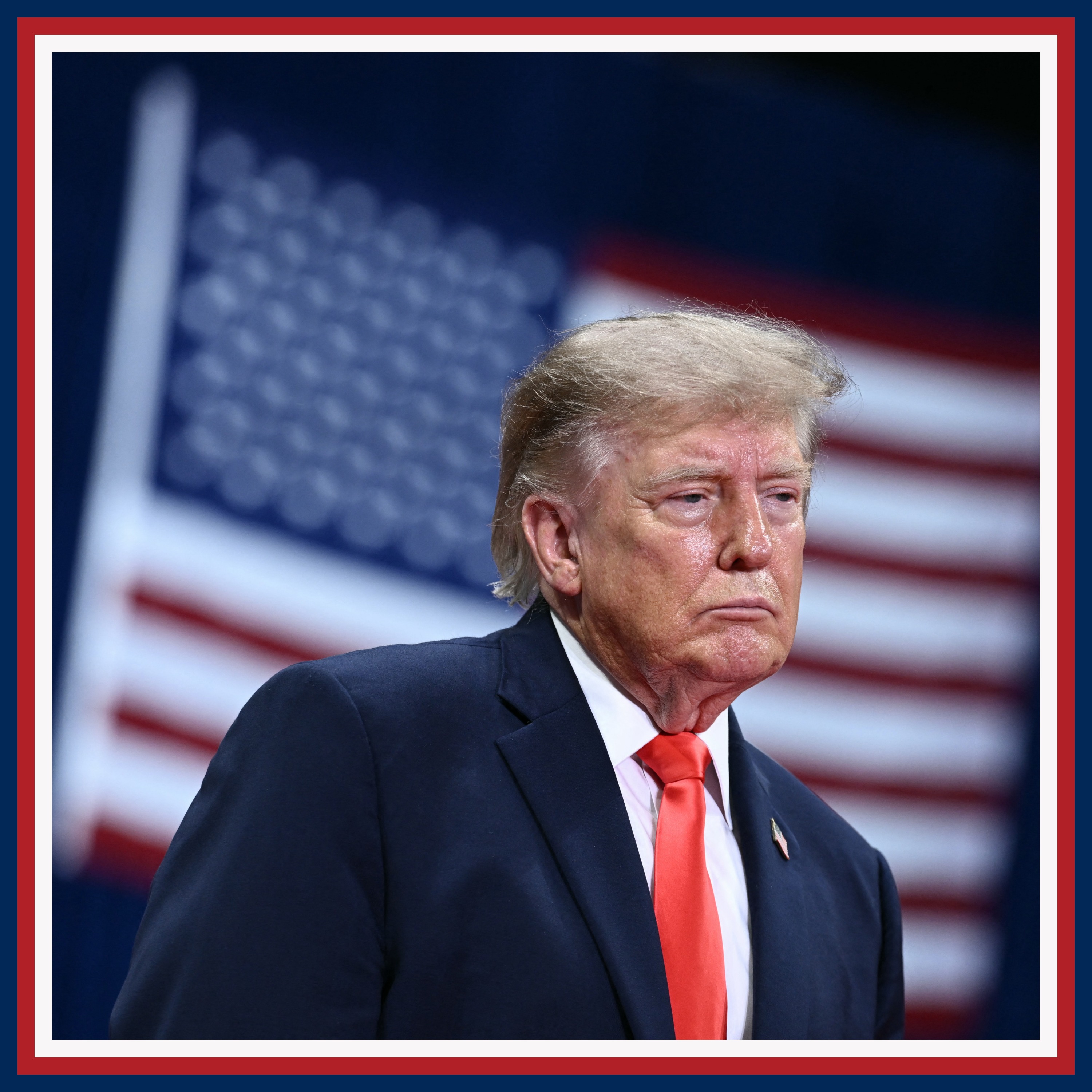
14:00Gerard Baker: We have more details coming of the state visit, which is later this month for the king coming over. It now feels a little bit as though Trump has criticised nearly every EU leader and perhaps the one they like to Victor Orban. I mean, he's out the door. Certainly, it feels as though European leaders have started to see association with the Trump administration as something which is going to have a negative impact to them electorally, which is perhaps rather more relaxed at just criticising him.
14:25Katy Balls: Yeah, look, I mean, the US is formally committed under the national security strategy that was published in December to essentially, at minimum, let's say, undermining and ultimately maybe even overthrowing the sort of the political leadership of Europe, the major countries, France, Germany, Britain, the institutions in Europe, the European Union, the whole idea of Europe that is sort of, you know, kind of whatever you call that, that's been developed over the last 30 years or whatever. The United States, under its official strategy, national security strategy, is committed to supporting, as it says, political organizations and parties that will essentially overthrow that establishment.
15:04Katy Balls: So it shouldn't really be a surprise. Now, I don't think Trump – I bet I would lay a lot of money that Trump's never even read his own national security strategy. But that does nonetheless reflect the kind of posture towards Europe that the Trump administration has. With Trump, it's purely – it's entirely personal. If, you know, I'm still remembering that time back last year when he was related to tariffs. He had a conversation with the Swiss prime minister, I think it was, and the Swiss prime minister said something he didn't like. So he was going to put the Swiss tariffs up from 10 percent to 25 percent or whatever.
15:39Katy Balls: It's entire. Everything with Trump is personal, instinctive. He expects and also one way loyalty is part of his problem. He expects complete devotion to him, the kind that he gets from his cabinet. You know, we get these lovely insights every few months when the cabinet meets and they all go around the table competing with each other to say, you know, that he's the greatest man since Jesus Christ. And then if but but he offers them no loyalty back. And the same with the Europeans, he expects he expects complete devotion to him from European leaders. And when they don't and he's not going to give it back to them.
16:12Katy Balls: So when they actually push back, as Maloney did about the Pope, you know, that's it. There's no history there. There's no broader context. It's all just immediate. If you say something I don't like now, I hate you. It's the, you know, it is the kind of the mind of a malignant narcissist.
16:30Gerard Baker: And with that, and you mentioned Jesus Christ, we're going to be coming back after the break where we're going to be talking about Trump, God, the Pope, and a rather bizarre turn this week. I'm looking at the agenda for our Life Sciences Summit on May the 21st. There's so much turmoil right now over drug pricing. It's a massive conflict between industry innovation and the reality of the NHS budgets.
16:54Katy Balls: Yeah, it's a fascinating topic, and the NHS has done its job of getting extremely cheap drugs, and then President Trump has done his job of saying, but hang on, you're free-riding on all of our research money, and marrying that tension has been really hard. This is something that I think we'll be looking into on the day.
17:09Gerard Baker: Yeah, it's going to be really interesting to hear from our speakers, like Patrick Vallance and Melanie Iverson. I should warn everyone listening, it's already a heavily subscribed event. We've got over 200 of the best in the sector signed up to join us. I'm definitely looking forward to tackling those tough conversations, though, and having a real look at what's happening across the sector.
17:25Katy Balls: Yeah, look, I mean, obviously, go to thetimes.com forward slash events to find out more.
17:31Gerard Baker: And we're back. So in case you somehow missed this, let's catch you up on how the week started. Mr.
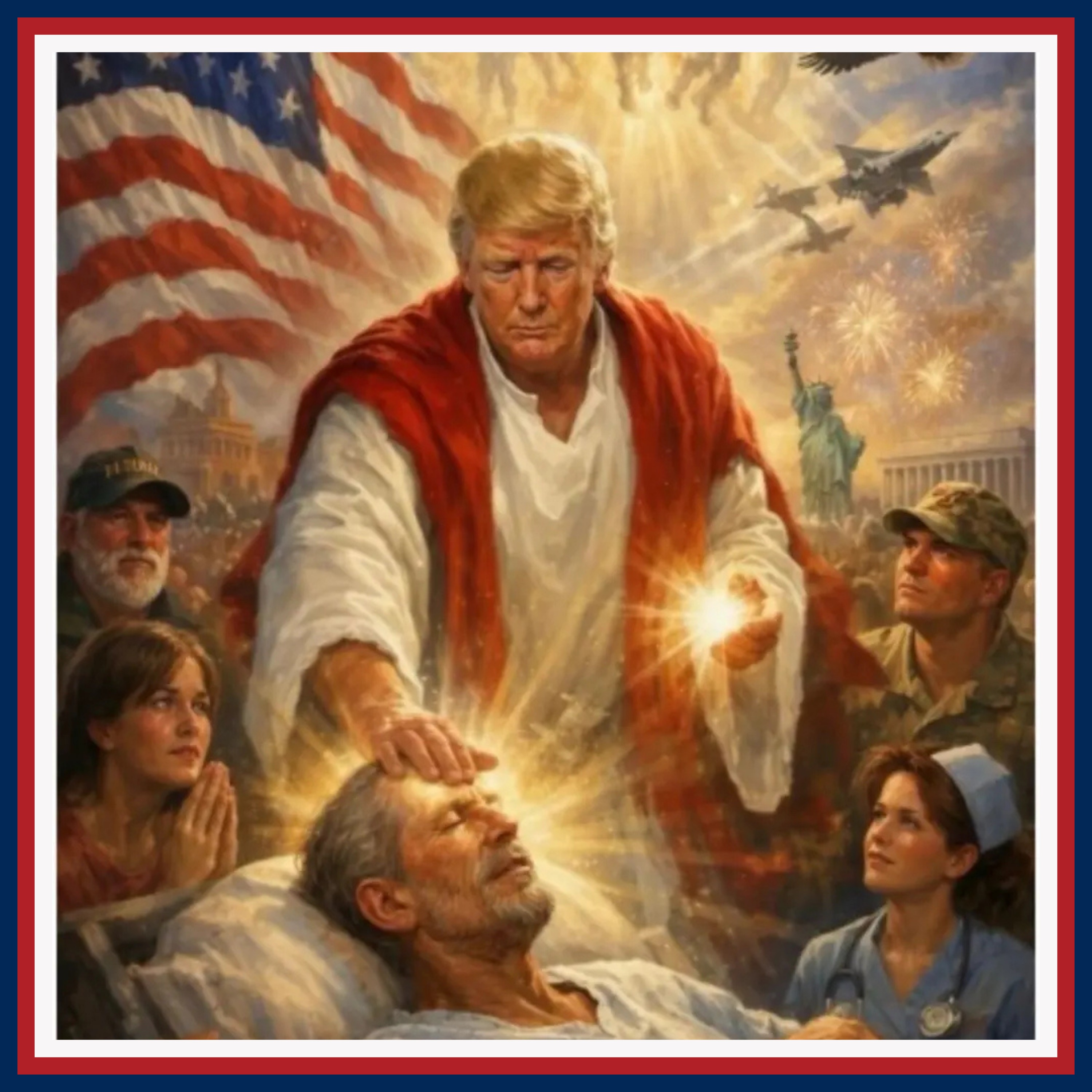
17:38Katy Balls: President, did you post that picture of yourself
17:41Gerard Baker: depicted as Jesus Christ? Well, it wasn't depicted. It was me. I did post it, and I thought it was me as a doctor, and it had to do with the Red Cross as a Red Cross worker there, which we support. And only the fake news could come up with that one. So I just heard about it, and I said, how did they come up with that? It's supposed to be me as a doctor making people better, and I do make people better. I make people a lot better. Here's what the Pope had to say. I have no fear that the Trump administration are speaking out loudly about the message of the gospel. And that's what I believe in. And here's what Trump had to say.
18:21Gerard Baker: We don't like a Pope that's going to say that it's okay to have a nuclear weapon. We don't want a Pope that says crime is okay in our cities. I don't like it. I'm not a big fan of Pope Leo. He's a very liberal person and he's a man that doesn't believe in stopping crime. Jerry, as Trump-Rows go, where does this sit on the extraordinary scale?
18:44Katy Balls: Trump has redefined the scale of ordinary for most human beings. So this, within the standards of his own universe, this is obviously par for the course. And by the way, he's also, he has clashed with the Pope before. He clashed with Pope Francis in his first term and, you know, didn't really seem to have any lasting consequences. And I'm pretty certain this will be the same thing too.
19:07Katy Balls: The self-portrayer as Jesus, which, of course, he subsequently denied and said, no, no, he was just being a doctor, which led to a whole host of amusing memes of people dressed in biblical era robes, supposedly staffing emergency rooms in American hospitals. But, you know, it is pretty standard, back to the point we were talking about before the break, that, you know, when somebody does or says something Trump doesn't like, it doesn't matter who they are, what relationship they have, you know, with him, he will slam them. I mean, I have to qualify that because, of course, if Vladimir Putin would have criticized Donald Trump, he doesn't quite get the same treatment for whatever reason.
19:46Katy Balls: So the interesting thing has been obviously the reaction among Catholics. I'm Catholic, you know, lifelong Catholic. I, you know, try to follow the the precepts of the church. But what's interesting in the in the United States is that politics always trumps, forgive the pun, sort of trumps everything. And so Catholics who support Trump are going to support Trump. I mean, they just are. And you're seeing quite a lot of commentary from people saying, how dare the pope get involved in American politics? By the way, you know, this is the same country where evangelical evangelicals have basically, you know, defined a lot of conservative politics over the last 50 years or so.
20:27Katy Balls: But the pope, the authority for the world's Catholics, is apparently not permitted to express a view. You know, there's a lot of anti-Catholic bigotry in this country that, you know, goes really right back to the founding. and also, you know, we've seen it sort of rear its head over the years. You know, Ku Klux Klan, particularly in its incarnation from the 1920s onwards, was a heavily anti-Catholic organization. There was the whole issue of John F. Kennedy when he ran for president in 1960, the first Catholic to be elected president of the United States. And a large part of that campaign was consumed by, you know, was Kennedy going to be loyal first to Rome rather than to the United States?
21:07Katy Balls: So that kind of canard that Catholics can't be trusted because they're sort of fifth columnists who are loyal to a foreign power is still quite powerful here. And I think Trump, to be honest with you, in his clumsy, you know, not particularly well thought out way, has actually stumbled into this and probably politically will be able to exploit it. I don't buy this idea that Catholics who support Trump are going to be sort of horrified by this, are going to turn away from him. I think they're going to rationalize it and say, I don't like the pope. I don't like what he's saying about war. I don't like what he says about immigration.
21:39Katy Balls: He's a left winger, which is ridiculous, obviously. I mean, this is the same pope who condemns abortion and condemns, you know, transgender identity and condemns euthanasia and all this kind of stuff. The usual Catholic teaching. This is just again to me, again, as a Catholic, this is standard Catholic teaching. You know, be good to your neighbor. You know, we should be welcoming of immigrants and we should, by and large, try to avoid bombing people out of existence. That is what the church has, you know, has at least for the last, let's say, 100 years before the popes were rather more aggressive, shall we say, in the Middle Ages.
22:14Katy Balls: That's been standard church teaching. So he's just reiterating church teaching. And again, I think I think this probably helps Trump. I think Trump is able to exploit the sort of anti-Catholic bigotry in this country. And we'll and we'll develop it. It does bring us back, unfortunately, to J.D. Vance. I mean, J.D. Vance is in this interesting position. I talked about him before the break about what a sort of moral vacuum he is. I mean, he's notionally a Catholic. He became a Catholic a few years ago.
22:36Gerard Baker: He has a book coming out on it.
22:37Katy Balls: Yeah, yeah, yeah. I just wonder how long that can possibly last. As I said, he's changed his religion. He's changed his name. He's changed his history and his identity and his politics. It'll be nothing for him to decide, actually, no, the Catholic Church is all wrong and he needs to be something else. You know, whatever their soul, their conscience tells them to believe, it always takes second place to whatever Trump tells them. There was a lovely line somebody once had about a British politician, which applies to, say, Marco Rubio or J.D. Vance, which is that their repeated bouts of wrestling with their conscience amounts to the longest winning streak in sporting history because their conscience never wins.
23:15Katy Balls: Their political expediency always does.
23:18Gerard Baker: One of the things I think that with this Pope row is, well, first off, of course, he said, oh, I thought it was a doctor. People didn't seem to get it. So I deleted it. And everyone rolled their eyes. But I do think one of the most telling things was the fact that he deleted that post, right? It does suggest that he realized there was a backlash. You've had Mike Johnson, the speaker, say that he communicated that in a very Mike Johnson polite terms. But yeah, if we think about times Donald Trump has actually taken something down. So there was the the post about NATO troops standing a bit further back than the Americans.
23:51Gerard Baker: And that was big uproar. And I think there was unhappiness from the king on that. And then you saw Donald Trump send a follow up message about how great the Brits were during the war. It felt to me a little bit like that in a sense that he clearly realized the backlash was coming. So he was worried enough to have a corrective on it, even if it didn't stop. Yeah, it stopped short, of course, of saying I made a mistake. And then I also think it speaks to, you know, Trump's true social, which is there's definitely that period overnight where he is, you know, the most, you know, pure Trump, Trump unleashed.
24:24Gerard Baker: Not that he's that leashed these days anyway, where he's left his own devices. He's posting these comments. And, you know, I think probably his team wake up seeing what they have to deal with.
24:36Katy Balls: Yeah, it is true. You're right. He did delete it. I'm always fascinated by who. Who is the person who has to actually go to Trump and say, you know, you really went over the top this time, Mr. President. Who do you think it is? It might be Susie Wiles, I'm guessing. Maybe it's Susie Wiles. I think she's probably the one person who can actually speak to him, who kind of doesn't have a lot to lose. And I think he does actually listen to her, probably.
24:58Gerard Baker: Yeah, and there was that nice detail in the Vanity Fair profile, which, of course, the White House went on to disown, saying it'd be in selective quotes. But Chris Whipple, the author, did get some time. And he did say later that Susie Wiles has a screen which mainly has his truth socials on so she can just keep an eye on what he is saying.
25:18Katy Balls: I would say, I'll be honest, again, as a Catholic, I wouldn't for a second pretend I'm a particularly devout one, but I'm a Catholic, a believing Catholic. I've got to say, I didn't mind the Jesus post. I mean, I thought it was actually quite funny. And that's the thing about Trump. To be fair to him, I've been pretty harsh on him in this episode, I think Trump has a sort of wild sense of humour, right? And I think he sees things like that and thinks, especially, as you say, at two o 'clock in the morning when, you know, he doesn't sleep. And he thinks, yeah, that's funny. And he sort of just decides to repost it.
25:49Katy Balls: I thought it was. I mean, again, look, we can speak darkly about Trump's narcissism. But I don't think even Trump actually genuinely thinks he is the reincarnation of Jesus Christ. So I just thought it was I thought it was actually quite entertaining on the Pope. And on the Pope, I also think, look, the Pope has been critical of the war. Trump can be critical of the Pope. That seems to me to be fine. That's reasonable. And again, as I said earlier, I just don't think it's, you know, it really hurts him politically. I think I mean, not that Trump is in a good political position right now. He could be could do with all the help he can get, including from Jesus, the pope and anybody else.
26:21Katy Balls: But I just I didn't quite get the outrage. I thought it was quite I thought it was quite entertaining.
26:26Gerard Baker: Do you think Trump's religious? Because of course, he's not Catholic. But I was watching a quite special clip from, you know, many years ago is Mark Halperin.
26:35Katy Balls: Mark Halperin asking him what his favorite Bible is.
26:38Gerard Baker: Yeah, we might be able to hear a clip, actually.
26:40Katy Balls: The Bible means a lot to me, but I don't want to get into specifics. Even to cite a verse that you like?
26:45Gerard Baker: No, I don't want to do that.
26:46Katy Balls: You're an Old Testament guy or a New Testament guy? Probably equal. He then goes on to basically talk about the art of the deal and how it was actually, you know, the Bible is, his book is the second best book in history after the Bible.
26:59Gerard Baker: I was actually speaking yesterday to the man who founded Pastors for Trump for a feature I'm working on. and I asked him about this and he said, you know, he has spoken to Trump many times and he is certain that Trump is of faith. But he said there's one thing of being of faith and there's another thing, you know, when I mentioned this Old Testament, New Testament point to him, he said, well, you know, he doesn't necessarily have to study the scriptures, but, you know, he is a believer, trust me.
27:22Katy Balls: I would be very surprised if Trump has the slightest clue. It may even have been news to him to know that there was an Old Testament and a New Testament. And again, he's never in his entire life given any indication whatsoever that he has any sort of religious sensibility. You know, and again, I'm the last person to cast judgment on people's behavior, but it's not exactly as though he's lived a kind of blameless Christian life in either his personal or his business life or anything else. But the reason I say that is that evangelicals have flocked to him. And I suppose to be fair, and I've had this argument, too, with evangelicals that, you know, they say they absolutely say, look, he's an imperfect person.
28:00Katy Balls: He's a sinner. And yeah, maybe he's not really all that devout. But what he does is he stands up for us. You know, he's actually we judge him by what he's done. And it's true on issues that matter to them, like abortion, you know, like school prayer. You know, the appointments he's made to the Supreme Court tend to be people who share the kind of moral views of evangelicals. So, yeah, you know, you don't have to be a perfect person to achieve outcomes that people of religious faith or indeed any other beliefs find very desirable.
28:29Gerard Baker: And that's it from us this week. Please do join us again next week. Business is booming. But you know what really helped? Zero. The accounting platform for small businesses. I used to think spreadsheets were just part of it. Ugh. But real-time cash flow? Wow. Invoices that chase themselves? even better. Books that automate? That's a big one. And I can keep track from my phone while I get the job done. No spreadsheet in sight. What a life. Do right by yourself and
29:00Katy Balls: your business and search XERO for your free trial. Conditions apply.
29:05Gerard Baker: 100 years ago, my grandfather started our family law firm. I remember him saying, if we're going to get full justice for our clients, we have got to go to trial. 95 % of the other law firms will not go to trial. For 100 years, we've been taking cases to trial and winning record verdicts. I'm Cliff Horowitz, a third-generation trial lawyer. Let me do for you what our family has been doing for 100 years, getting you the full justice you deserve.
Katy Balls, Washington editor and columnist at The Times and The Sunday Times
Gerard Baker, columnist at The Times and editor at large at The Wall Street Journal
Producers: Euan Dawtrey, Harry Kitson
Executive producer: Molly Guinness
Picture: TruthSocial.com/@realDonaldTrump
Clips: Reuters
Email us: [email protected]
This podcast was brought to you thanks to the support of readers of The Times and The Sunday Times. Subscribe today
Hosted on Acast. See acast.com/privacy for more information.