Ask ChatGPT
 The State of It: USA
8 Jul 2026 · 32m · 10 chapters
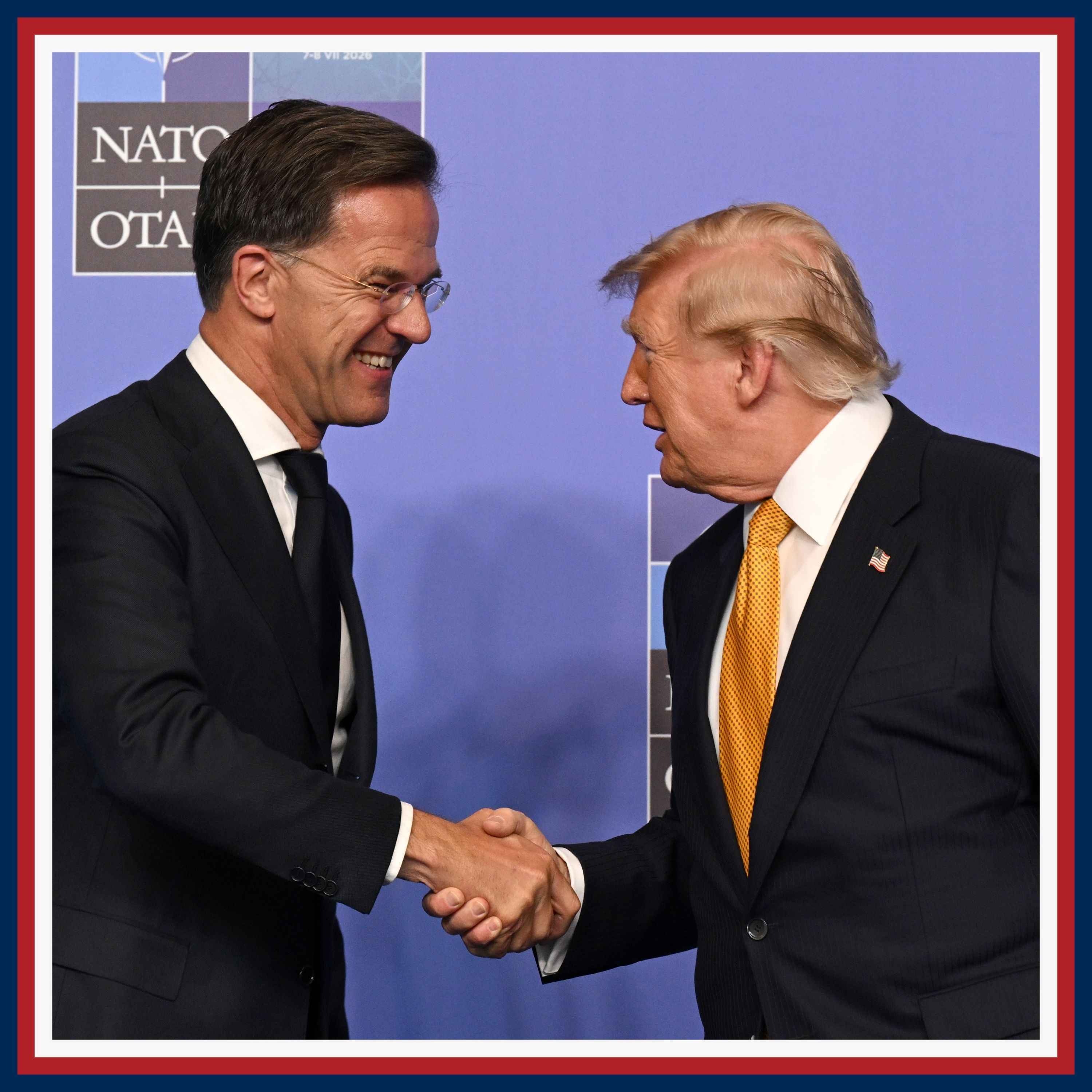
The episode of The State of It USA (Times/Sunday Times) argues that Trump’s NATO summit agenda is destabilizing: he threatens to end a ceasefire with Iran, pressures allies over Greenland, and treats NATO as conditional.
Gerry Baker (Times columnist/editor-at-large at the Wall Street Journal; former reporter/editor covering US politics) and Katie Balls (Washington editor/columnist for The Times and Sunday Times).
a shaky Iran “memorandum” leaves Iran controlling the Strait of Hormuz, making war politically risky for Trump but verbal escalation likely; Greenland threats weaken European security planning and could be a negotiating tactic; Ukraine is live but neither side is at a decisive turning point—settlement remains likely.
Trump attacking Spain/Britain/Italy/Germany; NATO/EU planning for possible US conflict over Greenland; Nigel Farage using a “lawfare” victim narrative in a DC visit; Trump intervening in the World Cup red card for US striker Balogun, undermining US morale and FIFA integrity.
Written by AI. May contain mistakes.
Discussion on Trump's unpredictable behavior regarding NATO and Greenland.
“I wouldn't rule out Trump doing all kinds of things, whether it's pulling out of NATO, invading Greenland.”
Analysis of Trump's statements about Iran and the potential for conflict.
“the podcast that tries to make sense of what's happening in Donald Trump's America.”
Exploring how Trump's actions impact European security and NATO.
“I don't think there's real appetite for Donald Trump himself to go back to war.”
Discussion on how European leaders are responding to Trump's NATO policies.
“So much of this is trying to fix a situation that was largely fine on shipping before the war happened.”
Examination of Trump's interest in Greenland and its geopolitical relevance.
“So, you know, they'd sent forces there to defend Greenland against the U.S.”
Discussion on Trump's negotiation style and its impact on foreign relations.
“But yet he wants to keep just pressing this idea.”
Discussion on Trump's approach to NATO, Iran, and European relations.
“Denmark has repeatedly made clear to the United States that, yeah, it can more or less, you know, if it wants the station troops there, if it wants the station, you know, missiles might be another issue.”
Analysis of the ongoing conflict in Ukraine and its implications for NATO.
“After the break, we'll be talking about how much support Nigel Farage is getting from the US and particularly Donald Trump.”
Exploration of Nigel Farage's political maneuvers and his relationship with Trump.
“Because agents are great, but they don't always know when a joke lands.”
Explore Trump's remarks on FIFA's red card decision and its impact on the U.S. team.
“And then there was no and there was no alternative.”

Get the gist, explore an idea or ask about something said.
 Claude
On The State of It: USA, what are the key points of this episode?
Searching your listeningAutomatic transcript. May contain errors.
0:00Gerard Baker: Hey everybody, this is Knox from the Popcast with Knox and Jamie. Back to school always brings a little nostalgia, fresh notebooks, new shoes, sharpened pencils, and trying to remember your friend's home phone number. But today, staying connected looks a little different. Between pickups, practices, and after-school activities, kids need a way to reach their parents. And parents need peace of mind too. That's where Gab comes in. Gab makes phones and watches designed for kids with no social media apps or internet browsers. Kids get the connection they need, while parents get features like GPS check-ins, managed contacts, safer messaging, and Gab Music, which is clean songs curated for kids.
0:31Gerard Baker: This year, skip the adult smartphone and choose a phone made with kids in mind. Use code GETGAB to get$25 off at gab.com slash getgab. That's Gab, G-A-B-B. This Monday.com ad was created by a team of people and AI agents. The agents wrote the copy and managed the timelines, while our human creative director made sure it all made sense. Easy. Create your own AI agent today on Monday.com.
1:00Katy Balls: I wouldn't rule out Trump doing all kinds of things, whether it's pulling out of NATO, invading Greenland. To an audience that may sound utterly bonkers, but you can't rule anything out right now.
1:15Katy Balls: Hello and welcome to the State of It USA from The Times and Sunday Times, the podcast that tries to make sense of what's happening in Donald Trump's America. I'm Gerry Baker, Times columnist and editor-at-large of The Wall Street Journal.
1:26Gerard Baker: And I'm Katie Balls, Washington editor and columnist for The Times and Sunday Times. On today's episode, we'll be looking at Nigel Farage's trip to D.C. and what happened after. Did it play a role? And that World Cup red card. But before we get there, NATO allies headed to Ankara hoping that the memorandum on Iran might at the very least allow space to talk about other issues. Ukraine, or if Donald Trump has his way, Greenland. But he's already set the cat amongst the pigeons by announcing that the ceasefire may be over. I don't want to deal with them anymore. They're scum. You know what scum is?
2:01Gerard Baker: They're scum. They're sick people. They're led by sick people. Jerry, how seriously do you think we should be taking this? We have the US president saying that he's still happy to talk to the Iranians, though he's now saying they're very bad people. But the memorandum is looking shaky, Yet there seems to be little appetite from what I'm picking up to really go back to all that war.
2:23Katy Balls: Yeah, Katie, I mean, it sounds just sort of a slightly churlish thing to say when the president of the United States is talking about, you know, resuming a war and talking about another country being terrible and saying the ceasefire is over. It's just sort of a churlish thing to say to say we shouldn't take it very seriously because there is literally nothing more serious in the world than the president of the world's largest superpower talking about going to war again. But I'm afraid I am slightly inclined to take it less than seriously. If what we mean by that is, you know, is the US going to go back to the month long war that it had back in late February and March?
3:00Katy Balls: As you say, there's there's there's no real appetite at all among Trump's supporters for war. I don't think there's real appetite for Donald Trump himself to go back to war. We've already seen with this latest escalation of little escalation of hostilities and certain escalation of verbal hostilities in the last 24 hours, oil prices have started to rise again up 5 % today. It's a little bit more than three months away from the midterm elections here, which will be very important and will determine the course of the rest of Donald Trump's presidency. The idea that having backed off a war, having got America out of that situation that it was in, admittedly, didn't get out of that war with much honor.
3:44Katy Balls: But at least it ended the immediate hostilities. Oil prices fell back. The threat to the global economy fell back. The Republicans started to talk again about their prospects might not be as bad in the midterm elections. The idea that he's now going to relaunch war even closer to those elections and even in even even more perilous situation politically and strategically than he was in five months ago when he launched this war, I just find completely, completely implausible. I do think there's a fundamental underlying problem, which is the deal, the memorandum of understanding that he struck a month or so ago, leaves Iran explicitly in control of the Strait of Hormuz.
4:24Katy Balls: And what's been going on for the last month is Iran essentially demonstrating that they have that control by a combination of putting pressure on ships, occasionally firing, escalating into sort of military action. And Trump finds that very hard to accept, understandably, because it didn't obtain before the war started. But that is the situation he stuck with as a result of this war. So he really is between a rock and a hard place. He's got himself into this situation where Iran has more leverage over the global economy than it had before. And the U.S. can't tolerate that. At the same time, he can't go back to war.
5:00Katy Balls: So we'll see a lot more of this verbal jousting, a lot more verbal abuse, a lot more of this threatening. The idea, however, that the U.S. will actually go back to an all-out war in Iran, I find very implausible.
5:14Gerard Baker: Yeah, I think when we're looking at where this might go, he's in this middle ground where effectively we know there's very little appetite, particularly ahead of the midterms, to go back to an all-out war. You had even comments on J.D. Vance, I think, last week talking about, well, what we have is the space to replenish oil supplies. And therefore, Donald Trump's bluff has been called previously. He clearly doesn't want to go all the way on this. The Iranians know that. I think that most Americans have concluded he doesn't have the appetite. Donald Trump himself said he didn't think America had the appetite for things, you know, for some of the more extreme things you could do in this conflict, which is one of the reasons he's pulled back and made a deal.
5:54Gerard Baker: So he has a pretty limited hand to play. And I definitely picked up in DC quite a lot of just pessimism about where this is all leading, which is some kind of stalemate where the situation in the Middle East doesn't really improve. The Strait of Hormuz is now a situation whereby the Iranians have more control than they had before the war. So much of this is trying to fix a situation that was largely fine on shipping before the war happened. But Jerry, I suppose one of the things is European leaders have looked at that memorandum. And one of the positives, because many of them didn't want the war in the first place, was can we now get Donald Trump to focus on some of the other geopolitical issues that we want?
6:37Gerard Baker: Now, issues that they would like Donald Trump to focus on, Ukraine. And if they believe they're lobbying for him to give Ukraine and Zelensky more of a hearing is working. and then of course issues they don't really want to talk about Greenland which Donald Trump does seem to want to talk about.
6:53Katy Balls: We're seeing the NATO summit unfold in entirely predictable ways in Ankara. Firstly Donald Trump of course dishing it out to the European I use the word allies kind of in heavily inverted commas these days it doesn't really seem like much of an alliance. He has been attacking Spain saying they're going to cut off relations with Spain because of their failure to support the US in the war with Iran. He had a go at Britain. He had a go at Italy. He had a go at Germany. He called them sort of bad people, pathetic, weak, all this stuff. I mean, again, we're very familiar with this stuff by now. The larger question of what's happening with the alliance though, Katie, I think is my impression.
7:33Katy Balls: I spent a bit of time in Europe in the last month and talking to some senior military officials and some senior policymakers. I really do think that there's a kind of there's a weariness obviously with this trump melodrama they've just seen it so many many times and while there's a widening belief that this is just trump and by the way it is just trump really this hating nato is this is not there you can hardly find another republican who would you know endorse what trump is doing with nato and sort of being friendly to russia I think there is a reasonable calculation on the part of the Europeans that you just can't rely on America.
8:16Katy Balls: And Trump's going to be gone perhaps in two years time. You know, maybe he's not. Maybe he will be. They think he probably will. Maybe he'll be succeeded by J.D. Vance or Donald Trump Jr. or somebody like that. So things may not get any better. Maybe he won't. Maybe he'll be succeeded by a Republican who loves NATO or a Democrat who does all the things that Joe Biden said about NATO. But I think the view is it doesn't really matter. You know, they can't they can't base their own security anymore on any assumption that the United States is going to be there for them. I think the alliance has been just shaken to its core.
8:49And I think the Europeans are calculating accordingly.
8:52Katy Balls: The Wall Street Journal had a fascinating, fascinating report the other day. I recommend people to go and read it if they haven't read it already about the deliberations within the NATO EU leaders about in response to Trump's threats on Greenland. And, I mean, it just makes extraordinary reading. Just, I mean, first of all, they are sort of, you know, fly on the wall stuff about how they were basically planning for the prospect of war with the United States over Greenland. So, you know, they'd sent forces there to defend Greenland against the U.S. invasion. They were talking then also about, you know, in agonized terms about how to try and get Trump, you know, to back down or to get him to be less threatening or, you know, somehow to convince him that this was all kind of craziness and some wonderful reporting about how they were going to compose posts on X and what terms to capitalize and things like this.
9:43Katy Balls: Look, I think this is just this absurd, frankly, absurd melodrama. There is a real geopolitical issue underneath, which is it is true that the Europeans have not done enough in their own defense. They are dangerously weak. The people I've been speaking to in Europe in the last month have been explaining in really explicit detail to me how threatened they now feel by the prospect of a Russian attack. They think Vladimir Putin could attack a NATO country at any moment to really test NATO's resolve. They are weak. They know they're weak. They know they can no longer rely on the United States. This is a massive, you know, building geopolitical crisis for the people of Europe.
10:21Katy Balls: But it's trivialized by this just this drama over this man who just for him, it's all about him. And it's all about somebody saying something that he didn't like or somebody doing something that he didn't like or taking a dislike to a particular politician. And it's just such a, as I say, a kind of a weird trivialization of life or death issues, all subordinated to the kind of the whims of this man. It's like going back to sort of, you know, medieval, medieval international relations when, you know, a king could take badly to something that somebody else said and go to war over. It's both a dangerous situation, but also in its weird way, a kind of an absurd one.
11:05Gerard Baker: Yeah, I definitely think there's some Trump fatigue setting in when it comes to NATO allies, too. So just even speaking to some attendees, if you go back to, I think the mood last year was, you know, we need to kind of have all this stuff to show. And of course, you have Malchut visiting the Oval Office before the NATO summit to try and get Trump on side. But I did get the sense that some European leaders are just taking Trump a little bit less seriously, partly because they think it's two years more to endure. And then you have some diphthomats I've spoken to who, to your point, Jerry, they're worried that people think after two years, you know, it all goes back to normal and they don't think it does.
11:44Gerard Baker: And I think when we're looking at the fracturing of that relationship between Europeans and the Americans, Greenland has been really significant in that. And we can hear Donald Trump reviving the issue this week. Greenland is a big problem for us. And the other big problem is the fact that when we wanted them, we didn't want them badly, but we did say, if you want to join us, and they all said no. But when they could have, they weren't there for us. And we've been there for them. So I've been speaking to various figures. We've had Matthew Whittaker in D.C. talking ahead of the summit, outlining to journalists what he was aiming to achieve there.
12:21Gerard Baker: And we've also had some U.S. officials talking. And one of the issues that came up was Greenland. And what US officials are saying is that Trump has never given up really on his ideas of buying the island and effectively reiterating that this is still his preference. They said we're willing to look at other options around Greenland, but so far no one has managed to suggest anything, they claim, which is a better idea than Donald Trump's idea, the president's idea of simply buying the island. Do you think there's any way Donald Trump is actually going to get Greenland or is this all a distraction?
12:56Gerard Baker: Because it doesn't seem to me like he's going to be using force. But yet he wants to keep just pressing this idea. And obviously this goes back to his form of expansionism, which I think he would like, A, on security, he thinks they need Greenland, but he would like to be a president who grows the size of America.
13:14Katy Balls: I mean, here's the absurd thing, Katie. He could have got what the United States wants from Greenland relatively easily. It's not unreasonable for the US to express concern about security of Greenland. And, you know, we are seeing the Arctic opening up as a potential sort of geostrategic front, not potential, but an actual geostrategic front, especially with the slow melting of the ice caps. We are looking at the prospect of Russian and maybe Chinese military deployments coming through the Arctic. And Greenland is right there, a great vast sheet of ice that sort of protects the northeastern flank of the North American continent.
13:53Katy Balls: And it's totally understandable that the U.S. should want bases there, communications capabilities there, should want to basically be able to do what it wants. But it can do what it wants. Denmark has repeatedly made clear to the United States that, yeah, it can more or less, you know, if it wants the station troops there, if it wants the station, you know, missiles might be another issue. But if it wants to massively bolster its defenses by using Greenland, it's possible to do that. And there could have been a deal that could have been done some time ago. But by threatening to invade repeatedly, and again, he's kind of hinting at it again, he has actually made that prospect much, much, much less likely because he's put the Europeans, the Danes in particular, but all the Europeans in an impossible position where they can't be seen to be giving into threats that their country would be – their territory would be invaded.
14:47Katy Balls: So it's classic Trump. It looks good to his audience. It looks like he's being tough. All this art of the deal stuff, you go for the max when you start out with the deal and then you end up with something that you didn't necessarily – you think you might have had to settle for less in the first place. All that stuff, all that BS. But instead, what you've done is you've set back your prospects of getting anything. Iran is another example of that. Iran, there probably was a deal. He tore up the JCPOA. There probably was a deal to be done that could have put the Iranians on a longer path towards developing their nuclear capability.
15:27Katy Balls: But he didn't want to do that. He wanted the big, flashy, showy thing that he could do immediately. Look, this is, I think the one thing to say about, and I hear some Europeans, fewer and fewer and fewer these days, by the way, saying, oh, look, it's going to be back to normal when Trump's gone. It's going to be different. I don't believe that because I do think facts on the ground change in the course of what we've seen in the last few years. But I think apart from anything, that ignores a very important fact. Trump's going to be around for at least another two and a half years. A lot can happen in two and a half years, especially after the midterms.
16:02Katy Balls: Democrats do control the Congress. Trump will probably do what all presidents in their second term, the last gasp of their second term do, which is to turn more towards foreign policy. I wouldn't rule out Trump doing all kinds of things, whether it's pulling out of NATO, invading Greenland, you know, siding with Russia, deciding that he actually, you know, that he feels more favorable about Europe's enemies than he feels about Europe and kind of allying with them. I just, again, I know to an audience that may sound utterly bonkers, but you can't rule anything out right now.
16:36Gerard Baker: And just briefly before we take a break, Jerry, I mean, Ukraine is a live issue. Ukraine is what lots of European diplomats feel. They have been working, you go back to the G7 to really push to have Donald Trump focus on this again. I think that the Europeans feel they've got Donald Trump in a place where he respects that Ukraine is doing better than they were seen to be doing a year ago. But I still don't get the impression from conversations with US officials, from comments that they effectively think Ukraine can now take back territories.
17:09Katy Balls: I don't detect a lot of people thinking there's going to, you know, although there's no question that Russia has taken a hell of a battering in the last few months, the last four years, actually. But we are talking here, I do think we're talking sort of First World War type military engagement where one side gains the advantage and gains a few hundred square kilometers and the other side retreats a bit. So, yeah, I agree. I don't think there's I do think I think, again, I come back to the point I made. I think the worry that I detect among Europeans is that Putin will seek to sort of distract attention from what is a disastrous war for him and Ukraine without any question by doing something daring, bold and potentially very disruptive for NATO.
17:51Katy Balls: I think there is, you know, because I think the idea is he will probe the unity of NATO. And fundamentally, what he's trying to do is to determine whether or not the US would actually come to NATO's defense. And I think the evidence is it wouldn't. So I think that's the, you know, I agree. I don't think Ukraine, I mean, you know, I don't think Ukraine, I don't think we're at a turning point in Ukraine where Ukraine is sort of somehow going to turn back the tide of the war. Equally, Russia is clearly not winning this war. It's clearly not going to rapidly, it's not going to gain anything like the objectives that Putin set out for it at the beginning.
18:21Katy Balls: Some kind of a settlement, some sort of a deal is probably still the likeliest outcome.
18:27Gerard Baker: We're going to take a break. After the break, we'll be talking about how much support Nigel Farage is getting from the US and particularly Donald Trump. And most importantly, we'll have Jerry's post-match analysis. He'll commentate for us on the president's red card intervention.
18:45Hey, everybody.
18:46Gerard Baker: This is Knox from the podcast with Knox and Jamie. Back to school always brings a little nostalgia. Fresh notebooks, new shoes, sharpened pencils, and trying to remember your friend's home phone number. But today, staying connected looks a little different. Between pickups, practices, and after-school activities, kids need a way to reach their parents. And parents need peace of mind, too. That's where Gab comes in. Gab makes phones and watches designed for kids with no social media apps or internet browsers. Kids get the connection they need, while parents get features like GPS check-ins, managed contacts, safer messaging, and Gab music, which is clean songs curated for kids.
19:17Gerard Baker: This year, skip the adult smartphone and choose a phone made with kids in mind. Use code GETGAB to get$25 off at gab.com slash getgab. That's gab, G-A-B-B. This Monday.com ad was created by a team of people and AI agents. Reese, our content agent, wrote the copy based on our best practices, like mentioning Monday.com three times. That was the second. Johnny, our coordination agent, built the timeline and kept everyone aligned. And Olivia, our human creative director, stayed in the loop. Because agents are great, but they don't always know when a joke lands. She had one note. Tell listeners it only takes minutes to build an agent.
19:55Gerard Baker: So, minutes. Create your own AI agent today on Monday.com.
20:03Gerard Baker: Nigel Farage was in Washington, D.C. for the 4th of July 250 celebrations. And when he landed back in the U.K., he made quite an announcement. after various stories about financial donations had taken a 5 million before he was an MP and the origins of that money. Nigel Farage gave a press conference where he said he was resigning as an MP only to restand as an MP in a by-election in his seat. So I saw Farage at the weekend. He was a guest of honour at a party for the 250th, a redcoats party with some of his old Leave EU buddies. This is what he was saying.
20:42Katy Balls: What are we celebrating? We're celebrating 250 years of the first Brexit.
20:51Gerard Baker: And he also, in that same speech, said a Reform UK win would be great news for America.
20:56Katy Balls: I can promise you that if we win, if we win, if Reform wins the next general election, will be coming over here and entering into a free trade deal with America that will benefit both of us.
21:12Gerard Baker: Obviously, that now seems a little bit far away, the idea of Nigel Farage as prime minister, because he has to get through this by-election first. But, Gerry, do you see the parallels between the Trump playbook, the Farage playbook?
21:25Katy Balls: Oh, yes, without any question at all. It worked very well. Frankly, one of the main reasons Donald Trump, was certainly one of the main reasons he was able to recover so quickly from the enormity and the appalling incident of January the 6th was because he was able to portray himself as a victim of the establishment going after him. And to some extent that was true that many of the cases, those legal cases that were brought against him, especially the one here in New York, the one in Georgia, maybe even to some extent, perhaps the federal cases, they were overreach. They were kind of prosecutorial overreach, largely by Democrats, that Trump could easily portray as, quote unquote, lawfare, as prosecutorial misconduct, as the use of the justice system to go after a political enemy.
22:18Katy Balls: Well, you know, lo and behold, what is Nigel Farage doing in Britain? He's saying he's not facing prosecutorial investigations. He is facing a parliamentary investigation, certainly facing a lot of media scrutiny over his financial relationships, shall we say. And he's playing out of that playbook, saying, you know, they're all after me. One, they're coming after me for political reasons. It's the establishment defending its territory. They're not really coming. They're coming after me because they really hate you. you the voters I'm you know if they can do this to me they can do this to you all of that is straight out of the the Trump label it's also worth saying Katie the Trump people really do see Farage as their kind of you know as a sort of a mini me let's be honest as a sort of cat's paw for Donald Trump in Britain they love him you talk to them I talk to a lot of them and in fact just this week literally yes this this week when he resigned his seat in parliament I had a couple of them say to me oh what does this mean is he quitting what's going on are we are we losing Nigel and I sort of explained that no, it was a kind of a political tactic to sort of, you know, escape from this scrutiny that he's been having.
23:28Katy Balls: And they were sort of they were relieved by that. So Farage is very much Trump's man. The only thing I'd say about that is, you know, Trump is very fickle. Farage is enjoying the, you know, the glow of the Sun King coming, emanating from the Sun King right now. But Trump can withdraw that. We've seen that with other European leaders. We've seen it with Iran and now he's, you know, she's public enemy number one. You know, he kind of warmed to Keir Starmer right at the start of Starmer's prime ministership and then fell out pretty quickly again over Iran. So, you know, you can't, there's no appeasing, Donald.
24:05Katy Balls: You can't stay in his good books forever. You're going to fall out. So, and the other thing, obviously, that for Farage, it's a tricky game. Donald Trump is enormously unpopular in Britain. It's fine for him to come over here to the US and say to a MAGA crowd, you know, wow, you know, July the 4th was the first Brexit and this is a great country and Donald Trump is restoring American greatness. But, you know, that doesn't go back to the UK. He has to tread very carefully, especially over issues like Ukraine and Donald Trump's lack of support for them. So the question, I think, is whether or not it works.
24:37Katy Balls: I mean, it did work. This playbook did work for Trump. As I said, I think it was one of the main reasons he kind of recovered from January the 6th, because I think of overzealous prosecutions, overzealous attacks on him, which got him, which sort of restored his standing with the Republican Party and then enabled him to run and to win in 2024. Is that same playbook going to work for Nigel Farage? I mean, you know, first of all, you know, this by-election gambit is looking like it's going to turn out to be a bit of a dud with all the major parties saying they're not going to contest it. It worked for Trump.
25:09Katy Balls: Is it going to work for Farage? You tell me.
25:11Gerard Baker: I think it's harder in the UK. I think for a few reasons. certainly to your point there's Farage mania more than there is for any UK politician I've discovered in Washington DC as we've spoken about people don't really know or particularly care who Andy Burnham is right now but yet Farage people's faces and Adam will light up when you mention him and I think there is an affinity between the MAGA movement and Farage because they see Brexit as the beginning of the Trump movement and the same forces that led to that Brexit referendum the same forces that led to Trump in the White House the first time around.
25:44Gerard Baker: So I remember going to the GB News party when they first launched last year in D.C. And it was almost a rally. And, you know, you had Caroline Leavitt, Trump's press secretary, and you had members of the cabinet, and they were talking about Nigel Farage and Brexit as part of their movement. And I think with Donald Trump, he can be fickle. One of the things we reported this week with my colleague Max Kendix, who's just come out to DC is Donald Trump actually called Farage in recent weeks when things weren't going well for Keir Starmer and called him to congratulate him. I think reading Keir Starmer's woes as this idea Nigel Farage is about to win big, be prime minister.
26:26Gerard Baker: And that seems a jump away. And I think that another thing I've just noticed from being in DC after 10 years covering British politics is I think there are more checks and there's more pressure on the in the UK system than there is in the US system sometimes. So for example, you had J.D. Vance laughed at a week ago for suggesting Watergate wouldn't be such a big story these days when it came to Nixon. But there was, as someone might say, a kernel of truth in this in the sense that I think stories which, you know, the UK media would focus on. So you think about the Peter manderson sacking for example i remember getting calls from the uk side saying you know the pressure must be huge in dc on peter manderson there wasn't much of a story here there was a huge story back home and i think with nigel farage with the rules around the the commissioner what they're going to investigate on standards the fact that there's absolutely nothing to stop nigel farage beating a bin then that then being investigated then there being a recall petition then having another by-election, all in that time with the journalists keeping going at these various transactions, I think, you know, you look at the turnover of prime ministers, I just think they're going to keep chipping away in a way that I think is harder for an anti-establishment party, as they're trying to claim to be, to shake off and use the Trump playbook.
27:48Katy Balls: The other big difference between the UK and the US is that the UK now is a multi-party system. And in the United States, you don't, You have one party. So Trump was able to use the attacks on him to restore, as I say, to sort of restore his standing within the Republican Party. And then there was no and there was no alternative. And I know a lot of people we know from the polling and I know a lot of people who voted for Donald Trump in 2024 with a sort of, you know, kind of, you know, fingers crossed and, you know, heavy heart and, you know, holding their breath and all this stuff because they didn't have a choice.
28:23Katy Balls: I mean, in Britain, if Farage does wane because of some of these attacks, you know, the Tories, I think they've got lots of problems, but they've certainly room for them to come back. Maybe some reformed voters might go back to Labour under Andy Burnham. Trump has never been popular in the country as a whole, but he's always been regarded by enough people as better than the awful alternative. Well, when you've got other alternatives, then that appeal isn't quite as strong.
28:48Gerard Baker: OK, finally, Jerry, I'm hoping you can take us through Donald Trump's remarks on that red card, a topic that has been dominating conversations with some laughter and some anger. So in case anyone hasn't seen the story, the president told journalists that he had called the head of FIFA to ask him to review a red card that had been given to the U.S. star striker. So I saw the play, and I'm a person that loves sports and was a good athlete, and I understand sports really well, really well. And that wasn't a foul.
29:22Katy Balls: As with everything with Trump, everything has to be about him, and he quickly has to remind us there that he was a good athlete. I don't think there's a lot of evidence for that, but we'll take him at his word, shall we say.
29:33Gerard Baker: This referee who is a little bit suspect if you check his past. I don't want to say that because I don't like to create controversy, but very suspect. Yep.
29:48Katy Balls: And more classic sort of Trumpianism. I mean, it's, you know, attack the authorities, attack the people who are supposedly enforcing the rules. And also, you know, there's sort of inevitably the slight hint of a kind of a nasty foreigner doing bad things to Americans there. So that always goes down well, too.
30:11Gerard Baker: OK, next line. You know, it's one thing to penalize somebody for the game. But how do you penalize them for a game that hasn't been played yet? It's very unfair. You can't do that. So, yes, I asked for a review.
30:24Katy Balls: First of all, it's rather unfortunate that this incident has overshadowed the heroic activities of 10 Englishmen in the last 45 minutes against Mexico the other night. Great, great. One of the greatest wins in English history, which I'm sure our audience would prefer to be celebrating rather than talking about this. Look, on the one hand, there's the inevitable criticism that comes out, the inevitable, let's be honest, sort of Trump hysteria that comes out when something like this happens. First of all, FIFA, anybody sort of trying to stand up for the integrity of FIFA as an organization is already fighting a pretty serious losing battle.
31:06Katy Balls: They did. They have done things like this in the past, including with the Portuguese striker Cristiano Ronaldo in this very tournament where he was given a red card for an incident that happened before the tournament. Should have been banned for two games. They actually lifted the ban so that he could play in the World Cup. So, you know, again, the sort of the shock, horror, curl clutching. This is the most unprecedented and despicable thing we've ever seen FIFA do. And the Americans are terrible. It needs to be put into a little bit of context. That said, of course it was wrong. Of course it looks terrible.
31:40Katy Balls: But in the end, the people I sort of feel really most sorry for here are the Americans themselves, the American team that is themselves. And this guy, Balogun, who didn't ask for this, he didn't ask to be reinstated. You know, he did play in the game, which they went on to lose spectacularly to Belgium for one. and I think part of the reason they did lose and they just didn't show up on the night was because what Trump had done by intervening in that way and this is again classic Trump and it's sort of back to the point I was making earlier in the podcast about Europe and about Greenland and about Iran he does these things which he thinks look really smart and really clever and show how he's throwing his weight around and influencing affairs from geopolitics to the World Cup and in the end it rebounds on him it doesn't work out at all I really think that one, you know, America up until that moment, this World Cup had been quite a success.
32:31Katy Balls: I know there have been some criticisms, but people were quite sympathetic and enthusiastic about the American team, which was doing quite well and had done well to get through to the last 16. There was a sort of a sense of goodwill about the team and even about the World Cup. And then along comes Trump sort of puts his foot in it in this way. I think he really did undermine the team in the process. I think when that happened, once that happened and once Balogun did play in the game, the Americans were in a lose-lose situation. If they won that game, it would have been all described by the world as the biggest cheat in the history of sport because a man was playing who shouldn't have been playing and only was playing because Trump bullied FIFA into doing it.
33:10Katy Balls: And if they lost the game, they lost the game. They were, you know, useless and terrible and the Americans have always never been good at soccer and never will be. Well, so I think when you're faced with that kind of environment, I think it's probably pretty hard to motivate yourself to play as well as you should. And needless to say, the Americans did lose the game. They got hammered and they're consigned once again to the sort of dustbin of world football history. But again, it's just an example of Trump trying to look strong, trying to look like this enormously significant figure who pulls off good things for his country, who achieves things that nobody else would do by doing kind of outrageous things.
33:52Katy Balls: And guess what happens? He fails. and America ends up in a worse place because I think, you know, again, the other thing was kind of, other than the United States and probably literally everybody in the world, perhaps the Congolese, we should say, for historical reasons, that everybody else in the world was rooting for Belgium to win that game. It just, it didn't help. It didn't help the team. It didn't help the country. It didn't help the World Cup. It didn't help the United States, you know. So I'm afraid a sort of a classic, classic Trump shooting himself in both feet.
34:21Gerard Baker: And with that, we'll be back next week with another episode of The State of It USA, so please do subscribe and review. Thank you for listening.
34:36Gerard Baker: Hey everybody, this is Knox from the Popcast with Knox and Jamie. Back to school always brings a little nostalgia. Fresh notebooks, new shoes, sharpened pencils, and trying to remember your friend's home phone number. But today, staying connected looks a little different. Between pickups, practices, and after-school activities, kids need a way to reach their parents. And parents need peace of mind too. That's where Gab comes in. Gab makes phones and watches designed for kids with no social media apps or internet browsers. Kids get the connection they need, while parents get features like GPS check-ins, managed contacts, safer messaging, and Gab music, which is clean songs curated for kids.
35:08Gerard Baker: This year, skip the adult smartphone and choose a phone made with kids in mind. Use code GETGAB to get$25 off at gab.com slash getgab. That's Gab, G-A-B-B. This Monday.com ad was created by a team of people and AI agents. Reese, our content agent, wrote the copy based on our best practices, like mentioning Monday.com three times. That was the second. Johnny, our coordination agent, built the timeline and kept everyone aligned. Olivia, our human creative director, stayed in the loop because agents are great, but they don't always know when a joke lands. She had one note. Tell listeners it only takes minutes to build an agent.
35:46Gerard Baker: So, minutes. Create your own AI agent today on Monday.com.
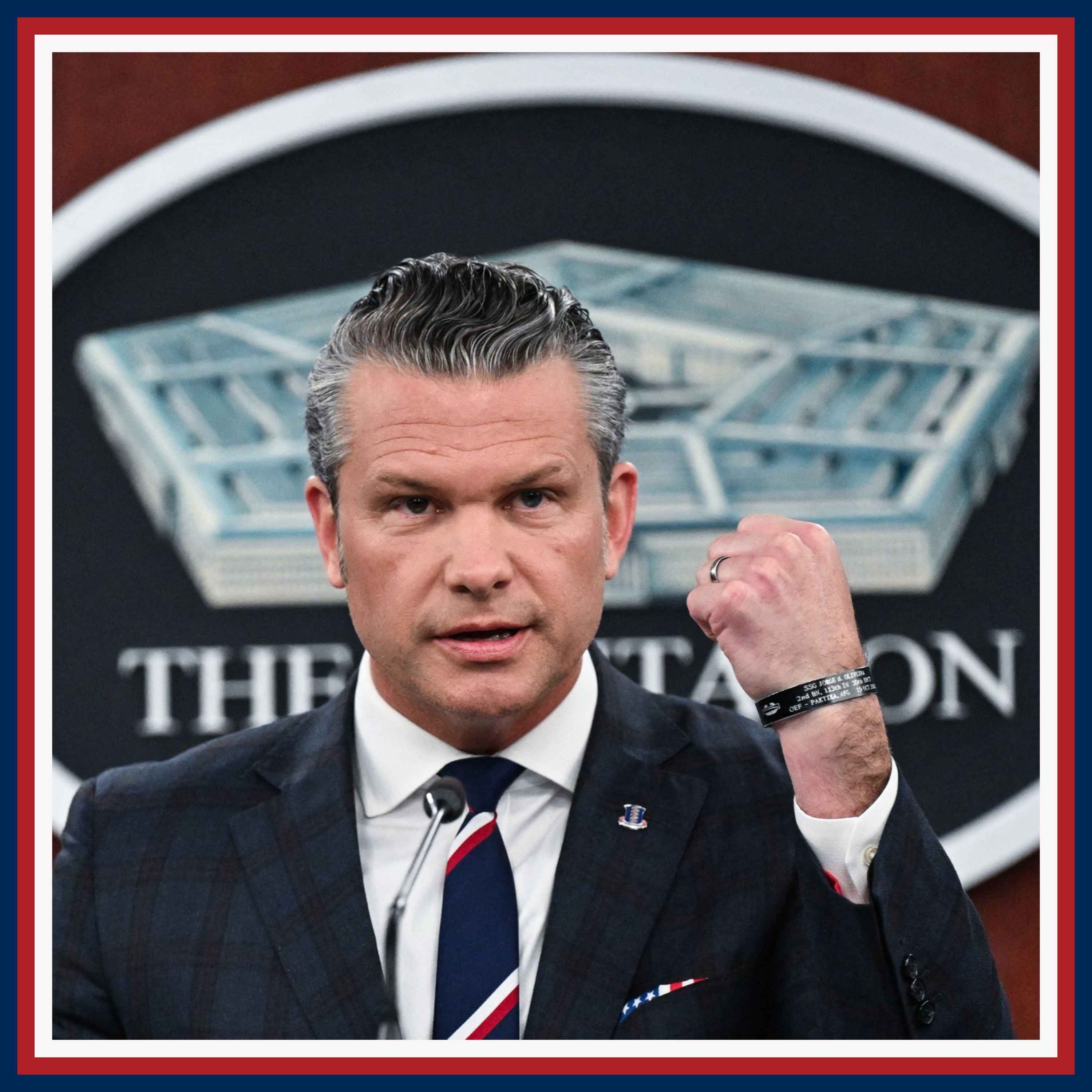
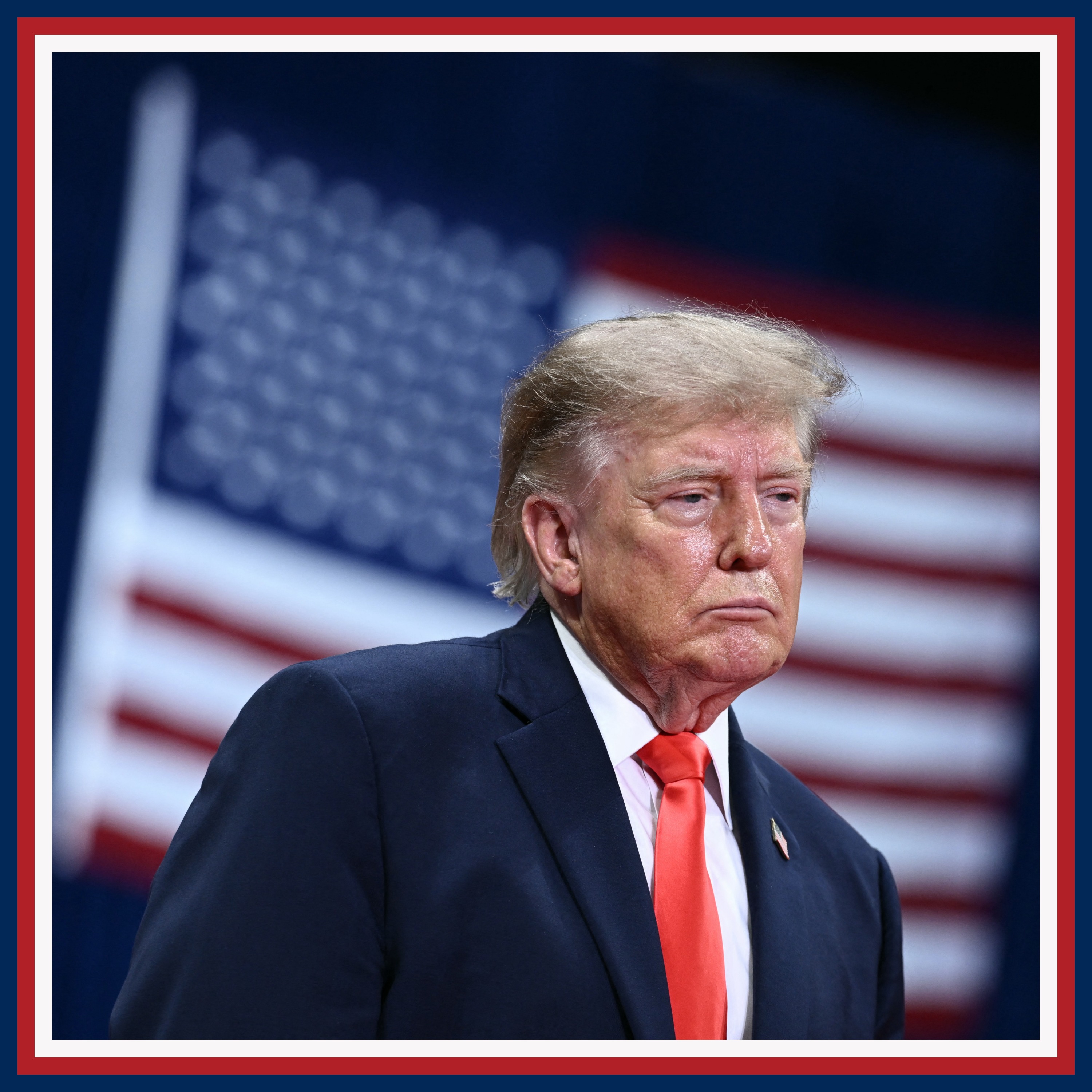
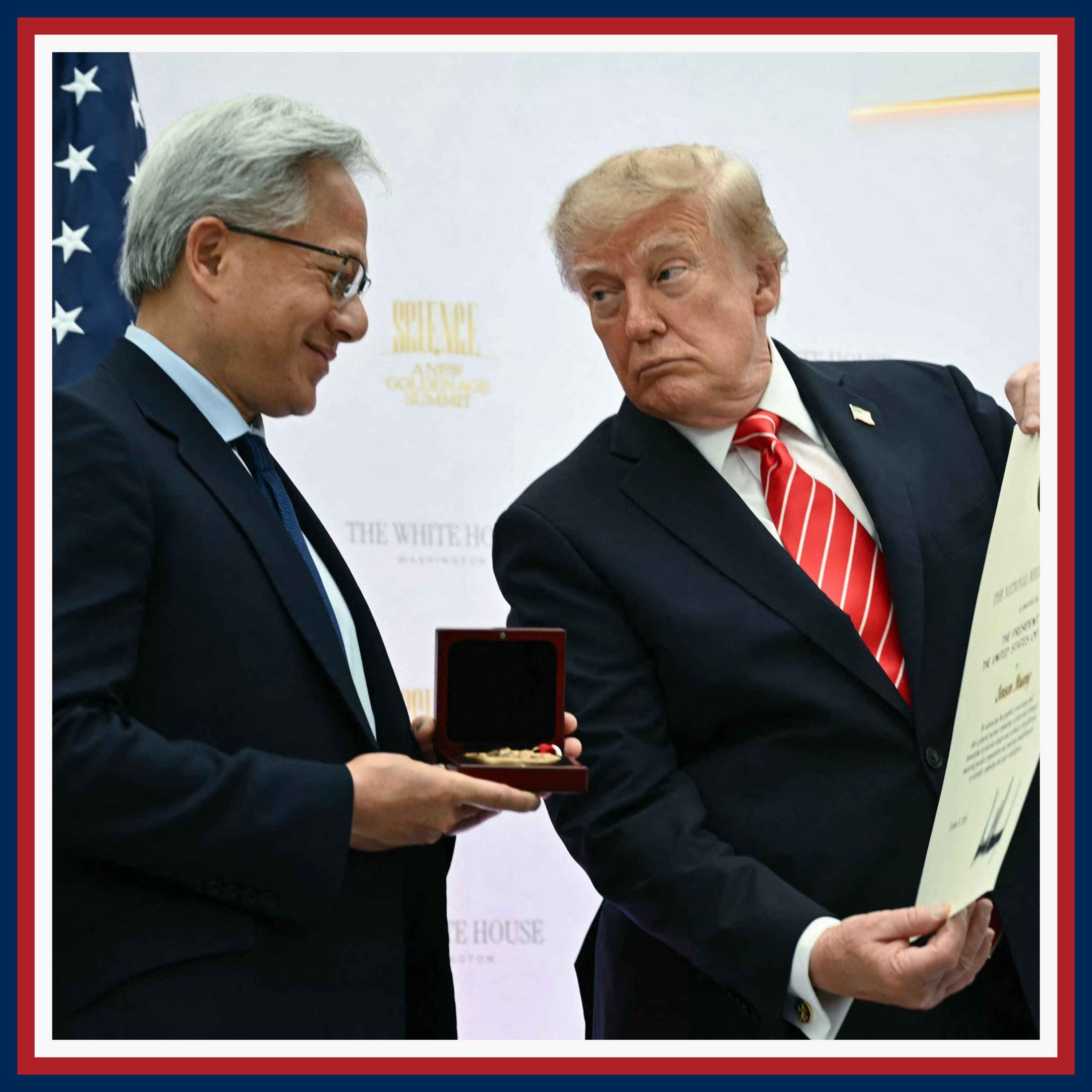
Donald Trump has called the Iranians scum, as he calls off ceasefire talks. At the NATO summit in Ankara, his comments on Iran, Ukraine and more have once again put allies on edge. Nigel Farage has just returned from Washington to deepen his ties with Donald Trump – but is he also borrowing Trump's political playbook to distract from increased interests in his undeclared finances ahead of the looming by-election? Gerry unpacks Trump's surprising role in that World Cup red card controversy.
Katy Balls, Washington editor and columnist at The Times and The Sunday Times
Gerard Baker, columnist at The Times and editor at large at The Wall Street Journal
Producers: Euan Dawtrey, Harry Kitson
Executive producer: Molly Guinness
Picture: Getty Images
Audio: Reuters
00:00 - Will Trump Pull Out of NATO?
00:41 - "They’re Scum" — Is the Iran Ceasefire Officially Over?
05:21 - NATO Summit Chaos: Trump Slams "Weak" European Allies
07:51 - The Absurd Battle for Greenland (Are We Planning for War?)
17:45 - Nigel Farage Resigns: Copied Straight From the Trump Playbook
26:30 - Trump’s Bizarre World Cup Intervention (The Secret FIFA Call)
31:46 - Why Trump’s Strongman Tactics Just Backfired
This podcast was brought to you thanks to the support of readers of The Times and The Sunday Times. Subscribe today
Hosted on Acast. See acast.com/privacy for more information.