Ask ChatGPT
 The State of It: USA
18 Jun 2026 · 27m · 10 chapters
The episode argues Trump’s Iran ceasefire-and-sanctions deal is a strategic “calamity” for the US and a political trap for JD Vance. Topic: a 14-point framework including immediate ceasefire, a 60-day nuclear negotiation window, reopening the Strait of Hormuz, lifting Iran’s blockade and sanctions, returning frozen Iranian funds (tens/hundreds of billions), and proposing a $300 billion reconstruction fund; Israel must stop its Lebanon war.
the deal fails to eliminate Iran’s nuclear/missile/proxy capabilities; it rewards Iran without achieving stated objectives; it harms US prestige (compared to Afghanistan) and betrays Iranian protesters; it strains US-Israel ties by sidelining Israel.
Reza Pahlavi interview; Iranian protester “Rosita” voice note; references to Bolton/Jack Keane criticism.
none—hosts Katie Balls (Times/WSJ) and Gerry Baker (WSJ editor-at-large).
Written by AI. May contain mistakes.
Discussion on the dismal reception of the Iran deal by both supporters and critics.
“We've been talking about this for weeks and weeks and weeks.”
Hosts break down the main points of the Iran deal and its failures to meet objectives.
“So, yeah, as I said, Katie, that's my kind of immediate take on it.”
Exploration of the implications of the deal for the Iranian people and the concept of regime change.
“about to the building, I think, negative reaction in America, one that you do wonder if, you know, is it going to take Donald Trump by surprise?”
A poignant voice note from an Iranian protester expressing disappointment in America's failure to support them.
“She sent this voice note to Times Radio Breakfast.”
Discussion on the Israeli government's response to the deal and its implications for U.S.-Israel relations.
“You promised us as a person, as a very great president of the United States, and we cannot buy that.”
Brief transition as the hosts prepare to dive into the main topic.
Discuss J.D. Vance's involvement in the Iran deal and its implications for his political future.
“Now, a key figure in all this has been J.D.”
Analyze the consequences of Trump's actions regarding the Iran deal and its effects on Vance.
“Now, joking aside, that is literally the situation.”
Understand how the deal affects the dynamics within the Republican Party and upcoming elections.
“And look, I will say this too for the deal.”
Summarize key insights and provide a look ahead to future developments.
“I think the short-term implications of this will be positive for the Republicans, actually, because I think, one, the war's over, which, as you said, absolutely right, Casey, this war has never been popular.”

Get the gist, explore an idea or ask about something said.
 Claude
On The State of It: USA, what are the key points of this episode?
Searching your listeningAutomatic transcript. May contain errors.
0:00In terms of America's standing in the world, America's strategic interests, its national security interests, this deal is a calamity.
0:10Welcome to The State of It USA, the Times podcast that makes sense of Donald Trump's America. I'm Katie Balls, Washington editor and columnist for The Times and Sunday Times. And I'm Gerry Baker, editor-at-large of The Wall Street Journal and columnist for The Times. And in this week's episode, we'll be dissecting the deal that's finally arrived, looking at who the winners and losers are, winners if there are any, and then the politics and what this all means for J.D. Vance. So, Casey, we have a deal. We've been talking about this for weeks and weeks and weeks. Seems like the world has stood still as we've waited to see whether or not what Donald Trump would finally do with Iran.
0:47And this has gone down, this deal that Donald Trump signed, it's gone down here in America, where I am, even with some of his staunchest allies and supporters, like the proverbial lead balloon. I can't recall, actually, a president doing anything on the foreign front which has been so received so dismally and so negatively as what Donald Trump has just done. Just to very briefly summarize the deal, we probably all know it by now, there's like 14 points. The main elements of it are an immediate ceasefire, of course, and then a 60-day period in which the thorny questions of what Donald Trump said this war was primarily about, which is the dealing with Iran's nuclear threat, that's got to be negotiated over the next 60 days.
1:41But in the meantime, the Strait of Hormuz is opened. The blockade is lifted on Iran. Iran is able to sell its oil imports. Israel is called upon to stop the war in Lebanon. Iran agrees in this memorandum of understanding never to seek a nuclear weapon. That's not new. They've been saying that for the last 20 years. So there's no progress essentially there. But assuming some point in the next, if there is in the next 60 days some sort of a deal, then Iran starts getting all kinds of financial relief. The sanctions are lifted. Money that's been frozen under sanctions, which could amount to tens if not hundreds of billions of dollars, is returned to Iran.
2:17And then there is this extraordinary proposal for a$300 billion reconstruction fund. In a strange twist for a war in which you've defeated the enemy, the winner ends up paying or being responsible, at least, for some reparations to the enemy. So, look, this meets none of the objectives that Donald Trump set out at the beginning of the war. Let's remember those. They were, again, get rid of Iran, get rid of all Iran's nuclear material. Haven't done that. Eliminate Iran's nuclear program. It hasn't done that. Eliminate Iran's missile capability. It hasn't done that. Reduce Iran's support. Eliminate Iran's support for proxies in the Middle East, such as Isbalan, Hamas.
2:57It hasn't done that. And of course, what it has done is open the Strait of Hormuz, which was open before the war started. So, yeah, as I said, Katie, that's my kind of immediate take on it. More importantly, much more importantly, not my immediate take, but the take of Republicans. Look, there's been a little bit of rallying around the president, but the number of members of Congress, hawks who've been supportive of Trump on this war, people who've been, you know, have been sort of celebrating the war, as it were, on Fox News, for example, for the last two months coming out. People like General Jack Keane, who's a really well regarded figure in Republican circles and has been very supportive of this war, very supportive of Trump saying he frankly doesn't doesn't understand this.
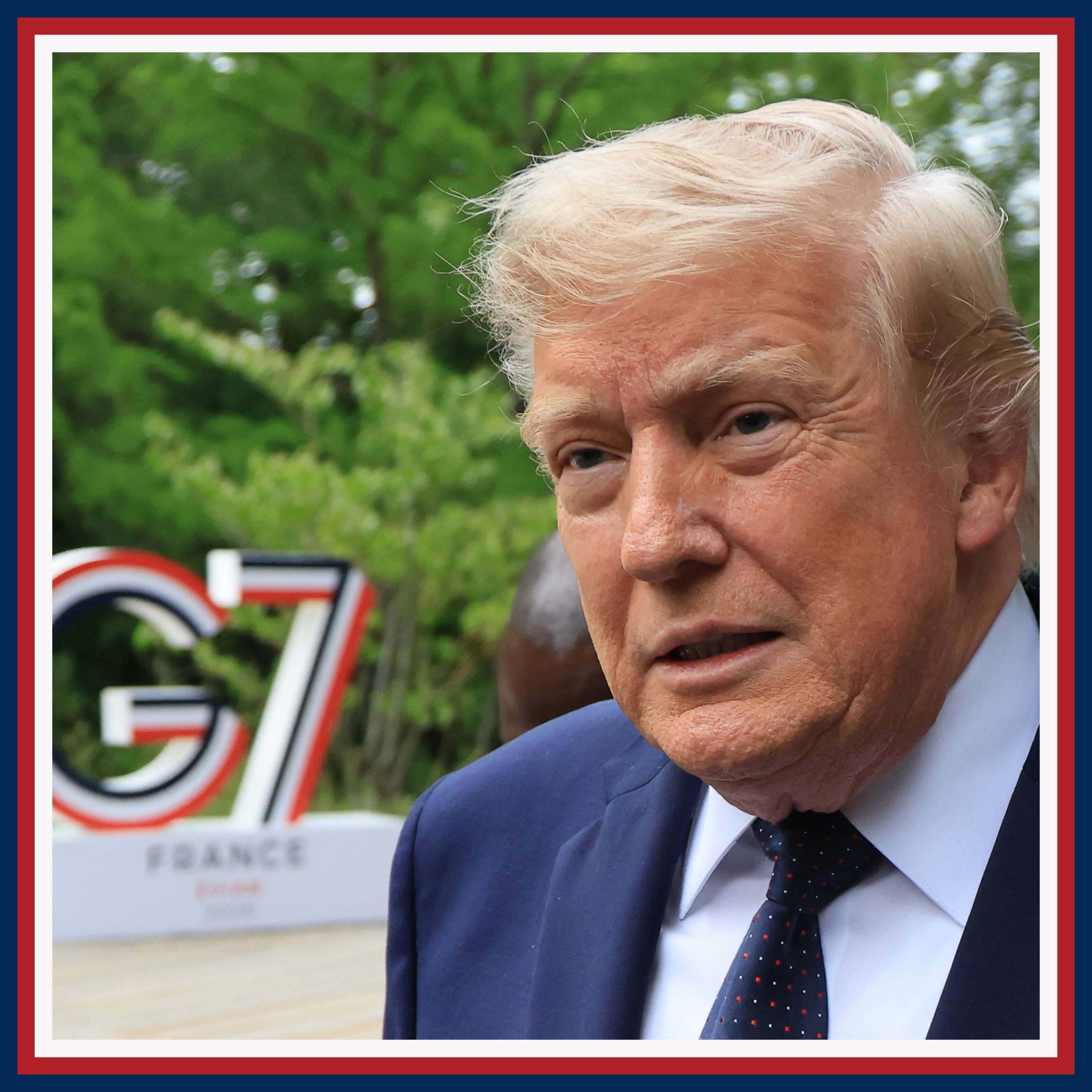
3:42It doesn't make any sense. It's a disaster. John Bolton, Donald Trump's former national security adviser, saying basically Trump Trump got played like a violin by the Iranians. So the halls of Washington are reverberating with an almighty raspberry. But you've been, Katie, you're you're kind of on the scene or you were on the scene last couple of days. Donald Trump has been in Evian for the G7 meeting, where, of course, he's been talking about this and you've been there. Yeah, I mean, I feel like I've been living a slightly parallel reality the past couple of days because Donald Trump really wanted some kind of deal before he got to the G7.
4:16We know he doesn't particularly enjoy these summits. Emmanuel Macron did a lot to make him want to stay, keeping Versailles, where he ended up doing one of what effectively going to be free signings of this document at this banquet. where there was obviously lots of gold. But Donald Trump arrived and he was going around the summit really celebrating, almost on a victory lap about this deal. But obviously, with every day that went on when no one could actually see the deal, it started to get a little bit strange. You had J.D. Vance doing a combination of book tour interviews and sellings of the deal on U.S.
4:52TV. And then you had Trump talking about the deal, saying he'd released it and not quite getting there. And G7 leaders were also being very warm about the deal. Mark Carney, the Canadian leader, who I think it's fair to say is not a particular close friend of Donald Trump's. They don't exactly have a bromance. He was pretty nice about the deal. There were positive statements. And then we get to the very end of the visit. So this was a big press conference with Donald Trump. And then immediately after the press conference finished, you had U.S. officials getting on a call to White House press correspondents and basically dictating what the deal is.
5:30And that's when you go from Europe, where I think there was a sense of he's managed to get through this, let's have a sigh of relief, maybe he'll get back to talking about Ukraine, to the reaction in America, where as you allude to, Gerry, is going down like a cup of coal sick. And you do have some people coming out and being fairly positive. and the White House group, Trump was surrounded by his closest aides. Susie Wiles, the chief of staff, was there. Marco Rubio was stood behind him as he spoke about this deal in this press conference. Now, they're all projecting an image that they think this is a great success and, you know, starting Twitter fights, his media team with those who are criticizing it.
6:12But it's a real contrast how we've had it in the coming in recent days, how this has been talked about to the building, I think, negative reaction in America, one that you do wonder if, you know, is it going to take Donald Trump by surprise? I think it is worth just also reflecting on what a calamity, you know, setting aside the kind of the immediate response, what a calamity this is really. This is the United States, the superpower, you know, bar none, the most powerful military in the world, enormous economic strength. And it's come up against a country of a country of 90 million people, but a country that's been battered by by war that doesn't have anything like the technological capability.
6:54And, you know, the U.S. is once again, by the way, as it did in Afghanistan. You just I mean, five years ago, Katie, the United States withdrew from Afghanistan under Joe Biden in a disastrous, disastrous moment for for America's reputation, for its authority, for its prestige in the world, for its national security. And here we are five years later. And I've got to say, I think this is this is on a part. And one one particular aspect of this is, you know, there is also an understandable sense of betrayal here that the United States has betrayed people, particularly the people of Iran. If you remember very early on in this, Donald Trump urged those protests that we saw in Iran that we didn't see actually very much, because of course the internet, the Iranians shut everything down.
7:38But we've got lots of reports about tens of thousands of protesters being killed. And one of the reasons Donald Trump gave for this war, if you remember right at the start when he gave that sort of early morning in the middle of the night statement announcing the war, He said he called upon the Iranian people to rise up and rid themselves of their oppressors. To the great, proud people of Iran, I say tonight that the hour of your freedom is at hand. Stay sheltered. Don't leave your home. It's very dangerous outside. Bombs will be dropping everywhere. When we are finished, take over your government.
8:13It will be yours to take. Well, you know, now he says. You talk about regime change. I never cared about regime change. It's never a part, but I guess you have. regime change because you know better than anybody the first group they're all dead the second group they're dead a part of the third group is gone and we're dealing with people that i think are very rational people and they were nice to deal with there are a lot of people here katie um who voted for donald trump and who though it may sound like a cynical thing to say said you know we're not about. America's spent too much time in the last 25 years getting involved in foreign wars.
8:54We're sorry about these terrible regimes, and it's awful that people have to live under them, and we wish they didn't exist. But it's not America's job to remake the world, to save people from their governments. And that's to some extent why Donald Trump was elected. Then he comes in, he says that we're going to do that, and he fails to do it. So the blow to prestige, the blow to trust in America, I think is really profound. Yeah, I interviewed Reza Pahlavi this week. It was an interview that started a few weeks ago. This is the son of the Shah. Many saw him as a potential figurehead when the Iran war started.
9:31Now, Trump was always a bit sceptical. I think parts of the administration thought, you know, he's not in Iran. It's not going to happen. But we started the interview a couple of weeks ago. and then obviously the framework was announced over the weekend and we were going to press and I spoke to him again on Monday. It was his first comment since the framework and he said exactly your point, Gerry, which was what about the Iranian people and the sense that, you know, if we look at the past few months, he thinks they've been forgotten. Now, there are some who don't think he is the right candidate to step in or have a role, but it does speak to the sense which is, you know, There was this feeling of hope amongst people that America was going to open things up.
10:12And then there was a potential uprising, maybe a final uprising. And it's not to say it's impossible going forward, but I think the conventional window of opportunity feels as though it's been missed. Let's hear from one Iranian protester, Rosita, that isn't her real name. She sent this voice note to Times Radio Breakfast. The dream of America, the dream of the America, the hero, the America, the rescuer, that is falling apart right in front of our eyes. And it is ridiculous. I cannot believe that. What has happened to you? What has happened to you? You promised us. You promised us as a person, as a very great president of the United States, and we cannot buy that.
11:03Yeah, I mean, understandably, bitter reaction there. As I say, I think this was another example where the United States, frankly, and Donald Trump is by no means the first president to make these bold promises. I'm old enough to remember George H.W. Bush calling upon the Iraqi people to rise up and throw off, get rid of Saddam Hussein in 1991 at the end of the Gulf War. We promised regime change in other countries around the world and haven't been there to deliver. Look, one other – well, just briefly before we take a break, one other group of people that feels dismayed and betrayed by this deal, of course, is the Israeli government.
11:43And indeed, as far as I can make out from polling the Israeli people, as I said at the start, this deal requires Israel to stop its war in Lebanon against Hezbollah. And I think much more importantly, this is essentially a repudiation of Israel's strategy. Remember, it was Benjamin Netanyahu who played a strong role in persuading Donald Trump at the start of the war that the Iranian government would fall, that the US could pull off this extraordinary coup in the Middle East and transform the Middle East. The Israelis absolutely still believe that that was possible, I think, despite mounting evidence to the contrary.
12:24But they certainly believe that Iran remains the major threat to them, both directly and through its proxies, Hezbollah and Hamas and others, too. And they are horrified at being, first of all, being told, and they probably won't do it, by told by the US, a deal that's negotiated by the US without their involvement at all, that they've got to stop their war against what they regard as a life-threatening enemy in Hezbollah, and that they've got to see this great enemy, the bigger enemy they see in Iran, rewarded with money, with a reconstruction fund, and with sanctions lifting and everything So this represents an incredible blow to Benjamin Netanyahu, and it represents a real rift in the U.S.-Israel relation.
13:15It's worth saying that Israel has become very unpopular in the United States in unexpected ways. That relationship between the U.S. and Israel has always been a very, very tight one. The Democratic Party, the left, is increasingly abandoning Israel because it's embraced the sort of Palestinian cause. Some Republicans have been uneasy about Israel, notably some of these sort of rather controversialist MAGA figures like Tucker Carlson, who's been very critical of Israel. And Donald Trump was their friend and ally. And now he's completely abandoned them, too. So, you know, this is a seismic moment, not only, again, in terms of the U.S.
13:52reputation, the U.S. prestige, but its ability to achieve its ends in the region and its relationship with its most important ally in the region, Israel. So, yeah, hard to find a lot of people here who are exactly celebrating this. But look, with that, we're going to take a quick break. and when we come back we're going to talk about the politics here because they do, I think this, for all the reasons we've been talking about, these will have big political ramifications in the Republican Party, in the presidential election that's about to happen. So stay with us.
14:26Emma back. Now, a key figure in all this has been J.D. Vance. He was not at the G7 summit, but his presence when it comes to this deal has been wide-ranging. He was one of the electronic signatures when it was first signed. He is also going to be in Switzerland signing it in what was almost the official signing ceremony. And here's what President Trump said when he was asked by Fox News' Peter Doocy whether he's passing the buck to the vice president. This way, if it works out, I'm going to take the credit. If it doesn't work out, I'm blaming J.D. You better be careful, J.D. He's going to turn his plane around and get the hell out of here.
15:02Yeah, I like that idea. I think it's a good idea. Now, Gerry, this has been an interesting movement. hasn't it? Because early on in the war, Vance was, you know, criticized for almost hiding, not doing as many media appearances as he usually did. There are some convenient leaks to the media, which played well to the MAGA base about him opposing the war. Then Trump, I think, almost wanted to make sure that he was involved. He had some culpability. He was sent to Islamabad on a very long flight for those negotiations that didn't lead to everything. And since then, when you speak to figures, they're saying he has been very involved in these negotiations.
15:39And that means we have a deal which many Republicans and many Democrats are publicly saying they think is worse than what came before. The Strait of Hamuz is going to be open. But you already have the Iranians saying it won't be open in the pre-war way. There could be a toll. There's so many details still to be fresh out in a 60-day period. Do you think we're seeing a world where J.D. Vance is going to be seen as the architect of the deal, as Donald Trump almost joked about? Or is this something that Trump is going to also have to own? Yeah, look, if this deal is a calamity for the US, and I think it is, it's a disaster for J.D.
16:17Vance. And, you know, that was very funny. That's classic Trump there. You heard that G7 meeting saying, you know, if it goes well, I'm getting all the credit. If it goes badly, J.D. gets the blame. Now, joking aside, that is literally the situation. I think, you know, I don't think it's rare to see someone, it's rare to see a fool guy set up so transparently and also so voluntarily, so willingly. I mean, the background to this is obviously that everybody kind of knows that Vance was not enthusiastic about this war. There was reporting early on that he was opposed to it. You know, it's been very much, I mean, he's been the one who's been most aggressive in saying the U.S.
16:56shouldn't get involved in foreign wars. He wrote an op-ed in The Wall Street Journal two years ago in the election campaign saying the thing I most love about Donald Trump is he won't get us into any silly foreign wars. So we know he's the core MAGA person saying, you know, we don't do silly stuff overseas. So he was against it. But we also, from reporting, we believe that he's the one who's been pushing for a deal to get this war over with. Now, we should say, and we're talking here about the domestic politics of this, there is an upside to this. And indeed, we should understand the reason that Donald Trump has done this, and indeed J.D.
17:30Vance has done this, which is that this does remove what was becoming an enormous problem for the Republican Party in the midterm elections. We already saw with the signing of the deal or the announcement of the deal this week, oil prices falling back sharply. The stock market's been surging again. The economy was clouded by these doubts. And you actually heard Donald Trump remarkably. One of the remarkable things Trump said this week in Europe was he said, you know, the reason I ended the war is because I had to, because if the Straits of Hormuz had been closed for another month or two, it would have been a disaster.
18:05So he basically admitted exactly what everybody's been saying and he's been denying for so long, which is that the U.S. economy faces a disaster if this war went on. So you can see the incentive for the US, of course, for this administration to end this war. Vance in particular is the man who kind of wants that more than anybody. He wants the Republicans to do well in the midterms. He wants to launch his presidential campaign straight after that. And again, it fits very well with his kind of broad ideological position, if you like, that the US should get out of these foreign wars. But the deal is so problematic for all the reasons we've talked about and the risks that it poses to US security, the way in which it's playing incredibly badly here.
18:48People who don't like the deal but obviously would never dare criticize Donald Trump are calling this the J.D. Vance deal. Lindsey Graham, the South Carolina senator, staunch supporter of Donald Trump, who supported pretty well everything he said, supported this war, said the war should be prosecuted to the end. You know, keep fighting, keep fighting. He's kind of given a very cautious, lukewarm welcome to the deal and called it J.D. Vance's deal. So, look, this is a hospital pass to end all hospital passes, if you're familiar with the rugby expression, Katie. But one that he's willingly taken on himself.
19:20It's going to be, oh, look, I think this could actually be the undoing of him. He was due this week to be doing all these interviews to launch his new book, which is about his conversion to Catholicism or communion. And it's all of a spiritual book about how he converted to the faith. And he spent instead all these interviews with podcasters and on the TV and radio explaining and justifying this, frankly, unjustifiable deal that he's being given the quote unquote credit for. So look, let's put it mildly. This is a test of J.D. Vance's political skills. He can, as we said, maybe he can say, look, I got the economy back.
19:56Everything's fine. We've lifted the economic problems that we were facing. But politically, if this deal turns out as badly as most people here think it is, I think it's catastrophic for J.D. Vance's presidential ambitions. I think the counter, I suppose, is that the MAGA base didn't want this war in the first place. I've had some people message me on that side of things saying, well, Vance has managed to get this to an end before it got even worse for the reasons of the economy, but also for going against the promise of no more forever wars and this idea of having this ongoing conflict that would just keep on going on the background.
20:30So, Gerry, it feels to me that when it comes to 2028, increasingly you hear about Rubio and you hear about Vance. and the differences in terms of how they are both seen and probably the parts of the electorate that they are playing towards are actually widening, you know, and I think the Iran war is adding to that sense. Yeah, look, I think that's right. And look, I will say this too for the deal. I mean, the deal is terrible. But ending the war was the right. The mistake here was not primarily this deal. The mistake was starting this war in the first place. I mean, you know, the one thing that American presidents ought to have learned in the last 30 years, it's, you know, don't start needless wars in the greater Middle East.
21:09They rarely end well. And this one has, you know, gone the same way as Iraq and Afghanistan. And so that was the original sin here. And ending the war was the right thing to do. It's just the problem, Katie, is that the terms here that Trump's agreed to, and Vance is going around proclaiming as a great triumph, are just so terrible for all the reasons we've talked about. And look, one thing I think, you know, you're right that, you know, he'll sort of, you know, he'll be able to claim that, you know, he played an important role in getting the US out of this mess. But first of all, he can't do that too enthusiastically because it was Trump's mess and he can't go out saying, you know, I got us out of this stupid war because it's his boss who started the stupid war.
21:57No, he does at least, Jerry, have in the New York Times and other areas various written accounts that he always said it was a bad idea from the beginning. So I agree he can't say it, but there at least has been a good job of getting the record out that J.D. Vance was the only figure in the situation room. He said this wasn't a good idea. Yeah, but I agree. But again, that's not going to play well with the MAGA base in the Republican primary in 2028. They're not going to want to hear, you know, I was the one who opposed what Donald Trump was trying to do because that's where the base is. The base likes it.
22:29And just one other quick thing, too. Every single time Iran does something, enters into a new deal with China for some new military cooperation or sends more or receives more help from Russia or does – we hear something that Hezbollah does or that Hamas does. Everybody will say with a lot of justification, thank you, America. You helped Iran to do this. You basically implemented a deal in which Iran gets all of this assistance. So that will just haunt Trump, but haunt J.D. Vance for every single time. As I say, we hear the Iranian mullahs flexing their muscles in the way that presumably they're absolutely inevitably going to do.
23:19And I just don't see that that's going to play very well. There's certainly a risk that when it comes to that mega base that, you know, if you think about that eye-watering some of money in that fund. And, you know, people saying, is it make Iran great again, which originally was about regime change. And now it seems to be about reinvesting, trying to fix the damage. And just to your point, Jerry, I think ultimately the reason everyone is in such a tricky position on it now is there's a very simple question, which Trump or Vance would need to answer to justify the war to Americans that were sceptical this war in the beginning.
23:49Unlike other wars, you tend to get a bit of buy in early on, which is, you know, what did you achieve? And I think the real risk is it just looks as though in various ways, including trade, America is in a worse position than it was before. They need to tangibly explain why it's in a better position. And that's before we even get to this 60 day window of all the trickier issues. The only thing I'd say, look, again, having been pretty, pretty negative about it, I do think sort of contradict myself. I think the short-term implications of this will be positive for the Republicans, actually, because I think, one, the war's over, which, as you said, absolutely right, Casey, this war has never been popular.
24:29Large majorities have always been against it. So that should work. We think it's over. I mean, it's basically over. So that will be gone. Two, the economy will be in better shape. We've already seen oil prices coming down, the threat of much faster inflation. We'll see inflation come down. The Federal Reserve, you know, which was probably going to have to raise interest rates if prices had kept going up, will now be in a position to keep them on hold, as it did yesterday, and maybe actually be able to cut them at some point. You know, and also, you know, the intricacies, I hate to say this, but the kind of intricacies of that deal are going to be unknown to the vast majority of the American people.
25:03They're not paying that much attention. Their main response will be, thank God it's over. So I think it will be beneficial for the Republicans in the very short term and perhaps even will help them in the midterm elections. But I think in terms – this is my point – in terms of the dynamics of the Republican Party and especially when that primary campaign begins, which it kind of will after the elections this year, and Vance is out there and maybe Rubio is out there and people like Ted Cruz and Nikki Haley – Nikki Haley, by the way, who I spoke to last week, I think is clearly going to run. when they're going to be using this to attack Vance and say, you know, you did this enormous damage to.
25:41And by the way, in some ways, just back to the point about, you know, how can how do you criticize Trump without criticizing Trump? Well, maybe Vance is the vehicle for them to do that. They say, oh, Donald Trump started this. We did this great thing. He was going to, you know, going to change the world. He was going to overturn Iran. He was going to defeat the Mullers. And then this J.D. Vance, this peacenik comes along and says, no, no, no, we shouldn't be involved in it. So I think it's a political opportunity too for Vance's opponents within the Republican Party. And that's why I think it's so damaging to him.
26:12And with that, Gerry, we're coming to the end of this podcast. We finally have that deal. And in the coming weeks, we at least will be paying attention to that 60-day negotiation window, even if most voters will not. So do join us again next week. And if you like this podcast, do subscribe and rate us.
26:31Thank you.
President Trump has made a deal with Iran. On Friday, Vice President JD Vance will attend the official signing in Geneva of a 14-point US-Iran Memorandum of Understanding that covers the naval blockade of the Strait of Hormuz, Iran's nuclear ambitions, the lifting of sanctions, a $300bn reconstruction fund for Iran and a ceasefire.
The deal has gone down badly in the US, and with good reason. Gerry argues that it's a calamity for America and a betrayal of the Iranian people.
Could it also be the undoing of JD Vance? It looks like he's been set up as the fall guy in case this all goes wrong. That could scupper his presidential ambitions.
And where does it leave Israel? Donald Trump was Israel's ally but with this deal, has he abandoned them?
00:00 - Why The Iran Deal is a Calamity
00:37 - Breaking Down the 14-Point Peace Agreement
01:54 - The $300bn Reparations" Fund Explained
03:04 - "An Almighty Raspberry": The Republican Backlash
04:05 - Inside the G7 Victory Lap vs. American Reality
06:26 - A Disastrous Blow to America’s Global Prestige
07:17 - Broken Promises & Betrayal of the Iranian Protesters
09:18 - Reza Pahlavi Interview: A Missed Window of Opportunity
11:04 - A Seismic Rift in the US-Israel Relationship
14:26 - J.D. Vance: Master Architect or Ultimate Fall Guy?
16:41 - The Core Maga Position on "Forever Wars"
17:48 - Economic Silver Linings: Oil Prices, Inflation & Interest Rates
22:33 - How Trump’s Rivals Will Use This in the 2028 Primary
26:12 - Navigating the 60-Day Negotiation Window
Katy Balls, Washington editor and columnist at The Times and The Sunday Times
Gerard Baker, columnist at The Times and editor at large at The Wall Street Journal
Video editor: Harry Kitson
Executive producer: Molly Guinness
Picture: Getty Images.
Audio: Times Radio, Reuters.
This podcast was brought to you thanks to the support of readers of The Times and The Sunday Times. Subscribe today
Hosted on Acast. See acast.com/privacy for more information.