Ask ChatGPT
 The State of It: USA
21 Jul 2026 · 30m · 10 chapters
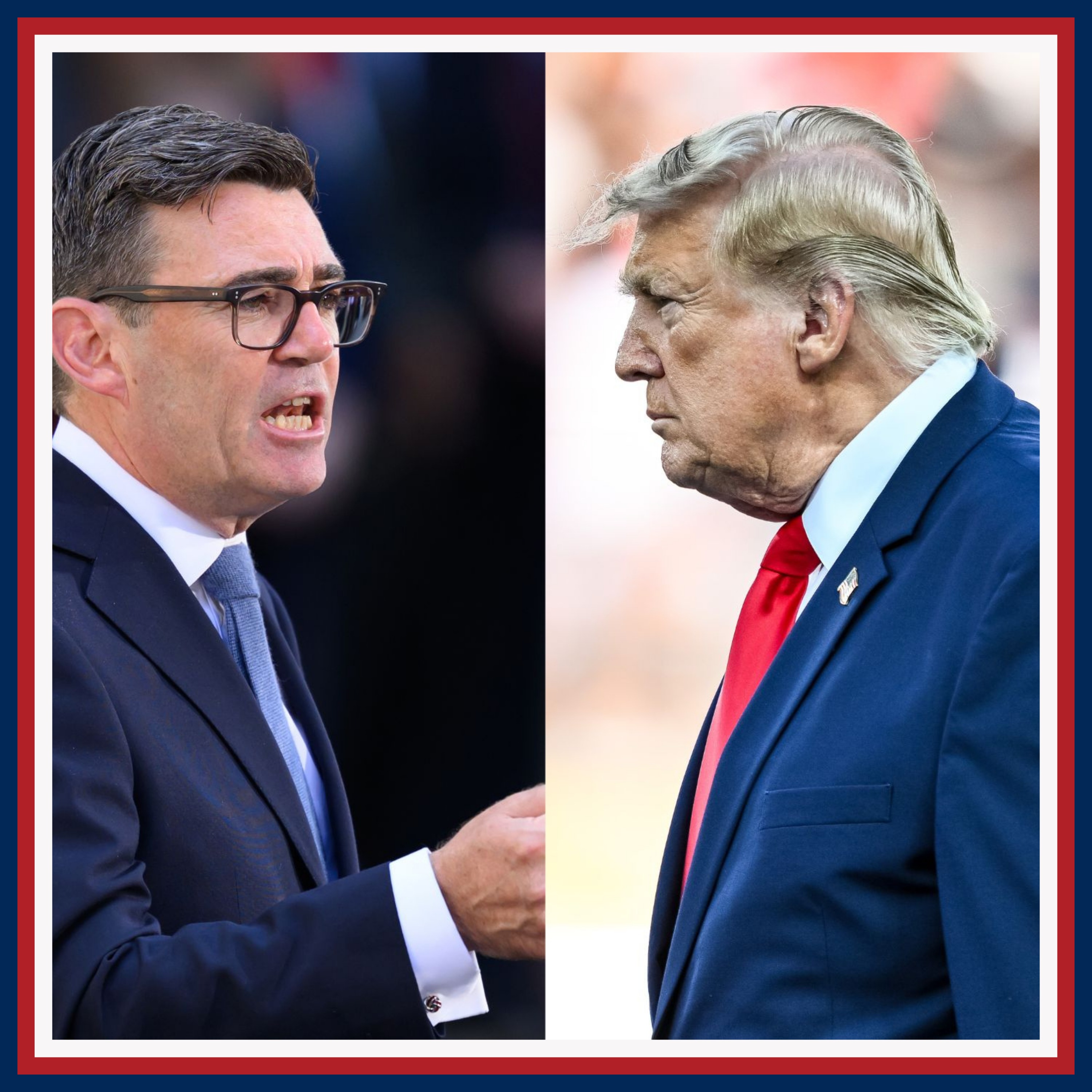
UK-US politics and the new UK prime minister Andy Burnham; U.S.-Iran escalation after U.S. servicemen deaths; conservative backlash and cultural debate over Christopher Nolan’s film “Odyssey.”
Katie Balls (Washington editor/columnist for The Times and Sunday Times) and Gerry Baker (editor at large of The Wall Street Journal; columnist for The Times).
Trump and Burnham may clash ideologically but could have a “personal” rapport; Trump’s Truth Social posts may be mischief and signal pro-oil pragmatism while also attacking Britain as “poverty stricken.” U.S. Iran policy risks “performative” escalation: casualties rise, diplomacy continues, but Trump likely won’t mount a massive operation (e.g., 100,000 troops) to break Iran’s control of the Strait of Hormuz. “Odyssey” criticism is framed as “woke”/casting-driven; Nolan’s moral framing is argued to be an interpretation, not a desecration.
Trump’s posts about Aberdeen/North Sea drilling and “broken” Britain; deaths in Jordan and Iraq; General Barry McCaffrey’s 100,000-troop estimate; “Odyssey” casting complaints (Black Helena Troy, trans actor) and broader right-wing culture-war critiques.
Written by AI. May contain mistakes.
Discussion on the arrival of Andy Burnham as prime minister and implications for U.S.-UK relations.
“Your team just added its 67th AI tool and also your 67th security blind spot.”
Discussion on the arrival of Andy Burnham as prime minister and implications for U.S.-UK relations.
“I'm Katie Balls, Washington editor and columnist for The Times and Sunday Times.”
Exploring Donald Trump's perspective on new UK Prime Minister Andy Burnham.
“What can we expect about the relationship with Donald Trump?”
Talking about the economic implications of Burnham's policies and U.S. interests.
“Look, exactly as you say, I'm sure Burnham is is giving all the signals.”
Discussing the recent increase in U.S. casualties in Iran and the potential for escalation.
“even more public spending, even higher taxes, I think that would be greeted very unfavorably in the US.”
Discussion on rising U.S. military casualties and the implications for U.S. strategy.
“servicemen died, two in Jordan and one in Iraq.”
Analysis of political dynamics influencing U.S. military decisions in Iran.
“Yeah, and I think it's quite clear they have been trying to find a way out.”
Critique of the controversies surrounding the latest adaptation of 'The Odyssey' by Christopher Nolan.
“Now, finally, while the Iran war may look set to dominate Trump's presidency and continue to divide opinion, it's actually another issue that's really tearing America apart at the moment.”
Explore the host's grievances with contemporary media portrayals and societal issues.
“Just because this is the first time we've discovered your work radar on this podcast.”
Explore the host's grievances with contemporary media portrayals and societal issues.
“And if you like this podcast, do rate and review.”

Get the gist, explore an idea or ask about something said.
 Claude
On The State of It: USA, what are the key points of this episode?
Searching your listeningAutomatic transcript. May contain errors.
0:00Your team just added its 67th AI tool and also your 67th security blind spot. The good news? The Vanta agent works like a GRC engineer in the background, finding every app your team uses, scoring the risk, and drafting fixes for you. Vanta is the platform used by over 16 ,000 fast-moving companies like Ramp, Cursor, and Harvey, who are shaping the future with AI and staying ahead of AI risk. Get started at Vanta.com.
0:29Acast powers the world's best podcasts. Here's a show that we recommend. Hey guys, welcome to Giggly Squad. A place where we make fun of everything, but most importantly, ourselves. I'm Paige DeSorbo. I'm Hannah Berner. Welcome to the squad. Giggly Squad started on Summer House when we were giggling during an inappropriate time. But of course, we can't be managed. So we decided to start this podcast to continue giggling. We will make fun of pop culture news, we're watching fashion trends, pep talks, where we give advice, mental health moments and games and guests. Listen to Giggly Squad and a cast or wherever you get your podcasts.
1:08A cast helps creators launch, grow and monetize their podcasts everywhere. A cast.com. I think while all the politics would suggest that Trump and Burnham are probably going to have a slightly rocky time, the personalities, the personal aspects could actually, you know, could actually be quite warm and loving.
1:33Welcome to the State of It USA, the Times podcast that tries to make sense of Trump's America. I'm Katie Balls, Washington editor and columnist for The Times and Sunday Times. And I'm Gerry Baker, editor at large of The Wall Street Journal and columnist for The Times. Well, this week, Britain has another new prime minister. What will Donald Trump make of it? What kind of a relationship can he expect with the United States? We'll also be talking about Iran, significant escalation in terms of U.S. casualties happening over the weekend. What could be next there? And why are people so cross, especially over here in America, about Christopher Nolan's odyssey?
2:11Well, let's start, Katie. Britain has a new prime minister. Andy Burnham took office Monday afternoon in the U.K. Inevitably, the relationship between the US and the UK is going to be important. I know people at home are fed up with politics. I hear you. And I want to be honest with you. We have not been good enough. And we need to be better. We will be. We will make this moment a circuit breaker for Britain. bringing forward the biggest changes in the last 40 years. A new political model and a new economic model. I've written my Wall Street Journal column about the new Prime Minister this week and the Wall Street Journal headline writers decided to put on top of the, to call the column, which I think is rather amusing, there's a why in the day, so there must be another Prime Minister of Britain, which I think probably does capture the kind of sense that Britain is just a revolving carousel of prime ministers now.
3:15But what do you think with Eddie Burnham taking office? What can we expect about the relationship with Donald Trump? Yeah. I mean, I think on a global level, we are becoming a bit of a joke for the turnover of prime ministers. And even when I interviewed J.D. Vance a couple of weeks ago, he was trying to be quite diplomatic, but he did say, you know, when he looks at the system, Andy Burnham coming in didn't give much of an opinion on Andy Burnham, but did say that, you know, he sees six prime ministers in 10 years and thinks something's very broken in British politics. And Andy Burnham is also saying something's broken in British politics.
3:52I think the British people think there's something broken in British politics. Exactly, but we'll do multiple choice on what. But what is interesting is one of the things you hear from the Andy Burnham camp is this sense that they think one of the flaws of Keir Starmer's premiership was this over-focus on foreign affairs. And often what comes up in that conversation is Donald Trump. And there's also a bit of a hint, at least, that Keir Starmer was too deferential to Donald Trump. And he tried this big charm offensive and it didn't really work. And therefore, you hear that Andy Burnham, I think, gave an interview to Gary Lineker, none other, to talk about various things like the football, but said in this interview that he would be, you know, he'd try and meet people where they're at and he was not unafraid to disagree.
4:42Donald Trump has called Andy Burnham extremely liberal. I hear he's extremely liberal. Extremely. So that means he probably won't open up the Nazi. He's also done a post being quite nice about him on oil and gas, which we'll get to. But I think the general feeling I'm picking up in the Trump administration when it comes to Andy Burnham is, one, there's a bit of who the hell is this Andy guy. But secondly, for those who actually do have a UK focus, I think there is trepidation about some of the positions and directions they could take. I think that you mentioned that truth social that Trump put out, I think, on Sunday.
5:21It was a classic sort of double punch from Trump, wasn't it? Because on the one hand, it said, wonderful, the people of Aberdeen are celebrating because Andy Burnham is going to be going to allow more North Sea oil drilling, which I think he said Britain needs to be more pragmatic on that but Trump obviously immediately embraced it as Burnham's going to be pro-oil and of course Trump is pro-oil and Trump has a particular interest in Aberdeen and Scotland and all that because of his past and present with golf courses and his family and all of that. So it was kind of like a welcome the welcome mat was laid out there quickly for Eddie Burnham but they did the same truth social, what did he call Britain he said Britain was a was a poverty stricken disaster and needed to change.
6:05So, you know, I think that sort of sets it up rather nicely the way... And also, Gerry, the Truth Social post announced a policy that Andy Burnham has not announced. Right. Which goes perhaps a little bit further than Andy Burnham may on oil and gas. So I was speaking to Trump figures saying, that was such a nice welcome for Andy Burnham. Well, I remember Donald Trump broke the news that Keir Starmer was standing down. Do you remember that? So he's got a bit of a habit of getting out in front of the news. Totally. And then you have the UK side saying, oh, is Andy Burnham actually announcing new drilling?
6:38Or is he actually just saying on projects at Rosebank, they're going to be looking at doing it and they're not killing it right now? There's perhaps an element of mischief in what Trump is posting. Yeah. And look, I think it's interesting. Look, exactly as you say, I'm sure Burnham is is giving all the signals. I mean, domestic politics terms, Donald Trump is enormously unpopular in Britain right there. And the British people sort of do seem to be kind of crying out for, well, certainly the media do, which they always have done, the love actually moment that we're all so – it's become such a tired cliché in British sort of foreign policy.
7:12that moment when the prime minister publicly denounces the American president and makes that breach that supposedly everybody wants to make. Everybody also knows that in real diplomatic, in terms of real diplomacy, that would never be in Britain's interest. But it looks at Burnham, there's potential political upside for Burnham to take a somewhat less obsequious approach to Donald Trump than Keir Starmer did, certainly in his first months in office. From the US side, Casey, I talked to some people about this in the last week or so. I mean, Trump is so unpredictable. You just don't know, right?
7:50I mean, on the face of it, you know, Trump and Burnham would seem to have absolutely nothing in common. Burnham, you know, if it is true that Burnham is somewhat more to the left and, you know, wants to push maybe the government a little, we'll see how that government unfolds. But the sort of general sense is that, you know, the party wants to move a little bit leftwards and, you know, things like, you know, I mean, he seems like he's going to maintain many of the policies. But if he is a little bit more, you know, in favour of welfare spending, in favour of potentially higher taxes, particularly on the wealthy, you'd think that would put him a mile away from Donald Trump.
8:20And, you know, ideologically, surely they're a mile away. But you never know with Trump. Trump has this ability to sort of latch on to people personally. He does seem to have a bit of a thing for kind of handsome men. And I guess most people think Burnham's probably quite handsome and to a, you know, and, you know, he loves Prince William. And just, you know, the strangest thing with Trump, you know, when Zoran Mamdani became mayor of New York, the democratic socialist, probably even to the left of Andy Burnham, everybody thought, oh, my God, what kind of a relationship is he going to have with Donald Trump?
8:48Donald Trump, they had a kind of a love fest. So, you know, I think while all the politics would suggest that Trump and Burnham are probably going to have a slightly rocky time, the personalities, the personal aspects could actually, you know, could actually be quite warm and lovely. Yeah, I think having a bit of character is not a bad thing with Donald Trump. And we saw that with Vandani and that Lovett in the Oval Office after all this rhetoric. I think that structurally, there are complaints that the US has on the UK, which emerged under Keir Starmer, and it could resurface under Andy Burnham.
9:21And I think certainly in the UK, there's a feeling of why are they so obsessed with us almost when it comes to the US saying broken Britain, here's what you need, civilizational erasure. That was the phrase in the national security strategy about Britain and Europe. But there'll be a few key moments, which is defense funding. You already have the US ambassador, Warren Stevens, in The Times this week warning that, you know, the UK needs to put up really and not just delay these payments. and where kind of the role of Ed Miliband in this government is going to be really important because I don't think Donald Trump is lying in bed at night thinking about Ed Miliband if Donald Trump is sleeping.
10:03But instead, I think certainly for those of a UK focus, they think about Ed Miliband and they do not see him as a friend of America in the way they see other British politicians. And therefore, there are warnings. We reported, I reported with Steve Swinford a few weeks ago from the US side saying, don't make him chancellor. I also don't think they'd love it if he was foreign secretary. And I think there's a few clashes that could happen there. And then ultimately, you know, when it comes to energy, which is where we get to that announcement, energy is important to Donald Trump and the administration, because they think the UK is a poor country right now, which cannot do the things it needs to do to be a good ally.
10:40And they think energy and improving the economy is the only way you're going to fix that. So that's where you get to. Then I think you have the secondary issues like freedom of speech. But I think the core things really are the economy. And that's where Andy Burnham will just have things which probably no amount of charm quite gets you around. Yeah. And I think broadening it out from sort of the personalities of Burnham and Trump. You know, I had a conversation when Starmer did announce he was standing down, whatever it was, a month ago. So I had a conversation with a very, very prominent business leader in the U.S.
11:14who invests a lot in the U.K., you know, employs a lot of people there, huge business there. And his first question was, do you know who's going to be the new chancellor of the Exchequer? And, you know, needless to say, of course, I didn't. And he said, because that could be a disaster. He said, you know, Britain's economy, you know, desperately needs growth. He thought Rachel Reeves had actually done an OK job of sort of holding the kind of fiscal ring for two years without sort of disaster and sticking to fairly sort of stable macroeconomic policies. But he thought if there was a very kind of left leaning, a more left leaning chancellor, then that would be a disaster.
11:51So I think there's a lot of attention on what the UK does on its economy, not just sort of at the Donald Trump, you know, the sort of the piquant Donald Trump truth social observations, but actually from, you know, from those people who have a lot of business interests and actually want the UK to succeed economically. there's a really strong desire that the UK do something, something to get its growth rate up. And it's just been stuck, as we know, mired in this low productivity economy now for 15, more than 15 years. And I think, you know, there's going to be a lot of attention to that. And if this new government were to, again, were to move into more, you know, leftward, even more public spending, even higher taxes, I think that would be greeted very unfavorably in the US.
12:39Yeah. And then I think there is this other layer, which I don't think is quite so much the White House as many in their orbit, which does just have this fascination with the UK and wants the UK to be back like the old days. And I don't think they're going to get that under Andy Burnham. but I also think that one of the things I keep picking up in Trump world is a sense that they're saying you know you know is the UK government or is the British ambassador trying to just defend Democrats are they already deciding that the guard is changing and they're a bit worried about that so I think you know if Andy Burnham looks as though he's inroads with the Democrats that's probably one of the things that could cause another issue potentially but with that Jerry We're going to take a break and when we're back we'll be talking about escalation in Iran as well as your trip to the Odyssey.
13:48who are shaping the future with AI and staying ahead of AI risk. Get started at Vanta.com.
13:59And we're back to Iran. Over the weekend, three U.S. servicemen died, two in Jordan and one in Iraq. Jerry, one of the things we've spoken about is this idea of almost a contained war where it doesn't go away, but it's pretty controlled in terms of what we're seeing. But do you think that the rise in fatalities, the fact that it's something that could go up further means that we could be entering new territory. It's possible, yeah. And I think you put it exactly right, Katie. What's the old line about war plans collapse as soon as a war starts? We talked about this last week. I wrote about it in my Times column last week.
14:35I think Trump is sort of trapped in a kind of performative sort of war in which the US can't retreat, can't leave Iran in control of the Strait of Bombers without seeming to do something about it, but is reluctant to, very reluctant to escalate, to do the kind of serious warfare that would be needed to break Iran's hold over the Strait of Hormuz. So we're in this sort of, you know, kind of a phony war. We talked about it last week. The caveat which we are seeing play out, we saw play out over the weekend, if you like, is that war inevitably does have a kind of a momentum of its own and produces outcomes that produce other outcomes.
15:12and war moves in a way that is not predictable and not necessarily in accordance with the preferences of those who are conducting it. And the deaths of these service members, as you say, two in Jordan, and there's also it looks like a third serviceman was missing. That sadly looks like he or she may also possibly have died. And the death in Iraq, too, potentially four casualties, four deaths are in the space of 24 hours. There's a pretty serious escalation for the U.S. That would take, you know, to this point, to that point, I think it only lost 14 service members. So this would be a, you know, quite a significant increase in losses.
15:51And that produces, again, as I say, its own logic and its own momentum. The U.S. then does feel obliged to respond perhaps in a more aggressive way, in a way that avenges those deaths and tries to signal to the Iranians that this could get very, very dangerous and could get ugly for them. I still think the diplomacy continues, that even as we do seem to be locked in this cycle of escalation, there is a continuing effort on a diplomatic effort, quite an urgent diplomat together to wind this down or at least to reduce the intensity of the conflict and maybe get another ceasefire. So I think although the risk is certainly higher today than it was before the weekend that we could be entering a much more volatile and dangerous state of the war, I still think Trump is not willing to do what would be necessary to actually break Iran's stranglehold on the strait, which would be General Barry McCaffrey, the leading military figure, played a prominent role in America's wars in the 90s and early 2000s.
17:00He was talking at the weekend. He was saying this would probably need 100 ,000 U.S. troops, a major ground and amphibious operation. And I just don't see any evidence that Trump is willing to do that. So while I think things can get out of control and certainly a rising number of U.S. casualties, fatalities would be something that would really have to feed into the way the U.S. responds to this, I still think there's no willingness. People I've spoken to, I spoke to someone on Friday who's been a pretty much of an Iran hawk for years, who's been pressing the U.S. to be more aggressive, was totally against the Obama administration's approach.
17:34Very close, a very Republican, close to a number of people in the administration. he thinks Iran has basically won this, that the regime is not broken, the regime is stronger than it probably ever was. It's got a tight stranglehold of the Strait of Hormuz. Without massive military intervention, the US isn't going to break that and was basically saying, you know, his view was that the, you know, the US needs to find a, the most sort of elegant way it can to get out of this, because it's not going to win the war according to its own objectives. Yeah, and I think it's quite clear they have been trying to find a way out.
18:11When you look at the US side, so the memorandum, a tough pill for some to swallow. That now really is coming close to being completely fallen apart. Obviously, we're used to Trump having the rhetoric and these last minute saves coming in. But what I've been picking up is just, to your point, the concern that because they haven't managed to find an elegant way or just a way out, with every day that goes on. Obviously, the current fatality is tragic, but there is a fear that you're going to get something which you cannot ignore. So, you know, something goes so wrong that then Trump is forced into a corner and has to do some drastic retaliation, which takes us into a full-blown messy conflict in a way that it hasn't up to this point.
18:54And there was a feeling of turning the corner. You almost can also see when Trump is now, you know, asked about the Iran war and he's trying to focus on the World Cup final. It does feel as though there's a slight level of exasperation at this point coming from parts of the administration. And, you know, you have a White House comms team who I think have always struggled to have a coherent narrative for the war because Trump has kept changing what it is. So now he's asking, is it free? It was meant to be a couple of weeks. He said, well, we're now doing something even bigger. But obviously he's also said in the past that they managed to completely obliterate what the Iranians were doing.
19:30and you know i just think it's becoming an even tougher task for even trying to have a narrative to the point that lots of people i've spoken to who are pretty you know trump trump allies they're in that orbit um even in pride you know in private they're not even trying to kind of put a positive spin on this and i think there is just a sense that i was i would just call it trepidation that things could actually get quite a lot worse if they can't probably stomach something which isn't particularly good for america yeah i think from iran's point of view iran is playing a you know a potentially dangerous game here because look what they're trying to do is they're trying to do two things one emphasize that they have complete control uh over that waterway um by attacking shipping and by you know taking out um what they regard as enemies um and attacking their enemies in in in the region and at the same time also trying to inflict enough damage on the u.s that what the Iranians already know is an unpopular war here in the US will become even more unpopular.
20:32But there is a point at which, you know, if they do inflict, you know, really significant damage, and again, as tragic as these losses are, you know, if the numbers are, if, you know, so far, it may be up to 15 or 16 US fatalities from this war, that's obviously very small in historical terms in terms of any conflict that the US has done. But if they really escalate to a point where that number goes much higher, significantly higher, then the U.S. will be obliged, perhaps Trump, even Trump, reluctant as he is, will be obliged to escalate in ways. Now, the Iranians are probably calculating in ways that will ultimately be disastrous for the U.S.
21:12and will only ultimately ensure Iran's hegemony in the region. but they could provoke the US into, you know, a much more significant military engagement. And I'm not sure that that in the end is, you know, is something that would necessarily end well for them. Well, yeah, at that point, also, it becomes something that does define Trump's presidency. But Jerry, I wondered, given your wisdom and obviously your time covering American politics over various conflicts, I mean, as things currently stand, how do you think the Iran war fits into US military conflicts in terms of how it is going for the president at the time.
21:53It's not quite the disaster levels, previous ones, partly because it hasn't got to that stage, right? Right, right. But I do think it will, I mean, as it stands, it looks like another failed Middle East, greater Middle East venture, you know, would be largely brought about by the fact that the U.S. is politically unwilling or unable to make the kind of commitment necessary to really win a war, you know, on the scale of wars that the U.S. has won, you know, when it's actually definitively won wars, like World War I and World War II, that took, you know, hundreds and hundreds of thousands of U.S.
22:29and millions of U.S. forces to, you know, to fight those wars. Because the paradox of the US as a superpower right now is it is unquestionably the most important, the biggest, strongest, most effective military in the world. But there are two ways of looking at it. There's a reluctance on the part of politicians and the people to get involved in wars, to use that military to conduct wars that require perhaps significant losses in far-flung parts of the world for questionable US objectives. That's one way of looking at it. The other way of looking at it is that there's still kind of arrogance about the U.S.
23:06The U.S. enters these wars thinking there'll be a cakewalk. We're so strong. We've got the best military in the world. We can knock these little regimes off around the world. We can take care of them, as we did, say, in Venezuela. But, you know, as we kind of thought we would do in Iraq, we were told Iraq would be a cakewalk. We were told we wouldn't completely remake Afghanistan. We were going to remake the Middle East. There's an arrogance and a hubris about it. And I think this is absolutely right in line. Again, as you say, Katie, thankfully the casualties for the U.S. have not been as great as Iraq or Afghanistan, anywhere near as great.
23:40But I think the damage to U.S. prestige probably is as great. And in terms of, at least with Iraq and Afghanistan, look, people still argue about this. Iraq is a better country than it was 30 years ago when Saddam Hussein ran it. I'm not in any way in the end defending the Iraq war. I think the costs were too high. But Iraq is not a threat to the world. Afghanistan, you know, is back with the Taliban, but is less of a threat to the world. Iran, by contrast, if it emerges from this with the US kind of with the tail between its legs, that would be a strategically a very bad blow because it would, you know, Iran would would is a serious country and would be a serious threat to the region and to the world if it somehow emerges from this, you know, with something that can plausibly claim to be a victory.
24:26Now, finally, while the Iran war may look set to dominate Trump's presidency and continue to divide opinion, it's actually another issue that's really tearing America apart at the moment. And, Jerry, you've done some first-hand reporting for us. You've gone to the cinema. I have. Thank you. Yes, exactly. Some really deep reporting, some deep research. The Odyssey, the Odyssey is, you know, this is the Christopher Nolan epic, biggest movie, blockbuster of the year. You know, Katie, there's been a lot of attacks on it from conservatives and people on the right. They don't like a lot of money, but it is getting a lot of criticism and it's pretty wide ranging.
25:05Some of it's about the casting. They don't like the fact that Helena Troy is has a black actress. She does not have white arms, for example. Yeah, no, exactly. There's a trans actor. And by the way, there was a lot of nonsense about that in advance. there was suggestions that she was playing he was playing Achilles not actually the the role is a rather smaller character important but smaller character the larger critique was that it was somehow a kind of a desecration of this great work of western defining work of western civilization which fundamentally you know it was woke it sort of fundamentally undermined the whole um you know the morality of Western civilization.
25:52Frankly, I find that silly. It is Christopher Nolan imposing the same sort of moral framework that he's imposed on previous films, most notably Oppenheimer, which was also an extraordinary epic, but where the sort of defining moral philosophical question is, is warfare terrible and are we in the West terrible people because we created a nuclear weapon? And there's kind of there is a little bit the moral framework that's been imposed on the Odyssey is Nolan's idea that Odysseus feels this sort of terrible guilt about having sacked Troy, especially having sacked Troy by deceit through the Trojan horse.
26:31And is therefore somehow condemned to this Odyssey and to his moral and physical torture. And that is obviously at odds with the story itself and with sort of that period, the period of Greek kind of morality and the role of the gods and the relationship between the gods and men and all of that. But this is what art is, right? I mean, this is how art evolves. It doesn't undermine the fundamental story. And indeed, you know, it's an interpretation, which is a questionable one, not an illegitimate one, but a questionable one. But in terms of the idea that it's sort of somehow weakening Western civilization to to it's just nonsense, because what Nolan has done, I think, has been able to bring this great iconic work to an audience of, you know, presumably tens of millions who will see this movie.
27:18And it's basically, you know, again, you can argue about the details of the morality, but the story is an extraordinary one. And at the end, it's a story about a, you know, it's a story about a hero who does the right thing and who observes the laws and morals of his age and of his time. And, you know, is fundamentally a good man. I don't see how you can really get too worked up about that. okay yeah and do you slightly also wonder how many of these critics were sat home reading the odyssey um word for word you know and studying it and experts so much as just finding something to get quite annoyed about but as you say if people um do you go back and now watch the film and then they go back to the original script you are bringing it to a new audience but perhaps a more traditional version of this which we've seen many before isn't going to have that effect right yeah no exactly um yeah look i'm not but i am my woke radar um i i defer to no one katie in terms of my work radar i listen and watch stuff all the time you know in sort of in the culture that that enrages me that i find just just infuriating but i and i'm very very attentive to the risks of it and there is some dreadful garbage that comes out of hollywood or the bbc or lots and lots of other places which really are, you know, undermining of our civilization.
28:44This is new. Just because this is the first time we've discovered your work radar on this podcast. So on the scale, Odyssey is pretty low. What's been the highest grievance in recent years? What has actually offended you? Oh, that is a good question. Well, I mean, to be honest, sort of like almost everything comes out of the BBC. You know, I tell you what really offended me. Will Hall? No? Some people got angry Hillary Mantel's Wolf Hall wasn't accurate enough to history, but I don't know. 100%. Oh, so that, I mean, by the way, as a Catholic and a man who thinks, you know, he's probably one of the greatest men in history as St.
29:21Thomas More, that was just outrageous. Yeah, I mean, you know, just terrible, terrible. I quite enjoyed it. Ahistorical nonsense, you know, from someone, of course, who sort of famously had nice words to say about all kinds of enemies of Western civilization. But yeah, I mean, that is a good example. I think, again, I think much of what comes out, there is so much of what comes out. I mean, a good example, I do think, since we're talking about it, I think it was a drama on British TV. I think it might have been Channel 4 called Adolescence a couple of years ago. So, yes, technically, artistically brilliant, well, beautifully performed Netflix.
29:57Sorry, it was Netflix. But but I did I had a real problem with that. I mean, this is a for, you know, because this is this is the kind of this is the wokery problem that, you know, this depiction of, you know, The thing they choose to focus on is a highly dysfunctional young white kid who is supposedly turned into this awful, monstrous human being by his circumstances. There are so many things you could choose to focus on about the dysfunctionality of British society over the last 20 years. I'll just throw one out there, which is, for example, the Muslim rape gangs. But instead, you know, our cultural masters choose to pick on a fictional story, obviously fictionalized version of, you know, some sort of stories that are based in reality about, you know, about evils that attend sort of white working class culture.
30:51And I, yeah, so that's a. The BBC did have a good drama on what happened in Rotherham and grooming gangs. But I suppose where I think you get it different is adolescence became, I think at one point, politicians suggested they were going to reshape policy based on a Netflix show. And whereas the Rotherham one, they're not showing the grooming gang show in schools, as far as I can tell. So they're picking the bits which kind of fit more of a narrative. Exactly right. And it became the, again, not only became a national talking point and policy needs to change, but it became the sort of received wisdom about the, obviously, in the view of our cultural elites, the defining pathology of our age, which is the various social conditions and behavior of white working class kids.
31:38And again, not disputing that there are profound problems. And indeed, as I said, that story has got its sort of antecedents in fact rather than fiction. But the idea that that is the defining pathology of British life is, to me, deeply problematic. And with that, I think that's all we have time for this week. But we will be back next week and also back another time where Gerry is on the work radar scale in the future. So thank you for listening. And if you like this podcast, do rate and review.
32:36and staying ahead of AI risk. Get started at Vanta.com. ACAST powers the world's best podcasts. Here's a show that we recommend. The anti-Semitism capital of North America is now Montreal? That's what the New York Post reported. Hatred of Jews is now normal in Canada. And Jews are now the number one target of hate crime in the country. That's what the government of Canada says. I am a Canadian Jew, and I want to know, is all of that true? My name is Jesse Brown, and my new podcast is called What is Happening Here? Find it wherever you get your podcasts. Acast helps creators launch, grow, and monetize their podcasts everywhere.
33:27Acast.com.
Katy Balls, Washington editor and columnist at The Times and The Sunday Times
Gerard Baker, columnist at The Times and editor at large at The Wall Street Journal
Producers: Euan Dawtrey, Sophie Dolding
Executive producer: Molly Guinness
Picture: Getty Images
Audio: Reuters, The Odyssey trailer
This podcast was brought to you thanks to the support of readers of The Times and The Sunday Times. Subscribe today
Hosted on Acast. See acast.com/privacy for more information.