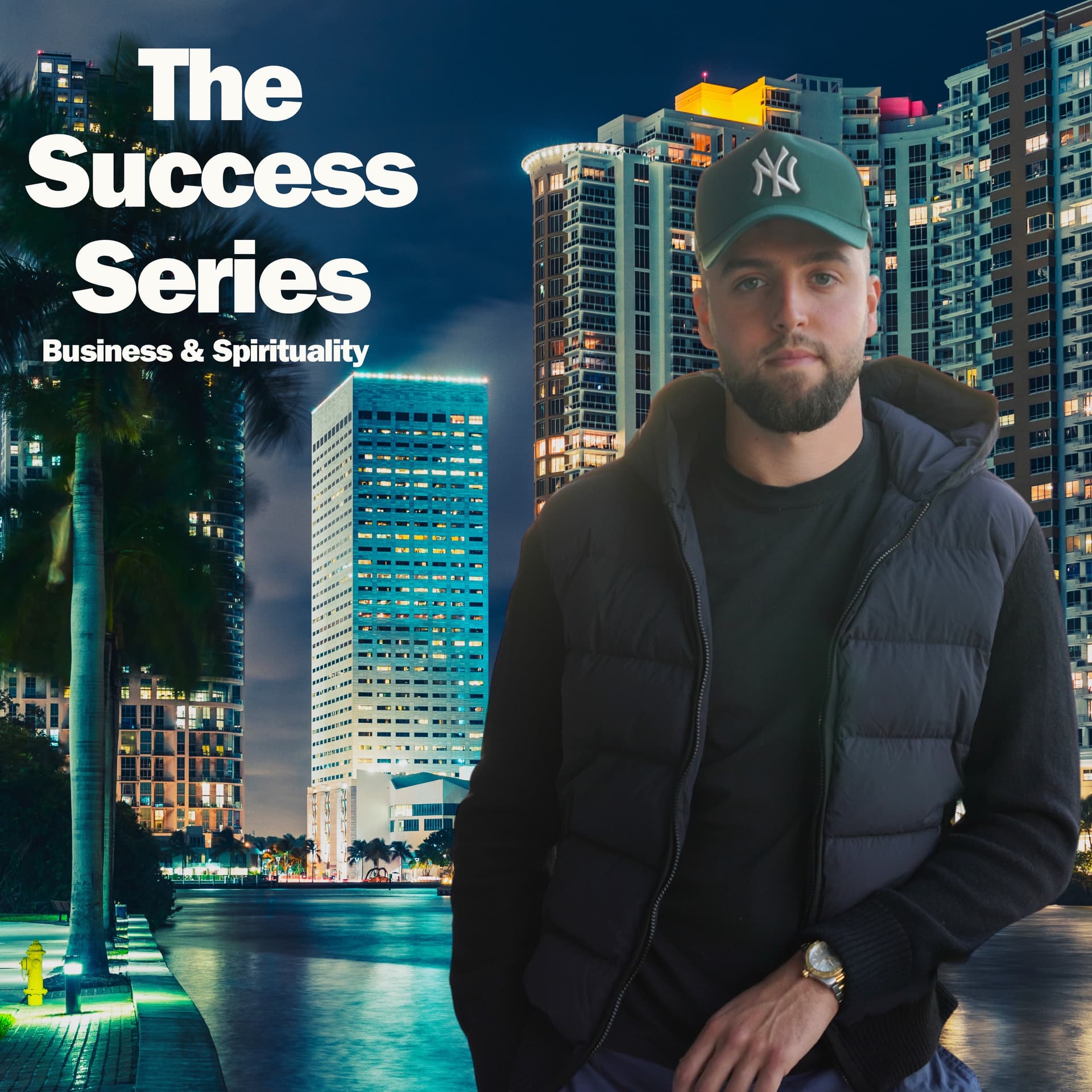
In short
Life’s ups and downs—especially for founders—plus views on kids and the internet, AI’s future, and how to stay positive through uncertainty.
Guests
Eitan Albaz, technology entrepreneur and LA ecosystem founder (5-time founder; two companies sold to Google). Venture partner at 10.1.10; invested in Commander AI. Background includes co-founding across ad tech, gaming, and AI.
Key claims
Launching a first business is daunting but survivable if you have runway and focus on hard work. Negative thought loops can be interrupted by choosing a positive assumption in the moment. Solo founders experience “roller-coaster” emotions; co-founders help stabilize. AI may create abundance, but humans may still manufacture problems; robots/AI will raise “who decides good vs bad?” questions. Nostalgia frames past hardship as a coherent story.
Notable examples
AdSense launch (Oct 2000) with no customers; beta tests with Yahoo/AltaVista/LookSmart; shelved for two years; relaunched with paid search via Overture and USA Today; Google acquisition discussions in early 2003 with Sergey/Larry present.
Written by AI. May contain mistakes. Listen to the episode to check what was said.
Chapters
Tap a time to open that second in VOEitan's Early Entrepreneurial Journey
0:45 to 2:45
Eitan shares his experiences and challenges of starting his first business at a young age.
“And yeah, having fun doing this and building things that are useful to people.”
Childhood Influences on Business Mindset
2:45 to 5:06
Eitan reflects on his upbringing in a middle-class household and early money-making ventures.
“to sell maybe we'd sell a few hundred dollars of baseball cards in a given sunday sure um i also sold some blow pops in middle school.”
The Internet's Impact on Youth
5:06 to 8:15
Discussing the pros and cons of the internet's influence on children's development and social skills.
“You can put a kid in front of an iPad for eight hours a day and they're just, right, and nothing else.”
Future of Work and AI
8:15 to 11:59
Exploring the potential impact of AI on jobs and human purpose in society.
“time on their hands to take part in all these meaningless things?”
Navigating Life's Highs and Lows
11:59 to 14:01
Eitan recounts his emotional experiences while building his company and the balance of highs and lows.
“Can you share what's the most recent example of that?”
The Emotional Rollercoaster of Entrepreneurship
14:01 to 16:49
Explore the emotional highs and lows of being an entrepreneur and the importance of having a supportive team.
“But also if the number was lower the next day, It was just like...”
The Importance of a Support System
16:50 to 18:56
Discuss the need for co-founders or a support system when facing challenges as a solo founder.
“Or maybe you're just having like an actual bad day.”
Nostalgia and the Entrepreneurial Journey
18:57 to 21:17
Reflect on how nostalgia shapes our view of past challenges and struggles in business.
“time you finally exit plus maybe you need a two-year lock-up period earn out or whatever it is So like it's a seven, eight year journey.”
Navigating the Path to Acquisition
21:18 to 23:56
Learn about the journey and challenges faced on the way to selling a company.
“When you run me through those moments, I know they're right.”
The Unexpected Acquisition Talks with Google
23:57 to 28:04
Discover the surprising conversations leading to a potential acquisition by Google and lessons learned.
“the publishers and saying can you pay us for AdSense we'd say we have AdSense plus we have a set of advertisers so we can pay you to use AdSense.”
Show all 16 chapters
Navigating Acquisition Talks with Google
28:04 to 29:28
Learn about the mindset and strategies when discussing potential acquisitions, particularly with tech giants like Google.
“And so when they would do that, as young guys, we were like, okay, here's all our information.”
The Emotional Rollercoaster of Success
29:28 to 33:12
Explore the mixed emotions experienced during significant milestones in a startup journey, including achieving success with Google.
“I am now 28 years old in this conversation.”
Family vs. Entrepreneurship: Finding Balance
33:12 to 36:24
Discuss the challenges and commitments of building a family while pursuing entrepreneurial success and how they can coexist.
“You and I, on a different topic, we've spoken about relationships and marriage.”
Defining Goals in Life and Business
36:24 to 38:28
Understand the importance of defining personal goals and how experiences shape one's understanding of success.
“You can you can have a company that pays you well.”
Advice for Young Entrepreneurs
38:28 to 42:00
Get insights on how young individuals can navigate career choices and develop skills to add value in today's job market.
“people i want to find my passion i want to find my purpose well that's a that's a lofty thought that I don't think anybody knows until they've gone and done something first.”
Setting the Tone for the Week
42:00 to 42:34
Learn how to kickstart your week positively by managing habits.
Transcript
Automatic transcript. May contain errors.0:08Welcome back everybody to another episode of the success series. I'm here with my guests and friend, Eitan Albaz. Eitan is a five-time founder. Two of his companies were extremely successful. One sold to Google. He's also a venture partner at 10.1.10 and is very much involved in the LA ecosystem. And personally, he's invested in my company, Commander AI. So Eitan, super excited to have you here. And maybe just give our audience a little bit brief of who you are and what you're excited about. My name is Eitan Albaz. I'm a technology entrepreneur. I've co-founded a number of companies in the LA ecosystem, covering a variety of categories, advertising technology, gaming, now some AI.
0:49And yeah, having fun doing this and building things that are useful to people. It's been 26 years into this journey now. You and I have spoken a bit before the podcast. It can be really daunting to go and launch your first business. A lot of people in their 20s and 30s, can I do it? Am I confident enough? They'll have the smarts. What is your take on that? Gosh, the first time I did it, I was 25 years old. So I probably didn't know enough about what I was doing when I when I leaped off this board. The things that I had at the time that I thought that sort of got me over was I knew that I had enough money to essentially pay for rent and food for about a year.
1:34And I had to figure it out in that year. And what if it didn't work? Did that even cross your mind? Did you not let that thought in? I don't think I ever thought about that. I knew I was just going to go head down and work hard. Yeah, luckily, I didn't have to get to thinking about that. Right. I'm always fascinated looking back at, I think early adulthood largely influences the decisions you make when you hit your 20s and 30s. What was your childhood like? Did you grow up in entrepreneurial households? We were a pretty middle class. Both my parents were educators. Both my parents were teachers.
2:08My dad eventually became a school principal. So while I think these jobs are pretty important for society and for our youth, they don't pay well. And so we didn't have much stuff growing up. We didn't, you know, I never got the clothes or the jeans. And so I think as a young kid, there was a little bit of emphasis of like, how are we going to make money? It's pretty basic and so uh worked a lot with my older brother we we collected and sold baseball cards we ended up being uh you know we'd go to those conventions where we'd be the sellers um i think you had to pay you know between 40 and 80 dollars to get a table at a convention and you'd go and we'd try to sell maybe we'd sell a few hundred dollars of baseball cards in a given sunday sure um i also sold some blow pops in middle school.
2:59And so, you know, I think in total in baseball cards, I think maybe we drove, maybe it was like this, mid 80s, it was like three or$4 ,000 over a couple of years. But that was really good. Yeah, that's what's like 20, 30K today at least, right? No, no, no. Yeah. Three or$4 ,000 total over a couple of years. But it felt like very, very, very meaningful money because we didn't, there was no other money. Right. That was the only money I'd ever seen. You could buy some things here and there. Not really. Our parents weren't. They were excited of us making money, but it was like, you've got to save this money.
3:32So you had like a little bank and you would. Yeah, I think we actually opened bank accounts. Okay. And they were proud of us for having done this so that when we went and actually got some Nike shoes, they still bought them for us. Right. So we didn't really have to use that money, but that was meaningful. Sure. Sure. And when you look at your own kids today and you think about just raising kids and we spoke about the Internet, do you think the Internet's a good thing for young children? Is there somewhere in the middle? What's your take on it? Yeah, that's such a deep question. The Internet is for sure more good than bad can come of it.
4:14But if used the wrong way, it obviously we're seeing. It seems like there's some fairly negative reverberations for, like, teenage girls. Right. And also teenage boys to some extent where they are not connecting with humans as much. I think they're not even learning how to actually connect with humans. And it's putting them in bubbles. They're getting fed news that's probably not true. and it's creating emotions for them that get them addicted to social media that's probably bad for them as a person. Maybe it's good for whoever's selling it to them. And yeah, I think if not used correctly, it's really dangerous.
4:52So I think we have to be really involved and deliberate about the ways that we allow our kids to connect and make sure they're still connecting with people and humans and kids, you know, as their primary source of content. Yeah, entertainment, right? Yeah. Yeah. I mean, it's crazy. You can put a kid in front of an iPad for eight hours a day and they're just, right, and nothing else. And it's... Absolutely. Yeah. Yeah. Yeah. It's so magnetic. It might be stronger than other emotions. Right. And so you and I, we're more entrenched within the AI world. with a lot of maybe our listeners that are, they just hear the word AI.
5:29It sounds like this scary phenom that nobody really knows much about. Of course, there's a lot more, you know, research and study that's been on it than probably the public perception of it. Do you think that in 10, 15, 20 years from now, as some people like to say, most jobs that are sort of monotonous will be eliminated, including engineering and computer science? I don't know. I really don't know. I mean, it's clear a lot of jobs are getting eliminated right now. I also hear them say that a lot of a lot of new jobs get created. And we also hear that a lot of the jobs get solved and that there'll be abundance for us.
6:04And it sounds like that's possible. I think the breakthroughs that we'll get in robots, obviously we're seeing them drive us around now and soon they're going to clean our homes and then soon they're going to build our homes. and so I think this abundance narrative makes sense, but clearly the biggest problem is going to be humanity's ability to accept the abundance without creating problems, without creating sort of challenges in their mind about the abundance we have. I think humans are are almost like we're almost like an AI code that looks for problems we're always looking for problems as humans because that's how we survived like gotta find food gotta find shelter how am I gonna build shelter how am I gonna how am I gonna grow these crops and so we're always searching for problems and now I think what's going on with the inner is like I think people are searching for problems that aren't even really there Just to feel purposeful?
7:17Their brain is looking for problems to feel purposeful. This is going to be on steroids, when all of a sudden everything is done for you. We're already seeing... I think we see protests out in the world that are, in some cases, a solution to no problem. and so there's going to be far more no problem and they're going to have to come up with far more so what does that look like what does that look like like what is everybody going to do when they're just searching for problems all the time where there's no i don't know if i can conceive it but clearly there's like like uh society's not at a not at a equilibrium not at an equilibrium right so there's gonna be more of that chaos it's interesting you say that because I look at the world today, as probably you do as well, and it's like, how do people have so much time on their hands to take part in all these meaningless things?
8:18And to your point, I think that's exactly it. But then the other side of it is like, well, there's so much good that could be done in this world. And so one option or one likelihood is that everybody has nothing else to do but do good, right? Which is maybe lofty and very spiritual, but truly speaking, like if all the challenging things, so to speak, which you and I know is like Messiah, let's call this a Messiah to an extent, where AI does everything for you that you don't like, and now you have two choices you can either do bad or do good yeah now uh well i started thinking through this part and i think we're going to be accompanied by robots that monitor the situation i don't know what these robots will look like they don't necessarily look like a person it could still be your phone right could be that they are that's just kind of monitoring you and making sure that you're generally not doing anything bad but then who decides what's good and bad right who decides like if you're sitting there playing guitar um because you enjoy making music great we're all everybody's approved on that one and if you're sitting there um you know uh smoking a cigarette or or not even that because i i mean that's it's bad but for some people well it helps me cope with stress and right what is the ai going to say about a glass of wine alcohol is bad right what is the ai going to say about well there's probably an ai that says well you're going to cost more health damage to society and it's going to be a little harder to deal with you so maybe but then there's another ai that says well but now we have the free health care that can deal with his the cancer he'll to generate for himself.
9:57Yeah, it's going to be, I kind of see a fight the same way right now. We have a, you know, all these decisions are getting the Supreme Court because we can't decide like, is gerrymandering okay or is gerrymandering not okay? Is activist judges okay or not okay? And it keeps all finally up the Supreme Court. So we have the AI of like, is allowing you to smoke in your free time okay or not okay? And that's going to, is that going to go up to a Supreme Court? And what's that Supreme Court going to be made out of? Is it going to be partially AI? I don't know. That's fascinating. yeah yeah i think the one thing i'm curious your thoughts that scares me the most about it is that one the people that are building this whether their state of mind is likely there's the likelihood of what the robot or the ai is going to be doing and function like the scary thing is that if humans have some level of control over the ai or the robot and the robot has a mind of its own it can start to have negative thoughts and what if it's out of house the robot has a robot has yeah because at the end of the day the robot's being programmed and if the person programming it is influenced by negativity well why wouldn't the robot go around stabbing people or doing just horrible things or shooting people right and and before i was like well that's far-fetched but no if if the robot's subconscious is negative or if there's what you can easily do because the same way that you're programming it to do good you can program it to do that yeah and that that to me is scary you know it's in your alibi mopping and then it comes turns around with a knife in its hand right and you know it it it reminds me of um um there are times in your life where you're just generally unsure.
11:21And that these, it could be that you're building a company. It could also just be that you're at a party and you're around some people, maybe you don't know them. Maybe you're feeling uncomfortable. Maybe you didn't show up with somebody. So it can be on this micro level, it can be on this macro level. But you got to catch yourself in that moment, just like, just go positive. Just at this moment, just assume it's good. Assume these people in the room are your friend. Assume this company is going to go well. Even though you have no data to support any of that? Yeah. Have you had that moment in real time?
11:59Yeah. Can you share what's the most recent example of that? I think the social situation. I think when I was a bit younger, call it college, post-college, you're still just trying to figure out who you are, where you fit in, who your people are going to be. Sure. And, you know, sometimes you can put yourself in a loop of,
12:30also maybe when you're going to sleep, you can put yourself in a loop of a thought pattern. Right. And, yeah, I'd say sometime along the way,
12:43you come to learn that a general negative thought pattern isn't, it's just not helpful. It's just not helpful to whatever it is you're going to achieve, or you're trying to achieve. So just catches them. It's like, go positive. It's basic and simple. But it can have big butterfly effects. Big butterfly effects to just think positive. Totally. And I've experienced this in sort of transitioning to running a company, a lot of highs and lows. I want to get into that with you. One, how did you cope with them? Let's use the company AdSense that you sold to Google. And then were those highs everlasting or were they always sort of momentary?
13:26So I was probably the most emotional guy at the company. There was nobody who was more of a roller coaster than me. And it was almost comical because we wake up and we look at, we didn't have Google Analytics at that time. There was a different software program that told us how many users were on the site. And it was a high number we hadn't seen before. It was like the elation of some sort of a drug or like I woke up drunk or something like that. Like, yeah! Look at this number! Look at this number! It's like going around the room getting fired. Oh my God, like 37 users! 37 users, let's fucking go!
14:05I love that, yeah. But also if the number was lower the next day, It was just like... Just not talking to anybody, right? Miserable. And then you get a phone call about a commercial partnership that you were hoping for, and the guys are like, hey, we're going to put this on the back burner. Right. And then you're pacing back and forth in the alleyway, just contemplating. Yeah. Yeah. And so I would... I'm age 26 at this point. Okay. I mean, I would ride these highs and feel these highs, and then the lows would just punch me in the stomach. Right. But luckily, there was a founding team. There were five of us on the founding team.
14:45So what was nice was there was, look, there's always one or two people that was having a good day. Sure. And so it would balance each other out. Yeah, you balance each other out. Right. This is the hard thing about a solo journey. And I've watched this, and I think of what David Friedberg said when he built Climate Corporation, that it was a, the quote was something around like, it's like a unique kind of loneliness when you're trying to build a company solo because when you're having those low moments, there's nobody on the team you can really turn to because everyone's turning to you as the, you're the guy.
15:22So if you don't think you have the composition to sort of take yourself positive, even when you get these gut-punching phone calls and emails that essentially set your company back, you know, maybe you need a co-founder. And so, yeah, I mean, or two. Right. To help you guys all sort of steady the ship during these emotional ups and downs. Right. You know, I'm a solo founder, and I've been thinking about these thoughts recently. And, like, of course, I've felt that high and low, and we've had that many times over the last few months. and the thought to myself was, can I handle this? Probably, because I have been.
16:03It probably will intensify, but I probably still can handle it. But do I want to? You know, because it really sucks. And there's nobody that I can turn to. And then I found myself making people, the co-founder that I wanted, where in no regards should they have been that person, if that makes any sense. In some instances, they didn't have an affiliation with the company, but I just needed to be able to balance this off somebody else. Okay, I got two thoughts for you on that. First of all, if you're having those moments, that's when you call me. I mean, that is the moment you call the angel and just talk through the thoughts and try to test out, is the news that you're actually holding on to actually as bad as you think it is?
16:41Right. And it might be, and we might tell you, like, this is a pretty big deal. This is a rough news. Sure. You're going to have to, or we might tell you, like, actually, this is just not that bad. Just ride this one out. You're okay. Or maybe you're just having like an actual bad day. You just didn't get enough sleep. And really you just needed to actually, you just needed to... Just reset? Yeah, just get something off your chest. And as soon as you did that, you're okay. And so, you know, figure out which one of these are and get you back on your way. And then the second thing was... Oh, sometimes I've seen what are essentially solo founders pick someone else.
17:28They're like, yeah, this is my co-founder. Right. Or they're not by any means, right? Yeah. They think they have a co-founder. Sure. And they're hoping that they'll emerge. He's like, I think he's going to become a co-founder. Right. But then they don't. And so it's a big deal. Like you're getting married. Right. And so don't get like, don't just be a marriage of convenience. this should be a fulfilling like a marriage where you're both really excited about this marriage and a marriage of equals right or close to equals that you see that this person is in the trenches with you for the next few years and not just the as the best i could do right which a lot of people do in marriage too right it's like oh well i'm getting older i might as well right that's yeah look i guess sometimes you gotta yes if you want a family right maybe you got to pick the person um and and kind of hope for the best maybe there's maybe some of these do right probably just like companies do too right right yeah some of them work out right some of them don't work out right regards to uh the highs and lows so i do the same thing when the highs are high i ride them out because i know that soon going to be a very low low and it feels good it feels good it feels good it feels great you're like i don't know when i'm getting this feeling again exactly let's let's just look it out until like yeah do is your perspective in building a company should you really enjoy it and is it okay if you don't I I think you have to enjoy it because it's well a couple things first of all it's probably gonna be seven or eight years right by the time the whole thing by the time from the moment you have the first idea by the time you finally exit plus maybe you need a two-year lock-up period earn out or whatever it is So like it's a seven, eight year journey.
19:13So that's a long chunk of your life. So yeah, you should be enjoying and having fun. And then of course, we look back at the good old days. You know, we look back fondly and nostalgically, maybe hopefully fondly, and you think back to like, oh, those were the good times. When there's just three of you in a room with nothing in the bank and trying to figure out how to write a line of code. yeah it's crazy how it works out this way where you're miserable and struggling a lot of those times right but you still look at them as the good old days i i obviously i'm still in the relief like we're two years into this but you i i can semi-relate to what you're saying i just wonder is this like hindsight and and or is it or did you really enjoy those moments in real time it's a tough yeah i've come to the conclusion yeah nostalgia is the eighth wonder of the world okay um somehow listening to this you know i'll listen to a song from the 80s because that's when i grew up and uh you'll it'll put you back in a hallway in your middle school walking down the hall and by somebody's locker and you think of a face that you haven't thought of in 40 years and It feels good, but you know that a lot of those middle school days were also like...
20:35Not fun. Not fun, rot with confusion. Right. Who were you going to sit with at lunch? Right, stress, purposeless, just, yeah. And yet you still sort of feel good about them. Maybe it's because you survived them. And it was a point that led you to here. Sure. And you sort of come to the realization it's like a story, a narrative, it's not interesting if it's just all, if it's straight or flat. You wouldn't go to a movie theater and watch that movie if the main character had no challenges along the way. So in your personal story, in your narrative, which you've gone through, the story is interesting because you went through some ups and downs.
21:26and you sort of fondly look back on it of hopefully you can fondly look back on it um with like the points along the way it was like i was there i was there i was there and now i'm here and right and it's sort of all in a weird way tied to each other yes yeah and we're all still alive and you know hopefully you you had a pillow to sleep on last night your belly's full and if these things are happening like you lived you survived it's okay totally let's go to the moment you sold your company to Google for, was it? 102. 102. When you run me through those moments, I know they're right. Like, was there a moment where it hit you?
22:02Was it, was it multiple moments? There were multiple moments. I could take you through in just, we were, we were fortunate. It was a fairly, I would say a short story as long as these stories go. It was roughly four years from like conception to sale. Okay. But there were plenty of ups and downs within those. Call it like two sets of layoffs of about 10 people each. We parted with a CEO and it got a little contentious.
22:40We launched AdSense in October 2000. You can still find them. Press release. If you do the press release, October 2000, we launched AdSense. We launched it with no customers. We showed it off to a handful of partners. We got Yahoo, AltaVista, and LookSmart, AltaBeta tested. Wow. All told us like, eh. On what basis? I mean, they're massive corporations. Honestly, just like knocking down the doors, trying to find somebody who knew somebody and get you an intro. And, you know, I'd knock down those doors. And we got in front of the right people. And we got these companies to beta test our product.
23:18and all of them basically said, kind of interesting, but there's a lot of interesting things and don't need it right now. And so none of them decided to pay us to license it. And so we had to rethink AdSense and we basically put AdSense on a shelf for two years. and the key difference that we we ended this partnership with Overture which was the predecessor to Yahoo marketing Yahoo search and the company they acquired and we hooked in this paid search component and then we realized we could reattach it to AdSense and instead of coming to the the publishers and saying can you pay us for AdSense we'd say we have AdSense plus we have a set of advertisers so we can pay you to use AdSense.
24:11Well, it's a far easier conversation when you tell people you're going to pay them instead of asking them to pay you. And so we relaunched AdSense in the end of 2002 with USA Today. And we came up to, you know, we now were able to pay them. Business guy on my team named Chris Daniels was able to broker that relationship and we were able to pay them.
24:41And two years later, now AdSense can see it's going to be a meaningful product and Google takes notice of it late 2002, early, I'd say late 2002 and by April 2000, a series of conversations, a series of exciting meetings. You talk about like when we had a meeting with Google in their Menlo Park office, Palo Alto office. And in early 2003 at a meeting, they suggested they'd be interested in acquiring us. They said, you know, something more strategic, as they called it. That's the word they used. Yeah, we were talking about a commercial. So we've been using Overture as our back-end advertising partner.
25:28We started talking to Google like what if we what if you replaced overture and you became the back-end advertising partner? And in your mind was was it like here? This is a step to acquisition or that wasn't even even a thought at the moment as a no at the time actually Overture was still There was more indication that Overture was interested in buying us at the time and we'd had discussions with their senior level management team We were actually think it was gonna go with with them But during the course of this, Google reaches out about a commercial partnership. And we start going down the path pretty far along the way of the commercial partnership.
26:07We've kind of gone fully through this agreement, got into business terms. And they pull us up there for a meeting. I want to say it was like February 2003 now, as I recall. In this meeting, we've got Sergey and Larry. Wow. I don't know they participate in every acquisition meeting maybe at that point the company is less than a thousand people it's still small relatively small yeah their revenue their revenue is like 700 million at the time you know their head of CorpDev also showed up two guys David Drummond and Jeff Donovan step in the room so you've got I think four people in the room and we've got four people in the room and we're expecting this still to be this commercial partnership but then And Sergey starts talking about, you know, talks about, you know, what's the greatest cost we have as Google?
27:02And we're guessing, I don't know, I think I guess you're hosting charges. Right. And he says opportunity cost. Opportunity cost of what? Of like essentially not going faster together. Sure. And then I can't remember which guy is suggesting now. It was David Drummond. And, you know, we're thinking of something maybe more strategic, which was, I think, sort of code for merger. And then kind of a, yeah, so a little bit of a funny story. By this point in our career, I think Google is the seventh company to suggest we might acquire you. Wow. Along the way, so that included Apple, Overture, and Alta Vista slash CMGI, who was their owner at the time.
27:55So some big companies had said, look at that. And we came to learn all these companies just say, yeah, we're probably, you know, we're thinking of acquiring you. Right. Or we might want to acquire you. And so when they would do that, as young guys, we were like, okay, here's all our information. Here's everything we're thinking. Here's our IP. Right. Yes, because you're going to acquire us. Right. and then they would go and build something. Yes. So at this point you were desensitized to the thought of this. We'd already talked about it. We were like, next time someone says, we want to acquire you, just be like...
28:26Give me an offer? It was almost like, no thanks. Sure. Like just... Show no interest and see if they're... Because if they are interested, they'll continue, right? Yeah. Now the comedy of this one... So we were already sort of in love with Google. We already recognized them to be an amazing company that had the whole world ahead of them. Right. So we'd sort of, internally we'd say like next time, this next seventh time someone wants to acquire, it's just, don't fall over them and just be like, no thank you. Let's continue working on business together. Sure. Google was probably the only company that.
29:06You weren't going to do that. But then our next CEO would kind of be like, not interested. And then I was kind of like kicking my friend Jason on the table like, we should hear this one out. Right. We probably shouldn't just say no to Google. We should hear this one out. So it was kind of funny. But it was fine. And you're 20. How old are you at the time? I'm 20. I am now 28 years old in this conversation. So you're 28 years old with arguably some of the most powerful people in the tech world today. You know, it wasn't, I think Google on paper was worth$6 billion at the time. They were small on the list of, like, who was the biggest at that time?
29:51This is still less than 24 months after 9-11. The market has just went through a huge, huge, huge stock market crash. Fairly similar to what we saw in 2008, 2020. A massive market crash. And so people were not valuing private tech companies very much. Because they were a private company, nobody even knew really how to value them. So the estimates, the high, high, high estimate of what Google might be worth was like$8 billion. But I think we were internally, everyone was using numbers,$4 billion. Sure. So yeah, like private company, you're still very unsure about it. So it was it was a different time in 2003.
30:37It's like post stock crash, post 9-11. It wasn't people weren't looking at it the same way you think about Google today. Right. Fascinating. Wow. And so, okay. And then eventually you get to the finish line, wire hits. Was that a moment of elation or was that a moment of we just got through it and now we can, like, what did you do? Did you go into building after that? But I'm more curious as to that moment. Cause I think especially young people in their twenties and thirties, myself included, maybe until I started doing this is you're so much looking forward to that moment. And it's always, it's disappointing if you think that that moment is going to, make up for the last five years.
Read the full transcript
31:10Yeah. It's a combination of a couple, a few emotions. We were very happy and excited. It felt like an exciting next step. We were all, we thought Google had a great future ahead. We knew what we were capable of doing. We thought, this is the right story. This fits correctly. We felt great about that. There was also a sense of relief
31:40it was a relief in a sense that we felt very close to success but we also knew how call it fluttering it could be like it's still kind of butterfly effect it could still you know a small detail could still make it a nothing and a non-story yeah and so I think there was a sense of relief that like okay we we we got our bass hit or our double or Like, later we got to recognize maybe it was more of a home run. What happened later that sort of amplified the continued growth of Google? Yeah, I mean, just that AdSense got to become the most important advertising product, like, in the history of the world at this point.
32:25When we sold it, the product was doing roughly 20 million a year in top-line gross revenue. Sure. That felt like a really big number to us at the time. And as we talked about it, we were like, how much more might this really grow? Is there, you know, does it grow? The last time Google released numbers on it, it was like between 30 and 50 billion. And that was a few years ago when it was a public number. So we think the number is probably bigger. So like, yeah, the story of AdSense got to continue. Sure. And so that made the whole thing feel greater appreciation, greater significance in the history of the Internet.
33:12Right. You and I, on a different topic, we've spoken about relationships and marriage. Is your thought that as a young founder, male-female, build or create and then look to start a family life later, is there a way to do both in parallel? If you meet the right person, what's your take on it? I think that having a family is, for me, it's such an important part of my life and source of gratitude, appreciation, and happiness. So I think it's important, you got to find the right person. And when you find them, hang on to them. both of these things are big commitments building company is a big commitment building a family is a big commitment whether you can handle it all at once I don't know I think that's going to be different for everybody sure I think it's gonna be different for everybody I don't think that
34:14there's
34:21having a having a family is attainable for a far greater percentage of people than having a breakout exit right call it like well yeah if you could if you i'm actually curious what would you say Like the chance of becoming a breakout exit founder is, you know. Less than.0, what, probably eight zeros to the one? I mean, is it the pool of all people? Is it the pool who try it? Is it the pool of, yeah, do you know the pool of people who start companies? The people who try it? Yeah. Certainly sub 1%. Sure. Probably, maybe sub 0.1%. Sure. Now, the people who are going out there saying, I'd like to have a family.
35:06Right. What's the percentage of people that successfully can make a family? It's got to be deep into the double-digit percentages. I'm going to say... Call it 30? 40? Yeah. 30 to 50? Right. I don't know. Maybe we say 40. Yeah. So let's just say that the happiness you gain from a family might be in the ballpark of the happiness you gain from your exit. And if you look at your life today, your first child, I mean, I don't even know. No, I would say I gain more happiness from the family than I do the exit. Right. Okay, so, but let's just say, let's just for a moment say that they were equal. Sure.
35:51And I think that family is more important. Right. you've got a 400 times more likely chance of gaining happiness from the family than the exit. So, seems like a good bet to go build a family. I'm just coming up with these numbers right now. No, but that's a fast, I haven't even thought about it that way. Yeah. Look, there's a deep sense of gratitude also from building and achieving. like family doesn't take up 100 % of your time either it's like you you have extra it doesn't have to be one or the other no and I also think that not everybody desires a family and also not everybody desires to build a company and so the variables in that and actually most people don't desire to build a company right most of the world never does it yeah but and so that's interesting and that probably plays into why the numbers are so you know sort of sort of variable but Yeah, it's also let's also talk about like what it means to be if you've built a lifestyle business right in which you are paying for your home paying for You know, maybe you want to put your child in a certain school or go on a certain vacation You don't you don't need to sell a company to Google, right?
37:10You can you can have a company that pays you well. And you and your three employees. And in some senses, if the goal is just to get to... Well, that's a far, far, far greater than a 1 % chance to do that.
37:28So, well, yeah. That increases the odds over there. It does, right? So, yeah. If you want to build for yourself a lifestyle business, is there a 20 % chance a person can do that? It's interesting. Yeah, I'm curious, honestly. And if that gets you sort of what you need in terms of being able to pay for the things you want to pay for, well, then maybe there's a, maybe you've got a, you know, between a 20 and a 200 times more chance of doing that than the exit to Google or something like that. Yeah, you got to figure out what your, I would say you got to figure out what your goals are, but I don't think actually people really know what they are because until you get there, you don't really have a sense of that's exactly what you wanted anyway.
38:09life is funny like that it sort of plays games on you of giving you a sense of these things you want especially in this instagram world but then you actually have to experience them to figure out if it's like actually what you wanted along the way right was it something that you saw that got you excited because somebody else has it or was it an internal which is so hard to discern and i think especially in today's age you have to experience it to know there's no other way like people i want to find my passion i want to find my purpose well that's a that's a lofty thought that I don't think anybody knows until they've gone and done something first.
38:38I think that's right. And to circle back to something you talked about earlier, in an Instagram generation, people are handed so many clips of this life and that life and this life. That's where it's a little bit dangerous. You're giving people these glimpses of these lifestyles, and it gives them the feeling, especially if you see 8 ,000 likes on it, I think that's the life that I wanted. Right, because everybody else likes it. Because everybody liked it. And you can see people liking it in real time. So you're like, this must be the actual goal. Right. It's fascinating. The last thing I want to ask you is, and I think this is, it might be a high-level idea, but curious just your take on it.
39:24Somebody's 23 years old. She was completely lost listening to this. They don't know if they want to be an entrepreneur. They don't know if they want to go work for somebody. They just don't know what to do at all, period, life. Do I start a family? to do it, what would be your advice to them? I heard someone, let's see.
39:48You should be having a lot of conversations with people, not to annoy them, but just to hear what's going on in people's mind. Always have a sense of like, where do people generally think the puck is going. Try to collect data from different places. Learn and study the latest tools. Whatever those tools are, you should start becoming an expert on it. If I was young right now, I heard Gemini 3.1 or something came out yesterday. Become the expert on that today. Be better at everybody else than Gemini 3.1 and be better at everybody else at Sora. Be better at the tools so that when the conversation happens and someone starts talking to you about AI, you've got something to say and add.
40:31You'll feel confident about it. Maybe they'll offer you some things. Now you're piecing together a story from the conversations you have, the tools you're having. Pay attention to the news. What are the league leaders doing? Pay attention a little bit to the startups that are raising money and begin to weave for yourself a bit of a story of where is the world at? Where's the world going? How can I add value somewhere? And you might be able to add value to a company as a job or as a consultant, or maybe you think you've got a launching off point and you can sell something to a company and find yourself a little niche.
41:07Find yourself a little niche of one thing, you know, something you can offer to one person and maybe you can offer it to two people and uh uh keep working at it and then uh i say this uh i had a group of guys and i love these guys some of my college friends and um we'd hang out and uh i'd think about this sometimes on a sunday evening we'd still be hanging out maybe we were in venice and ever and a couple of guys like let's go get a beer and in my brain it was it's sunday at 5 30 p.m this it's over the weekend is over right go home go to sleep start the week strong um i don't mean to say this judgmentally other than to say innately you've got to pick sleep and work over a beer on sunday afternoon you have it if you've got it innately and you know you can do it just good for you right if for some reason it's not your it's make yourself do it there's no good that comes out of that that beer on sunday it's gonna it'll set the whole week wrong right you won't nail monday right you'll be groggy monday monday sets the tone for the week get your week started right i love that etan albaz everybody thank you so much It's great to have you on.
From the publisher
For more amazing content:
David IG: https://www.instagram.com/daviddberg?igsh=MXV4eDhrazc0c2drNQ== Success
Series IG: https://www.instagram.com/the_successseries?igsh=bHFvZG5pazhkdmc0 Success
Series Tik Tok: https://www.tiktok.com/@successseries1?_t=8nuiI3sMJw2&_r=1 Success Series
Website: https://www.thesuccessseries.com