In short
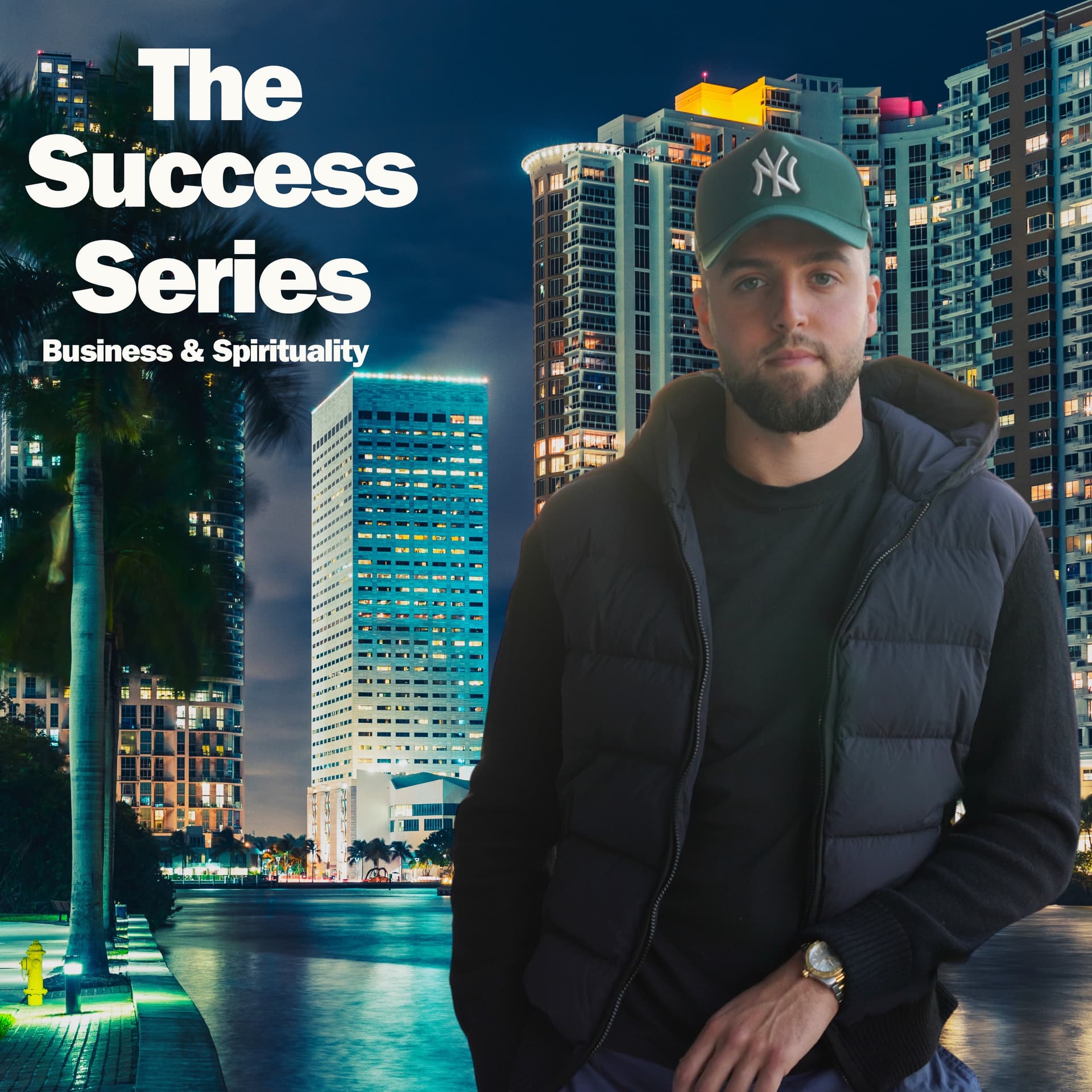
How Eugene Remm built a 100M+ business from scratch, and what he says matters more than money: value add, perspective, ego management, and “360 success” (health, relationships, creator connection, business).
Guest backgrounds
Eugene Remm is a Russian-immigrant founder/operator of Catch Corner Store (and related restaurant brands). He’s led multiple nightlife/restaurant ventures, scaled rapidly, and later faced major setbacks including legal/operational failures. The host is a younger entrepreneur/marketer who credits Eugene’s “what value do you have to offer?” question with changing his mindset.
Key claims
Ask “what value add can I provide?” not “what job can I get?” Create real-life experiences, not just service. Technology can replace “connections” by giving perspective. Early ego helps you start; later ego causes falls—use mentors and check blind spots. Success evolves; time with family and kindness matter most.
Notable examples
scaling from 4 venues to 14, then down to 2; a bankruptcy involving a major casino; shifting from money-first to staff-first/guest-first service; using comps online to build restaurant perspective.
Written by AI. May contain mistakes. Listen to the episode to check what was said.
Chapters
Tap a time to open that second in VOA Life-Changing Conversation
0:45 to 4:37
Discussion of a pivotal moment when Eugene challenged the speaker to consider their value.
“it was still one of the most influential moments that I've had.”
Redefining Success
4:37 to 9:58
Eugene shares his evolving definition of success and the impact of personal experiences.
“I think that if you have incredibly wealthy parents and you have a ton of influence, then you have no thirst.”
The Complexity of Success
9:58 to 14:00
Exploration of the multifaceted nature of success and the importance of balance.
“Well, today success is, success is very different.”
The Journey of Growth and Failure
14:00 to 18:00
Learn how ego and certainty can lead to both success and failure in business.
“And then I'm just thinking like, okay, I'll just do it like this.”
Reflections on Risk and Happiness
18:00 to 23:00
Explore the relationship between risk, happiness, and the entrepreneurial journey.
“highs started to get smaller too so it just became incremental so I would fall or do things that weren't great, but they weren't as extreme.”
The Balancing Act of Ego and Success
23:00 to 28:00
Understand how to manage ego in the face of early success to sustain growth.
“I like what you said about risk because I started my company at 24 and people are like, you just took a huge risk.”
Ego and Success: A Double-Edged Sword
28:00 to 28:52
Explore the role of ego in achieving and maintaining success.
“And the higher the ego, the higher the fall, the higher, the 1 % success, the, the lower, the, the, the, the chaos that you're going to feel.”
The Balance of Confidence and Humility
28:53 to 31:15
Understand the importance of balancing self-belief and humility in personal growth.
“Well, I think we'd have to just define confidence versus ego.”
The Dangers of Comparison
31:16 to 34:06
Learn why comparing yourself to others can hinder personal progress.
“That's a gift from the creator that was given to you.”
Focusing on Personal Improvement
34:07 to 36:24
Discover the importance of personal accountability and continuous self-improvement.
“do you think that restaurant's going to fail?”
Show all 14 chapters
Navigating the Unknown in Business
36:25 to 39:46
Gain insights on embracing uncertainty and the fundamentals of starting a business.
“and I'm just going heavy into where I can improve, where I can be better.”
Long-Term Vision and Responsibilities
39:47 to 42:01
Understand the importance of focusing on your responsibilities to ensure sustainable success.
“But I think you just, you just, talking about it gets you nowhere.”
Reflections on Personal Growth
42:01 to 42:28
Eugene shares his journey and reflections on personal aspirations over time.
“I want to be around good people as long as possible.”
Shifting Mindsets: Staff-First Philosophy
42:29 to 44:06
Eugene discusses the importance of prioritizing staff care to drive business success.
“And when all those people do their job, the money comes.”
Transcript
Automatic transcript. May contain errors.0:09All right, Chag Sameach everybody. If we're still standing, it would be amazing if you guys can find your seats. Just to kick it off here, and first of all, Chag Sameach, I know the timing was tough. Eugene and I had to rush over here. Well, he was already here, but I appreciate you all making the time to be here with us. One of the most amazing things about Eugene, although there are many of them, is that he can inspire with very few words. I'll start off and then I'll introduce him afterwards with a story. I think I was 19 or 20 at the time. And I came to Eugene's office. We were in touch for a while.
0:39I was telling him about the training that I was doing. And I said, Eugene, I'd love to work for you. And I'll never forget this because to this date, it was still one of the most influential moments that I've had. He said to me with a serious face, what value do you have to offer? And I said, well, I can do marketing. He's like, do you have a marketing degree? I was like, no. He's like, okay. What else can you offer? And in that moment, it was the first time that I was ever asked that question. And leaving it, my ego was, of course, bruised by it. But then every other moment in life that came from that has come as a byproduct of that, where it's so easy to think that we deserve to be in certain situations or to have success or to achieve anything.
1:19But that question to you made me actually think, wait, if I want anything in life, there needs to be a working for it. It's not just going to come to you. You can't just step into a room and think that you have it figured out. And so I want to thank you for that because I never told you, but it's really, really helped me in life. For those of you that don't know Eugene, he's the founder of Catch Corner Store. You got to help me out here. There's probably like six other names at this point. There's a few more, go ahead. Okay. Some of the best food in the world and also just amazing at what he does.
1:46So it's an honor to be here with you, Eugene. And maybe if you can just give a bit more of an introduction for us. Well, first I want to thank you because if this doesn't go well, it's because you're not good at your job. Absolutely. And I don't have a marketing degree. And if it goes great, it's because I'm an amazing guest. But it's funny. I just want to say I don't remember that conversation, but it definitely happened. But I would just say I think there's a bigger element there, which was if you want to, hey, I would like to work for you. I would like to start a company. I would like to start this T-shirt company.
2:16I would like to start this microphone company. the wrong question is like what is special or different about what I can provide that will give to you that will make it worth it so when I walk into someone's office when I was in my 20s and I would say hey I can help you with this thing maybe it's just getting your lunch in the beginning maybe it's just giving you some relevance of what 22 year olds are doing in New York City but I think just transitioning just because I think it's the first thing you said is you came in and just says I can do marketing. I don't even think you knew what marketing meant.
2:47But I think the idea is when you're meeting with someone and you want something for someone first, just think what is the value add that you can provide people. I think what we do in our business right now, we create in real life experiences. And those are, people are very good at making money. They go somewhere at eight in the morning. They leave somewhere at 6 PM. They go get a bunch of this green stuff and then they're unhappy when they get home. So they worked all this time to get this green stuff. This green stuff is supposed to make them happy. And then they're looking for places to actually bring joy.
3:20And what we do for a living is create experiences. So when I talk to my chefs and I talk to my managers and our team, I was like, you're not a server. You're not a manager. You're an experienced curator. No different than someone on Broadway. No different than someone who's creating someone's joy. And that's what we do. And I think it's interesting when you ask me that I think a lot of people need to ask the question, as a young professional, what is my value add to what I am doing? Not, oh, I'm going to take this job because after two years of this job, then I'll have this on my resume and then I'll go to do that.
3:57But in the meantime, say, hey, while I'm here for these two years, how can I help this company? And I think that, cabalistically speaking, is probably a core principle of life. You want to give light to get light. You want to be proactive, not reactive. And I think that's something, you know, I didn't remember that. Yeah, absolutely. One thing that I hear all the time from people my age, and I've even had this question myself at 20, 21 and 27 now, was that if we don't have the parents, if we don't have the environment, if we don't have the connections, we can't be successful. You obviously have a very atypical story to success.
4:33Do you believe that any of that's true? I believe the counter can actually be true. I think that if you have incredibly wealthy parents and you have a ton of influence, then you have no thirst. If you have no thirst, you have no desire. If you have no desire, you won't want to go and get. So as someone who came from humble beginnings, a Russian immigrant, parents, super simple, and really no teachings of any kind, for better or worse, right? Just make sure you don't spend more than you make and make sure you don't buy stuff you don't need and don't do anything bad. That was really the extent of it.
5:04But I think about it two ways. I think if you have nothing, then every step that you go to get something is like a taste of the light of something greater than what you currently have. I'm actually curious. Sometimes I would just say I would say it's just as hard to start from the top. Your family comes from a lot and then you just expect a lot to be the floor. And then you go somewhere and you see the floor and you're like, oh, my God, that's not possible. So, no, I think it's as much of a disadvantage to come from the top as it is to start at the bottom. I believe in 2026 with what technology can give you.
5:40Like when I was 12 or 13 or 14 or 15, I don't remember my age exactly, but like the real world was the first time that show, I don't know if any of you guys knew about it, but it was seven strangers living in a loft in New York city. And I had no idea that someone could make a living as a stylist or a dancer or a writer. I just thought it was who was in my town. It was insurance salesman. It was, you know, whatever plumbers, it was a lawyer or a doctor, I guess, would be like the traditional jobs. So I don't think that at all, actually. I would think that the one thing you need is perspective.
6:16The one thing in whatever industry you want to go in, you must have a point of view. And a point of view used to come with experience. But now I think with technology, that point of view can come much easier. Because if you want to learn about something, technology can at least teach you the basics, the very basic of anything. So if you want to be in the restaurant business, but you can't afford to eat at any of the restaurants, at least go online and look at all the restaurants that are in a comp set. At least search through Eater and Infatuation, and just read. It doesn't cost you anything other than the internet, and I think a lot of people are forgetting that they can do a lot, and a lot of young people interview with me, and I'll ask them that exact question.
6:56I'll be like, where does my restaurant group fit in? Give me three of my comps and they'll be frozen. Give me five of the best dishes you think we serve and why do you think they're the best? Give me, if they're going for a social media position, what do you think are the five most Instagrammable comps of what other dishes that people have? And people don't have perspective and you don't have to be born into perspective. You don't have to pay into perspective. And you can get that right now. So I don't, I don't think that at all. And I actually have an empathy for those that come from that from sincerely.
7:32And there isn't, you know, you're not going to get a lot of that in the big world because I don't think people actually understand that. But I think it's harder to come from a lot and find a way to be hungry or thirsty, especially if you've never been hungry. And I think that's even harder. Right. We were laughing with Andrew yesterday about like how today's day and age you go on Instagram. It's like, how do I find my soulmate? How do I build a successful business? I already know the answer to this, but I think it's important to even ask because I think like coming into this room, myself included probably in the audience is thinking that's exactly what I want to leave with.
8:03I want to leave with the path to success. Is there one? And then that's slightly rhetorical, but if there's not one, then what do you suggest to somebody who's wanting to leave with some bit of, yeah. Young people come into these meetings like, how do I start a business or how do I make more money and I it's like the wrong question but more importantly if there was one self-help book that worked for everybody we would all buy it and we would all follow it but the reality is for some people it's work harder and for people who work really hard with no vision for them it's to slow down for some people it's to talk up because they're incredibly quiet and then there's some people who are very boisterous and loud and they got to find places to be second position and let other people talk.
8:45So there is no one way. The only one way I know is the answer that I get from Eitan every time we talk, which is he doesn't give me answers because that would be too specific. He just says, ask the light. And it's not that simple, but he just says, what feels right? What is something that is not for the sake of receiving alone? What is something for the sake of others? What is something that shrinks the ego and grows your vessel? What is something that makes other people feel great before yourself. So I think there is no right answer because there's so many different ways to success. So some people will say, you got to work 24 hours a day.
9:22Maybe, maybe in tech you do. And maybe if you're a tech founder and you're grinding and it's about, you know, not sales, you're knocking on doors, maybe you do. If you're in a creative space, you shouldn't work all day. You create no space for creativity. You create no space for anything. So, and then there's people who are lazy and those people probably who think that just everything's going to come with them. They do something for two minutes. They think they're great. They talk about the thing they did for two minutes and for them, they got to work a lot more. So there's no linear line in my opinion.
9:53And I think there's just a few paths to that. Right. You've spoken about how success has changed for you as you've gotten older and achieved levels of success. How would you define that today? Well, today success is, success is very different. I think honestly it's every day it's an evolution of it but I think in my 20s it was a rap video right whatever you would think as a young person you know if you have money and cars and pretty people around you and you're doing the thing and people notice you like you want that because sadly for better or worse that was the interpretation of success you get some form of that and then you realize you're lonelier than you were before you even had that and so then that's not successful then you revert then you get successful then you have failures then you get successful then you have failures and the reality is it's constantly evolving for me right now success is time with my family only doing things I love not meaning only things I love like only the fun things meaning like I don't want to be in business with people who are not kind I don't want to if I can make five times the money, but I can have to be in business with someone that makes my day as hard.
11:01Like, what is the point? I think like I was listening to like a Marcus Aurelius summary and it was just like your most valuable thing is time. So what do you do? The only thing we cannot actually purchase is time. So what do you want to do with your time? So for me currently. My business strategy is opening as many things in New York that allow me to walk to work. and if I walk to work, that means I could walk home. It means I can be there in the morning. It means I can be there in the evening and you're not traveling for 24 hours to get two hours of work. And I also, it's a privilege that I have because I'm not worried about my rent.
11:41However, a lot of people who don't worry about the rent continue to follow that same path of I got to work, I got to work, I got to work, even when they have more than what they need, but they don't even know why they're doing it. And I remember another early conversation with Eitan where he, this was maybe 15 years ago, I had two clubs. And I would say, he'd say, what do you want? And it's funny, this seems like a very simple question, but at the time it wasn't obvious. He said, well, what do you want? And I'm like, I have two clubs. He goes, what do you want? I go, a third club. He goes, what do you want then?
12:09A restaurant. He goes, what do you want then? I don't know, a second restaurant. What do you want then? A hotel. The reality is he was trying to lead me to a place where I wanted was just happiness. And I thought these things would bring me happiness, but they don't. So instead of just starting to look for the monetary things you want or the financial things you want, try to look at success. A term that I like to use is 360 success, which is like, what does success look like all around? We know some people who are incredibly wealthy and have a very tough home life, tons of chaos. We have people who are blessed with five children, amazing family, and they struggle financially.
12:54And I think what you want to try to figure out is what 360 success looks like to you. And I think that's a balance of your personal health, your personal relationships, your connection with the creator, and your business. And you can slice that up however fits for you. But you can't be good to your family unless you have your health. Right. So if you work 20 hours a day, sleep four hours a day, you're going to make more money. So then later on, you can do more things with the family that's now older and gone. So you got to find that balance, personally. I think many people here, and whenever you're in a room with people, you can probably assume that one person's either stuck or at rock bottom.
13:33Have you had those moments? And then how did you get out of it? The biggest rock bottom moments come when I thought I was the most enlightened, the most successful, and the absolute smartest. and I paid no attention to anybody else but myself. So on like a very practical level, I can say my first nightclub was incredibly successful. My second nightclub was incredibly successful. My first restaurant was successful. My second restaurant was successful. And then I'm just thinking like, okay, I'll just do it like this. And what you realize is instead of coming at 9 in the morning, then you start coming in 9 at night.
14:10Instead of doing the work and caring about the people you work with, if you just care about the most influential person in the room. You start behaving like a segment of your customer base instead of getting back to the seed level of what you got here. And we went from, I think, four places to 14 in three years, and then from 14 to three two years later. So big success, big growth, big failure. And I think all of that happened mostly because of, I think, having extreme ego and then having extreme certainty that what you're doing is the absolute best thing in the world without really taking time to listen created a really negative.
14:56And I'll never forget it. I mean, I went to, I think we were in Las Vegas, and I took a private plane by myself to meet friends somewhere after spending seven days in Vegas on a work trip. But it was nonsense. It wasn't really a work trip. It was like five hours of work and five days of going out. And I was with six friends, and everyone's, I think the statement was, how can we be better? What was one thing, oh, this was one of us. It was, what do you want to change in your life this year? and I'll never forget I'm like nothing I have everything I've got it all figured out and I think right after that all the failure and some of the failure was through my own actions some of that was like bankruptcy of a two billion dollar casino which doesn't happen very often or a place that we built that we were we didn't do the construction probably so the sound went into the building and then the building created police and then the police came and padlocked our building and then we had issues with the SLA and all these other things.
15:59So what it did, though, which sounded like a disaster and actually felt like a disaster, and I used to say things like, oh, I have all the money I'll ever need, and then all of a sudden you put all that money into stuff and then that money disappears and you're like, oh, boy, I've got to go back to work, but I should have always gone back to work, whether I have the money or not. You should never live off your interest. You should never live off what you have in the bank. You should always, if you have desire and you have ability, you should always push forward. So going from 4 to 14 back to 2, 2 and a half, I went back into the restaurants.
16:29I went back into the pre-shift. I went back into the 9 o 'clock. I stopped going out late. I met my wife. I changed. Monica had a, you know, when she was talking about the clay and Michelangelo or some artist, and she was saying, it's not about what you do, it's about what you remove. and that that meant a lot to me because I found a way to remove a lot of pieces so it went from four in the morning to two in the morning for a little bit to 12 and now it's you know it's 10 p.m unless we're in the middle of something super special and I'm home um and so that failure I don't want to make this like a bumper sticker but that failure was a success that that that thing that felt like and by the way press stuff oh you know they had a bunch of places now and before it was like oh they're the big fancy company and then oh they don't have you know they're the bad company and you have to let go of a hundred people and you thought those hundred people were your friends and as soon as they don't get paid by you then you think they they all of a sudden tell you how they really feel um and so it was the worst best thing that ever happened for me and then that slow reset helped to build now there were spirals along the way but you know if life is in my opinion life should kind of go like this a little setback then up a little setback that's like the perfect life and then mine went more like up and then all the way down and kind of back this way and that way I think the lows started to get smaller the highs started to get smaller too so it just became incremental so I would fall or do things that weren't great, but they weren't as extreme.
18:13And then I would, and so just kind of building brick by brick as opposed to just like slapping something on there. I like that this room's a diverse group of people. It's not just 20s and 30s, although that was the initial intent, which is a good thing because I think that most people at some point in life when they haven't achieved success get to a place where I am not a successful person. If somebody is, let's say, at it for 15, 20 years, none of the businesses are working. What would be the first thing that you tell them? Or just purely professional success if they're in the same business for 15 to 20 years.
18:47Again, I know everyone's seen the founder, the McDonald's story, like he figured it out at 52. But I think you just assume that that's the one in the million. So unless you think you're Jeff Bezos or Elon Musk or Ray Kroc from McDonald's, then you should probably start thinking about doing something else because what's the definition of insanity is repeating the same thing and expecting a different result. So, I mean, again, there's always going to be an exception. So you have to look in the mirror and be like, oh, I am that exception. I am 100 % that exception. Because if you're not, what you probably is is delusional.
19:18And what you probably are is incredibly comfortable being uncomfortable. And you should probably do something different. Because what is the downside? You could always go back to being unsuccessful at the thing you're doing. I think when I was 26, my first club, the guy came and offered me a deal. I was making$65 ,000 a year. The deal was 20 % ownership in this business and$100 ,000 salary. All I said was$65 ,000 is a studio apartment,$100 ,000, there's a one-bedroom upstairs. That's how small my goals were. I wanted a one-bedroom. I wanted a living room. And from$65 ,000 to$100 ,000, that would be the difference.
20:06And then my boss at the time, who was a big restaurateur, said, okay, I know you want to do this other deal. I'm going to give you a million dollars. I mean, literally, you're making$65 ,000, you know, don't have much savings. I'm going to give you a million dollars. You're going to get it in three years. It's going to be in three tranches. I want you to stay and work with me. it's a nice company I had an executive job and I got like pneumonia right after that I've never been sick in my life and I got like incredibly sick and you know for four or five days I was home and I called my partners that I was going to do the new deal with and I said I'm so sorry guys I got offered a million dollars I'm going to stay working for this person and then I got sick then I came back and the first day I walked back and I walked into the lounge I was running and I saw that table where I was where I host and where I care people and I said the hell am I going to do this for the next few years I can always come back right and get this job and if I go to this new thing and if I fail there I'll still be better to someone coming back a lot of the people who I find to be great team members are people who have started businesses and then failed because the failure is where the growth is as opposed to just being under someone successful and being mediocre the entire time so I called the partners up I said just kidding uh would you mind taking me back and they said yes and then that was it and I've never looked back but I think it's you gotta get uncomfortable now at the same time don't quit things in six minutes and if you're if your life energy is you try something, you move, you try something, you move, then the opposite is probably true for you, which again goes back to there is no linear line.
21:58There is no one way. But yes, at 15, 20 years, if you're doing something and you're unsuccessful financially, but then I would ask, are you incredibly happy? And then you'd have to explain to me what your definition of happiness. So if you're struggling financially, but you're incredibly joyful and the only negative that you have is you can't get some stuff, whether that, I don't know what that means, Now, again, if you can't provide for your family, you should go do something else. But if you're not as successful as your neighbor Bob or Bill, then you should really think about what's going to make you happy.
22:28Because maybe this is arrogant, but in my head, I think I can be the biggest hotelier in the world. But that means I have to be on the road 250 days in a year, and that will not make me happy. And there's a balance there. And I think that's how I would think about that. So 15, 20 years, you're in the same thing. you're not professionally happy, you're not personally satisfied, you must do something else unless you just have this vision that no one else in the world can see and it's right around the corner and then you just, you're going to have to have some long conversations with yourself to try to get through that.
23:03Right. I like what you said about risk because I started my company at 24 and people are like, you just took a huge risk. I'm like, I'm 24, single, broke, like there's no risk. You know, like it doesn't work out. I'm in the same spot that I would have been if I didn't do this thing. But I also look at other people that have started the same exact idea and company. One of them are very successful. The other one isn't. They work just as hard. Do you believe that luck plays a factor in that? Would you call it something else? What is luck? I think we'd have to define luck, right? So if luck is, I mean, there's some technical terms like hard work meets opportunity.
23:33That's luck. If you're not in the game, you can't catch the ball, right? There's all those particular things. I think the world, I think there's certain parts of our lives that we're driftwood and we're just going with it and then there are forks in the road and we get to choose left and right. I think we have the ability to make certain decisions and then certain things are put for us, but I think we make the decisions at the fork in the roads where we go left and we go right. I also want to say something. It wasn't the biggest risk of your life. It's not even close are the biggest risk of your life.
24:07When you did that thing at 24, it's because you probably weren't going to be successful in a corporate setting. So that's the other thing about entrepreneurship. It's not because we're just so, we're so dare devilish. It's because we would be terrible in corporate America. And that's why we take entrepreneurial jobs. So it's not entrepreneurial or corporate. It's just like, I would do bad if five guys got to tell me when I would get a raise and when I would be able to do a different project, it would not work for me. So it's not the biggest risk of it all. And I had to go back. I would say things like, you know, I suffered and I gave up a lot to do what I did in my 20s.
24:43I miss birthday parties. I miss family things. But I'm lying. The truth is there was nothing more that I wanted to do. I didn't sacrifice. It's exactly what I wanted to do. Now, it sounds like sacrifice because it makes a better story and it makes you feel better about yourself. But it's not true. I didn't sacrifice at all. I literally did what I wanted to do. At 11 a.m. on Sunday morning, I went into the basement of the club that I worked at, and I emailed every single person that came in that bought a bottle. I didn't think of anything that I would enjoy more to do than that. I did not think it was, I did not think going to watch football with my friends was more interesting than that.
25:17So I wasn't, so I just say, like, we've got to be careful with the word risking it all. Like, none of us are at war. None of us are risking. We're just doing what we are a little less comfortable, but I believe for you knowing you that you weren't risking it by being an entrepreneur. You had no choice. Who you are, you have to be an entrepreneur. It's just, in my opinion, the only path for some people who go into the entrepreneur. Then there's certain people who should not be entrepreneurs. It's okay to have a really great corporate job, security, that balance. People need to know who you are.
25:51It's more important to know who you are than what you do. It's more important to understand what you are made of and what is really going to make you 360 happy. I mean, that's what this place is for, right? This place is for not to see the 1%, but to see the 99%. Otherwise, we'll live in the 1%. We'll chase ourselves in a circle. We'll get exhausted. We'll wake up. We'll chase ourselves in a circle. We'll get exhausted. Then we'll die. And then there'll be nothing else to do in between. Yeah. Yeah. You spoke about ego a second ago. If I didn't have my parents, I'd be out of control. I'm still out of control even though I have my parents.
26:23So what would be your advice to somebody who's seen an initial bit of success as far as either controlling the ego or why they shouldn't even go there in the first place? When you get early success at a young age and old people tell you to do something different and then you don't listen to them and you get success, it's very difficult to then start listening to them after because you think you've cracked the code on how to be different. The reality is there are some structural things later on in life, if you continue to ride that way, that you will not just slip, you'll fall and you'll fall far.
Read the full transcript
26:54So, um, there was a question again, reminding structure. If ego shows up after a little bit of success. Yes. The reality is you need a little bit of ego to try to do things that people tell you they won't do. And that's good for you as a young person. And then you do those things, then you get a little bit of success and then you have to realize there is structure, right? Like you, you want to build a beautiful house or build, excuse me, a big building. Some of it is design, but some of it is math. The load, how far you got to dig low to go high. Like it's not all just style. There is substance, there is math.
27:26So like you want to make sure that you're taking bets and taking risks, but not at the point where you just say to everybody, like, I'm not listening to you must have mentors. You must challenge yourself. You must stop at least once a day, if not twice a day, if not three, like, Hey, where's my blind spot. Like right now, I'm on a two-year run of success, and I've never felt more comfortable and uncomfortable all at the same time, and I think that's a great place to live. On one side, I can accomplish anything. I'm capable of changing the world. I am capable of doing all this stuff. On the other side, I'm literally nothing, and tomorrow something can happen, and all of this can go and the answer is you're both people at the exact same time depending on the circumstance so you should be taking your time and thinking through people but it's so hard especially with and we by the way it's a movie is all the time we watch the mobster movie one more deal and then i'm going to leave town and you know sail off to the sunset on that last deals where they kill them or arrest them or something happens it's always just one more right um but yeah ego is a big problem.
28:34Ego helps get you there. Ego won't keep you there. And the higher the ego, the higher the fall, the higher, the 1 % success, the, the lower, the, the, the, the chaos that you're going to feel. Right. So it sounds like what you're saying is that initial ego is good. Cause if you're timid and afraid and don't believe in yourself, like that's not going to work either. Yes. Well, I think we'd have to just define confidence versus ego. So confidence is, hey, saying that you can change the world is, to some people, be like, what an ego that you have. But we've all been studying this long enough that we all know any one of us can change the world in our own way through the actions that we have.
29:14So that's one side. And on the other side, you have to say, I am nothing. And look how many people were famous one minute and then in jail the next minute. So are they famous and successful and the greatest genius in business? Or are they a criminal for their answer is they're both right they have creative elements from the creator they have ego elements they choose to pursue too many of the ego elements and i think my life included i think of it like a like a scale and at one moment every single thing you do in that one negative thought that one piece of evil speech could be that that feather that tips the scale towards the negative so you just got to be very careful because we all have debt and then spiritual debt is what I think about it.
29:58Like we all don't deserve most of the things that we have. And we all have done a lot of terrible or things that we shouldn't have. Yet somehow we are forgiven by the creator. And so that's, that's the debt that we start with. But at some point you put credit card debt, they're coming at you and the interest rate's going to go up and up and up. And then they're going to seize your stuff. They're going to take everything and you're going to have nothing. So it's just a fine line. When you have debt, which we all have, how quickly can you pay it off? Pay it off our good deeds, prayers, creating things that help other people, not speaking evil speech, motivating, inspiring others.
30:36That's how you pay off your debt. Otherwise, you go further and further in debt, and then you get repossessed. You spoke about being two things at once. One thing that's always been fascinating to me is there are people that study Kabbalah for 30 years and are not successful in any metric of life, generally speaking, right, whatever, relationships, business. There's those that don't have Kabbalah, achieve success like yourself, and then come to it. What do you see as like the middle ground between being spiritual and... None of that matters. You're only comparing... This might be the biggest unlock of my personal life.
31:09Don't compare. This person's 30-year failure. This person's successful. only look at it verse yourself where am i today can i be one percent better tomorrow and if i'm ten percent worse tomorrow can i get back to at least zero anytime i compare and again ethan will say this all the time um there's someone always more righteous than you so when i sit there and i'll say david you know it's really slow on the emails takes forever to respond and then my point is there's someone who's five times better than me but that's for their benefit so another thing I would say like I have a friend um he'll be like oh I never gamble right and I said to him I said you don't get credit for that you don't even like gambling you don't even want it so you don't get to there was no restriction right so you don't get a credit for me for like if you're if you're naturally kind and your nature is just to be sweet to everyone You don't get credit for that.
32:10That's a gift from the creator that was given to you. Now, if you're naturally mean or if you're naturally standoffish and you pull that back, that's where you start getting, that's where you start paying off some of your debt. So you need to find the things that you're naturally challenged in and work on those things. So don't compare yourself to anyone. Literally no one. Here's where I am today. Here's where I want to be tomorrow. There are features in other people that you can compare yourself to. In fact, I did a deep dive in my own mind the other day about who I've learned the most from. Bad people.
32:47Specific skills that they were really good at and then many things that I would not repeat. So I come, I take your one brick of the good thing that I think that fits me and I put it into my building. And the rest I make sure I don't want to put in. Like, how did we all learn to speak English? I didn't learn it through, like, grammar. I just followed and listened to people, and we mimicked them. So I would take certain things that I would mimic from people that I think are the positive. In the past, I would also take the negative because I thought you had to take the whole person. And what I realized is that's their whole person, and that comes with their own personal baggage.
33:26I want to take what fits for me and bring it into me. So do not compare yourself to anyone else. Just can you be better than the version of you? And if the version of you ran a mile in 10 minutes and then the marathon runner or the sprinter ran it in five minutes, he needs to get to 459. You need to get to 959. And that's the only success that you should be thinking about because we're all built differently. We all are different. We all want different things. And I think that's the biggest unlock for me was the day I stopped looking at what you had and you had and you had. and the day I stopped comparing and what a waste of space comparing.
34:05What a waste of space. People used to say, do you think that restaurant's going to fail? And used to be like, the most fun thing in the business is to tell everyone else in your business how dumb they are. And the answer is, I don't know and I don't care. I'm going to focus on, I got to focus, I'd rather put that attention into my business. And as soon as I stopped doing that, one, I attracted a different type of energy and now I catch it once in a while. like when you want to like eat crappy food. That's what that conversation feels like. Like you take a little bit of it, it tastes really good, and then your stomach hurts for the next day.
34:38And that's what gossiping, judging, comparing, all those things are. And when you just do it a little bit, I mean, no one's perfect. We all have some of it. When you stop doing it, even the smallest taste of that, you know it tastes terrible for you. I like that. We've all had moments where we hate ourselves. we hate where we're at in life, instead of looking at somebody else, what do you do in those moments to not judge, not speak? You won't ever hate yourself if you're not looking at what everyone else is doing. You will love yourself and just know where you need to get better. Removing that judgment and better and worse will remove any self-hatred of yourself, period.
35:15You don't need, it's not normal. You shouldn't do it. You shouldn't have that self-hatred. You should just say, I'm in the first inning of, when you're 98, you should be like, I'm in the first inning of my life and I have things to get better at tomorrow. That's how I think about it. I'm 48 years old. I still feel like a child. I want to behave like a child and I want to grow like a child. And that's how I think you should do it. And I have no self-hatred for myself at all. And I've done things that I absolutely don't think are the best version of myself. And all I want to know is I don't want to go that way.
35:48I just want to keep moving forward. You just move on from it. You don't... I try... Well, for these 48 hours, I will move very much into it. and one of the quotes from Eitan was, what you remember, the creator will forget. What you forget, the creator will remember. So in these 48 hours, what that means to me is, I'm going to think about the things that I didn't do great, and the creator will forget about them. A lot of times we sit in a room and we say, I took care of Billy, I fed the dog, I gave charity, I did this, I was so kind to these people. And if you spend your time doing that, the creator will forget all that.
36:24So I would rather put my effort for these 48 hours based on the principles of Kabbalah going into Rosh Hashanah, and I'm just going heavy into where I can improve, where I can be better. Because I don't need to tell you all the good things that I do because the creator knows that. So that's the big thing for me on this Rosh Hashanah, which is what I remember the creator will forget. And that's for me to focus on my areas of opportunity. And what I forget, which is all the good things I've done and all the caring I've given and whatever, forget about it. I know that you know those people right they wake up in the room and they tell everyone you know what I did for him You know what I did for him.
36:58You know what they did for you. Yeah, I forget I I generally forget right, you know, so and I think to me that feels like the better way To live for me at least right one of the last things that I want to ask you before opening up to some questions here is You come to catch you have a great meal. Everything looks great You look at Eugene. He knows how to do this. He does it time and time again There are obviously millions of things that you didn't know when you stepped into it For any of us that are trying to be a musician, trying to build a business, how do you go into it without really knowing 99 % of the things that are going to come your way?
37:27Well, you've got to know enough to stand, right? Because otherwise you're going to tip over. So I think you need the fundamentals. Like in my business, if you build a$2 million restaurant for$4 million, you're already starting at such a huge negative. If you're signing the wrong lease, those are just some fundamental things. But let's just put aside that everyone understands the basics. you just you have to go into it with the right energy like most of my success has come from ignorance you know why am I signing a 15 ,000 square foot space that I need to spend seven million dollars on without having any money without having a liquor license and almost getting turned down and then the world ended up working that out this the corner store which was supposed to be like a cute little project but the intent was real the intent was I don't care if I make money.
38:17I want a great place. I want it to do really well. And it should make a few dollars just to justify it. And what it, so if I, let me say this, two years ago, the corner store opened. If I said to you, I'm going to open this little 75 seat brasserie. And from the success of the 75 seat brasserie, one week later, it's going to have lines down the street. You're not going to be able to get a reservation for six months. And from that success, I'm going to open three new restaurants in the next 18 months. All of them going to be more successful than the last one, and then the last one and the last one and I'm going to create this like boom in New York City and it's going to be financially 20x greater than anything I ever imagined.
38:54You would say to me, wow, like you're nuts, right? So my point is do the part that you can control, put it out there into the world and then let the world tell you what it's going to be. So if you want to be a musician, make a song and give it to 10 people and say 10 people will pay$1 for it. and then you'll know if you should be a musician or not like you don't need to get to 10 million people oh wait till you first i gotta get signed by label then i gotta get anr then i need a marketing then i just gotta show my digital platform and then i'm gonna get then i'm gonna make music just make it and that's why i love my business because nothing can get in the way if i want to open a restaurant all i need is money and i don't have any gatekeepers along the way there's no no media can stop me from opening a restaurant and being successful in this world no there's no like if you start in the clothing business certain manufacturers only work with the biggest right designers so you're at a you have gatekeepers here in my business the reason I like it aside from that I like it is because there is no one that will prevent you from being successful other than yourself and I'm very happy about that so you know I think about the movie business like you need 28 people to like what you think is a good film before someone greenlights your film.
40:10I don't want that. I go straight to the consumer. But I think you just, you just, talking about it gets you nowhere. That much I'm served. Just saying here, and this generation loves to hypothesize and strategize and write it down and talk about it. Just go do something. Do something. I'll tell you another story. There's a very famous restaurateur. Came into the restaurant. He said, you know, I've got 25 restaurants. He sold his business, and 24 of them I never closed. He was so proud that he only closed one restaurant. I'm like, cool, but in my head I'm like, and he loves volume, right? So he was like, you probably could have had 100.
40:47But he was so afraid of some failure that he didn't push it to his limit. He was more proud that he never failed than potentially his growth. Now this is not a person who was just like, no, I just want one or two. But he was more afraid to fail than go through some failures to even have potentially greater success. That leads me to my last question for you is, what do you still want in life that you haven't had yet? And I'll just phrase it for the room. A lot of people might look at you and say, I want what he has. And we already spoke about not doing that. But what are you still looking for in life?
41:21I don't know. I don't know. What I know is all the things I have I couldn't have written down 10 years ago and said if I had. I would look at myself like you're either high drunk or something else to think that you can have the things that I have today. So why on earth would I pigeonhole myself? And I am just going to do the things that I'm better at than I would be if I wasn't. I'm going to continue to try to do things that are for the benefit of others. I'm going to continue to try to study Kabbalah and listen to the light and be a better person. And then the world should... What I don't want to...
41:53I don't want to lose what I have. And that doesn't mean the money. I want to be as healthy as long as possible. I want to have a healthy family as long as possible. I want safety as long as possible. I want to be around good people as long as possible. Those are the things I want. But what do I want next? Why limit it to something that I can think of today? Because you tell me at 25 I'm standing here today doing this. I would tell you that that's impossible. Tell me even two years ago at 46 that I'd be standing here today at 48. I would tell you that's impossible. tell me I'm sitting here with a beautiful wife and two beautiful children and my parents are still with me I would say wow that's impossible so I just why do that so the answer is I won't answer you right in the beginning I used to think that I okay so there's the take care of our philosophy is real simple right now take care of the staff staff will take care of the guests guests will take care of the bills my responsibility is to take care of the 50 people who work in the store then those 50 people can each take care of up to 50 people.
42:58And when all those people do their job, the money comes. In the past, I don't need to take care of the staff. I just need the money. In order to get the money, I got to take care of the guests. And the staff just has to be there to do the work. So by changing my mentality to a staff-first care versus a financial-first care, that was probably the biggest shift. when someone says, I won't allow this on my pre-shift, when someone's like, get this steak, it's$100. No, no. Get this steak because it's incredibly unique. It's really special. You're going out once in every six months. You weren't able to get a reservation here.
43:36This steak is going to make you feel amazing. It tastes fantastic. It's going to make you twice as happy as a traditional steak. That's why it's$100. And because of that, you will make more money as a server because there is a higher gratuity on it, which the guests will be thrilled to pay because they just got some really great light and then they should give you their money. So as soon as I stopped thinking that I had to chase the money and just put my attention towards taking care of the people, that was the biggest pivot that I could, that was for me personally. Thank you, Eugene. Thank you all for coming.
44:08Appreciate it. Appreciate it.
From the publisher
For more amazing content:
David IG: https://www.instagram.com/daviddberg?igsh=MXV4eDhrazc0c2drNQ== Success
Series IG: https://www.instagram.com/the_successseries?igsh=bHFvZG5pazhkdmc0 Success
Series Tik Tok: https://www.tiktok.com/@successseries1?_t=8nuiI3sMJw2&_r=1 Success Series
Website: https://www.thesuccessseries.com