In short
Founders’ unexpected realities and how to lead with trust, vulnerability, customer feedback, and “spiritual” operating principles; plus hiring and fundraising perspectives in a fast-changing AI era.
Guests
Adam Greenfield—grew up in New York; runs creative studio Fridge; founded personalized supplement brand Thesis and supplement brand Stasis; previously started multiple e-commerce businesses.
Key claims
Founder/CEO organization and paperwork are bigger surprises than expected; CEOs must trust teams but struggle to let go; no one cares as much as the founder—optimize for mission, craft, and learning speed instead. Hiring priorities: proof you’ve done the job, desire to keep doing it, and deep compassion for end users. Product success requires listening to contradictory customer feedback (not forcing the founder’s vision). Vulnerability builds credibility and filters wrong customers/investors. Fundraising: VCs create “false certainty” despite uncertainty; speed to “no” matters; diligence can reveal product/legal gaps.
Notable examples
Thesis “autopilot” initially made users feel useless and distrust AI; later added user control and modules. Blackberry example: customers said they didn’t need buttons, but the company resisted. WeWork/Zuck/Google-care examples. Ray Dalio/Bridgewater radical transparency and credibility scores.
Written by AI. May contain mistakes. Listen to the episode to check what was said.
Chapters
Tap a time to open that second in VOUnexpected Challenges of Foundership
0:45 to 3:15
Adam Greenfield shares his unexpected challenges in managing a startup.
“Professionally, I've started a few e-commerce businesses, and now I run a creative studio called Fridge.”
Trust and Delegation as a CEO
3:15 to 6:00
David and Adam discuss the difficulties of trusting team members as a CEO.
“And so I think I just got programmed where it's like, if I'm not initiating it, if I'm not pushing it to close, it's not going to happen.”
The Nature of Caring in Business
6:00 to 6:50
Conversations about how much employees care about the business compared to the founder.
“Like that was something that I realized with thesis as well.”
Impact and Purpose in Hiring
6:50 to 9:30
Adam explains the importance of hiring people who care about the mission.
“I was not deeply incentivized monetarily, but I was deeply incentivized because he would tell me that everything that I do is directly impacting the value of the company.”
Qualities of Ideal Employees
9:30 to 11:00
Discussion on the three key qualities to look for in potential hires.
“The speed in which you're learning is going to directly correlate to how interested you are in your function and how easy it is for you to take courses, watch YouTube videos and learn all the new shit.”
Feedback and Adaptation in Business
11:00 to 14:00
Adam shares the importance of customer feedback and adapting products.
“Just show me how you've done it before, what your process was to get that thing done and show me like measurable results on how that impacted the business you were doing it for.”
Feedback and Product Development
14:00 to 15:12
Learn how customer feedback can reshape product offerings and user experience.
The Vulnerability of Founders
15:12 to 16:25
Explore the challenges founders face in expressing vulnerability and authenticity.
“Cause like I had spent six months and that's the other thing.”
The Energy of Maintaining Personas
16:25 to 18:44
Understand the toll of maintaining false personas and the liberation of authenticity.
“And, and just like keeping up that fake persona is a lot of energy.”
Embracing Transparency
18:44 to 20:09
Discover how radical transparency can improve relationships and company credibility.
Show all 21 chapters
Founders and Investor Dynamics
20:09 to 22:25
Examine the complex relationship between founders and venture capitalists.
“If I led with that, like, Hey, I'm a 26 year old founder that hasn't had a previous exit yet.”
Navigating Investor Meetings
22:25 to 25:40
Gain insights into effective strategies for securing investment from VCs.
“And as an investor, their entire job is to create false certainty around something that is by nature an ultra high risk investment.”
The Allure of Entrepreneurship
25:40 to 28:01
Understand the unique appeal and challenges of being a founder compared to being an investor.
“And, you know, they're never going to show you they're insecure, but underneath, they're highly insecure.”
The Obsession of Building
28:01 to 28:54
The passion and obsession that comes with starting a company.
“It's crazy how quickly things can change.”
Relationships and Business
28:55 to 31:06
Discussing the impact of relationships on entrepreneurial journeys.
“And so she has a lot of context, but I'm probably not as well suited to answer that question as the guys who have been married for 10 years or whatever.”
Friendships and Influence
31:07 to 33:49
The importance of surrounding oneself with inspiring people.
“We also have examples of friends whose wives and spouses couldn't quite stomach how devoted they were to the business.”
Managing Success and Ego
33:50 to 36:06
How to deal with highs and lows while building a company.
“And then just like trying to figure out ways to like continue to add value to them in subtle ways.”
Spirituality in Business
36:07 to 37:40
Incorporating spirituality into daily business operations.
Keeping Promises and Integrity
37:41 to 41:12
The importance of integrity and keeping commitments in business.
“And it doesn't necessarily have to be like, I'm like leading so hard classes with my team.”
Ambitions for the Future
41:13 to 42:00
Exploring big ambitions and the potential of AI in business.
“What are some of the crazy ambitions that you have?”
Innovating Through Friction Points
42:00 to 44:08
Learn how addressing specific friction points can lead to impactful innovations.
“And so I look at it as how can how can we be building tools internally within our thing to 100x the output and the ease?”
Transcript
Automatic transcript. May contain errors.0:08Adam Greenfield:Ladies and gentlemen, welcome back to another episode of the Success Series. I'm your host, David Berg. I'm here with my good friend, Adam Greenfield. You might know him from one of the first episodes that we've done. I think it was episode 20, about a year ago. We're now filming in Marina del Rey at Commander AI's headquarters. Adam's super excited to be with you today. I know you said we wanted to have a little bit more of a chill format today. We are. We are, no pun intended. We're going to talk about a bunch of cool stuff, but Adam, let me just kick it off for our guests who haven't heard you the first time around.
0:34Adam Greenfield:Who are you? What do you do? My name's Adam Greenfeld. I grew up in New York. I'm the son of Joseph and Susan. They're angels.
0:48Professionally, I've started a few e-commerce businesses, and now I run a creative studio called Fridge. I started a personalized Neutropics brand called Thesis. and another supplement brand called Stasis.
1:01Adam Greenfield:They're both based in New York. Awesome. And we spoke about founders a bunch before the podcast, but in being a founder, what are some of the most unexpected things that you didn't anticipate when you initially, you know, launched your first company or launched your first product? That I didn't anticipate? Paperwork and how much, how unorganized, like, and how my, how much impact, my inability to be organized would actually impact the business and um and then having this epiphany of like holy shit I need to surround my because I'm so kind of scattered and unorganized and like don't keep everything together um how important it is to be surrounded by people that are ultra organized um and so I think like that was an unexpected thing I I think I got away in school and growing up you know just where it didn't things weren't happening as fast right there wasn't as much documentation and then you hire people and you have to do hr and you have to do insurance and you have to be yeah i mean i used to say it all the time i'm like hr nightmare you just throw everything out there i'm just like i'm fucking up dog ate my homework yeah things falling through the cracks right and then as as I have as the years have gone by and I have put in processes and brought in people to ensure things don't fall through the cracks and surrounded myself with people that over index on structured thinking process it's allowed me to kind of live in the strategy, vision, kind of what to do and not having to actually execute it.
2:50So that makes a little sense. And what about you? Yeah. What's your answer to that question? Because now you've been in the startup thing for a minute now.
2:58Adam Greenfield:18 months. Yeah. I think a ton. I mean, definitely the organization thing. And I'll say that, Alan Asi will follow up on that too, because I've been struggling with that from day one. But I've always been that way. and I sort of deliberately knew that and I said well I'm not we're a startup we're not going to spend money on legal we're not going to spend money on anybody putting this together like this is going to fall on me and I kind of kicked the can down the road and now we're having to go back and fix things which I think is a good problem to have because I think if you ever get to a place where you can go and pay for that that means that you've got into a good place right so it's like that's not a bad thing I think aside from that I've always been really good at having an idea of something executing it myself but never really being a team player and as a CEO I have to be a team player i have to trust other people and i've noticed sorry we just hired a new uh lady for customer success and i find myself like not micromanaging so to speak but like not just allowing her to like grow into the role like it's her first week and like i'm on the demo calls with her and i'm like you know biting my tongue not to just like interject here it's like no she's she knows what she's doing she can handle it right or if it's like on product i'm like following up like 15 times and you roll this out and you roll this out it's like trust that they have it on the roadmap and they're going to get it delivered or they're going to get it pushed and so letting go and trusting any of my employees is probably the hardest thing not because I don't believe in them because I obviously do because we hired them but I think it's I feel that if I'm not involved in it from like start to finish it just won't happen and I haven't figured that out yet have you been proven wrong yet many times not in this company but almost my entire life where I noticed like Like if I wasn't directly or intimately involved in a project that I wanted to manifest, whether it's silly as like dinner plans with friends, like I was always the one initiating it.
4:41Adam Greenfield:I was like, let's do an event. Let's do a dinner. And it was always coming from here. It wouldn't happen. And so I think I just got programmed where it's like, if I'm not initiating it, if I'm not pushing it to close, it's not going to happen. So is that something you want to change? And like, it's weird. It's weird. Because part of it, it's like, okay, well, that's a good thing. Yeah. Because nothing's going to slip through the cracks. Yeah. It drives you a little bit nuts. Totally. It takes a lot of your time. I think I'd like to get to a place and maybe this can bridge into like our next conversation and I'm curious how you how you deal with it.
5:08But I think trust ties into like, do you fully believe in the people that you're bringing on board to the team?
5:15Adam Greenfield:And do they have a reason to work as hard as you do? And I think that I've yet to figure that out or what necessarily drives people aside from monetary incentives, aside from equity. Like, how do you get people to feel electrified about what they're building? I think when I know that about all of my employees, then I'll be completely hands off. because I know that they'll work as hard as I will. I think it's not that I don't trust it. It's that I don't think that they actually care as much as I do. They don't. They don't. Gary Vee talks about this all the time. Really? No one's ever going to care as much as you.
5:44Can that ever change? Nope. Nope. Why? No one will ever care about your business as much as you do. Okay. That is the CEO, the founder, you're always going to give the most shits. There needs to be areas of gray. Okay. Like that was something that I realized with thesis as well. Like, so I, so I started thesis with Dan Fried. Dan actually had the idea first, did all the research. I came in a year or two after he had already been like doing all the research and doing the clinical trials. Sure. I will never care as much as Dan cared and no one will ever care as much as I do. what we need to find is people that don't that give a shit but we can't expect them to ever be at the same no no no no it's never gonna happen i have a hard time with that it's not just it's
6:38Adam Greenfield:just not gonna happen okay so we have there's zero examples of that being of that being the case it's it's hard it's hard it's hard to quantify but i think because when i was working at for patterson and battle i did it for five years i would i felt like one it was my company i was i I was not deeply incentivized monetarily, but I was deeply incentivized because he would tell me that everything that I do is directly impacting the value of the company. And he would show me that. And actually, I don't know why I don't do this if he did that to me. But he would say, we just raised$300 million. And most of that is because of your sales ability.
7:07Adam Greenfield:And that as a salesperson, you just feel like, oh, my God, I'm going to go crazy now for the next 360 days to get that done. See if you can pull that off. Right. So was that an anomaly case? I still don't think you cared as much as Mike. As much as Mike. Right. So maybe I cared a lot. You cared a lot. Right. It's a fool's errand to believe someone's going to be at your level. You will always care the most. So where do you want to get that? No one ever cared as much as Adam Neumann did about WeWork. Right. No one ever cares as much about Meta as Zuck. Right. But no one cares as much about Google as Larry and Sergey.
7:40It's always someone else's. Now, you can really care. Yeah. But there's infinite levels of giving a shit. um but to to expect anyone to meet you on that one metric i i don't i don't think that's what
7:57Adam Greenfield:we should be optimizing for okay so then with that one tapping into the human psyche and just your your thought and spirituality aside from money what gets people excited impact purpose Okay. And I think everybody's different there. I think so one, one thing that I like to think about, especially when I'm when I'm hiring with at fridge is do they do they care about our mission? Do am I clear enough about why we're doing the thing? And like, the impact that we're making and how we're making the world a better place that I can enroll other people in our on the why. And then the second is how much do they care about their craft, the thing that they're doing?
8:45So the one way I think about it now is everything is changing so quickly. Every function of the business, marketing, growth, CX, ops, HR, engineering, tech, it's all evolving and changing so, so quickly. that the best practitioners in each end of the business are not those who have the most amount of experience. It's those who are going to be able to learn all the new ways that AI is reshaping their function. And so the way that I think about it is I'm hiring for speed of learning. How quickly are you learning? That directly correlates. The speed in which you're learning is going to directly correlate to how interested you are in your function and how easy it is for you to take courses, watch YouTube videos and learn all the new shit.
9:43How effortless is it for you to be reading all the newsletters on, on your, on your specific thing. And so I see it as giving a shit about the mess, the mission and understanding how it is that this business is making the world a better place and two giving a shit about your function like i think about myself or anybody
10:03Adam Greenfield:else it's like when you are excited about whatever the thing is that you're doing that's enough to usually get you to work a lot harder than you would otherwise so i totally resonate with that i think at least on our team every person that we've hired they specialize in one thing or another whether it's their ai engineer their product designer like that is their diploma that is who they are that is like everything about them um and i think if you can light them up in that regards then yeah like Like, you know, show them, hey, you did this design for, you know, UI filter. Customer loved it. Like, that'll make you feel good.
10:34Adam Greenfield:So I totally resonate with that. I think if we jump to a different category, when you look at hiring, like, what are you looking at when you hire people? Do you look at experience? Do you look at synergy from an energy perspective? Like, what are the most important things to you? So I think one, I think step one, just to get through like that screening interview, I'm at a place now where at least a lot of the roles that I'm hiring for, I need to know that you've done it before. So it's like really simple. Like here are the things we need done. Just show me how you've done it before, what your process was to get that thing done and show me like measurable results on how that impacted the business you were doing it for.
11:14So that's like step one step two is like uh how much do you enjoy doing your thing like you've been doing you know say some whatever it's an engineer you've been doing you've been writing code for the past five years and you've built some cool products like do you want to continue doing that or are you like trying to get out of that right there's a lot of people who have been doing it and now they kind of want to pivot away but like they're like well this is how i make my money this is what i'm good at I'm good at it. I don't like working with those people. Right. I want to work with people who've been doing it for a little while and want to do it for the next five years because I need them to continue to get better at it.
11:53And if you're like one foot out the door in that function, like I've been doing CX for, you know, five years, but I kind of don't want to do it anymore, but I'm good at it. So I'll take this role. Like I'm going to self-select out of that human. Right. um and then three like do they have a deep compassion for our end user i say like the one thing for me when it comes to starting companies the question i ask is like would i hang out do what i want to hang out with my customers like do i care enough about my end customers that i want to hang out with them i want to have conversations with them that i want to sit on the phone with them that I understand what their plight in life is.
12:36Do I, do I deeply appreciate the service that they're bringing to the world? And if that's the case, that's where the spirituality comes from. If we have deep compassion, either we are our customer or we understand the importance of what our customer is. Um, we'll have, we'll be able to open up a level of intuition and creativity in solving problems for them that I don't, that is like that next level of problem solving and advancement if we have deep compassion. So yes, the three things I'm looking for are one, have you been doing the thing? Right. Two, do you want to keep doing the thing? And three, do you have a deep compassion for our end user to hopefully open up that funnel of intuition to come up with new creative ideas to keep doing your job more right yeah i think i think the mistake a lot of founders
13:28Adam Greenfield:make is that we get so obsessed with what we built or the our vision for the product that might be different than what customers actually want and then you get that feedback but you're so stuck to your idea that you force the wrong product instead of listening to what your customers are and that's probably why most companies fail because every great company and every company that's failed had feedback from customers and i think like the blackberry examples like the most common it's like everybody was telling you that they didn't need buttons and that they wanted the screen right and blackberry was like so adamant about their builds because it worked for them for so long um and so i think that that's just like fascinating but i think as a founder have you gotten any have you gotten any oh my gosh feedback yeah from that contradicted what i think is tell me oh all the time so for example early on um i thought especially because our you know our platform's ai based and and it's all sort of digitized and automated i said if we build a product that requires very little heavy user involvement it'll scale very quickly and it's our customers will love it about two three weeks since our first launch and customer they gave us feedback they're like hey look this makes me feel useless this makes me feel like my job doesn't have a purpose and although it's super cool I don't enjoy it and I don't feel like I can customize it so that was one customer feedback then another customer onboarded and they said this makes me feel like it's just doing it has a mind of its own which I can't really control which doesn't make me feel comfortable and I don't trust it it'll send out the emails the way I wanted to and so even though I was like super psyched we called it autopilot we got inspired by like Tesla's autopilot you basically log in you'd enter a couple prompts about what your company does and then boom it's your sales you know sort of AI engineer now we have a bunch of different modules where users can come in they can turn this on autopilot they can turn that off if they want to send the emails themselves they can send the emails themselves if they want the AI to do it they can do that too and they love it even though that's not what I thought was cool and so it took me like a couple of weeks, if not months to get comfortable with that idea.
15:14Adam Greenfield:Cause like I had spent six months and that's the other thing. It's like all the time that you spent building something and thinking about something and then it rolls out and then you have to backtrack and build something different. You're introducing a new technology to a new category of people who probably have never used AI before. Or any technology whatsoever. Or any stuff at all. That's fascinating. What a great piece of insight. That's fascinating. I love that. And so you had to almost regress back the advancement of the product to meet kind of the anxiety level of the end user. Right. We actually like made it less technical or less like cool from an AI perspective to accommodate to our users.
15:54Adam Greenfield:Something else that I wanted to talk to you about, and I was talking to another founder about this yesterday. We were having a conversation and we both had challenging days, I could tell. and we were basically both at the walls initially and both like refusing to talk about the actual challenges we were going through. We're like, oh, the company's good. Things are, you know, we're growing the typical like banter between the founder where you're not actually sharing anything of meaning or substance. And then as soon as I said something that I was struggling with, they just like, you know, open the waterfalls and it was like, this is happening and that's happening.
16:22Adam Greenfield:And they became vulnerable. And then I, and I was okay with being vulnerable too. So the question that I have for you is I think a lot of founders, including myself, we feel that the way that we become successful the way that we gain respect is by pretending like we have things figured out even though nobody really does i don't think that's your nature and i don't i think i've seen you be vulnerable and i've also seen you not act like you know everything so one what's allowed you to do that and then two let's just talk about like why founders have this confused mindset that nobody actually really cares about it's funny because it one day it kind of just turned on i did i like created these masks and these walls and this fake persona for so many years where I like felt I was like I would say yes to everything I would I would try to pretend and spin doctor and and I'm good at sales so like and I'm good with my words so I would be able to like weave these stories and at the end of the day I think it takes a remarkable amount of energy to keep up those personas what did I say last time did I am I saying the same thing?
17:27Am I consistent? Right. And, and just like keeping up that fake persona is a lot of energy. And I think it would like made me really uncomfortable. Um, two, where it ended up being, I think what really, what broke it for me and like, was just like, dude, you just need, there were two things that happened that was just kind of got me there. one was i i ended up just making a lot of promises that i couldn't come through with and like give us some examples i would just people would be like hey can you do are you able to do this are you able to do that and i'm like yes people to death and i would take on responsibilities or or make promises that i think you didn't have the capacity or yeah yeah that i didn't have
18:11Adam Greenfield:anything to do why were you saying yes is that is that the same it was people pleasing it was people It was people pleasing. Yeah, it was me wanting to look cool, me wanting to feel successful. I can juggle all of this at the same time. Totally, totally, totally. And the pain of letting people down and the pain of people following up two weeks later and be like, Yo, did you do the thing? And me being like, fuck, I did it. I didn't even start. I completely forgot. Or it's been on my to-do list and every time I look at it, it feels like it's a boulder. like this massive boulder being pushed up versus and then i read this book called principles by ray dalio who started bridgewater so this is one of the biggest hedge funds in the world and he wrote this it's basically like his memoir memoir and um the operating the operating fundamentals of how he built the business and it's all based on radical transparency and it's all based on like these credibility scores and you read the book and Bridgewater is they are maniacal about telling people where they're not good what they're not good at and like taking them out of meetings like if someone walks into a meeting it doesn't matter if they have like a c-level title but they're not credible in the thing they'll just kick them they will be asked to leave or if they raise their hand and try to say something even an associate can be like you don't have a high credibility score really yes this is across the company this across thousands of people it's notoriously one of the hardest places to work well because of this culture but when you read the book and now it's on spotify um and it's free okay so like i i listen to it on 2x at least twice a year just to remind me but basically what it is is like even ray who's the CEO of the business he's just so proud of all the things he's not good at and it kind of um it kind of sensationalized these moments of being like I am really good at certain things and I am really bad at certain things and and then I just started testing that out and it felt so good it felt so good to just be like no I'm like really bad at that I'm like I am super nervous right now and what and i just started getting such positive feedback from people the more vulnerable or the more honest i was about the things that i wasn't good at or the the things we weren't good at as a business and thus we were able i'm able to kind of like weed out either you know think about it from like a customer standpoint like customers like hey does your product do this or does your product do that and and you're just honest with them no no it does not we're not the right people for you and let me introduce you to someone who can do that and innately like that surprises people more and gives them more admiration for you than if you and more credibility to your to your product and your company totally yeah and then i'm able to like refer them to friends and right and now i'm in good standing with this person and i just gave this person more you probably get like five customers through it anyways because they'll introduce you to this person totally yeah okay so i i think that all makes sense to me i think the challenge that i still have with that is i can see that like in the scenario that you laid out in relationships for sure like if you're on a date like be as vulnerable as possible it always works like there's never going to be a girl who likes you less because you were authentic and vulnerable with her i've seen that every time but i think where i get tripped up because i i feel like this is a culture that exists as a founder let's say a young founder in my in my situation where you're really proving yourself almost to everybody all the time.
21:52Adam Greenfield:If I led with that, like, Hey, I'm a 26 year old founder that hasn't had a previous exit yet. You should invest a million dollars in capital into my company, but I'm really not strong in all these areas. Like they're looking for reasons to not invest, right? Like venture, like they have a checklist. They're looking for reasons to not invest. And so you don't have to lie, but you have to be uber confident in everything that they asked you about. How do you, how would this apply there? So in a fundraising, fundraising things so i think my my point of view in the venture world is very different i believe uh objectively that any time you walk into a meeting with a venture capitalist uh they are the most insecure people in the room and like you blind and i by nature yeah so before it was called venture capital it was called ultra high risk investing interesting and what when did it change It changed in the late 70s, early 80s.
22:48Okay, it became more mainstream. Yeah, yeah. But early on, and there's all these documentaries about the semiconductor businesses, and all those investors from Silicon Valley that were investing, when they were investing in the 70s, it was all called ultra-high-risk investing. Interesting. Because that's what it is. Right. It is complete and entire uncertainty. And as an investor, their entire job is to create false certainty around something that is by nature an ultra high risk investment. So when when I would walk into investor meetings, I knew when it came to the thing that I was raising for, which at that point was a nootropic supplement company.
23:34And for you, it's this it's this A.I. company. When it comes to this thing, you unequivocally are the smartest person in the room about your thing. Right. Their job is to fool themselves into thinking that they don't know about your company. But they don't. But they don't. I heard a podcast the other day about a very, very it was featuring a very accomplished investor. And he was like. Every single company has pivoted at least one or two times like their early their series seed or series A projections were completely wrong. so you have to go into all those meetings and like look at them in the eye and be like no like this is what i think might happen and this is everything i'm doing to build this thing but the likelihood is that we you will invest and nine months later i do something completely completely fucking right and that's just the reality um i think you need to know the things that you know and the things that you are confident in that you are world class at building and if there's investors who are like hung up on you know specific numbers and multiples and like the numbers need to line up like they're and and that doesn't work for you then they're not the right investor for you um i think like a big challenge in invest in in this like venture thing is like investors waste a lot of our time right like your greatest service is not to be raising capital it's to be building the actual company right it's only taking away from the quicker you can get to a no right the dangers are the maybes these people that like kind of want to stick around eight weeks of diligence 15 phone calls two trips to san francisco and then sorry
25:28Adam Greenfield:we're gonna pass it's like that would have been much better to know three and a half months ago and so getting to these no's really quickly i remember i used to i used to get on these phone calls and i would i would have their website shared on my screen and i would look through all their companies sure and i would be like hey it doesn't seem like you invest in any companies like ours like why are you even why are we taking this phone call and i would just shut up right and i would let them pitch me on why they're why they because the reality is it's like i'd love to just get you we don't need that many investors you need like three or four for like yeah and then just let me get the fuck back to right to running the company um let's get this over with as fast as possible now you do have to do diligence and and i think like in doing that diligence process it does allow you to step out of the business and look at it holistically and actually see the gaps which is like that's what i would say about like our fundraising process i was like guys we have to fix this like there's a fault here with product this is not going to get us product market fit like this this falls with the legal docs and we fix all we have to fix all of it totally and that actually helps you a ton totally it's so like i can't hate that part of it but i think like you I said the exploratory phase until you get to diligence is a complete waste of time.
26:37Adam Greenfield:Yep. And, you know, they're never going to show you they're insecure, but underneath, they're highly insecure. And you'd say this across. I mean, there are anomalies to the case. I think when it's like a previous founder who's built a couple of great companies and now they're doing this because they have time on their hands. But I think a VC that have never started a company, that's a little bit dangerous. Because it's like, how can you give me advice on how to build my company if you've never done it yourself? I think it's an interesting practice. Yeah. Have you ever thought about getting into it?
27:06Yeah, that's why I originally started starting companies because I wanted to be a venture investor. Wow, I didn't know that. And I hung out with a really well-known venture investor in New York. And I was like, how do I get into this? And he's like, go start companies. So I started starting companies. Yeah. And as soon as I started meeting with venture investors and being around them. And now some of my closest friends are venture investors. and I will say the more I hung out with venture investors, the less I wanted to do it. It is so much cooler being a founder. Nobody could tell me otherwise.
27:41Adam Greenfield:I think so. I never want to be on the other side. Like you have a little bit of power, but if you build a great company, I mean, you have more, you know, it's like, it's just, it's not the way I'm, I'm sewn together for sure. I think most, I think most, like, I think for me too, it's like when you're, I wanted to be like a wealth manager. It's like the thought of you get to be on the other side of the table, guiding and making decisions with other people's money. Sounds like a nice thing to do in theory but once you start your first company you just get obsessed with what you're building and that's all you want to do cool it's so cool to build shit yeah yeah and it can get so big so fast like you're seeing it like this right commander is just like fucking exploding man crazy 18 months it's good like i know you sauna 18 months ago it was me alone in the sauna in north miami beach think working at a clothing company thinking like what am i gonna do with my time and then and then this light bulb just like switched and now we're sitting here and it's like you know, tell people full-time on the company and it's just, it's crazy.
28:33Adam Greenfield:It's crazy how quickly things can change. Um, what, what's, what's your perspective on relationships when it comes to, and I spoke with some of the younger guys yesterday about when you're building a company or building anything, building yourself, working towards something, what's the power of a spouse in, in, in that process? Well, it's, uh, I'm in a relationship now. Okay. Um, but it's not, it's not like a normal practice for me oh interesting so you're saying most of you know I don't normally like have girlfriends really no just I'm kind of a lone wolf yeah you know the the woman I'm dating now she's remarkable and Ruth so smart okay and you know she also kind of like does her own thing she had a bunch of stuff going on and yeah but you know she has her own thing and she does it all the time and we check in a couple times during the day um i think the the things i really love about our dynamic as it pertains to the business is um i mean you know she's an outlier because she started a bunch of companies before she's worked in corporate now she's in film and directing and producing and acting so like she has a lot of context and so she's she is a good thought partner and has hired a bunch of people and has raised capital and has had exit events.
29:58And so she has a lot of context, but I'm probably not as well suited to answer that question as the guys who have been married for 10 years or whatever.
30:08Adam Greenfield:Yeah. I mean, I guess, yes and no, because you can attest to what it's like. I guess I'll rephrase the question, because I talked to a lot of founders too. And I'm like, have you seen a direct correlation either, it doesn't matter, marriage relationship from being single, right? And building versus as being in a relationship and building is there any is there any any sort of difference from your perspective or in your mind it's like i was building the same way when i was single i'm building the same way when i'm in a relationship yeah nothing changed i don't think so really not for me again this is a highly subjective thing right because you hear guys right that are like it's only because like adam newman will say like only because of rebecca did we work ever happen right totally and i believe that that's probably true and for a lot of founders that's the case yeah i i can't get inside adam's head yeah um but yeah i bet there is you know rebecca's remarkable woman yeah and visionary and super passionate and um he you know from from everything that that i observe through screens yeah he's like obsessed with her and um and that's beautiful and that's also rare.
31:14We also have examples of friends whose wives and spouses couldn't quite stomach how devoted they were to the business. I think that can also be a burden if you're torn and you have a partner who wants more of your time and doesn't quite understand how much dopamine we get from running these companies um i think it's like interest it's it's a good thing to kind of pre-qualify early on in dating of like can they keep up with with everything that i'm are they are they down with the lifestyle that we live where we really we care a lot about building the thing right in these moments and it's just like really entertaining for us yeah i like the
32:05Adam Greenfield:way that you phrase it you're like can they do they understand the level of dopamine that we get from building whatever that thing is i think also for me i'm which i'm having a harder time but i'm starting to understand is and i feel this way i feel when i'm building and i'm like really zoned into what i'm building i only want to be around other people that are also creating at the same capacity i think you've done a good job at finding those people did you find them in your 20s is it something that came to you a little later and if so like what because i'm noticing like i'll attract one person that i can relate to but i haven't found that like group of people that i view as like building at the same capacity that I am and therefore I can relate to and and connect on that level yeah yeah I I think I've always kind of spent my time well number one yeah I think like innately the way that I view friends is I'm always in learn mode I'm always curious curious I ask a lot of questions.
33:01I see the people I'm around as sources of wisdom and influence and experience. And so I'm always asking questions. And because I do that a lot, innately, the people that I'm around, the people that I keep around are always feeding that curiosity. and so it's like this subconscious um this subconscious vetting because I'm always just like so curious yeah just like this deep hunger to get motivated and to like tell me what you're doing tell me what's growing and like and you'll just you'll just click with those people that are that because you're asking so many questions and you're yeah and if and if they can't answer those questions or they can't feed my desire there's no affinity there they'll fizzle away they'll fizzle
Read the full transcript
33:52Adam Greenfield:interesting okay and is it this is a skill that you'd say you had from a from a very young age or this came to you a little bit after your first company or yeah i think i've been doing it a while okay i think i honestly i think it was my i think i kind of subconsciously learned it from my dad okay because he asks a lot of questions he takes a lot of advice he studies a lot right um yeah and i also i just get really jazzed up around being people that being around people that I find to be like powerful doers, inspiring. And then just like trying to figure out ways to like continue to add value to them in subtle ways.
34:30You add value to people, whatever you need to do, then they help, they stick around.
34:35Adam Greenfield:Right. How do you, for myself, there's tremendous highs, tremendous lows in building a company. And I've had a hard time discerning between that correlating to my view of self with just being what's happening in the company. And so I think like many founders, you go through many lows. And so when there's a really good high that your ego naturally needs to take advantage of that situation. And it just gets it goes on this like rampage of like, I am the king of the world. And you feel the need to like publicly display that and express it to others, whether consciously or subconsciously. So how do you how do you tame the beast when so many when so many things are challenging?
35:10Adam Greenfield:And then you get this like little breath of fresh air that you want to just take advantage of. What popped into my mind right now is, okay, so there's two types of people you can let that beast out on. The type of person that's already there and you're trying to impress and the type of person that's coming up that you can inspire. Okay. I think the one thing that I did well is when things got really good, I focused on all the people that were on their way up. and i just used all of the momentum momentum to like feed them and and it didn't go to like like when thesis was doing really good and raising i wasn't like calling all my buddies friends and being like i'm on your level now right i found myself hanging out with like a bunch of people that were 12 18 months behind us and being like guys you can fucking do this and you look at how quick we got here look at how many millions we're making right now here's what we did here's what we did here's what I'm just went crazy in that you had energy there yeah and then that was just like a pure that was like a pure vessel for it so it didn't feel so it didn't like burn me out like because if I had called all of our yeah just successful friends and been like hey guys by the way we just uh you know we just raised 20 million and okay that makes total sense you already had those people identify those people that you were like naturally in conversation with or you like thought to yourself like who can I potentially push that's like kind of at a stock level here totally so the way I think about it is I have three groups of business friends I have business friends that are 18 months ahead of us yep that I'm constantly asking for advice from I have business friends that are at my level sure that I'm sharing insights with and asking and then I have a group of people that are 12 to 18 months behind us that I'm constantly being like just let me know what you need and like here's what we're doing right just copy this here's what we did right just copy this here's what we did right just copy this and so I'm you know I'm being fed by the guys 18 months ahead of ahead of me I'm kind of like sharing with the guys that are at our level and then I'm feeding the guys that are 12 to 18 months behind us and that just like creates this really beautiful flow yeah then i said like i envisioned a seesaw when you were saying it it's like you're in the center there and sometimes it's tipping to the left other times it's and then it kind of finds equilibrium that's that's fascinating yep um okay and then spiritually speaking let's speak it in like a practical sense yeah when you're in the day-to-day of the operation you're working doing whatever you're doing how do you not just find the time because i think we can find the time for anything that matters to us but how do you why do you care enough to incorporate spirituality into your business if it may work anyways without it yeah i think i think innately you know spiritual spirituality works in every end of the business like if i'm i'm i'm very public facing in terms of like my my other co-founder so like i'm doing all of our sales i'm doing all of our recruiting i'm doing all of a lot of our account management i'm managing you know i'm managing and motivating the team um how do i like i almost always talk spirituality first i get on the phone with someone and and um i how are you how are you feeling like what's what's going on emotionally i think vision and mission is a deeply spiritual part of a business i think culture, building culture is a deeply spiritual side of the business.
38:54And it doesn't necessarily have to be like, I'm like leading so hard classes with my team. It's under, it's like feeling them and understanding like, if they're struggling, not always making it about business. um and when i'm catching up with customers it's you know the first five minutes is never about the business it's about how are you right what's what are you struggling with how's your family how are your siblings and things along those lines um i think i all i also i just like talk to god all the time like when i'm super anxious i i probably said it like three times today today was a yesterday and today were really anxious days for me and like anxious days especially in la are like 10x worse because like there's no one to like motivate you yep when you in new york city
39:55Adam Greenfield:when you're anxious in new york yeah but you just get back it's like everyone's around yeah there's no time to feel that way you just got to go back totally it's so easy to snap out right but in la like if i'm in one of my feels right like whoa this could be like a four-hour thing and nothing is going to get done and there's like a couple times i'll just be like god what what do you want me to do right now what do you want me to do right now and today today i was feeling it i was like god what do you want me to do right now and um what came through was keep your promises okay what does that mean cool so there we have a master task list between me and my co-founder and every week we write the projects that we're going to complete and um if we don't complete them then we are out of integrity and and so when God told me just keep your promises what that meant is just go all the only thing you need to do is just complete the project you don't do anything you don't have to eat you don't have to train you don't have to call anyone you just need to stay in integrity with what you promised your co-founder and that was the message that God sent me today and it just like easy right cool I open up my notion I say I have four more projects I need to get done by the end of the week.
41:07Great. That's all I'm going to do. I just need to keep my promise to him. Simplifies everything. Simplifies everything.
41:13Adam Greenfield:What are some of the crazy ambitions that you have? Like I'm talking about crazy, not, not what you share with your co-founder, not what you share with like that you want to manifest and that you want to execute on over the next like six, 12, 20, you know, 24 months that are just insane that maybe you haven't said out loud before. I mean, the two things that come up, um, it's, it's for, for me in the business that we're running right now at the creative studio it's like really figuring out how to use ai to 100x the output of each person i don't want my i think a lot of people are afraid that ai is going to take people's jobs um i think that there are moments where that might be true that that is true i think for the vast majority of us it's going to augment how much we can do and what the quality of our work can be.
42:04And so I look at it as how can how can we be building tools internally within our thing to 100x the output and the ease? I think we're all going to go right now there's a percentage of the population that are managers there's a percentage of population that are executors. I think where we're going is that we're all going to be managers we're all going to be creators we're all going to be directors we're all going to be and that's where we need to kind of like reshift and change of like you know in an instant I could have a hundred employees right doing everything I want and that feels very very exciting to me I don't know if it's like this
42:51Adam Greenfield:massive I mean that is something I share with my my co-founder yeah I think I'm there's a couple other companies I'm working on and they're at the very early stages back in the health and wellness space about you know some really cool cutting edge stuff when it when it comes to building businesses I'm this big fan of just doing like one thing better taking out one friction point like if you look at why was thesis so successful we didn't invent nootropics We didn't invent pills. We didn't invent sachets. We did one thing better. We made it personalized. We just did it. And that was our one thing.
43:32And so when I look at a lot of like the newer, really high impact health interventions, there's generally a bunch of friction points, whether it's having to work with doctors or having to inject things or having to get blood tests all the time or, you know, not really understanding the clarity, whatever it is. Yeah. And I'm really passionate about finding something that really helps humanity out and removing one friction point and building a business around just making it a little bit easier and more accessible. Love that. Adam, thanks for being on the show.
44:10Adam Greenfield:Better the second time around. We'll probably do a third. Adam Greenfield, everybody. Good to see you guys.
From the publisher
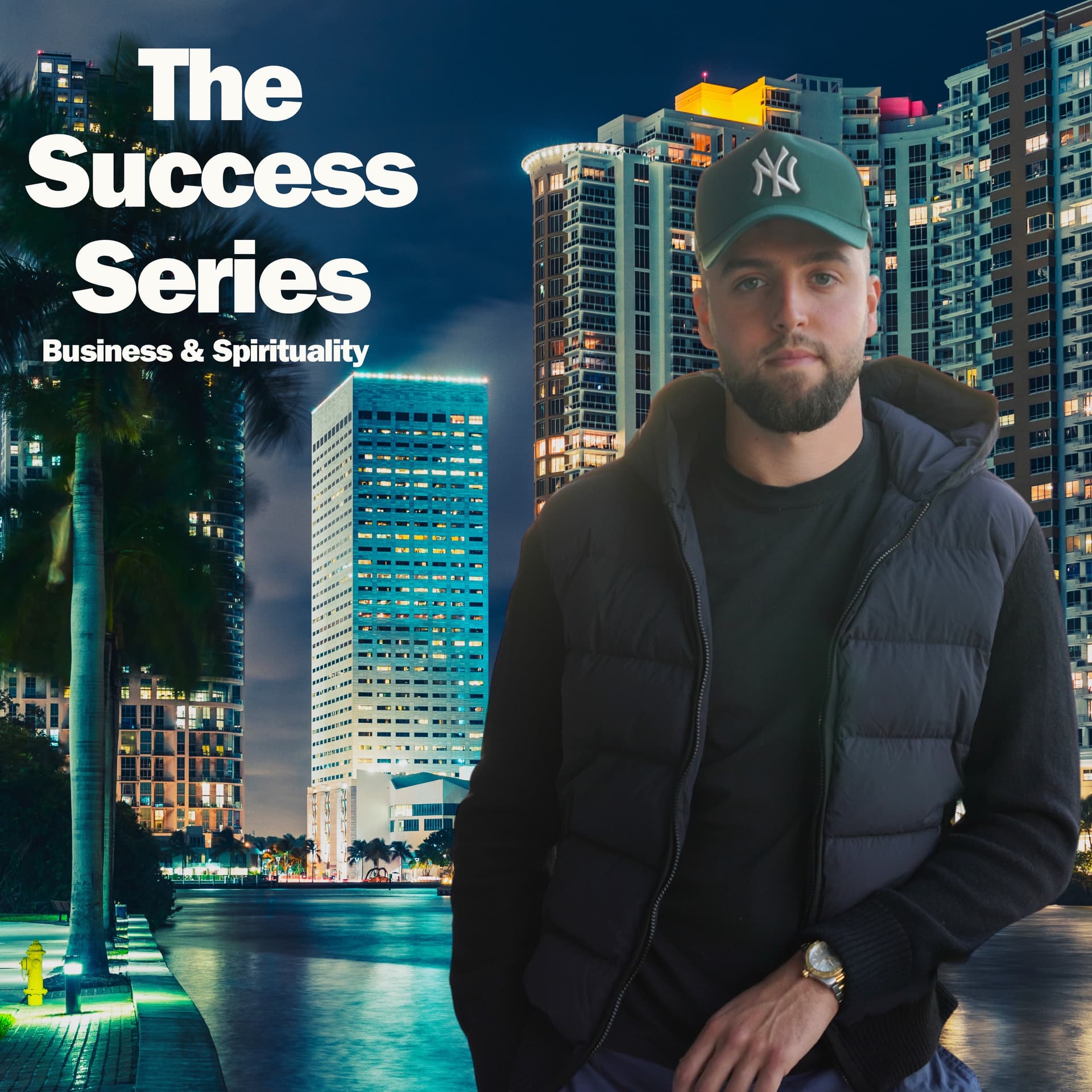
In episode 61 of the success series, we were joined by Adam Greenfield, co-founder of Thesis, returns for his second appearance on The Success Series. Hailing from Venice, Adam brings a unique perspective shaped by his entrepreneurial journey and deep integration of spirituality into his work and life. In this episode, we dive into the intersections of business, success, and personal growth, exploring how discipline, purpose, and balance shape both achievement and fulfillment.
Adam shares wisdom on building meaningful ventures, aligning values with work, and finding clarity in the often chaotic path of entrepreneurship.
This conversation is a blend of practical insights and soulful reflection—perfect for anyone looking to grow not only in business but also in life.
For more amazing content:
David IG: https://www.instagram.com/daviddberg?igsh=MXV4eDhrazc0c2drNQ== Success
Series IG: https://www.instagram.com/the_successseries?igsh=bHFvZG5pazhkdmc0 Success
Series Tik Tok: https://www.tiktok.com/@successseries1?_t=8nuiI3sMJw2&_r=1 Success Series
Website: https://www.thesuccessseries.com