
In short
Podcast Notes: The Thoughtful Entrepreneur - Episode 1920
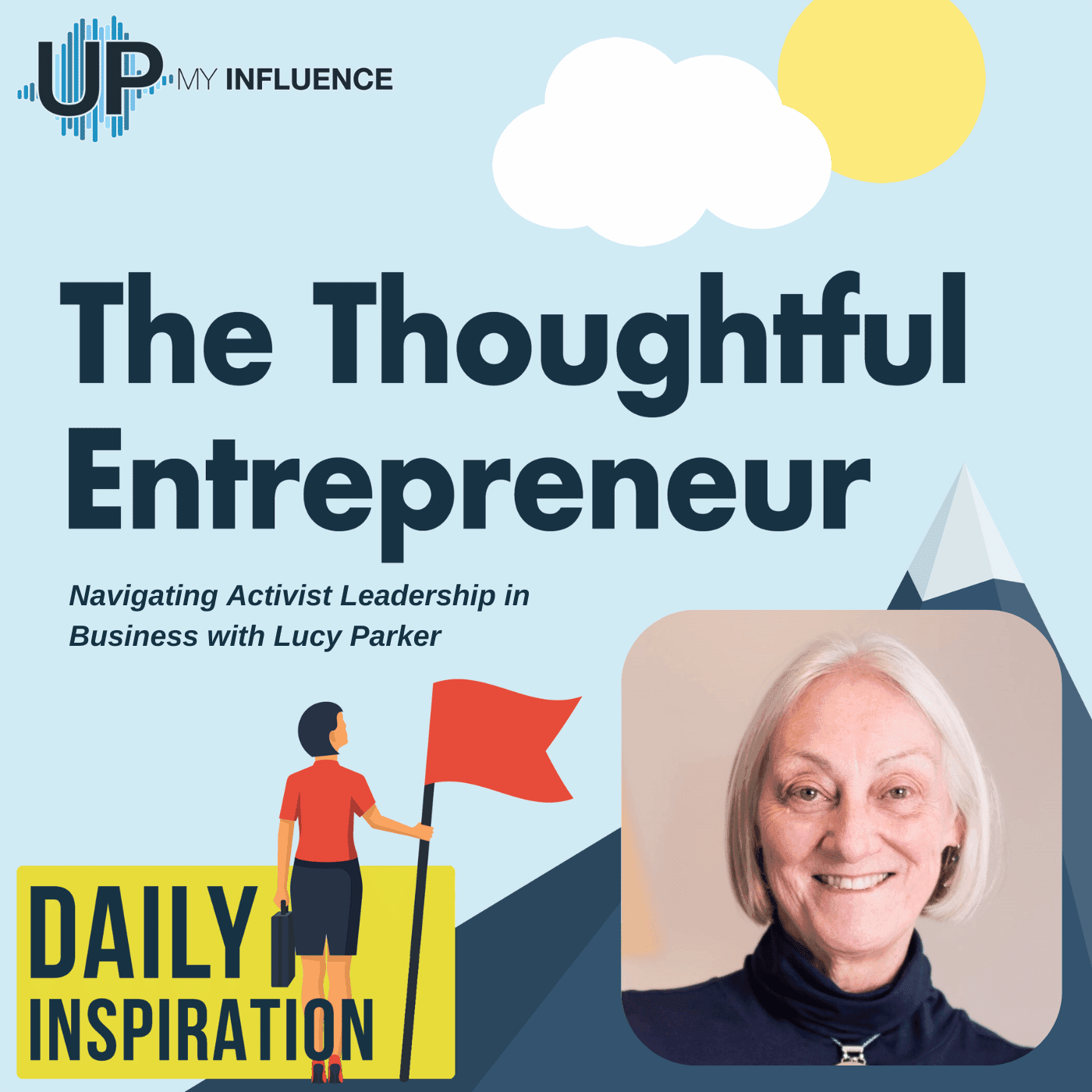
Overview In this episode, host Josh Elledge interviews Lucy Parker, a Corporate Advisor and Senior Partner at Brunswick Group. Lucy is a pioneer in sustainable business practices and co-author of *The Activist Leader: A New Mindset for Doing Business*. The discussion revolves around the intersection of corporate leadership and social activism, emphasizing how modern leaders can responsibly navigate business challenges while positively impacting society.
Key Themes
- Activist Leadership
- Definition: Activist leaders are proactive in addressing societal challenges—viewing issues as opportunities for solutions rather than threats.
- Importance: In today's fast-changing environment, leaders must embrace their role in ensuring that their businesses operate positively within society.
- Social Value and Business Practices
- Incorporation of Social Value: Lucy discusses the need for companies to integrate sustainable practices into their core strategies, enhancing both brand reputation and societal contribution.
- Examples of Successful Integration: Companies that effectively leverage social value see benefits in brand loyalty and financial performance.
- Challenges in Corporate Leadership
- Evolving Expectations: Leaders must adapt to changing societal demands related to climate change, diversity, equity, inclusion (DEI), and employee engagement.
- Risks of Neglecting Social Responsibility: Businesses ignoring these trends risk facing backlash from consumers, employees, and regulators.
- Consumer and Employee Activism
- Changing Consumer Sentiment: Today's consumers want to engage with brands that show genuine concern for social issues beyond profit motives.
- Employee Activism: Companies may experience internal pressures as employees increasingly demand alignment with their values.
- Practical Approaches for Leaders
- Future-Proofing Businesses: Lucy emphasizes the necessity for leaders to anticipate and adapt to environmental and societal changes.
- Skills for Effective Leadership: Business leaders need new skills to navigate this evolving landscape, focusing on sustainable practices and stakeholder engagement.
Key Takeaways
- The Activist Leader Mindset: Leaders must embrace an activist approach to navigate today's challenges, steering their organizations with a focus on both financial and social value.
- Understanding Context: Leaders should remain aware of their operating environments, recognizing societal trends and consumer expectations that influence their business.
- Cautionary Tales: Examples of corporate failures highlight the risks of neglecting social responsibility and failing to adapt to changing operational contexts.
About Lucy Parker
- Background: Distinguished corporate advisor with over two decades of experience across various sectors, such as pharmaceuticals and telecommunications.
- Expertise: Focuses on guiding companies through societal challenges, particularly in Environmental, Social, and Governance (ESG) issues.
- Publications: Co-authored two notable books, including *The Activist Leader* and *Everybody’s Business*.
About Brunswick Group
- Overview: A global advisory firm that helps businesses manage critical issues and stakeholder relationships.
- Approach: Committed to integrity, ensuring transparency and accuracy in communications to build trust.
Conclusion In this episode, Lucy Parker articulately demonstrates the necessity of activist leadership in modern business. By integrating social value into their operations, leaders can not only drive financial success but also contribute positively to society, aligning with evolving consumer and employee expectations.
Further Resources
- Book: *The Activist Leader: A New Mindset for Doing Business* - [Learn More](https://www.theactivistleader.online/)
- Website: Brunswick Group - [Brunswick Group](https://www.brunswickgroup.com/)
---
By following these insights, entrepreneurs can better prepare themselves to lead responsibly in a rapidly changing world.
Written by AI. May contain mistakes. Listen to the episode to check what was said.
Transcript
Automatic transcript. May contain errors.0:05Hey there, thoughtful listener. Are you looking for introductions to partners, investors, influencers, influencers, influencers, and clients? Well, I've had private conversations with over 2 ,000 leaders asking them where their best business comes from. I've got a free video you can watch with no opt-in required where I'll share the exact steps necessary to be 100 % inbound in your industry over the next six to eight months with no spam, no ads, and no sales. What I teach has worked for me for over 15 years and has helped me create eight figures in revenue for my own companies. Just head to upmyinfluence.com and watch my free class on how to create endless high ticket sales appointments.
0:51Also, don't forget, the thoughtful entrepreneur is always looking for great guests. Go to upmyinfluence.com and click on podcast. I'd love to have you.
1:06With us right now, it's Lucy Parker. Lucy, you founded the Brunswick Group's work on social value and sustainable business, and you are the co-author of the book, The Activist Leader, A New Mindset for Doing Business. Lucy, it's great to have you. It's great to be with you. Thank you so much for inviting me. On your website, and I'm just going to let's get right into this. It says, if you want to be a successful leader in today's business world, you need to think like an activist. Why? Because if you look at the world today that business is operating in, it is changing fast. There are huge pressures in the world from, let's name a couple of them, you know, from climate change to the food we eat and the nutritional ingredients we take in.
1:52If you're running a business today, these huge societal questions are coming onto your radar screen. And the reason you need to think like an activist is if you're not careful, they'll put you onto the back foot. So what is an activist? An activist is somebody who looks at the problem and goes, I think this is something I need to be doing something about, not somebody else, me. And then you step towards it and you start finding solutions. And if you're running a business today or you have a leadership role in a business today, you need to be looking at these issues very seriously and stepping into them on your own momentum.
2:25You own the change that needs to happen. Don't have it forced out of you. And so could you kind of define what this is that we're talking about? Like, what does it mean to think like an activist leader? Well, that's a great question, because actually, in many times in business today, the word activist feels antagonistic. It feels like somebody unreasonable coming at you wanting things from you. But really what an activist is doing is looking starkly at a problem and thinking this is going to need solutions that are radically different. And the new leadership in business today is starting to realize that the job into the future, if you're going to deliver financial value and social value hand in hand, it means some radically new ways of working.
3:11And you as a business all alone won't be the one to fix it, but to decide you play your part and then mobilize resources and work across the ecosystem. This is a whole new demand on business. So you need to be the people with the hands on the reins driving that change. Well, and Lucy, someone may be listening to our conversation. They say, I'm just a, you know, I've got a couple of team members. It's just me. Like, I, you know, am I a business leader? Yeah, sure. But do I need to worry about global activist, you know, type positions? I wasn't really on my radar. I just kind of want to quietly do my thing.
3:51What would you say to this individual? on. Well, what I would say is, I think that one of the most remarkable and wonderful and fun things about business through all time, anywhere, anytime, have people gone, I think we could get this going, couldn't we? We could do this, couldn't we? But actually, that's always been a mix of what's the societal need you're fulfilling? And what's the money you're going to make out of it as a business? How does that land in a product? And so I think whatever your product, whatever your sector, whatever your size of business, to understand today that it's almost impossible to build a business today that doesn't have to adapt to the climate realities that are changing this fast.
4:34If you look at the politics around the world today, it's almost unimaginable that you're going to be able to lead a business into the future where you're not going to have to answer some questions that are about the inclusiveness and the nature of your workforce, even if there's only three of you in an office together how do you show up in the world looking like you're part of the world and so this thing of understanding that you're it's the operating context of your business so you stay alert to what it is that businesses ask the world is asking of business today and I think one of the reasons that's important for successful entrepreneurial businesses is that usually they're playing into the ecosystem of bigger businesses.
5:17And so their customers, unless you're actually just a B2C customer, kind of business, you're playing into the ecosystem of bigger businesses. You make a particular kind of yogurt, you're selling it into an ecosystem. You make a piece of clothing, you're selling it into a supply chain of some kind. Or you are actually hoping to grow your own supply chain. Either which way, If you look at clothing today, clothing is talking about water use. Clothing is talking about whether or not you can grow the same crops in the same areas that you used to be able to grow because cotton won't grow in certain flooded fields or dried territory as it used to be able to do.
5:56If you can't see that the operating system around you has changed, you can't begin to come up with solutions. So I think it's really about a future facing alertness to the operating context and future proving your business. When you see it played out in big businesses today, the businesses that are doing this well are actually saying this is about the future proofing of my profits. The argument is going to change about what leadership requires, and I need to understand how it's going to change into the future. Lucy, I'm sure that you know of some examples of maybe where this was not prioritized and there were some consequences of that.
6:38Any cautionary tales come to mind that you could share with us? Wow. Well, yes, we have seen what a great question to have cautionary tales. I think there have been cautionary tales, haven't there? When if you take something like D &I, which is just a sort of acronym, really, for people wanting to be alert to say gender rights or racial rights, sometimes people go, I think I feel very strongly about this. I am going to speak up about it. And they speak up and out into the world about what they think. the world looks back and goes sorry has that got anything to do with your business are you actually doing anything about that or is that just your opinion on this question and the real cautionary tale is individuals and businesses that feel they have to speak up because it's their opinion as opposed to they have to act up because the question coming at them is what does their business need to do or do differently because of this issue so people often think that this is about how you talk it's actually about what you say and what you do so that I think is is is a real cautionary tale there was another cautionary tale interestingly in in southern Italy last year which I thought now that's what I meet every day the whole of the southern electricity system in Italy went out and it was because in the heat waves which is something you will understand where you're based, in the heat waves, the cables melted under the ground.
8:07Yeah, exactly. People go, wow, we didn't see that coming. And so their whole system went down. People are not recognizing the degree to which the actual fundamental operational resilience of businesses is changing so fast. The whole insurance sector is alert with the fact that suddenly the business model of how they used to pay out claims for natural disasters is just broken. Crops are beginning to fail in parts of the world that they didn't fail in last year. And crops that are very simple, you know, mustard seeds, cocoa plants. If you're running a business, what is the natural environment doing to your long-term supply chain?
8:47And unless you're plugged into that, you are in a very risky situation these days. And often when you begin a business, you're just going, I've got this in the door. I'm trying to get it out the other side to customers. But to not see the long-term operating context these days is very, very risky. Yeah. And so much of this, I think, is mindfulness of where consumers' brains are today, what our customers, our audiences, our shareholders, and so forth, and what their expectations are. And that has absolutely changed over the past couple of decades. Do you mind maybe just addressing where consumers' brains are?
9:25And I speak consumers, just people in general, populations. Yes. I have some expectations. We want to know that you care. We want to know that you give a darn in things other than just shareholder value or profit, right? You're just that sort of thing. Completely. And of course, employees' expectations have changed. One of the biggest things you see on the radar screen today is employee activism, where companies are going, you're really saying this into the outside world, and this is the best we can do. I'm ashamed of working for this company. And every company I know that does it well, if you ask the leadership, why are you doing this?
10:00Number one is our employees expect us to these days. So you're so right that the boundaries of the inside and outside of a company are changing and people in general are changing. So these days, what you're looking at is the industries are throwing off externalities. They're throwing off costs that society is having to pick up. They may be health costs, they may be energy costs, whatever it is. And regulators are moving in. Even parts of the world and types of regulators that don't want to regulate are starting to go, we can't afford that much packaging waste in the world. And it's on our watch that we have to change it.
10:38so you set up a business today you need to ask yourself where are we on our waste somebody's going to come after you if you're not alert to that direction and then a few years ago the investment community woke up and they really woke up and what they were saying is the long-term sustainable profitability of your company depends on you understanding the urgency of these trends and the speed with which they're coming at you now i know in parts of the world and particularly in America, that's got so fraught that people have given it a political overlay. But the companies that do it well are going, whatever your politics, I can't be running a company that isn't resilient to changing crop patterns.
11:23I can't be running a company that isn't resilient to packaging regulation. It's going to come. So that's what you're saying. These things used not to be on the radar screen of somebody running a company. But the next generation of business leaders, it does need to be on their radar screen. So that's why it's a whole other set of skills. A lot of people start companies or rise in companies because they've understood the numbers. They've understood how to run it efficiently and get it out the door at the right price. They've understood how to manage the suppliers, but they haven't understood this new area of recognizing the degree to which the big societal questions are now on your radar screen and the regulators and your investors and your employees and your consumers are going where are you and the biggest gap is when the company goes the consumers don't really care and they might not really care until they discovered you really didn't and then they go oh well we thought you had it under control actually you mean you don't have it under control and that's where companies get into a hole because they go well they're not asking us for it no but that was because you they thought you weren't abusing human rights at the far end of the supply chain they thought you weren't overusing water in communities that are water stressed oh you are we don't feel the same way about you anymore yeah and and i've had people i've had senior business leaders turn to me and go why do my children hate me and you go why is that well they think i'm doing something bad to them.
12:55Why is that? Well, because actually I've been running my business without thinking about these things. So individual people running individual businesses actually feel like a different kind of leader. They feel like a leader about what the future's needing when they're taking these issues onto the radar screen, but there are whole other demands and there's whole other questions and skills that you have to master to get good at it. I mean, that's why we wrote the book, because actually people who do it well, it's really, really clear what they're doing, But it isn't what most leaders of businesses, big or small, were brought up with.
13:27So you want to go, this is a new gig if you're a leader in a business today. Get your head around it. Lucy, your book is called The Activist Leader, A New Mindset for Doing Business. And you have endorsements from former CEO of Unilever, former CEO of MasterCard, CEO of Nestle, and many, many, many, many others. Who needs to read this book? And what is the transformation that you would hope for? Oh, well, I think anybody who wants to work in business should be reading this book, A Business Big or Small, because this is about what is leadership today. And one of the most crucial things I think that we're trying to talk about is there are leaders in many, many parts of a business.
14:11There are leaders in supply chain management. There's leaders in procurement. There's leaders in R &D. There's leaders in HR. all over the place there are leaders in business and when people look at the big challenges in the world today most people feel helpless what can i do if you work in a business you're not helpless you've got things you can do levers you can pull processes you can change but that actually means going about it in a somewhat different way looking at the question differently Exactly. So if you want to build a successful business or you want to grow up through a successful business and keep it as a sustained performance into the future, you need to be thinking, what is this new demand and how do I go about it?
14:57And that's why we wrote it, because I don't meet any business leaders today who don't think this is important, but most of them are going, I'm not sure how to do it. And so we were going, can we just spell out some real basics of how to go about this and win? There are successful formulas in doing this, and you need to get a grip of them if you want to run a successful business today. Lucy Parker, you're well known as a top corporate advisor. Again, you founded the Brunswick Group's work on social value and sustainable business. The website for the book is theactivistleader.online, of course, is where you can get the book and certainly learn more about it.
15:38Lucy, where does our listener go from here?
15:44well you'd expect me to say read the book but i think the point of the reading the book is not so much read the book as we wrote it because there are emerging patterns and we spell out in the book there are nine steps there are nine things which if you started to do them this would actually change the frame around your leadership it would make you a leader of financial and social value rather than of financial value at the expense of everything else i think most business leaders want to be that. So you go to a mix of, equip yourself to understand these steps. I'm not the only one writing about this.
16:20There are many others. But what is this look like? What does this look like when it's good? That's what we were writing about. And then you ask yourself in your business, if I look at these questions, do I really think that we're being ambitious enough? Do I really think that we're being radical enough and if I were to go to the first step really focus on the big things you could focus on what would that mean in my business if I were to go to the second step which is what is the world worried about on this and really learn what the concern is out beyond the business how would I do that so I think it's relate that pattern of how people do this well to the place you have actual agency over and ask yourself the question, am I being ambitious enough?
17:08Am I being radical enough? Because I could take the reins of this plot. RJ Bangor, who you cited, who's now worked, said, strange kind of leadership, isn't it? If you don't want to be active. He said, I can't think of any other kind of leader. And one of the reasons I love working with people who lead and run foreign businesses is they are active in spirit. They do want to go, oh, I see the gap between where we could get to and where we are today. Let me work out a plan. So this is not rocket science, but it's a different frame around the problem and working out actual, practical, ambitious things to do to succeed.
17:44Lucy Parker, you founded the Brunswick Group's work on social value and sustainable business. Your book, The Activist Leader, A New Mindset for Doing Business. Lucy Parker, thank you so much for joining us. Thank you very much. Thank you for inviting me.
18:03Thanks for listening to the Thoughtful Entrepreneur Show. If you are a thoughtful business owner or professional who would like to be on this daily program, please visit upmyinfluence.com and click on podcast. We believe that every person has a message that can positively impact the world. We love our community who listens and shares our program every day. Together, we are empowering one another as thoughtful leaders. And as I mentioned at the beginning of this program, if you're looking for introductions to partners, investors, influencers, and clients, I have had private conversations with over 2 ,000 leaders asking them where their best business comes from.
18:45I've got a free video that you can watch right now with no opt-in or email required where I'm going to share the exact steps necessary to be 100 % inbound in your industry over the next six to eight months with no spam, no ads, and no sales. What I teach has worked for me for more than 15 years and has helped me create eight figures in revenue for my own companies. Just head to upmyinfluence.com and watch my free class on how to create endless high-ticket sales appointments. Make sure to hit subscribe so that tomorrow morning, that's right, seven days a week, you are going to be inspired and motivated to succeed.
19:27I promise to bring positivity and inspiration to you for around 15 minutes every single day. Thanks for listening and thank you for being a part of the Thoughtful Entrepreneur Movement.
From the publisher
Key Points from the Episode:
- Social value and sustainable business
- The Activist Leader: A New Mindset for Doing Business (book)
- The role of activism in leadership and business
- Strategies for integrating social value into business practices
- The impact of sustainable business on society and the environment
About Lucy Parker: Lucy Parker is a distinguished corporate advisor and coach renowned for her leadership at the Brunswick Group, where she co-founded the firm’s practice on social value and sustainable business. Her work predominantly focuses on guiding global companies through complex societal challenges, particularly environmental, social, and governance (ESG) issues. With over two decades of experience across diverse sectors such as pharmaceuticals, engineering, retail, and telecoms, Lucy has been pivotal in shaping corporate strategies that address critical societal impacts. She regularly writes on the role of business in society and has co-authored two influential books with Jon Miller, Everybody’s Business, and The Activist Leader. Before her tenure in corporate advisory, Lucy’s career began in journalism as a documentary maker at the BBC, where she produced content on social issues. Transitioning to a business context, she has effectively utilized her storytelling skills to enhance corporate communication with various stakeholders, including investors, employees, and governments. From 2008 to 2010, Lucy chaired the UK Prime Minister’s Taskforce for Talent and Enterprise under Gordon Brown, emphasizing the strategic importance of high-value skills for maintaining a competitive edge in the global economy. About Brunswick Group: Brunswick Group is a global advisory firm specializing in critical business issues, helping companies build and maintain trusted relationships with all their stakeholders. Known for its robust background in financial communications, Brunswick understands the intricate dynamics of how businesses operate. The firm emphasizes the importance of integrity, reflected in its commitment to diligence, openness, and accuracy in all dealings. This approach is essential not just for managing perceptions but for the effective overall functioning of a business. Operating as a unified firm worldwide, Brunswick boasts a diverse team of highly skilled professionals from various backgrounds, ensuring high-caliber and experienced consultancy. No matter the complexity of...