
In short
Podcast Episode Notes: The Twenty Minute VC (20VC) - Episode with Guillaume Moubeche
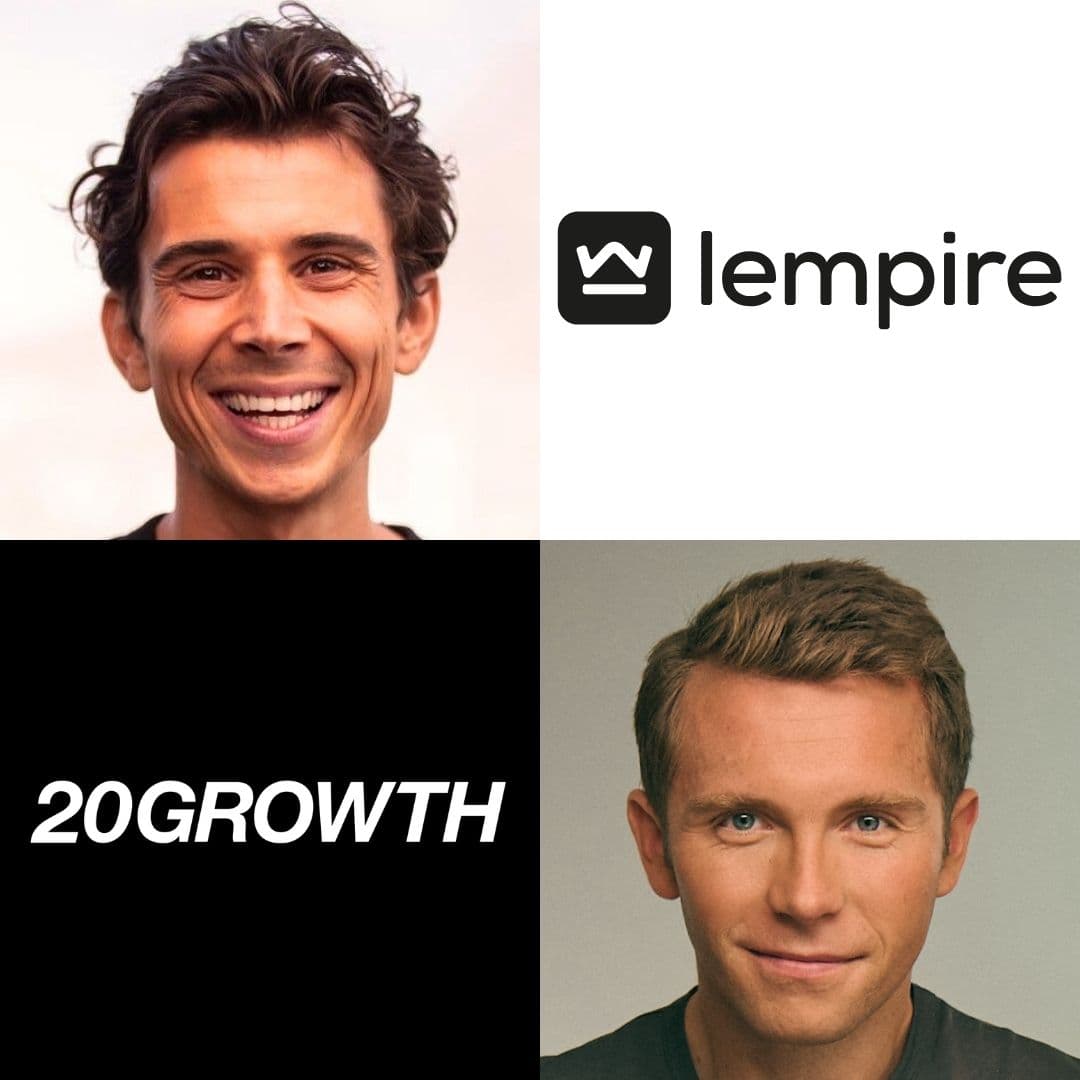
Podcast Title: The Twenty Minute VC (20VC) Episode Title: 20Growth: How to Scale to $30M ARR Bootstrapped through Content and Brand Guest: Guillaume Moubeche, Founder of Lempire
Episode Summary In this episode, host Harry Stebbings interviews Guillaume Moubeche, who shares insights on growing his company, Lempire, to $30 million in annual recurring revenue (ARR) without raising primary funding. The discussion centers around key strategies for sales, content creation, and hiring, coupled with personal reflections on money, discipline, and entrepreneurship.
Key Discussion Points
- Building a Sales Machine
- Common Mistakes by Founders:
- Many founders struggle with defining their ideal customer profile.
- Founders often fear selling and over-rely on external validation for their product.
- Sales equation shared by Guillaume: Sales = Timing × Trust. Both factors can lead to success or failure.
- Lessons from Scaling:
- Transitioning from $0 to $1 million in ARR is pivotal. Founders should focus on understanding customer needs through direct sales efforts.
- Effective sales prospecting and genuine engagement with customers can create powerful insights, leading to better product-market fit.
- Building a Content Machine
- Content Strategy:
- Guillaume leverages content to generate leads and educate customers. Initially, most revenue came from outbound sales, but this shifted towards inbound as content gained traction.
- Content creation is iterative; it requires testing, analyzing what works, and adapting accordingly.
- Mistakes and Learning:
- Founders often overlook the importance of repackaging successful content across different platforms.
- Content creation should be consistent but does not need to be perfect; it's about progress.
- Building a Hiring Machine
- Hiring Philosophy:
- Importance of hiring individuals who have prior experience in scaling businesses.
- Overpaying talent can lead to better performance and easier termination if they do not meet expectations.
- Key Insights on Hiring:
- Trust intuition during the hiring process and ensure team culture aligns with company values.
- Reflect on whether you would enjoy working with candidates long-term.
- Personal Reflections
- Relationship with Money:
- After making $10 million, Guillaume emphasizes that money can offer freedom but does not define happiness. His focus is now on personal growth and supporting his family.
- Discipline and Athleticism:
- Reflects on how endurance sports positively influence his entrepreneurial mindset by building discipline and mental toughness.
- Entrepreneurial Wisdom:
- Emphasizes resilience, the importance of continuous learning, and adapting to failure as crucial elements of entrepreneurial success.
Key Takeaways
- Sales is Critical: Founders must develop their sales skills to understand their market and engage with customers effectively.
- Content is King: Building an effective content strategy can lead to substantial growth through inbound marketing.
- Hiring is an Art: Recruiting high-quality talent and fostering a strong company culture is essential for long-term success.
- Self-Reflection Matters: Personal growth and maintaining a healthy relationship with money are crucial for sustainable entrepreneurship.
Final Thoughts Guillaume’s journey underscores the importance of grit, adaptability, and the strategic use of content and sales to build a successful business. His perspective on health and discipline adds a holistic view to the entrepreneurial journey, suggesting that physical endurance can parallel business success.
Links and Resources
- [20VC Website](http://www.20vc.com)
- [Lempire Website](https://www.lempire.com) - for additional insights on sales and marketing strategies.
Written by AI. May contain mistakes. Listen to the episode to check what was said.
Transcript
Automatic transcript. May contain errors.0:00When I first started, I thought that you had to be unique to succeeds in a market and you had to be like the first mover in order to really succeed. But later on, I realized once a market is crowded, it means the product market fit already exists. If they're not paying, it means that something is wrong. If you want the equation of sales, sales is equal timing, times trust. Timing and trust is either equal to zero or one. This is 20 growth with me Harry Stebings. Now stay on 20 growth. We dive into an incredible growth story. Geon Mubash bootstrapped lampire from founding to now over 30 million dollars in annual recurring revenue and he did this to an incredible content flywheel, unlike any other.
0:44He also built this incredible micro brand in his vertical and today he opens the playbook on content creation, content distribution, brand, sales, the sales equation, and so much more. This is a very tactical and granular show, which are really always my favourites to do, and Gion was incredible. But before we dive into the show today, one of the easiest investment decisions I have made over the last three years is investing in 11X. Their digital workers don't just automate tasks, they transform your business, With 24 -7 operations, multilingual capabilities, and human intelligence, their revolutionizing how work gets done.
1:21From prospecting to closing, 11X is the all -in -one platform that allows you to reduce costs, increase pipeline, and boost conversion rates. And that's why companies like Plio, Handshakes, SourceGroff, and more are customers and lovers of 11X. Check them out today at 11X .ai, you will not regret it. and speaking of incredible products. When I spoke to Canva Co -founder Cliff O 'Bract on the podcast last year, he touched on how visual content is fast becoming, the fuel that's driving, the modern workplace, and your team needs to create an engaging visual pitch deck to sell an idea. A product launch needs an inspiring video to excite investors and customers.
2:00It's a game changer for visual communication at work. Canva turns your team into master visual communicators so they can get their point across with visual impact inside and outside your business, with no design experience needed, with Canva, any team member and any company, whether you're a startup or a global organisation, can design compelling on brand visual content quickly and easily. And that's why 90 % of the Fortune 500, 90 % use Canva. Start designing today at Canva .com, designed for work. And talking about growth, let's dive into how voyantis is transforming customer acquisition. As this is my growth podcast, I'm so excited to share with you the amazing story of the fastest growing company in my portfolio, voyantis .ai, who isn't being asked by their board to improve unit economics.
2:49The voyantis is the first and only company I've seen that has found the way for you to crack this nut by not only leveraging your first party data to predict customer's lifetime value, but truly coupling these predictions with a prescriptive layer, integrating with and influencing each and every step of your customer's growth journey. Voyantis helps you acquire the right customers in Google and in Matter, allocate incentives to the right customers via your Salesforce embrace, and trigger the right upsell option at the right time for each of your customers. Oh, and check this out. The best part, Voyantis are not only increasing ROI by 20 to 40%, but they're also improving the quality of your customers, that solution has already improved Unity Economics for leading companies like Miro, Rappi, Moneyline and many, many more.
3:36So if you want to improve your LTV to Cat Ratio before your next board meeting, which I recommend, start by heading over to voyantist .ai -4 -20VC. That's v -o -y -a -n -t -i -s .ai -2 -0 -v -c to get a free value assessment. You have now arrived at your destination. Gio, listen, I am so excited for this dude. As I was saying beforehand, you are one of the coolest guests to do prep for with some of the diligence material we got. So thank you so much for joining me today. Thanks a lot for having me to be honest. I'm super excited to be on the podcast. Gast, big fan of everything you've done. So I'm sure it's going to be a fun conversation.
4:16Dude, it's going to be really fun. I mean, listen, I don't get guests like you very often. So this is awesome. You've bluntly scaled Lampire to 28 million there. I think it is. How's the scaling journey gone? What have been the highlights? What should people know as an intro? Yeah, I think like we started the Lampire with LEMLIST in 2018. So LEMLIST is a sales engagement platform. Our biggest differentiator was essentially the personalization part. It was a very crowded market when we first got started. as we kept growing and having more product market fits. I felt like it was time for us to start expending the product line.
4:57So right now the Empire is a suite of five tools that helps B2B businesses turn into big names. So we help them with customer acquisition from all sides. I would say that it's been a hell of a ride with a lot of ups and downs, but the good thing is that we've been fully bootstrapped. So we will end up the year close to like 29 million in AR with 10 million in EBDA So it allows us to have a lot of like flexibility in what we want to do and how we want to do it is pretty cool I Mean there's a good numbers as a venture investor. I don't normally see those numbers Dude my first question to you there is as a venture investor.
5:35I also go oh God. G. Om really that's such a crowded market Like that is difficult place to win Yeah, you advise founders who are told buying investors. Oh Oh, that's a really crowded market. You have two way to approach it. It's like basically blue ocean versus like red ocean strategy. When I first started, I thought that, you know, like you had to be unique to succeeds in a market and you had to be like the first mover in order to really succeed. But later on, I realized that once a market is crowded, it means the product market fit already exists. It might not exist with your own product, But if you try and succeed in being better than competition, you can win big.
6:20So I think for me it's just a different kind of bet that you're making from the start. And I remember that when I first started, some people say that they are pro bootstrapper and they were like hardcore bootstrapper from the start. And if I said that, I would be simply lying. When I first started, I wanted to respond. I just got rejected so many times that eventually, you know, I became a bootstrapper. So it wasn't really by decision at first. What do you think you did differently because you couldn't raise money? Then you would have done if you had raised money. First thing, we didn't have money, so I started the list with only $1 ,000, so I couldn't hire anyone.
6:59The things that I would have done with money is obviously like higher people to do other things that as a founder, I felt like we're not worse of my time, which was definitely a mistake. But typically, I see too many funders, because right now I've invested in around 20 startups. With Lampire, I also cashed out 30 million dollars, so made money along the way, etc. But I see that too many funders are afraid to do sales because they believe that sales is a job like anyone can do, etc. But actually, sales is the most important skills you need to learn as a funder, because everything is about sales.
7:38It's about sales when you want to hire a top talent. It's about sales whenever you need to make your first dollars and understand what people are really buying, what specifically they are buying. So the fact that I couldn't raise, I spent the first 18 months where I was doing pretty much like everything. So I would do like a customer support. I would do like all the sales demos. I would also do like the marketing and websites. So I would write content. And I kind of start building, I would say, like a very efficient customer acquisition engine, if I can call it that way. And to sum it up, you know, like, because our products, when you are in a very competitive market, you need to define clearly who your personal is gonna be.
8:23We started, you know, entering the market with the low end of SMBs. So mostly like founders, so people we can basically act quick. And we're looking for the most innovative solution to have an edge. And by entering that market, what I would do is I would eat my own dog food. So use the list to do sales prospecting. Then, you know, when I was in meetings with these founders, I would say, I'm not sure if Cold email actually works. So I would say, how the hell are we having this conversation right now? And then they would say, through Cold emails, and I was like, exactly. So I would close deals in that manner.
9:01I would test like different approaches, different industries in my sales prospecting. and every campaign that would work really well, I would write content about it. The content was actually unique because no one at the time was actually sharing the actual sales prospecting that messages that they would be sending. So that would help our user understand what's working and what's not. And at the same time, I was also because prior to launching LEMLIST, I had a lead generation agency. So I was already like running tons of sales prospecting campaigns. And at that time, I was basically onboarding customers and telling them, as long as I can do your sales prospecting campaigns for you, you will let me use the content that we create together with your own results and sales prospecting messages and they were fine with it.
9:52So I also leverage our own customers' stories to create a community. And from that community, I got insights on how to get a better product, improve the product and then go again, you know, like start again eating my on -dock food and testing like the new features, seeing whether or not they bring more or better results and so on and so forth. I love the content flywheel. What percent of new revenue came from content broad strokes versus outbound? Creating content is basically the same as pushing a super heavy ball. There is a where he's pushing this heavy, heavy crock on top of the mountain. On his end, it always goes back.
10:34But for us, you push. It takes you a lot of effort. And the effort for me was creating content and doing sales prospecting. So I would say the first year, I closed around 100 customers myself, which is equal to around 300 demos. So 300 demos, I had basically 33 % conversion rates. So 100 customers. and for a year, almost zero customers were coming from the content, like, or very little. And after that, the content started picking up, and then, Lemlist became a company that was really driven through inbound. Basically, it became outbound represented with the next years when we reached millions in revenue.
11:16It was maybe 20 % or 30 % outbound and 70 % inbound. I want to go back to the early sales days. when you were selling and you were, as you said, that you're in 300 demos, 100 convert. What do you think of the biggest mistakes that founders make in the zero to one phase when it comes to creating that first sales playbook? I think people are afraid to do sales prospecting. Like they are afraid, you know, to put themselves out there. They're afraid to sell. So I think like the biggest mistake is one being afraid, like that you're not gonna sell. Being afraid that your product is not ready. You know, like it's, there is always this thing.
11:52And for me, it was the same. When you have to sell something that is obviously not as good as competition because they've been working on it for five years. So it's how do you find that unique selling points that's going to make the conversion easier? And I think it requires a lot of trial and errors because you're going to believe that people are buying your product for X, Y, or Z. But in the end, it can be something totally different. So I think like people are by definition afraid of rejection and what they love is to kind of like hide behind processes behind we have this product roadmap behind like we're doing this and this but I think the biggest mistake is not trying to sell and If someone is not paying whether your product is ready or not if they're not paying it means that something is wrong It means that the problem is not paying full enough and that you should like like continue digging, continue talking to them to understand what is the main problem that you are solving.
12:52I'm just doing this, but I'm in Venture where we have a lot of well -funded companies and they say, we have a lot of design partners. And design partners don't pay any money. I haven't been to deal about design partners. I think you shouldn't call someone design partner if they don't spend anything. It's not a design partner. It's your grandmother being nice with you and telling you that you are the most handsome some person in the world, you know? Like it doesn't work out. It's not gonna serve you, you know, in life. Like sometimes you need just a ground check, you know? And I think design partners are obviously like great because it's important to have feedback from key customers.
13:31More than key customers, I would focus on something that I call the magnet persona. So for me, and this is something people also like forget whenever they are like building a product, it's what's your magnet persona. And the magnet person is basically the persona that will attract everyone around. So typically if you take Apple, for example, computers back in the days, they were like really like for GX and then you know, it became like something that every company would add, etc. But Apple, they focused on designers. But why is it like a really awesome persona designers? Because a designer by definition is cool.
14:09And everyone wants to be cool. So if your person is cool and if you're saying like Apple is for designer what it means is like Apple is cool And now everyone's using iPhone everyone's on Mac and you have even studies that shows that you actually feel I think it's like 30 % more creative when you're on a Macbook versus a fucking PC So I'm like this is the power of a magnet person as so whenever you are like for us typically like to bring it back to software It's what is the target audience for us in our space that is linked to and sales, so it was really like, how can we define within the sales teams, the personas that's gonna be the most attractive?
14:49How do you approach that? Because sales isn't always the coolest. SDRs are basically cold email monkeys in a lot of people's eyes. How did you identify who's the cool one that you want to be the persona? So for us, it was actually repositioning what sales is truly about. And for me, if you want the equation of sales, Sales is equal timing, times trust. Timing and trust is either equal to zero or one, because it's either the right moment or it's not. And it's either I trust you or I don't. There is not like I trust you averagely. No, it's if you trust someone averagely, you just don't trust them and you're just too polite to say it.
15:29So the goal was like, okay, on this principle, we believe that sales is all about relationship, because sales is about helping someone of a very specific problem. And we want people to understand that sales is really about helping, that sales can be cool, and that sales rep should be enabled to have the right product, to help them meet someone that needs help. And by focusing really on that persona and bringing the cool factor and the relationship factor into sales, we basically tied our solution with relationship and with revenue. Meaning, if you build relationship, obviously, you're going to make more sales.
16:06If you make more sales, LEMLIST is basically your go -to -tool because the ROI is easy to calculate. How much money did you make in that first year from the first 100 customers broad strokes? We started LEMLIST first line of code January 2018. We started selling the product in April, so it took us like three months to have really like first paying customers. Then in December 2018 we had 100 customers and I would say that year to year, so April to April, we were at 250K, AR, so 250 ,000 dollars. Then after that, we grew very quickly to like a million and then to 10 million, it was three and a half years in total.
16:47Okay, so now with the benefit of hindsight, dude, you can go back and go, oh, these were the fuck ups that I made. When you were back at the first zero to 250K, that April to April, what are you like? Oh, we fucked up on that. One is really something, it was quite harsh, but there are also some funny parts in it. Eventually, I was really looking at how many visitors do we have, how many customers are activated from the sign -ups, and how many are paying. Activation for us, it's basically that one metric that you try to find in your software that's going to tell you whether or not people see the value of what you've built.
17:28So for us activation rate was how many people who signed up actually launched a sales prospecting campaign. And that number was like really crap at first. It was like something like 10%. So I tried to interview people, but it was super hard because once people are unhappy with your product in self -service, obviously they don't want to talk to you. So I was like, okay, trying to search. And eventually I was like, we need to redesign entirely the product. So we decided to redesign from scratch the entire flow to create to creating like campaign. I remember pushing the new project like in production like it was Friday night and I woke up Saturday and on the community we had there were like so many people like swearing at us like the support.
18:14It was insane the amount of messages and people hated it. They hated the new interface. A lot of stuff were missing, etc. So it was crazy. We had the highest churn. Yeah, I think the churn that month was close to like 50%. So that was like huge. We fixed, you know, like a lot of the bugs and a lot of the things we try to improve. But when I looked one month after that, because I still believe that the time that it was the right solution, I still believe that the one you know who churned didn't use the product as it was meant to be. And they were using it for different use cases. So at that time, you know, it's quite harsh because a lot of people, you know, like, They were talking to me on the chat and then they say, I want to speak to a manager.
18:57And I was like, I'm not sure. But they believe the company was much bigger than we were. And it was just crazy how people would react. But a month and a half later, when I look back at the activation with the new product and the new design and the new UX, sorry, we were actually from 10%. We went to close to like 45 % and increased that month's basically, like the the months where we had 50 % turn, I think we were basically like no growth at all because the acquisition kind of like brought it back to like zero and the months afterwards we were at a growth rate of like 40 % or something like that.
19:35What did you change to take activation from 10 to 40 %? Initially the weight was built. You had to create like different templates. You had to create a list. You had to create like a lot of different things in different areas. And once Once you had created everything, then you had to combine everything into a campaign. But if you wanted to create a campaign and had not creating anything before, you couldn't. And that's why people were pissed off because they did not understand that you had to be like a... It was basically kind of like an engineer product, you know, like first you build all the building blocks and you are very well structured and this is...
20:10And then later on you combine it, you make tests and it's much easier for you to do it. But in reality, people, they want, you know, like you should take them by the hand and and say, this is step one, then this is step two, this is logical and step three and so on and so forth. So that's what we did. We entirely rebuilt the campaign creation, making it much easier for people to go from A to Z and it changed pretty much everything at that time. How do you advise founders when they have 10 % activation rates on their products or it's clear use of dissatisfaction? And they're just not sure whether they should keep going.
20:43What's your advice? Because we have two opposing schools, which is like, great entrepreneur is a persistent and just keep going. But then there's also a time when it's just not working and you should stop. How do you advise founders? Activation rate and churn, for me it's like two topics that you need to approach by considering two different routes I would say. The first route is is it a marketing and acquisition problem because typically if I'm selling like for sales and my product is meant for sales but the only people I'm attracting are marketers and you know like they're not going to use it in the same way, then maybe it makes sense that your activation rates is super low or that your turn is super high.
21:24So that's like the first thing is, am I attracting the right customers? I think this is a question you should truly ask yourself. And then if you are, and if these are the customers you want to attract, then the question you should ask yourself is why is the activation rates solo? Is it because the problem is not pressing enough? Is it because of our software, UX? And for that, I think you should really go through it with the right tools. So you can use like, I don't know, like a hot jar or a mixed panel or whatever, just to track all the events and understand what people are doing and how they're doing it.
21:58And I think this is the most important because especially if you're like an engineering background founder, you're going to say, oh, okay, I'm using all these tools and finding my answers myself. But this is not the best way, the best way for me is like, call people. and if they don't answer call again and again and again until you get to a point and it's fine. You know like it's your right like someone signed up to your project. They didn't like it. It's your right to understand why you know like you're an entrepreneur. You're like you have your mission. You should be like driven. You know like it's super important and for me I think people just are just afraid to talk and sometimes when they're afraid to talk you know like they just don't get to the bottom of it and they make assumptions that would have been proven wrong just if they had pick up the phone and talk for five minutes.
22:41What's your biggest lessons on pricing in competitive markets? You've mentioned before about bluntly being in a very competitive market. How do you think about biggest lessons in reflections on pricing? Pricing is really hard. What I can say is overall, as your product, and this is like maybe a good rule for every founder, as your product evolves, and as you're bringing more value, your price should increase, and this is a rule that you should have. And I think like our growth has been driven also by price increase at some point and it's quite helpful. So don't hide behind like, oh, until the next feature or whatever, like increase your price every year at least, you know?
23:17And then it's also important to see where your market is heading, you know? Like wearing a face with a lot of uncertainty. I think economically also people are a bit like more strict on what do they want to spend. I think a lot of people are suffering in this market not so much because their price is too high. I just believe it's that people are realizing that if they're not using a tool, they shouldn't pay for it And if you look at like the amount of enterprise accounts We've been sold onto 1 ,500 license or user or seed so however you want to call it and Actually only like 15 people are using it.
23:56Yes, it's normal that the CFO comes in and say Maybe we shouldn't pay you know that price You know like so so for pricing I would do like to aspect one It's like increased price regularly if you're still delivering like a lot of value and the second thing is Look at your market because sometimes like a pricing is is changing and evolving in a market and you need also to Adapt to what's happening? Can I ask you when did you decide to do a second product? You have lamb list It's going well at what revenue is lamb list when you do a second product? The second product is a product we actually like sold and it was I think a year and a half after lamb list So what revenue we got that like 500k?
24:36I think we're more or less closer to a million. Okay, closer to a million. Why do a second product? This is when you're just getting a community to be built. You're getting a brand. Why lose focus with a second product? Yeah, that's a very good question. Focus is my enemy. I'm more like Mr. Chaos, but it took me years of psychotherapy to realize it. I spoke to your team before this show. I'm not going to name who said, one of them said you were unrealistic in your expectations. That was a challenge. Do you think that is fair? And to what extent is that good because it pushes teams versus bad because it creates challenging environments?
25:20I don't think it as something really bad to be honest because if you had say that in 2018, in a market where you have sales loft outreach were around for three, four years and then hundreds of other competitors who have raised like tens of millions that a French company out of Paris would have like thousands of customers in the US be international grow to like 28 million in AR and 10 million in EBDA in like six and a half years. Yes, this is totally unrealistic. It's against the odds. So I think sometimes you truly need to dream big and be unrealistic if you want to achieve something that very few have done in the past.
26:04When has being unrealistic? I think I got cocky eventually, or too confident. What hit me hard was growth is not exponential. When you have like an exponential growth, it's actually not mathematically, it's never truly an exponential. It's always a skirve, and the companies that maintain, And you know, and that made -kit looks like an exponential are the one that were smart enough to plan for the next ex -accurve. And we weren't. And we weren't because eventually I got too cocky and I was so confident that everything we would do, that our top -up funnel and that our market was so big, that no matter the core problem we had from the wrong targeting and the I -turn of certain segments, no matter what we would do, we would always find more and more customer.
26:51Like the bucket can be leaking, but if your top of funnel is always bigger, there is no issue. And this is when I got cookie, this is when it hurt us, and this is where we faced like a plateau. What happened specifically? What happens is your company from a day to another, start plateauing. You don't see this two -digit month -sover month growth rates. You don't understand why. You're like thinking that you're doing something wrong. You're trying to find, you know, like what's not working, and you don't understand. You don't understand no matter what you do because when you are very driven by inbound, by content, by all of these things, you don't track.
Read the full transcript
27:30You don't track what brings what's because you know like there is a quote by Gary Vs that I like that says what's the ROI of your mom and what it means you know it's like obviously your mom she gave everything for you you know like she was maybe she gave you like the extra confidence my mom is Italian so obviously like she loves me a lot etc. So So it's like she gave me extra confidence, she gave me love, she gave me a lot of things. And how exactly do you measure that ROI in your life? It's almost impossible. For me, marketing is the same. For VC back companies, when you go and you are at a board meeting, obviously you have to show that your marketing efforts are bringing revenue.
28:09So what do most VC back companies do? They spend money and marketing money on ads, SEO where you can track the conversion of articles even though that's inaccurate. you try to build a model that gives you the attribution, that is also inaccurate, but everyone is fine with it because it looks good on slides. All of that, what we don't realize is the amount of money it requires to build that tracking team, to build that data team, to have all this conversation with people on what should we do, should we continue, should we do XYZ, and my approach to business is much more simple. For me, it's like it has always been about, are we proud of the content that we deliver?
28:51Is this bringing enough value for our users to be helpful in the problem that they are trying to solve? And if the answer is yes, then we continue to do it. So when you have this mindset, obviously, when something is not working anymore, it's very, very hard. Because you're kind of like shooting in the dark. You don't know what's working, what's not working. And for us, that was very tricky. And what we had to do at the time was start understanding the core metrics for us and that's why you know I mentioned during the a bit earlier it was understanding what is the persona that is not turning meaning what is the persona we're bringing the most value to and that persona where actually like sales team over like four people so when a sales team has more than four people we realize that the net retention was over a hundred percent monthly whereas when it's like a founder or a marketer or or like the first employee of a startup, the churn can be up to like 15%.
29:48Monthly, because obviously these guys buy the finish -outs, sometimes their business doesn't work, sometimes they can find customers, sometimes XYZ reason happen. I think the biggest mistake the founders make stays is they approach a launch, they get more and more nervous that no one will adopt their product and they expand the target market from sales leaders to sales and marketing, to sales and marketing and early stage founders. And then you mean less and less to more and more people and it doesn't resonate with anyone. Yeah, I 100 % agree. I think like the best companies for me are the ones you know who have like a very specific use case.
30:23And that's where we're heading right now. It's like we know that from let's say 40 from from sorry, 4 sales rep to 100 sales rep, we know that we're the best tools on the market and we're building it right now. You know what I said? It's like we're building everything to build that for the current economy. So when you had that plateau moment, that hard moment, how much in revenue are then? Where's the business at that stage? At the time, I think we run like 13 or 14 million in annual recurring revenue. At this point, are we having VCs just massively imbound us trying to give us money? Yeah, so I always receive because the thing is like I've been building in public since day one, so I share like revenue, metrics, etc.
31:06And obviously that attracts some investors. But when you're high in EBDL, I had to learn about what secondary meant and what cash out meant. Because for me, at the time, the only thing I saw was like fundraising, meaning you take money and you put it in your company's bank account and then you spend it to hire more people, etc. But I felt like it was not the solution for us. I don't think that hiring more is always the answer to growing faster. and actually I think sometimes it's the opposite. I've seen too many times, you know, like you're higher too quickly, you're higher the wrong people, you can't keep like a high level, you know, like a high talent density and eventually like, but in some cases it's really helpful, but in our case, it wasn't the right timing, so I had another investor approaching us and talking about cash out and secondary, and in that end I was like, Okay, tell me more.
32:03And it's basically when the money goes directly to the founder. And I think this is really awesome. We're going to get into that. I'm just intrigued. Funner is, I'm a venture investor, so I'd come back with a couple of things. It is my business. So it's back me to sell. Would you not have benefited from being able to invest more in product, more in design, more in building out a content team? If the business had had more cash, you could have built much more sophisticated product, growth and content teams. The only thing I know, once we started making a lot of profits, before we acquired another business, so we had like some cash in the bank that we used for M &A, but we used it like for a different purpose.
32:42We started spending more on hiring, and I remember in six months at the time, we double the team almost. And we were like maybe like from 30 to 60 people. I realized how bad hiring could really kill your company. And for me, you know, I have this feeling where when you feel the pressure to hire more, to spend faster, etc. If you're not skilled enough, it's going to be like really, really bad for your company and it can kill it. And in full transparency, I wasn't good enough at hiring for me to be able to handle like a fundraising. What have been your biggest lessons on hiring? And like bluntly, it's the hardest thing I've found to all do.
33:23But given that assessment, what are your biggest lessons? One, you should hire people who have done it already. Literally, because bootstrap mindset, it gives the underdog vibe. So from the start, I kept this underdog mindset. I'm going to only find underdogs, the talent that no one knew they existed, and I'm going to show them that we're the Avengers, and we're going to be the fucking rock stars, no resume, no schools, a lot of to read a lot of talent and that works to a certain extent. But when you really wanna scale your company and scale it like faster, having people who have done it in other companies, who have seen what rapid scale is, really, really helpful.
34:04Second thing, pay people and create a package where people are extremely well paid. For their role, et cetera. And the reason you should do it is because hiring is extremely emotional. You get attached to people, you get, you know, like you have, it's something that everyone, you know, wants like scorecard and try to make it as an engineer, like, okay, how many points do they have for this skill, etc. This is bullshit. Hiring, you know, it's like, it's the same, you know, at school we teach you that there are only like five cents, you know, it's like a touch, such sites, tastes, hearing and taste or whatever.
34:41But actually intuition is the sense that everyone should deal. Your intuition, your gut feeling, this is like the strongest moment, the strongest things, and in hiring you should always trust it. So for me, whenever you have someone with a really good package that you are paying extremely well, the reason it's helpful is because if they don't deliver, it's super easy for you to let them go fast and find someone who could. and really like paying someone maybe like 20 % more than what they are offered usually help you find the 10x profile. Why does paying them more help you get rid of them fast if they're not good?
35:18Maybe that's my relationship with money but it's like everyone you know like you're in a company so it's basically a capitalistic model where every person needs to bring something to the table And if they don't deliver and if they can't give a certain ROI on their salary, then it's easy, you know, like to just say it's it's not an investment anymore It's a cost and it's a cost that can be you know, like just just talk should be different, you know It should be an investment and not a cost. Yeah, what are the biggest hiring mistakes that you made the e -lip back on now? One thing that I think would have helped me is like After an interview asking myself Do I see myself working for 10 years with that person?
35:58Like, do I like their energy or these kind of things? I think it's super important. And sometimes it's not even that people don't have the right skills. It's not even that they're not going to be great at their job. If you don't get on well with someone, your job is not going to be as fun and to be honest, it's so tedious, you shouldn't make this higher. GD 101's. I used to. No, I'm not so much in the operational anymore. this kind of actually you come at a moment where this is a transition phase for me but yeah. Because you're moving to a chairman role? You're good, Harry. Yeah, yeah, yeah. I'm a venture investor, do we see that?
36:37A lot. Can I ask you, I would say that if you took venture funding, you would have had someone if you took a good VC who would have been able to predict ahead of time the plateau and made your exponential growths of stay exponential. Do you think that's true? I think it's difficult to predict because your mistakes are like a light that only light your own path. I don't know if this is the quote, but you know what I mean? It's like your learnings are your own. So sometimes you just gotta go through you know the mistakes and having someone else give you insight on something might not really like you have to choose, you have to pick your battles.
37:14So for us what we believe was like it's not a personal issue, it's a product issue and we have a strong roadmap to fix it. So let's go, let's iterate and then we realize that it was not the that it wasn't the case, you know. With expectation, you sold 30 million dollars worth. Yeah, so the company was worth 150 million. My two co -founder left and we each took like 10 million. So now I own about 70 % of the business. I cashed out $10 million personally and I'm the solo founder left since around four years now. How did your mindset change getting 10 million in cash? I come from a family of no money.
37:53Getting 10 million in cash is a lot of money. Yeah, it's crazy to be honest. I was feeling so grateful about it because it's for me money, you know, it's like it has always been a stress. Lacking off money and this kind of thing, It's the fear of lacking of money is something I realize that will never go away just because it's so deep you know in the into like how I rise raised like looking at every every item price in the supermarket not going on holiday with my parents like this kind of things But what I realize is like money can buy like freedom and freedom is what I like the most So I'm not someone you know who spends like a crazy amount of money's on lamb or guinea etc I love the simple things.
38:38I love to go hiking with a tent on a holiday. This is my kind of vibe. But having the freedom to do whatever I want, go whenever, wherever I want, etc. This is a price less. I think the best thing, you know, it's like one. When you get that much money, you realize that if you're not totally dumb, that money can help you live your entire life without ever working again. Which kind of gave me more ambitious. You know, like it's not that I've done this. I feel like I can do something much bigger. I can take like bigger risk and I can be more ambitious for the company. And the second best thing is like, how can you help your parents retire?
39:18For me, that was like the best feeling in the world. You know, like everyone asked me, did you buy yourself crazy? Something crazy, et cetera? And I was like, no, but I help my parents retire and I give them money and this feels like just awesome. No, that's a very special thing. I do have to ask, on the kind of, it makes you more ambitious. Why move into a chairman role then? Why not go fucking big, wolf of Wall Street, and lead from the front with real hunger and tenacity? It's a very good question. Inflation. Europe is always characterized. We make a little bit of money and then we're like, oh, fuck it, peace out.
39:59Home peace out. This is not the plan. Because, okay, I think people see Chairman as, and in most cases, this is okay. It's like someone who just like lay back and don't do shit and just like come to the board meeting and it's just like giving his vision on strategy and the calls he had. On my end, it's just that I need to focus on the things that I feel I'm the best at. And for me, this is like the top up funnel. So it's, you know, like the conferences, it's like the creating contents, whether it's webinars, whether it's attracting a different type of audience. And I think the CEO is more like the person who's gonna operate on the day today and needs to be in the trenches.
40:41And because I hired someone who's extremely talented and skilled at that role for 18 months now, I feel like this is the time for him to have that role because it's definitely better than me. So it's really you're not about like me just like stepping down and just being away from the business etc But it's I see you're smiling you don't believe me I know I believe you I'm just like if you're an America you'd step up You'd be like I can be the CEO that they want me to be I can be the CEO for the next generation And I will surround myself with great mentors But found the lead companies is where enterprise value is created dude You're like the most hungry ambitious like iron man training dude Like you wouldn't quit a marathon at 24 miles Yeah, it's it's a good question.
41:32I think in any case like I want to give it a try and see you know like how it goes Dude I totally get it my question to you then is like I totally see your superpowers of content of inspiration of motivation We mentioned the media flywheel earlier when you think about content creation obviously it's my business too How do you think about the creation process for you? Do you have a framework around idea, thought process, creation, distribution? How does that work for you? If you want inspiration, read. If you want clarity, rights. So my goal is to always have an easy way to capture ideas, whether it's recording, taking notes, and all these kinds of things.
42:13And then after that, I just put all my ideas in one place and then I rank them. And I think an idea is kind of like a plant and a little seed. Before it becomes like a tree or a plant, it needs time. You know, it needs like the right soil, it needs like the right condition, the right environment. So for me, like all ideas are great, are all my seeds. But sometimes, you know, like I will decide to put more focus and attention on one. And sometimes I need time to develop them. So the way I do it is I would write just ideas all over the place. and sometimes I just spend time on my ideas and I start writing about them and get the inspiration.
42:52And I do something that's typically pretty weird for people where people like focus, but as I say, I'm Mr. Chaos. Let's say I want to write like LinkedIn posts. Whenever I'm writing like LinkedIn posts, I can write maybe like, I don't know, 15 or 20 posts in an hour. And the way I'm gonna do it is I'm not gonna write one post at a time. I'm going to write like three or four posts at the same time. So I can write one sentence for one that gives me an idea for the third one and the first one at the same time. And then which is quite weird. But I think this is how my brain works in general. It's like I like to do like multiple things at the same time.
43:31And I always switch and go back to one and everything builds up in parallel. But I like it especially when it comes to creating and writing and whether it's video or writing content. because while I wrote something, I feel like it gives me time to assess the idea a little bit later. And I'm not just like smashing my head against the wall on one single thing. Do you do content repurposing when you think about creating videos for TikTok, for YouTube shorts, you name it? Do you see what works on other platforms before creating content that's repurposed? Do you do three different formats? How do you think about media packaging for different platforms?
44:07Yeah, I think it's super important to repurpose your content. When you're a content creator, you usually create content because you like to teach and you like to learn. You started your podcast because you love to learn new things and no. No, I wanted a job. I really did. I wanted a job from an investor and I was like, shit, if I meet them through a podcast, I'll keep me going. But yeah, I want to learn too, sure. And then it became kind of like this, of course, like you have the fun aspect of meeting new people but I think you're always learning things and it's exciting. And for me, you know, like this is the thing.
44:39It's like content creators because they are learning always new things. They're usually afraid to reuse content that worked well. But if it works well, it's for a reason. So when something works well, I usually like even my LinkedIn post. Sometimes I take the same post and I just rewrite it and again and again and again and again. And I'm going to post it multiple times and every time it's going to be a hit. And then you know, you can do it like on a real or a TikTok and see whether or not it's working well, and step by step like this you can repurpose what's working, reusing it and learning more and more about your audience.
45:14Do you find if it works on one platform, it works on all platforms? No, I wish I wish it's... It's quite a lot of things on LinkedIn, but then when I take it to even Twitter, not really. No, on Twitter if your name is not Elon Musk, it's hard to get rich these days. Your strategy around content is still relatively novel for founders. How do you respond to founders? You say, I love what you do, but I'm just, I'm not that interpersonal brand. That's just not me. How do you respond to them? More room for us. No, in full transparency, it's like, I think like putting yourself out there and creating content will help your business 100%.
45:55It will help your business because it will help you build trust. With more trust, it means slower sales, like faster cell cycle, more leads and more revenue down the line. As a founder, it's also a great way you know to meet a lot of interesting people because the truth is there are millions of businesses who have great stories to tell but you've never heard about them because they don't document anything, they don't write anything and when these businesses reach out, you're like, who are you? And I think content is the easiest way to show, hey, this is what I'm doing. If you think that I'm interesting, if you think that I'm someone worth talking after you watch my videos or my content, then let's chat.
46:39And this is the easiest way to have a window at someone's brain. And right now, when I do a self -respecting, or when I just outbond someone for an intro, for a message, for just a networking call, the reply rate is huge, which means that every single year I'm meeting like smarter, more interesting people and so on and so forth, which helps me grow, which helps me become like a better version of myself. And this is unique. So as a founder, creating content helps you become a better founder. I remember we just raised $400 million for a new fund. I remember. Yeah, I saw that. Congrats. So, so. But we get on calls with Endowment funds.
47:19And suddenly, like the CIO, the boss of the Endowment would be there. And I'd be like, I just wanted to meet you. And you're like, wow, really? That's so sweet. That is the power of content where normally you never get that. I worry that in my business, and a lot of founders worry this, you cheapen the brand by being everywhere, by being too volume driven, just a lot of TikToks, a lot of you. How do you feel about brands being cheapened by volume? I think as long as you are happy with the content you're making, it's fine. Like I don't think that all my content is great, but my perception is that I'm getting better.
47:59I'm always getting better I don't aim for perfection. I always aim for progress and the only way I'm gonna be like great at something is By sucking at it at first. I've came across all the haters in the world and for me it's like extremely like You know, like it's super hard like from a confidence perspective when you have people like shooting on you like it's super hard But I think it also builds your character and it builds that down the line You should do things for yourself and content. I think it's the best investment you can make because it's an investment on yourself or Mozi who says like SME 500 instead of S &P side 500, you know, and it's in through I totally agree with you I remember crying once to a billionaire found a friend of mine And he's like I never ever want you to call me up crying you chose this life If you chose to put yourself out there, you get the benefits of it.
48:50You've got to take the downsides of it. Yeah, exactly. I was like, that's how good it is. I'll call Mum and Dad next time. Exactly. Better for a support in general. I love you, you're the most good looking boy ever. Well done. We spoke about you, you posting building a brand. You have team members with thousands and thousands of followers. Most people would be a little bit worried that they are building credibility to leverage into other jobs to start their own companies. How do you feel about this? I think this is like a two -sided problem. One, people who worry about it usually have trust issue.
49:26It's the same thing that if they date someone that is like a higher number than they are, that they're gonna say, oh, it's just gonna dump me or whatever, this is a trust issue. It's not something you can deal with unless you go to a therapist and you start working on it. But the reason why people live a company, you know, it's not because they just get like a better salary elsewhere, you know, like it's a it's multitude of different factors and your role as a founder is to make sure that the person in your team are maximizing their potential, learning new things and also are in the right place.
50:00And sometimes the right place means that they need to be elsewhere and in another company and you should always cheer for them when they decide to move on. And then the second thing is like maybe they're leveraging like your company to build a brand and then like do something else. Yes, but why is that a problem? Because where they are building like their brands, they bring also a lot of positive leads to the business. Right now, just to give you an example, we reach about 10 million people every quarter on LinkedIn without spending a single dollar on ads just through our networks. And that's like millions of dollars in revenue every year.
50:36Technically, I'm happy that I have trained everyone in the team to build a personal brand. I'm happy that I've created all these trainings and coaching program just to explain how to people how to do it and some of them have left and when people go to their LinkedIn profile, the thing they will see is that they were at the Empire eventually, you know, and this is still like good for the brand, good for what we do. And what do you know now about content creation and distribution that you wish you'd known when you started? I think like What I wish I knew when I got started is that it takes time.
51:10Because usually people want instant virality, and I think right now, everyone who spent a bit of time on TikTok had luck eventually and got one real that got millions, et cetera. But if you want to build something in the long term, you need consistency and you need time. I got discouraged several times on Instagram reals where I stopped eventually, et cetera, in the early days, and I shouldn't. I came back at it with another strategy that was based on outputs and not outcome. So this is an approach that I like. I call it the 100 -day rule, but essentially it's like the output is what you control, because you can control that you're going to post one video per day, or that you're going to post one link in post per day.
51:54But you can't control the outcome, meaning how many followers you're going to get, how many views you're going to get. So by just focusing on the output, I was like, okay, now I'm gonna go for a hundred days and no matter what happens I don't even look at the fuller account and you just do it whenever you do this for a hundred days Once you realize that you are getting better each day which basically helps you like build also a bit more confidence Second you start liking it because at first you suck and now you suck a bit less So you you start enjoying it a bit more and then in the long run You you will see some results It doesn't mean that you're going to become a superstar straightaway, but you will start seeing some results and you start having some conversation.
52:33Something I've done also with my head of sales is I've been writing like all his LinkedIn posts for like like I basically wrote like around the two months worth of content and it generated like really good meetings, really good deals step by step, you know, so it's like, do you know it took us a hundred shows before we got a thousand plays. It was over two years before that. I mean, that is bad. Uniquity. But you're continued. It's a game of who survives the longest. There's only two percent of podcasts make it past episode 50. That's insane. Insane stats. Okay. I want to talk a little bit about you because I said at the beginning, you're like, well, I mean, relatively like incredibly cool, but also fucking weird in some respects, which I love.
53:19I know it's great. It's so much more interesting for me. You trained for an Ironman, then got hit by a car. Can you just tell me what happened? I really wanted to do an Ironman in 2024. So I started training in January. Lots of ups and downs of the Ironman training, but I was really aiming for an actual, like a really good time during the Ironman. And one week before the race, I was doing my last bike training and eventually like a car came just smashed my back. And yeah, my bike was like cut in half. The car was also like really broken because it felt like a deer went on the side of the car, but the deer was me.
54:03I broke my ribs. I had like ligaments in my shoulder that were torn away. And obviously I couldn't race. But I finished an Ironman recently in California. So it took me like a bit more than four months to recover. but having a race in mind was really like the driver for me to recover a lot faster. I believe the entrepreneurs who are fit and healthy make better entrepreneurs because they are disciplined and they are able to be consistent and they can control their mind, even when they don't want to do something. Do you agree with me? I want to say yes because like I'm an entrepreneur with a lot of sports.
54:39I think like endurance training and entrepreneurship has a lot of things in common Because as you said, it's a mind game, like endurance. It's from the Latin, I think, Indurare, which is like a harden. And I think this is what happens. It's like you get harder and harder as you train. Because you have all these battles with your mind, telling you that you can't do more, that you should stop. That it's not worse continuing. And these discussions I have with my brain, when I train for many hours, are exactly the ones that I had back in the days when I had failed like two businesses before LEMLIST.
55:20I had like no money left. My girlfriend at the time was paying the rent. We were living in like 28 meters square. It was really like a shitty environment and everyone was telling me like, why don't you take a real job? Like, why don't you? And this conversation, you know, I had them with myself also like, why, I mean, I should stop. I should do something else. I should, and then you know, it's about like, how do you find the strengths and the discipline to just work on some things step by step, look for your progress, focus on the things you can control. It's like a stoicism is similar to this.
55:52Are you still with that girlfriend? No. She goes out. No, no. What's your advice on entrepreneurs? You want to be fed and healthy, but say, hey, I don't have time to train. What do you say to them? I would do a simple exercise. Let's assume they all have iPhone. You open your phone settings and you go in screen time and then you tell me whether or not you have time You know like it's that Everyone's if you look at your phone you're spending like two three four sometimes five hours on your phone every day and then people tell you that they don't have time It's about like the discipline. It's about like Self -love because you know like there is a definition of discipline that says it's the purest form of self -love And I love it because it's basically like sacrificing a current state for the future self.
56:40And life, you know, is all about that. It's all about what decision are you making right now that can help you build a better lifestyle, having live longer, and all of these things. You know, they take energy and it's a battle. We live in a narrow where it's so easy to get distracted, but it's also so easy to build an online business. And for me, the ones who train their muscles for discipline are the ones we're gonna really like Crush the game. We're definitely like I don't like too much talking about like a week and strong, etc But I definitely feel that there are so many weak minds out there like so many people who would just like I think it's so Easy to actually win today because most people are so weak and I know But it's like everyone wants to go on watching Netflix moving I really want to watch Netflix movie, too, dude.
57:31But instead, I actually watch 20 minutes of a Netflix movie, and then I go back to work for the other two hours. Because I know that I can do two hours more a day and across seven days, that's two full days of work. Yeah, that's insane. I agree. I think it's just like, sometimes people, they love you not to have this very complex version of you need to be chill, you need to be like to be caring, etc. And yes, it's good, but you know, like gross by definition is uncomfortable. What do you have discipline around that is the hardest to have discipline around? I'm not sure if it's an issue or not because I train a lot but I love sweets and I love dessert.
58:08I know like sugar is not something like that I should eat as much but I do it like shit tons of sugar. Like I love dessert like I'm really really bad at it like if I don't eat a dessert after each meal I'm sad like I'm literally
58:24He's like a six year old. I love that So sorry, but on that I heard from your team that you have the same meals every day. Yeah. I do too. What meals do you have? At lunchtime I eat very often like poke balls. So it's like rice, a dame, so like little beans, then it's like carrots, tomatoes, and then a protein. It can be like chicken or like salmon or anything. So this is basically like what I eat daily and and I'm happy with it. And then I also eat a lot of pasta and meat, like pasta and meatballs, like this is for me. I cook this myself, but I really love it. And it's easy. It gets me all the calories, proteins, and carbohydrates that I need for training.
59:08So it's, yeah. Can I see you? Are you married? No, not married. No kids. None that I know of. I'm just, ask when you reflect on what you've given up to work, everyone always says, are you happy with the trade off you've made? How do you feel about that? It's a good question. I think like I am really happy in my life. I feel like I have an intentional life. I've been forced to ask myself questions about life that a few people are first to ask themselves because I think we still live in a world where money is kind of like a change to freedom because you have to work, you have to make money, you know, to, I don't know, just live simply.
59:50And I I broke this change when I became financially independent and took a lot of cash. But at that time, you asked yourself, what's the meaning of life, what's your mission, where you put on earth, and you go more towards spirituality. And it's something that I struggled with. I was asking myself, why do I do what I do? Do I really love it? Am I in the right place, et cetera? And I think when I reflected on everything, I feel like I'm so intentional about my life. I really love it and I really love it. You know, it's like I work with it to my love. I'm always learning new things, which I think is super important.
1:00:32I take care of my body and my health. I have like really good friends. What's missing is like the love of my life and a family, but something I'm planning for, but otherwise I'm happier. Well now you're chairman. You have a little bit more time to do that, my friend. Yeah, exactly. Listen, dude, I wanted to move into a quick far round. So I say a short statement, you give me your immediate thoughts. Does that sound okay? Okay, let's do this. Okay, so what do you believe that most around you disbelieve? I believe that traditional media are totally like manipulating the way we think. Yeah, very few people realize it's because we were all raised, you know, with, I think, our parents like watching TV and these kind of things.
1:01:15And eventually we feel that this is the only truth. But down the line I just feel like and especially in the US, like recently with the election and everything I think we've realized like a lot of things can be manipulated, which would be careful with the media. You said Alex Humozy earlier. Alex Humozy says a great statement that I love actually. He says the heaviest things in life are not iron or gold but unmade decisions. If I were to ask you what unmade decision sticks in your mind most. What would you say it is? It's very clear and I've got like nightmares just thinking about it, but it's buying Bitcoin in 2008, 2009.
1:01:53To be honest, like I should have done it. This is a decision I should make. Did you look at it? It's something that I identified like very early. For some reason I felt like yes, this is this is definitely the future. I understood how like money works, like how what was money, like the essence of money, the essence of trust, inflation, and all these kind of things, everything made sense, but I didn't invest, because I wasn't investing in anything, and I didn't have money, but it's not an excuse, you know, even if I bought like a hundred bucks. Do you have Bitcoin today? Yes, a lot. Well done. I've been buying Bitcoin for the last three years, like heavily, so now it's been a good year for me on all day.
1:02:37Tell me, what would you do if you knew you couldn't fail. This is something about like school in general, you know, because like I feel like schools, we never ask ourselves like why exactly like schools have been built, because we believe, you know, like that in the middle age, people that had the exact same school, et cetera. When you look at movies, this is how they represented, you know, like everyone's learning, you have teachers, et cetera, but it's totally untrue. Like schools, they were truly built like in the 1900s. And for a reason that was simple, we need to have like little robots that were employees for a big corporation and we need people, you know, to fit in a box.
1:03:14So if a new I couldn't fail, I would be like a totally new education system that pushes people towards finding like their true passion and what they're good at and not just fit in a box where we want to take them, you know. What have you changed your mind on in the last 12 months. Yeah, you need to train slowly to go fast. This is important because typically I've always been like I've done sports my entire life. I've always been very competitive. I've done a lot of basketball at like a good level, etc. When I started training for endurance, the trainings, you know, it's like you train and after that, like you need to build the foundation and the power of your heart and to build the power of your heart, you know, you have different heart rate zone and you need to spend a lot of time in a low heart rate zone which doesn't feel like you're actually exercising.
1:04:07So it's like you run basically like slowly. But for me, when I was doing this, I was like, this is not training, you know, like if I don't feel so or if I don't go faster, like it doesn't feel like training. But because you're doing so much volume down the line, this build up a lot of strengths and a lot of speed. Are you masochistic? I enjoy it. I can't run any more sadly because I fucked up my knees because David Goggins tells you when you feel pain, keep going. Yeah, don't listen to that. And I enjoy the bleed at your desk style and party. Are you masochistic in a way? Yeah, of course. I have a relationship with pain that is very uncommon, I would say.
1:04:48But it's some people like when they feel pain they believe you know that it's That it's a moment to stop and for me. I feel like this is a moment. You know I'm growing and there is this quote I like which is a pain is weakness living the body And this is how I perceive it. You know every time it hurts. I feel like yeah, I'm getting stronger So it's positive in my mind. I love that quote. What's your favorite consumer brand? Why them? Apple? I think what they're doing is just is just insane I love this graph where you see like AirPods revenue Versus any software company and you see that just the AirPods are making like more revenues at any software Currently on the market if you could be see of any other company for a day.
1:05:30What company would you be see of? Like most people I think I would say like open it. I just so I know like what they're cooking at the moment like Where they add in terms of like new models knowing like I would go there and I would say okay like what's actual what's the actual plan that Sam told you because this guy is like so like I don't trust him like a second He's been changing his mind like so many times is such a like you know like he came to the Senate and started saying like I don't make money out of open AI. I've made enough money in the past This is an on profit and then like just after it's like now it's for profit Actually, you were paid by Microsoft in the meantime when you were like CEO but through another company structure, and now your entire team is gone out of nowhere because they tried to fire you.
1:06:15There are some shit happening there, and I want to know what's happening. I want to know the truth. What concerns you most in the world today? There is no nuance anymore. In the attention we're living, it's all about being as polarized as possible. It's either black or white. Grey doesn't exist. So it's like you either pro X or pro Y. your is there like against that person or pro that person. And I think like humanity right now because of social media and the fact that you know like super short from content are the one that works the best. We lack of depths, we lack of nuance and we keep taking you know like bits and bits of content out of the context.
1:07:00I just feel like it's killing slowly like humanity in general. You know, it's like that scares me a lot. The fact that everyone needs enemies. I ask a way of wanting to finish. You mentioned your relationship with your mother. I'm very close to my mother. What was your biggest lesson from your mother? Hard work doesn't always pay off, but you should enjoy working hard for yourself. Because my mom typically grew up on a farm, she had to take care of her brother and sister, or dad tried to kill himself many times. Her mom died. She has the toughest life ever. They immigrated from Italy to France, had lots of sheets happening.
1:07:41She couldn't study yet. She worked super hard. She was the first in the office working for tax office, but not making a lot of money. She was really, really working hard, but not being rewarded for it. Because she was potentially doing too much work for others, etc. But eventually, when I ask her, you didn't make any money, you work really hard, do you regret it, do you regret not doing something else? And then she said, no, it's like, she works hard for herself. She works hard because she likes when the job is well done. And if you always work hard to get something in return, you don't get it always.
1:08:21And it shouldn't be something that's out of your control. So sometimes I just feel like when I look at what I want to do and how I'll do it, I don't truly care if something happens from it. As long as I'm happy with the effort I'm putting in, then I think it's a good decision. 10 million always does help, doesn't it? Let's be honest.
1:08:44I've loved your content for a long time. Thank you so much, Uden. This has been a lot of fun. Yes, thanks a lot, Harry, I had a great time. I absolutely love doing that show. Also, if you haven't seen the video of this episode, you must watch it on YouTube. Giyom has the best setup I think we've ever seen. Check it out on YouTube by searching for 20VC. Now before I leave you, one of the easiest investment decisions I have made over the last three years is investing in 11X. Their digital workers don't just automate tasks, they transform your business with 24 -7 operations, multi -lingual capabilities, and human -like intelligence.
1:09:20Their revolutionizing how work gets done. From prospecting to closing, 11X is the all in one platform that allows you to reduce costs, increase pipeline and boost conversion rates. And that's why companies like Plio, Handshakes, SourceGroff and more are customers and lovers of 11X. Check them out today at 11X .ai, you will not regret it. And speaking of incredible products. When I spoke to Canva co -founder Cliff O 'Bract on the podcast last year, he touched on how visual content is fast becoming, the fuel that's driving, the modern workplace, and your team needs to create an engaging visual pitch deck to sell an idea.
1:09:57A product launch needs an inspiring video to excite investors and customers. It's a game changer for visual communication at work. Canva turns your team into master visual communicators so they can get their point across with visual impact inside and outside your business, with no design experience needed, with Canva, any team member and any company, whether you're a startup or a global organization, can design compelling on brand visual content quickly and easily. And that's why 90 % of the Fortune 500, 90 % use Canva. Start designing today at Canva .com designed for work. And talking about growth, let's dive into how Voyantis is transforming customer acquisition.
1:10:39As this is my growth podcast, I'm so excited to share with you the amazing story of the fastest growing company in my portfolio, voyantis .ai, who isn't being asked by their board to improve unit economics. The voyantis is the first and only company I've seen that has found the way for you to crack this nut by not only leveraging your first party data to predict customers' lifetime value, but truly coupling these predictions with a prescriptive layer, integrating with and influencing each and every step of your customer's growth journey. Voyantis helps you acquire the right customers in Google and in Meta, allocate incentives to the right customers via your salesforce and braze, and trigger the right upsell option at the right time for each of your customers.
1:11:23Oh, and check this out. The best part, Voyantis are not only increasing ROI by 20 % to 40%, but they're also improving the quality of your customers. Their solution has already improved Unity Economics for leading companies like Miro, Rappi, Moneyline, and many, many more. So, if you want to improve your LTV2CAC ratio, before your next board meeting, start by heading over to voyantist .ai -4 -20VC. That's v -o -y -a -n -t -i -s .ai -2 -0 -v -c to get a free -value assessment. Now, stay tuned for an incredible episode coming on Monday with the one and only Reed Hoffman such a special show there.
From the publisher
Guillaume Moubeche is the Founder of Lempire, a company he has bootstrapped in the most competitive market in technology and scaled to a staggering $30M in ARR. Guillaume has never raised primary funding for the business but sold $10M of secondary at a $150M valuation. Guillaume is also an angel investor and and best selling author.
In Today’s Episode with Guillaume Moubeche:
1. How to Build a Sales Machine:
-
What is the biggest mistake founders make when crafting their ideal customer profile?
-
What are Guillaume’s biggest lessons in scaling from $0-$1M in ARR?
-
Why are most founders afraid to sell? What can they do to overcome this?
-
What is the ultimate equation to success in sales?
2. How to Build a Content Machine:
-
How does Guillaume come up with ideas for new content?
-
How does he structure his content creation time?
-
How does Guillaume advise founders on which platform and content type they should focus on? What are the biggest mistakes they make?
-
How does Guillaume think about content repackaging and reposting? What have been some of the biggest lessons in how to get the max out of existing content?
3. How to Build a Hiring Machine:
-
Why does Guillaume think you should pay people well above market rate? What does it allow you to do as their employer?
-
Why does Guillaume think in 90% of times, more people equals more problems?
-
What have been Guillaume’s biggest hiring mistakes? What did he learn?
4. Making $10M, Ironman and Family:
-
How does Guillaume reflect on his own relationship to money? How has it changed post making $10M?
-
Why does Guillaume believe that endurance sports makes for better entrepreneurs?
-
When asked if all the sacrifices were worth it, how does Guillaume respond? What does his life not have yet that he would most like?