
In short
Podcast Episode Summary: 20 Growth with Raaz Herzberg
Episode Information
- Podcast Title: The Twenty Minute VC (20VC)
- Episode Title: 20Growth: How Wiz Built a $30BN Brand in Enterprise
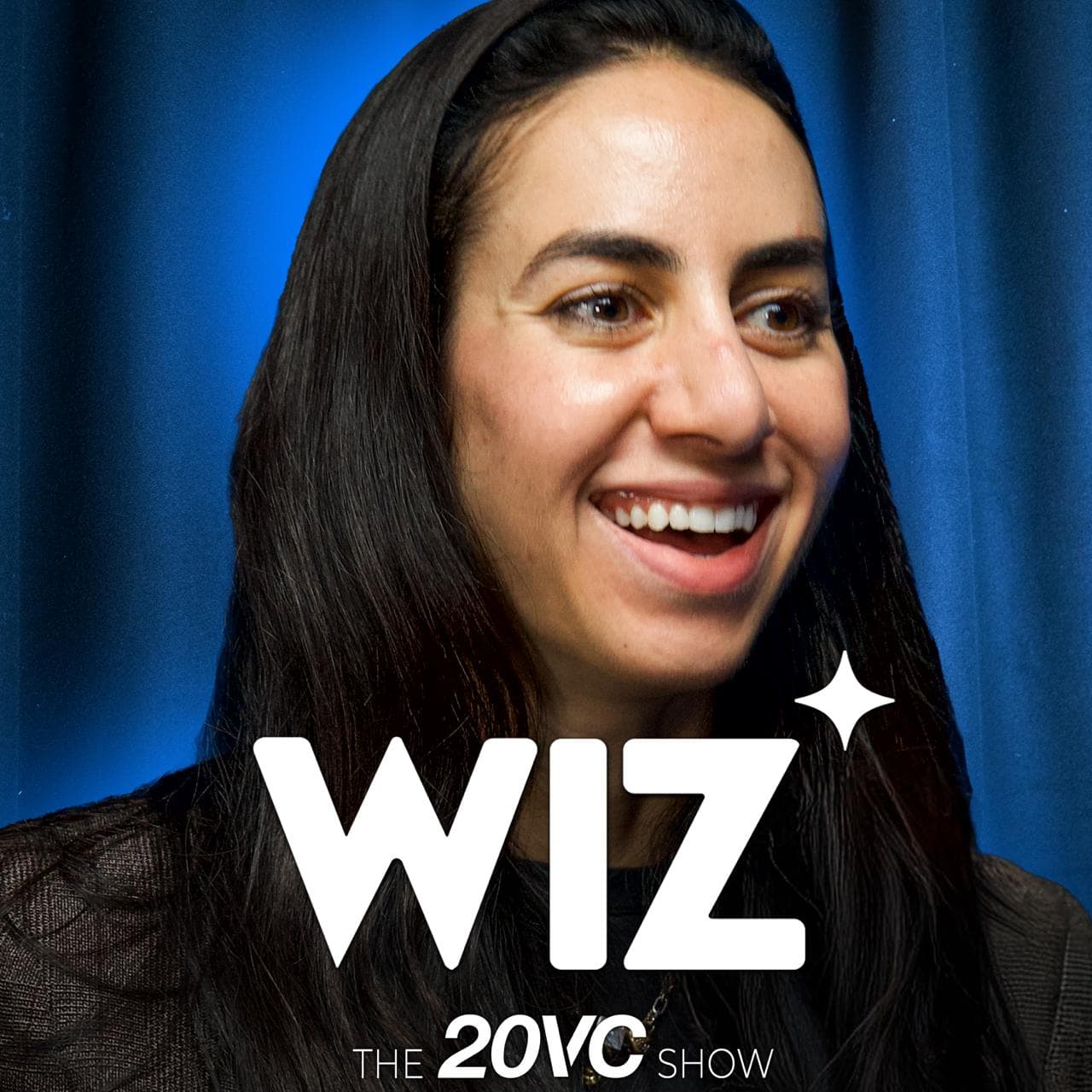
- Guest: Raaz Herzberg, Chief Marketing Officer and VP Product Strategy at Wiz
- Host: Harry Stebbings
Key Themes and Discussions
Early Days at Wiz
- Initial Challenges: Raaz discussed feelings of imposter syndrome and uncertainty during the early days, particularly regarding the product direction and how to build something valuable.
- Product-Market Fit: Wiz achieved strong product-market fit early on by addressing significant problems in cloud security. The product delivered value quickly, making it attractive to customers.
Marketing Strategies
- Effective Marketing Practices: Raaz shared his approach to marketing, emphasizing the importance of creativity and a unique brand presence, as evidenced by their memorable booth at a major conference.
- Hiring Philosophy: He prefers hiring individuals who may not have traditional marketing backgrounds but possess deep domain knowledge. This focus on expertise translates to more effective marketing strategies.
Lessons Learned
- Proof of Concept (PoC): Emphasized the value of quick PoCs to demonstrate product effectiveness to potential customers. The swift deployment of Wiz's product allowed for rapid customer feedback and adaptation.
- Long-Term Partnerships: Raaz stressed the importance of building partnerships with customers rather than just transactional relationships. This approach fosters loyalty and potential referrals.
Leadership and Company Culture
- Imposter Syndrome: Raaz openly discussed his ongoing battle with imposter syndrome and how it drives him to continually strive for improvement.
- Company Culture: Wiz promotes a culture of ownership and execution, where employees are encouraged to be hands-on and take initiative without excessive bureaucracy.
The Impact of AI
- AI in Marketing and Development: Raaz highlighted the transformative role of AI in both enhancing internal processes and improving customer engagement. He mentioned their custom-built chatbot, Marilyn, which has streamlined operations.
- Future of Engineering: He anticipates an increase in the number of engineers as the definition of engineering evolves with AI advancements, potentially democratizing access to engineering-related tasks.
Key Metrics and Measurement
- Zero Criticals Club: Raaz discussed important metrics for assessing product success, including the number of customers maintaining zero critical risks, emphasizing the focus on long-term security improvements.
- Room Warmth: He articulated the concept of “warm rooms” in sales, where the familiarity and goodwill towards the brand significantly enhance engagement and willingness to buy.
Final Thoughts
- Generosity in Equity: Raaz echoed the philosophy of being generous with equity, suggesting that a smaller share of a large pie is more valuable than a larger share of a small pie.
- Adapting to Change: He emphasized the importance of adaptability in a rapidly evolving landscape, particularly with the integration of AI and cloud technologies.
Conclusion Raaz Herzberg provided valuable insights into building a successful enterprise brand, emphasizing the importance of product-market fit, innovative marketing, and customer-focused relationships. His experiences highlight the balance between maintaining high standards and fostering creativity, demonstrating that effective leadership involves embracing change and learning continuously.
---
Key Takeaways
- Embrace Imposter Syndrome: Use it as motivation rather than a hindrance.
- Value of Quick PoCs: Streamline onboarding and demonstrate product effectiveness swiftly.
- Uniqueness in Marketing: Stand out through creativity and unconventional branding.
- Partnerships Over Transactions: Build long-term relationships with customers for sustained success.
- Adaptability is Key: Embrace changing technologies and market dynamics to remain competitive.
Written by AI. May contain mistakes. Listen to the episode to check what was said.
Transcript
Automatic transcript. May contain errors.0:28This is 20 Growth with me, Harry Stebbings. to a multi-billion dollar ARR business. But before we dive into the show today, Secureframe empowers businesses to build trust with customers by simplifying information security and compliance through AI and automation. Thousands of fast-growing businesses, including NASDAQ, AngelList, Doodle, and Coda, trust Secureframe to expedite their compliance journey for global security and privacy standards such as SOC2 and ISO 27001, CMMC, missed standards, and more. Backed by top-tier investors and corporations like Google and Kleiner Perkins, the company is among Forbes' list of the top 100 startup employers for 2024, G2's best software awards for higher satisfaction products, and a recipient of the 2024 Cybersecurity Excellence Awards, something I definitely never got in school myself.
1:17Learn more today at secureframe.com. And once Secureframe locks down compliance, Pendo makes sure your product truly lands with customers. Whether it's the software you build or the software you buy, your tech stack should be creating results, not creating roadblocks. Well, Pendo's no-code software experience management platform makes your software better with tools to see where users get stuck, guide them with in-app messaging, and constantly improving your UI. It's so easy that over 14 ,000 businesses use Pendo to increase revenue, lower costs, and reduce risks. Businesses love the control. Engineers love the freedom.
1:53Everyone wins. Start for free today at pendo.io forward slash 20 product. And after Pendo shows you what users need, Miro helps your team bring those ideas to life. You know what kills momentum? It's not a lack of ideas. It's the chaos between the idea and actually executing on it. My fund was stuck in this loop. Great investment theses, endless partner alignment calls, scattered deal memos across 10 different tools. We were moving at the speed of bureaucracy, not at the speed we needed to to win deals. Then we started using Miro's innovation workspace and honestly it changed how we operate. So here's what clicked.
2:30Miro AI doesn't just give you a blank canvas to dump ideas. It actively helps you structure your thinking. We used it to synthesize founder interviews and diligence notes, pull out key patterns and turn them into an actual investment memo in hours, not days. And speed is really important Miro's AI sidekicks review your work like a seasoned GP would pointing out gaps in your thesis and suggesting what to dig into next and when we needed to map out portfolio strategy Miro generated frameworks and visual roadmaps right from our board no switching tools no waiting help your teams get great work done with Miro check out Miro.com to find out how that's Miro M-I-R-O dot com.
3:14You have now arrived at your destination. Raz, I'm so excited for this. I've wanted to make this one happen for a while. I've heard many good things from Doug across the years. So thank you so much for joining me. Absolutely. I'm so excited to be here. I am genuinely a very big fan of the show. That is very, very kind. I was literally just saying to you, it's great that we have these studios. It's so lovely to be in person. But I remember starting as like an 18-year-old on Skype. And I had very little idea of what I was doing. and I felt like a bit of an imposter. And I wanted to just start with, when did you feel like an imposter?
3:47I always feel like an imposter. It's never left me throughout my career and I also don't try to fight it. I kind of embrace it. I think a lot of people feel like imposters. I feel like an imposter every day. It's part of the motivation. I also think sometimes people think they know more than they know. I'm never at that problem. I always feel like I know probably less than I know and I'm never complacent about anything. I'm always paranoid about everything. I've kind of learned to embrace it. I never feel confident. I always feel like an imposter in every single thing I've done through my career, whether I was well-prepared, not well-prepared, whether it was something that should have been a walk in the park or not, I feel the same way.
4:22What should have been a walk in the park? You've got this incredible purview from being one of the first 10 employees. What should have been a walk in the park in the early days of Wiz that wasn't? I mean, even things I do today, for example, today after our conversation, I'm meeting like six or seven customers at the Wizz offices. I've done thousands, if not tens of thousands, of those types of meetings and conversations. And in the early days of Wizz, we were selling in millions of dollars in error before we had salespeople at all. So it was also leading deals and everything. So I've done a gazillion of those, but I'm still nervous before them.
4:55Nothing feels like a walk in the park. I'll read the prep correctly. I'll think about it ahead of time. I've never lost a deal at Wizz, but I'm always afraid of that happening. So nothing feels like a walk in the park to me, regardless if I've done it a million times, if I haven't done it a million times, just nothing. This is why I'm so glad that we don't send the schedules ahead of time, because when you say things, and then I just want to go off on tangents, millions in error without salespeople is not a thing that any startup really achieves. What did you do to allow yourself to be in that position, do you think?
5:27I think Wiz had an incredible product market fit early on, meaning the value that the product brought to customers was very clear. It It was a combination of product market fit and also we were solving something that was a big problem. It wasn't like a small problem for our customers. For customers, for security teams, there's a before-whiz and an after-whiz moment. We're solving a big problem for them. We're solving cloud security. If you're a security team and a dev team and you're building things in the cloud, how do you secure them? That's what we solve for. It's a big problem. And the product had very strong product market fit.
6:00And also from day one, the product, and I started as the first product manager. So my first role at Whiz was leading the product team. We always believed that time to value is value. And so the way Wiz works is very fast, meaning you connect this to your environment and it's an enterprise security product. So those things are expected to take months and months and months for deployments and things until you see value. But in Wiz, literally you get value in like 15 minutes. So I think the combination of having very short time to value, being very easy to deploy and solving a very big problem, like solving cloud security, and Wiz started at the beginning of COVID.
6:34So it was even a bigger problem than it ever was before because everybody were moving even faster to the cloud. So it was a combination of all of those three things that just kind of made it roll much faster than we expected. I mean, I was doing legal TNCs. I remember myself doing things I never imagined in a million years I'd be doing. But the product market was just so strong that customers were pulling. We didn't expect it to happen so fast. And so we were always behind on really everything in the company we were behind on, right? Because nothing went at the pace you'd expect it to go. So by the time we had our first salesperson, it was already rolling.
7:06I think it's one of the joys of starting a business and being so early. It's like doing T's and C's and doing legals and doing all the things that you had no idea how to do. I remember searching on Google for how to create an invoice. And that's why I would always encourage my children to start a business early and do that. So I totally agree with you. You said you've never lost a deal as well. I mean, like, Raz, I don't want to be rude, but it's been quite a few years to never have lost a deal. What do you put that down to? it's not just product like what do you think makes you so good where you haven't lost a deal it's funny because i never think of it in the sense of i'm so good that i've never lost a deal i'm just very very afraid of failing and again i'm never complacent so every deal i feel like it's you know like my life depends on it i've had one case like a year and a half and two is so when they say i was on a deal what does it mean right in the early days i was literally like the person not a deal.
7:57Then, you know, the first two years of Wiz, I think every huge customer or something, either myself was on it or Inan, our co-founder and VP of product was on it, or Ami, our CTO was on it. And you're kind of like, you own making it happen, right? You own that everything will go fine. I remember a year and a half into Wiz, there was this one customer, of course, I remember the name, I just can't share it, where I talked to them and I had the initial call with them and they already had a competing solution, which is fine. We are in a very, Wiz came into an existing market. So most of the customers we talked to had an existing solution before.
8:30So it was fine, but I couldn't convince them on that 30-minute call that what we had was so special. They weren't convinced by that one call that what we had was so special that they should look further into it. And I was devastated after that call. And I spent two years getting that customer. We got that customer at the end. But I mean, I can't have it. I think it comes with the imposter syndrome question. It's like, I feel like every failure might be that discovery of the imposter. How do you categorize yourself? Because you're this wonderful hybrid of like a product person, of like a sales person, of a brand mastermind.
9:05How do you categorize yourself of what you are and what you identify with? I like everything. I've always liked everything. I've always found everything interesting. I mean, I studied computer science in like one of Israel's best like tech universities. But then in parallel, I also studied arts and like the best art school, they're both in the same city in Israel. So I've always liked everything. And I always say that for me, it doesn't really matter what I'm working on. I just really want to do it with a team of extremely talented people I look up to. And I really don't care what the domain is.
9:39That's what drives me. You said, especially when it came to marketing, you said this before, I hire people who don't want to be marketers. Can you talk to me about that? What it takes to win in marketing today, given that product centricity that you have? I'm not a marketing expert. I know very little about marketing. My only marketing ever role has been as part of Wiz. I don't think I could do marketing at any other company. I think it comes from really, really knowing the domain, really knowing the customers, really knowing the pain points, really knowing the tech, really knowing the before and after the Wiz brings to organizations.
10:12I think when we think of marketing at companies and startups, it comes with all those scary words and terms and pipelines and MQLs and SQLs and like a ton of things where for me, because I didn't know marketing, actually, I had the privilege of being removed from that and being like, what are we trying to solve, right? I have a product. I can explain to you in English very clearly why it's amazing and what is the before and what is the after of using the product. And I feel confident that if you're trying your product out, it's going to be incredible. and I know who's buying my product. So it's just about how do I tell that to the right audience that's buying my product.
10:47And then I'm going to use any channel in my possible imagination and I'm happy to try anything to make it work, right? And the thing about marketing is you don't have to be so careful. I came from product and in product you have to be very careful, meaning every decision you make, it's forever. You take the most expensive resource of a company, engineering time. You put it on building something. You put that something into your product. Now, let's say it's not a great feature, or let's say only 2 % of your customers are using it. You can never take it away. If the 2 % of customers isn't like a Fortune 10 company, it's there forever.
11:20And every new thing you're going to build into the product from now until eternity, you have to take into account that other thing, another area in the product. Making a mistake on what you build is big for me, right? So when you are in product, you really have to think things through. Marketing for me, it's almost the opposite. That's why it's so fun. Again, the problem is pretty simple. well, I need to explain this thing to the right audience. I know my audience. I know what I need to explain. Now, you can try anything, as weird as it gets, as stupid as it gets. If it doesn't work, we won't do it again.
11:50You don't have to maintain it. It's not there forever. So for me, marketing is also just about people who can be creative, think of a solution, and be amazing at execution. Just think of something, execute it. Let's try something else tomorrow. The joy also of today is that people's attention is so fleeting that actually people forget things a lot faster than they used to. and what was interesting today is not interesting tomorrow, literally. And so I completely agree with you there in terms of the flexibility or error ability that you have. I think people get it very wrong when they say you don't learn from your successes.
12:21I think we just don't study our successes in the same way we study our failures. When you think about the best marketing decision you made at Wiz, what would that be if I ask you that? And what do you reflect on or take from that? It's a good question. I think for us, the best marketing decision I've made early on was trusting my instincts about being out there with something super weird and unique. The first decision I actually made after I took the marketing role, already we had space in RSA, which is like the super ball of cyber companies. So it's like this huge conference where you pay a lot of money to get a booth.
12:58So like five meters on five meters of something, you paid like, I don't know, a ton of money to get that. And we already had that space, right? And I just took over the role. And our problem at the time was that nobody's ever heard of us. Nobody heard of Wiz. Although we had amazing product market fit, that was a problem. So I decided to be like, okay, I've been to this conference a gazillion times. I spent most of my career in cybersecurity. Everything's like gray, blue, dark, scary. I said, let's do a Wiz of Oz booth and make it super weird. So the thing literally looked like Wiz of Oz. It was like this big hot air balloon.
13:32there was like a yellow brick stone and I paid some actors from San Francisco to dress up like the Wiz of Oz characters and spend the day there. You know, compared to the price you pay for that small space, it's nothing. Doing something yellow and weird doesn't cost more than doing it black and boring. And bringing actors is like$400 a day. So it wasn't more expensive, but there was a chance of people being, what is she doing? Like, this is so weird. And I was just coming into the roll. So a lot of people were looking at what I was doing inside the company because I've never done this before. But I just decided to roll with it.
14:09I didn't ask a lot of people for their opinion. I just rolled with it. And we have the same size of space and place at that conference every year. And it brought in like 4x more leads. And everybody, because everybody came to see what is that company. It didn't say anything except with a boss. So I think that taught me a bit about not doing things the classic way, trusting your gut, not being afraid to be different. And it taught me that lesson that that's okay in marketing. It's not that okay in product, by the way. But in marketing, it's fine, because let's say that this booth would have been the weirdest thing ever.
14:41Okay, I would have never done it again. And people would have rolled their eyes at me. But there's no harm there for good or something. I'm not ruining something. I said that you don't learn as much maybe from successes, or we don't study them as much. If we look at a mistake that was made on marketing, what was the biggest mistake that you made on marketing? I think one of my biggest mistakes early on was that I had no real understanding of product marketing and its role. I spent my career on the engineering and product side, never on the go-to market side. And product marketing is this weird animal that's in between.
15:16And being on the product side, I was never sure. I mean, I almost thought of them as ignorantly, right? That was because I was ignorant about their role. But I thought of them almost like the team that writes the blogs, you know, when you launch. That's really, that was my perception. And I couldn't have been more wrong. And I joke about it today was my head of PMM, Zhang, which is incredible, the smartest woman on this planet. And she remembers the day I met her at Wiz. And at that point, I was still on the product team. I had nothing to do with marketing. And I kind of asked her, so your job is writing the blogs, right?
15:48That's what I was. That was my perception in product marketing. What did she say? She felt the gap. I couldn't have been more wrong. And I've learned how much of an important function it is to bring something to market. And I've been very humbled by being able to learn a lot from her as well about the role. When we think about the biggest mistake, what was that biggest mistake? I have a hard time pinpointing to one mistake. I mean, I think if I look at it at a broader company level, the one time where we made something that was a major shift for us was very early on. We started initially from a very different idea, and we pivoted to what is now WIZ.
16:28It was the early days when we had this idea around network security. WIZ was actually called at the beginning Beyond Networks, and we would talk to CISO security teams, and we would kind of pitch them on this network idea. And I think we were kind of convincing ourselves that it was something they were interested in. And we got feedback like, oh, it's interesting. We'd love to talk again. But we couldn't get to that next step. And I think that was at the beginning, like until we pivoted, I felt like that was a big learning of a mistake where we were kind of trying to push something hard without really feeling, you know, the pullback.
17:03But we were maybe convincing ourselves a bit that we were feeling the pullback. So that, I think, learned me that when there's an error that there's a lot of friction or something, maybe not to push harder. You said about the Wizard of Oz exhibition element. That's an event. Events is a big kind of brand marketing and kind of performance marketing in some ways exercise for a lot of enterprise companies. What channel do you think is massively underrated? And what do you think is massively overrated? I think brand is underrated, meaning people spend a lot of time doing things that will impact a number on the board deck, like pipeline numbers.
17:40And having now learned this whole domain from the inside, pipeline numbers are, it's very hard to know what they mean. I mean, I always think about when like the board members look at the pipeline numbers, like every company measures attribution so differently. And you work really hard to change a number and you can build a team that's like obsessed with that number. But at the end of the day, I think sometimes things that are very hard to quantify, like brand, are actually the things that matter most. I think people buy things. And at the end of the day, I think enterprise is also people buying things.
18:09It's a person at the end that buys something. And the brand matters a lot. I mean, when you now go to buy a phone, you don't start comparing the specs, right? You just know what you're going to buy because you're like, well, that's the best one. I think it's not that different for anything, for enterprise software, for anything. But making brand investments, sometimes it's impossible to quantify them. And when I say brand, just to be very clear, I'm not talking about a big sign on the San Francisco highway. I'm talking about any effort that makes your company seem very knowledgeable or an expert in their domain to your audience.
18:43And that could be a gazillion things that are very hard to measure. And we spend a lot of our effort on those types of things and I have no way of tying it back to a number. And I don't really care because I think that's what really matters. So what are your biggest lessons then on how to do that brand marketing successfully for founders who are going, I'm shooting in the dark here, given I have no attribution, I have no performance to tie to this. I don't know if it's good. You know, it's funny. I also think that when you have the numbers, you also don't know when it's good. I think every marketing leader that was ever fired had green numbers on his pipeline.
19:12You know what I mean? It's like, what does this number even mean? You put a target, you hit the target, you're not selling, right? So the team is frustrated. So the numbers also don't mean something when they're good. So the numbers are just not the way to quantify it. For me, I feel it from the ground up. When we had challenges around marketing, you would feel it because you would walk into cold rooms. Simply put, you would walk into a room and you would start from zero. You would start from explaining who you are, where did you come from, what is with, who the founders were. I would walk into those rooms.
19:39I knew the room was cold. It's very different when you walk into a warm room. And so the question is, how do I make the rooms warm? Meaning when I meet my specific audience. And our product is an enterprise product. So I know the group of people I'm selling to. I mean, any enterprise product, right? Let's take the Fortune 500 companies. It's 500 companies. Whether you're selling to the CIO, the CTO, the, in my case, the CISO, you're selling to a person in that company. So we end up with like 500 people, right? That need to hear your name somehow. So anything that makes them hear my name will make the room and the meeting warmer.
20:14So that you can feel from the ground. You feel from your sales team. As a marketer, I work for the sales team. Once they say, oh my God, the marketing here sucks, I'm doing a really bad job. And it doesn't matter if my pipeline number is green or it's red. They know if they're being out-marketed. They know if the room is hot or if the moon was cold? I'm struggling with one thing there, which is like when you were talking about the creativity you have for The Wizard of Oz, I loved it and I thought of Seth Godin, who's a famous marketer. He talks about the purple cow, which is it's better to be different sometimes and it's the best way to stand out.
20:43But then when you talk about the Fortune 500 and the CISOs and the very serious enterprise customers, I picture a lot of founders listening to this going, I worry that by being different, I look less mature, I look less serious and formal. than my competitors, and they won't take me seriously. What would you say to that? I don't worry about it. And I think it's proven itself. That's what we sell. We sell to CISOs at enterprise companies. I don't think people are looking for more scariness, formalness. I mean, your role is stressful enough. It's okay. You can have fun with it. And I think also humor is something that naturally connects people more than fear.
21:24I've never experienced people not taking it seriously. I also think it's not just about the fun and the jokes, right? The fun and the jokes are like one part of it. The Wizard of Oz is one part of it. But the second part is really making sure that you brand yourself as an expert in your domain. It doesn't mean it can't be fun in the way. You can be an expert and make it fun, right? You can say the smartest thing and you can give the best content and you can be the first person to explain deeply when a new vulnerability hits everybody at the same time. You can be the first and most valuable resource to them.
21:53It doesn't mean you have to do it in black and red. people are smart, right? I mean, we're starting to smart people. They're not confused by something as shallow as the color. So I've just never worried about it. And I also don't think I've ever as a person been off-put by somebody being, for me, if somebody walks into a room and they're super smiley and they make jokes, I don't take them less seriously, quite the opposite. So I've truly never really worried about it. And I think it's proven itself. I got told a brilliant one the other day by the sales leader, John McMahon. He's been CR of five public companies.
22:24And he said, no one cares how much you know until they know how much you care. I agree 100 % with that. I agree 100 % with that. And that's why I feel like you have to connect on a human level. And in our domain, cyber companies, a lot of them have connected to the realm of fear, scaring you from something bad happening. Like if you're selling a security product, scaring you that if you don't use my product, you're going to have something like a security incident or something. I just generally don't like fear-based connections. And I feel people connect better on empowerment, on humor. And I also think it connects more to what we do.
22:59We help organizations build things in the cloud. For me, it's empowerment. It's not scaring them from something bad. I love that. Does selling fear not inspire urgency? It does probably inspire urgency. I mean, a lot of cyber companies have been very successful with those tactics. It just doesn't inspire me or us. And it's not really authentic for our brand and for our product at all. But I guess, you know, for a lot of founders listening, they're told, like, find that pain point and then really press on it for the customer base and go, you know, that feeling when you X and that pain point then is illustrated.
Read the full transcript
23:30And it's the same fear based selling. How would you advise them on how to turn traditionally fear based selling into empowerment based selling and how you approach that? For me, also fear-based selling in our domain is not giving customers and teams enough credit because no one product can solve for all of your problems. So there's also to me just something not authentic about fear-based selling. I definitely think it's critical to know your pain point, to know how you address it, but it can be on the positive side. I mean, and with the pain point is super clear, but it's now about how does the product enable you to do better, to be positive, to be confident.
24:08It's not when you hit a pain point, it doesn't need to come from a negative place of scaring you about it. It can also become from a positive place of let's resolve this together, which I think is just also more realistic. When you're a customer of something, when somebody tries to sell you something, you don't want them to be scaring you. You want to feel like they're enabling you, like they're giving you something. So for me, it's just not an either or. We spoke about the 500 customers that really matter or the kind of Fortune 500s that we've always focused on. A lot of founders are asking the question, should I start at enterprise?
24:41Do I have to start earlier and then scale up? If we were in a hypothetical situation where you're advising me as an angel investment and I'm asking you that question, should I start early and scale up or can I just go in at the top? What would you recommend knowing all that you know now? It's a hard and tricky question. We started Upmarket. Our first paying customer was a Fortune 10 company. Wow. That is very unusual. What do you think enabled that? I think we had something that's part of our DNA, which is critical here. Wiz was founded by four of the most incredible people in this universe, right?
25:17The staff, our CEO, Roy, our VP of engineering, Inon, our VP of product, and Ami, our CTO. And Wiz is not their first company. So before Wiz, they sold their first company to Microsoft. And instead of leaving Microsoft after a couple of years like most founders do, They ended up staying for six years and leading all of the Azure security products. That's also where I'm at the team. I led Azure Sentinel, which is one of the Microsoft security products. And Microsoft is just the best school in the world for enterprise and for scale. So in Wiz from day one, everything we built, we had that perspective of scale.
25:52We put into the product features that, at the early days, we built out our role-based access system into the product. It's something that typically products, at some point they want to sell to an enterprise, and then they want to implement that. And then they have to go back and like break all their infrastructure to make it work. We started with that. It's weird, but we were like wired for that type of scale and mindset. And I also think security specifically, it's a specific market security, right? My knowledge is very limited to my market. But in security, I've always felt you want to buy things from the place your bank buys things from.
26:25You know what I mean? Like you want to buy insurance from the place your bank buys insurance from. So if you manage to actually help the most complex enterprises in the world, the most heavily regulated and complex organizations in the world adopt you, then your way down market becomes so much easier. So it's definitely not a move that will work for everybody or is easy and it's definitely very unusual, but it is what worked for us. Legitimate question. Do you think you'd be able to sell into such prestigious customers if you had not had the prestigious backgrounds that you did? When you walk through that selling company to Microsoft and then the incredible duration that all of you had at Microsoft, if you're a 24 year old founder, do you think you have the luxury of doing that enterprise start?
27:12Yes, with a caveat. I don't think it was about the name we had. I mean, a staffer CEO, which is now very well known. It's not like he would walk into a room and people would know who he was. It's not nobody heard their name. So it wasn't about the credits or the brand. But I think the knowledge we had from working with enterprises at Microsoft and from helping enterprises solve complex security problems, I think that's what helped us when we were having a conversation with an enterprise customer, make him feel like, okay, this team understands enterprise. And when you understand enterprise, you know that it's also just never really about the product.
27:46It's about really understanding how you integrate into their processes, their workflows, their complexity of the environment. So I don't think it was the fact that we had Microsoft written in our background. And I also think that despite the fact that our founders led Azure Security, it's not like their names were well known or something, but it was really that knowledge of how to work with enterprises and how to talk to them that made the difference. They weren't like, oh, Asaf Rappaport, take our money, take our money. That's very funny. You said that Microsoft was the best school, I wrote it down because I'm terrible memory at my age, best school for enterprise and for scale.
28:21What did you learn from Microsoft when it comes to enterprise and scale that you think is so important to how you've at Wizz? At Microsoft, when you build something into the product, even the tiniest feature, you have to think about it working for the biggest organizations in the world, for the biggest cloud deployments in the world. If something doesn't work at an infinite scale, it doesn't work. You never put it in there for the first place. So every small decision you make on on the product and on the engineering side, your mental state is either this works for infinite scale or it doesn't work.
28:56If something works for some customers or customers up to an X in whatever size, complexity, so it doesn't work. So that's a mindset that from the early days of Twiz made us build everything in a way that we've never had to refactor things. We've built for the scale we have today. That mindset was there from day one because of how we're used to building in Microsoft. And the second thing, that's like on the product side. And I think on the go-to-market side, I just think Microsoft has such a deep culture of enterprise sales and what it means to sell to enterprise. And like seeing that machine from the inside, it's amazing.
29:33It's such an amazing company. I mean, you know, the big companies, Microsoft, Google, Amazon, truly, they're so successful. Think about what it takes to start it and have a company that stays so relevant for so many years. It's insane. So you have to be humble. And I think we've learned so much from seeing that machine in Microsoft. You said there about kind of the infinite, starting on the product side, the infinite scale needed. And if it doesn't work at infinite scale, then it doesn't work. Does that prohibit velocity? Because it means it has to be perfect in many respects. And does that prohibit quick and dirty getting stuff out there and shipping fast?
30:09I've never seen a team develop with more velocity than the development team it was. I don't think it's a trade-off with velocity. I think it's almost a mindset. It doesn't mean that you have to make things to be perfect. It just means that when you had the initial idea or approach to implementing something or approach to building a feature, you did not just think about the customers you have today. Let's take a simple example, right? Let's say I show you your infrastructure in a graph. And let's say now I work with customers who have 100 machines. It can be a very pretty graph, right? And actually, if people develop it, it's not shorter.
30:40It's just you decided to develop this visual of showing them all of their machines on a graph. But if one day you meet a Fortune 10 customer and they're going to have 50 ,000 machines, then now your graph looks idiotic. And we've all seen idiotic graphs in products. So it's just the mindset of not doing it from day one because you're like, well, it's not going to work for an infinite scale. So from day one, it's not the right thing to build. So I don't think it's about the velocity. It's just about the decisions you make are more conscious at the beginning, which at the end saves us a lot of time because technical debt can kill teams.
31:12And it's something that accumulates fast. And that's also a learning, I think, we had in Microsoft. So if you have those things in perspective from day one, you just kind of eliminate a lot of that mess later on. What product decisions do you need to make on day one to eliminate technical debt occurring over time? It's exactly, I think, that. Will it work for infinite scale? If you're not sure it will, then don't do it right now because we don't want to hit that problem later. And there's many small things like that that you make decisions on every day as a product manager. You're like, yeah, what's going to solve this for this customer right now?
31:46And like, whatever, I just need to win like those five POCs right now. But it's a question. Can you think about the solution that will solve for them, but in a way that will also solve for the future? Can you help me on that one? Because I have a lot of founders say to me, listen, this customer really wants this. And it's a big problem for them. They'll pay us a lot of money. Should we do it? And it's a luxurious position to be like, no, stay true to your principles and don't do it. And some of the best companies are founded off the back of that. How do you advise me and other founders who are in that situation?
32:16It's a tricky line. It's a tricky line. I felt genuinely for us. We always treated customers, and we still treat customers, and I also just truly believe this about customers, that they are a core part of the whiz team when it comes to growing in the market. Your customers are your strongest voice. We also always treated them that way when it came to product decisions. So if a customer asks me for something, something that's super custom to them, or something I'm not sure I can build in a way that's generic, or something that doesn't align with my North Star, either he wants something that's not in Wiz's domain at all, at all, like not even close to our domain.
32:52In which case, there's a misunderstanding here because if you communicate what you're trying to solve for, and we know what we're trying to solve for, like we own cloud security, we own security, everything you build around the cloud. If it's not in that direction, then we have a communication problem and we shouldn't have even gotten here. Or it's a real problem in my domain and then maybe the way he wants me to solve it is not the right way. But if I talk to him about it enough, we'll find the right way because it's in my domain and they care about it. So that's how we've always moved. It's in this balance.
33:20And a lot of things we did build for customers, but there were things that were aligned to that North Star and we never built them without the knowledge that it could scale for everybody. And so that's one of the things that actually made execution at Wiz and development super fast because everybody's building always toward one North Star. And there's no one-offs that you regret. And there's no weird factors because it had to match that North Star and that scale. Was there ever a time when product let you down? And what did you learn from that? I think the beautiful thing is you constantly feel that way, right?
33:53When you build a product, it's not perfect. It's always missing a million things. And always there's so much more you can do, especially when you solve a big problem. I think in Wiz, we had areas that in earlier phases of the company, it didn't make sense for us to expand into from a product perspective. But over time, we grew into it. And so those are places where I think sometimes we were, maybe we're very cautious about that North Star. And if we went backwards, it would have been more clear to me that we should have said, oh, yeah, we're going to expand there. But we still really weren't sure we were.
34:22So I think those are places where, in retrospect, we could have been more open. Can I be honest? I kind of hate the North Star analogy. It's a bit like kind of the fluffiness of culture. And so I just, I didn't mean that rudely at all. But like, what does that actually mean? Like North Star, it's like we own cloud security. Is that the North Star? Yeah. For me, it's not fluffiness. When I say North Star, I mean, we know exactly what we're trying to solve for our customers. We're not confused about it. I know who I sell to. I sell to security and development teams and I know what I solve for them.
34:51I help them secure every application they build and they run in the cloud. So everything under that, I care about. Everything not under that, it's out of my scope a bit. And your one metric to determine your success of your North Star is? If you're talking about product metrics, and I'll go into the specifics, there's two metrics I care about. One is we have this thing we call zero criticals club, meaning we are a security product. So you connect us to a very complex cloud environment in an organization, and we find risks. And we try to help security and development teams understand the risks and resolve them and be efficient in it.
35:23And we give them tools, of course, like we connect to the code, we open PR and everything. But the metric we care about is how many customers are in the zero critical club, meaning they've seen critical risks and they keep them at the zeros, they resolve them. That's number one metric for us because it means that not only is a product really being effective, it has drove change in your organization and it has made you more secure. Many security products, the challenge is like you buy them and then it's like a shelfware or or it's really hard to fix the thing. So helping teams actually beat zero criticals is a major metric for us, and we track the number of customers who are in that club.
35:57Most Wiz customers are in the zero criticals club. We even send them cool swag, just like you have the sweatshirt, zero criticals club. We make it fun and simple. It's not a complex, what am I going to do as an enterprise security product? Okay, get to zero criticals. That's the first mission. So that's one metric we really care about. How many people are in the zero criticals club? Second metric is we look at how many people log into the platform and what team they're from. And the challenge we solve for is a multi-team challenge. I never like to talk about cyber because it's so boring for most of the universe, but in high level, right?
36:29The reason that securing cloud applications is so hard is because the people who can actually solve the problems are the developers. They own the infrastructure, but security owns the risk. So it's like, it's hard to build a program in a system that works. That's what WIS brought into the market. And we look at the number of people logging into WIS that are not from a security team. And so most of our logins are from development teams. And that's the second metric you really care about. Why do I really care about those two metrics? Most of my customers being on zero criticals, most of the people logging in being from out to the security team, because that's how I know I'm really driving change and impact.
37:00And, you know, SaaS products are easy to deploy and they're easy to replace. But that's not easy to replace. Totally get that. And I really appreciate the drill down there because it's not fluffy at all when you highlight it like that. I do just want to make sure that we continue on the enterprise element because I think so many founders also make just terrible mistakes going into enterprise. When you sit down and advise me, what are the biggest mistakes that founders make and you see other founders make on enterprise selling, selling to those Fortune 500s that you're like, oh no, don't do that.
37:29Don't do that. You know, for example, I think you can spend a lot of time on marketing and marketing channels, but I'm not sure that's really the right way of breaking into those accounts. At the end of the day, it's a list of accounts. It's a small group of people. Also, when you think of all of the CIOs of Fortune 100 companies, all of the CTOs, all of the CISOs, they all know each other. They all switch companies. They work in that company. Tomorrow they work in it's a small knit group. So I think there's less cheating than you think there is. Meaning for me, it would be, OK, find the one. Find the one company that you can get into a room with.
38:02And how do you get into a room with it? That's where you mentioned Doug from Sequoia. Like we work with Sequoia with Index. We use our investors often in many cases to introduce it. So find the room you can get into. Find that one executive you can be introduced to and do a really, really, really good job of solving his problem for his team. At the early days, I mentioned that we were selling before we even had salespeople. I made the worst deals in the universe. It's like to this day, there are salespeople in ways that hate me because some big customer has like a terrible unlimited thing I gave them in the early days.
38:32Because it's not about trying to win on the revenue from that first enterprise customer at all. It's about really solving their problem, doing an amazing job for them, and then having them introduce you to two more people was, hey, they've done a good job for us. You know what I mean? It's a small group of people. So there's no tricks and magic. It's really being obsessive about getting them real value. They're very smart people and they see a lot of vendors and a lot of companies. So how do you actually deliver real value for them? Do you do pilots? How do you advise founders on pilots? Yeah, we do POVs.
39:03And one of the things that we've done on the product perspective is pay a lot of time and attention to time for value, meaning time for value for us is value. We're not an enterprise product where it takes months to show value. Literally, we spend so much time on the product side to make sure that that experience of connecting with your environment, even if you're a huge enterprise, and seeing value takes less than an hour. So that makes the whole POV process run faster. There's no long cycles. There's no complexities. We kind of let the product speak for itself. So it's like, okay, connect with your environment.
39:36We see the environment. We see the issues. Does this bring value to your team? If it doesn't bring value, by the way, that's the most interesting conversation for me to have in the universe. So I can only win here. When somebody really gave me the attention of going through a POV process with me, I can only win. And I always tell customers, I think the best thing is for you to try. Connect this to your environment. If you see value, amazing. If you don't see value, this will be the most interesting conversation in the universe for me. I'm dying to have the conversation and to understand where are my gaps.
40:01So I can only kind of win here. So we really believe in proof of values. Also, we, in many cases, customers just connect their entire environment to us as a proof of value. We never think about it twice. That's another thing about enterprises. It's a long-term partnership. Again, it's a small group of people. It's a partnership. I'm fine with having somebody use my product. I'm not going to push them too hard. I'm not going to close the POV if they didn't go into negotiations on time. No, I really think of it as a partnership. And I only have things to win by partnering with an enterprise customer.
40:30Has there ever been a time when what's best for the customer is not what's best for the company? I don't believe that can be true. I generally don't believe it's going to be true. Even if you think it's true, I think you're wrong. Like, even when you think you have a case like that, I think you're wrong. Well, I can paint you a case. Yeah, paint me a case. If we take my business, venture, and then investing in companies, you are my customer as the founder. And there are times when it is opportunistic or best for me to sell my position when it is not best for you. What's best for the customer is not what's best for me.
41:02I will take an example, which is a benchmark selling their position in Uber. It's best for for the firm and rational to sell the position and make money for their LPs, but it is not best for the founder who may feel slighted, it may damage the story publicly. There's a divergence. Look, you're in a very tough business. I'm in the business of helping customers. You don't always have your incentives 100 % aligned with your customers, but I don't think that's true for product teams. I think it's a very, very, very different business. I also think that if you think about even your example over a very long term of time, I'm not sure it's not the best thing.
41:41Because when you sold your position, something was logical there for you, right? So you're reflecting something real to the entrepreneur, like something real made that happen. So it doesn't mean that it's really a bad thing for them in the long term, even in your example. But I also think it's very different when you're building a company or building a product. The goal of your company, the goal of your product is serving customers. So you never have misalignment in interests. Even sometimes when you feel like you do, you really don't. I'm very adamant about it. And so I really feel that always being attached to what's best for the customer, even if it means that in the short term, we'll always make the decision of the customer.
42:20And I would argue that in the long term, it's good for us. I can give concrete examples, right? I mean, let's say, for example, you buy Wiz. When you buy Wiz, you pay us based on the sizing of your cloud environment. Now, cloud environments change a lot. And cloud grows like 30 % to 40 % year over year. And oftentimes, a company would buy X units, but just their engineering teams, I mean, it just grows faster than they expected. So now they're like overusing my product. And I am paying for that because my clogs are related to the size of the environment I'm scanning. So you could make a business decision, right?
42:49And we've had finance business leaders ask us, well, you should go back to that customer now because they're underpaying you. and you could ask them to renew in the middle of the year, in the middle of their contract, so you would get that gap. And that gap can be pretty significant sometimes. It's a decision you can make, but I would argue that although it might seem like your interests are not aligned, it's wrong. You should always be aligned to the customer because it's a long-term business and you want to be the best partner for them. So you can sometimes take short-term revenue or short-term winnings, but I would always argue that as a product company, it's not the long-term winning thing and always being there for the customer is a smart thing.
43:26So I would argue you're right in a perfect world. But in an imperfect world where you do not have funding and you are not as well capitalized, sometimes you have to revenue optimize them in the short term to keep the lights on. Like you mentioned, Doug, and you mentioned some of the amazing investors you have. You always have, frankly, great investors and high valuations, which were fantastic and well-deserved. But if you're a struggling, scrappy startup, sometimes that cogs difference. It's what keeps you alive. I think that's why enterprise startups, companies who build enterprise product, often even their seeds are big.
43:58That's interesting. Do you need a big seed to do enterprise well? Yes. I mean, if I answer just based on my gut and my experience, then I think it's very hard to be successful at building an enterprise company without having a bit of those long pockets exactly for the reasons we just talked about. I mean, it's a partnership and you're dealing with people who have huge challenges. It's very hard to be an executive that owns something like security or engineering or IT at big organizations. So you need to be a good partner for them. They have many, many options and their job is hard. So I'm sure it's possible, but I think there's a reason most of those companies raise big seats.
44:36So if we talk about raising big seats, just help me out here. Do we just dilute companies more earlier or do we just have higher prices? because it's the two variables that you can switch. Yeah, I'm definitely not in your area of business of investing. And I'll say one thing that I've learned from Asaf and Asaf our CEO. Asaf is very generous with everything, meaning he always says it's okay if I own a smaller percent of the pie. If the pie is no pie, what do you care if my percent was big in the no pie? You know what I mean? So he's always very generous. He's like, either this will be a very, very big thing.
45:10And in that case, even a small part of it will be very, very big. or it won't be. And so I always remember his true approach of being generous with everything, being generous with the equity he gives employees, being generous with the equity he gives investors. And it's because he believed from the get go, he's going to build a big pie. And if it's a small pie, who cares? It's a trade off, right? I mean, there's something to be said about this optimistic approach of being generous and believing you're going to build something big. So even a small part of it will be bigger than the big part and something small.
45:40Totally agree. And I love that generosity built in. When you think about investing and working with founders today, do you inherently rotate around second time founders having had the experience that you have? I think definitely there's a user's advantage to having done something the second time. I see it in the Wiz executive team all the time. They know what good looks like and they know what bad looks like. And I think that there's a reason that experience is experience. I mean, I think that comes with a ton of advantages, obviously. So it's like if you have the same team that has done it once or not done it once, also they're literally the same team.
46:13All of them founded another company and sold that company and then worked together for six more years. They've been working together for like 20 years. So it also comes with just an immense amount of trust. It's something super unique that's ingrained also in our culture in many ways. I think it's one of the most damaging things when you have people who've never worked together finding that fit and it just takes so long to find. and then you bring new people in and it takes ramp time and then they don't work out and there's like a year lost there. And I think there's so much benefits to be had from the historical knowledge of working together in that way.
46:45Can I ask you, you've seen so many different stages of Wiz from literally first 10 employees to acquisition now. What was the most challenging stage? At every point in the company, somewhere else is super challenging. I have this analogy where I try to explain to people, A lot of people ask me about the move from product to taking on marketing. I feel like at different phases of the company, the stress is somewhere else. So it's like in the early days of the company, the first year, the heat in the kitchen, the kitchen that was burning was the product side, right? Because we had engineers and the challenge was like, okay, tell us what to build and build something that customers want.
47:24That's a lot of stress, right? I would not sleep thinking about, are we building the right thing, the product? But we pivoted. It was, you know, the heat was there in the first year until we found the feeling that we had product market fit. And then we sold for a couple of million dollars. And now we brought her for a sales team. And now the heat is there. Because now it's like, okay, we sold for a couple of million dollars. So here salespeople sell this. Was that easy? Here salespeople sell this. No, it was not easy. That's what I'm saying. It's like the heat moved there because suddenly you're like, okay, wait, but like the way I sell it, it doesn't mean that that's the exact way that they can sell it.
47:58So how do we build something a bit more structured? How do we suddenly bring on somebody who wasn't like living this day in and day out, right? And we enable them to be able to sell it. So the heat kind of moved to, okay, now make the sales engine work in some way. And then after like two and a half years, we were at this point where, okay, our first salespeople were being successful. We were trying to grow the sales team. But now the problem is nobody's heard the name Wiz. And everybody were like, all the salespeople were complaining and all of the rooms were to my first metaphor, cold. We would come into a room and they would be like, this looks amazing.
48:32Wish we heard of Wiz when we signed, you know, four years with your competitor two months ago. So the heat moved to marketing. So in different times in the company, the heat feels to me like it's moving. And at every phase in the company, the stress, the hard decisions, the challenges, they move a bit. And it's a constant movement. When did the kitchen feel the hottest? I think the early days of the company where it was before we pivoted to cloud security. and we were thinking through this networking idea, to me on a personal level, that was the feeling where I felt most on fire. Wiz at that time was not a successful company.
49:08We were just getting started and we were a company who was unsuccessful. Like we were trying to talk to people about something and it felt like it wasn't resonating enough. And I was the first product manager. I was in charge of telling the engineers what to build and how to build. And I wasn't sure what to build or how to build. And I wasn't sure even understood what we need to build because the conversation was so unclear. So to me, that felt like the most on fire. There's also something about having a winning feeling that once we had strong product market fit, we had that winning feeling that makes everything else a bit easier.
49:39At the beginning, it's like, will this be okay? Am I gonna get fired tomorrow? That was the feeling for me. I still oftentimes feel that feeling still, but at the early days, it was hardest. It's funny, I interviewed Nick from Revolute and he was like, our culture's bullshit. It's all about winning. If people win, they care about two things. They care about personal development. When you're winning, you grow personally probably more than ever. And financial development, and you financially develop when you're winning. Do you agree with that over-rotation on winning and that leads to culture? I mean, saying that culture is bullshit, it's just a bit of a semantic.
50:13Like when you say culture, what do you mean? You know, there's a way that things get done in the company. There's a type of people who work at a company. The type of people that work at your company really matters, right? At the end, you have a lot of people working in your company and you need people from a specific type. So to me, that's what culture is about. So I think it's really important the type of people you have on your team. I do think that in some ways, winning and executing fast, it's high stakes. It's very hard to work at a company like Wiz. So I think it generates a team of people from a specific type.
50:44And if that's culture, I think it's very important. I think nothing is more important than our team. Is there a non-obvious belief or trait that you think is important to what makes someone who works at Wiz work at Wiz? Wiz is very much a culture of doers. We don't have a lot of meetings. We don't have strategy discussions, nothing of that. It's a culture where you own something, you own the results of it. There's clarity on what you're supposed to do. Do it. I mean, there's no way that somebody on my team will come to me and start telling me that that team in the organization, because of them, he's unable to do his job.
51:20Like, what do you mean? Just do it. I mean, we have this culture of getting things done, and we have a pretty flat organization. To this day, Roy, our co-founder and VP of engineering, writes code. That's the culture. It's a culture of people that are hands-on doers. We all take customer calls. I mean, that is a type of people that are successful at Wiz. You have to be comfortable with being hands-on. There's no managers for managers. There's no long documents. You have to be comfortable with doing things heads-on. Do you believe that people are destined for a certain stage of company? You know, kind of traditional management advice.
51:56There's people, oh, there's a zero to one person and there's, oh, this type of person. Do you believe that? I don't know. I guess it depends on how adaptable you are as a person. I mean, definitely the job changes a lot. And at Twiz, I always felt like because the growth of the company was so fast. If you wake up today and what you do in your day is exactly or very similar to what you were doing three months ago, four months ago, you're definitely not doing the right thing. It doesn't add up. The company has changed so much. So I think it's more about are people adaptable? Some people are very adaptable and happy to constantly change and switch things around.
52:31You can see it on the people on your team that are like the first one to look into something, adopt new technology, suggest something. Some people are very comfortable being that. And so they can grow with a company. I mean, I've grown with a company. I always say maybe at some point I won't be the right person. But I mean, so far, we've adapted. Maybe at some point, we won't be able to adapt any further. And then I think there are people that are just less comfortable with change. So for them, definitely, it's going to be harder to stay at a company that changes so much. Speaking of kind of the change, what's required to work at Wiz, you said about kind of the doers, and the not maybe having so many meetings.
53:07In all honesty, I instantly thought to the American love of meetings. I don't like meetings either. I don't like brainstorming sessions. I think nothing comes out of a brainstorming session. My question to you is, do you think that Wiz has benefited from not being a Silicon Valley company? And how do you think that's impacted the company? It's such an interesting question, because it's not just that we're not a Silicon Valley company. We started Wiz just when COVID started. That is nuts, isn't it? I mean, it's not that long ago. Not that long ago, 2020, but literally March 2020. It's like we started with COVID together.
53:39And at the first year of the company, six months, it was when everything suddenly was on literal lockdown. There was something terribly scary about it because we were all leaving very good jobs in Microsoft at a point where people were like, there's going to be no money in the world. This is like nothing is going to happen. But it actually ended up being incredible for us. First of all, we had nothing to do in the first year of Wiz, the team, except work. Like nothing. We were all in lockdown. All we did was work for a year. Then the second thing is it enabled us to do things without flying around so much.
54:10You know, we were able to compete with companies that had salespeople in every region in the U.S. Nobody knew we were sitting at our home in Tel Aviv. Like I would take calls at like 2 a.m. Nobody knew where I was. I could have been in New York as well. So it enabled us to have the speed and scale without needing to do all the travel. And I think it really helped us in the early days. It really helped us to just not be impacted by not being in Silicon Valley, because it didn't matter where you were. And that enabled us to run faster and also to kind of continue without changing that. I think there's differences, and I think it's a very multicultural company.
54:50But Wiz is mostly a US company. Like our headquarters are in New York. Our base is in New York. But it's definitely a company where we have advantages of that multicultural. Does your HQ have to be in New York? I'm not saying specifically for you. I'm asking more for the European and the Israeli founders who are listening. Because obviously we have Project Europe, which invest in amazing founders. They're always like, do I have to have an HQ in New York? Does it have to be there? Like we started from the US market. It's just the biggest market in the world for enterprise products. So for us, we start from that market.
55:19So it makes sense to be where your market is at. Europe is a bit of a different question. There's also a big market here. By the way, Wiz also has a very big London presence. One of our co-founders lives here and we have engineering here. And London is an amazing place for startups. You mentioned Revolt. There's amazing things happening here too. But I think it is important to be where your market is. I just always am asked by founders, like, hey, is it possible to sell into it? And how do we think about that? I think about Eleanor Pigment, who has an amazing engineering team in France. And then she has her sales team in the US.
55:49And she runs the company from Paris, but she sells into the US. And it's always just a question for me of like, gosh, I always feel a weight of responsibility when advising young founders and say, to what extent does it have to be? Final one before we do a quick fire. What does no one know about Wiz that everyone should know that has contributed to your success? Interesting. I think there's something ingrained in Wiz to being open to not do things in a traditional way. I mean, I think people sometimes can look at Wiz from the outside and it looks like this golden company, you know, like all the right things in the book, like the right VCs and second-time founders, but I think there's actually a lot of openness from the inside to do things in a non-traditional way, not do things the way they're always done just because they're always done.
56:37At every point of the company, we've made so many decisions like that that have led to different outcomes. I mean, for example, like obviously I lead marketing. I've never done that before. It's a weird thing to do from the CEO's perspective, right? I mean, obviously he had suggestions and pressures to bring experienced CMOs, and he decided not to. And that's something that is core to the culture. It's like a staff trusts his instincts and the rest of the founding team. And so there's a lot of openness to just not doing things this traditional way. We call it sometimes the whiz way. And we also make a gazillion mistakes along the way, but there's openness to doing things in your own way.
57:14I don't think most CMOs are very good. Do you agree? I don't know a lot of CMOs. Do you go to CMO dinners? Do you not engage with CMO communities? Do you not know? No, no, I generally don't. I really don't know hardly any CMOs. I don't know. I do think that marketing is a challenging domain because you need to have a lot of trust to do it correctly. And it's just a hard role to get into. I mean, I couldn't imagine myself going to be a CMO at a different company. It seems to me like such a hard role. I totally get why CMOs constantly get fired because it's like, imagine if I didn't have the repertoire I had with a team and the complete trust they had in me.
58:01And also, honestly, I didn't really care about taking risks because I'm not a CMO and my role is not marketing. So at the beginning, I was like, whatever. I was asked to do this. If the Wiz of Oz is a really bad idea, I don't care. Bring a CMO. I'm fine with my product role, right? So it gave me a lot of freedom. Imagine if I was like, not that, right? I was coming from the outside as an experienced CMO. Of course, I wouldn't have done anything as controversial. And also, of course, anything I would have done would have been looked at by every executive. And people are so sensitive because it's like what you put out there in the world.
58:31So it's just a hard role to be successful in, in general. I don't know how you come into an organization as a CMO and you be like, it's insane to me. So I just think they have a very, very, very, very, very hard job. And I also think marketing, I feel bad for saying it, but I also think marketing is not that complicated. I mean, it's not like engineering where, you know, our VP of engineering, he has so much deep, deep, deep knowledge in the domain. I just don't believe it's that way for marketing. I think people overly complex it, but at the end of the day, it's an intuitive thing. You can look at something, you can look at something that Wiz does, in marketing, and you can tell me if it's good or bad.
59:13And you will be correct because you're a human being and I'm trying to grab your attention. And the whole point is showing things to people who are not with customers. So you have really good intuition about it. That will be completely different if I show you something like a piece of code or part of our security product. So I think marketing is also just not that complex. So we can be more open to how we think about hires there. I love the way when you say something that you think is controversial, you like lower the volume of your voice. It's like a whisper. Final, final one, I promise. But when we actually were prepping for this show, you said Shardul Shah at Index and I think Doug Leone as two references and know them both very, very well for years.
59:55When you think about advice to founders, either that you've learned from them or on how to work with the best investors in the world, what would you say, having had the experience you have with Shardul and Doug, two people I respect immensely? It's such an insane privilege to be able to see how those people operate and to see they are very thoughtful. They are very able to clearly express opinions, but it's always very well backed up. And I think that is something that to me is very inspirational. It's like, we talked at the beginning of the conversation, right, about people like Sher Dool and Doug, they could allow themselves probably to never dig deep into anything and just say what they have on top of their mind, but they don't.
1:00:38They are really well thought. Everything they say is well researched and they understand deep things about the company that for me, it's, I'm always awed by how much they can understand from the outside and how much insight they can bring. So it's, I think it's, it's really inspiring to see people who are at the top of the top of the top of what they do, the biggest names in their domain that still have that discipline and still are very thoughtful about the way they operate and the advice they give. So it's very inspirational. I never felt like, you know, I'm like a nobody. I've never felt looked down it.
1:01:16I felt like I was getting advice at like eye level. We're going to do a quick fire. So I say a short statement. You give me your immediate thoughts. Does that sound okay? Yeah. You said it's not that complex marketing. What's one best practice in SaaS marketing that's actually completely bullshit? I think pipeline numbers and attribution. I think attribution and the whole discussions around attribution is complete bullshit. Love it. What's the one marketing metric you think founders obsess over that, and this is other than pipeline, that doesn't matter as much as people think? Most metrics don't matter, in my opinion, as much as people think.
1:01:53I think you should find a way to measure what you believe in will be the closest indicator to warm rooms. What have you changed your mind on in the last 12 months? Oh, I changed my mind all the time. Wow. I think AI is definitely an area where there's been so much discussion in the early days of, is this just hype? Will this actually change things? Will this, every single day, I'm changing my mind about more and more things. And I'm like, yeah, we should just do it differently now. I mean, every day you can wake up today and the capabilities have changed. And things you could not have done six months ago using AI, you can now do them.
1:02:27So you have to every day look into those things. Can you give me an example? Yeah, of course. I mean, for example, one of the teams I own is Brandon Design. And the algorithms have improved so much when it comes to generating graphics based on your own guidelines. Like a year ago, you could have done it, but it would be like, results. Six months ago, it would have been like good results. Now it's excellent results and it changes daily. Another example, Gemini, the new Gemini, right? His capabilities around specific years on security are much better than any model we've seen before. So I believe that right now you have to be a person that can wake up every morning and change his mind.
1:03:03And that's a reality we're in. I mean, those things improve on a daily so fast. Do you think we will have more or less engineers in 10 years time? More. I just think the definition of like, what does an engineer even will broaden. But I think we, if an engineer is somebody who builds things, and I would kind of argue that that's the beauty of engineering. That's what I love in engineering. I think that is just becoming a bigger category of people. And so I think it will just be more. I just think the definition of what is an engineer might be questionable in the future. Does AI take code away?
1:03:34Like, does it remove engineers from code? You know, we had Matt Mayo from Base44 on the show, who I loved. I thought he was great. But he was like, I want to never show code to anyone. Like, we should never have code as a visual. I think that in general, when we talk about coding, right? Like, also when you say coding, so Python is very different than how they used to code, right? And like, low-level languages. But is it really different? I mean, so maybe we'll have, you know, so Python is this, and now we'll have the same thing that Python was to a very low-level language. Maybe we'll have the next thing.
1:04:05Sure. But I think the concepts of understanding core engineering principles is what enables you at the end to build complex systems and debug and understand how to build. So I think those concepts, I mean, in general, I studied computer science. Most of what you do in that degree is not code. It's learning the fundamentals of algorithmic thinking. And I mean, I think those are principles that help. They help me in marketing. So I'm sure that whatever coding will be, they're going to help. What do you think? I like this one. What's the biggest line marketers tell CEOs and why? I just think most of the numbers people look at are not that meaningful.
1:04:42So you're tracking things, you're showing impressions, you're showing like a lot of green things. I just don't know how meaningful that is. And I think marketing is a thing that you can have a very strong hunch of if it's working, if it's not working. What do you know now that you wish you'd known when you started as one of the first 10 employees? You can call yourself up the night before and say, Raz, you should know this. I think I would have had such a big relief knowing that I wouldn't get fired. Like being able to call my early self and be like, you're going to be in ways like five years in, you're going to be in the list and the team is going to think highly of you, I think would have been like such a relief for the first couple of years of the company where I think I was a lot in my head about it.
1:05:25And I think that would have been such a big relief. Honestly, I think that's the most important thing I would have wished I'd known. I get you, but did that drive you to be as good as you are? You never know. Yeah. You never know. It's hard to say. That's all that we were looping all the way back to the beginning of the conversation. It's so hard to know. So many people are like, I wish I'd known that it would have all worked out. And it's like the feeling that it wouldn't work out is what drove people to make it work out. Absolutely. But it's also about like the prices you pay. So it's, I don't know, it's a combination there.
1:05:54Do you think you're too hard on yourself? What's too hard? I mean, I'm definitely hard on myself. You're very hard on me. I'm hard on myself, but I do give myself some credit. I don't feel you give yourself any credit, no offense. I don't know to be any other way. And it's kind of like what you've said that, well, how much of that is what drove me to what I've been able to do in my work life. So it's hard to know if I was like too hard on myself, probably, but it's really hard to know where to put that line. Cause like, if you're not hard on yourself, then do you really get pushed to extreme? It's, I don't know the answer.
1:06:28Final one. What are you most excited about in the next one to two years? I think no one knows what's going to happen in five to 10 years. So who knows? Wow. I feel like one of the things that we are, I think there's so much luck in every journey in every company, luck and timing. I think AI met us at Wizz at the most incredible time where the future is just, first of all, think about how much our domain has changed. We help organizations protect the applications they build in cloud. Over the past year and a half, everybody's building applications. Our domain has changed and we needed to make sure that we're at the front of that.
1:07:03How do we help companies secure those applications? And it's been so inspiring to see us go through that transformation. TodayWiz is the security solution for most of the frontier labs. That's an insane accomplishment for us. In the future, we don't know it, but it's constantly keeping... It's fun now, right? We're on the edge of our seats. It's like, how do you secure the building, the applications building of tomorrow? Building software is now going 10x faster because people write code 10x faster. There's 10x more applications. You have people in every organization now generating applications, people who would have not been able to do that before.
1:07:36So it's like, Like our problem area is just becoming more and more and more interesting and insane. And that for me is incredibly exciting. Then the other end, AI gives us tools to build the company in new ways. Like my team, there's areas in my team. I don't need to grow anymore in people. Because like what the designer can do now, one designer can do 10x more output, if not 50x more output. What tool has had the most impact? Internally? We build a lot of custom things. I think one of the things about AI is that building a custom system is not as hard as it used to be. And, you know, the core models are the core models.
1:08:12So, for example, one of my personal projects that I'm extremely excited about, and everybody in Wiz that will hear this episode will laugh and they'll know what I'm going to say now, is something I call Maryland. Maryland is our internal go-to-market chatbot. And it's a multi-agent system I've built with one engineer. I've never had something I've built that had like a better ratio of impact to effort. So this is like me and one engineer as like a part-time thing for him. And it's a tool that's being used now by every person on our sales team daily. So it's a multi-agent system that's represented by one agent, Marilyn, that's connected to our internal docs, our internal docs, meaning all the compete materials, how do you position with the case studies, blah, blah, blah.
1:08:54our product technical documentation connected to our internal Slack channels, connected to product telemetry, and connected to the wide internet. And it basically helps you with anything you need to do from a go-to-market perspective. So it's like, oh, I have this pilot and the customer is asking me about this competition. How do I answer this? Or how does this connection work? Or anything, they just use that chatbot. And it's changed how I think of scaling go-to-market teams. And it's changed how I think about enablement, which is another thing I never fully believed in organizations. organizations.
1:09:23No, you don't need to enable everybody on everything. Just like if something is relevant to your customer and you're the salespeople, it will bring it to you with the right content you need. Or another example, we just opened our offices in Tokyo earlier this year. We have like 20 salespeople in Tokyo now. They speak obviously Japanese, but all of our content, the internal slacks, all of the discussions, everything is in English, but that's not even a problem now. All they do is talk through Marilyn and he is an LLM, So he talks Japanese to them. And I don't even know how he would have scaled without it.
1:09:56So I'm very excited about the future. I have to ask this one. Sorry. And that is the final one. Sorry, I went into a rail here. No, no, no. I love this. And this is directly on the back of it, which is like given the effectiveness of that as an internal tool that you've built yourself, which is amazing. Do you think that we will see the end of SaaS in many ways that people predict and people will build their own software like Marilyn in a much more prominent way? Wow. I have a long answer. Can I give a long answer? Yeah. I think one of the interesting things for me, having spent my career on the engineering side and product side, then moving a bit to the go-to-market side.
1:10:32The thing is, I was able to access an engineer and be like, okay, we're going to build this, right? Because I kind of come from the other side of the house. You know what I mean? If I was like a sales leader or the person who leads enablement for us, or somebody on the go-to-market side, like was a traditional go-to-market background, I don't manage engineers. I've never managed engineers. So my ability to build something like that is pretty much zero. I don't really have those resources. So what do I have? I have my CEO coming to me because the board came to him and being like, you have to make yourself more efficient with AI.
1:11:02Go make AI happen. And you don't have one engineer. And you don't really even deeply understand. No offense to anybody, right? But when you're not from that background, many people think that those companies that they buy solutions from, the SaaS companies giving all those SDR solutions and everything. They think that they train things on their database, things that are not the reality when it comes to how LLMs work, right? They're not trained on anything. So you only have the capability to go and buy something. That's why everybody's in the market now. You don't really understand in the company that's selling you something, what is the core models and what is the wrapper, but you're getting a lot of value because you don't really have the opportunity to even understand how to start building something like this yourself.
1:11:44So I think there's just a traditional wall there in organizations, which just makes it very hard for go-to-market orgs, despite them being the bigger part of the org and the part that spends most money and the part that has the most in place, it's very hard for them to do something like you build a tool for themselves. So you don't think we'll see sales teams, marketing teams, building tools in the way that people say, replacing a lot of off-the-shelf tools? I think more teams should do it. But I think the reality is, if you don't have engineers, and when I say engineers, I mean engineers. I don't mean people who can write a script or use an application because the challenge is that actually giving a custom system like the one I've described access to your data, it's not easy.
1:12:26So you can't be somebody that's vibe coding something. You need an actual engineer and a buy-in from your engineering, security, IT teams. and that is very hard for a team that has never built product to get. So I think over the long term, it makes sense for companies to do it. I definitely think that we've been able to save ourselves a lot of SaaS requests that asked us for millions of dollars, and I can give you names of specific products after, and just build it internally. But there's this wall in the company where it's like, if you're asking your go-to-market team to get efficient, the only tool they have is buying SaaS products right now.
1:12:59Give them another tool. I think that's a smart thing to do, but you need to give them another tool. I totally get that and agree with you on the complexity that we don't see. The most viral tweets that we have are when it's like SaaS is over and then you have like mail or we have a guest the other day said it. And it's exactly that, which is so much complexity that you don't see. Raz, this has been fantastic. Thank you so much for joining me. Thank you for putting up with my wayward conversation on Top Ace, but you've been amazing. This was so much fun and thank you so much for having me. But before we leave you today, SecureFrame empowers businesses to build trust with customers by simplifying information security and compliance through AI and automation.
1:13:38Thousands of fast-growing businesses, including NASDAQ, AngelList, Doodle, and Coda, trust SecureFrame to expedite their compliance journey for global security and privacy standards such as SOC2 and ISO 27001, CMMC, NIST standards, and more. Backed by top-tier investors and corporations like Google and Kleiner Perkins, the company is among Forbes' list of the top 100 startup employers for 2024, G2's best software awards for higher satisfaction products, and a recipient of the 2024 Cybersecurity Excellence Awards, something I definitely never got in school myself. Learn more today at secureframe.com.
1:14:15And once Secureframe locks down compliance, Pendo makes sure your product truly lands with customers. Whether it's the software you build or the software you buy, your tech stack should be creating results, not creating roadblocks. Well, Pendo's no-code software experience management platform makes your software better with tools to see where users get stuck, guide them with in-app messaging, and constantly improving your UI. It's so easy that over 14 ,000 businesses use Pendo to increase revenue, lower costs, and reduce risks. Businesses love the control. Engineers love the freedom. Everyone wins.
1:14:49Start for free today at pendo.io forward slash 20 product. And after Pendo shows you what users need, Miro helps your team bring those ideas to life. You know what kills momentum? It's not a lack of ideas. It's the chaos between the idea and actually executing on it. My fund was stuck in this loop. Great investment theses, endless partner alignment calls, scattered deal memos across 10 different tools. We were moving at the speed of bureaucracy, not at the speed we needed to to win deals. Then we started using Miro's innovation workspace, and honestly, it changed how we operate. So here's what clicked.
1:15:25Miro AI doesn't just give you a blank canvas to dump ideas. It actively helps you structure your thinking. We used it to synthesize founder interviews and diligence notes, pull out key patterns, and turn them into an actual investment memo in hours, not days. And speed is really important. Miro's AI sidekicks review your work like a seasoned GP would, pointing out gaps in your thesis and suggesting what to dig into next and when we needed to map out portfolio strategy Miro generated frameworks and visual roadmaps right from our board no switching tools no waiting help your teams get great work done with Miro check out Miro.com to find out how that's Miro
From the publisher
Raaz Herberg is the Chief Marketing Officer and VP Product Strategy at Wiz, the fastest-growing cloud security company in history. As one of the first 10 employees, Raaz has helped scale the business from nothing to a multi-billion-dollar ARR business. Before Wiz, Raaz was a Senior PM working on Azure at Microsoft.
AGENDA:
03:51 What No One Knows About The Early Wiz Days
09:08 Most Effective Marketing Wiz Ever Did? Lessons from it?
24:11 How Wiz Mastered Enterprise Sales and Product Development
39:12 The Value of Proof of Concept an Why Everyone Gets Them Wrong
44:23 Why The Best Leaders Give More Equity Than They Should
52:55 The Impact of COVID on Business Operations
01:01:33 What in AI is No One Talking About That Everyone Should Be?
01:07:29 Why Does Raaz Think Custom Tools Will Dominate the Enterprise?