
In short
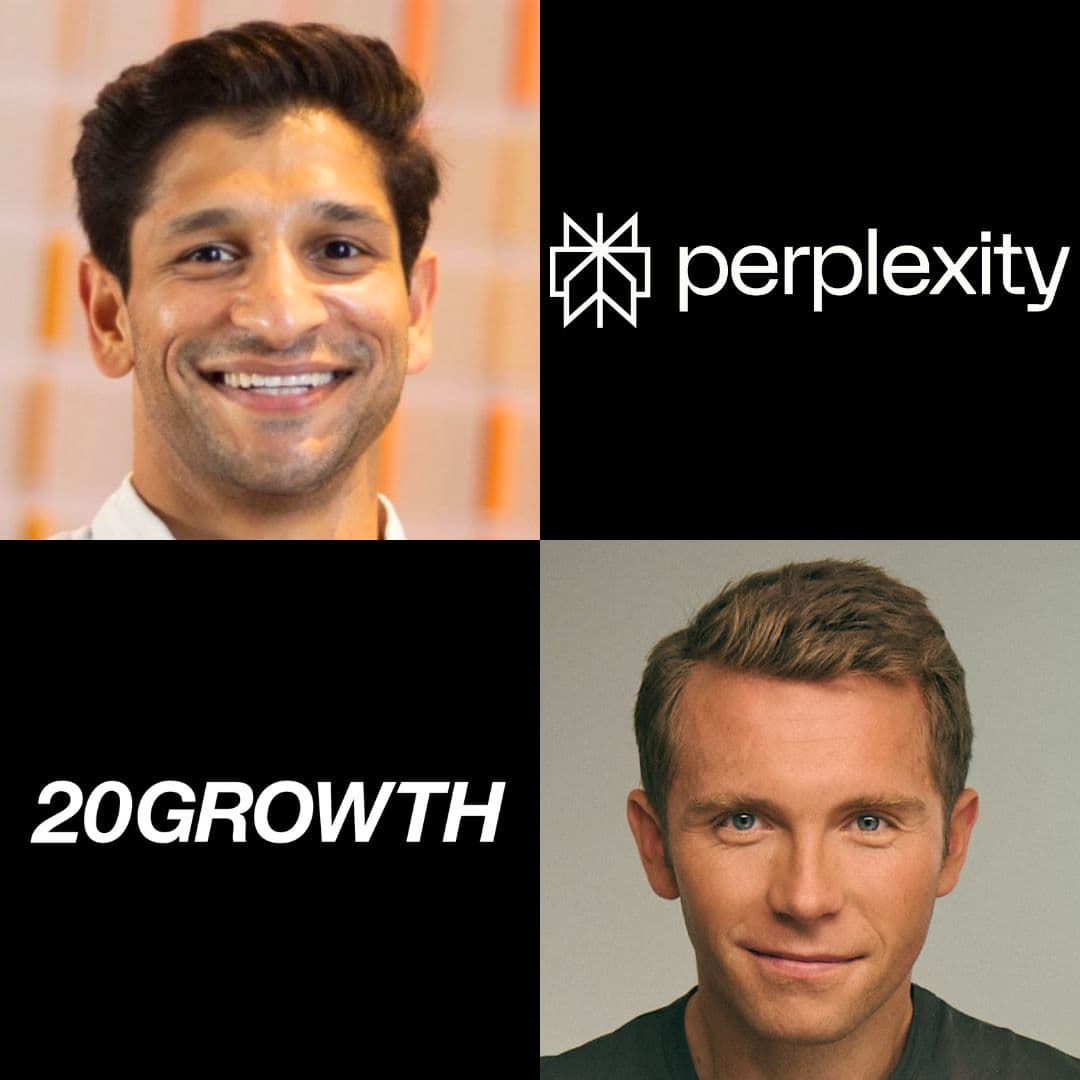
Podcast Episode Notes: 20VC - 20Growth with Raman Malik
Overview
- Podcast Title: The Twenty Minute VC (20VC)
- Episode Title: 20Growth: Inside Perplexity's Growth Machine
- Host: Harry Stebbings
- Guest: Raman Malik, Head of Growth at Perplexity
Guest Background
- Current Role: Head of Growth at Perplexity, responsible for growth marketing, onboarding, activation, retention, and monetization.
- Previous Experience:
- Early member of the growth team at Lyft.
- Previously founded his own startup.
Key Discussion Points
- Inside Perplexity's Growth Machine
- Key Achievements:
- Identified major growth drivers and lessons learned from failures.
- Effective use of partnerships for driving growth, distinguishing between good and bad partnerships.
- Paid Acquisition Philosophy:
- Malik views paid acquisition as a "drug" that can inhibit organic growth and retention.
- He advises founders to focus on building a strong product and user retention before investing in paid ads.
- Acquisition, Retention, and Churn
- Critique of Brand Marketing:
- Malik argues that brand marketing often fails to provide measurable results but acknowledges its importance at certain junctures.
- Retention Strategies:
- Simplified measures for startups to improve retention.
- Importance of defining what an "engaged user" means for Perplexity.
- A/B Testing:
- Discussed the pros and cons of A/B testing, including common pitfalls and the importance of well-structured tests.
- Building a Growth Machine
- Team Dynamics:
- Emphasized the value of hiring former founders for their comfort with risk-taking and innovation.
- Differences in managing founders versus non-founders in a company setting.
- Underappreciated Growth Channels:
- Suggested that community engagement could be a powerful growth channel if leveraged well.
- Biggest Flops and Lessons Learned:
- Shared experiences with unsuccessful growth tactics, particularly around influencer marketing.
Growth Metrics and Strategies
- Micro-Optimizations vs. Big Swings:
- Malik believes in the power of micro-optimizations to lift user metrics gradually but also emphasizes the need for substantial innovations or campaigns.
- Milestone Metrics:
- Defined key milestones that indicate user engagement and retention potential, such as the number of queries performed in the first session.
Insights on Paid Acquisition
- Role of Paid Ads:
- Malik noted that paid ads can lead to superficial growth numbers without improving long-term retention.
- Successful Acquisition Channels:
- Organic word-of-mouth has been the primary growth driver for Perplexity, making it a core focus for future growth strategies.
Reflections on the Growth Landscape
- Advice for Founders:
- Focus on retention and activation rates; understand the underlying user behaviors.
- Growth Employee Dynamics:
- Importance of hiring individuals who can adapt and contribute meaningfully without needing excessive guidance.
- Future Trends:
- Emphasized the significance of clarity in defining growth strategies among teams.
Conclusion
- Final Thoughts from Raman Malik:
- The need for continuous learning, adaptation, and embracing both micro and macro growth strategies.
- Encouraged a culture of experimentation within teams to foster innovation.
Key Takeaways
- Focus on Core Metrics: Retention and user engagement should guide growth strategies.
- Community and Relationships: Leverage partnerships and community engagement for organic growth.
- Innovation and Experimentation: Cultivating a culture that embraces risk and experimentation is vital for growth success.
This episode offered deep insights into the growth strategies that can make or break a startup, with concrete advice from a seasoned leader in the field.
Written by AI. May contain mistakes. Listen to the episode to check what was said.
Transcript
Automatic transcript. May contain errors.0:00you need someone to hear about your product three to seven times before they're going to give it an honest trial. If I can get a user on perplexity of simply two three queries in that first session, now I know I'm really onto something. There's no middle ground if you're not first. It literally just means your only other option is to just be a lot better than everyone. This is 20 growth with me Harry Steppes. Now 20 growth is to show where we sit down with the best growth leaders in the world to discuss their tips, tactics and strategies when it comes both to growth and to scaling growth themes.
0:30And today we sit down with the head of growth for one of the fastest growing consumer companies in history. They are the Google killer and they are crushing it. I am so excited to welcome Raman Malik, head of growth at Pplacsty where he's responsible for growth marketing, onboarding, activation, retention and monetization. And prior to Pplacsty, Raman was an early member of the growth team at Lyft and joined Pplacsty earlier this year having founded his own startup up previously. But before we dive into the show today, when I spoke to Canva co -founder Cliff O 'Bract on the podcast last year, he touched on how visual content is fast becoming, the fuel that's driving, the modern workplace, and your team needs to create an engaging visual pitch deck to sell an idea.
1:10A product launch needs an inspiring video to excite investors and customers. It's a game changer for visual communication at work. Canva turns your team into master visual communicators so they can get their point across with With visual impact inside and outside your business, with no design experience needed, with Canva, any team member and any company, whether you're a startup or a global organization, can design compelling on brand visual content quickly and easily. And that's why 90 % of the Fortune 500, 90 % use Canva. Start designing today at Canva .com, designed for work. And talking about growth, let's dive into how voyantis is transforming customer acquisition.
1:51As this is my growth podcast, I'm so excited to share with you the amazing story of the fastest growing company in my portfolio, Voyantis .ai, who isn't being asked by their board to improve unit economics. The Voyantis is the first and only company I've seen that has found the way for you to crack this nut by not only leveraging your first party data to predict customers' lifetime value, but truly coupling these predictions with a prescriptive layer integrating with and influencing each and every step of your customer's growth journey. Voyantis helps you acquire the right customers in Google and in Matter, allocated incentives to the right customers via your sales force and braze, and trigger the right upsell option at the right time for each of your customers.
2:35Oh and check this out, the best part, Voyantis are not only increasing ROI by 20 to 40%, but they're also improving the quality of your customers, their solution has already improved Unity economics for leading companies like Miro, Rappy, Moneyline and many, many more. So if you want to improve your LTV to Cat Ratio, before your next board meeting which I recommend, start by heading over to voyantist .ai -4 -20VC. That's v -o -y -a -n -t -i -s .ai -2 -0 -v -c to get a free value assessment. You have now arrived at your destination. Ramen, it is so lovely to finally do this. Thank you so much for joining me today.
3:16Thank you for having me. It's been so much fun. Dude, I want to start with, you mentioned before you brought up in Alabama. How does a kid from Alabama get to being head of growth at perplexity? Like, no. I have no clue. I have no clue. I had a great family that really pushed all of us to get out of Alabama. To go do cool stuff and, you know, here I am in San Francisco working at a really, really fun company. But you were in the MBA program. A lot of people in MBA programs, you want to move into startups. You found it a start -up. What happened there? What's your advice to others in MBA programs wanting to get into start -ups?
3:52Yeah, MBAs have such an interesting reputation in tech. Most people just absolutely hate them. I personally, even though I left a year early in the MBA, I had a great experience. I got there, I came to Tinker with Ideas. I never took an interview, started playing around with all my different ideas. You can get funding from this school. So it's essentially like a pre -preseed and you're just tinkering full time. And investors start conversations and start flowing and it became very clear like I'm going to learn a lot more I'm gonna have such a better experience if I just go full steam ahead on this idea and that was it I mean it was amazing.
4:26Would you recommend MBAs to others? I think MBAs make a lot of sense for people who are trying to break into a specific industry if you are Trying to break into private equity or you want to be a PM at Amazon or go into McKinsey Then MBAs have like your preset path and you just follow your guidelines, you have a community to work with and prep for and You're hopefully get in so it's a very like expensive bridge to breaking into one of those fields But for many people that's an incredibly valuable valuable journey The other kind of difficult journey that you make is from founder to publicity That's a different thing when you run your own shop to when you join a team.
5:04How did that happen? Does Arvin come and say, hey, we need a head of growth. You want to come? Just take me to that. Yeah, I mean, I go to business school, I go take a swing for three years and just grinding up against startup life. And there's nothing easy about it, right? Like when you're a founder that, you know, month after month pivot after pivot, nothing is moving, there is nothing more demoralizing than those moments. And you know, when it came down to the final straw we end up shutting down, I'm chatting with different companies, I'm chatting with Arvin, Dennis, Johnny, Dimitri, everyone.
5:39It became very clear like this is a company that is moving crazy fast, is having so much fun, I'm going to go do that. But it's different going from the founder's seat, right? One you are now well aware of how freaking hard startups are, your ego is bruised, right? You just got your ass kicked. So it's a total adjustment in terms of framing. And then you're basically descoping yourself. I'm brought on to just drive growth. So founders enjoy the variety if I got to go work on 100 things and I get to steer the ship. But now you're hyper focused on, okay, I'm here to drive growth. I am descoping myself just to go do an excellent job at this.
6:14And that's an adjustment as well. So you're here just to drive growth. Head of growth kind of means so many different things. It's a very ambiguous term. How do you specifically define head of growth? If I see growth as an independent function that bridges product and marketing, so there's growth product and there's growth marketing. Growth product, let's start there, is a product team, engineering, design, data science, all working together. But your core product, the product you're obsessing over, is the user funnel. So acquisition, activation, retention, monetization. So growth is not just about, let me fill the top of the funnel with new users.
6:55and it's about getting those users to become retained, to develop into power users, so that you can eventually monetize them. So you just obsess over that journey that facilitates that user lifecycle. That's growth product. Okay, that's growth product, and then we go growth marketing. Growth marketing, your goal is the exact same as the growth product team, right? Drive that user funnel from acquisition, down to monetization, but your tools are just different. You're not approaching it from a engineering design or data science angle, your tools are marketing channels. They're lifecycle communications.
7:29It's community. It's marketing campaigns. All these things need to live closely together. I can't work on an onboarding experience without a product team iterating on every flow and without the marketing team thinking about copy, thinking about email drip campaigns. Everything comes in as one cohesive unit to bring this final to life. My question to you there is, these are quite built -out teams. That is full resources and a lot of resource allocation. When is the right time to build out a growth independent function? The easy thing to say is post product market fit, but what does that even mean?
8:04Not really do, because that team costs millions, growth product and growth marketing, and then what they're going to need on top of that. If you're at like two, three million in ARR and got product market fit, Doth bust in no fucking parsnips, you need 25 million in ARR for that team. Yeah, but I mean, I think as soon as you see that you have early signs in retention, like we're seeing like, you know, if you see 30 % retention in month three or four, you have the kindling in your fire where it is now worth it to go put gasoline on it, go make that investment. And it doesn't have to be, we're going to go turn on marketing channels and spend a bunch of money.
8:42It could just be, okay, can we get that 30 % retention to go to 40 %? Can we make it really easy for to convert all these users through a funnel? So when you were brought in, did you have this team built out? Or did they say, hey, we want you to build it out yourself? It's a very flat organization. So there was nothing built out, but there were resources to pull from, right? You know, there are engineers that are ready to jump in on, okay, let's go hack onboarding or let's go really iterate on deeper retention or anything like that. And it depends on when you are starting, but a lot of times it's, well, what even exists today?
9:18And your first few weeks stepping into growth is you're just turning over stones. You're trying to build the map of the world. Okay, what's happening in acquisition? What's happening in engagement? What's happening in monetization? And usually when you ask those questions, you don't get any answers and you just get 100 more questions that you've now go figure out. So then your job becomes, let me build the right infrastructure so we can actually measure and understand the world. And that's where you start getting into engineering logging, attribution, do we have first party cookies, all of that?
9:48Is growth a game of micro optimizations where you are moving from 30 to 35 % retention on D90? Or is it big swings on a new product that could change the game? Yep. I think micro optimizations are seriously underrated. I think anyone that has built a growth model for their company, imagine you open up an Excel sheet, you have new users, you've retained users, you have resurrections, and you've churned users. Right? New users plus retained users plus resurrections minus turn users. That's your weekly active or monthly active. Right? And then if you assume like a new user growth rate or retention curve, you can now play around with, well, if I increase retention by 10 % what happens to my weekly active?
10:34What happens to my monthly active? That 10 % small change in retention or in new user activation, you see the entire water level of your active user base just increase. That small micro optimization just raised the entire water level of the company. And so that's huge. I'm going to go after that if the opportunity is there to hedge that, though. Micro optimization has diminishing returns. At some point, I'm not going to get to be able to squeeze out an incremental 10 -15 percent without a lot of wasted experimentation time. And that's why my rule of thumb is, once the quarter, we have to be taking at least a couple massive swings, right?
11:13A big new feature, a big marketing campaign, it has to be high risk, it has to be high reward. I have to be able to stand in front of the company and say, I'm going to do something and be willing to fail. What should your success rate be on those big swings? I'd say 25 % would be pretty great on these big swings, maybe like once a year, we have just a banger campaign or banger new feature that is now really driving growth or really opened up a new audience for us. That is huge. We said, oh, about our optimizations about kind of squeezing as much value out as we could. A cool way to do that is in A, B testing, determining what works, what doesn't, and then doubling down.
11:51What is the role of A, B test today in your mind and growth? How do you think about that? There's a good and bad and ugly. The good is we are using A, B tests to understand and impact to understand how every metric changes are we accidentally bringing down certain metrics? Do we really understand what is incremental and what is not incremental? That is like a well -scoped AB test teaches you what you should work on next. It adjusts your direction, it adjusts your cadence. A bad AB test is poorly scoped. You're not gonna get any information out of it. It's a messy thing with a low minimum detectable effect.
12:27And you're gonna run it and you're not gonna get anything out you just wasted a week of your time. And then the ugly, the ugly is, I'm running an AB test so that I can put something in my performance review about a number I moved, or I can like say something to my manager. And you see that as companies get bigger, right? We're running AB tests just to be able to say, oh, I increased activations by 12%. I had the head of growth from Revolute, one of the fastest growing fantais in the world on, And he said, a good PM does not need a B test. You know if it's working or if it's not working. If he listens to the show, which he does, I'm fucked.
13:06My question to you is, is that fair? And do you think actually good PMs need a B test because it is very clear when it's working, when it's not? Yeah, I think your goal as a PM is to optimize direction. Are we working on the right thing? Are we poking at the right part of this product that can drive impact? an AB test give you a quick response to it. And I think that is like core to understanding how we're working on the right thing, are we moving fast enough, are we really moving the needle on this? That being said, you should go into an AB test with a pretty strong confidence of what's going to happen.
13:37And this is where like intuition comes in. I was like, we're running this and that here's what I think is going to happen. I think we're really going to move this metric, but we might see that other metric go down a bit and that's what we need to watch out for. If you don't have that intuition, then you're just flying blind. Have you ever had an AB test mislead you? A lot of times you see AB tests with mixed results. And those are the trickiest ones to navigate. So let's say we're working on, okay, I want to get a user to hit their, you know, fifth query in the session. Then I'm going to show them a sign -in opportunity.
14:08Well, I'm showing an assign -in opportunity. I'm now juicing activations. Great. But a lot of people saw that sign -in gate and they hated it. They really screwed this. I'm out of here. and now I'm hurting query volume, I'm hurting searches, happening in perplexity. So now I have two different metrics to hold onto. How do I value those two things down the road? That is where it gets really, really fun for some of us, where it's like, okay, well, how do we value this? Will that activated user retain and over time those retained metrics if I think about this on a 30 -day timeframe or a 60 -day timeframe will make up for that initial loss in query volume?
14:45I'm not going to go run that AB test for 60 days and then come back and tell the team, okay, we finally made a decision. You kind of have to make a decision right there or figure out how to optimize and like protect that downside. You said there about getting to your fifth query. I always think to Facebook in this case where they really wanted you to get to like, I think it was five friends and then you had a much higher likelihood of retention. Do you have a metric internally that is designated as like a, hey, post this, we have a much higher likelihood of retention. Yeah, I call these milestone metrics.
15:18So can we go take anyone who's retaining at 30, 60 days and then look back into their first couple sessions and say, okay, what did they do differently? What is unique about their experience? From that, can we establish a working metric? It's not perfect, right? Cause it's not deep retention. If I can get a user from perplexity specifically to three queries in that first session. Now I know I'm really onto something because that is what a lot of great people did. It's enough time in product where that user now understands the value of complexity and they're gonna more like there's a high likelihood that they're gonna come back and retain.
15:51You said that two to three in the first session. I had Alex Schultz, one of the OGs of growth on the show from Mattah and he said that the biggest problem of growth is that every goal or metric goal can be gameed. And if you want that one, we can put in a load of recommended searches that you click, which technically get there, but doesn't actually mean you got what you wanted. How do you think about setting the right goal if every metric can be gained? One is monitoring. Does this still correlate down the road once we're done with gaming it, once we're down with tinkering with it? And if we're seeing that correlation start to break, well, okay, I'm not being honest with myself around if we're actually helping retention here.
16:32The other thing is to take a round at an approach, you can't just stare down one metric. I need to stare down a number of queries, but also time in first session. Did that first session timing hit that 10 -minute period? And not just - Why would you want that? Don't you want shorter time in because it means time to value super high? Or you had so much great value early on that you're not rabbit -hoaling into perplexity. Harry, you mentioned a query you and your family were putting in last night. What if like if that can lead to a bunch of follow up questions? That's awesome. You're now deep in the propleptity experience learning and exploring and it's great for us.
17:07I'm not sure I want to explore that clearly much more. For everyone listening, it was the query of how many times does a human fart in a day? And so your recommended searches were not that attractive to me at dinner, but I appreciate the sentiment in time. Thank God that AI exists so we can answer that. Thank God. My question is, when we think about acquisition, what have been your single biggest lessons on effective acquisition since joining Pplacity and what does Pplacity's acquisition make up like? Yeah, AI companies have a ton of curiosity traffic, which is awesome Anyone who launches something that shows a little bit of magic or has a magical demo They are going to get traffic.
17:48They're going to get quick usage all of our growth most of our growth has been organic word amount two years in and we're still writing this incredible wave of organic traffic. That's the best channel you can ever have. So the question for us is how do we keep nurturing that? How do we keep this organic magic still happening? What does the acquisition make up look like now? What amount is that 80 percent? Mortemouth, yeah, about 80 percent. It's going to depend on priority countries or international. We do a lot of big partnerships to drive distribution. That was going to, so we have 20 growth, which is a WhatsApp group with the biggest growth leaders in the world.
18:23I'd love to have you in it after this. I'll chat about it. But I said, like, hey, I've got you coming on the show. The most popular question was aggressive partner deal strategy. LinkedIn, Xfinity, Lenny's podcast, all give away year for free to pay members. Well, it'd been your biggest lessons from those partner programs. They are incredibly effective at driving distribution. We can go out and scream from the mountain top about perplexity, but it is a lot better when someone else is telling you to use it, or it is being bundled into an existing product of yours. That's going to drive a lot more trial.
19:00We have a phenomenal partnerships team. They are absolute sharks. Does that change the unit economics quite a lot there? To a certain extent, but that's acquisition costs. We're willing to trade off a month of pro, because if you don't use pro, it's pretty variable, right? If you're not using pro, So we're not losing money, but if you are using it, well now we're capturing you as a user, you're really starting to understand why perplexity is magical, and then the game becomes, can we convert you to that paying user after? What partnerships do you not have that you have most like to have? Cool.
19:30I think about more audiences. So what audiences do I want to reach and what partnerships can we get to there? So I think a lot about the student audience. And so there's some partnerships in that student world that I really want to break into to help drive distribution within students at scale. What have been your biggest mistakes in our acquisition that you've learned from as a result? There's so many. We're not making mistakes, we're not learning fast enough. I think I came in really interested in influencer marketing and then really wanting to test this channel. Creators, how do we work with creators to share a perplexity?
20:02And I totally underestimated the amount of effort it is to work individually with creators on specific content and making sure they get the right messaging. And ProplextEats is not a simple concept to explain. Like me saying AI search engine means nothing. And so to manage a bunch of these creators creating content, long -tail creators, he'd ended up a falling flat and be taking up a ton of time, ton of time. And so I think we're moving very quickly as we'd rather work with fewer creators and just develop a really good relationship with them. When you came into ProplextE, I spoke to Aaron before the show and he said that, actually, you very quickly diagnosed, this is not an acquisition problem.
20:47This is a retention problem. Can you just take me to what you saw and set the landscape there? So if you come in, you turn over all the stones, you're trying to get a sense of through this end -to -end funnel from acquisition down to monetization. Like where should I spend my time? Where is there the biggest opportunity to drive growth? And we had Demetri and the business team running these big partnerships. We had tons of traffic coming in from the top of the funnel, my eyes went straight to that early activation rate, week one, week two retention. None of it was bad. It was actually like pretty healthy consumer retention, but that was where if we can move that number early on at the top of the funnel, we're increasing the water level of all activated users and weekly active.
21:28That's where I need to hang out. That's where I need to go. What's a good activation rate? Very, very dependent on the company. So keep in mind, perplexity, you don't have to sign up to start using it. That's amazing, right? it gives us the opportunity to have quick trials. People can just put in a question and immediately see the value of it. But that logged out visitor to logged in activation rate is tricky to navigate. And so from that logged out experience, I'd love to push that into the 30 % of users are hitting my milestone metrics and we're converting them to signed in users. On the retention side, I think it's a bit murky.
22:04I think a lot of people don't know. Can you provide some clarity on what good retention is? Consumer's hard, man. Consumers really hard. And so what you want to see is that retention curve stabilize. I think it was like by month six, you want 45 % is really, really good. That's the target, right? That's what we want to push to, especially when you're not a social product that has more of like that smile or retention curve. You really need to figure out how can we drive retained value and increase frequency to get to that 45 plus percent. So 45 plus percent on the seven, the... Oh no, month, month six.
22:42Month six, you want 45 percent. Yeah. Are you blown away by the drop off amount? No, I think that's pretty good. I mean, that's high. Oh, yeah. But that, I mean, that's how you know you're providing value. I think your Lingo's 365, they're 50 percent. That's 12 month retention at 50 percent's world class. And then the engine they have built is incredible. It's a world -class way of retaining users. So we identify that retention is a problem then. We've got amazing acquisition. We've got these partnership teams that's driving top of funnel. What do we do then when we know retention is the problem?
23:16So there are finite ways to move retention. One, you are setting up your mouse on metrics. What correlates with deeper retention earlier in the funnel? Right, so that three queries in your first session. And now, how am I really trying to move that? But at a higher level, So you're constantly playing with mixed shift, right? So one, you can optimize channel distribution. So organic and referrals is always going to have higher attention than paid acquisition and partnerships. That's, you know, because of so much of our growth as word -amout and partnerships led like we don't have much channel distribution optimization to make.
23:50Two, as you can target different audiences. Proplexity is incredibly horizontal. My grandmother uses it, my doctor uses it, everyone uses it. So can I find different segments, different audience segments that have really high retention, and then can I specifically go after them? So I'm changing the mix shift of new cohorts to that new audience, which increases that retention for those cohorts. Which cohort has the highest retention, and which has the lowest? Well, you see a lot of trial users that are coming in from curiosity traffic, like the weak enders that are putting in, you know, how many times does someone fart in a day.
Read the full transcript
24:24That's a little bit lower retention. If I'm here to solve a knowledge gap, like I'm using perplexity for work specifically, or I'm a student, using perplexity to find sources for a paper, that is really, really sticky retention, because we are solving knowledge gaps for you. It's not just curiosity that we're bringing you. I saw Arvind on TV the other day, a Commonwealth channel. It was, you have so many CNN, CNBC, MSN, Medfuckin, all these letters, ridiculous. But on some of one of these channels and he was like actually the amazing thing about the complexity is the length of query is much longer than on Google.
25:02It's like nine words. I think it was the average. What does that tell you and does that influence how you think about targeting acquisition retention? Yeah, because you're getting more information from the user around what they're looking for, which means we can provide better responses. We can reformulate that query to give you broader search results and then use that to to drive our answer. The more information we have in that query, the better of a result we can provide. What has been the single biggest needle mover? I heard in said that you drove the numbers up by 10 -15%. What has been the single biggest needle mover in doing that?
25:37I think that there've been a couple. We've worked on a lot of different things. One is, can you mix shift audience? So we've done a lot of audience targeting around specific high quality cohorts. Two is, can you mix shift platform? I don't want you just on the web app or I don't even just on the mobile app. Can I get you across multiple devices? And that cross -device conversion is really, really strong for retention because now you're using it on weekends, you're using it during the day or everywhere. We're integrating into your life. Those are the two really big ones and then you never can just underestimate driving product improvements.
26:09It's always going to drive retention. What retention strategy did you think would have a big difference and didn't? And this is something we're going to never stop banging our head against, but how we tinker with the messaging as soon as you land on perplexity, it's critical for us that people understand that perplexity has up -to -date data that we show sources and that is the inherent value. And so you're going to see a lot of experimentation on how can we drive the messaging so people understand what they landed on and configure how can drive value for them. I quite like doing this game, which is I did this with the Glenn Coates of a VP of Product at Shopify.
26:46And they basically went on Shopify's website when we were doing the show, and then I tore it apart. Literally very embarrassingly, how rude of me. And he was like, oh, this is awkward, it's live in a show. And then he tweeted like a year later, following Harry's ridicule, he was right. And so I've changed the whole Shopify page. And I was like, yes. Yes. But her Majesty is a free AI powered answer engine that provides
27:17Dear fucking hell with this or that provides accurate Trusted and real -time answers to any question. What would you score that out of ten? I give us a six right now Because bit worthy isn't it? It's a bit worthy. Is that our Google description though? Mm -hmm Well, I mean, there's some SEO optimization happening there as well. But when I go onto peplasty .com or dot AI, it just comes up with like, ask anything, discover anything. Where knowledge begins. Yeah, that's the fine balance. How much information do we need to slap in your face? How functional should it be? How brand oriented should it be?
27:54This is where we spend all of our time tinkering in terms of what does someone need to hear to understand how complexity can help them? And what are the key differentiation points for us that we need to highlight? So you can have it be anything. It's yours to own. Just you are the one who decides what would you have. I mean, I think where we're moving to is really simple language around ask anything or what do you want to know and search like never before. I think it's really important to get across that perplexity has live search. We are searching the internet in real time. We're giving you up -to -date answers.
28:25And that is really critical to make sure everyone understands. I do like perplexity. We focus on search not self -driving cars There we go Take a lesson from like anthropics like fuck you to your competitors Maybe not I mean maybe that's a bad idea you know, I'm a VC for a reason I've been so said usual growth pms would ask for marketing budgets that slam ads on TikTok and Instagram He said that you first wanted to ensure that you had good cat to LTVs before throwing money at acquiring users. What did you want to see in the cat to LTVs that was important to you? A couple of pieces here. One is like, should we even be focusing on monetization?
29:12Do we want to think about paid acquisition as a lever that needs to bring in users and then we see that payback happen immediately? And my answer early on was no. So I think we just need to go focus on top of one new user growth and getting incredible sticky retention. And if we do that, guess what? We're going to be able to figure out how to monetize these users, whether it's through a consumer subscription, whether it's through ads, whatever it is, we're going to be able to figure out that monetization. So let's put down CactLTV for now and let's, the only metric I'm going to just yell about all day is our activation rate and our retention rate and hold me to moving that.
29:48When did you decide that you were going to have Cat12 TV as a more important matric? I think that's happening a little bit now. Like, you look at Proplexity and it is completely unoptimized for driving subscriptions. How could it be more optimized? Well, we could add more gates. We could add more usage gates where you run into, okay, I really want to use Pro Search or file upload more often. And well, you know, you as a free user, you only have three per day, but we know you love this, so why don't you consider upgrading to our pro plan where you get basically unlimited of both. Those are the optimizations where we can tinker with the limits.
30:25We can tinker with how we are showing you upsells in that moment. Cax and LTVs are very variable. The Cax change so significantly over time with maturation of cohorts. LTVs unique quite a lot of data for to understand true LTV. If you're advising a founder. How do you advise founders on how to think about Cat 12 TV in your importance metric stack? Yeah, it depends on stage, right? Do they have, are they at the scaling period where it is now turn on these channels and drive growth because we feel really good about where we are in terms of retention or any incremental work we're going to do on trying to move activation or move early retention is hitting diminishing returns.
31:07Then it's okay, let's now go move our focus to attacking these channels and maximizing efficiency of the maximizing these CACDL TV ratios. That's when I think, okay, we're seeing diminishing returns on retention. Now it's time to move to CACDL TV optimization. Why do you do any paid? I know you do adverse and you do some paid, but you just have such a good acquisition flywheel. Jensen says, you're that's his favorite search tool. Like, why bother doing adverse? We barely touch paid acquisitions is a total drug. It makes everyone feel good because top of funnel numbers move up and once you see those weekly activation rates, well no one wants to see that go down, but it's going to underperform on retention and maybe most importantly it's most likely not going to be incremental.
31:54I basically started my career on the paid acquisition team at Lyft, right, spending millions and millions of dollars on these channels. And I'll never forget this, our head of growth at the time was basically just like go turn off every single page channel for new passengers. And like, we're spending, like paid acquisition was driving a good amount of passenger acquisition. And so the growth marketing team turns off every single page channel and installs and signups barely move. They go down by like maybe 5%, 10 % from where my road it was, what did go down, it was all low quality. Every marketing dollar that was being spent to acquire these new passengers was just cannibalizing organic traffic.
32:32None of it was incremental. So maybe it pulled those users forward by a few weeks, but overall it was just, Lyft had enough organic word of mouth traction, where once you've factored in the incrementality of the channel, it was inefficient, it made no sense. Why do you pay it, period? Why do people do pay it? Well, let's flip that Lyft scenario. So then you've the passenger side, not incremental at all. The supply side is really hard to get drivers in a ride -sharing network and guess what, you're a marketplace. You need to balance supply and demand. and you need to acquire the drivers. And so I think this is where we did run a lot of paid at lift to acquire the supply side.
33:10And part of that is, well, if we acquire the supply side, we can balance the marketplace. Balance marketplace is gonna be much more efficient. Lift will grow because of it, and that spend will pay back much faster. So I think it makes sense as like a very intense balancing lever for marketplaces. And then if your unit economics is supported, I do think there are advantages to using paid acquisition to go after audiences that you're under indexed in. So right now, like the only paid acquisition we've ever touched in it so lightweight, or some just like simple TikTok ads, testing different value propositions with 18 to 24 -year -olds.
33:49Very specific marketing. What have you learned from them? It's hard. And TikTok's a crazy beast of a place. My God. Why do you say TikTok's a crazy beast of a place? I agree with you, I don't know, I can check those around that. Why do you say that? You know, the algorithm is so different than how we think about traditional algorithms where it's built for virality. So if you're trying to do organic TikToks, you're comfortable with 10 failing but one hitting 7 million views. And that's almost like, it's such a crazy power lot. On the TikTok ad side, I think we are learning a lot around how AI companies need to be positioning with new audiences that don't care about AI.
34:29Like, you can't walk over to be like, well, we're an AI search engine. And people are going to be like, oh my god, that's what I've been waiting for my entire life. You need to abstract a way this whole AI piece and just go straight to the value prop of get answers immediately backed by sources. Yeah, 100%. I think we've got to the stage now in product marketing where AI has become almost a negative. Like two brushes now AI powered. It really is. It says on the box AI powered. I've no idea how. Thanks Oral B. My point there is just bluntly, I think it loses value from having the AI sticker on it at some points.
35:03Yeah. And it worked really well early on, right? It was kind of like a magician pulling a rabbit out of the hat of like, look at this magic. But now it's... Now it's in conversion shit on TikTok. Conversion is pretty good. We're still very early in testing this. Conversion is solid. Like, top of funnel campaigns do well. I'm still waiting for some of this retention to bake. How much are you willing to spend on tests today? Not much at all. You don't need to spend much to really understand what their attention is. 10K, 20K, 50K. 10K, the week, and the amount we can learn is pretty great in terms of what messaging is working, what messaging is not working, or what use cases really, really resonate with people whether it's travel planning, studying, solving something at work.
35:46There are a lot of different things we can test because we're so horizontal. Do you like brown marketing? You need someone to hear about your product three to seven times before they're going to give it an honest trial. I really do believe in that, and I think it's incredibly hard to measure the value of it. And just because we can't measure it does not mean that it's useless. What brown marketing things do you not do to say that you'd love to do? Sponsor stadium, be on a shirt for a football team, be on an F1 car. And get a lot of these emails. You know, I mean, we're doing a lot. What's cool about properties, we don't have a marketing department.
36:21So we're doing so many cool things and all of these are just someone on the team had a passionate, was really passionate about an idea that we believe has viral potential if so, like go execute and make it happen. The metric that matters in brand marketing for me is there's an expected number of impressions that anyone will tell you are going to see if you go run a TV campaign or sponsor a jersey. What really matters is what is the incremental impressions you're getting from that? Can that moment go viral where, okay, we may be paid for X amount of impressions, but we're getting a lot more on top of it because people are reposting about it because it has gone viral across social.
36:59That is very remarking to be really interesting. I totally agree with you. One of my friends and a portfolio founder of ours started a recruitment platform years ago taking people out of big banks like Goldman Sachs and putting them into startups. and they basically took out a billboard right outside of Goldman's size. He said, cool to the London and said, Goldman, really, I bet your parents would be proud. Dot dot dot. And every newspaper in London wrote about the startup that was basically sticking the middle finger to the big banks and the incremental to your point there was enormous. Yeah.
37:34And especially when you're hitting net new audiences. So we ran a TV ad with Jim Harboth, great football coach, American football in the US, and the commercial goes live, and we have tons of influencers, reporters in sports, retweeting it, commenting on it, and this is a new audience, right? For all the sports fans sitting at a bar watching the game who have all their niche questions about what's happening in the game, like who won this game 12 years ago, Proplexity is perfect for that and we are now introducing them to this new audience that we're not really reaching right now. It's very effective.
38:11What's been the hardest thing about doing paid for you at PpliSTY? There's so many different channels to test. I don't want to lose my focus, spending on channels where I'm not going to learn much. And I think I got burned like a good example of another area I got burned was newsletter sponsorships. So okay, like there's some interesting audiences here. I want to try this out. But it's really hard unless you have a really crisp product that you can put into a really simple ad placement that is like two sentences of text, and that's it. New slutter placements are really hard. And so again, that's another one where we came up, and I don't know how many learnings I walked away with there.
38:47So I kind of just spun my wheels for no reason. So you're happy to spend if you get learnings. Oh, absolutely. Even if it doesn't work, you're fine with that. Yeah, growth is a game of intuition. All we have to do is just keep learning to figure out the right direction and then just work on cadence to just keep driving in that specific direction as we learn. Dude, when we spoke before you said to me, be first to a growth channel or just be better. I like to lauders the hedging strategy to be honest, because it's not like, you know, first -wise wins. But can you just unpack that for me? Yeah, I mean, there's no middle ground.
39:21So everyone who growth is looking for alpha, right? Find the untap channel, beat everyone to it, right? Dropbox, like, with the referral program. I'm Groupon, an email, Pinterest and SEO, do a lingo and just like a totally unhinged social media. All of them were kind of first to this concept and it really, really worked. And so as a growth person, you're constantly looking for like where is this opportunity? What are the channels right now that are kind of greenfield? Now the problem right now is like, channels are a little bit quiet right now. Facebook and Instagram are really expensive. Apple updates have made paid hard, organic social to freely, really hard.
39:58notifications are so crowded, everything feels really crowded right now. There's no middle ground if you're not first. It literally just means your only other option is to just be a lot better than everyone else. And that's like where we need to hold ourselves too. What channel do you think the world doesn't appreciate that should be appreciated more? There's a controversial one I think community and how you can unlock your power users to share the value of your product to their own miniature communities is incredibly powerful. How do you do that? Let's take students. There are students using purplexity and getting tons and tons of value, but we under index an awareness with students relative to chat GPT.
40:39So then the question is, well, how do we take our best students and give them everything they need, marketing budget, swag, whatever they want, so that they can go beyond the ground on these campuses and drive growth for complexity and build density on that campus. Let's arm our troops, our power users, with everything they need to grow for us. It's an incredible strategy because they're on the campus and these are not big campuses. You can build density very, very quickly. And as soon as you have that initial density, then you see where the mouths start to come alive. Who do you consider your biggest competitor?
41:13They're the obvious ones, Google and JetGPT. Which one? both. I mean, I think I think search is a massive market and so if there's somewhere we want to live it's it's going up against a big guy. Where could you be better? What channel are you on now? Where you're like, hmm, but we could be better. I mean, luckily for us, we aren't on many channels. We are still so organic, growth driven, partnerships driven. I do want to really really try and figure out how we can unlock creators and taste makers in a more efficient way and And that again is building relationships with fewer of them and working with them, not where we're just throwing a sponsorship placement on their newsletter or in their podcast, but finding really creative ways to bring it to life.
41:59I totally agree with you there. I always say a piece of content has to do one of two things. It has to educate or it has to entertain. And if it doesn't do that, then it doesn't have any place in any of our things. So many people social posting, it's like thrill to announce, but Plattiste's new product. You don't have to. And you don't learn anything from that. I would rather try and entertain and come up short because that one didn't work. But if we're just trying to go in the middle and say, here's for Black City, that's not never going to work. Before we discuss this team, I have to ask, what growth tactic have you done that you wish you hadn't done?
42:32I mean, I think I'm still kicking myself for those newsletter sponsorships. What did you not do that you wish you had done? This is an in -product one. I don't think sharing is inherent to the perplexity user journey or user flow. Like, I don't think that we have an inherent viral loop or someone does some research and then shares a thread or a screenshot to another person. But there's a lot of sharing happening on perplexity right now. Take an answer and put it on Twitter or send it to Harry. Whatever it is, we see a lot of traffic come in through sharing. I really, really want to get my hands on that experience and just drive sharing and find creative ways to promote sharing of this knowledge that you are curating as a user.
43:15Listen, dude, I want to discuss like building the team before we do a quick fire. It's written hard by hiring for growth. What is the right first hire in a growth team? It depends what you need. Do you want a marketer that can juice the top of the funnel, but can still get in the weeds, run experiments, think about onboarding flows, or do you want a product person that can run marketing campaigns? I obviously fall into more of the latter, right? I want to spend time in the data. I want to be turning over stones, I want to be holding onto that data. It depends on the makeup of the current team and the founders.
43:49If you're feeling good from a top of funnel perspective, and you have a complex funnel that is cross -device, go for the product person that has built these funnels before. The founders make good hires. You obviously were a founder before, Rippling, another obviously very successful company, has a huge amount of founder hires. The founders make good hires, and what are your lessons from that? We have a lot of founders here, and I think the best part about hiring founders is that they are much more comfortable at taking very big swings and being willing to fail. Like it is by nature, if you're going down the founder path, you have to be a little bit more comfortable in that world than the average.
44:28And the average person is not willing to fail. They're not willing to go stand up in front of the company and be like, we're gonna try this out. And it might not work. And so the more people you can get like that, you know, Mike Mabel's, I feel like it has this incredible analogy that early start -up teams need to be like a jazz band, right? Like throw out the sheet music. This is not what it's about. It's like, no, you are here to just riff off of each other and make it work. And that's where founders, I think, are great. It can go sour, I guess, as things scale. And you start to need that sheet music.
44:59You start to need a lot more coordination as the company grows. And some founders just don't want to, they miss the jazz band. They're going to jump quick to the next jazz band. Do you have to manage some in a different way? Maybe they're a little bit more larger egos. They like to feel like they're in control. Is there any different elements in how you manage Yeah, I mean, I think you've let him cook. I mean, you want to give him enough, if you hired them and you trust them and they can execute, get out of their way, let them go experiment, right? I mean, you don't want to put guardrails over their ability to experiment and try different things.
45:31Guardrails is going to hurt everyone. It's going to make everyone think a little bit smaller. You remove those guardrails, everyone's thinking big. One person at the company goes, takes a big swings, runs a TV ad with Jim Harba, everyone's now thinking at that level, okay, how do I, how do we go bigger? And that's the kind culture you want to create. As a European, I know Godrails very well, specializing them. Cookies, isn't allowed. What do you mean when you say about hiring for taste? What are you looking for? What are you not looking for? Yeah, the ability to understand what good looks like.
46:01I'm convinced that I'm not actually good at anything, but what I can do is go look at what's happening in the world, understand what good looks like, and then try and reverse engineer it. So that's the game. And how do I know if someone knows what good is? Do I put different products in front of them and ask them to analyze it? How do I know? I mean, I think it comes down to like, what are the questions they are asking that shows the depth at which they are thinking? Right? I mean, I'm a pretty open book when I'm interviewing about what our challenges are. And we kind of just jam on them. And you can tell very quickly how deep someone is thinking about your challenges and their experience with it that, okay, they're asking the right questions.
46:42They're trying to reverse engineer how to make this good very, very efficiently. What questions do you always ask in an interview? I always have some similar ones. Yeah, I mean, I love to trade war stories, especially if people with a little bit more experience of, okay, you were at Lyft. Tell me about the war stories around when times are really hard, what didn't work? Tell me about your biggest, you know, just total flop. And let's go laugh about this flop together. How was it continuously getting shit on by Uber? No comment. I always ask about like what was your first entrepreneurial endeavor?
47:17Great entrepreneurs all the dot young high -high correlation between the amount of activity you have in early entrepreneurship and how successful you'll be later on. Yeah, because it's almost a personality trait and you're kind of evaluate that personality trait because that's something you probably had early on. Do you do take home assignments for Canada's in growth? I do. For every every role it's a big ask. So I am cognizant of trying to keep it well -scoped. What is the name of the example of a take home assignment and how do you run it? We give different scenarios, usually two or three different scenarios.
47:48They're all fairly open -ended, so you can go into as much depth or... But the goal is to walk us through your thinking of how you would approach it and all the different areas that you need to consider along the way. It is really hard. Do you do it for plasticity or it's a different company? For perplexity. So like you'll give them an actual talk because some people say it's unfair because you have asymmetric knowledge and they don't know it And you know it so it's gonna be hard. I think that's fine Like that's a fair argument in the end like we give them a hypothetical about perplexity Like we're considering launching X now walk us through your thinking of how you would approach this launch or something like that So it's not you know something that we have done we're all in the room brainstorming together And you can kind of get a sense and feel of like what is it like to jam with this person and brainstorm with them when it's that hypothetical but still related to perplexity.
48:38How quickly are they going to ramp up and fit in? How quick feet do you know when you've made a mistake on a higher? I think fairly quickly. My rule of thumb is if they truly need an onboarding dock, we're in trouble. Because if they need me to say, here are the 20 things that you're going to do over the next 30 days, and this is your checklist. I want someone who can come in, turn over stones, and build their own onboarding dock very quickly. Like, I am very high trust in the amount of rope I want to give someone to go in here and start working on the area of ownership that you have and go make it really, really great.
49:13I'm going to have perspectives on how we should be implementing it or what we should be working on, but I want to see them come in and very quickly be able to figure out and have the motivation or the drive to say, this is what we need to work on and here's why. I do get you. I always find the best employees start before that day one. Do you know what I mean? and then they come in and they're like, I've done all these things, they're like, whoa. Yeah, you know, I got my laptop on Friday and was gonna start on Monday, like, I was in every single dashboard we have. And part of it was just pure excitement.
49:42You wanted someone that is just like obsessing about the problem at day one. Final one for you, what are your biggest hiring mistakes? And how did that change how you approach hiring? There's something I'm still working on, I'm slow to hire. And I'm trying to get faster at it. Why are you slow to hire? I care a lot about team. People say that they quit the manager, not the company. I think people quit the team. And if you have an incredible team that is just well -known machine, mutual respect, and everyone loves working with each other, it's really hard to quit that. You're just having too much fun.
50:13And that's what I want to try and create. I want everyone at the company to be like, man, I wish I could work on the growth team for a couple of months. That's the goal to have. And to find someone that can fit into that, that I believe is going to jump right into this and play an amazing part and have the mutual respect actually, everyone and be a great teammate. It's hard to find and you can overthink it sometimes. So I'm trying to be a little bit quicker to the punch on evaluating and taking risks with hires. The only thing I will say to you is the biggest mistake that most people say on the show is they've had too fast and they wish that they could let fires burn, so to speak.
50:47And so I'm not sure. I think sometimes it's better to wait for the perfect person. It's trade offs. Yeah, that's hard. Dude, I've loved doing this. I want to do a quick fire. So I'm going to say a short statement. You're going to give me your immediate thoughts. Does that sound okay? Sounds great. First, most common, expensive, irreversible mistake you see founders make when it comes to growth. Ooh, assuming the user's pain points when they're just straight up vaults, really, really not understanding. What does someone actually need to learn in that first session? It's the most common, you end up running up the wrong wall.
51:26What's the most polluted growth channel today? I mean, I think especially with all the latest Apple changes, I don't know how anyone is going to make Instagram or Facebook ads efficiently work at scale as like a core growth channel. It's a very classic answer. No, I just thought I completely agree though. You've got a friend and they've just been given a head of growth role and they start tomorrow. What advice do you have for them pre -there starting this new role? obsess about every single number in the dashboard, get your hands in on as much data as possible. You know, when I started, that lift has literally like entry level nobody role, but like my one thing is like, I'm just gonna know the numbers better than everyone else.
52:06And like you start to learn how the machine works. When you see how all these numbers start to correlate with each other. And then when you start knowing the numbers better than everyone else, you get pulled into all these incredible meetings because you're just the numbers guy. Like we have to have them in the meeting because he knows the numbers better than anyone. And I think that is the ultimate way to just build intuition of how your growth machine works Where the friction points in it and that is what's going to help you make the better decisions in terms of what you should be working on What is the single biggest lesson that you took from lift that was successful first?
52:36Don't need to run paid ads focus on retention focus on iterating on product What did lift do terribly that you vowed never to do? We overestimated how much better we could make the ride sharing product. Like when you look at ride sharing four or five years ago versus today, how much is the product changed? Not that much. So if you believe that you can keep making the product better and better and better, and that's going to unlock new markets, well, that's one thing. But if you're wrong about that, well, then you should be pivoting to meal delivery and stuff like that because you've hit your diminishing returns.
53:12And I think we underestimated how quickly we hit the right sharing diminishing returns on the product side. So the takeaway there is understand where the moment of diminishing returns is. Exactly. Yeah. And it's tough in AI right now because the world is changing every second. But it's critical to be honest yourself of what is the true term of this? Are we still seeing unbelievable growth in product iteration? What would you most like to change about the world of growth today. It's just clarity of what the hell it is. You put 10 growth people in a room and everyone has a slightly different answer of what we're working on, but it's growth, product, and growth marketing.
53:48And I think the more people that understand that, the better. What if you change your mind on in the last 12 months? When I joined perplexity and was writing out my pro con list, I think the one that was up there was like, can the application layer capture and monetize value? Or is it I'll just, you know, one big pass through cost. And now, you know, fast forward, not that long. I love being at the application layer. Like, this is awesome. I think that's really interesting, where I think the application layer is an amazing place to be. I think that's where so much of the value is going to emerge.
54:18It's so funny how the whole ecosystem resentism, reshifts that mindset around where value accrues. I remember doing this show where I literally everyone was saying, how does any value accrued on top of these models? It's just rappers. And I mean, it's crazy that eight, nine months ago, that wasn't a big question. It wasn't clear where there would be value. And today we're getting a little more insight into people who crush at the application layer who go really, really specific on high -tam areas can make a lot of money. What's Aaron's biggest strength? He can go from a very high level company strategy of what direction do we need to go.
54:57very quickly, two seconds later, down into incredibly specific weeds of what a user funnel should be. He can jump at these layers like no one I've ever seen. And this is all in one meeting. What's his biggest weakness? Perplexity is his first big swing at a company. And so there's a lot of intuition that he's picking up on the fly. And it's awesome to see how quickly he is to pick up on whether it's growth intuition, whether it's partnerships, whatever it is. But he's learning on the fly because he is a first -time founder. Totally. At 100%, final one. What's the best growth strategy outside of Pplacity that you've been like, wow, that is really amazing in the last 12 months?
55:41I'm a huge fan of products or features that are built that can drive viral sharing with users. I think like Spotify wrapped, right? It was like the first one to just like, oh my god, this is going everyone sharing this. And I think that strategy is now adopted by so many AI startups, whether it's image generation, whatever it is, but create something that is very, very shareable, or very unique, and people want to put out into the world. And now everyone knows who you are. It is the fastest way to growth by letting your users do it for you. Why don't you do a plasticity route? How many searches, favorite topics you searched on and biggest person you shared to be quite cool.
56:23Who says we're not doing that? Oh, spoiler, spoiler, boom. My drop to finish the show. And I'm here for a job anytime, dude. Just anytime, vans just tough business. Dude, thank you so much. This has been so much fun. I've loved having you on and you've been a fantastic guest. Thank you so much, everybody. This was great. BELL RINGS We are the biggest users of PPLXT here. That was such a special opportunity to have Raman on the show there. If you'd like to hear more from us, you can find us on YouTube by searching for 20VC. That's 2 -0 VC. But before we leave you today, many founders I've taught you, touch on this idea of if you want to go fast, go alone.
57:03But if you want to go far, go together. Canva helps your team go far together with their collaboration tools. Your team can work together in real time. On the same presentation dock, whiteboard and more, with name -labeled curses, tag team -macing comments, and assigned tasks. Canva supercharges teamwork and simplifies workflows with Canva, you can go far together and fast, thanks to Canva's AI tools. You can generate text, slides in seconds, it's a serious time saver and because of AI, it's built right into Canva. Your team can stay on task with no app switching. It's incredible. You can also save costs by aggregating your visual communication tools with Canva.
57:43So save costs, save time, make workflow. The flow, Jesus, this is an easy sell. Start designing today at Canva .com designed for work. And talking about growth, let's dive into how voyantis is transforming customer acquisition. As this is my growth podcast, I'm so excited to share with you the amazing story of the fastest growing company in my portfolio, voyantis .ai, who isn't being asked by their board to improve unity economics. The voyantis is the first and only company I've seen that has found the way for you to crack this nut by not only leveraging your first party data to predict customers lifetime value, but truly coupling these predictions with a prescriptive layer, integrating with and influencing each and every step of your customer's growth journey.
58:27Voyantis helps you acquire the right customers in Google and in Meta, allocate incentives to the right customers via your Salesforce and Brays, and trigger the right upsell option at the right time for each of your customers. Oh, and check this out. The best part, Voyantis are not only increasing ROI by 20 % to 40%, but they're also improving the quality of your customers. Their solution has already improved Unity Economics for leading companies like Miro, Rappi, Moneyline, and many, many more. So if you want to improve your LTV to Cat Ratio, before your next board meeting, which I recommend, start by heading over to voyantis .ai -2 -0vc.
59:05That's v -o -y -a -n -t -i -s .ai slash 2 -0 -v -c to get a free value assessment. As always, I so appreciate all your support and stay tuned for an incredible episode coming on Monday.
From the publisher
Raman Malik is the Head of Growth at Perplexity where he is responsible for growth marketing, onboarding, activation, retention, and monetisation. Prior to Perplexity, Raman, was an early member of the growth team at Lyft and joined Perplexity earlier this year after his own startup journey.
In Today’s Episode with Perplexity’s Head of Growth:
1. Inside the Perplexity Growth Machine:
-
What have been the single biggest needle movers in the growth of Perplexity?
-
What has not worked? What have they learned from that?
-
How have partnerships driven growth? Lessons on what makes a good vs bad partnership?
-
Why does Raman think paid acquisition is a drug and Perplexity do not do it? How does Raman advise other founders when it comes to paid acquisition?
2. Acquisition, Retention, Churn: Mastering the Basics:
-
Why does Raman think that brand marketing is BS? When does it become more important?
-
What are the simplest things startups and product teams can do to drive retention up?
-
How do Perplexity count an “engaged user”? What metric suggests they have a retained user?
-
What is the good, the bad and the ugly when it comes to A/B tests?
3. How Perplexity Built a Growth Machine:
-
Why does Raman advise all founders to hire more former founders?
-
How does the way you manage founders turned employees differ from employees who have never been founders?
-
What is the must under appreciated growth channel today that has worked for Perplexity?
-
What growth channel has been the biggest flop for Perplexity? What did Raman learn from losing money on the channel?