In short
The Twenty Minute VC (20VC) Episode Summary
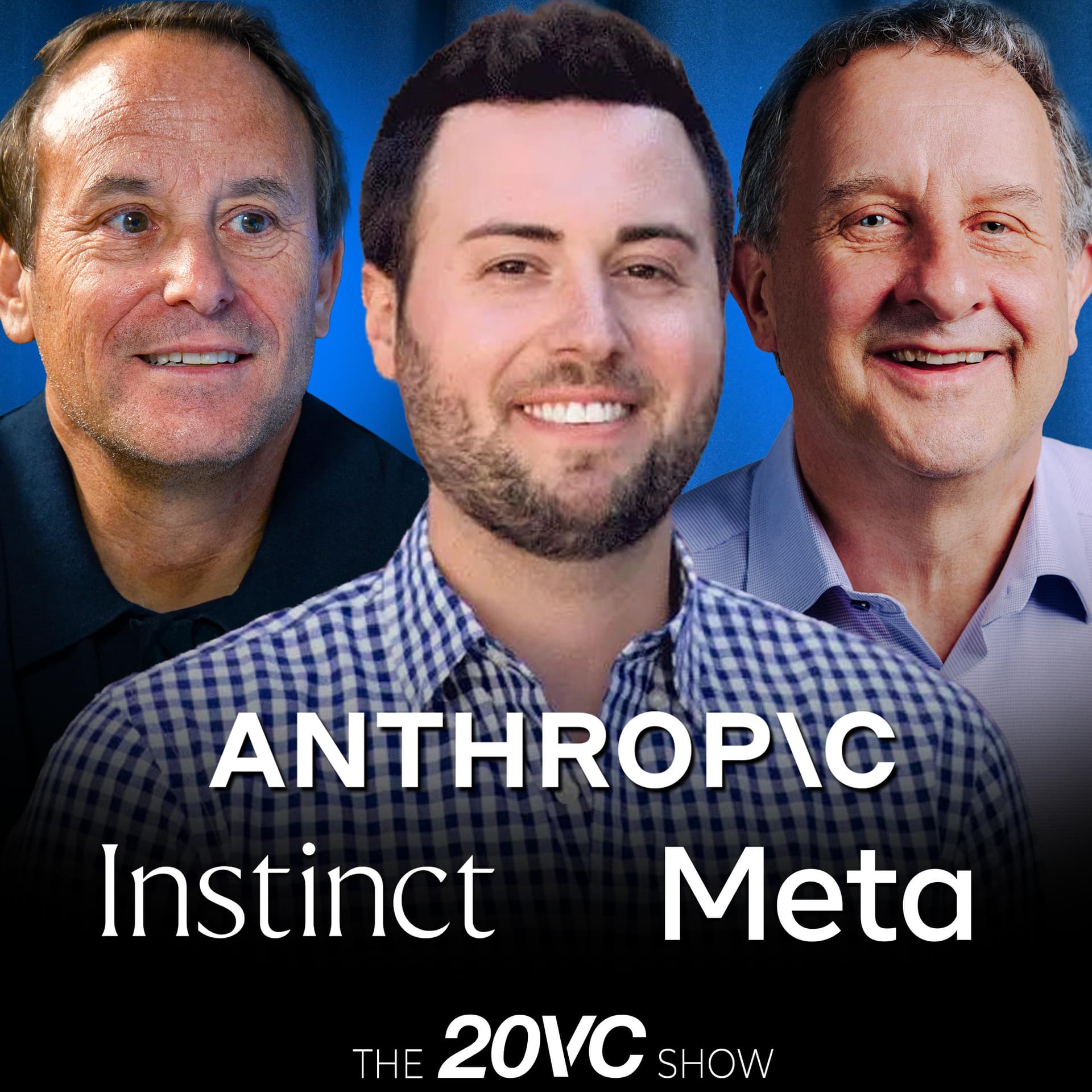
Episode Title 20Growth: Revolut's Chief Growth Officer on The Growth Playbook Revolut Used to Scale to $2.2BN in Revenue
Guest Antoine Le Nel - Chief Growth and Marketing Officer at Revolut
Host Harry Stebbings
Episode Description Antoine Le Nel discusses the growth strategies that propelled Revolut to a remarkable $2.2 billion in revenue, sharing insights from his time at Revolut and previous experience at King, the makers of Candy Crush.
---
Key Takeaways
- Growth Philosophy
- A/B Testing: Le Nel argues that top product managers do not rely on A/B tests to make decisions. Instead, intuition and understanding of the product are emphasized.
- Focus on ROI: Revolut prioritizes Return on Investment (ROI) over Customer Acquisition Cost (CAC), believing CAC discussions lead to acquiring less valuable customer cohorts.
- Growth Tactics
- Localisation: Le Nel finds the emphasis on product localisation overrated, suggesting that the same strategies can work across diverse markets.
- Bidding War: He describes growth as a "bidding war," where businesses must optimize and outbid competitors across all channels.
- Measuring Success
- Growth Engine: He defines a growth engine as an integrated system where upper, mid, and lower funnels work harmoniously to increase conversions.
- Data Utilization: While data is important, Le Nel stresses that it should not overshadow product quality or user experience.
- Team Dynamics
- Autonomy: Teams at Revolut are encouraged to be self-sufficient, allowing for accelerated product development and agility.
- Regular Meetings: Weekly problem-solving sessions are held rather than traditional presentations, fostering a transparent and accountable culture.
- Market Expansion
- Global Strategy: Revolut aims for worldwide presence but adapts strategies based on the maturity and characteristics of each market.
- Brand Awareness vs. Product Penetration: Le Nel emphasizes that early-stage growth is often driven by product penetration rather than brand awareness.
---
Detailed Insights
A/B Testing and Product Management
- Le Nel believes that effective product managers intuitively know what their customers want, negating the need for extensive A/B testing. This approach is about making bold moves instead of waiting for data.
Customer Acquisition Cost (CAC)
- He dismisses CAC as a primary focus, advocating instead for an ROI-driven strategy. This perspective allows Revolut to attract higher-quality users, even if it means initially spending more.
Growth Engine Definition
- The growth engine comprises three components:
- Upper Funnel: Brand awareness and engagement.
- Mid Funnel: Attributing conversions from the upper funnel.
- Lower Funnel: Driving sales and capturing conversions effectively.
The Importance of Measurement Framework
- Le Nel stresses that a robust measurement framework is critical for understanding the effectiveness of various strategies, especially in performance marketing.
Building a Growth Culture
- Revolut fosters a culture of autonomy where teams operate like startups, allowing for rapid iteration and innovation without bureaucratic delays.
Market Entry Strategies
- When entering new markets, Revolut employs a flexible approach, starting with a low barrier to entry and adjusting strategies based on local insights and competition dynamics.
Brand Development
- Le Nel suggests that brand equity grows from product performance rather than marketing alone. He argues for a focus on enhancing the product experience to naturally drive brand recognition.
Challenges and Reflections
- Le Nel acknowledges the ongoing need to adapt and innovate in the growth engine, ensuring that Revolut stays ahead of potential market saturation and competitive pressures.
---
Conclusion Antoine Le Nel’s insights offer a fresh perspective on growth strategies, emphasizing the importance of product intuition, ROI over CAC, and building a self-sufficient team culture. His experiences illustrate the balance between data-driven decisions and maintaining a strong product vision, paving the way for Revolut's impressive growth trajectory.
For full episode details, visit [20VC](https://www.20vc.com).
Written by AI. May contain mistakes. Listen to the episode to check what was said.
Transcript
Automatic transcript. May contain errors.0:00If you're a good product manager, you don't need a Navy test. You should be able to know what is the right product. I think the less you believe in, the better it is. You know, I have no belief in anything. I have no belief in anything. There's no CAC discussion at all. Why? We only talk about ROI. Because if you talk about CAC, you'll always acquire the worst cohorts. I think the idea of localization is completely overrated. Growth is a bidding war. All right? It's a bidding war. It's about whether you're able to bid above everyone else. This is 20 growth with me Harry Stebbings. Now 20 growth is a monthly show where we sit down with the best growth leaders on the planet to reveal their tips, tactics and strategies.
0:38And today we bring you one of the best growth leaders from one of the fastest growing companies Antoine Lennel, Chief Growth and Marketing Officer at Revolute, one of the fastest growing FinTechs on the planet. Prior to Revolute Antoine spent an incredible 7 years at King, the makers of Candy Crush, overseeing the continuous expansion of the world's most famous mobile game where he was VP of growth, but before we dive in today, when I spoke to Canva co -founder Cliff Obrecht on the podcast last year, he touched on how visual content is fast becoming the fuel that's driving the modern workplace.
1:10Your team needs to create an engaging visual pitch deck to sell in an idea. A product launch needs an inspiring video to excite investors and customers, projects gather steam with visual whiteboards. That's where Canva can help. It's a game changer for visual communication at work. Canva turns your team into master visual communicators, so they can get their point across with visual impact inside and outside your business, with no design experience needed, with Canva, any team member and any company, whether you're a startup or a global organization, can design compelling, on -brand visual content quickly and easily.
1:45That's why 90 % of the Fortune 500 use Canva. Start designing today at Canva .com, designed for work. And talking about growth, let's dive into how Voyantis is transforming customer acquisition. As this is my growth podcast, I'm so excited to share with you the story of the fastest growing company in my portfolio, Voyantis .ai, who isn't being asked by their board to improve unit economics. Voyantis is the first and only company I've seen that has found the way for you to crack this nut by not only leveraging your first party data to predict customers' lifetime time value, but truly coupling these predictions with a prescriptive layer integrating with and influencing each and every step of your customer's growth journey.
2:27Voyantis helps you acquire the right customers in Google and Meta, allocate incentives to the right customers via your Salesforce and Brays, and trigger the right upsell option at the right time for each of your customers. Oh, and the best part, Voyantis are not only increasing ROI by 20 % to 40%, and improving Following the quality of your customers, their solution has already improved unit economics for leading companies such as Miro, Rappi, Moneyline and many, many more. So if you want to improve your LTVCAC ratio before your next board meeting, start by heading over to voyantist .ai -2 -0vc.
3:02That's vorantis .ai -s -dot -a -i -s -20vc to get a free value assessment. You have now arrived at your destination. Antoine, I am so excited for this first. Thank you so much for joining me today. Thank you for having me. Now we have many mutual friends, mostly also hailing from your start at King. So I want to start with that. When you look at the insanely successful growth of Candy Crush, what did King do well that was instrumental to the success and growth? I think first of all everyone thinks there was a huge amount of luck. I think the idea that what King did really well, I think they've tested extensively everything.
3:39So it was a volume game, you know, at some point. The understood that super quickly saying you need to try as much as you can at some point something will pick up. I think that that's super super super well. And I think then there was this super fast pace. I remember we were launching a game like every quarter pretty much. We were launching a game and not every one of them was successful. But just like the pace at which we were producing games, releasing the games and so on, I think we did that super super well. The thing you have to get very good at though is cutting when you see the data. it's not showing science, how long is enough data, or how much data is not updated to know that it wasn't working?
4:15I think that's the thing that's probably has changed over time at King. I think at the beginning we were catching things very quickly. As time went, we started to wait longer and lost, you know what, give it another chance, give it another chance, give it another chance, you know, and I think that's the whole point on when, and that's how you probably can measure the agility of the organization is how quickly you kill projects, there's how many more chances you're giving to them. So if testing and speed of in testing with something that he did very well. Yeah, what was something that King really messed up?
4:44It's definitely the most data driven organization I've ever been in. In the sense that really data was driving the organization. If you take the thing literally, the company was driven by data. I think it was so powerful that at some point we just went way too far. In the sense that, for example, when we were launching games, sometimes, we were probably looking more at the data than the game itself. You know, it's like you get a meeting that then you just look at the numbers and you're like, is that wrong? That's the big difference, for example, with Revolut. I think we're a lot more product driven, which means we spend more time looking at the product than looking at the data.
5:20It's the data is not an input. Exactly. It's an input. It is an input. At King, it was at some point, it was the only decision maker. It was very black or white and the data was the decision maker. And I think we pushed it probably a little bit too far in this space and not spending maybe the right amount of time on the user experience and on just the quality of the product itself. If you were to say between art and science growth, like numbers ratio, what is it for you? 50, 50, 70, 30. So in the, I mean, product and growth is very different. All right. So I think product should be more about art and a bit less about science when growth should overwrite on science.
6:04In terms of performance marketing, I spoke to many from King, and he said, you've got to ask him, what did he learn about performance marketing? And it's limitations. First of all, performance marketing, mastering performance marketing gives you a huge competitive advantage. Because it is a complex thing, and if you do it really well, it makes a huge difference, you know, to your company growth. So that is the power of performance marketing, and the performance marketing is, it's very deep. And I don't know many people who know all of it. How have you seen that change over time? Because when you're doing that at King in the early days, versus today when it's so much more polluted, crowded, expansive, how's it changed?
6:43We have changed a little bit, but not so much fundamentally. It is still the same game. It's still a bidding war, you know? Now, it's true it's getting a little bit more complex because you're losing some attribution and so on, so you need to be a little bit smarter in your mushroom framework. So, but you just need to, I mean, you reinvent yourself every other year. You have to reinvent the whole measurement framework and so on. But at the end of the day, the game is still the same game. You know, it is the same, it's the same beating war. You just have impressions. You need to go through the highest bidder and that's it.
7:12You know, that's what the game is. You have King, as we said, that incredibly iterative data driven culture, data driven company to the extreme. What's the biggest difference between King and Ravoli? I think that's what it is. I remember, you know, so I came from a place at King where we were. We were later from a maturity perspective. You know, like, I mean, we had launched many games and so on. The business was doing fantastic and we were more in an optimization place where I remember at some point we were running like maybe a thousand A .B. testing parallel and so on. It was like, it was a machine.
7:40You know, the machine was really optimizing everything. And I remember when I arrived at Revolude, there was not much A .B. testing. And for me, I was like shocked at it. I was like, what? I mean, like, you got to do that. And then, and then I discussed with people and so on. And what I realized is that you know, there's a good reason as well why you don't want to do A -B testing. The first thing, product managers, they do A -B testing to get an idea of what the right product is. If you're a good product manager, you don't need an A -B test. You should be able to know what is the right product.
8:11The second reason is, because at Rivalood, we wanted to do like 10x, everything is 10x and so on. You don't need an A -B test to measure a 10x. You know, you do it, you see it goes up, it's good, you know. And the third reason is that A -B testing increasing your target to market. Because if you AB test, you first need to do your B test, then you see which one wins and then you launch. And then I mean, when I joined a revolution, most of the time was like, no, you're just launch, you know, you'll see, you know, you'll see if it works, you know, you just get there, you know, while while at King I remember, I was, I mean, you were able to testing every single week on this small element.
8:43What if we change this? Or just that? And then you're multivariate testing and everything was super, super, super optimized and so on. But it's not at the same, we're not in the same place from a life cycle perspective. You know, it was much later. I mean, we get there. You know, at some point at Revolute, when it would be more about optimizing than creating. When we were just chatting before, you said that being a Revolute is like, found a mode on steroids, I think was your description. Why so? I mean, we have a great team of founders that are heavily involved in the business, which really is giving the temple, the momentum to the whole company, with the exact same approach and the exact same mindset since day one.
9:26And I think that's quite remarkable. The consistency of the approach ten years after launch, you know, still the same mindset and so on. And I think that's extremely powerful. It's interesting before Hany said the real question with Founder Mode is actually how long he can keep it up. Yeah. And saying how next dedication today is just as much as it was when you joined. Absolutely. is incredible, but I don't think people actually ask the question of the sustenance of the founder mode. Today we are building a growth engine with Ravoli. I mean the numbers are just insane and it seems to be getting quicker.
10:00Yeah it is. It is. It is. Can we just start there actually? I spoke to so many people investors in the business and they're like, hang on, it's meant to slow down. They're getting faster and better. How? Yeah. I mean the thing with what we build, we build an engine which is a combination of many, many things. Meaning there's no, because you have two types of growth. You have the growth that are made of, let's say, long shirts, let's say, marketing campaigns and some coup. You make a big marketing coup and then back you get the spike and so on. There's none of that at Revolute. If anyone, you're probably going to ask me, what is the one thing that really worked at Revolute?
10:41I can't tell you. It's a combination of so many things in the growth engine. And because they all add up, when you look at the growth of Revolut, it's just very steady. And it's steady and it's accelerating, week after week. We just monitor every week. The acceleration keeps on going just because the engine gets more and more optimized as we are progressing. And for now, we definitely don't see the limit even in our market, which is quite crazy. Your product velocity is insane. How do you have such high product velocity? So the organization is very, very flat and we are making sure that every team is as self -sufficient as possible.
11:19And that's what really build the agility. If you're self -sufficient in building what you have to build, you just go with it and we run more quarterly cycles and so on and we have a very high pace, but because there's no interdependencies between the different things that we build, at the end of the day, we are splitting the companies as many startups as possible. I know like big organizations, we say, oh, you know, those are silos, people are not collaborating, et cetera, et cetera. You know, you need to always find the right balance between coordinating things while giving the right amount of focus.
11:54And I think that's what we are doing pretty well at Revolute, where every team has a huge amount of autonomy and a focus to really go very fast in what they do. One one's not working, do you cut it? Did you give it more time? What does that look like? No, we cut quite fast. We cut quite fast. Yeah, when something is not working well. What did you try that didn't work as planned and you cut? And what did you learn? I mean, on the marketing side, there's been some campaigns, for example, that we've been running in some countries where we've been using some creatives that were quite generic. And after two weeks, we saw it was a disaster and we just cut it off.
12:31You know, we don't wait for the campaign to finish. So like, you know what, this is just not happening. This is just, there's no way this will, this will pick up. And you just cut it, you know, while maybe in other places, you would just have continued and say, you know what, we're here and then we'll do the retrospective at the end of it. So, no, I mean, it's not working. It's not working. You just cut it, you know, and fine. Your TV campaign, I was supposed to run it for three months. Well, after two weeks, it's just not working. You just cut it and then you move on, you know, it's fine. You mentioned kind of growth engine when you started that on my what enables revenue to continue growing as a force.
13:02What actually is a growth engine? And it sounds strange, but we often hear it. What does that actually mean? A growth engine is where you have multiple components that all play together. I'll give you a very simple example. I look at it quite the famous full funnel. That everyone says. You have the upper funnel, the mid funnel, and the lower funnel. And the growth engine is when you manage to get those three elements working together. So at the end of the day, the growth engine is when you make sure that you have the lower funnel that works like a fishing net, grabs all the conversions that ultimately meet an upper funnel, are feeding you with.
13:41And that's where all of that works in perfect synchronization, so that at the end of the day, it's all being grabbed by the lower funnel. That is the engine. When then you find the right balance between those different elements that optimize the overall thing. What is the right balance? Well, it depends on the maturity of the market. I think the more mature, the more you will be able to do some upper funnel, the less mature, the more you focus on the conversion, on the conversion itself. There's no one truth. It evolves. It's a living animal. What's the hardest thing about constructing a growth engine?
14:17It is the measurement framework. That's for sure. You live in a world, especially in tech, where people do things that they can measure. There's always this bias, you know, there's always this bias. And at the end of the day, your competitive advantage will always come from your ability to measure more than your competitors. Because then suddenly you're going to do that. So for example, at King, what we cracked, we cracked the TV measurement framework way before everyone. And therefore we were the only company running TV. What do you mean you cracked the TV measurement framework? So we were able to have some good level of attribution between TV and the downloads to be able to really know how much we could attribute to our TV activities.
15:01And because we managed to get that, then we were one of the very first companies to actually make that work. I think this is a very good example. The other good example is iOS, performance marketing on iOS after scan. And you have companies that know how this works, therefore they can measure it, and therefore they can scale. And you have all the other ones that I mean are really struggling and so on. At the end of the day, they spend maybe two, three times more than Android. versus iOS, you know, which is an nonsense. When should you start thinking about building a growth engine at the very, very, very beginning, at the very, very beginning?
15:37Because the growth engine is not only paid marketing, you know, I include variety. The whole variety aspect is part of the growth engine. This is the even below the lower funnel. You basically have a variety. So you need to build this block super, super early on. and then you start going into the law for no, and then you go up. Given virality is baited in, should growth teams be part of product teams? Should they be standalone teams? That is a very good question. I think the way I like it is that the product team builds the variety engine and growth operates it. So you build something that is with parameters and then you let growth playing with it.
16:21because usually growth will have better analytical framework to measure the ROI and the efficiency of it while product will have a better product vision and UX aspect into building it. So they build the experience and growth operates it. I think that works. What are the most common ways the growth engines break down? I think it's when you start bringing a little bit of belief. I think the less you believe in, the better it is. You know, I have no belief in anything. I have no belief in anything. You're so French. But like, it's true, you know, because... What does that mean I have no belief in anything?
17:03Well, I don't necessarily believe more in brand, than in influences, than in this and so on, you know? I mean, what if a works works for me, you know? And I think there are some people that believe in things And then you know what formula one a gut work. We got to be on a formula one wing a gut works like why yes Maybe I don't know sure. Yeah fine, but like you see like this is I think this is where it starts to break down Is when you come up with just like but this comes against everything that we're told of like the courage of your conviction and being opinionated and standing for something and Playbooks the value the value of experienced operators is they bring a playbook and one so they know what what So I've brought my playbook from King to Revolut, but I've significantly changed it.
17:51I mean, what did you change most? Well, so for example, the upper funnel, I was never a big fan of upper funnel. I thought that was very difficult. Sorry, I'm really naive. I'm a vantage surplus for living. What is in the upper funnel? That's the brand marketing. Ah, so the brand marketing. I was not sure about what that was bringing and so on. And I thought, no, this is the brand marketing team. But I hope we know one way to do this. And then I came, I came at Revolut and we did not started at all with any brand marketing and so on. And now we're testing it, we're doing more of it. And it really works.
18:27Do you know it works? And do you know what bit works? Oh yeah, yeah, yeah, I know. I mean, it really works. It really works. But the hard thing is, do you know whether it's being on a billboard or being on a F1 car that works? Because the attribution is limited. How do you know it works? You have multiple ways to look at it. So what we do in our port, which is pretty cool, is that so we do the advertising on Jet Bridges and so on. If you've been to Romer port and so on, for example, we've launched something really cool there. But next to it, we put vending machines. So you have vending machines in the airport to collect your Revolut card.
19:00So you just go on the vending machine, you press the button and you just get the card. So it's an anonymous, I mean, unlinked card. you just take it, you scan the QR code, I create the account, and then the card is automatically linked. Then I can really link all my activities and get a huge ROI from what I do. Wow, I mean, that's pretty good for Archbishop. That's pretty good, right? But it's the same, you know, like as well, we do a lot of, we do some influencers and so on, you know, but like, what matters is how you manage your attribution, you know, and I think we're pretty good at getting the attribution done and knowing what works, what doesn't, what many things don't work.
19:38And then, but at least I know what works and what doesn't work. What's been the biggest flop? Oh, the biggest flop. I mean, there's been some influences that just didn't work at all. I mean, it was the early days, and we tried to do something that we thought was cool and so on. I think doing some big brand campaigns with some, let's say, some celebrities that are just not necessarily super good with social media, let's put it this way. That just doesn't work. So you just learn, you just learn. That is hilarious. Okay, so what did you change then from the King play, but you said there about kind of Apple funnel and I interrupted you saying, what is the Apple funnel?
20:16What did you change from that play, but with King to revel it? Yeah, so investing more in this in this in this brand campaign was was the big thing and really identifying the ability that the brand marketing can improve your conversion metrics that was quite an insight which has worked really well, that is making us do more of it. Transposing the mid funnel. The mid funnel, this is where, at least the way I look at it, it's the place where you can run some level of attribution, but you have a strong halo because of the high reach that you get and you can develop as well some deeper content. So performance marketing is basically banners and or super short videos, you know, I have six seconds and so on.
21:02So you don't really build anything in terms of, let's say, product awareness, brand consideration, like ability and so you don't build any of that. So what you say is that right away you play the full funnel because you have a big branding impact, but you are revenue generator right away, you know, which is the exact opposite as the formula one thing where there's no revenue. there's nothing, you know, it's like a pure brand and so on. And that's what I call a bit mid funnel. It's activities that help you do a bit of everything. Like, suddenly you do some brand, but at the same time you do conversion and you drive and you drive revenue, you know, so you take it all.
21:41And then sorry, love funnel, love funnel is what specifically? It's mostly like performance marketing, affiliates, the referral program, you know, and stuff like that. You know, this is where you really drive and you have a full attribution. Meaning you know exactly what you pay for. In -growth teams are there people who are specialized in each segment? Do you expect people to be skilled at all three? No, no, no, no. I'm a strong believer of specialist people should be experts in what they do and Generally, market is are good in managerial positions, but not at doing things necessarily You know, and that's why we have people who are experts in mid -final experts in lower -final experts in upper -final and so on but very, very few people have another site of all of it, very few people.
22:29When you start a new market, I think one thing that people don't see enough is just and Revolut is crushing internationally. Yeah. They're crushing. When you start a new market, does that whole funnel start again? Like what does that growth plan look like? Yeah, you start from scratch. You start from scratch again and so on. And do you notice it gets easier to acquire customers with each subsequent market or not? Well, it all depends on how connected is the market with the previous ones. If tomorrow I was to launch in Taiwan, it would be difficult. You know, like things will take more time. It all depends on the type of market and the proximity with where a revolution is because obviously our brand is getting bigger and international and so on.
23:12So there's a market where we're not in, but we already have some awareness. You said the brand's getting bigger, it definitely is. Does CAC get lower over time as brand amplifies word of mouth increases? Or does it get higher as you saturate target market and you move to the fringes of your ICP? Well, I think it's actually both. So because it's exactly that. It's exactly that. You have those two factors playing against each other. And it's about which one is stronger than the other. And then, unfortunately, it really depends on the market. You know, so some markets, the brand is becoming so big that actually you start getting more organic and it's becoming like super organic and then the growth and judges is feeding itself and then it just goes.
23:59While others, and it's linked as well to the amount of competition that you have in the market, where actually because you have a diminishing return curve, where it suddenly gets more expensive to get the next one and the next one and the next one. I think it really depends on the competitiveness of the market. I think the other thing that's so smart there is like, there's less of a focus or reliance on CAC if you can expand the other end of the funnel, which is the RLTV. I don't believe in CAC, you know? Like, and that was the first thing that I bought. Yeah, yeah, I mean, that's the first thing that I brought from King because at King we never talk about CAC.
24:34You know? Why? This is almost growth teams and marketing teams talk about. I have, but there's no CAC discussion. Why? We only talk about ROI. Because if you talk about CAC, you'll always acquire the worst cohorts, because you just always go downhill. So what I've done by arriving at Revolute is that I increase CAC significantly by improving ROI significantly too. So because what you realize is that you're not here to get the cheapest users, you're here to get the best users. Sometimes you gotta pay more. You need to get as granular as possible, And you may have some channels, you know, I don't know like for example TikTok and so on, where maybe the co -hosts you get from there are not as good as what you can get for example from Instagram or other places.
Read the full transcript
25:20So the CAC is irrelevant. CAC is irrelevant, you know, because if I was to give CAC targets, then we would only do maybe TikTok for example. And that doesn't make any sense, right? Because I won't get my ROI. So we never look at CAC. Is that hard for a team to adjust to? No, I don't think so. It's only about, it's only about... You have to stomach that for a while, which is kind of interesting, because you have to accept paying high -caxx without seeing the Hiroi for a little bit of time. Yeah, but I mean, the thing is, because we go gradually, very quickly, if you build good analytical models, you know very quickly whether the cohorts you're acquiring are the good ones.
26:00How do you know? I mean, and that's why the growth is exponential. Because today I know a lot more than a year ago or than two years ago. So my models are better, so I know better where the good cohorts are and how much I'm ready to pay. Are there models transferable on a country by country basis? Yeah, they're. Really? Why would London versus Birmingham would be closer than London versus Paris? There's no reason. The country definition beyond language is completely arbitrary. Sure, I didn't know if London versus Brazil could be different. Brazil has very different ways of paying for things. I have different ways of bulking payments.
26:39Yeah, I mean, that's fair. But you adapt your model depending on the product that you sell. You know, we're not selling the same product, necessarily, in the same market. So you can cut it down at the product level. But then the other day, if it's a debit card, a debit card, then if it's FX, it's FX. How do you choose which markets to go to? Well, we want to be everywhere. Like the objective for us is to be in every single market. I mean, we don't say we want to be there and not there. No, we want to be everywhere. So we just take the list and we try to see which ones are probably easier, quicker and so on.
27:10But at the end of the day, we want to be everywhere. Which market was the worst or hardest? And what did you learn from it? If I parked China, obviously, which is a very different market. It's quite a difficult one. Yeah, it's not easy. I don't know if you want to get your hands on it. When it's only a billion, yeah, so on, yeah, found the right. So let's park China for a second. And you see that's the thing that I've seen as well. My experience at King was the most important. I think the idea of localization is completely overrated. I don't believe in localization. That we saw in at King. It was the same creative working globally everywhere with one exception, Japan.
27:48Japan is different. I have to say, Japan is a different beast. But the rest is the same. It's one global market. And I think that the consumer interest, what people are clicking on, is the exact same thing. The extra performance you would get by being a lot more localized is not worth the effort. And that's what we are seeing. I mean, like at King, and we see that the same, at Revolut. I mean, we became number one in Romania and Norway with the exact same strategy, the same thing. you know, like, and the people say, I'm in Europe, but I mean, if you've been to Romania, I know where you would realize it's not exactly the same culture in the same country.
28:26People say the most important thing for Avaluit to prove out is its ability to be the primary account and the percent of primary accounts is still low. How do you think about focusing on that versus being everywhere to everyone? The strategy at Avaluit, it's very simple, you know? Obviously, we want people to use us as a primary bank. We don't need everyone to do it now. That's the big difference with let's say any other banks when you decide to move from HSBC to Barclays you make a conscious decision that I'm moving there why Revolute we more well like a snack so you you want to take a bite You know so you try Revolute and then maybe because you go on holiday You know and you need a card to go on holiday.
29:06Okay fine. Then you come back from holiday So well, you know, maybe I want to do a bit of Trading and stuff, you know by some ETFs and so on so you then you buy some it's so then I mean that's a bit of savings maybe I can put a bit of savings. And then you go little by little, and then you reach a point. Maybe, I mean, for some people, it can take six months, for some people, it can take three years and so on. And you say, you know what? Actually, I have everything I need here. And then I'm moving there, you know? So, I'm not to say, I mean, it's pretty much what happened to me actually. And I started buying crypto on Ravolute.
29:35I started trading on Ravolute. And then I saw actually the interest rate options that you guys had on the premium, premium ones. I thought, fuck, that's pretty good. Yeah, I think that's the best. But that's a really interesting change in the adoption of bank accounts. Yeah, totally. You don't, we're not asking people say, hey, change bank. You're like encouraging promiscuity. Yeah, but comment trius. Yeah, but you know, comment trius. Just use it maybe when you go on holiday and let's find, you know, that's fine. And then maybe at some point, I'll be able to convince you with some specific product, some specific anything that ultimately will take you there.
30:06But like the idea is not to say, okay, by H2 2025, Everyone will have to be a pyramid. No, everyone takes at your own pace. You get there, you know, and it's fine So what's the most geometric fee then when you look at the numbers when you look at the analytics What's the like are we doing a good job determined three things? That's I obviously so the first thing is the volume of users, you know that we're getting the second thing is the ROI at which We are acquiring them was the payback in months and the last one is out of the people that are with us bit on that journey, you know, that I was explaining, I mean, how they're progressing towards becoming a primary user.
30:43Payback, what? How's that change over time? It doesn't necessarily change. I think, again, it all depends on the market, it's a market by market thing in some ways. We're very standardized, so it's very stable. It's very stable. We haven't changed much. What's the hardest thing about your role stay out on? It's a bit what I was saying about the living animal of the growth engine. I mean, we've built an engine that is working today, but it doesn't mean that it's going to work forever. You need to progressively evolve it, pieces by pieces. That's very difficult. When you know something works, and you need to keep it writing, so that you make sure it keeps working, and you keep being one step ahead of everyone.
31:25That's difficult. It's always this idea, of the cow getting eaten from the back, and you realize really late, But actually, you're gone, you know, staying on top of it, even though it's working really well, never be complacent about the success we have. We rarely look back at Revolut. We're never happy about our success. It's very rare to reach our targets. We never reach our targets, because our targets are much greater than what we are achieving. So I think if you never set targets, it can be hit. Does it not just lead to bad marks? I didn't have the day, you know, between the way this works and the way Google does O .K .Rs, you know, where we know, I mean, O .K .Rs, I mean, you know the theory about O .K .Rs, you should always be around 78 % of achievement.
32:10It's the same thing, you know. So you need to be ambitious, but realistic. Reaching 80 % of your target, that's good. You said there about kind of making sure that you're not the cow that gets eaten from behind. How do you do meetings with the growth team? What does that look like? Is it like a weekly brainstorm while I let you show shit at the wall and get creative? How does that look in terms the ideation amongst the growth team? Yeah, well we have a very, it's extremely standardized, extremely processed. We work on weekly cycles. In the growth team we have, I think it's 20, 25 different teams.
32:4420, 25 different teams. Yeah, because we work as a matrix, you know, so you have the China people and then you have the local people and all of those are teams, you know. And then we run, so I run weekly business review for all those teams, so I mean all the teams every week. And those are mostly, so obviously we review numbers, but it's more like problem solving sessions, you know, we bring a problem and we try to solve it together. And then they have a week, they solve it, and then we rate the rate the week after, we rate the rate, we rate the rate. I think the power of a very short cycles is that there's no time wasted in presenting in the sense that if you had a meeting only once a month and so on, you would actually spend, I mean, we know how teams are, they spend the last two, three days just preparing the presentation for the exec.
33:34So waste of time. Search potion. While when you run it every week, they're not preparing the meetings. So you just start the meetings, okay, so where are we at? And so on, you prepare a lot less, the meeting and you just bring the G -R -Ball, then you just bring the dashboard, then you just look at and then you just try to solve the problem, you know, with no specific preparation, and then you iterate, you iterate, you iterate, and then you get very regular feedback. So you don't get surprised, like you work on something for a month, and then you get, at some point you say, no, that's not the right direction, you need to go.
34:06So you call Scoric Things very, very quickly. How many of these meetings do you have? 20, 25 a week, yeah. 20s, 25 a week, and then half an hour each. Yeah. You must be constantly in these meetings. Yeah, but then I have only, I don't have ad hoc meetings. So there's already a meeting for every topic. So if you want to talk about something There is already a meeting for you to talk about it It's not like those agendas that look very different every week, you know like my agenda looks exactly the same I probably have my agenda until the end of year and mid next year and so on. It's already set I know exactly what I'm gonna do and then you just repeat repeat repeat repeat repeat How many people are in the team on the other end?
34:42Well, it depends depends on ones but between 10 and 40 That's a lot. How do you deal with ideas since this is the idea discussion? When shit, 40 people are sometimes on a cool. Yeah, but you know as well, those meetings are important, especially when we are remote working, because it helps connecting, and it's the place where you drive the culture. Even though you may not participate in that meeting, you see how it's happening. You see the expectations, you understand what we are trying to achieve, and how we are trying to deliver and so on. So it's a great way for you to understand how things are working.
35:18Are you able to be fully honest and true with all 40 people? Oh, yeah, yeah, yeah, yeah, I can tell you. I'm very transparent. I think that's the power of, of revolute and, and that's the same. I mean, with Nick and so on. I mean, like, we're working in full transparency. There's no surprises at revolute. Because if you take a decision and the decision is no, and then, and then you can appeal, you know, you know, to try to negotiate, to make it yes, like every company is do, you know, and then you add up time, you add up those ad hoc meetings, or let's do another meeting to really look at it and then do another one and so on.
35:51If we say yes, it's yes, if we say no, it's no, and then we move on. And there are some force positive. There are definitely some force positive where we may say yes, it should have been a no, and we said no, it should have been a yes. So I'm not saying it's perfect, it's not perfect at all, you know. But at least we move a lot faster. And yes, there are some costs in terms of for positive, but it's a lot more. It's a lot more powerful. I always think to Gustavus Spotify, who's the CPU of Spotify, and he says, he talk his cheap. So we should do a lot more of it. And it's, you know, the power of debate and discussion in teams.
36:22And it's just the flip side of this, which is nope, it's black or it's white. Yeah. Yeah, because you don't add up time. You go quicker. And then do you not lose creativity? Bound think creativity is necessarily no, because you iterate so much. you create more because you do more. You know, like for example, if I need to do an ad, but then if I spend three months talking about it instead of a week, I might only run two ads a year. Well, if I only talk about it for a week, I can run four a year. So I can iterate more. So I think, yes, maybe the inception time is shorter, much shorter. You know, so maybe yeah, there's less discussion, bouncing back and some bouncing IDs and so on.
37:03But because you do a lot more, at the end of the day, you get more stuff done. I think from creativity perspective, you see what? How do you think about roughly US? The US is always a big, golden nut crack. Everyone's tried it. How do you think about how to crack the US? It's interesting, because when you look at it, even local fintechs, they're not that big. No, I mean your chime is probably one of the biggest things. Yeah, I mean cash up is, but it's not that big. You know, when you consider the size of the US, you know, it's really poor. I mean, China, you know, is probably a quarter of the enterprise value of, of, probably now.
37:38I think there is a negative correlation between the maturity of the economy and the penetration of Fintech. Take the other example, Germany. Germany, like, like, like, like, there's no, I mean, like the penetration of Fintech. It's Germany's extremely low, extremely low, you know, as well. Why is that? Well, if you look at the penetration of Fintech in in India or in Pakistan or in some places in Africa, in Indonesia and in all those places. It's like way more mature. You have a lot more from a pretty interesting perspective. Why? It's a bit like in telecoms, the penetration of mobile actually weren't super high because ultimately what they did, the jump generation, they'd never built any ADSL cable, et cetera, et cetera.
38:22It's like, you know what? Screw it, we just jump directly to the next generation. You mentioned the global element of the Taiwan and Indonesia and then Germany. You live in Barcelona and you have a remote team. You very much believe in the power of remote teams. Did anyone pack that for me? Why? So not everything is good about remote. First of all, and that's the bad about remote. What about the human contact? I think as well at some point you need to be with people and so on, especially when you're only on in your carrier and so on for some people it doesn't doesn't work You know be alone at home and so on how often do you get together now once a year?
39:01So you do once a year meet ups. That's a frequent That's really good for the loneliness pandemic hold on Anton once you meet ups and that's the downside Why do we think it's great a few things that are very good you get a lot more efficient in the way you're running meetings Meetings are a lot more efficient when you run when you're when you run things when you run things remotely, meaning you can actually have meetings of 15 minutes or 30 minutes. You know, it works. You know, a meeting of 15 minutes remotely works. In the real world, it doesn't work. A meeting of 15 minutes. The second aspect, I feel like it's a great equalizer versus physical meetings in the sense that dominant people get flattened out by the video conference system.
39:46Like, for example, I do have, I know I have a dominant nature. So, where I sit in the room matters. And then the presence you can have physically, you know, in a meeting room matters, you know. Because we talk a lot about diversity in zone. I think the diversity aspect that is a bit overlooked is introvert versus extrovert. And I think in the world of remote, I think it gives a much stronger chance to introvert people, more introvert people, to have a deeper impact in meetings compared to in real life, the system into where you raise a hand to talk, and you don't really raise a hand in a physical meeting.
40:23Like some people just don't get the opportunity to say what they want to say in a physical meeting. Because it did not happen. People tend to cut off each other, etc. So sometimes the dynamic can be quite polluted. While when you are on the video conference, press the button to raise the hand, and then people will let you speak in a very polite way. So I think that works really well. That is the best invention. Do you not think that we need to develop some social skills and say, I'm so sorry, I'm too much. You might not have just jumped in here. Actually, I was thinking this. Like, I think we, but it's not easy for everyone to say that.
41:00No, but you learn and you grow. But that's how you do it. It's like anything you learn by doing. And we are creating an escape valve for people to not learn. And actually, the lessons for everything in life is in the cracks. Many come out of a customer pitch and on the tube home, you're like, How did you notice about that? What did we do? Well, what did we not do? Well, you never have post mortems in a remote world. Ever. Well, yes and no. So because the way we work, the post mortem, I have all my business review, as I was mentioning, but then I have the same ones as one of ones with the lead of every single of those business review that I use as feedback session of the previous business review.
41:38But then you got 50 main things away. Yeah. Ultimately, you know, it's a loop where I use business review where I give a lot of my inputs. I use my 101s to receive the feedback from what we talked about. And that's this way. I have a touch point pretty much every other day with all my team leads, etc., you know, whether it's in a meeting or whether it's in 101, and then we close the loop so that we do have the feedback loop. You do with the lead. But the 10 people beneath them who are... But they do the same on their side at their level, you know? And you think that's the same? Yeah, I mean, that's the objective here.
42:16Because is it right after the meeting? Well, I mean, as it's every week, it's either before or after, you know, it's like, because if it's one or two days before or one or two days after, it's like, it's more, you don't see it as before or after, it's just a cycle, you know? It's like, so you get always the feedback loop. What's in a problem solving interview? Well, it's like a case study, we tell you, okay, I have this problem. them, I mean, it can be a marketing campaign, et cetera, et cetera. And then we ask the candidate, what do you think the problem is? And how would you solve it and so on?
42:43So it has nothing to do with what you've done or seen in the past, but it's more about how do you decompose and simplify the problem? Because at the end of the day, every problem is quite simple. You just need to slice it at the right level of granularity so that suddenly a big problem just becomes 10 small problems. And then you saw them one by one, and then you get there. and you don't try to find the miracle solution by being Einstein and super complexified. No, I mean, there's no need for that. Just do it simple, keep it simple. What are the biggest mistakes do you think people make in hiring and growth?
43:15I think they hire a generous people to run stuff. So they end up running many things in a pretty average way. So it's better to do less and deeper than try to have a lot of breath and do many things in the just okay -ish way. And then the higher growth managers, which I've no idea what the growth manager is, are they manage growth? Yeah, but like, yeah, but what is growth? What is growth? Is it varieties, is it performance marketing, is it some brand marketing aspect? What is it? Is it pricing? Well, I mean, you can do anything, you know? Well, you said what is growth? When we're chatting for you, Bench and 10X or 100X, the thing I'm never sure about with growth, is like is gross roll?
44:01Let's try this big picture new product is going to change rave loop forever or is it let's iterate on all of these little things that combined will add up to a big thing. Definitely the second one. I'm a huge advocate of the second one. I give you a very simple analogy you know look at usenbolt. Everyone remembers usenbolt all right but he was not winning by much. He was not winning by 10x. He was winning by a hundredth of a second and so on because he was able to optimize the departure, this, etc. So he was not 10x better than everyone. By the end, everyone thinks he was 10x better. You see what I mean?
44:40And it's because growth is a bidding war. It's a bidding war. It's about whether you're able to bid above everyone else on all the different channels. The question is, how are you able to bid above everyone and how do you optimize every single step so that you're the winner taxidole, in growth, the winner taxidole. And that's why it's ultimately because you optimize every single part of either the funnel, either the creative, either your bidding strategy, etc. It's every single element that's like small increment of 1 % here, 2 % there, etc. That add up to put you on top of the waterfall and to take it all.
45:20So people are wrong to think that it is these kind of moon shot paths. So they fish for the moon shot and so on while actually it's just down there being an excellent execution, everything you do at the lowest level of granularity and once you have everything, that's why you know what I was saying. If someone asked me what is the success of revolut? It's a million things. What if you not optimise with rapidly yet that you need to optimise? I mean I think we're still very much at the beginning of building our brand marketing. I think we're still a very young brand. That's probably the biggest work that we have ahead of us is to find the right way to position the brand and inspire people.
46:02That's the biggest. What is great brand? Main tea. So first of all, about brand. The question is where does brand fit? Is brand a marketing thing or a product thing? Because a lot of people So think about brand on marketing. I give you two examples, out of sample of two, which is king and revolut, the brand was much bigger before a single dollar of marketing was spent. So the brand had nothing to do with marketing. That was huge brand before putting any pen. Do you not use it as both? I'll take the iPod. Okay, it's the way that it was boxed, the way that it felt, the scroll wheel, the white silver, the product.
46:43But it was also the brilliance of a thousand songs in your pocket, the white background, the beautiful pictures, it was a combination that made it pop. Yeah, yeah, yeah. I think it's in between. I think in the early days, it's definitely more product thing. And then it becomes with the maturity a bit more of a marketing thing. But I think we take too much of a shortcut, putting brand in marketing and saying, well, you know, what brand is marketing problem? I think it's not. It's about, as you said, it's the user experience, you know, it's like how the product make you feel and so on. And then what marketing does, marketing is just an amplifier or a catalyst into it.
47:17You know, we just try to amplify whatever it makes you feel, I'll just make it bigger, feel it more and so on. But at the end of the day, it's still the product that is starting the journey. The brand journey is starting there. What brand do you respect most today? And why then? I mean, you mentioned Apple. I mean, obviously Apple is a great brand because they've done, they've done something that is quite amazing. I mean, Apple and as well, some of the luxury brands like Louis Vuitton and so on, which is quite amazing that they've developed a luxury positioning for mass market. Is there anything you think people fuck up with brand?
47:49Yeah, I think the biggest fuck up that I see, especially more in the early days of startups, is that you can hear founders that say, my product is great, but then marketing is rubbish, because they don't let people know how great my product is and have no brand awareness, so I need to invest in the brand and so on for to boost my growth. And I always reply, well, if your product was so good, people would know about it. You know, if you believe if so, they will come. If it's a great product. Well, I think investing in brand in the early days is the worst decision you can make. Because you should just put it all in product early.
48:26Yeah, you put in product and then you drive conversion and so on. But starting building top of the funnel and trying to build brand and so on in the early days, I think is a mistake. and saying that what is hindering your growth is your brand awareness, I think is a mistake, you know, like there is a correlation between brand awareness and product penetration, but you need to think about where the causality is. Is your penetration driven by a brand awareness? Or is your brand awareness driven by product penetration? And in the early days, I think the causality is the other way around. And then at a later stage, you can start because you need to open the funnel and so on, because you need to go into new segments, because once you've highly penetrated one segment, you need to go to another segment and then you can start using some brand marketing and so on to build Something a bit different to continue the growth.
49:13I think in the early days Actually your brand awareness is driven by your product penetration and not the other way around What product did you think would have the most impact that in the end ended up having the least? The crypto exchange was a great was a great product. I mean, it's doing good I did not necessarily pick up the way we wanted. Does anyone use the airport lounges? Yeah, that works. I mean, especially now I spot off the, you know, with the ultra subscription. Ultra is like the premium. Yeah, this is like the 600 quid a year one. Yeah, yeah, this is working. That's working. That's working.
49:46I mean, UK, France and those markets is working really well. What's the best thing that you get from it? Well, you get, so you get this, but as well, you get better interest rates as well on some of your saving accounts, you get a free subscription to FT, to other type of services. I mean, if you like brainchest .com, Platinum is coming for free and so on. So get a lot of add -ons on top of that. It's, oh, for 6 .00, yeah. Old for 6 .00, yeah. No, but I mean, you have a lot of cash in your account because the interest premium is gonna have to be big for that one. But you get, now as well, with launch ref points, you know, the loyalty program, which is giving you miles and so on.
50:26And it's almost, it's much stronger once you're I mean depending on which plan you're on and that drives a lot of loyalty. If what would make nothing a number of years what makes him so good? It's his resilience, his ability to focus, he mastered the helicopter view where he's flying around everything and then when he sees a problem he lends and he lends and then he cracks it and then he goes deep deep deep deep deep and then And once it's solved, takes off again, flies around. This is where there is another problem, lands, dig dig dig, fix it, and then starts again. And keeps on going. How have you changed as an operator working with him?
51:08I've taken his approach of managing my teams, what we said about beating them weekly. Yeah, I mean, like the whole problem solving thing. The whole, we're all here to solve problems. I'm not going in meetings to hear how good you're doing, which is what most meetings are about in the corporate world. You know, you bring the exec so that you do a nice presentation about how good your latest campaign was, and then you move to the next one, and then at the end, the diary of an exec is just that everyone is like, wow, we're amazing, and so on. And that's really not. That's it. Yeah, of course, it's important to see what's working well, But I really want to know where the problems are.
51:48We can find a solution collectively, you know, into solving it. That's the thing that is very, very powerful. I can talk to you all day, so I'm going to do a quick far around with you. I say, Shultz Damon, you give me your immediate thoughts. That's not a game. Okay, that's right. So what tactics and growth have not changed over the last five years? I think performance marketing is still the key. What tactics have died of death? I think variety is a lot more difficult than what used to be. Why? I think people are less keen to share compared to before. Before there were more keen on sharing to everyone I think it's a little bit different nowadays.
52:22True iOS changes have made that tougher and are going to continue to make that tougher. Yeah. It's taken up my variety easier. Yeah, but by variety I mean like me telling you what to do, you know, and so on, you know, through not just world of mouth, but through that. That's a bit more difficult. What is the biggest mistake founders make when hiring growth teams? they hire generalists to do a bit of everything they should focus. You've got a gross leader. He comes, he says Antoine, I'm starting my new role tomorrow, his head of growth. What do you advise them the day before they start? Build the analytical framework before you start spending anything.
52:55What would you most like to change about the world of growth? I would change platforms. I think there is a lot of bullshit on privacy where they use as well sometimes this pretext to just reposition their platform as a brand platform. And because it's brand, just spend whatever you want and you don't track anything and it's better for them. I think an ultimate one. What product does Ravoli not have today that you would love to have? Well, we're working on it. I want mortgage. Do you have student loans? Not yet. That'd be cool. That would be really cool. Yeah, I would be really cool. I agree. It's mortgages and student loans a game changer.
53:31100 % because whether you sell it or not, it's a huge perception shift. It's legit. Are you worried that the banking license will inhibit speed? I mean, we're working with different banking license, you know, across the world we got the the one in Mexico and so on. It's just business as usual. Final one, what company grows strategy if you've been most impressed by outside of Ravoli? You're adding new banking isn't really good. Why? Because they've managed to go very, very, very deep in a huge market. That's what remarkable, what they've done. It's really, really cool. And now they're on Mexico, they are getting some very nice growth.
54:08But what they've done in Brazil is truly impressive. Yeah, it's truly impressive. Incredible. David is amazing. So, Jack, listen Antoine, I would love to. And thank you so much for putting up with my prime questions and you've been amazing. Thank you. Thanks a lot. I so hope you enjoyed it, you can find the full episode on YouTube by searching for 20 V .C. But before we leave you today, many founders I've talked to touch on this idea of if you want to go far, go alone, want to go far, then go together. Canva helps your team go far, together, with their collaboration tools. Your team can work together in real time on the same presentation, doc, whiteboard and more, with name -labeled curses, tag teammates and comments and assign tasks.
54:47Canvas Superchargers teamwork and simplifies workflows. With Canva you can go far together and fast thanks to Canva's AI tools, generate text and slides in seconds. It's a serious time saver and because AI is built right into Canva, your team can stay on task with no app switching. You can also save costs by aggregating your visual communication tools with Canva. Save costs, save time, make workflow. Start designing today at Canva .com designed for work. And talking about growth, let's dive into how Voyantis is transforming customer acquisition. As this is my growth podcast, I'm so excited to share with you the story of the fastest growing company in my portfolio, Voyantis .ai, who isn't being asked by their board to improve unit economics.
55:33Voyantis is the first and only company I've seen that has found the way for you to crack this nut by not only leveraging your first party data to predict customers' lifetime time value, but truly coupling these predictions with a prescriptive layer integrating with and influencing each and every step of your customer's growth journey. Voyantis helps you acquire the right customers in Google and Meta, allocate incentives to the right customers via your Salesforce and Brays, and trigger the right upsell option at the right time for each of your customers. Oh, and the best part, Voyantis are not only increasing ROI by 20 % to 40 % and improving Following the quality of your customers, their solution has already improved unit economics for leading companies such as Miro, Rappi, Moneyline and many, many more.
56:18So if you want to improve your LTVCAC ratio before your next board meeting, start by heading over to voyantist .ai -20VC. That's vorantis .ai -s -20VC to get a free value assessment. As always, I so appreciate all your support and stay tuned for an incredible episode this coming Monday with one of the greats of our vintage adventure investors, Mamoon Hamid at Kleiner Parkings.
From the publisher
Antoine Le Nel is the Chief Growth and Marketing Officer at Revolut, one of the fastest growing fintechs on the planet. Prior to Revolut, Antoine spent an incredible 7 years at King (Makers of Candy Crush) overseeing continuous expansion of the world's most famous mobile game as VP of Growth.
10 Questions with Revolut’s Chief Growth Officer:
-
Why does Antoine believe that the best product and growth teams do not need to do A/B tests?
-
Why does Antoine believe the best growth teams do not believe in anything?
-
What growth tactics have worked best for Revolut? What did they learn?
-
What have been the biggest growth flops? How did that change their approach?
-
Why does Antoine believe localisation in product is BS and overrated?
-
Why does CAC never come up at Revolut? Why do they not believe it is a metric to focus on? What metrics do they focus on instead?
-
What does Antoine mean when he says “growth is a bidding war”? How does one win the “bidding war” today?
-
Why does Antoine believe the best growth teams focus on optimisations and 1% gains not moving the needle for a company?
-
What are the single biggest mistakes growth teams make today? What used to work that no longer works?
-
What growth tactic is most effective but also most under-utilised? How can startups take advantage of this?