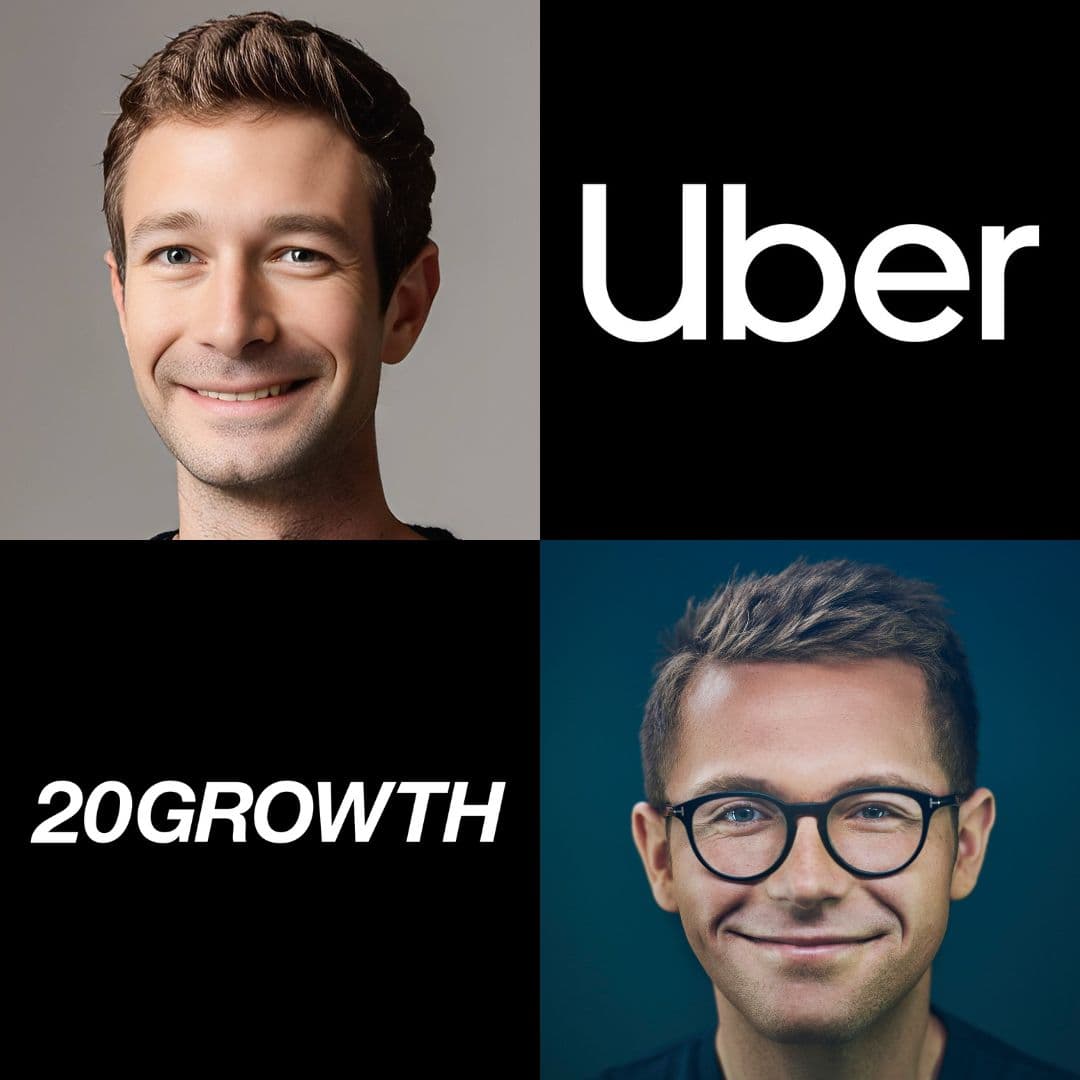

In short
Podcast Summary: The Twenty Minute VC (20VC)
Episode Title 20Growth: Uber's Expansion Playbook for Scaling from 10 Cities to $10BN in Revenue | How Uber Acquired 1M Drivers | How Uber Solved the Chicken and The Egg Problem in New Markets and What Uber Would Be Like with Travis Still There with Scott Gorlick
Episode Description Scott Gorlick, an early employee at Uber (employee #99), shares insights from his six-year journey of building Uber in Atlanta and scaling the business from 10 cities to $10 billion in revenue. The discussion covers Uber's driver acquisition strategies, city expansion playbook, and reflections on leadership under Travis Kalanick.
---
Key Topics Discussed
- The Driver Acquisition Playbook: Scaling to 1M Drivers
- Driver Acquisition Strategies
- Initial driver recruitment involved cold calling drivers and offering them the chance to join Uber without any upfront cost.
- Utilized a driver-to-driver referral payment system to incentivize existing drivers to recruit new ones.
- Effective Practices
- Focused on relationship building and community engagement to recruit drivers.
- Used promotions and bonuses to incentivize sign-ups and retention.
- Retention Metrics
- Retention was tracked over 30, 60, and 90-day periods to understand how many drivers remained active.
- The City Expansion Playbook
- Expansion Strategies and Challenges
- Each new city launch followed a detailed playbook with specific roles (general manager, operations manager) to manage operations and marketing.
- Emphasis on local partnerships and grassroots marketing efforts to ramp demand effectively.
- Market Dynamics
- Uber often allowed competitors like Lyft to launch first in some markets to learn from their approach before entering.
- The speed at which new markets reached profitability decreased over time as the company learned from previous experiences.
- Leadership Under Travis Kalanick
- Kalanick's Leadership Style
- Transition from a fast-paced, aggressive growth strategy under Kalanick to a more tempered approach under Dara Khosrowshahi.
- Kalanick's ability to inspire a strong company culture and loyalty among employees was highlighted.
- Reflections on Changes Post-Kalanick
- Gorlick expressed that the company may have missed opportunities for faster growth and innovation without Kalanick's leadership.
---
Key Takeaways
- Importance of Local Teams: Uber's success in scaling was largely due to its on-the-ground teams that understood local dynamics and could rapidly adapt.
- Role of Metrics: Continuous tracking of key performance metrics (e.g., rides per week, driver retention) was essential for understanding business health and making informed decisions.
- Marketing and Promotions: Early marketing strategies often relied on free promotions to build initial user bases, which proved effective in establishing market presence.
- Market Share Dynamics: Competitive pressures forced Uber to continually adapt its approach, particularly in pricing and promotions.
---
Conclusion Scott Gorlick's insights from his time at Uber reveal the strategic and tactical elements behind the rapid scaling of one of the most significant tech companies in recent history. By focusing on localized operations, strong leadership, and innovative growth strategies, Uber managed to navigate complex market dynamics and establish itself as a leader in the ride-sharing industry.
For further insights, listeners can explore more episodes of The Twenty Minute VC by visiting [20vc.com](http://www.20vc.com).
Written by AI. May contain mistakes. Listen to the episode to check what was said.
Transcript
Automatic transcript. May contain errors.0:00So, I remember we saw almost every city as it's all started up. The right team that we were hiring for pre -rolls, one was we'd send in the launcher, and the launcher would be responsible for higher team. In a general market, we would want a general manager who acted as like the CEO of the city, overseeing both driver and rider, and then the second role that we hired was an operations manager that would oversee sort of the driver area of the operation and be responsible for drawing that. And we'd also work on getting a marketing ad that would oversee the writer side, BG partnerships, building out the early grassroots efforts in the community.
0:35This is 20 growth with me, Harry Sebbings. Now, on 20 growth, we sit down with the best growth leaders in the world to unpack their playbooks for scaling incredible products and communities. Today, we're joined by Scott Gawlik, employee number 99 at Uber. And today, he unpacks two incredible playbooks that Uber had. He unpatched their driver acquisition playbook that allowed them to scale to a million drivers And then he unpatched their city expansion playbook that allowed them to scale from 10 cities to 10 billion dollars in revenue Scots also a prolific angel ambassador having written early checks into Lyme and standard cognition to name a few and this episode is Incredibly granular.
1:14We really do go quite deep in terms of different growth playbooks So it's time to get out the notebooks and this is a special one But before we dive into the show today, today I want to share a tool for all you SaaS innovators out there looking to spice up your demand generation strategy. It's time to ditch the sales jargon and start engaging your audience with something they'll actually want to use. Picture this, you're a trusted guide helping your audience assess their strengths and weaknesses with a fun and interactive maturity assessment. Maybe it's a sales efficiency assessment or a growth readiness grader.
1:46These tools don't just draw people in, they offer real insights and solutions tailored to their needs. Without grows powerful no code builder, you can create these engaging maturity assessments. The magic here is in showing your audience how you can help them level up in specific areas. If you sell analytics software, you can show users where they excel and where they're lagging. If your software can help them where they use is lagging, then you can clearly add value. By offering the detailed results in the maturity assessment, you're not just generating leads, you're educating users. So, if you want to turbocharge your demand generation and build assessments like assess your AWS setup or evaluate your integration capabilities, head over to Outgrow .co -slage20growth .com that's outgr .co -slage20growth to get 20 % of annual plans in a free trial.
2:34Now that your leads are sorted, let's get your team in sync with Canva. When I spoke to Canva co -founder Cliff Obrecht on the podcast last year, he touched on how Our visual content is fast becoming the fuel that's driving the modern workplace. Your team needs to create an engaging visual pitch deck to sell in an idea. A product launch needs an inspiring video to excite investors and customers. Projects gather steam with visual whiteboards. That's where Canva can help. It's a game changer for visual communication at work. Canva turns your team into master visual communicators so they can get their point across with visual impact inside and outside your business, with no design experience needed, with Canva, any team member and any company, whether you're a startup or a global organization, can design compelling, on -brand, visual content, quickly and easily.
3:22That's why 90 % of the Fortune 500 use Canva. Start designing today at canva .com, designed for work. You have now arrived at your destination. Scott, man, I am so excited for this. I said to you before, I'm a fanboy of your Twitter threads. I think they are fantastic. So first, thank you so much for joining me, stay, man. Thanks Harry, excited to be here. Now I would love to start just with a little bit of context before we dive into the incredible stories that are coming. Tell me, how did you make your way into the Wild of Growth? Join Uber. I believe as employee number 99. Harry, it's a crazy story.
3:56So I finished up school in 2011 and when I finished up school, there were really only two things that people did. They either went to investment banking or they went to consulting. I chose consulting and very early on, I realized that it was like for me. probably on like week three. But the silver lining of the experience was on the weekends, I could go out and fly to San Francisco as long as I was back at the client site on Monday morning. So this was 2011, 2012, and I was going out and meeting companies like Airbnb, Square, Fairly Early, along with like 50 other companies, but nothing really clicked until I was in Chicago one night.
4:35I was trying to give to a work dinner and I was trying to find a taxi. It was branding. And I had heard about this app where if you press the button, you'd get a ride. So I downloaded the app and two minutes later, my first Uber showed up. It was an escalated and I was immediately at a lot, an absolutely magical experience. So that night was working on a deck pretty late at night, probably wrapped around at night or 1 a .m. and had this during a fire moment where I was like, huh, I need to be a part of this Uber thing. What's the most like simple thing to do? So I decided to email Travis at Uber .com, not thinking that I would hear anything.
5:08And I got me a mail back and over the next few weeks I got to know the team eventually took an analytics test, took a creative test, and then flew up to meet the team probably a couple of weeks later. And because I was so young when I got in the room, I said, don't worry guys, I'm old enough. They seemed to think that was really funny. I was 23 and didn't know about anything. But they sent me back to Atlanta, the launch uber's Rocklead Tent City as employee number 99. I mean, I didn't know the context there when I asked that question. I did not know that it was like a direct, cold email to Travis.
5:40That is awesome. And that's also a lot of responsibility on the shoulders of a 23 year old to open a city. How did you build in Atlanta then? You go back, take me to that. Yeah, so it was an incredible experience. I was living in Atlanta at the same time, so I didn't really have to move. But when I got back to Atlanta to launch Uber, it was really about building the operation from scratch. When you're starting a marketplace you really need to do two things. You need to get supply and you need to get demand. So for Uber the hardest thing was the driver's side and we need to get a lot of drivers very quickly.
6:19So when we went into the initial market we got a yon list of all the drivers in the city and sort of like call it through and try to get them the side up with Uber and you know got our initial list of drivers that way and launched a few weeks later, with something we call a rider zero. What did you say to them when you called them up? What did they say? What percent said yes? Just take me to that. So I'd be like, hey, this is Scott. I work at Booper in Atlanta. We're starting a new ride sharing service where you can pick up riders between your trips to the airport. And we help you fill your downtime.
6:53Is this something you might be interested in? And you know, when most drivers had a perv Uber and were a little bit skeptical, they were willing to give us a shot because it didn't cost of anything in join, right? They would come to our office and you know we give them an iPhone, which is a story at some point, when we get in the iPhone they'd be able to pick up a rider 20 minutes later, right? So we'd say, hey, if you don't like this, bring it back and know it's going to hardback. So you cool up say 100. What does that say yes? Probably like 75. Okay, so we're onboarding our first 1020. Take me to the onboarding of the drivers.
7:26You fix supply and then demand just floods in the door. Just take me to that. Yeah, so we on board of the drivers they show up at the office we do like a 60 minute on warning we check out their cars We tell them a little bit about the company and then we would kind of take them through the training on how to use the app And then we put them out there right and for the first two or three weeks of the city, dude. I was nervous It was zero out of ten cars utilize one out of ten two out of ten and then one Friday night I always out and I think I was actually out of town at like a Uber related summit and you know I'm sitting next to some other guys there at different cities and they're like it's gonna happen and it's going to happen.
8:01And within like 10 minutes span, we went from like two out of 10 cars to utilize to all 10 cars to utilize. And like 100 people opened the app. And it just totally flipped. And from that point forward, we just needed more cars. It wasn't about the man's side. Yes, we had to do the partnerships. Yes, we had to be the integrator of ourselves in the community. But it was really about getting as many drivers on the board as possible. How did you retain the drivers when it was one out of 10, two out of 10? Because the whole thing is like the symmetry of timing, making sure it's aligned. How did you keep them when there was nothing coming?
8:32Yeah, so we saw what I guess people called the chicken and egg problem or the cold start problem in marketplaces, but you may have a couple things. In the early days, we wanted to make sure that drivers when they were sitting around were kind of like paid for that time. So in the early days, we pitted drive our 20 or $30 an hour to sit there. And you know, this lasted probably 60 or 90 days into a market launch. And then after it became clear that the driver's making more than 20 or $30 an hour, we removed that guarantee and sort of let the marketplace flip naturally, right? We also did things like we put drivers near places where we knew we'd have high demand in cities and then we made it really easy on the demand side to work for your friends.
9:13So if you were riding in a car with somebody and they hadn't used to who we are yet, by the time you got out of the car you would have referred them and you each would have gotten like $10 off your next ride. You have this moment where you're like holy shit. We have a hundred people on the app. We're fully utilized How do you ramp supply at scale then and are you doing paid marketing at this point? No, so in terms of scaling up drivers We did things that didn't scale for a lot longer than people would think what did you do that didn't scale? I'm just intrigued. Yeah, so for probably the first million drivers that we onboarded a lot of our processes were manual So we weren't doing a lot of like paid spend on Facebook.
9:51We were doing a little bit on Craigslist. We weren't doing a ton on Google. But it was really the operational teams going out with finding drivers. It was that cold calling. It was getting drivers to show up the office and batching on more eggs first with like one driver at a time and five, then 10. Then you would basically get a conference room at a hotel on more 25 drivers at a time or 100 drivers at a time. And it just kind of like scaled up. Other things that we did that I think were like super effective where we go where the drivers work, right? Like, we knew that we had a captive audience on Monday mornings and Thursday afternoon so the drivers picked up and dropped off people from the airport.
10:26And we knew that if we went there with snacks or coffee or rented sort of a conference room or like a chillout between rides, we could pitch them on driving Uber and, you know, we saw it as a very incremental to what they were building. So, every city at Uber was kind of like running a playbook but if we found something that worked in one city, we'd bring it everywhere else too. What were the biggest things that worked in cities that you brought everywhere. So, renting a hotel room, giving it to them for downtime and then pitching. What else? Honestly, people underestimate how effective cold calling was.
10:55Cold calling was an incredible mechanism to get people through the door. And then the other thing, Harry, that worked super well is referrals. When we started doing referrals of drivers, we would, you know, pay like a $25 or $50 bonus for a driver to bring their friend and then when they completed like their first tent trucks we pay out about it on both sides. Obviously, as the business scaled up, the referral belties got quite a bit bigger, but we found that when we tapped into a specific driver community, they all kind of knew each other and we're very happy to refer each other because Uber allowed them to buy more cars and expand their business, and it really just helped them grow as sort of business at large.
11:33Can I ask, what didn't work? What was some early mistakes in driver acquisition, specifically actually that will I off that was a bad one. Yeah, so we made a lot of mistakes, right? So I would say like the number one mistake we made in a lot of cities is we probably got kicked out of every office that we joined early because you know we were renting like space in like co -working spaces and a lot of these co -working spaces were too happy with drivers coming by like all hours of the day and sort of disrupting the flow. So I think that was sort of a major era that we met early on. I think other things that we did that were kind of a little bit challenging in markets is I think that where we messed up was it was a very like 24, 7, 365 operation where people in cars every single hour of the day and we probably understaffed a little in the early days, right?
12:28So, you know, for the first year in Atlanta, I was the only person handling the driver's We had Keith overseeing the city as a general manager and he was incredible. When we had a marketing manager, I probably had like a thousand or 1500 drivers that were just me and like, you know We didn't have any of the AI tools that we did today It was just like all on a Google voice and sort of back and forth texting and desk We let a lot of things slip through the cracks, but the business on the foundations working Well, you concerned at the time that the economics were upside down. Obviously when you start a city The economics are always gonna be pretty ugly in the early days it takes a while for these new cities to mature.
13:03Were you concerned in the day to day that the economics did not look good? I think when we talk about unit economics, I think at scale, we always kind of knew that the margins would correct themselves at scale if we could kind of rationalize the competitive playing environment, right? Can I ask in terms of those kind of margin improvements, how did you see margins and economics change as the company progressed in new cities? Like did the maturation rate become much quicker? What was some lessons from that I'm just intrigued? Yeah, so I would say the biggest difference on the unit economics over time was we had to play the game on the field.
13:39There were a lot of competitors in different markets. And at the same time as we were raising money, soft bank was pouring money into all different competitors, right? So even though we were in 2014 and the business was five years long, like the unit economics as we launched UberX had more competitors actually got worse over time because you started spending so much money to acquire drivers, to acquire riders, and until the competitive market like rationalized, right? And Softbank sort of like pulled back a little bit or decided, or Cooper decided exactly like we're going to want to deploy it.
14:09It was very challenging to basically be like, Hey, Harry, we're going to cut all driver incentives tomorrow. We're going to cut all rider incentives because we would have seen that market share reflected and that would stop the driver. With the increasing competition and increasing cash to competition, Did you actively see it become harder to acquire drivers? Yeah, there was a point in San Francisco and don't quote me on this number is over time, right? Like we were paying $25 or $50 for referrals in Atlanta and then we started paying like $250 to each side, the driver that referred and the driver that signed up.
14:43And then we escalated to $500, $500 and I think there was a point in time where in San Francisco with a couple of other very competitive cities. We were paying $1 ,000 each side. So $2 ,000 for driver acquisition, we would put some sort of threshold around that, right? The new driver would have to do XML to trevves and maintain this quality rating and do this sort of acceptance, right? But who's a period of time, probably like 2014, 2015, 2016, where things got very early? How did you define a retained user? You know, with Facebook, they always said, it's like, off to five friends, then you're a retained user.
15:16What was the metric to understand, use a satisfaction retention as a core north star? Yeah, so I think on the right -hand side, we were looking at total spend, right? What's the monthly spend and how is that growing over time? And we would look at rights per week and rights per month and be able to understand how we're mapping into their data -date routines. I would argue that right -ass spend is not a true reflection. I can take one long trip and it doesn't mean that I really love Uber, but if I do velocity of trips, tan trips, it means that I do. What, which one did you really focus on? I think it rides for a month, this probably the most important and understanding rides for me and sort of how it maps the people's routine.
15:58Because some days, like you said, you might have a long airport trip and that like distort the co -work hours of your time. And then on the driver's side for retention, what we were looking at is like, hey, how far are they retaining it? Like 28 days, you know, 56 days, 96 days, and just understanding like, if a driver stays with us for three months, they're likely to stay with us longer. And sort of looking at the underlying trip metrics, how many trips they're doing for the how many like what the ratings are. And then also like how many hours they're pretty yet right? Some people this is a full time thing.
16:28It's for like 90 % of drivers. It's very part time right? Less than like 10 hours a week. What was good retention on the driver side? Say 28, 60, 90 days. How did that vary? I would say if you started the year with a hundred drivers, I think you would probably have 25 or 30 of the last at the end of the year, that would be good. Not hugely dissimilar to consumer subscription, to be honest. How did the product offering look when you were doing Atlanta and the subsequent city roll out in terms of the different tiers of Uber's in terms of luxury? What did that look like? Yes, so when I started at Uber, we were only black cars.
17:03And what was challenging about that is there only a certain number of black cars in a given city, right? Like in Atlanta, there might have been a thousand black cars. And while you can create more and get more on board, you're never going to build like the massive 10 business unless you open it up for BRACs. So we started launching UberX more probably in late 2012, late early 2013. And then sort of as we started rolling out UberX in more markets, that was probably 2013, 2014, that's when the business really started to explode. Well, did it explode from pretty much day one? Was there immediate product market fit on UberX?
17:38There was a media product market fit on UberX and what was really interesting about UberX is when we launched UberX And this was the operational nightmare and who on cities we actually did free UberX week So for an entire week we would get free UberX it was a marketing expense, right? And we were basically running it probably 80 90 100 % utilization all the time and we knew that When we did it that it would be hard to kind of fill that demand like people were really excited about UberX and like a better faster cheaper option to use Uber, overtime we were able to build more supply, right? That is impressive.
18:15How much money did that cost? But the idea is then you get a habit in the consumer, they build a habit of forming exercise with it and then retain. Yeah, the idea in terms of ROI on free Uber X -Weat was previously Uber was just a black car product. And by launching Uber X, we could do better faster cheaper than a taxi. and we kind of wanted to come out with a bang, right? And to be able to do that, we were comfortable saying, hey, this free Uber X week is gonna cost us X trips in a week times X dollars. And, you know, we were comfortable with that spend because if we look forward six months, this is what's going to be a lot bigger.
18:53Would you say now with the benefit of hindsight, free Uber X week was incredibly, incredibly instrumental to the success of Uber X? I think it would have worked no matter what. I think like we had strong product market fit, but I think like what was particularly interesting about free UberX. We're looking back on it 10 years later in hindsight was the competitive dynamics, right? So in a lot of ways, when we launched UberX, the main competitor was Lyft. And Lyft's flagship product was UberX. And what a lot of people don't know about Lyft is when we started launching UberX, we let Lyft go first.
19:31And we had a policy that said, Hey, if with launches in a city, we are going to wait 30 days to see if the law enforcement comes after them and then we're going to launch after that. So as you probably know from Uber, that was a very abrupt, it was a very different tack that we had taken on other launches and it didn't last very long, right? We probably did that for like three or four or five cities and then and we just started launching at the same time. So when we launched Uber Axe, it was about market share and it was about getting as many drivers as possible, as quickly as possible, so that we could win that market and carve out a position that we felt really confident in going forward.
20:11Was it very clear when you were winning a market early on? I think what was interesting about the Uber Lift Dynamic is when we went into a market, like Atlanta, we had been operating for 18 months before we launched Uber Axe, or 12 or 18 months and Liv was kind of new on the scene. So they didn't necessarily get the brand that we did. So for us, it was a brand extension of saying, hey, now it's the same Uber, but better faster and cheaper. And Liv had to come in and sort of build that brand equity. So I think that was challenging in Atlanta for them. And some of the markets were Uber was more established.
20:48But if you go to a place like the center of the country where both services are launching at the same time, like in Oklahoma City, it was more dogfight near really is. and we certainly cranked up our spend to make sure that we were winning early market share and getting the drivers quicker. I think the big differentiation in Uber versus Lyft is that we had on the ground teams in every market, we had in Atlanta City team, we had at Philadelphia team, we had a Chicago team and Lyft operated completely out of San Francisco. So, while they would fly in launchers to a city who would stay for a couple weeks or a month or pop in and pop out, we were the drivers every single day and sort of working closely with them.
21:28So I think our speed and proximity to them gave us the edge because Harriet wasn't really about growth marketing in terms of growing the rider side. It was just how many drivers can you get and that sort of drove the network affected and helped you get bigger. Talking about the differentiator that being like being on the ground, being in person, when you launch a new city, can you just talk me through that city playbook rollout? Do you just pick round and people and send them? how many do you pick? What's the organization? Can you just walk me through that? Yeah, so I remember we saw almost every city as it's all in startup.
22:02That was an incredible leaf -free thing for people that were young in their 20s and 30s to kind of go into a market and create a scratch. And the playbook was probably 180 steps. We should probably open to our sit at some point. It's on the Nesata checklist somewhere. How we thought about it was we wanted the right team. You know for us the right team that we were hiring for pre -rolls one was we sent in the launcher that would kind of pop around from city to city We had launchers that started out in LA that did Philadelphia and did Atlanta and sort of the profile of a launcher was MBA tied private equity banking and you know the launcher would be responsible for higher teams So in a general market we would want a general manager who acted as like the CEO of the city overseeing both driver and rider.
22:49And that person was a very similar background to the launcher banking private equity consulting, MBA Stanford Class of 2012 with very good to us. And then the second role that we hired was an operations manager. And that was more like anger consultant types like being the would overseas sort of the driver area of the operation and be responsible for drawing that. And then we'd also work on getting a marketing manager that would oversee the rider side, BD partnerships, building out the early grassroots efforts in the community. Okay, so they're sitting in an office day to day and they have complete free reign over the city.
23:24How does that control and decision -making look like from their perspective? Yes, everything was pretty autonomous, right? In the early days, every city had the freedom to experiment and try things. And I think we had a pretty flat work structure in the early days. Everybody reported into graves. was your first CEO and later became the CEO out. And what's really interesting sort of about that is we all kept each other accountable, right? We were all doing really hard things. And every week we would get on like a city call where in all hands call and every city would go down the list and say how much gross book games he did it last week, how many trips he completed, how many drivers who onboarded and sort of general highlights from the city.
24:08And we had everything in a dashboard, where everybody the company could see exactly what city was doing, what who was growing vastess. And it became like a really competitive dynamic that all just kind of like pushed each other forward, which was a really interesting approach. Well, that city's that were clearly behind in struggling and what were the reasons for those struggling cities? I think there were definitely cities that fell behind, but in a lot of cases, like the teams were just incredible. It was more a function of the regs. So, a lot of times, you know, if the city was struggling, you know, it would be due to the regulations and the laws.
Read the full transcript
24:38So, you know, they would make it really difficult to operate, they would take a driver, as they would try to shut us down. And over time, that regulatory situation cleared off where, you know, we were able to operate more freely or, you know, we ended up moving the teams to other cities or sort of working out other projects. But I would say like, it wasn't like certain markets were underperforming because of sort of like underperforming. It was more like external factors that people could control. When you get a regulatory warning, when you get regulatory controls put on you. How does that feel?
25:09What does that look like? Can you take me to one? South by Southwest Austin 2014, the Mecca for all things tech, in Austin we were not allowed to operate because there were two rules in Austin that prevented us from doing so. If you ordered a black car in Austin, the minimum fare, whether you're going a block or a mile, was $55. If you ordered a car and it showed up in one minute. You had to legally stare at it for another 29 minutes before being allowed to get it. It made absolutely no sense, Harry. So what we did in 2014 was we decided that we were going to do South by Southwest to read Don the previous years.
25:50And this year we decided to do black cars and we actually did the $55 in the month fare, which was a lot of drivers did very well. We brought in drivers from Austin, from Dallas, from Houston, from San Antonio, and it was incredible. authorities weren't super concerned about like the pre -reservation like get a car and then it shows up 29 minutes later, etc. But what we did on UberX really inflamed them. So what we decided to do was we decided to do free UberX for all its out by Southwest. But what ended up happening was that we paid the drivers a set dollar amount per hour so the drivers were paid.
26:28And then we basically said, okay cool, we're going to let the riders ride for free. So what ended up happening was the regulators ended up targeting some of the cars and requesting specific cars come to specific places and on the way out of the car the rider proceed as normal and on the way out of the car the rider that was their plant actually left a $20 dollar bill in a car just in the back seat and then after the driver left the rider out of the car the cops would come up inside the driver. So that was an incredibly frustrating experience with regulators among laws that just didn't make sense.
27:06We scrambled our whole team back to the house who worked with council and you know we were able to make sure that like everything worked out okay, but Harry these laws are absolutely insane and I'm a much bigger fan of smaller government. Did the team view lift as a competitor? Yeah I mean I think lift was an incredible competitor. They did a lot of things right early on. I think they did a great job on the driver's side building like city and you know probably did a better job leaning in there from us. What do you think they did that you didn't do that you'd take? One of the things that we probably messed up, we were probably a little bit transactional at times with drivers in terms of scale and you know if I could go back in time that's something I would have like read bested in but I think that's something that left that right early on.
27:52We mentioned kind of reckless versus Nestle playing the game on the field. How much of an impacted promos have discounts have? How much of an impacted that have in driving early demand? Not really much. Once competition came in, you could start to see market share swings based on the specific rider promo that Uber was offering in a city in a given week and then we'd measure it and understand what Lyft was doing. Or like if we made a pricing move, they would make a pricing move. Like, there was a lot of back and forth, and we would see those effects in market share. It wasn't anything to do with the product.
28:28It was just pure price. There's some elements which, at the time, seems brilliant and with hindsight, you're like, that was really stupid. What at the time seemed brilliant that you look back on and are like, I can't believe we did that? We tried to do too much, simply put it. Specifically, you know, we were looking at like doing like a vertical teak -off and landing, type like helicopter play, we were doing Uber Elevate. There were just a lot of things that became distractions from the core mission of moving people around cities and delivering food. That, you know, we're problematic and sort of like hindered Uber's group.
29:04But at the time, we thought they were actually really smart and we wanted to call it. What did you forget most wrong, do you think? When you look back now, what's the, that was the mistake? I think our aggressive stance with writers and politicians clearly worked because we were able to create a lot of fans of Uber. But if I could go back or we could go back and do it all over again, I think we would have found a way to present our engine a way that was less competitive, especially with media. I wish that we could have built like a better story. We had a lot of provato, we had a lot of slagger.
29:39I think when you come out like that, everybody wants to build you up on the way up, and then they want to tear you down on the way down. And I think, you know, I probably would have been combative in the areas that we were with like writers and politicians, but a little bit more humble and gentle with sort of media. In the maturation of Uber as a company with the transition of TK out and Dora in, do you think they slowly ingratiated that? The regulator is our friend, friendly face. If you look at where Uber got to, it never would have become what it was without Travis. Travis is such an incredible operator, one of the best CEOs of the generation.
30:19Uber would not have become the $150 billion company that it is today without him. I think over time what would have happened is, you know, when a company goes public and when a company matures, the young upstart company that you are has to be a lot more mature and I think a lot of that transition probably happened under Dara and over the last few years since COVID. What's your favorite lesson from working with Travis? You saw him across different stages, across different expansion segments. When you look back, what was your biggest take away or lesson from seeing him operate? I think what Travis is really good at is speed.
30:56Here's a quote that's fear is the disease, hustle is the antidote. What he did better than anybody else, it does better than a high -prey else. He sees something, and he moves quickly. It's, hey, like, let's try this out. If it works, amazing, we're gonna pour more gasoline on it. And if it doesn't, we're gonna keep trying until we figure it out. And I think what's really unique about Travis as CEO, he's just level of understanding across like product and operations is very unmatched. like he could dive into the weeds with engineering, but then he could nerd out with you on sort of like positioning cars and different cities and like talking to drivers like 30 seconds later.
31:35The context switching and just the the ability to create things at speed and empower his teams to think that they can run through walls was unmatched. Do you think it was the right thing fam to move on? I don't think so. Where would it be now if he was still there? I'm a big fan of founder -led businesses and I think Travis is an incredible founder who should have been given the opportunity to be a duper into the next generation. It's really unfortunate how things happen to play out and I think that while Dar is done, Dar and the team have done a good job kind of building the business and it's a $150 billion company today.
32:13I think that founder -led businesses do better with long term. I'm really encouraged by what I've seen from Dora and the team, but I do think you know you lose some of that founders' edge without Travis and some of that magic and I think the speed slows down. How do you think it would have been different though? Do you think it would be more products? Do you think it would be more countries different? Brow, how do you think about the Travis versus the Dora in terms of how it would be different? Yeah, I think things probably would have been different. It had Travis stayed. I think specific things would have been on the M &A side.
32:44there were some deals we did in 2020, 2021 that didn't make a lot of sense. I know Emil talked about post -bass. I think the drizzly acquisition probably didn't make much sense either. And some of the tie -ups that we did strategically in different regions probably were at the right back. And then I think that on the each side of the business things would have been different. And when we launched Eats, it was growing really fast. But if you look at Dordash versus eats in the US. The market share is pretty pronounced. I think Dordash has something in the 60s, Uber has something in the 20s. Well Uber eats is still like the top food delivery brand, worldwide.
33:22I think we missed a big opportunity and we're distracted by everything that was going on when Travis left to really execute. And like I think the narrative is really around the Dordash focused on the suburbs and like Uber focused on the cities. And I think part of that is true, But I also think we were probably going through a really hard time and it was hard to grow that business at a fast rate when all of the shapes around us was happening. Did it feel lead at this at the time? A little bit. I think when a company loses its founder, it's a very different situation. We had a deep bench of people that had been at the company for very long time.
34:01We trusted them to kind of like run that business. But when you have a committee or like a team of 12 people sort of running a business that had gone through a really challenging year, it's going to deal the effects of that. Can I show us one final one on Travis? And then I do want to move to a more broad style of advice where we do a quick fire. He inspired this like follower ship. I think the best founders inspired follower ship. You see it with the Colossons, Toby Lutker at Shopify, Travis. Where I know many early Rimbouys and they just fucking love him. And they love each and it's like this intense familial sentiment, which is really special.
34:36What did Travis do to generate this follower ship? The best founders built cults and their cult leaders. Travis, what he was really good at was inspiring a team. We would look left, we would look right, we would all have a lot of work on our play, but we knew that if we put our heads down and did it, there would be an incredible journey on sort of the other side, and Travis was really good at explaining what and the why behind everything. And I think like Travis was always willing to roll up his sleeves, dive in, and figure out the answers to the messiest problems. The best idea I've always wanted with Travis.
35:12And we were all kind of like going to war together every day, I'll let's like mission together. And that felt really good. And that's what the life long pass. Dude, I would love to do a quick fire with you. So I say a short statement, you give me your immediate thoughts. Does that sound okay? Let's do it. But what's the most common, expensive, deadly mistake you see founders making? I think the biggest mistake that I see founders making day to day is not having a lot of metrics. Everybody measures metrics in a different way. And I think we've kind of entered an era by 1 ,000 dashboards. And I would love if everybody sort of said, hey, here are the three or four most important metrics for our business and the line around that.
35:50What's the hardest part of the Uber business today? The area I have the most questions about today is on Thomas V. at Colson, sort of like what the strategy is there. You know what strategy be that? I think the notion that Uber was a hardware company, right, and building cars was probably hard for a software company. So I think the decision to partner with leading indie players in the space, doing things with the waymos and the cruises of the world, and trying to bring their fleet south to Uber is the right long -term strategy. I guess, you know, my questions are around like, hey, like, how far out is AVs?
36:22What does it look like? And, you know, what does the business look like? What's the number one reason the Uber B left? I think it comes back to really being close and in the cities where we operated when we could be with drivers one on one 24 hours a day, seven days a week versus being in San Francisco and flying in like a couple of times a month, being close to your customers. This is such a big edge. What element over the Uber business is amazing, but not discussed enough? Yeah, it's business is a monster because it's I think a billion dollar run right now And what's really interesting is if you think about Uber's platform It's the app where you go from like point A to point B.
37:02It knows where you're going It knows like what shops are visiting like what restaurants you like, etc And if you have that knowledge you can then push ads to some way in the app and whether it's like video or or text or a promotion for a movie or the US Open, there are a lot of things that you can do with that data and I think they're just barely starting to scratch this. What would you most like to change about the world of growth? Alignment on metrics. I think across companies, we have very different definitions of what revenue meets. Is it annual revenue? Is it annual recurring revenue? Is it gross bookings?
37:37Is it net revenue? Is it total payment volume? I think we all started speaking the same language. The world would be a lot better place So it would make it easier for growth investors. For me, it's like input and output metrics. The amount of times it's like, hey, revenues are metric. And I'm like, no number of rides per week is all metric. I don't care about the revenue. That is the output metric. Final one, what's the best growth strategy that you've seen in the last 12 months? And why have you been so impressed by that one? I'm a huge perplexity user. I think it's an amazing product. Huge fanboy to use your language.
38:10And you know, I think one of the things they've done and recently that's really interesting is they're offering a free pro membership to anybody with a LinkedIn premium account or a number one membership. So it's spending $20 a month or $250 a year, you plug in your info and they'll give you the free usage. So they basically kind of locked in people for a year. And if you believe that perplexity could be like the next Google search, you're happy to pay that pack or sort of that free membership and sort of the GPUs over the year to acquire those uses and generate stickiness when a lot of tools are basically fine.
38:41I love that. I totally agree. I saw that partnership and I was like, I haven't smelt my man. So yes, I agree with that. Dude, this has been so much fun. As I said at the beginning, for me, the best is when you have stories that then I'm very tied to lessons. I mean, the stories are incredible. I still can't get over the first email to Travis at. But thank you so much for joining me and I've so enjoyed this. Harry, thanks so much. It was a pleasure. I mean, some of those stories are just fantastic. That South by Southwest one is just awesome to hear and incredible to hear the hustle of the early team in those early Uber days.
39:13If you want to watch the full interview, you can find it on YouTube by searching for 20VC. That's 20VC. But before we leave you today, let me tell you about Outgrow. Let's get real for a second. If you're in Sass, you know the struggle of cutting through the noise to actually connect with potential customers. How do you make your product stand out without shouting into the void? Here's a practical solution. Build an interactive maturity assessment with Outgrow. Imagine you're running a project management software company. You could create a team efficiency grader that helps teams see where they're killing it and where they might need a little help.
39:46Maybe their collaboration is stellar, but time management needs some work. Your tool can guide them on how to improve or say you've got a cyber security platform. Create a security preparedness test that lets companies see how they stack up against industry standards. You're not just pitching your software. You're providing valuable insights that lead directly to your solution. Outgrow's no -code builder makes it easy to whip up these assessments without any technical hassle. This means you can focus on what matters, engaging your audience with real -world solutions. These assessments aren't just lead magnets, they're conversation starters.
40:19They help you show potential customers exactly how your product can fit into their world and make a difference. So if you're ready to try a more interactive approach to demand generation, check out Outgrow .co slash 20 growth that's outgrw .co slash 20 growth to get 20 % of annual plans in a free trial. Now that your leads are sorted, let's get your team in sync with Canva. Many founders I've talked to touch on this idea of if you want to go fast, go alone, want to go far, then go together. Canva helps your team go far, together with their collaboration tools. Your team can work together in real time on the same presentation, dock, whiteboard and more, with name -labeled curses, Tang teammates and comments and assign tasks, Canva Superchargers teamwork and simplifies workflows.
41:06With Canva you can go far together, and fast thanks to Canva's AI tools, generate text and slides in seconds. It's a serious time saver, and because AI is built right into Canva, your team can stay on task with no app switching. You can also save costs by aggregating your visual communication tools with Canva. Save costs, save time, make workflow, start designing today at Canva .com designed for work. Now with Labor Day weekend we will be taking Monday off but we will be back on Wednesday with one of OpenAI's newest board members for an incredible deep dive on the state of foundation models.
From the publisher
Scott Gorlick was employee #99 at Uber. Over 6 years, Scott built Uber in Atlanta and helped the company scale from 10 cities to $10B in revenue. Scott is also a prolific angel investor having written early checks into Lime and Standard Cognition to name a few.
In Today's Episode with Scott Gorlick We Discuss:
1. The Driver Acquisition Playbook: Scaling to 1M Drivers
- How did Uber acquire 1M drivers? What was the playbook?
- What worked? What did not work?
- How much of a role did driver-to-driver referral payments have in driver acquisition?
- What did Lyft do on the driver acquisition side that Uber should have done?
- What did the retention look like for drivers on a 30, 60 and 90 day period?
2. The City Expansion Playbook:
- What was the expansion playbook that Uber used for new cities?
- What worked in ramping demand in a new city? What did not work?
- How much of a role did promotions and discounting play? Lessons from them?
- Why did Uber often let Lyft launch in a new market first? What was the benefit of this?
- How did Scott see the maturation rate change with new markets opening? How fast did each subsequent market reach profitability?
3. Travis Kalanick and What Uber Could Have Been:
- How would Uber be different today if Travis was still in charge?
- What are the biggest mistakes that Dara has made with their M&A strategy?
- What are some of Scott's biggest leadership lessons from working with Travis?
- How did Travis create such strong followership and cult around him?
- What were the single biggest management mistakes made by Travis?