
In short
Podcast Summary: The Twenty Minute VC (20VC) - Episode with Yuhki Yamashita
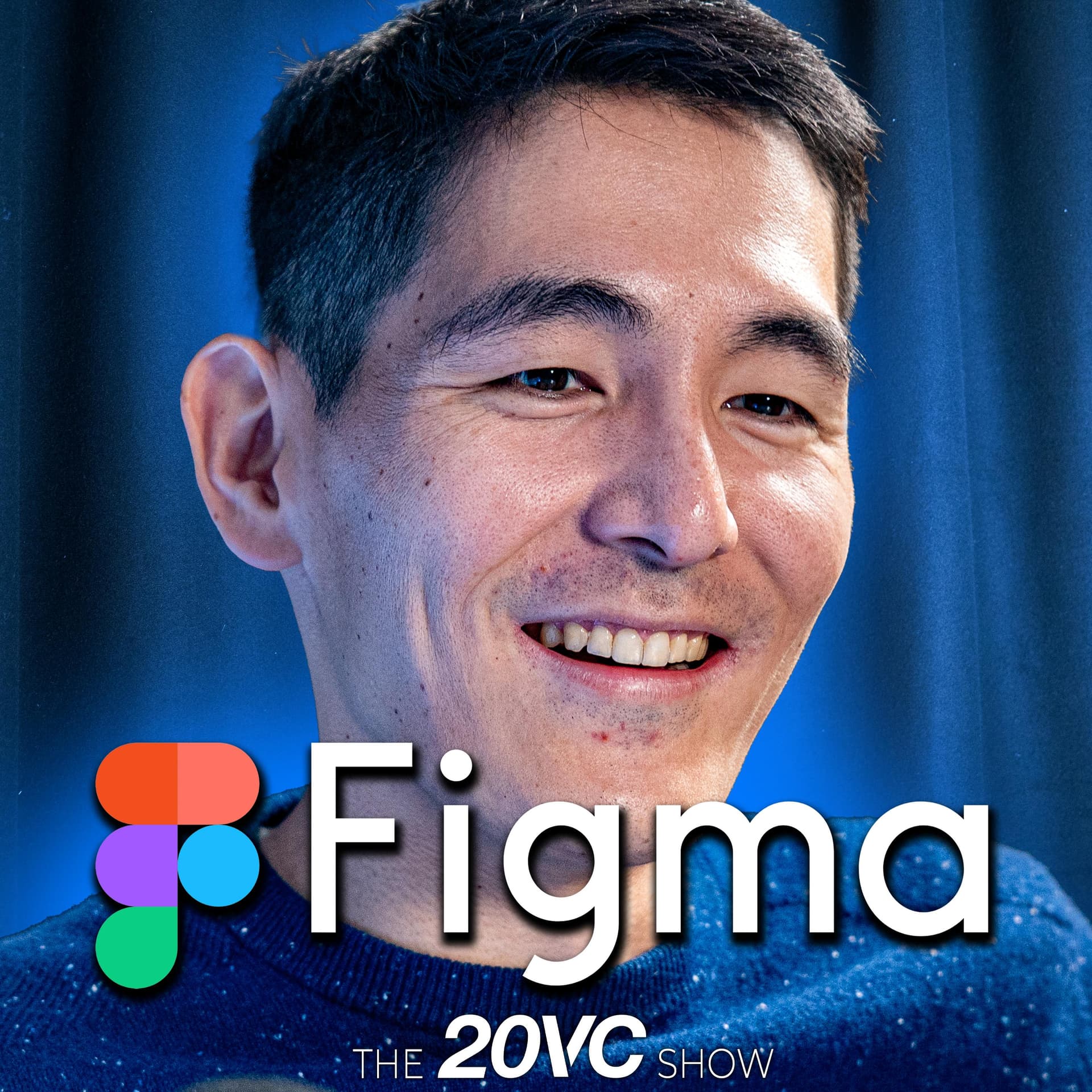
Podcast Title: The Twenty Minute VC (20VC) Episode Title: 20Product: Figma CPO on How Figma Builds Products Episode Guest: Yuhki Yamashita, Chief Product Officer at Figma Host: Harry Stebbings Release Date: [Date not provided]
Episode Overview In this episode, Harry Stebbings interviews Yuhki Yamashita, Chief Product Officer at Figma, a widely acclaimed design platform. The discussion dives deep into the principles and practices that guide product development at Figma, including innovative approaches to testing, product reviews, and the future of design.
Key Highlights and Discussions
- Product Philosophy
- Questioning Assumptions: Yuhki emphasizes the importance of questioning design assumptions, such as "Simplicity is best," suggesting that it can sometimes lead to laziness or stunted innovation.
- User-Centric Approach: The development of Figma’s products is guided by observing how users hack the platform, which indicates real user needs.
- Product Development Process
- Hack Weeks and Ideation: Figma employs "Hack Weeks" to encourage innovation, where passionate employees can prototype new ideas to pitch for future product roadmap inclusion.
- Prototyping and Testing: Building tangible prototypes helps in convincing stakeholders of a product's viability. The process emphasizes collaboration across teams for effective storytelling and messaging around products.
- The Role of Product Requirements Documents (PRDs)
- Yuhki discusses the evolution of PRDs, noting that traditional dense specifications may be outdated. Instead, centralized goals that communicate the product's direction remain essential.
- AI and Future Product Development
- AI's Influence: Yuhki discusses how AI tools are lowering barriers for entry in product development while also raising standards for productivity.
- Future of Design and Engineering Collaboration: There’s a focus on integrating design and engineering roles, allowing for more fluid collaboration.
- Organizational Structure and Culture
- Evolving Team Structures: The interview touches on the blurring lines between design and engineering, with a growing emphasis on generalist roles as opposed to specialized ones.
- Creating a Cohesive Culture: Figma's culture is built on collaboration, where product teams advocate for users while balancing business needs.
- Challenges and Learning from Flops
- Yuhki openly reflects on Figma’s biggest product failures, including an AI feature that did not resonate with users due to poor communication about its functionality.
- The importance of learning from failures and maintaining transparency with users is emphasized.
- Community Engagement
- Understanding Community Needs: Yuhki highlights the significance of deepening relationships with the user community to not only fulfill current requests but also understand underlying needs.
- The Balance of Joy and Utility in Design
- The conversation wraps up with the notion that while products must provide utility, incorporating elements of joy and playfulness can enhance user experience and satisfaction.
Key Takeaways
- Continuous Questioning: Always challenge existing design principles to foster innovation.
- User Insights Drive Development: Leverage user behavior as a source of inspiration for new product features.
- Importance of Clarity: Clear communication about product features and their intended use is crucial for user adoption.
- Community-Centric Approach: Build strong relationships with your user base to better understand their needs and motivations.
- Designing for Joy: Strive to create products that not only solve problems but also delight users.
Conclusion Yuhki Yamashita's insights into Figma's product development reveal a forward-thinking approach that combines user-centric design with agile methodologies. The conversation serves as a valuable resource for product managers, designers, and anyone involved in the tech industry, emphasizing the importance of innovation, community engagement, and thoughtful design.
---
For more information and to listen to the episode, visit [Twenty Minute VC](https://www.20vc.com).
Written by AI. May contain mistakes. Listen to the episode to check what was said.
Transcript
Automatic transcript. May contain errors.0:00This is 20 product with me Harry Stebnings. Now 20 product steps inside the world of the incredible product leaders leading some of the best product teams today. Joining me in the hot seat we have Yuki Yamashita, Chief Product Officer at Figma, where he leads the development of one of the world's most beloved design platforms. Previously, he was head of product at Uber overseeing the core rider experience used by millions globally. Yuki is a master of product storytelling and team building. he's redefined how world -class digital products are built and scaled and I couldn't be more excited to have him in the studio in London today.
0:34But before we dive into the show's day, are you struggling to beat model benchmarks or implement Gen AI in your product? If so, you need churring. Churring is an AGI infrastructure company backed by incredible investors like Foundation Capital and Westbridge Capital. And they do two things. Number one, they help leading companies in AI labs. like Salesforce and Thropic and Meta, enhance their LLMs with advanced reasoning, coding, multilinguality, multi -modality and more. Number two, they combine human and artificial intelligence expertise to deploy cutting edge AI systems for awesome companies like Rivian and Reddit.
1:13Right now, Turing offers a free five -minute self -assessment to help you pinpoint your place in the Gen AI journey, get tailored next steps to optimize your model strategy, and then finally learn how cheering can refine and implement your models for better performance. Take the guesswork out of Gen AI, visit churring .com -4 -2 -0 -VC to start your free assessment today. And once your Gen AI strategy is on point with cheering, now let's switch gears to the future of mobile and how one company is turning your screen into real returns. We spend nearly half our waking hours glued to our phones, upwards of 50 hours every week.
1:52Recently, one company transforming this reality stood out so much I personally became a shareholder, Mode Mobile. Mode Mobile created the Earn phone. The smartphone that pays you for daily activities. Instead of big tech profiting billions from our attention, Mode returns over $325 million, directly to users through earnings and savings. Mode's revenues surged an incredible 32 ,481 percent in three years, recognized by Deloitte as 2023's fastest growing software company in North America. And here's why I'm excited. Moads' equity offerings have raised over $30 million from 20 ,000 plus retail investors.
2:32One of 2025's standout public raises. And you can now join me as a shareholder with as little as $1 ,000 at invest .modemobile .com. Fordsash20VC for a limited time unlock up to 100 % bonus shares. and a free earn phone, email us for the investor brief at 20vc at modemobile .com or check out invest .modemobile .com forward slash 20vc. We've talked about making money from your phone. Now let's talk about making your product do exactly what you want it to. Whether it's the software you build or the software you buy, your text act should be creating results, not creating roadblocks. Or Pendo's no code software experience management platform, makes your software better with tools to see where users get stuck, guide them within our messaging and constantly improving your UI.
3:21It's so easy that over 14 ,000 businesses use Pando to increase revenue, lower costs and reduce risks. Businesses love the control, engineers love the freedom, everyone wins! Star for Freedstay at Pando .io -4 -20 -Product. You have now arrived at your destination. Yuki, I'm so excited for this, dude. We first met in COVID at like a link tree panel event. I've been looking forward to this for a while. So thank you for joining me in person. Thanks for having me. Not at all, but we were just talking a little bit about your upbringing. You said, I moved a lot and mentioned Tokyo and some other areas where you spend time in your childhood.
3:58I want to start with how did moving a lot impact how you think about product and design today? Yeah, I think moving a lot in retrospect back to cause me to, as a young kid, you just want to fit in, right? And you know, you make a lot of friends, we have to abandon your friends and move to a new place, learn a new culture. And as part of that, I felt like I needed to just abandon all of my kind of assumptions about how things work. Like some basics like in Singapore, you know, you hold the spoon and fork differently from the Philippines or something, you know, and just those little things. And so it causes you to just question every assumption you have to some extent.
4:36And I think that helped me with putting myself in other people's shoes, you know, building some basic user, but the, I think those are core tenants of design. I just asked continuously, I'm fat questions. And if you don't like them, we can edit them out. No, go for it. What design assumption do you think we question that we shouldn't question? I think we should always be questioning everything. I think good designers job is to always ask, what if, for me, it's like, you know, simple as always better. Is it? We should question that assumption. And to what extent as simple as a word better become lazy versus feature creep.
5:10I see, that's a good one. Dylan does always say simple is better. So there is truth to that. But simplicity is a perception. So it's not necessarily a reality. You know, if you take simple as always better to an extreme, you might not add new features. You might not add new capabilities. And I don't think that's always the right thing to do. When you think about that, like, simple is better, but then adding new features. The most difficult thing I think from an outside building product is like, how do you cater to super users who just want the most advanced features? But then also engage an audience that needs quite basic features, quite a lot of hand holding, without alienating either world.
5:45Right. No, it's really hard. I think very few products have been able to evolve in that way to some extent. I think at Figma, we try to think about it in terms of offering people different modalities, allowing them to be in the same artifact together while using different lenses. So for example, we have a product that we just launched, Figma Buzz, that has design mode, which is kind of like expert mode, hard mode, and has all the things that designers know about, like layouts and variables and design systems, things that are a little bit foreign to non -designers. But then we have just the regular mode where people can come in and it's just a very simple editor where they can edit content in ways that they expect.
6:27And having kind of that duality and giving people different lenses into the same surface has been one way for us to preserve that simplicity for one side, but the need for power on the other. You said there about the new product design mode. So design mode is a feature within our products. So Figma Buzz is one of our new products for marketers. Figma slides also has design mode. It looks like any other side's product regularly, but you can flip on design mode and get access to all the features that you expect from Thigmy design. How do you determine which new categories do you want to go into versus which to leave?
7:08You could look at Figma slides and go pitch or canvol, which is not all brand and butter. Versus we want to be there. How do you think about that product decision? Well, one of my product mentors, his name is Shiva Rajamaran. He was my manager at YouTube and has gone on to do a lot of amazing things. He talks about how it's important to observe how people hack your product. Use that as inspiration because that's real signal. They're going out of their way to demonstrate to you that they have a need, even though you're not delivering on it. For us, a lot of our new products are a function of that.
7:42back in the pandemic people or using Figma design as a space to hang out during quarantine. And that motivated us to think about building a space for them, which is Figma or brain -sturming tool. And slides too, before our slides product, three and a half million decks are being made in Figma design, even that wasn't intended for it for us. That was motivation. So I think those are the kind of ways that we can easily prioritize because we know the demand is already there. Can you take me inside what happens next in this magical product machine, a figma, which is we see that someone's hacking it.
8:18They're creating three and a half million slides. Someone brings it to a meeting and says, hey, I think we should create this product. What does the product process look like? Yeah. I would say in the case of some of these products we just talked about, there's usually a group of people inside figma, we call them figmates, who just get super passionate about it. And maybe they wait for our Maker Week, which is an equivalent of a hack a week essentially, to build out a proof of concept to make a pitch. And I think, you know, at least in our culture, building something tangible that people can use convinces people more that this idea is tenable.
8:52It's actually simpler than we imagined. And that usually is what kind of propels that project into getting on the roadmap or, you know, at least being considered. How often is make a week? Once a year, sometimes we've had it twice a year. Do you want to in a world that's more fast -moving than ever but encourage people to hack on -site projects more than ever before. Well, I think it's really important right now for every product team to think about how to prototype and play with new capabilities because everything is so fast moving. So, programs like Make -A -Week Help, but I think it's a core capability that we all need to earn.
9:29I completely agree with you, people are inspired more by a build and feeling something more tangible. What happens then? We've got three fig mates and they've been inspired by something they've built an early version. What happens then? Well, usually there is kind of a moment where there's a pitch, right? A product review of sorts. Oftentimes it's nice to pair it with, okay, well, what makes it differentiated? What is the messaging that will go alongside it? How do we tell the story around it? Because, okay, is it any old slides product or is there something special about it? Or why is it uniquely figma is a big part of that?
10:04And then the second is laddering up to our goals, right? In our case, we're in the business of helping teams build products. Even something like slides, there are a lot of use cases around that for product teams. And like, how do we bring those to life and why is that better than another slides product, for example? As a podcaster, I make bombastic statements. I expect you to probably neutralize them a little bit. Are PRDs dead? People say say in a world of such agility, PRDs. that need them anymore. All PRDs dead and how does how we use them change? They are in the form that you might be imagining could be dead, which is this very dense spec that's intended to be implemented.
10:47I remember when I was just out of college in Microsoft, our priorities would be 20 pages long with tables of edge cases. And if there was a mistake in the purity, there's a whole process called a design change request that you had to make as kind of like a punishment for making for ground. So you know, things of that form, I think are probably outdated even at Microsoft at this point. But a centralized place where you're like, this is the goal or this is what we're trying to do. Or some source of truth or people can go back and say, well, I'm trying to make a decision right here. And then I want to know whether I'm making the right decision.
11:25something that articulates that North Star is still important to ground everyone. Can different products have different new stalls within the same business? Does it have to unite? I think about it as in our product teams for example one of the things that we like to do with goals is do what we call KPI trees. So KPI trees is something that we learned actually at Uber where you say okay you have this metric but what does it ladder up to? And sometimes it ladders up via math and other times it ladders up via assumptions. So for example, you might be a team focused on customer satisfaction and there's an assumption that eventually it ladders up to engagement and therefore we collective users, right?
12:07But like the end of the day at Uber at the very top was trips, everything cascaded from there. So I think that while it's possible for everyone to be indexed on a different kind of part of that tree, someone should be doing the thinking to make sure that it's all lettering up. You mentioned story and messaging there as part of that. What products messaging slash story are you most proud of from Figma or Uber and what did you do well from it? The best stories, you know, you can kind of look at something and it instantly tells its own story. So for example, I like to think about the screenshot test, which is you have one screenshot, maybe it can be allowed to be a gift maybe, but without any caption, you just understand immediately the value of it.
12:51Back from Uber, I was working on the redesign of our writer app. We are going into upfront pricing. So the fact that there's times and real prices on the home screen, that was very self -evident with this whole redesign that was about. And I think all too often people end up kind of having to walk people through this tutorial. Let me just explain to you why this product is better. And to me, that's not just the story, it's also kind of a constraint in the design, like you're maybe not pushing it hard enough for it to be self -evident, how to use it or why it could be valuable. I'm just imagining a lot of founders listening, going, but my product is too complex.
13:29Yeah. I could never do that. Yeah. Is that because there are some products that are not just too complex or is that an element of bad design? I would say that for your audience, there should be some moment where you're kind of, you look at it, you're like, like, oh my gosh, that's amazing, right? And you know, as I said, it could be a gift for something that's, if you need a few, condense, a few steps into it, but if there's a moment where you have to say, hey, let me stop and explain or let me do like three tool tips to explain, it's a little bit suspect, I would say. So we have that beautiful picture, it's good and short, hopefully, or gift.
14:06And we have this kind of pitch moment. What does that pitch moment look like? And how do you think about that decision -making whether to go or not. Yeah, every product has some magic to it, right? Every company talks about magic in some kind of way. I think there's a visceral reaction when you see something that feels special, that feels unique. That's usually a very good indication that something is right in here. You know, and if that doesn't exist to kind of keep pushing on that until it does, or maybe say, not now, but that's something that I very much look for. What new product pitch that you had within Figma?
14:40did everyone find was the most special. And was that unanimous or have there been wildly disparate views on what people liked in the print process? Well, I'm thinking to a recent one, we introduced this feature called Code Layers and at the time the internal product name was called Living Designs. And it was this idea that you could have the static design that you just drew and then hit a button, it transforms it into code and you can start kind of augmenting it with code via prompts. In that moment, our member was a maker -week project, everyone's like, wow, all of a sudden, all these things that were impossible to do that within Figma design became possible via the power of code, but based off of the design that you just drew it so it's almost as if the design came alive.
15:26That was like a big, zoom -chat moment of like everyone's like, whoa. I think about entry points a lot as an investor. Often you lose because you get the wrong entry point. You have the right idea, the right solution, Yeah, but the wrong entry points. Yeah, when you think about the entry point for building in the future You mentioned that turning design into live code and then you've got another element which is just kind of building real time Which is your bolts? It's your loveables where you don't necessarily start with pure design You kind of build on the fly. How do you think about the future in terms of entry points in that way?
15:59The future has to be one where there are many entry points because building a product is just necessarily this very complex, multifaceted thing. And we like to talk about our North Stars, how do we go from an idea to a final product in user's hands as quickly as possible. And in some cases, people have only conceptualized the idea as a phrase. And so, by all means, start there, right? But for many others, they've already started is sketching it out in some way, because words aren't sufficient to convey the concept, or there's something about the essence of the design that they want to communicate or convey first.
16:38Designers are very visual people. They're people who, these are the people who go to a whiteboard and start drawing before writing a single word down. And then there are developers who might have an existing code base, and they have an idea based off of that. And you want to allow them to design a concept. Do you think the world separates into your professional and amateur? And it's the pros we use, Figma, and use design first, and the amateur will build on the fly with your loveable bubbles. With certainly, while it's definitely the case that Figma has traditionally been a little bit more professional, certainly our aspiration is that anyone can arrive to Figma and feel like they can get started.
17:18One of the motivations for building a product like Figma make, for example, was allowing someone who just has a concept with words to get started and then iterate whether with the help of their teammates or by themselves on that output. When we get to that decision, what was the most controversial new product decision that you remember within Figma? Why was it controversial and how do you reflect on that? Well, I think the biggest thing there was, for example, in Figma make source of truth is code and we figure out how to take your design, translate it into code, and then let you iterate via code because code is so expressive and LMS are fantastic at writing code.
17:59I think that was a big shift for us, to some extent, just because to date, the source of truth had been a representation of our design. And now the two things aren't completely different. They're quite related. But I think that anchoring, especially for the FigmaMake product, felt different to us. And people within the team were conflicting in terms of how they thought about it. I didn't have conflicting, but it definitely felt new. It was like, this is not what we, maybe a couple years ago, would have thought. What happens in that situation when there is a disagreement or, um, I'm not sure about this?
18:31How do you think about the green light versus the red light? I think it really comes down to what our users want. And in our case, our customers want the ability to be unconstrained by the tool that they're using. And having the power of any medium to express themselves. And that's why I think our definition of design has almost expanded in the last couple years, last year or so, where I say, hey, like design you might think of as that thing of visual manipulation on a canvas drawing some mock. But actually, just as valid is a bunch of iterations via prompting, or just as valid is writing some code because maybe designing via coding is faster.
19:11And so if you start to take that world view where we should allow you to design in any medium, any input method, at any point in the product development process, it starts to make sense that we have to introduce those capabilities into a platform. You mentioned the expansive nature of design there and also the unification of product and design. In many ways it feels like we're seeing the kind of collapsing of these different functional areas into one superhuman. When we think about the future of product teams, how do you think about the structure of those teams given this unification slash blurring of lines.
19:46This blurring of lines has been happening even before AI. Like, designers learning how to code or PMs learning a little bit of design. You know, one of the reasons I joined Figma was precisely because the boundaries are being blurred and, you know, I was always frustrated by that kind of arbitrary line that was drawn between, say, a designer and PM where I've played both roles before. And a lot of this has been happening because, you know, people are being pushed up the stack, right? Like, engineers don't have to understand everything that's happening underneath the hood anymore. They're just using a bunch of powerful libraries and APIs and still being very productive.
20:20Designers, they're very rarely pushing pixels anymore. They're compositing things that already exist in their design systems and putting it together. And so you're operating at these higher and higher level abstractions. And as a result of that, you're kind of being all pushed towards a similar area where you can focus on the most strategic things, which is solving the problem or solving the user problem. And so I think it is true that naturally all these disciplines are, I don't know if converging is the word but certainly kind of all moving up in some ways in terms of abstraction. How does your team structure look today?
20:51You have a pod, what does that look like? And what will that look like in five years? It's a good question. Certainly because of the blurring of boundaries, it's easy to imagine that they might collapse a little bit more into kind of generalist product building role with a few specialists always who can go deeper and go higher craft in their respective disciplines. But that being said, I will say that there is always something very healthy about a group of people who are pushing on different extremes. And so for example, I'm remembering there was this time when we had an intern at Figma who was in design intern, but wanted to try out PM and so we're like, like, a great go PM and design this project.
21:31And they had a lot of difficulty because as soon as they put that PM hat on, they're just constrain themselves getting super pragmatic and capping their ability to dream to some extent. And sometimes designers are just so focused on the end user and doing what's right for them over anything else. And they are the ones pushing for a business constraints or technical constraints to be changed or removed. And that tension is what I think advances a product, right? And so I think people have to push on these things, like advocate for the business, advocate for the user, advocate for technical feasibility.
22:07and they might not be expressed through these traditional roles like we know today, but I think those extremes are almost necessary to create the best product. So then when we go back to the pod, what are the pods that like today? What were they that like in five years? Everyone should be designing in some capacity, and whether that's happening today or whether that's happening in the future. Should everyone be building in some capacity? If everyone should be designing, should everyone be building on the flip? That's also possible. We're seeing more and more of that. A mark isn't sufficient, you know, to convince people You know, you actually need a realistic prototype.
22:43You need to vet your ideas in that way. You need to validate it So yes, it's true that some form of building is going to be important for everyone Forgive my blunt basicness. This is the challenge of speaking to a Lenny who actually understands product and speaking to like a venture investor Like me who tries to understand products very big difference if you have a team of 10. Yeah, what is that ratio split across product? and design PM today, and what does that look like in ten years or five years? Yeah, I mean today, you know, you typically see maybe like eight to ten engineers of PM and a designer to, right, that's kind of a typical pod.
23:20Depends on kind of the nature of your product. And then in five years time, how do you think that is? Oh, see, you're in the business of making guesses like these. I would say that perhaps it would come down a little bit where more of each function in our more of each consideration will be more equally represented because what is the point of leverage is really gonna be figuring out what we're building, figuring out the user experience, and that's where the concentration of human attention is gonna be. So we have less engineers. It's hard to say. We'll think we'll have more less engineers in five years time.
23:53But I don't think we'll have fewer engineers than we have today. But I think we'll be able to do more than we're able to today. As we expand more products, I don't expect the number of engineers, for example, to grow in proportion. How has the stack changed internally? Do mandate cursor win surf? How do you think about pushing your end -game team to be at the forefront? They're exploring a lot of tools. They're AI -assisted code editors for sure. Do mandate any? Do you focus on one or two? We had you on the other day and they said, hey, everyone's on cursor. No mandate. I think we always just want to make sure that people are using the best tool possible and as people discover differences, there's always a conversation.
24:35Do you think these tools make like normal engineers, 10X engineers, one, or 10X engineers, 1 ,000X engineers if you had to choose one? I always like to go back to our own framework of how AI helps with design, which is that it does both lower the floor and raise the ceiling, which is that it makes, in our case, design, but in this case, coding more accessible and approachable to everyone. And so in that sense, it's more people, but does raise a ceiling in, you know, allowing the best designers, the best engineers to be more productive and it's still living on both ends. And I do think that's the reality of what we're seeing.
Read the full transcript
25:11You mentioned a brilliant word that was constraint. I'm permanently debasing what makes a good constraint versus a bad constraint. How do you think about that with your product teams today? I think everyone has a love -hate relationship with constraints. If you're in the creative world, constraints create creativity and without constraints, it's almost not fun. Yeah, yeah, or constraints give you inspiration to some extent. And the reality is sometimes constraints are arbitrary, right? We say, hey, we want to ship something by so -and -so timeline and that's just an arbitrary constraint But then it's really wild to see what people do with that.
25:46And so, you know, I think there is importance in having constraints, but the wrong constraints can be really dangerous too. So for example, maybe you assume that a team assumes they can't change something about the way the product works, so it has to build on top of what already exists. And that could be a bad constraint because it results in a subpar experience. And so being able to recognize those kinds of constraints is a really important part of product thinking. Is there a constraint that you thought was good that turned out to be bad? That good example for me say would be I was very much a fan of not doing video.
26:21We don't do YouTube, no we are constrained on audio because we do a lot of shows but they're very very good. People don't feel it's comfortable on video, the constraint of channel I thought was very good. Very wrong, very bad. I misunderstood my customers and what they wanted which was a much more visual presentation. A good constraint that I was wrong. Yeah, I mean, I think one thing I would say is a lot of our product philosophy earlier at Figma had been, you know, the power of the infinite canvas. And the beauty of Figma was that you go into a space that feels, conversely, has no constraints in some ways, right?
26:58You can keep creating bigger and bigger things and expanding the canvas in both directions. And that's amazing for collaboration because you can keep building on top of each other without clobbering each other. Whereas, for example, in a doc, it's one dimensional. And so as you add stuff, you're pushing other things down and you have to contend with the space. And so, Figma design, Figma jam, like that was like a big part of the beauty of that. But as they started building other products, they realized, and audit audiences are like, well, no, people are confused by a 2D canvas. They prefer to be in more of a workflow where they can see one thing at a time.
27:33And so, I see contemplated other types of users, like developers or product managers and others, we realized that reducing that dimension in some cases was actually better. How fast do you know when a new product is wrong is not what you thought it was going to be? I would say it's fast to know that it's not working in terms of just put in funds and users and see if it sticks, right? Like we often do some data testing where we put it in front of a team and then we check in a week later and are they still using it? You know, so that's like obvious, but then the difference between good and great can be more subtle, and you have to let it play out a little bit sometimes.
28:11Or you have to kind of see it out in the real world or test it with a bunch of different kinds of users to know. So I would say it's very obvious for something that won't work at all. Maybe it takes more time to discern amazing from good. What was the biggest flop the one that released and it just did not work and it was super clear? And what did you learn about that? I would say that at least from a reception perspective, you know, we had worked on some AI features the year before, which at the time we had called make design where you can go from a prompt and it would generate some designs on the canvas.
28:45And it was a pretty simple feature. You write some prompts and then it would use some templates and some basic variables to make that template look a little bit more custom to your use case or fill it in with content that's a little bit more dynamic. But at the end of the day, it was just matching some prompts to some templates. But because it was called make design and because people didn't exactly know how it worked, anchor community was very unclear as to our intentions. What are you trying to do with this feature? What is it actually being trained on? And there was a lot of backlash to it.
29:19When in reality, what we intended for it to be and we re -need this feature later was is a first draft and to get you going, it's not supposed to replace the active designing. You have to iterate from there. And we wanted to be more clear around, well, what's going on underneath the hood? So we wrote an entire blog post that explained how it worked. And in our recent products too, we're now more transparent about what we use these models. And this is exactly how it works. So there's a little bit of like, does that go against the screens sake of simplicity that we mentioned earlier? Yeah. the clarification, the need for crystal clear communication.
29:54Yes, and I think that's also maybe, you know, we were having to retroactively do all this explanation. There was an opportunity to have, and the product have named it something more clear. Be very clear. But today, like, if you take a screenshot of Fego Make, you see, like, oh, it's being powered by Claude. And it's like, okay, like no questions. You know, exactly where the code is being generated from. So I think those are some lessons that we could have applied, but you know at the time I think there's something about taking care of it for you without bothering you with the details that might have been a point of view that led us initially to be more office -cated.
30:31So when we think about that process, often it's kind of navigated by PMs and PMs are often told to me on the show are PMs of the CEOs of the product. Is that true that PMs of the CEOs of the product? And how does being a PM change in the next few years? I started my PM career in Microsoft, you know, and the first thing my manager said was basically like, you are a glorified secretary, that's how you should think about yourself. And you're here to unblock your developers. That's what your job is. That has been ingrained in me for a while in terms of, there's a world view where you say, hey, like, you don't have any hard skills, so you're just here to fill in the gaps.
31:07And so that's been my philosophy forever. you know, there are talented designers and engineers who are just have a command of their craft that I could never have. So I've never kind of resonated with the CEO type of language. With the blurring of lines where he fell in the cracks, the cracks are molded over, so to speak. I have many people say that we won't actually have PMs in the few years. Look, I'm open to that idea, but I do think that the nature of the work is still very important. And one of the simplest ways I've heard PM explained before is that they're responsible for the why. Why are we doing this?
31:44Why is this a priority right now? Why this particular use case or user base or whatnot? Creating clarity on that allows everyone else to make really great decisions. I think that somebody does need to play that role. I don't think that it has to be someone called a product manager, but certainly, you know, the best product managers are able to create that kind of clarity. A sub -PM. The Y is at the founder, no? For me, there's like a cascading levels of Ys, right? And there is a very deep existential Y that a founder owns in a smaller company. They are the person who is, you know, doing all of that.
32:19And in fact, that smaller companies shouldn't have PMs because the founder is playing that role. But you get to scale where you need... Could you could figme exist without PMs? I mean, I have a very biased view on that. I think that it could if our other functions step up to play that role. And there's certainly a lot of people in engineering and design that can play that role. But, you know, I don't think overnight you would be able to get there because we've built a function around being able to go deep in the Y and, you know, really work deeply with our customers. And so that is time and skills that needs to be.
32:55It sounds like I'm against PMs, but I'm not a tool. It's a wonderful, does that presence not allow for fragmentation to continue though? Which is like if you have this glue across all the different entities or functions, they don't need to interact in the same way that they would if you took them away and suddenly cross functional communication becomes super important to them because they have to address the way themselves. Right. I think this comes back though to the original thing I was talking about which is that, you know, it can be hard for someone to push on both sides, right? One of the unique things about PMs is they're the ones facilitating the trade -offs between these different points of view.
33:32You know, engineering here is saying what's feasible or what's not. Designers saying what's right for the user. Being able to kind of mediate that. And certainly the two sides can do that. But in a complex business, there are a lot of these kinds of points of view from different functions that need to be accounted for. I know it's almost easier to, you know, tell a designer, an engineer to like really advocate for like one aspect because that is what they're like deeply, you know, ingrained in. And prog managers are uniquely good at being able to objectively look at all that information, think about the goals and the wise and decide, you know, what the best balance of things are.
34:08Like that kind of leadership, I think, is important. What is the most non -obvious trait that the best product people have? And so like we talked earlier, and I said actually being a part of a clan or leading a gaming clan is one of the most deterministic signs of success as a founder. Are there any traits, behavioral backgrounds, commonalities that lead to the best product people? For me, it comes back to storytelling and I'll give a specific example, which is I think a PM is really great at motivating something incredibly boring as existential. And so whenever I'm interviewing PMs, I just ask, okay, well, what are some projects you've led and whatever.
34:50and if they can't make it sound interesting to me, no matter this face, then I am dubious of their abilities to rally a team because part of it is, yeah, like they have to make a case for why it's an important thing to do right now because otherwise there's plenty of other important things to be doing. You know, a team has to be motivated around that. Like even if it's some really boring compliance project, a product manager can make it feel incredibly existential and so strategic and important and get everyone excited around it. And so that's the skill I look for. One thing that's so important, I was listening to a brilliant journey I've talked to we need to talk about the importance of joy and play in design.
35:29How do you think about that versus utility in a world where consumer attention is shorter than ever? But is it important for products to be playful? Play shows the human behind the product and it also shows the care to some extent. You know, I think the most exciting things I look back in our group, my career, or moments when someone decided to care so deeply not because there was some OKR that they had to fulfill, but rather because they just were excited to think about the reaction that someone would have when they discover that little thing, or that people would start talking about it, even though it wasn't in service of a particular kind of metric in the funnel.
36:10And I think the pride in that, the pride in craftsmanship there is what, first of all, just makes product building fun. Get the idea. We're here because these are jobs, but also because we are designers, we are craftsmen and that's what gives us joy. And so if you can't find those moments in your product, then it's quite sad. It's funny. Gustav Sodashram from Spotify, I think, is brilliant. He always says the details are not the details. They are the product. And I think that's so important. How do you think about when to get it shipped and out? first is when to perfect every tiny little bit and the details being so important.
36:50It's the perennial question. I would say that it also depends on the culture. For example, at Figma, we have a culture of everyone wants to get the details right, so sometimes we have to encourage people to be comfortable getting something shipped. Do you struggle to place urgency when the details are so central? There is a very concrete trade -off around learning so that you know which details to perfect versus just perfecting the details. So if you're perfecting the details for a critical part that it's going to help you understand how well this product is going to do in the market then by all means.
37:25But if you're starting to kind of perfect these areas that are much more speculative or areas of the product that you're not sure are going to be used, I'd rather first know If you know we have general product market fit or just know what parts of the product people are drawn to to then like put more of Attention on that. What metric is your guiding North Star within the product team for customer love? Our main product is one that's used five days a week deeply for hours a day, right? Our first product Figma design has always set the bar for what it means to be a kind of tool that people are deeply deeply rely on your own time.
38:00That's kind of the golden standard. But what's the measurement for deep people? We call it ND7s, like how many days in a week that people are using your product, for example? For you, it's five. Yeah, I mean, for designers, it is their core job. You mentioned that the element of the building, beautiful product is in the granularity, which you build to. I'm permanently debating whether the building they will come is true. You mentioned people to share products much more than they love. If you build beautiful product, do they come? Versus Hal -No. Distribution is everything in mold and ever today.
38:33You can build the most beautiful thing, and it's not discovered. And Figma has been the place where I learned that the most, because Dylan and our founder, from the beginning, was very much about the designer community and getting them talking about Figma. So one of the first things he did was he took design Twitter. He visualized it as a graph, and then figured out which people, designers are following the most, and then went to those designers to get feedback on Figma and get them excited about Figma. And that was his strategy. And it worked, right? And design Twitter at the time, especially worked in that way where they were influencing each other's choices in this really profound way.
39:13And so how do you not done that? I'm not sure we would have seen that acceleration and growth or that buy -in from the community. So that's not the way I think usually because I'm just all more focused internally on okay Let's build something great, but I do think that matters a lot But I don't want to like it's a necessary state of that's the only important thing obviously But product distribution wants to ratio of importance 30 60 40 Certainly a lot of things out there today that are fantastic demos that people all try out because they're talking about it and then it ends up not delivering on that.
39:50And then all of a sudden, it's so much harder to win back those users and have them come back. I think the most important thing is finding some small cohort of people who just like freaking love your product, you know? And then like - So a thousand true farms. And then a thousand cuts at these days, but something of that magnitude, that would be my way of building. You mentioned the community aspect that didn't focus on very early there. You see a lot of new products come and go. What are the biggest mistakes you see all those around you might with regards to community building. You know, relationship with community is incredibly important, but you also have to learn how to talk to them.
40:25You know, we're always motivated by what people ask of us, but we have to ask deeper questions than that. It's easy to just keep building what people ask, but we want to be like, well, why are you asking that for that future? And they'll say, well, it's because I have this problem. But why do you have that problem in that first place? You know, at Figma engineers have this ritual around the five wise, right, to, you know, get to the bottom of like, you know, why did this mistake happen? And you kind of get deeper and deeper to find the root cause. And I think that same exercise needs to be done with the community.
40:55And that's not to say the community's wrong. It's not, they're not always expressing their needs via problems. There's just, they might be talking about a feature that just comes to mind. And so important is to build a deeper relationship with them to be able to ask. That's a great idea, but maybe help me understand why you then want that. Maybe we can come up with something better. What would you most like to change about the Figma design across any product? Could be horizontal or it could be about as product specifically? But for some reason, you're unable to. Could be, Dylan, could be product teams, could be whatever.
41:28I would like our products to be even more closely integrated than they are today. You know, we just recently went from four product state products, which is really exciting, but there's so much more room to make it so that it just feels like a cohesive experience where you can maybe start one product but fluidly move to another. Do you think it was the right decision to have that many products that quickly? Like the cadence of rollout is very fast when it was all at once. Sometimes you need to drip feed people so they can understand the expansion. I guess time will tell. I mean, this is the first time we've tried something like this and we'll learn a lot from it But it's also indicative of the diversity of our user base at this point, right?
42:10There are plenty of people who are excited about a subset of these products and there are different audiences that were Beginning to reach and so maybe to the average user they might not kind of perceive it as Four new products to learn necessarily because a couple of them really resonate and they're gonna go explore those first When you think about those four new products, do all of them work? If you place four or three years, do those four products will still exist? Or is it a case of, no, we're likely dropped to? Well, certainly we don't launch with the assumption that we'll drop any A. But at the same time, many of them are in beta and we fully expect to learn from that.
42:46And if there's an opportunity to kind of like... Kind of like... We take as long as we think is needed to get the product to a state we're proud of. Some of these are pretty sophisticated products and the kind of interesting thing about building a tool is a tool is very different from a typical consumer product where you know there's a funnel and you're trying to optimize a metric like you're building something so that other people can build other things. Yes, and so it's hard up front to imagine all the ways in which someone will take your tool and build something, right? I mean, you definitely have some use cases in mind that you start with, but everyone always surprises you.
43:24And so I think there's some amount of humility you need to have as a tool maker to let people's creations help you understand where to take the tool or where to double down or what's working what's not. And as a result of that, we need to give people the time to create on a tool. I'm just wondering if it's a little bit like firing people, which is you always know well ahead of time And you just let it go on for too long and my question is do you know what a product's failing? But you let it go for too long in my career certainly I've seen products that probably should have spun down or Sunset it earlier which is the most prominent that comes to mind and what did you take from that?
44:02I don't know if I can comment That's one of those faces where it's like, I know exactly what products, but it don't want to piss anyone off too much, which is totally far out. That's very funny. What product have you not built in Vigma? I think we would most like to build. And why? As much as we celebrate or we talk about things in terms of products as units of accomplishment or something, you know, at the end of the day, like, we have one thing we're trying to support our users in doing, which is building software or building digital products. For me, it's less about, oh, what other product do I need to build to help teams do that?
44:40And rather, word all the gaps today that still exist that make that job hard. For us, that can manifest in features in an existing product or a stronger connection between products or things like that. So there's plenty of things where, if you ask the average person, okay, well, what's hard about building products today? They'll list a thousand things that like make it difficult or take a lot of time and those are the things that we need to go and build. What is the one fee? There's still a strong disconnect between what people design and what ends up in user's hands. And for me, the thought experiment is next time a designer shares a portfolio with you.
45:19Are they sharing the designs that were beautiful mocks? Are they sharing the designs as screenshots from production? And chances are they're sharing the ones that were designed in a perfect environment with perfect data. And for me, my goal would be for them to be as proud to just pull up any person on the street, pull up a screenshot of what they have, and be like, that is my design. I'm so excited about it. Is the chasm between design and implementation a feature or a bug? Oh, that's a great question. I would say it's primarily bug today. Okay, perhaps that time's masquerading as a feature because I think designers are always designing ahead, right?
45:57So they're always thinking about V1, V2, Vnext. And so as a result of that, it is natural for the designs to always be a little bit better because they're thinking ahead and they're upstream. But that being said, I think too often designers are designing far too ahead and not sitting in the reality of how their product exists today. That makes sense. Have your teams ever gotten a product funk? And what I mean by that is like a lack of creativity, a lack of energy, and how do you reinvigorate a product team to be creative, ambitious, hungry, excited when it's a little bit for me like? Yeah, that's certainly happened.
46:37Sometimes it can happen because you just have this very hard problem that you've been banging your head against the wall for such a long time. That can be solved with a variety of different things. maybe it's change up the makeup of the team or revisit some constraints because something in there is maybe causing people to kind of think that they have to constrain their solution space in a particular way. But I think things like Make Your Week are exactly that kind of rhythm to disrupt the everyday. Is once a year enough? Perhaps not, perhaps not. Teams have their own hack week sometimes or my favorite is actually quality week where people kind of like step back from their roadmap and go back to, oh, I wish I could go polish that other thing that I didn't have time to do or fix that longstanding bug or you know, something of this nature that again kind of pulls you out of your current project.
47:29In fact, some of our most popular launches are these small little things that we brand them as little big updates or users love it. Little big updates. Yeah. It's a wonderful way to kind of caveat something that maybe doesn't work, but maybe what? If it doesn't work, where's the middle of that? If it works, it's absolutely goddamn. You know what I mean? Well, I mean, you know, often times there are small little bugs, there are small little, you know, I call them like microtragities that finally get addressed. So they're very much celebrated by users. If I gave you unlimited resources today, as far as I guess would be the most obvious, how would you change what you do and build?
48:09It's a good question. Oh, first caveat it with, it's not always the case that throwing more people or resources that a problem makes something go faster. And I say this because we just launched a bunch of new products and perhaps the hardest problem still is how do we make them connect better and making them connect better requires the systems thinking, seeing the whole picture that just throwing more people at that isn't gonna necessarily solve. you need to solve, like throw the right people at that problem or give yourself the time to do that. So I'll kind of caveat with that and maybe also add that my personal hope is to be able to, I know it's a little bit like high level, but you know make things connect better and that's the problem I would want to solve a little bit more.
48:53And the biggest reason for lack of connection is, I think one of the things philosophically that this time we focused on is before we prematurely say that everything has to be very deeply connected. I mean, they still are very connected. You can copy, they speak to you in things. It's all in one platform, so that's great. But I think that one of the reasons for that was, we're trying out new use cases, and we need to learn from that. And before we prematurely make everything work together, let's learn what's working, what's not, and each of those products great. And then it'll become more obvious how things fit together.
49:27So I think it's kind of by design to some extent, But I also want to recognize that for an end user it might feel overwhelming if there's like a lot of products and not knowing where to start, for example. Does AI make discovery more challenging in a product world where everyone is democratized to create anything they want? The supply side of new product creation is infinite in many ways and discovery becomes more of a problem. How do you think about it? Well, it's discovery, but I think it's more, we think about it more as craft, which is that there's a sea of software, you know, everyone can make some product and it's really about, well, what is going to help differentiate one product from the next?
50:11And we deeply believe it's great design, great craft. That's not something that like you can rely on an AI to figure out by itself. like you need human guidance to push it to think about the experience more deeply or think about something really unique. And that is the first problem to solve because like if you're just helping people discover mediocre software, that's not helping the world, right? Totally agree with you. Before we do a quick part, I do just want to touch on the Uber experience because it's fascinating. When you think about biggest product win that you worked on, what was that and what did you learn from a product perspective.
50:50I mean, I would say that it was that transformation of helping Uber, believe it or not, it's hard to remember, but Uber worked very differently back then, where you would pick a car based on a type, get in the car, and then at the end, get a receipt. And only until you get the receipt, did you know how much you would pay, right? So, surprise. Yeah, yeah, Yeah, yeah, yeah, and we got caught out a lot for New Year's Eve for that, you know, you know, and that's how taxis worked. So by far the biggest transformation to that experience was being able to enter your destination up front, show the price and time on our end, knowing your destination up front before you get into the car was a huge win because we could optimize everything, optimize routes, we could do pricing based on your destination, all these kinds of things.
51:37So I think that was transformative. People want reliability, people want transparency, people want... I think the lesson was actually at the time there's huge pushback to doing this internally. The most profitable parts of the business at the time was our Uber Black business. People were worried that when Jax deposed against the cheaper Uber X or Uber Pearl prices, that would take a hit. It wouldn't be profit maximizing, I guess, for the business. And given that industry didn't have that precedent, it was kind of like, why are we forcing our own hand to do that? But at the time, Travis, let's see, at the time, is just like, yeah, this is about principles.
52:20And he was very insistent that part of the magic is the transparency, and we're going to go change the industry, and everyone else is going to follow. So we might as well be the first ones to do it and learn from it. And he was absolutely right, but it was a very hard thing. Yeah. I would love to do a quick far around this. I say a short statement. What's been the hardest moment of thick myself all? I would say probably, I mean, if I'm fully being honest, it was coming out of the breakup with Adobe and making sure that our community understood that we're business as usual and we're here and we're the Figma you know and love and we're just gonna continue to focus on them, right?
53:05And I think that while it's true that during that period, we were building and heads down and everything and it was still a moment for us, right? To prove to the community that we have as much momentum as ever before and we're excited about our path forward and it was just a big moment. What did Dylan say to galvanize the team? That is the hardest, most challenging moment. And this, Figum is now in an incredible stand -alone and campaigns that's like, what is that well? But that moment is very hard. What did he do and say to galvanize the team? He just really went back to the mission and how big it is.
53:42And he often likes to, you know, at least internally index on an original vision that he had for Figma, which is just going from imagination to reality. That's kind of where he started with before people were like, and what maybe you should be more specific than that. But it's just like reminded everyone of this founding vision and how broad that was. And I think that was really important to show. There's so much to do. Basically, it was kind of like the message, first and foremost. And then the second thing was just, a lot of it was really focused on our community, right? Like when all this is happening, there's so many people, so many were users who were just really excited about our future and pointing everyone to that and saying, like, hey, like look at everyone who believes in us who are excited for all the things that we're going to be doing, rallying everyone around our community and their excitement.
54:31We're going to do a feedback session and you're giving a review on yourself as a product leader. If you were to say, hey, this is the weakness you need to work on this. What would you say to yourself that is? I tend to be not a very emotional person and oftentimes I would get this feedback of, You should use emotion as a lever more, or it's hard to know what you're thinking. Because sometimes I'm just processing without giving immediate visual reaction. I think with every strength there's a shadow kind of thing, and I think that's an example of this. But there's a way in which I can be better as a leader to not just rally people around the intellectual interest of building products, but just the emotional part of it more.
55:16It's funny, I would say my biggest weakness is I'm too Italian. Which is like, you know, if someone says me, I'm like, I hate it. That's terrible. Yeah. Yeah. And then like, five minutes said, I'm like, no, not that idea. But like that one. But I've already kind of done the damage of like, you know, bluntly being far too emotional upfront. When you think about great product leaders, which product leader do you most respect to Nemaah and why then? One of them is a mentor of mine who is now CEO of Grammarly. And he used to lead product at YouTube, she's here. His such an incredible systems thinker.
55:50He just knows how to run an organization. And he obsesses over rituals and basically kind of designs. I think a lot of times you know you think about building a product and designing a product. But he also thinks about designing a culture very intentionally by designing very unique and interesting processes, meeting cadences, and everything is just so beautifully structured and intentional. and yeah, it's just really fun to be a part of and impressive. What is bad about the Figma product culture that remains and you would like to change? It's still a very tribal knowledge. You kind of have to know this random nuance here, which is why this backstory, which is why we can't do this.
56:35And sometimes that prohibits some of the new people from being able to get to a better solution faster, or know how their product affects other products. And I just wish that we did a better job codifying it some way so that everyone can understand or simplifying it so there aren't all these like strange dependencies. Final one, what's a recent product strategy in particular, or product that you've been most impressed by? And why that one? So like for me, it was actually Julego. So what happened on the show? But it was the attention to detail, how they use haptics for progression through levels.
57:14This granularity of user delight was so obvious, actually. What's your favorite product in the consumer realm that you think is beautiful? The consumer product right now that I love is LEMO, but it's more the physical experience of it. I mean, part of it is obviously just how impressive it is in making you feel incredibly safe in something that didn't seem plausible. and all the little cues that they have in the product that kind of make you feel they are on top of it. And just even the attention to detail, like, there's a biker coming by like before you open the door or stuff like, you leave your bag, you know, they'll let you know as you're walking away, right?
57:57Stuff that a driver could do too, but it's just the default. And I think the it's ability to kind of like make the average experience the best experience. almost because of that tension to detail. It's just really something. We said at the beginning, the basketball conversations are conversations. I so appreciate this conversation. I don't actually know to be honest if I went through any of these questions really. I don't like to look. It takes away from the conversation. Yeah. You've been fantastic. So thank you so much. No, you've been a great host. So thank you for that. I so enjoyed that show with you, Keen.
58:34If you want to watch that show, you can find it on Spotify by searching for 20VC, that's Spotify and searching for 20VC. But before we leave you today, are you struggling to beat model benchmarks or implement Gen AI in your product? If so, you need churring. Churring is an AGI infrastructure company backed by incredible investors like Foundation Capital and Westbridge Capital. And they do two things. Number one, they help leading companies in AI labs. Like Salesforce, Anthropic and Meta, enhance their LLMs with advanced reasoning, coding. multilinguality, multi -modality and more. Number two, they combine human and artificial intelligence expertise to deploy cutting edge AI systems for awesome companies like Rivian and Reddit.
59:19Right now, Turing offers a free five minute self -assessment to help you pinpoint your place in the Gen AI journey, get tailored next steps to optimize your model strategy, and then finally learn how Turing can refine and implement your models for better performance. Take the guesswork out of Gen AI, visit churring .com -4 -2 -0 -VC to start your free assessment today. And once your Gen AI strategy is on point with churring, now let's switch gears to the future of mobile and how one company is turning your screen into real returns. We spend nearly half our waking hours glued to our phones, upwards of 50 hours every week.
59:58Recently, one company transforming this reality stood out so much I personally became a shareholder mode mobile. Mode mobile created the earn phone. The smartphone that pays you for daily activities. Instead of big tech, profiting billions from our attention, mode returns over $325 million, directly to users through earnings and savings. Mode's revenues surged an incredible 32 ,481 % in three years, recognized by Deloitte as 2023's fastest growing software company in North America. And here's why I'm excited. Moad's equity offerings have raised over $30 million from 20 ,000 plus retail investors.
1:00:38One of 2025's standout public raises. And you can now join me as a shareholder with as little as $1 ,000 at invest .modemobile .com forward slash 20 VC for a limited time unlock up to 100 % bonus shares and a free earn phone, email us for the investor brief at 20 VC at modemobile .com or check out invest .modemobile .com. 4 -2 -0 VC. We've talked about making money from your phone. Now let's talk about making your product do exactly what you want it to. Whether it's the software you build or the software you buy, your text act should be creating results, not creating roadblocks. Or Pendo's no code software experience management platform makes your software better with tools to see where users get stuck, guide them within our messaging and constantly improving your UI.
1:01:28It's so easy that over 14 ,000 businesses use Pando to increase revenue, lower costs, and reduce risks. Businesses love the control, engineers love the freedom. Everyone wins! Star for Freedstay at Pando .io -4 -Slasht20 -Product. As always, I so appreciate all your support and stay tuned for an incredible episode with the founder of Duolingo on Monday.
From the publisher
Yuhki Yamashita is the Chief Product Officer at Figma, where he leads the development of one of the world’s most beloved design platforms. Previously, he was Head of Product at Uber, overseeing the core rider experience used by millions globally. A master of product storytelling and team-building, Yuhki has redefined how world-class digital products are built and scaled.
Items Mentioned in Today’s Episode:
04:30 – "Simple is Lazy?" — Yuhki Challenges Product Dogma
07:45 – The Secret Behind Figma’s New Product Ideas (Hint: Users Hack It First)
09:00 – From Hack Week to Roadmap: How New Figma Products Are Born
10:00 – Are PRDs Dead? Yuhki's Spicy Take on the Death of Specs
12:30 – The ‘Screenshot Test’: Can Your Product Explain Itself in 1 Frame?
14:15 – Code Layers and ‘Living Designs’—This Demo Blew Everyone’s Mind
15:30 – Designers vs Coders: Who Really Owns the Future of Product?
17:45 – The Most Controversial Product Decision Inside Figma
19:00 – Why Figma’s Org Structure Could Kill the PM Role (For Real)
21:00 – Should Everyone Be a Designer and a Builder Now?
23:15 – Will Figma Have Fewer Engineers in 5 Years?
24:00 – Cursor, Windsurf & AI Coding Tools—What Figma Engineers Really Use
25:30 – AI’s Dual Power: Lowering the Floor, Raising the Ceiling
27:00 – Figma’s Biggest Product Flop? Yuhki Owns It
29:30 – The Magic of Product Storytelling—Even for Boring Compliance Tools
31:00 – Why Joy Must Be in the Product (and How Figma Bakes It In)
33:00 – Does Product Market Fit Even Mean Anything in 2025?
35:30 – Is Great Design Enough? Or Is It ALL About Distribution?
37:15 – Dylan’s Secret to Early Growth: Hacking Design Twitter
39:00 – Community Mistakes Startups Keep Making
41:00 – The One Thing Yuhki Wishes He Could Change at Figma
43:00 – Should They Have Launched 4 Products at Once? Time Will Tell
45:00 – When Do You Know a New Product Is Doomed?
46:30 – Why Designers Still Don’t Ship What They Design (and How to Fix It)
48:00 – From Uber to Figma: Yuhki’s Playbook for Massive Product Swings
53:00 – The Adobe Deal Breakup—How Figma Rallied
56:00 – What Yuhki Needs to Improve as a Leader (His Own Feedback Review)
58:00 – The Product Leader He Admires Most—and Why
59:30 – What Figma Still Gets Wrong About Product Culture
Please read the offering circular and related risks at invest.modemobile.com. This is a paid advertisement for Mode Mobile’s Regulation A+ Offering. Past performance is no guarantee of future results. Investing in private company securities is not suitable for all investors because it is highly speculative and involves a high degree of risk. It should only be considered a long-term investment. You must be prepared to withstand a total loss of your investment. Private company securities are also highly illiquid, and there is no guarantee that a market will develop for such securities. DealMaker Securities LLC, a registered broker-dealer, and member of FINRA | SIPC, located at 105 Maxess Road, Suite 124, Melville, NY 11747, is the Intermediary for this offering and is not an affiliate of or connected with the Issuer. Please check our background on FINRA's BrokerCheck.