In short
Podcast Episode Summary
Podcast Title
The Twenty Minute VC (20VC)
Episode Title
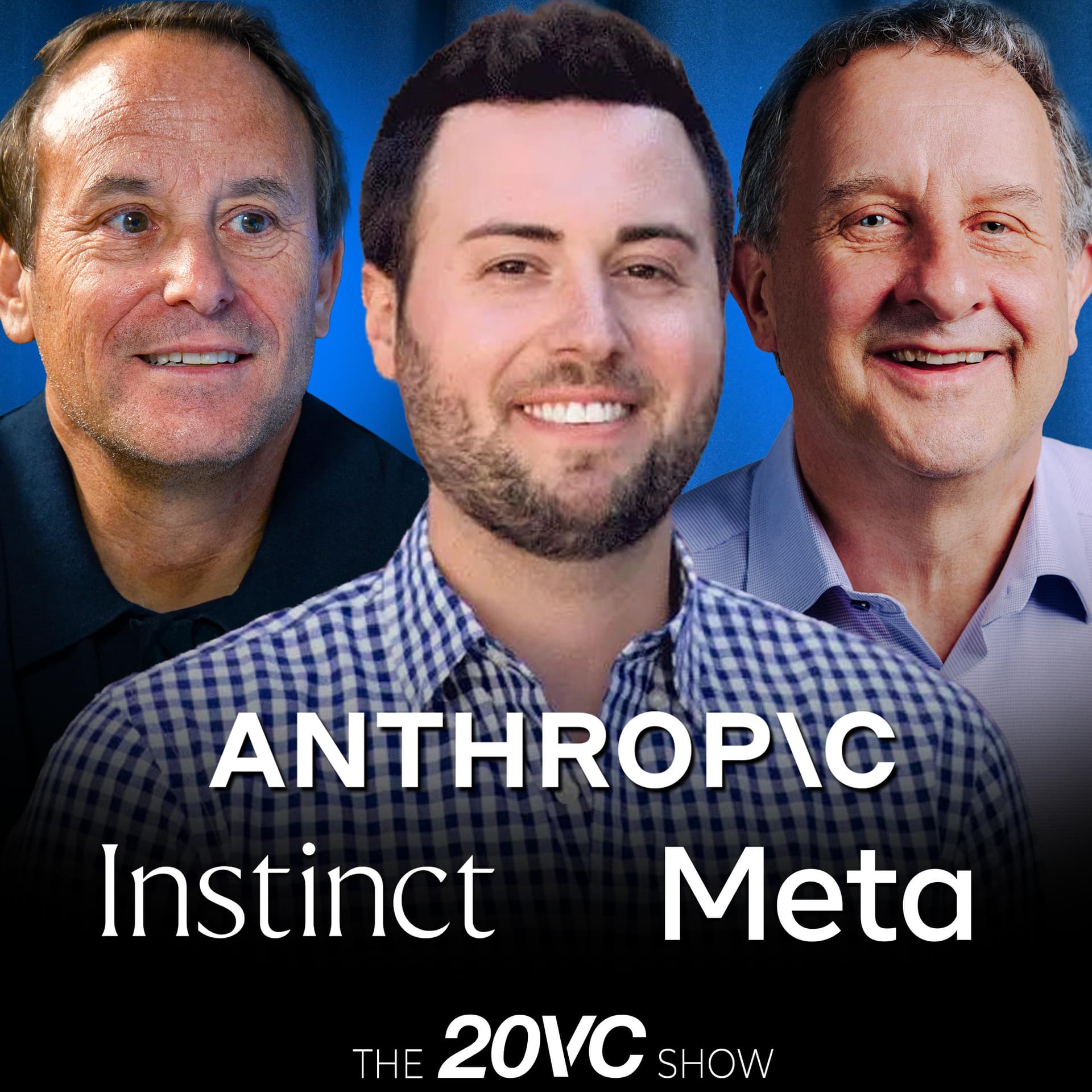
20Product: What Facebook, Monzo and Deliveroo Do and Do Not Do To Build Great Products | How to Structure Product Teams For Success | Is Simple Always Better in Product and The Art vs Science of Product Design with Mike Hudack
Guest
Mike Hudack - Co-Founder and CEO of Sling, former Chief Product Officer at Monzo, Deliveroo, and Facebook.
Episode Overview
In this episode, Harry Stebbings interviews Mike Hudack, where they delve into product management principles and lessons drawn from Hudack's extensive career at leading tech companies like Facebook, Deliveroo, and Monzo. They explore the nuances of product design, team structure, and the balance between art and science in product development.
Key Topics Discussed
- Product: Art vs Science
- Understanding User Goals:
- The essence of product design is to comprehend what users want to achieve and streamline their efforts in doing so.
- Simplicity in Products:
- Discussed the notion that simpler products often yield better user experiences.
- Data vs Intuition:
- When to rely on data and when to trust intuition in product development.
- Lessons from Leading Ads at Facebook
- Product Insights:
- Key takeaways from his experiences building the ads product, including insights on product decision-making.
- Influence of Leadership:
- Discussed a pivotal meeting with Mark Zuckerberg that shaped his understanding of product leadership.
- Mistakes and Missed Opportunities:
- Reflections on what Facebook could have improved in their ads approach.
- Leading Product at Deliveroo
- Consumer Product Development:
- Hudack’s insights on making consumer products successful and mistakes made during his time at Deliveroo.
- Data vs Intuition:
- Discussed how quickly one can determine if a consumer app is succeeding and the necessary balance between data analysis and gut feeling.
- Building Monzo
- Lessons Learned:
- Insights on banking products and the unique challenges faced while building Monzo.
- Competition:
- Reflections on the competitive landscape and strategies to differentiate Monzo from competitors like Revolut.
Key Takeaways
- Team Structure:
- An effective product team should consist of 6-8 members, primarily engineers, with roles for a data scientist and designer; a PM is optional.
- Simplicity in Design:
- Great products often emerge from simplicity, helping users achieve their goals with minimal effort.
- Measuring Success:
- Establishing clear, outcome-based goals is essential for product teams to measure success effectively.
- Respect for Competition:
- Acknowledging the strengths of competitors is crucial for strategic positioning and innovation.
- Open Communication:
- Building a culture of intellectual honesty and open communication within teams fosters better decision-making and morale.
Conclusion
Mike Hudack’s experiences across leading tech companies provide invaluable insights into the principles of product management. The balance between art and science, the importance of team dynamics, and the ability to adapt to consumer needs are crucial elements for building successful products.
For more insights, visit [20VC](http://www.20vc.com).
Written by AI. May contain mistakes. Listen to the episode to check what was said.
Transcript
Automatic transcript. May contain errors.0:04I think that the real art of product, the true thing, is understanding what people want to achieve and helping them achieve that with the minimal amount of work. I think every product team should be probably between six to eight people. Most of those people should be engineers if possible. One of those people should be a data scientist, one should be a designer. And then I think a PM is optional. This is 20 product with me Harry Stebbings. Now 20 product is the monthly show where we sit down with the best product leaders in the world to unpack how they approach building category defining products.
0:39Our guest today, Mike Hudak, is a total OG in the product world. In the past, he was at Facebook where he led ads product and sharing product and then he went on to become CPO and CTO, a delivery, before joining Monzo as their CPO. Today he's co -founder of Sling, simplifying the way the world connects financially and they have backing from some of the best, including USB and Ribbit. But before we dive in, ever wondered what your customers actually do? The team over at They Do have been living it for decades and they have recently built a product that is frankly enabling the world's biggest businesses to literally know what they do.
1:15Harnessing journey mining with AI you can turn unstructured data into structured customer journeys in minutes, saving weeks of work and months of analysis. They do journey management platform is already helping over 100 leading businesses, including Ford, Johnson and Johnson, Royal London and Home Depot to know what they do. Don't waste another step, check out theydo .com. But before we continue, let me tell you about one schema. One schema is the embeddable CSV importer that will save your team months of development time. While building a basic CSV importer may seem simple, product teams typically spend over three to six months building and rebuilding their CSV import experiences.
1:56Why? Customer files are full of unexpected formats for dates, numbers and addresses, and your first pass at building an importer never has all the edge cases handled. Failed imports lead to unhappy customers and endless emails and tickets for your support and engineering teams. Enter one schema with the largest library of pre -built validations and intelligent transforms. forms. One schema helps you launch a guided CSV import experience in just 30 minutes. Get your customers to the value of your product in minutes and say goodbye to frustrating messages like import error online 53 with over 4x faster performance compared with alternatives.
2:32It's clear why one schema is the choice for top start -ups like ramp, scale, AI and pave to streamline their CSV import process. Importing clean customer data into your product is easier than ever. Learn more by visiting oneschema .com slash 20. And finally, we need to talk about Pendo. A really simple way to describe Pendo's value is to simply say, get your users to do what you want them to do. What is Pendo? The only all in one product experience platform for any type of application. What are the features that make Pendo so awesome? Pendo's differentiation is in its platform. Every capability from analytics to in -app guidance, to session replay, mobile feedback management and road mapping, or all purpose -built to work together.
3:14What is the social validity? 10 ,000 companies use Pendo, and we also manage mind the product, the world's largest community of product management professionals. Where do we want to drive people? Give it a try and visit pendo .io. Slash 20 product, hyphen podcast, to learn how your team can use Pendo to start building better digital experiences. There you can also check out Pendo's lineup of free certification courses 12 hours of in -depth training for your product management teams on topics from AI to product analytics to product led growth You have now arrived at your destination Mike, I am so excited for this my friend.
3:49I've wanted to do this for a long time We met a couple of years ago, and I wanted to make it happen since then so thank you so much for joining me today Thank you for having me. I mean, this is awesome. I'm really good to do it This is so great now I think there is a moment when someone falls in love with product and the design and the simplicity of it When did you fall in love with product Mike? Man, I've basically wanted to build things on the internet for the entire time that I can remember. Even before the internet, my brother had an amiga back in the day. He used CompuServe on it. And I just thought it was the coolest thing ever.
4:19I think from that point on, I just wanted to make digital things. And I dropped out of high school when I was 15 and went to work at a startup and just always wanted to build things on the internet. Like, it's just what I always wanted to do. We were doing just beforehand on this. How do you feel about FoundaMode? I never diving straight in, but it's dominated the airways. And I'm just intrigued because you have this unique perspective. I mean, spend 10 years plus some of the best companies. Yeah. And then also having founded several companies. First of all, I think that every founder that I work with or for has operated in one way or another in founder mode.
4:52I think it's just like the natural thing that people do. You do skip levels, you get involved in the details. Everybody does it. Like I remember hearing stories about Bill Gates doing product reviews. You know, he'd do a product review on Excel and he'd be like, click on that menu, go down five levels. Okay, why is that there? And if you could answer the question, you'd be like, oh, okay, all right, the rest of this kind of looks good. He wasn't like, oh, the person in charge of Excel just go, you know, he would do a product review. I think it's very normal. There are founders who are better or worse at doing this at different stages of company.
5:20You could be really great at being in this thing that we now call founder mode in a 20 person company and terrible at it in a 2000 person company or the other way around, you might be bad at a 20 people and great at it at 2000, I think it's just like good branding around something that people have already been doing. Do you think it will have more harm than good as an impact? I think that founders who behave badly don't need any additional excuse to do it. Like I think you see it all the time. I think it's kind of normal. I think that people will now instead of saying, hey, you know, some version of like, this is my company where I feel really passionate about this thing.
5:54They'll say, oh, well, I'm operating in founder mode. But I don't think it's going to lead to like a dramatic increase in bad behavior. I did it to everyone 99 % because I'm operating and found them. Totally. I want to start on Facebook, Mike. You spent four and a half years there, two and a half years leading as product team. But when you look back on that time, it is an incredible experience to have. What are some of your biggest takeaways? I mean, Facebook is still very much the best run company I have ever worked at. Why is that? Taz from Shopify said the same. Yeah, you know, there are a lot of like very simple examples I can give you.
6:30But generally in the time that I was there, there was no bullshit. It was an incredibly flat organization. Mark was always in founder mode. You know, I remember once he like commented on a diff, somebody was making a change to the composer on the web. And he commented on the diff and was like, I don't like this change. It was like an entry level engineer like, you know, it was like making a small tweak. And he was like, I care about this. Please come and see me and talk about it. You know, that's very unusual. When I was there, there were vending machines all over the office with good headphones and mice and whatever you would need in order to do your job.
7:05If you forgot your laptop, you could go and get a loner laptop. If you didn't have headphones with you, you could wave your badge at the machine and get a pair of good headphones out because they understood that the value of the time that you were spending that day, like your focus and writing code at that moment was more valuable than $100 at the headphones cost. I've never seen anyone else do that before or since, but it's correct. When you review product decisions, I think we learn a lot from successes and failures. When you think about the single best product decision you made at Facebook, what do you think it was with hindsight?
7:37And what did you learn? I'm going to give you two examples. I joined the ads org. I don't know, like a couple months after the IPO. And a lot of people don't remember this, but the Facebook IPO wasn't great. And ads revenue wasn't really performing the way that we wanted it to. and to support the kind of valuation that we had or that we wanted, we needed to accelerate revenue growth really significantly. I think part of the challenge for the company was that historically, Mark had said, you know, there was a perception that he didn't really care about ads. And I think the ask that I got was to just go over there and kind of, I don't know, make it okay for good consumer PMs to work on ads.
8:12There was this view that that was important. And I think the organization felt like it hadn't shipped anything of quality in a long time. I kind of looked around and tried to find something unloved without a team on it where we could just very rapidly ship something where the only thing that was necessary, it didn't even be successful, was it everybody in the organization would say, oh, we're capable of building something great. You know, we're capable of producing quality at speed. That thing ended up being this page insights. So if you go to Facebook pages and you're a page admin, you can go in and you can see how your posts are doing.
8:43And you know, there was a lot of feedback on that product that it was confusing, it was difficult to use. It was slow. It was all these things. And so we put together very rapidly, a team of maybe eight or nine people rebuilt that product in a few months. And it was, I think, really beautiful. We did a lot of things that had never been done before with UI. We simplified the whole thing and we shipped it. And, you know, all of a sudden, I think, everybody kind of took a step back and was like, oh, the ads or can ship good software. And that then gives you permission, then, I think, to go to other teams and say, well, this, this is the new bar.
9:15Like if you just go in and you say, oh well, you know, we're going to ship like this. There's no example. There's no example of haven't been done before. The bar is not said. I think that's a much more difficult conversation. And that's so many things I want to unpack. You said about kind of simplifying insights page in particular. And the importance of that is simplifying product always better. Yeah, almost always. I think there are people who believe that the best product has a lot of buttons and can do everything. I think that the real art of product. The true thing is understanding what people want to achieve and helping them achieve that with the minimal amount of work.
9:51If you think about it, the thing that an advertiser wants to do is they want to sell more of their product. And there are different ways that they might think about that different timescale. So, you know, at some point they may want attitudinal change, at another point they may want behavioral change, but they want that outcome. They don't, they don't really want to target their ad. They don't want to think about, they want to sell more product. Sure. You know, and so the simpler machine you can give them to do that, the better. And I think that that has been the path that Facebook ads has taken over the years.
10:22I do have to say, as you mentioned, also the real game of the different teams. Yeah. What are some big lessons to you in the right way to structure those teams? Could be size, could be roles, could be mentality. Any big lessons on the right way to structure those teams?
10:41most of those people should be engineers, if possible, one of those people should be a data scientist, one should be a designer. And then I think a PM is optional. That team should work together against clear, coherent, outcome -based goals, which are not ship goals, but are like, we are going to increase the revenue that we generate for this thing by 10 % is like a decent goal. But a better goal is we're going to increase people's satisfaction with the product by 10%, and we're going to increase people's sales by 10%, which we believe is going to lead to a 10 % increase in revenue, you'll find that that often leads to a 20 % increase in revenue.
11:16You know, and so that attitude is unbelievably important that they are building a thing to serve a person or a group of people on the other side. And I think that they have to feel truly empowered to reach that goal and feel supported by somebody who checks in and says, oh, do you have everything that you need? How are you doing? Are you on time? Are you on schedule? That kind of thing. I'm just thinking of actually Des trainer now who talks about the length to kind of the start line, so to speak. And he, like years, kind of great product line, but also an angel investor. And he likes a long road to the start line in terms of product whereby it's actually quite difficult to get V1 out the door, because there is so much to do.
11:54I'm just intrigued for you. How do you think about that long road to the start line versus get a quick V1 out test C? Well, implicit, I guess, and some of what I was talking about earlier is this idea that I really believe that before you build something, you should have a theory of the world. You should understand who your user is, what they want to accomplish. You should understand your strengths and weaknesses in doing that and have a theory of the thing that you're going to build and how it is going to accomplish your goals and the user's goals. That might take you anywhere from 10 minutes to develop to a year to develop.
12:27That's very, very, very, well, it really depends on what you're doing. I don't really think you should start writing code until you have that. Now the problem is that most people's theory of the world prior to shipping a thing and having contact with real live human customers is wrong. And it might be 5 % wrong or it might be 50 % wrong and you don't really know until you ship. You can do user research along the way but the reality is that users lie when you talk to them and they will always tell you what they think you want to hear. you know whether or not it's good because they'll come back or they won't come back.
13:01You know, if they churn, you are wrong. One of the big mistakes I think people make is they then give up too early. So your theory of the world might be 20 % wrong, but that means that it's 80 % right. One of the hardest things to do in product I think is to try to figure out how to bridge that 20 % and not lose faith. You know, at some point, you might just be 100 % wrong. It might be good to walk away. You need to know when that is. But I think often people get dejected when they first show. How do you know when that is? You have a lot of angel investments. You could great angel portfolio. You know when it's just not heading?
13:36How do you tell them guys or girls? This is just not working. I really believe that people in their soul know that long before you tell them that. And I think that that's true of people who are doing a bad job in a job or it's true of people who are building a product. I think that the problem often arises when people feel like they have some sort of commitment to others to put the best possible face on what's going on or they feel like they need to just keep chugging away because they don't want to let down their investors or they don't want to let down their manager. When actually the best thing to do is when you realize that you're at that point, the greatest thing that you can do in order to drive respect from others is to just admit that like, hey, this thing isn't working.
14:19My time is super valuable, your money is super valuable, let's figure out how we can get some of both back. People know that. I can speak for myself as an angel investor. The level of respect I have for somebody who comes to me with half of the money is still in the bank and just says, hey, we were wrong about this and has a conversation either about selling the company or shutting it down or pivoting. I have so much more respect for them at that point than if they just went to dry well. On the flip side of the bridge of the Insights page and that working incredibly well, we learn a lot from mistakes.
14:46What was the worst product mistake you made at Facebook and what did you learn from that? Oh, man, there are a few and I don't know It's always difficult to talk about things when you know people are still there and all of that kind of stuff I think that we spent a lot of time building the same called audience insights Which was like the logical it was an extension of a lot of the theories that we had where we thought oh Well, we have all this amazing data like Population level data where we can help marketers kind of drill down and find their audience It's probably targeted sort of at brand marketers and we said, oh, you can go in and you can explore the entire population of people in the world and what they're interested in.
15:22You can see that like Yankees fans also tend to like 20 VC or whatever, right? And the idea was that it would like help you develop creative strategies and it turned out to be incredibly difficult to build. It required a huge amount of novel technology. Like it was just a nice to have. So I think that discrete thing, I wouldn't prioritize it the same way now. Now, when do you think you're allowed nice to have some product? I'm not sure that you're really ever allowed to have nice to have some product. It depends on what you mean by nice to have. It's a good addition and people like it, but it's not cool.
15:56If you took it away, wouldn't terribly distract from the user experience. I think you have to think about the cost to build it, the cost to maintain it, the cost to explain it to people. The opportunity cost of all of those things. So not just the direct set of people who are working on that in the mind share that takes from them and everything else, but what else would you have done that would have created more value? And when you say that, you know, a nice to have, my immediate instinct is don't build it. Build something which is not just a nice to have, but it's actually going to create meaningful value for your users and therefore for the company and for shareholders.
16:33So the takeaway from audience insights is it was a nice to have and you shouldn't have done it at all. I wouldn't do it again. It was a fun project. I think that it was very cool, like in many, many ways. But yeah, I don't think I would build it again. I think it was your theory of the world that wrong. No, I think that my prioritization was, well, a little bit of both. But I think that at the time, I probably had a less brutal attitude towards nice to have things. I think that I've learned over the years that everything which is nice to have has a higher cost than you anticipate and a lower value return.
17:09The challenge is there's always a lot of voices in a room. Let's say we should keep going, let's say we should stop. I had Gustav from Spotify on the show. He was like, talk his cheap Harry. We should do more of it. I'm always perturbed by that all my, because I don't see how that's right, but Gustav is brilliant. Sure. How do you think about discussion within teams is talk good or is dictatorial productvation better. I don't really feel like those are the choices as I would frame them. First of all, I think it's very important to have quantitative, objective measures of success. So when you're having a debate about something, about what you should do, you need to ground that somehow and you need to have goals.
17:51I think goals are just unbelievably important. So if somebody is saying, and this is where nice to have become difficult, right? So if Spotify's goal is to increased listening hours by 10 % this quarter, whatever I'm totally making up what that is. And you say we're going to build this thing which is nice to have. The correct question is, well, how much is it going to increase listening hours this quarter? And if the answer is 5%, and the team that is arguing for it is like really believes that, is really making the case, and they have credibility that I think that as a product leader, depending on how large the organization is, if you're at a really big company, you might say, okay, great, set that goal, You're going to hit half of our time spent listening goal for the quarter with this project.
18:33Let's go build it. Let's see if it works. And sometimes people will end back down and say, oh, it's actually, you know, one percent or half a point. And sometimes they'll say, great, thank you. And sometimes they're right. And sometimes you're wrong. And you need to make a lot of room for that. I think, you know, intellectual humility in this kind of situation is so important. But you bring it back to the numbers. And I think that that is the way that you almost avoid the talk. You know, you might then say, okay, well, you believe it's going to be 5%, convince me that it's true. But now you're grounded in the thing.
19:03You're like, okay, well, I still don't believe that or I believe that or that's plausible or whatever. And then you just think about how you stack record. But now you're etching at the core of the true question in product, which is art or science. And by kind of leading with data, you're potentially missing out on that. I have no data to support this view. But I just feel like filters in Snap would be hugely Yeah, I really believe that product is more art than science, but has to be managed through data. What I mean by that is you need to make a lot of room, and I think organizations, especially the larger they get, truly struggle with this, you need to make a lot of room for people saying filters and snap are going to have this kind of psychological effect on our user base, and therefore lead to this saying, and I can't prove that, because the only way to know it is if after we ship it and actually it's going to take three or four months for the odditudinal change to filter through whatever you need to make a ton of room for that but you also need to measure whether or not you're right which is the only way that you can inform and correct your intuition and hone your intuition over time because I go out really it's maybe not objective or you would argue that it's not objective but I think it is I think that people look at a painting and say oh this is either beautiful or not and 99 % of people agree.
20:20I think you look at a product and believe that you consider they don't human nemetisism. I think some things are naturally pleasing and some things are not. A tonality, sounds, ratios and certain colors and certain designs look beautiful to the eye and some don't. I think that that's somehow natural or innate. I'm bringing in life -a -green aid here. Does that change in a world of AI? Maybe the screen is no longer the primary interface. Well, it just means the beauty is something else. I don't think it really changes it. To bring it back to the art science question really quickly, I think that what it means is when you're building something, the only real measure of value, Mickey, Ribbit Capital invested in our seed rounded sling, and Mickey, the founder of Ribbit is amazing.
21:04And I cherish every moment that I have with him. And he said to me at some point, distribution really matters because you can't have a great, you know, there are lots of great products that die without great distribution. And I think that's true. I think he's 100 % correct. But to me, in order to have a great product, you need people, people have to use it and get value from it. It is value less without that. You may as well not have built it. And that is the objective measure that brings science to the art of product. Like if you build something and you give it to a bunch of people and they don't use it and they don't show that they enjoy it in ways that cannot be lied about.
21:37Meaning they're spending time, they're moving money with it, they're, you know, talking to their friends with it, whatever your thing is listening to music with it. Then it wasn't good. But if you build it, they will come. Agreed? No, you need to have distribution, for sure. But it's not a good product if you don't. But if I push, I agree with you totally. But if I say we create the most delightful banking experience, truly delightful to people not share that, to people not tell our friends. Yeah, I think they do. So I think that maybe what you're getting at is there are different strategies for distribution.
22:08So we had this conversation at the office this morning. We had a marketing meeting this morning. we're about to remove weightless, we're about to really launch sling, and we had a conversation about whether we should do paid marketing or not. We have some people who are already using the product and returning and using it a lot and giving us great feedback. And we had a long conversation about whether or not our strategy in the short term should be a bunch of paid marketing or whether or not it should be, you know, viral growth and just encouraging people to tell their friends. And, you know, I think we're going to do viral growth to start with because to your point, if it is really great, people will tell their friends and they will tell each other.
22:41We may have to encourage them to do that. We may have to help them to do that in various ways But you know part of our way rather do referral codes or discounts on new accounts or whatever it is Then standing on face every day every day 100 % I'd rather spend the money on users and spend the money on some other company But I think that's the biggest problem that I actually see like a lot of our investments Maybe which is their ICP is not tight enough And so it's too broad the product marketing then doesn't hit because it's not concise enough and it doesn't really resonate with a small enough target market.
23:10And then it kind of just goes, yeah, yeah, I see that a lot where people are like, well, we're building a thing and you know, it's going to be useful to a lot of people. And they're not really tight about describing their initial target market. There's a laziness in that. It's okay to have a really broad initial target market if your value proposition and the motion that you who want users to conduct is universal and super clear. Like if you were saying, I didn't know if you think about it money transfer. Say for example, you're gonna get a lot better conversion, a lot better reviews recommendations word of mouth.
Read the full transcript
23:48If you have it heavily further close. If you've - What do you mean by that? The focus on moving money from the Philippines to the US, X -PASS from 30 to 40 who have high income jobs and want to shift larger amounts of money back. That product marketing is gonna convert way better. you're going to get viral, you're out in communities. Sure, sure. I have a agree with you. So I admire WhatsApp so much. When Facebook bought WhatsApp, I think 99 % of people in Spain had WhatsApp. It was some of the most incredible market penetration. It was a global product. It was just texting. Everybody needs to text.
24:22And it had kind of two growth mechanisms. One was international texting was shitty and expensive. And so if you texted a lot internationally, your phone bill was really high. And WhatsApp fixed that for you. And then there were certain countries where the telcos were really greedy, where they would charge a lot for domestic text message. And so of course what happened was people who were experiencing that particular pain point, then got WhatsApp, and spread it virally with other people who experienced that pain point. And then something really magical happens because it's an innately social product.
24:53At some point, people who aren't even experiencing that pain point both realize that they have WhatsApp and that they can consolidate on a single network for texting. And something magical happens, like the network completes. and the value of a social network is the square of the participants, right? This comes from telephones, like the value of the telephone network was the square of the number of people who had telephones. The thing that I find harder with total respect is actually just product marketing differentiation. There's a lot of products which are better, different, but the markets are so crowded that actually rave loot actually sell it pretty well, transfer away, sell it pretty well, and there's 15 other players that sell it pretty well.
25:30And so even if you are better, you can't sell it better. Coming back to your original point about ICPs, I think you do have to find small communities that you cozy up to and you develop deep relationships with and you find sparks of success and then you double down and triple down on them and then you spread virally out from there. Speaking of serving communities in Craddabee Well, delivery serves incredible communities with immense products. I obviously consume delivery every day and it's my complete inability to cook. But you see, I left two and a half years, it's a fascinating role change really from Facebook to delivering CPI on that respect.
26:05How did your time at delivery impact your product thinking? Man, it was such an unbelievably different environment. You know, I've now done social media advertising, online video, food delivery, a regulated bank and now stablecoins. And they're all dramatically different. And I think that the most striking difference with Deliveroo compared to Facebook, both are fast paced. But Deliveroo plays a game every day from breakfast to dinner, which doesn't stop. Every order is being delivered in real time. It's either on time or not. You either have enough riders to deliver on time or not. It's either raining or it's not.
26:47It's Sunday night, and everybody's starving. The restaurant is overrun by riders standing outside waiting for the food to be cooked. And then at the end of the day, you look at how How many orders you did and whether or not you grew from the day before? It is a real time, unbelievable exercise in logistics, but also just physical movement, which leads to a dramatically different culture and way of working and way of building software than you get when you're building a... Does that impact your way of building product? It can't not. So how does it then? Well, ship things quicker. You... Test more?
27:24Facebook, I mean, Facebook ships unbelievably quickly, or at least I assume it still does. I mean, when I was there, I mean, the pace of shipping was just unreal. I'm not sure that delivery or I assume Uber is like this or DoorDash, I think it's more that there's more a feeling of urgency. At Facebook, you may ship really quickly because you believe that shipping really quickly is the best way to make the graph go up. At a real -time logistics company, which is moving food for people who get cranky if it doesn't arrive in 32 minutes, you're shipping in real time in order to ensure that you're fulfilling your brand promise and just a fundamentally different way than if you're doing social media or anything like that.
28:05Are you just permanently anxious? Like, shit, it's raining at Sunday night. Oh, yeah. It's the FA Cup final. Yeah, yeah, there's always an event. There's always a thing. You know, you're constantly modulating the rate that you pay writers in order to ensure that enough show up to meet the demand spike that you're anticipating. How do you determine the products that you build? Because there's so many that you could build, you could build like driver insights products that you build, drive a messaging, drive a platform product. It turned out to be really easy, because when I got there, again, this is a difficult, you know, in this kind of form, I need to be careful about the way that I tell these stories.
28:40But it was Uber Eats was in London and Paris and a bunch of other places. And it was a knife fight in the streets, you know, I mean, it was crazy, it was deeply competitive. There was a fight over, well, everything, restaurants, riders, customers, and we were not meeting our brand promise. So delivers brand promises, great food delivered to you quickly, it's delicious, right? It's like high quality restaurant food. And man, we were late, 40 % of the time. We were opening our demand modulation tool. So, you know, if you think about the way that you might in a system like that have orders be on time and fulfill your brand promise.
29:20promise. There are all sorts of different ways that you can do it, but the way that we were doing it at the time was opening and closing zones in order to control demand. So, you know, if we were too busy, we would close for orders in SKC, South Kensington, Chelsea, right? And there was actually a team of about a dozen people in a literally windowless room, clicking buttons to open and close zones manually. And they were going to jump out a window. They didn't have a window to jump out of, because there were no windows in the room they worked in, but if they were a window, they would have I'm through it.
29:49And customers were pissed off. It was a rough time. Did you see churn when they were pissed off? Oh, yeah, of course. You did. Well, a lot of people have a late delivery now. And it's like, I'm still going to get back to the middle. Sure. Well, over time, I think we learned a lot about the importance of selection and all sorts of things. And I think delivery costs really influenced people's behavior in a really dramatic way, where people feel a loyalty and affinity is not cost with the platform, which brings them back. It was a very unbelievably important product. But yeah, you know, it was also the first time that there was an alternative in the market and so the combination of those things Brutal how important was the exclusivity to winning on the supply side of restaurants You know, I think we thought it was very important But to get back to the question of like figuring out what to build there and how product is different You know you land in that kind of a situation and you're like holy shit like you know, we need to fix this problem We need to be able to modulate demand properly We need to be able to make a promise to the customer which we can actually fulfill and at the time the The logistics algorithm was very, very, very simple.
30:50We had an amazing data scientist, a neuroscientist who knew how to build a great delivery algorithm, but we didn't have it. And so the first thing we did was just open up a war room. We had an apartment across the street from the office and we moved about 10 engineers into that apartment and had them sit down and spent two or three days trying to figure out the highest leverage way to start actually delivering on our brand promise properly. And the first thing that they did was they built a lateness model, a machine learning model, to correctly estimate how late we were going to be. The theory being that we could then accurately tell people how long their order was going to take and they could make a decision as to whether or not to place the order and they wouldn't be pissed at us.
31:30We would say instead of saying, oh, it's going to be 15 minutes, we'd say, oh, accurately, it's going to be 45. And then we would deliver within the 45 minutes and they would be happy customers instead of us having said it was 15 minutes. You know, still delivering a fortified that pushed off. And so that team just built a very simple kind of regression model to estimate lateness and that dramatically improved late very quickly. And you know, most of the work in delivery for a really long time was actually in what we called the delivery organization. We created an organization called delivery.
32:02And that was a core machine learning systems, dispatch systems, writer pay, writer app, all that kind of stuff. and that was I think far more important than the consumer app or the restaurant order manager or anything like that. What was the best product decision you made it delivered? My favorite was I went on a trip to Spain at some point with a bunch of people from the team and we went there and we really learned the importance of selection. We went to Madrid and Madrid is a very long city and there's one five guys on one end. And it turns out that people who live on the other end, the way that we designed our system originally, It would dispatch on kind of a neighborhood basis.
32:41And so you probably experience this living in London or ordering delivery. You're like, well, why can't I order from this restaurant, which is like three blocks? Because it's in another zone. And that was kind of optimal for London, which is a city, or we thought it was optimal for London, which is a city of residential neighborhoods arranged around high streets and the restaurant is on the high street. Madrid is very different than that. It kind of has a central business district and there's like a restaurant and then residential that goes out much further. It turns out that the people in the outskirts to the residential area still watch five guys.
33:08And they actually will tolerate a longer trip and understand that it'll be a little bit soggy and a little bit cold when it arrives because they just want their bacon onion cheeseburger, right? And we had this like deep seated assumption that we should only deliver food as far and as long as it is still what we would consider to be high quality. And after a couple of days there with the local team, we realized how wrong we were. And I remember spending the entire trip back getting to the airport and sitting in a chair by the gate, putting on headphones and writing. I wrote the entire flight back.
33:43I wrote the entire cab ride home. I wrote for a couple hours after I got home. And then the next day I was like, we'd need to change everything. I think it's also heavily subjective, no, in terms of the food quality reducing to your point. It's like, I only actually ever get sashimi and broccoli. Okay. That doesn't degrade it. Sashimi is cold already. Sure. Broccoli warm is fine versus hot. So it doesn't actually matter, but Nando's is the same. Like the chicken, it's not like a burger where it's the same. Yeah, yeah. Yeah, well I think one of the great insights, one of the things that I really learned here was that it's so important to allow people to make their own choices.
34:18It's just so important to let people make their own choices. Like if somebody wants a soggy burger and you've given them enough information, like they know how far away it is, but it's not like they have any illusions about what's gonna happen to this burger over that period of time. Let them order the soggy burger. This extends to so many things that you build. There's this line you asked earlier about having more features or fewer features, you know, more buttons, fewer buttons, whatever. You know, there's a line you can imagine a version of Spotify that only has a play button. And maybe you can thumbs up, thumbs down, and Spotify plays to you the best music that it can think to play to you at the moment, based on the time of day, the weather, you know, what it knows if your likes and dislikes, whatever.
34:58You know, that product actually existed. Pandora kind of worked that way. Maybe you would see it with a song. And it wasn't great, to be honest. Like, I never play, you know, I'm like, I really want to listen to, you know, whatever right now. I want to listen to Pantera right now. Like, I want to play that. You have to give the user some level of choice. I think it is Schum says that Rat uses a rational. And actually, we get a brilliant Matthew McConaughey commencement speech. Where he says, too many options will make an enemy of this all. For sure. And consumers are not always rational. and you can give them that time and they'll go, that wasn't a great service because it took so long and fuck them.
35:35Yeah. So it's just an interesting question of how much options is enough. Well, there are two limits, right? There's a limit where you expose the entire set of options and the entire set of buttons that you could possibly expose to a user. And on the other hand, you have only one button. The art is picking the place. The science then is like evaluating when a controlled experiment looking at the data to understand whether or not you've selected your point in this curve, this gradient, too far to the left or too far to the right, and then you just keep adjusting. And it might be different for different people, it might be different for different use cases.
36:07When did you look at data come to a conclusion, and that conclusion was really wrong? Like from the data, it's a great question. I think that it's very hard to accurately interpret data, and it's very difficult to not lie to yourself with data. You know, So you can cut data any way that you want. I want shipped something into the, it's called the dive bar at the time. At Facebook it was like a social product, a social chairing surface. And the dive bar was this thing. If you swiped the Facebook app to the left, it opened up on the right. It was originally used, I think, for messenger contacts.
36:42I think something like 75 % of Facebook users opened the dive bar. And so there was an argument to be made that it was a great surface to ship into. The thing is that like 99 % of those people opened it by accident. I didn't want anything to do it. And then immediately closed it. So you can run all sorts of different analyses. You need to consider the entire set of things around you in order to understand it. And I've made those kind of mistakes thousands of times. And then it is so recent in context, which is that you can have the same data and two incredibly different teams. And the outcomes will be wildly different.
37:18Yeah, yeah, for sure. And I think that the places where I've seen data abuse the most is in customer service where people will say There's this famous maybe apocryphal story of I think it was like Amazon's customer service number where they said Oh, well, you know, we answer all calls within, you know, some threshold of time It was like in a WBR or something and I assume it was Bezos was in the room and he was like I don't believe you and he dialed the number and you know He was unhauled for 10 minutes before he was hung up on and I think it turned out that like the analysis This is only included calls that were answered.
37:52Like all calls were answered within one minute. Is there anything that you learned from you very rightly? I think it's just like a knife fight in terms of you know, you be as versed as livery. Is there anything that you learned from that time on competition and how to approach competition? One mistake I'll never make again that I made when I was young and my first start up is underestimating the competition or assuming that something that they are doing will not work or that there is this looming and pending thing which is going to prevent them from accomplishing there. No, like you have to have deep, deep respect for the people that you compete against and they are smart and good and they are trying to do the same thing that you are.
38:34And I think that that's like the first law of competing with anyone. I'm so glad you said that the amount of companies I meet that are like SAP a shit for these reasons and that shit. I'm like they don't shit. Yeah. There's a reason there were hundreds of billions of dollars. For sure. For sure. They're incredible. With delivery, you get a lot of feedback very quickly. Yeah. There's a lot of consumers use it daily. Do you know when a product works or when it doesn't very quickly in consumer apps? Yeah. You know, delivery has one product, really, which is food, and then everything else is kind of a feature or a way of delivering that.
39:09So it's a weird way of thinking about it. But like when you see the ability to message drivers. Sure. The ability to know timings, the ability to add notes to orders. All these little things which actually people can love, all thing you want. What does that mean? For sure. Well, the key is that you ship all of those things and carefully designed and controlled experiments where you have a set of metrics that you're looking to improve. So you can imagine, for example, that driver chat is designed to reduce what's called rider experience time, the time that it takes a rider to get from the restaurant to handing you the order.
39:40And there's often, you know, a couple minutes at the end of RET where they're looking for, you know, looking for your apartment, you know, fumbling around or whatever. And you're sitting there being like, God, if the guy just hips to B, you know, I'll have my food now. Do I really have to go outside? Whatever. You know, and so you can design an experiment which very clearly shows whether or not RET, you'd like writer experience time, decreases by the amount that you expect it to in the population that has messaging. What you do is you give messaging to, you know, I don't know, somewhere between 20 and 50 % of the users.
40:13And then you just look at the Delta NRET between those two. And you have to, you can do, you know, power analysis so that you know how big the experiment needs to be, how long it has to run. And then at the end of that, as long as there were no execution problems with the feature, and as long as you design the experiment correctly, you're going to get an answer. The answer might be that there's no statistically significant impact, in which case you should like, unship the thing, where maybe there's something wrong with it, may increase RET, which would be a paradoxical outcome and you then need to figure out why or it may decrease RET, in which case you roll out the future to 100%.
40:47When you think about the move to Monzo before we touch on Sling, what product lessons from Deliveroo were transferable and what weren't? I think a little bit like going from Facebook to Deliveroo all of this time, the entire time you're building things on the internet, I think that you are developing your intuition. I think that delivery really prepared me for going into Monzo and being deeply curious about the way that British people approach money, which is hugely different from the way that Americans approach money. Americans have paid every two weeks. British people get paid monthly. The question I have is like, at Monzo you are a bank that really impacts your ability to ship for how you approach products.
41:29How did being a regulated bank impact your approach to products? I mean massively and I had to learn how to do that. I think at various times I really chafed at that or found that very difficult. And I remember having this amazing conversation with Guy Ian, who's the chief risk officer at Montsoh, who also became a really good friend and he's brilliant. And he just said at some point, he was like, you know, you have to understand that most of or many of the crises that nations have faced in history are the result of financial crises or banking failures. And society has, you know, has a right, has an obligation to protect itself and people from those kind of situations, from those kind of outcomes.
42:11I think this is like a really important thing. It's a really important lesson. You have to understand where people are coming from. And once you understand and you think about that critically and you change your perspective from somebody who is trying to make a graph go up into the right and trying to produce value for people as quickly as possible an experiment and you're like, why can't I test pricing? I've tested pricing my entire career. Like, what are you talking about? I get test pricing. And you change your perspective to like, so much of society is based on the stability of the banking system.
42:42What would you most like to have done, but were prohibited because of regulation banking license? I would have grown monzo globally. I think that that's a very difficult thing to do. It's doable over some period of time, and I think that Manta will expand geographically really well. You know, in the UK, it's growing faster than anyone else. It's doing incredibly well. I think it will expand into more GOs. But like, do you think the US was the right move? I mean, both Ravoli and Lons, they did it. Both with limited success. I don't think it was a wrong decision at all. I think that the US is the very big prize.
43:18I think that you have to, when you're developing a bank, and it's very interesting, we've kind of taken the opposite perspective with Sling in a way, which is weird in a way. But banking is very regionally specific. The way that mortgages work in the UK and the way that mortgages work in the US are completely different. Credit cards in the US versus credit cards in the UK, completely different. The way that people think about debt, the way that people think about saving, the way that people think about investing, the pace at which people get paid. All these things are different. And I think it's very easy to think that you can take a highly localized product and just lift it and shift it somewhere else with a different license and it's going to work.
43:53I suspect that the only way to truly do that successfully is to have people in the local market who take the bones of the thing who deeply understand what has and has not worked about it and then shape it around local insights. And I think that this is probably more particular to banking than almost anything else. Okay, so you would have maybe gone more global earlier. You had a revolute who were innovating on product incredibly fast with everything from access to airline lounges to crypto products to investing products to savings products. How do you sit and think as a product team when you see your competitor shipping respectfully at a much faster pace?
44:32Yeah, I think that as companies we had very very different philosophies. I wouldn't ship some of the stuff that they've shipped some of the experiments that they've shipped I I don't think that's going to work or I don't think it's core to our thing. What would you not have shipped? Well, I argued very strongly against shipping crypto products. I didn't think it was the right thing to do for our audience, for our user base at the time. Do you think that was right? It's a benefit of hindsight. Yeah. Monso is a bank. It has a very specific position in people's lives of trust. When I first started working there, we didn't actually say the word bank anywhere on the website.
45:10And one of the things that we realized pretty quickly was that we had all of the, I don't want to call them downsides, but all of the consequences of being a bank in terms of the regulatory framework and the constraints that it places on you and so on, with very little of the upside because people didn't, people still thought of us very much as a prepaid card. And I think that one of the most important things that we had to do is shift people's perception from thinking that we were a prepaid card to thinking that we were a bank. And we built a whole program around becoming people's primary bank account.
45:43Before we even got there, we had to figure out how we even measured that. What does that even mean to be somebody's primary bank account? How do you know? Salaries. Yeah, for sure. But then how do you know that it's somebody's salary? Lots of people learn in different ways. We eventually settled on one. And then we built a goal around that. And we built a goal around increasing the percentage of people who treated Monzo as their main bank. Then we built a bunch of products and a bunch of features fewer than Revolut, but like very targeted, very specific. I believe very innovative products around the idea being somebody's bank.
46:17What can you do when you are somebody's bank? So like Monzo Flex, for example, is a lending product. It's a credit card product, kind of integrates almost like buy now, pay later directly into your bank account. That takes a lot of work to get right? It takes a lot of regulatory work, a lot of product design work, a lot of engineering work, and hopefully those bets that you make, you make fewer of them and they are more meaningful over time. One of the most influential experiences that I had at Facebook was getting into ads, having conversations with people where it felt very much like, and in fact, somebody said this to me explicitly, they were like, the thing that we have to do is we just have to build as many features as possible and ship them as fast as possible to see what works because we don't know what's going to work.
47:03And I was like, okay, like if we truly don't know what's going to work, I agree that that is the right strategy. But maybe we should try to figure out what's going to work. Maybe we should develop a theory of the world. Maybe we should do fewer things well if it's knowable. And it took a lot of work to say, okay, well, we have people's identity. We can do the targeting in such measurement loop. Okay, let's build a goals around the number of advertisers that we have in the amount that they spend with us and so on. And ship things which are meaningful, move you in a direction instead of just shooting spaghetti at the wall.
47:35And I really believe that that's important. What was the best thing you shipped at Monze? Oh man. I mean, I really love Flex. What did you think would be really good, but turned out to be a flop? I think that I have always tried to temper expectations with everyone, so I do this thing a lot that I think a lot of people find weird, which is that when we get close to a launch, I give a talk to the team saying you should not expect this to work. My theory there is that you should have put your best into it. You should be putting your best foot forward, modulo like shipping fast, right? So you have to find this place on the line where you're shipping something that you're still embarrassed by, but like you know, you put good work into it.
48:12And there's another concept behind this we should talk about in a moment. And you ship this thing. And if your expectations are low and it does really well, you're going to be super happy. you're going to forget that your expectations were ever low. If you ship it and it doesn't immediately work or it doesn't totally hit all of your goals and you should set ambitious goals for it, don't get me wrong, you should still have ambitious goals. If you don't hit your ambitious goals, then you're emotionally prepared for the work that you have to do next, which is asking yourself, what did I do wrong?
48:41And you don't want to be doing that from a place of deep sadness. You want to do that from a place of expectation where you're almost like you expect that you got something wrong and you're ready to interrogate it. Does that not go against every concept of post -to -visualization? I see the success and make it happen. I think that you have to have these kind of competing ideas in your head at the same time, which are like on one hand, we've built a thing that we really believe in. We're putting our best foot forward and we believe that it is going to work. And at the same time, we intellectually understand that when you first ship something, it's probably going to have something wrong with it or some misunderstanding of the customer need or your solution that needs to be addressed.
49:25Sometimes that's so drastic as, well guys, we just wasted our last six months and we never should have built this in the first place. And sometimes it's something as simple as the copy on the second screen of the new user experience is wrong and people don't get it, you need to change it. You know, you need to be open to like both of those things and it could be anywhere on that spectrum. I think you just have to be emotionally prepared for having to do that work. And if you're not emotionally prepared for doing that work, you know, when you don't hit your goals with a launch, what happens is the team and everybody around the team who makes decisions around this stuff becomes deflated, mood goes down and you kill the project too early.
50:04Does that not go against the inspiring leader? When you think about being the Jordan Balfour Wolf of Wall Street, Stanley at the front. And it's like, I want my team to be jeered up going into a process, being like, expect this to fail and then don't be disheartened. I think that you, first of all, I don't think that a leader's job is always to cheer lead. I think sometimes a leader's job is to say, hey guys, we're in a really tough situation here. But it is to inspire. At 100%. 100%. And when you're going to a product launch, I want you really inspired. There's this idea I think that you can be deeply proud and optimistic about the thing that you have built.
50:44But also know that it's not perfect. It's the same as like it's a position of maturity that you might have about yourself. Which is like, oh, well, you know, you're smart, you're accomplished, you did this and you did that. But you're a flawed human being and you have to be humble about these things and you're not perfect. And maybe you were wrong about that thing or whatever. You can have high self -esteem while being sober about yourself. for sober about the thing that you built in realistic about it at the same time. Can you take me to a time when you've had ready shit morale and a product team?
51:13Oh my god so many times. And what did you do to turn it around? I think there are two things that are very important. You need to give people a win. You know, so page insights that we talked about earlier is an example of a win like that. You know, we can be proud about a thing that we shipped. And then I think you also have to give people a reason to work hard or a thing to believe. I worked on sharing at Facebook, which is like all the photos, text, videos, links, Everything that ends up in newsfeed from regular people. So for a while, I did ads, which was like everything from companies and celebrities, and then I moved over to people.
51:42And in both cases, there's like a weird thing you can imagine people saying, I don't want to work on ads because I don't want to work in the thing that like makes money and detracts from the experience, right? Ads are annoying and all those kinds of things. You can reframe that and you can say actually the thing that we're doing is we're helping individuals discover the products that are going to improve their lives and we're helping businesses find customers. And the more efficient we can make that process, the better we can make that process. The more economic growth is going to happen in this world.
52:10And actually the thing that you're doing when you have a billion people looking at these ads is you are helping small businesses all over the world grow. You're helping entrepreneurs. And you know, hey, what's the last thing that you bought off of a Facebook ad or an Instagram ad, which was actually kind of cool. And you can just totally reframe that thing. Truffle oil. Truffle oil. Was it good? Truffle oil? It was great. It didn't enrich your life. And the entire job there is to put that truffle oil ad in front of you at the right time, knowing that you're interested in truffle. That's good for you and it's good for the company that may truffle oil.
52:43I agree. I actually think that people demonize ads too much. Well, if done well, they're a discovery mechanism for things that I buy a little gym kit that is actually suggested to me. And unlike, great, I wouldn't have found this brand otherwise. For sure, for sure. And it's great for the brand and it's great for you. So you need to find a way of connecting the thing that people are doing every day to like a good thing in the world. You know, when we worked on sharing, we talked a lot about helping people maintain loose ties across the world. So in the past, you would lose touch with often great friends who you went to college with or whatever you worked with and that job or whatever Facebook sharing, personally disclosive sharing helps you stay in touch with people that you may not have seen in like, you know, 10 or 15 years.
53:25But the next time you go to New York, you can say hi and you kind of know what's going on in their life and they're still part of you. And that's a really magical thing that you can give people. And the better that we make sharing, the more that we can help people maintain larger communities and what otherwise be possible without this product that you're working on. You know, with Monzo, you're not building an extractive bank, you're helping people make sure that they can pay their rent at the end of the month. You're helping people make sure that they don't rack up too much debt. You're helping people manage their finances so that they can save more and buy a house.
53:57That's meaning that you can find, and then if you pair that with like starting to get momentum in shipping stuff where you can actually see the impact in people's lives, you can relate it back to that idea, that, you know, morale, you can just, you know, flip it so quickly. Final one, but I split you a co -founder beforehand, and he said that one of your greatest skills is your ability to balance family and incredible execution as a founder. Yeah, I'm pre -family. Yeah, but it's something that I would like over time and it makes me very nervous to think about being able to maintain the same level of quality Execution whilst also being a great father.
54:30What advice would you have for me? Specifically as possible on how to do both really well. I think children are One of those things that just almost always makes you better Coming home after a long day of work and giving them a hug and having dinner with them kind of washes the day away way, resets you a little bit and then you move on and I think makes you better the next days. So, I think the first thing is just a mindset shift, which is that it's not necessarily strictly about making time for one at the expense of the other. I think that the best way of understanding this is that one makes you better at the other.
55:07I talked to my eight -year -old all the time about slaying in what we're building and why we're building it in decisions that we make and I'm like, oh, you know, I'm going to call with a bank in Thailand today and you know they all showed up in suits and thank God I put on a collared shirt you know it's important to be mindful of people's culture you know I don't know you just have those kind of conversations one reinforces the other and makes me better at the other I think but I do think like in zero to one brute force is really important I am a believer in Elon Musk when I started I slept in the office yeah I'm not saying you don't have a girlfriend but I do too I believe in that too I think that maybe I don't feel like I work less hard for having the family.
55:46I think that the kids are a great joy, and Caroline is a great joy, and I think we have a really amazing life, and I garden, we grow tomatoes and chilies, and corn and potatoes, and all this stuff, a lot of what we grow at home. I'll work, I'll get up, I'll hang out with the kids from 630 or 7 until 8. I'll go to my desk, I'll work for four hours, I'll eat lunch at my desk, I'll go out, and garden for 20 minutes to clear my head. I'll come back. The kids will be back at 3 .30. I'll hang out with them for like half an hour and then I'll go back to work and then I'll have dinner. You know, I don't know.
56:22It just all feels very integrated. When was your life most out of whack? Probably my first startup. I don't know. I think you get into these phases where you know, you become very lopsided and I've certainly worked on things. I have cut off an obsessive personality. You know, Sling's growing now. We have a channel. We have a Slack channel called Pulse, where we see every sign up and we see every transaction and then we have a dashboard that updates regularly with transaction volumes and all this stuff. Man, I like look at that Slack channel every four minutes, every three minutes and I have to stop myself from doing that and that's the kind of stuff that I think is dangerous.
57:02That's what people mistake for grinding or working hard or sleeping on the factory floor. When you're just doing the same thing over and over again, you're looking at it and you're obsessing about the numbers or something. That's very different from having a detached view or a semi -attached view to how quickly you're growing, interrogating it, understanding what you need to build and what you need to do differently in order to grow faster. I think that people often mistake those two types of work for each other, if that makes sense. That first obsessive of refreshing of the thing or that obsession with hours or the theater of it is actually super stressful.
57:40And I think that's the stuff that leads to burnout. Whereas I think that you can work 20 hours a day but integrate that well with family and kids and all of that kind of stuff and be thoughtful and make good decisions and move fast and all that kind of stuff. And it's healthier and it's better. Right, listen, I can tell you what you're all day. I wanna do a quick five. So I say a short statement, you give me your immediate thoughts. That's not okay. Sure. Okay. So tell me about a time when you most vociferously disagreed with a manager. Oh, man. There have been so many. One of them was just around sharing and the mechanics of sharing on Facebook and you know, Mark built the thing and I remember him saying, this is like the last part of this thing that I built myself.
58:26I have a deep emotional attachment to it and I thought I was just like, okay, I can argue with that. To this day, I don't know. We'll never know. Okay, angel investing. What's your biggest advice to an operator angel investing today? Invest in people who you believe in. Don't mistake good managers or ICs at a large company for people who are going to do well going from zero to one in a startup. You know, think about what that means. What is the single worst product you've been a part of making? I worked on building a multi -tiered filtering encrypted proxy, basically like Tor, the onion router, when I was a kid at a startup.
59:06What advice would you give to PMs today who want to get promoted? Don't worry about getting promoted, figure out what the company most needs and go do it ideally if it's something that nobody else wants to do, and the promotion will find you. When is the right time to hire CPO? It really depends on the founder, but probably very, very late. I wouldn't do it too soon. I think that the best CEOs of a very product -minded and should stay involved in product for as long as possible. What are the biggest mistakes that founders make when building out that product team? This comes back to founder mode a little bit.
59:39I think that people often, when their company starts growing, start thinking that they are out of their depths as a founder and that they don't understand what is needed from the product organization. They don't understand what's needed from the finance organization. And they kind of go against their gut because somebody's telling them, oh, well, this person is great. They did a great job at this company or whatever. I think you really have to believe your gut partially because you're probably correct, at least about your company, like, you know, a director or a VP from Google is not necessarily going to do well at your like 100 person company, but also because you need to trust the people in that role so much that if you have that kind of like doubt at the time that you're hiring them about whether or not they're the right person, you just shouldn't do it.
1:00:22Like that relationship is just so deeply important. You have to listen to yourself on these things. When there's doubt, there's no doubt on people. Is that true or not true? Not always true. I think that's an oversimplification. I have worked with people that I have had doubt about who then have turned out to be phenomenal and it turns out maybe there was something going on in their personal life, which was difficult and transient. Maybe they didn't understand expectations properly. Everybody has a different style. You can cool and a CPO before they start their first day at their new gig. What advice do you give them?
1:00:53Move fast, like ship fast, get it early when. And I think this is a good advice for everyone in every role. Put some points on the board. What two to three trays or ones two trays? A less obvious but crucial in great p .m .s. I think great p .m .s combine deep intuition about people and markets with great product taste, great design taste. They don't need to be great designers, but they need to understand it and be able to tell you, though, that's good, that's bad. Together with a deep understanding of engineering, or at least the ability to operate with engineers and have respect, together with an understanding of the company's context and what it needs to accomplish as it needs to grow, does it need to be profitable, does it need profitable growth, you know, all these things.
1:01:37And if you don't have all of those things, I think it's very hard to be a good PM. And I think the thing that is not always obvious is just deep intellectual honesty. You need somebody who is willing to say from the first instance, I don't know the answer to that, I'm going to go figure it out. When we unilaterally in a special place with yourself, many times, you know, it's a failure mode you can fall into when you are in love with the thing that you are building or have built. You really truly believe in it deep down and you look at the data and you say to yourself, Oh, well, just one more iteration.
1:02:10I just got this wrong. Oh, I'm going to do this. Or this thing is wrong. I think it's a very easy thing to do. And I've done it many times and you have to catch yourself and stop yourself. Final one. What recent company product strategy have you been most impressed by? And why then? I continue to be very impressed by Monsters' execution, Monsters' strategy. I think it's going to go very well. What specifically about Monsters' new product to the last 12 months has made you so impressed. I like the investment product. I like the family product, which is coming out, so Kitakowns, I think, is going to help Monzo move up demographically.
1:02:50I think all of these products have been very carefully thought out to kind of extend the demographic reach of the platform and meaningful ways, which I think is very important. And I think there's a bunch of stuff coming soon, which is also going to be very important and very good. I really appreciate all of the things that are happening right now. I don't really know how to put this, but all the experimentation that's happening with AI at the moment in LLM's, I think that like Claude and ChatGPT and all these things, there's just something very interesting going on there and you can see the minds working behind the scenes.
1:03:23I don't know how it's going to end up. I think that these things go in cycles where, you know, obviously there's a hype cycle. people are really excited about these things. I think there's going to be a trough, but then we'll get to that, the plateau of whatever and you know, it's going to be great. Mike, I've absolutely loved this. I love the meandering. I'm glad that I told you beforehand that we didn't really stick to schedule, but you've been such a fantastic, yes. So thank you so much for doing this. Thank you. Yeah, pleasure. Oh my God, I so much preferding shows in person. If you want to watch that full interview you can on YouTube by searching for 20VC, that's 2 -0 VC.
1:03:56It really is a fun one to watch person I have to say, but before we leave you today, ever wondered what your customers actually do. The team over at They Do have been living it for decades and they have recently built a product that is frankly enabling the world's biggest businesses to literally know what they do. Harnessing journey mining with AI you can turn unstructured data into structured customer journeys in minutes, saving weeks of work and months of analysis. They do journey management platform is already helping over 100 leading businesses, including Ford, Johnson and Johnson, Royal London and Home Depot, to know what they do.
1:04:31Don't waste another step. Check out theydo .com. But before we continue, let me tell you about one schema. One schema is the embeddable CSV importer that will save your team months of development time. While building a basic CSV importer may seem simple, product teams typically spend over for three to six months, building and rebuilding their CSV import experiences. Why? Customer files are full of unexpected formats for dates, numbers and addresses, and your first pass at building an importer never has all the edge cases handled. Failed imports lead to unhappy customers and endless emails and tickets for your support and engineering teams.
1:05:08Enter one schema with the largest library of pre -built validations and intelligent transforms. One schema helps you launch a guided CSV import experience in just 30 minutes. Get your customers to the value of your product in minutes and say goodbye to frustrating messages like import error online 53 with over 4x faster performance compared with alternatives. It's clear why one schema is the choice for top start -ups like ramp, scale AI and pave to streamline their CSV import process. Importing clean customer data into your product is easier than ever. Learn more by visiting oneschema .com slash 20.
1:05:44And finally, we need to talk about Pendo. A really simple way to describe Pendo's value is to simply say, get your users to do what you want them to do. What is Pendo? The only all -in -one product experience platform for any type of application. What are the features that make Pendo so awesome? Pendo's differentiation is in its platform. Every capability from analytics to in -app guidance, to session replay, mobile feedback management and road mapping, or all purpose -built to work together. What is the social validity? 10 ,000 companies use Pendo, and we also manage mind the product, the world's largest community of product management professionals.
1:06:19Where do we want to drive people? Give it a try and visit pendo .io slash 20 product -yphone podcast to learn how your team can use Pendo to start building better digital experiences. There, you can also check out Pendo's lineup of free certification courses, 12 hours of in -depth training for your product management teams, on topics from AI to product analytics, to product -led growth. As always, I so appreciate all your support and stay tuned for an incredible episode coming this Monday with Shardle, Shard General Partner at In -Dex Ventures.
From the publisher
Mike Hudack is the Co-Founder and CEO of Sling, a peer-to-peer payments app whose vision is to simplify the way the world connects financially. Previously, he held roles at Monzo Bank as Chief Product Officer, Deliveroo as Chief Product and Technology Officer, and Facebook where he led ads product and sharing product.
In Today's Episode with Mike Hudack We Discuss:
1. Product: Art vs Science:
- What is the true art of product? What makes the great product leaders and PMs?
- Is simple always better in product? How do you retain product simplicity with time?
- When should data be used over intuition in product building?
2. Lessons from Leading Ads at Facebook:
- What are Mike's single biggest product lessons from building the ads product at Facebook?
- How did a meeting with Mark Zuckerberg discussing a product change, alter how Mike thinks about product today? What makes Zuck so special on product?
- What are the biggest mistakes that Facebook made when it came to the ads product?
- What did they not do that he wishes they had done?
3. Leading Product at Deliveroo: What I Learned:
- What are Mike's biggest takeaways from his time at Deliveroo on how to make consumer products?
- What did Deliveroo do from a product perspective that worked so well? What did he learn?
- What were the single biggest product mistakes that Deliveroo made? What did he learn?
- How fast do you know when a consumer app is working or not working? When do you go against data and follow your intuition?
4. Building the Biggest Bank in Britain with Monzo:
- What are Mike's biggest lessons on product building from his time at Monzo?
- What did Monzo not do that he wishes they had done?
- Why does Mike think the US is crucial for Monzo?
- How did Monzo change how Mike thinks about competition? What do you do when your competitor, Revolut, is outshipping you at such a speed?