
In short
Podcast Summary: The Twenty Minute VC (20VC) - Episode with Kim Graves
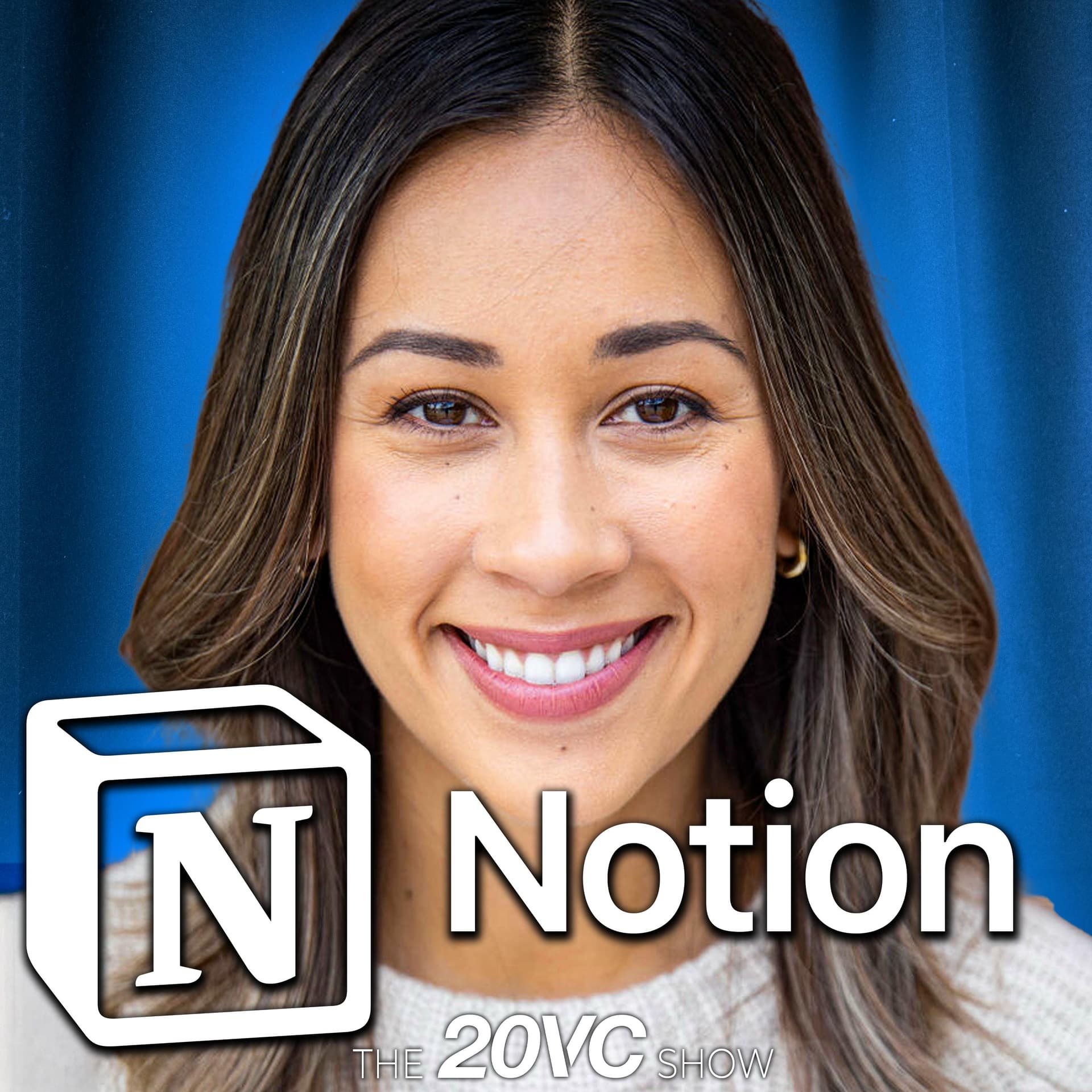
Episode Overview Title: 20Sales: How to Layer Enterprise Sales on PLG Host: Harry Stebbings Guest: Kim Graves, GM, Americas at Notion Release Date: [Insert Date] Focus: Kim discusses her experience and insights into enterprise sales, particularly in product-led growth (PLG) environments.
Key Themes and Discussions
Introduction to Guest
- Kim Graves' Background
- Current Role: GM, Americas at Notion (Sales and Customer Success).
- Previous Experience: Significant roles at Slack (grew revenue from $6M to $1.5B) and Salesforce.
- Co-founder of 20SALES, a venture capital firm focused on go-to-market strategies.
Key Agenda Points
- Winning Discount Conversations
- Approach negotiation not as a tense interaction but as part of an ongoing conversation.
- Notion’s Sales Methodology
- Focus on mindsets over rigid stages in the sales process.
- Emphasis on understanding customer needs before discussing products.
- Avoiding Common PLG Pitfalls
- Identifying and avoiding the traps that many founders fall into when layering sales on PLG.
- Renaissance Reps
- Describing sales representatives who are adaptable and skilled at navigating various roles in the sales process.
- Identifying Grit in Sales Hires
- Techniques for assessing resilience and determination in potential candidates.
- Onboarding Challenges
- Discussing issues that new sales reps face during onboarding and how to support them effectively.
- Pipeline Ownership
- Should sales reps own their own pipeline? Kim’s clear stance is affirmative, emphasizing accountability.
- Cold Calling in 2025
- Advocating for the effectiveness of cold calling in modern sales, despite it being undervalued.
- AI Tools in Sales
- Discussing the inadequacies of current AI tools in supporting sales teams properly and the need for better integration.
- Sales Team Audit Framework
- Introduction of the REKS framework (Results, Effort, Knowledge, Skills) for evaluating sales performance.
Insights on Transitioning from Founder-led to Rep-led Sales
- Common Mistakes Founders Make
- Failing to adapt their sales strategy and mindset when scaling from founder-led to a more structured approach.
- Importance of Customer Interviews
- Founders should engage with their customers to understand motivations and priorities rather than rely solely on product usage data.
Sales Strategy and Execution
- Account Prioritization
- Focus on understanding firmographics and specific customer needs rather than just the size of contracts.
- Hiring Sales Reps
- The importance of hiring adaptable sales talent and the value of referrals in recruitment.
Challenges and Future of Sales
- AI’s Role in Sales
- Current limitations of AI in sales and the necessity of human interaction in complex sales processes.
- Future Trends
- Expectation of a shift towards more technical proficiency in sales roles due to increasing complexity in product offerings.
Personal Reflections and Career Growth
- Kim shares her personal journey and the challenges faced during her career growth, particularly during significant transitions at Slack.
Conclusion
- Final Thoughts from Kim
- Emphasizes the importance of confidence, adaptability, and continuous learning in sales.
- Advocates for a holistic understanding of customer needs and a collaborative sales culture.
Key Takeaways
- Confidence and Communication: The importance of presenting oneself confidently in sales negotiations.
- Mindset Over Process: Emphasizing a mindset approach can lead to better sales outcomes than rigid adherence to process.
- Adaptability in Sales Roles: The necessity for sales reps to be flexible and able to engage with both enterprise and PLG strategies effectively.
- Engagement with AI: Acknowledging the potential of AI tools while recognizing their current shortcomings.
Closing Remarks This episode provides invaluable insights into not just the strategies of effective selling in an enterprise context but also the personal growth and experiences of a seasoned sales leader in the tech industry. Kim Graves’ perspective on the blend of PLG and enterprise sales is particularly enlightening for founders and sales leaders alike.
For more insights, episodes are available on [20VC Website](http://www.20vc.com).
Written by AI. May contain mistakes. Listen to the episode to check what was said.
Transcript
Automatic transcript. May contain errors.0:00This is 20 Sales with me Harry Stebnings. Now 20 Sales is the monthly show where we sit down with the best sales leaders in the world to discuss how they start and scale sales teams successfully. Today we have one of the best joining us. Kim Graves, Kim leads sales, pre -sales, customer success and renewals at Notion, where she recently spearheaded, record -breaking 2024 growth and led the expansion of Notion's AI -powered go -to -market strategy across North America. She's also held incredible roles at Slack, where she's been an incredible seven years, and Salesforce, and she also co -founded 20 sales, where she's invested in some of the best go -to -market technologies.
0:37But before we dive into the show today, is your finance team, a cos -center, tied up in enforcing policies, bogged down by cumbersome processes and drowning in operational busy work? What if you could unlock seamless, strategic finance that actually fuels your business growth? This is why leading global growth companies use Payhawk, the finance orchestration platform that unifies global spam management with conversational AI to live a best user experience for everybody dealing with company spending. Finance teams using Payhawk report a major shift from operational to strategic work. New AI agents for each finance role handle the busy work, acting with the same governance as your finance team, like having a small team of expert assistance that worked 24 -7, but also providing an exceptional user experience to your employees.
1:27Payhawk is built for growth and enterprise businesses that operate globally. No six -month implementations, no consultant dependencies, just immediate finance transformation that scales with your business. Leading growth companies like Vinted, Wallbox, and Hundreds more, across 32 countries. Use Payhawk to move finance forward, not just keep up. Ready to turn your finance proceeds into a competitive advantage? Payhawk is offering a staggering 30 % discount to everybody switching from a qualifying expanse management or company card provider who mentioned the 20VC podcast. Visit payhawk .com -slage -switch to learn more and make the intelligent switch today.
2:08And speaking of incredible companies, let's talk about Brex, Yes, the ultimate financial stat for startups. So when Brackse was founded, it wasn't just about creating another financial product, it was about solving the really gritty challenges that founders face daily. Let's be honest, building something from the ground up is hard enough. Without dealing with clunky outdated banks, the pile on fees and leave your cash idle. Brackse is different, it's the financial stat that scales with you, no matter where you are in your journey. From corporate cards to maximising your runway, to earning yield on your cash.
2:38Bracks was designed with founders in mind to make every dollar go further so you can focus on building. And here's what really stands out to me. Bracks combines the best of checking, treasury and FDIC insurance in one powerhouse account. You can send and receive money globally at lightning speed, earn yield from day one and still access your funds whenever you need. Plus, with 20X the standard protection through program banks, your cash is not just working harder, it's working safer too. It's no surprise that one in three venture -batch startups in the US, with companies like Anthropic, Coinbase and Robinhood, I mean, my god, these companies are incredible.
3:15Trust Brex to help them grow. If you want to join the smarter startups on the planet, head over to brex .com forward slash startups and see what they can do for you. Absumo started with one simple idea. The tools you need to grow your business shouldn't put you out of business. That's why they work directly with developers to get exclusive discounts of 80 to 90 percent. 80 % to 90 % off software, saving entrepreneurs over half a billion dollars since 2010. Some of the biggest names in tech like MailChimp, Zapier and Dropbox got their start on AppSumo and with a rotating selection of hundreds of tools, you'll find all the software you need to make your life easier in 2025.
3:54Plus with a 60 day money back guarantee, you can try any tool risk -free. Start the year off with savings, get 10 % off your first order with the code 20 lowercase VC and a free tool exclusively for 20 VC listeners. That's code 20 lowercase VC for 10 % off plus a free tool at app sumo .com. You have now arrived at your destination. Kim, I am so excited for this. This has been we've been friends for a few years now and I've wanted to make this happen for a while so thank you so much for joining me today. I learned so much from your show Harry. I'm excited to be here. I'll pay you later. It's incredibly kind of you to say.
4:32Listen, I want to start with your first sales role. What was your first sales role? And if you could go back to the Kim who took that job on the first day, what would you tell yourself knowing all that you know now? Well, the interesting thing about my first sales role is I didn't realize it was a sales role until I accepted the job and was in the role. I would say my first customer facing role was at my mom's beauty salon where I was picking up the phone, talking to customers, answering their questions, and booking appointments. And I went to university for marketing. I landed my first job outside of school at a tech startup in a marketing role.
5:09And it was there that I started hearing Whisper is about a local founder and Vancouver who was starting his next gig. And that was to a butterfield. And he was starting Slack. And I became obsessed. I read everything about Slack. I read all of their customer tweets. I read all of their blog posts. I saw on their website that they were hiring their first account manager. Now, I didn't know what an account manager was, but I saw they were looking for someone with great communication skills. And I figured I've got that. So I threw my application in cold on their careers page. I went through a few interviews and I got the job.
5:48And it was in the job that I realized that the account manager role was an account executive, a solutions engineer, and a customer success manager, for all in one helping our customers. From that point forward, I've been in sales ever since. Now I lead our go -to -market team across the Americas at Nishin. That's quite a big ask for a first role, isn't it? Um, so if we get, okay, take me back to that first day. What would you tell yourself knowing all that you know now? You get your Slack email address, day one. I would tell myself, be confident. I would say that especially in getting into the customer calls and when the customer calls got hard because it was easy enough to talk to someone who loved using Slack, loved the product, but then as soon as they asked for a discount or they had an objection like they were evaluating Slack with a competitor, I started to feel a little bit more insecure.
6:48I would say to myself, you got this. It's all in confidence in how you present yourself and just be confident. You got this role for a reason and learn as much as you can. I totally agree with you on the confidence, having fun raised. Confidence is everything. Also, I also just say what is the worst that could happen? You don't actually get the sale. It's fine. There's more clients, but it's okay. Can I actually mention that discount? My whole desire with this conversation was to have a very natural conversation. It is a really awkward thing, especially when you're earlier in your career when someone's pushing for a discount.
7:24Yes. What would you advise a young A -Rap when that awkward conversation of a discount comes up? My advice is don't treat it as awkward. Treat it as any other conversation that you're having with the customer. Early stages of a deal, you lean into discovery, and that's where you're learning about them, asking questions. And things typically seem very friendly. As soon as you get to the negotiation stage, instead of thinking about it as a tense conversation, think about it as another conversation because your customer is going to feel your energy. So if your energy is, oh, I don't know if they're going to like this price or this is expensive, I'm scared what they're going to say, they're going to feel that energy.
8:11Whereas if you just go in and And you say, hey, so we've been talking for a while. Here's the value that I'm hearing that we can bring to you. And here are the problems that we're solving. This is what it's going to cost and pause and just see what they say. Because they're probably going to say something like, whoa, this is expensive. And instead of going into defending your product and why the price is the price, go back into question asking, go into like, okay, tell me more. Why do you think it's expensive? What do you think is the right price to pay? And then just treat it as that conversation to understand like how can both parties seek mutual value here?
8:46Absolutely loves awaiting for their response. I think so many people have a little bit of silence and then interject with But I'm sure that's something we could do. I'm sure there's some way that we could change that or what what can I do and it instantly breeds this desperation if it sounds Buntly to direct. I was going to add, and that's actually something that we've brought into our sales process here at Notion. So when you're building a sales process, it's very typical to think about the stages of the deal. Stage 1, qualify the deal. Stage 2, do discovery. Stage 5 is negotiation. Stage 7 is closed one.
9:23Instead of calling it those stages, we actually think about the mindset in each of those stages, because that's what we want our sellers to embody. It makes for a much more adaptable mindset than just having the exit criteria or the check boxes that a seller needs to do at each stage of the deal. So as an example at stage two, we call that the curious investigator. So we expect our sellers to embody being a curious investigator that researches the heck out of their customers understands how they make money, ask questions from a place of genuine curiosity. And then just what we were saying about stage five negotiation, instead of calling it negotiation, we expect our sellers to embody the mindset of a value articulator.
10:09So how are you truly articulating the value of your product? It's a nuance, but I don't know if you think about this even in podcast history, where instead of thinking about the content that you're going to ask, it's actually thinking about what's the tone, the body language, the feeling that I want to give off in this conversation because people often say they'll remember how you made them feel versus what you actually said. I actually think that the best investors started life in some form of interviewing capacity, because you have this similar dynamic where you have three to five minutes at the beginning of each show where you have to make the gas feel very comfortable.
10:45You have to show some form of vulnerability and really allow them to feel like it's the space of no judgment. Exactly the same like with the founder when you're investing. If you create that no judgment zone, they'll bring their whole self to the meeting, they'll open up about missing Q1 last year and why and what failed. And you have to have that in both interviewing and in investing. I agree. You need to create that psychological safety. If you're creating a fear -based environment or you don't have that safety, people are not going to tell you the real answer. They're going to hold back. The best shows found as just scribble, scribble notes.
11:19And you said about these seven stages. And I just, we have stage one which is qualify, stage two, which is curious investigator. How do wraps fuck up curious investigator? Like what's a good versus a bad question? This is what I found when you really love the product that you're selling. This was the same at Slack and at Notion, where we love selling the product and our customers who are using the product love hearing about the product and the features. is what mistake sellers make early on is they'll talk about the product. They'll have premature pitching syndrome. And so it's hard to stay in this zone of, let's just ask questions and let's actually not even talk about the product.
12:02We're just going to talk about the observations we've seen of what makes the company great, what makes that person great, what are their new challenges that they're coming up against, what are the biggest risks that might prevent them from getting there and just like really leading into that conversation without talking about your product at all. And we record all of these calls. Yes, we record all of these calls. We have both gone, which records the calls in the video, but we also use notion AI internally to transcribe those calls. Okay, so we have that with this curious investigator. We ask loaded questions.
12:36What's stage three? Stage three is solution design. This is when you start to talk about your solution and start to think through where can your solution, help them based on the problems that you've heard. The key here is not taking all of that research and discovery that you've just done and then completely neglecting it and just talking about all of the wonderful problems that your solution solves for. It's actually starting to connect the pieces or if you're hearing pieces that they're actually not within your wheelhouse or like that's not what you do best at. It's also being honest and being the challenging skeptic to say like is this deal really going to go anywhere Or should we per ways?
13:19How uniform or similar is your solutions design between customers? We often hear about a sales play but which makes us think that you could bluntly press play and it's kind of the same Pattern in terms of hey, well here's our solution and these are all the problems it solves. How uniform are they versus how custom are they? So I've spent my career at PLG companies Slack and Notion, which have great distribution across a whole host of different customers. You have students, you have communities, you have B2B companies across all industries, across all departments. The uniformity tends to start very general.
13:56But the key here is ensuring that your sales team is very focused so that you can build or bring in the most successful customers. and those customers tend to have patterns. When you are a PLG motion as efficient as Slack or Notion, do you choose the verticals that are the biggest in the PLG side of the business and go after them? And so what I mean by that is you look at Notion or Slack and you go, okay, financial services is a big component of our PLG users that also has budget. Let's go after them. Is that how it works? Not quite. And this is the common trap that PLGE companies fall into because they'll typically look at their data and look at product usage signals and they'll use that product signal to figure out where should they focus.
14:46And so at Slack we saw that our biggest work spaces were actually communities. They were professional networks that were using Slack to trade best practices. There were student groups that were using Slack to work on projects and the sales team was tempted to sell them because our sales team was using product -led growth signals and seeing what are the biggest work spaces because lots of active members translated to lots of licenses. And it was very important that we actually remained focused on the biggest customers that had the most value from the product. And so that wasn't necessarily communities because when you think of communities, it's a very different post sales motion.
15:30The values that you're seeking are different than if you were selling to a company. It would have led your product roadmap in a very different direction because you would have had to invest in features like inappropriate message flagging within a community. Those groups also don't have a lot of money. And so while they might have had a lot of licenses, there's not a lot of budget to unlock there. And so we made a very deliberate decision to not focus on communities. That That was great if they were using Slack from a product -like growth motion. They were using our freemium product, but from a B2B sales motion, we were very focused on selling to B2B.
16:07If I'm a PLG founder listening to you today, and I've got a load of great users all through a PLG motion, and I want to layer on top and enterprise sales motion, what do I do now? Do we just start randomly outbounding people in our PLG motion? What do I actually do, Kim? So if I was a founder and I had a PLG motion, so I saw that customers are already using my product, I would start doing a lot of interviews. And I would interview all of those customers. And I would understand what motivated them to try the product. How are they using it today? How do they see it fitting into their business priorities and what they're ultimately trying to drive as a business or if it's a consumer as a consumer?
16:49I would start to put in the pieces of what are those customers look at and instead of looking at the product -led growth signals Which is the common trap? I would actually look at the firmographic details. What's a firmographic detail? It's like what is the industry that they're operating in? How big is their company? Where are they located? Are they located in major cities or are they located in a certain geographical area? Basically, everything outside of your product that you could use to describe them. And then going even deeper inside of those companies, if you are B2B, who are the personas in those companies that are getting the most value?
17:31And I would use that to work backwards to figure out who is getting the most value that unlocks the most budget that we should be focusing on. Does that need to be the founder? Or can it be a head of sales that I bring in? And if I'm a brilliant tech product person, and I've built this great product, I growth motion, but I'm like, fuck that, that sounds like a lot of interviews and stuff that I don't wanna do. Can I hire that in, or should I be the one who's building out that discovery ICP? Well, I wouldn't even call it dis, well, I guess it is, it's ICP. It's figuring out who is your ideal customer profile and I strongly believe it's the founder.
18:08Because that's not only gonna guide your go -to -market strategy, it's also going to guide your product roadmap and where do you continue to lean in? So back to my Slack example, we actually didn't lean in to community roadmap features. We leaned in to B2B specifically for our distribution as we went up market. And your messaging. Your messaging is so impacted by it and I think that's so important. Yes, exactly. Having the founder start to build sales initially that helps bring intuition into the product. It also helps to figure out who to hire for. Like if you don't know who your ideal customer profile is or what kind of sales motion is going to work for your company, how do you know who you're going to hire as a sales leader who will actually bring your business to the next level?
18:55Okay, so we're having a coffee. I mean, this is sadly a virtual coffee, but we're having a coffee in Palo Alto and you're advising me, imagine I'm a technical, which is quite a stretch, I know. But I'm this technical product founder, he's built this great PLG motion. Okay, fine. I'll do the ICP discovery process that we mentioned there and ask the questions. Now that I have this ICP in mind, can I dip my toe in enterprise and give it a go? Or do I need to invest full scale? What do you mean by full scale? Well, do I need to hire out wraps and a sales leader and put millions of dollars to work?
19:31Or can I just bluntly dip my toe in and see if we get many customers? My biggest advice for the early stages of building a sales team is thinking through it as if you were thinking through a manufacturing supply chain. And this idea comes from the HBR article of the sales learning curve. Have you read it? Is this Malt -Rabesh? It's a Harvard Business Review, but I highly recommend founders to read this article because it talks about the stages of building a sales team. And the earliest stage of building a sales team is not looking for traditional coin -operated wraps that are going to come in and just build the sales playbook for you.
20:11The earliest stages are actually about learning, similar to how if you were bringing a manufacturing product to market like you were selling bathing suits. Your first 10 that you make are going to be really expensive, but you're going to learn a lot in making those first 10 bathing suits. That's like when you're hiring sales. Your first few sales reps, say three to four sales reps, it's gonna be very costly because you're not gonna know what they're exactly doing, but we call them the Renaissance reps, where they're generalists, they're adaptable, they're highly skilled in communicating and collaborating with the internal stakeholders at your company.
20:47That being marketing, product, engineering, and talking to customers. And that's where you learn the most. Are they quite early in that career? Are there a little bit more mature and senior? Just where are they in that career? I've found it's a little bit of both. And it's not as a matter of where they are in their career because I think you wanted to build a diverse sales team. And so typically you hire three to four reps. Some could be earlier on their career, but I've shown a high attitude for learning. And then others can be potentially making a career switch or they're really excited about building.
21:23And that's the thing. They're not excited about just making a lot of money because that's not the point in the first year of sales. They're actually really excited about learning and building something and bringing the mission forward. Okay, and so we have these three to four. Great. If we actually just dig into that process then, I'm a technical product lab founder. I don't know how to hire a rap. What do I do? Where do I source the candidates from first? So if I'm a founder, I would make sure that I have some great good market advisors on my board or in my arena. And I would talk to them and learn, what do they look for in hiring great early sellers?
22:06What are the key competencies that are important to look for? And knowing the business and the unique aspects of your business, what's important to that business to double down on. So if it's a certain industry that you're selling into, perhaps it's some industry knowledge, I can't think of another example, but it's like starting to define what that looks like, because I think a common mistake is not knowing what you're looking for, and then just relying on heuristics that can lead you astray. Heuristics like they come from a big flashy company, so they must be a great seller, or heuristics like they're a great communicator and presenter.
22:43customers are going to love them. That's surface level, like you really need to dig in to what are the key competencies that you should be looking for. And when I'm talking to early stage founders, there's three competencies that I think are really important. The first is high motivation. The second is effective at problem solving. And the third is a continuous learner. If you start to define what those competencies look like, then you can start figuring out what is your process, what are the questions that you can ask so that you can figure out whether that's a great hire for your business? How do you know if someone's a good problem solver without being direct to me like Kimmy, you're a good problem solver, yes and very good, very good problems.
23:24This is where past behavior is the best predictor of future behavior. So asking for stories and examples of how they've solved problems in the past. questions that I really like are, tell me about a time you weren't set up for success. Because then you can also start to hear, not only did they solve that problem, but did they take accountability or were they a victim in that scenario? Another line of question that I really like is, tell me about a really big challenge that you had to overcome. Great. Tell me another challenge that was really hard, that you had to figure out the right path forward and you'll start to see like is there a pattern of them taking an ambiguous problem and just finding a way to persevere and get to a great outcome?
24:12I totally agree over time one of my biggest turn offs with highs is when everything's just someone else's fault. It's not always your fault but there's just also a way to do it the instant. Well it wasn't me but and it's like exactly because it will be everything from like I we didn't have enough inbound or my manager left and I didn't know what to do. And so those are the places where you're like, okay, so what did you do? Quit. I do the responsible thing and I left the job. Okay, you mentioned that, like, their great storytellers, their great sales people and customers all love them. One way to do that is like demos or case studies.
24:54Do you do demos and case studies and any lessons on what works and what doesn't that? Yes, we do especially for our sellers in commercial and mid -market. We expect them to be very well versed in the product. And so we'll ask them to research our product and let's do a case scenario where we're going to be a customer, you're going to pretend to be the account executive selling our product. And let's go through a first call to see what that sounds like. What we're looking for is what are the questions that they're asking? Can they adapt and learn about what we're selling and the actual problems that we're solving?
25:34And then without any training, how far can they get with our product? And that's another example of assessing problem solving. Like can they be resourceful and do this without a lot of guidance? Do you give them much prep time? Is that like a week's notice? A few days. Because the other thing is we need to move fast. We need to get higher, and so we can draw out our hiring process. We want to get higher and fast. We give them a few days, because we also want to see how can they be a piece set or how can they deliver with short time deliverables, because that's going to be the reality of the environment that they're operating when they're getting here.
26:13How do people most mess up their most OK studies? I would say there are two ways. The first is a lack of preparation, a lack of preparation, research, and actually doing their homework to come up with a polished first meeting. And so I'm looking forward, did they look at our customer stories and read through all of our customer stories? Did they watch all of the videos that we've published about what we're trying to solve, did they actually sign up for the product and start using it themselves to see what it feels like? And so you can see where someone put a lot of time, put a lot of effort and actually learning, or they sort of just winged it or relied on a playbook that they've used before.
Read the full transcript
27:02And then I would say the second place that people mess up is thinking on their feet. That's very important in sales. We say a seller needs to be audible ready. So if we throw them off, what do they do? If we, as an example, give an objection and we say, hey, do you offer discounts? And they just make something up and they're like, yes, we offer a 40 % discount and they like cave under pressure. Then we're like, ah, or if we ask them a technical question and they just make up an answer versus saying like, hey, let me get back to you. Those are some areas where we're like, okay, there's an integrity piece here and can they really think on their feet and adapt?
27:43Do you have a hiring panel when it comes to deciding whether to hire or not hire? Yes, we do. Early stages, it's a lot of cross -functional partners, so it's not just sellers on the team, but also looking at the partners that they would be working with most closely. It's similar, but we have a few people on the panel and we ensure that we have laid out what are the competencies that we're looking for so that we all know what we're looking for. And so now you've decided you're going to hire me. Okay, fantastic. Very excited for this central job. When it comes to the comp negotiation, switch sides of the table.
28:18If you would advise an A or a rap on how to handle comp negotiation, maybe I'm British and so we're just awkward talking about money. Yeah. It's a bit of an awkward one, but I do want the most money, obviously. I know. Should I approach that in the right way, which doesn't come across as money grabbing, but is also authoritative. The expectations are set up front, especially in the US, you can see what the comp ranges are for all of our jobs. And so it's important to also see as like a seller, okay, does that range meet what I'm looking for? And then what I would say in a company that's a startup or scale up, if you're just looking to maximize your OTE, that's probably not the best place.
29:05like go to one of the large giants because that's where you're going to maximize your OTE. You also want to think about the equity and the full package. It depends on where you are in your career. Like early days, I actually think it's a big mess to just focus on comp and to not focus on the bigger picture because if you're at a fast growing company that is doing really well, your equity is going to be way more meaningful than your OTE. Totally agree with you. I think it's one of the big problems actually with Europe, which is we don't focus on actually very much to I mean even less So than the US and you really see that in building out especially at sales and marketing teams So if we fast forward then and we think about the onboarding process for a new rap What are your biggest lessons in how to onboard wraps effectively because it's a really hard thing to do for a new founder So my biggest advice is to think about the key outcomes that you're looking for the seller to achieve in the early days And oftentimes it's not like they make their first huge sale.
30:06It's actually looking at the leading indicators before that. And we're actually redesigning our onboarding program at Notion. And what I really like about it is we're thinking about the key outcomes that we expect our sellers to learn in the first few weeks. As an example, one of the first key outcomes is learning how to prioritize their book of business. What are the accounts that they're going to focus on that deserves the time and the attention to ensure that we're focusing on the right accounts. When you think about it, the right accounts where you can actually do that very customized tailored approach.
30:42Yeah. How big are those contracts? They have to be big enough. Is that like 100k plus? Is it 50k plus? We say $100 ,000 plus. And that's actually a really good question because I think it's important to have a dual focus as a seller. So you have your strategic deals that are $100 ,000 and above, but you also have your velocity deals that are more tried and true. So those are like your 20, 50K deals that you know you can win and that are less risky. And I've seen that where if you have a diversified portfolio, similar to financial advising, like you don't wanna just focus on the highest risk stock, like you wanna make sure you have a diversified portfolio, I bring that mentality into sales to think about, Okay, in your week and your months as you're planning your path to target, what are the accounts that you should be focused on?
31:34You should have a few big bet accounts that are going to get you the $100 ,000 or a million dollar deals. And then you should have the tried and true accounts that you know that these are the customers that typically evaluate more quickly. You know you can win them. There are all the right signals here for you and ensure that you're not minimizing focus on those accounts. And so that you build this pipeline that can reliably get you to your number. Does that go against the traditional structure of sales teams, whether it's like real enterprise sales people who just handle the mega mega accounts?
32:07Does that advice go against that? That's a good question. And no, I would say this is diversified within your portfolio of the segment that you're selling into. So if you're a commercial seller selling to SMB, your big accounts might actually be like the $50 ,000 accounts and above while still making sure that you're knocking out the 10 to 20 ,000 dollar deals. If you're an enterprise seller, it's most likely like your big accounts are those million dollar deals and the velocity accounts are like the 50, the 100k deals that you're bringing in. How fast do you put reps on with customers in terms of that customer facing interaction?
32:43They're not ready the first day. Is it the first month? Is it the first week? What does that look like in terms of like, yep, green light for you to lead a sales deal. So I have different answers depending on the stage of your company. Early days, like as the first account manager at Slack, I was on customer calls on day two. It was just like, get in there, you're adaptable, start talking to customers. Now at Notion, we think about like, what are the checkpoints that we need them to meet before being in front of a customer? And I'm a big fan of mock scenarios. So instead of having your first discovery meeting or your first pitch in front of a real customer, you're doing that with your manager or you're doing that with your onboarding cohort so that you can practice it and then once your manager says yes you are ready then you can start working with your customers directly.
33:33Totally agree. I actually think this is where AI can be really exciting in terms of like being that AI coach, mock interview, do it on your phone and even in chat so it just beat like really interesting ways you can see how happen. When you are a young rap should you be responsible and This is a bigger question. Should you be responsible for your own demand, Jan and pipe, Jan, when you are an AE? 100%. Every sales team I've led or account executives are responsible for their pipeline. And they're responsible for their pipeline because they're also responsible for their number. While they may have resources, like a business development rep, to help them build their pipeline, they are at the end of the day, the ones that have to figure out what does that that motion look like, how do I want to coach my BDR to be really effective in my book of business?
34:24Where do I see the accounts that we should prioritize? Who are the key stakeholders that we need to map in order to build consensus? And what is the messaging that is tailored to that customer that we're going after, especially for the big deals, like personalization to the Nth degree is really important? Otherwise, you're not going to get a meeting. Also just like the little things go a long way like commenting on several LinkedIn posts. Like awesome to see. People recognize continuity of commenting. Like I have it say we obviously have lots of comments but the people that consist in the comment I'm like I almost feel like I know them and when they then message me after 10 comments I'm like I'm much more likely to respond.
35:06It's impressive. I agree. You can get very strategic in your outbound playbook and it's on the seller to really understand that. We're also diversified in our channels. We're not just emailing. We're cold calling. We're using LinkedIn. We're using warm connections from LinkedIn sales navigator. And it's on the sales, it's on the account executive to be that quarterback can understand like, who do we need to get in front of? And then how do I divide and conquer with my BDR if you happen to have a BDR? You basically become a professional stalker. I totally get I agree. I am brilliant at your sales.
35:42So yeah. I know. I was going to say, here, you were brilliant. The fact that on the 53rd email you got, Mark Benioch, it's come on your show is so impressive because that's the other trick with outbound pipelining. You just have to keep going just because you don't get a response on your first, your second, your third, your seventh, you got to keep going. But this is why anyone who's done door to door sales, I think he's actually getting the best training round ever because no one opens the door and is like, yeah, you've just come into my own personal space now on my front doorstep. Yeah, tell me something.
36:15It is the best training ground for rejection. Totally. And you build empathy for the people around? Yes, exactly. Totally. You mentioned the words account prioritization there. My question on that was, is it just like who's the biggest dollar number attached to them? Is there a right way to think about account prioritization other than just sheer size of contract? Yes, this is where I'd go back to the firmographic data points to figure out what are the firmographic data points that signal the best long -term customers for your business. Those can be industry, company size, location, what their tech stack looks like, everything outside of your product.
36:52And then if you are a product -led growth company, what are the other product signals that signal to you that you can accelerate this expansion, this upsell, or this deal? And then using those signals to figure out where do you focus your time? When you get a higher wrong, how fast do you think you can tell that they're wrong? Pretty fast. And I like this framework that I got from winning by design, the sales enablement program, where they talk about REX, R -E -K -S, results, effort, knowledge, and skills. And it's working through that to understand where are we going wrong with this rep. So if they're not hitting the results, they're not hitting the pipeline or revenue results, then we work backwards.
37:39Do we see the effort? Are they putting in the emails, the meetings, in order to drive that pipeline? They could be high in volume, and if that's the case, then you look back further. Okay, you look at skills. Are they prioritizing their accounts in the right way? So are they just completely prioritizing the wrong accounts? They're hammering them with emails and meetings and they're just not going anywhere or is it other sales skills like discovery? They're not asking the right questions to compel the customer to move forward with the evaluation or the negotiation calls are falling flat. Or the last place to look is the knowledge.
38:14Are they not coming off as credible in front of their customers because they're not speaking the customer language? Or are they not knowledgeable enough in the product to really understand where to take the conversation? Because when When you think about starting to piece together what the actual problem is, that will help you figure out, can you coach this rep on that specific area or is this just not going to work out? What do you do in the case of, I've got results effort knowledge skills. When you have that, very often I've had the results which often are there, the effort which can be there, the knowledge is super smart.
38:52But the skills often, they're just not as a misalignment. So a good example of this in sales would be like, you know what they can close and they probably have closed. The effort they work really hard, knowledge, they're super smart. But the skills, they're an enterprise seller and you're doing a more SMB high velocity motion. They're not as charismatic maybe. They're more strategic. They're more academic and intellectual. And they're not that high velocity seller. They've got everything except the actual human skills to do a high velocity sales. Can you be off so badly in one that it's irredeemable?
39:29Yeah, well, I try and figure out, like, what is the negative consequence then? Is the negative consequence then that they are selling deals, but they're not selling high volume of deals? Because then I would argue that is a problem. And you need to look for a different skill set. Or it could be they're selling a lot of deals, but they're actually turnboms. So they're bringing in bad deals, they're overstalling, and when it gets to our customer success team, we're realizing those are not the right customers that are gonna get long -term value from our product, and we need to figure out how we can implement better qualification.
40:06And so, those are a few of the nuances that we would also want to look out for. I love that churn bombs. I haven't heard that before. And so we learn pretty quickly. When we say pretty quickly, is it like two weeks? Is it like two months? Like how long do you actually know? It really depends. We keep tracking our onboarding program. So like I said, we look at outcomes in the onboarding program. Like, OK, first check. Did they prioritize our accounts correctly? Second check. How do they do in their mock call scenarios? And then you can tell pretty quickly of are we on the right path here? Or could this potentially be a mishigher?
40:42And then depending on the ramping period, So for enterprise reps, the ramping is longer than commercial reps, but I would still look at indicators like what we just talked about to figure out is this gonna work? When you make a mess higher reflect back on a mess higher. What did you not see that you should have seen? Honestly, I would say I actually saw it and I just felt the pressure of hiring quickly that I felt like I needed to hire the person. But what you doing that case, okay? So go back to this final story. I got pressure from my VCs that telling me I need to hire salespeople, I need to hire salespeople, I need to hit revenue numbers.
41:21Sarah is great, but she's not the best. She just hired good, not great. No, because that is a very costly mistake and it's way more costly to have a bad hire. What I would do in that scenario is I would say like, okay, instead of lowering my hiring bar, we need to change something else within our hiring process and usually that's we need to increase or hiring funnel and people coming in at the top of our funnel. And so I'd say if we're seeing five candidates a week and none of them are working out, we need to see ten candidates next week to make sure that we're finding the right people. And there's a few ways to do that.
41:59I've seen us do hiring jams where even though you ask people in your company who are the best referrals, make sure to refer them, we actually make it fun. We all say we're gonna do a hiring jam at 12 o 'clock today. We're gonna order and donuts. Everyone opens their laptop and on LinkedIn. Here is the query that we want you to search. Everyone go through everyone in their network to figure out who meets that query and let's start to strike a conversation with them. It's also tapping into your friendlies, tapping into your network to say like, can you please post this on LinkedIn? We're looking for an amazing seller to widen that pipeline.
42:38and try to get more candidates into your pipeline so you have more of a selection. I always find that great people have two to three great friends who they're like, I've worked with them before, they are my ride or die partner, I would definitely work with them again. Great people always have that. I agree, and our most successful hires are referred people. Can I ask, is it difficult when you have a PLG motion and a new layer on top and enterprise motion because the sales team almost feels like second -class citizens? It is difficult because when you have a product -led growth motion, there's often the perception of the product sells itself.
43:13We don't need salespeople. It's going to be way more efficient for us to just focus on product -led distribution. And this is the biggest mistake that PLG companies make. They are afraid to hire salespeople because they want to do it differently. And so if I think back to all of those founders, they eventually come around and realize that building sales is going to be vital to continue accelerating your company forward. You shouldn't try and reinvent the wheel when it comes to sales. And so it does require the first few sales leaders coming into the business to really educate the founders, the business around why sales is so important and how we can work together to make sure it's not product -led growth or sales, the best companies I've seen, layer sales on top of product -led growth.
44:06At what point do you do outbound? When you have PLG, you have a huge amount of leads existing that are consumer users, that you can try and convert into enterprise users. At what point do you go, okay, we're also going to continue to convert them, but also proactively hunt net new enterprises? I would say it's always earlier than you think, Because you think your sales team needs inbound lanes, whereas there is going to be a point where as you go up market, those customers do not buy without talking to a human. And you need to figure out without a product -led growth motion, because executives of Fortune 100 companies aren't typically tinkering with the latest technology.
44:48They're focusing on their business priorities. They're focusing on how to drive the business forward. and you don't get in front of those people with a product -led motion. And so it's earlier than you think. I would say it's typically after your three or four Renaissance ruts that you're bringing in just to learn about the business, then start building outbound because it takes a while. It's going to take longer than you think. And when I think back on my experience, like it typically takes like a year to figure out who are the accounts that we're outbounding, who within those accounts care about what we're selling, What is the messaging that is going to compel them to book a meeting with us?
45:27What outbound channel do you think is most underrated right now? Cool calling. Like hello Kim, it's Harry's dad. Yes. Are you serious? I agree. Yes. What makes you say that? Because I see it working and people don't do it. Call calling is hard. It's way easier to send an email and get a rejection. That's easy. When you cold call someone and you get a rejection, that hurts. And so when you think about the other sellers around you in this landscape, they are not cold calling. So if you are putting yourself out there and cold calling, and oftentimes it's actually just leaving a message. Because a lot of people don't answer their phone and it's just leaving a message.
46:08So that audio memo also gets you top of mind for the people that you want to get in front of. I think I'm so British people call me like Hugh Grant not because I'm swerve and carous massive because I'm a grumpy old man. I'll be like Kim Kim you cold call me on a Friday where are you from notion? Yeah, I was a fuck you. I'm so I'm so moody you invade my phone I'm pissed off now that's so for I'm in awe that cold cooling is it wow do you train people on co -cooling? Of course we have to. And we actually did just did something at notion where we hosted a global outbound day. And because cold cooling is hard, no one wakes up and is like, I want a cold call.
46:54And I think it's even harder if you're sitting at home. So at notion, we support a hybrid policy where we have our team coming in at least three days a week. And so we use one of those in office days to say, we're going to make this fun. We're going to at call call and every single person on this team, including your sales leaders, are gonna get on these calls. And we're gonna start practicing what that sounds like. And we're gonna listen to the people who are actually able to book meetings. And it's way easier to be around your colleagues in person and get rejected. Cause then you're like, and like people will console you.
47:27But then when you actually get a win and you book a meeting, you're a hero. People are celebrating you. They're like asking how did you do it? we actually brought out prizes to make it even more fun. And so that's a way for us to start building the momentum because you can't do this from scratch. Like you really need to create that celebratory, collaborative environment to actually start seeing what works and what doesn't work. And you know what? It may not work, but you have to try it. I totally agree. You know what you also have? There you actually have lessons and knowledge transfer when you hear that Kim's repeatedly done that, same messaging three times and it's worked.
48:03And it seemed to really well, I'm going to try the same. And then it's why I just hate remote those stories, because when you sit near customers' support and you hear that everyone is complaining about X being there or Y being there. And you're like, oh great, I can get ahead of that. I think it's so important. I think it's so important too. And that's why I'm so happy that we have a hybrid work environment here. I don't think you can build the same type of collaborative dedicated sales team where everyone's just working from home. I think there's really something too that in -person collaboration.
48:37And I will say the best sales team see celebration and collaboration as a competitive advantage. What did you believe about sales that you now no longer believe? The best sellers are extroverts. They're great at messaging and pitching. Now I don't believe that. I think the best sellers are consultative, curious, and ask the best questions. Do we move into a world where sales, reps, leaders need to be far more technical than they've ever been before to bluntly walk people through solutions that are more technical, especially in a world of AI, or do we need much more relationship focus or both? I would say both.
49:17And here's why. I see AI taking on a lot of the transactional selling activities. And if you have a point solution or if it's a small deal, I can see AI taking a lot of that down market selling motion. So sellers really have to focus on the complex strategic sales that require multiple stakeholders, building consensus across the company, finding who the right people are that has influence. and then to your point, like the technical aptitude to map their solution back to them. What do we do in sales today that we will not do in five years' time? Oh, okay, the area that I really hope that is completely fixed is data enrichment.
50:05And so what sellers dislike the most is when there is bad data within their sales force or their CRM. Bad data, meaning the account has the wrong employee count so they're not able to prioritize them correctly or the territory is inequitable. I hate manual data entry and I'm really excited to get more and more enriched data that doesn't require that manual entry. I love that I totally agree. I also think like customer research. When you think about what you used to do, like it took maybe an hour to do great customer research on a prospect, But now it's like Chatchy PT, pretty much deep research does a lot for you, no?
50:48Well, internally we use Noosh Nei that's powered by the best models like Chatchy PT, cloud and it is incredible. Like just this week we had our executives meet in front of customers and they always ask for an executive briefing doc. And so before the seller would have to aggregate all of this information from Slack and the customers website and Salesforce. Now we use Noosh in research mode that aggregates information from all of those different sources and then creates a polished briefing dock within seconds. How do you make sure that your sales team is embracing every aspect of AI? For me as the leader of a media company, I'm always wanting to push them.
51:28I'm like, should we instill a 30 minutes a week where they have play time with AI? How do you think about enforcing your team to bluntly get out of the mold and behavior set and embrace new tools? I think it's figuring out what are the most impactful workflows that they would benefit from using AI. So start with like what is the challenge that they're trying to solve if it is preparing research documents like let's start there. I found that celebrating the people who are doing it best internally is the best way to actually get that behavior spread across your entire team. And that's why I really like a cultural celebration because I think that's the best way to lead.
52:07instead of being like, you're not using AI bad, saying like, wow, these are the best sellers. They're using AI. Here's how they're using it. How can we incorporate this more into our process? And I also think it's involving them into this exploration. So asking questions in our team meetings, like, how might we use AI with the bottleneck activities that we have today? What are some ideas that you've had? What are some things that you've looked out into the market and used recently that we should start trying. And honestly, it's actually really helpful selling an AI product. Because with NUSH and AI, we can do all of that.
52:42I like saying we're constantly drinking our own champagne versus we're dog fooding our own product. We're constantly drinking our own champagne and trying to figure out what are the best use cases for NUSH and AI so that we can also speak intelligently about it when we're going out to market and talking to our customers. So I think we've both, you obviously invest with 20 sales. I obviously invest with 20 VC. see, we've both seen a ton of AI sales reps. I mean, a ton. And none of them actually work. Is the honest truth? Why? Because selling in today's environment is very complex. You have to figure out who are the stakeholders and you have to build relationships.
53:21It's a complex product that you're selling. I will say, I believe it would work if it's a very transactional product. Like if you're like, hey, we're at conference and we are selling conference booths. This is the price. I think like an AI seller can actually probably sell that quite well, but when you're selling solutions like notion and slack, like we're a long, long ways away to ever being able to take those sales roles. You're doing an incredible job with enterprise. We often hear enterprises are still dipping their toes in AI waters in terms of that experimental budgets. Do you agree with that or do you think we've made a full scale transition to full budgets?
54:02I agree with that. I've been very impressed with the pace of AI innovation, but in terms of AI adoption is actually been very slow and the average enterprise company is still waiting and seeing what happens. And we actually just ran a survey and we see that the biggest thing that's top of mind for executives is how do they integrate AI into their existing workflows? And that makes sense to me because when you think of the average enterprise company, they have a lot of process. They've already built what that looks like internally. There's a lot of priorities across many individuals. So getting them aligned on what AI can look like for them can take a while.
54:46And so it's our job to figure out how do we make that easier for them? Totally get you are there commonalities in that concerns about adopting AI be it security be it accuracy be it change of Behaviors what are their biggest concerns for enterprise? It's security legal and some enterprises have policies where they just have a no AI policy right now because They're worried about the legal aspects of AI and so is trying to figure out how do we get around that? Fuck, Europe is even worse by the way. How long do you think that transition is between experimental to full scale? Because there is a moment when Wall Street will start penalizing you for not embracing AI.
55:29I had the founder of Juleen Gong on the show the other day and they said, bluntly, that the public market puts a label on you. You're an AI winner or you're an AI loser. The way that you build your company will determine which one you are. And so there is a moment when Wall Street will penalize you for not embracing AI. And at that moment, you think that they will then change because market cap is impacted. But when do you think that is? It's like picking up. And I see enterprises going from experimental AI budgets to looking at what are the outcomes that they're trying to drive with AI. Because that's where AI is going to be very sticky.
56:05Another thing I've heard recently is by revenue where there's a lot of experimental budget with AI and Companies are just trying things out But the real winners will be the companies that have those renewals a year or two later because they've They've figured out how to drive business priorities with AI and I was actually thinking about this in my reflection of my performance review So I had my performance review on Tuesday day. My performance isn't based on how well am I using AI? How savvy am I? My performance review continues to be, how do I drive revenue? How do I drive pipeline? How do I drive my people?
56:44So there I think through, like, okay, how can I use AI to do that more effectively? So I drive those results even further. And I think the companies that really figure out how to drive the ultimate bottom line are going to be the ones that win. The other thing I will say is from selling AI, I think it's also the companies making it easier for them to get started. And one solution would be how can you really easily integrate with their existing solution. So if they're already using Salesforce, they're already using Microsoft Teams or Slack or Google Drive, how can you start to integrate into those systems?
57:21So you're starting to change the AI behavior in processes that they're already used to. When you're selling AI and enterprise, are you using AI and AI and AI to make them feel like they're frontier technology adopters? Or are you kind of shielding it to make them feel less scared of some buzzwords that they often hear in media? It's funny because yeah, I go to events and I'm like this can't be an event if we don't say AI. But the hype is real. I actually will say like the hype is real and executive genuinely want to see and hear how other companies are leveraging AI. And so what I found to be most impactful is using customer stories.
58:02And so we'll say here, like the fastest growing companies like OpenAI, Versel, Perplexity, they're all relying on notion. Their product and engineering teams are collaborating on everything from meeting notes to how they do their product planning to ensure that they're staying ahead of innovation. And it's those stories that start to showcase like, okay, there's real advantage here. Tell me, how do they do that? Oh, but I have granola. And so I like granola. What do you do when competitive comparison comes up? It's another awkward one in calls. How do you advise reps to deal with the competitive comparison without shitting on your competitors?
58:44I agree. I think it's bad for them for you to shit on your competitors. I like the phrase customer obsessed competitor aware. So you should know what your competitors are doing. And I think it's much better to have a factual perspective and have a conversation around it. And I'd probably go back to discovery if this was a real conversation. I'd say great, what do you like about RanoLa? Okay, what does that help you do? And what we're seeing in the market is there is a lot of sass sprawl. And I think I actually heard this on your podcast recently recently where you're like the average company uses over 170 different software solutions.
59:24And that's real and my prediction is it's going to get a bit worse in the short term, but long term we are going to consolidation because there's no way an employee can learn 200 different tools and be effective in their day to day. It's also extremely costly because all of those come with a price tag. So how much are you paying for software? Totally. I mean, the bet on notion is that we're going to move into a bundled software world for enterprise is really where it goes. Exactly. Can you talk to me about the most creative you ever had to get to win a deal? I was actually talking about winning a deal this morning and I said, we never leave anything on the field.
1:00:02How many hockey sticks are we sounding to their kids? And I use it as a joke, but when have you got creative and what did you do? I will say, Harry, I'm not a gimmicky person. So I'm not the seller or a sales leader who's like, let's send them a cake and on the cake, we're going to say, will you sign or order form? That's just not how I sell. Sometimes it works. I'm much more like, how do we think strategically about this and get really creative in our strategic approach? So it's figuring out how do we align to stakeholders at all levels and make sure that we bring them value. And so the creativity that I would bring is like, okay, making sure that every important person in the deal is aligned to someone at my company, whether that's a subject matter expertise where they can get value from learning how say another product manager is using our software, what they're seeing within their field and comparing notes so that we have that relationship or it's a CFO to CFO relationship to ensure that they're looking at the financials in the right way, and they have that relationship.
1:01:06And then it's using different touch points, like workshops. How can we bring in a workshop where we're just jamming on what are the ideas that we can hack away at and implement in the next week? It's also showing teachable moments in every part of the deal. So I wouldn't say like there's one really big moment where I'm like, this was it. I think it's continuing to look at how are you getting in front of the right people and surrounding them with your solution. I think you learn a lot from losses. When you go back to your biggest loss in a deal, what was the biggest loss and what did you learn?
1:01:42One that I'm thinking of right now is we were just in front of the wrong stakeholders and the people that we were in front of didn't have the influence to get the deal done. Did they say they did or did you miss judge it? No, they said they did. And that's what you'll hear. And the common mistake is that you're single threaded, you're with the wrong people, and you're not multithreaded enough in the company in order to actually change the way that they're doing something and bringing them your new solution. No matter how much this happens, it's still common in losing deals where your champion will say like, I can get this done.
1:02:19Don't worry. We've got this. and then you build this relationship where you trust them. And then they also say things like, we don't need to bring anyone else into the deal. Just trust me. And then they'll even give you a handslapped if you talk to anyone else in the company. And that's a really big sign that you don't have a real deal here. Like you need to get multithreaded with different lines of business and who actually holds the budget. So what do I do in that case? I get a handslapped. I get a bit of an eke vibe that maybe they don't and they're pontificating, postulating about having power that they maybe don't have.
1:02:57Do I keep going down the single threaded road with the thread that it might not land because they may not have the power? Or do I force the multi thread even when they handslapped? My take here is that you start to use other people in your company to help doing the multi threading for you. And you make it easy for them. And so instead of that message coming from you directly, you ghostwrite messages for your manager or another person in the company that you see has a connection on sales navigator, and you start to build inroads with your team. I found that is the best way to start testing do you have a real deal here.
1:03:39I've often sent a message to who we think is the executive sponsor to understand like, Hey, we hear that you're evaluating, is this on your radar? And oftentimes I'll be like, oh, never heard of it. Or like, yes, this actually is on my radar. And then you'll start to see like, do you have a real deal here? And is your champion actually selling internally? I would argue it's not a real champion if they're not willing to introduce you to more people because a real champion is putting you in front of the right people to get the deal done. What is the number one reason why deals don't convert to day fee?
1:04:10Status quo. We use a framework, why change, why your product, why now. And it's not a competitor. It's the company is in stuck in their ways. They don't see a big enough problem, and they don't do anything. And so what that signals to us is we didn't truly identify the real pain point or priority that we could tie to, or we weren't in front of the right person who could actually give us what those priorities are. You're going to kill me. The why now on Notion versus a cybersecurity company where it's like, you've just had a hack, you just lost 3 million customer details, you're fucked if this happens again.
1:04:53Okay, I get it, fair enough, or you just had massive downtime, you need our crash analytics software. For Notion, how do you do that? That's looking at why companies do anything. They either do it to make more money to save costs or in your example to mitigate risk. So what's stopping them from making more money? Oftentimes it's the innovation and the pace of innovation, especially in this AI world. And so it's trying to figure out how are they staying ahead and how can they look at a product like notion to help them do that. But the other is saving costs. As we spoke about, SaaS sprawl is real.
1:05:36And they're paying for a lot of different solutions that is adding up. And so oftentimes it's looking at a compelling event like when is that renewal and let's work backwards from that renewal to figure out how we can save you some money. On a seat which one converts better is it like the hey improve efficiency innovation or is it hey you're spending a fuck ton of money on the load of tools that you don't need. and just bundle it into one and an amazing product called notion. The easier one I would say is saving money because that is cut and dry, but the long term one and where we want our customer success to really help them see the value because otherwise the risk is another competitor is gonna come along and do the exact same stuff.
1:06:19And so you can get them in the door but ensure that they are seeing that value in their workflows. Okay, so who's the best sales leader that you've ever worked with? And what did you take from that? I've been fortunate to work with a lot of great sales leaders. I would say the early mentor that stands out to me is Danny Hersberg. And here's why. Before meeting Danny Hersberg, I always thought that sales was a stepping stone for me. And I didn't know if it was going to be a long -term career path. And what she taught me was one, the parts of my job that bring me the most joy, all points back to sales.
1:06:58I love achieving wins. I love working collaboratively with a team. I love figuring out, go to market, across sales marketing product. And the other piece of it was also seeing how sales could be done differently. one, she was a very successful female sales leader, and she taught me that sales can be very data -driven, and sales is almost like being a therapist. Like, you're asking a lot of questions, and you're truly trying to figure out where is the pain. And so those two things made me realize, like, oh, I could do sales in a different way, and that's a big part of why I continue to be in sales.
1:07:40Should people worry about title? We see different people focus on a lot others who say, hey, it doesn't matter, it doesn't matter. Does title matter? No. Title does not matter. The company matters way more than the title case in point. I was at Slack. I didn't even know what an account manager was, but I was like, sure, I really like this company and I see where this is going. And I got to help Slack grow from 6 million to nearly two billion in revenue by the time I left. And if I cared about title, I don't know if I would have joined, but I am sure as hell lucky and excited and fortunate that I did.
1:08:22What was the hardest phase of growth from six million to two billion for you in sales? For me, it's very personal. I actually think back to like the point where I didn't know if I was going to stick it out. And it was when my boss left, my boss's boss left. And it felt like everything was crumbling around me. And I was working with a coach, which I highly encourage. If you have the resources or the learning and development funds to work with a professional coach, because she helped me reflect on what was actually happening. And she asked me questions like, okay, well, what's the worst thing that can happen?
1:09:02And when you actually put words to it, it's never without that. And she was like, okay, well, what's actually true? Because what I said is like, oh, I don't have my advocates, my leaders in my corner to really push me in my career forward. And she's like, that's not true. Like, you have a lot of advocates in this company. Like, who else can you look to? And you need to believe in yourself. And then she asked me, what's the best thing that can happen. Oftentimes change leads to opportunity. And so the best thing is actually stepping up. And for me, it was like, how could I actually do my boss's job and like use this as an opportunity versus a point of crumbling?
1:09:44And so that's ultimately what I did. It felt at the time like I was at like a huge crossroads, but now looking back, I'm so happy I persevered and stayed. What advice would you give to a young woman in sales that you don't think is applicable to a young man in sales? When you're looking for jobs, even if you meet 80 % go for it because the man beside you is going for it. And I would also say something I've learned in my career is just because you do hard work doesn't mean it's going to get noticed. That may work when you're very junior but as you go on in your career, you need to learn how to advocate for yourself and ask for it.
1:10:27Ask for the promotion. Also, don't check yourself so much. I work with many amazing women now, and they just continuously that check themselves and ask me to check them. And I'm like, no, your intuition was right. You should have totally gone with that and you're so right. You don't need to check with anyone. It's right. Totally. That goes back full circle to the beginning of this podcast. Like confidence and belief in yourself is going to go so far. I like that advice better. Just go for it. And the worst that can happen is you fail or they say no. I think it's a good book title. 80 % is enough.
1:11:04It could be like a spiritual self -development, eat, pray, love type thing. I'm just offering ideas. It's fine. Don't shoot me down. Okay. Question for you. Where do you need to improve most as a sales leader? Focus less on doing and more on reflecting and zooming out. It is in my DNA to just do it, to build, to showcase that I can do it. And I think it's being okay with not always having doing is the outcome, like writing the next Slack message, creating the next notion document, ensuring that I'm doing all of the things and actually zooming out as a sales leader and reflecting. because that's going to be what's most impactful in seeing around corners and understanding what is the road need to look like ahead.
1:11:51What's the hardest role to hire for in sales today? Enterprise sales. Why? It's specifically at a scale -up like Nershin. He need to hire someone who is familiar with doing the big deals but also scrappy enough that they're willing to be resourceful and build from scratch. Final one, when we look forward 10 years, where are you in 10 years? If everything pounds out, what does that look like? Kim grows in 2035. In my job today, when I look ahead, it would be rebuilt a world class enterprise strategic team. All of the companies around me, when I look at their laptops, they're all working in notion I've been able to help and accelerate a lot of the people around me in their careers.
1:12:42We would have already rung the bell and made life changing money for our team. I think personally that that might be me moving from San Francisco to my hometown Vancouver and figuring out what a new career path could look like in Vancouver. I've always had an aspiration for teaching. And so a part of me has always contemplated going back and being in to add junk to professor and teaching about the lessons I've learned in sales from Slack, Salesforce, notion, and the other great companies. Listen, I've so loved doing this. As I said, we've been friends for years. I so appreciate you being so open.
1:13:20This has been fantastic for me and you are the best. Thank you, Harry. That was such a special show to do with Kim. We've been friends for a long time. We worked together on 20 sales. So really special one for me to do that. If you want to see the episode you can find it on Spotify, it would make a huge difference if you want to leave a comment or leave a review that does make such a difference. But before we leave you today, is your finance team a coscentre tied up in enforcing policies, bogged down by cumbersome processes and drowning in operational busy work? Well, what if you could unlock seamless, strategic finance that actually fuels your business growth?
1:13:56This is why leading global growth companies use Payhawk, the finance orchestration platform that unifies global spam management with conversational AI to live a best user experience for everybody dealing with company spending. Finance teams using Payhawk report a major shift from operational to strategic work. New AI agents for each finance role handle the busy work, acting with the same governance as your finance team, like having a small team of expert assistance that worked 24 -7 but also providing an exceptional user experience to your employees. Payhawk is built for growth and enterprise businesses that operate globally.
1:14:34No six -month implementations, no consultant dependencies, just immediate finance transformation that scales with your business, leading growth companies like Vinted, Wallbox and hundreds more across 32 countries. Use Payhawk to move finance forward, not just keep up. Ready to turn your finance processes into a competitive advantage? Payhawk is offering a staggering 30 % discount to everybody switching from a qualifying expense management or company card provider who mentioned the 20VC podcast. Visit payhawk .com forward slash switch to learn more and make the intelligent switch today. And speaking of incredible companies, let's talk about Brex, the ultimate financial start for startups.
1:15:16So when Brex was founded, it wasn't just about creating another financial product, it was about solving the really gritty challenges that founders face daily. Let's be honest, building something from the ground up is hard enough, without dealing with clunky outdated banks that pile on fees and leave your cash idle. Brexit is different, it's the financial stack that scales with you, no matter where you are in your journey, from corporate cards to maximising your runway to earning yield on your cash. Brexit was designed with founders in mind to make every dollar go further, so you can focus on building.
1:15:46And here's what really stands out to me. Brexit combines the best of checking, treasury and FDIC insurance in one powerhouse account. You can send and receive money globally at lightning speed, earn yield from day one and still access your funds whenever you need. Plus, with 20X the standard protection through program banks, your cash is not just working harder, it's working safer too. It's no surprise that one in three venture back startups in the US, with companies like Anthropic, Coinbase and Robinhood, I mean my god these companies are incredible, trust Brex to help them grow. If you want to join the smartest startups on the planet, head over to brex .com forward slash startups and see what they can do for you.
1:16:26Absumo started with one simple idea. The tools you need to grow your business shouldn't put you out of business. That's why they work directly with developers to get exclusive discounts of 80 to 90 % 80 to 90 % off software saving entrepreneurs over half a billion dollars since 2010. Some of the biggest names in tech like MailChimp, Zapier and Dropbox got their start on AppSumo and with a rotating selection of hundreds of tools, you'll find all the software you need to make your life easier in 2025, plus with a 60 day money back guarantee. You can try any tool risk -free. Start the year off with savings, get 10 % off your first order with the code 20, lowercase VC, and a free tool exclusively for 20 VC listeners.
1:17:10That's code 20, lowercase VC for 10 % off, plus a free tool at appsumo .com. As always, I so appreciate all your support and stay tuned for an incredible episode coming on Monday with the head of private equity at KKR.
From the publisher
Kim Graves is GM, Americas at Notion, where she oversees all Sales and Customer Success efforts across the region. She brings extensive experience in building and scaling high-performing sales organizations, most notably at Slack where she helped grow revenue from $6M to over $1.5B. In addition to her operational role, Kim serves as a founding partner at 20SALES, a GTM-focused VC firm, where she advises early-stage companies on scaling revenue and optimizing sales processes.
Agenda:
07:00 – The Secret to Winning a Discount Conversation
09:30 – Notion’s Wild New Sales Method: Mindsets Over Stages
12:00 – Why Great Sellers Never Talk Product Too Soon
14:00 – How Slack Avoided the Biggest PLG Trap of All
17:00 – The Fatal Mistake Founders Make Layering Sales on PLG
20:00 – The “Renaissance Reps” That Build Billion-Dollar Motions
23:00 – How to Spot True Grit in a Sales Hire (Without Asking Directly)
26:00 – The Case Study Test That Filters Out Bullshitters
30:00 – The Real Reason Most Reps Fail Onboarding
33:00 – Should Reps Own Their Own Pipeline? Kim’s Take Is Clear
36:00 – Why Cold Calling Works in 2025 (And Nobody Does It)
39:00 – The Sales Team Audit: The REKS Framework That Changes Everything
43:00 – How to Avoid Hiring the Wrong Rep Under Pressure
45:00 – When Sales Feels Second Class: PLG vs Enterprise Tension
47:00 – The One Thing Reps Still Do That AI Will Obliterate
50:00 – AI Sales Tools: Why Every Startup Is Failing to Get It Right
53:00 – Will We Have More or Fewer Reps in 5 Years?
56:00 – Enterprises Are Scared of AI – Here’s How You Break In Anyway
59:00 – Kim’s Secret for Getting Past Gatekeepers and Fake Champions
1:09:00 – Kim’s Hardest Phase at Slack and How She Survived It