
In short
Podcast Summary: The Twenty Minute VC (20VC) Episode with Dan Fougere
Episode Details
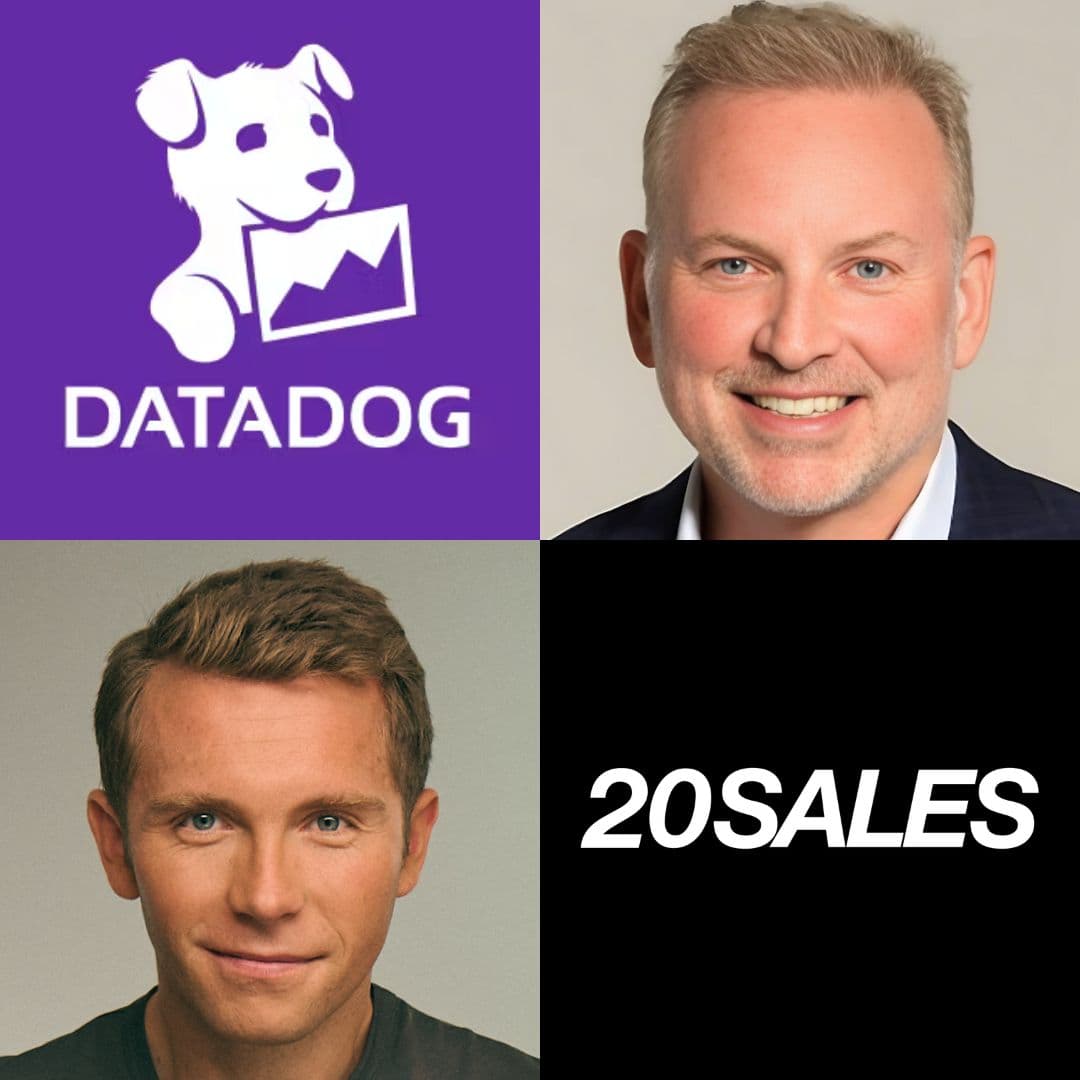
- Title: 20Sales: What I Learned Scaling Datadog from $60M to $1BN in ARR
- Guest: Dan Fougere, former Chief Revenue Officer at Datadog
- Host: Harry Stebbings
Overview In this episode, Dan Fougere shares invaluable insights from his experience as the Chief Revenue Officer at Datadog, where he played a pivotal role in scaling revenues from $60 million to $1 billion in annual recurring revenue (ARR). Through engaging conversation, he discusses lessons learned, effective sales strategies, and the importance of building a strong sales culture.
Key Topics Covered
- Lessons Scaling Sales to $1BN in ARR at Datadog
- What Could Have Been Done Differently:
- Dan reflects on missed opportunities during Datadog's scaling journey, emphasizing the importance of early decision-making.
- Initial Insights:
- Recognizes that understanding how to scale sales effectively could have eased challenges faced early in the process.
- Toughest Scaling Stages:
- Identifies the most difficult phases in scaling the sales division, providing context on overcoming these obstacles.
- Hiring the Best Sales Team
- Identifying Top Sales Candidates:
- Dan outlines key signals to look for when evaluating potential hires, such as their past successes and personal characteristics.
- Structured Interview Process:
- Discusses how he organizes interviews and uses practical tasks to assess candidates' capabilities.
- Common Hiring Mistakes:
- Shares lessons learned from hiring mistakes and emphasizes the need for careful evaluation of potential hires.
- Discounting, Logos, and Deal Reviews
- Approach to Discounting:
- Dan argues that while discounting isn't inherently wrong, it should be controlled and strategically managed.
- Importance of Logos:
- Discusses the significance of brand reputation in early stages versus immediate revenue.
- Deal Review Structures:
- Emphasizes the importance of structured deal reviews and how to differentiate between good and great sales processes.
- Outbound Sales in 2024:
- Offers advice to founders on the relevance and effectiveness of outbound sales strategies in the evolving landscape.
Insights and Reflections
- Sales Culture:
- Dan advocates for creating a legendary sales culture where team members feel valued and empowered to succeed.
- Customer Understanding:
- Stresses the importance of understanding customers' pain points and tailoring the sales approach accordingly.
- Leadership and Accountability:
- Asserts that sales leaders should be present and engaged in every step of the sales process to motivate and support their teams.
Conclusion The episode concludes with Dan's reflections on personal growth through his career challenges and the importance of resilience and adaptability in sales leadership. He emphasizes that success comes from a combination of strategic hiring, structured processes, and a strong understanding of customer needs.
Additional Information For those interested in learning more about Dan Fougere or exploring further episodes of The Twenty Minute VC, visit [20VC.com](http://www.20vc.com).
Written by AI. May contain mistakes. Listen to the episode to check what was said.
Transcript
Automatic transcript. May contain errors.0:00We will have a legendary sales team making life changing money, being best in class and having fun. You will learn more and become better at your job during your time working on my team than you would have at any other team during that same amount of time. And you will never have to look for a job again because the halo of our success will be over your head for the rest of your career and people will seek you out. That was my first day. I said that to everybody on the team. I mean, what a stirring speech. That is the speech that Datedog's chief revenue officer Dan Fuzier gave to the sales team on his first day.
0:33That same sales team scaled revenues with Datedog from 60 million to a billion in Aeroar. Dan was at the forefront for that incredible journey. This is one of the best 20 sales episodes we've done. Really diving deep into granular lessons in scaling Datedog to a billion in Aeroar. If that wasn't enough, Dan is also a minority owner of the New York Yankees. This was so much fun to do. But before we dive into the show today, my sales enablement platform is a waste of money. Ever thought that? Well, you're not alone. Most revenue leaders feel this way watching their sales team struggle to keep up with market, product, and competitive changes.
1:10Raps burn hours each day, searching, digging, slacking, desperately trying to get the answers they need out of their clunky tech stack. Well, that's why Speckett's AI powered enablement platform was purpose -built to cut through the noise and meet wraps in their moment of need. Specket uses AI to recommend the exact content your wraps need to close deals in any tool, like Gong, Salesforce or Outlook. It's that easy. If you're ready to give your wraps a personalized enablement assistant at their fingertips, take five minutes and discover why leading investors like Kraft and Felicis are backing Specket as the platform revolutionising sales enablement, see for yourself at specket .com forward slash 2 .0 VC.
1:50You have now arrived at your destination. Dan, I am so excited for this dude. I've wanted to make this one happen for a while. I am in awe of the data, don't you, any annual role in it. So thank you so much for joining me today. Man, I'm so happy to be here. Long time, listen to her first time caller. I have enjoyed your podcast for years and I'm fired up for today. That's very, very kind of you. But I just put to call us at Harness beforehand. And he said that I had to start with the mechanical engineering part. He said, why did you make the move from engineering to sales. Well, I ended up doing mechanical engineering, just engineering in general, because I didn't have a lot of money growing up.
2:29I read a magazine in 1987 called US News and World Report. The five to our seven top earning degrees all were engineering, and I was like, I don't know any engineers. I grew up in New York City, and my dad was a cop. We were living in the country at the time, very real place. I seemed pretty good at math and science, and I got into it. I love technology. I always admired Steve Jobs and Bill Gates and those guys were kind of heroes from my childhood. And I got a design job in Detroit using CAD CAM software. And so I got pretty good at it. I wanted to go work for the company. It was turned out to be this company parametric technology corporation or PTC.
3:07I went there for the technology, not realizing that they kind of possibly were the greatest sales team that's ever been put together. So this qualification methodology, metac that everybody uses, that was invented there while I was there. The company was doing about 200 million a year, so they still had the DNA of a startup. And so I talked with them about just how they built an amazing qualification machine, pipeline generation machine, sales process machine, and I just happened into that as an engineer. I have to just dive in, talk on schedule. How do you build a really, really good qualification machine?
3:42You got to expect that bullshit is there. You have to realize that human nature is such that you want to have the rose colored glasses on. You want to believe the deal is good and you need to know that the opposite is probably true. You've got to look for the dirt and you've got to build that into every time you're looking at a deal. You should be thinking about it. Now, Medic is a nice way to have a structure, a framework for this. First is some meandering conversation that may or may not get to the answer, right? So your metrics, your economic buyer, decision process, decision criteria, identified pain, champion competition.
4:21That's the way I look at medic. And so in that way, I can have a conversation in possibly even 15 minutes, but Max, 30 minutes, and I'm going to be able to qualify this deal. We're going to be able to look for the weaknesses and strengths. What questions do you ask to qualify the deal? Are there some standard ones which will get you to a conclusion most substantively than others. You know, with the three wives and medic, or why should they do anything? Why should it be day to dog or whatever? And why should it be now? And so asking those questions, and you know, that's the thing about sales, it's not quantum physics.
4:54But we talked about discipline before. We talked about repeatability, and that's a big part of this. It's just always doing the right thing even when there's so many excuses to not do it. And the same thing with asking the questions, same thing with medic. What metrics do we have that build some kind of business case, even if it's a back of the napkin kind of thing? Why should they do it from a metrics perspective? Do we have any metrics from previous customers that we can use to tell a story there? Economic buyer. Do we know who the economic buyer is? What I know from experience is it's probably a one or two levels above whatever you think it is, whoever you think it is.
5:31So when the salesperson is engaged in the deal, they're going to think that the person who's the technical user, that's probably their, they're thinking that's their champion. That person's boss, who's really should be the target champion, that's who they think is the economic buyer. Because it's just too hard to realize that the person who's going to sign is actually multiple levels above where you've even engaged. How do we build a relationship with that buyer who's multiple levels up from the technical user without being patronizing to that technical user? In an ideal world, you're going to earn your way up, right?
6:05And so there's two different ways. And so the fact that I was at medallia and data dog back to back are two extremes. So at Data Dog, we started with hands -on keyboards, the practitioner, the person who's actually implementing the cloud. It was crazy, man, because everything that we were told, everything that I was ever taught and I taught, come in high, get to power early. The reality is, so at Data Dog, omit, you've had omit, Agrawalon, right? No, I'm see. I'm it and I went on a series of dinners with Char Dual Shaw in early 2017 and we were and it was all CIOs and CTOs and we were so excited and we went to fancy restaurants and Nobody cared about cloud monitoring nobody everybody had just done big deals with App Dynamics and Splunk and Diner Trace and New Relic and they and they said we already have the cloud handled We just did a deal with AWS, so they didn't want to talk to us at all.
7:04I couldn't get them interested. I couldn't get them interested. Sure, dual couldn't get them interested. That's a lot of firepower. It was almost like the nature of the market cycle was such that we had to focus on the people who were actually tasked with implementing the cloud successfully. And so we were selling to the people who were implementing. And the fact that data dog actually worked, they could implement it, it told them things that nothing else could tell them, then we built a ground swell from there. Even we got to leave your ego at the door and realize we're not talking to CIOs and CTOs.
7:40To answer your question, we didn't talk to them for a while. And so now at medallia, what we realized, we had to invent how to sell medallia. That was before data dog, people might not know about it. It was a $5 billion exit, which is pretty good back in the day when those were big exits before data dogs and snowflake and companies like that. But we realized that we need them to change the way they're doing business. So we could only sell that product to the biggest companies in the world. We had the prospect, forget about CTO, CIO. I did first meetings with CEOs, CEOs, CEO minus one at companies like Verizon and ToysRUs and you name it big companies, Capital One, Marriott, because we needed to convince them that they needed to change the way they're doing business.
8:27So two different answers to your question. One, at Medallion, we had to put together a value prop in a pitch that spoke to the people actually running the company. And a data dog, we had to earn our way up over time and just recognize we weren't gonna have the conversation with the CTO maybe for a year or two until it became a bigger problem. Going back to the structure, in terms of intellectual honesty with ourselves, you said about why now? Why do they buy it now? Why do they benefit from it now? It's hard to say that you have to have data doc right now, otherwise you're screwed. Next quarter will be devastating.
9:06Everything can be kind of next quarter. How do you think about urgency? Well, brilliant question, because that's where the action happens. That's where. So, So to me, magical moments happen in sales, right? And so a magical moment is, I call you and you're like, I hate sales people. I don't want to talk to you. And all of a sudden, you're like, hmm, this is interesting. I'm glad this guy called. I'm learning. I'm thinking, okay, that's a magical moment from a cold call in a meeting when somebody has their arms crossed and like looking at their phone. And then they're like, wait a second, this is, maybe I should get my boss in this meeting.
9:43That's a magical moment. and another magical moment is, holy shit, we need this right now. And so, for example, we were working on a deal at Capital One. They were the first, this is early 2017. So early 2017, I started Data Dog. We've got a very good business that the boys created before I got there, and that was small deals, credit card deals, month to month, minimal human interaction, mostly almost entirely software startups who were born in the cloud. So one of the things I talk about is, don't f up what's already there and go build what isn't. Right? And so I needed to build the enterprise, I needed to build channel, international, et cetera.
10:25And so the enterprise, there were really, in early 2017, this might be surprising to some people, is there really weren't any production applications in the cloud for the enterprise. Capital One, their CIO just made a big statement that he's going all cloud. And this is when people thought you couldn't do it because of security and everything, we saw that one person bought $600 worth of data dock, like $600 ARR. And here's another reason to work in the office, by the way. I was in the cafeteria getting some food that I was about to eat at my desk and keep working just like we all did. And I saw a couple sales engineers working hard.
11:04And I was like, hey guys, what are you working on? Oh, we're working on Capital One. I was like, oh wow, how much did they, they're a customer? Yeah, how much do they have? $600 is like, what's that? Two servers or something? And then I was like, well, why are you guys working on a $600 deal? And they're like, well, they have, they've just bought 20 ,000 servers for AWS or something like that, 13 ,000. And I was like, okay, I'd like to work with you on that. So we start working on it. They're actually on the verge of rolling out their first production application. They need to get all the metrics set up.
11:34And they tried it with this other product called SignalFX. They tried it with AppDynamics. They had a Linux update happen and this is just us being like talking about being hands on I'm not sitting at my desk. I'm not managing from from afar. I'm there with the guys We're slacking like on a Sunday night the engineer says hey guys His dashboard has just went down with the other products and he's got data dog working They're gonna release tomorrow with data dog for their for their QA So it's like, okay, boom, we got it. We go to DC the next morning and meet with those guys. We've righted all up, take screenshots, and now we are presenting it.
12:15So now to get back to your question, how do we earn our way up? That's how you earn your way up. Like, you're intimate with the business, you're figuring out what are their problems, and we're making sure the product's working, and when it does, we are singing it from the mountaintops. And so we're working our way up. So we kept working our way up to the next person, in the next person until we got a meeting, which I think may have been. Olivia can tell you if it's true or not, but I think it was the first time he met certainly with an enterprise customer. And all of a sudden, that was our first enterprise deal.
12:44And it was for $1 .4 million. And we had never had a deal like that before. And that was about six months in. I do just want to go back to the structure and the framework then, just be like, if you're honest, most sales reps are like screaming for pipeline, screaming for anyone to be a potential buy it today, if we're honest. If we're really cynical and take a very granular view to qualification, to look to weed people out, Dan, I'm going to have fucking no one and I'm going to go to my sales leader and my pipes going to be pretty empty. So a mistake I've seen, so I'm working with a few companies over the past couple of years.
13:21They're trying to qualify in the beginning and you need to light them up with excitement. You need to get them on the hook by getting them as excited about what you have as you are. And so there's going to be some balance in the beginning of, you think you're barking up the right tree at the very least because, hey, it's capital one. They buy a lot of stuff. And so when you reach out to the person, you talk, we're talking outbound, right? And so to be able to, also I saw your video on YouTube, I saw what you wrote on Twitter. Like to me, you need to differentiate yourself by the way you show up.
13:56And the way you show up is gonna be, I've done research, I am coming in with value. I'm not coming in saying, we're a cloud monitoring product. We're based in New York City. We have 500 employees. Ah, don't do it. Don't even waste your time. But, saw on Twitter, you're implementing Redis. Our other customer just implemented Redis. Here's the video. Here's his link on GitHub. We'd love to see if this is interesting to you, to see if we can help you guys have the similar success. That's step one something like that next two days later. Hope you enjoyed that link about redis also saw You're trying implement Kafka or Kubernetes.
14:30We've implemented Kubernetes ourselves Here's a link with some of the dashboards our own people are using Okay, do I have your attention like I'm not some knucklehead just trying to like make some money I'm trying to help you and I have done research and I've learned about you This is some of the techniques that we use do you think out balance still has a place in 2024? We are I'm getting inundated by emails now and AI will make that worse. Do you think outbound still has a place? The same conversation has been happening my entire career and so my answer is yes You just need to get better and find a way to become the signal amongst the noise Should A's do their own outbound or should we fully give to STOs?
15:11I call a pipeline generation PG and so asking somebody else to do PG for you is like asking them to go to the gym for you I don't think it creates the right culture to think that this is something that can be outsourced. PG is everybody's job. And so whether you're a sales leader, AE, SDR, we're all constantly trying to get... We are in the deal creation business. And when I say, I said to you in my sent you an email that sales leaders should run to the front of the sales process, and I can guarantee almost every time I've talked to a company for the first time, I don't want to lead the witness.
15:48So I don't want to say, hey, what are you focused on? Pipeline generation? Because their answer will be, yes, of course. More, I'm going to say, what'd you do this week? What meetings did you go on? What'd you do on Monday, Tuesday, Wednesday? What meetings? Who with companies? Where stage in the sales process? I can start to see, are they out in the field? Most of them, if they are doing any customer meetings, are in closing mode. They're trying to be the closer. And if you don't have enough pipeline, and you have a really high close rate, you're not going to hit your number. But if you have a ton of pipeline, and even if you have a lower close rate, you're gonna hit your number, and probably a bunch of those deals are just gonna close next quarter anyway.
16:29Okay, so I'm gonna pit you against your mate, Dagnan. Dagnan said on the show to me, hey, if you have more than, I think it was eight meetings a week, it may have been five, five or eight. You're not gonna be doing well. You need to do qualified research. it needs to be really well -informed. So if you're doing more than eight, you're not going to show up well. Agree or disagree, and how do you think about that pipe versus quality? I think he's got, he has a good point. I think it depends on the stage of the company, but generally speaking, I would agree with him that quality, you don't want to sacrifice quality for quality.
17:05So the other thing I'd say about instrumenting the business, and you sent me something about operational. And so when you think about being a sales leader, you've got kind of two sides, right? One side is the inspirational sales leader you can get everybody fired up who can commit to customer to win or to do the deal. And then the other side is the metrics -based data driven. Let's instrument the business the right way. And so part of instrumenting the business, too, is to distill down to the minimum number of metrics that you need to run the business. Because I don't want the salespeople spending all day in Salesforce.
17:35I want to know just a few things. So the number of meetings that I tracked to go to the number of meetings topic was always number of new business meetings and number of opportunities added to the forecast. So I was not ever really managing the number of meetings per week. I want to know, did you add a qualified opportunity to the forecast this week and did you have new business meetings which were basically discovery meetings and demos. Like a data dog when I left, it was one of each of those a new pipeline opportunity that's got a specific definition and a new business meeting for enterprise and two for SMB.
18:13And if I had those, I guarantee you you're going to make your number this year and you're going to make more money than you ever made before and you're probably going to get promoted. Those were the only number of meetings I managed to. My challenge is in a world of PLG and just in a world of kind of try before you buy and more individual advocates, what started small can become very big as you saw with capital one, but it's very easy to do what you said, which is 600 bucks, who cares? And so how do you think about not diminishing importance from accounts because of their small entry point and giving justified weight on what they can be?
18:52Oh man, such a good question. That's why you're so good at this. It would get a relaxed vibe going. So people wearing hats, sitting on characters. So when we started the enterprise at DataDog in early 2017, as I mentioned, there were no big deals to be had. We were lucky that we were able to pull off that capital one deal, a little bit of great execution and a little bit of luck. Those deals were not around to other companies because capital one was such a leader going to the cloud. I had to convince the enterprise people, as long as it's a real project solving a real problem, we kind of don't care how small the deal is.
19:29Our hypothesis was that this cloud thing was going to take off, And when it takes off, whoever's in the stack is just gonna scale with their applications, which is kinda like to me what I saw this snowflake. This is real time, so we didn't see this yet. This is 2017. My idea was just get in there and be part of it. And if it was like a generally speaking, probably minimum for the enterprise is $10 ,000 ARR. Because then you got enough servers to... There's some heft to it and it happened all the time. But in the beginning, it was a leap of faith. because their quota was over a million dollars.
20:06And so they were like, Dan, how are we gonna make any money here when we're doing all these small deals and just like, hey, have faith that it's gonna grow, it's gonna grow. Once it actually took off, then we didn't need to convince anybody, but there's that period of time when you're transforming an organization before you have enough victories to prove your idea that you have to keep everybody in the boat. And I say that you need to be in the boat with them. Partly because you're making it happen, partly because they need to see that you're with them. Like, we're taking this ill and I'm with you.
20:37I'm carrying the flag up front. And also so you can gain the pieces of feedback that you will need to iterate. Like, maybe some of the things are not working. Like, for example, the demo in the beginning was just walk people through the features. We had to tell a story. I had to, like, it was a little extra hard because the SDs at that time did not report to me. But still, it's like, guys, We need to tell a story, we need to show something more compelling. So little things like change the demo, etc. And then they could see we're getting better anyway. What are your biggest lessons on how to do a sales demo well?
21:14And where do most people fuck up? Well, make sure that you do the discovery ahead of time. Understand their pains. Think about it in terms like put yourself in the shoes of the customer. And it's not about features. And it's not about show up and throw up. and you want to be able to say, hey, Joe told me that he's trying to make decisions, but doesn't have the right information and that led to application downtime. So we're going to show you an example of how you can do that in your environment. You told me you have a Unix machine, here's a Unix machine, so they can start to see themselves. It's like telling a story.
21:49It's like if you're reading, I started reading the great Gatsby. But if you are going to identify with the protagonist in the story, then the author has you and it's the same thing with the demo. I need to see myself in this story and I can see how my life gets better. I can see how I get better at my job. I can see how I get home to my family earlier. I get promoted. I get kudos for my boss. Things like that. You said about show up and throw up. Didn't sound great. Any like glaring. Oh God. So many wraps do this. that they shouldn't do. So John Kaplan is a great sales trainer and leader. He says, you don't come in with your hair on fire and the product manual in your hand, but that's what a lot of people do.
22:32If you don't know how to sell, then you're going to think, I'm gonna show up and show you all the features. Look, we can do this, look, we can do that, look, we can do this. And then back in the day, they would call it taking a plate full spaghetti thrown at it at the wall and see what sticks. And it's just like, I'm gonna keep saying things to you that we can do until you say, oh, that's cool. That's a terrible way to sell. And you're just wasting time. And really, in the end, what are we talking about? We're talking about maximizing the valuation of companies. And so when I think about what my purpose is, always, the money is in the equity.
23:05You can have a good commission check, but really when it comes down to it, the money is in the equity. And whether it's your first one or your second one, I've done five startups, four of them had good outcomes. and each time I got more and more of my compensation from the value that I created in the company. And so all of these, if you think about that movie, any given Sunday with Al Pacino, is like it's a game of inches, right? And if you can get a little bit here and a little bit there, all of a sudden it adds up to a lot and all of a sudden you're winning. My first thought to you here is like, when we're in that sales demo, I had David Schneider on the show.
23:41Now I've heard too. I listened to it, he's phenomenal. And he said there are three reasons why people buy software, one to save money, one to make money, and the third reason to keep them out of prison. Do you agree with that when you hear that? Dave is talking there about more probably corporate motivations, and so, and those are important, but they're also abstracted away from the motivations of the people you're actually selling to. And so, the ones that are going to cause those magical moments probably are more about personal motivations, right? which is holy shit, I'm not gonna get my bonus unless I can show that we are compliant with SOC standards for security by December 15th and you should know that as a salesperson.
24:24You should be familiar enough and this is another reason to get out of your office and get off Zoom and go to the customers building and hang out with them and spend time because a 58 -minute meeting on Zoom where everybody else is paying attention, people are not sharing some things that maybe they're gonna share when you're just hanging out. Happen to be here at TGi Fridays after the meeting, all right, at Starbucks or whatever it is. That's why I say old school is the new school and it's the good school because the things that worked for the fuller brush salesman or IBM or Wang, it'll always work because humans don't change.
Read the full transcript
25:02And so the technology has changed. You have some PLG, you got Zoom, great, use it but don't use it at the expense of the connecting with people and becoming more intimately familiar with the personal drivers of the people you're selling to. You mentioned also like, hey, we're very happy going in taking a small contract because we believe in X and we believe in the expansion and we let them expand. Dude, Dagnan says, customer success, ala Pubell, which means to the trash. Do you agree? So such a controversial topic. Listen, CS, is it technical support? Is it a less well -trained, less well -paid sales team?
25:43What are you actually really trying to do here? And I think based on the product, there might be different explanations. At DataDog, there was something brilliant there where I don't know if you've talked about this with anybody, but so we focused our, as the commercial team, which really focused on startups. So we would get them focused only on new logos. And I'd say this is true about enterprise, and I'd say this is true about Medallia, and this is one of the things I feel very proud of, is that my team is once we got going, we will get a meeting with somebody who could influence a deal in 30 to 45 days in any company, a real meeting.
26:17And part of that is you have to be focused and you can't be distracted by, because human nature is such that you're going to seek pleasure and avoid pain. And you're gonna avoid the hard work. That's why we were talking about going to the gym, but most people don't do it because it's hard, even though it's so good for you. And so the same thing with Outbound and Pipeline Generation and breaking into new accounts. And so we gave them when they broke into a new account, whether it was inbound or Outbound, it doesn't matter. They had four months to sell more products, to take advantage of some of the growth that they might have because of a consumption model.
26:51And then after that point, it was passed over to customer success. And now in a one -product world, that was great. We originally had one product. And so now some of those really small accounts had weird names Airbnb or a Zendesk that nobody ever heard of until everybody heard of them. And so the CAC was incredible. The growth was non -commissioned because the S -to -9 -2 commission, right? That's pretty incredible. Now if you look at a multi -product world where you then have to go back and sell multiple products or once things started to get competitive, then you want to have somebody who's got more of more sales capabilities.
27:29The answer is I think you got to have to design it based for your company based on what you're trying to accomplish. Listen, that model that I described, data dog is worth what, $36, $40 billion. You can't question anything that's done. It was a phenomenal success, but could that work in every company? I'm not so sure, right? Would I personally replicate all of it? Some of it for sure, because some of it was fantastic. How do you think CS should be comes? Well, it depends on what they're doing. And because the other thing is for the enterprise, so we had CS for enterprise, when you have a cloud -based startup, they have cloud ninjas.
28:06Now, more people are cloud ninjas today than seven years ago. When we went into some of the enterprise companies, the cloud skills were not as predominant. And so they needed more help. And you're working your way through bureaucracy, you're working your way through people that have older sets of skills. And so what we needed there was not somebody to like clip the coupons every year. It's for the renewal like, hey, you're using more. Should you, you should commit to more. It was how do you actually implement this stuff? Even though we designed the product so that you wouldn't need implementation services, once we broke past the early adopters of the cloud and we started to work on that with the legacy folks, then we needed more help.
28:47So for enterprise CS, it was more about kind of like implementation and support for commercials, yes, it was kind of like a sales kind of capacity. So I think you got to figure that out from your model too. And so you think about how much are we paying if you're early stage, just let's get people to buy this stuff. We are trying to figure out our product market fit, we're trying to figure out how to have a sales process of repeatable all that stuff. And you're going to iterate and figure out are we paying too much here, we're paying too too much there. You're probably not paying too much for new logos, new business units, new products, breaking into new segments like enterprise.
29:28I think you have opportunities on the back end to see the revenue that's coming in that maybe is going to come in no matter who's sitting at the keyboard. You might have opportunities to really get efficient there. You mentioned repeatable sales that and knowing when you have it. I'm getting into like a really cool problem for a lot of people, but I just want to first define what is a sales play but mean to you in an ideal world. I can take somebody from the outside take them to new hire training and like when we were doing new hire training, my last two companies when I was running all that in the new hire training, we would get outbound meetings.
30:06Your first days we are cold calling. I have it all documented that these are the personas, these are the challenges they have. This is some of the terminology you need. These These are the things you can say. Here's how you handle objections. Right, so that's like front end of the playbook. Now, discovery call, right, format for discovery call. Questions to ask, how to manage it to be pithy and concise, 30 minutes. Are we barking up the right tree? Do they agree to move towards our next steps of having a demo with the right people in the room? Demo. So chronologically, working through every step, and in the beginning, if you are a new CRO and you're like, oh, I don't know all this stuff.
30:47You can have a, it's a generally repeatable framework, right? Where you're going to say, I'm going to identify my ideal target customer, ICP, people call it these days, my outbound, calling, emailing, LinkedIn, get up, whatever. And now I'm going to discovery how I do that, demo, how do we show in the demo? What are our desired outcomes? What are our exit criteria for each of those? If they say, yes, we think this is the right product for us, yes, we would like to move to some sort of validation. then you can leave, yes, I will commit to getting you to, you know, a meeting with the economic buyer, something along those lines.
31:24Then I have exocretariat to go to the next phase of validation. And this sounds like quite a lot, if I'm honest. So when I hear you talk about this, I then go back to the statement that I'm often told, which is, founders should be the one to create the sales playbook. And I'm thinking, gosh, I don't know many founders that could create that pithy qualification 30 minute cool criteria as well as you just did that. I didn't think many founders can create the sales demo templates for different verticals. Should the founder be the one to create a sales playbook? I've never seen it. To me, with all these kind of, should this be the case, should that be the case?
32:00Like, okay, like, somebody might have an academic idea to show me how it's actually been done. I would say a data dog, I'm it probably did it. He, I know he did, right? He did it before I got there. But it wasn't like what I just described. It was more, there's some marketing that they see that talks about implementing the cloud. There's a link, you link to the demo, you get an online one week demo, you put your credit card in, somebody calls you to do the deal, now you have data on it, right? Something like that. And that's a great way to get started. But you're not going to scale to billions of dollars of revenue, at least in my experience with that.
32:36like you're going to need more of what I just described. And every place I've ever been, that's been the sales leader doing that. So it's the sales leader who does that great. When I had Chad Peetz on the show who was fantastic, by the way, God, this guy does not hold back. One of the best recruiters of all time. He said that you have to hire a CRO pre -product. He said that Fundament to provide context, fundamentally founders are often very product engineering centric and they can't do customer discovery, qualification, feedback in the way that you need to and so you need to see our pre -product.
33:13Agree or disagree? I wonder if you could even say Snowflake was an example because Kristaegna is not Kristaegna nine years ago or eight years ago. At the time when he joined, if I recall, he was more of like a first line leader, second line leader, super talented, a lot of headroom, but Dan Fuzier 2016's not going to a pre -revenue company. I went to Datadog. Carlos goes to MongoDB to build that sales organization. I'm for contact. Datadog was 60 million in a row in the show. 60 million when I went there. At that point in my career, when I'm like a legit CRO candidate, I had done most of the things that Medallia, I hadn't been the CRO, but I did a lot and I was ready for the job.
33:56And a 60 million dollar your company doubling year over year, That's where I'm going. If you can go to a, if you're good enough to go to a company that's 60 millionaire or 100 % year over your growth, why would you go to a company that has zero revenue growth? I don't understand it myself. It's an interesting thing to try. I think having a salesperson there. Which Jason Amkin says you'll never get a great sales leader willing to do it twice because it's so frickin hard in the early days. You'll get a down Fujiara's start of your career. will take that early sales role in leadership or not, because it's nothing's due, you don't have that much choice, and it's two million in there or whatever.
34:34But you're not gonna go back to a two million error or once you've taken it to a hundred. To me, there's two different splices off of this question. One is, would you go back to a smaller revenue company? And I did. Like, I was at Medallia, which was at the time, 300 million a year, and I went to date it out for 60 million a year. Turns out to be a good choice. And I went back in revenue. The other question is, After you do this, would I go and do the CRO job again? And the answer is no because I don't have to because it's super hard. Scott Davis calls it chew and glass. Like would you chew glass if you didn't have to and the answer is no?
35:08The way I look at it, generally speaking, if you're doing the job right, it's probably the second hardest job in the company after the CEO. It's the most quantifiable as far as performance. Your listed OKRs are not necessarily thrown up in front of the board and if you miss them, they're thinking about firing you as much as if you miss your sales targets, they're all thinking, do we have the right guy? You're thinking about that every day, every moment, and so much could go wrong, right? There's so much pressure. Does it get easier with time? When you're like five years in the road and you are a little sales -eater and you're all these right -hand, you're like, I'm not even fucking flies.
35:45Yes, and so here's again, the answers are all in the context of growth phase, really, Because could I go to another company where the hard work spent done and be the exec and Clips and coupons? Sure, but if you're talking about hey, there's no enterprise sales There's no messaging. There's no forecast like when I went to data dog I asked hey, what's our forecast for the month and the sales leader said I don't know we had to build all that Doing all that again sounds too difficult, right? if you don't have to do it. And so if you haven't had the big hit and you still have to do it, then you keep doing it.
36:22Can I be blunt, Dan? You came from very humble beginnings. You mentioned your father there and kind of growing up in the countryside earlier. It's money what you thought it would be. Great question. So even though I had, I was part of four IPOs, there's last two, which were the life -changing ones. You kind of like you have like car changing, kitchen changing, house changing, and then there's life changing. It took me, both Medellin and Data Dog happened in 2019. And then you got a six month lockup, and then I was an executive officer at Data Dog, so that was on an automated selling. Like, you can't just say, I want to sell all this stock, because then it gets published.
36:59There's a problem. You create a spreadsheet, and the bankers just automatically sell. So I didn't have all of it until, like, 2021. And so, at that point, I was 50 years old. Not only was my dad a cop, but for a lot of my time, both my parents were unemployed. I had a lot of debt. Every time I use my credit card now, I still expect it to be declined every time, because I just had such a long period of time where I defaulted on my credit cards and everything. It took me until I was 50 years old to make that money. Thank God. Because I was fully formed, I would say. And I could see how making a ton of money can distort reality for people.
37:38I'm patting that. How does it distort reality for people? Well, when it comes in a way like it did for me, it's all public and most of it's public information. Anything I sold while I was CRO of DataDog is all public information. And so it's almost like a super massive object distorting space time. And so you are idea of like what's a lot of money. I don't know. Well, if you just made, if yesterday you made $67 million, like, and just if that much money went into your bank account yesterday, then in that period of time, you're like, I don't know. I used to know what a lot of money is. And there's a little bit of that during that period of time.
38:18What I've found is afterwards, you're decaying sign, so I get back to steady state. And now it's like, okay, I'm back to reality. But during that period of time, it's like a black hole. $67 million. That's a lot of dollars. That's crazy. I know. Okay, so the point being then, does it make you happy? I think some of the changes in your life certainly relieve previous stresses. What's the biggest ones? So even at my time at Medallia, so when I went to Medallia, I was at BMC before. All of a sudden I went back to a startup from the cushy confines of the big company and I was making less than half as much for an annual salary.
39:01As I mentioned, I got three babies. I just had bought a house that was twice as expensive. I thought we were going public in two years. Sequoia backed company, you know, a great board. Four years in, I had been eating into my savings. I ended up paying a bill with a HELOC check. So I paid a bill with a low, basically a loan against my house. I'm like at a breaking point. And this is, and this is where it's like your expectations on, and this is also gets into a conversation about letting your employees get liquid and doing secondaries, which was not happening there. So, very stressful. And also, like I said, I told you about, we had the cold call into COO CEOs, not even IT, like the people running big companies.
39:45And these are big chunky deals. It's not like you're getting like 100 deals this quarter. We're getting like 20. So, it's a very stressful time, which is kind of goes back to why would you do it again if you didn't have to. At least that period of time, that growth period, especially for a company like that, where you don't have the PLG and you don't have the wind at your back, you know, and you're making the wind. Yeah, sorry, it's too interesting. Forgive me for it. Yeah. You said 67 from Datadog. What was medallia? Well, Datadog was a lot more than that, but a medallia... I was a potato dog.
40:17Well, it's all public information. So generally speaking, a CRO is going to have like 1%, so something like that. A medallia was not in that category, but it was still life -changing. and still was like normal crazy money. I do want to touch on an element though, which is important because we have so many PLG founders that listen. And you said something great before, which is PLG is great, but PLG with a world -class sales org is better. I read that and I was like, great. But when should you layer on the world -class sales org to the PLG? And how do you advise founders on that? Maybe one way to answer it, and I'll answer it on other ways as well.
40:57is as the founder, if there's that voice in your head or that feeling in your stomach where you're like, hmm, I wish I had a better salesperson right now. I wish I could break into the enterprise. I wish I could go up market. I wish I could do three -year contracts instead of month to month. I wish I could do bigger deals. I wish I could sell multiple products instead of one product. Whatever it is, that voice went off in your head. It's probably time and it probably was time before that because the other thing I was thinking about, Like if you're running a race, like you're a runner. And so if you're running a marathon and you don't hydrate until you are thirsty, it is too late because you are dehydrated.
41:35And it's gonna take a long time for yourselves to be able to get that water. And by that time might be too late. I think a general feeling that yes, the product and the product like growth motion is super important, of course it is. And I'm going to also build another channel of revenue generation through excellent sales, just like I have excellent product. Like when I went to a data dog, people didn't want to go there. Like recruiting was so hard. And part of it was a reputation that it was an engineering company, they didn't respect salespeople. And some of it was true, right? I mean, that's why I wanted to go there.
42:14Because I thought I can make a great sales culture, but I can't make a great product in engineering culture. So I'm gonna go to a product in engineering culture, and I will build a great sales culture because those two things together will be more powerful than two plus two equals five, right? And that was the hypothesis and that's what worked out to be true. How do you make a great sales culture? I think you've got to have the vision and the vision is that we will be great. That this is going to be what I said at, I put a mission statement up that I stole from one of my mentors at Medallion. I used, I iterated a little bit at DataDog that we will have a legendary sales team that will be known for making great money, making life -changing money, being best in class and having fun.
43:00And that we will learn more, you will learn more and become better at your job during your time working on my team than you would have at any other team during that same amount of time. You will make life -changing money and you will never have to look for a job again because the halo of our success will be over your head for the rest of your career and people will seek you out. That was my first day. I said that to everybody on the team. I also said we will do $120 million next year, and we will do 240 the year after that, and we will have the most successful IPO in history in New York. I also said that all in the first week or so.
43:35I got in trouble. Do you actually believe that at the time, or is it a bit of self -inflation just to inspire the team? I wouldn't have said it if I didn't believe it, but of course that was also any time you put yourself out there. Like the first time you told people you're going to run a marathon. You're like, am I really gonna run a marathon? That's that, but I just told people so now I have to do it. There's a little bit of like burn the ships. I'm putting a stake in the ground. We are doing this and I'm telling the whole world and I'm gonna commit everything in my life to making this happen.
44:03One of the most common ways sales culture is suck. You've seen a lot of internal companies. You'll let underperformers stick around. You don't have a vision for greatness like I just described. You don't hold people accountable for performance. The leader is not in the boat with them. The leader yells at the scoreboard at the end of the quarter or end of the week. How come you didn't get more meetings? How come you didn't do this? You should have been in it with them. It shouldn't be a surprise at all. And you should know that because you were on the calls. You were in the meetings. Taking them one by one under performers, how long does it take to know whether someone is a mess hire?
44:38And how long do you give them? Human nature is to give them too long. The saying is like fire, fire, fire, fire, fast. It's hard though. That's why being an advisor or a board member is so valuable. It gives me the ability to give better advice because I don't have the pressure on me. To hit the headcount targets. Every board meeting, when you're in hyper growth mode, going from 100 sales people to 200 sales people in six months or whatever, it's so hard. You've got to hire all over the world. You've got to try to have quality control. but if I pull back and say there's the same thing. Like your instinct, your gut tells you, oh, I think I have the wrong hire here.
45:18At the very least, now you need a process to see for sure, can this person do it? You probably need, just from HR coverage perspective, you wanna have like a performance improvement plan documented. The minute someone's on a performance improvement plan, it's kind of a live event, right? I have seen some people pull out, but most people do not. If somebody is just like a train wreck disaster and you know it, just pull the trigger. If there's somebody that you can see that they have, if they only did these things differently, I generally want to give them a chance to do it. It's a short time frame.
45:50And I want to see, is there a leader showing them? Like we might have a bigger problem. If it's a rep, well maybe what's the leader doing? Does the leader have these skills? Is there a behavior I want to be scaled across the team? Can they tell them what to do, show them, give them feedback after they do it, and confirm that the person now does it has improved? So at least we have that process in place to see, I've given you guidance, I've showed you how to do it, I've given you feedback, can you iterate and improve? And if not, then there you have your answer. He said about holding people accountable to numbers.
46:24A lot of people are missing their numbers right now, Dan, and it's hot. How do you advise leaders and sales leaders to keep morale up when sales teams are getting pranks? They should be in it with the people, especially when times are hard. As a leader, when times are hard, you got to bring them up. When times are good, you got to bring them down. Don't get too high on yourself when things are good and don't feel too bad when things are going tough because that will affect your performance. You should get in it with them and see what is the problem. Do we have a product problem, a market problem, do we have a regional problem, or is it a person problem?
47:01And if you've gone through all of that, and you're just like, I don't know the answer yet, but I do know that it's not a person problem, I think there's probably a whole set of things to do. First of all, being with them in understanding where the pain is, it could be the deals are coming, but they're not coming soon enough. So if you have some financial pressure, There's some things that you can do to be able to alleviate some of that financial pressure temporarily Like discounting not like this county This counting should be these are two separate topics You know you could even like give some payment ahead of the deals closing something like that if they're doing all the right things And it's just like they're building a territory.
47:44They're building their pipeline. It's taken longer than you thought There's a variety of these scenarios, right? But the one scenario I would not necessarily say, if you've got, hey, we were growing at 100 % a year, now we're growing at 20 % a year, that's a whole different thing. And now we've got a bigger set of problems to deal with. This is not an individual person problem. This is a systemic issue that we need some like major surgery. And I've been in both of those scenarios. If you wanted to go down at discounting, you want to go discounting? Or you want to go down? Yeah, love to. Okay, I would as a general rule, limit, I want as tight a control around discounting as possible.
48:24I don't want the for a number of reasons, without the right leadership, and even sometimes with the right leadership, salespeople left to their own devices will peg at maximum discount 100 % of the time. That is not how we drive maximum valuation. That's not how we protect unit prices for a long term business. And if you're in a consumption business, If you are going to the lowest discount already, when they have the smallest amount of spend, when they have quadrupled 10x to their spend, they're gonna expect bigger discounts. It's always gonna be expected, right? So the more you can have discounting be controlled, higher up in the leadership chain, the better.
49:03And we were always trying, when I got to data dog for sure, I was working with product all the time on, how little can we discount? You get to a place where if you start losing deals, hopefully we never got to a place where we're losing deals We could tell that we were close to losing deals or the friction in the process was such that we knew we were at the limit And so okay, that's where the discount should be and we're gonna try to get better by selling better value By coming up with better with more products, but in the meantime, that's the limit and we're gonna hold it at like like CRO, CPO level, and that way we also have the right data.
49:43Because if you're leaving up to like a hundred different people who to decide what the discounting should be, that you have no standard to know the data is the same, because some people may be approaching in a vastly different way. So you shouldn't give independent authority to sales reps. So say, listen, down my customer, I know it's tight for you this quarter. Listen, we'll do a 10 % this quarter to make it a little bit easier for you, we really appreciate the partnership. I never have a problem talking about deals with the people on the team. So you can call me, slack me, text me, call me, basically 24 -7.
50:20I got to sleep, I got to eat, I got to work out. Besides that, I'm yours. We can talk about discounting on deals. Sometimes automating something is not the right thing. Making less friction in discounting, I would rather have the sales team resisting discounting to the customer instead of taking that same energy and effort and trying to jam me as the CRO for discounting. We've got to protect the value of the product. If it takes one more day to come back to them versus me knowing that at scale, we have just protected the unit price because everybody shares people talk and whether it's other sales reps talking about the discount they got, customers talking about it with other customers.
51:02I think you want to hold on to that thing and manage that and make it not a source of frictionless. Dan, does customer validation on logos really work? And what I mean by that is we have Dropbox and Uber and Facebook and Pinterest. And so everyone else goes, oh wow, they must be legit. Or does it not really work and everyone buys in isolation? You got to have it in your first conversations and first meetings, right? To have some credibility. You got to have it if you have it. If you have it and you don't tell people then you're leaving something on the table. The more that the skin of the onion gets peeled back, the more substance you're gonna have to have.
51:38You can't discount for customer testimonials. Now, I don't think so. People do it because you're delivering value for them and because you build relationships with them. And I wouldn't want to trade economics for non -economic support. When it comes to hiring, I think most founders actually really fuck up sales hiring. when you talk about lessons from hiring great sales reps. What are your biggest lessons that you know now about hiring reps that you wish you'd known when you started? First of all, I think when I started, it's almost like Moneyball. If you ever saw that movie or read that book, I mean, I love it.
52:14Right, and so back in the day, they were picking baseball players because they had a good jawline because the guy's wife was pretty mind -vuggling, but that's how they were scouts were picking baseball players. There used to be some of that in sales. what I would say is they come in all shapes and sizes. Also for each company, there's a little bit different. Like at Medallia, we needed somebody who could show up and have a meeting with a C -suite exec and didn't need to get into technical details because it was not a technical sale. It was a, hey, we envision a world where companies are loved by their customers and employees.
52:49My mom can get behind that. At DataDog, super technical sale. So I would ask people, I wanted to make sure they could handle the subject matter. So one thing I might ask is, I generally ask this all the time anyway. I'm gonna go backwards. I'm gonna wanna know your life journey. I wanna know your life trajectory. Where'd you grow up? What'd your parents do? What were you into in high school? What's the highest level math you ever took? I'm just getting a read because, for example, in the US, if you are reasonably good at math, you will have touched on calculus or precalculus at the end of high school.
53:22If you're not, then you didn't. And so I'm just getting data points around what you're good at and your trajectory. Do you continue? Are you making decisions based on going for something great based on hypothesis that's educated or you're just going wherever the recruiter says you should go? And are you sticking because especially in a - You want people who are good at maths? Because I'm shit at math. But I can tell a story like no one else and I don't think mathematicians tell stories. It's a data point for something like a data dog or a blade logic if you need to get into the guts of a technical sale.
54:00Then understanding technical concepts and being able to articulate how they work, like how the machinery works, is valuable to help you tell that story. Something like a medallia, sales force, work day, who cares? It's a, I can help your HR department work better or your customers can give you feedback, different concepts. And so we have this line of questioning, any others in terms of how to discover, detect best. I personally look for discipline and salespeople because we're asking you to do hard things. Like my teams, I would say, are different than most sales teams. And that's why we get different results.
54:39Like the outbound, qualifying, accountable, accurate forecasting. I'm holding them ahead of time. I'm gonna beat the shit out of you, and this is gonna be the hardest job. But there's something in it that says like messaging that this is not going to be a Sit back and enjoy the ride kind of team. I don't think of myself as beating the show out of people I would not do that like I get it I mean it more in the way that like this is gonna challenge you in a way Yeah, nothing ever has done before you will get cool zone weekends and we are gonna build something amazing But do not come if you think this is gonna be easy.
55:12They probably get that through this through the process and as the CRO I have other people who are the hiring leaders and they can share their stories. It's just like, hey, this is the hardest place I've ever worked, but this is the best place I've ever worked. I feel great about myself. Like for example, when we would do club trips where the significant others come on the club trips, I had so many spouses and significant others come up to me and talk to me about how happy they were about how their significant other has become a better person, has become more fit, they're a better father or whatever, all this stuff kind of translates into your life too.
55:49Do what you say, say what you do, deliver on the results, do the hard work, transparency, accountability, consistency, all that stuff to me, ends up making us better people as well. How do you detect discipline in sales candidates you're interviewing? Well, fitness is one thing, it's not universal, but one guy who is phenomenal, who is at medallia, he's into video games and music. That's his world. And he is great at those things, and he takes them seriously. And it's a little bit of a different model. Doing something hard and sticking with it. So the other thing is if you were at a startup, anybody who's been at a pre -IPO company that's done well for sure, but you're gonna deal with some very hard times.
56:34Like something, things are not gonna go the way you thought. It's gonna be harder than you expected. Did you stick? Are you one of these people who leaves every 18 months? or you were there for the full four plus. If you got a four year investing cycle, to me it's like getting your university degree. Did you stick it out and make it? I always say I hate bounces, which is the one year, one and a half year, one year, one and a half year, one year, and I'm like, what have you actually done? The onboarding was three months, your off -boarding was three months, you were there for six months fully? Fortunately, I made one mistake and I got out in three months because that's how long it took me to find another job.
57:09What were the signals that you had made a mistake? I was a little beaten switch. They told me that I would have had count to higher, and then they wanted me to be the rep. And there were a lot of things like that where the things that were said were not true. And if we're in the honeymoon phase and you're already telling me things that are not true, get out because it's only going to get worse. Should we do sales demo tests in the hiring process? Do we do take homes, case studies? I always have them do a test. and the test involves presenting back to us. And I try to... Your company, that company, and not the company?
57:46Try to do our company. Here's where I ended up, is that I want them to sell the company that I'm at now. I want us to give them a company to sell to, and I want to give them like three days, and come back and you be the rep. It tells me a lot. Based on, in some ways we found the kind of like the perfect amount of time to spend on it is like three hours. Because it's enough time to do the job. If people who spend less time, their quality of their work output is probably not going to be good enough for our team. People who spend more time maybe take too long to make decisions and get the work done so they're not going to be able to move as fast as we need to.
58:24It tells us, can they get out there, do their own research, are they a compelling presenter, do they get it, would we buy from them, Do they want the job enough to go do this really hard thing? Can I ask you just one final one, Damage? It's like, I have so much respect for you. When I hear the journey, it's like, it all seems to have been like up into the right. Carlos told me there was one moment in particular, which was not up into the right, which was when you moved to the West Coast for Madalia, bluntly, we're like on Trans B .C .O .O and then didn't get it. Can you talk to me about that and how you learn developed grew as a person from that?
58:59Well, that's like the deep tracks right there. You went, you found out some juicy stuff. Spicy. Yeah, I mean, I gave you some of the background about Vidalia. I put my heart and soul into that place. We invented how to sell Vidalia. They did not have any kind of repeatable process before we got there. We drove that thing, got it to, we're doubling year over year, got it to like in the 200 millionish, 250. It had taken them 10 years, you got to 25 million in a few years later, like at 250. and through some brute force. And so few things happen. Qualtrics caught up to us because they were out developing us.
59:37They're out. Their product was innovating much faster than ours. We were spending money like crazy. The burn rate was unbelievable. And so they brought in a CFO to try to control that. They made too many changes to the terms of the deals and all of a sudden growth growth. Like you could feel desaleration trauma. Now I'm not saying sales didn't have anything to do with it. We weren't perfect. I would never say that, but we were doing pretty great and all of a sudden we weren't doing pretty great It's not fucking for sure. Oh my god. It's nothing in your hands It's not even market market, but this is like another functions fault It's it was tough man.
1:00:11It was tough for everybody and at that time Scott who was a CRO wanted to punch out And so I thought hey, I'm gonna move I'm gonna move my family of my wife and our babies to the Bay Area I'm running towards this thing. I have a plan. I believe I know what we can do to get us back on track Initially, I was told I would get the CRO job, and then I was told I could win the CRO job. It'd taken them something like a year and a half to hire the CMO recently, so I was like, okay, I got some time to run. I'm gonna make me amazing shit happen, and I will win this job, because I was very confident I was the best person on the planet for it, and I would say now that I absolutely of course was.
1:00:46My opinion didn't matter quite as much as the other people's opinions. I went there, having been told I could win the job. Things didn't feel right. I found out back channel that they had already made up their or mine that they were gonna hire somebody else. A week after I had moved there. So, God it, man. Just like, and here's the other thing, because it's like, why don't you just quit? Well, I got four years of equity, more money than anybody in my family for as far back as anybody has ever made combined. And I don't have enough cash to exercise. If anybody's listening and doesn't know this stuff, that means 90 days after I quit, it would all turn into a fairy dust.
1:01:23I couldn't just quit. That's how I felt. I ended up bringing somebody on top of me and I got some really good advice from a mentor who's a phenomenal person in the industry And he said this is an IQ test you got to get another job and I just was like I don't know how I'm gonna find the money Because I had to come up with two million bucks cash or more to exercise the options and I didn't have that and so I was Very distraught. I had a really terrible meeting. I was on my way home and the great and powerful David a cheerio called me and And he said, hey, first they wanted me to come be the number two guy to Carlos that Mongo and I was like, I've already been the number two guy.
1:02:00I need to be number one someplace. And then Dave said, well, too bad you wouldn't move back to New York because I'm on the board of this hot company called Data Dog. And I was like, I'm not moving back to New York, but I already had plans to be back in New York for Thanksgiving the next week anyway. And so if you're so that movie that rumble in the jungle, or I can't remember if George Plumpton maybe it's about Ali versus Foreman and the fight promoter Don King. He told Ali he had Foreman, he told Foreman he had Ali and he got them together that way and that's what Dave did with me and the founders of Datadog.
1:02:33And so he set us up. I had no intention of moving back to New York. I did not want to get back into a technical sale and I didn't even prepare for the meeting. And I showed up at the New York Times building on the 44th floor and I met Olivier and Amit and it was a one hour meeting and three and a half hours later with every whiteboard in the office filled. I was like, these are my people. These guys, I was going from a company where people were kind of made to feel guilty about wanting to have an IPO and make money to a company that they had a chip on their shoulder too. Because the data dog founders were told nobody wants a monitoring product, the cloud will never take off.
1:03:10You can't build a company in New York. Yeah, that early rounds were unpopular. They'll tell you that, But it was not easy to raise the seeds and the A's. They went against the odds. So people told them they weren't good enough and people just told me I wasn't good enough. Did you find the money to exercise the options? So while I was doing the data dog job in the beginning, my night job was making a market for medallion shares. And so I found out that some deal had been done at like 16 bucks a share through the grapevine. This is the gray area because, you know, there was no official secondary, right?
1:03:45anything like that. So I was able to find, there was a company called Forge, which was a life saver. And through them I found somebody who wanted to buy my shares. I even had to stop some of the people who were disgruntled former employees from saying bad things about the company because they were driving the price down. And then I found another one just on my own kept talking to every private equity hedge fundee kind of person I could talk to. I found somebody, they were sketchy questionable deals that I was doing on my own, but I ended up doing them. And I was able to do the second one through 4d.
1:04:16So at least I had a legit platform to work in and I was able to get enough to exercise. I had my spreadsheet to find that optimum point where I could sell the minimum amount of shares so I can hold on to as many as possible, but still come up with the amount of cash necessary to exercise all the other shares. And that's how money I sold. And I was able to do it. I had a negotiated a two year term to do it. And I closed my last deal to get the cash with like 10 days left. What a story. Did the C. Aura, Medaliere, who got the job instead of you, did they do well? Nope. Not a medaliere. Dan, listen, I want to do a quick part.
1:04:51So, what have you changed your mind on most in the last 12 months? Yes. Over my experience over the past few years, that very junior people can do very big deals with the right training and the right leadership. And that is very different than what most salespeople are taught is that only the most senior salespeople can do the big deals. And at my last company, we had multiple people with slow single digit amount of sales experience in a number of years, two million dollar plus first deals. And there's something there where when you look at CAC and you look at efficiency, if you have great leadership with a great sales playbook, great framework, great training,
1:05:40you It's not just some mysterious thing that they person with the five page resume can do. How does AI change the world of sales? It's almost like when the Microsoft Office Suite came out, that's how old I am. I was like, oh my God, my spreadsheet pops right into my email and my word processing. I was told on the same, and all of a sudden I could do so many more emails and proposals so much more quickly. As I see it right now, you can do better research on the companies. You can write a more compelling letter, prospecting email. You can put a proposal together faster. These things, it's gonna make you more efficient and effective, which I think so far are all good things.
1:06:17I know that people are working on other things to try to have the robots do all the selling. Let's see how that goes. The thing about AI is they thought, I listened to the AI guys, so the people who actually developed this stuff, right? They said, we thought it would automate the menial labor jobs, like truck driving or being an analyst or something. And instead, it's making amazing art. So we don't know what it's going to do. But as of right now, I think you want to be able to use it to be better at your current tasks. A friend of yours is starting a role as a sales leader at a company tomorrow.
1:06:53What advice do you give them? I want to see wins on the board. Week one, month one, 90 days, six months, one year. Think about and list out the wins that you're going to put on the board. Game -changing hires, game -changing deals, instrumenting the business, messaging, efficiency, productivity, all those things. Share that with your CEO. Agree on something that's realistic and go do only those things and make that stuff happen. What question are you never asked that you should be asked? Who should I hire and who should I fire? Who should I hire today if I can only hire one CRO? I got some favorites.
1:07:37I need one. Oh man. In my mind, Sean Walters. Why Sean Walters? He has been able to take over Datadog. I hired him as a rep at BMC right after we were acquired at PlayLogic by BMC and he went through some super hard times and came out as a top rep and got promoted. He was a leader at BMC and came to be a rep at Medallia, went through super hard times, crushed it, became a top rep, got promoted. Went from Medallia selling customer experience to data dogs selling cloud monitoring in a hostile environment where even his team was wondering who the heck the sky is and why should be on top of us and made everybody better.
1:08:21He delivers all the time. He's probably made his number more consistently than anyone I've ever seen. He's super adaptable. He's gonna get the job done. Dan, I love this show because I can take it in any way and it's a very natural discussion. You've been such an amazing guest and thank you for rolling with my very fluid discussion. Harry, this has been such a pleasure and it's been so fun. And you're like authentic curiosity and interest in what we do is so cool. And I'm just glad to be part of it. Glad to meet you in person. Well, in person -ish. We had so much funding that one, if you want to watch the full interview you can find it on YouTube by searching for 20VC, that's 2 -0 VC.
1:09:02But before we leave each day, my sales enablement platform is a waste of money. Ever thought that? Well you're not alone. Most revenue leaders feel this way watching their sales team struggles to keep up with market, product and competitive changes. Raps burn hours each day, searching, digging, slacking, desperately trying to get the answers they need out of their clunky tech stack. Well that's why Spekit's AI -powered enablement platform was purpose -built to cut through the noise and meet wraps in their moment of need. Spekit uses AI to recommend the exact content your wraps need to close deals in any tool, like Gong, Salesforce or Outlook.
1:09:38It's that easy. If you're ready to give your wraps a personalized enablement assistant at their fingertips, take five minutes and discover why leading investors like Kraft and Felicis are backing spec it as the platform revolutionising sales enablement, see for yourself at speckit .com forward slash 20VC. As always I so appreciate all your support and stay tuned for an incredible episode. We have the founder and CEO at Discord on 20VC on Monday.
From the publisher
Dan Fougere is one of the most successful sales leaders of the last decade. Most recently, Dan was Chief Revenue Officer for Datadog, growing revenues from $60 million to $1BN ARR. Before Datadog, Dan was Head of Global Sales at Medallia where he created the Mediallia sales playbook. In addition, Dan is also a minority owner of the New York Yankees.
In Today’s Episode with Dan Fougere:
1. Lessons Scaling Sales to $1BN in ARR at Datadog:
-
What did Datadog not do that Dan wishes they had of done?
-
What did they not do that Dan wishes they had done?
-
What does Dan know about scaling sales to $1BN in ARR that he wishes he had known at the beginning?
-
What stage of the scaling process was hardest? Why?
2. How to Hire the Best Sales Team:
-
What are the top signals of the best sales candidates?
-
How does Dan structure the interview process for new candidates?
-
How does Dan use tasks and take-home assignments to test candidates?
-
What does Dan think of hiring panels?
-
What are the biggest hiring mistakes Dan has made? What did he learn?
3. Discounting, Logos and Deal Reviews:
-
Is discounting always wrong? How should sales leaders use it?
-
How important is the quality of logo in the early days vs revenue in the door?
-
What is the right way to structure deal reviews? What makes good vs great?
-
Is outbound dead in 2024? Advice to founders on outbound?