
In short
Podcast Notes: The Twenty Minute VC (20VC) - Episode with Carlos Delatorre
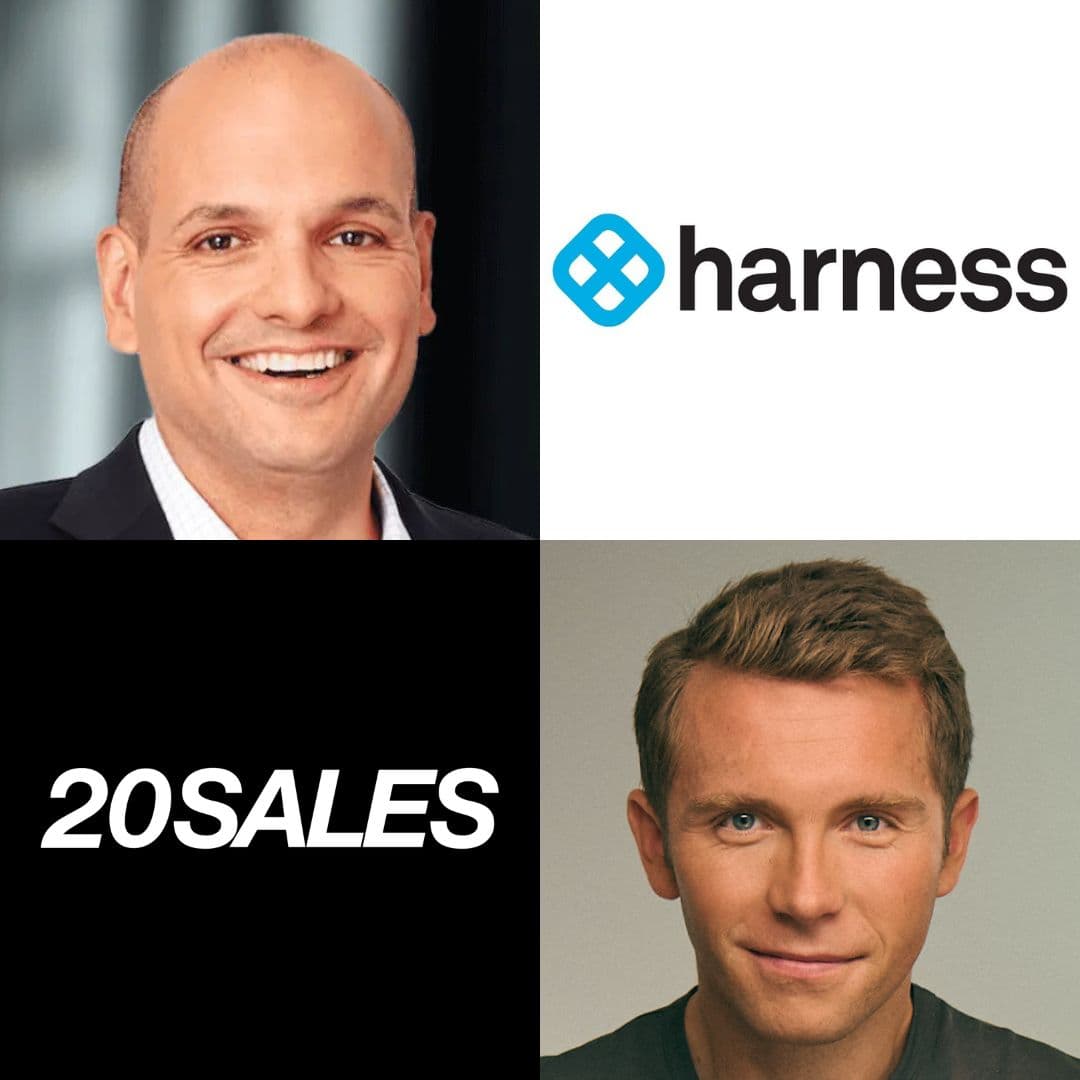
Episode Overview Title: 20Sales: Why Every Sales Rep Should Do Pipeline Generation & How to Teach Them Guest: Carlos Delatorre, Chief Revenue Officer at Harness Host: Harry Stebbings Duration: Approximately 1 hour 4 minutes
In this episode, Harry Stebbings interviews Carlos Delatorre, an esteemed go-to-market leader with a rich background in sales leadership at companies like MongoDB and Navan. The discussion focuses on essential sales strategies, the importance of pipeline generation, and effective sales team management.
Key Topics Discussed
- The Art and Science of Sales
- Carlos highlights the blend of art and science in sales, suggesting that while some individuals may have innate charisma, effective selling is primarily a learned skill involving empathy and strategic thinking.
- Hiring Sales Talent
- Key Advice:
- Avoid focusing solely on past success. Instead, evaluate if candidates possess the necessary skills and attributes to succeed in the specific role.
- Emphasize hiring individuals who can generate their own pipeline, as this is critical for long-term success.
- Building a Sales Team
- Early-stage companies should focus on hiring individual contributors rather than seasoned leaders until the sales message and plays are established.
- Encourage team members to learn from one another by co-locating them.
- Pipeline Generation
- Every sales rep should be accountable for pipeline generation rather than relying solely on dedicated roles like Sales Development Representatives (SDRs).
- Benefits:
- More pipeline leads to higher win rates and better accountability among sales reps.
- Reps who generate their own leads tend to value leads from SDRs more, treating them like "gold."
- Sales Metrics and Conversion Rates
- Discussed the importance of setting realistic metrics for pipeline generation, with a focus on qualified opportunities rather than just meetings booked.
- Effective Sales Training
- Emphasizes that training should be ongoing, with regular check-ins and reviews to ensure that salespeople are developing the necessary competencies.
- Maintaining Sales Team Morale
- Carlos advises addressing team morale directly, encouraging open discussions when the team is struggling.
- Celebrating successes and sharing stories within the team can significantly boost morale.
- Verticalized Sales Playbooks
- Verticalized playbooks can be beneficial when the sales process is highly specialized.
- However, he cautions against over-segmenting sales teams based solely on verticals, as it can create imbalances in opportunities.
- Addressing SaaS Churn Rates
- Discussed how proactive customer success efforts and genuine relationship-building can mitigate churn in subscription-based businesses.
- Transitioning Roles
- Carlos shares insights on transitioning from a sales leader to a CEO, emphasizing the importance of understanding the challenges at hand and ensuring you are equipped to tackle them.
- The Future of Sales
- Predicts that AI will play a significant role in automating aspects of sales, leading to increased productivity and potentially higher attrition rates.
Key Takeaways
- Pipeline Generation is Crucial: Sales reps must take ownership of their pipeline to foster accountability and drive success.
- Hiring for Potential: Focus on the innate attributes of candidates rather than their past roles or achievements to predict future success.
- Training is Vital: Continuous training and team engagement are essential for developing effective sales skills.
- Morale Matters: Open communication and celebration of team successes can significantly improve team dynamics and performance.
- Flexibility in Sales Strategies: While verticalized strategies may yield results, maintaining meritocracy and opportunity balance is vital for team morale and motivation.
Closing Thoughts Carlos Delatorre's insights shed light on the critical elements of building and managing effective sales teams, the importance of pipeline generation, and the evolving landscape of sales in the face of technological advancements. This episode serves as a valuable resource for sales leaders and aspiring entrepreneurs looking to optimize their go-to-market strategies.
For more information, visit [The Twenty Minute VC](https://www.20vc.com).
Written by AI. May contain mistakes. Listen to the episode to check what was said.
Transcript
Automatic transcript. May contain errors.0:00I think for an early stage company, the CEO really has to develop the plays, figure out the message, at least that initial message. The AES are responsible for generating the pipeline that will support them being successful, them hitting quota. Then anything they get from the other sources is a gift, is a cherry on top, is extra. I don't believe salespeople sell. Buyers buy. All salespeople can do is create an environment that is conducive to that purchase decision. This is 20 sales with me Harry Stebnings. Now 20 sales is the show that dives into the world of sales, interviewing the best sales leaders to uncover their tips, tactics and strategies to scaling sales teams.
0:44Today I'm so excited to be joined by one of the OGs of the Go To Market world, Carlos Delatore. Carlos is the CRO to harness where he oversees global sales and go to market. Before harness, Carlos was the CRO at MongoDB and the Van formerly trip actions. He's also an investor with a portfolio including the lights of modern treasury and starburst. But before we dive in today, I'm sure we've started with one simple idea. The tools you need to grow your business shouldn't put you out of business. That's why they work directly with developers to get exclusive discounts of 80 to 90%. 80 % to 90 % off software, saving entrepreneurs over half a billion dollars since 2010.
1:25Some of the biggest names in tech like MailChimp, Zapier and Dropbox got their start on AppSumo and with a rotating selection of hundreds of tools, you'll find all the software you need to make your life easier in 2025, plus with a 60 day money back guarantee. You can try any tool risk -free. Start the year off with savings, get 10 % off your first order with the code 20, lowercase VC and a free tool exclusively for 20 VC listeners. That's code 20 lowercase VC for 10 % off plus a free tool at app sumo .com You have now arrived at your destination. Carlos, I wanted to do this one for a while. I've heard so many things about you from prior guests So thank you so much for joining me today.
2:06It's a pleasure. Thank you for having me. I have arrived It's great to do it in person as well. It makes it so much more special. I love to start with context though When did you first realize that you have this love of sales? Probably as a teenager, my cousin, Tais was dating a guy who was a manager of a clothing store. And I think I was 14 or 15 at the time. And I had worked, you know, for several years, mowing lawns and raking leaves and doing odd jobs paid by the hour. He decided to give me a shot at the store. He would let me come in on the weekends and sell men's suits. The commission rate was 10%.
2:45and the suits were $800 ,000 and over the course of a weekend, I could usually sell one suit, maybe two, maybe three, and so to make a hundred bucks in the air conditioning and the mall was pretty amazing and I thought, hmm, there's something to this. Do you think people are born salespeople? What do you think it can be learned? I think it absolutely can be learned. I think when people say that someone is born a salesperson, usually what they're referring to is charisma and a big personality. And I don't know that those things are necessarily what makes a great salesperson. They don't hurt, but they're not the core of it.
3:28So sure, having more empathy, you know, being genuinely curious, I think those things help, you know, our innate attributes that make people better salespeople. but I think most of it is learned EQ, empathy, that pain tolerance, all feels a little bit like a game of art. And then we see the world today and it feels a lot more scientific. How do you think about sales being artful signs? Yeah, I think art is what we call something when we don't understand it yet. People could say, oh Picasso, that's art, how does he do it? And then you have students studying for years and then they break it down, well, Well, it's the colors and the shapes or whatever it is that's the basis of Picasso's art.
4:13And so I think like anything, there are people who are savants, who are gifted and there are people who can connect dots that others don't see, but then others can follow, can learn and can replicate those things. So I think it's more science than art candidly. It all starts with Bluntney bringing wraps on. and I spoke to money and I spoke to Dev at Mongo before. And they both said that you're amazing when it comes to hiring sales talent. So I wanted to start there. What are the single biggest lessons for you when it comes to effectively recruiting sales reps? I think it's important to think about the job that needs to be done.
4:55Arrive at a conclusion, a well -formed opinion around whether a candidate is capable of doing that job. A trap and a mistake that people make is over rotating on what they have done in the past and assuming that success in the past predicts success in the future. Certainly, a track record of failures is something to be thoughtful about and to avoid, but success in the past, you have to be able to break down what needs to happen in the future and identify what skills or what attributes are required in order to accomplish this outcome in the future and then figure out almost like take a battery of what this person brings and how much of what they need in the future do they already bring and investigate or interrogate what they've accomplished in the past, what their life journey is like and form an opinion around their innate attributes so that you can start to have an opinion around the likelihood of their success in the job that you're trying to fill.
6:05Okay, you're gonna advise me today. I'm one of your angel ambassadors, I'm your the OG. So, do I bring on board a sales leader who's got incredible experience, incredible network and builds out the sales team themselves? Or do I bring on young hungry reps and AES to go hunt? and really go off on that one and be aggressive. Are you a brand new company? Or a brand new company? It does two or three years. Don't hire a leader yet. Hire individual contributor. It first just hire SDRs and you be the rep so that you get, I think, for an early stage company, the CEO really has to develop the plays, figure out the message, at least that initial message.
6:47And once you have conviction around, who do we sell to, what are the personas, as what's the message, then I think you can build an organization around that. Until that exists, I would advise the founder to hire some individual contributors around them, co -locate, sit in the same room so you can hear each other and duke it out and refine the message and refine the plays. Once you've got some conviction that it's repeatable, go and hire a team around it. Should I hire those young ones before I actually have messaging in a playbook refined? Sure. You should. Yeah. And they're going to be super junior because they're going to be happy to be at a tech company because it's probably the first tech company They've ever worked at and you're going to have to do a lot of the heavy lifting you're going to have to train them you're going to have to Remind them that they should wear a shirt to a meeting and but that's a beautiful part of the journey that I think only a founder can really do Well, so we have that when we're looking for these wraps would we rather they have experience in the domain that we're in or selling the size contracts that we're selling?
7:53Which one's a more preferable past history? I'll answer the question, but then I'll answer the question that I would have preferred you asked. So I would prefer experience with the type of deal over domain. Unless the domain is so specific that it's going to take a lifetime, you know, if I'm selling some like, you know, molecular modeling technology and you have to be a biologist to understand it. But outside of that, better to teach the domain and to hire as many of the sales skills as you can. What question would you draw the highest? Yeah, I think when you're hiring, the thing you can't change is the innate attributes, the DNA of the person.
8:38That's where you should spend the most amount of time. Get to understand who that person is in the areas that they can't change. Then you should have, hopefully, a pretty good idea of what are the skills that they will need to be successful. Once you figure out, okay, this is the type of human being that I need. Now, how many of the skills that they'll need to be successful do they already possess? And then the skills that they don't possess, how difficult is it going to be, how long is it going to be take for them to acquire them? And that is the formula. You can't change the DNA. If they don't have any of the skills, it's going to take a very long time for them to have the ramp.
9:19So first the DNA, then the skills, and there's always going to be a gap. So you need to have negotiables and non -negotiables. I love this as granular as possible. You advise me, make a list of the skills that you need, test which skills they have, how do you test what skills they have? I would look for experience at a challenger company. It's so much harder to operate at a company where you don't have a big logo that sells for you, that carries for you. Has this person been successful in that kind of environment? Have they had to do their own pipeline generation? or have they always relied on SDRs or marketing or partners or what have you.
10:02So I would look for a history of self -sourcing pipeline generation. Have they sold a product that is of comparable complexity? Have they sold into accounts of comparable size? Have they sold a solution of comparable price, which means it would have multiple stakeholders, which means it would require a business case, which means more politics would be involved from the customer's perspective. Have they sold a solution that involves a comparable number of personas of stakeholders? Have they sold a solution in the same general domain, meaning am I selling into IT and they've only ever sold business apps or vice versa?
10:48Some of those for me are non -negotiable, some of those are negotiable, but if we have a lot of gaps, then it just means my ramp time is going to be longer. Which would you say are more often non -negotiable for you? I know it's a situation independent, but more often than not non -negotiable. Yeah, I've spent almost my entire career at Challenger companies. If you're going to disrupt a marketplace, the risk associated with hiring someone that hasn't been at a Challenger company is really, really high. So that one is a near -non -negotiable. pipeline generation hiring AEs that have not built their own pipeline.
11:28That one is non -negotiable because if they say they will, if they say they want to, they just don't know how hard it is or they don't remember, maybe they did it as SDRs a long, long time ago. That's a really big risk. That's a kind of a non -negotiable. Maybe they've only sold into mid -market accounts and they've only sold deals in the 50 to 150 K range. We're gonna put them in enterprise, selling 500 K deals with many more stakeholders, but again, we think they're really smart, we think their drive is really high, and so that's more negotiable. So those are some of the things that I'd negotiate on.
12:08When we're testing out these skills, and the non -negotiables and negotiables, we're gonna get into pipeline generation, I have to, later. But are we doing case studies? Are we doing take -home assignments? Are we doing anything physically active to determine these skills? So we're reaching a conclusion or we're developing an opinion on where they are in terms of maturity on the skill through interviews and back channels. But then I'm a big advocate for at the end of the process, we call it a challenge. We have an event where they have a couple of days to go think about some questions, prepare a presentation and come back and present it, but that's more of a validation around the decision at the end.
12:55It wouldn't be fair to a candidate to do that early on because it does take work. And so once as a hiring team, we develop conviction around a candidate. We'll do the challenge just to like make sure we didn't miss anything. But when you think about questions around a higher from that approval board or the people involved in the process, what are the most common reasons why there is conflict in a hiring decision for sales reps? I think it's human nature that we tend to index around our own strengths. When we see pieces of ourselves in someone else, I think it's very tempting to become enamored with that and then to miss other gaps.
13:36And so if you've got in a hiring chain of command, you've got people that are quite different. One person that's super charismatic has super high EQ. Another person that's super process oriented. The process oriented person might miss that this person is a little awkward, or the high EQ person might miss that this person is not very tight on process. And so that would be one area where you have disagreements. Do you agree with Jason Lampkin who says that you should always hire two reps at the same time and subtly enforce this element of competition? Yes, but for a different reason. So I do think that having multiple reps co -located is far, far better.
14:20You know at MongoDB, you mentioned that you talked to Dave at MongoDB, we hired a lot of people and our attrition was higher than we wanted it to be. And so we did a lot of analysis on attrition and what we found is that loan rangers and we meant that meaning when we have a single employee in a, you know, if we have a single rep in a city and no one else at MongoDB lives in that city, their attrition rate was like four times higher. It's so hard to ramp when you're all by yourself, when that little tiny, that quick question that would have taken 10 seconds to lean over and ask the person next to you, when that now requires you to schedule time with someone and forget it.
15:01So the likelihood of failure is so much higher. So sure, the competitive aspect is part of it, but I think the bigger part of it is just helping each other. So I'm a big advocate of hubs. And so I think at minimum you want two sales, if it's a company, if it's a product where you have a sales engineer, two sales people, and a sales engineer, that's like the minimum profile for a hub. Okay, so two people in a sales engineer, that's minimum profile for a hub. I want to get to the pipeline generation. You said it there. Mani was like pipeline generation Tuesdays are famed with Carlos and it was so central to how you acted with Mongo and how you execute so well.
15:40And so first, I just want to start by asking, we have SDOs, we have DemonGen. Why do we need to have this extreme focus on pipeline generation for reps? Great question. There's a few reasons. Reason number one, more pipeline, more the better. Reason number two, think about when a salesperson gets stuck in a deal. Why are they stuck? They're stuck because maybe they're too low and they can't get high or they're in one division and they can't get over to the other division. How do you get unstuck? PG into the person that you need to be at. UPG into the more senior person. UPG into the other division.
16:19And so the ability to generate pipeline will lead to a higher win rate on existing business. What else? Well, if you have an organization where pipeline generation is outsourced, let's say, to another role, it's a natural tendency for salespeople to get more and more finicky around what in -bounds or what leads are worth their time or worth working. And so the next thing you know, if you take that to its logical conclusion, and I've seen this, I won't mention the company, but I've seen a company where the A .E .s said, hey, the definition of a lead worthy of me working is the customer's ready to see a demo.
17:03They have agreed with the SDR that if the demo goes well, they want to quote and they're ready to buy after that. So that's like 80 % of the sales cycle is done, and the sales are in And so now in that kind of a scenario, you need such a huge investment in marketing and such a huge investment in SDRs just to meet that bar of the expectations of the sales reps. Whereas if sales reps are doing the work to generate their own meetings and their own pipeline, man, when they get pipeline from their SDRs or from marketing or from partners, they'll treat it like gold because they know how much work and how hard it is to get that.
17:42And so your conversion rate on your other your non AE Sources is a lot higher. I do have to ask also what I do have to say also I think it means you don't have the loss of accountability Which is like it so easy to be like if I didn't hit my number. Yeah, but demand Gen gave me shit leads That's right. So I think though the way to orient it is the AE is responsible for generating the pipeline that will support them being successful, them hitting quota. Then anything they get from the other sources is a gift, is a cherry on top, is extra. Does that not take all way to off SDRs and DeMondgen? How do you prevent them from going, which is the cherry on top?
18:26So it doesn't really matter. That's the environment under which the AES operate. Of course, the SDRs have expectations on them. And so you need to have a system where There's accountability at every level and there's expectations and there's performance management. My question to you is, and we had Chris Dagnan -Lolman show from Snowflake. Love Chris. Yeah, love Chris. Great dude. And he's like, you can really only take, I think it was like six to eight meetings a week as a wrap. If you really want to come prepared and really smash it, your time is going to be so conflicted or change differently by suddenly having pipeline generation as a core part of it and an expectation.
19:02How do you advise wraps on time allocation? Now, pipeline generation is a core part of that expectation. Yeah. First, you have to agree, pipeline generation is good. You can also say that roughly, excellence in pipeline generation equals excellence in sales. Someone who's got a massive pipeline that misses some things in the sales cycles, probably still going to do very well. someone that executes beautifully but doesn't have enough pipeline, they're going to miss their number. And so that's the first thing. Let's agree pipeline generation by the AE is worthwhile. If they agree with that and I feel very strongly that's the case, then roughly a third of your time, 20 % of your time, one day a week is dedicated to just outbound cold calling.
19:51And then there's another probably 10 to 15 % of your time that is devoted to prep for the cold calling and follow up from the cold calling. So that's kind of how you get to the 30, how I get to the 35%. When you're hiring these reps and they haven't had pipeline generation, as such a big part of their role before, how do you teach them to be good at pipeline generation? Yeah. So remember, I'm not hiring folks that haven't had to, that haven't had to do it and been successful doing it. Is that a complete non -negotiable? It is. Yeah. It is because the likelihood, if they've been successful not having done pipeline generation.
20:30When they get in that dark lonely room, and what I mean by the dark lonely room is making the phone calls and saying, oh, that is the 19th phone call where no one has picked up. And I've left the same fucking voicemail 19 times now. If they haven't done that and they haven't been in that lonely place, the likelihood that they are willing to make that 20th call is low. Even if they were willing upfront, when they actually get into it, you have to have been through that journey and seen the other side, the other side, meaning the joy of landing that big meeting, the joy, the fulfillment of creating an opportunity and closing a deal and knowing that deal exists because I PG -DID.
21:17That company solved this problem, generated this value because I invested in them. There's a pride that comes with that that if you haven't had it you're probably gonna you're probably not You're probably gonna give up on the journey towards PG excellence Everyone says to me on the show the change in sales is that outbound in 2025 is dead. That's crazy talk You strongly disagree. Yeah. Yeah. Yeah. I strongly think co cooling still works absolutely Absolutely, absolutely. But I'm really glad that other companies don't, and I hope a lot of those companies are competitors. Does AI change the effectiveness of Outbound?
21:57When you think about supply, I can now send infinite emails beautifully personalized with effective AI agents tooling data. Does that change Outbound? Yeah, I don't know that you can yet, but you will. But really, the most effective means of pipeline generation is Outbound cold calling. The human voice -based interaction over the phone, the emailing is, you do it. That softens the feel. That creates some familiarity so that when they pick up the phone, they're like, oh, Harry, why is that sound familiar? And maybe they don't even know why it sounds familiar. But it sounds familiar because they've received a bunch of emails and those emails had your name on it.
22:40They landed with some sort of a positive aura around them. I'll give you an anecdote. There was a sales rep who I love named David Boyle and he was calling on Dunn and Brad Street and Dave is an epic PG -er. And so we were at a company obliques and the pinnacle person to talk to at obliques is the chief security officer, chief information security. We've got a meeting with the CISO at Dunn and Brad Street and we're in the lobby, the CISO had a little lobby just for the CISO's office. This is a few years ago. As we're waiting for the CISO, Dave is in the hall doing PG, leaving voicemails, pacing up and down the hall, he's looking at every once in a while to see if his assistant has called us in.
23:25We go in, we meet the guy, and before we even start the meeting, he says, it must be nice to be able to just call a CISO like that and have him bring you in. You're welcome. So tell me about your product. So we go through the meeting, we tell him about the product, and on the way out, I was like, Dave, really? Just one call? It's like that guy's got no idea. And he opens up his book and he shows me. He had sent him 11 emails, eight phone calls. He had become friendly with his executive admin. He convinced the admin to write a post at note and put it on his screen. Says Dave from Oblix wants to meet with you because of XYZ.
24:03The guy was on another call, read that, nodded, and that's how we got the meeting. he had no idea about the 18 other touches that had preceded that. And so that's what happens. We have to break through the noise. People are getting lots and lots of... And so that's where email's good and social media and all the other things. But most meetings are set. Like two thirds are set as a cold call. I think you're always underestimating the familiarity of naming. And what I mean by that is you post 10 times a month on LinkedIn. me responding to five of them, go call or so awesome to see. After five, you're like, oh, the name rings a bell.
24:42The name rings a bell. We have it with fans of the show where I'm like, I don't know what they do or who they are, but the name rings a bell, so true. And that really works. How, we're talking about unicorn reps, so here. Because like, he sounds fantastic, love him. But how many are actually good at PG, half of the world of sales reps? Yeah. Oh no, less than 10%. It's elite. It is highly, highly correlated with elite salespeople that have the ability and the tenacity, the willingness. It's hard work. Do you have people that are in your teams who are not good at PG? No. Okay, so then we don't. How do we form structure on it?
25:21Can you take me to pipeline generation Tuesdays? What is that? How do you structure it? Sure. Better to start on Thursday. day. There's kind of a wheel. Sure. You got the way. All right. All right. So before I get into the weekly cadence, let's say for the quarter, I'm an enterprise sales person, I might select from my territory, 20 top targets for the quarter. And I'll sit down with my manager the first or second day of the quarter and I'll validate, hey, are these good? Yeah, you miss this one's not very good. Great. Okay. Now I've got 20 accounts that I'm going to go after over the next three months.
25:54On a given week, I'm going to focus on one or two accounts. Maybe three if they're on the smaller side. So let's say an average of two. I declare those on Thursday. Those are my focus accounts for next week. Thursday night, I declare them, which is just I click a couple of things in Salesforce. Now over the course of Friday and over the weekend, as a salesperson, I do some research. What's the research? I look at what the execs are saying on social media. I read the 10K. Now you can use AI to make a lot of this stuff so much better. I research the company, I look at their job postings, I look at what you might even go in, look and blind and see what their engineers are saying, see what people are griping about.
26:36I try to get a sense for what's really going on inside the company. And then I develop a hypothesis about something that I think they care about that we can impact. Maybe I develop two or three hypotheses. This is for the account. Then I go in and I They say, okay, let me come up with, let's say it's two accounts. Let me identify 25 human beings in that account that based on their title, based on their LinkedIn profile, I think are relevant to what I sell. And let me capture those 25 names, their email address, their LinkedIn. I'm going to check to see if I can find them on social media. And then I'm going to go into some database and find their phone numbers.
27:17So I've got their mobile numbers. And I do that for two accounts. So I've got 50 names for my 10 most important people on those 50 names. I'm going to also now investigate the person. Have they been on a podcast? Have they written a book? Have they written a blog? What do they care about? And I'm going to develop a hypothesis to a conversation starter for the top 10 of those people. Okay. That constitutes PG prep. So I've got two accounts. I've got, let's say, two or three hypotheses per account. I've got 50 names with all the requisite information, email phone number, and I've got hypotheses per contact for my top 10 contacts.
27:57I can get some help in my prep. Where do I get help? Marketing on Fridays at noon is going to send out a PG passport, news of the week. Everything that happened this week curated for use or reuse in the PG setting. We had this new release. Well, let me boil that release down into two or three sentences that can be read or can be included in a PG email. There was a new case study. Here's the case study, but here's like a, again, two or three sentences. So marketing sends out this PG passport on Fridays at noon. Then the manager knows what the focus accounts were because they were declared on Thursday.
Read the full transcript
28:37Takes that PG passport, takes their experience and forwards the PG passport back to their team with some advice. Hey, Harry, I see you're going after this account. This would really resonate with them. Hey, Jill, my neighbor works at HR in this account. I asked her. She said she'd be willing to take a call from you to validate your contacts and make sure those are the right people. Okay. So now the manager's involved in PG prep. It's that's right. It's not scalable. The manager is having to look through what 10 different target people's accounts. There's too many people for them to be going, oh, Jill's my neighbor.
29:13Oh, I know that this piece of the report is perfect for them. Is that possible to us some to do that across the mall? Yeah. It takes, takes an hour or two. You know, remember, the manager is in the role because they know, they know what they're doing. They've got some experience. And so it's not to say that the manager's going to have a really great insight for every single focus account. But they'll, as they scan the 10 accounts, there'll be two, three, four accounts where they have an idea. Oh, I read an article two years ago, let me find it, or I heard something on Bloomberg radio. Let me go find it for you.
29:47So that's the PG prep. So the reps got, the reps got help from marketing, help from their manager. You might even have a team of data analysts that help with the PG prep. I'll talk about that in a moment. Then Monday morning, there's a conversation, a one -on -one conversation between the manager and the AE to review their PG prep. And this is where the manager really digs in to make it better. Obviously, it's an accountability event to make sure that the prep was done, but more importantly, it's about making the prep even better. Hey, I don't think you're aiming sufficiently high. You don't have the CIO in here.
30:24You don't have any senior people. Or they're too high. Jamie Diamond is not going to respond to an email about cloud cost management. Adjust the PG prep. Monday Afternoons is a great time to do training, especially training that's related to PG skills. Hey, let's role play how to talk to this persona or let's role play how to describe this products value prop or let's role play whatever. And so we'll meet up together on a Monday afternoon, do some role plays with feedback and the opportunity to do role play again, et cetera. And so then Tuesday morning when the butts hit the chairs, people are ready.
31:02People are ready. We do have a quick round robin just to get everyone excited and ready for the day, but remember, they've prepped. They've trained yesterday. And so Tuesday is like a really important day. We'll bring cater meals into the office. There's a real camaraderie. We laugh when somebody gets hung up on. We applaud when somebody scores a meeting. We hear each other. This is where the lone ranger becomes terrible. They're all by themselves. They all they hear is themselves. You've got a room full of people. Hey, Don, that was really great. Can you say that again? Let me write it down because I'm going to use that.
31:37Hey, Jimmy, I would have said this a little bit differently. So they help each other and at the end of the day, hey, let's all go get a beer at the pub next door. Let's celebrate the day. Let's laugh together. Let's really develop pride because we know that most sales people on the planet are not doing what we do. So just so I know how we structure the week. It kind of spells on the Thursday with the planning. that progresses through to action day on Tuesday. Tuesday's when we do action, we are actually hitting the accounts, hitting the targets. And then for the rest of the week, we're harvesting.
32:09A couple other things. So yeah, the Thursday we declare, Friday and over the weekend, we prepare. Monday morning, we review the preparation. Monday afternoon, we train, Tuesday, we do PG all day. And then obviously throughout the week, there's follow -up, there's harvesting. And then I love to do a wrap up on Friday. So I typically run that myself and it's the whole sales team. And we celebrate the PG success of the week. We tell stories of success. We tell stories about successful meetings. We also tell stories about opportunities that have been created from previous weeks PG and it really builds, I think, an enthusiasm, a belief and it reinforces this thing we do that's so important, so powerful, but also so hard.
32:57And so that's kind of the circle of life, if you will. How has the way that you do pipeline generation week structuring changed over time? In the early days, you know, the first time I ever exposed to it was at parametric technology early in my career, and we called them power hours. Whatever Thursday at 9 a .m. everybody be in the office and so Thursday at 9am you pull up act this before Salesforce and you just start making cold calls and it wasn't very structured and the problem with doing just an hour is you can easily go for an hour and never talk to anyone and so you need that positive reinforcement of a conversation even if it's a conversation that doesn't land a meeting because you learn from that you think if I had handled it differently I could have gotten the meeting but if you do If you do a bunch of cold calling and not zero comes from it, it's really hard to bring your A game for the next power hour How do you think about effective goal setting around pipeline generation because every number can be gamified?
34:00How do you think about effective goal setting around PG? Well, I think there's a risk of Over Obsessing on the number of meetings booked. Obviously that's the easiest thing to track And so typically if someone if someone is doing good PG they should be able to on average get two meetings in a given week. Sometimes people will get more, sometimes people will get less and they might get one or they might get zero and still they did a good job. It was just an unlucky week or a particularly tough account and sometimes you know people hit a hot streak and they'll get four or five but two to two to two point five.
34:39That's kind of the sweet spot of like really good PG with the process that I just told you about but the thing to really obsess about is a little bit further down the line, is there a qualified pipeline coming out of it? I didn't understand how this is a good business. Let me pause. You're like, what? You have eight meetings a month. If you think two meetings a week is good, let's say 25 % of those convert into paying customers. And the customers are a hundred grand a year, let's just say. That's 1 .2 million a year. Right. And the rap is on fully baked ever the in 200 to 50 well then they're like 4 .5 to 1 that's pretty good, but that's if everyone is fully Brammed everyone is effective like that and that's a good good one the numbers that you just um that you just shared Doesn't take into account you had a paying customer and you did some expansions in your paying customer You had a partner bring you a lead that was like 70 % sold.
35:41So that is purely just the rep going cold into a, you know, into a completely green territory. There's going to be some good stuff, some low hanging fruit. And so you're like, right, I get it. It's like three to one on your economics, Harry. But when you add in partner, demand, Gen, SDR, luck, you can be at five to one. Yeah. Or maybe it's four to one on yours and you can be at six to one. What is okay in terms of those numbers? A lot of founders are like, Is it okay to be it three to one? It depends where you are in the journey. Early on when product market fit isn't really good, yeah, it might be three to one.
36:18The rule of thumb, once you're scaling, you want to be at five to one or better. For sure. For the level of contract size warrants outbound in this way. Oh, that's a good question. Certainly down to 50k. Maybe below 50k probably starts to break down. because down to 50k, your reps are going to be earlier in career and so their OTE is not as high. And then when you're up into the enterprise level, then your average deal is probably more in the 2 -3 -400k range. It certainly works there. Everyone today feels like that's suffering with just not enough pipe. People aren't buying the way they used to.
36:59Everything's gone back to the CIO in terms of buying powers. was, what do you say to sales leaders today who go, call us. They just isn't the pipe. We are not lacking for pipeline. The thing we're lacking for is ramped sales people that can go pursue it. I think how long do you give someone to ramp? I think what you're asking is, when do you sort of declare failure in part ways? I think ideally, what you have is a series of milestones over the course of someone's journey that start in the first few weeks. They go to training, they prepare for training, they go to training, how did they do in the entrance exam, how did they do in their roleplay, how did they do in the final exam, were they able to get meetings coming out of their first boot camp, were some of those early meetings converting, are they able to get to an economic buyer in their third month?
37:55So there's all sorts of milestones along the way. And so if you sort of decompose a sales person's ramp to productivity, then what you can do is you can identify at any moment, hopefully very, very early, if they're going off course. And you can figure out why a lot of companies, they'll start to worry about someone that hasn't sold at, you know, 9, 10, 11, 12 months. And so then they'll make a decision to part ways at 18 months. That's so expensive. Not just in terms of How would you do it differently? Are you able to let go someone off to six months if Antipy ourselves like it would be generally yeah, yeah, you've got milestones along the way And so if they're not if they're not achieving the leading indicators to success Then we figure out why and we try to fix it and if it's fixable great they're back on track And if it's not fixable, then that means they're in the wrong role or at the wrong company.
38:53And so, yeah, we've parted ways with people at bootcamp. It was clear in their first month that we'd made a mistake. And we apologize for that because we hired them. But why wait nine months and waste their time and waste our time and opportunity costs? I totally get you. Ram time is determined often by quality of training. Yes. And when we think about skill development, What have been your biggest lessons on how to train reps effectively, especially in this round time? Yeah. The mental model that we used is we started with this hypothetical fully ramped salesperson. This individual who has every single skill, every single knowledge needed to be successful in the full gamut of selling our solution.
39:40Then we said, okay, let's break down all those skills and knowledge into competencies that we think can be learned in three hours or less. Then let's group them by what is the ideal modality to learn it? Is it something that they can learn on their own? Is it something that they can learn on a Zoom call? Is it something that they really need to be in a classroom to learn? Great. Now, let's look at the ideal sequence. What's the right sequence so that we can get them to land a good, healthy, new logo as early as possible. And then what we did is we've created a learning journey that really spans about almost nine months and it has three week long trainings, a boot camp and intermediate and in advanced.
40:27And then coming out of boot camp there's a roughly half a day, there's a three hour remote session that they attend with the same cohort that they went to boot camp with that goes deep on one competency. And so what we end up with is people coming out of boot camp able to do pipeline generation. They're able to have a conversation, start, start meetings. They're able to do discovery, do a good first meeting. By the time they get through intermediate, they can land a new logo with our core product. And that's really the key. Once somebody can land a new logo with the core product, the likelihood that they're going to be successful is very high, even though they don't have some of the advanced knowledge or the advanced skill.
41:09So that's kind of what we're doing. What is the average time it takes for someone to land a core logo? You mean just the sales cycle? The sales cycles are not that long. It's about four months, about 120 days. How fast do we let someone get on a customer cool? Because obviously, customers and pipeline is very precious. First week, young rap. You don't want to just throw on there who doesn't know that shit. it. You know, when do you get it soon early? We have a messaging framework that we've built and a lot of time sales people get it even before they start. So they're able to read, understand our value prop.
41:42It's got sample questions in there, proof points, etc. And so they can be on their on the phone in the first couple of days on board, even before they go to boot camp. They typically go to boot camp, maybe week three, four, but they're on the phone even before. And then certainly at boot camp, they're doing pipeline generation and they will typically have set their first meeting for sure before the end of bootcamp. With respect, bootcamp sounds quite a resource -heavy, institutional grade training program. As you say, enablement 3 .0. Great. If you're an early stage founder, how do you think about the ground training and being as effective as possible?
42:18Yeah, you wouldn't be able to afford from a financial perspective, but also just in terms of bandwidth. You wouldn't be able to afford to build that. And frankly, you wouldn't know what to build with an early stage. That's why I go back to what I said before is for a founder, let's say a series A company, I would get some really smart, hard -working, enthusiastic individual contributors and go build it and you'll be able to build your enablement after you've closed, you know, 10 or 20 customers and you're like, okay, now I've closed, let's say 20 customers, which means I've probably failed to close another 60 customers.
42:57So I've got 80 sales cycles of experience. Now I can identify the things to do, the things not to do And I can build V1 of my training based on that and maybe that's just two or three days I do actually just want to go back to kind of the pipe generation because all the skills really come back to that in a lot of ways When we then review the output of that we have daily reviews How do you approach daily reviews? So what makes a good versus a bad one? When do you do them in the week as well? I'm a big fan of the MedPick methodology. I know you had Mark Goldberg around here. I think he talked about it.
43:32That's the soundest framework that I'm familiar with for deal qualification. I think Dan might have talked about it as well. When to do it. You do it when you need it. What do I mean by that? When it's great to do it early in a sales cycle, when it's messy and there's so many different strings to pull on and try to come up with a strategy. It's also great to do it late in the sales cycle where man, we're forecasting this deal. We better not miss something. Let's make sure we didn't miss something. So I wouldn't say there's a key moment to do it. But the real, the beauty of operationalizing a qualification framework like meant big.
44:10The real beauty of it is that any given sales rep who, let's say, is going through a deal review, they're learning the concepts in the context of this one deal. But then now they know that concept and they will apply it to other deals And so you know that med pick is working when you see sales people talking to each other without a manager involved And they're using med pick terminology where you see a sales rep grab an SC. Hey, can I run this deal by you and just like try to poke holes in it And the conversation is in that med pick framework when you when qualification just becomes part of the culture and it happens all by itself all the time, that's kind of where you want to be.
44:51And then the manager is just spot checking or... When you have pipeline generation day and it's just spilt off. Whatever it is, the team morale is low. Pipeline is not hitting conversions and not coming. What are your biggest lessons as a sales leader on how to really maintain morale? When it's just harder. Yeah, I've definitely seen that happen. and it definitely, you know, a team can get in a funk. I think the best thing to do is just to stop. Let's all get in a room and let's talk about it. Let's talk about how we're feeling. Typically what'll happen, you know, as a manager, you know, one of your responsibilities, I think, of a great manager is to maintain intimacy with the team, intimacy with how they're feeling, intimacy with where their skills are at.
45:36And so hopefully the manager can get ahead of that and see it before it happens and interact and course interrupt and course correct. But let's say, you know, it gets to a point where the team is in a funk and you can just kind of smell it. You can smell it in the air. Hey, let's stop. Let's get in a room and let's all talk about it and let's talk about how we're feeling. And let's reach a conclusion. Maybe the conclusion is, they're not bought in. They don't believe that this even works. Let's talk about that. Let's talk about why PG is important or maybe they believe it's important, but they just don't believe that they can do it.
46:11Okay, maybe it's a training issue. So getting to the bottom of what is the driver for their feeling, the way they're feeling, and fixing that, how do you feel about verdict -closed sales playbooks? About what, sorry. Versic -closed sales playbooks. So if we take Navan as an example, so I'm like, well, you're right. You could have a playbook for financial services companies, for media companies, for healthcare companies, and then reps who are specifically allocated to those verticals, and then can have incredibly granular, detailed use cases in flights about those industries. How do you feel about very verticalist playbooks?
46:46Yeah, so I have a different opinion about the playbook versus verticalized teams. Now, let me caveat this. If you have a solution where it's just radically different in one, like ERP, how you implement ERP at a company that, at a paint company versus a software company is completely different. So much so that it would be unreasonable to ask a sales rep to be able to do both. So centralizing knowledge around what's going on in an industry so that sales people can be more relevant more quickly with accounts in that industry, I think is absolutely a thing to do. Even if you have a horizontal solution, you know, like a technology solution, IT infrastructure, The challenges, the things that customers in a particular vertical cares about are very, very different.
47:42So empowering salespeople with that is really valuable. Verticalizing the sales force when you have a horizontal solution, it cuts against meritocracy. Because there's typically going to be some verticals that are better than others. Like maybe, oh, financial services is just like the cats meow, what a great, you know, it's such a great fit. And so hey, the team in New York, are they amazing? Or do they have all the banks? Mixing up the territories, I think, is really good for meritocracy and for having a fair distribution of opportunity. And so like I said, the exception would be, if the solution is just so different that you have to do it, then do it.
48:25But if you can avoid it, I'd rather have salespeople that have a mix of the really great ICP and then the ICP, the customers that are a little bit harder to sell to. The big problem I think I'm seeing with every SaaS company stays, just churn rates. Everyone realized that they bought too many seats, and they're not actually using them. The 50 seats they bought, they're only using 12 of them, and the churn rates are just incredibly high. Do you share the concern of many that actually the SaaS business that we've had was so overpaid on a seat basis that we're really moving into a tough period? You mean that we've oversold customers?
49:02I do think that a lot of that has worked through the system already. Companies that I'm a little closer to, I think most of that seems to be the trough, let's say, is behind us. I do think that the future, whether it's a consumption business or even if it's traditional SaaS, having sales reps truly involved in driving customer outcomes and creating customer value, I think is really healthy for the long term viability of a company. The days of the big sales rep with the fancy suit that comes in and does the big deal and then walks off to another account, I don't think that's healthy and I think those days are long gone.
49:49What do you feel about discounting? Often we want to get deals done in a quarter. Discounting is often used as this panaceaer of, I will give you an extra 15 % off Carlos. How do you feel? I think that using discount to close a deal that was not otherwise going to close rarely works. If it's a considered purchase, there is either a champion that is willing to advocate for this purchase and advocate with the economic buyer for this purchase versus all the other things on the economic buyers plate. Like either that champion exists or doesn't. And whether that costs 250k or 200k is not gonna make the difference.
50:31It's binary. Now, once you get a decision to buy, there could be budget constraints and maybe well, because it's 250, we can't do it until next fiscal year. And we make it 180k and they can do it now or we let them ramp in. I'm not against discounting, but to use it as a lever to manufacture a deal, I don't think really works. Not in considered purchases. Okay. Maybe with a commodity where I'm going to need it anyway. I could buy it now. I could buy it later. Sure. You could discount your way into that. So, we don't use discounting then and the deal slips. Okay. Deal slips into that quarter and you're on my boss and you're on the sales later.
51:13I say, I'm sorry, the deal just slipped. It slipped. What do you say to me? Well, having a deal slip is a painful and to have pain and not extract the learning is really a squander and opportunity. Pain is a great teacher. If we revel in that pain and really analyze, we have to figure out, okay, why did the deal slip? And the answer has to be something we failed to do or something we did that we shouldn't have done. What must we learn or what should we learn and what must we do differently in the future? That's the key thing. Of course deals are gonna slip. We're gonna lose deals. You know shit happens Let's figure out why it happened what we learn and and and let's get better as a result When we think about a lot of sales leader ambitions a lot of sales leaders want to move into the role of CEO you did move into the role of CEO.
52:10I'm really interested in Maniasis one with the perspective you have of moving into the role of CEO. What do you know now that you would advise other go -to -market leaders about becoming a CEO? It's a good question. I would say make sure you know what you're walking into. What I mean by that is if a company is looking for a new CEO that means that there's a problem or a set of problems that need to be solved. Do whatever diligence you need to do to gain a high conviction that you understand what those problems are and then honestly map your abilities and your experience against those problems.
52:49So if you're a go -to -market leader and you assess and you reach the conclusion that the problems are largely in go -to -market could be a great fit. If the The problems are outside of go -to -market, then look in the mirror and really ask yourself, am I the best person or am I able to solve these problems? That was the challenge, frankly, that I encountered in my CEO journey. I thought I was walking into a situation where the primary problems were mostly go -to -market. And sure, there were opportunities for improvement in the go -to -market realm, but the company needed to mature and to refine its product to really land on the proper product market fit.
53:32And the reality is that I didn't have a toolkit, I didn't have skills to guide the company. So I wasn't particularly effective at guiding the company through that period of refining product market fit. And it took me a while to figure that out. Unfortunately, it was a painful experience I brought. People I care about, Keith Butler came over to be the head of sales. and through that journey, we did make go to market better, but we found that there was a more fundamental problem around the product, and I wasn't the right person to solve that problem, so. Can I ask you, when you think about, and sorry, I'm just peppering your questions here, that I've been thinking about.
54:11It is a podcast after all. Yeah, but it's throughout the show, I've been thinking this, it's just like, when you reflect on your biggest hiring mistakes, what are the ones where you look back now and go, ah, that's what I've made time and time again? One that I have made that was particularly painful was to hire someone based on relationships. It was early in my career and I was at a start -up and this person was very successful at EMC. The numbers that they had posted and the relationships that they had were so senior, I thought this guy is just going to light it up. I brought them on and I spent the first three months going on these fancy lunches at Steakhouse in New Jersey with these very senior folks who were completely irrelevant to the product that we sold.
55:04And fancy lunch and the conclusion of the fancy lunch is, oh yeah, I'll ask so and so who's the person you need to get to and see if they're interested. And the vast majority were not. And so nothing came of it and what I realized is that this individual lacked the skills to go build pipeline. He just didn't know how to do it. He was a relationship seller, a competent guy, a hardworking guy, but the skills to actually go and call a stranger and deliver a value prop and have that resonate and secure a meeting and then come in and do a great meeting. All of those skills just he didn't have them.
55:41And so that was a painful because he was expensive and I had advocated for him. And we had to go like outside of the standard hiring, you know, uh, uh, uh, parameters to get him. That was one that was, that was painful. How will the role of a sales rep change in the next five years? I think AI will automate a lot of the research, a lot of the prep work. What does that mean then? We do double the accounts because we have so much more time available. Yeah, I think they're more productive. Yeah, I think we'll see sales people. I think we'll see sales productivity trend upwards. I think we'll also see attrition rates come down because we'll be able to use AI to supplement onboarding.
56:26I think we'll probably see better and better AI tools to help companies and candidates match so that the fit is better. So yeah, I think we'll see higher productivity across the board. What does everyone think they know about sales that they most often get wrong? Probably they over index on the value of relationship building and charisma and being the big personality and you know that that doesn't hurt but it's not it's not really that impactful. You've mentioned before the loan wolf and the dangers of it. How do you feel about in person versus remote working, especially given the rise that we've seen in the last years of remote companies?
57:11I think the trend is moving back in the other direction and I'm glad to see that. Sales teams in person much more productive. 100%. No question about it. Absolutely. They learn faster, their morale is higher. If I'm having a bad day, but the person next to me is having a great day that gives me hope that gets me through the through the trough and so yeah they're absolutely more productive. Also managers are there to solve problems. Managers are there to course correct. You know maybe somebody's doing it wrong and they don't know they're doing it wrong but the manager can can see it and help them.
57:46So yeah it's much more productive in person. I will never forget Dave Kallow telling me you never want your pharma against someone else's Hunter. How do you structure account management between CS and reps to ensure that your farmer is never being fought by someone else's Hunter? It's a great question. So I think when you say farmer, what you're referring to is when you have an account manager that is owning one or multiple paying customers whose job it is to maintain and maybe grow those customers, but it's not out there hunting for new business. And by the way, what's baked into your question is acknowledgement of the power of PG.
58:29That hunter is able to PG and that's why that hunter is the more effective sales rep. So first of all, your farmers, I don't like the term, I prefer account manager, your account managers should also be excellent at pipeline generation because they're trying to get into other divisions, et cetera. But I think if your account manager is driving real value with the account, then that account becomes very difficult for a hunter to crack. So I'd say you want your farmer hunting inside of the account, but you also want your account manager to care deeply about customer value. And with that customer value comes trust.
59:15And if there's a question about a new technology, they'll probably bring it to the account manager and give the account manager the opportunity to either fix something in our current offering or change as interesting because you're basically saying that wraps need to shift earlier to embrace PG and actually CS need to shift early and embrace PG also because if you think about the spectrum, you can't have a wrap who's now embracing PG and then him equally embracing CS. You can't have both embracements. Do you see what I mean? No, say it again. Well, so if you have a rep in the middle who's core goal is hunting and you're like, great, you need to embrace PG now much more actively.
59:55On this side of it, which is the kind of post hunt, you can't say to them, as well as PG, you also need to really embrace CS. Well, because a lot of sales leaders today are like, no, no, we really like reps to be engaged, post sale, to hand off effectively and really keep that relationship going. You can't do that if you're embracing PG. It's hard, it's hard, but I think you can. I think you can. I think a salesperson is probably in a mature territory is probably going to spend a third of their time, a third of their time generating pipeline generation, maybe 20 to 30 % of their time taking care of their customers and then what's in the middle is prosecuting deals.
1:00:41And of course, you know, maybe you've got a sales rep with 25 green field accounts and two paying customers. They're going to be, you know, more on the PG and hunting side or you have an account manager with just two paying customers. And for them, pipeline generation is going to be easier because they're doing PG into an account that they know super well and they've got plenty of contacts. And so for maybe for that person, PG is only 20 % of the time. So there's you you want to move the dials across but I think to be really effective You want a salesperson generating pipeline prosecuting that pipeline and taking care of customers and how the waiting of each of those things is gonna You know be determined by the type of territory they have I'm gonna do a quick fire on with you Are you ready all right?
1:01:27What sales tactic has died a death? We've alapu -belled outbound that is still alive and well. What has died a death? Closing. I'm a closer. I know how to just convince this idea that you can coerce a customer or do some psychological gymnastics to get someone to sign a piece of paper when they weren't actually intending to. First of all, if you do, that deal is probably going to turn later or they're going to find a way to rescind the order. But I don't believe salespeople sell. buyers buy. All salespeople can do is create an environment that is conducive to that purchase decision. How do you create that environment?
1:02:10Well, by doing good discovery, by finding challenges, by educating on how your solution meets those challenges. And once you do that, they want to buy. But the art of closing, that's below it. If Salah is telling Salah buy is by love, that is brand not more important than ever. Brand. Sure. I think it's probably always been important? Yeah, I think brand is highly important. That's why when you are a challenger, you need a higher caliber of salesperson because you don't have the brand. As your brand gets bigger and bigger, either great salespeople become more productive or you know you're able to get more junior or less talented salespeople.
1:02:47What's the most creative thing you've done to get a deal of the line? The story I have to tell you goes way back to the beginning of my to the medical equipment before I got even into software. I was selling this blood analyzer called a culture counter. I pg'd into an account into a doctor's office and the office manager told me they had just bought my competitors product, a Bechton Dickinson and I said, but you got to talk to me. Mine is better. All the reasons I'm rattling off all the reasons. She's like, no, the deal is done. I'm like, is it installed yet? No, it, you know, it arrives next Tuesday.
1:03:25You got to talk to me. No, I can't. And then I thought, shit, I just upgraded an account that had one of those Bechton Dickensons. I still I haven't sent it back to corporate. It's still in my closet. I'll tell you what office manager, you tell the doctor, she's got to see me. And if she sees me and she still thinks the Bechton Dickenson is the better machine, I'll bring one with me and she can have it for free and she can cancel the order for the other machine. Well, yeah, but you got to be here before the before the in service on Monday. Great. I'll drive. I had to drive all night, snow storm into Jackson, California, and I demoed this doctor on Friday, and I brought the competitors machine with me, and I was able to close the deal.
1:04:05And so you did it live, and she saw the difference between the two machines. Yeah. Yeah. Love that. Yeah. Yeah, that's a creative one. One piece of advice would you give to a sales leader study a new role today? You're going to have pressure to build the team quickly, better to be late than to hire mediocre people. What would you most like to change about the world of sales? Maybe the reputation sales people are slimy or greedy or anything like that, because I think it prevents some capable people from pursuing a job that could be the best job that they've ever had. Final one for you. When you look at sales strategies over the last few years, what company sales strategy have you been most impressed by?
1:04:45Yeah, I was at I was at Navon. We were a travel solution and COVID hit and nobody was buying travel The company made that when that happened absolutely. I joined in January of 20 and the world locked down in March What do you do? I mean your numbers must have just gone to zero. Yeah close to it close to it We had about a 90 % drop in revenues Almost amazed that 10 % remained in a travel ban. Yeah Yeah, there were just some large enterprise accounts that were still traveling a little bit. We had companies that were in the, what did they call it? That category necessary. Essential workers. We had companies that had essential workers, government, some manufacturing.
1:05:28Anyway, we made two key pivots during that period that saved the company. REL, the founder came back from a vacation and he said, by God, we've got to build an expense management solution and we've got to do it fast. and you know, burn the ships. And what he meant by that was he pivoted like the whole engineering organization from one day to the next. And you know, candidly, the executive team thought, man, this is a, this is a bit dramatic. You're betting the whole company. Because remember at the beginning of COVID, we thought it was gonna be two weeks and maybe it's gonna be four weeks and maybe it's gonna be six weeks.
1:06:02So nobody thought it was gonna take as long as it, you know, as long as it did. So the idea of putting 90 % of the engineers to go build a brand new product when we had this like pretty hot company was really scary and he was single -minded about doing it and that was the right decision. And then the other thing we did was go up market because the large enterprises believed that there was going to be a day after. They might not know when the day after was was going to be and so we were able to basically pivot the company way up market and go to people and say, listen, you know, were you happy with your travel program before COVID.
1:06:38No. What better time to overhaul it than now when no one's traveling and you can have a great program when the world resumes. And so by going up market and by building a second product, that company didn't die and it would have. I say that that was a pretty good strategy. Carlos, I've loved doing this. I want to do it for a long time. As I said, I had so many good things for a long time. So thank you so much for joining me today. Thank you for having me, Harry. I love what you're doing. you bring a curiosity and a passion to highlight the journey that that founders and executives are on. So thank you for having me, I'm honored.
1:07:13That was so special, Stuart and Parson. I want to thank Carlos for giving up the time. And if you want to watch the episode in full from the studio, you can find it on YouTube by searching for 20VC. That's 2 -0 VC. But before we leave you today, I'm almost started with one simple idea. The tools you need to grow your business shouldn't put you out of business. That's why they work directly with developers to get exclusive discounts of 80 to 90 % 80 to 90 % off software saving entrepreneurs over half a billion dollars since 2010. Some of the biggest names in tech like MailChimp, Zapier and Dropbox got their start on AppSumo and with a rotating selection of hundreds of tools, you'll find all the software you need to make your life easier in 2025.
1:07:55Plus with a 60 day money back guarantee, you can try any tool risk free. Start the year After off with savings, get 10 % off your first order with the code 20 lowercase VC and a free tool exclusively for 20 VC listeners. That's code 20 lowercase VC for 10 % off plus a free tool at appsumo .com. As always, I so appreciate all your support and stay tuned for an incredible episode with Lyme CEO Wayne coming out on Monday.
From the publisher
Carlos Delatorre is one of the legendary go-to-market leaders of the last 20 years. Today, Carlos is the Chief Revenue Officer (CRO) at Harness, where he oversees global sales and go-to-market (GTM) operations. Before Harness, Carlos was the CRO @ MongoDB and Navan. Carlos is also an investor with a portfolio including the likes of Modern Treasury and Starburst to name a few.
In Today’s Sales Masterclass We Discuss:
03:48 The Art and Science of Sales
04:42 How to Hire Sales Talent
06:26 How to Build a Sales Team
15:28 Why Every Sales Rep Should do Pipeline Generation
19:45 How the Best Reps to Pipeline Generation
21:34 Biggest challenges of Pipeline Generation
22:44 Pipeline Generation Success Stories
34:59 Sales Metrics and Conversion Rates
35:32 Customer Acquisition Strategies
37:17 Evaluating Sales Performance
39:14 Effective Sales Training
43:10 Pipeline Generation and Deal Reviews
45:05 Maintaining Sales Team Morale
46:20 Verticalized Sales Playbooks
48:37 Addressing SaaS Churn Rates
49:49 Discounting and Deal Slippage
52:02 Transitioning to CEO Role
54:15 Hiring Mistakes and Sales Rep Evolution
57:03 In-Person vs. Remote Sales Teams
57:55 Account Management Strategies
01:02:47 Creative Sales Tactics
01:04:12 Final Advice for Sales Leaders
01:04:46 Adapting Sales Strategies During Crisis