
In short
Podcast Summary: The Twenty Minute VC (20VC) - Episode on AI's Biggest Questions
Podcast Details
- Title: The Twenty Minute VC (20VC)
- Host: Harry Stebbings
- Episode Title: 20VC: AI's Biggest Questions: The Commoditisation of LLMs, Open vs Closed: Who Wins, Model Size vs Data Quality, Why Google are Vulnerable and Apple are the Dark Horse
- Description: This special episode features a panel of leading minds in AI discussing critical topics surrounding foundational models, open vs. closed ecosystems, and the future impact of AI on society.
Key Participants
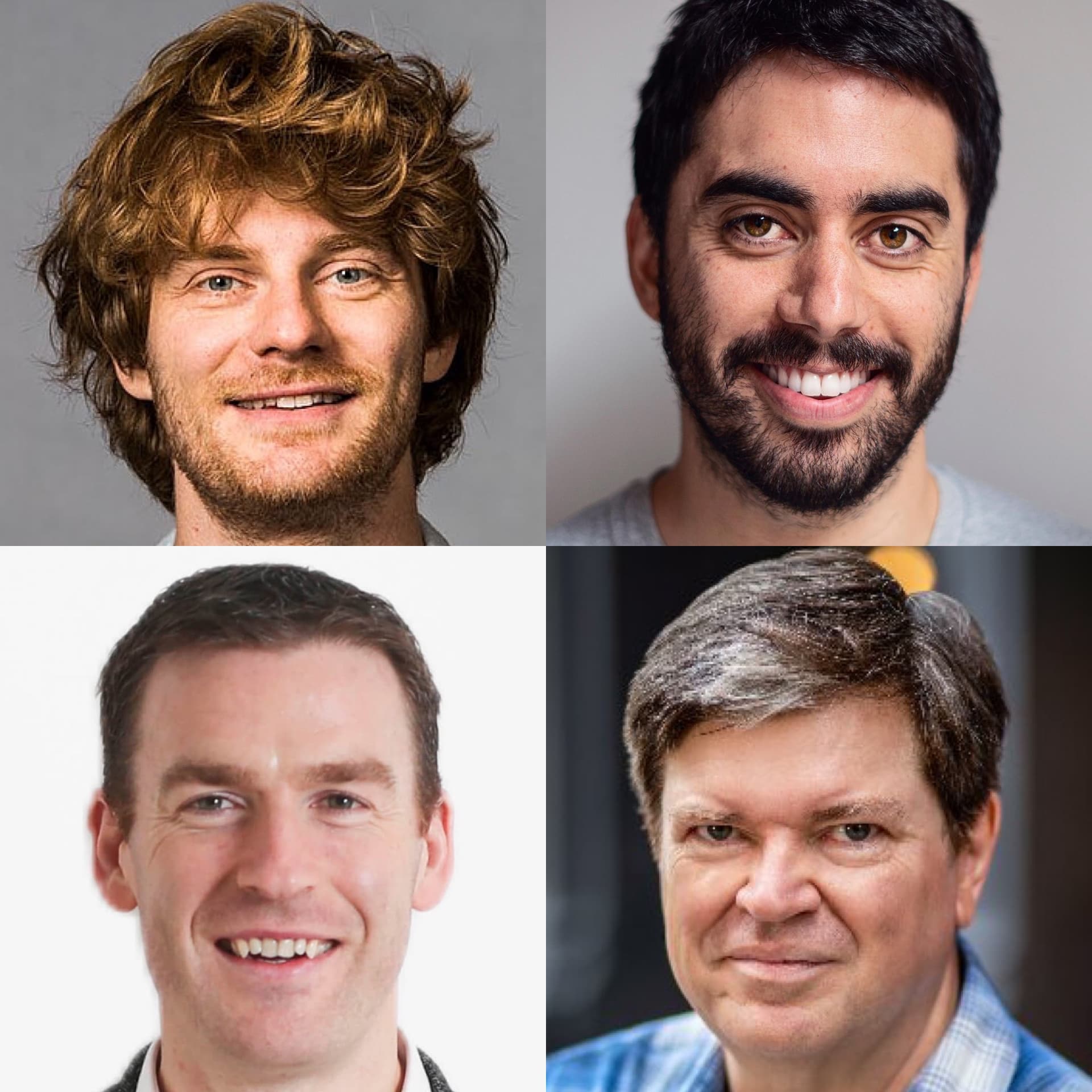
- Des Traynor: Co-Founder of Intercom
- Yann LeCun: Chief AI Scientist at Meta
- Emad Mostaque: Co-Founder and CEO of StabilityAI
- Jeff Seibert: Founder & CEO at Digits
- Tomasz Tunguz: Founder and General Partner at Theory Ventures
- Douwe Kiela: CEO of Contextual AI
- Cris Valenzuela: CEO and Co-Founder of Runway
- Richard Socher: Founder and CEO at You.com
Discussion Topics
- Commoditization of Foundational Models
- Main Questions:
- Will foundational models become commoditized?
- Who are the major players and what are their strengths?
- What is more important: model size or data quality?
- Key Insights:
- Emad predicts only a handful of foundational model companies will remain competitive in the next few years.
- Jeff believes an open-source equivalent will emerge as the market pushes against proprietary models.
- Open vs. Closed Ecosystems
- Key Points:
- Pros and Cons of Open Ecosystems:
- Yann argues that open ecosystems can harness global intelligence, leading to superior innovation.
- Emad expresses skepticism about open-source models due to deep understanding and resources of companies like OpenAI.
- Future Determinants: The success of open vs. closed will be determined by the ability to innovate and meet user needs.
- Analysis of Tech Giants
- Google's Vulnerability:
- The panel discusses Google's hesitance and the risks associated with its reliance on search-based ad revenue.
- Insights on Google's need to innovate or risk losing its market dominance.
- Apple as the Dark Horse:
- Apple is seen as well-positioned due to its focus on privacy and potential to run models natively on devices.
- Des suggests that advancements in Siri could lead to significant shifts in user interaction.
- The Future of AI and Its Impact
- Concerns and Optimism:
- The panel addresses fears surrounding AI dominance and job displacement.
- Yann counters that AI will enhance creativity and productivity rather than diminish job opportunities.
- Role of Regulation: There's a consensus on the need for regulation, especially for critical decision-making AI applications, without hindering innovation.
Key Takeaways
- Commoditization is Inevitable: There is a strong belief that foundational models will commoditize, but quality and data will remain crucial differentiators.
- Open vs. Closed Debate: Open ecosystems are advocated for their potential to aggregate diverse ideas, while skepticism remains regarding the viability of open-source against large entities.
- Tech Giants Must Innovate: Companies like Google must adapt or face existential threats as new technologies emerge.
- AI's Positive Potential: The future of AI holds promise for enhancing human creativity, with concerns about societal impacts needing careful consideration.
Conclusion The episode brings together diverse perspectives on the future of AI, emphasizing the importance of innovation, competition, and the role of regulation in shaping a more creative and efficient future. There is cautious optimism about AI's potential benefits, while acknowledging the challenges that come with rapid advancements in technology.
For more on this episode, visit [The Twenty Minute VC](https://www.20vc.com).
Written by AI. May contain mistakes. Listen to the episode to check what was said.
Transcript
Automatic transcript. May contain errors.0:00Welcome to 20VC with me Harry Stabbingz and for this Thanksgiving special, I wanted to bring some of the best minds in AI together for an amazing panel. The only thing is, this panel never really putnt. What you're about to hear is the leading minds in AI from the head of AI at Meta, the founder of Intercom's, stability, runway, leading AI -invested Tom Tungers, all debate some of the core questions in AI. I pulled together some of those best moments and the most contrarian elements from their different episodes. Let me know what you think of this different style and format. I think it's really special and cool.
0:33You can do that on Twitter at Harry Stebnings. You have now arrived at your destination. So I want to start at the very core, the foundational model layer. And I want to ask, how do we see this layer in terms of the foundational model providers playing out and what we see the commoditization of LLMs? E -MAD, I know that you have some strong opinions here. So e -mad at stability, handing the mic over to you. I think that there's only going to be 5 or 6 foundation model companies in the world in three years, five years. I think it's going to be us and video, Google, Microsoft, OpenAI and a meta and Apple, probably, other ones that train these models.
1:08What about you, Dez? You're the founder of Incom. Do you think we'll see the commoditization of LLMs? I don't know if it's actually happened yet. If I'm clear, right? Like, we actually torture test all of the LLMs. It's not yet the case that they're all equal. And when you can pad open AI to the all -time providers, what did the test show you? It's basically a quality of conversation and does it fail? Any of our hallucination tests? Does it fail? Any of our trustworthiness tests can it infer its own confidence? Was it close? Was there a way? Yeah, it's close and narrowing and it's also a work in progress.
1:38All of these things are moving targets, right? So we haven't even gotten around maybe testing the latest and greatest of all the providers, which are increasing a number. You mentioned me, Australia is also a glamour, there's an anthropic, there's a co -here, there's like a whole chunk of them. And it's a bit of work to go around and constantly be trying to find out as anyone got them. We only really care about better, right? Right now we're not in cost optimization mode, we just like who's got the best? Jeff Sybert, you're the founder of Digit. So you sit on top of these foundational al -alems and then fine tune them with your own data.
2:07What do you think in terms of this commoditization of the foundational model layer? I certainly think we will. And this may not be a popular position, obviously opening eyes, charging ahead, sort of leading the way right now. I think the market forces at work mean there's just immense energy to have an open source equivalent. Meta appears to be highly motivated to open source its work. Many folks want to run these themselves and tune them themselves and so on. That is hard and expensive today, but I can't think of another thing in time and history where something hard and expensive in tech has lasted all that long.
2:39It's going to be commoditized. Okay, so if we go one layer deeper from just the commoditization of these models, to actually how important is the size of these models? And then how do we think about the lifespan and longevity of these models? Ima, I know that you have quite a few thoughts on this, I'll start with you. The reality is no models that are out today will be used in a year. So again, you see the order of imagined improvement. Palm last year was 540 billion parameters, then Chinchilla 67 and now 14. 540 to 14 is a big step. You see the quality of G53 versus G54. Cool. Is there an extent to how low it can go?
3:11We have no idea. You already said this is impossible. Two years ago, you're like, no way. You have a single file that's maybe a few hundred gigabytes that can pass every exam apart from English. There is no such thing as an unbiased model. Dali too, when OpenAI had that, they introduced a bias filter. Any non -gendered word that ran a random gender and a random ethnicity. So you type in Sumer -Slo and you get Indian female Sumer -Slo. This is where you need national data sets. You need cultural data sets. You need personal data sets. that can interact with these base models and customize to you and your stories because you and I both have our stories that make up our psyche and understand that context is so important to have a eyes that can work for us, not on us.
3:49Jan, help me out here. You run AI at matter. We heard their cultural data sets. We heard national data sets. Just start. Jan, how important is the size of the model first? You don't need those models to be very large to work really well. And I think it caused a bit of epiphany for a lot of people realizing, oh, okay, maybe you need 1000 GPUs running for a couple of weeks to train it, the base system. In fact, that number is going down to two because people are figuring out how to do this more efficiently. But once it's pre -trained, you can use it for all kinds of stuff and you can fine tune it really easily.
4:22And then at the end, you can run it on your laptop, right? That's going to be amazing. Or maybe on a desktop machine with a GPU in it or a couple GPUs. So I think it opened the minds of people to the fact that there is like enormous opportunities that really weren't Thought to be possible before and I think it's gonna make even more progress because if we go towards the design of AI systems Perhaps along the lines of what I described with objectives and planning. I think the system could actually be even smaller to some extent That's so interesting, y 'all so you said there about it becoming less important to have larger and larger models I'm really intrigued rich at such a foundry you I know that you have a different take on this, so do you think that it is important in terms of the size of the models themselves?
5:04It is super important. You just cannot train a single model for all of these different tasks with a small model. That's exactly why and how it would have always failed in the past. Hmm, some different opinions there. Chris, a founder at Runway. What are your thoughts on bluntly the defensibility in terms of the size of the models being used? And how do you think about that? I found myself hearing a lot about models as the mode and mode has been something that Silicon Valley has been discussing for some months now. I think models are not a mode. Models eventually don't matter. What matters most is the people building those models and how fast can you change and learn from those models.
5:44So I don't think that's why I go back. There's no one similar model that's going to rule them all. So models are not the mode. Now Jeff found it digits he we heard from earlier. I know that you may be disagree with this slightly. So do you disagree with this in terms of models not being the moat? And how do you think about that data size and quality also being a moat? At the base LLM layer, the data size so far has been very correlated with performance. And so, right, the bigger the models, the more data, the more parameters, etc., the better they do. Now, they're starting to be this counter push of like, okay, can we compress them?
6:16Can we pull that back? Like, how do we maintain the performance improvements without the size? So I think that's a super interesting part of R &D. What I'm talking about is sort of the next tier of how do you fine -tune the models? And that's where actually I think the quality of data is most important. I mean, I think before we go deeper in terms of data quality and data size, I just want to ask in terms of the models themselves, there's a core challenge today in terms of two opposing ideologies, which is open versus closed. Yann, you know, you run all things AI at Facebook or meta. How do you feel about the open versus closed discussion?
6:48I know you've got some very strong opinions. Why does the future have to be open not closed? It's very simple. It's because no outfit as powerful as the MAB has a monopoly on good ideas. If you do it in the open, you recruit the entire world's intelligence to contribute to things and having ideas and ideas that you might as have thought about, which an outfit with 400 people has no chance of thinking about, or even a large company with 50 ,000 employees. may not want to devote any resources to because they may not take it so useful in the long term or they have more urgency to take care of. So you give it away and then you have tons and tons of people, some of whom are undergraduate students or people you know in their parents' basement so coming up with amazing ideas that you would never have thought about or willing to spend the time to crunch down the seven billion -weight lama so that it runs on a Mac on a laptop.
7:37I think that's why OpenSource projects succeed particularly when they're concerned, basic infrastructure. Now I'm really intrigued to do a other founder of Contextual, which is essentially a contextual foundational model. How do you feel about this? Because I know that you do have some opinions in terms of the open source versus closed. So I'm a big fan of open source, right? I would like it to be true that with open source, we could just keep up with all of that. But I think that's just incredibly naive. Open AI has this very deep understanding of how people want to use language models. Basically, nobody else has, and they have this giant economy of scale where they can serve up language models very cheaply because they get so many requests coming in at the same time.
8:21So they have a giant mode. Richard, founder at you, you were Chief Data Scientist at Salesforce before. I'm really intrigued, how do you feel about this lead position that OpenAI has that do -age is illustrated there? And what that means then for the potential for an open source competitor to rise? I mean, certainly you can't deny that opening eye is ahead by a lot. I predicted that we'll have a GPD4 equivalent model before the end of the year that's open source. Of course, GPD4 keeps getting better and better, so my prediction was for the version we had a few months ago, but I actually think that with models like Lama 2 from Facebook and everyone there, I do think open source will take over a lot of use cases, right?
9:04It's already getting close to GPD 3 .5. When there's this much excitement in so many careers, depending on understanding these models, imagine all the researchers in all these universities, they're all the sudden out of a job unless they have an LM that works really, really well, and they can do useful things with it. They're not going to just say, oh, let's just from now on, run our entire research agenda on some closed API that we cannot analyze and understand and improve and publish papers on. So they need to have a model to exist and those are all very, very smart people now that don't have as many resources usually.
9:44They can train a single model for like 20 or 50 million dollars because they're in universities, but they're finding ways they're collaborating and they're probably going to work on foundational models that are fully open source. And we now see this with like surprisingly Facebook being at the very forefront of it. People will layer on top that make it better and then there will be open source versions you can run on your phone and those will get better and better over time and so I'm quite bullish on the LMS in particular getting more and more commoditized and yes there will be a few foundational companies you know who are here in a traffic also behind opening eye working very hard to catch up with them and they did raise a lot of money too and it's good to have some competition in that space but my hunch is a lot of people will be okay with an open source model too.
10:32Okay, so some different thoughts are in terms of open versus closed. I think the next big debate is where does the actual value of cruise is in the infrastructure layer or is it in the application layer? Now, Tom Tungus, you know, you founded Theory Adventures, which is one of the leading AI investors. When you think about infrastructure versus application layer in terms of where value or cruise, how do you think about that? I ran this analysis, so in Web2, if you take the top three clouds and you look at their market cap, so AWS, GCP, and Azure, it's about a 2 .1 trillion dollar market cap just for the cloud businesses.
11:03And then if you take the top 100 publicly traded cloud companies both on B2C and B2B sides of Netflix and ServiceNow, they have equivalent market cap about 2 .1 trillion for both. So once that the infrastructure layer wants that the application layer, market cap is basically equivalent. The difference is the infrastructure layer, there are three businesses, and at the application layer there are 100. If the analogy holds as an investor, the odds of success are going to be significantly higher at the application layer because the diversity of needs there is greater. That's so interesting to hear about the concentration of value going to those three core providers in the infrastructure layer.
11:33There's obviously with income, you sit at the application layer. How do you think about this question of where value occurs in for structure versus application layer? I think right now a lot of value is going straight into the infrastructure. Like as in we're handing it all back to our open AI in this case. In your first question about commoditization, if that happens, then the value starts to a reduced there, right? Because if there's more competitors offering the same thing, that's the beginning of commoditization, or at least you go from monopoly to an all -agoplete to ultimately perfect competition where you, you know, on price goes down each step.
12:04That's what I expect that'll play out. Unless openly I can continue to find mass market differentiation, which is always a hard thing to find, right? Like, like, there's any differentiation that all the customers care about, not just specifics, right? So let's assume over time I believed that like, just, you know, the amount of people investing in the space means that I think the infrastructure will gradually get a lot more AWS -like, right? Like, just like Razer 10 margins, well, sorry, not Razer 10 margins, that's the only way for him. It's price mixed with a strength of product as a competitive weapon, if you know what I mean, right?
12:33Like Amazon make good money off Intercom, you know? But they're also like, we're all in on them, and we're very committed to them. So that's what the competitive battleground will probably be true or four big providers is my guest. Probably GCP AWS, maybe OpenAI Directed, I'm sure as your, that's how I think that Larry will play out. and they'll end up in direct price competition with each other. Where does the value accrue beyond that? I think just differentiation, value just generally follows differentiation around the stock. Whoever has the stuff you can't get anywhere else, can charge the margin state, no one else can charge.
13:04That sometimes means quality of software products, sometimes it means quality of network or social network, sometimes it means we've got the most distributors in our marketplace, but whoever has the differentiation to no one else can get is the person who can actually basically charged the highest price. That's so interesting. As you said there about price, you said about margin. I think another big question is bluntly, what does the pricing model and the business model look like for the next generation of AI? I want to bring in Miles Grimshaw at Benchmark, General Partner at Benchmark for this one.
13:32So Miles, what do you think in terms of the next generation of both pricing and business model for AI? If AI is to be the force that it can be, I think you will get a new architecture and new business model emerging from it versus what we only see right now, which is kind of a sustaining architecture, which is just that of a co -pilot, which fits on top. What is the new architecture and what is the new business model? I think the way to encapsulate would be this idea of selling the work not the software, and that we'll move from a paradigm where you might think of it as moving from what we see right now as a co -pilot and moving to what I think about as a control center, where we'll sell an SLA on work, not an SLA on uptime.
14:11And so we'll move from a world where we all, as users of software, kind of like monkeys doing data entry, usually like what's most software? It's a database with a form on top of it for users to manage information, put information, and get information out. And so an example is use that your objectives on your marketing spend and what you want in terms of CAC and LTVs, and then actually as marketing efficiency engine will go across channels, spend, and deliver you back results. That might be an example, right? And so we'll move from a world where the users are doing all this work to a world where the application is doing a lot more of the work, right?
14:49Where the AI, the notion of agents inside of it, etc. is doing it and where right now, like you got any SLA for any software, you get up time, you get support SLA for questions and things like that. I think there's a world where we move to in the future where like an SLA maybe almost looks more like a BPO would in some sense. an SLA will be you wanted a efficiency of X on your market. We delivered that. You wanted this many leads from an SDR team like we do that. You wanted this sort of accounting and books closed by two days at the end of a quarter. We'll give you an SLA on that, not on the software's up.
15:21You'll go from Copa to controls and it'll be a UX for a worker which is dominant to UX for managers. You'll go from a seed add -on to software and labor and you'll go from SLA on like the liability to SLA on outcomes on work performance. That's what can be offered up by this. It's, you see very little of it so far. I think AI is offering the potential for that architecture shift. And if we get that, that the whole seat model, the whole the work, it does it. And the product paradigm, the distribution in terms of who you can reach changes because a CV's change. And in that way, I think it will be very different to mobile, which is mostly another UX, but the same architecture, same business models.
16:00Des, as we know you're the founder of Intercom, you're at the forefront of customer service. How do you feel about the business model that will be prominent in this next wave of AI and how you think about that today? I think a lot of work is going to get handed over to Al Alem's over the next five years. We'll start trying to price against the work that's being done, not price against the seats or the employees, which is say, how much is it worth for you to have all of your digital assets created dynamically or how much is it worth for you to have like your customers get sub -second replies to common questions.
16:31That's the actual right way to think about pricing in the future. I want to bring in a new voice here. Christian Lang, you're a former founder of TradeShift. Now, the president or co -founder of Beyond Work, I have to ask, how do you think about this consumption model pricing versus seat -based pricing question in the future? But I do think the world is changing. I think we've got to absolutely move to consumption -based pricing. It's the only way I think it's going to be very hard to hold the mode on recurring revenue as it is today. because customers would want to see more value and they'll want to see a more soft ramp up to that value But I also think on the work piece look at the demographic problem like most of the people I talk to even if they wanted to replace the workers They haven't as yet so they send us today one to one they can't because that generation of young people They don't want to go in and sit in front of a computer and type formulas into work day everyday So so we got to completely change the work experience in next five to ten years So we're gonna run out of people to do the work So everyone seems aligned that we're moving to consumption based pricing away from seat based pricing.
17:26But Jeff, so I bet it digits, we have one who thinks otherwise. So Jeff, I want to move to you. This is great. Why do you think that maybe we'll stay in the realm that we're in today? So there's maybe just me, but I, I very much see AI as a tool, not a product. And so it's a, it's a technology. It's like your database. It's like memcash back in the day. And so because of that, I don't think it'll change how people price in specific industries. Like if your market does Percy pricing, that'll probably stay. If your business and product does consumption pricing, that'll probably stay. And you'll have to work that into how you use the AI.
18:01I think it'll be commoditized and seen as technology within a couple years. I do have to ask, we see co -pilots everywhere. Miles, you mentioned co -pilots earlier. How do we feel about the rise of co -pilots? Are they an incumbent strategy? How useful are they? Christian, I wanna start with you. Christian Lang, over to you. How useful are co -pilot? Is there an incumbent strategy? I mean, who wants a co -pilot? I wanna be a pilot. And I wanna have a pilot. Like I don't wanna have a co -pilot. I don't wanna be inside an application. I don't care how many co -pilot you have. The problem is not to have an AI help you navigate at a location that's shit.
18:38The better solution is to remove that location that's shit and just talk straight with the AI. And I think the co -pilot metaphor, right? I mean, what happens when we have 10 ,000 clippies all just talking to each other? And for you to work, you have to go and working with all of these clippies and you're gonna have to tell Clibi A to go talk to Clibi B about that thing you have on when Clibi C. I mean, it's gonna be worse than it is now. Miles Grimshaw or Banchmark, you were the first in this discussion to bring up co -pilots. All co -pilots in incumbents strategy. I think co -pilot is an incumbents strategy.
19:08Incomments own distribution, their own data, They own the UX and they own a business model that all aligns to a copilot as GitHub copilot, right like in line Suggestions think of it like how most go to go to any Microsoft product right now every Microsoft product now is a copilot experience And so for sidebar an auto fail things like that right where the UX the core product is a layer on top of it Right, it's immediately added in which is also totally incumbent strategy and it's still about sort of supercharging that work but still where every user has a seed and every user during most of the work.
19:41And it works probably, you know, if you think about the evolution here, the models, most of what's rolled out, might not be good enough for some of this yet, right? But that's what will come around the corner. You know, if you think back to Salesforce, disrupting Seable, Salesforce launched like five years after Netscape launched. Like it might take a moment for that to happen. But the co -pilot, this idea of, I'm still the pilot, I'm still the user controlling everything, and it's sort of like giving me assistive suggestions like GitHub co -pilot, fits into the UX of incumbents, if it's into the business model, of incumbents, and they already control that distribution.
20:12The opportunity offered up to a startup, being a co -pilot for something else, like probably won't be that amazing. And there may be pockets of it where it can really work, but the opportunity to disrupt is to be orthogonal to the incumbents. Jan, we said there about it not being the best position to maybe be in for startups. Christian mentioned, we don't want a co -pilot, we want a pilot. But how do you feel about copilot's and intelligence assistance? And is it brighter than maybe we think in terms of what we have coming? Let's imagine a future where everyone can talk to their intelligence system.
20:44That system will have pretty close to human -level intelligence for a little more accumulated knowledge that most humans, you know, they could translate in any language and give you a quick summary of yesterday's newspaper and things like that, right? Explain mathematical concepts to you, things like that. So people are probably going to use this almost exclusively in the future for their interaction with the digital world They're not gonna go to Google or Wikipedia. You're just gonna talk to your assistant The only way to do this properly is for the basic infrastructure for those assistants There would be so pervasive so much will ride on those systems that I don't think anyone will accept that those assistants be behind the Event horizon in a private company There will insist that the infrastructure is open.
21:25There will insist also that the vetting process by which those systems are trained be something maybe like Wikipedia. We tend to trust Wikipedia, sometimes with the grain of salt, but we tend to trust Wikipedia because there is a vetting process so that whenever an article is modified, some editor can check on it and then the changes are accepted or not, things like that. So you can imagine that the common repository of all human knowledge that will be or assistance will be constructed through some sort of cross -sourcing process perhaps similar to Wikipedia, where you're going to have a bunch of people training those systems and fine tuning them so that whatever they, and so they produce are correct.
21:59Yeah, and you mentioned Wikipedia, I do want to move to the company level element and discuss which companies or incumbents are best positioned. Now, I want to start with Apple and, Des, I know you have some strong thoughts here. So, what are your thoughts on how Apple are positioned for this next wave in the next three to five years of AI? I think Apple will make massive, massive strides forward, but I'm kind of disappointed how long it's taking them. But I think - This is my point. What makes you say that? Because so far we kind of left searching. Yeah, yeah. For sure. You have to assume Apple's a really well -run company.
22:29And you have to assume that there's a head of AI in there. And you have to assume that you're training LLMs and you're looking for LLMs that can possibly run on the hardware natively. Not even have to talk to the cloud and Apple are very privacy focused so they're going to get all that shit correct. And you have to assume that it's all going to work with your AirPods, your watch, and your phone, and lots and stuff. that that's like I would be shocked if that wasn't the case. So then what will they win is the question. I think what they'll win is this idea of Siri might finally become useful. Siri is currently not useful because it doesn't really have enough smarts.
22:56But I think when Siri can be as conversational as chat GPT and can take actions under the device, it'll change the entire interaction model across desktop and iOS as well in huge ways. So I think Apple will win their E -Mabbit stability, you would dare say Apple will win that. Or do you have a different perspective? Apple's a black box, right? And so they could surprise us all, but let's face it, series crap. But they have all the ingredients in place that entity architecture, the secure enclave, other things. Neural engine, a stable diffusion with the first model ever optimized on the neural engine, etc.
Read the full transcript
23:29But let's see that one. Jeff, it digests. Apple's a black box. We get it. Agree. How do you feel about how that position for the next few years? So Apple, of course, is super focused on privacy. They don't want your data to leave the device. The only way to do that with AI is if you can fit a machine learning model on the device and keep all the data there I bet Apple can and will and so if you project forward five years if they get to the point where they can run a sufficiently large LLM on your iPhone then open a eyes out of the picture don't even need to hit their servers. It's just on your phone Okay, so apples in a very strong position looking forwards Tom Tungers there your former employer How do you see Google playing out over the next few years?
24:08I didn't believe that chat would replace search, but I think for many use cases it will. And I think Google had a rude awakening where I don't know for 25 years, they were uncontested. And now all of a sudden there's disruptive technology. To some extent they developed in -house but ignored. So it's a classic innovators dilemma. And so this technology went to other places and now is challenging the hegemony, the monopoly power. And that is so exciting if you think about like the ad ecosystem, system like the BDC ecosystem has been relatively quiet over the last 10 years because of that dominant to Facebook and Google.
24:40And now all of a sudden you have a technology and a re -platforming where all that market share is conceivably up for grabs. You couldn't create a new travel agency, you could create a new shopping experience, you could create a new stack overflow, you could create a new social experience based on chat. And so it's wide open. When you have a golden goose, when you have an incredible business model, you're always faced with the choice of disrupting yourself and destabilizing the ship or waiting until somebody destabilizes it for you. I think as a leadership team, it is so difficult to have the discipline to say, we are going to destabilize this ourselves.
25:11That's what happened. Daz, what are your thoughts on decisions from leadership team at Google and how they stand today looking forward? I feel like Bard unfortunately felt like we had to release this because Chachi Beauty was getting a lot of traction. It didn't feel like we've actually cracked search again, we've reinvented ourselves on over again. They need to have that, sort of like, a Jay -Z, like, allow me to reintroduce myself of moments where they come back and they say like, Google, two is here. Now you're pulling onto the real potential problem, which is already willing to risk it all to win it all, right?
25:41Like are they willing to disrupt themselves? Or are they happy to take the like long slow decline into obsolescence or irrelevance or whatever, right? Can you just do it? Yeah, genuinely. I mean, it's easy to say here, but if you are a CEO of Google and you have shareholders in Wall Street, I kind of hate what I'm about to say, but I'm going to say it because I think it's what I would feel compelled to do. I'd be scrambling to find ways that companies these consponsor injections into the LLM. So I said, like, who is the best footballer in the world? And the answer is clearly like Lionel Messi, but you could say something like, according to transfer market, the answer is Lionel Messi, right?
26:12Like, and that's what we were sponsored injection, right? And then like, you could augment the borrowed style answer with such injections. So it's presenting you, fact, that it is kind of disowning, right? Like, it's kind of saying, like, this isn't the LLM deducing this, this is just what we think. This is what we've been paid to say whenever we talk about this type of thing. That's kind of the attack factor I'd go on and I'd try and float that with all the big odd buyers and sort of say Hey, look, that's beyond the world is gonna go to LLM's even if this doesn't work We have to give it a lash and then I try and like get some sort of traction going for that type of odd model Then I'd explain to the investors we have to move to this because the alternative is the company basically starts to be on a taking clock Right I could totally imagine Google doing a thing where they give away effectively free Android phones powered by the fact that they now control the intent layer, which is when you say, okay, Google call me a taxi, Google goes and they get you an ever taxi, which comes from whichever of the highest paid provider.
27:05I mean, wow, I love that idea of giving away phones for free and what that enables for Google. Jeff, I think that you're quite pessimistic about Google's future in terms of the next wave of AI. Jeff, cyber, obviously, from digits, how do you think about the next two years for Google in this respect? I think Google's by far the most vulnerable, because again, their business model is pretty binary, right? Search is all their revenue, and so if that gets damaged, they're in a huge problem, and they've been slow to react. They combined two different MLAI teams, they've just punted Gemini into Q1, which tells me it's not doing very well.
27:36So I would be nervous. They need to go all in on it. I don't think they have a choice. I agree with you. I think it's existential for them. Because if AI replaces Search, their Golden Goose has been killed. It is way more effective to kill your own Golden Goose than let them watch someone else do it. And again, I mean, and going back to Apple, it reminds me of the iPod Nano. Apple killed their most popular product, because they knew there was better tech coming. I think Google needs to get bold and do the same. Richard Sautcher, I'm fascinated to hear your thoughts on this. Obviously with you .com, you compete in many ways with Google on the search side.
28:07Richard, how do you think about this in Google's next steps? We don't see Google change and become a chat for a search engine. They have some features somewhere else, but the main Google experience is the same. That big change will be hard for Google too, because they make $500 million a day with privacy invading advertisements on that page. And so you don't just really nearly change most of that page and you get rid of the five six ads that are on top of that page followed by a bunch of SEO and microsites that are not as good as the ads so people click more on the ads. Like you don't just replace all of that with a chat, right?
28:42Because you just lose hundreds of millions of dollars a day. And so there is still some innovators to lemma, that will not make them change their main experience overnight. Okay so it's pretty universal that it is existential for Google and they have to change and innovate otherwise they're cool golden goose is in trouble. If we switch tax and just look at Amazon, how do we think about the next few years for Amazon and how they've done so far if we start with you in Mad at stability, I'd love to hear your thoughts. Amazon have moved faster than I think they moved before. Amazon is interesting because they're an engineering organization, so they have self -driving cars, they have satellite internet because once they've got it and they can take it from research to engineering it's there, one of the struggles they've had is that it's not moved from the research side yet, you're still evolving on research, they're like, what do we do now?
29:25But they are inclusive Jeff Bezos said for his first 100 billion revenue he envisioned half of it being proprietary and half of it being marketplace and they're having the same approach with bedrock and things. Des trainer, I'd love to hear your thoughts. How do you think about what would be a strategic next move for Amazon and whether we should be wary or not? I'd be wary of Amazon. So I could see Amazon just like flat up like buying an anthropic and being like let's just make this part of the EC2 cluster. Now I want to finish with an eye to the future and I want to finish with Jan and Akun. A lot of people suggest that we should be concerned about AI, its impact on jobs, its impact on society.
29:59How do you feel about this, the concern and how we should think about the next years of AI and its role in society moving forwards? People are extrapolating if we let those systems do whatever we connect them to a internet and they can do whatever they want. They're gonna do crazy things and stupid things and they're having dangerous things and we're not gonna be able to control them and they're going to escape or control and they're gonna become intelligent just because they're bigger and that's nonsense. No economics believes this. No economics believes we're gonna run out of job because no economics believes that we're gonna run out of problems to solve or requirement for human creativity and human communication and stuff like that.
30:33This is going to create as many jobs as it makes disappear. And those jobs, by the way, are going to be more productive. So overall, technology makes people more productive. In other words, for the same amount of hours worked, you produce more wealth. But every technological revolution, unless it's accompanied by political changes and social changes, generally profit a small number of people, at least temporarily. That happened in the industrial revolution in the late 19th century, where a few people became extremely rich and a lot of people were exploited. and then society changed and there were like social programs and income tax and high tax for richer people and stuff like that which the US has backpedal on this but not Europe.
31:11So there is a question of how you distribute the wealth if you want okay how do you organize society so everyone profits from it but that's a political question does not have a technology question I just not knew it's not caused by AI it's just caused by technological evolution right it's not a recent phenomenon AI is going to bring a new to run a sense for humanity, a new form of enlightenment, if you want, because AI is going to amplify everybody's intelligence. Every one of us will have a staff of people who are smarter than us and know most things about most things. So it's going to empower every one of us.
31:42It's going to make us more creative because we're going to be able to produce text, art, music, videos without necessarily having all the technical skills that are currently required for doing those things, and so exercise our creative juices. So that's the positive There are risks. There's no question. But it's not like those risks. Don't believe the people who tell you that those risks are inevitable or that they will inevitably lead to catastrophe. That's just not true. Place yourself in 1920. Who would have thought that a mere 50 years later you could cross the Atlantic in a few hours in complete safety, you know, at near the speed of sound?
32:17And would people seriously want to ban deviation or a call for regulation of jet engines before a jet engine existed. I mean that's kind of insane. So I'm not against regulation. There should be regulation of AI products, particularly the ones that, instead of making critical decisions for people, but regulating or slowing down research is complete nonsense. I mean I absolutely loved doing that show. For me it was so interesting bringing all the different thoughts and opinions together. I would love to hear your thoughts. Did you enjoy the show? You can say if you didn't like it. Let me know on Twitter at Harry stepings, we have so many more of these that we can do, whether it's on price sensitivity for venture deals, reserved decision -making, best and worst investments, there are so many where we could bring awesome, awesome opinions together in a really cohesive episode like this.
33:05So let me know what you think and I can make more or less of them. I love your thoughts. I do this for you and what you want always comes first. So let me know. And oh my god, we have an amazing show coming on Monday with Keith's Reboy and Mike at Traba and so stay tuned for that because that is a fantastic show.
From the publisher
Des Traynor is a Co-Founder of Intercom, and has built and led many teams within the company, including Product, Marketing, and Customer Support.
Yann LeCun is VP & Chief AI Scientist at Meta and Silver Professor at NYU affiliated with the Courant Institute of Mathematical Sciences & the Center for Data Science. He was the founding Director of FAIR and of the NYU Center for Data Science.
Emad Mostaque is the Co-Founder and CEO @ StabilityAI, the parent company of Stable Diffusion. Stability are building the foundation to activate humanity’s potential.
Jeff Seibert is the Founder & CEO @ Digits, building the future of AI-powered accounting. Digits have raised funding from the likes of Peter Fenton @ Benchmark and 20VC.
Tomasz Tunguz is the Founder and General Partner @ Theory Ventures, just announced last week, Theory is a $230M fund that invests $1-25m in early-stage companies that leverage technology discontinuities into go-to-market advantages.
Douwe Kiela is the CEO of Contextual AI, building the contextual language model to power the future of businesses.
Cris Valenzuela is the CEO and co-founder of Runway, the company that trains and builds generative AI models for content creation.
Richard Socher is the founder and CEO of You.com. Richard previously served as the Chief Scientist and EVP at Salesforce. Before that, Richard was the CEO/CTO of AI startup MetaMind, acquired by Salesforce in 2016.
In Today's Episode We Discuss:
- Foundational Models: Analysis
- Will foundational models become commoditized?
- Who are the major players? What are their different strengths?
- Who will win? Who will lose?
- How important is the size of the model vs the quality of the data?
2. Open vs Closed:
- What are the biggest pros and cons of an open ecosystem for LLMs?
- Why is it naive to think that open-source LLMs will prevail?
- What will determine which method wins?
3. An Analysis of the Incumbents:
- Why is Google the most vulnerable? What can they do to regain ground?
- Why is Apple the sleeping giant? How could they win the next wave of AI?
- What should Amazon do today to compete with Microsoft?
4. The Future: Doom and Gloom?
- Why is it ridiculous to assume AI systems want to dominate?
- Why will AI create a renaissance of creativity and human freedom?
- What role should regulation play in the advancement and progression of AI?


